
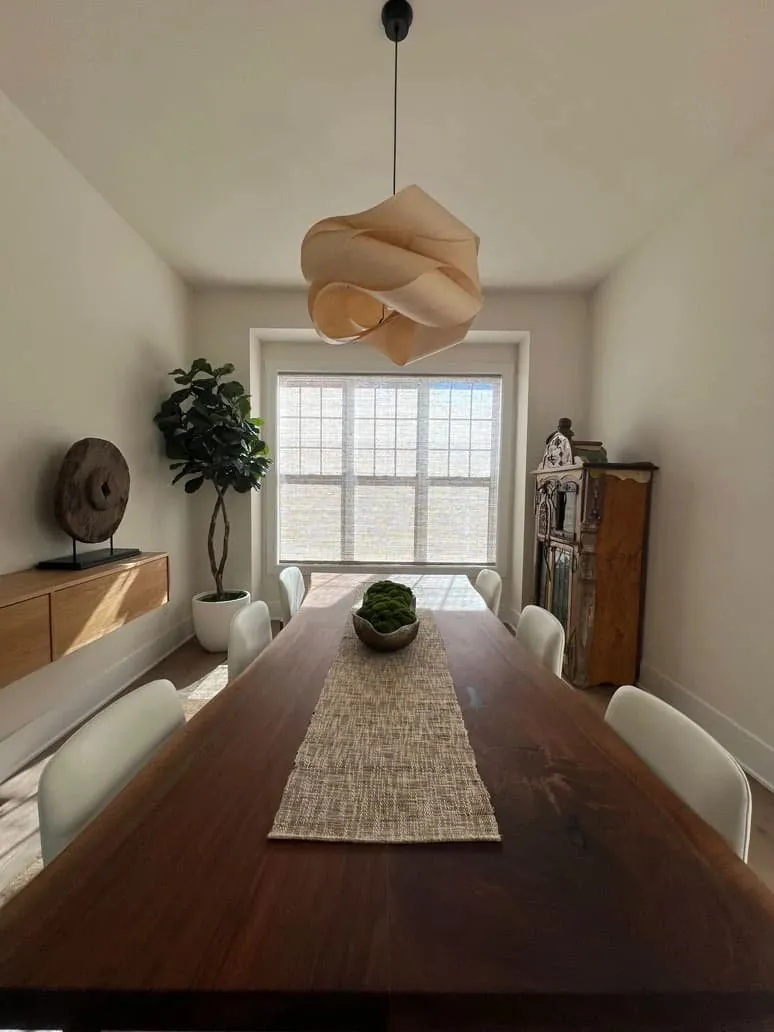
Small sash, deep reveals and a house that sits closed
Follow 6A through town and the old houses sit back from the road on deep, wooded lots: antique capes with their low rooflines, and Federal houses standing a little taller and squarer. Their windows are small by modern standards, divided into little panes, and set into walls thick enough to leave a deep reveal on the inside. For roman shades in Brewster, MA, that combination is unusually good news, and it shapes almost every choice we make.
A deep reveal gives a folded shade somewhere to live. The headrail tucks inside the opening, the fabric hangs within the frame, and the painted trim around the window stays untouched. On many newer houses the frame is too shallow for that. Here it often is not.
Toward the bay the picture changes. Newer houses near the flats have larger windows and brighter rooms, and many homes in town are second homes, shut for months at a time. We plan for both: the old window with very little glass, and the house that has to look after itself while nobody is in it.
Roman shades in Brewster: three houses, three starting points
Most windows we see in town fall into one of three groups. Each one tends to point toward a different fold, fabric and mount.
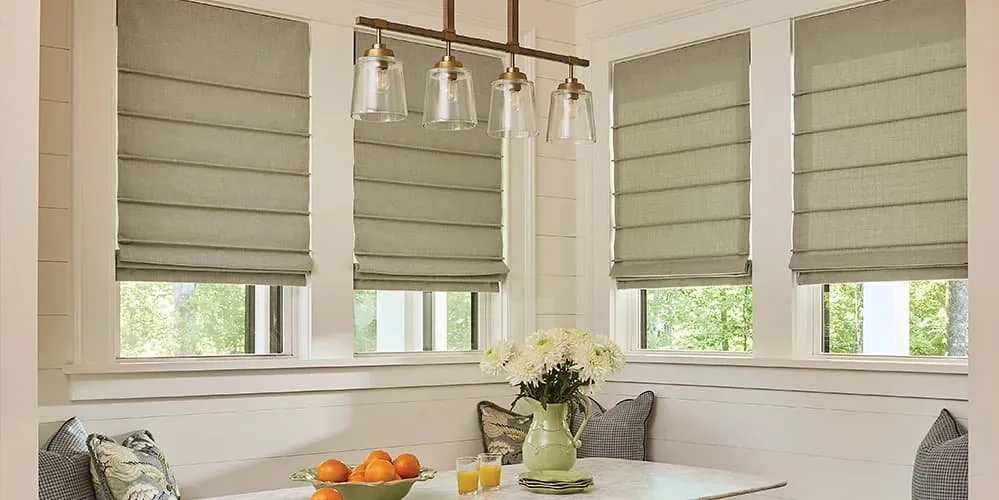
Antique capes
Short, many-paned sash under a low ceiling. Vignette or a light Carole Fabrics flat fold, mounted inside the deep reveal, keeps as much glass clear as possible.
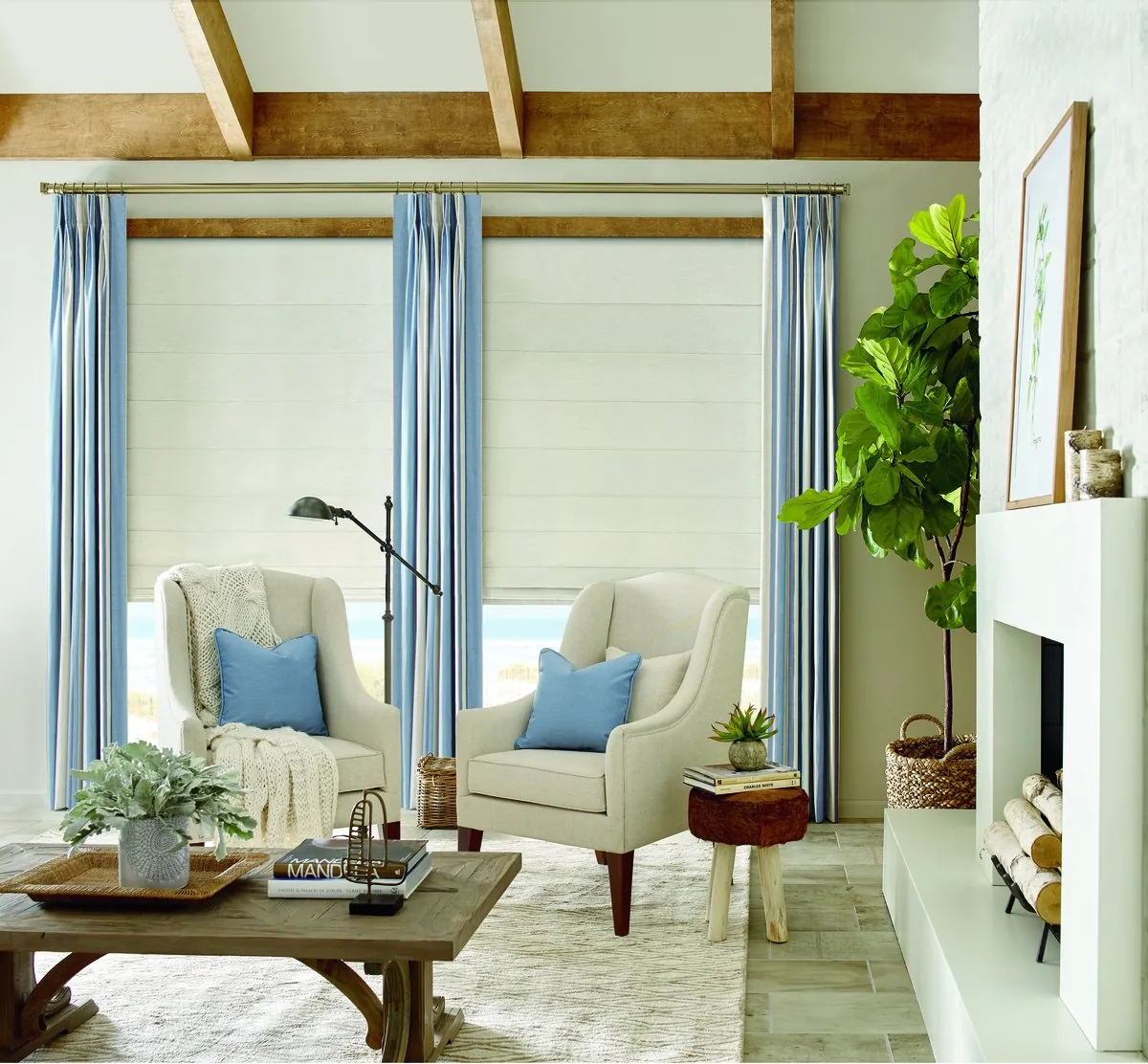
Federal houses
Taller, well-proportioned windows in formal rooms. A tailored flat fold in a quiet cloth, sometimes with side panels, suits the order of the room.
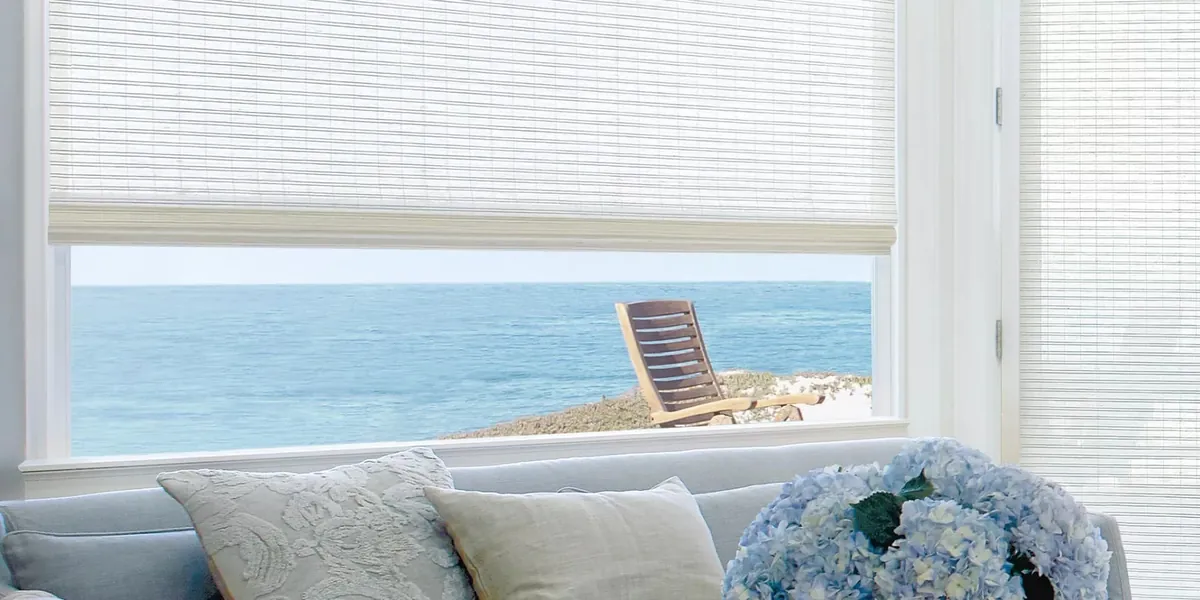
Newer houses toward the flats
Larger openings and more light off the bay. Wider shades, lighter linings and sometimes PowerView control for the high or hard-to-reach glass.
Why a deep reveal makes a better shade
A roman shade can be mounted in one of two places: inside the window opening or on the wall or casing around it. Inside is almost always the better look in an old house. The shade becomes part of the window, the trim stays in full view, and nothing projects into the room.
The catch is depth. A headrail needs a certain amount of flat surface at the top of the opening to sit on, and the fabric needs room to hang without brushing the sash lock or the window crank. In a thin modern wall that space can be tight. In the walls of an antique cape or a Federal house, built thick and finished with plaster on lath, there is often depth to spare.
That does not mean every opening is easy. Old frames settle, so one window may be a little wider at the top than at the bottom, and the head of the window is rarely perfectly level. Storm windows fitted on the inside take some of the depth away. We measure each reveal at several points, top to bottom and side to side, and we look for anything that would catch the fabric before we recommend an inside mount. Where a window is out of square, we size the shade to the narrowest point so it moves freely, and we tell you if the gap at the sides will show.
A deep reveal has one more benefit. With the shade sitting well back from the face of the trim, the gap at the sides is shaded by the wall itself, which helps a room-darkening lining keep a bedroom dark.
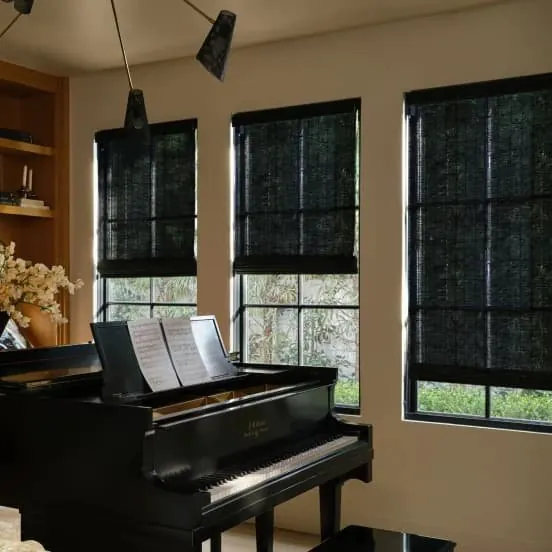
Small sash and how high the folds stack
The other side of an antique window is its size. The original sash in a Brewster cape may be short and divided into many small panes, and the ceilings above are often low enough that there is little wall over the window head. That matters because of how a sewn roman shade behaves when you raise it.
A Carole Fabrics shade lifts by gathering its folds at the top of the window. On a tall window that stack is barely noticed. On a small one, the gathered fabric can cover the top panes even when the shade is fully up. We have three ways to keep the glass clear:
- Vignette. Its fabric winds into the headrail instead of stacking, so a raised Vignette takes up far less of the window.
- A lighter cloth. Thin linens and unlined cottons fold into a smaller stack than a heavy, lined fabric.
- Fewer, wider folds. On some styles the fold spacing can be adjusted to suit a short window.
Mounting the shade above the window, the usual fix on a modern house, is rarely possible here because the window head sits right under the ceiling. So in the older houses the fabric and the shade family carry more of the work. We will hang a sample in the frame so you can see exactly how much glass a raised shade leaves.
Light under the trees
Deep wooded lots are part of what makes the old part of town feel the way it does, and they change the light inside. Many rooms on 6A sit in dappled shade for much of the day, and the low windows of a cape do not let in a great deal of light to begin with.
In rooms like that, roman shades in Brewster are usually about softening the window rather than cutting the sun. A light-filtering fabric keeps what daylight there is, and an unlined linen glows when the sun does break through the leaves. We tend to steer away from heavy, dark fabrics in a shaded room, because they make a small space feel smaller.
Privacy is less of a worry on a lot where the nearest house is behind the trees, but it still matters at night when the lamps are on. A shade with a standard lining handles both: open by day, private by evening. In a bedroom, a room-darkening lining gives a dark room without needing a separate blackout layer.
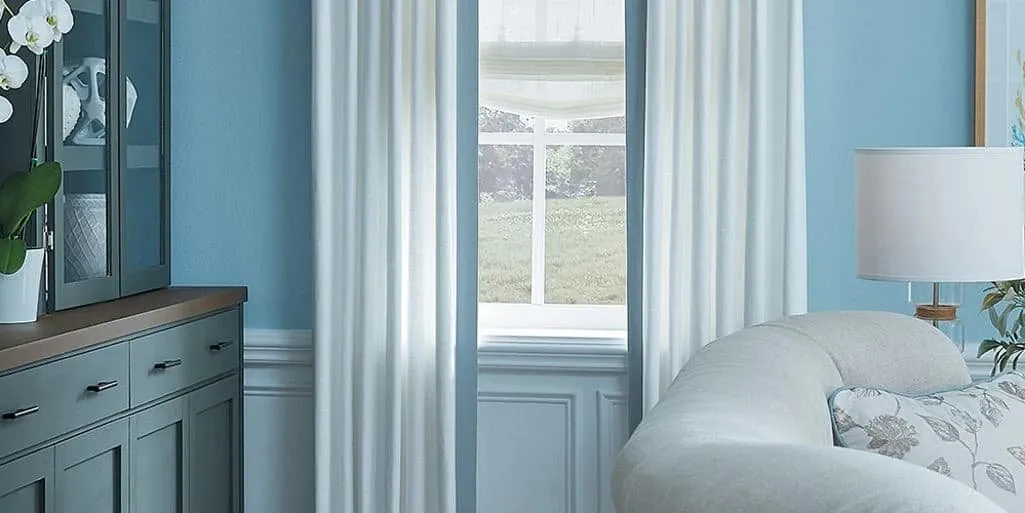
Bigger glass toward the bay flats
Closer to the bay, the newer houses are built to look out. Living rooms have wide windows and sliders, and the light is very different from the shade of 6A: bright, open and reflected off the water and the wet sand of the flats when the tide is out.
That reflected light comes from low down as well as from above, so it reaches under a partly raised shade and across the room. A light-filtering fabric lowered most of the way softens it without hiding the view. On the widest windows, two or three shades side by side on one headrail can move together or separately, so you can cover the bright end of a room and leave the other open.
These rooms are also where fabric fades fastest. A paler face fabric and a lining behind it protect the color, and a roman shade that is lowered on the bay side through the brightest part of the day protects the floors and furniture as well. For high glass above a slider or a window over a built-in, PowerView motorization lets you raise and lower the shade from a remote or an app.
A second home, closed for months
A good share of houses in town are second homes, opened for the summer and closed for a long stretch of the year. That affects the shades in a few practical ways.
When a house is closed, the windows are its face to the road. Shades left down keep the rooms from looking empty and keep the low winter sun off the furniture. A lined roman shade does that well, and in the sunniest rooms it slows the fading that a bare window would allow over a long, quiet season.
Cordless lifting is the simplest choice for a house that sits empty. There is nothing to tie up before you leave and nothing hanging by the glass. For anyone who wants the shades to open and close while they are away, PowerView can run them on a schedule. We plan how each motor is powered at the visit.
We also know that a family with a second home may only be in town for a few days at a time. Here is how we usually fit a project around that:
- You request a consultation and tell us when you will be at the house, so the visit falls on one of your stays.
- On that visit we go room by room, hold samples in each window and measure every opening and reveal.
- You get a free estimate, window by window, and can decide from wherever you are.
- We agree an installation date that works with your next trip, and our certified Hunter Douglas installers fit every shade and show you how each one works before you leave.
Choosing between the two families
Hunter Douglas makes folded fabric shades in two families, and in an old house the choice between them often comes down to the window.
Carole Fabrics shades are sewn to order from a very wide library of cloth: plains, linens, textured weaves, stripes and prints. They come in flat folds, which hang smooth and pleat neatly when raised, and in softer folded styles that keep their cascades even when lowered. If you want a shade that matches the upholstery, a cushion or drapery, Carole Fabrics is usually the place to look. A flat fold shows a pattern best; a soft fold suits a plain or textured cloth.
Vignette has uniform folds from top to bottom and rolls its fabric away into the headrail. In a cape with short sash, that clean, compact top is often the deciding factor, because it leaves the upper panes clear. It also looks tidy from the road.
Many houses use both: Carole Fabrics in a Federal front room where the cloth is on show, Vignette upstairs under the eaves. See our Vignette and Carole Fabrics roman shades pages for each line, or the full roman shades range.
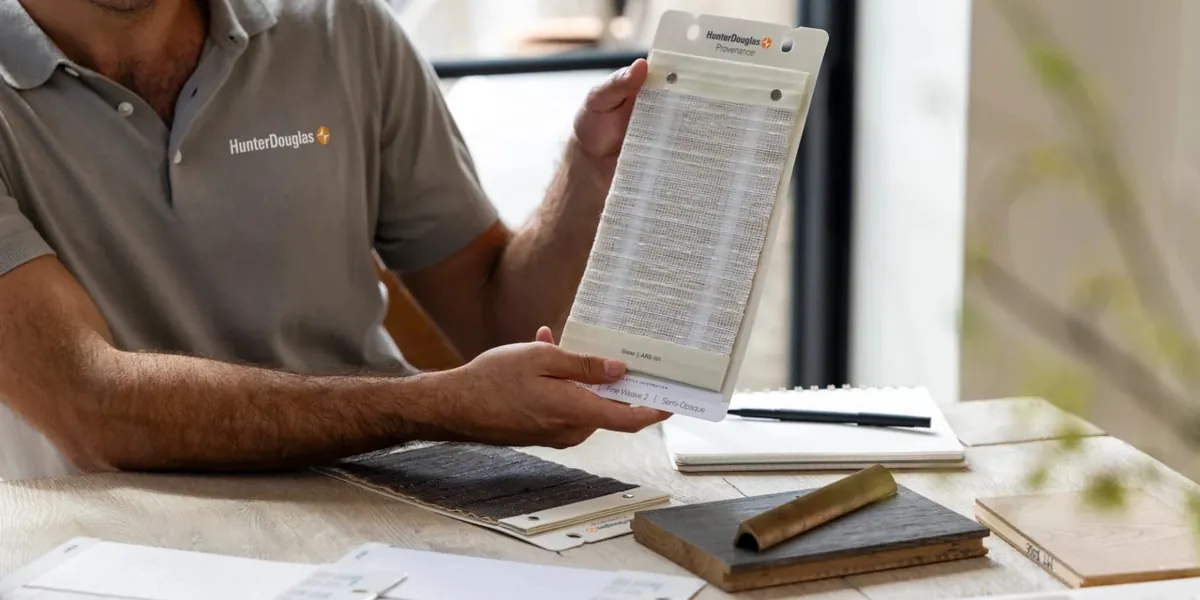
Bedrooms, kitchens and the rooms in between
Room by room, a few patterns repeat in Brewster houses.
Bedrooms in an antique cape are often tucked under the roof with small windows in the gable ends. A Vignette with a room-darkening fabric keeps the room dark without a bulky stack. In a Federal bedroom with taller sash, a lined Carole Fabrics flat fold inside the reveal does the same and lets the casing show.
Kitchens want light. A light-filtering fabric in an easy-care cloth keeps the room bright and stays out of the way above the sink. Where the window sits behind a deep counter and is hard to reach, a cordless lift or PowerView saves stretching.
Living rooms in the newer houses toward the flats often combine a folded shade on the windows with something else on the slider. If you are treating more than one kind of window, our cellular shades in Brewster and plantation shutters in Brewster pages cover the other common choices, and our Brewster page lists everything we do in town.
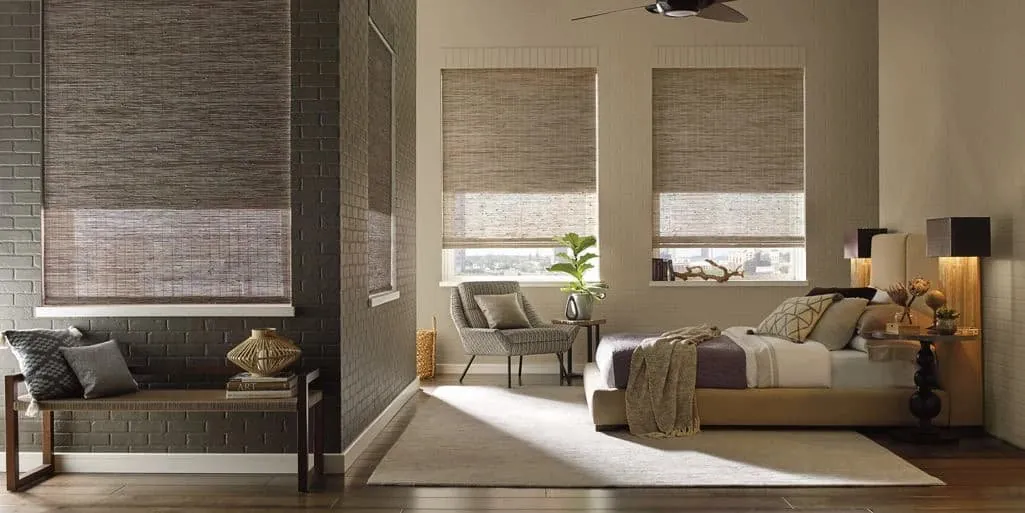
Cloth that suits an old interior
The rooms in an antique cape or a Federal house have their own palette: painted wide-board floors, plaster walls, simple mantels and trim in off-whites, creams and historic colors. A folded shade sits right in the middle of that, so the cloth is worth choosing carefully.
Plain linens and cotton weaves in natural tones are the safest starting point for roman shades in a Brewster antique. They sit quietly against old paint and let the trim and the panes do the talking. A small check, a ticking stripe or a modest print can work well in a kitchen or a bedroom, especially on a flat fold, where the pattern stays readable when the shade is down.
Woven textures suit a summer house well. They bring a little of the outdoors in, and they look at home with wicker, painted furniture and the light, simple rooms many second homes have. A woven shade can be lined for privacy, so it works in a bedroom as well as a living room.
In the newer houses toward the flats there is more freedom. Larger rooms can take a stronger color or a bolder pattern, as long as the window does not take the full force of the sun off the bay all afternoon. We bring enough samples to compare the safe choice and the brave one side by side in the room.
Working around old trim and plaster
An antique house deserves care at the window. The casings may be original, with many coats of paint, and the plaster around them may be old and brittle. When we fit a shade inside the reveal, the brackets go into the wood at the head of the frame, not into plaster, so the shade sits firmly and the walls are left alone. Where an outside mount is needed, we talk with you about where the screws will go before anything is drilled.
The same care goes into how the shade looks once it is up. A folded shade that hangs square in an out-of-square window takes some judgement, and our installers check each one raised and lowered before they leave.
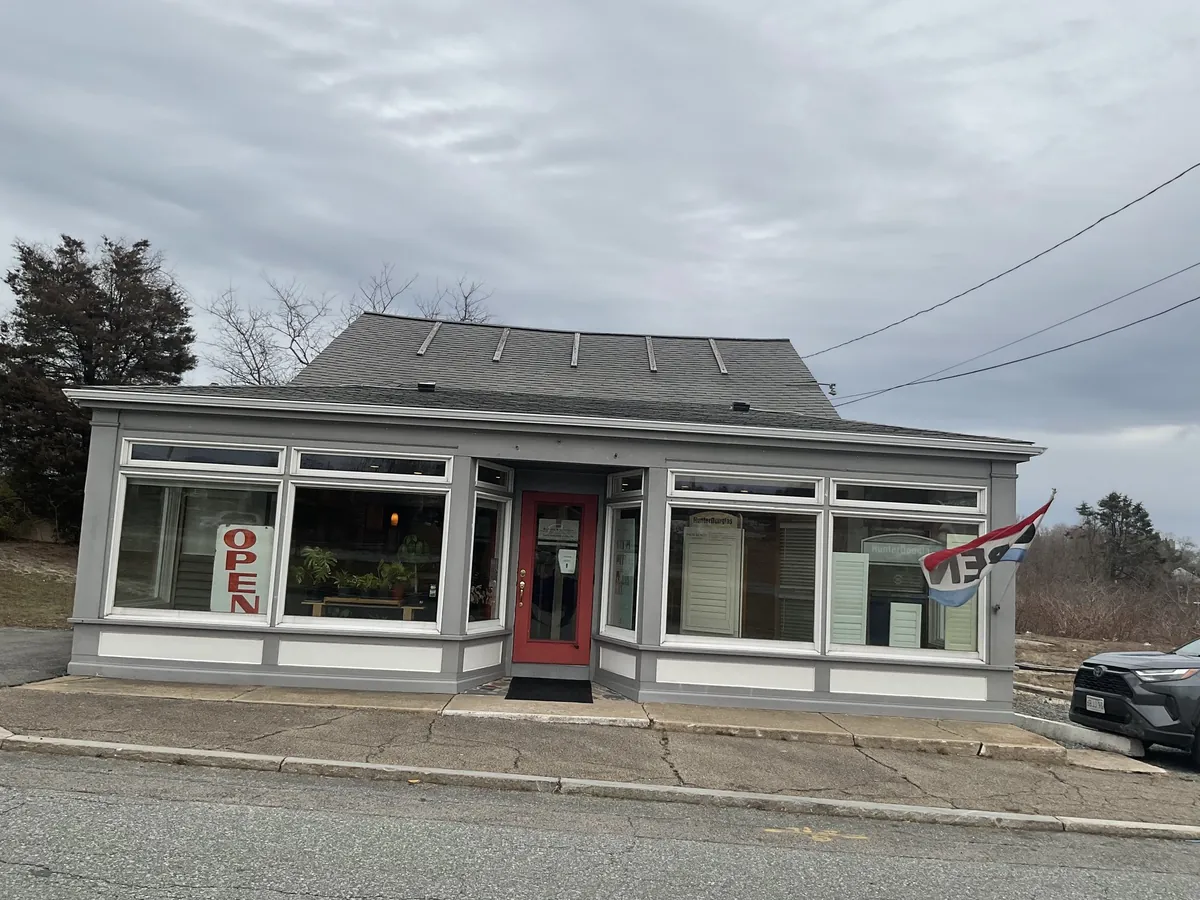
Why work with a Gallery dealer
We are a Hunter Douglas Gallery dealer, the designation Hunter Douglas gives dealers who meet its standards. That gives you the whole folded shade range in one place, including every Carole Fabrics cloth, Vignette, the lift choices and PowerView.
Every shade we sell is fitted by installers certified by Hunter Douglas, which matters in a house where no two openings are quite the same. We also offer interior design consultations if you want help with fabric and color, and we repair blinds and shades you already own.
The nearest place to see the shades in person is our Sagamore showroom. Or we bring the samples to you, which is often easiest when the house is only used now and then.
Questions from Brewster
Are the reveals in my antique cape deep enough for an inside mount?
Often, yes. Old walls are thick, so many windows have depth to spare. We check each opening at several points, along with any interior storm windows, before recommending where the shade should sit.
Will a raised shade cover the top panes of my small windows?
A sewn shade can, because it stacks its folds at the top. Vignette rolls its fabric away instead, and a lighter cloth folds into a smaller stack. We hang a sample so you can see the result.
What should I choose for a room shaded by trees?
A light-filtering fabric in a paler color keeps the room bright. Add a standard lining if you want privacy once the lamps are on in the evening.
Can the project fit around my weekends at the house?
Yes. Tell us when you will be down and we will plan the consultation and the installation around your visits.
What does the estimate cost?
Nothing. The estimate is free, and it lists every window so you can compare choices room by room.
Start with a sample at your window
Choosing roman shades in Brewster, MA, is easiest in the house itself, with a swatch in the frame and the light falling the way it really does. Request a consultation and we will bring the samples, measure every reveal and leave a free estimate. You are also welcome at the Sagamore showroom, or use the call button to ask a question first.