
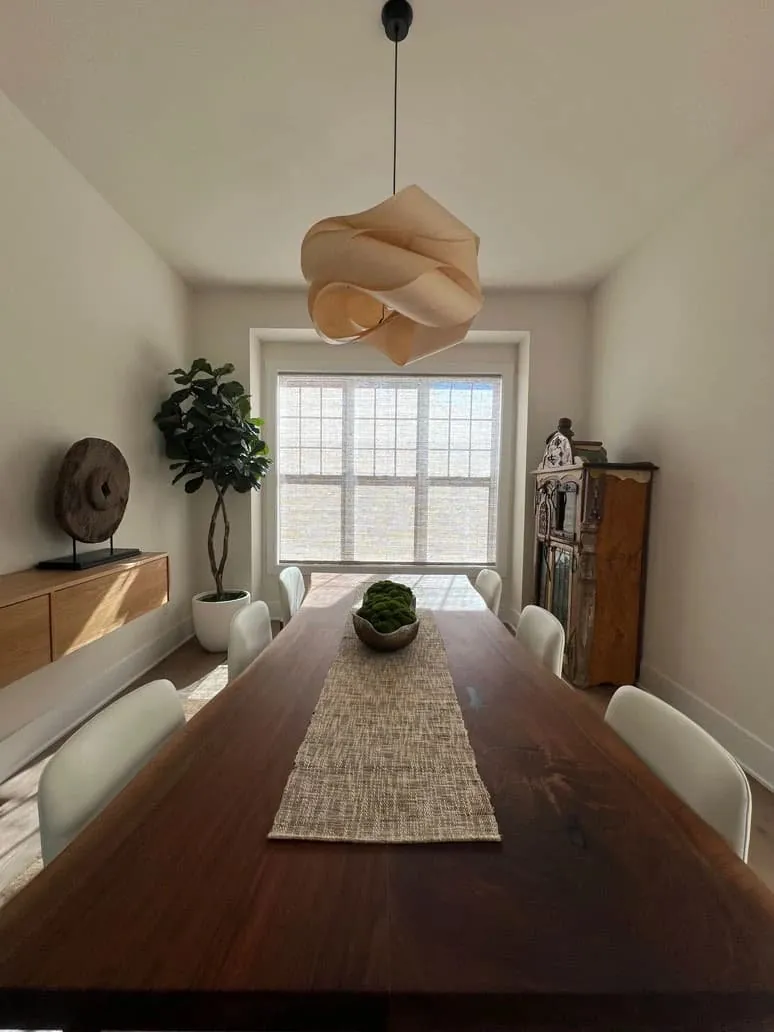
Capes, ranches and the colonials in between
Drive along Hartford Avenue or South Main and the houses tell you a lot about the windows inside them. There are rows of post-war capes with dormers tucked under the roof, single-story ranches with a broad picture window facing the street, and newer colonials that have filled the lots between them. Most of these houses have standard modern openings, which makes roman shades in Bellingham, MA, a straightforward choice for a whole house.
The exceptions are the older village houses. Their small original sash is charming, but a raised fabric shade gathers at the top of the window, and on a small opening that bundle can swallow a lot of the glass. Those windows need a different mount, and we plan for them separately.
Whichever kind of house you have, a folded fabric shade does something blinds cannot: it brings the softness of drapery to a window without the bulk. We fit two Hunter Douglas lines in Bellingham houses: Vignette, with a modern fold that rolls away, and Carole Fabrics, made to order in flat and folded styles.
Three starting points
Most Bellingham orders start from one of these. We bring samples of each, so you can see them against your own walls and trim.
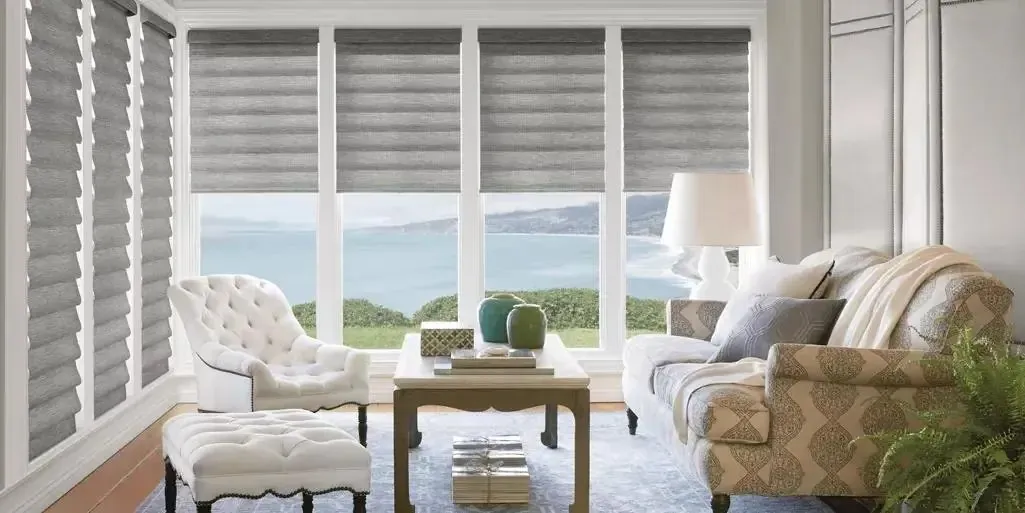
Carole folded style
Soft loops of fabric that stay down the full drop. A gentle, traditional look for a cape’s front room or a bedroom under the eaves.
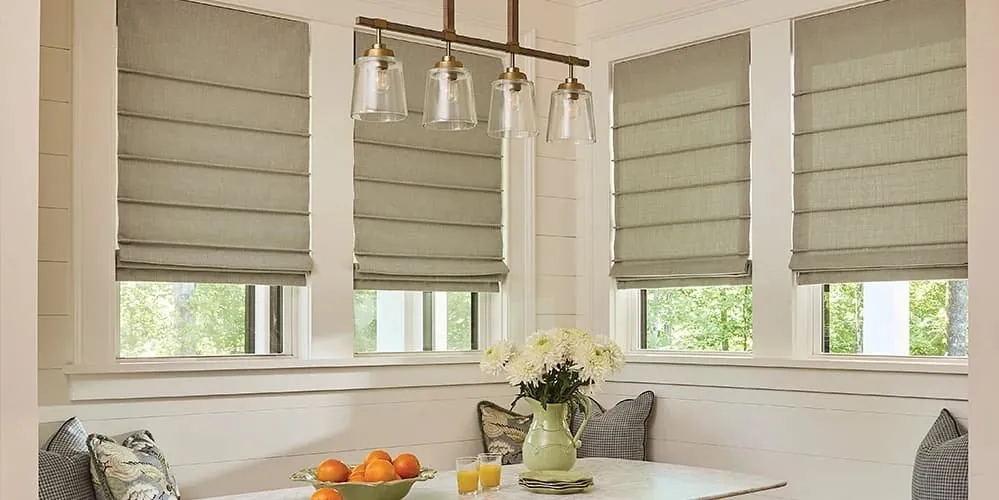
Vignette rolled fold
Neat, even folds that disappear into the headrail. It keeps a small window clearer when raised and looks crisp in a newer kitchen.
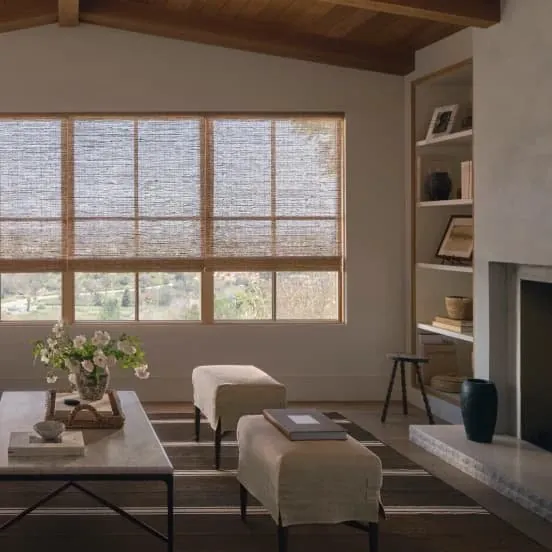
Woven texture
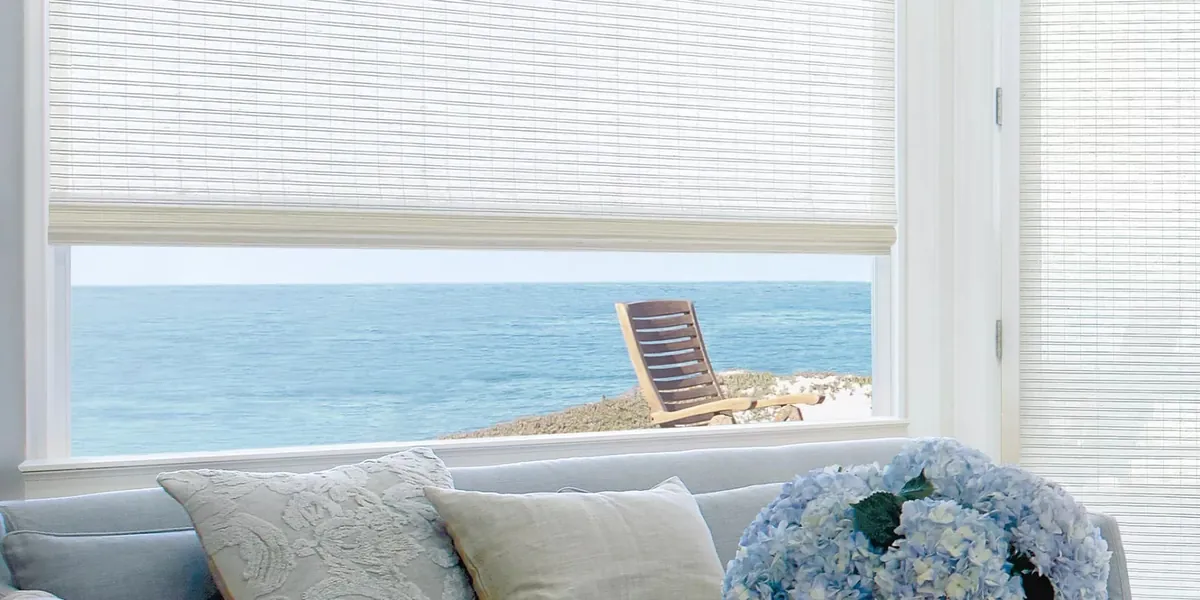
A natural, hand-loomed look in a roman shape, from Alustra Woven Textures. It suits a ranch living room with a stone or brick fireplace.
Dormers and knee walls in the capes
The second floor of a post-war cape is where window coverings get awkward. The bedrooms sit under a sloping roof, and the windows are set into dormers: short, recessed openings with a small ceiling of their own above them. Curtains crowd those rooms and blinds can look stark. A roman shade mounted inside the dormer recess is often the neatest answer.
The dormer gives you a natural pocket for the headrail. We check that pocket for depth and look at the window itself, because many of these capes have had their original sash replaced at some point. Replacement windows often have tilt latches near the top of the lower sash, and a headrail has to clear them so the window can still be tipped in for cleaning. We measure for that before anything is ordered.
Height is the other thing. Dormer windows are short, so the stack of a raised shade takes up a larger share of the glass than it would on a tall window. Vignette rolls its fabric into the headrail, which keeps more of the opening clear. With Carole Fabrics, a lighter, unlined fabric folds smaller than a heavy one. In a bedroom that needs darkness, we weigh the size of the stack against the value of a lining and show you both.
Because dormers face the street on the front and the back garden on the rear, the two sides of the house often want different fabrics. A front bedroom close to Hartford Avenue may want a lining for privacy, while a rear room can take a lighter fabric that lets the morning in.
Picture windows in the ranches
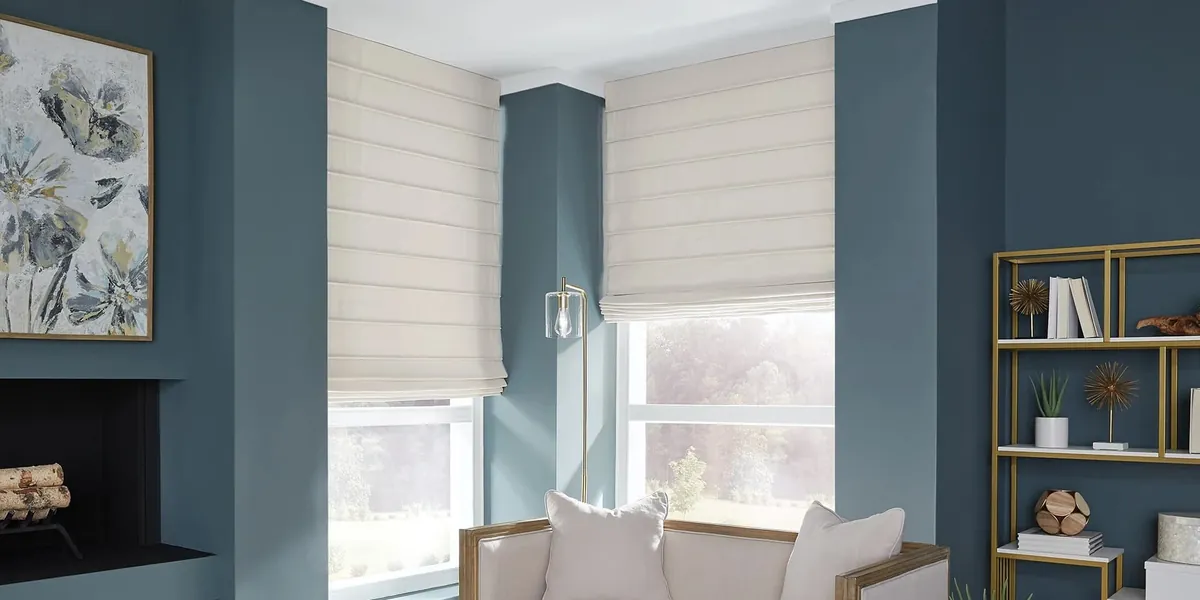
The ranches along South Main usually have one big window in the living room, often a fixed center pane with smaller opening units on each side. It is the window that defines the room and the one that takes the most sun.
A single roman shade across a window that wide would be heavy to lift and would look out of scale. The better plan is usually two or three shades side by side, one for each section of the window, mounted so they line up when lowered. That lets you raise the middle shade for the view and leave the sides down, or the reverse when the sun swings around. A cordless lift keeps the front of the window free of cords, and a continuous loop makes a wide lined shade easier to raise.
Ranch ceilings are lower than in a colonial, so where the shade’s headrail sits makes a real difference to how the room feels. Mounting it just above the frame, rather than inside it, lets the raised shade clear the glass and makes the window read slightly taller. In a room with a low ceiling that small change opens the room up.
Picture windows facing west also take a lot of afternoon heat. A lined fabric slows that down and protects the face fabric from fading. If the room is the one you sit in most, it is worth looking at a few fabric weights at the time of day the sun is strongest.
Newer colonials between the older houses
The colonials built on the lots between the capes and ranches have the most straightforward windows in town: standard sizes, square frames and plenty of depth. That makes an inside mount easy almost everywhere, and it means a whole house of roman shades can sit at one consistent height.
These houses also tend to have open plans, with a kitchen, dining area and family room running together. Matching the shades across that space keeps it calm, even if the fabric changes from room to room. A popular approach is Vignette across the open-plan rooms, where the clean fold suits the modern layout, and a Carole folded style in a formal dining room or a primary bedroom.
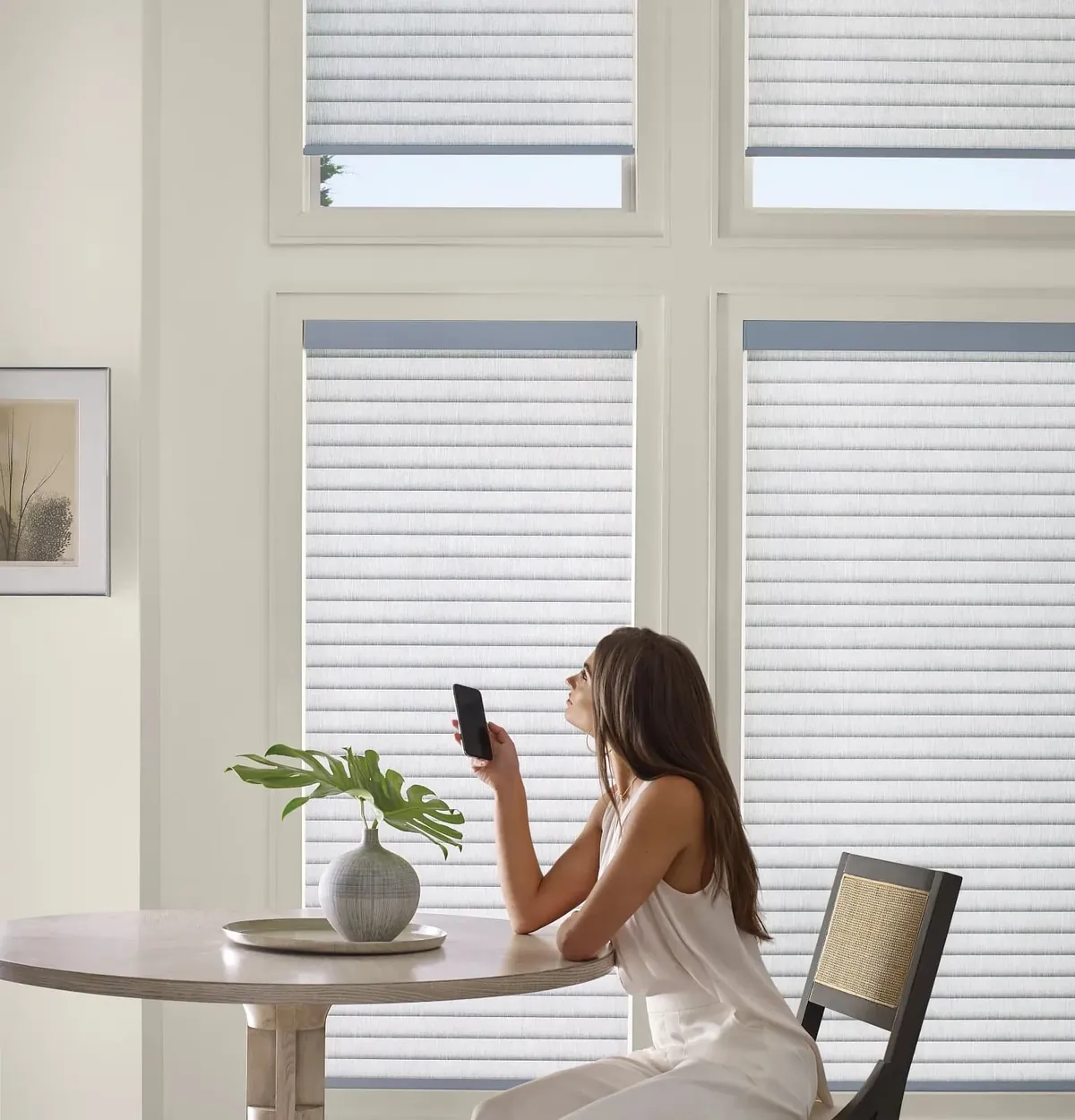
Any windows that are hard to reach, such as one over a kitchen sink or a tall window above a landing, are good candidates for PowerView motorization. The shade moves from a remote, a phone or a schedule, so you never have to stretch across a counter. If you want to treat several rooms that way, see our motorized blinds in Bellingham page.
Small sash in the village houses
The older houses in the village have small original sash, often divided into several panes, set in frames that may have moved a little over the years. They are worth keeping as they are, and the shade should respect them.
Here an outside mount usually makes more sense than an inside one. Mounting the shade on the casing or on the wall just above it means the raised fabric can stack above the glass rather than over it, so the small panes stay in view. It also avoids fighting with a frame that is not quite square. We measure the opening at several points to see how far out of square it is, and we tell you honestly which mount will look better.
A flat fold in a light fabric suits these small windows well. It keeps a crisp, tailored shape when lowered and does not add bulk to a room that is often modest in size.
Choosing a fabric for each room
With roman shades in Bellingham, the fabric does most of the work, and there are three broad weights to choose from.
Sheer and light-filtering fabrics let daylight through and soften it. They are a good fit for kitchens, living rooms and any room where you want brightness more than darkness. During the day they give privacy, because the outside is brighter than the inside, but at night, with lamps on, they can show shapes.
Lined fabrics add a layer behind the face fabric. A privacy lining stops the room being seen at night. A room-darkening lining keeps a bedroom dim when the sun comes up and suits anyone who works nights or has small children who nap.
Pattern is the third choice. Prints and stripes look best on a flat fold, where the fabric hangs smooth. Plain and textured fabrics suit folded styles, where the shape of the fold does the decorating. We bring all of these in our sample books, and our guide to choosing fabric for a sunny room is helpful if a room takes a lot of direct sun.
Kitchens and baths on one level
In a ranch, the kitchen and bathroom are often on the same side of the house, with windows that face the side yard and a neighbor’s driveway. Those windows are smaller than the picture window but get used just as hard. Over a sink, a shade mounted inside the frame stays clear of the faucet, and a cordless lift means no cord trailing into the basin. A light flat fold in a pale fabric lets the room stay bright while blurring the view from next door.
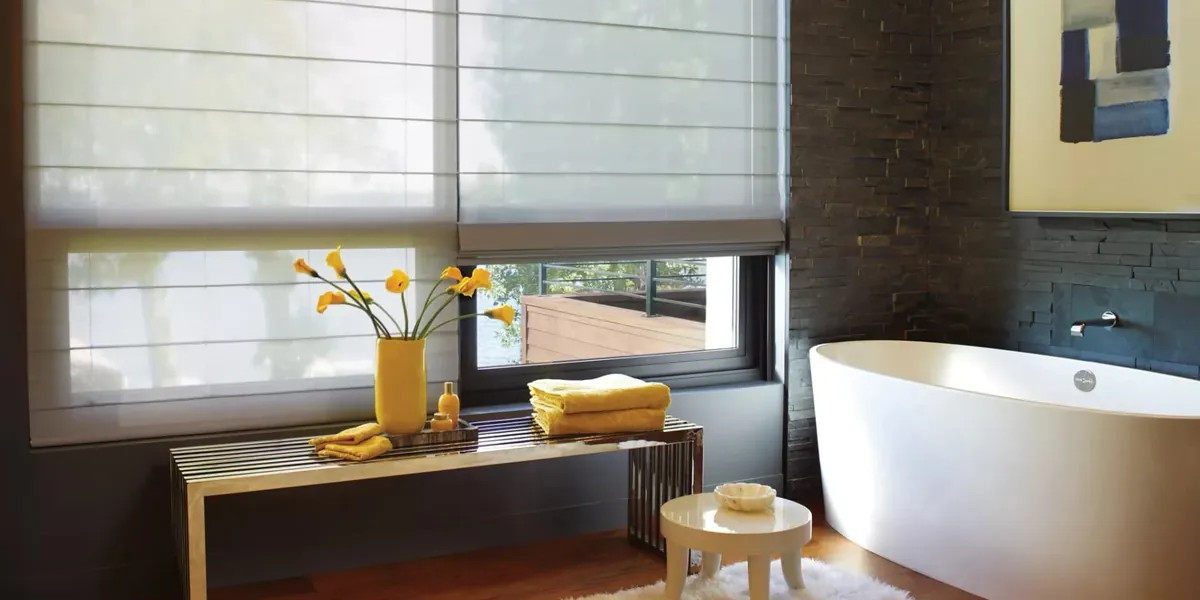
Bathrooms need privacy at every hour. A lined fabric covers the window fully at night, while a sheer or light-filtering fabric works if the window is high or frosted at the bottom. We look at where the window sits relative to the tub and the vanity before suggesting either. Many people choose roman shades in Bellingham bathrooms for the same reason they choose them in a bedroom: fabric makes a small, hard-surfaced room feel softer.
Additions, sunrooms and the back of the house
A lot of the capes and ranches along Hartford Avenue have been added to over the years, with a family room or sunroom off the back. These rooms often have more glass than the rest of the house put together: a run of windows on three sides, sometimes with a slider to the yard.
That much glass makes a room bright and hot in summer and cool in winter. Roman shades suit these rooms because they soften the space without the bulk of drapery, but a sunroom asks for planning. Each window usually gets its own shade, mounted so the bottoms line up across the run. A light-filtering fabric keeps the room usable on a bright afternoon, and the shades can be raised fully on a gray day. For a slider, a roman shade is rarely the right answer, since the fabric has to stack above a door you walk through; we would usually suggest a different shade for the door that matches the romans beside it. When we plan roman shades for Bellingham additions like these, we look at the whole room at once so every window feels part of the same scheme.
How we measure a Bellingham house
Measuring is the part that decides how good the shades look. On standard modern openings it is quick. On dormers, picture windows and old sash it takes more care.
- We note the mount for each window first: inside the frame, or on the casing above it.
- For an inside mount, we measure the width at the top, middle and bottom and work from the narrowest figure.
- We measure the height at the left, center and right, since older frames are rarely even.
- We check the frame depth, along with any tilt latches, locks or cranks the headrail has to clear.
- For wide windows, we mark where each shade will meet its neighbor so the seams line up with the frame.
- We confirm fabric, fold, lining and lift with you before anything is ordered.
Once the shades arrive, our certified Hunter Douglas installers fit them, level each headrail, check every fold and show you how the lift works. If you want to know more about the terms we use when we measure, see window measuring terms explained.
Which line suits your house
Both Vignette and Carole Fabrics are true roman shades, and both come in a wide range of fabrics. The difference is in how they fold and how they are made.
Vignette uses an engineered fold that rolls up into the headrail rather than stacking below it. The folds are even from top to bottom, the back of the shade is tidy from the street, and the raised shade takes up very little of the window. It suits newer houses and open plans.
Carole Fabrics shades are sewn to your measurements from a deep library of decorator fabrics. The flat fold and the folded styles give you a more tailored, traditional look, and the fold spacing can suit the proportions of each window. They suit capes, village houses and formal rooms. The Vignette and Carole Fabrics pages describe each line, and our roman shades page sets them side by side.

Why a Hunter Douglas Gallery dealer
Blinds & Designs is a Hunter Douglas Gallery dealer. For a Bellingham house that means the full range of roman shade fabrics, folds, linings and lifts from one company, plus Hunter Douglas blinds, shutters and other shades for the rest of the house.
We come to you. Our vans carry samples, so the consultation happens at your windows and in your own light. If you want help with color or with a whole room, ask about our interior design consultations at the same visit.
Our installers are certified by Hunter Douglas, so the shades go up the way the maker intends. Once they are in, we stay on hand for blind and shade repairs. Everything else we offer locally is on our Bellingham page.
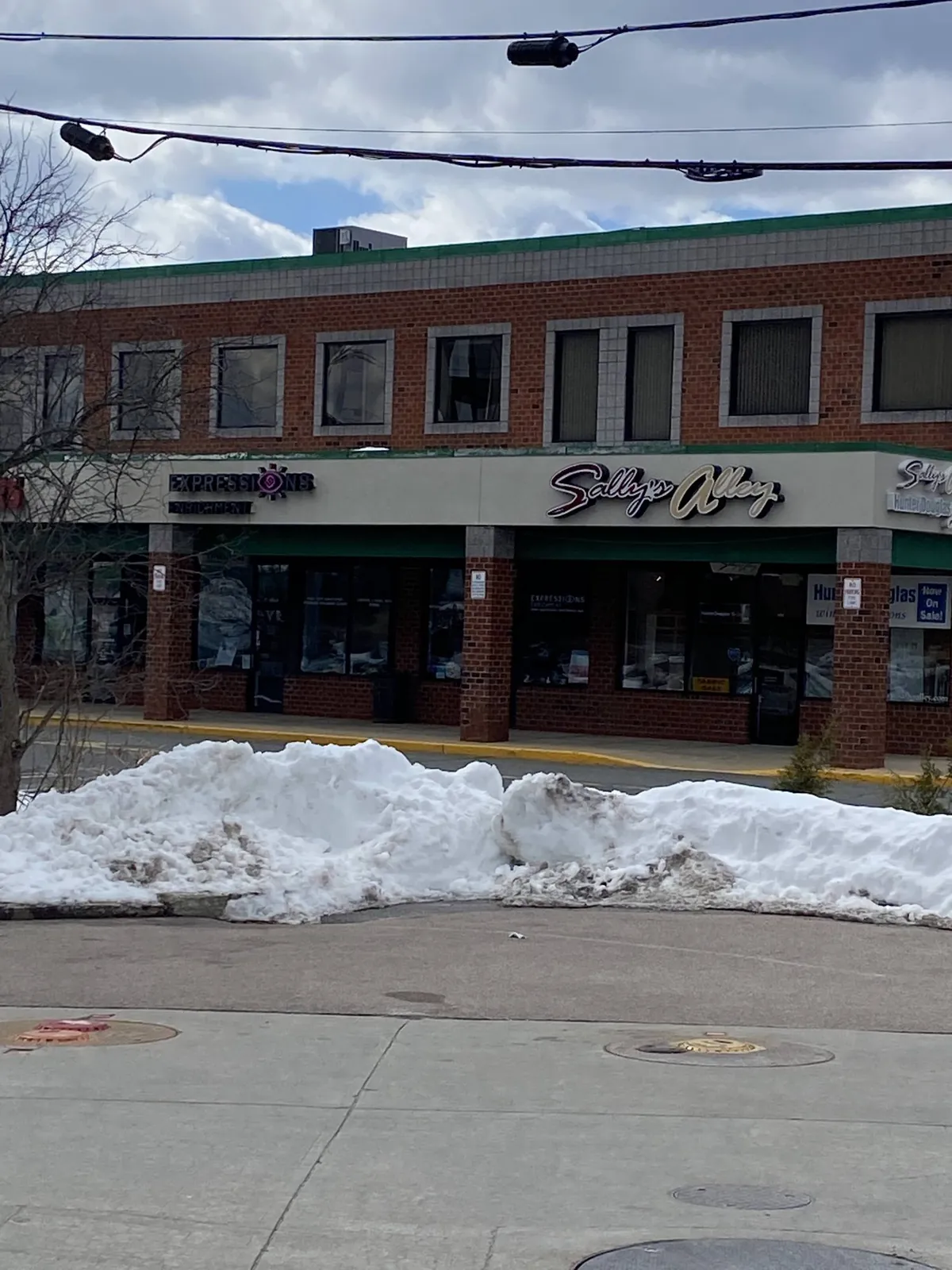
The Franklin showroom, next door to Bellingham
Our nearest showroom to Bellingham is in Franklin, just up the road. Stop in to see roman shades working, pull them up and down, and compare a Vignette fold with a Carole folded style before you choose.
Most customers then book a consultation at home, because the shade you liked in the showroom can look different on a north-facing dormer or a west-facing picture window. We bring the styles you narrowed down and measure every opening.
Questions from Bellingham
Will a roman shade work in a cape’s dormer window?
Yes, and it is often the neatest option. We mount the shade inside the dormer recess where the depth allows, check that it clears any tilt latches on replacement sash, and choose a fabric that keeps the raised stack small on a short window.
How do you cover a wide ranch picture window?
Usually with two or three shades side by side, one per section of the window, so each one is light to lift and you can raise them separately. They line up when lowered so the window reads as one.
My village house has small, old windows. Is a roman shade too bulky?
Not if it is mounted on the casing above the opening. The raised shade then stacks above the glass, so the small panes stay visible. A light flat fold keeps the look trim.
Can the shades in my open-plan rooms match?
Yes. We can use one fabric and one line through the kitchen, dining area and family room, or vary the fabric while keeping the fold and height consistent so the space reads as one.
Is the estimate free?
Yes. We measure every window you are considering and give you a free estimate, with no obligation.
Ready when you are
The best way to choose roman shades in Bellingham, MA, is to see the fabrics at your own windows. Request a consultation and we will bring the Vignette and Carole Fabrics samples to you, measure every opening, from dormers to picture windows, and give you a free estimate. You can also use the call button or visit our Franklin showroom.