
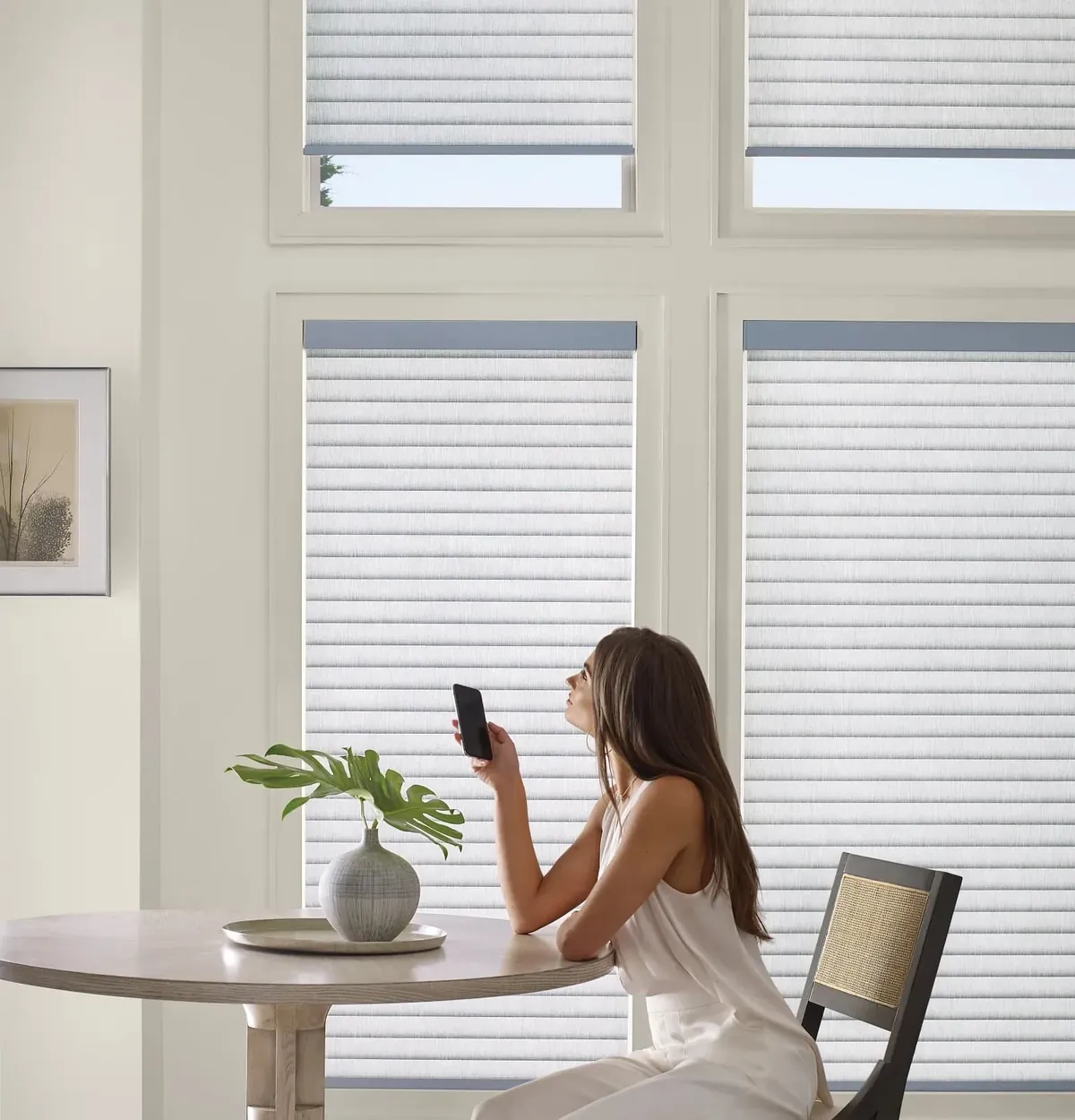
Big glass, deep lots and the oldest sash in town
Wrentham’s housing runs from one extreme to the other. Around the common stand antique colonials with tiny original openings, small panes set into old frames that were sized for a time when glass was precious. Out along Route 1A and around Lake Pearl, the larger newer houses sit far back from the road on generous wooded lots, and many of them have modern two-story glass: great rooms with a wall of windows facing the trees or the water.
Deep setbacks mean the street is rarely the problem. The problem is the glass itself. A two-story window wall is impossible to reach by hand, and a house full of tiny old openings means a great many shades to move every morning and night. That is why motorized blinds in Wrentham, MA, appeal to owners of both kinds of house.
With PowerView, a shade at the top of a great room and a shade on a small antique window are equally easy. A remote, the app or a timetable moves them, and the motor stays hidden in the headrail.
What we motorize in Wrentham houses
PowerView is offered across much of the Hunter Douglas range, so the motor follows the shade you choose rather than the other way round. Three of the most useful for this town:
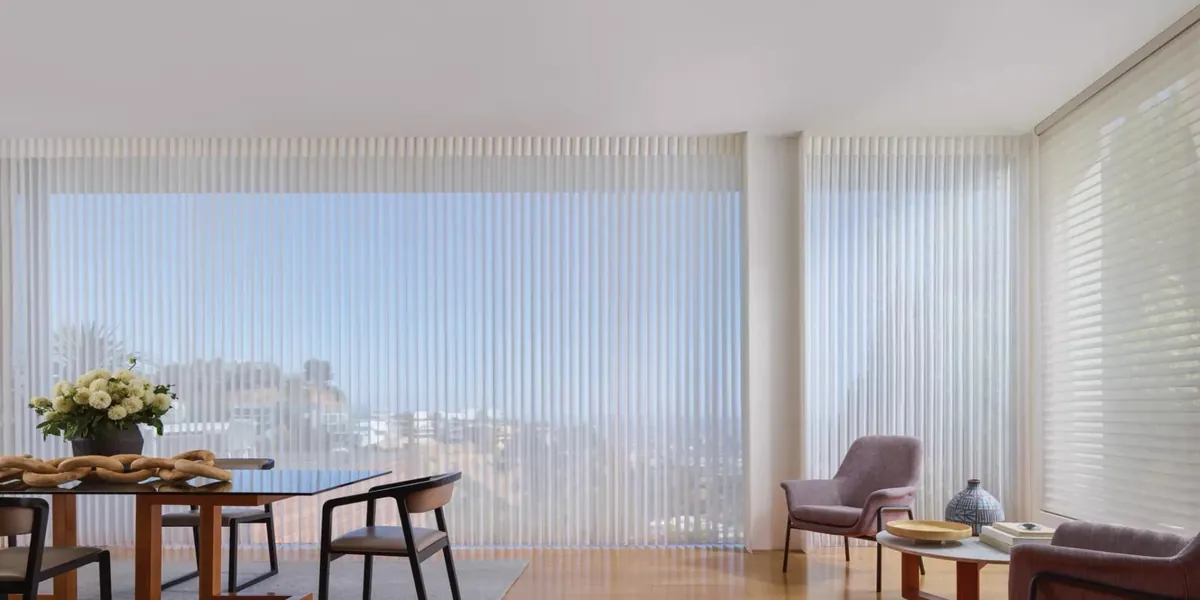
Vertical and horizontal sheers
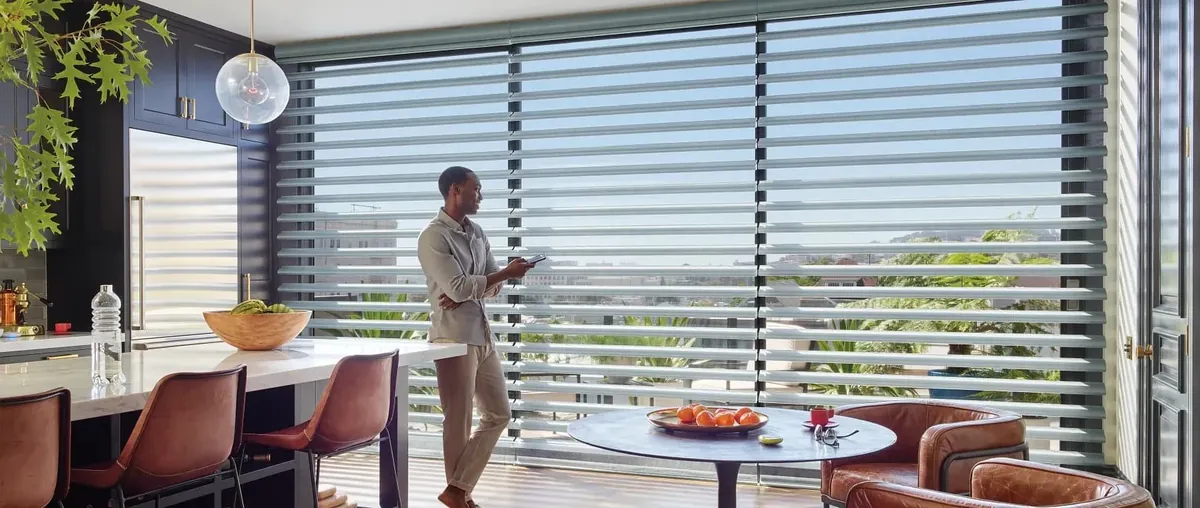
Soft fabric vanes over a tall wall of glass, tilting open for the view of the trees and closing for privacy at night.
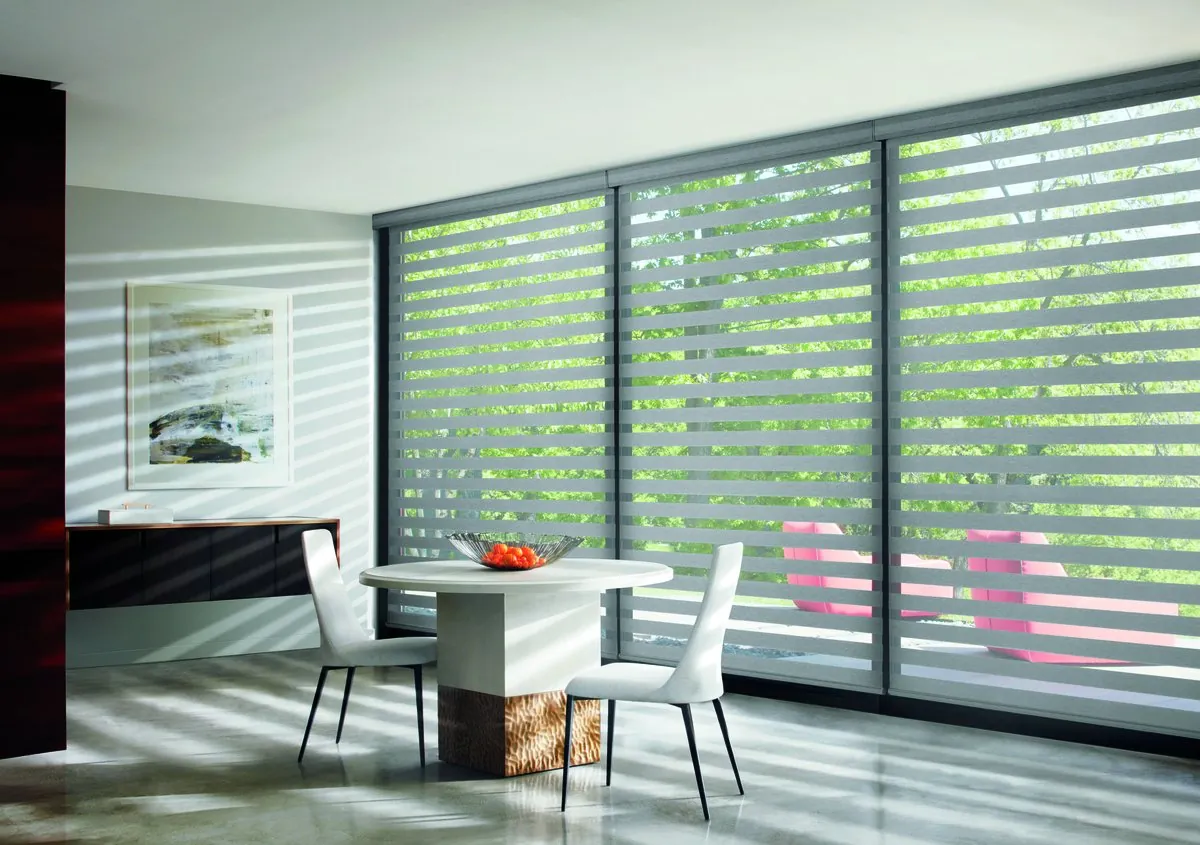
Banded shades on tall windows
Alternating sheer and solid bands that slide past each other, giving fine control of light on large modern panes.
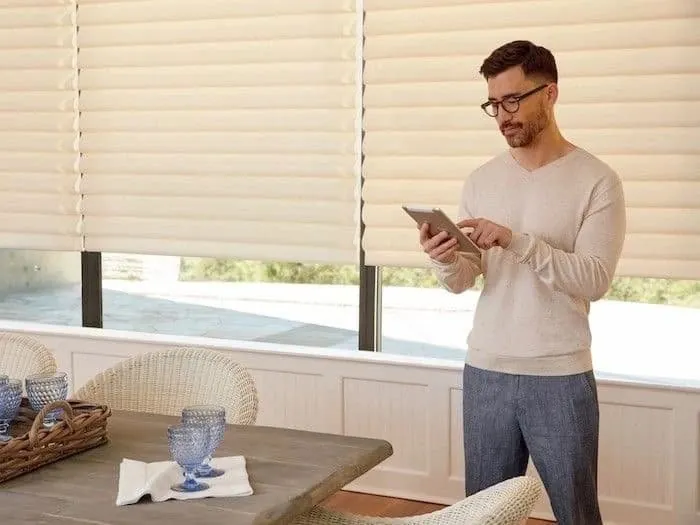
One tablet for the whole house
Rooms, groups and scenes laid out in the PowerView app, so a big house is managed from one screen.
Great rooms that face the woods
The newer houses on Wrentham’s wooded lots are often built around one big room. Its back wall is glass from floor to ceiling, sometimes with a second row of windows above, and it looks out into trees. During the day that view is the reason the house was built that way, and the last thing anyone wants is to cover it.
The trees, though, make the light unpredictable. In summer the canopy shades most of the glass, but low sun slips under it in the early morning or late afternoon and lands in a bright, moving patch on the floor, the sofa or a screen. In winter, with the leaves gone, the same glass takes far more sun than it did in July, and the room can swing from cold to glaring in an hour.
Motorized shades let the room respond without anyone climbing anything. Sheer shades are often the first choice here, because their vanes can be tilted to soften the light while the trees stay visible through the fabric. Banded shades do something similar with stripes. For the upper windows, which nobody ever needs to see out of, a shade that lowers part way on a timetable takes the edge off the high afternoon sun while the lower glass stays open.
Our installers fit tall shades from safe staging and set each shade’s stopping points precisely, so a stack of upper and lower shades finishes in clean, even lines. Once that is done, the top row is as easy to move as any other window in the house.
Light off Lake Pearl
Houses around Lake Pearl have one more thing to manage: the water. On a bright afternoon the lake throws reflected light up into the rooms that face it, and that bounce is harsher than ordinary daylight because it comes in at a low angle, under any overhang. It catches screens, faces and polished floors.
The usual answer is a screen or roller fabric with some openness, which cuts the glare while keeping the lake in view. You see out clearly; the brightness is simply turned down. On a motor, those shades can lower on their own as the sun swings round toward the water, and lift again in the evening for the view at dusk.
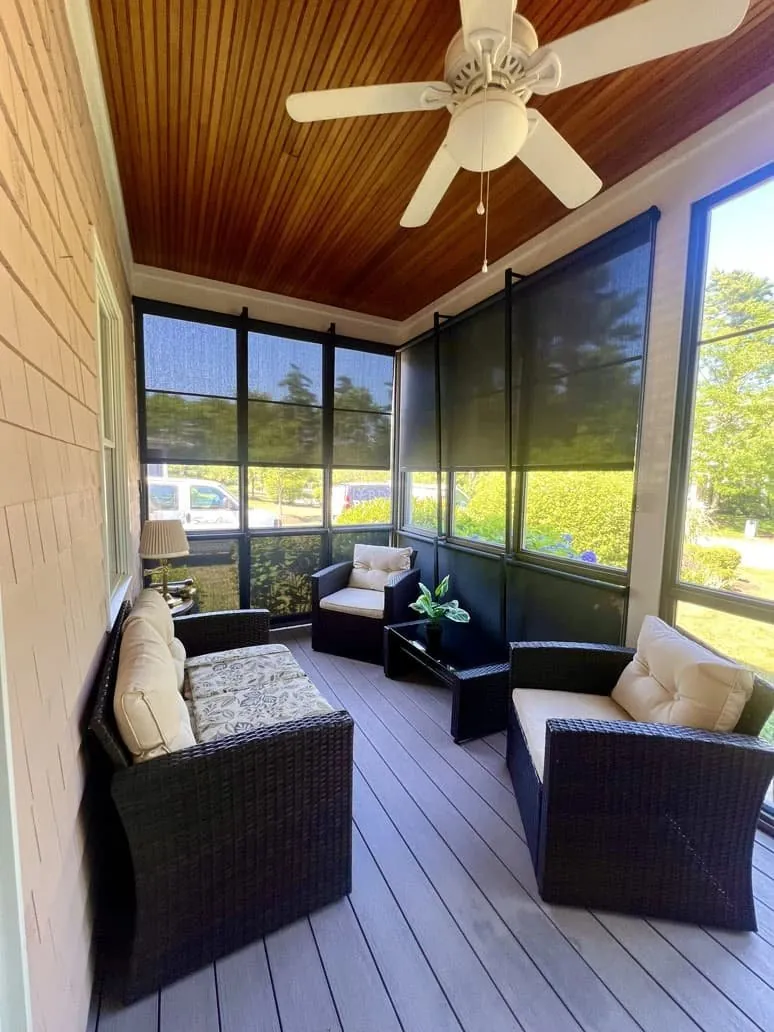
Lakeside houses often have a screened porch too, which takes the full force of afternoon sun and sees heavy use in summer. Solar screen shades lowered around a porch keep it shaded and comfortable while the air still moves through. Motorized, a whole porch can close up with one press when the sun reaches it.
Tiny openings around the common
At the other end of the scale are the antique colonials facing Wrentham’s common. Their original windows are small, and a typical house might have a dozen or more on the first floor alone. Each needs its own shade, sized to its own opening, because old windows are rarely identical even when they look it.
Small openings are easy to motorize one by one, but the real benefit is in numbers. Grouped together, every shade on the front of the house rises at once in the morning and lowers at once in the evening, finishing at the same height. On a house that faces a historic common, that tidy, even line along the facade looks right in a way a row of hand-pulled shades rarely does.
We measure each small window carefully, at top, middle and bottom, and check the depth of the frame. Many old frames are deep enough for an inside mount that hides the headrail and keeps the restored trim fully visible. Where an opening is too shallow or too small for the shade you have in mind, we will suggest a slimmer style or a mount on the trim.
Flat roman shades and honeycomb shades are both natural partners for these windows. Romans suit the proportions of a small antique opening, and honeycomb cells add a pocket of still air against old, thin glass.
Some of these houses also have one or two later additions at the back, such as a family room or a sunroom with modern windows. Those can share the same remote and app as the original rooms, so the old front and the new back of the house run as one system even though the windows could hardly be more different.
Controlling motorized blinds in Wrentham, MA
There is no single right way to run the shades. These pairings show how PowerView’s options line up with what you want from a room.
- If you want the house to look after itself, use timetables. The great room shades tilt as the sun moves, the bedrooms open at a set time and the whole house closes at dusk.
- If you want something anyone can use, keep a remote in each main room. Up, down and stop, no phone or password needed.
- If you want fine control, use the PowerView app on a phone or tablet. Move one shade or many, stop any of them part way, build scenes and edit timetables.
- If you want one button for a mood, save a scene. “Lake view” might open every shade facing the water; “movie” might close the great room completely.
Most households end up with a mix. Our plain-language guide to how motorized shades are controlled explains each one.
When the house is empty
Large houses on deep lots are often empty for stretches, whether for a workday, a weekend away or a long winter trip. A house whose shades never move looks closed up from the road, even at a distance. On a timetable, the shades keep to their usual daily pattern while you are gone: up in the morning, partly down in the afternoon, closed at night.
That routine also protects the inside of the house. A great room that faces south or west takes hard sun for hours, and on an empty day with no one to lower the shades, floors, rugs and upholstery bear the brunt of it. A timetable lowers the shades at the right time whether or not anyone is home.
And if you remember on the drive away that the porch shades are still up, the app lets you lower them from wherever you are. See our page on window covering automation for more on timetables and scenes.
The black-window effect after dark
A wall of glass that is wonderful by day becomes something else at night. With the lamps on inside and the woods dark outside, the windows turn into black mirrors. You cannot see out, but you feel visible, even with the nearest neighbor well out of sight through the trees.
Most people respond by closing the shades at dusk, which on a two-story window means either a ladder, a pole or leaving it bare and putting up with the feeling. A motorized shade on a dusk timetable closes the room as the light fades, every evening, without anyone having to think about it. In winter that happens earlier, in summer later, and the app makes adjusting it a matter of moments.
Room-darkening or lined fabrics on those windows also help the room hold its warmth in the colder months, since a closed shade sits between the cold glass and the room.
From the first call to the first timetable
- Request a consultation online or use the call button to reach the Franklin showroom, and we arrange a time to come out.
- The van arrives with fabric samples and we walk through the house, starting with the windows you cannot reach.
- We look at how each room is used and which shades should move together.
- Every opening is measured, and we note anything that affects installation, such as a high upper row of glass.
- You get a free estimate for the shades and installation you are considering.
- Hunter Douglas makes the shades to our measurements.
- A Hunter Douglas certified installer fits them, sets their stopping points, pairs each one with its remote and the app, and helps you build your first timetable.
For more detail on that first visit, see what happens at an in-home consultation.
Which rooms to start with
If you are not ready to motorize the whole house at once, start where a motor earns its keep fastest. In Wrentham houses, that usually means this order:
- The great room’s upper windows, which nobody can reach by hand.
- Any window facing Lake Pearl, where glare control matters most.
- Bedrooms, where a timetable keeps rooms dark in the morning and private at night.
- The front of an antique colonial, where grouped shades keep the facade even.
- Everything else, which can join the same system later.
Because new shades simply join the existing system, starting small never means starting over.
Bedrooms and kitchens on a wooded lot
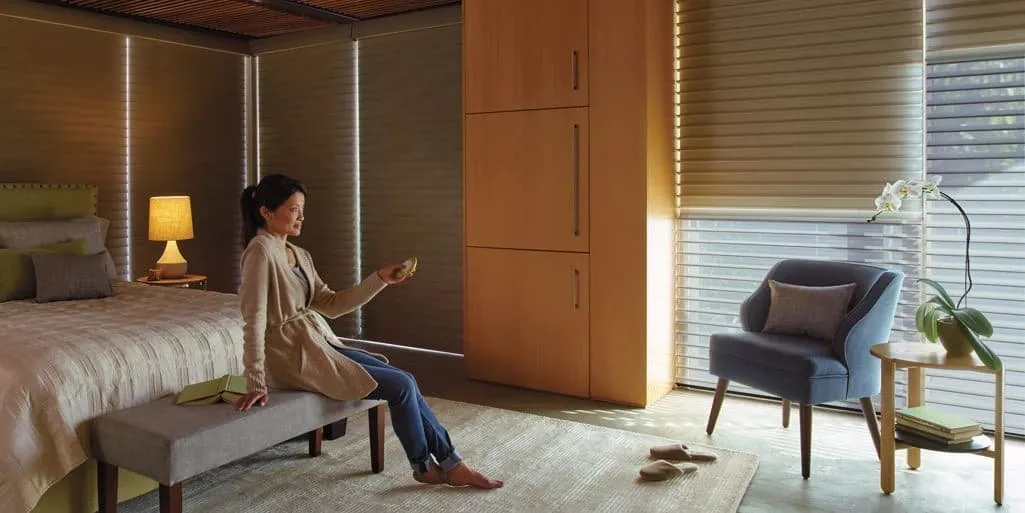
Bedrooms in the newer houses off Route 1A tend to be large, with several windows and sometimes a second set of glass above. In summer, first light comes early, and on an east-facing wall it gets into the room around the edges of any shade that is not fitted closely. Room-darkening fabrics, made to the exact size of each opening, keep the room dim until you want it bright, and a timetable raises them gently at the hour you choose, different on weekdays and weekends.
Motorized blinds in Wrentham bedrooms also take care of the evening. With the house set well back in the trees, there is little reason to close up early for privacy, so the shades can stay open to the last of the light and then lower on their own once it is dark outside. A single scene at bedtime can close every bedroom shade in the house at once.
Kitchens raise a different point. A big open kitchen in a newer house often has a long run of windows over the counter and a slider to the deck, and the sink is usually right under the main window. Reaching across a counter to work a shade is a stretch even in a small kitchen. A motorized shade or blind over the sink, grouped with the windows around it, opens the whole kitchen in the morning with one press. Blinds suit this room particularly well, since tilting the slats cuts glare off the counter without closing off the view to the yard.
In an antique colonial, the kitchen is more often a small back room with an old window over the sink. A narrow shade fitted inside the frame, on a motor, keeps the sill clear for the things that tend to collect there. Whatever the house, motorized blinds in Wrentham kitchens are one of the quieter conveniences that people end up using most.
Warmth in the old rooms
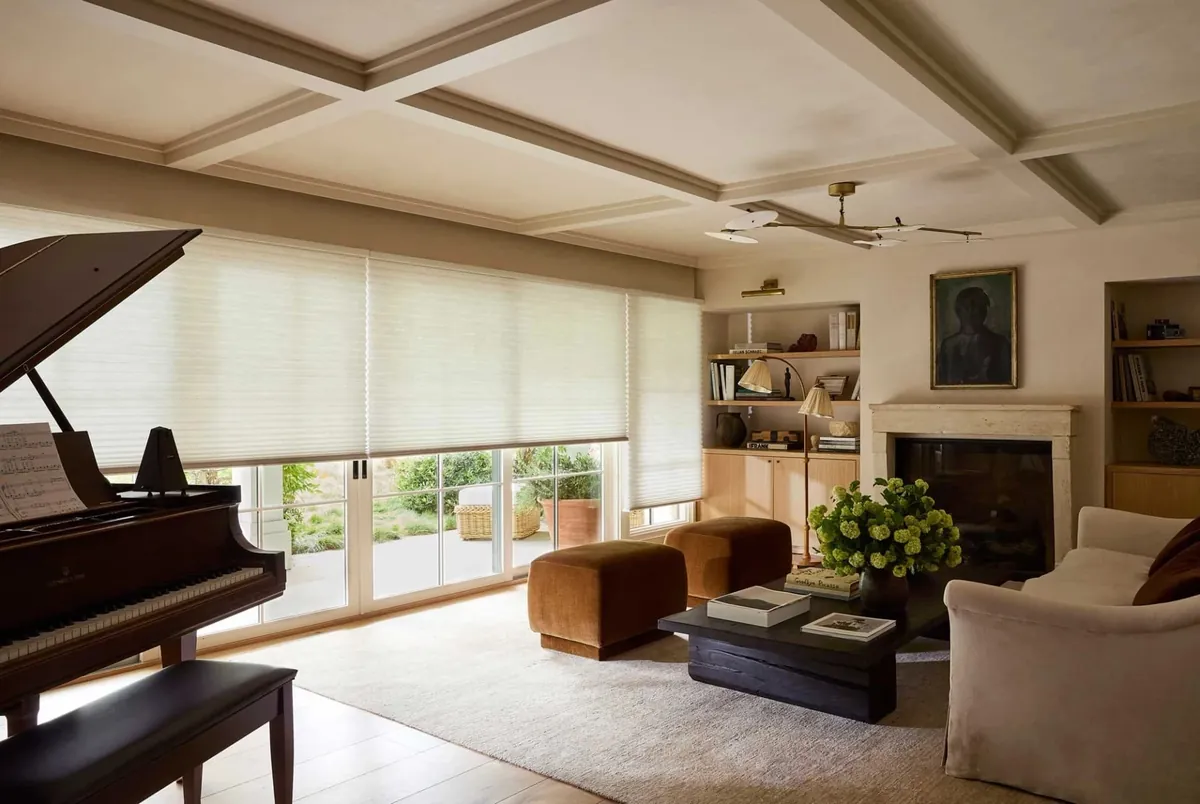
Antique colonials were built before anyone expected a room to be warm right up to the window, and many still have original, single-thickness glass. Honeycomb shades help a great deal in those rooms. The cells hold a layer of still air between the glass and the room, which slows the cold coming off the pane in winter and slows the heat coming in during summer.
On a motor, that benefit is used more consistently. A timetable lowers the honeycomb shades on the north side as the afternoon light fades in winter, holding the day’s warmth inside, and raises them again in the morning. Nobody has to remember. For more on honeycomb styles, see our cellular shades in Wrentham page, and for blinds, our custom blinds in Wrentham page.
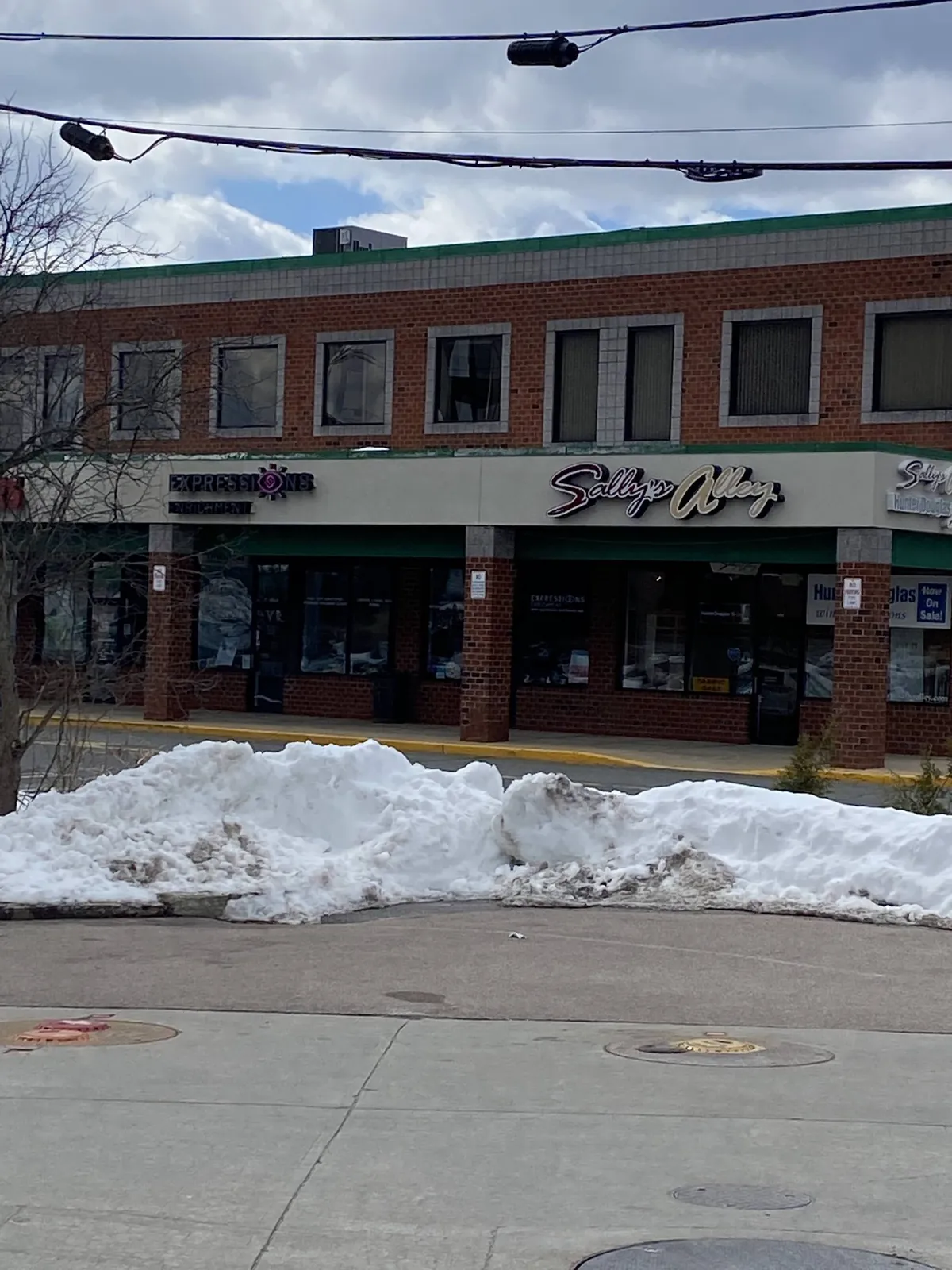
The Franklin showroom, up the road
Our Franklin showroom is the nearest to Wrentham, a short drive north. Stop in to talk about motorized blinds in Wrentham with us, or ask us to come to you with the sample van and see everything against your own windows.
Most projects end up at your house either way, because measuring and choosing fabrics in your own light is how the shades come out right.
Gallery dealer, certified installers
Blinds & Designs holds Hunter Douglas Gallery dealer status, which Hunter Douglas gives to dealers who meet its standards. In practice that means the full range is open to you, and PowerView can be added to honeycomb, sheer, roller, banded, roman and blind styles alike. A great room and an antique parlor can each have the right shade, on one system.
Our installers carry Hunter Douglas certification. Estimates are free, interior design consultations are offered, and if a shade ever needs attention later we offer blind and shade repair in Wrentham. The full range is on our motorized blinds and shades page, and our Wrentham page covers everything else we do here.
Questions from Wrentham
Can the upper windows in our great room be motorized?
Yes. This is one of the most common reasons Wrentham homeowners call. Our certified installers fit the upper shades from safe staging and set their limits, and from then on they run from a remote, the app or a timetable with the rest of the house.
What cuts the glare off Lake Pearl without blocking the view?
A screen or roller fabric with some openness turns down the brightness while you still see the water clearly. On a motor, it can lower automatically as the afternoon sun comes round.
Our antique windows are very small. Is a motor worth it?
Usually, yes, because of how many there are. Grouped, a dozen small shades rise and lower together with one press and finish at the same height, which keeps an old facade looking tidy.
Will the shades keep moving while we are away?
Yes. Timetables run whether or not anyone is home, so the shades open and close as usual, and you can also move them from the app wherever you are.
Do you charge to come out and give an estimate?
No. Estimates are free. Request a consultation, we measure, and you receive a free estimate for the shades and installation you are considering.
Pick a window and we will start there
Whether it is the top row of a great room, the porch by the lake or the front of an old colonial on the common, tell us the window that bothers you most when you request a consultation. We will bring suitable samples, measure, and show you what a motor would do for it. If you would rather talk first, the call button reaches our Franklin showroom.