
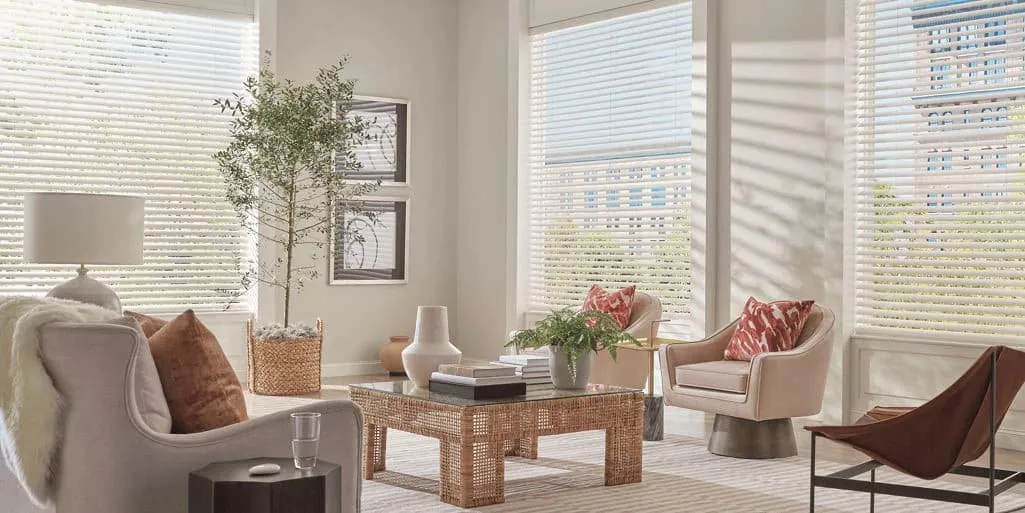
Two kinds of house, one long stretch of light
Dennis splits neatly in two. On the north side, Route 6A runs past the antique captains’ houses of Dennis Village, square and handsome, with tall front windows set in a regular row and old sash that has been painted and puttied many times over. On the south side, Dennis Port packs cottages and condominiums close together near Nantucket Sound, with smaller windows, tighter rooms and neighbors a short step away. Choosing custom blinds in Dennis, MA starts with knowing which of those two houses you live in.
What the two sides share is the light. The rooms that face the bay or the sound take a long, low sun for much of the year, the kind that slides deep across a floor in the late afternoon and settles on a sofa or a rug for hours. That light is lovely to look at and hard on anything made of fabric. Upholstery, rugs and curtains in a bay-side room fade faster than anywhere else in the house.
Then there is the calendar. Plenty of houses here sit quiet for part of the year and fill up in summer, so whatever goes on the windows has to look after the rooms when nobody is home.
Custom blinds in Dennis, MA, by material
Every blind we sell comes from the Hunter Douglas range and is made to the size of your window. These are the three materials most Dennis rooms need, and we carry samples of each to your door, along with verticals for the slider.
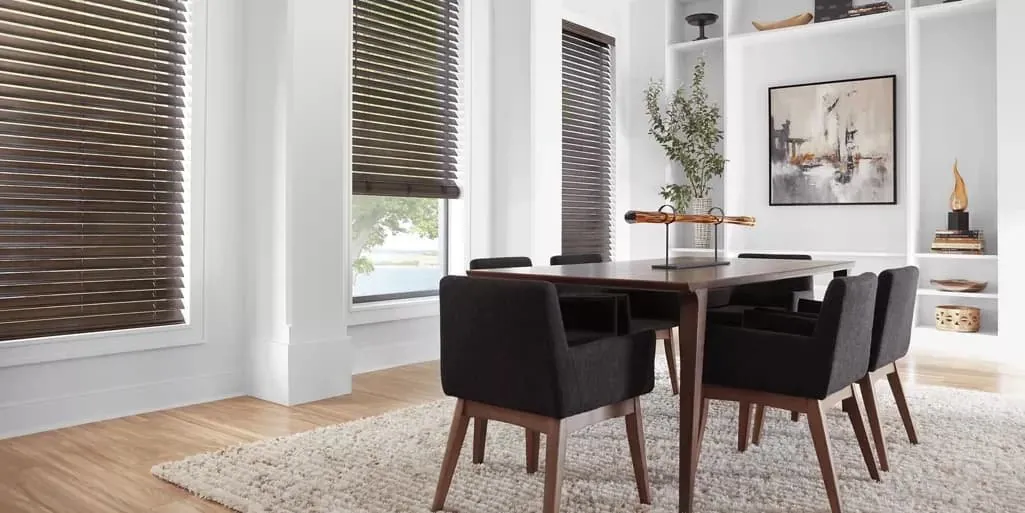
Wood for the captains’ houses
Real wood slats, stained or painted, suit the tall front rooms of an old 6A house, where the floors, doors and trim are wood too and a blind should feel like part of the room.
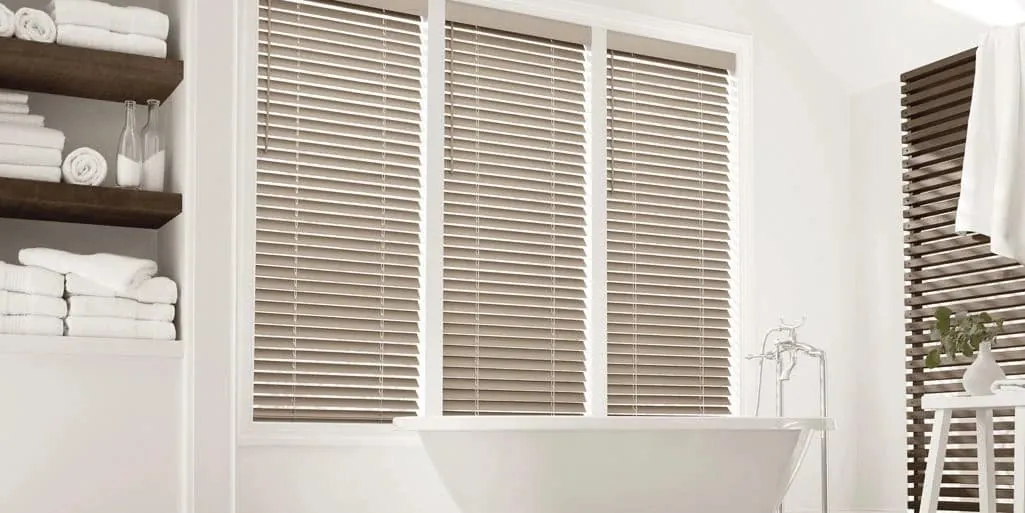
Faux wood for damp and sun
The painted-wood look in a material that shrugs off steam, sea air and a closed-up summer house. A sensible choice for cottage baths and kitchens.
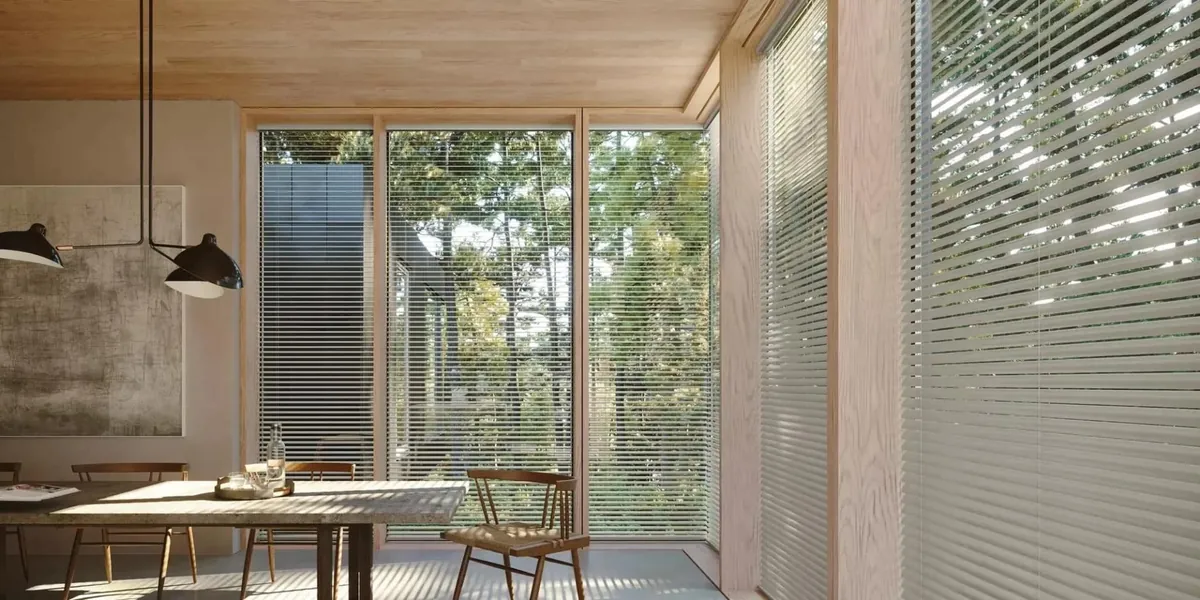
Metal for small windows
Slim aluminum slats with a compact headrail and a small stack, so a narrow cottage window or a condominium bedroom keeps as much glass as possible.
What the bay light does to a room
The sun over the bay and the sound comes in at a shallow angle, especially in spring and autumn and in the last hours of a summer day. Instead of falling on a patch of floor near the window, it reaches across the whole room. Anything it touches for long enough, a sofa arm, a rug, a stack of books on a sill, slowly loses color.
Blinds give you a simple way to manage that without shutting the view out. Tilt the slats upward and the direct beam is turned toward the ceiling, where it brightens the room without landing on the furniture. Tilt them level and you see out between the slats while most of the low sun is caught. Close them fully on the days you are away and the room sits in soft shade.
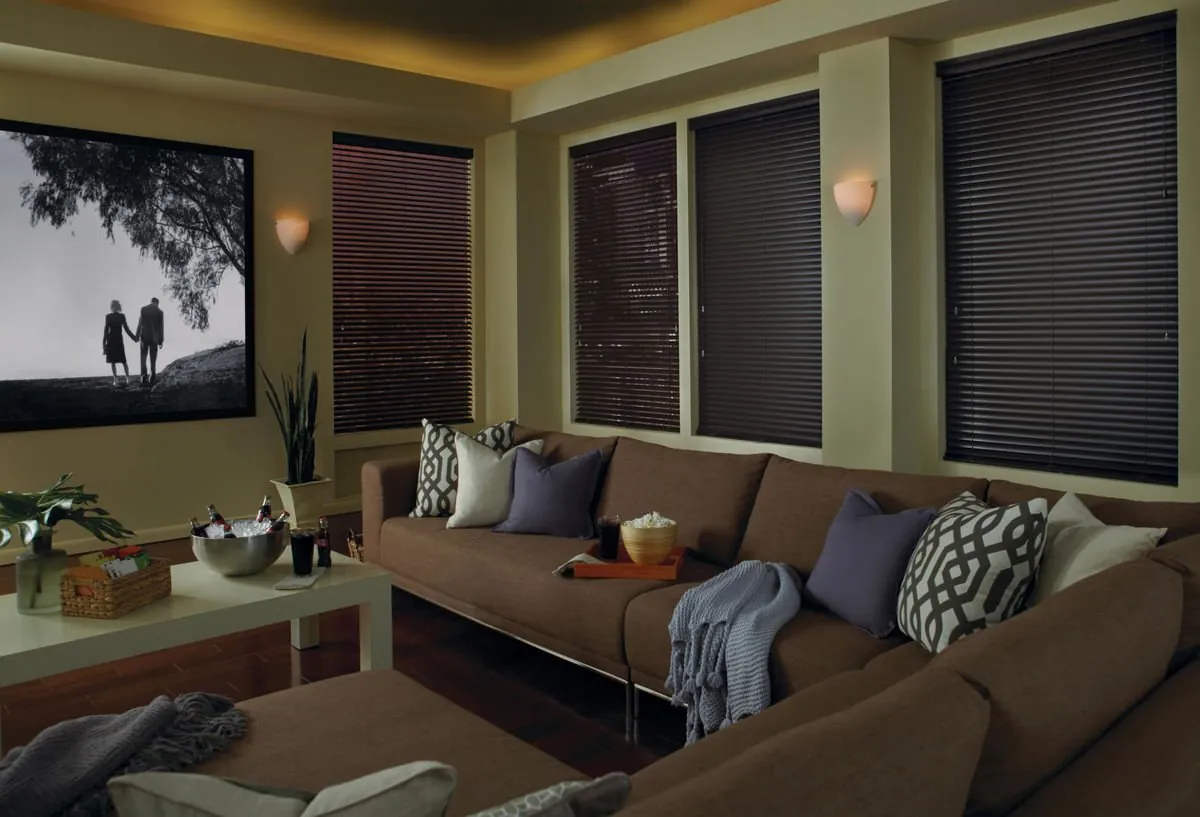
Slat color plays a part as well. Lighter slats bounce more light back toward the glass and keep a room feeling airy even when the blinds are closed. Darker wood looks rich and dims a room further, which suits a bedroom facing west across the water. We bring both so you can judge them in your own afternoon light.
Captains’ houses in Dennis Village
The old houses along 6A were built to be seen from the road, with a symmetrical front of evenly spaced windows. Inside, the front parlor and dining room usually have the tallest windows in the house, while the back rooms and the ell behind were added or rebuilt over the years and rarely match.
That gives the front windows a public job. A blind that shows at the road is part of how the house looks, and on a run of identical windows the effect is best when every blind is the same color and raised to the same height. Soft whites and creams look settled behind old glass. Stained wood reads warmer and suits a house with dark floors and a fireplace in the front room.
Old sash brings practical questions. Painted-over stops, sash cords and pulleys, and the interior storm windows that many of these houses carry all take up depth at the top of the frame. A wood headrail needs a certain amount of room to sit inside the opening and still let the slats tilt freely. Where the frame cannot give that room, we mount the blind on the casing instead, and the old window keeps working behind it.
Frames in a house of that age are seldom square. We measure each one in several places before anything is ordered, so the blind fits the narrowest point and does not rub or leave a slice of light at one side.
Dennis Port cottages and condominiums
South of the highway the picture changes. Cottages near the sound were often built for summer and later winterised, and their windows tend to be small, low and close to the next house. Condominium units have regular modern windows but sit side by side, sometimes with a shared walkway passing just outside.
Here, privacy and space come first. A blind is one of the easiest ways to keep a bedroom or a bathroom private when the neighbor’s window is a few steps away, because you can tilt the slats so light comes in at an upward angle while the view in is blocked. In a small room, a slim metal or faux wood blind with a compact headrail leaves more of the window clear when it is raised.
If you own a condominium, check whether your association asks for a particular color or style facing out before you choose. Many prefer white or a neutral at the street side, and we can match that on the outward windows while you choose freely for the rooms that face the back.
Slat size and the scale of the window
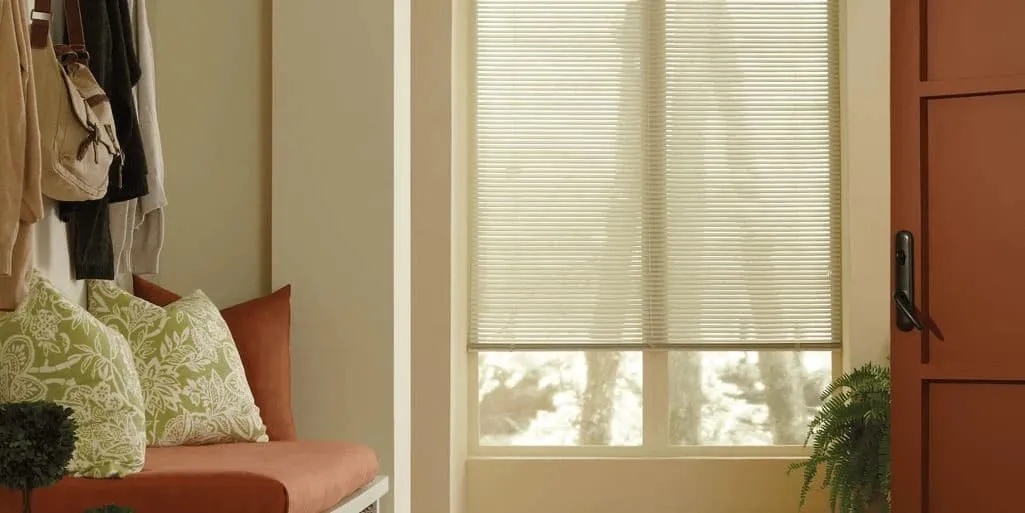
Slats come in more than one width, and the right one depends on the window rather than on fashion. A wide slat gives a bolder, more open look when tilted, with fewer lines across the glass, and it suits the tall parlor windows of a 6A house where there is room for it. On a short cottage window, the same wide slat can look heavy, and the stack it makes when raised takes a bigger bite out of the top of the glass.
Narrower slats sit more quietly on a small opening. They make a finer pattern, they close a little tighter for privacy, and they gather into a smaller bundle at the head. That is why custom blinds in Dennis Port cottages and condominiums are often a slimmer slat than the ones in the village. We hold a wide and a narrow sample up at the same window during the visit, because the difference is easier to see than to describe.
Closing a house for the off-season
A house that is shut for months has needs a full-time house does not. Rooms that face the water still take the sun every day, whether anyone is there to enjoy it or not, and the furniture inside pays for it. Damp can build up in a closed house near the sound, and anything that swells or warps with moisture shows it by spring.
Faux wood is the material we reach for most often in a seasonal cottage. It looks like painted wood, keeps its shape in a damp room and wipes clean when you open up again. In the main rooms of a year-round captain’s house, real wood is fine and often the better look. Whichever you choose, closing every blind before you leave keeps the low sun off the furniture while the house is empty.
For the windows you cannot easily reach, or for rooms you want to open and close on a schedule while you are away, ask us about PowerView motorization. We cover it further down this page.
Sliders and the deck
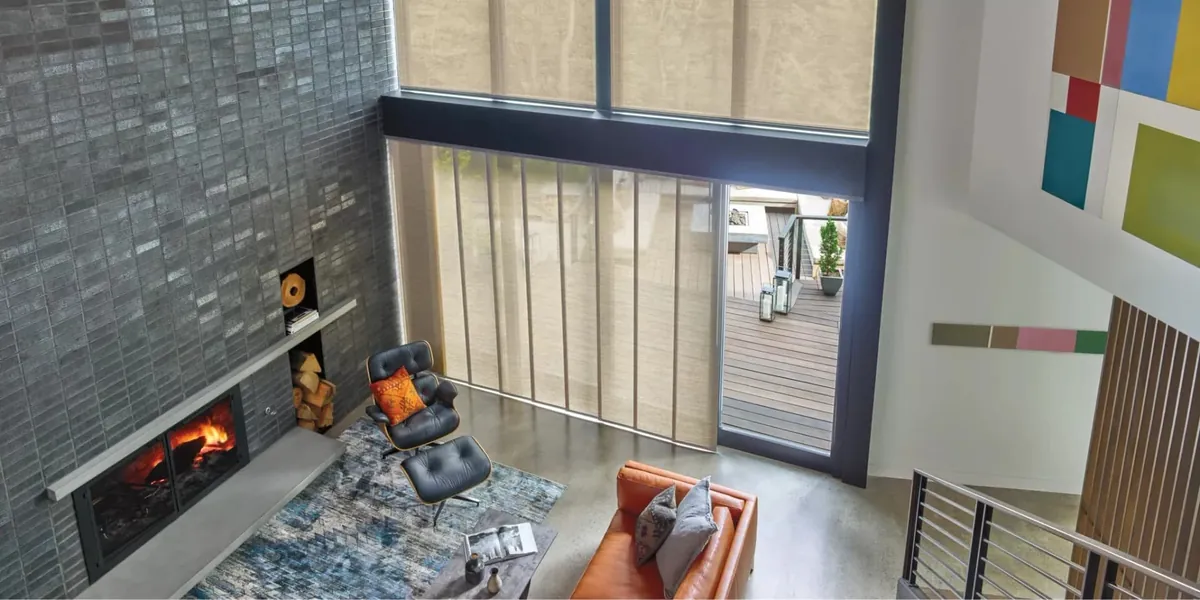
Many Dennis houses, old and new, have at least one sliding door: out to a back deck in the village, or onto a small patio behind a cottage near the beach. A horizontal blind on a slider is awkward, because you have to raise it every time you go out. Vertical blinds solve that. The vanes draw to one side like a curtain and turn to control the light, so the door stays easy to use.
Gliding fabric panels are another option for a wide door. They slide across on a track in broad panels and stack neatly at the side, with a softer look than vanes. Both come in colors that sit well next to wood or faux wood blinds on the windows beside them.
Kitchens and baths near the sound
The rooms that take the most punishment in a beach house are the ones with water in them. A cottage kitchen fills with steam on a summer evening, an outdoor shower drips past the bathroom window, and sea air drifts in whenever the sash is up. Real wood can cope with ordinary household moisture, but a room that is regularly wet is better served by faux wood, which will not swell, bow or mark when it gets damp.
Faux wood also cleans easily, which counts in a kitchen where cooking leaves a film on everything near the stove. Wipe the slats with a damp cloth and they are done. In a small bathroom that faces the house next door, close the slats with the curved side facing into the room and you have full privacy with some daylight still reaching the ceiling.
If the front rooms take real wood, we can match the color in faux wood for the wet rooms, so custom blinds in Dennis houses look like one set from room to room even though the material changes where it needs to.
Tilting, lifting and the choice of control
How a blind works matters as much as what it is made of. A cordless blind has no cord hanging at the side: you lift or lower the bottom rail by hand and it stays where you leave it. That keeps a cottage window tidy and takes away a loose cord that could tangle in a small room.
A wand on the side tilts the slats, which is the control you use every day. On a tall front window in a captain’s house, the wand sits within easy reach even when the headrail is high.
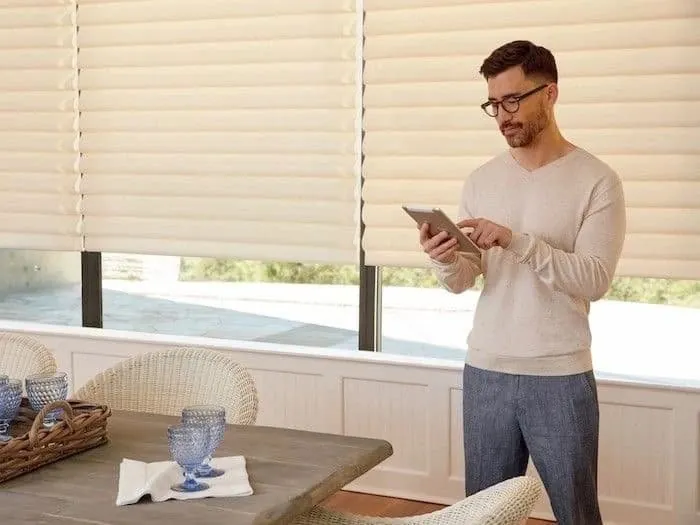
PowerView motorization takes this further. The blinds tilt and lift from a remote or the app on your phone, and they can follow a schedule, closing as the low sun reaches the bay-side rooms and opening again in the morning. For a house that sits empty part of the year, a schedule keeps the rooms shaded without anyone there. We talk through how the motors are powered when we visit. Our page on motorized blinds in Dennis goes further.
Your consultation, step by step
Every house here asks something different, and the only way to judge a blind is in the room it will hang in. Our vans carry samples of each material, so we can bring the showroom to you.
- You request a consultation online or with the call button, and we agree a time.
- We arrive with wood, faux wood, metal and vertical samples in a spread of colors and slat sizes.
- We start with the rooms that worry you most, often the bay-side room or the cottage bedroom nearest the neighbors.
- You hold slats against your own trim and look at them in your own light.
- We measure every window, check the frame depth, and note storms, sash cords or anything else in the way.
- You leave with a free estimate for the blinds you are considering and time to think it over.
If you want a second opinion on color or on how blinds work beside other window treatments, our interior design consultations can happen at the same visit. Read more about what happens at an in-home consultation before we arrive.

Fitting the blinds
When the blinds come in, our certified Hunter Douglas installers fit them. In an old house they screw the brackets into sound wood rather than tired plaster, level each headrail even where the frame is not, and check that every blind tilts and lifts without catching on a sash lock or a storm window. Then they show you how each control works.
On a cottage near the sound, they set the brackets so the blind clears a window you open often in summer, and on a condominium they keep the outward-facing blinds at a matching height. Our page on what happens on installation day explains the visit in more detail.
To compare the materials in more depth, see our wood blinds, Parkland wood blinds, metal blinds and vertical blinds pages, or start from the main custom blinds page.
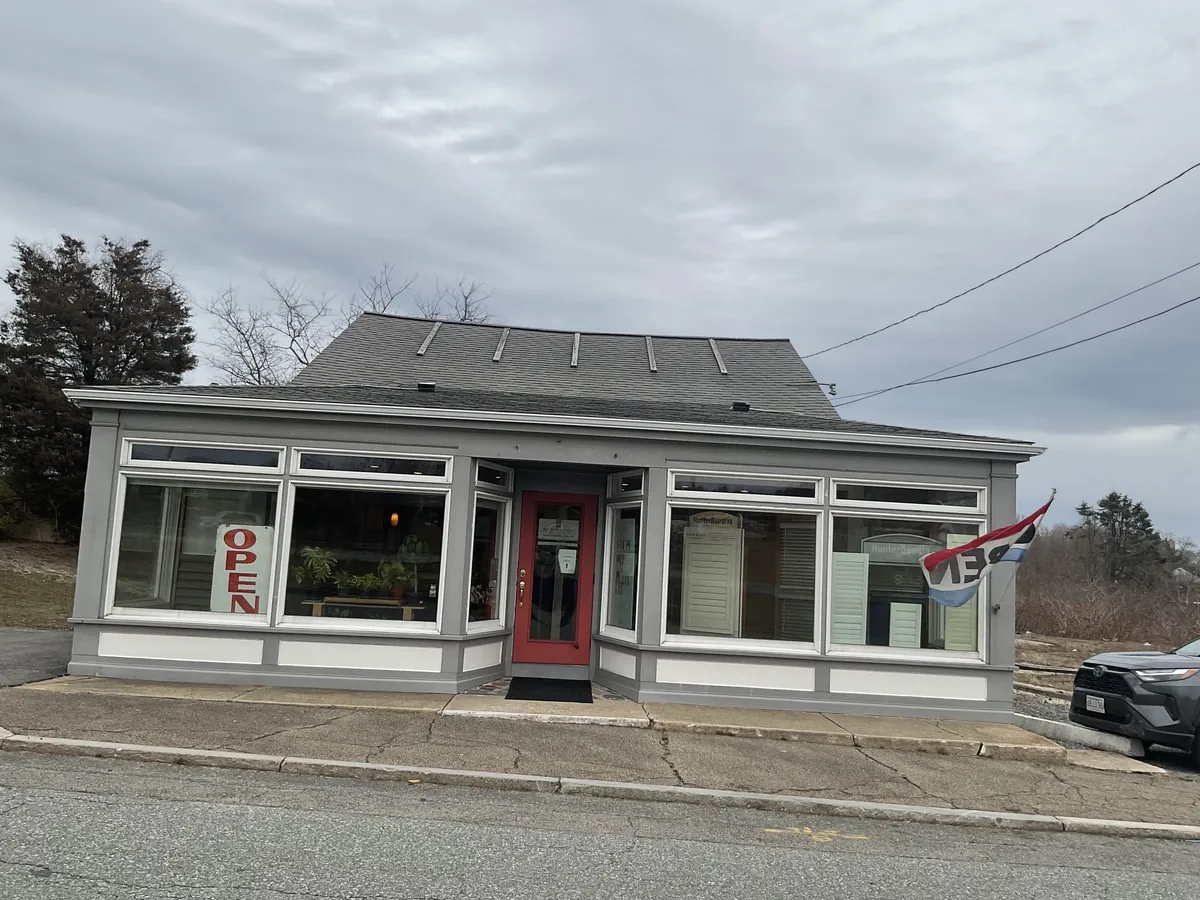
Our nearest showroom is in Sagamore
If you would like to see the blinds before we come to you, our Sagamore showroom is the closest to Dennis, back along the Cape toward the canal.
Blinds & Designs is a Hunter Douglas Gallery dealer, a designation the brand gives to dealers who meet its standards. That means the whole range of blinds is open to you, along with the shades, shutters and drapery that suit other rooms. Our installers are certified by Hunter Douglas, and if a blind you already own needs attention, we handle blind and shade repair as well.
Planning more than the blinds? Look at plantation shutters in Dennis or cellular shades in Dennis, or see everything we offer in town on our Dennis page.
Questions from Dennis
Will wood blinds fit the old sash in my 6A house?
Often they will. The question is depth: sash cords, pulleys and interior storms take up room at the top of the frame. We measure for it, and where an inside mount will not fit we mount the blind on the casing so the old window still opens behind it.
What material suits a cottage that is closed all winter?
Faux wood is usually the safest choice. It keeps its shape in a damp room near the sound, looks like painted wood and wipes clean when you open the house again.
How do I protect furniture in a bay-side room?
Tilt the slats upward during the brightest hours so the sun lands on the ceiling instead of the sofa, and close them when you are away. A motorized schedule can do that for you while the house is empty.
Can my condominium blinds match the rest of the building?
Yes. We can keep the outward-facing windows in the color your association prefers and let you choose freely for the rooms at the back.
Is the estimate free?
Yes. Once we have measured, you receive a free estimate for the blinds you are considering.
Ready when you are
A captain’s house and a cottage near the sound need different things, and we are happy to look at either. Request a consultation and we will bring samples of every material, measure each window and leave a free estimate for custom blinds in Dennis, MA. If you would rather see the blinds first, use the call button to reach our Sagamore showroom.