
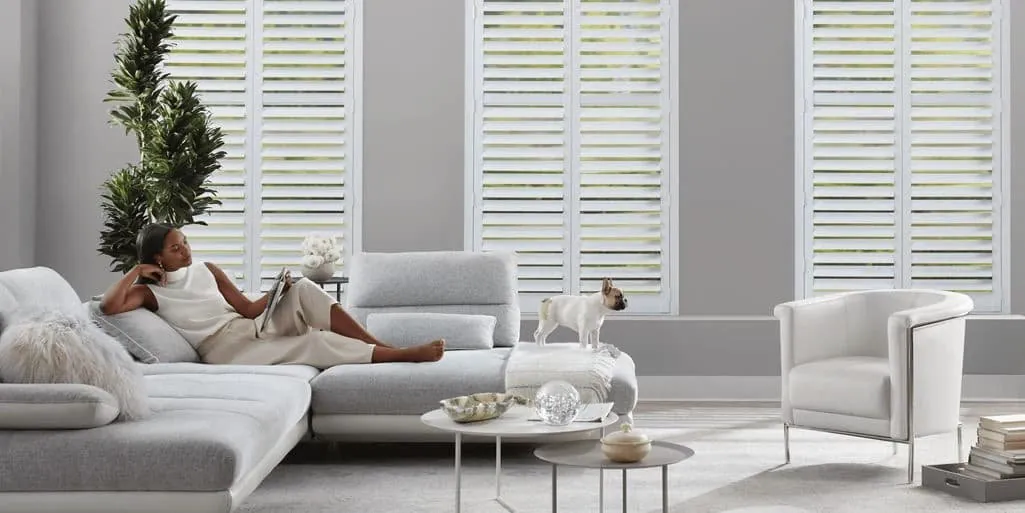
Rooms that face the pond
Pembroke is a town of ponds, and a good share of its houses were placed to look at one. Around the shores you find post-war ranches and capes whose living rooms and kitchens were built around the water view, with the biggest window in the house pointed straight at it. Further from the water, off Route 14 and Center Street, newer colonials fill out the subdivisions with tidy rows of standard-sized windows. When we plan plantation shutters in Pembroke, MA, the pond view is usually the first thing on the table.
A shutter can protect that view rather than block it. With the louvers open and level, you look straight through to the water. Tilted upward, they bounce the light off the pond onto the ceiling. Swung fully back, the panels fold against the wall and the window is bare.
The good news about Pembroke houses is that most of the windows are modern and standard in size. That takes much of the guesswork out of fit and leaves the interesting decisions: which material for which room, how wide the louvers should be, and how the panels should open.
Three collections for plantation shutters in Pembroke, MA
Hunter Douglas makes three shutter collections. They look alike on the wall but are made from different materials, and the material decides where each one belongs.
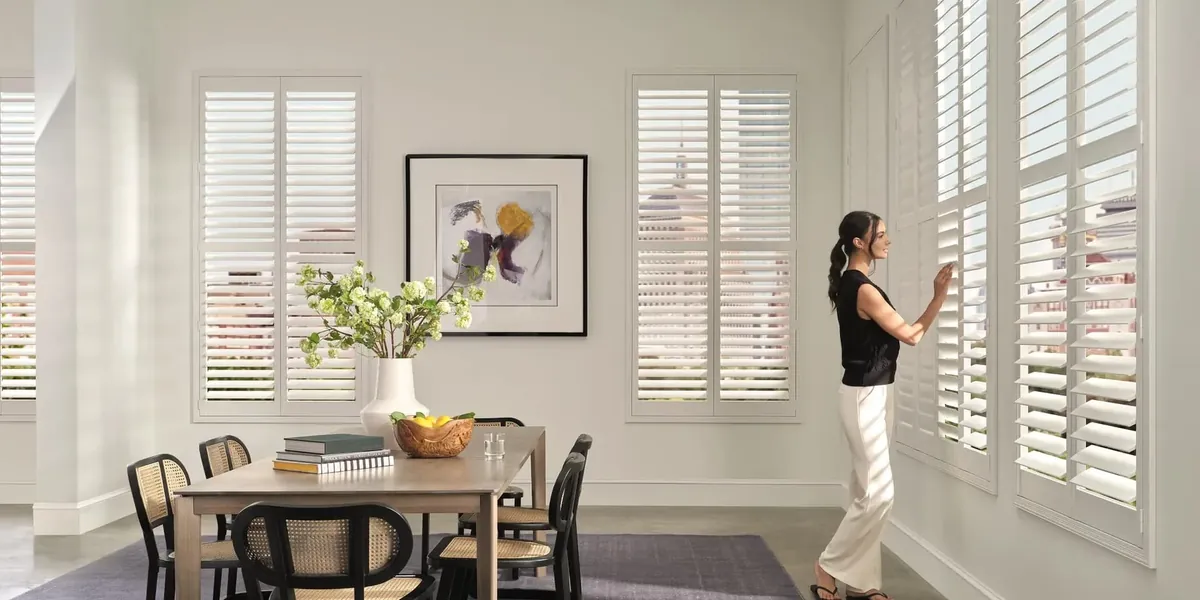
Heritance hardwood
Genuine hardwood that can be painted or stained. A fine fit for a dining room or a front living room where you want the warmth of real wood.
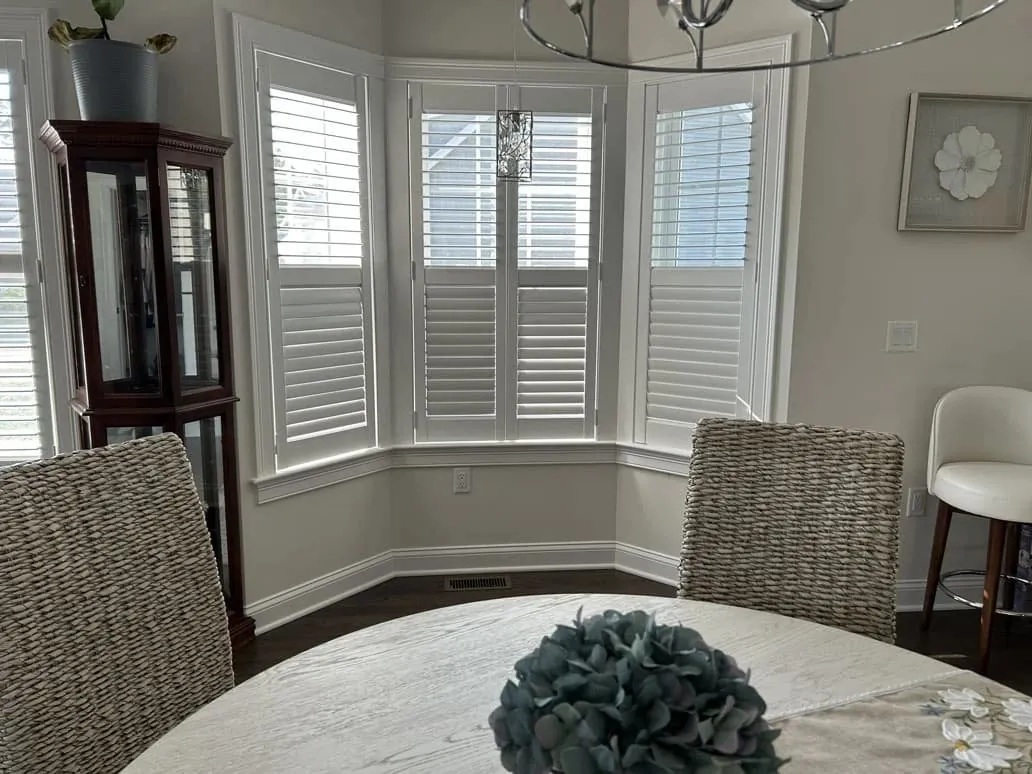
NewStyle composite
A composite with the look of a painted wood shutter. Steady and consistent from room to room, which makes it a common choice for a whole colonial.
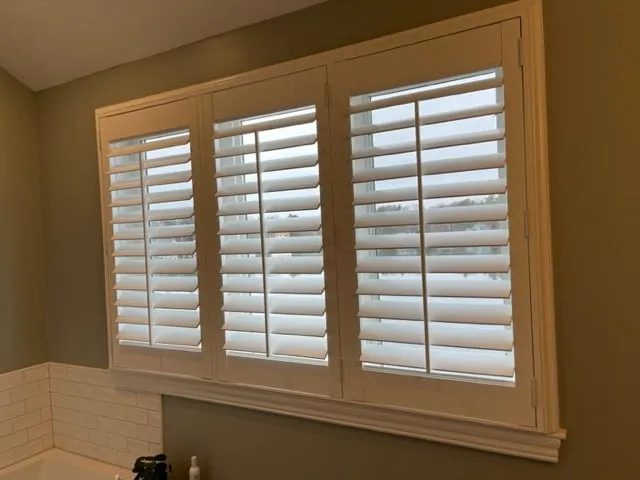
Palm Beach polysatin
No wood at all, so humidity does not bother it. The shutter for bathrooms, kitchens and laundry rooms, and for a pond-side room that stays open in summer.
Post-war ranches by the water
The ranches near the ponds follow a familiar plan. A wide living room window, sometimes flanked by narrow side lights, faces the water or the road. A slider leads from the kitchen or dining area to a deck or patio. Down the hall, bedrooms have plain double-hung or horizontal windows. Because these windows repeat from room to room, a ranch takes a whole-house shutter order very well, and the result looks neat from both the yard and the street.
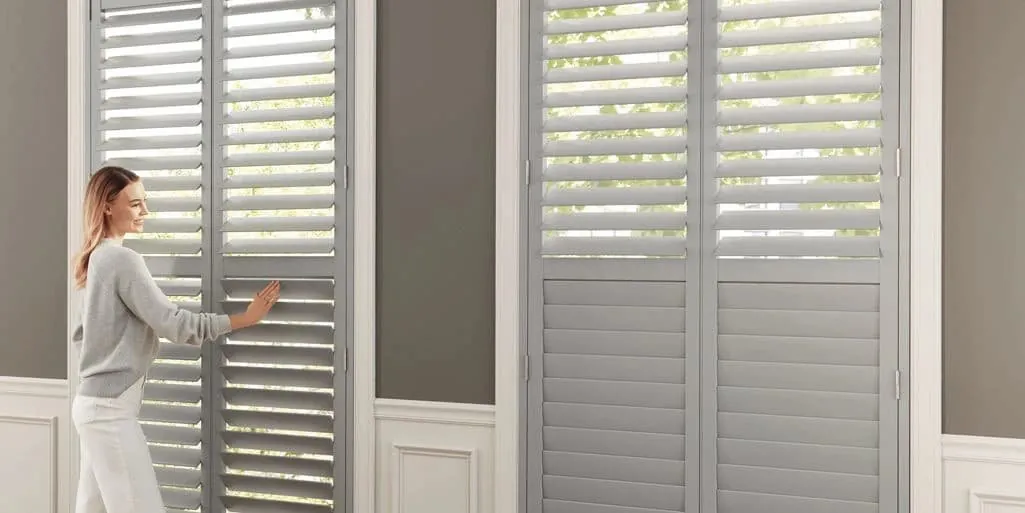
The big living room window is where most of the thought goes. We usually split it into several panels, hinged in pairs so they fold back cleanly to either side. A wide louver suits this kind of window, since it leaves bigger gaps between blades and keeps the pond in sight even when the shutter is partly closed. Side lights get their own narrow panels, matched in louver and finish.
The slider is the other question. Shutter panels on a slider can run on a track and glide past each other, so the door opens without anything swinging into the room. It keeps the look of the shutters consistent all the way across the back of the house, from the kitchen window to the deck door.
Capes with dormers upstairs
Pembroke’s post-war capes put their bedrooms under the roof, lit by dormer windows. Dormers are snug: the window often sits close to the side walls of the dormer, with a sloped ceiling just above it. That leaves less room for a shutter to swing than in a downstairs room.
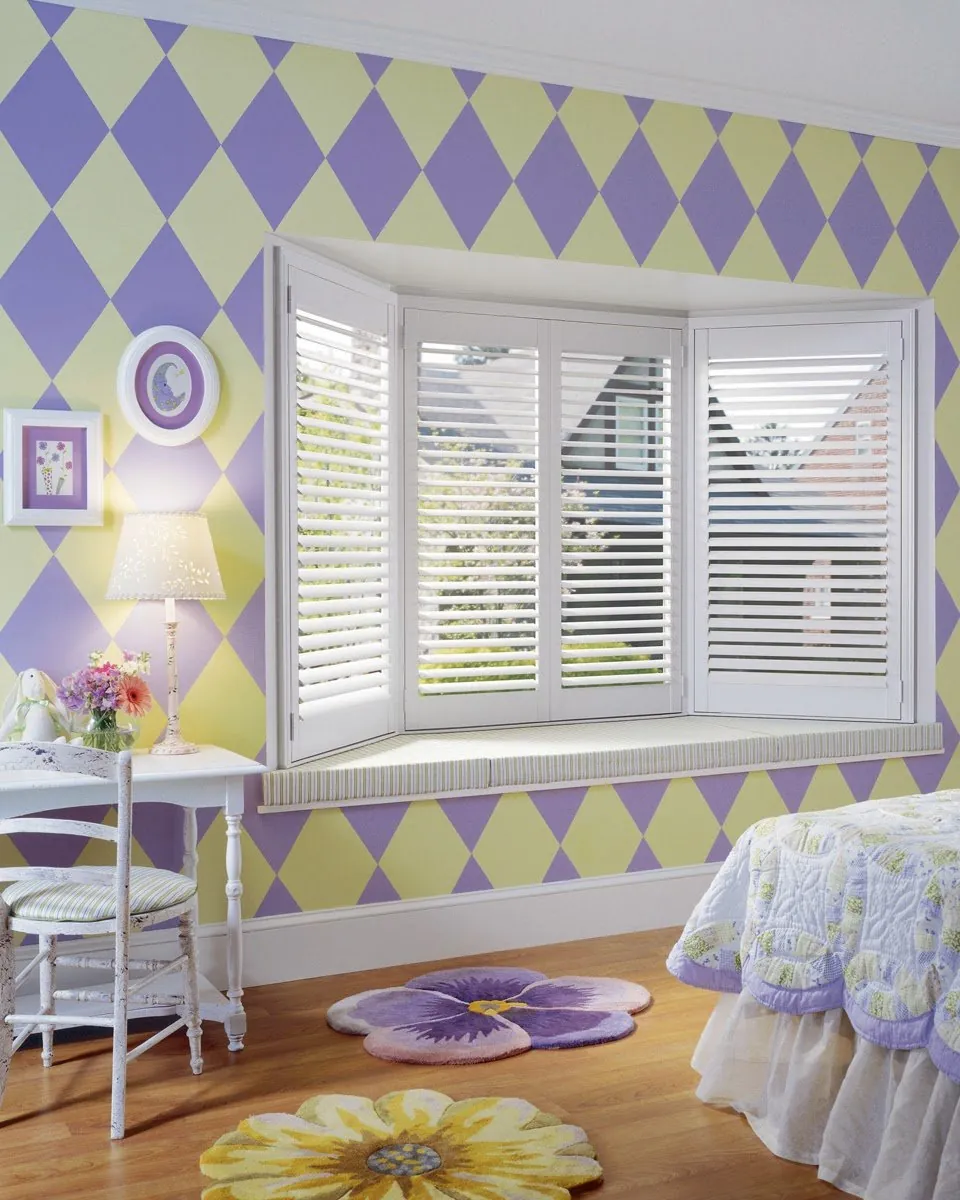
There are good ways around it. An inside mount keeps the frame within the window opening, so nothing projects into the narrow dormer space. Bi-fold panels, which fold in half as they open, need less clearance than a single wide panel. Where a full swing is not practical at all, we can talk about whether the louvers alone, tilted open and shut, give enough control without opening the panels day to day.
Dormer bedrooms also tend to be bright first thing, especially on the east side of the roof. A shutter with a close-fitting frame and the louvers closed keeps a cape bedroom dim in the early morning far better than a loose curtain, and it stays neat at the window when it is open.
Newer colonials off Route 14 and Center Street
The colonials in Pembroke’s newer subdivisions bring square, standard-sized openings, two stories of matching windows and usually a family room at the back with a larger window or a pair of French doors. Here fit is straightforward, and the conversation turns to consistency and finish.
A colonial looks best from the street when every front window shows the same thing. Choosing one louver size and one color for the whole front of the house gives that clean, even look. Inside, you can still vary the material by room: NewStyle in the living spaces and bedrooms, Palm Beach in the bathrooms and laundry, perhaps Heritance in a formal dining room. Because the panels share a color and a louver, the change in material does not show from outside.
French doors in a family room can take shutter panels mounted on the doors themselves. We set the louvers so they clear the door handle and plan the hinges so the door still opens fully. A matching panel on any side light completes the wall.
Choosing a louver width
Louver width is one of the biggest choices you make with a shutter, and it changes both the look and the view. Hunter Douglas offers a range of widths across its collections, and we bring samples so you can compare them at your own windows.
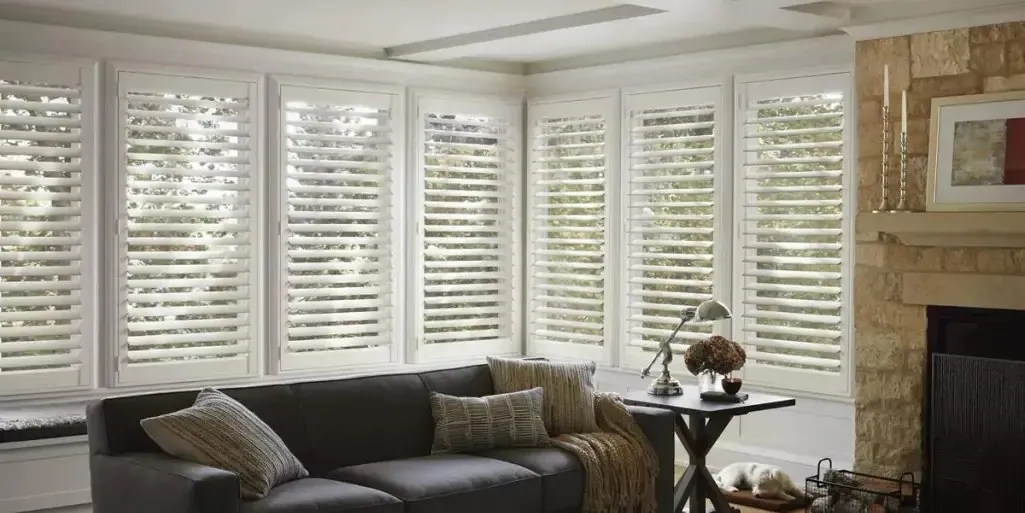
A wide louver means fewer blades across the window and more open space between them. It gives the clearest view when open, which is why it is the usual pick for a pond-facing room or a big family room window. It also suits larger rooms and higher ceilings, where a narrow blade can look busy.
A narrow louver gives a more traditional look and stays in proportion on small windows, such as the side lights beside a front door or a little bathroom window in a cape. It also closes into a tighter pattern.
Most Pembroke houses settle on one width for the whole house, so the windows match from the street. Occasionally a very small window gets a narrower blade to keep it in proportion, and that difference is hard to spot from outside.
Light off the water
A pond does something to the light in the rooms that face it. On a sunny day, light arrives from the sky and again from the surface of the water, and in the late afternoon that reflected light can be bright enough to wash out a television or a computer screen.
This is where a shutter earns its keep. Tilt the louvers upward and the light off the pond is thrown onto the ceiling, so the room stays bright but the glare is off the furniture. Tilt them downward for privacy from a boat or the far bank while you still see the water. On a summer evening, close the lower half with a divider rail and leave the top open to the sky.
Shutters also have no fabric to fade, which helps in a bright room that takes direct sun for much of the day. The panels just need a dusting or a wipe with a damp cloth now and then.
Sunrooms added to older ranches
Plenty of the pond-side ranches have gained a sunroom or a four-season room over the years, usually on the side that faces the water. These rooms are mostly glass, with windows on three walls and sometimes a row of transoms above. They are lovely in spring and autumn, and hard to sit in on a July afternoon.
Shutters give a sunroom a sense of shelter without losing its purpose. Panels on each wall can be set differently through the day: closed on the west side as the sun drops, open on the water side for the view. Palm Beach is a sensible choice here, since a sunroom swings between warm and cool and can collect damp air in the shoulder seasons. Transoms above can take fixed shutters to match, or stay clear if you like the sky.
Standard windows, real decisions
Because Pembroke’s housing is mostly made up of standard modern sizes, people sometimes assume a shutter is a shutter. It is not. Even on a perfectly square opening, a handful of choices shape how plantation shutters in Pembroke, MA, look and work for years.
The tilt is one. A traditional tilt rod runs down the front of each panel and moves all the louvers together. A hidden tilt moves them from a mechanism inside the panel edge, which gives a cleaner face and lets the louvers close more tightly. Some people like the classic look of the rod; others prefer nothing on the front.
The divider rail is another. A rail across the middle of a tall panel lets the top and bottom louvers tilt independently, which is useful on a ground-floor window that faces the road.
The frame is a third. On standard openings an inside mount is common, but a shallow window, or one with a crank handle in the way, may call for a frame mounted on the wall around the window. Frame profiles also vary from plain to moulded, and a moulded frame can stand in for missing trim around a newer window.
Kitchens, baths and mudrooms
The working rooms of a house deal with steam, splashes and wet coats, and they need a shutter that will not mind. In Pembroke’s ranches and capes, the kitchen window usually sits right over the sink, and the bathroom window is often close to a tub or shower.
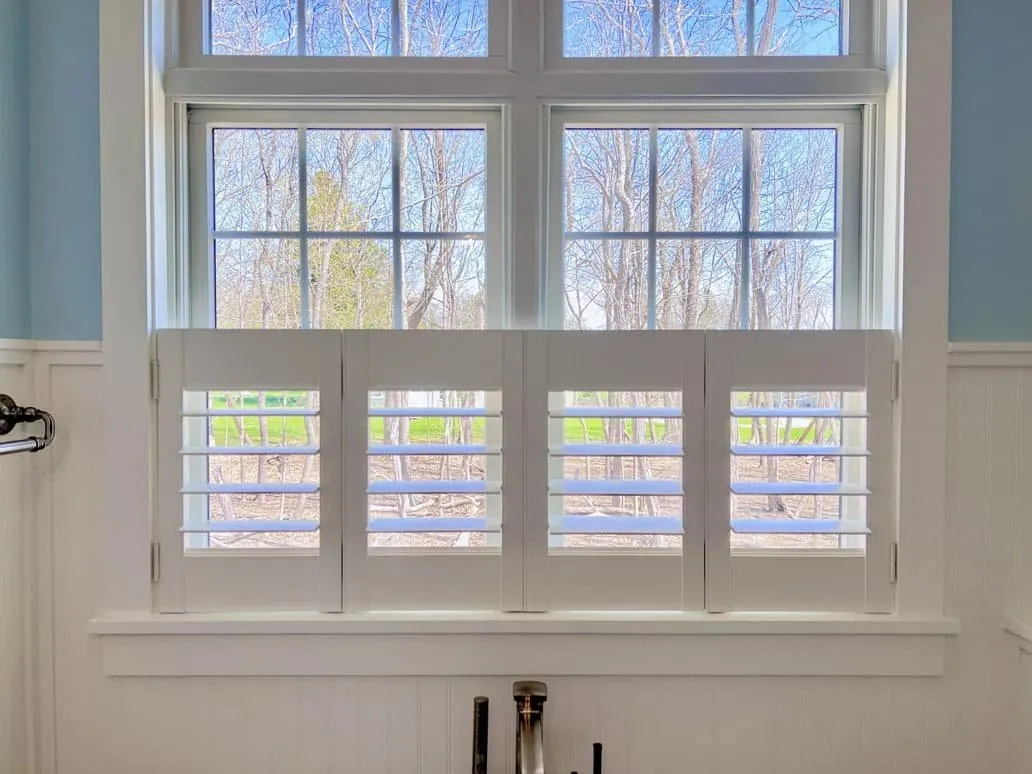
Palm Beach is made for these rooms. Its polysatin material holds its shape in humid air, and it wipes clean. Over a kitchen sink, cafe-style panels on the lower half of the window are a popular choice: they screen the counter and let daylight in over the top. In a bathroom, full-height panels with the louvers angled up give privacy while still letting light in.
Mudrooms and laundry rooms in the newer colonials benefit in the same way. A shutter there is easy to keep clean and matches the rest of the house from outside.
Entry halls and side lights
Many of the colonials and some of the later ranches have a front door flanked by tall, narrow side lights. They are easy to forget, but they are often the first window anyone sees when they come to the door, and at night they show straight into the hall. A narrow shutter panel in each side light, fixed in the frame or hinged to swing, gives privacy without darkening the entry.
Because these panels are so slim, a narrower louver usually looks better than the wide blade used in the living room. Painted the same white as the rest of the house, the difference is barely visible, and the entry ties in with every other window. Plantation shutters in Pembroke, MA, entries also make a tidy match to the panels on a stair landing window above, where a single fixed shutter can finish the view up the stairs.
Care over the years
One of the quiet benefits of a shutter is how little it asks of you. There is no fabric to wash or send out, and no cord to tangle or wear. A soft duster run across the louvers, or a damp cloth on a Palm Beach panel in the kitchen, keeps them looking right. Hinges and tilt mechanisms are built to be opened and closed every day.
If something ever does go wrong, such as a louver that slips or a panel knocked out of line, we handle repairs on window coverings our customers already own. That is part of why we think of plantation shutters in Pembroke, MA, as a long-term part of the house rather than a seasonal decoration.
What a visit looks like
Most Pembroke customers like to start at home, where the samples can sit against their own walls and windows. Our vans carry samples of all three collections, the louver widths and the finishes, so we bring the showroom to you.
- You request a consultation online or with the call button, and we agree on a time.
- We start in the rooms that matter most to you, often the one facing the pond.
- You compare Palm Beach, NewStyle and Heritance side by side, in your own light.
- We settle louver width, tilt, divider rails and frame for each window.
- We measure every opening and you get a free estimate, with time to think it over.
When your shutters are ready, certified Hunter Douglas installers set the frames, hang and align the panels, and check that every louver closes evenly. You can read more about what happens at an in-home consultation before we come.

Why buy shutters from a Gallery dealer
Blinds & Designs is a Hunter Douglas Gallery dealer. For a Pembroke house that means one consultation covers all three shutter collections, every finish and the full range of louver widths and frames, so you can mix materials room by room and still match from the street.
Every shutter we sell is fitted by an installer certified by Hunter Douglas. Shutters are heavy, precise products, and a careful installer is the difference between panels that meet in a straight line and panels that drift. We also offer interior design consultations, window covering automation and repairs on blinds and shades you already own.
For other rooms, see custom blinds in Pembroke or roller shades in Pembroke, or everything we do in town on our Pembroke page. Our plantation shutters page covers the whole range.
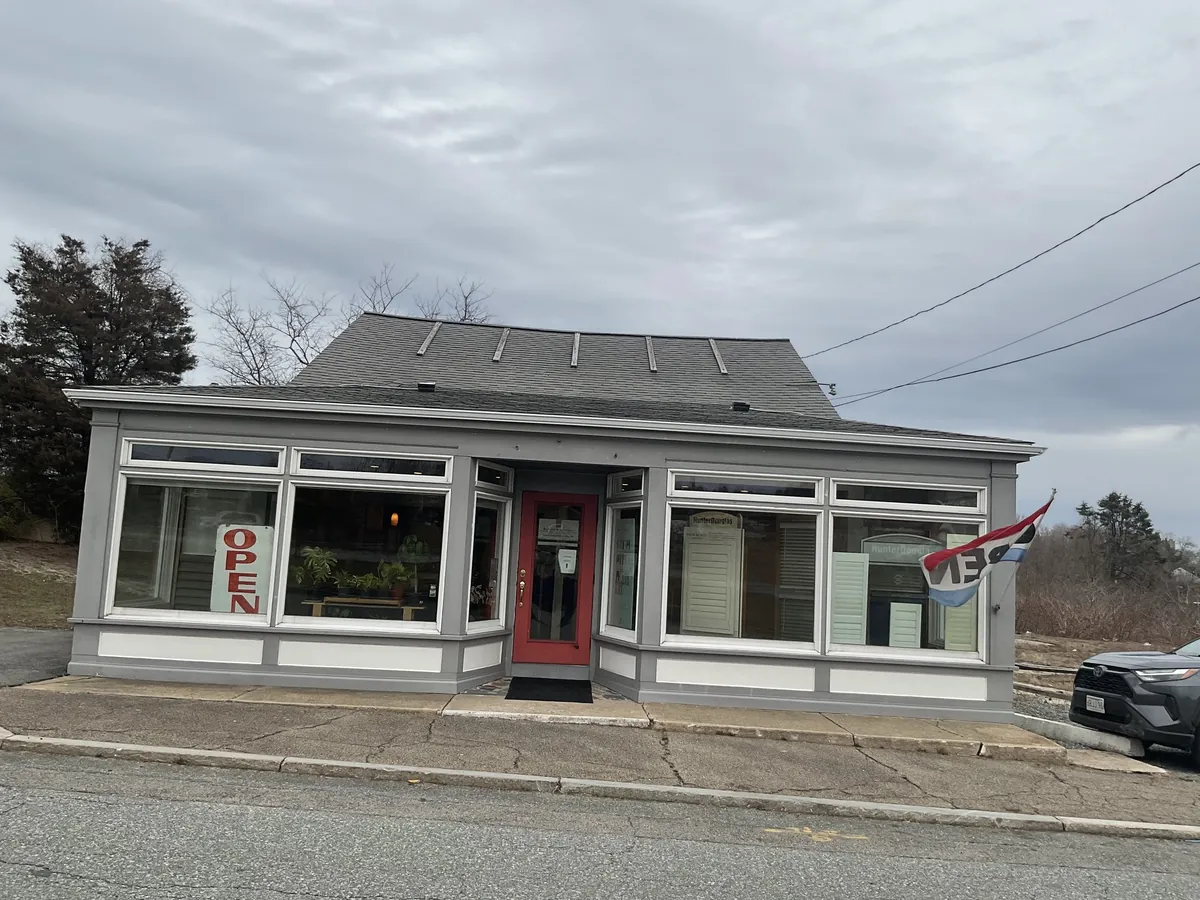
Sagamore is our nearest showroom
The nearest Blinds & Designs location to Pembroke is the Sagamore showroom. You are welcome to stop in and talk through your windows before booking a visit.
Even so, a shutter is easiest to judge in your own room, against your own wall color and with your own pond light coming through. That is why most of our Pembroke work begins with samples at your door.
Questions from Pembroke
Will shutters block my view of the pond?
Not when they are open. Wide louvers leave plenty of space between the blades, and the panels swing back to the wall when you want the window clear. Many pond-side customers keep the louvers level through the day and only close them for glare or privacy.
Can a slider have shutters?
Yes. Panels can run on a track across the slider and glide past one another, so the door opens without anything swinging into the room. They match the shutters on the windows beside it.
What works in a cape’s dormer bedroom?
An inside mount and bi-fold panels usually solve the tight space in a dormer. We look at the clearance around the window before recommending a layout.
Do I need different shutters for the bathroom?
We suggest Palm Beach for bathrooms and kitchens, because its polysatin material handles humidity without swelling. It can match the color and louver of the shutters elsewhere in the house.
Is the estimate free?
Yes. Once we have measured, you get a free estimate for the shutters you are considering.
Book your visit
Shutters are easiest to choose when you can see them at your own windows. Request a consultation and we will bring Palm Beach, NewStyle and Heritance samples to your house, measure each window and give you a free estimate. Prefer to talk first? Use the call button, or stop by the Sagamore showroom.