
Dartmouth houses and the way their window coverings wear
Dartmouth has almost every kind of New England window in one town, and each kind wears out a blind in its own way. That is why blind and shade repair in Dartmouth, MA, starts with the house rather than the product. Our North Dartmouth showroom is here in town, so these are windows we know well.
In Padanaram the older colonials and shingled capes have modest double-hung windows that get opened, closed and covered every day of the year. Off Faunce Corner and Slocum Road, the ranches built in the 1960s and 1970s have big picture windows and sliders, with blinds that are wide and heavily used. Out toward Russells Mills, farm properties still have nineteenth-century sash set deep in thick walls, often a little out of square after all this time. And in South Dartmouth, rooms that face Apponagansett Bay take hard afternoon glare off the water.
Put those together and you get the repairs we see: cords worn through by sun and daily pulling, wands that have snapped, headrails that have shifted on old wood, and tilt mechanisms that have simply worn out.
What blind and shade repair in Dartmouth usually covers
Most calls fall into one of three groups. Each covers several smaller faults, and the same few parts are behind most of them.
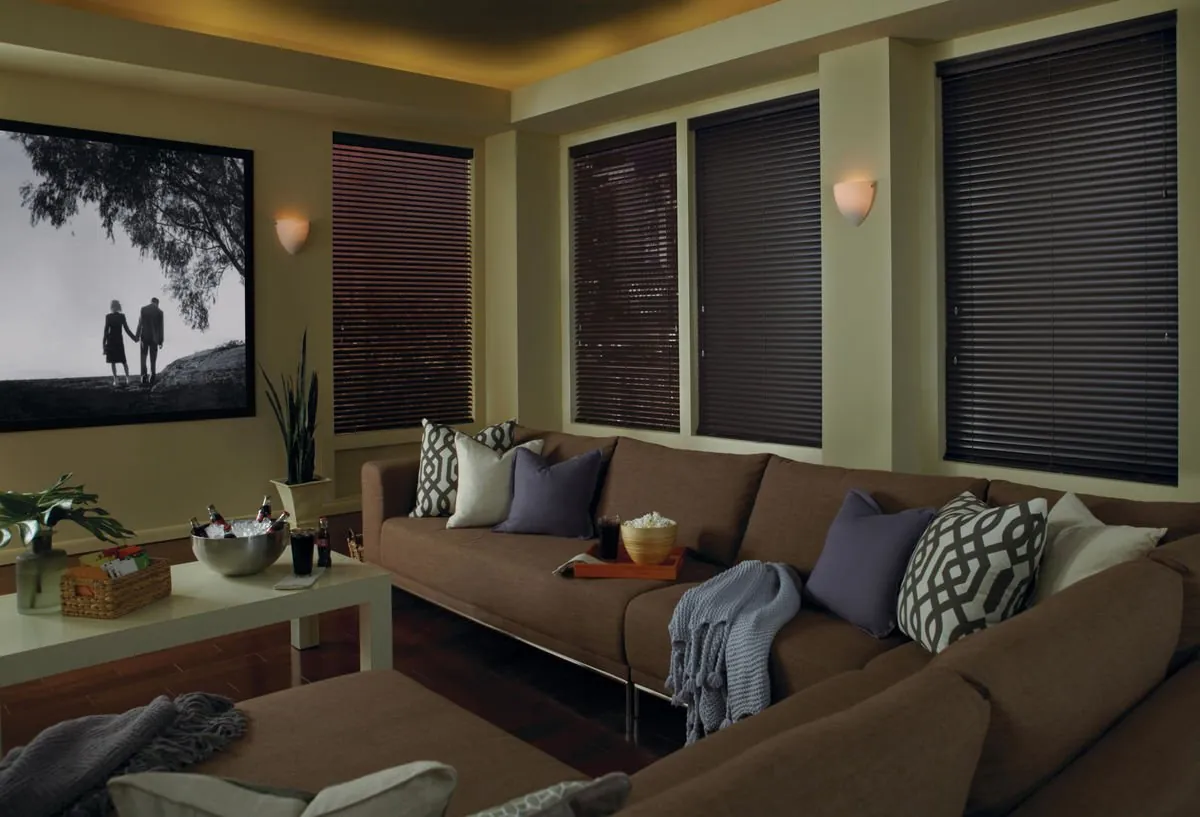
Blinds that will not lift or tilt
Restringing lift cords and ladder strings, a new tilt wand, or a replacement tilt mechanism when turning the wand no longer moves the slats. Wood, faux wood and metal blinds all have the same basic parts.
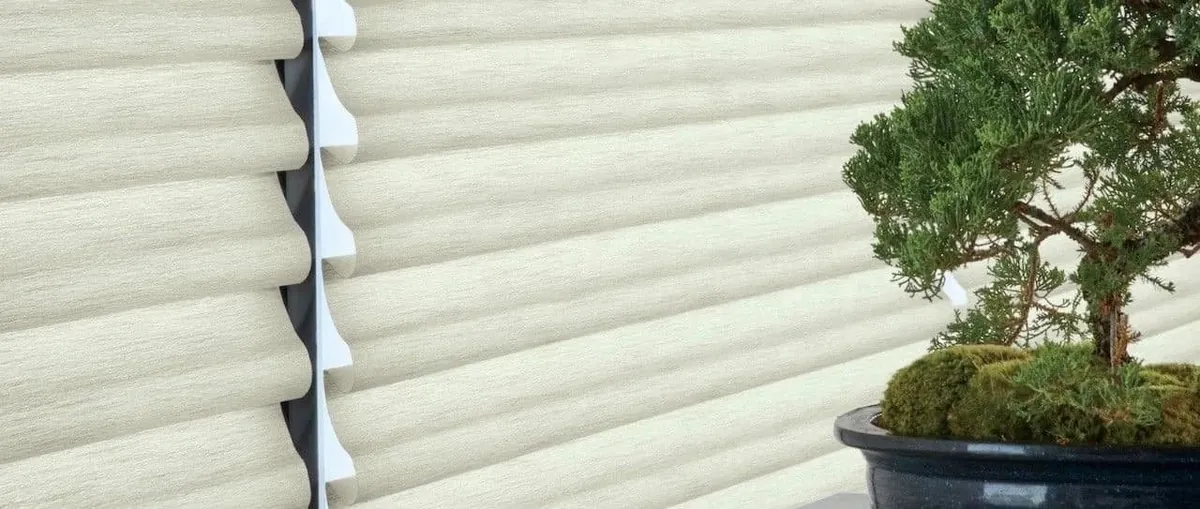
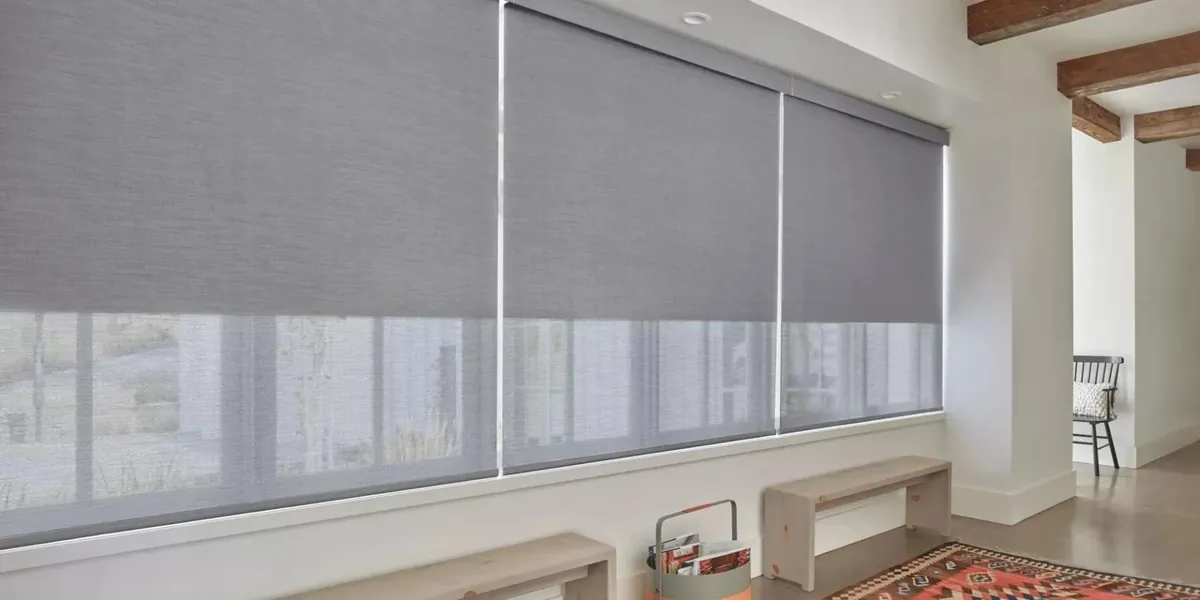
Shades that drift, sag or hang crooked
Honeycomb, roman, roller and sheer shades with a broken cord, a failing lift, or a headrail that has worked loose from its brackets, so the shade sits lower at one end.
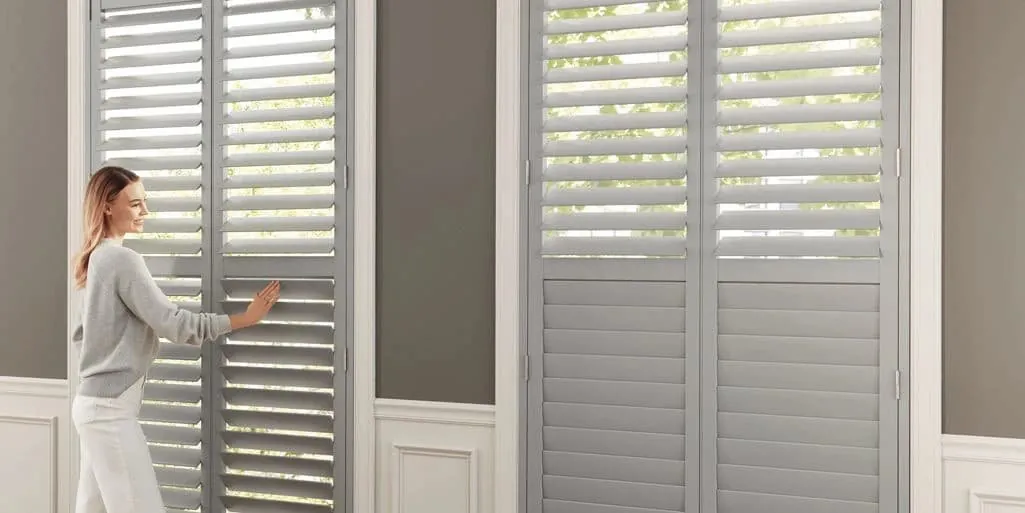
Shutters and motorized shades
Louvers that fall shut or come away from the tilt rod, and PowerView shades that have stopped answering the remote or the app.
Hard afternoon light off Apponagansett Bay
Rooms on the water side of South Dartmouth are bright in a way that takes some managing. By mid-afternoon the sun is low across the bay and bounces straight back off the water into the house, so blinds and shades in those rooms are lowered and raised more than any others. That alone wears a lift faster.
The light itself does damage too. Lift cords and ladder strings are made of fiber, and fiber left in strong sun for years turns dry and weak. You often notice it first as fuzz on the cord where it passes through the headrail, then a cord that feels thinner on one side, and finally a snap when the blind is pulled up on a bright afternoon. The ladder tapes that hold each slat in place go the same way, and a slat that has started to droop at one end usually has a broken rung behind it.
On those windows restringing is the common job. New cord goes in, the ladders are checked and replaced if they have gone brittle, and the lift is set so the bottom rail rises level. Fabric is the other thing we look at closely. A shade that has faced the bay for many seasons may have faded on the face, and we will tell you plainly if the fabric is too far gone to be worth new cords.
Padanaram colonials and capes
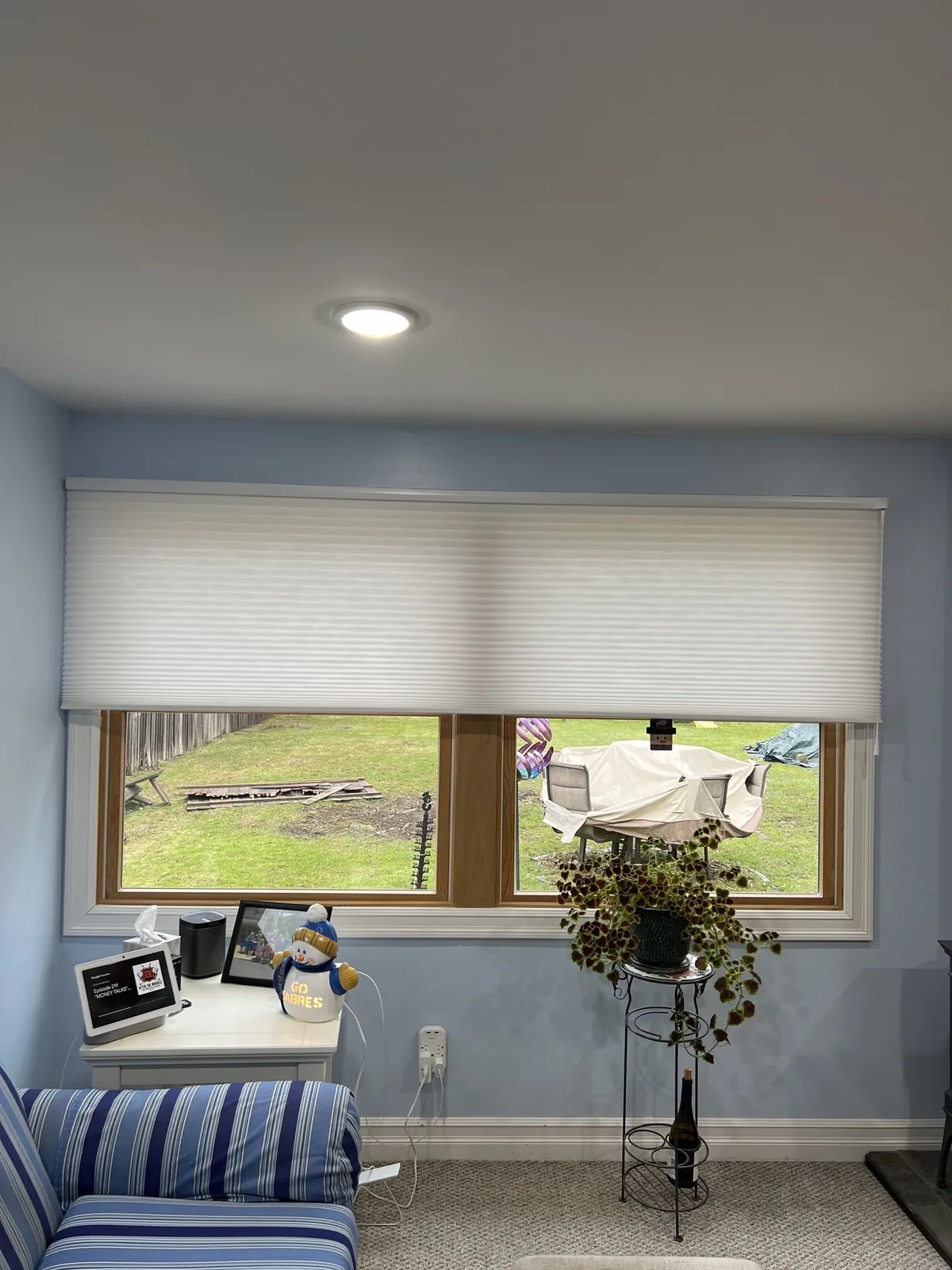
The older houses around Padanaram village are not large, and their windows are used hard. A cape’s front windows are covered at night and opened every morning; a colonial’s upstairs bedrooms have blinds that are tilted for light and closed for sleep, every day, for years. Nothing dramatic happens to those blinds. They just wear, slowly and evenly, until one part gives.
Most often that part is a cord. Lift cords in a busy room take thousands of pulls, and each one rubs the cord against the same spot where it leaves the headrail. A cord lock that has gripped the same section of cord for years flattens and weakens it. Eventually the blind will not stay up, or one side lets go. Restringing and, where needed, a new cord lock bring it back.
Older capes also have small, shallow window openings, and some blinds there were mounted outside the frame to make them fit. An outside-mounted blind relies entirely on its brackets, screwed into the face of painted trim. After enough years, those screws loosen. Blind and shade repair in Dartmouth, MA, on these houses is often as simple as resetting the brackets into sound wood and replacing a worn cord, and the blind is good for a long while yet.
Ranches off Faunce Corner and Slocum Road
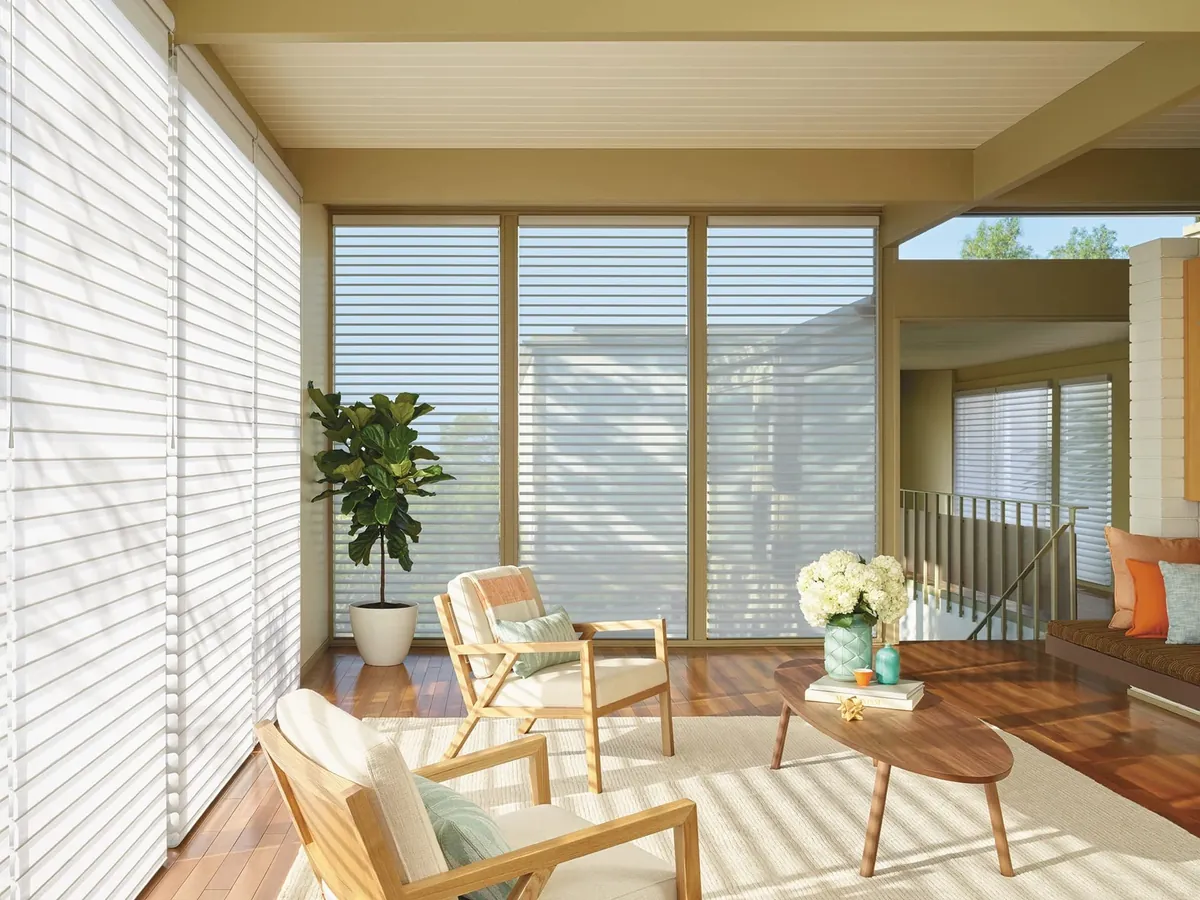
The neighborhoods near Faunce Corner Road and along Slocum Road are full of single-story houses from the sixties and seventies. They tend to have a long living room window, a slider to the yard, and bedroom windows that are wider than they are tall. Wide windows mean wide headrails, and a wide headrail is where trouble builds slowly.
A headrail spanning a big opening needs support along its length, not just at the ends. If a center bracket was never fitted, or has worked loose over the years, the rail starts to bow. A bowed rail pulls the lift cords at slightly different lengths, so the blind rises crooked however carefully you pull. The fix is a straight headrail and the right number of brackets in the right places.
Sliders get a different kind of wear. Vertical blinds and vertical shades on a back door are brushed past every day, by people, pets and the occasional grill cover. The vanes at the leading edge take the knocks, and the small carriers that hold each vane in the track crack or pop out. Single vanes and carriers can often be replaced without changing the whole product, which is a much smaller job than most people expect.
Deep sash toward Russells Mills
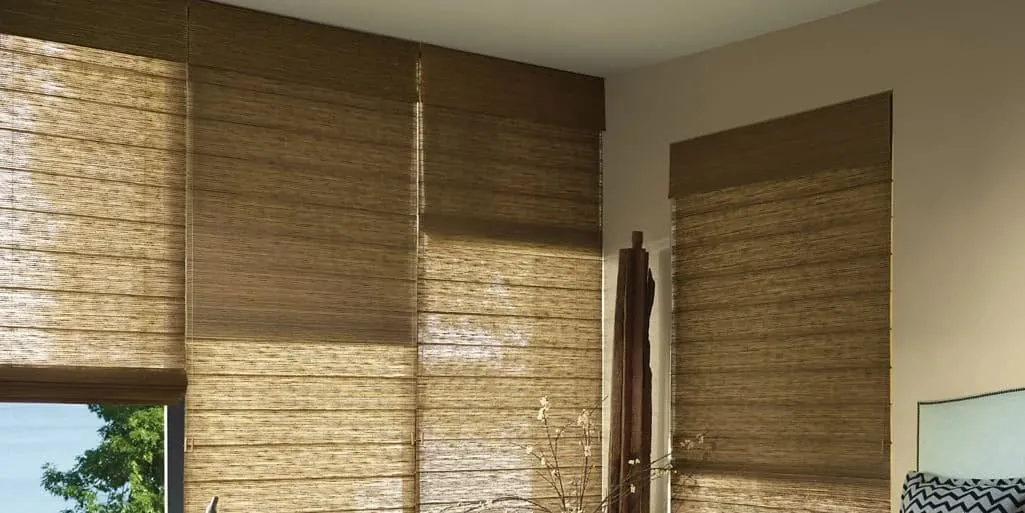
The old farmhouses out past Russells Mills have windows set into walls far thicker than anything built now. The sash are deep in the opening and, after well over a century of seasons, rarely perfectly square. A blind or shade mounted inside that opening has to live with the shape it was given.
When a frame is slightly out of square, one end of the headrail usually sits tighter than the other. Over time the tighter end takes more of the load, the bracket on that side loosens in old wood, and the product starts to tip. Cords on the low side then rub harder against the edge of the headrail, and wear through first. So a repair on one of those windows is often two jobs in one: replace the worn cord, then reset the mounting so the product hangs true and the wear does not start again.
There is an honest limit here. Some very old casings are soft enough that a screw will not hold however carefully it goes in. In that case the bracket may need to move to firmer wood nearby, and we will show you where before anything is done.
Inside the headrail: wands and tilt mechanisms
On a horizontal blind, the slats tilt because of a small gearbox, often called a tilter, inside the headrail. A wand hooks onto a stem that comes out of the gearbox, and turning the wand turns a rod that runs the length of the rail. That rod winds the ladder tapes, and the slats rotate together.
Three things go wrong. The wand breaks or falls off, which is the easy one: a new wand, or a new hook and stem. The tilter strips, so the wand spins freely and the slats ignore it. Or the tilter seizes, so the wand will not turn at all and forcing it risks snapping the stem. Both of the last two mean opening the headrail and replacing the mechanism.
Most of the time a tilter fails from use rather than age, and in a house where the blinds are tilted every morning and evening that is no surprise. A Padanaram kitchen blind that is angled down for breakfast and back up by lunch does a lot of work over the years. Replacing the tilter brings it back to a smooth turn, and while the headrail is open we check the lift for any other part on its way out.
A typical repair, from first message to finished
Every job is a little different, but most follow the same path. Here is how blind and shade repair in Dartmouth tends to go.
- You send us a short description through Request a Consultation, or tell us on the phone using the call button: what the product is, which room, and what it is doing.
- A photo of the window and any label on the headrail helps us judge whether it sounds like a repair.
- If it does, we arrange to look at the product properly and explain what the fix involves.
- If a repair does not make sense, because the fabric is worn out or several parts are failing at once, we say so before anything else happens.
- Once the work is done, the product is checked through its full travel, up, down and tilted, so you can see it working.
You do not need to buy anything to have a repair looked at, and nobody will press you to.
Fabric shades that have lost their shape
Honeycomb, roman and pleated shades all lift on cords that run through or behind the fabric. When one of those cords lets go, the shade drops on one side, and folds or cells get crushed as it sits at an angle. In a cellular shade the cords run inside the cells; in a roman shade they run through rings on the back.
Restringing a fabric shade takes patience, because the new cord has to follow the exact path of the old one. It is worth it when the fabric is clean and unfaded and the shade still suits the room. It is not worth it when the sun has bleached the face or split the folds, which happens most on the bay-facing rooms of South Dartmouth. In that case we would rather tell you than restring a shade that will look tired however well it lifts.
Shades that lift without a cord at all have their own spring systems. If a cordless shade will not stay where you leave it, the cause is usually a lift spring that has lost tension or a part inside the bottom rail. Those can sometimes be adjusted, sometimes replaced, and sometimes they are telling you the shade has reached the end. We will explain which.
PowerView shades that have stopped responding
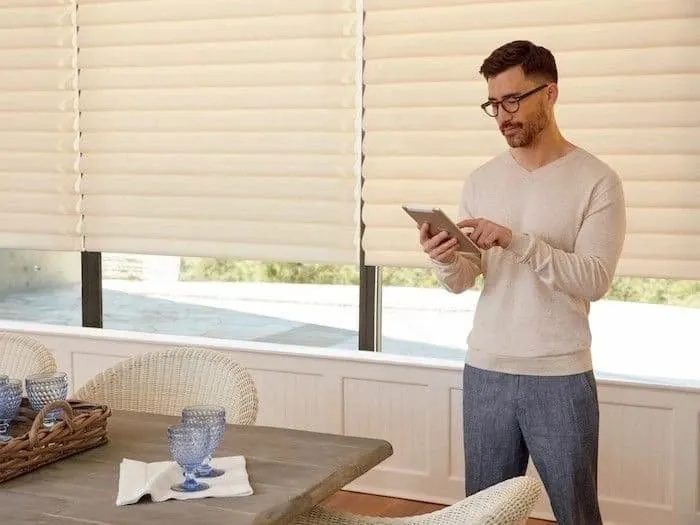
Motorized Hunter Douglas shades run on PowerView, controlled by a remote, an app or a schedule. When one stops responding, the cause is not always mechanical. A shade may have dropped out of pairing, lost its place in a scene, or simply need its power looked at. Some of those can be sorted by resetting and re-pairing; others need a closer look at the motor or the shade itself.
If one shade in a room has stopped while the others carry on, that narrows it down. If every shade in the house stopped at once, the problem is more likely in the control side than in the shades. Tell us what you are seeing and what you have already tried, and we will suggest the next step. Our page on motorized blinds in Dartmouth explains how PowerView works if you are less familiar with it.
Kitchens, baths and the blinds that take the damp
Faux wood and metal blinds are popular in kitchens and bathrooms because they stand up to moisture better than real wood or fabric. They are still blinds, though, with the same cords, ladders and tilters, and steam is hard on the small parts. A tilter in a bathroom blind can corrode and stiffen; a cord can stiffen and then fray where it bends over the top of the headrail.
Slats themselves sometimes get bent, usually by a hand reaching past the blind to open the window behind the sink. A single bent slat can often be replaced on its own, so the blind looks right again without changing the whole thing. When we are already working on one blind in a room, it is worth checking the others, because blinds bought at the same time tend to wear at the same rate. Blind and shade repair in Dartmouth, MA, for a kitchen or bath is usually a handful of small fixes rather than one big one.
When we will suggest replacing instead
We take repairs seriously, and that includes saying when one is not a good idea. A few signs point toward replacement:
- the fabric or slats have faded, warped or split
- the headrail is cracked as well as the part you called about
- the same blind has needed repair several times in a short span
- the product no longer suits the room or the window
None of that is a sales line. You are welcome to have the repair done anyway if it can be done, and you are equally welcome to leave it. If you do want to look at something new, everything we offer in town is on our Dartmouth page, and the in-home consultations page explains how a visit with samples works.

A Gallery dealer that also repairs
Blinds & Designs is a Hunter Douglas Gallery dealer with certified Hunter Douglas installation. Repairs sit naturally beside that work. The people who know how a Duette lift is threaded, how a Parkland wood blind tilts or how a Palm Beach shutter holds its louvers are the right people to put one back in working order.
We welcome repair work on window coverings you already own, whether we fitted them or they came with the house. A product that is mended properly and set back on the window the way it should be keeps working, and that is the point.
Our main blind and shade repair page covers how repairs work across the area we serve, and if you are weighing new coverings for another room, our custom blinds in Dartmouth page is a good place to start.
Our showroom is right here in Dartmouth
Because our North Dartmouth showroom is in town, it is the simplest place to bring a question about a repair. You can describe the problem in person, show us your photos, and talk about what might be involved.
If the product cannot easily come down, or you would rather we saw it on the window, tell us when you get in touch. A look at a blind in its own window often explains a fault faster than any description, especially on the out-of-square sash toward Russells Mills or a wide ranch window that has started to bow.
Questions from Dartmouth
The cords on my bay-facing blinds look fuzzy. Should I wait until they break?
It is better not to. Fuzz where the cord passes through the headrail means the fiber is wearing, and a cord that snaps on a tall blind can drop the bottom rail hard. Restringing before it breaks is a simpler job and avoids bent slats.
My blind rises crooked on a wide ranch window. Is it the cords?
Sometimes, but on a wide window it is often the headrail. A rail that has bowed in the middle pulls the cords unevenly. Straightening or replacing the rail and adding support usually fixes the lift.
Can you fix shades in an old farmhouse with deep, uneven windows?
Usually. The repair often includes resetting the brackets so the shade hangs level in an opening that is not quite square. Where the old wood will not hold a screw, we move the bracket to firmer wood and show you first.
One PowerView shade has stopped while the rest still work. What now?
Tell us which shade and what it does when you press the button. A single shade that has stopped often needs re-pairing or power, though some need a closer look at the motor.
Is it worth repairing a shade that came with the house?
If the fabric is clean and the headrail is sound, very often yes. Send us a photo and a short description and we will give you an honest view.
Getting a repair started
There are three easy ways to begin, and you can pick whichever suits you:
- Request a Consultation and describe the problem, with a photo if you can.
- Use the call button and tell us what the blind or shade is doing.
- Stop in at the North Dartmouth showroom with your photos and questions.