
From Canton Center to the Blue Hills side
Canton packs three kinds of housing into one town. Near Canton Center the Victorians and older colonials have tall sash windows, often with original casings and high ceilings above them. Through the middle of town the post-war capes and ranches have simpler, smaller openings. And on the Blue Hills side the larger newer houses sit up on lots that climb steeply from the road, so their front windows look out and down over the street and the trees. Each group asks something different of roman shades in Canton, MA.
A folded fabric shade is a good fit for all three. On a tall Victorian sash it gives the window a finished, tailored look and leaves the casing visible. On a cape or ranch it adds softness to modest rooms without the bulk of curtains. On a hillside house with big windows and lots of sky, it tames the brightness and turns a glassy room into a comfortable one.
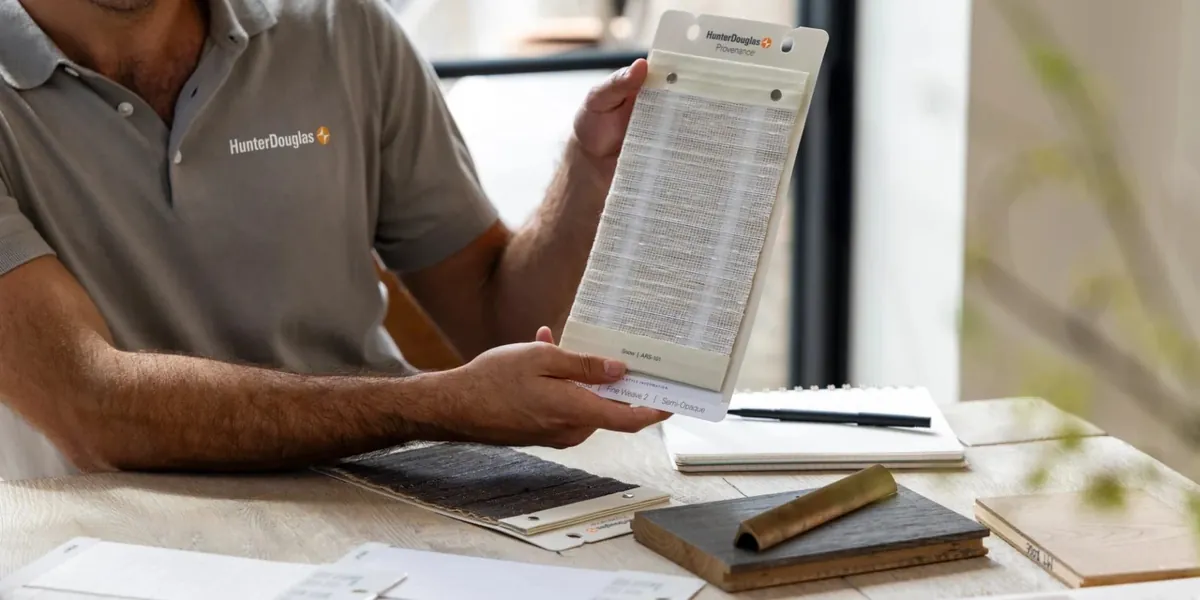
Canton is our shop-at-home territory. Instead of asking you to come to us, we bring the shades to you: our vans carry the samples, and the consultation happens in your own rooms. The shades themselves come from Hunter Douglas: Vignette, whose fold rolls neatly up and out of sight, and Carole Fabrics, made to measure as a flat fold or a softer folded shade.
Roman shade options we bring to Canton homes
Everything below comes to your house on the sample van, so you can try it against your own walls, floors and trim.
Soft folds for older rooms
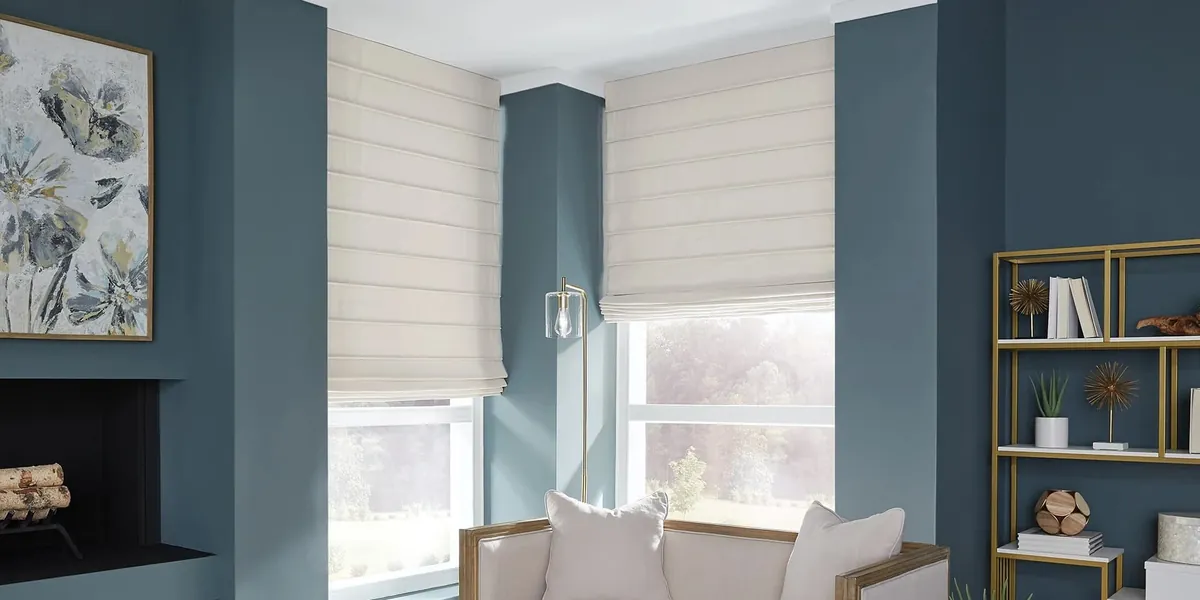
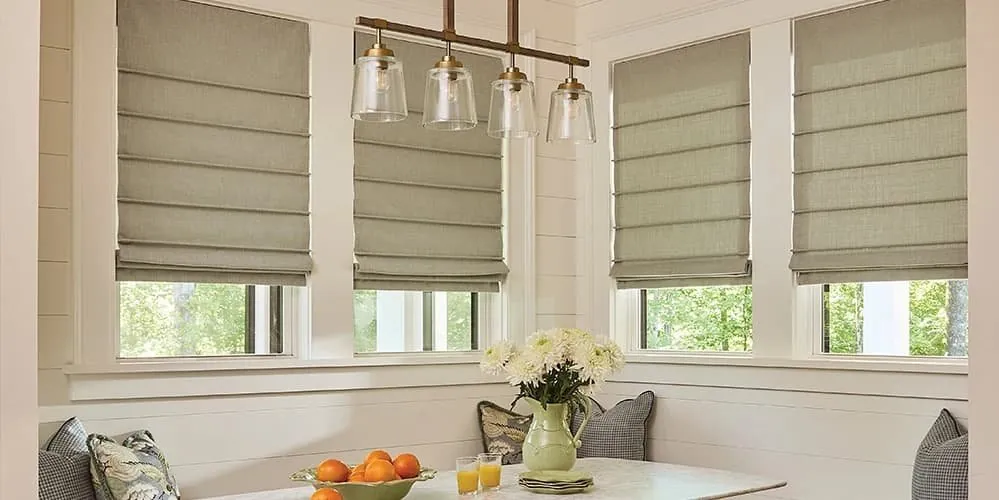
A Carole folded style hangs in gentle loops for the full drop. It looks at home beneath the high ceilings of a Victorian near Canton Center.
Vignette for modern rooms
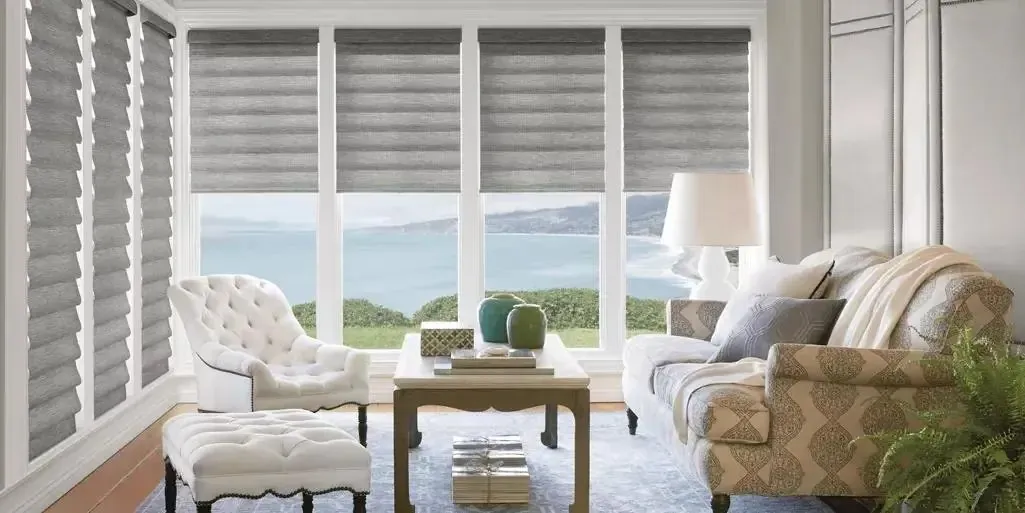
Uniform folds that roll into the headrail, leaving the window clear and the room looking crisp. A natural choice for the newer hillside houses.
Darkening linings
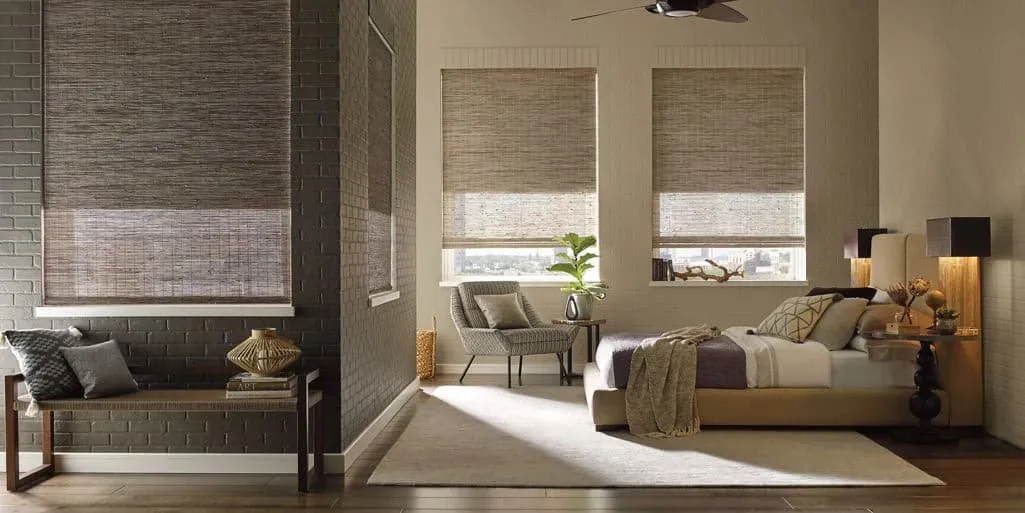
A lining behind the face fabric keeps a bedroom dim at sunrise and closes the room off completely after dark.
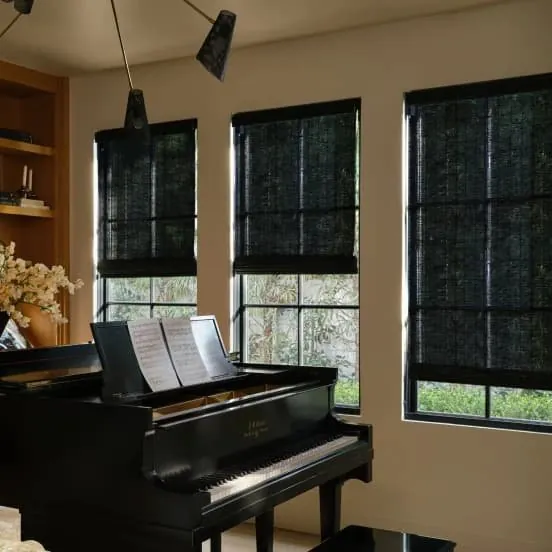
Woven textures
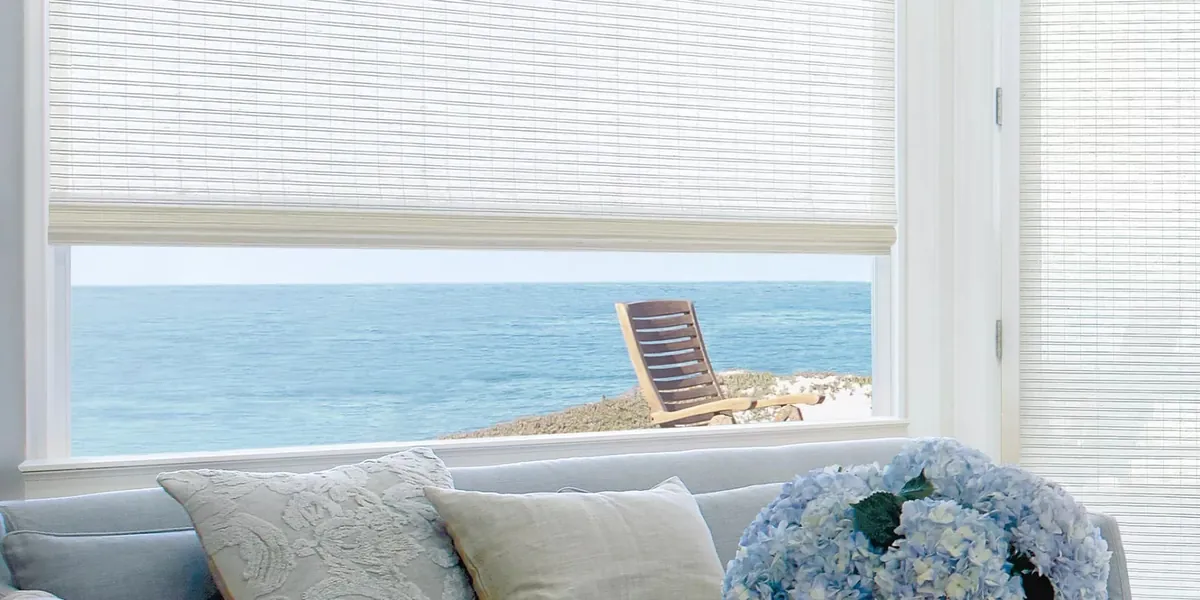
Alustra Woven Textures folds a natural, loomed fabric into a roman shape, for a study or living room that suits texture over pattern.
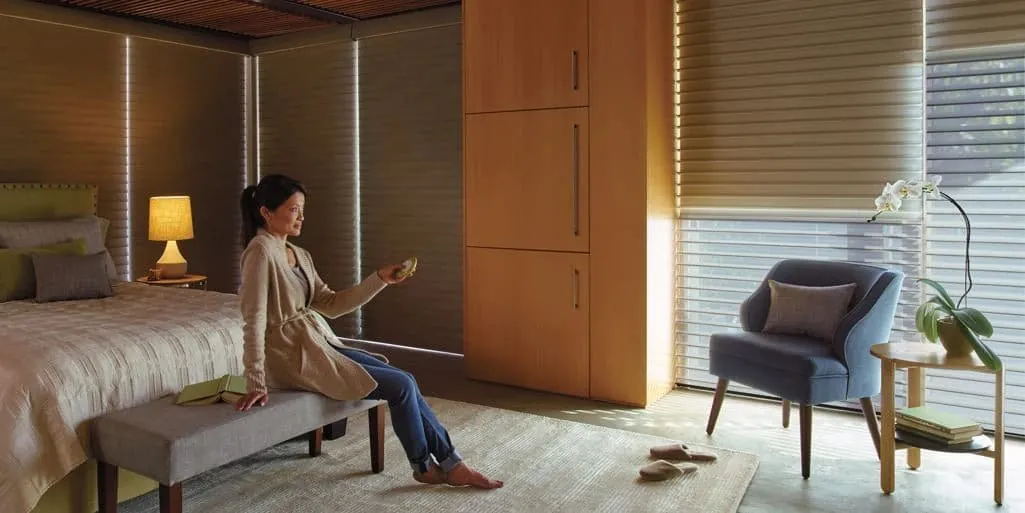
PowerView control
Raise and lower shades from a remote, a phone or a schedule. Useful on the large and high windows of the Blue Hills side.

Shopping at home
The sample books come to your living room, so you choose fabric at the window it will hang on.
Tall sash near Canton Center
Close to the center, the Victorians and older colonials were built with long, slim windows that carry daylight deep into rooms under high ceilings. Plenty of them keep their first casings, some with heavy moulded trim. That length is a gift for a roman shade: the fabric has a long drop to fall through, and the folds can be spaced generously so the shade looks relaxed rather than bunched.
Older sash brings practical questions with it. Weights and pulleys run inside the frame, the stops take up room, and over a long life a window can shift so the opening is a little wider at one end than the other. Before suggesting a mount, we record each window separately and look for anything that would sit in the path of a headrail. Where the pocket is generous, the shade hangs within the opening and every inch of trim stays visible. Where it is shallow, the headrail goes on the face of the casing, a touch higher than the glass, and the raised fabric then parks above the window instead of across its top panes.
Pattern works well on these windows. A Carole flat fold in a print or a stripe keeps the design flat and legible when lowered, so a long shade becomes a feature of the room. If the walls are already busy, a plain linen in the folded style lets the shape of the loops carry the look instead.
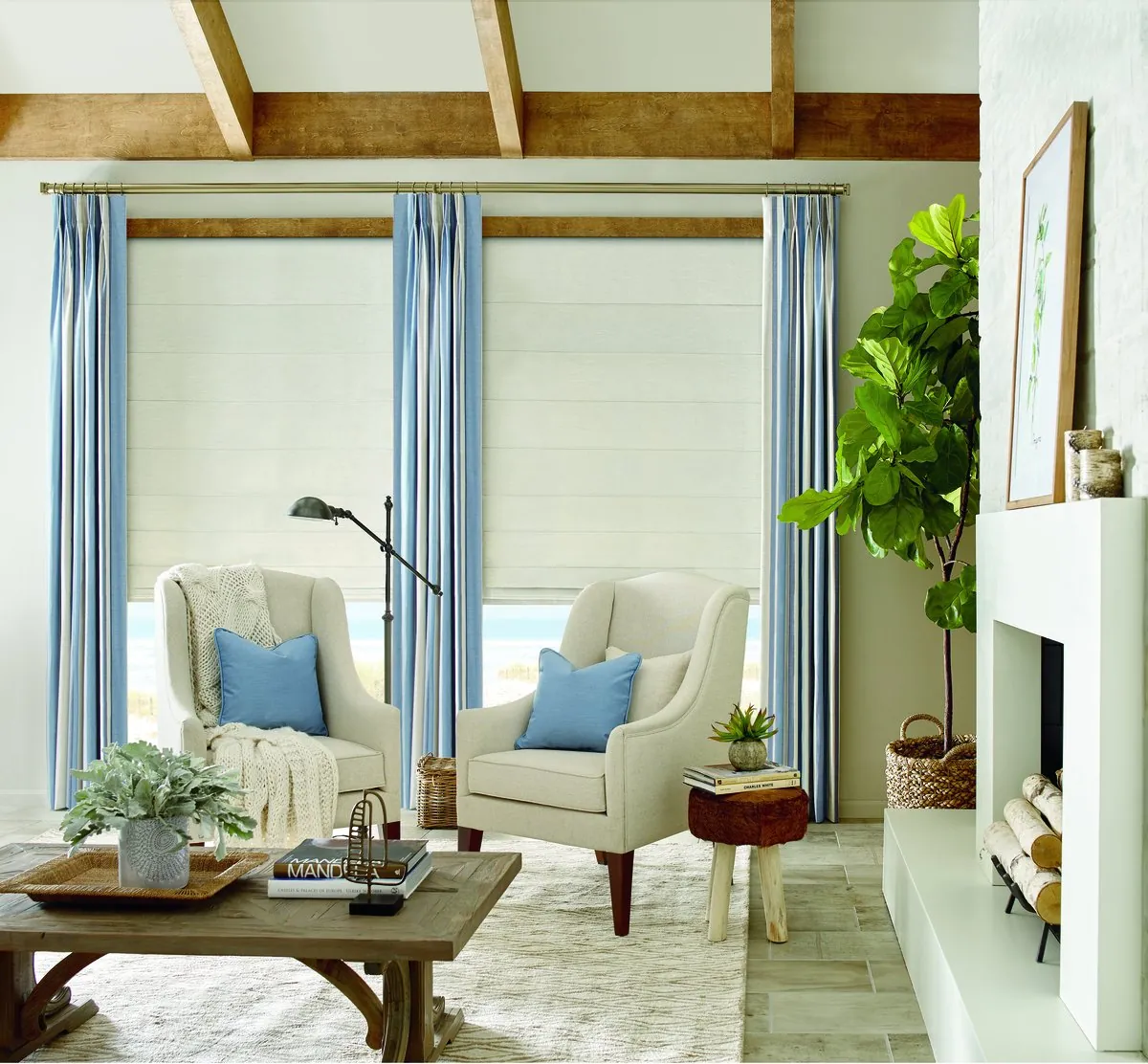
Capes and ranches through the middle of town
The post-war capes and ranches through the middle of Canton are built on simple, regular lines, and their windows follow suit. A cape usually shows the street a symmetrical face: a window on each side of the front door, and a pair of dormers above. Anything on those windows is seen as a set, so the shades need to match in color from the outside and stop at the same height when lowered. Choosing one lining color for the front of the house, whatever face fabric each room has inside, keeps that symmetry intact.
Inside, these rooms tend to be modest, with hard floors and plaster walls that can make a room sound a little echoey. Fabric shades soften that, which is one reason they feel so comfortable in a smaller house. A soft fold in a textured weave does the most in that respect; a crisp flat fold is the neater choice for a kitchen or a home office.
The upstairs dormers of a cape are short windows, so the size of the raised stack matters. Vignette tucks its fabric up into the headrail, and a lightweight Carole fabric folds into a slimmer bundle than a heavy lined one. In a ranch, the challenge is the reverse: one broad living room window that is best split between a few shades, each easy to lift on its own. Most of these openings are standard modern sizes with enough depth for the headrail, which keeps fitting straightforward.
Hillside houses on the Blue Hills side
On the Blue Hills side the larger newer houses sit on lots that rise steeply from the road, with long, sloping driveways. Being up the slope changes how the windows behave. They take in more sky and more sun than houses at street level, because there is less to shade them, and the big front windows look down over the road and the tree tops.
That height works both ways. By day, a passer-by below sees little of the room. After dark, though, a lit room up the hill can be seen from a long way off, because there is nothing between the window and the road below. A roman shade with a privacy lining keeps the room private in the evening while still letting it glow softly in daylight.
These houses also tend to have the large openings and tall entry or great room windows of newer construction, some of them out of reach. PowerView motorization lets the high shades move from a remote, from the app or on a timetable, and lets several shades move together. Lowering a whole wall of shades at sunset takes one tap. Our motorized blinds in Canton page covers what can be automated across the house.

Sun and glare on the high side of town
With more open sky around them, the hillside houses can take strong sun for much of the day. A west-facing living room on the slope can be uncomfortably bright in the late afternoon, and a south-facing kitchen can heat up quickly.
Fabric is the main tool. A light-filtering fabric lowered partway takes the glare off without plunging the room into shade. A lined fabric slows heat and protects the face fabric from fading in a room that sees sun for hours. Pale, neutral colors generally hold up best on the sunniest windows, while deeper colors are better kept for rooms on the shaded side of the house, where they will stay rich for longer. When we bring roman shades to Canton homes on the high side of town, we carry fabrics in several weights so you can test them at the brightest window you have. Our guide to choosing fabric for a sunny room is a helpful read beforehand.
How shop-at-home works in Canton
Because Canton is a shop-at-home area, the consultation at your house is where the whole process happens. Here is how it usually goes.
- You request a consultation online or with the call button, and we agree a time.
- A consultant arrives with sample books for Vignette, Carole Fabrics and Alustra Woven Textures, plus lining and lift samples.
- We go room by room, starting with whichever windows bother you most: the tall sash, the dormers, or the bright hillside glass.
- Fabrics are held up at your windows so you can judge color, light and pattern where the shade will actually hang.
- We take the measurements for every window and record the mount, the depth and where the gathered fabric will rest.
- You are left with a free estimate, room by room, to think over in your own time.
A single visit can cover one room or the whole house, and it suits a quick question about one stubborn window as well as a full plan. Our Canton shop-at-home page explains the service in more detail, and our guide to what happens at an in-home consultation answers the usual questions before we arrive.
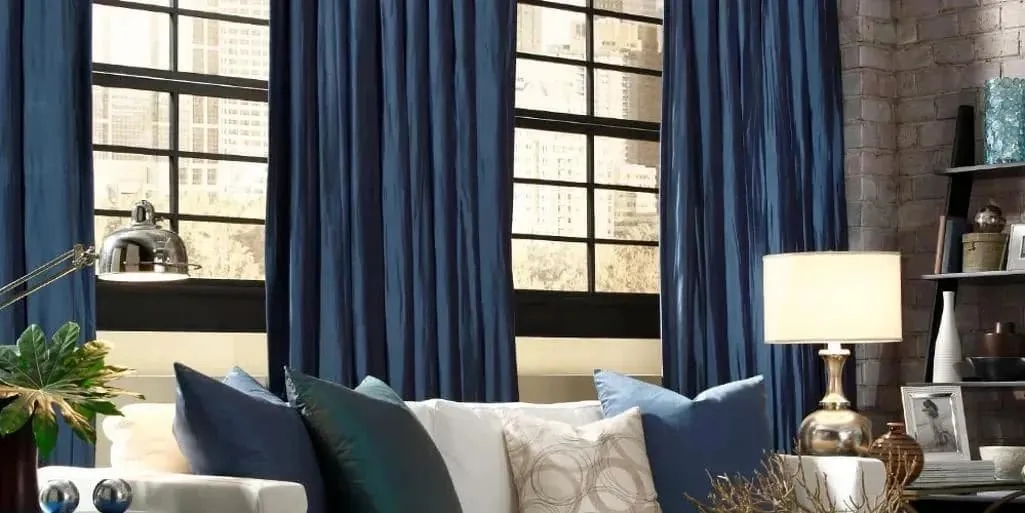
Flat fold, folded style or Vignette
There are really three looks to choose between, and seeing them at the window makes the decision easy.
The Carole flat fold hangs as one smooth panel and lifts into neat, layered pleats. It is the tailored option and the best one for patterned fabric. The Carole folded style keeps soft loops down the full length even when lowered, giving a gentler, more traditional window that suits plain and textured fabrics. Vignette has its own engineered fold that rolls up into the headrail, with even folds, a tidy back and a very compact raised position.
A Victorian near the center often suits the Carole styles; a newer hillside house often suits Vignette; a cape or ranch could go either way, depending on how the rooms are furnished. Many Canton houses use more than one. Our Vignette and Carole Fabrics pages explain each line, and the main roman shades page puts them side by side.
Keeping the view down the hill
One of the pleasures of a house on the Blue Hills side is the outlook: from the front rooms you often look down over the road and out across the tree tops. Nobody wants to lose that to a window covering. A roman shade raises from the bottom, so when it is lowered partway it covers the top of the window, where the high sun comes in, and leaves the lower part open to the view. On a bright afternoon that is often all a room needs.
Where the outlook is the main event, a light-filtering fabric in a pale color keeps the shade from feeling heavy even when it is fully down. For a primary bedroom with the same view, some customers pair a light fabric by day with a separate darkening layer behind it, or simply choose a room-darkening lining and raise the shade fully each morning. We can show you both approaches in the room. Planning roman shades for Canton houses on the slope usually starts with deciding which windows are for looking out of and which are for privacy.
Choosing a lift for each room
How a shade goes up and down is worth deciding window by window. On the dormers and small bedroom windows of a cape, a cordless shade is the natural choice: you guide the bottom rail up or down by hand and it stays put, with no cord on the sill or within a child’s reach. On a heavy lined shade across a broad ranch window, a continuous cord loop takes the strain out of lifting, and a tensioner holds the loop flat against the frame.
On the hillside houses, and on any tall sash that is awkward to reach over furniture, PowerView takes the work away altogether. A shade can be grouped with others in the same room, set to lower when the afternoon sun arrives, or opened from your phone before you get home. Plenty of orders for roman shades in Canton mix all three lifts in one house, and the shades still look identical from the street because the lift sits out of sight in the headrail or behind the fabric.
Drapery beside a shade
High ceilings near the center suit a second layer. A pair of side panels outside the frame lifts the eye towards the cornice, while the roman shade within the frame does the daily work. The two are chosen together, in matching or complementary fabrics, and the panels are rarely drawn. Our interior design consultations can help pull the fabrics, colors and hardware into one plan.
A Gallery dealer that comes to you
Hunter Douglas reserves the Gallery dealer title for dealers who meet its standards, and Blinds & Designs holds it. In a shop-at-home area that matters, because the whole range travels with us: every roman shade fabric, fold, lining and lift, and Hunter Douglas blinds, shutters, other shades and drapery when a room suits something else.
Fitting is done by installers with Hunter Douglas certification, who set each headrail level and test every shade before they leave. Estimates on new shades are free, and if a shade you already own needs attention, we offer blind and shade repairs as well.
See every service we offer locally on our Canton page. Bedrooms often take a honeycomb shade beside roman shades elsewhere; our cellular shades in Canton page explains why.
Questions from Canton
Where can I see roman shades before I choose?
In your own home. Canton is a shop-at-home area, so we bring the sample books and lift samples to your house and you choose at the windows the shades will hang on. If you would also like to see shades working on display, our Franklin and North Dartmouth showrooms are open.
Will a roman shade fit my Victorian’s tall sash windows?
In most cases. It depends on how much depth the frame leaves once the sash hardware is accounted for. If the pocket is shallow, the headrail goes on the casing just above the glass instead.
My house sits high above the road. Do I need a lining?
For rooms you use in the evening, a privacy lining is worth it, because a lit room up the slope can be seen from the road below. By day an unlined light-filtering fabric often gives enough privacy.
Can roman shades work in a cape’s dormer bedrooms?
Yes. We usually mount them inside the dormer recess and keep the raised stack small with Vignette or a lighter Carole fabric, so a short window does not lose too much light.
Does anything cost money before I order?
No. The estimate is free. Once we have measured, you get a written figure for each window to consider at your own pace.
Your next step
Fabric always looks different in a sample book than it does at your own window, so the best start for roman shades in Canton, MA, is a visit to your house. Request a consultation and a consultant will arrive with the Vignette and Carole Fabrics books, take every measurement and leave a free estimate behind. Prefer to talk first? Use the call button, and we can answer questions about a single window or the whole house before anyone visits.