
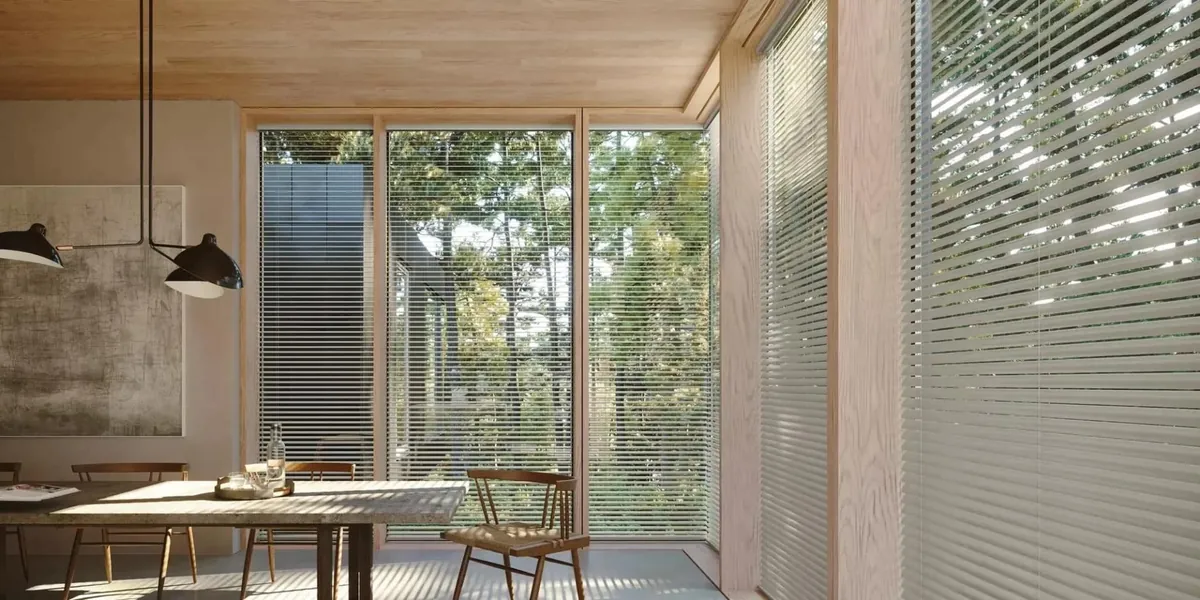
Houses under a canopy of trees
Across most of Westwood, the trees are the first thing you notice. Post-war colonials and larger newer houses sit on wooded lots, set well back from the road behind lawns and mature oaks and maples, and the windows look out into leaves for half the year. The openings themselves are standard modern sizes, square and regular, which makes them straightforward to fit.
What makes Westwood windows interesting is the light. Under heavy tree cover a room can feel shaded and soft all summer, then bright and sunny once the leaves fall and the low winter sun comes straight through bare branches. A blind deals with both, because you change the angle of the slats rather than choosing only open or closed. That is the strongest argument for custom blinds in Westwood, MA: one window covering that works in July and in January.
With standard openings and wooded views, the choices are mainly about material, color and how each blind is worked. We make them with you at home, with samples held up against your own windows.
What we bring to Westwood houses
All six come from Hunter Douglas and are built to the sizes we record in your rooms. This is roughly how they spread through a Westwood colonial.
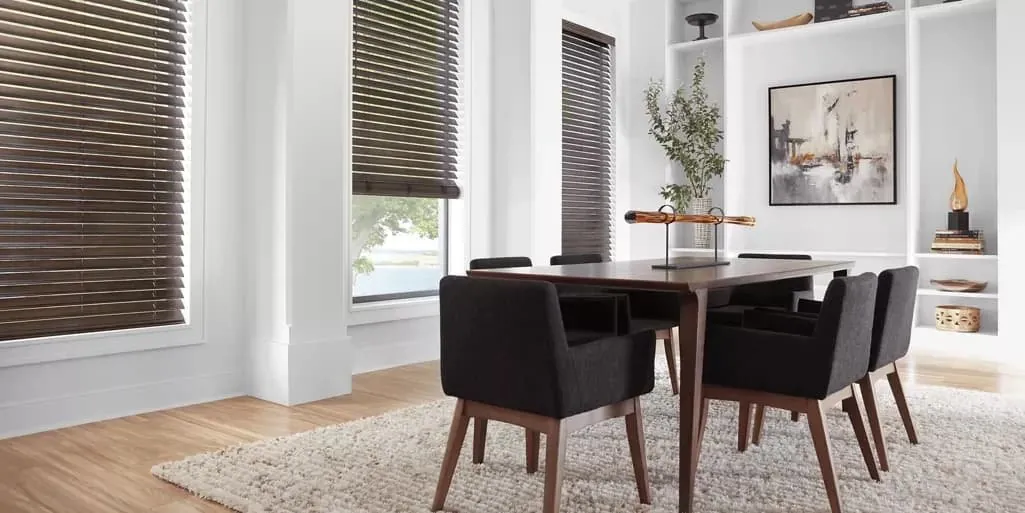
Parkland wood in the living room
Real hardwood slats in stain or paint. Warm against wood floors, and natural-looking with a view of trunks and leaves.
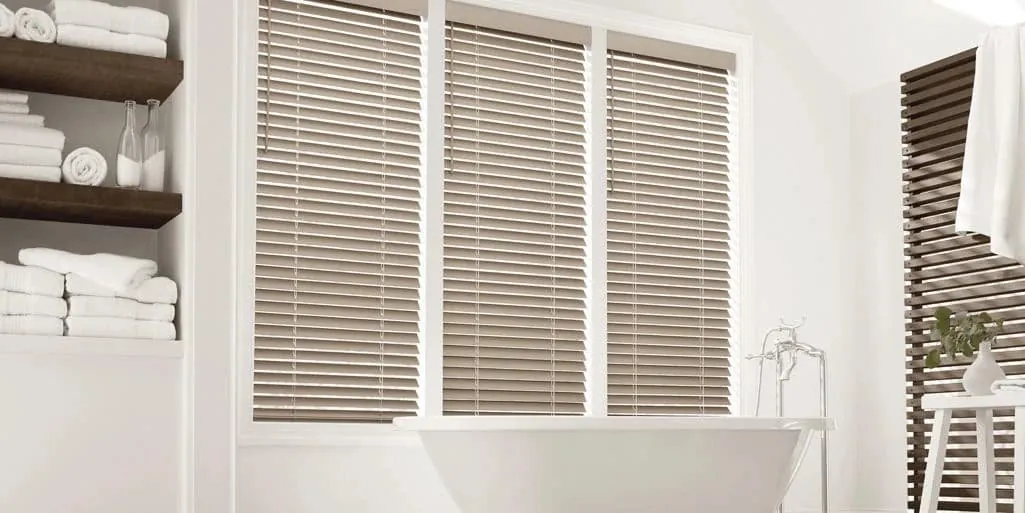
EverWood in the kitchen and mudroom
Faux wood that looks painted and keeps its shape around steam, splashes and wet boots coming in from the garage.
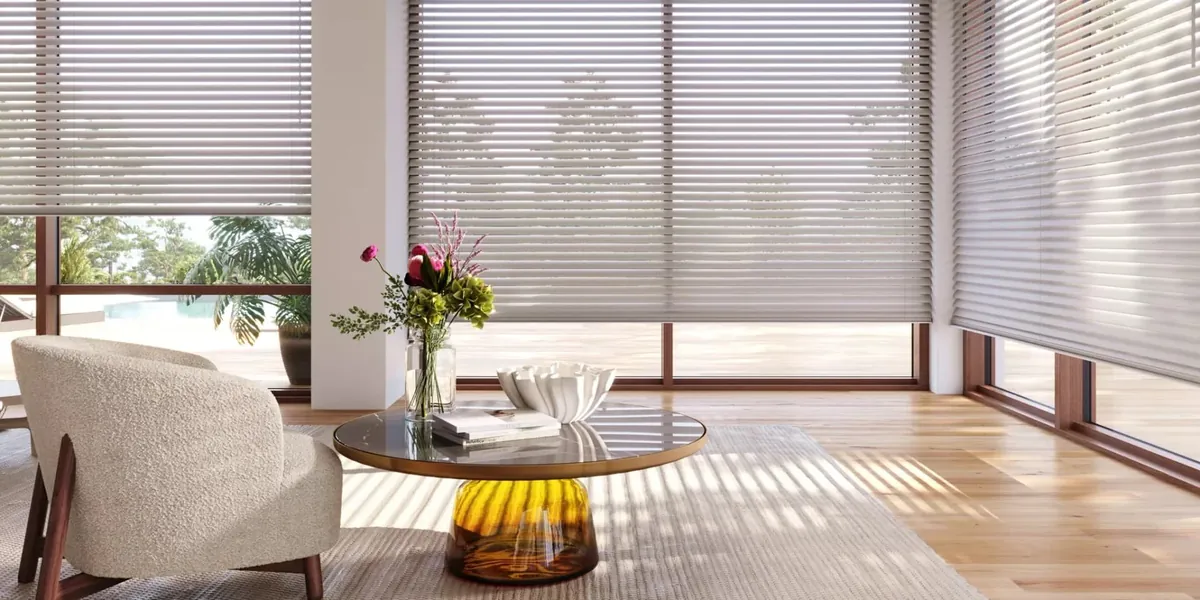
A home office with no screen glare
Slats tilted upward send daylight to the ceiling, so the room stays bright without a reflection on the monitor.
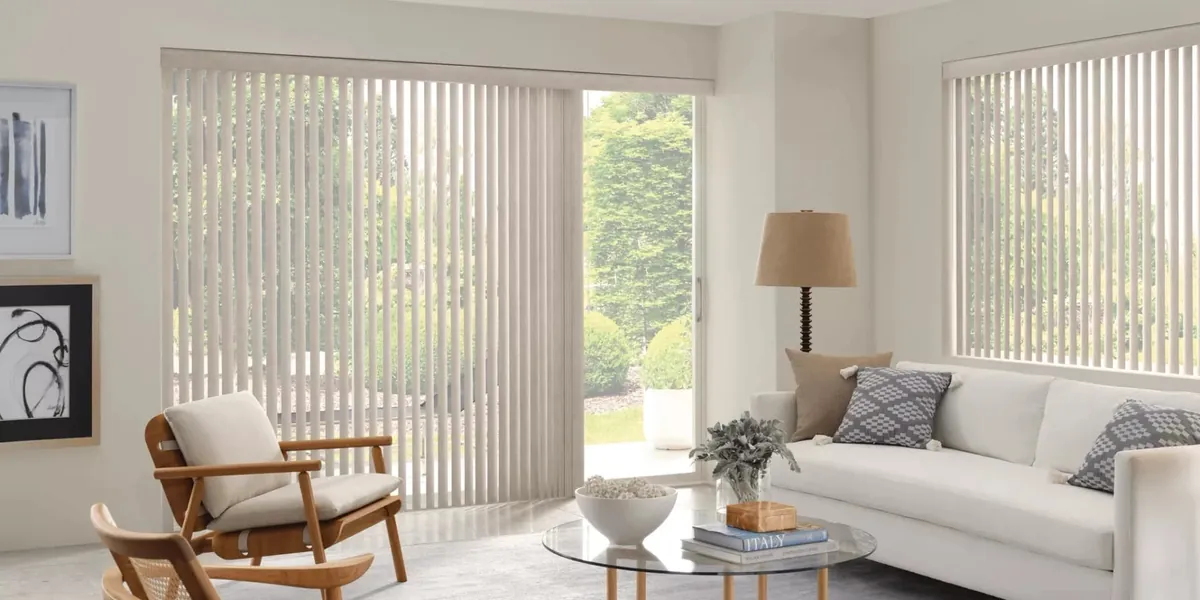
Vertical blinds for the patio door
Vanes that draw aside so the slider to the deck opens freely, color matched to the blinds on the windows beside it.
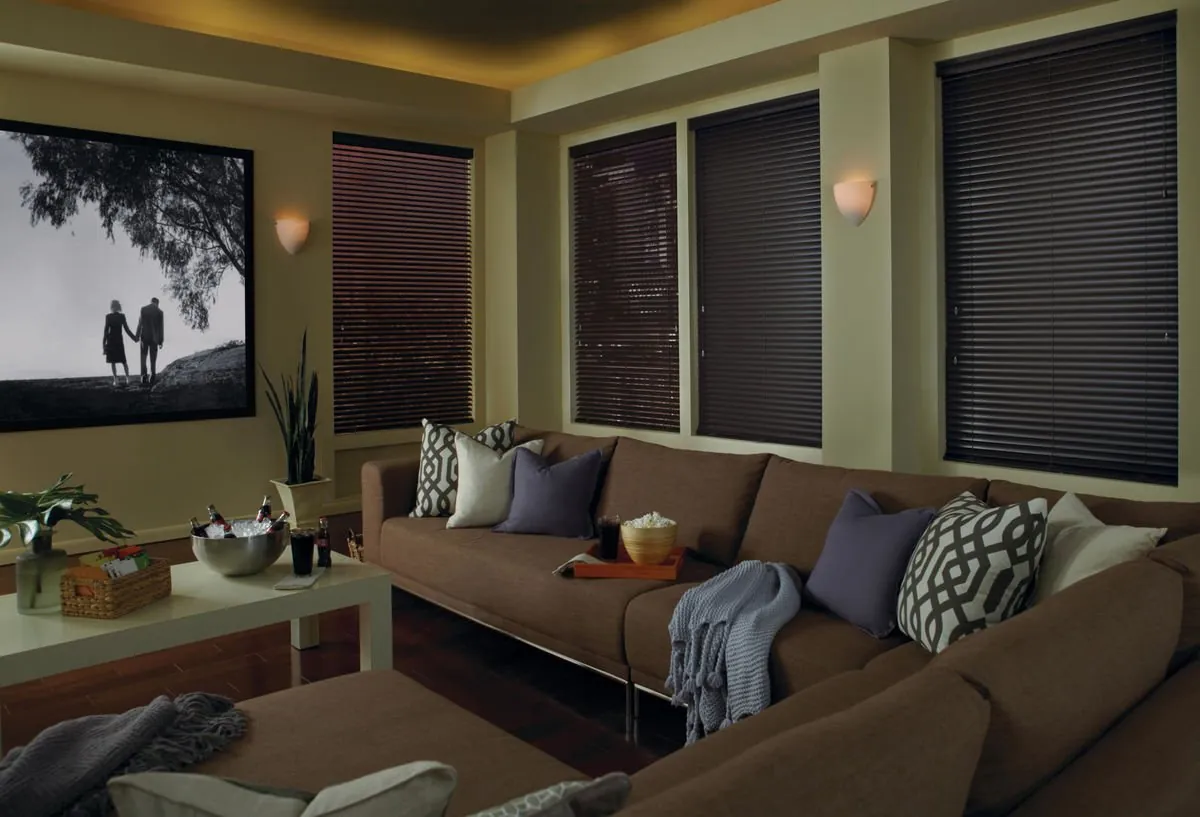
Darker bedrooms
Darker slats and routeless construction, with no holes for the cords, keep a bedroom dim when the winter sun comes through bare trees.
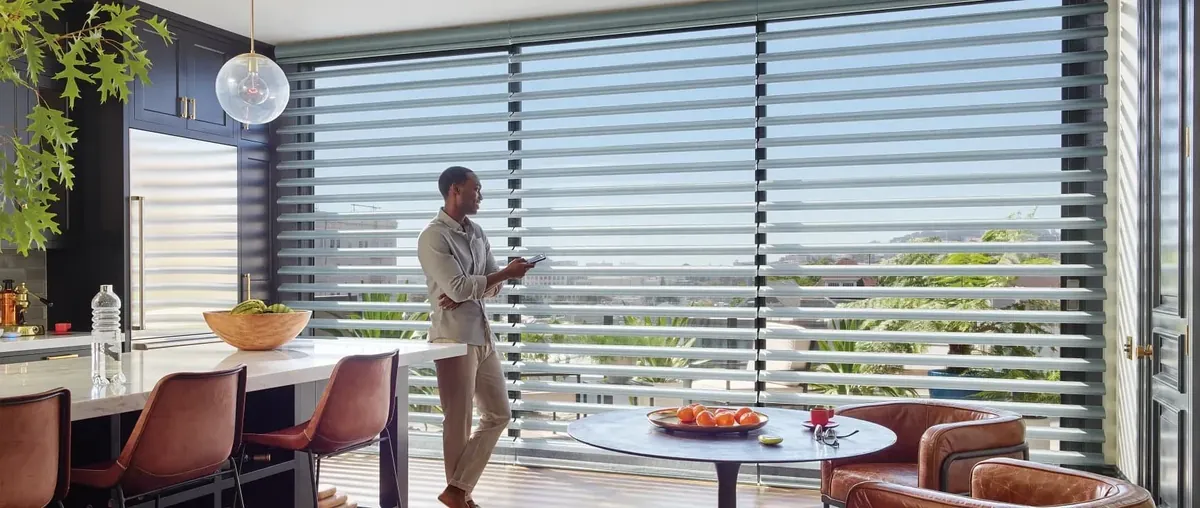
PowerView on a schedule
Blinds that tilt and lift from your phone, a remote or a timer, opening for the morning and closing at dusk.
Post-war colonials
Many of Westwood’s houses are post-war colonials: a center front door, matching windows on either side, and a row of bedroom windows above. The symmetry is the point of the design, and the blinds should respect it. So the blinds on the front should match exactly, window for window, top row and bottom row, keeping that balance intact when you look up the drive.
Inside, the rooms are a practical size and the windows standard, so an inside mount suits almost all of them. The blind sits within the frame, the casing stays fully visible, and when the blind is raised it nearly disappears. In the living room and dining room, where you sit facing the windows, real wood looks warm and settled. In the kitchen at the back, faux wood handles the steam.
Some of these colonials have been extended over the years, with a family room or a sunroom added at the back. Those additions usually have larger windows and often a slider, and they can take a different material or a vertical blind while keeping the same color as the original house.
A sunroom deserves its own word. With glass on three sides and trees all around, it can swing from cool and leafy in June to glaring in November. Horizontal blinds on each window, all tilting the same way, let you shade the side the sun is on while the other walls stay open to the garden. Where the windows run close to the ceiling, PowerView saves reaching over furniture to adjust them.
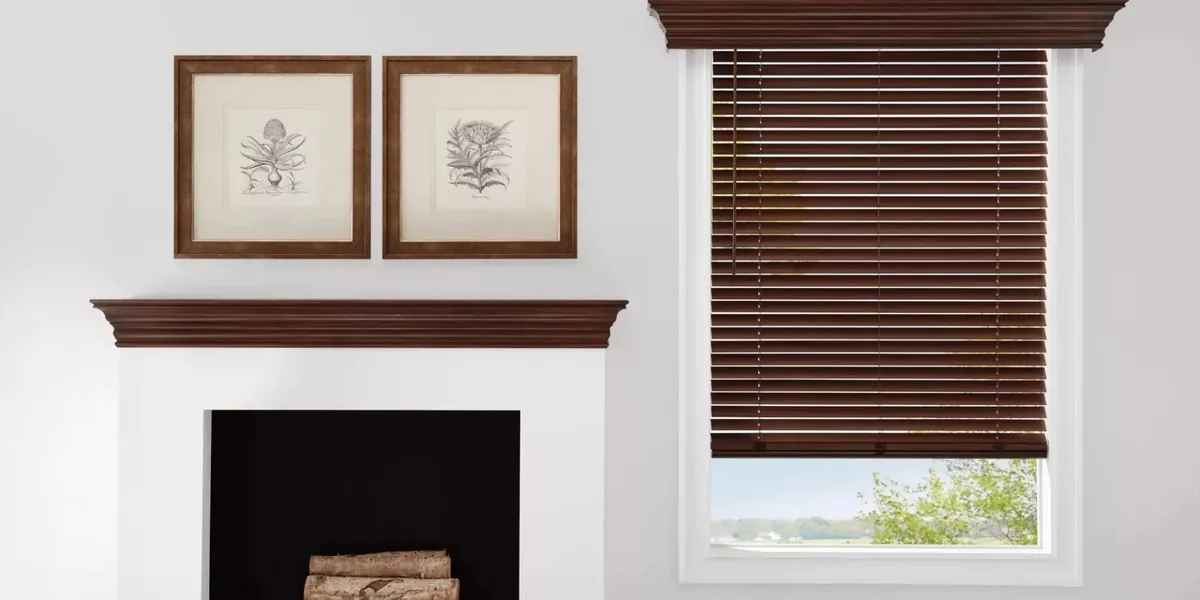
Larger newer houses
The newer, larger houses in Westwood have bigger rooms and more glass: a two-story family room, a kitchen that opens to a breakfast area with a wall of windows, a mudroom by the garage, a primary bedroom with windows on two sides. The openings are still standard, but there are many more of them, and some sit higher than anyone can comfortably reach.
For a house like this, planning every window at once is worth it. We go room by room and note what each window faces, how much use it gets, and whether it can be reached from the floor. The plan that results is usually simple: wood in the living spaces, faux wood in the kitchen, baths and mudroom, verticals on the patio doors, and motorized blinds on any high glass. Matched in color, the whole house reads as one.
Light under heavy tree cover
From late spring to autumn, a thick canopy turns sunlight into a moving, dappled glow. Rooms on the shaded side stay soft and cool, which can be lovely, but they can also feel dim on a gray day. Then, here and there, the sun finds a gap in the branches and throws a bright patch straight across the floor or onto a screen.
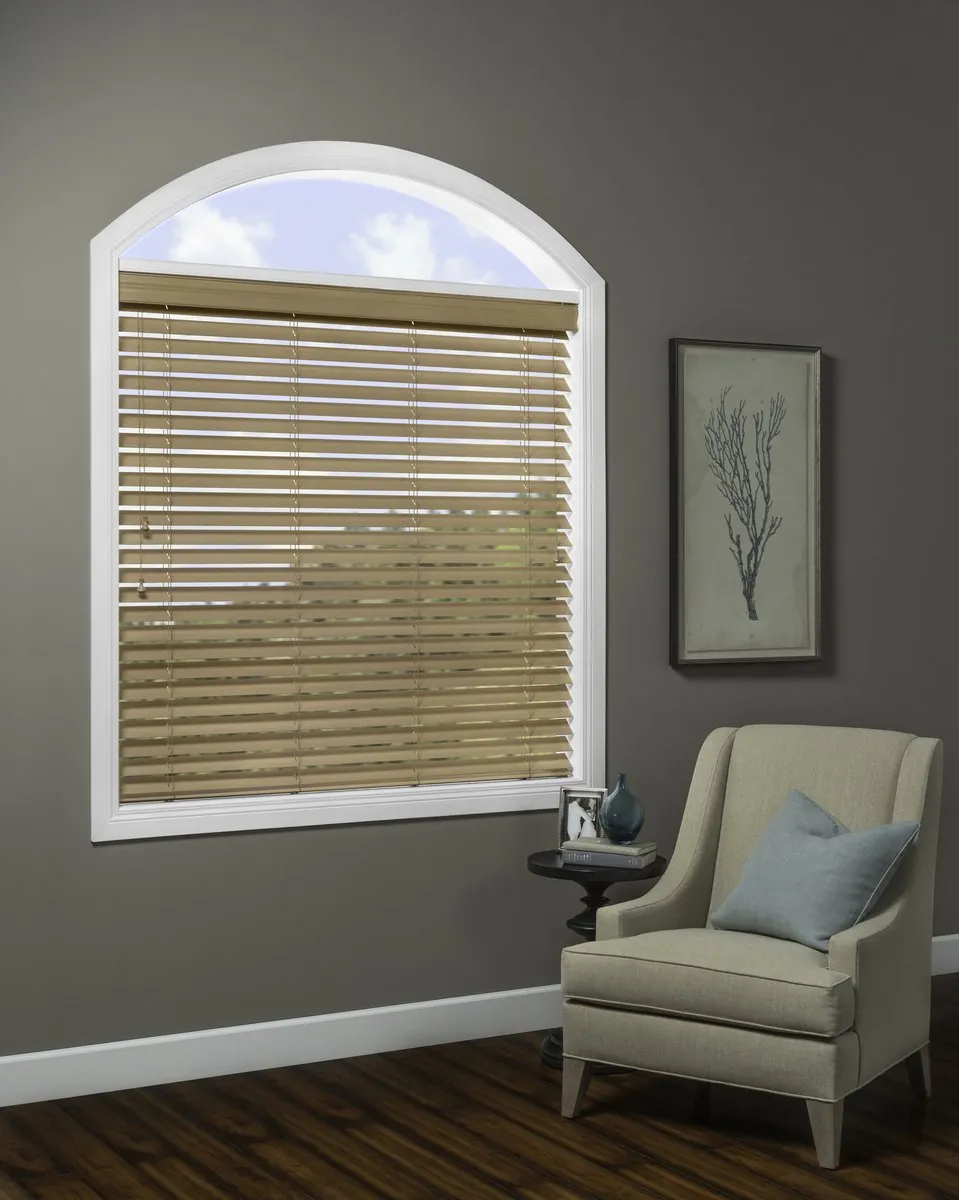
A horizontal blind handles that better than a shade. Leave the slats open and you collect all the green light the trees allow, with a clear view of the woods between the slats. When the sun breaks through a gap, a small turn of the wand blocks the bright patch without closing the room. Pale slats help the shaded rooms, because white or cream reflects light inward. In a room with a lot of dark wood and leaves outside, a warm wood tone can feel more natural.
Kitchens, mudrooms and the back of the house
The back of a Westwood house works hard. In a post-war colonial the kitchen usually faces the back garden, sometimes with a breakfast nook added later. In the larger newer houses there is often a mudroom between the garage and the kitchen, a laundry, and a kitchen that runs into a family room with a slider to the deck.
These are rooms for EverWood faux wood. Its slats look like painted wood but take kitchen steam, splashes at the sink and the damp air of a laundry without warping. In a mudroom where coats drip and doors open all day, it simply wipes clean. Because EverWood matches Parkland wood in color, the back of the house can carry the same finish as the front rooms without anyone noticing the change of material.
The patio door usually takes a vertical blind in the same tone, drawn aside when you step out to the deck, and the windows either side get matching horizontal blinds so the whole wall looks finished. Pollen and dust from the trees settle on any window covering in spring, and smooth faux wood and metal slats are among the easiest to keep clean.
When the leaves come down
Late autumn changes everything. The canopy thins, the sun drops lower in the sky, and rooms that were shaded all summer are suddenly full of low, bright light, sometimes shining straight into your eyes at the kitchen table or across a television in the late afternoon.
This is where the slat angle matters most. Tilting the slats so the room-side edge points up turns that low sun toward the ceiling, where it spreads gently through the room instead of glaring off the table. Bedrooms that never needed covering in summer may now catch the morning sun through bare branches, which is why darker slats and routeless construction are popular for Westwood bedrooms.
The same blinds that let in every bit of shaded light in July cut the winter glare in December. Planning custom blinds in Westwood around both seasons is something we talk through at every visit.

We come to you with the samples
For Westwood we lead with an in-home consultation. Tree-filtered light is hard to imagine in a shop; at your own windows you can see exactly how a pale slat brightens a shaded room, how a wood tone looks against the view of the woods, and how the slats handle a patch of sun.
The samples travel in our vans, so we can bring the showroom to you: wood, faux wood and metal slats in their colors, vertical vanes, and working lift and tilt mechanisms. Anyone who also wants a look in a shop can go to Franklin, our closest showroom to Westwood. You can read more about our in-home consultations.
What happens at the visit
- Book online with Request a Consultation, or phone through the call button.
- We begin in the room that troubles you most, often the one where the sun breaks through the trees.
- Samples go up at the glass so you can watch how each color and angle changes the light and the view of the woods.
- Decisions are made a room at a time; nothing has to be settled that day.
- Every window is measured, with its depth checked so we know whether the blind can sit inside the frame.
- A free estimate follows, for you to weigh up when it suits you.
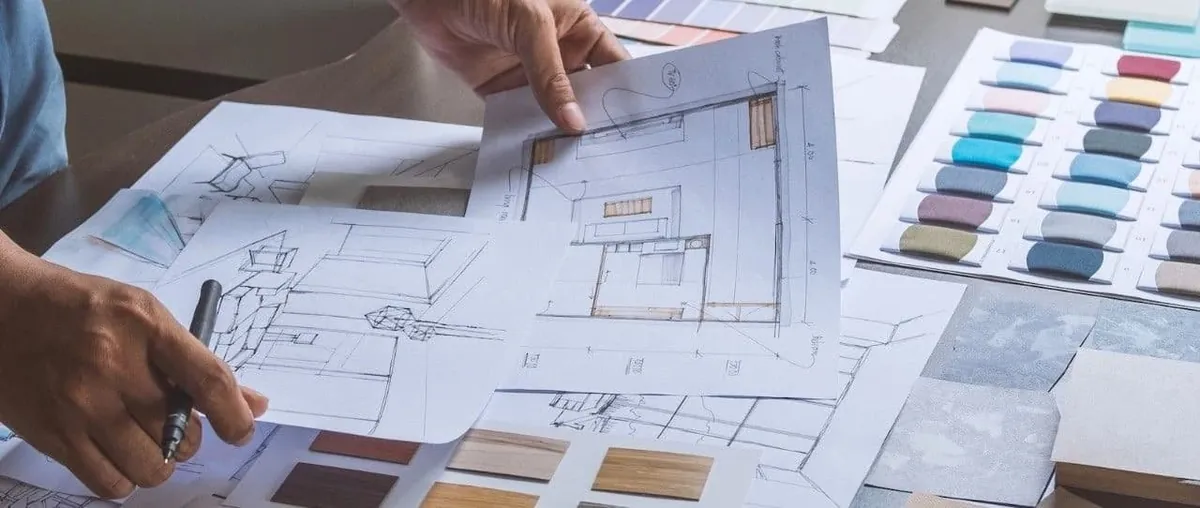
Interior design consultations are available too, if the whole room needs a fresh look and not only the window. The guide to what happens at an in-home consultation has more detail.
Evenings on a deep lot
With a long lawn between the house and the road, daytime privacy is rarely a concern in Westwood. After dark it is different. With the lights on and the woods black outside, windows become bright panels visible from the street and from neighboring lots through the trees, especially once the leaves have dropped.
Closing the slats at dusk solves that. In a large house with many windows, PowerView can do it for you on a schedule, opening the blinds again in the morning. Grouped by room, a single tap on your phone closes a whole family room or every window on the front of the house. In bedrooms, darker slats closed fully keep the room private and dim.
Upstairs in a colonial
The second floor of a Westwood colonial is mostly bedrooms, each with two windows, often on different walls, and usually a bathroom or two. In summer the trees shade these rooms well. In winter, with the branches bare, the morning sun can pour into an east-facing bedroom far earlier than anyone wants to be awake.
That is why so many upstairs orders here take darker slats and routeless construction, which leaves out the small holes for the lift cords. Closed, the blind keeps the room dim through the early hours. A cordless lift suits children’s rooms. In the bathrooms, EverWood stands up to the steam, and closed slats give privacy while the room still feels light. Matching the front bedroom windows to those downstairs keeps the face of the house even. Treating the upstairs as part of one plan for custom blinds in Westwood, MA, avoids the mismatched look that comes from covering one room at a time.
Choosing a color
White blinds suit the white trim on most post-war colonials and keep the front of the house crisp and even from the street. They also reflect light, which helps under heavy tree cover.
Inside, there is more room to play. Wood tones in Parkland or EverWood connect a window to timber floors and to the trees outside. Soft grays and taupes suit modern kitchens and painted trim in colors other than white. Darker slats suit bedrooms and media rooms. Our rule of thumb is to keep the street side consistent and vary the rest room by room. With custom blinds in Westwood, MA, the samples settle it quickly once they are against your own walls.
How the blinds are worked
- Cordless lift. Nothing hangs beside the window. Guide the bottom rail to where you want it and a slim rod turns the slats. Sensible in a nursery, a playroom or anywhere a dog naps by the glass.
- Corded lift. A pull cord for the biggest, heaviest blinds, where lifting the rail by hand would be a stretch.
- PowerView motorization. Blinds run by an app, a wall remote or timed scenes. Made for the top windows of a two-story family room and for blinds you want moving at the same hour every day.
Try all three at your window during the visit; the feel of each is easier to judge in the hand.
Measuring and certified installation
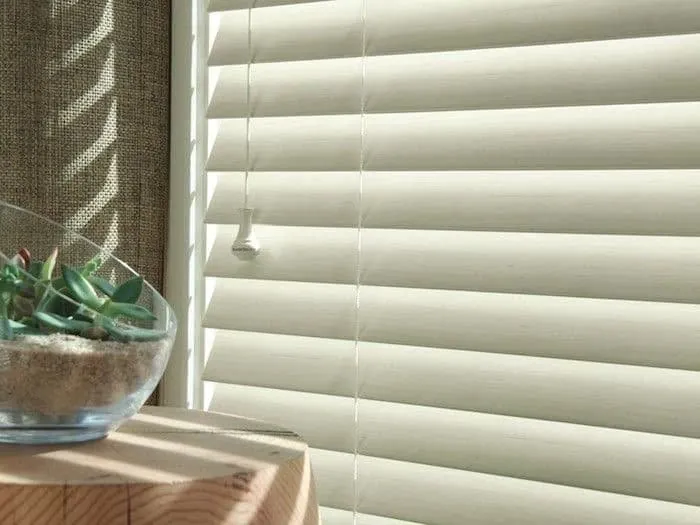
Regular frames help, but a blind built to order still lives or dies by the tape. Widths are taken at the top, middle and sill, heights at both sides and the center, and the frame depth is checked so we know the blind can sit inside it. Window cranks and alarm contacts get noted so nothing catches. You approve every mount and control before we order.
Installation is done by fitters Hunter Douglas has certified. Brackets go into solid timber, every blind is checked for level and run through its full travel, and you get a short lesson on the controls. In the bigger houses, the crew comes ready for high glass. A careful fit is how custom blinds in Westwood, MA, end up looking as if the builder put them in.
Why a Hunter Douglas Gallery dealer
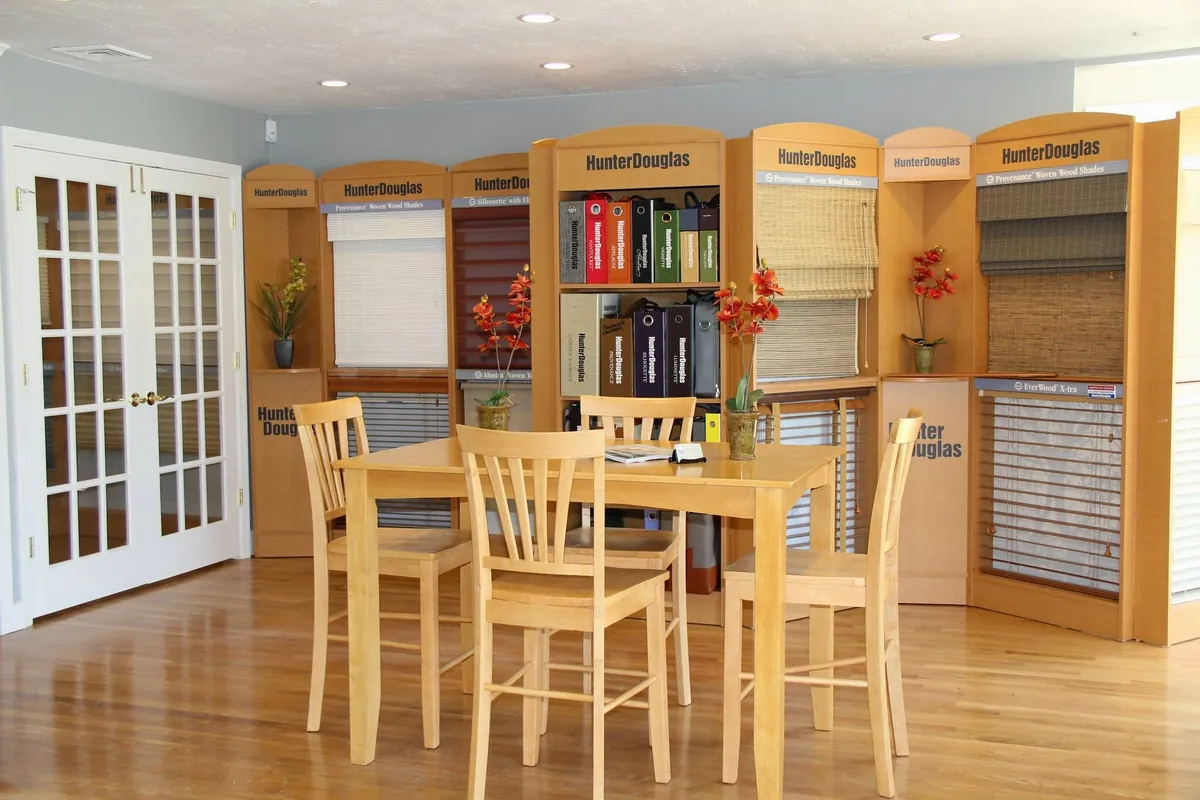
Gallery is the name Hunter Douglas gives the dealers it ranks highest, and Blinds & Designs carries it. Ordering through a Gallery dealer means nothing in the blind line is off limits: real wood, faux wood, aluminum, verticals, all their finishes and slat sizes, and PowerView to drive them.
Installation is by Hunter Douglas certified fitters, and should a blind break years later, repairs are something we take on.
Other rooms in the house may call for something else. Look at our cellular shades in Westwood, roller shades in Westwood or motorized blinds in Westwood, or browse every service we offer locally on the Westwood page. For the complete line, there is our custom blinds page, along with wood blinds and EverWood faux wood blinds.
Questions from Westwood
My rooms are shaded by trees most of the year. Will blinds make them darker?
Not when they are open. Pale slats reflect light into the room, and tilting them upward sends daylight onto the ceiling, which brightens a shaded room. You close them only when you want to.
What about the low winter sun once the leaves fall?
Angle the slats so the room-side edge points up. The low sun is turned toward the ceiling instead of into your eyes, and you still see out between the slats.
Will the blinds look consistent on the front of my colonial?
They will. Every street-facing window gets an identical finish and slat, hung at a matching height, so the even, balanced front of a colonial is kept.
Can I choose without leaving the house?
You can. Everything comes to you in our vans. For anyone who also wants to see blinds in a shop, Franklin is the closest showroom.
Do you charge for the estimate?
No. Once the windows are measured, the estimate costs nothing.
Your next step
Picking blinds is easiest standing at your own glass, in whatever light the trees let through. Request a consultation to book that visit; we arrive with Hunter Douglas samples, measure each opening and leave a free estimate. The call button is there for questions first, and the Franklin showroom for a look in person.