
Old sash close to the sidewalk
Walk through Dedham Village or along the streets of Oakdale and the windows tell you how old the houses are. Antique colonials and Victorians stand close to the sidewalk, and their sash runs tall and narrow, often in old frames that have settled a little out of true over the years. Anyone choosing window treatments in Dedham, MA, for one of these houses is working with two audiences at once: the family inside, who want light and privacy, and everyone passing a few steps from the front parlor.
Those houses carry historic expectations. A covering that looks modern or bulky from the street can jar against clapboard and old trim, while the right one disappears into the architecture and still does its job indoors.
Toward Riverdale the picture changes. Post-war capes and ranches bring wider, more regular openings and a simpler set of choices. We plan both kinds of house the same way: in your rooms, with samples, one window at a time.
Every service we offer in Dedham
These are the window treatments in Dedham we offer. Each card below opens the page for one service in town, with more about how it fits the houses here.
Custom Blinds in Dedham
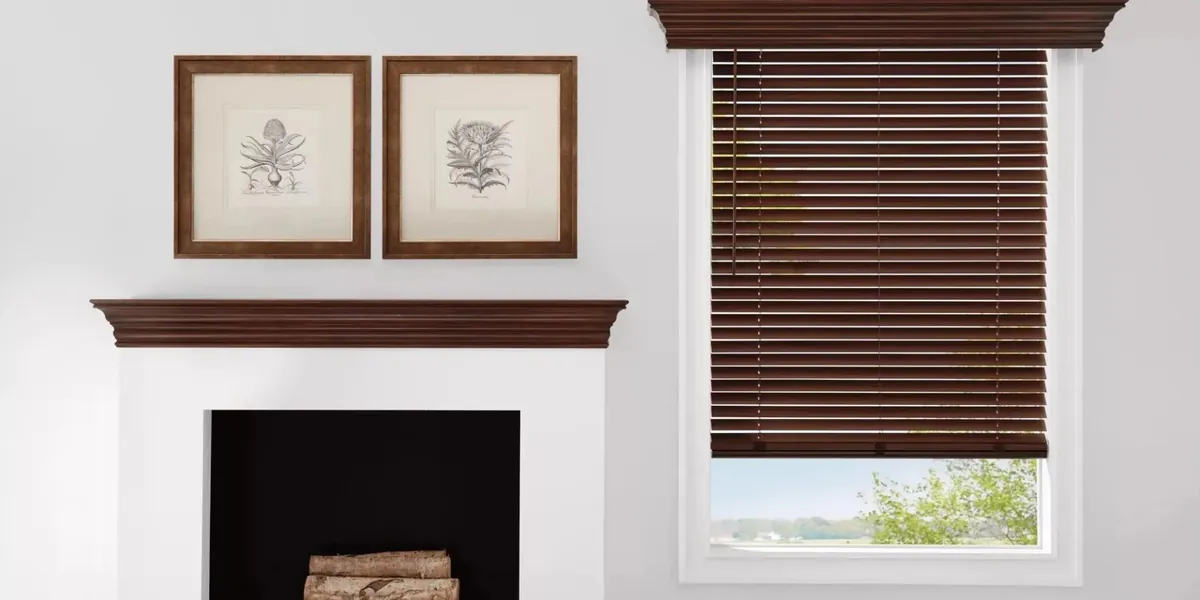
Wood, faux wood, metal and vertical blinds, sized to each sash. Dark wood slats with a cornice suit a period parlor.
Cellular Shades in Dedham
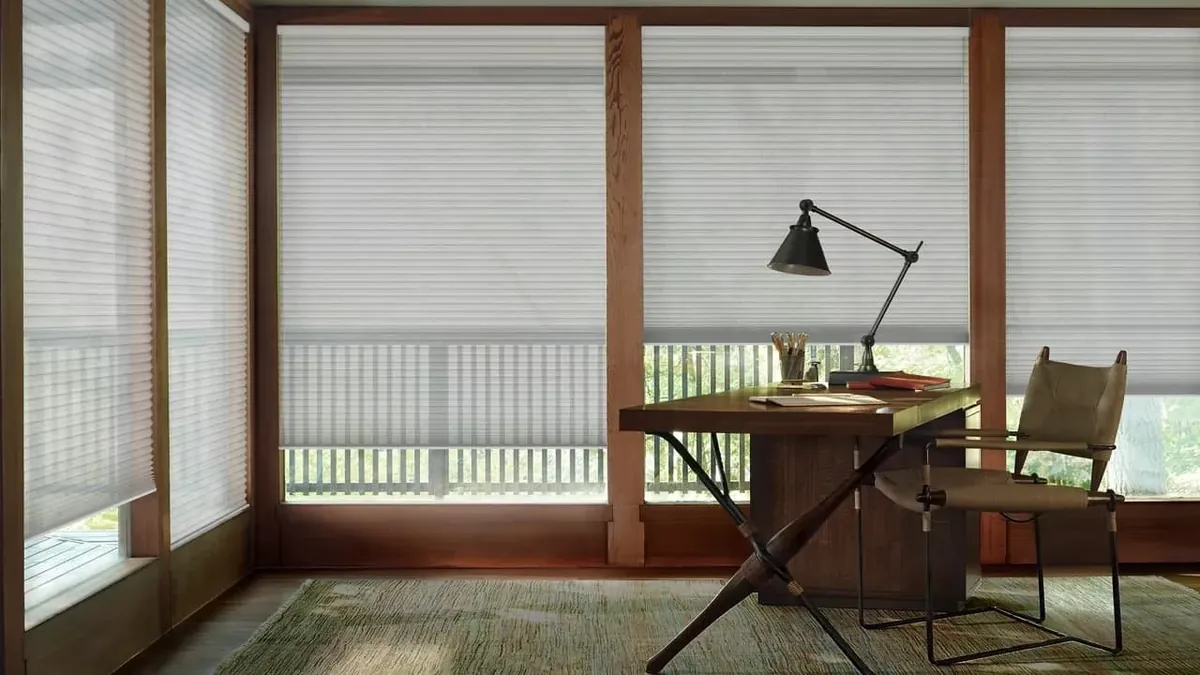
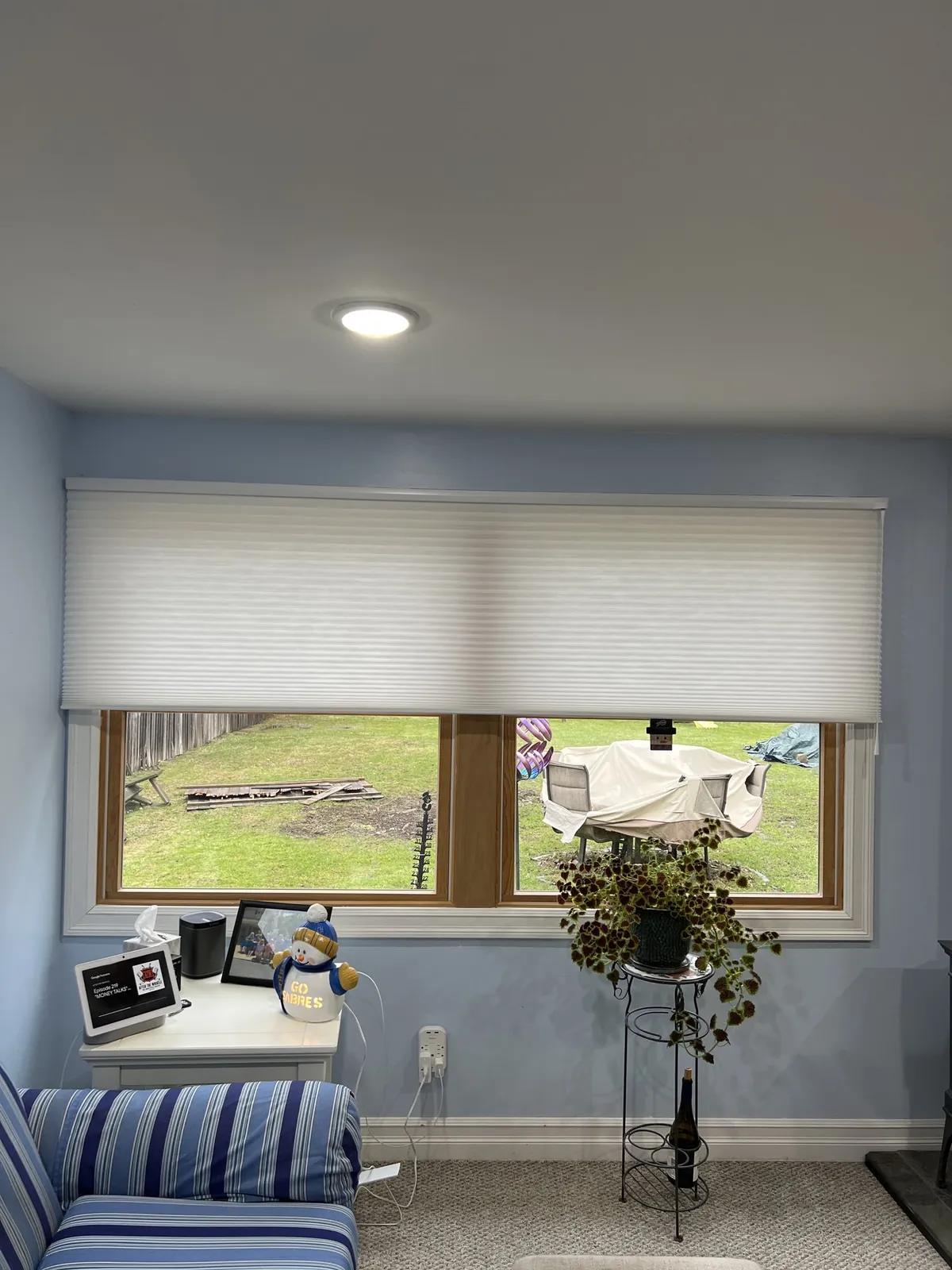
Duette and Applause honeycomb shades that tuck into a narrow frame and stack small at the top of tall glass.
Roller Shades in Dedham
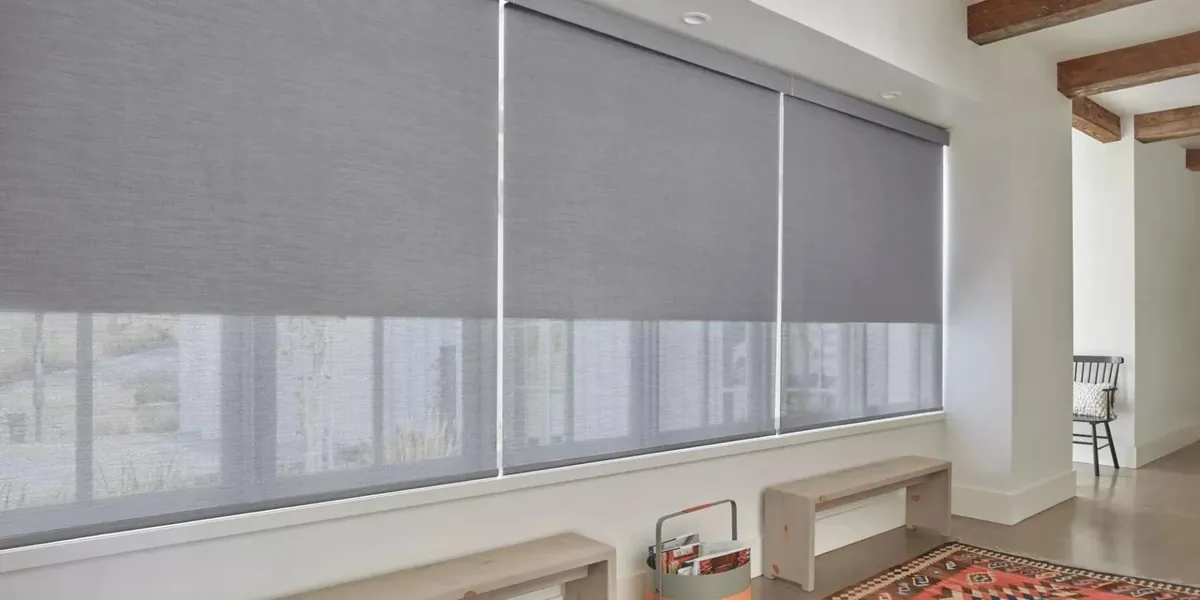
Designer and Alustra rollers and solar screens, a clean choice for a ranch’s wide living room window or a back addition.
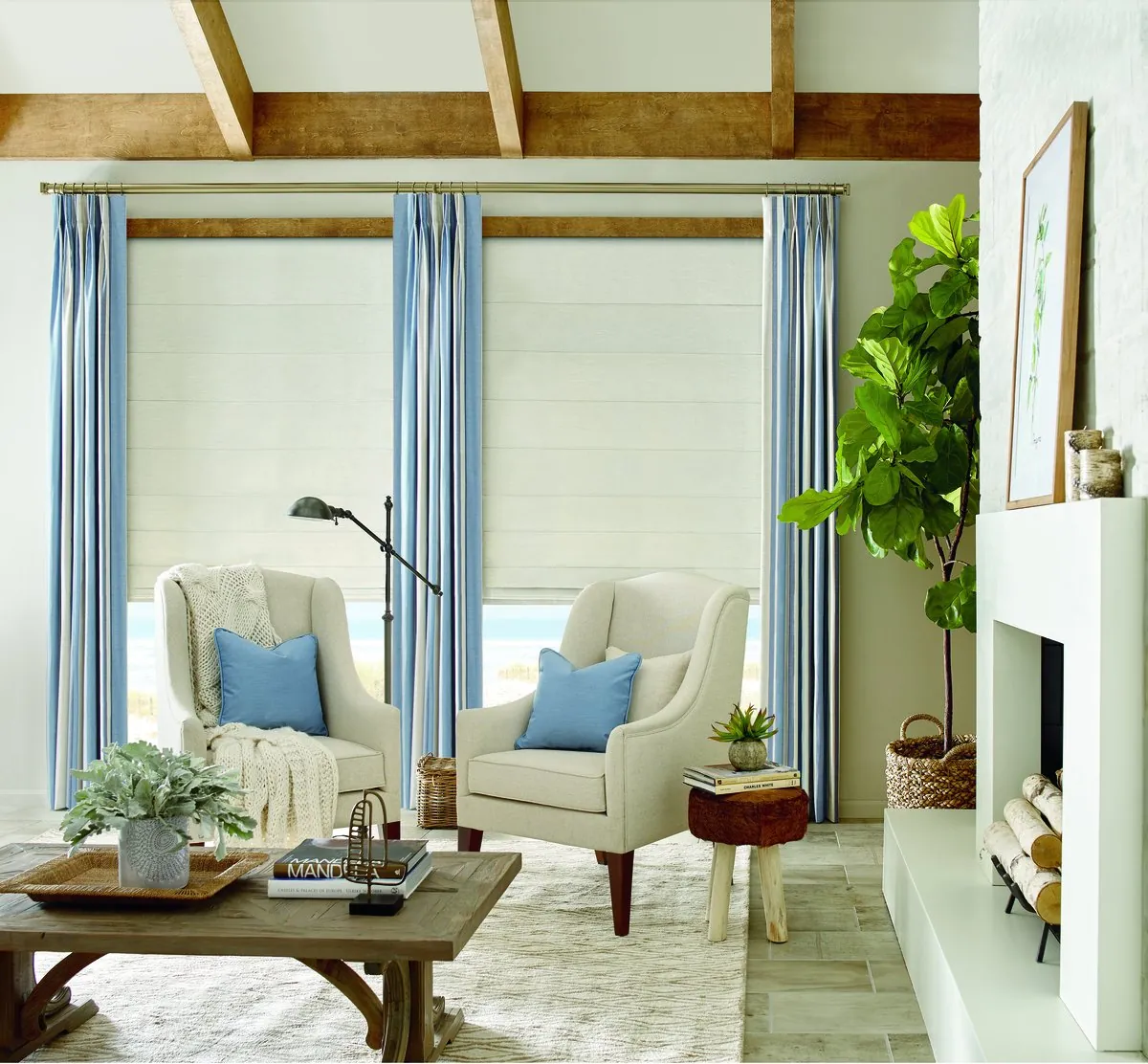
Roman Shades in Dedham
Vignette and Carole fabric shades in flat or folded styles, soft enough for a Victorian sitting room or a dining room.
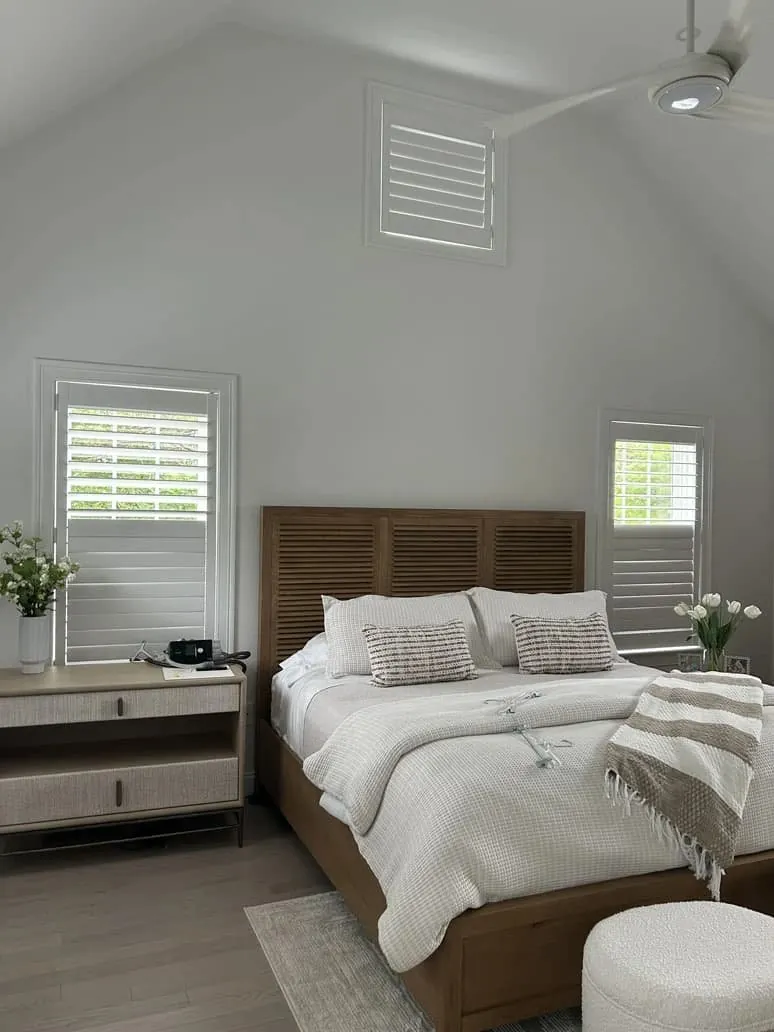
Plantation Shutters in Dedham
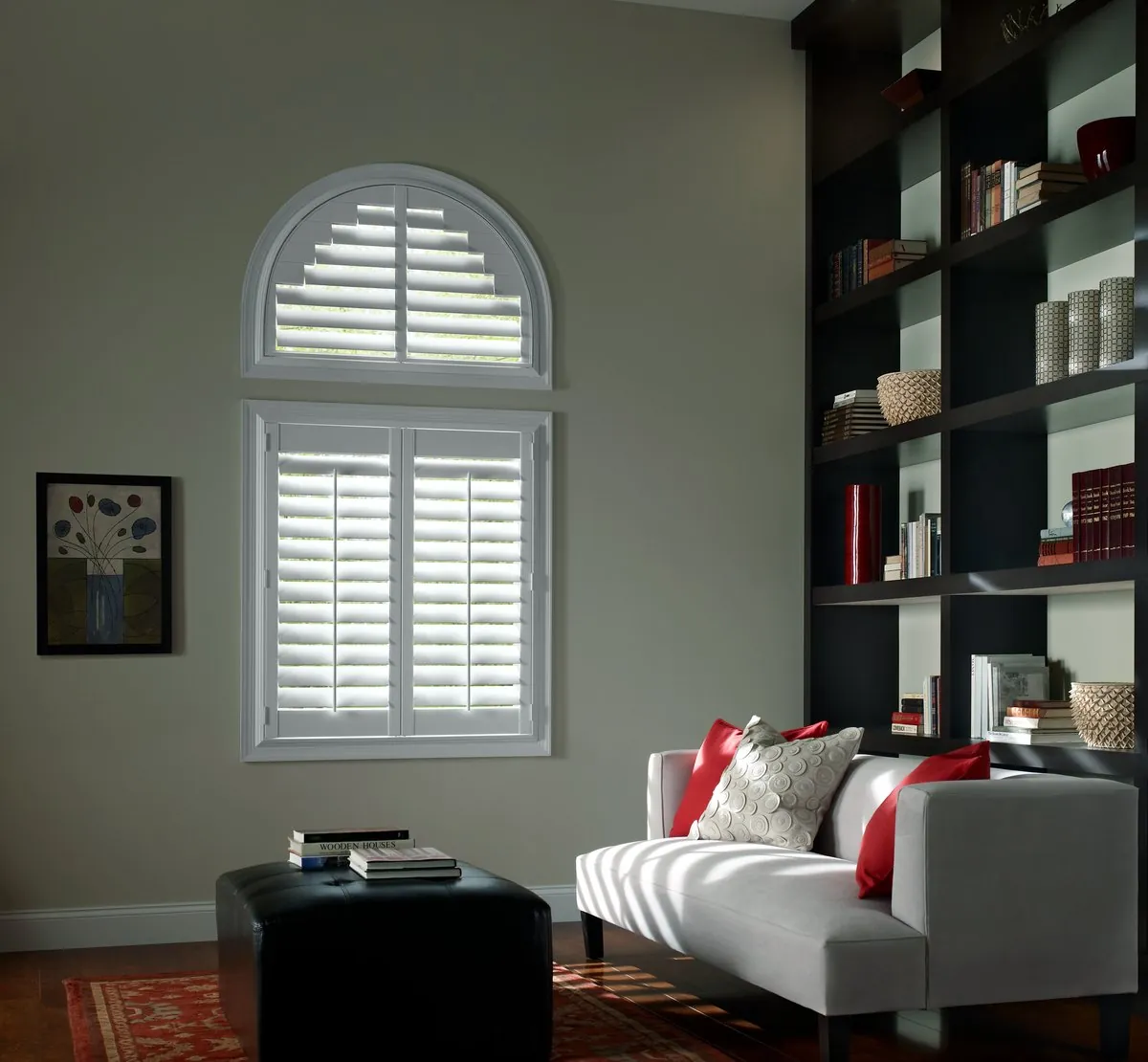
Palm Beach, NewStyle and Heritance shutters, with the louver size and frame style chosen to suit old trim.
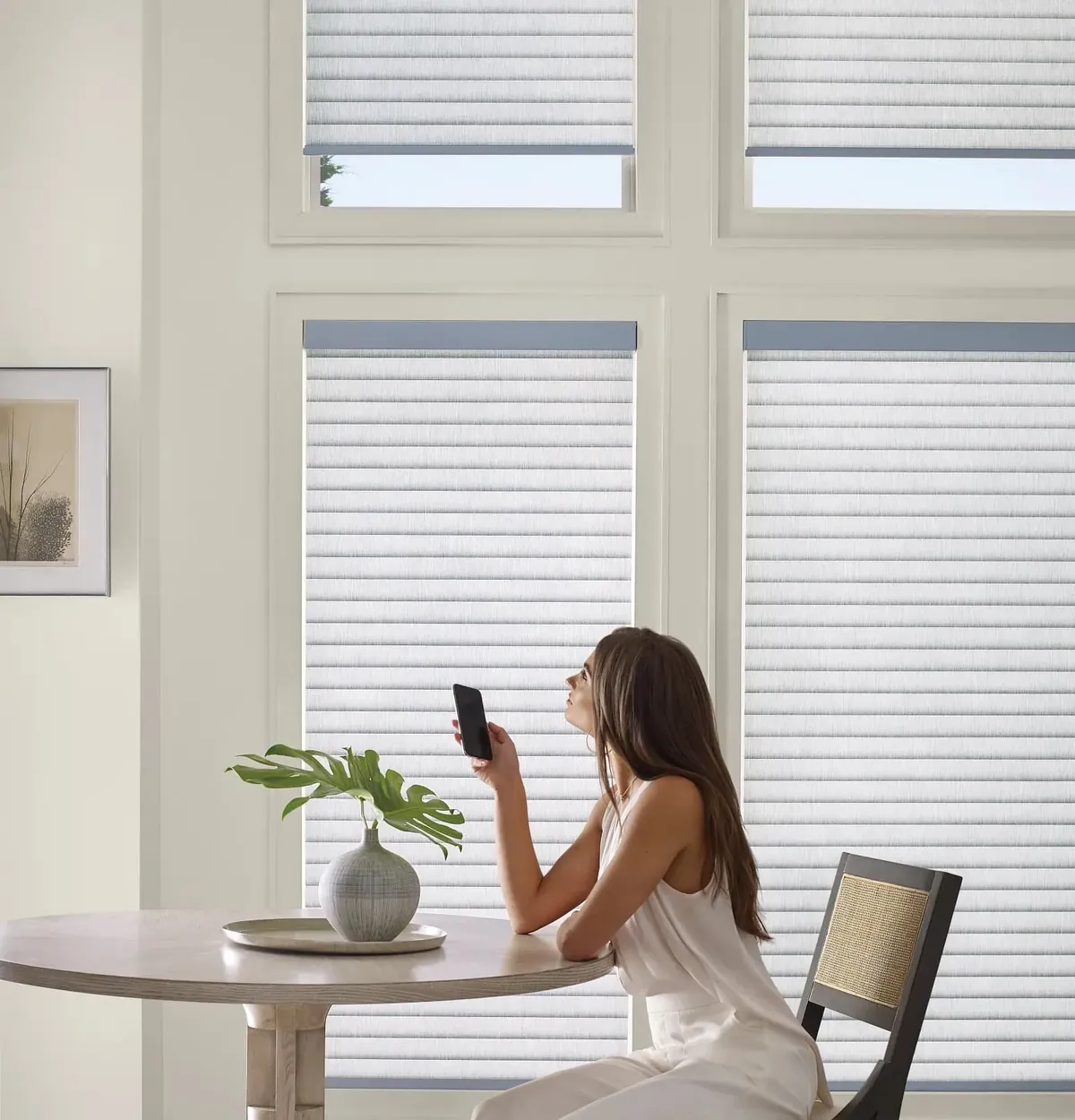
Motorized Blinds and Shades in Dedham
PowerView by remote, app or schedule, for upper sash out of reach and for front rooms you want closed at a set hour.
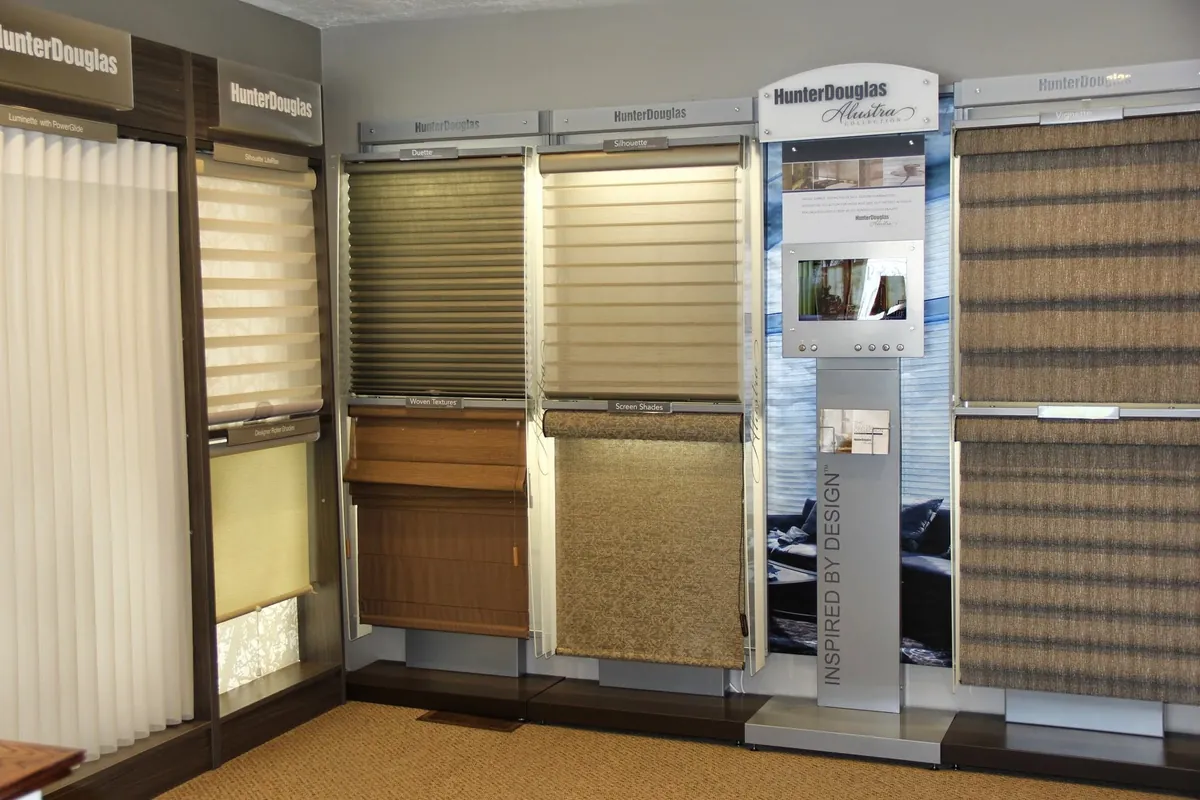
Hunter Douglas Dealer in Dedham
As a Hunter Douglas Gallery dealer we can offer the whole line, fitted by certified Hunter Douglas installers.
Tall, narrow sash and what fits inside it
The sash in an antique colonial is usually taller than it is wide, and in a Victorian it can be taller still, with a deep stool below and decorative casing around it. That shape rules out some coverings and favors others.
An inside mount, set within the frame, keeps the old casing in full view, which is what most owners of a period house want. It needs enough depth in the frame for the headrail and a frame that is close to square. Many village frames are neither perfectly deep nor perfectly square, so we measure each one at the top, middle and bottom before suggesting anything. Where a frame tapers, a slim honeycomb shade or a roller can often still sit inside it with a small, even gap. Where it does not work, an outside mount above the casing can be made to look intentional rather than like a fix.
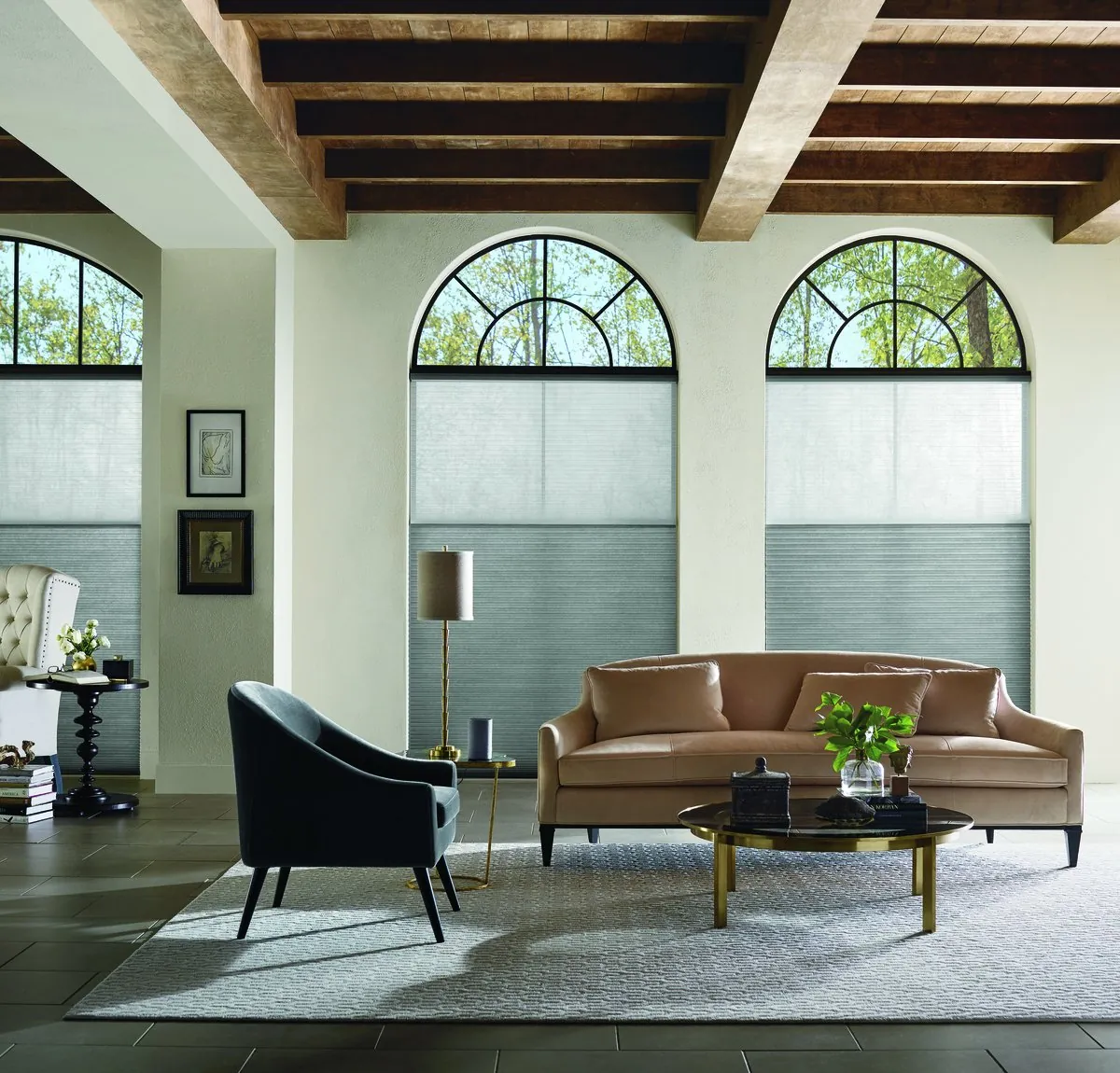
Narrow glass also means the stack matters. A blind or shade that gathers into a tall bundle at the top hides a big share of a small opening. Honeycomb shades fold very slim, rollers wind away onto a tube, and shutters hide no glass at all when their panels swing open.
Looking right from the street
In Dedham Village the front windows are part of the streetscape. From the sidewalk you see every window on the facade at once, so a mix of colors and styles across them reads as clutter, even if each room on its own looks fine.
A few habits help a period house keep its composure:
- One face to the street. Choose a single color for the street side of every covering, even if the room side changes from room to room.
- White or soft neutrals behind old glass. Wavy antique panes and painted muntins look best against a quiet backing.
- Shutters where the house can carry them. Interior shutters have a long history in houses of this kind, and from outside they read as part of the architecture.
- Hardware kept out of sight. Slim headrails keep the view through the glass tidy.
None of this means the inside has to be plain. A patterned roman shade in a dining room can face the room with color while showing a calm back to the street.
Privacy when the house is near the walk
When a front parlor sits only a few steps from the sidewalk, privacy becomes an all-day concern, not just an evening one. Yet closing everything shuts out the daylight that tall old windows were built to bring in.
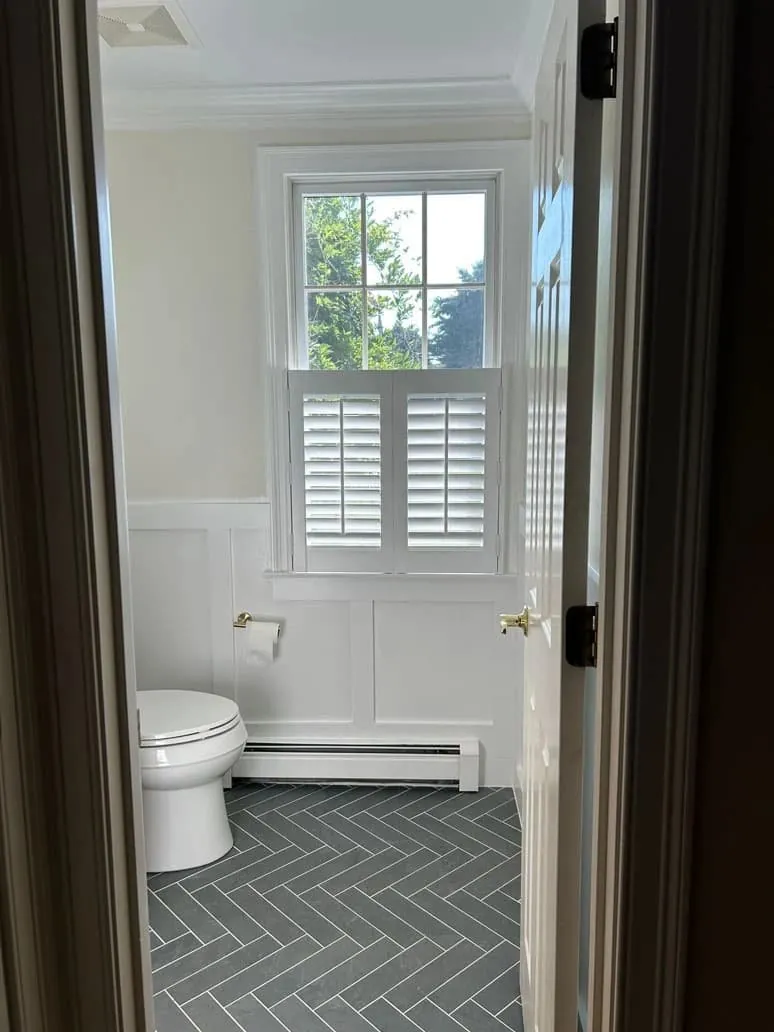
Top-down, bottom-up shades solve much of this. Lower the top and raise the bottom, so the lower glass is covered while the upper sash lets light reach deep into the room. Honeycomb and roman shades both come in this style. Shutters handle it a different way: in a cafe arrangement only the lower half is covered, or with full-height panels the louvers can be tilted so passers-by see nothing while light still slips in from above.
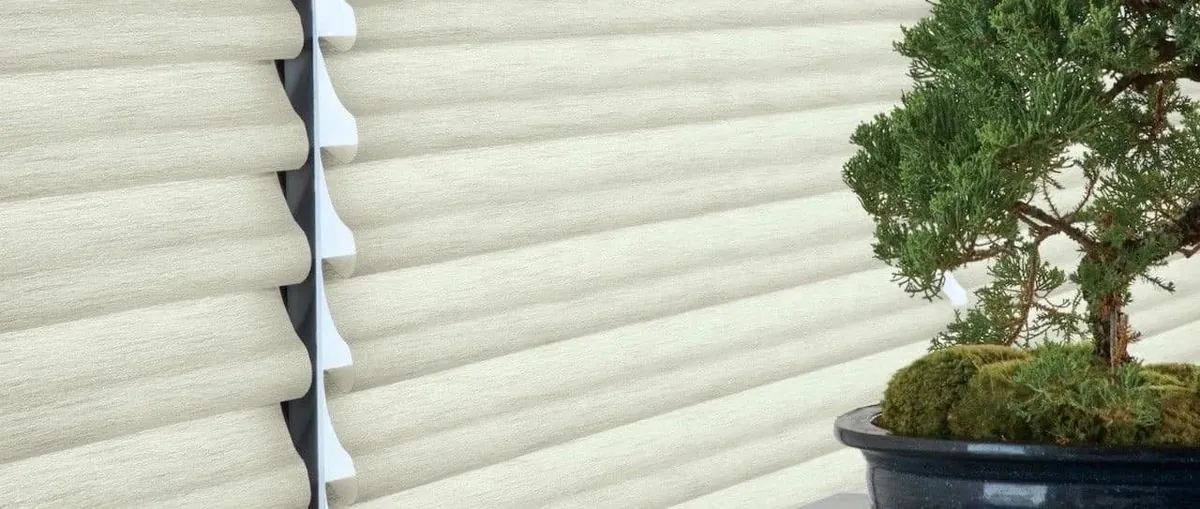
Sheer shadings are another answer for a parlor or front sitting room. With the vanes tilted open they filter the view in daytime and let you see out, and closed they give full privacy once the lamps are lit.
Victorian rooms, bays and odd shapes
Victorians in town often add shapes a colonial does not have: a bay with three or five narrow windows, a tall window on a stair landing, a round-top window in a gable, or a small decorative window beside the front door. Each one needs its own plan.
In a bay, separate shades or shutter panels on each window keep the angles crisp, and matching the stack height across all the windows keeps the bay looking like one piece. On a stair landing, where the window is hard to reach from the steps, a motorized shade saves an awkward stretch. A gable round-top can be left open to the sky with a shade only on the rectangle below, or fitted with a shaped shutter. Narrow sidelights by a door usually take a slim honeycomb or a fixed sheer, held top and bottom so it does not swing when the door moves.
Color against painted trim and old wood
Period rooms often have a strong palette of their own before a single shade goes up: painted casings, stained doors, wide floorboards, a mantel, sometimes wallpaper. The covering has to sit with all of that rather than compete with it.
In a room with dark stained woodwork, wood blinds in a matching or slightly lighter tone can look as though they came with the house. Against white painted trim, a white or ivory shade lets the woodwork frame the glass. Where the walls are a deep color, as in many restored Victorian parlors, a cream or soft gray fabric keeps the windows from turning into dark holes after sunset.
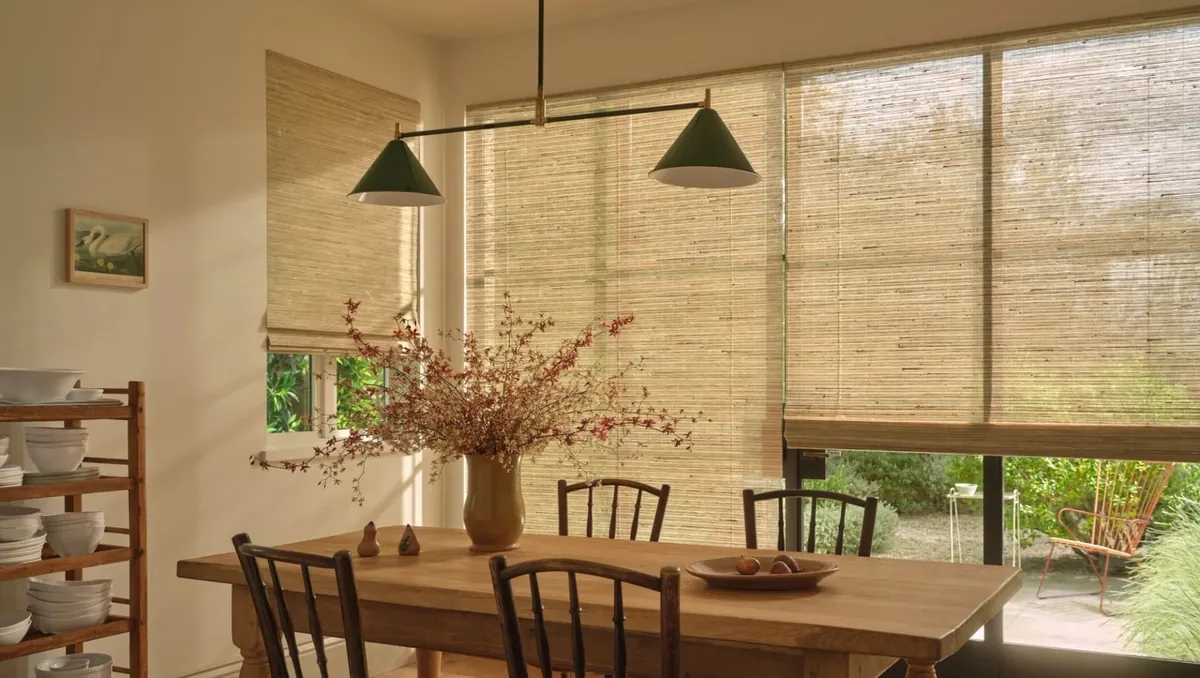
Texture counts too. A linen-look roman shade softens a formal dining room, a woven wood shade adds warmth to a study, and a crisp roller looks right in a kitchen that has been updated. Choosing window treatments in Dedham houses of this age usually means testing two or three tones against the trim itself, because a swatch that looks perfect on its own can turn yellow or gray beside old paint. That is one more reason we bring the samples to you.
On the street side, all of this still has to come back to one calm face, so we look at the backing of each fabric as well as its front.
Capes and ranches toward Riverdale
The post-war capes and ranches toward Riverdale bring a different set of windows: regular double-hung sash, a wide picture window in many ranch living rooms, a kitchen window over the sink and a slider or door to the back yard. The frames are mostly square and the choices are easier.
A ranch picture window suits a roller or a honeycomb shade wide enough to cover it in one piece, or two shades on a shared headrail if it is very wide. Bedrooms that face the street take room-darkening fabrics with a neutral backing. Upstairs in a cape, the bedrooms under the roof often have small windows in dormers, where a slim inside-mount shade keeps the stack out of a short opening. Kitchens and baths often get faux wood blinds or shutters, and the back slider is a natural spot for a vertical honeycomb shade or vertical blinds that stack neatly to one side.
Kitchens and ells at the back
Behind many village houses sits a kitchen ell or a later addition, where the windows are often a different size and age from the ones out front. Because these rooms face the yard rather than the street, they are the place to relax the rules. A bright roller over the sink, cafe shutters in a breakfast corner or a woven shade on a back door can all work here without upsetting the facade.
What matters most in the back rooms is how each window is used. A window over a sink is reached across a counter, so a motorized shade, or cafe shutters that need no reaching for a cord, saves stretching. A door to the yard that opens many times a day wants a covering fixed to the door itself, held at the bottom so it does not swing. And where a neighbor’s kitchen faces yours across a narrow side yard, a light-filtering fabric keeps the room bright while blurring the view in both directions.
The order a typical house is done in
Most houses are not fitted all at once by choice. Many owners start with the rooms that bother them most and add the rest later, and that works, as long as the first choices leave room for the next ones. A sensible order for window treatments in Dedham houses tends to look like this:
- Street-facing rooms first. The parlor, front bedroom and dining room set the look from outside, so their color and style become the reference for everything else.
- Bedrooms next. Room-darkening fabrics for sleep, with the street side kept consistent.
- Kitchen and baths. Privacy first where a neighbor’s window faces yours.
- Back rooms and additions. Family rooms, sunrooms and back doors, where you have the most freedom to try something different.
Write down the fabric and color chosen for each room, and a shade added later can match the ones already in place.
Your consultation at home
The tall sash, the settled frames and the trim around them are the reasons to choose in your own house rather than anywhere else. Measurements matter here, and so does seeing how a fabric looks against old glass and painted woodwork. Our shop-at-home service is run from Canton, and our vans carry samples, so we can bring the showroom to you.
- Book a time. Use Request a Consultation, or press the call button to talk it through.
- We arrive with samples. Fabric books, blind slats, shutter louvers and a PowerView remote to try.
- We start at the front of the house. The street-facing rooms come first, because they set the plan.
- Every frame is checked. Depth and square at each window decide inside or outside mount.
- You see the options in place. Samples are held up at the glass in the light you actually live with.
- A free estimate follows. Take your time with it; there is no pressure to decide on the day.
More about how this works is on our Canton shop-at-home page and the in-home consultations page. If you are weighing shutters for an old frame, shutters for older windows is worth reading first.

When the upper sash is out of reach
Tall sash brings a practical problem: the top of the window can be well above arm’s height, especially in a Victorian with high ceilings or on a stair landing. Raising and lowering a tall shade by hand can be awkward, and many owners now prefer a motor.
PowerView lets you raise and lower each shade from a remote, an app on your phone or a schedule you set, and shades can be grouped so a whole room moves together. In a front parlor that faces the street, a schedule that lowers the shades at the same time each evening keeps the room private without anyone having to remember. We plan how each motor is powered at the visit. The motorized blinds and shades in Dedham page covers control in more detail.
Repairs to coverings you already own
Plenty of older houses come with blinds and shades already in place, some working well and some not. If a lift cord has frayed, a wand no longer tilts, or a honeycomb shade hangs crooked, it may well be repairable. We are glad to look at window coverings you already have and tell you honestly whether a repair makes sense. See blind and shade repair for more.
A Gallery dealer for period houses
Blinds & Designs is a Hunter Douglas Gallery dealer. That gives a village colonial, an Oakdale Victorian or a Riverdale ranch access to the full Hunter Douglas range: honeycomb, roller, roman, sheer and woven shades, wood and faux wood blinds, shutters, drapery and PowerView motorization.
Everything we sell is fitted by certified Hunter Douglas installers, which matters in a house where no two old frames are quite alike. Estimates are free, and interior design consultations, automation and repairs are all part of what we do.
Franklin, the nearest showroom
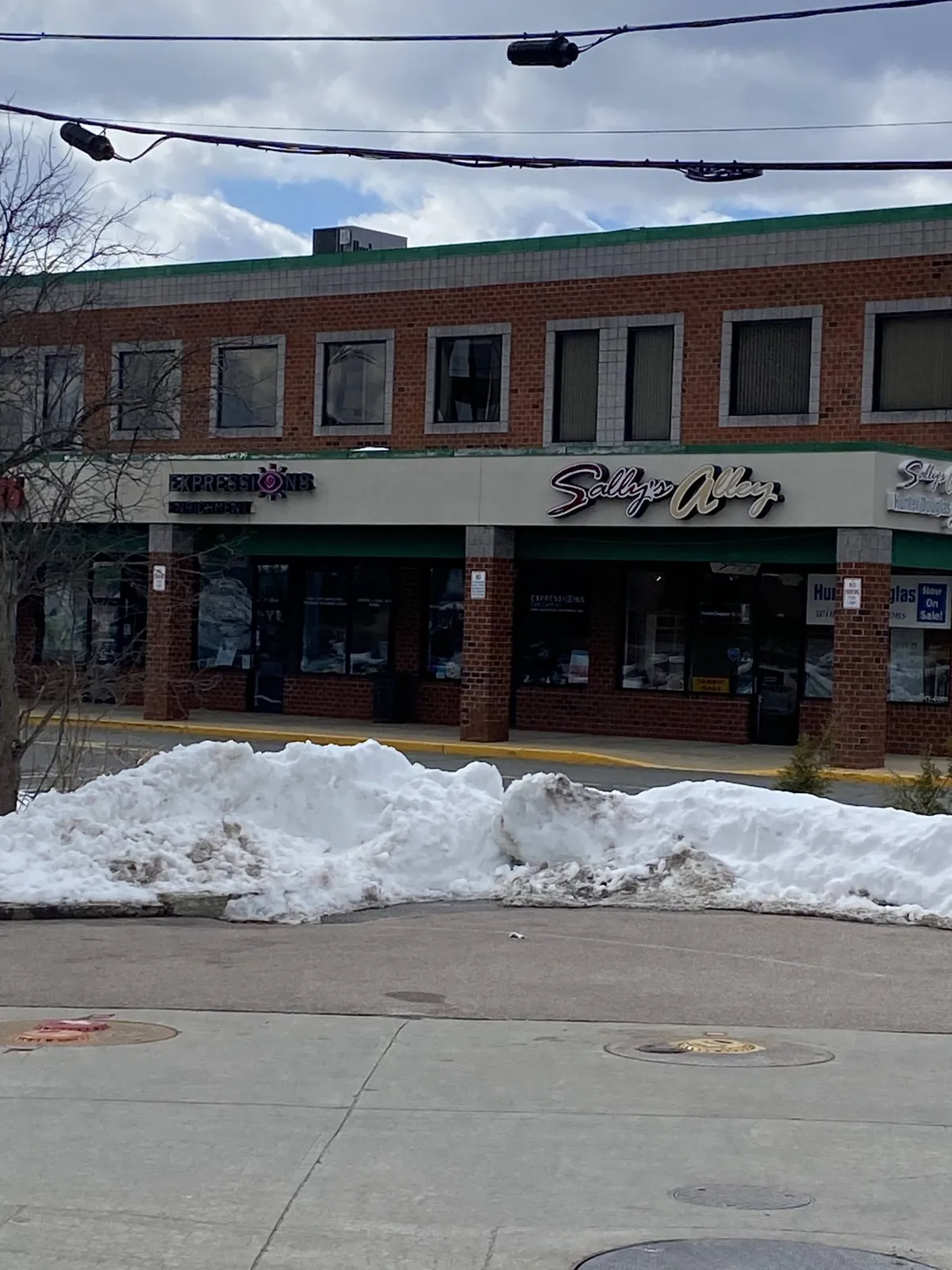
For most Dedham houses we recommend beginning at home, where the samples can be judged against your own sash and trim. If you would also like to visit a showroom, Franklin is our closest. Its address and hours are on the Franklin showroom page.
Questions from Dedham
My old window frames are not square. Can a shade still fit inside them?
Often, yes. We measure each frame in several places, and a slim honeycomb shade or a roller can usually sit inside with a small, even gap. Where the frame is too far out, an outside mount above the casing is planned so it looks deliberate.
Will shutters suit an antique colonial?
They usually suit it very well. Interior shutters have a long history in houses of this age, and we choose the louver size and frame style to sit comfortably with the existing trim and the narrow sash.
How do I keep privacy in a room that faces the sidewalk without losing light?
A top-down, bottom-up shade covers the lower glass and leaves the upper sash open, so daylight still reaches the room. Cafe shutters and sheer shadings with tiltable vanes are good alternatives.
Can I do the front of the house now and the rest later?
Yes. Many owners start with the street-facing rooms and match the later rooms to those first choices.
Is there a charge for the estimate?
No. Estimates are free, and you can take as long as you like to decide.
Plan your windows with us
Whether it is a row of tall sash on a village colonial, a bay in an Oakdale Victorian or a picture window in a Riverdale ranch, new window treatments in Dedham, MA, start with a visit to your house. Request a consultation and we will bring samples, measure every frame and leave you with a free estimate. If you would rather ask a question first, the call button reaches us directly.
Our window treatments page lays out every shade, blind, shutter and drapery line we sell.