
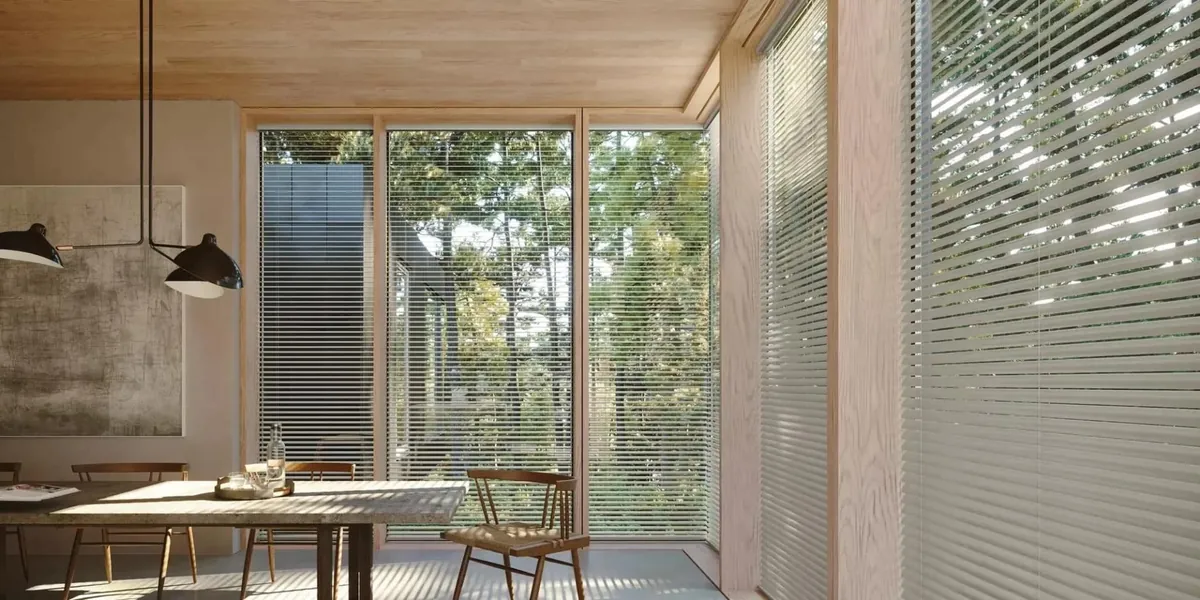
Tiny old openings, long setbacks
Upton spreads out. Antique colonials and farmhouses sit on large lots, set well back from the road, with plenty of open ground between one house and the next. Off Route 140, newer colonials fill in on lots of their own. It is a low-density town, and that changes the usual reasons for covering a window.
With deep setbacks, the passing road is rarely a privacy problem in daytime. What matters more is light and comfort: sun on a south wall, a bedroom that wakes too early, a living room that gets the low evening glare. And in the oldest houses, there is a fitting challenge few towns share. Their original openings are very small, sometimes barely larger than a sheet of paper on the upper floor, and a blind has to suit that scale.
Those two things, open light and very small sash, shape almost every request for custom blinds in Upton, MA.
Three good starting points
Most Upton houses, old or new, end up with some mix of these three. Whether the job is a single tiny attic window or a full set of custom blinds in Upton, MA, for a newer colonial, each range comes to the house as a sample on consultation day, so you can judge it at the window it is meant for.
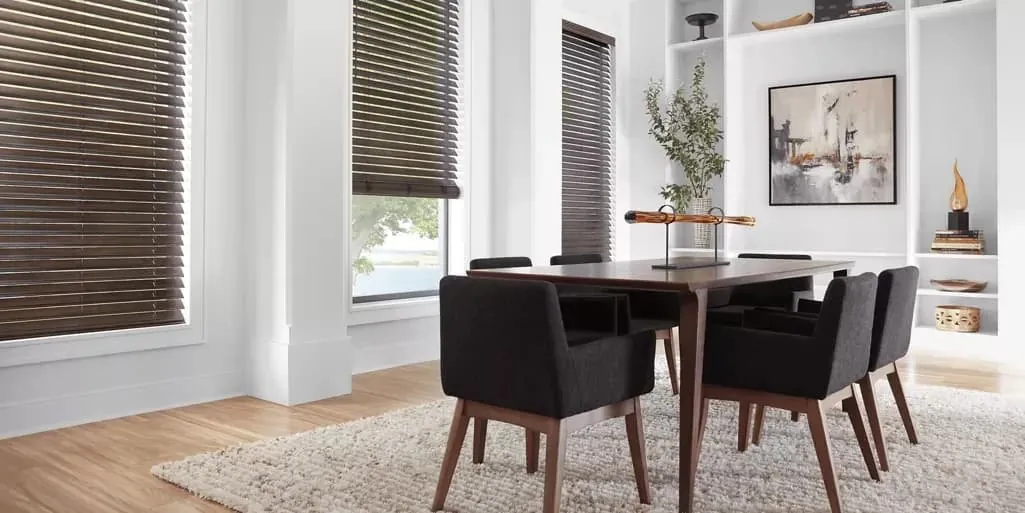
Wood blinds for colonial rooms
Stained or painted real wood for dining rooms, parlors and studies, scaled to the window it sits in.
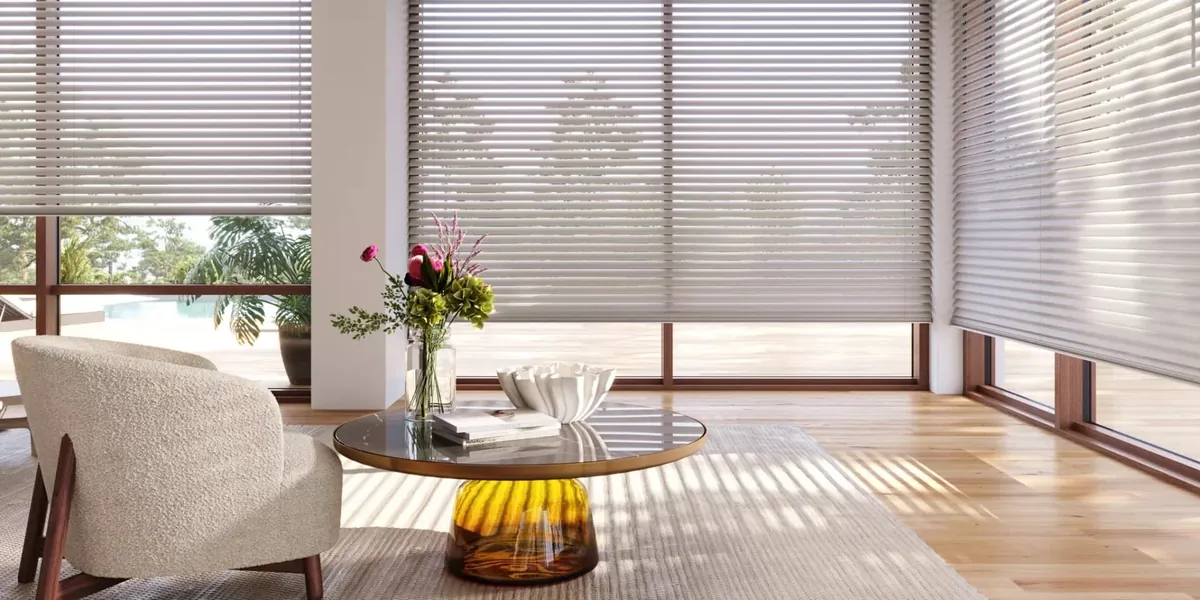
Metal blinds for the smallest sash
Fine aluminum slats that stay in proportion on a tiny upstairs window and close up neatly.
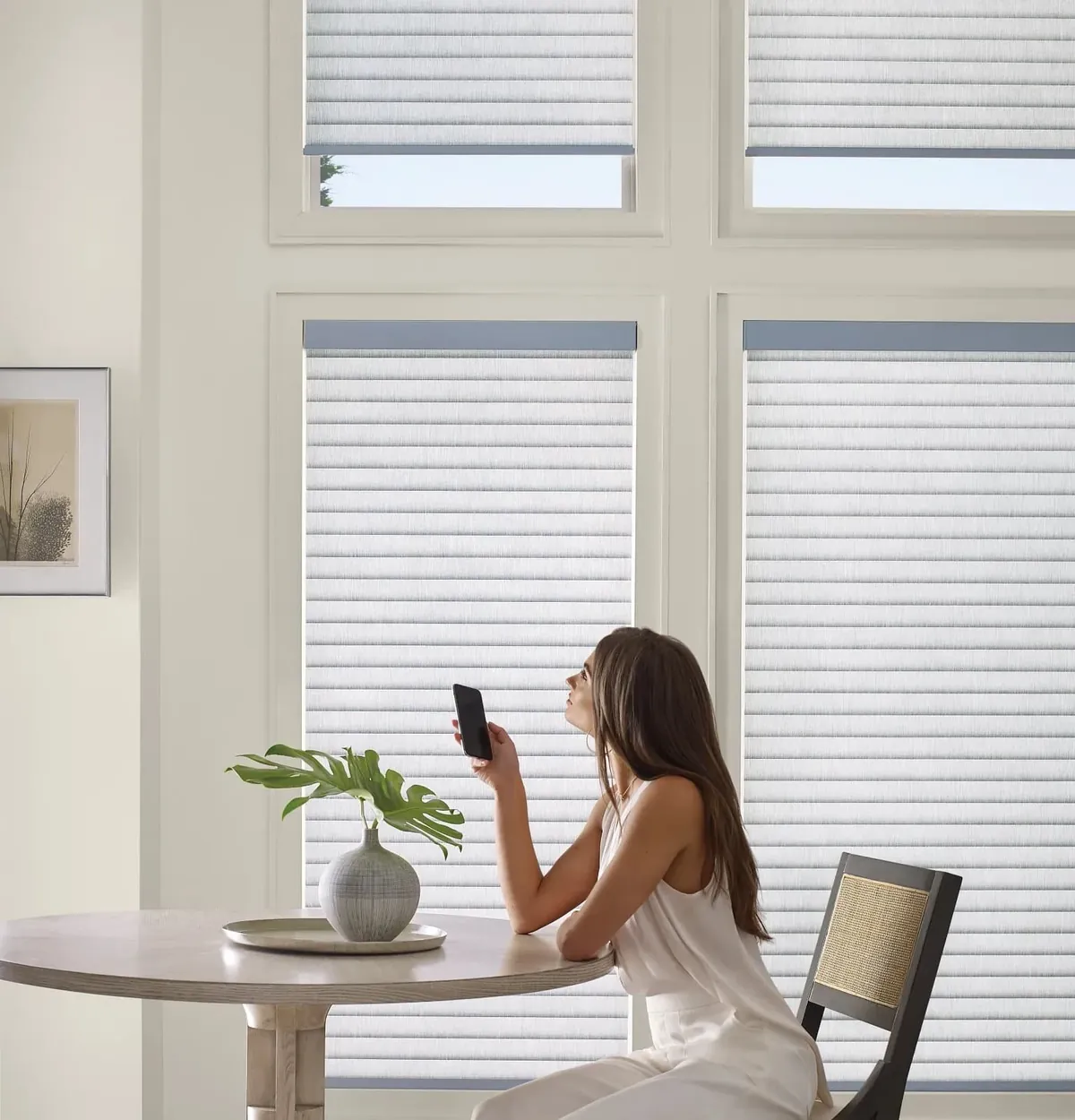
Motorized blinds in Upton
PowerView for a colonial with many windows: one tap, or a schedule, sets them all.
When the window is very small
Few things look odder than a blind that is too big for its window. In the oldest Upton houses, some original openings are so small that ordinary horizontal blinds look clumsy: the headrail seems heavy, wide slats give only a handful of rungs, and when the blind is raised the stack swallows a large share of the glass.
Getting it right starts with proportion. A narrower slat looks at home in a small opening, gives more slats across its height, and makes a shallower stack when raised. That is why metal blinds, with their fine slats and slim headrail, are often the first suggestion on the smallest windows. Where the room calls for wood, we look at the slat options that keep it in scale.
Measurement matters more, not less, on a small window. A gap of a finger’s width at each side of a large window goes unnoticed; on a tiny one it is a visible frame of light. We measure across the top, middle and bottom, and down each side and the center, and build to the tightest point. An old frame that has moved over the years may lean or narrow, and the blind has to clear it all the way down.
Depth in thick old walls
The antique colonials and farmhouses were built with heavy frames, so the window often sits back in the wall with a deep jamb around it. That depth is ideal for an inside mount: the headrail fixes up inside the top of the opening, the blind hangs within the recess, and the old casing stays fully in view.
For a very small window, an inside mount also helps with proportion, because the blind reads as part of the window rather than something hung in front of it. When raised, its stack can tuck partly into the recess above the glass. Where a frame is too shallow or too out of square for an inside mount to look tidy, we say so and suggest a mount on the face of the casing, with the reason explained before anything is ordered.
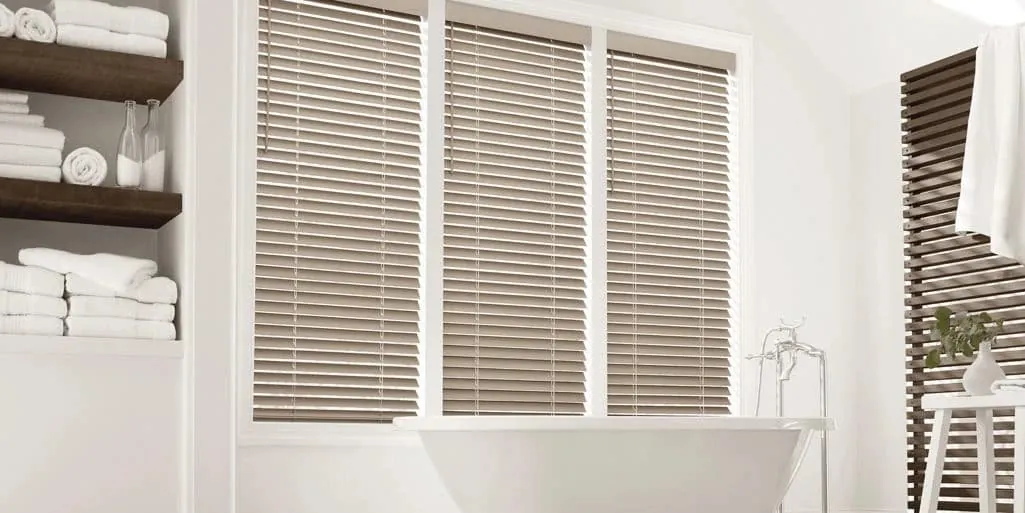
Light on a house with room around it
Deep setbacks and low density mean many Upton houses get sun on every side, with little to shade them. A south-facing parlor can be bright enough at midday to wash out a screen. A west-facing kitchen can take a blast of low sun at dinner time. East bedrooms catch the light at first dawn.
A horizontal blind answers all three with one small movement of the wand. Rotate the slats until their outer edge rises, and the sunlight that hits them is reflected up to the ceiling; the room keeps its brightness, but the glare comes off the furniture, the floor and any screen. Nearly closed through the hottest stretch of a summer afternoon, they help a room stay cooler. Fully shut in a bedroom, they hold back the dawn. Deep-toned slats help a bedroom stay dark; pale ones keep a sitting room cheerful.
Because the sun moves, so does the right setting. A blind can be adjusted in seconds, which is what makes it suit a house that faces open light on several sides.
Privacy without neighbors
With houses set well back and spaced apart, privacy in Upton is mostly an evening question. A room lit up at night shows from the road even at a distance, and a long driveway or a wide lawn does not hide it. Closing the blinds fully at dusk turns that off. For the hours around sunset, slats tilted down toward the road keep the line of sight blocked while you still see out to the yard.
On a colonial with many windows, closing everything each evening can become a routine nobody enjoys. PowerView motorization lets you do it from a phone, a remote or on a schedule, so every road-facing blind closes at sunset whether you are home or away. We plan how each motor gets its power during the visit.
Inside an antique colonial
A typical antique colonial puts its best rooms at the front, either side of the entry, with the kitchen running across the back. Those front rooms often keep their original small windows and old woodwork, and they are what the road sees. Wood blinds in a shade picked from the woodwork suit them, hung within the thick frame so the old moulding and sill are left alone.
The kitchen has often been extended or updated, with newer, larger windows beside original ones. Faux wood is a common choice there, and the same color can carry across old and new windows so the room looks consistent. Upstairs, the smallest original windows tend to be in the bedrooms under the eaves. These are where metal blinds earn their place, closing tightly for sleep and staying in scale with the opening.
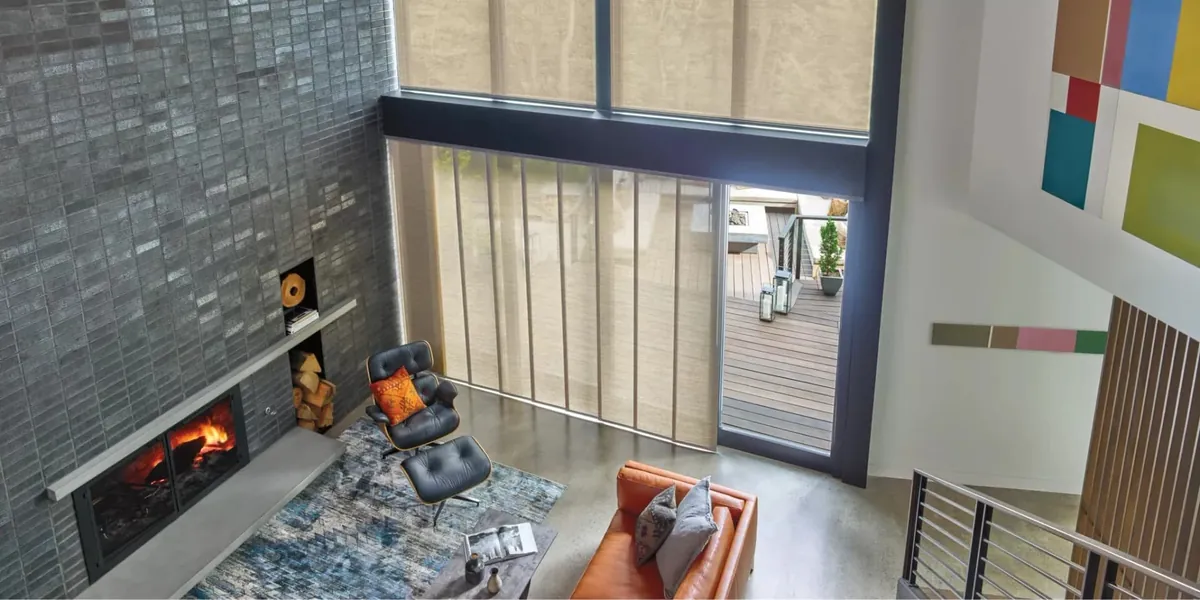
Farmhouses and their additions
Upton’s farmhouses have often grown over time: an ell added here, a back porch closed in there, a barn connected to the house. Each addition can bring a different style and size of window. One house can hold tiny original sash in its oldest rooms, ordinary double-hung windows in a later wing and a wide slider in a modern family room.
That mix is exactly where made-to-measure blinds help. Every window gets a blind built for it, so the oldest and newest rooms both look properly fitted. A consistent color across the house ties the different parts together. The slider gets a vertical blind that draws to one side, so the door opens fully onto the yard.
Porch rooms, sunrooms and back halls
Older Upton houses often have a room or two that was never meant to be lived in year round: an enclosed porch, a back hall with a run of small windows, a sunroom tacked onto the side of a farmhouse. Their windows tend to be a mixed bag, some original, some added later, many of them close together in a row.
A row of small windows looks best when every blind matches in color and sits at the same height, so the run reads as a single band rather than a jumble. We make each blind to its own opening, then set the headrails to one line. On a sunroom that takes sun on three sides, being able to tilt each blind separately lets you shade the hot side and leave the cool side open. In a back hall used as a mud room, faux wood blinds are an easy, practical choice.
Newer colonials off Route 140
The newer colonials off Route 140 are another job altogether. Windows come in standard sizes, frames run true and the rooms are roomy: living and dining rooms at the front, a family room that opens into the kitchen, and a full floor of bedrooms upstairs. That adds up to plenty of windows, most of them in just a few sizes.
Which is why these houses suit a plan that covers everything at once. A frequent pattern is wood or faux wood in the formal rooms and bedrooms, faux wood by the kitchen sink and in the bathrooms, and a vertical blind at the slider off the family room. Keeping one color across the road-facing windows finishes the front of the house, even seen from the far end of a long drive.
With so many windows, motorization is worth a look in these houses too. A two-story foyer or a high window above a staircase is awkward to reach, and PowerView can raise, lower and tilt it from the floor. When we plan custom blinds in Upton for a newer colonial, we look at which windows you will actually reach every day and which might be better motorized.
Four materials, matched to the house
Each Hunter Douglas blind is built to order for its window, and an Upton house usually tells you which material belongs where.
- Real wood. Stained or painted slats for the parlors and dining rooms of the antique houses, and the formal rooms of the newer colonials.
- Faux wood. A painted-wood appearance in another material, the usual pick for kitchens and bathrooms whatever the age of the house.
- Metal. Fine aluminum slats on a slender headrail, for the tiniest original sash, glass doors and frames with little depth.
- Vertical. Vanes that hang from a track and slide aside, for sliders in family rooms and later additions.
See the custom blinds page for more, along with Parkland wood blinds and vertical blinds.
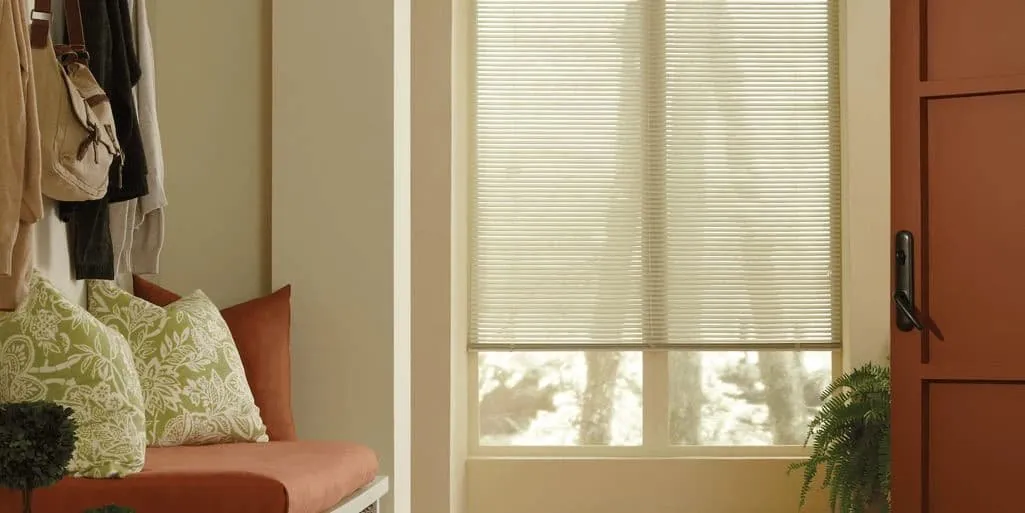
Bedrooms and the early light
With so little to shade them, Upton bedrooms that face east or south can fill with light very early in summer. In the oldest houses, those bedrooms are usually upstairs, under the slope of the roof, with the smallest windows in the house. In the newer colonials they are larger and have standard double-hung windows, often a pair to a wall.
For sleep, a blind needs to close tightly and sit close to the frame. A deep-toned slat helps. On a tiny antique window, a metal blind’s fine slats overlap well when closed and stay in scale. In a newer bedroom, wood or faux wood in a darker color does the job with a warmer look, and an inside mount keeps light from creeping round the edges.
Everyday operation
A cordless lift raises and lowers the blind from its bottom rail with nothing hanging down. On a tiny antique window, that keeps a deep sill clear and the window looking tidy; in a family house it removes loose cords. A wand turns the slats. For a high window, a stair window or a whole bank of windows on a sunny wall, PowerView motorization takes over the reaching and can follow a schedule you set.
A consultation at your house
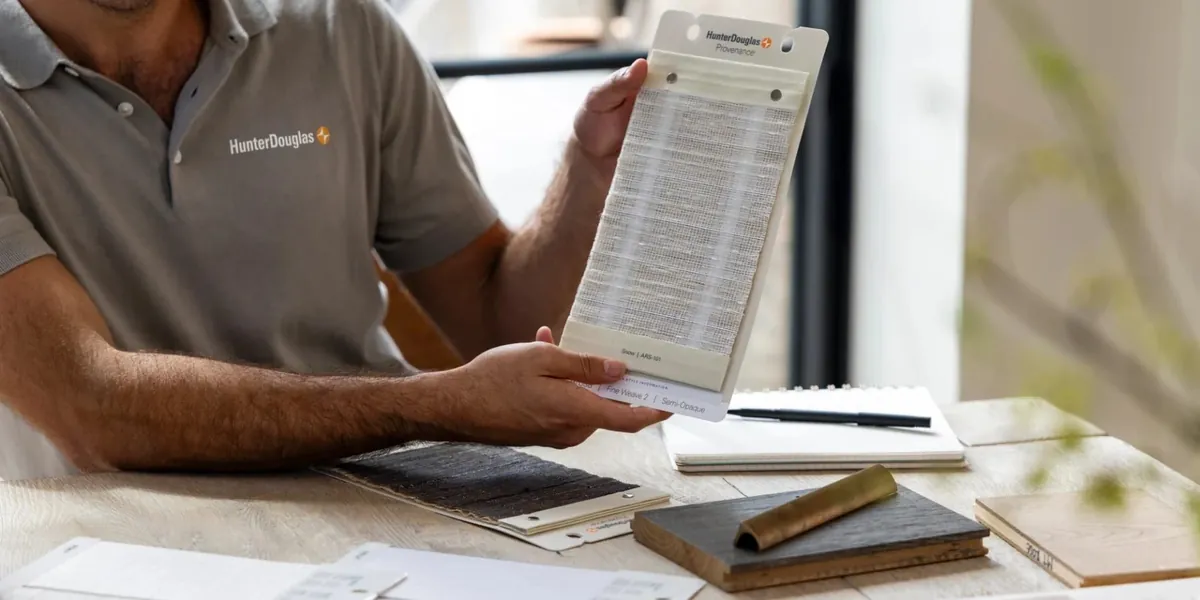
We bring the samples to you, because how a blind looks depends on your window, your trim and your light.
- Book through the form or the call button and we fix a day that suits you.
- The van turns up loaded with wood, faux wood and metal slats in a spread of shades and widths, plus vertical vanes and the control options.
- Room by room, we talk through sun, sleep and privacy with you.
- Every opening is measured in several places, with the oldest frames checked closely for depth and square.
- A free estimate follows, and you can mull it over for as long as you need.
- Once your order is ready, certified Hunter Douglas installers hang each blind, true it up and work every lift and tilt before they go.
Read more about what happens at an in-home consultation. Patient measuring is what allows custom blinds in Upton to sit tidily in openings that were never cut to any standard size.
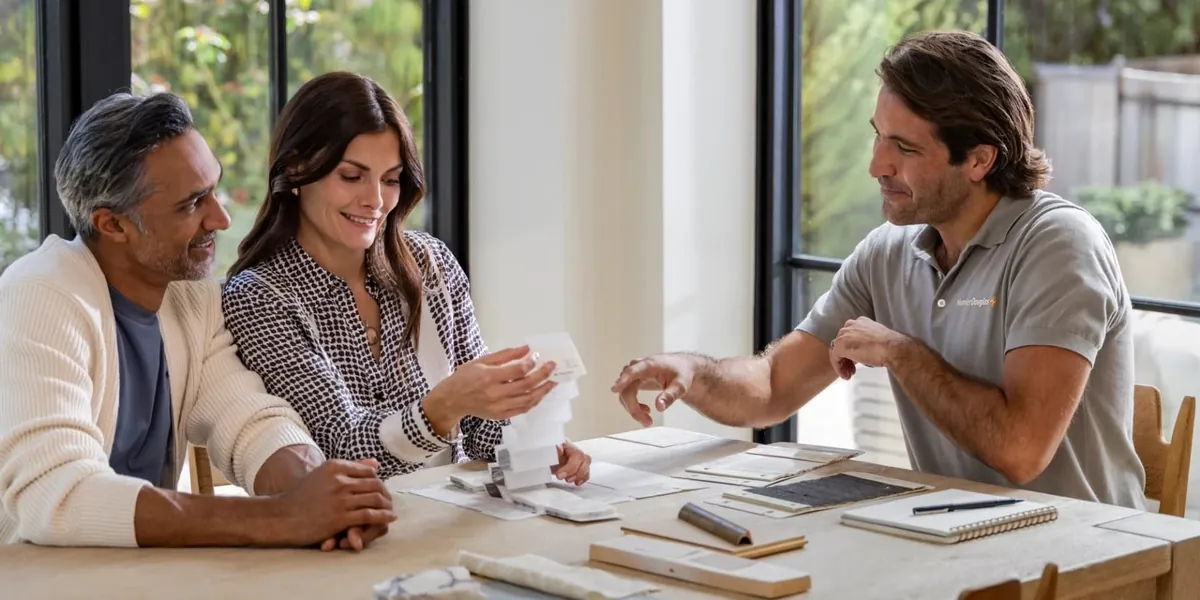
Color across old and new rooms
In an antique house, the trim color is usually the guide. A white or cream matched to the woodwork lets the blinds recede into the frame, which keeps the focus on the old windows themselves. Where the woodwork is stained, a stained wood blind can pick up its tone.
In a newer colonial, color matters most on the front, which is what shows from the road. Further in, rooms can differ: a deep slat for a bedroom, a pale one for a bright kitchen. Samples of each come with us, to be compared against your own trim right at the window.
A Hunter Douglas Gallery dealer for Upton houses
As a Hunter Douglas Gallery dealer, Blinds & Designs can show you the complete Hunter Douglas blind collection at a single visit, from real wood and faux wood to metal and vertical, with the full color card, each control option and PowerView motorization. Hunter Douglas has certified the people who install for us. Interior design consultations are available, and blinds and shades that need repair are welcome too.
Other windows in the house may suit cellular shades in Upton, roller shades in Upton or plantation shutters in Upton. The Upton page lists all of it.
Visit us in Franklin
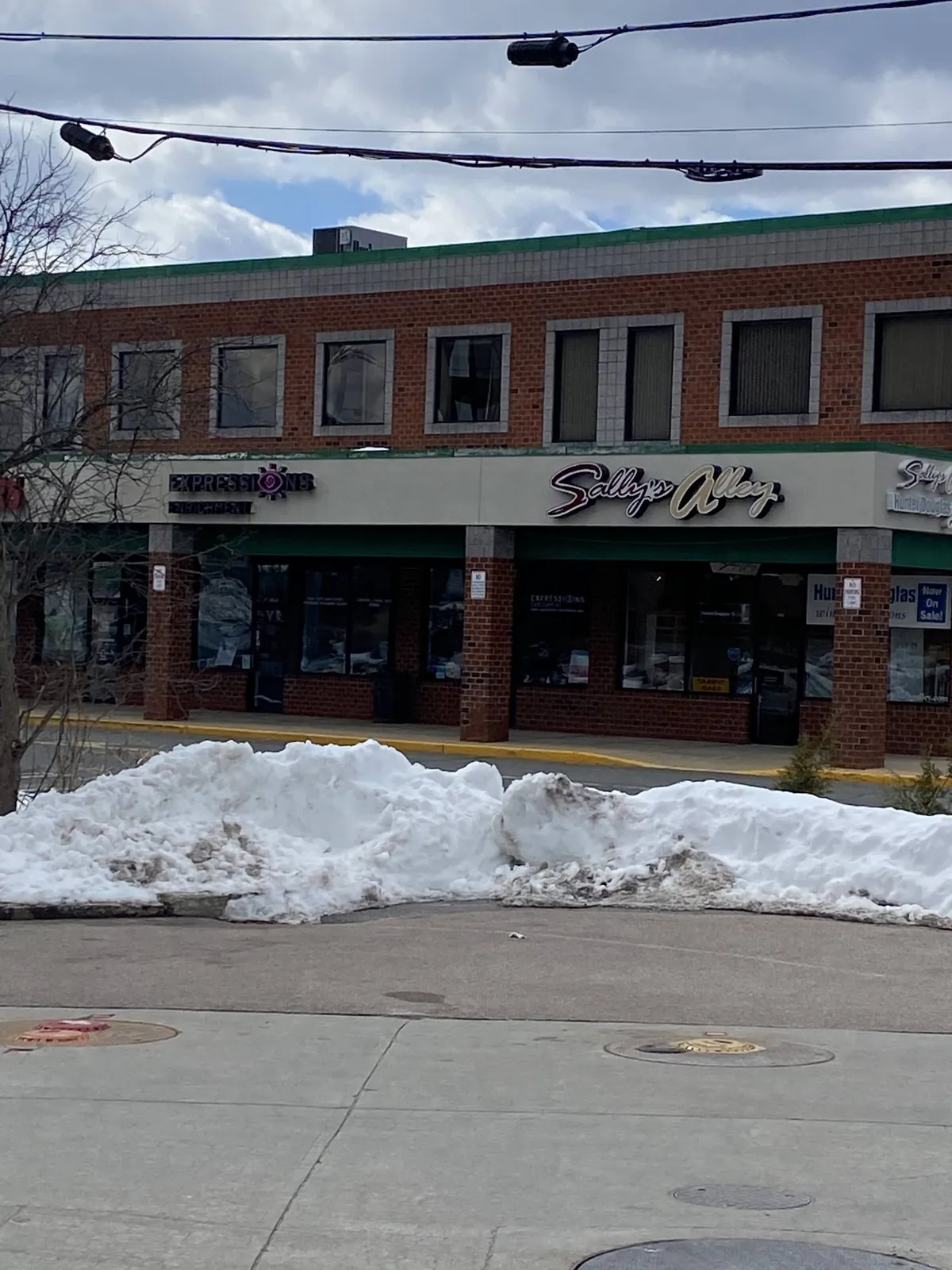
Franklin is the closest of our showrooms to Upton. Opening hours and directions sit on the Franklin showroom page.
Questions from Upton
Our oldest windows are very small. Will a blind look right?
Yes, if it is scaled to the window. Narrower slats and a slim headrail keep a blind in proportion on a tiny opening, which is why metal blinds are often suggested for the smallest sash.
Our house is set far back from the road. Do we need blinds for privacy?
Mostly at night, when a lit room shows from a distance. During the day the blinds do more to manage sun and glare than to block views.
Can blinds help with strong sun when nothing shades the house?
They can. Rotate the slats so the outer edge rises and the sun is thrown up to the ceiling, which keeps the room light but cuts the glare. Nearly closed, they help a sunny room stay cooler.
We have a newer colonial off Route 140. Is a whole-house plan worth it?
It usually is. Standard window sizes make a consistent look easy, and one visit covers every window.
What does the estimate cost?
Nothing at all. Estimates are free, written up once every window has been measured.
See the samples at your windows
Small old sash and big open light are easiest to judge in person. Book a consultation, and we will carry the samples in, size up every opening and hand you a free estimate for custom blinds in Upton, MA. Or tap the call button, or call in at the Franklin showroom.