
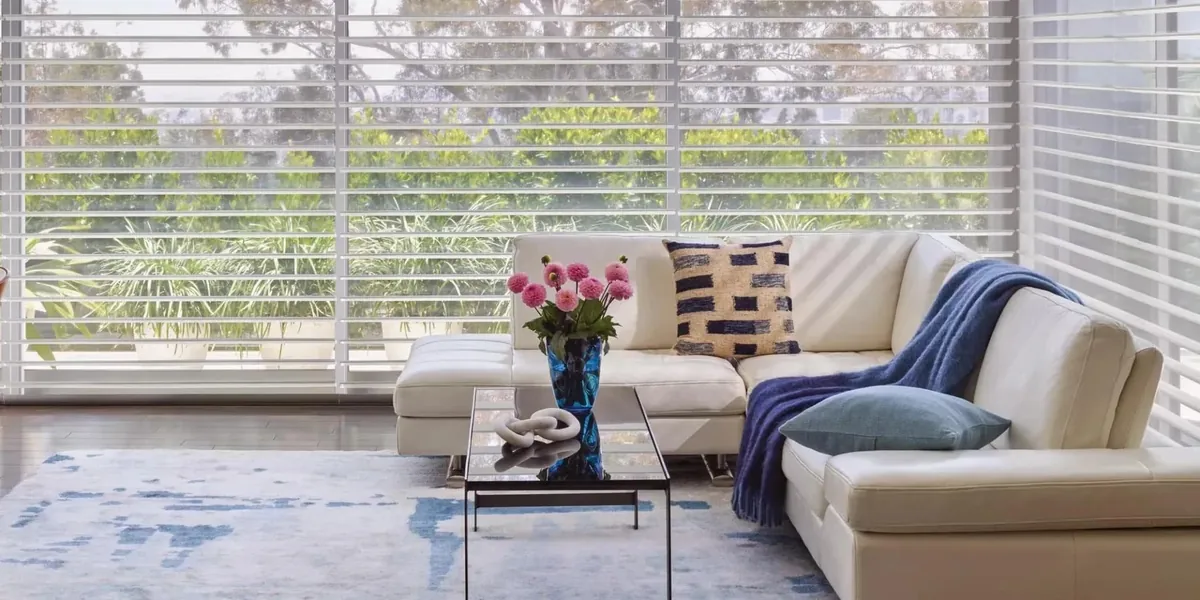
Rooms lit from three sides
Norfolk’s houses have room to breathe. Most are colonials and capes on large wooded lots, much of the stock fairly recent, with standard modern openings and generous setbacks from the road and from each other. With so few neighbors close by, builders put windows wherever the light was good, and many rooms take daylight from two or three sides at once. That is lovely for most of the day and complicated at a few particular hours, and it is the main reason homeowners ask us about motorized blinds in Norfolk, MA.
A room lit from several sides never has just one sun problem. The east windows glare at breakfast, the south ones warm up at midday, the west ones blaze before dinner. Moving every shade by hand to follow that is more than anyone will keep up. PowerView lets each side of the house run on its own timetable, so the shades follow the sun around the building while you get on with the day.
Standard openings make the fitting itself straightforward. The shade sits neatly in the frame, the motor hides in the headrail, and the window looks just as it would with a manual shade.
Hunter Douglas shades we often motorize in Norfolk
PowerView is offered on a wide part of the Hunter Douglas range, so you choose the right covering for each room and the motor follows. For motorized blinds in Norfolk houses with light on several sides, these three styles are where we usually start.
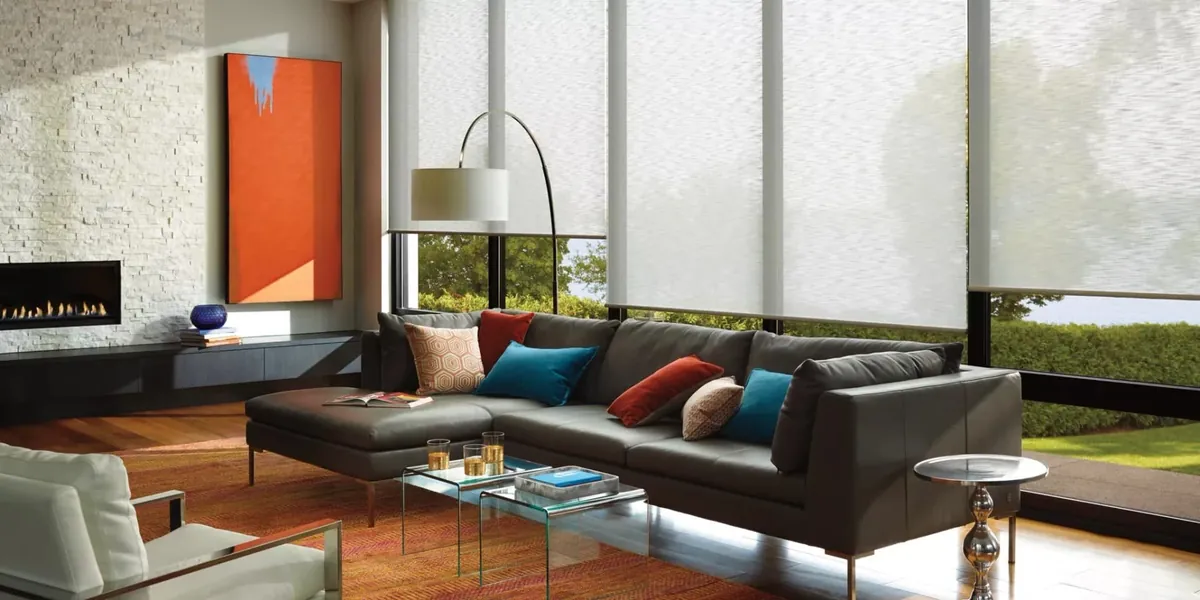
Roller shades
Sheer and screen fabrics that soften strong light on a big window wall while keeping the trees in view.
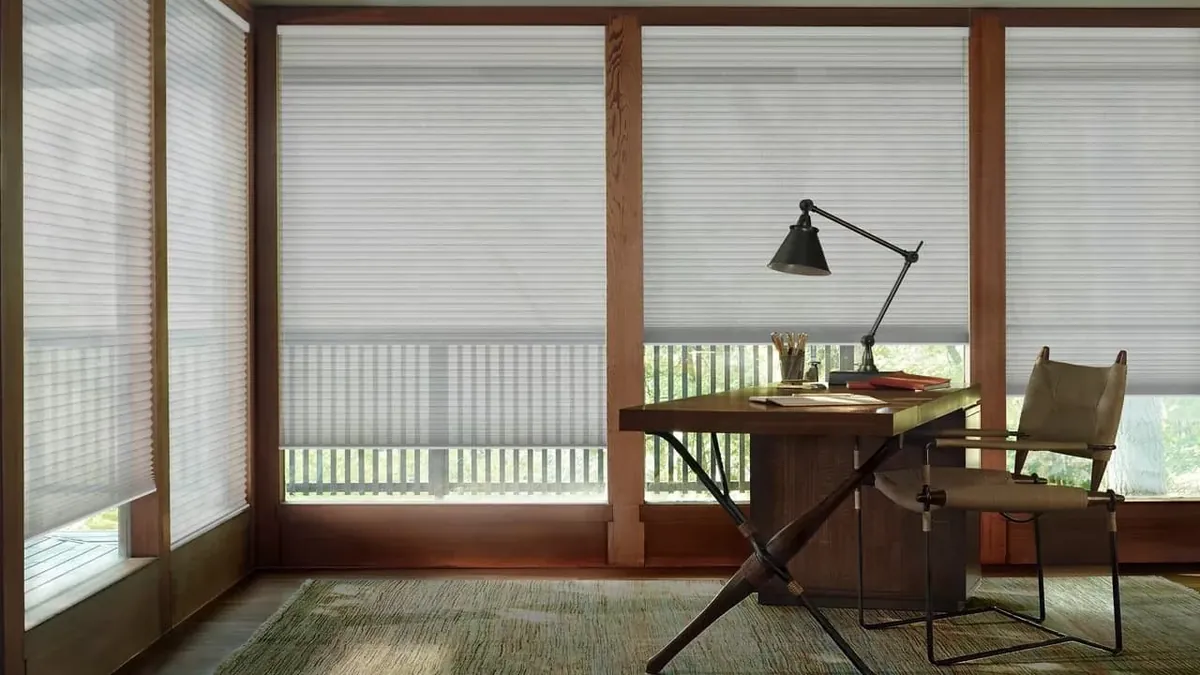
Cellular shades
Honeycomb cells holding still air at the glass, for bedrooms, offices and the cold side of the house in winter.
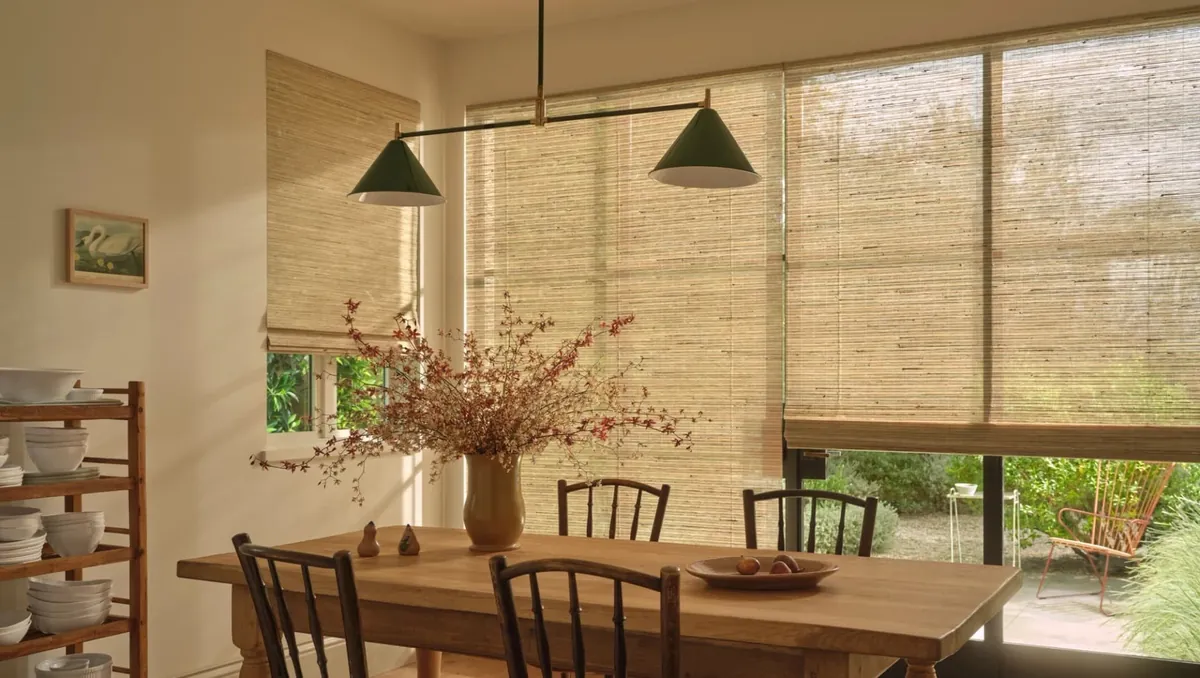
Woven shades
Natural texture that suits a room looking out into woods, filtering the light rather than shutting it out.
Following the sun around the house
Because Norfolk houses so often have windows on every face, it helps to think about the house one side at a time. Each side has its own hours of trouble, and each can have its own timetable.
The east side
Kitchens, breakfast rooms and many bedrooms face east. In summer, the sun clears the trees early and comes in low and bright. Bedrooms want to stay dark until the household is up, and kitchens want light without the glare across the counter. Room-darkening shades on an early timetable handle the bedrooms; light-filtering shades lowered part way for the first hours of the day handle the kitchen, then rise once the sun has climbed.
The south side
South-facing rooms take sun for most of the day, higher in summer and lower and deeper into the room in winter. In July a shade lowered through the middle of the day keeps the room from overheating. In January the same shade can stay open while the sun is out, letting the low light help warm the room, and close at dusk to hold the warmth in.
The west side
West windows are the hardest. The late sun comes in nearly flat, under the trees and any overhang, straight onto screens, faces and furniture. This is the side where a timetable earns its keep most clearly, bringing the shades down as the sun arrives and lifting them after it sets.
The north side
North rooms get the steadiest, softest light and rarely need shading for glare. In winter, though, they lose the most warmth. Honeycomb shades on a dusk timetable close the north side as soon as the light goes.
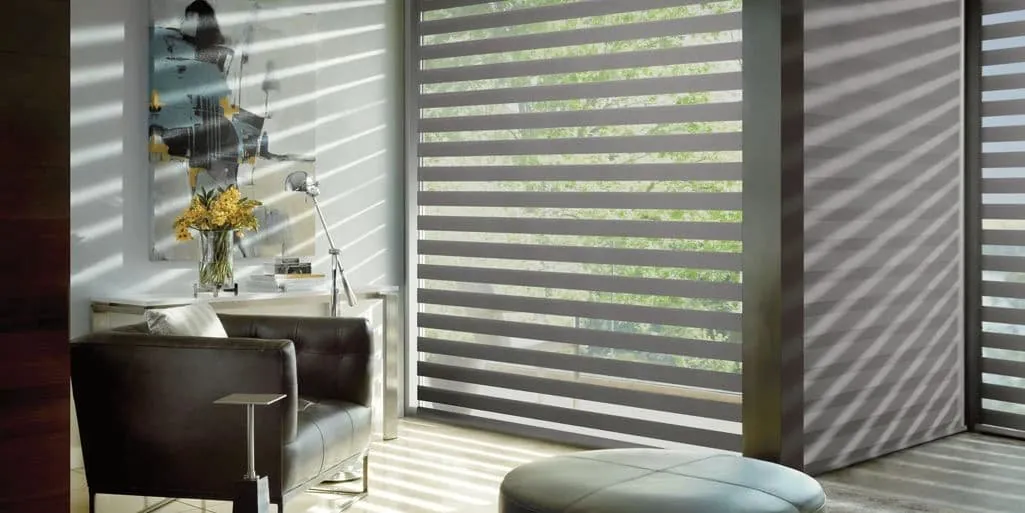
Corner rooms with two exposures
The rooms that most need motorized blinds in Norfolk colonials are often the corner ones: a family room with windows on the south and west walls, a primary bedroom facing east and south, a home office on a corner of the second floor. Light from two directions means the right position for each wall changes at different times.
We set those rooms up with the two walls as separate groups. The south wall might lower part way at midday while the west wall stays open, then the west wall comes down later in the afternoon while the south wall lifts. You can also join both groups into one scene for the evening, so the whole corner closes at once when the lamps go on.
Banded shades are useful in corner rooms, since their alternating sheer and solid stripes slide past each other to fine-tune the light on each wall. Sheer shades with tilting vanes do a similar job with a softer look.
Colonials: many windows, one routine
A typical Norfolk colonial has a lot of windows: a formal front, a family room and kitchen across the back, bedrooms upstairs, and often a window over the stairs or above the front door. Counted up, that is a great many shades to move every day.
That is where whole-house scenes come in. A “morning” scene opens the downstairs and the kitchen while leaving the bedrooms dark. A “day out” scene sets every room to a sensible position for the afternoon. A “night” scene closes the house. Each is one press on a handset or in the app, or it runs on a timetable without any press at all.
The window above the front door or on the stair landing is usually the first to motorize, because nobody can reach it. We fit high shades from proper staging and set their positions so they line up with the windows around them.
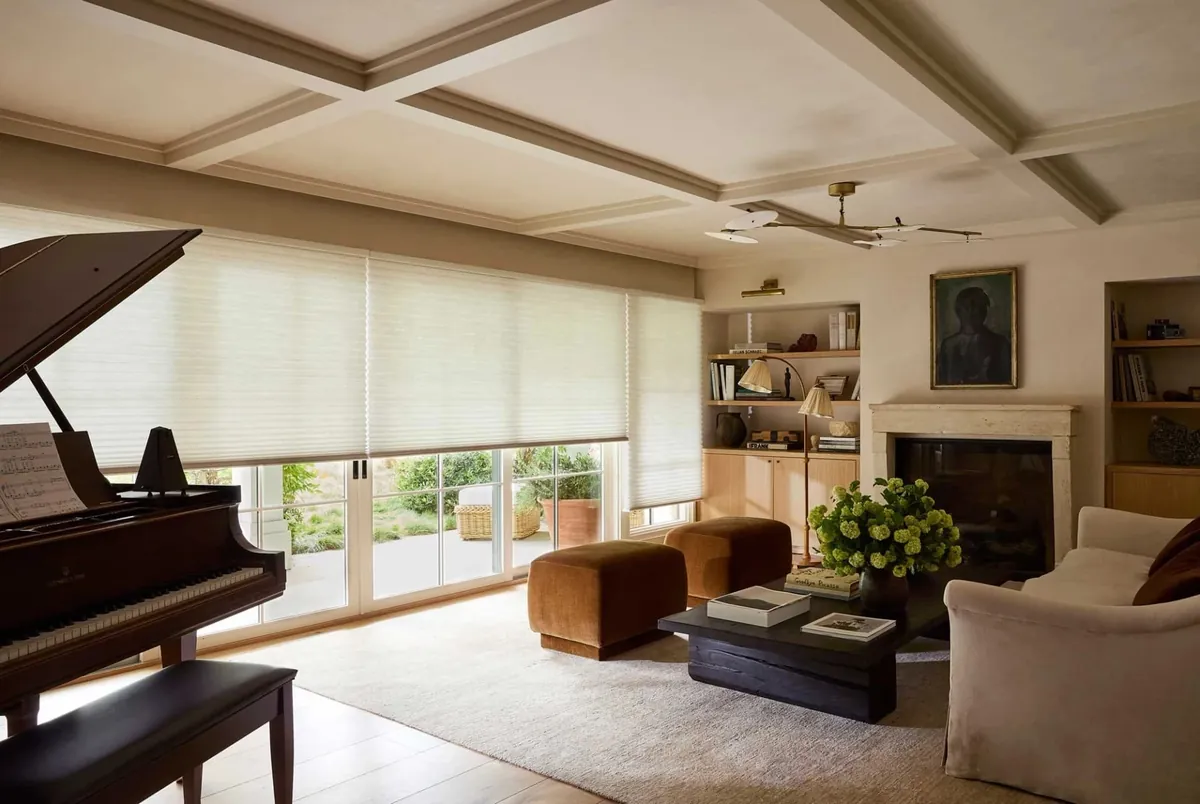
Capes: the upstairs under the roof
Norfolk’s capes keep their second floor under the roofline, with dormer windows set into the slope. Those dormers often end up behind a bed or a dresser, and reaching them each morning means leaning over furniture.
On a motor, a dormer becomes one of the easiest windows in the house. Room-darkening fabric keeps the room dim through the early summer light, and a timetable raises the shade at the hour you choose, later at weekends. Because dormer windows are usually standard sizes, there is nothing unusual about fitting them.
The handset, the app and the timetable
Every PowerView shade can be run three ways, and the three work together.
- A handset in the room raises, lowers and stops the shades, and anyone can use it.
- The PowerView app on a phone or tablet moves single shades or groups to any height, and holds the scenes and timetables.
- Timetables move the shades at set times each day, which is what lets each side of a Norfolk house follow the sun.
Most households use timetables for the daily pattern and reach for the handset when they want something different. Our guide to how motorized shades are controlled covers each control in plain language, and window covering automation explains timetables and scenes in more depth.
We plan how each motor is powered at the visit, looking at each window and its wall.
How we work with you
Most Norfolk projects begin at home. Seeing how a fabric handles the light from your own east or west windows is the only way to choose well, and our vans carry samples so the showroom can come to you.
- You book through Request a Consultation or the call button.
- We walk the house with you, noting which way each room faces and when it gets too bright.
- You hold samples up to windows on different sides of the house and compare how each fabric behaves.
- We sketch out groups and scenes: which shades move together, which side gets which timetable.
- Each window is measured, and anything unusual, such as a high landing window, is noted.
- We give you a free estimate for the shades and fitting.
- Hunter Douglas makes the shades to our measurements.
- A certified Hunter Douglas installer fits them, sets each one’s limits, pairs them with handsets and the app, and builds the first timetables with you, one side of the house at a time.
For a closer look at the fitting day itself, see what happens on installation day.
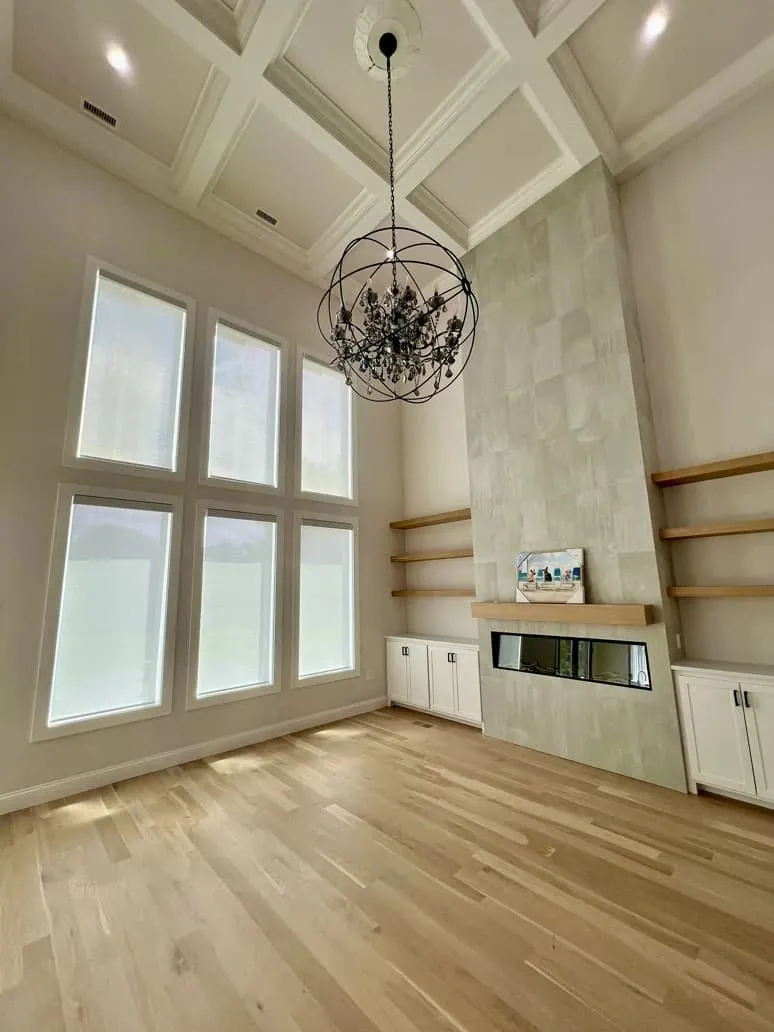
Woods around the house
Large wooded lots shape the light as much as the compass does. In summer the trees filter most of it, so a room can feel shaded and calm for much of the day until the sun drops below the canopy. In winter the leaves are gone and the same windows take far more sun.
Timetables can change with the seasons. The west side might lower at five in midsummer and earlier in late autumn, and changing it takes a moment in the app. Woven shades and light-filtering fabrics suit rooms that face the woods, because they soften the light while keeping the trees in view.
A different fabric for each face
With windows on every side, one fabric for the whole house is rarely the right answer. The light arriving at each face is different, and so is what you want from the room behind it.
East-facing bedrooms usually take a room-darkening fabric, because their job is to stay dim through an early sunrise. West-facing family rooms often suit a screen or sheer, which cuts the late glare but keeps the trees in sight during the hour you most want to look out. South rooms can go either way, depending on whether the room is used through the middle of the day. North rooms, with their soft light, can take almost any fabric, and honeycomb is a good pick there for the winter evenings.
On a motor, the fabrics can differ while the system stays the same. Every shade answers to the same app and can join the same scenes, so a room-darkening bedroom shade and a screen shade in the family room still close together at night. We bring samples of each type to the visit and try them at windows on different sides, so you see the difference before you choose.
Kitchens with windows on two walls
Norfolk kitchens often sit at a back corner of the house, with a window over the sink on one wall and a slider or a run of glass on the other. That gives a bright, pleasant room for most of the day and a glare problem at either end of it, when the low sun comes straight across the counter.
A motorized shade over the sink and another group on the second wall can each follow the sun on that side. Light-filtering fabric keeps the kitchen bright while it softens the low light, and blinds let you angle the slats to throw the glare off the counter. With nobody reaching across a wet counter to adjust anything, the sill stays clear and the shades actually get used.
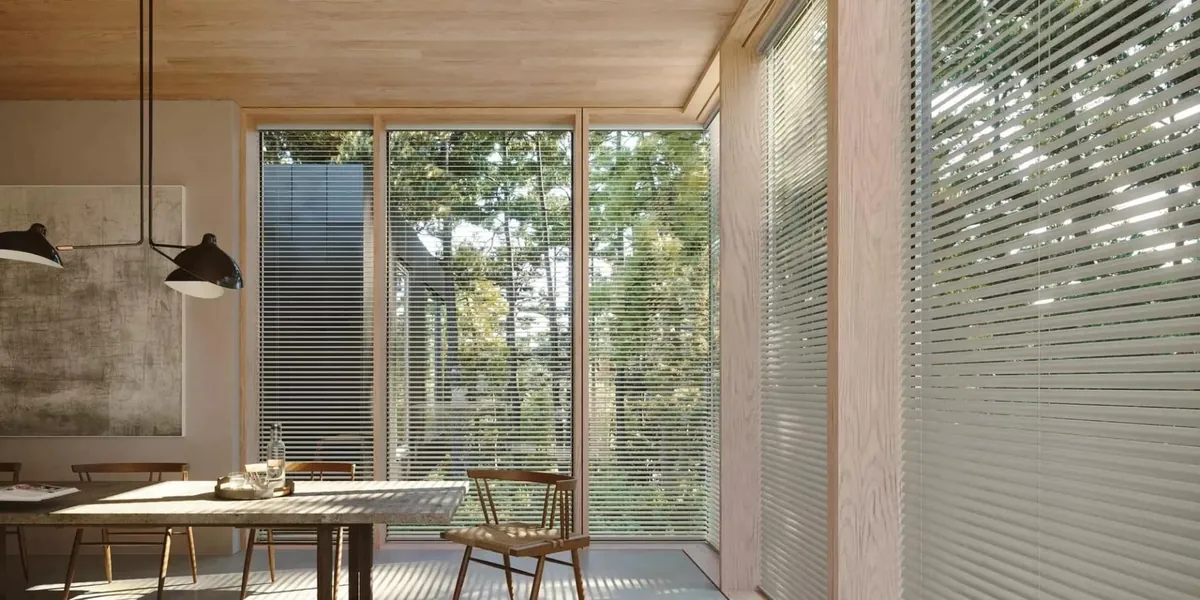
Furniture, floors and the long afternoon
Rooms with light on several sides get sun for more hours of the day, and that adds up on hardwood floors, rugs and upholstery. A sofa that sits between a south and a west window can catch sun from late morning to evening.
A shade that comes down during those hours protects the room, but only if someone lowers it. On a timetable, the shades come down whether the room is in use or not, and on a workday that is most of the time. Screen and light-filtering fabrics let daylight in while cutting the direct sun; heavier fabrics block more in a room you use mainly at night.
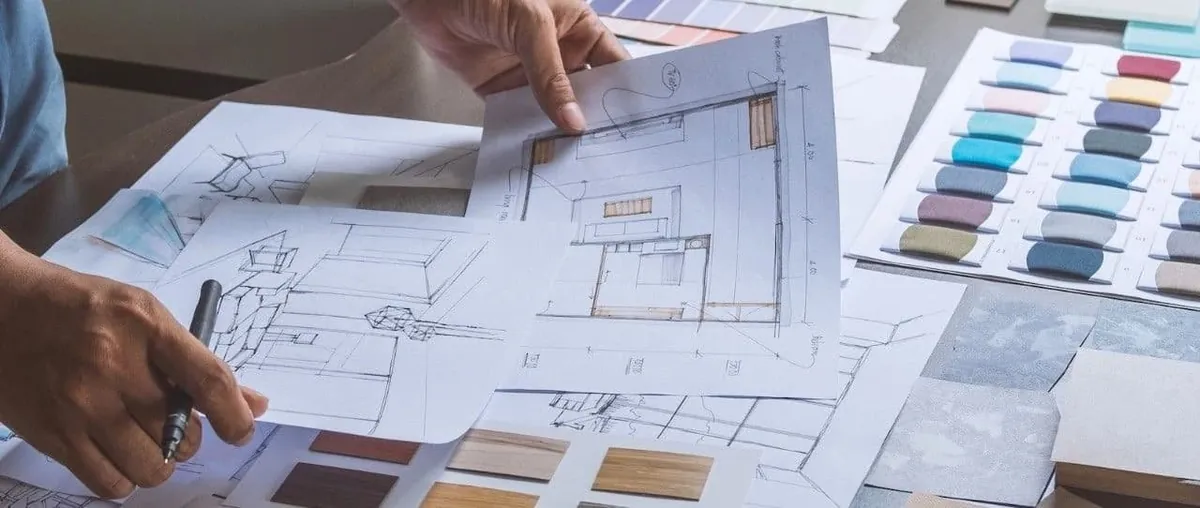
Bedrooms and early summer mornings
With light on several sides, Norfolk bedrooms often have windows facing east as well as south, and in June the sun is in the room long before most people want to be awake. Shades that do not fit closely let light in around the edges.
Room-darkening fabric made to the exact size of each opening keeps the room dim, and a morning timetable lifts the shades at the hour you choose. At night, a bedtime scene closes every bedroom together. In children’s rooms, a motorized shade also removes the lift cord from beside the crib or bed.
A home office with two windows
Many Norfolk houses now give a corner bedroom or a front room over to work. With windows on two walls, the light shifts across the desk through the day, and a screen catches glare first from one side and then the other.
Set as two groups on their own timetables, the office shades can follow that pattern so the glare is handled before it starts. Honeycomb and light-filtering fabrics keep the room bright, and a scene can close the room behind you for a video call. For honeycomb styles in more detail, see our cellular shades in Norfolk page; for roller and screen shades, our roller shades in Norfolk page.
Doing it in stages
Plenty of Norfolk homeowners motorize in stages. The west-facing family room and the window nobody can reach are common first steps, then the bedrooms, then the rest. Every new shade joins the same system, with the same handsets, app and timetables, so nothing done early has to be redone. You can see the full range on our motorized blinds and shades page and everything we offer locally on our Norfolk page.
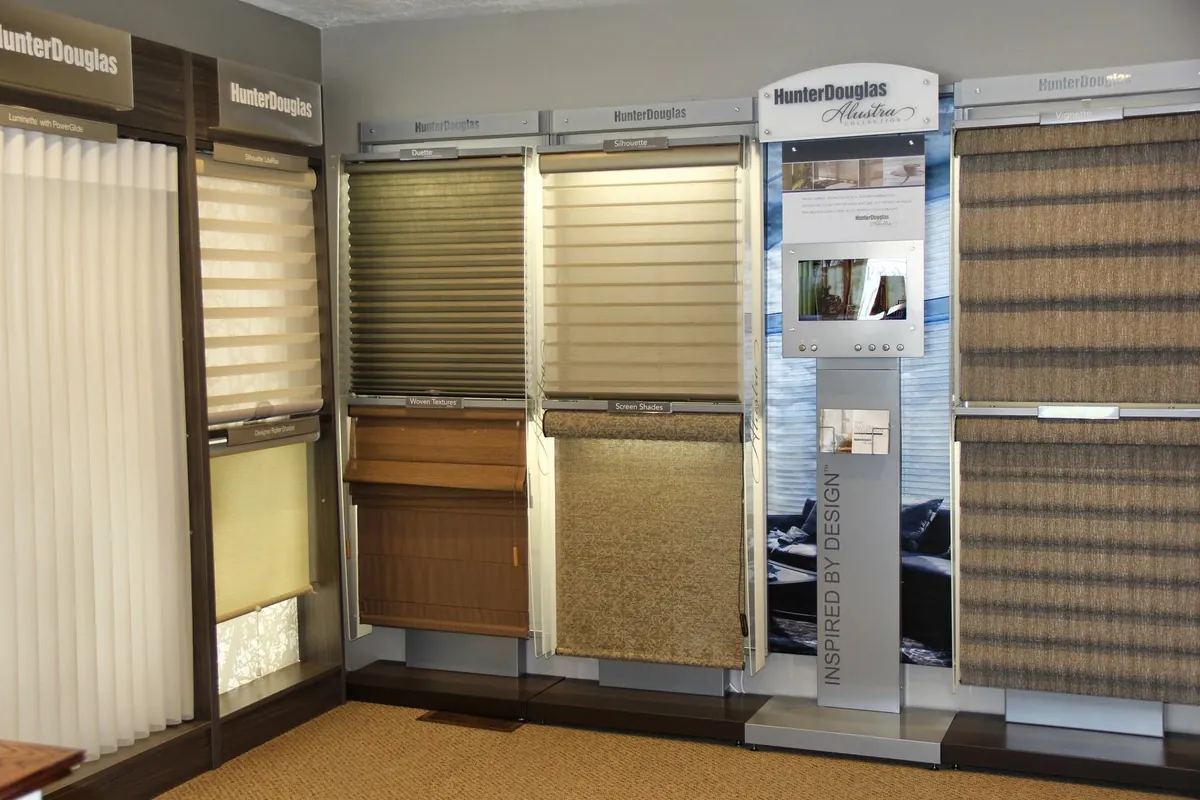
A Hunter Douglas Gallery dealer
Blinds & Designs is a Hunter Douglas Gallery dealer, the brand’s own designation for dealers who meet its standards. On a motorized project, that gives you the whole range to choose from: roller, screen, banded, honeycomb, sheer, woven and roman styles can all take PowerView. A west-facing family room, a dormer bedroom and a corner office can each have the right shade on one system.
Our installers are certified by Hunter Douglas. Estimates are free, interior design consultations are offered, and should a shade need attention later we take care of blind and shade repairs too.
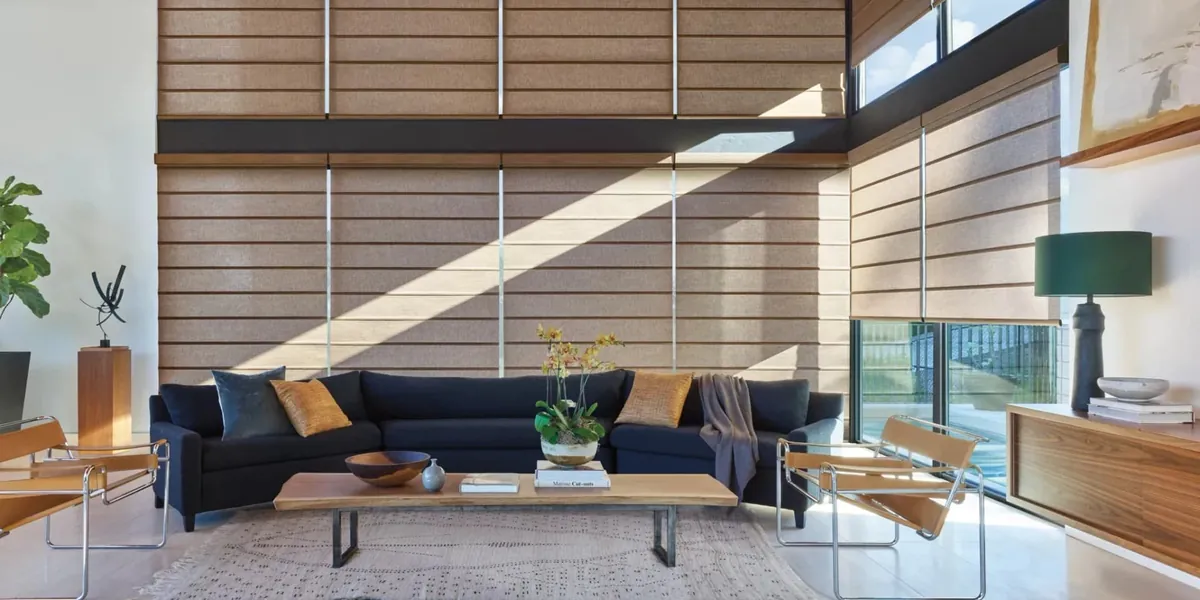
Franklin is the nearest showroom
Our Franklin showroom is the closest to Norfolk, a short drive away. You are welcome there, or we can come to you with the sample van.
Measuring always happens at the house, where we can see which way every room faces.
Questions from Norfolk
Our rooms get light from several directions. How do you handle that?
Each wall or side of the house becomes its own group with its own timetable. The east side can open early, the west side can close in the late afternoon, and a scene can join them when you want the whole room to move together.
Are standard modern windows easy to motorize?
Yes. Square frames with good depth are the simplest to fit. The shade sits inside the frame and the motor sits in the headrail.
Can the shades change with the seasons?
Yes. You adjust the timetables in the app as the days lengthen or shorten, which takes a moment.
What should we motorize first?
Usually the west-facing room that gets the late sun, and any window over the stairs or front door that nobody can reach. More shades can join later.
What does an estimate cost?
Nothing. Estimates are free. We measure the windows you are considering and give you an estimate for the shades and fitting.
Pick a side of the house
The quickest way to see what motorized blinds in Norfolk would do for your house is to start with its brightest side. Request a consultation and tell us which room catches the sun worst; we will bring samples to suit it, measure, and show you how motorized blinds for Norfolk homes could follow the light there. If you would like to talk first, the call button reaches our Franklin showroom.