
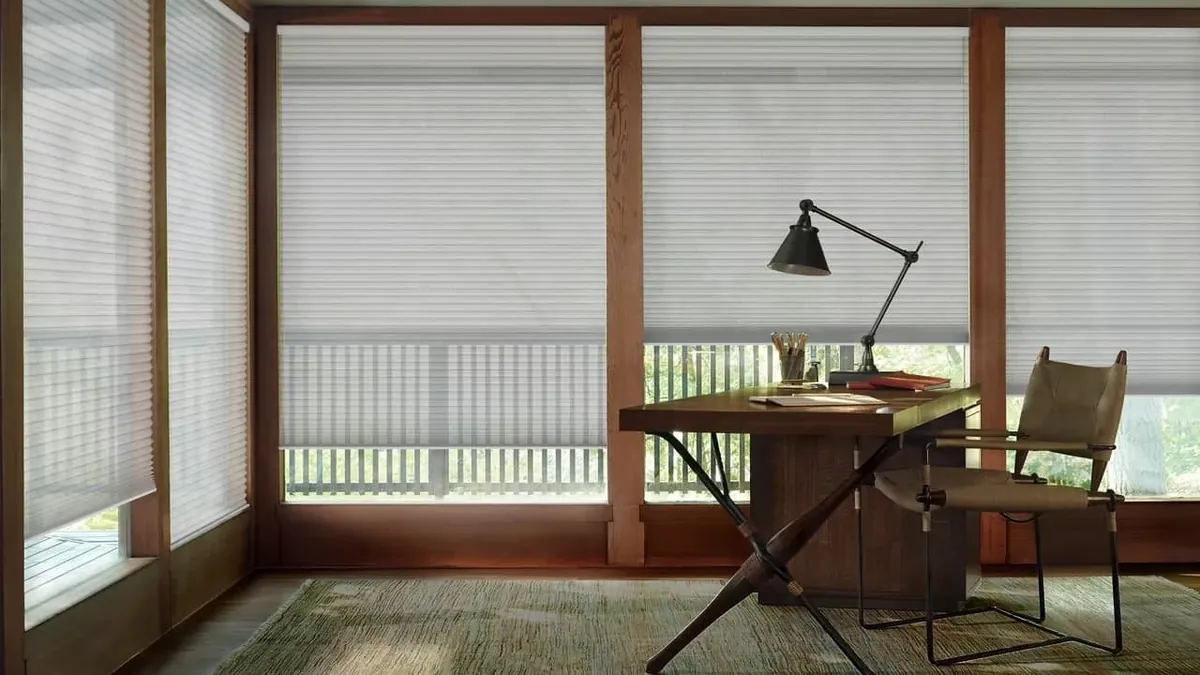
Deep-set sash and old glass along the Old King’s Highway
Drive Route 6A through Barnstable village and West Barnstable and the windows tell you how old the houses are. Antique capes sit low to the ground with small, deep-set sash under the eaves. Federal houses stand taller and squarer, with orderly rows of six-over-six windows set into thick walls. Much of that glass is old, some of it original, and none of it was made with a Cape winter in mind. Fitting cellular shades in Barnstable, MA, to houses like these is careful, rewarding work.
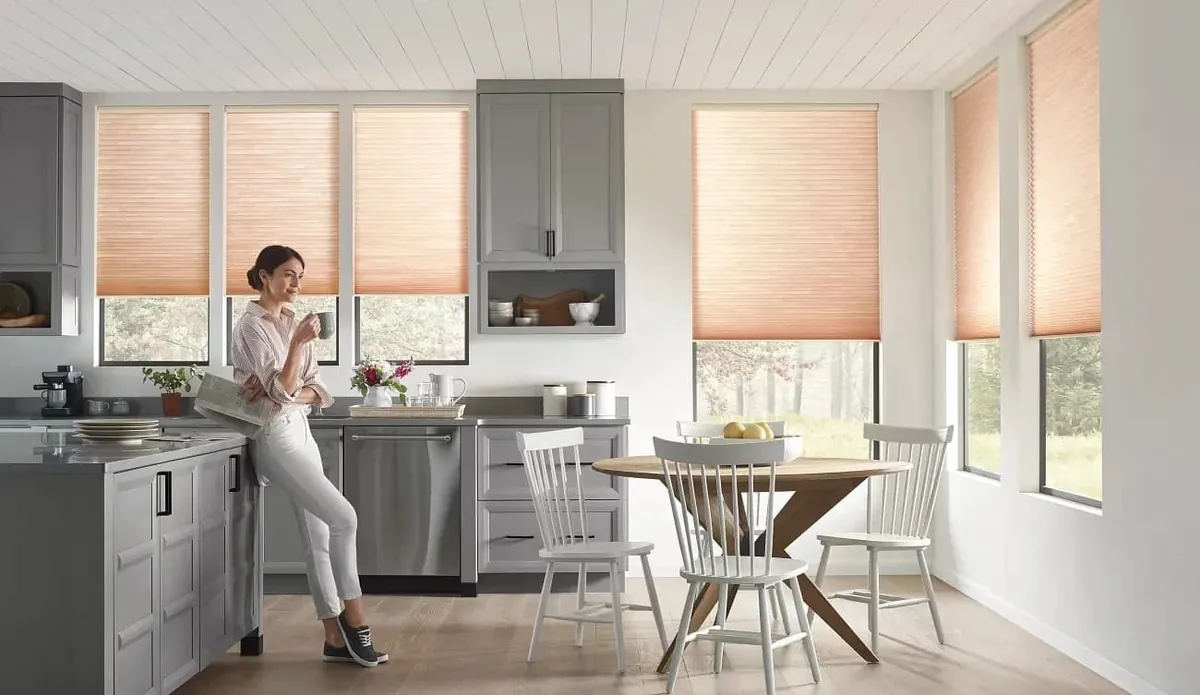
A honeycomb shade suits an antique house because it adds warmth without adding bulk. The fabric is shaped into hollow cells, and when the shade is down the air inside those cells stays where it is, a quiet insulating layer between the cold pane and the room. Raised, the shade folds up into a narrow band that hides inside a deep window opening.
Barnstable also stretches right across the Cape, from Cape Cod Bay on the north to Nantucket Sound on the south. A house on the bay side and one near the Sound can be a few miles apart and see completely different light. We plan for that, room by room.
The honeycomb options we bring to Barnstable
Each of these comes along on the sample van, so the choice is made at your own windows.
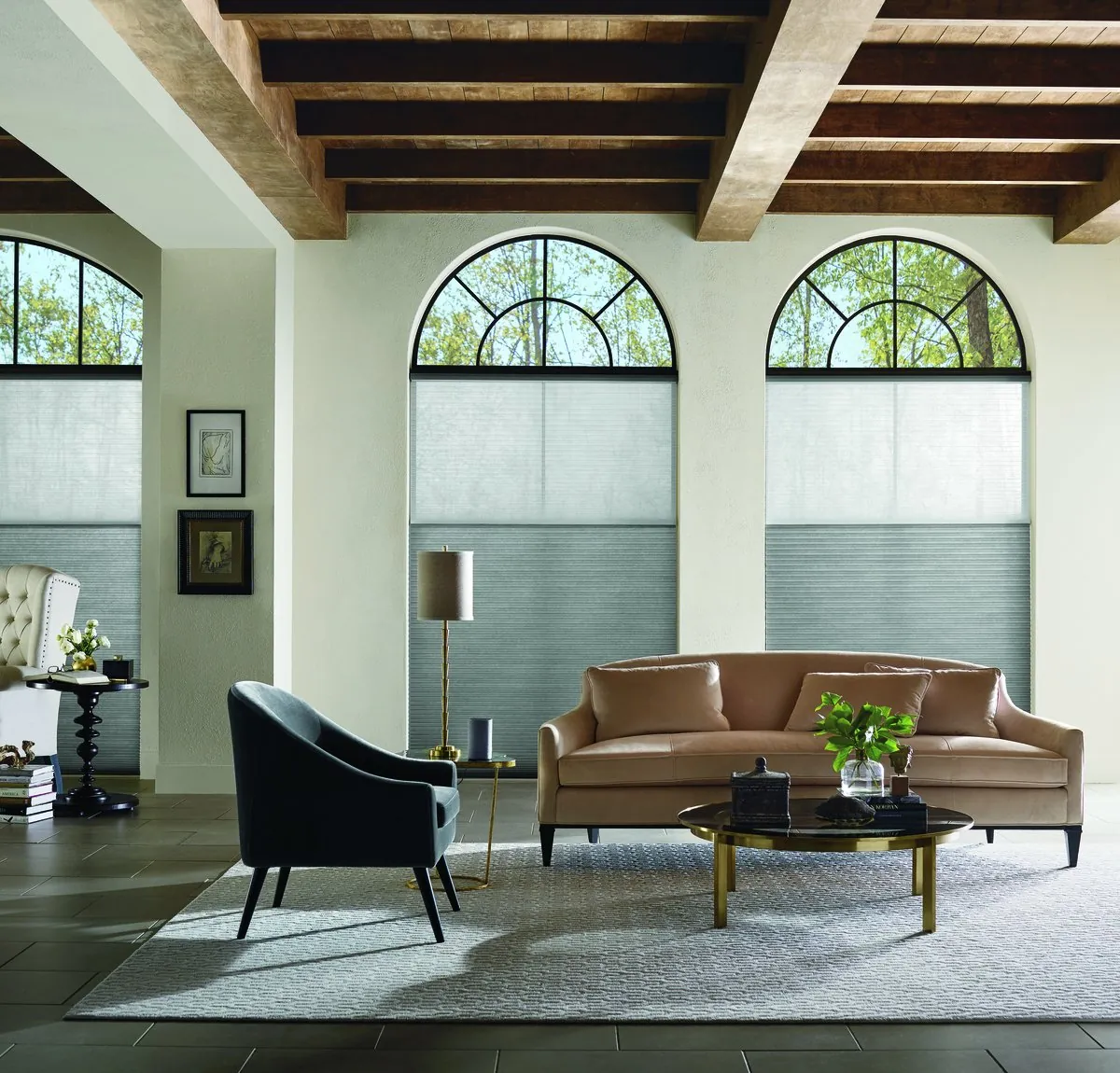
Inside-mount Duette
Small, narrow sizes and specialty shapes for the deep openings and odd gable windows of an antique house.
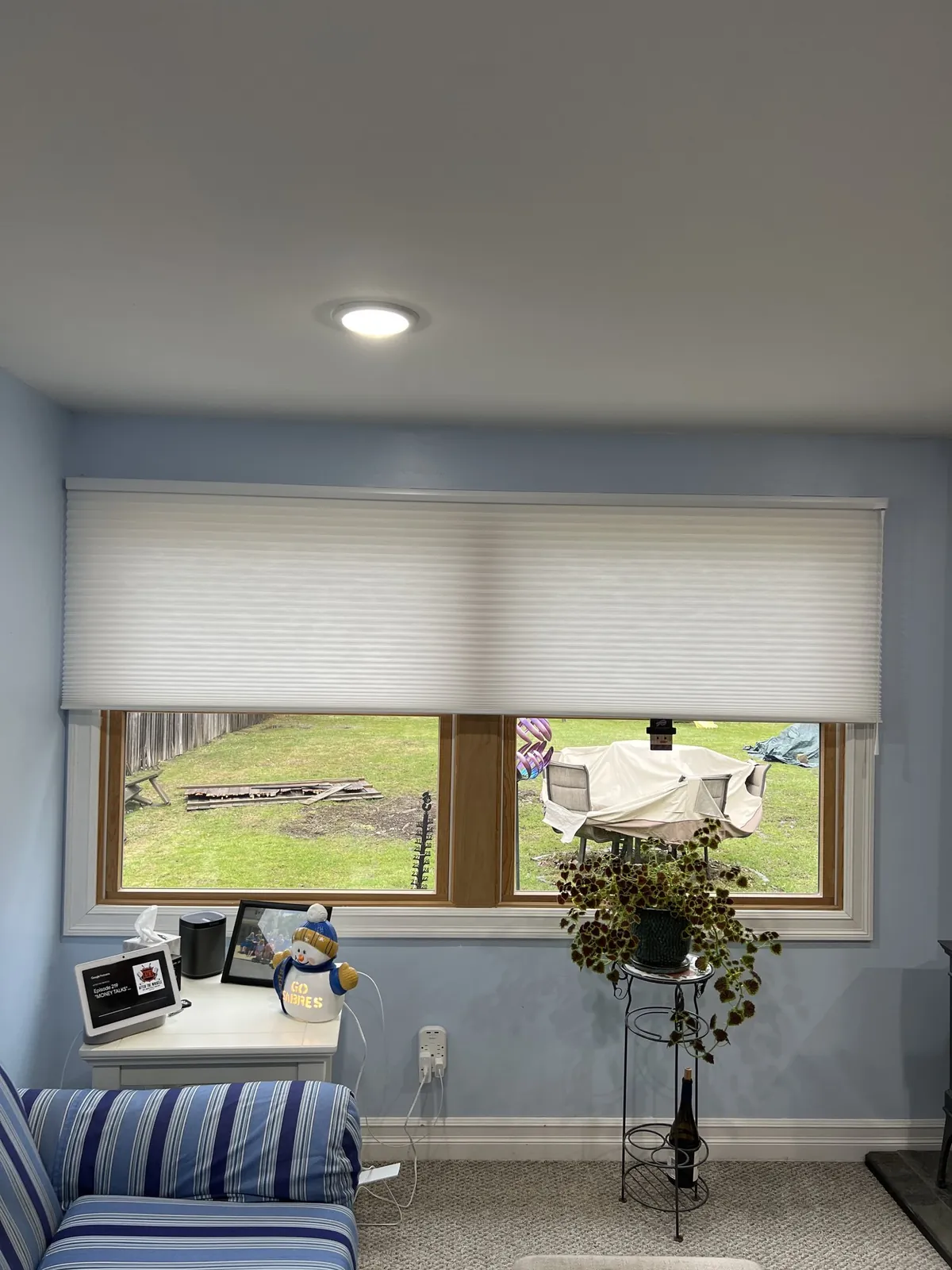
Applause across the house
A second Hunter Douglas honeycomb collection, often used in the kitchen, bedrooms and later additions where windows are standard sizes.
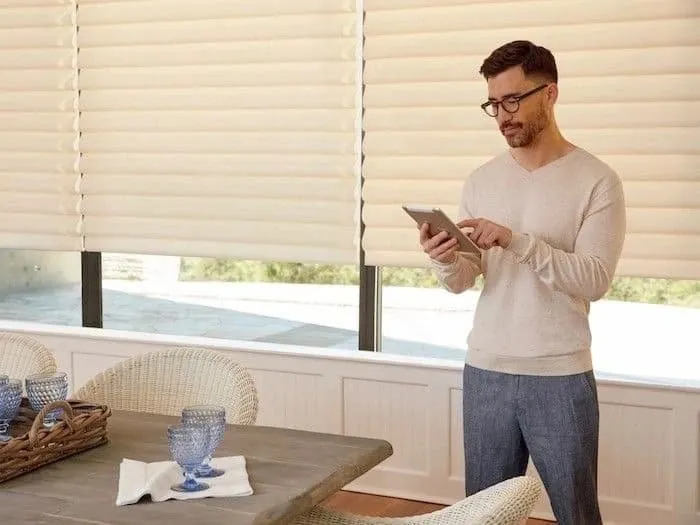
Control from a tablet or phone
PowerView motorization for the high windows in a newer bay-side house, or for any room you want shaded on a schedule.
Antique capes in the village
A true antique cape is a compact house, with low ceilings and small windows set right up under the roofline. The sash is often only a little wider than a sheet of paper is tall, and the walls are thick enough that the window sits well back from the room. That depth is a gift for a honeycomb shade. An inside mount tucks the headrail into the opening, and when the shade is up the window looks completely bare.
The rooms themselves are small and the windows are close to where you sit and sleep. In winter, the cold comes off old glass and settles around the chair beside it. A double-cell honeycomb, with two rows of trapped air, puts the most insulation into the least space, which is exactly what a small cape room needs.
Light is scarce in these houses too. Small windows under deep eaves do not let much in, so most owners do not want a shade that makes the room darker during the day. A light-filtering fabric in a pale color keeps the room as bright as it was, while still giving privacy from the road. Cellular shades in Barnstable, MA, chosen for a cape are usually about warmth and privacy rather than blocking sun.
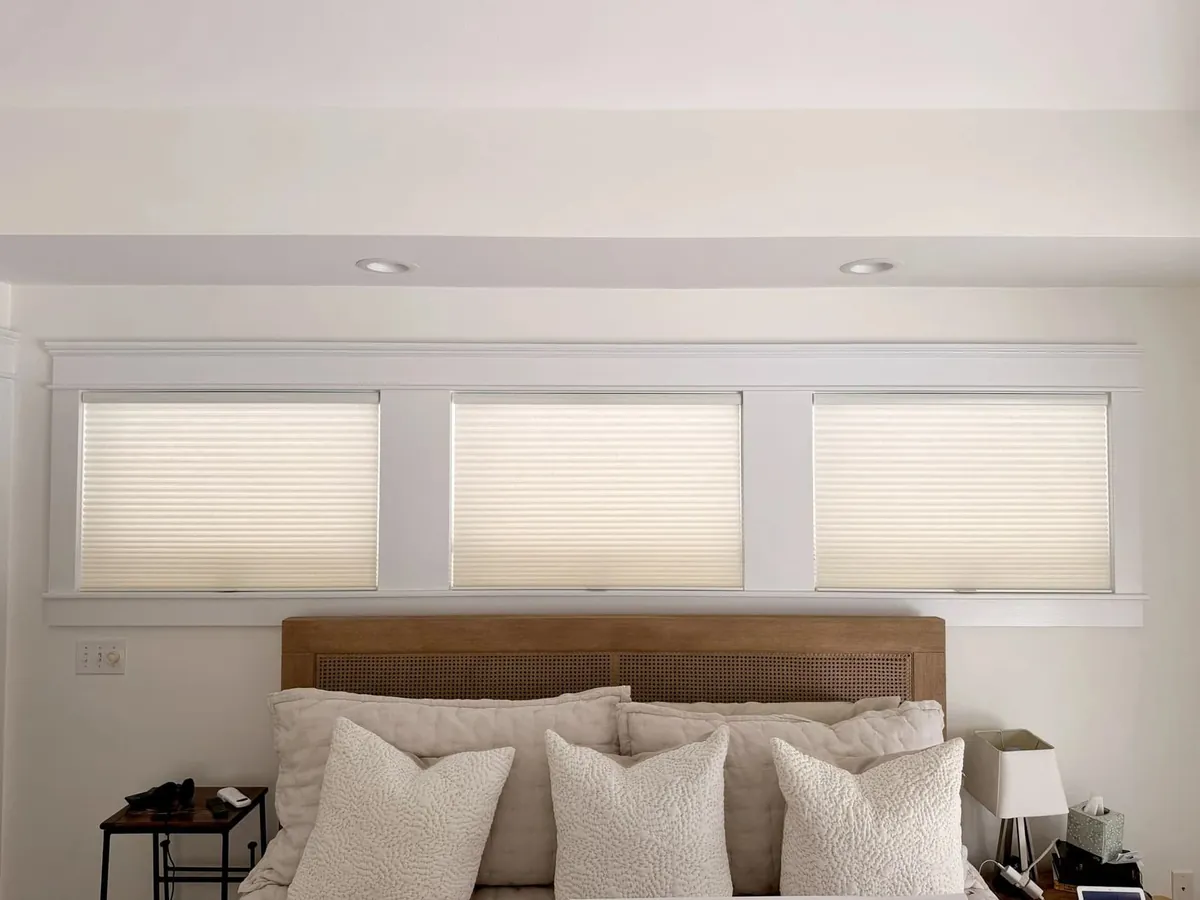
Federal houses and their tall, orderly windows
The Federal houses along 6A are a step up in scale. Ceilings are higher, the windows are taller, and they are arranged in neat symmetrical rows across the front of the house. Inside, the window casings are often deep, panelled and worth showing off.
Here the goal is a shade that respects the architecture. A honeycomb shade mounted inside the frame lets the casing and any panelling below the window stay fully visible. Because the windows are so regular, the shades line up perfectly across the façade when they are lowered to the same height, which keeps the outside of the house looking as orderly as it was designed to.
Old frames are rarely perfectly square, even in a well-kept Federal house. Sash cords, weight pockets and stops can all intrude into the space a headrail needs. We measure every window several times across its width and height, and check the depth along the top, before deciding on a mount. When a window simply cannot take an inside mount, a slim headrail on the casing is the neater answer.
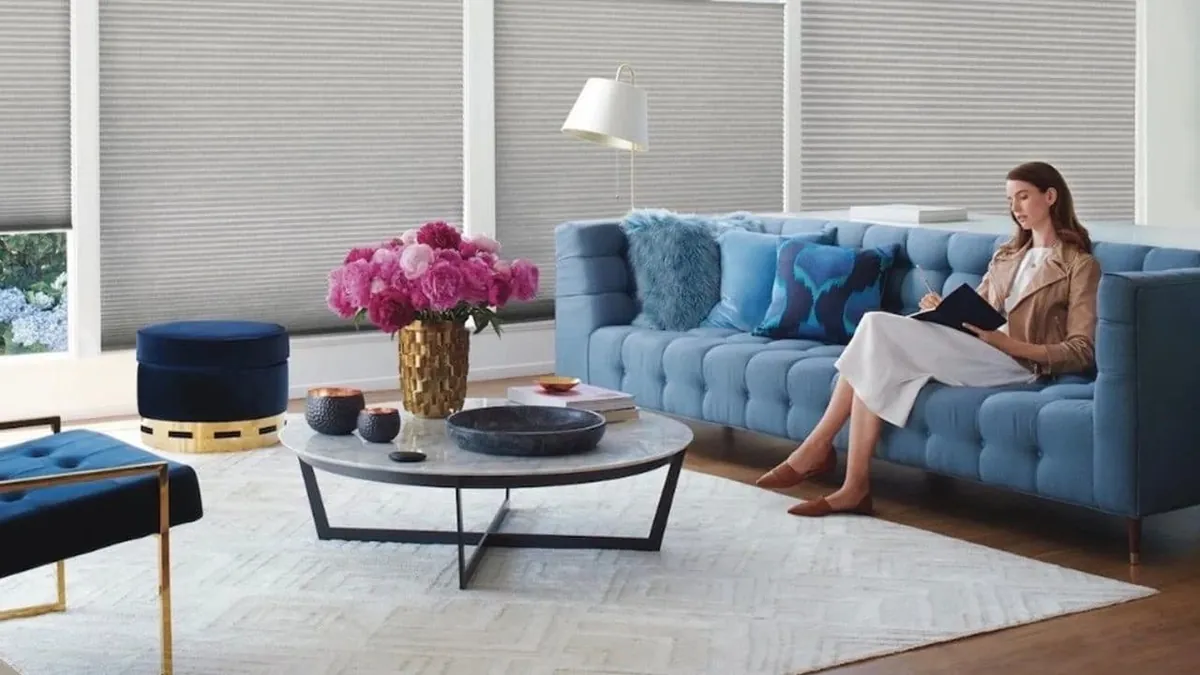
Ells, additions and the windows in between
Very few antique houses in the village are exactly as they were built. Over the years most have gained an ell at the back, a kitchen wing, a dormer or two, or a sunroom where a porch used to be. Each addition brought windows of its own era, so a single house can have original sash in the front parlor, mid-century replacements in the kitchen and a modern slider in the family room.
That mix is one of the main reasons owners ask us about cellular shades in Barnstable, MA. A honeycomb shade can be made for every one of those openings, from the smallest original sash to the widest slider, and the same fabric can run through the whole house. Lowered to a common line where the frames allow, the shades tie together rooms that were built a long way apart in time.
The additions are often where comfort problems show up. A sunroom with glass on three sides can be freezing in January and stifling in July, and a dormer bedroom under the roof can swing just as hard. A double-cell fabric in those rooms does a lot of work, and a top-down, bottom-up lift lets you shade the upper glass on a hot afternoon without closing the room in. When we plan cellular shades in Barnstable, MA, for a house with several additions, we usually treat each wing as its own small project, then make sure the colors agree from one end of the house to the other.
What shows from the road
Many of the houses along 6A sit within a historic district, and owners there tend to care a great deal about what can be seen from the street. Window coverings are inside the house, but they are on show through the glass, especially at night when the lamps are on.
We keep that in mind when choosing fabrics. A white or soft neutral backing on the side facing the glass keeps the windows looking calm and consistent from the road, whatever color you choose for the side facing the room. Duette and Applause both offer a different color on each side, so you are not forced to pick between the look inside and the look outside.
If you have specific guidance from the district or your own preferences about what the house should look like from the road, bring it to the consultation and we will choose with it in mind. We cannot speak for the district, so if you are unsure what applies to your house, it is worth checking with them before you order.
Larger newer houses on the bay side
Not everything north of Route 6A is antique. Toward Cape Cod Bay there are larger, newer houses with much bigger windows: great rooms with two stories of glass, sliders onto decks, and primary suites that look straight out at the water. These houses look north across the bay, so the light is steadier and softer than on the south side of the Cape, but the glass is so large that heat loss in winter is the bigger issue.
A honeycomb shade on a wall of glass that size makes a real difference on a January night. We plan large walls as a group, with shades sharing a headrail so they move together, or split so you can lower one section and leave the view open in another. A vertical honeycomb shade covers the slider in the same fabric as the windows beside it.
High windows are where PowerView earns its keep. A transom or a top row of windows that you cannot reach becomes simple to manage from a phone or a remote, and you can set the shades to close at dusk on a schedule. We talk through how each motor will be powered during the visit.
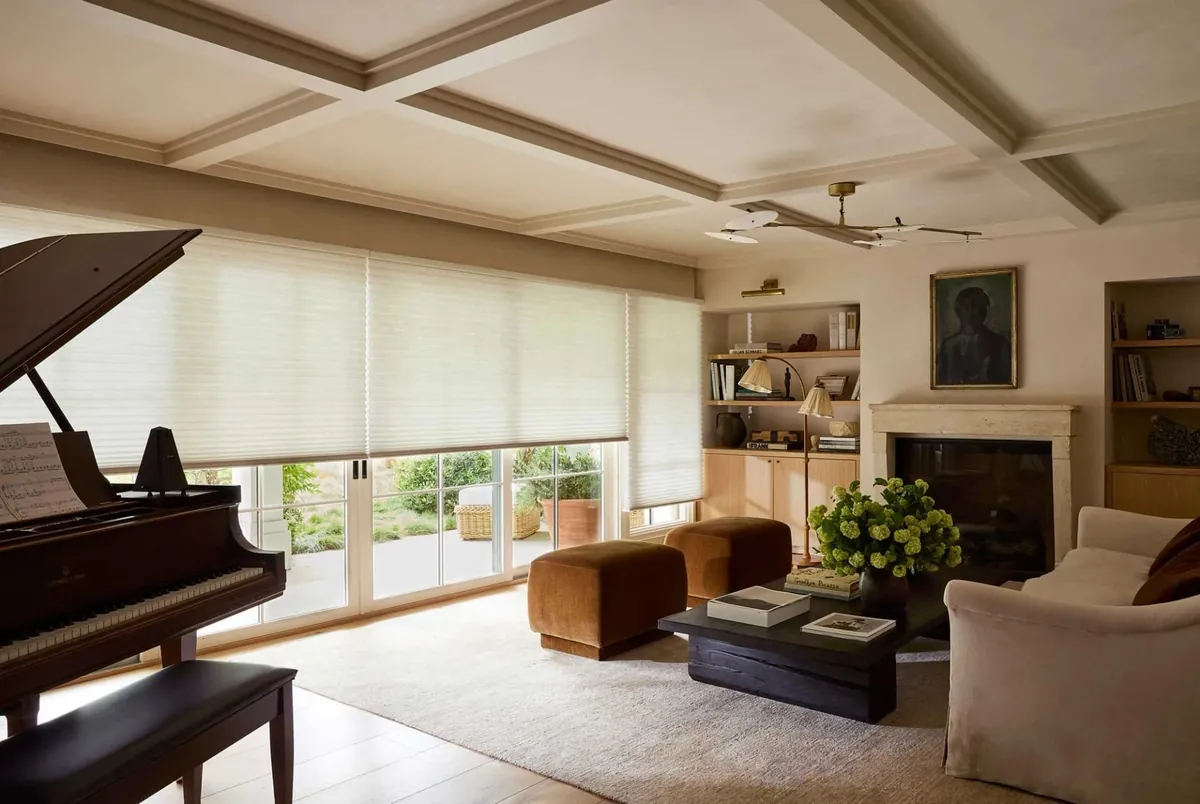
One town, two shores, very different light
Because Barnstable runs from the bay to the Sound, the same order of shades can need different fabrics depending on where the house sits. North-facing bay-side rooms get even, gentle light for most of the day, and the main job of a shade there is holding in heat. South-facing rooms, closer to the Sound, take strong direct sun for hours, and the shade has to deal with glare and summer heat as well.
Inside a single house the same split applies. The front rooms of a cape on the north side of 6A may face the road and the bay and never see much sun, while a later kitchen addition on the back faces south and bakes in the afternoon. We often choose a light-filtering fabric for the shaded rooms and a heavier fabric, or a double cell, for the sunny ones, so each room ends up comfortable.
Top-down, bottom-up lifts help on the bright side of the house. Lower just the top of the shade to block a high summer sun while the lower half of the window stays open to the garden.
Choosing how each shade is raised
An antique house often has windows that are awkward to reach: a gable window above a stair, a window behind a built-in settle, a small high window in a bathroom. The lift you choose for each one matters.
- Cordless. Lift or lower the bottom rail by hand. Nothing hangs at the side of the window, which keeps an old window looking clean.
- Top-down, bottom-up. Two rails, so you can open the top for light and keep the bottom covered for privacy.
- PowerView motorization. For windows that are out of reach, or any room you want on a schedule. Control from your phone, a remote or a timetable you set.
Many houses end up with a mix: cordless in the main rooms, top-down on the street-facing windows, and PowerView only on the high ones.
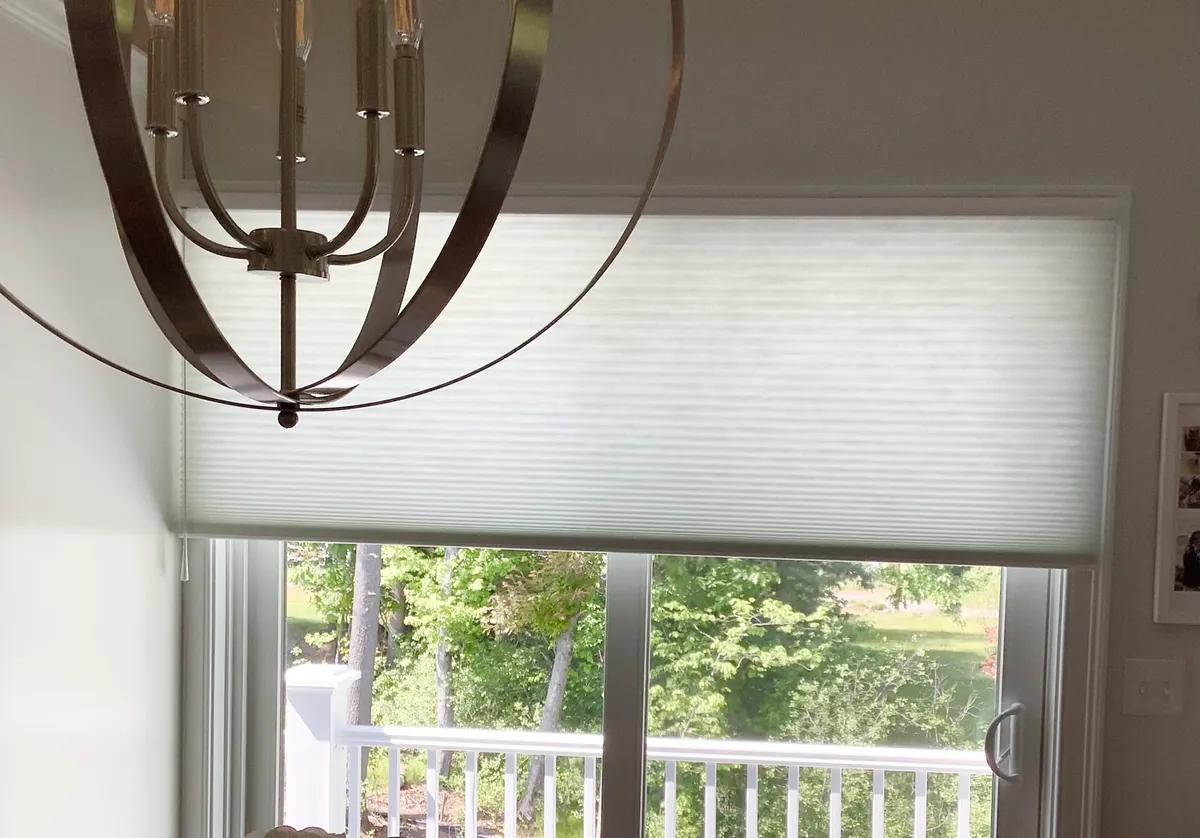
Duette and Applause in an old house and a new one
Both honeycomb lines come from Hunter Douglas and both rely on the same air-holding cell. The differences are in the fabric collections, the cell and size options, and the lifts available. Duette is broader, with specialty shapes for arches and angled gable windows, very narrow and very wide sizes, and the vertical shade for sliders. Applause offers its own fabrics and textures and fits ordinary windows well.
In an antique cape, Duette often goes on the odd-shaped and very small windows, with Applause on the rest. On a bay-side house the big glass and the sliders usually go to Duette. You can read about each on our Duette honeycomb shades and Applause honeycomb shades pages, or start from the main cellular shades page.
Our in-home consultation and measure
We like to start at the house, because an antique window and a modern one behave very differently and the light changes so much from shore to shore. Our vans carry the samples, so we can bring the showroom to you.
- Book a visit through Request a Consultation or the call button.
- We come with Duette and Applause samples, single and double cell, light-filtering and room-darkening, plus the lift options.
- We go through the house with you and talk about which rooms feel cold, which get too bright and which face the road.
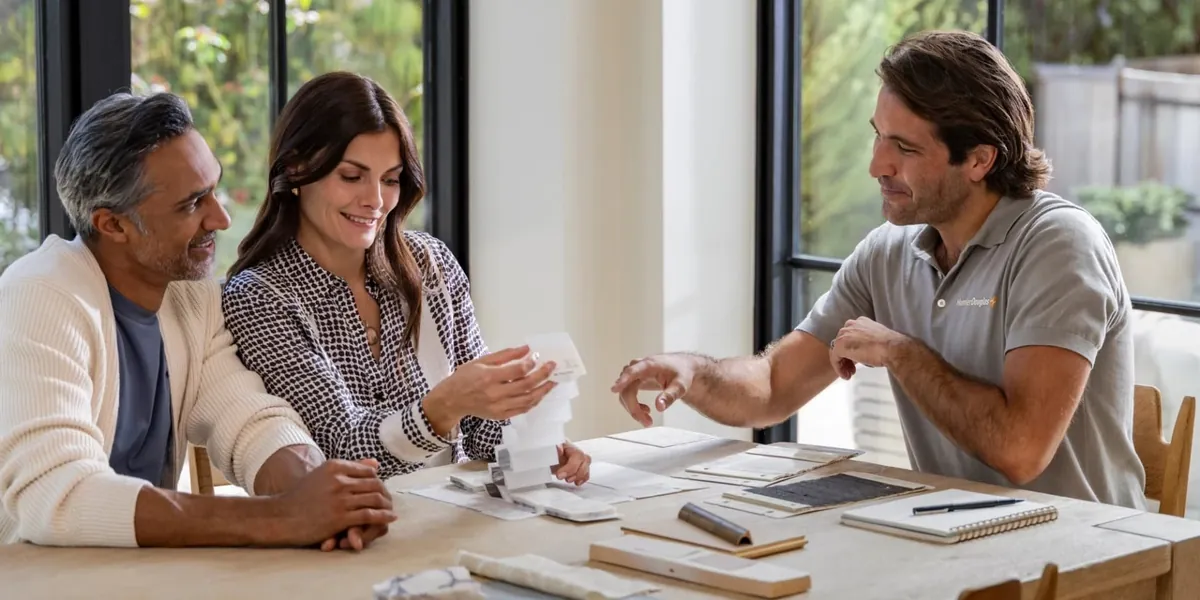
- You hold samples up in each room, so you can see the color against your own trim and floors.
- We measure each window at several points, check the depth for an inside mount and note any old hardware in the way.
- We give you a free estimate and leave you to decide in your own time.
- When the order arrives, our certified Hunter Douglas installers fit each shade, level it, and show you how it works.
Our interior design consultations can cover color and fabric for the whole room at the same visit, and there is more about what happens at an in-home consultation if you would like to read ahead.
Sagamore is our closest showroom
The best place to choose cellular shades in Barnstable, MA, is usually your own front room, with the samples in your hand and the light coming in as it really does. That is why most of our Barnstable work starts with a visit to the house.
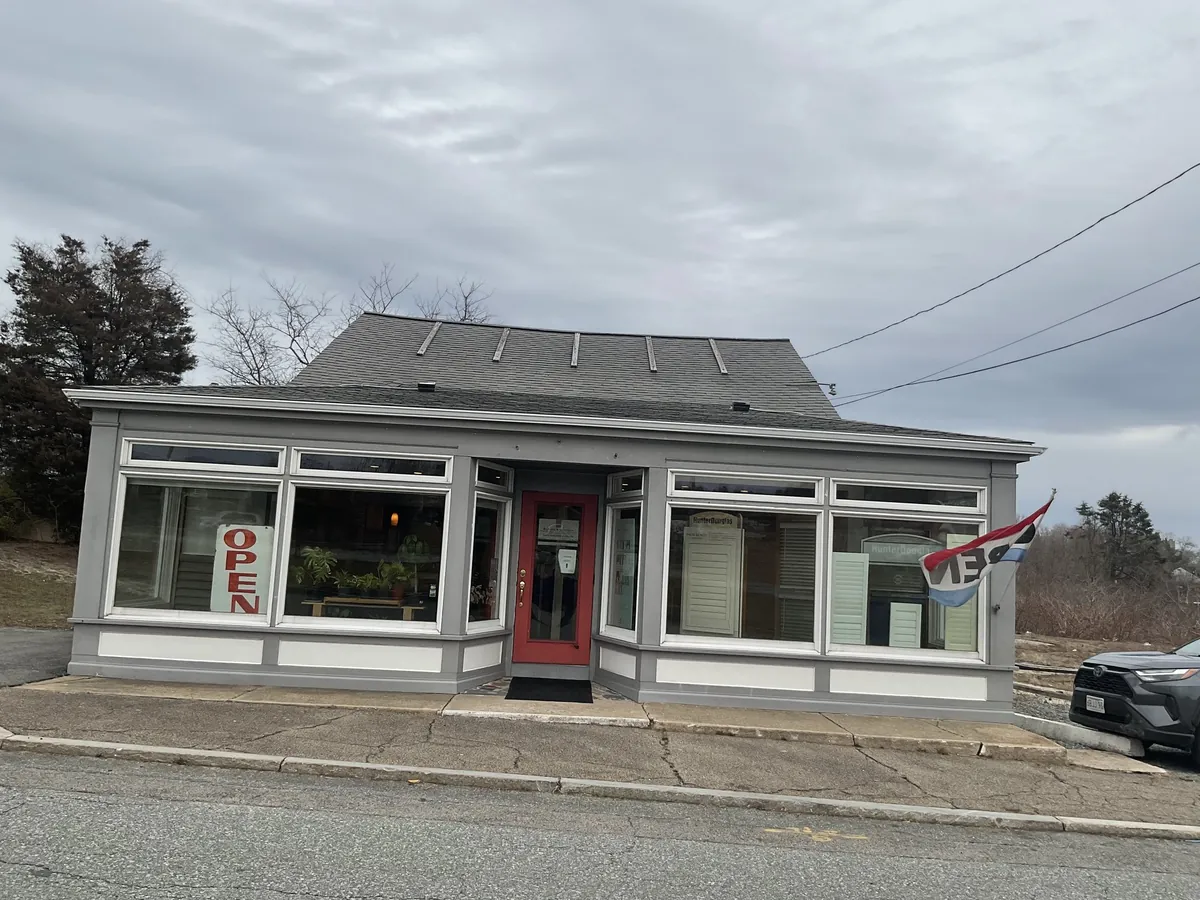
If you would like to see the shades in person first, the Sagamore showroom is our nearest location, a straightforward drive up Route 6A or 6 to the bridge.
A Gallery dealer and certified installers
Blinds & Designs is a Hunter Douglas Gallery dealer, a status Hunter Douglas gives dealers who meet its standards. For an old house with unusual windows that matters, because the full range of specialty shapes, small sizes and fabrics is open to you.
Our installers hold Hunter Douglas certification, and if a shade ever needs attention we repair blinds and shades as well. Read more on our Hunter Douglas dealer page for Barnstable.
Many antique houses mix honeycomb shades with other treatments. Look at plantation shutters in Barnstable for a Federal front room, roman shades in Barnstable for a bedroom, or everything we do in town on our Barnstable page.
Questions from Barnstable
Will a honeycomb shade fit the tiny windows in my antique cape?
Yes. Honeycomb shades can be made very small and very narrow, and the deep openings in an old cape usually leave plenty of room for an inside mount. We measure each window individually because no two are quite the same.
Can I keep the outside of the house looking traditional?
Choose a white or neutral backing for the side that faces the glass. Duette and Applause both allow a different color on the room side, so the windows look calm from the road while the rooms get the color you want.
My bay-side house has a two-story window wall. How do I manage it?
We plan the wall as a group of shades that can move together or separately, and PowerView motorization takes care of the high ones. You can control them from your phone or a remote, or put them on a schedule.
Which fabric is right for a south-facing kitchen addition?
A heavier light-filtering fabric or a double-cell shade handles strong sun better than a sheer one, and a top-down, bottom-up lift lets you block a high sun while keeping the lower window open.
Is there a charge for measuring and the estimate?
No. We measure at the consultation and give you a free estimate for the shades you are considering, and you decide in your own time.
Bring the samples to your windows
The surest test is to hold a honeycomb sample against your own deep-set sash and see how the room changes. Do it in the front parlor on a gray afternoon, then again in the sunny kitchen addition, and the difference between a light-filtering cell and a heavier one becomes obvious in a moment. That is the comparison we set up for you at the visit. Request a consultation and we will come to the house with the full range, measure every window and leave a free estimate with you. Prefer to talk it through first? The call button reaches us, and the Sagamore showroom is the nearest place to see the shades.