
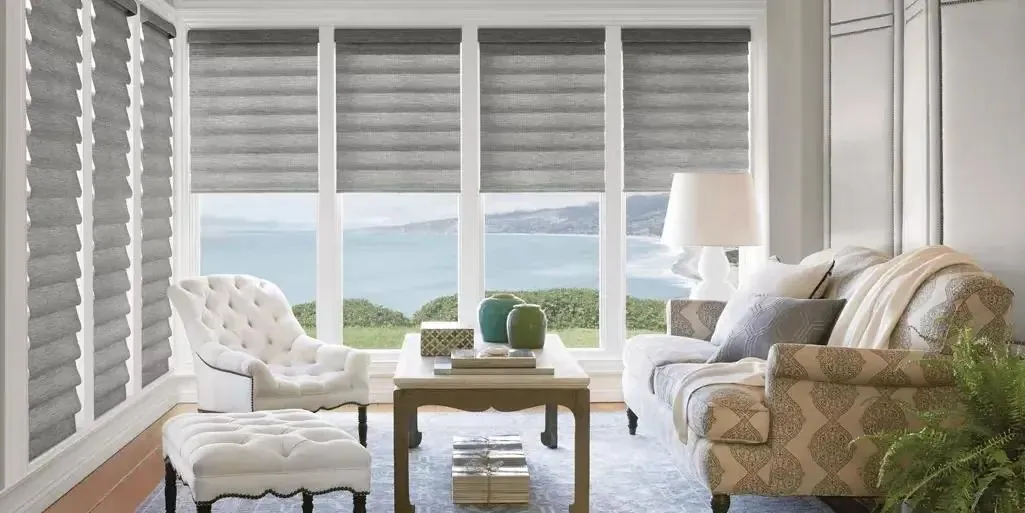
Built around the water, so keep the glass light
The houses around Assawompset Pond and Long Pond were mostly built for one reason: the water. Some began as simple camps, used for a few weeks each summer and later winterized, extended and lived in all year. Others are newer colonials on larger lots set back from the shore. Either way, the room that faces the pond is the heart of the house, and it is built around the view. Anything heavy on that glass defeats the purpose, which is why roman shades in Lakeville, MA are usually about lightness first.
A roman shade can be very light indeed. Made in a sheer or light-filtering fabric, it softens glare off the water while the pond, the far shore and the boats stay visible through it. Raised, it folds into a short band at the top of the window and practically disappears. There are no slats breaking up the view and no heavy fabric bunched at the sides.
The rest of the house can be different. Bedrooms, the road side and rooms that look into the trees often want more privacy or darkness, and the same family of fabrics comes in lined weights for those. Planning both together keeps the house consistent.
Light fabrics, kept off the view
Vignette and Carole Fabrics, the two Hunter Douglas roman lines, come in flat and folded styles. When we plan roman shades in Lakeville for a room facing the water, these three ideas come up again and again.
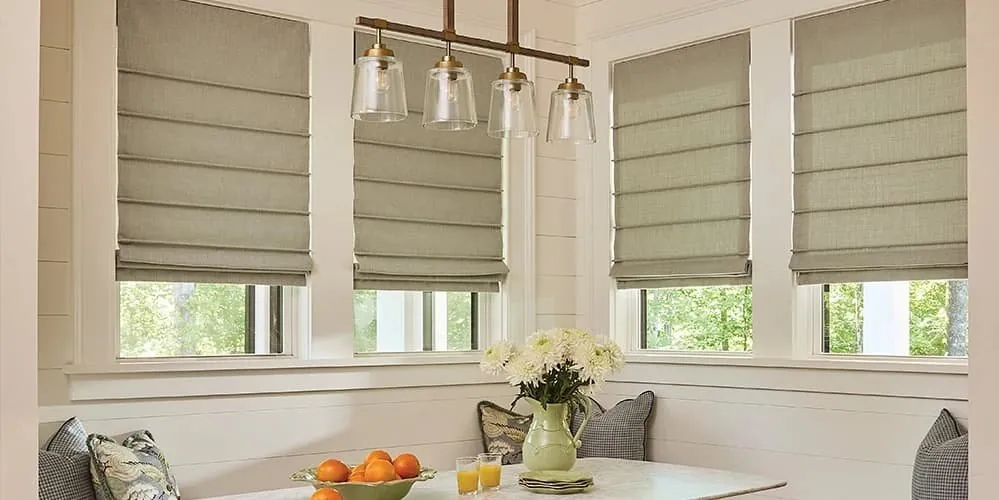
Shades that vanish when raised
A flat fold gathers into the smallest stack, so when it is up you have nearly all the glass. That is what you want on the windows facing the water.
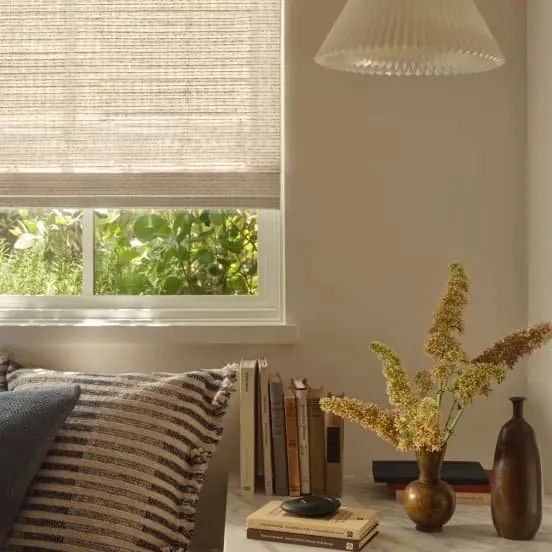
Fabric you can see through
Sheer and light-filtering weaves cut the glare off the pond and keep the outlook. Lowered, the room stays bright and you still watch the water.
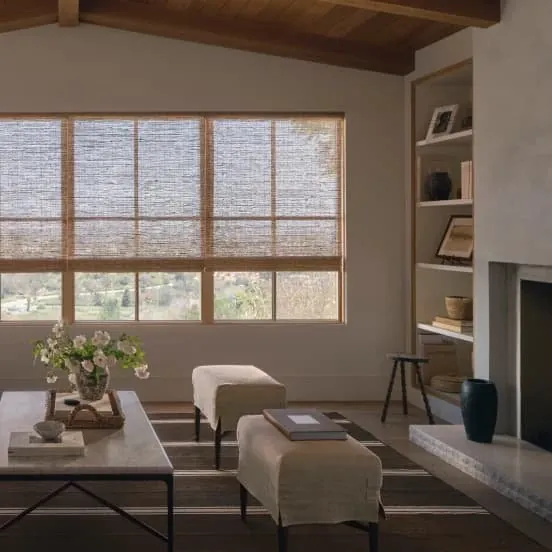
Woven texture for the big room
The Alustra Woven Textures roman brings natural fiber and an open weave to a great room, filtering the light with a soft pattern instead of blocking it.
Camps that became year-round houses
Many houses near the shore started life as summer camps. Over the years they gained insulation, heating, new windows and often an extra room or a second floor. What you find inside is usually a mix: original small windows in the oldest part of the camp, bigger replacement windows on the pond side, and newer windows in the additions, all a little different in size and style.
Roman shades handle that mix well because every shade is made to its own window. We keep the fabric and the fold consistent through the house, so the small old windows and the big new ones look as if they belong together. In the oldest part of a converted camp, the frames are often shallow and simple, and we check each one carefully for an inside mount.
A camp that is now lived in through the winter also needs a little more from its window coverings than it used to. The bedrooms that were only slept in during July now need to be dark on a winter morning and hold some warmth at night. A lined roman shade lowered at bedtime helps with both, while the pond-side living room keeps its light fabric.
The pond-side room
In almost every lakeside house there is one room that faces the water head on, often with a wall of windows, a slider to a deck or a set of French doors. It is where people sit, eat and look out. Whatever goes on those windows has to earn its place without getting in the way.
Our first suggestion is usually a sheer or light-filtering fabric in a soft neutral, one shade per window, with matching headrails so the folds line up. On a bright afternoon you lower only the shades the sun is on and leave the rest up. When the sun goes behind the trees on the far shore, they all go up again and the room is open to the view.
For a slider or French doors, we mount the shade so it clears the opening fully when raised. On doors themselves, hold-down brackets stop the shade from swinging as the door opens and closes.
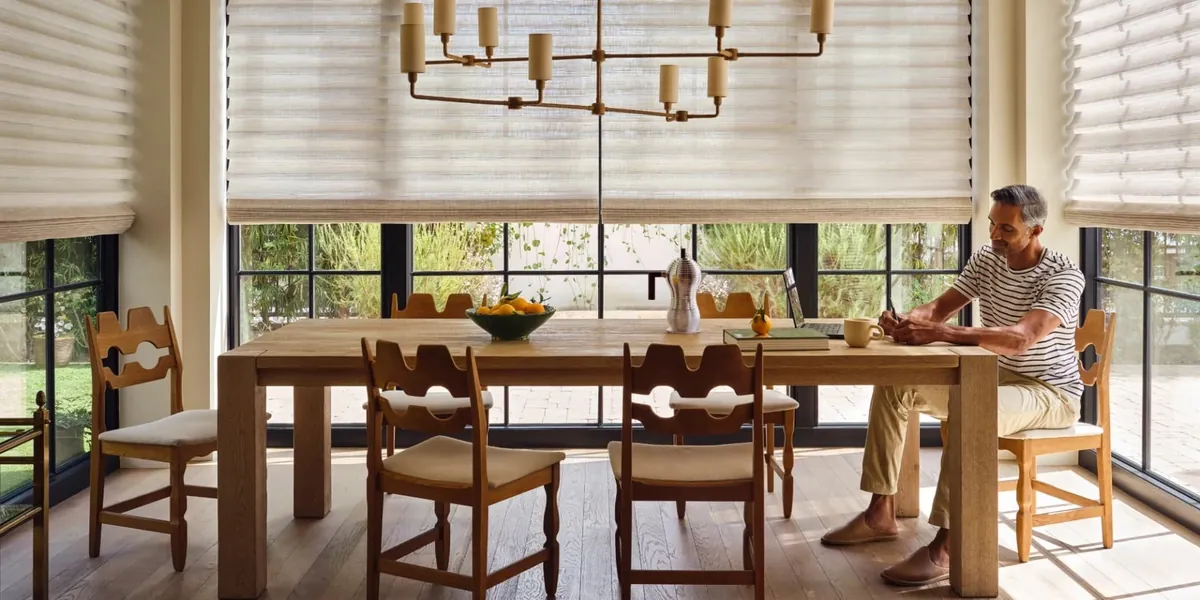
Newer colonials on larger lots
Away from the shoreline, Lakeville has newer colonials on larger lots, many with a view of the pond from the upper floor or across a lawn. These houses have more conventional windows: double-hung pairs in the front rooms, a bay in the dining room, larger windows at the back facing the yard or the water.
Here roman shades can take on a more traditional role. In a formal living room, a Carole Fabrics soft fold in a richer fabric gives the room a finished look. In a dining room bay, separate shades for each section of the bay fold up together. On the back of the house, where the view is, we return to lighter fabrics so the outlook stays open.
A front room facing the road can also carry side panels with the shade, which frames a tall pair of windows and adds color to a plain wall without putting any weight on the glass itself.
The upstairs bedrooms in a colonial usually want privacy and darkness more than view. Lined and room-darkening fabrics suit them, and the shade looks the same from outside as the lighter ones downstairs if we keep to one color family.
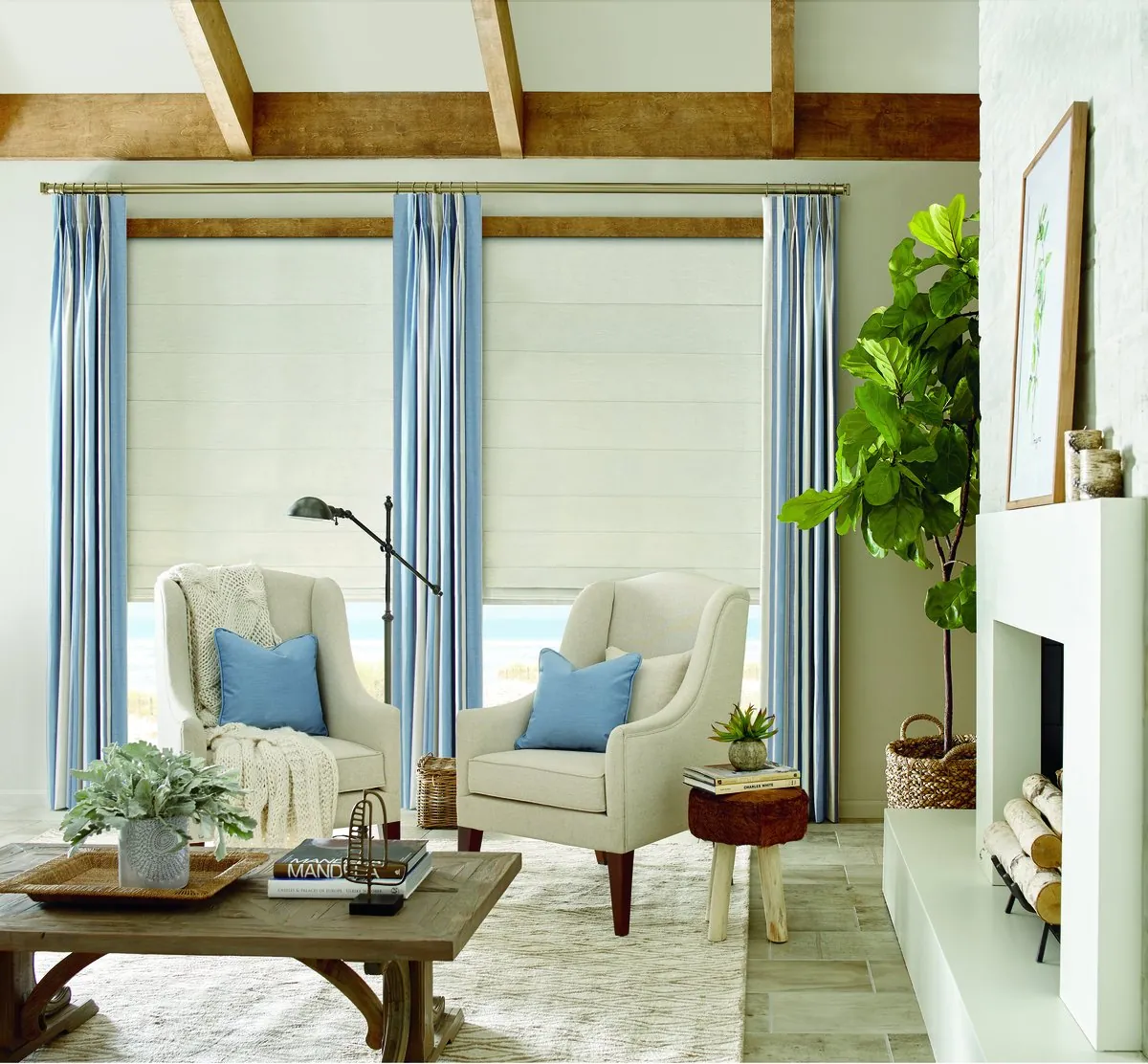
Keeping the stack off the glass
On a view window, the most important detail is where the folds end up when the shade is raised. On a standard inside mount, the raised shade sits inside the frame and covers the top of the glass. On a short window that can block a real part of the view.
There are two ways around it. One is a flat fold, which gathers into the shallowest stack. The other is an outside mount set a little above the window frame, so the raised shade sits on the wall rather than on the glass. That second option leaves the whole window clear when the shade is up, and it can also make a short window look taller. With roman shades in Lakeville facing the water, we often use it on the pond side and keep inside mounts elsewhere, so the trim stays visible in the rooms where the view is not the point.
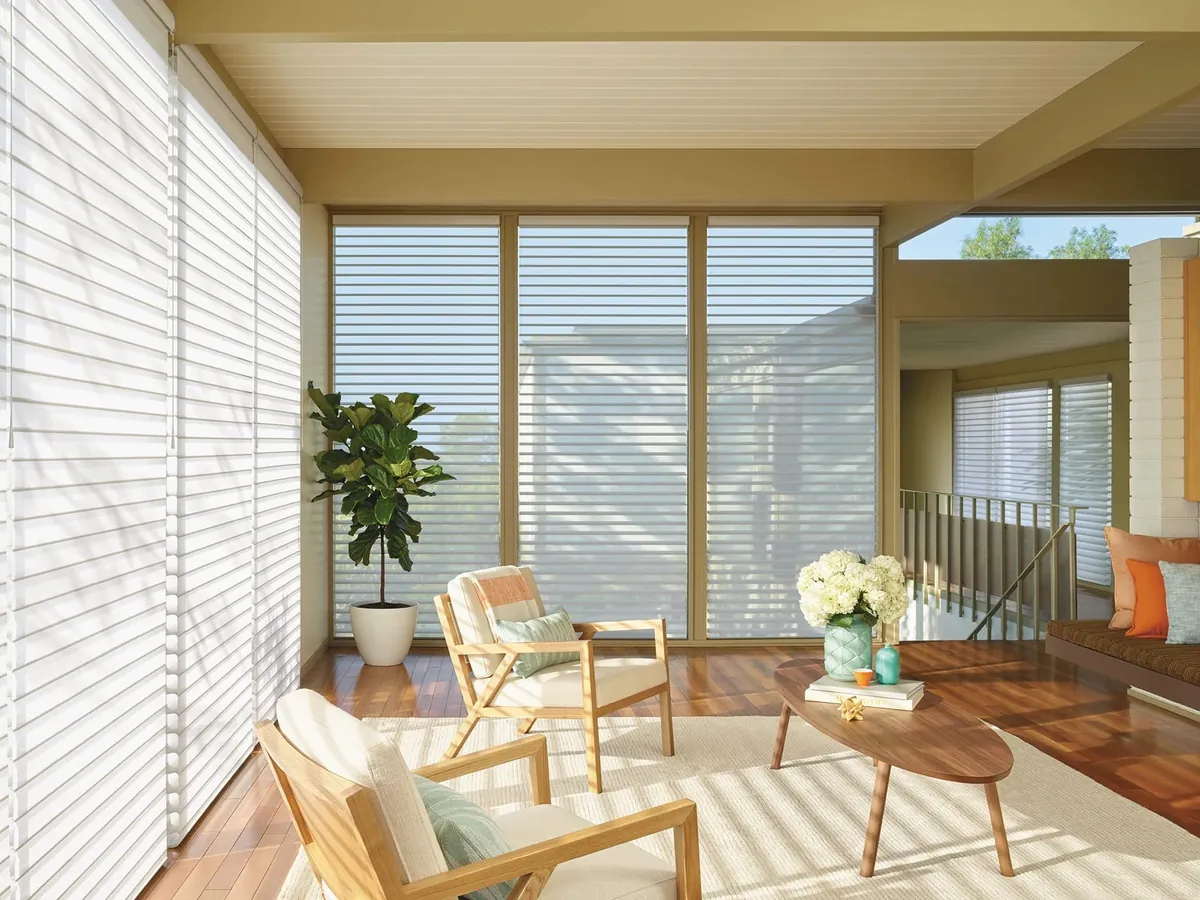
When a roman shade is not the lightest answer
For some pond-side rooms, even a sheer roman is more than you want. If the whole point of the room is to look through the glass all day, a sheer shade with fabric vanes, such as Hunter Douglas’s Silhouette, might suit you better. The vanes tilt open to let the view through and close for privacy, and the shade still softens glare.
We bring sheer shade samples alongside the roman fabrics, so you can compare them at the window. Many Lakeville houses end up with both: sheer shades on the wall of glass facing the pond and roman shades in the bedrooms, kitchen and front rooms. Our sheer shades page explains how they differ.
Bringing the samples to the lake
A fabric that looks pale and plain in a sample book can look entirely different against a window full of water and sky. That is why we would rather show it to you at the pond-side window. Our vans carry samples, so we can bring the showroom to you.
- Request a time online or with the call button.
- We arrive with roman fabrics from sheer to room-darkening, woven samples, sheer shade samples and working folds and lifts.
- We begin at the windows facing the water, since they shape the choices for the rest of the house.
- You see each fabric against the glass and the view, ideally at the hour the glare is worst.
- We measure every window and talk about where each shade should be mounted.
- You receive a free estimate and decide at your own pace.
If you would like help with color and fabric for the whole room, our interior design consultations can be part of the same visit. More detail is on our page about what happens at an in-home consultation.
Reflections, glare and color
Water reflects light upward. In a pond-side room, you often see moving patches of light on the ceiling in the morning, and by afternoon the reflected glare can make the room hard to sit in, even when the sun is not shining directly through the glass. A light-filtering fabric scatters that reflected light so it spreads evenly across the room instead of dazzling.
Color plays a part too. A white or very pale fabric reflects more light back into the room and keeps it bright. A soft gray or a natural tone cuts glare a little more and makes the view outside look clearer through the fabric. Strong colors tint the light that comes through. We show you how each looks against the water before you choose.
On a window that takes direct sun all afternoon, lighter neutrals keep their color best over time. We point out the fabrics in the sample books that suit a bright pond-side window.
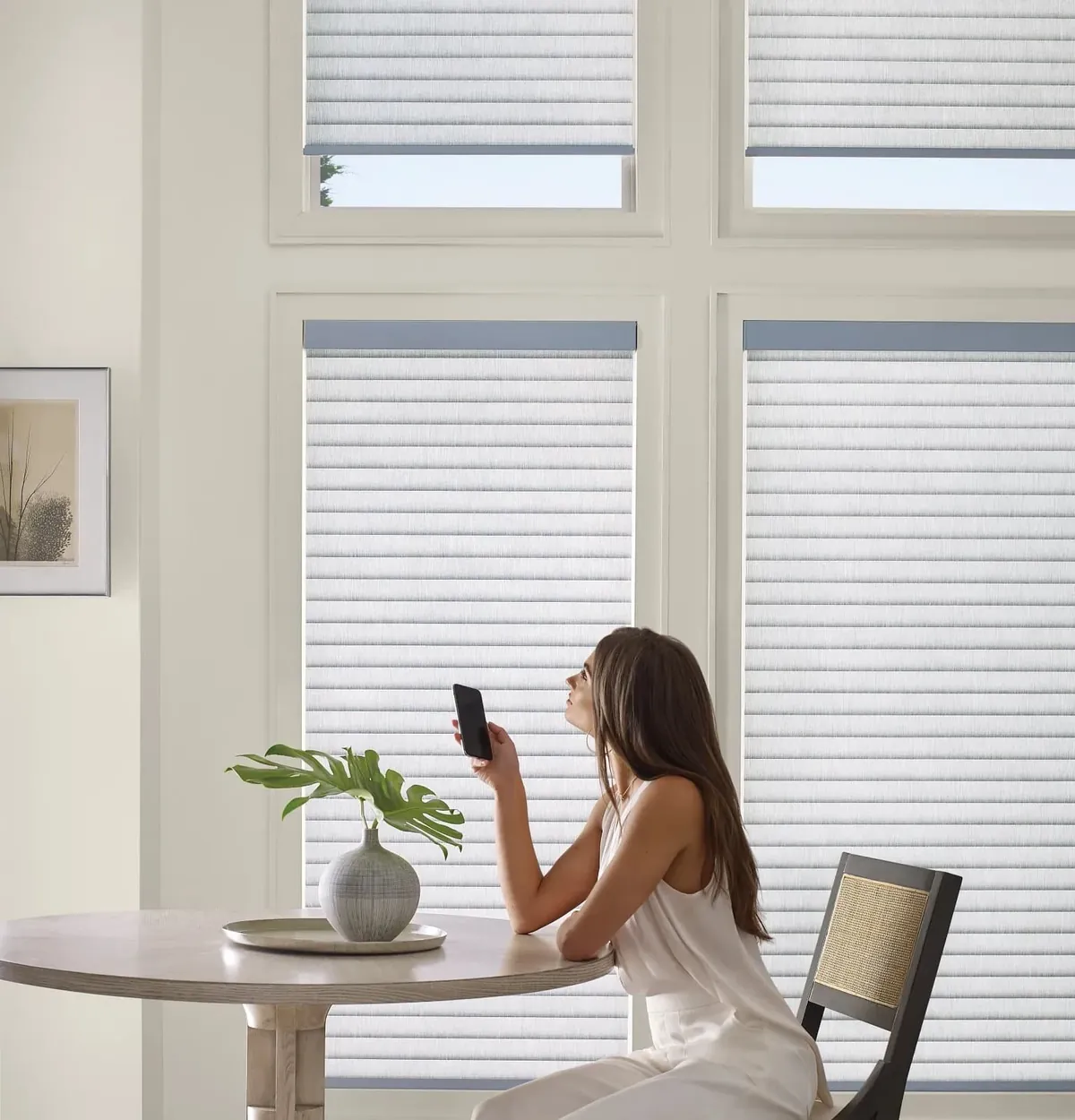
PowerView at the lake
Lakeside houses are full of windows that are hard to reach: tall glass in a great room, transoms above a slider, a high window in a converted loft. PowerView motorization raises and lowers the shades with a remote or your phone, so nobody needs a step ladder to open the room in the morning.
Schedules are useful too. The shades on the water side can lower automatically when the afternoon glare arrives and rise again in the evening for the sunset. If the house is not lived in every week, a schedule makes it look occupied and keeps the strongest sun off the furniture. We demonstrate the remote and the app on a working sample during the consultation.
Winter by the pond
A frozen pond on a clear day throws back even more light than open water in summer, and the winter sun sits low enough to reach deep into the room. Those few bright months are when a light-filtering roman fabric earns its keep on the water side. At night, the same glass loses warmth, and a lined shade lowered after dark puts a layer of fabric between the cold window and the room.
For bedrooms in a converted camp that now sees year-round use, a lined or room-darkening roman shade is often the single biggest improvement in comfort. If warmth is the overriding concern in a particular room, we may also suggest cellular shades in Lakeville for that room alone.
A bedroom tucked under the eaves of an old camp often has one small window at the gable end and very little wall around it. A flat fold mounted inside that frame keeps the room simple, and in a darker lining it lets you sleep past sunrise even in June, when first light over the pond arrives very early.
Vignette or Carole Fabrics on the water side
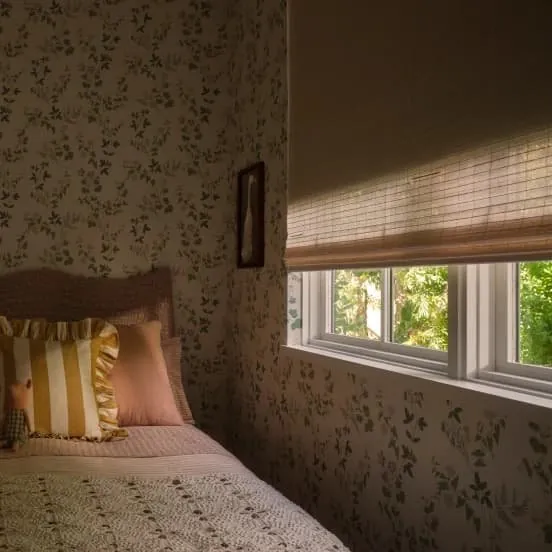
Vignette, Hunter Douglas’s modern roman shade, rolls its fabric into soft folds and has no cords across the back, so the shade looks finished from the deck or the water. Its lighter fabrics suit pond-side rooms well. Carole Fabrics brings the classic flat and soft folds and a very large range of fabrics, useful when you want a particular color or pattern in a formal front room.
A Lakeville order often uses both: Vignette or a light Carole Fabrics flat fold facing the pond, and richer Carole Fabrics on the road side. The main roman shades page covers the whole range, and our Vignette modern roman shades page goes into that line in detail.
Measuring a lake house
Converted camps keep their surprises for the tape measure. Walls added at different times rarely line up exactly, and windows that look a pair may differ slightly. We measure every opening at several points across its width and height, check the depth of each frame, and note anything that gets in the way of a headrail. On the pond side we also agree how high above the frame the shade should sit, so its raised stack stays clear of the view.
Once the shades arrive, our certified Hunter Douglas installers hang them, level every headrail, test each lift and show you how everything works. Done that way, roman shades in Lakeville sit neatly and leave the water in view.
Gallery dealer, certified installers
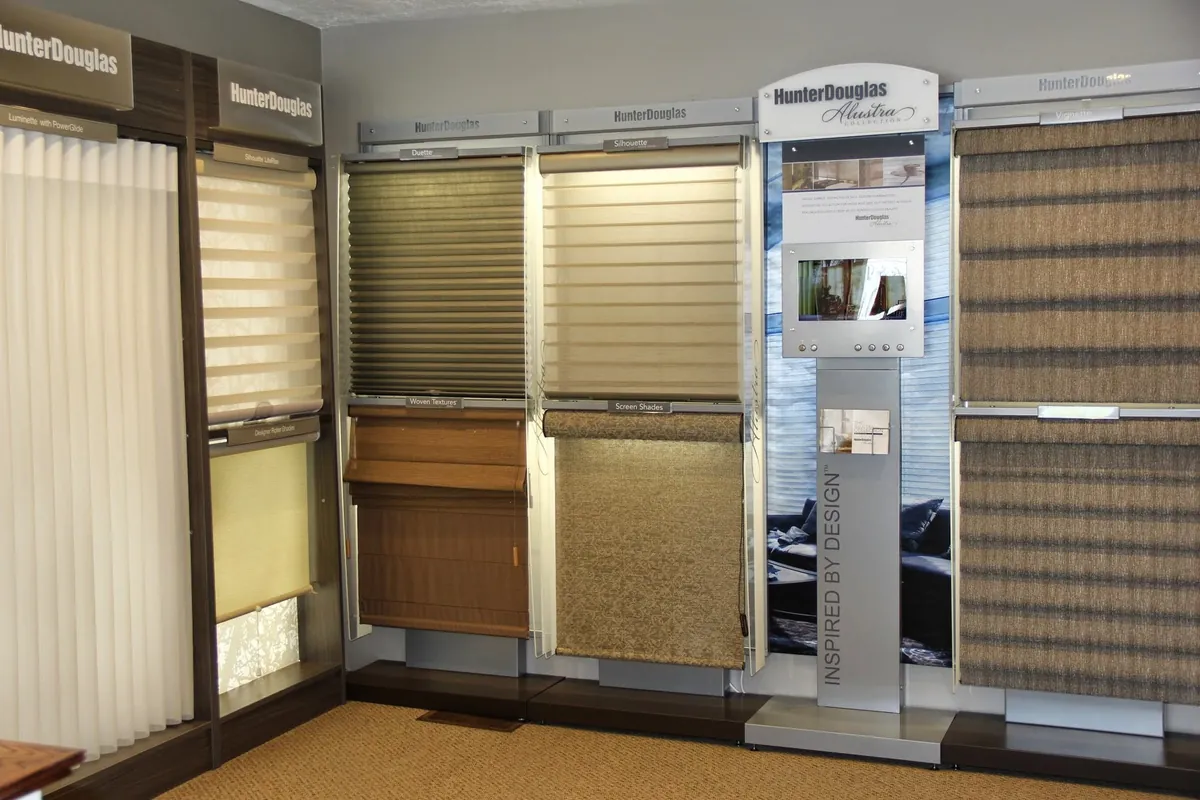
As a Hunter Douglas Gallery dealer, a designation Hunter Douglas gives dealers who meet its standards, Blinds & Designs can offer you the entire roman range: all the Vignette and Carole Fabrics styles, the woven textures, the lift options and PowerView, plus the sheer shades many pond-side rooms end up with.
Hunter Douglas certifies our installers, and they hang every shade as it was designed to be hung. Should a shade need attention later on, we repair blinds and shades too.
We can look at any other room at the same visit, from plantation shutters in Lakeville in a bathroom to roller shades in Lakeville for a screened porch. All our work in town is on the Lakeville page.

From camp to colonial, we come to you
Whether it is one view window in a converted camp or every room of a new colonial, the visit is the same: we sit down with the samples, look at each window and talk about how you use the room.
If you prefer to see the range first, our North Dartmouth showroom is the nearest to Lakeville, a drive south toward the coast.
Questions from Lakeville
Will a roman shade spoil my view of the pond?
Not with the right fabric and mount. A sheer or light-filtering weave lets you see the water through it, and mounted a little above the frame, the raised shade sits on the wall and leaves the whole window clear.
What should go on the bedrooms of a camp we now live in all year?
A lined or room-darkening roman shade. It keeps the room dark in the morning and, lowered at night, adds a layer of fabric between the cold glass and the room.
Roman shade or sheer shade for a wall of glass facing the water?
It depends on how much you want to see through it. A sheer shade with tilting vanes is the lightest option; a sheer roman gives a softer, folded look. We bring both so you can compare at the window.
Can the shades on the water side lower themselves in the afternoon?
Yes, with PowerView. You set a schedule, and the shades lower when the glare arrives and rise again later. You can also move them from your phone or a remote.
What does the estimate cost?
Nothing. After we measure, you get a free estimate. Request a consultation and we will bring the samples to your house.
Start at the window facing the water
The pond-side room is the one to get right first, and the only way to judge it is with the samples against your own glass. Request a consultation and we will bring the light fabrics, the lined ones and the sheer shades for comparison, measure every window and give you a free estimate for roman shades in Lakeville, MA. To talk it over first, use the call button, or drive down to the North Dartmouth showroom.