
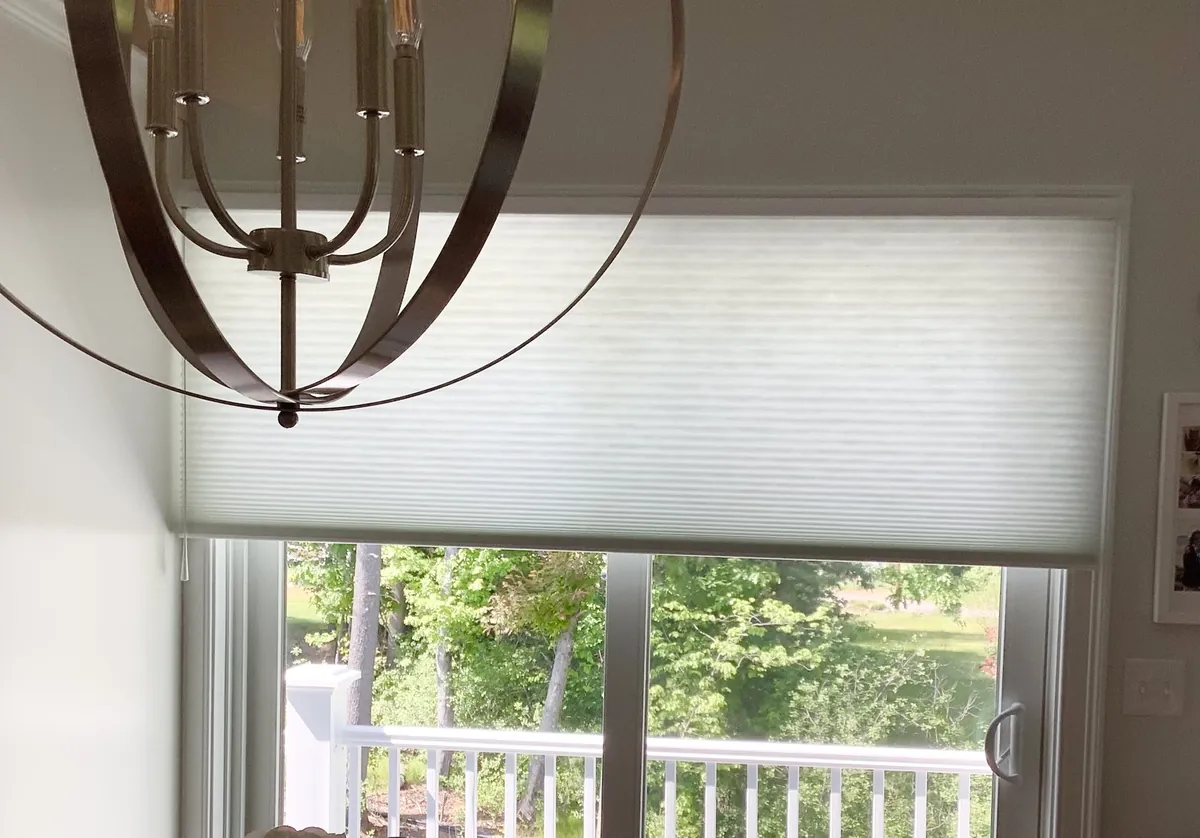
Rooms with windows on every side
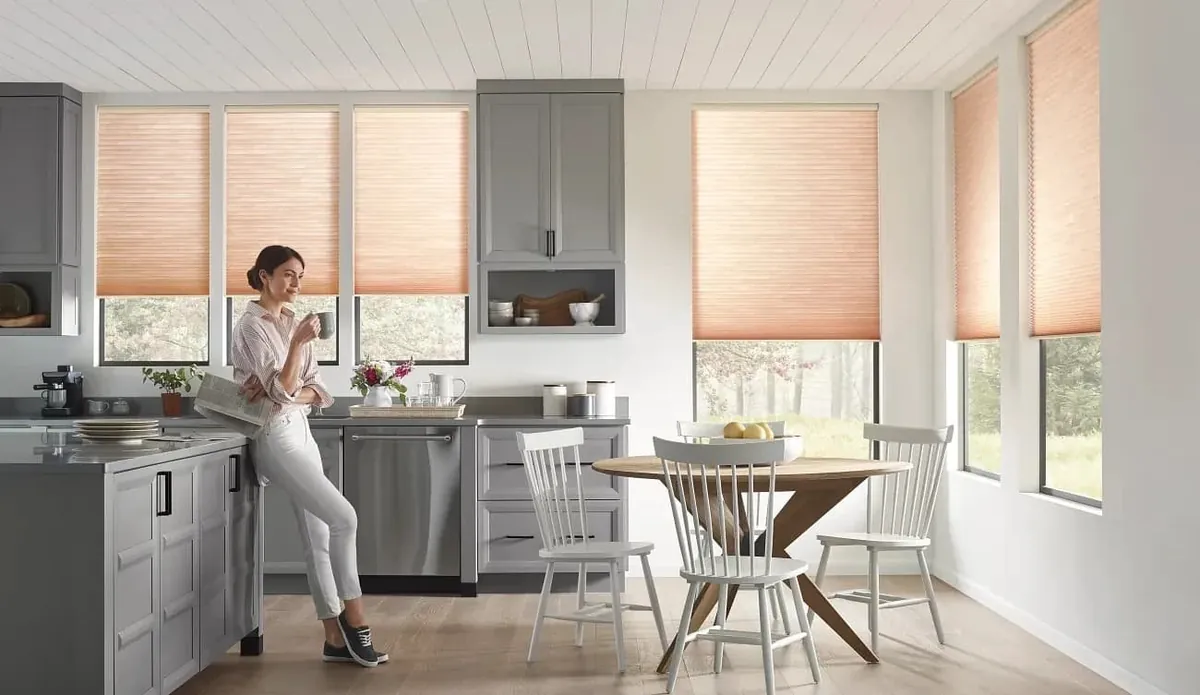
Freetown spreads out. Capes and ranches sit on generous wooded lots that stretch toward Assonet village and the edge of the state forest, and along the Taunton River there are houses built to face the water. With so much room around each house, builders gave many rooms windows on two or three walls. That brings in plenty of daylight, and it also means a living room or bedroom has a lot of glass to lose heat through. It is the first thing we look at when someone asks about cellular shades in Freetown, MA.
A corner room behaves differently through the day. Morning sun comes in one side, the afternoon comes in another, and in winter, when the oaks and maples have dropped their leaves, low light cuts straight through the woods and across the floor. A honeycomb shade lets you manage each wall on its own while keeping the room looking like one piece.
The shade’s real strength is warmth. Its pleats are shaped into hollow cells, and every cell holds a band of air against the window. That buffer is why honeycomb shades are the warmest choice for a cold room.
Six ways to use honeycomb shades in a Freetown house
Every house is different, but these six ideas cover most of the rooms we see on wooded lots and along the river. We carry samples of all of them in the van.
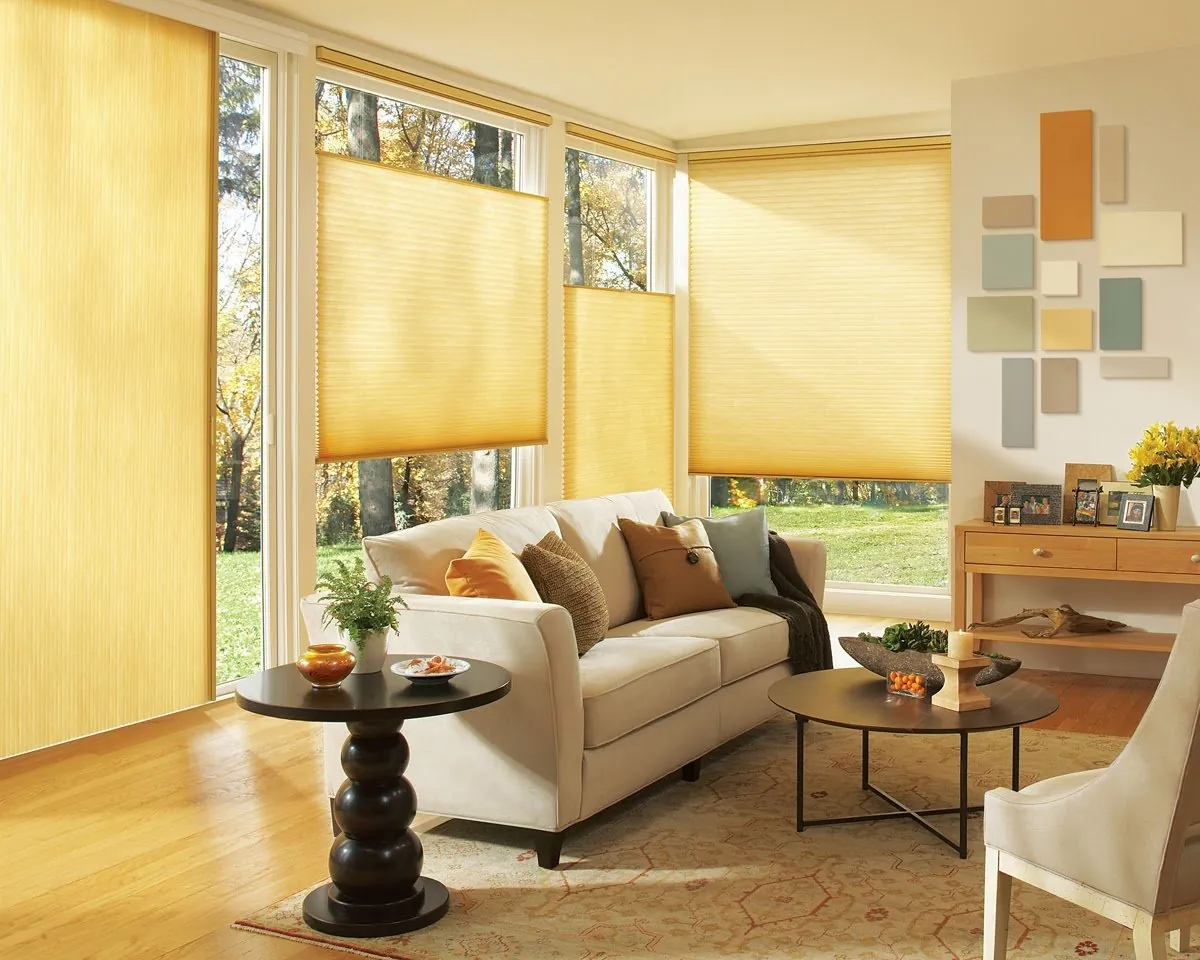
Corner rooms, one look
Matching shades on two or three walls, each raised to its own height as the sun moves round the house.
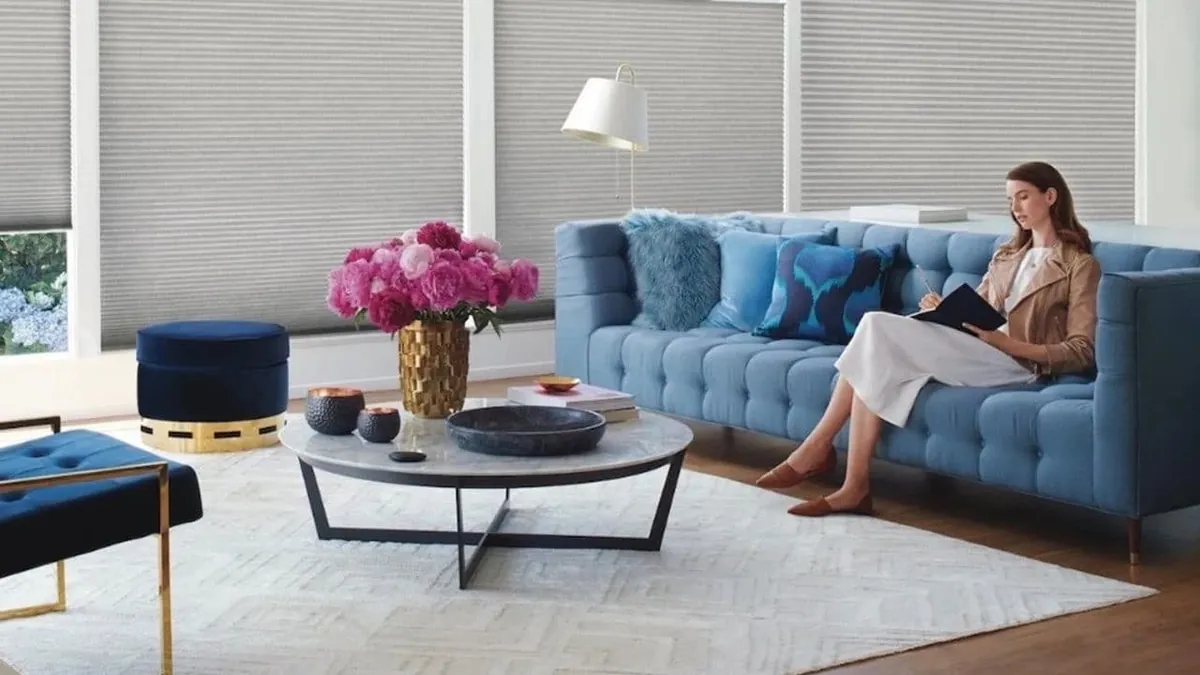
Light-filtering for living rooms
A fabric that turns bright sun into soft, even light, so you can sit by the window without squinting or drawing the room dark.
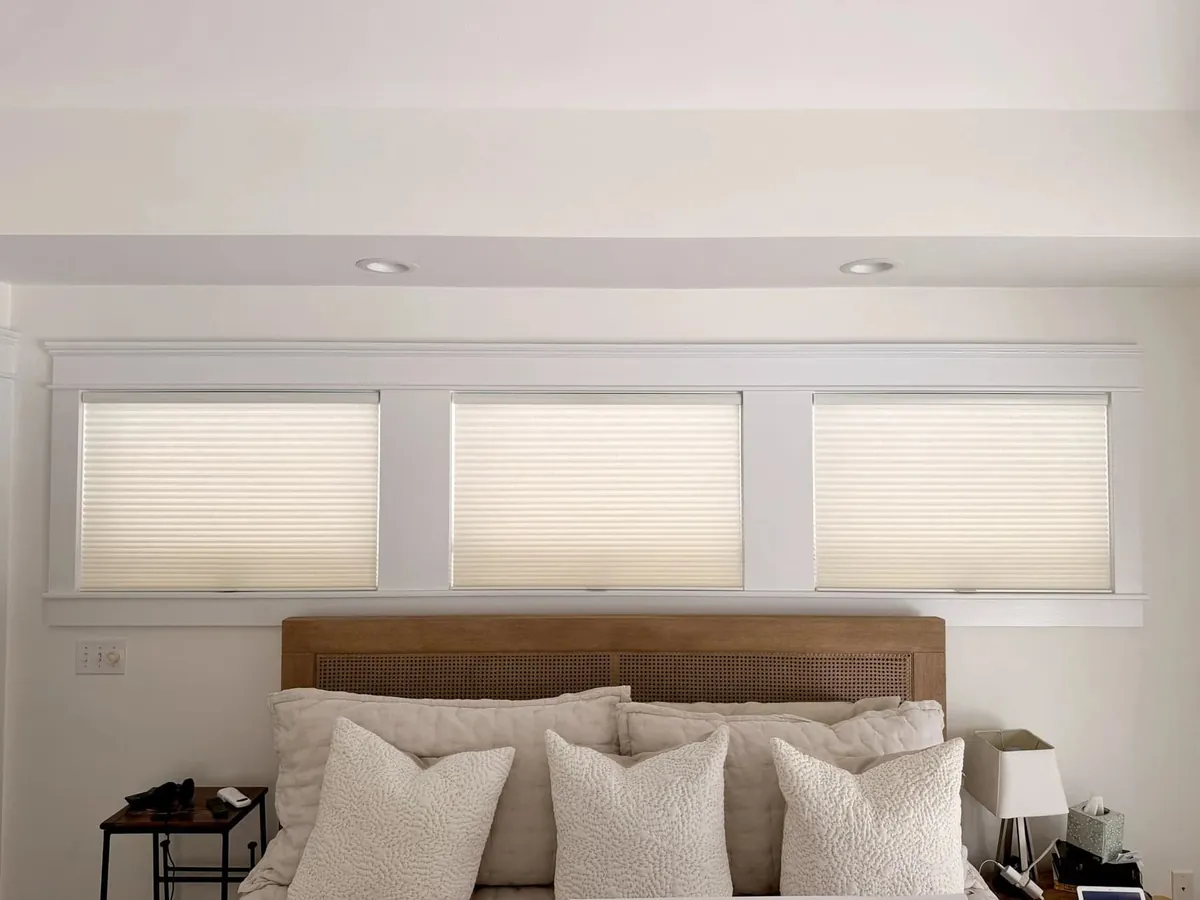
Darkening fabric for bedrooms
For a bedroom with windows on two sides, a room-darkening honeycomb fabric keeps both walls dim until you choose to raise them.
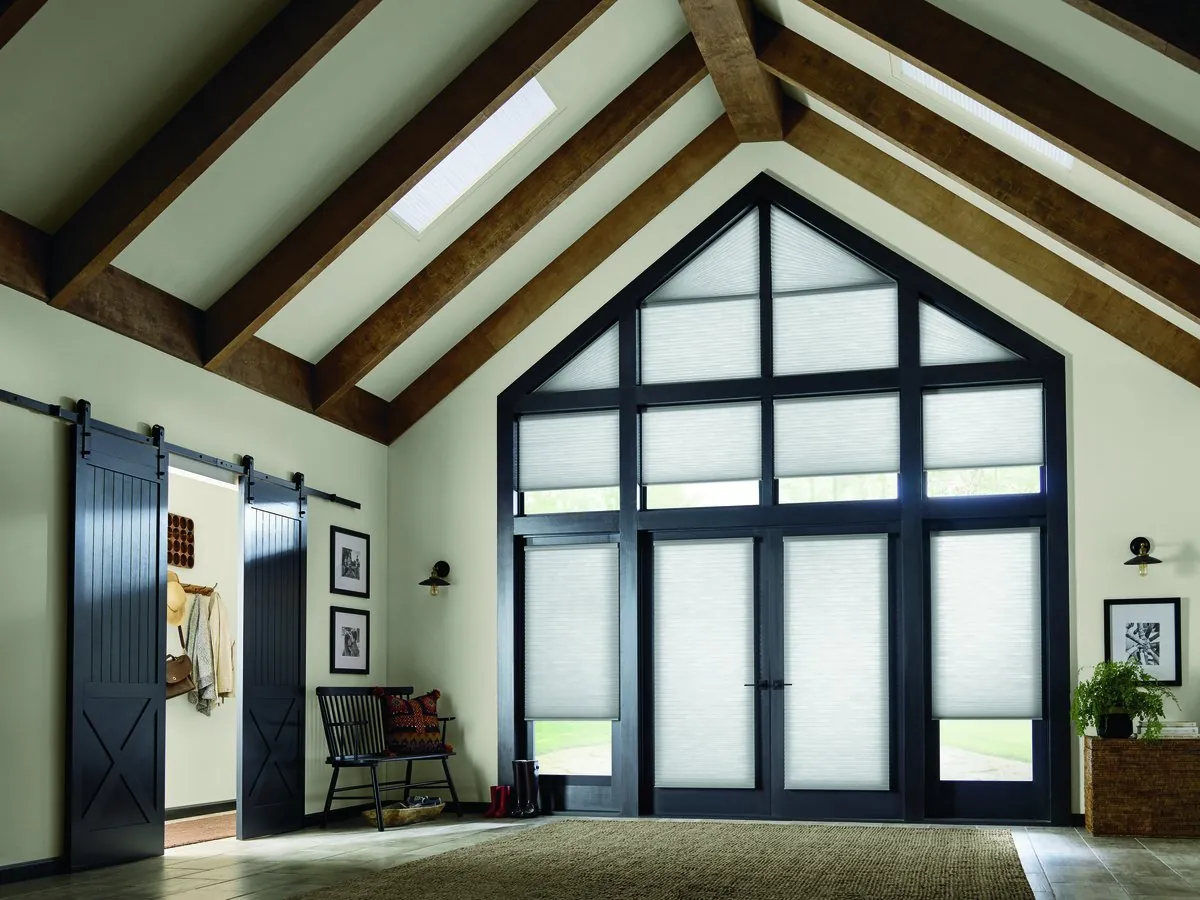
Duette for tall and shaped glass
Hunter Douglas’s original honeycomb, made in large sizes and special shapes for a vaulted family room or a gable that looks into the trees.
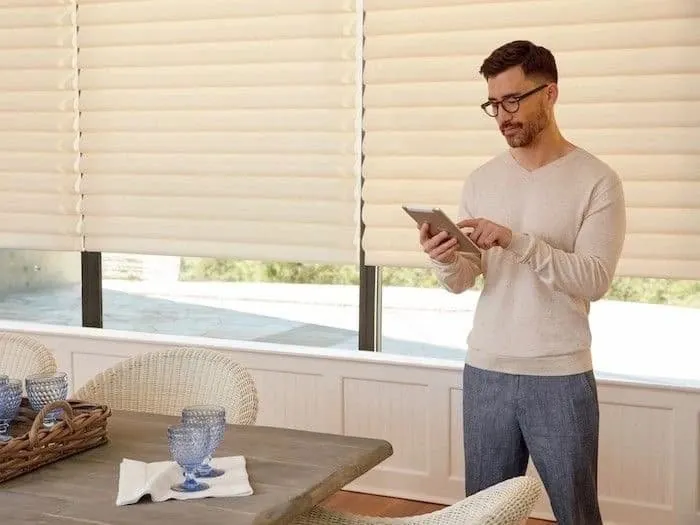
PowerView for several walls at once
Motorized shades on every wall of a room can move together from one remote or the app, or follow a schedule through the day.
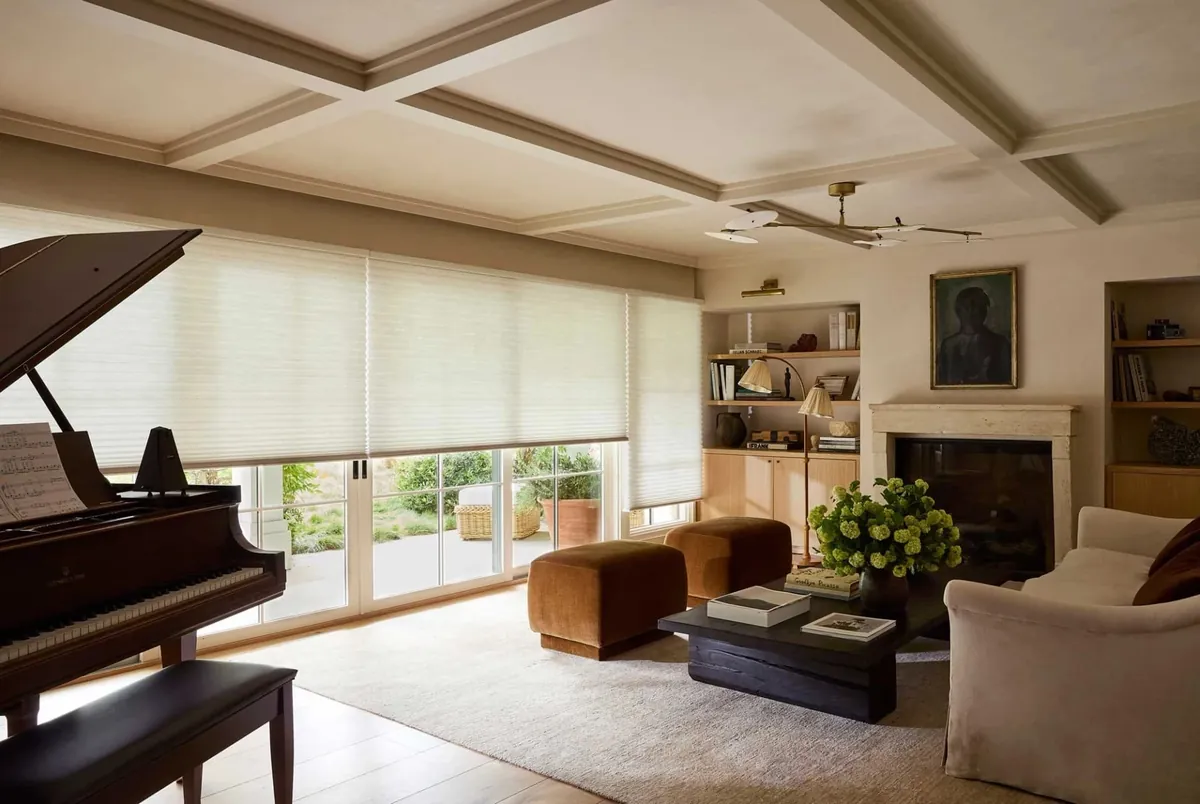
Applause for the whole house
The second Hunter Douglas honeycomb line, with its own colors. A sensible choice for kitchens, dens and bedrooms on a whole-house order.
Capes on wooded lots toward Assonet
The capes scattered through the woods toward Assonet are simple houses with a lot of windows for their size: a pair either side of the front door, more on each gable end, and often a dormer or two upstairs. Trees close around the house keep summer sun off much of the glass, but they also keep the rooms on the shady side cool and a little dim.
That shapes the fabric choice for cellular shades in Freetown. On the shaded side, a sheer or light-filtering honeycomb fabric keeps as much daylight as possible while still adding a layer of insulation at night. On the sunny side, a slightly heavier fabric handles the afternoon light. Because every shade can share the same backing color, the house looks even from the driveway whatever fabric faces into each room.
Upstairs, a cape’s knee-wall bedrooms and dormers are often the hardest rooms to keep warm, with the roof right overhead and a small window on an outside wall. A honeycomb shade fits a short dormer window neatly and stacks very small when raised, so you hardly lose any glass.
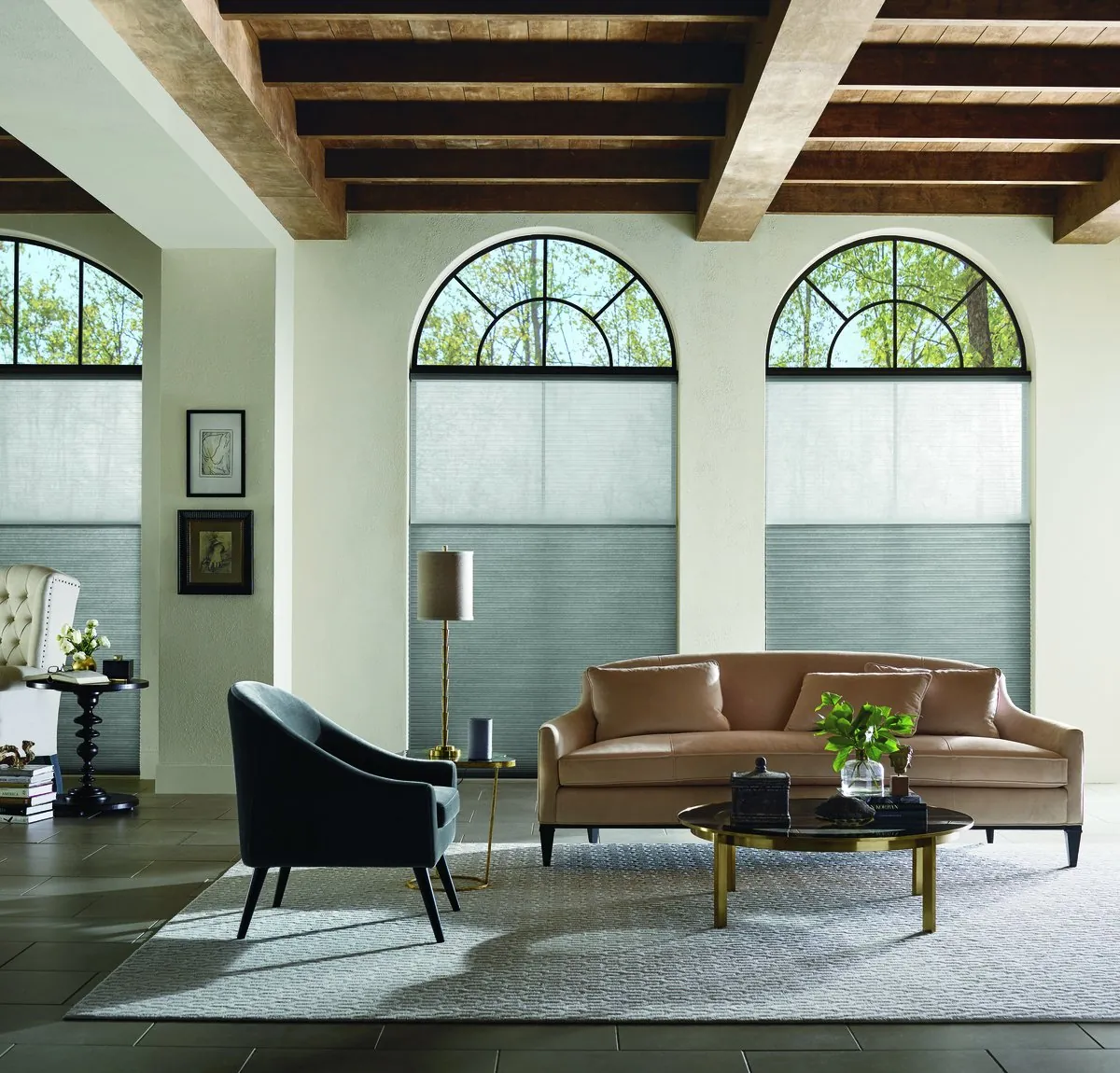
Ranches with light from two or three directions
Freetown’s ranches were often set on their lots to catch the sun, with a living room window at the front, a kitchen at the back and a family room or sunroom off the side. Through rooms, where you can see from a front window straight out the back, are common.
In a through room, the two ends of the room want different things at different hours. A top-down, bottom-up shade is useful here. On the bright side, you can lower the top edge just enough to stop glare while keeping the lower glass clear. On the shaded side, the shade can stay up. In the evening, both come down together and the room is closed in and warm.
Sunrooms and family rooms with glass on three sides are the toughest. They heat up quickly on a summer afternoon and cool off fast on a winter night. Cellular shades handle both: lowered in the heat of the day they slow the sun coming in, and lowered at dusk they hold the warmth. PowerView can do it for you on a schedule, which is the easiest way to manage a room with that much glass.
Through the seasons on a wooded lot
A house in the trees lives with two kinds of light. From late spring to autumn, the canopy filters the sun and the rooms are cool and green. Once the leaves fall, the same windows take bright, low winter sun that reaches deep into the room in the middle of the day.
Cellular shades let you take advantage of both. In summer you might keep them raised most of the day. In winter, you can open them to let the low sun warm the room at midday and lower them as soon as it drops behind the trees, so that warmth stays inside through the evening. The cells do the most good in those hours after sunset, when the glass is at its coldest.
Woods also mean real darkness. At night, a house set back in the trees is the only lit thing for some distance, and bare windows turn into black mirrors from the inside and bright squares from the road. A light-filtering fabric keeps lamplight soft and the room private once the windows go dark. In a bedroom that faces east through the trees, a room-darkening fabric holds off the first light in June, when the sun comes up through the branches long before the alarm.
River houses on the Taunton
Houses along the Taunton River are built around the water, with broad windows and sliders facing the bank. Light reflected off the river doubles the brightness in those rooms on a sunny morning or afternoon, and the river brings damp air in spring and autumn.
For a river room we usually suggest a light-filtering fabric on the water side to soften the reflected glare, and a top-down, bottom-up shade wherever the view is the point of the room. A vertical honeycomb shade covers a slider to the deck and stacks to one side so you can walk straight out. Honeycomb fabrics are made to hold their shape, and the working parts sit inside the headrail, so the damp river air has little to work on.
When we plan cellular shades in Freetown for a riverside house, we also look closely at fabric color. A window facing water all day takes more light than any other, and paler, neutral tones hold their color better there.
How the cells hold a room’s heat
From the front, a honeycomb shade looks like a soft pleated panel. From the side, you can see its secret: a row of hollow pockets running the full width of the shade, like a slice through a honeycomb. Lowered, those pockets trap air that hardly moves. Air that does not move is a weak carrier of heat, so the shade slows cold coming in off the glass and slows the room’s warmth heading out.
Duette also offers fabrics with a second cell inside the first, and double-cell shades that stack two layers of pockets. Both add more trapped air. At the consultation we can hold single and double cells against the same window so you see the difference in light and feel the difference in the fabric.
In a room that takes light from three sides, every window is part of the heat loss. That is why we often suggest treating the whole room together, rather than just the biggest window.
What to expect when we visit
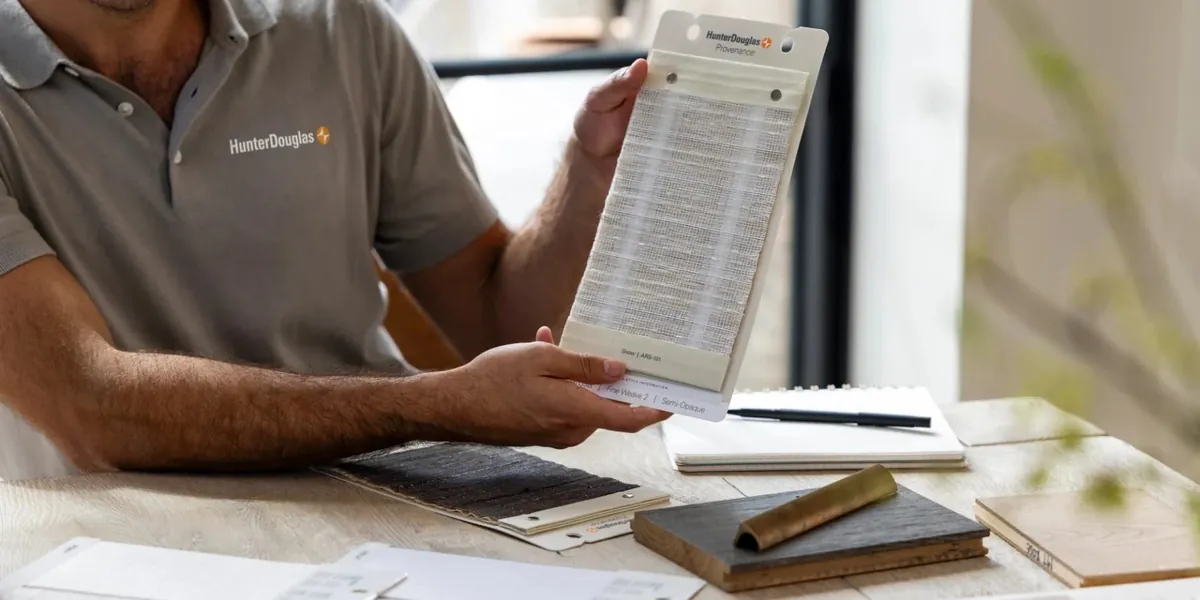
Rooms that face several ways can only really be judged on the spot, so we come out to the house. The van is stocked with honeycomb samples in every opacity, which is what we mean when we say the showroom can come to you.
- Book through Request a Consultation, or tap the call button, and pick a time that works.
- Together we walk the house and note the rooms that run coldest, brightest or most exposed to the woods or the river.
- At each window you try fabrics from sheer to room-darkening, on the sunny walls and the shaded ones alike.
- Each opening is measured, with the mount depth checked as we go.
- Lifts, top-down rails and PowerView are talked through for the rooms with the most glass.
- A free estimate follows for the shades you liked, and nobody expects an answer on the day.
Want a hand with color and fabric across a whole room? Our interior design consultations are there for that. Our page on what happens at an in-home consultation covers the visit in more detail.
Living with a lot of windows, day to day
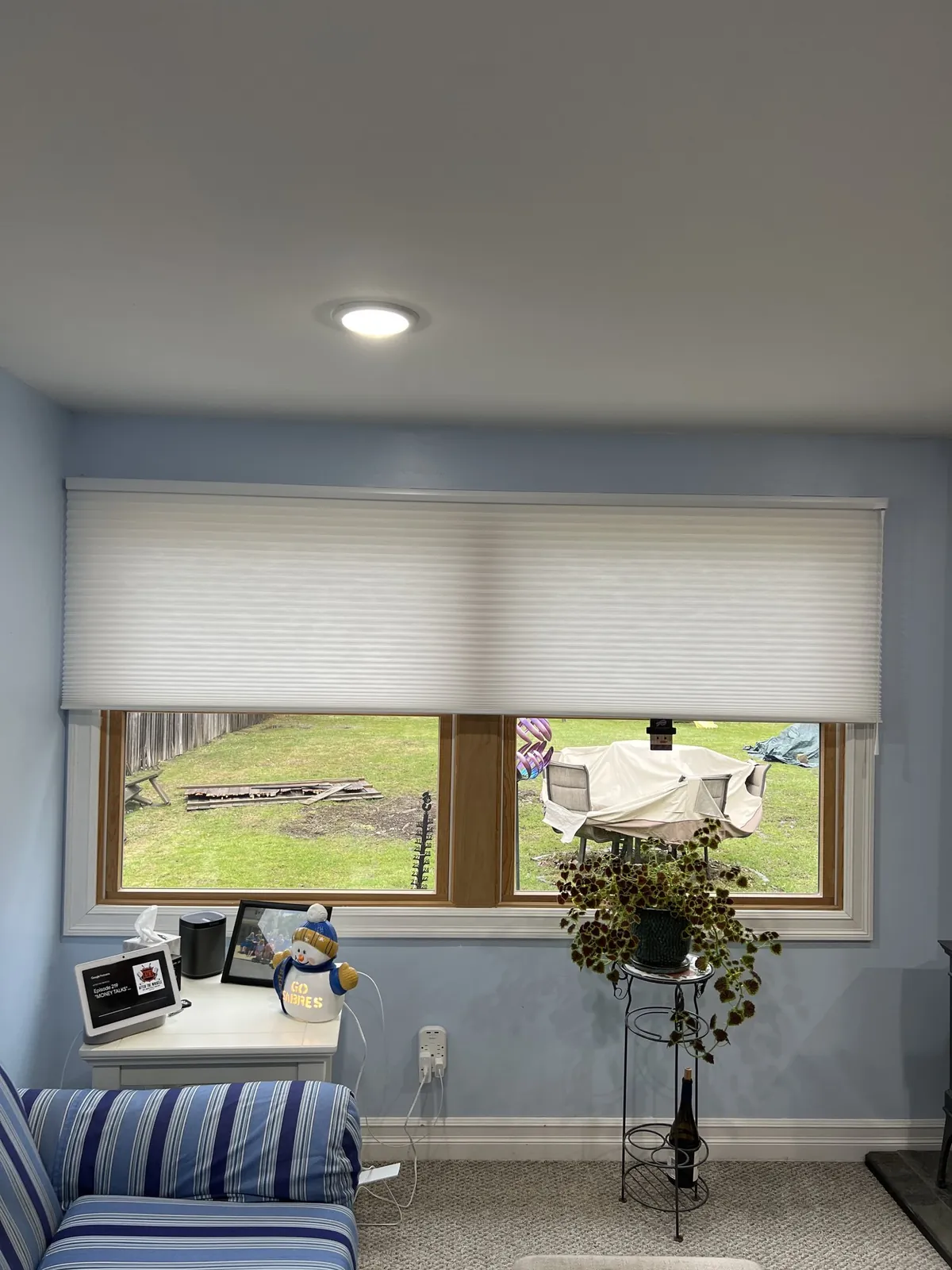
A room with glass on three sides can mean six or eight shades to open in the morning and close at night. How they lift makes a real difference to whether you use them. A cordless lift is the simplest: you push the bottom rail up or pull it down, and there is no cord to untangle or tie off at every window. It also keeps cords away from children and pets.
Top-down, bottom-up shades add flexibility for the sunny walls, letting you open the top for light while keeping the bottom closed. On a large picture window, two or three shades can share a headrail so they line up perfectly when lowered.
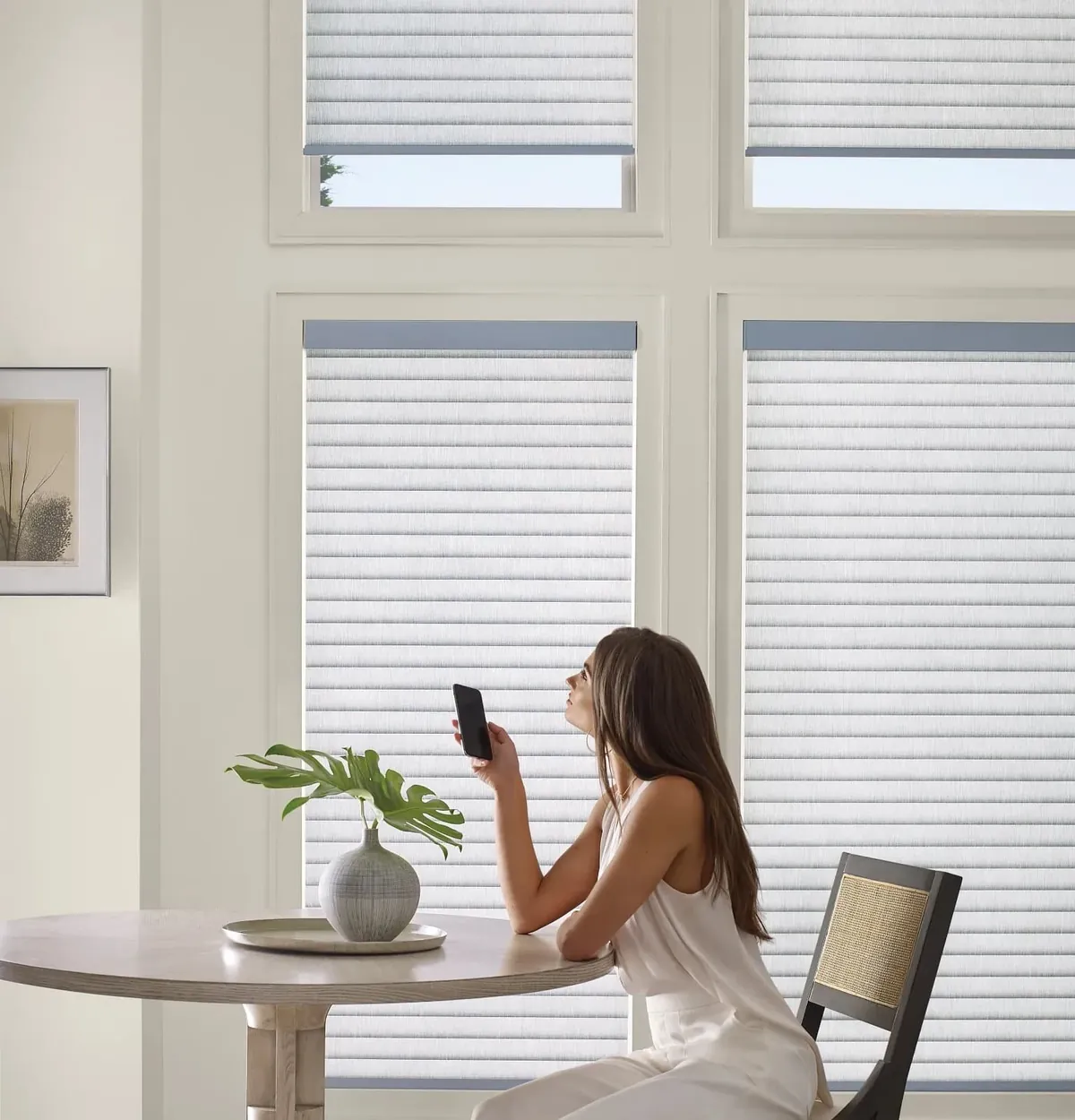
For a room with many windows, motorization is often the most practical choice of all. PowerView lets you move every shade in the room with one press of a remote or a tap in the app, and a schedule can lower the west-facing shades on a summer afternoon and close everything at dusk in winter. Our page on motorized blinds in Freetown explains the options. Planned this way, cellular shades in Freetown become something you hardly think about: they simply move when the light changes.
Color that suits a house in the trees
Woods change the color of the light inside a house. In summer, sun filtered through leaves has a green cast, and in winter the light through bare branches is cool and gray. White fabrics can look slightly cold in that light; warm ivory, oatmeal and soft taupe tones often sit more comfortably with wood floors and painted trim.
From outside, matching backing colors keep the house tidy as you come up the drive, which matters on a cape where every window is visible from the front. Inside, each room can have its own fabric. We bring a spread of colors so you can see each one against your walls, in your light, before deciding, and we will point out the paler fabrics that cope best on a window facing the river or a clearing that takes full afternoon sun.
Measuring and fitting in an older cape
Not every opening in an older Freetown house is square. Frames settle and move, and two windows that look alike may differ by a fraction. We measure the width at the top, middle and bottom, and the height on both sides and in the middle, then check how much depth the frame gives for an inside mount. Where sash locks or stops leave too little room, an outside mount on the casing is the tidier answer, and we will tell you when that is the case.
Once the shades arrive, our certified Hunter Douglas installers fix them into solid wood, level each headrail and test every shade with you. Each shade is made to its own measurements, so it fills its opening with only a narrow gap at the edges, which helps the cells do their work.
Duette or Applause for each room
Both are Hunter Douglas honeycomb shades that trap air in their cells. Duette has the larger range of fabrics, textures, sizes and shapes, plus the vertical shade for sliders. Applause offers a separate palette and suits most standard windows.
A typical Freetown order might put Duette in a vaulted family room and on the river-facing sliders, and Applause in the bedrooms and kitchen. On a cape, the split often falls between floors: Duette downstairs where the windows are larger and the rooms are on show, Applause in the dormer bedrooms under the roof. Either way, the fabrics can be matched closely enough that the house looks the same from outside. Our Duette honeycomb shades and Applause honeycomb shades pages describe each line, and the full range is on our cellular shades page.
Why choose a Hunter Douglas Gallery dealer
Gallery is the title Hunter Douglas reserves for dealers who meet its standards, and Blinds & Designs carries it. For a Freetown house, that puts every honeycomb fabric, lift and size within one order, along with the sliding vertical version and PowerView.
Certified Hunter Douglas installers fit what we sell. Years from now, if a cord frays or a shade sticks, our blind and shade repair service is there for it.
Most houses need a mix of treatments. A sunroom might suit a roller or solar shade, a dining room a roman shade. See our roller shades in Freetown and roman shades in Freetown, or everything we offer in town on our Freetown page. To see the product before anyone comes out, head for our North Dartmouth showroom, the closest one to Freetown.
Questions from Freetown
My living room has windows on three walls. Do they all need shades?
For warmth, treating the whole room works best, because every window loses heat. The shades can match in fabric and color and still move separately, so you can lower the sunny side and leave the shaded side open.
My house is surrounded by trees. Will a shade make the room too dark?
Not with the right fabric. A sheer or light-filtering honeycomb fabric keeps most of the daylight while adding a layer of insulation. Raised, the shade folds into a slim stack and the whole window is clear.
Do cellular shades work on a slider facing the river?
Yes. A vertical honeycomb shade crosses the slider and stacks to one side, so the door still opens freely. A light-filtering fabric softens the glare off the water.
Can several shades in one room move together?
With PowerView motorization, yes. Shades on different walls can move as a group from one remote or the app, or follow a schedule.
What does it cost to find out?
Nothing. The estimate is free, worked out from the measurements we take at your windows during the consultation.
Start with the room that gets the most sun
A corner living room or a river-facing sunroom is the best place to begin with cellular shades in Freetown, because that is where you will notice the difference first. Request a consultation, and the honeycomb samples come to that room, every window gets measured and you receive a free estimate. Prefer to talk first? The call button reaches us, and the North Dartmouth showroom is the closest place to see Hunter Douglas shades in person.