
Morning sun off the bay, steady windows inland
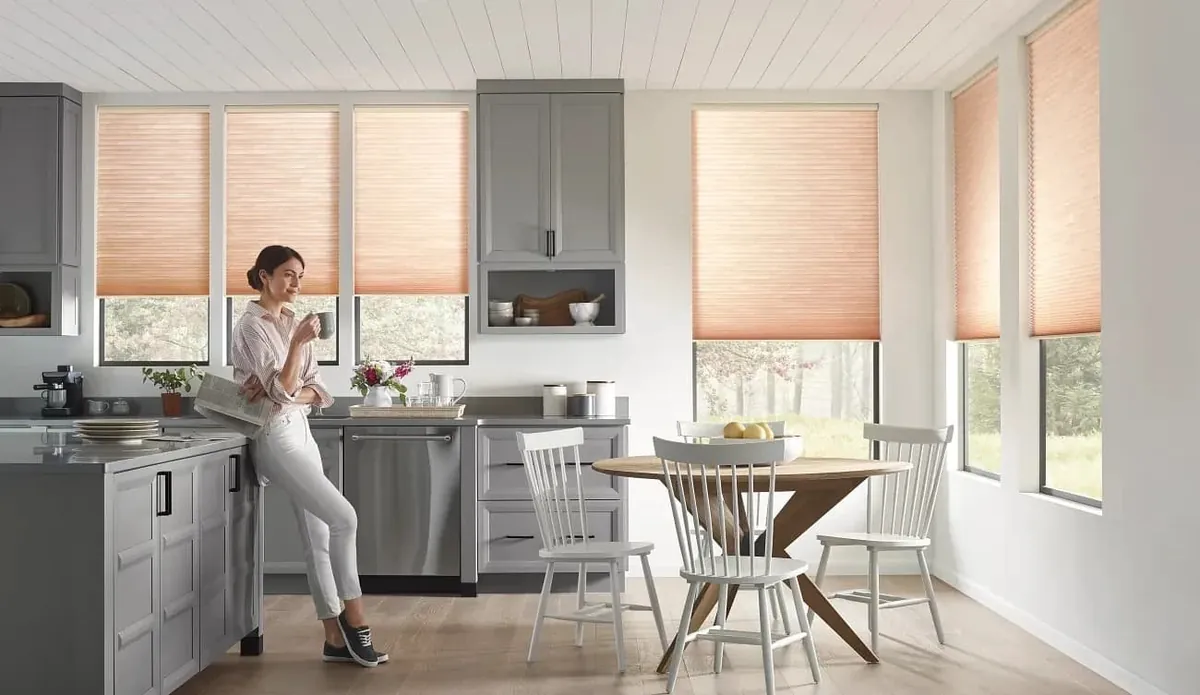
Kingston’s oldest houses gather near the village and along the bay: antique colonials with tall sash, wide trim and rooms that look out toward the water. Every clear morning, the sun climbs over the bay and comes straight into those rooms, low and bright, bouncing off the water on its way in. Kitchens, breakfast rooms and east bedrooms take the brunt of it. Taming that early glare is the first thing we look at when we plan cellular shades in Kingston for a house on the bay side.
Inland, west of the highway, the houses are newer. Post-war ranches line the older side streets, and newer subdivisions fill the land beyond with colonials and capes built to standard sizes, with modern windows and up-to-date hardware.
Those inland windows are straightforward to fit. The older houses take more care. Both benefit from what a honeycomb shade does best: holding a layer of still air at the glass, so a room stays warmer in winter and cooler on a summer afternoon.
Honeycomb choices for Kingston rooms
These are the options we recommend most often for cellular shades in Kingston houses, old and new. All of them come with us as samples, so you can see each one at your own windows.
Duette in the front rooms
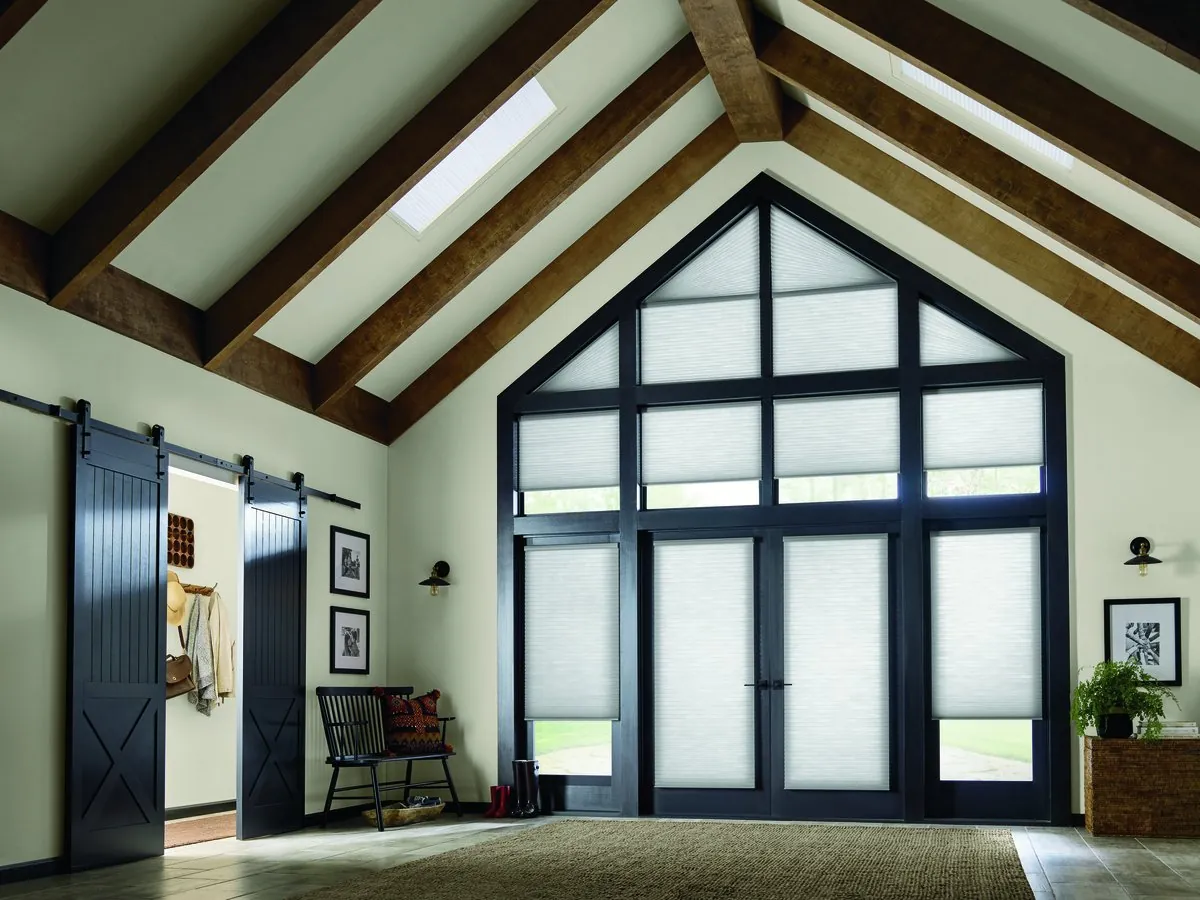
The broadest Hunter Douglas honeycomb line, suited to the tall sash and formal rooms of an antique colonial.
Applause through the house
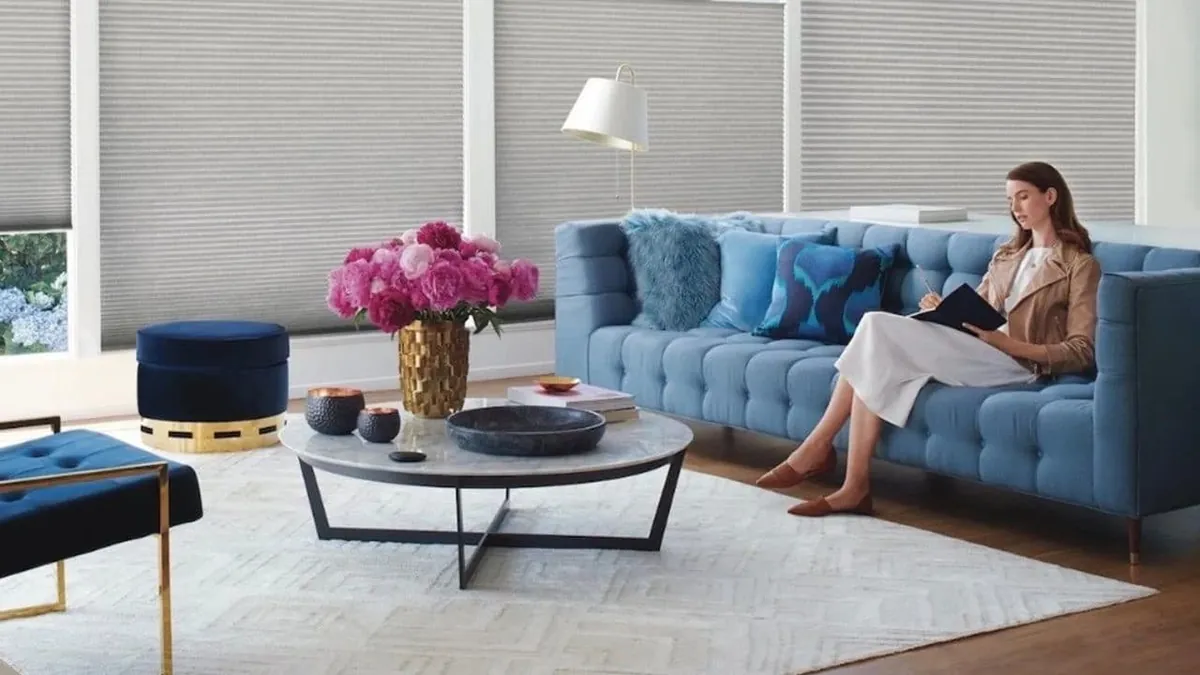
Hunter Douglas’s other honeycomb line, often used across the standard windows of a newer subdivision house.
Vertical shades for sliders
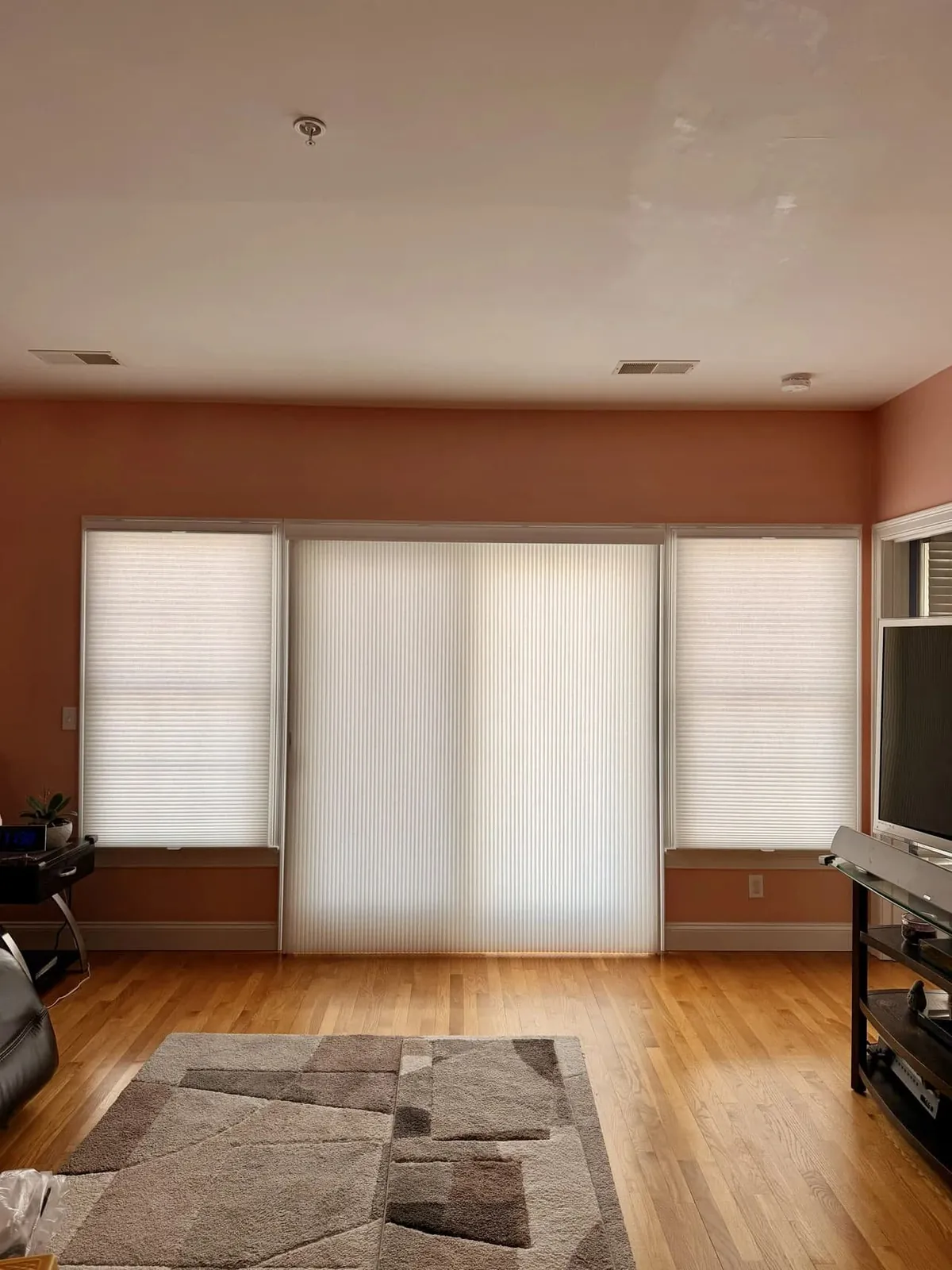
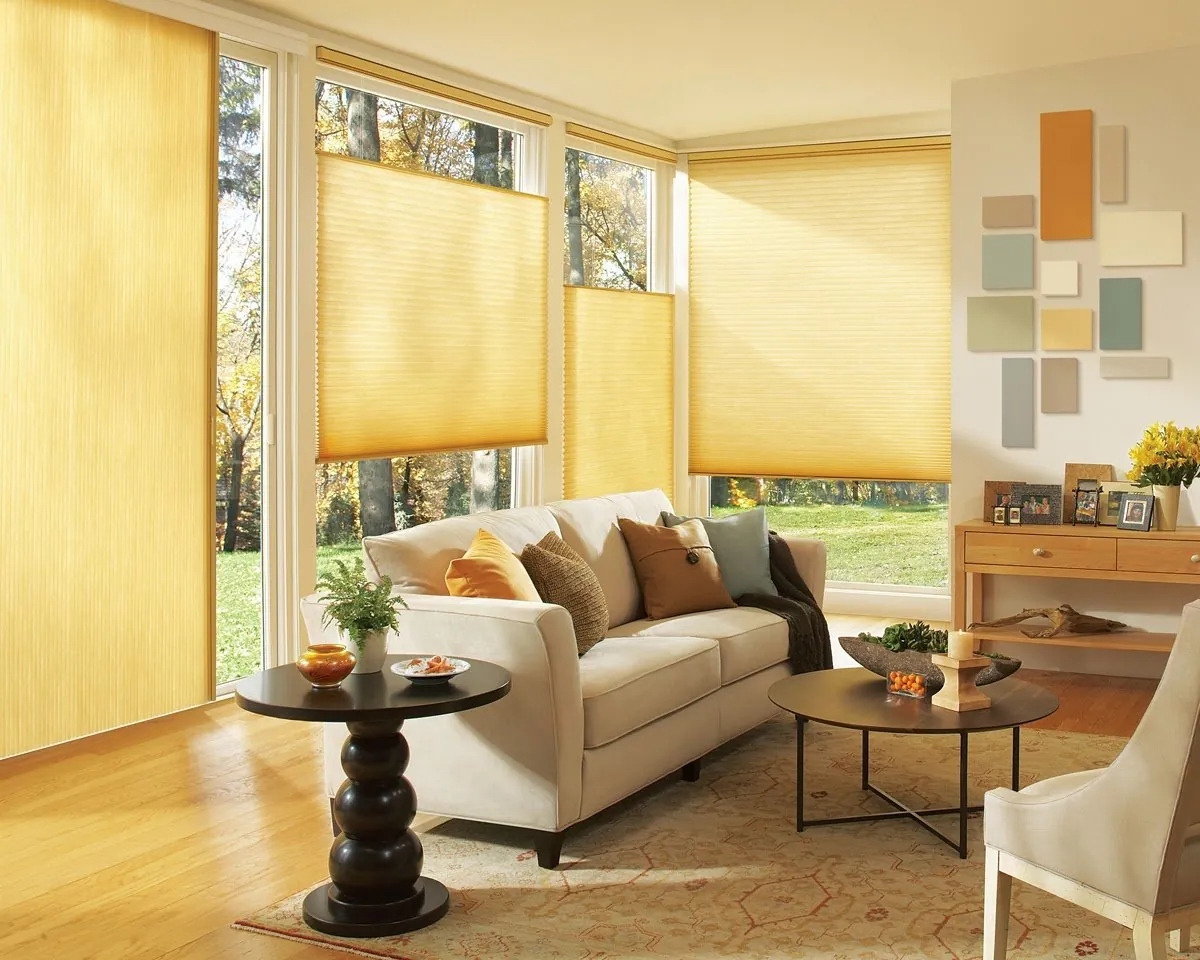
A honeycomb shade that moves sideways across the slider to the deck and stacks neatly out of the way.
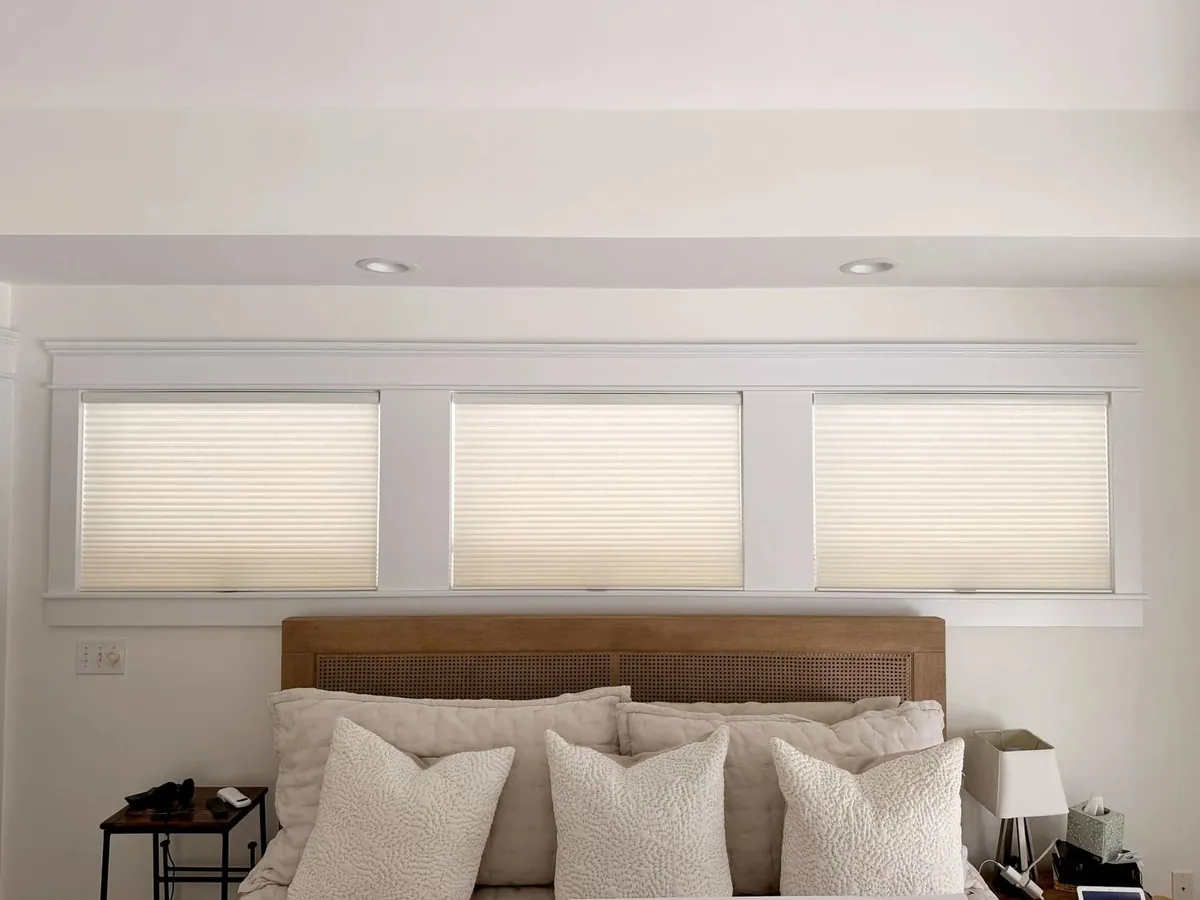
Darkening for east bedrooms
A room-darkening fabric keeps the early sun off the bay out of a bedroom until you decide to let it in.
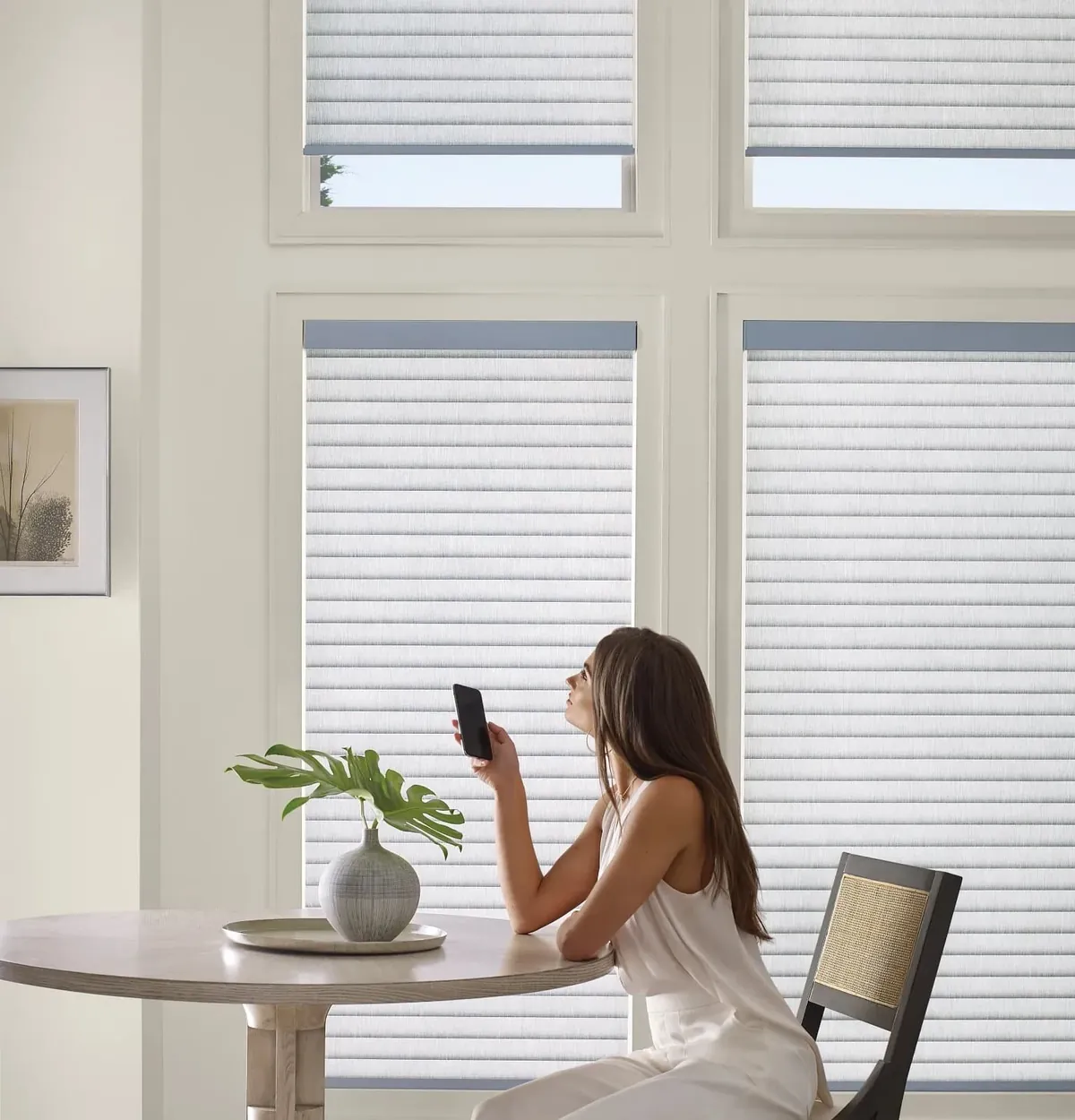
PowerView mornings
Motorized shades that lower before sunrise and lift at a set time, controlled from the app or a remote.

Samples and design help
Fabric books and lift options at your table, with an interior design consultation if you want help with the room.
Bay-facing rooms and the early glare
The rooms on the water side of Kingston’s older houses face roughly east, across the bay. On a clear morning the sun rises over the water and sends a low, bright beam straight through the glass, with a second dose reflecting up off the bay itself. It lands on the breakfast table, on a computer screen, and on the pillow in an east bedroom well before most people want to be awake.
A light-filtering honeycomb fabric is the usual answer in a kitchen or breakfast room. It softens the beam and spreads the light evenly, so the room stays bright without the harsh patch across the table. In a bedroom, a room-darkening fabric holds the room dim until you raise the shade.
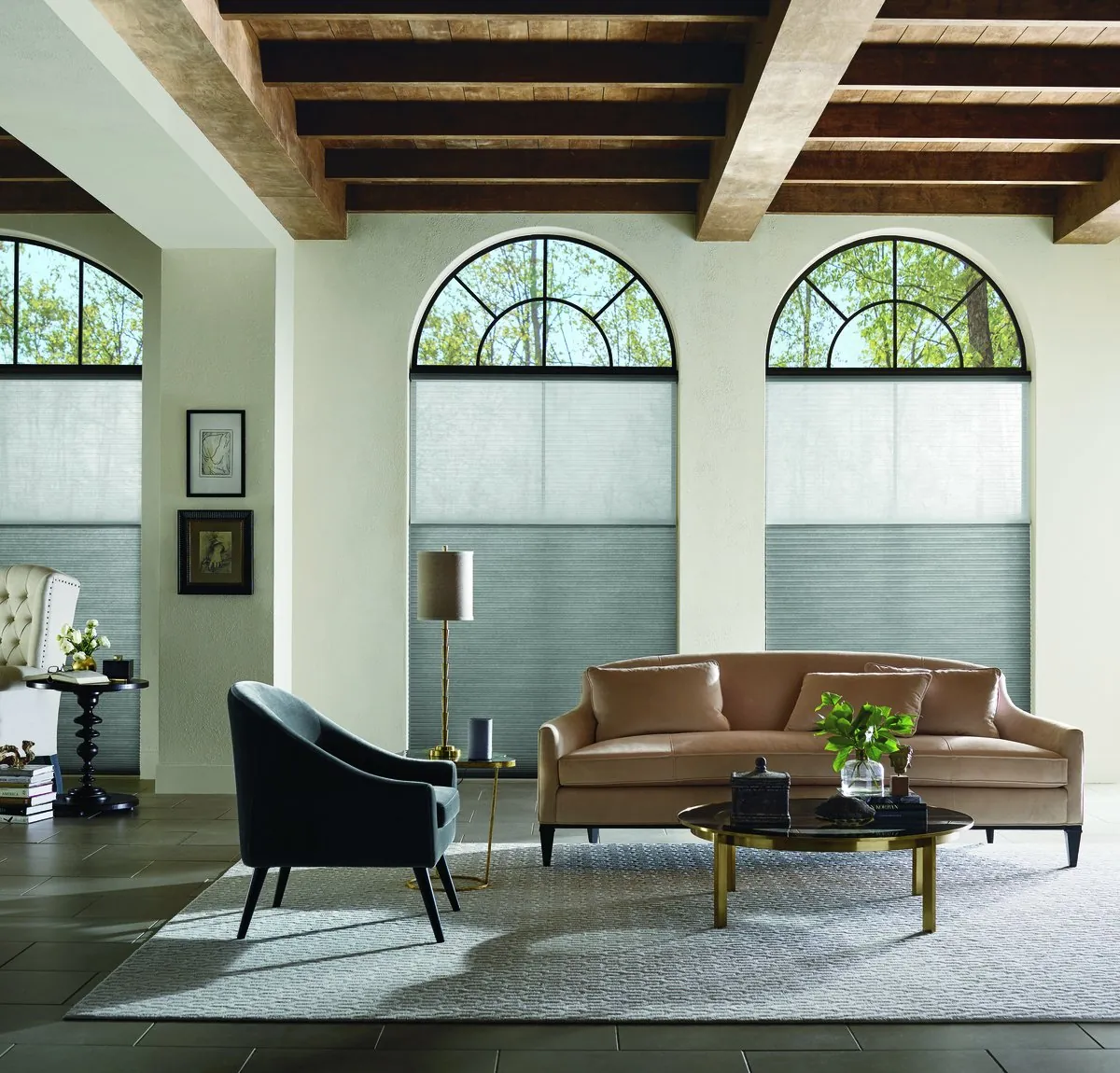
A top-down, bottom-up shade adds another option. Lower the top rail just far enough to block the sun while it is low over the water, and the rest of the window stays open to the view. As the sun climbs and the glare eases, raise the shade the rest of the way.
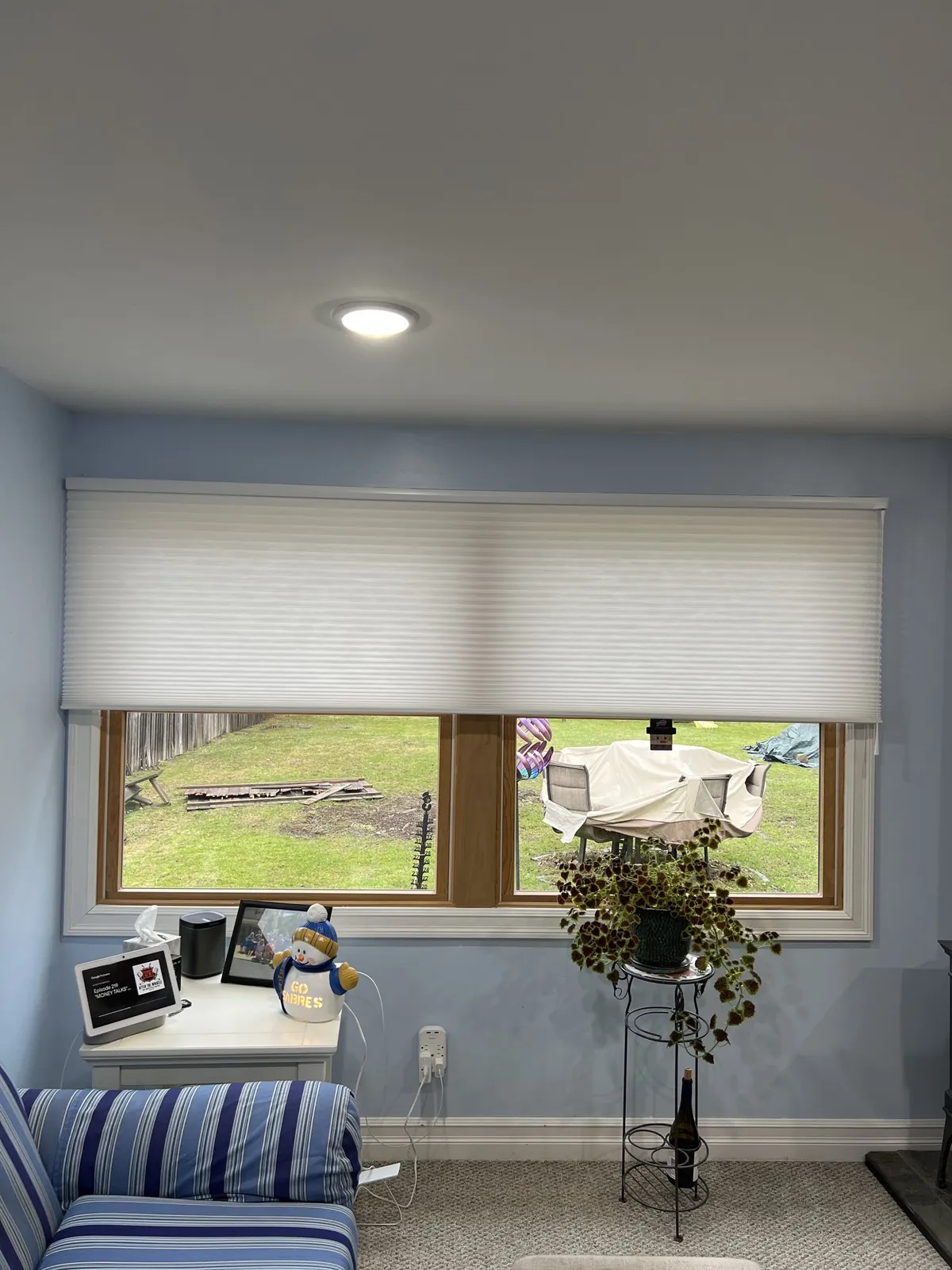
Antique colonials near the village
Kingston’s antique colonials are upright, two-story houses with a center door, evenly spaced windows and deep wood trim, many of them carefully kept. The sash is tall, often original or restored, and the frames have settled over the years.
An inside mount usually suits these houses best, with the headrail set within the frame so the trim stays fully visible and the raised shade hides behind the head casing. Older sash hardware can take up part of the frame, though, and old openings are rarely perfectly square. Width is taken at three heights and depth at both jambs, and if the numbers say an inside mount would gap or bind, the shade goes on the face of the casing instead, and you hear the reason.
Seen from the road, the symmetry of a colonial is the point. Keeping the street-side fabric the same shade on every front window protects that, even if a parlor downstairs is light-filtering and a bedroom above is room-darkening.
Cold glass in an old house
The tall windows in an antique colonial are beautiful and thin. On a winter evening a chair beside one feels noticeably cooler than the rest of the room. A honeycomb shade helps by holding a layer of air at the glass. Each cell is a closed pocket, and the air inside barely moves, so it slows the cold coming off the pane and the heat leaving the room.
Pull them down as it gets dark and the front rooms even out. For a room that never seems to warm up, a double-cell fabric doubles the layers of trapped air, and the samples let you feel the difference in weight at the window. Our guide to cellular shades and winter heat goes further into how the cells work.
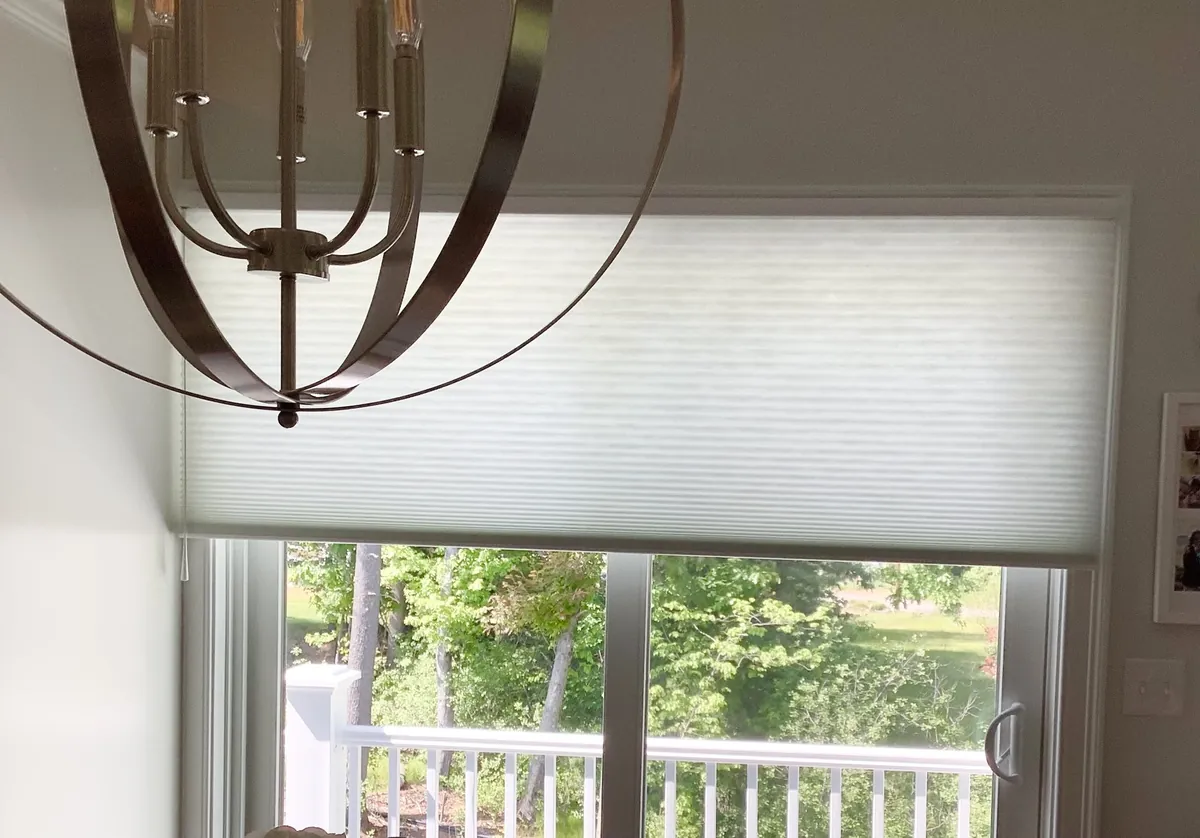
Keeping the bay in view from an old front room
In the colonials closest to the water, the best rooms were placed to look across the bay. The view is the reason the house sits where it does, and nobody wants a window covering that hides it for half the day.
Two things help. First, a honeycomb shade raised fully folds into a narrow stack at the top of the frame, so the glass is almost entirely clear when you want the view. Inside-mounted in a deep old frame, the stack tucks behind the head casing and practically disappears. Second, a top-down, bottom-up shade lets you cover only the part of the window where the sun is coming through. Early in the day that is the top, while the sun is low over the water. Later, the shade can go up altogether.
Many people choose a light-filtering fabric for these rooms rather than anything heavier, because even fully lowered it lets the outline of the bay show through softly. That combination is how most cellular shades in Kingston bay-side rooms end up being used: open for the view most of the day, closed for the glare in the early morning and for warmth after dark.
Post-war ranches on the inland streets
West of the village, older side streets are lined with single-story ranches built after the war: a living room with a big front window, a kitchen at one end, and bedrooms along a hall. Their windows have often been replaced, and the sizes are standard.
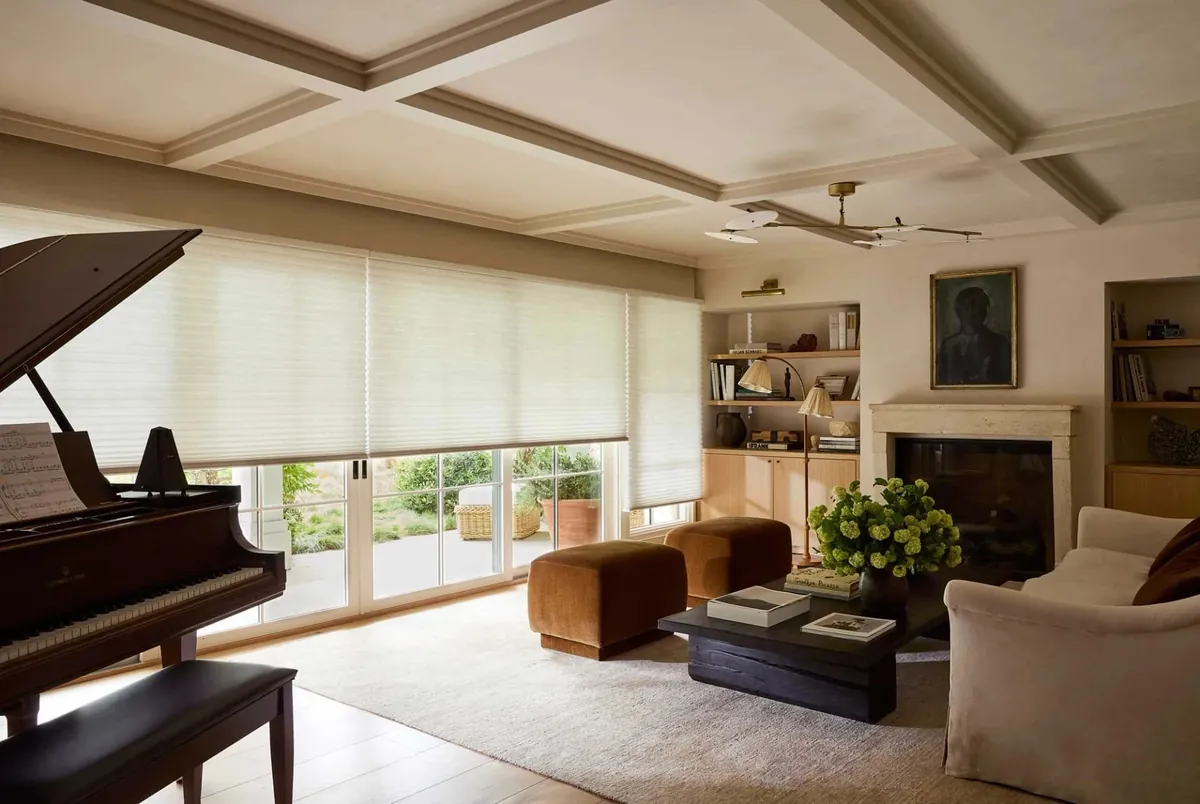
The living room window is the one that needs thought. It is usually the widest in the house and the coldest in winter. We cover it with one wide shade or two or three on a shared headrail, moving together or separately. Bedrooms take room-darkening fabric. The kitchen takes a light-filtering one.
Ranches are often done in a single visit, because so many windows share a size. When every room is covered at once, many owners pick one color for the street side so the house looks finished from the road.
Newer subdivisions and their newer hardware
The subdivisions inland were built more recently, with colonials on curving streets. Their windows are standard sizes with modern double glazing and newer hardware: tilt latches, built-in locks and sometimes integrated grilles.
That makes them simple to measure, but the hardware still matters. Tilt latches at the top of the lower sash can catch an inside-mounted headrail if it sits too low, so we check the clearance at each window to make sure the sash still tilts in for cleaning. Casement windows with cranks need enough room for the handle to turn.
These houses often have a two-story foyer or a tall stair window, and a family room with a slider or French doors to the deck. PowerView motorization takes care of the high windows, and a vertical honeycomb shade handles the slider. Many orders for cellular shades in Kingston subdivisions cover every window in one go, with a mix of light-filtering and room-darkening fabrics.
Privacy on curving streets
In a subdivision, houses face each other across the street and sit fairly close on either side. A front living room or a first-floor bedroom may look straight at the neighbors’ windows, and at night a bare window shows the whole room.
During the day a light-filtering honeycomb weave keeps the room bright and hidden, because the fabric glows rather than showing what is inside. After dark, a heavier fabric keeps lamplight from giving the room away. For front rooms where you want daylight and privacy together, a top-down, bottom-up shade lowered from the top brings in sky while the lower glass stays covered.
Side windows are easy to overlook. Bathrooms, stairs and side bedrooms often face the house next door across a narrow side yard. We walk the whole house with you so none of them is missed.
Mornings, scheduled
Because the bay-facing rooms take the sun so early, motorization is popular in Kingston’s older houses. PowerView lets you put the shades on a timetable.
- Before sunrise. Bedroom shades on the bay side stay lowered.
- Early morning. Kitchen and breakfast room shades lower partway, or from the top, as the sun clears the water.
- Mid-morning. As the glare eases, the shades raise to open the view.
- Evening. Front room shades lower at dusk for privacy and warmth.
The app holds the timetable and lets you adjust it whenever the seasons shift; a handheld remote overrides it whenever you like. How each motor gets its power is something we settle at the consultation, opening by opening.
How each shade lifts
Different rooms suit different lifts, and it is worth choosing window by window.
- Cordless. Raise or lower the bottom rail by hand. Neat on standard windows, with no cord at the side.
- Top-down, bottom-up. Opens from either end: ideal for bay-facing rooms and front rooms on a busy street.
- PowerView motorization. A remote, the app or a schedule moves the shade. Best for tall foyer windows, stair windows and anywhere you want the morning handled for you.
We suggest a lift for each window during the consultation.
Fabric and color
Kingston’s two kinds of house ask slightly different things of a fabric.
- On the water side, pick a light-filtering weave for the morning glare, and pale shades that stand up to sun every day.
- In east bedrooms, a room-darkening fabric holds back the early light.
- On an old colonial, match the street-side color across the whole front.
- In a subdivision house, one fabric family across an open kitchen and family room makes the space read as one room.
We hold the samples up at your windows so you see each one in its own light.
Your in-home consultation
Most Kingston customers start at home, because the morning light off the bay and the quirks of an old frame are easiest to judge in person. Our vans carry samples, so we bring the showroom to you.
- Set up a time online through Request a Consultation, or with the call button.
- We bring honeycomb samples in a range of fabrics, colors, opacities and lifts.
- We walk the house with you, starting with the bay-facing rooms or whichever room bothers you most.
- You hold the fabrics up to your own windows, ideally on the sunny side and the shaded side.
- We measure every window and check each frame’s depth and hardware.
- You leave the visit with a free estimate and no pressure to decide.
A fuller walk-through is on the page about what happens at an in-home consultation. Refurnishing at the same time? Book interior design consultations alongside the shade visit.
Duette and Applause for Kingston houses
The two lines use the same honeycomb idea, and either one holds air at the glass. What separates them is breadth of choice. Duette carries more fabrics and textures, larger and specialty sizes, and the vertical shade for sliders. Applause has a color range of its own and fits the standard windows found throughout a newer subdivision.
Near the village, the formal rooms of an old colonial tend to get Duette while the upstairs gets Applause. Out in the subdivisions it is often the reverse: Applause on nearly every window and a single Duette vertical across the deck door. Whichever way your cellular shades in Kingston fall, both sample sets come to the house so the call is made with fabric in hand. Our Duette and Applause pages say more, and the main cellular shades page covers the whole range.
Fitting day
Our installers hold Hunter Douglas certification. On fitting day they fix each bracket into solid framing, level every headrail so a row of shades lines up, test each lift, connect any PowerView shades and load your schedule, then walk you through how everything works.
Why work with a Gallery dealer
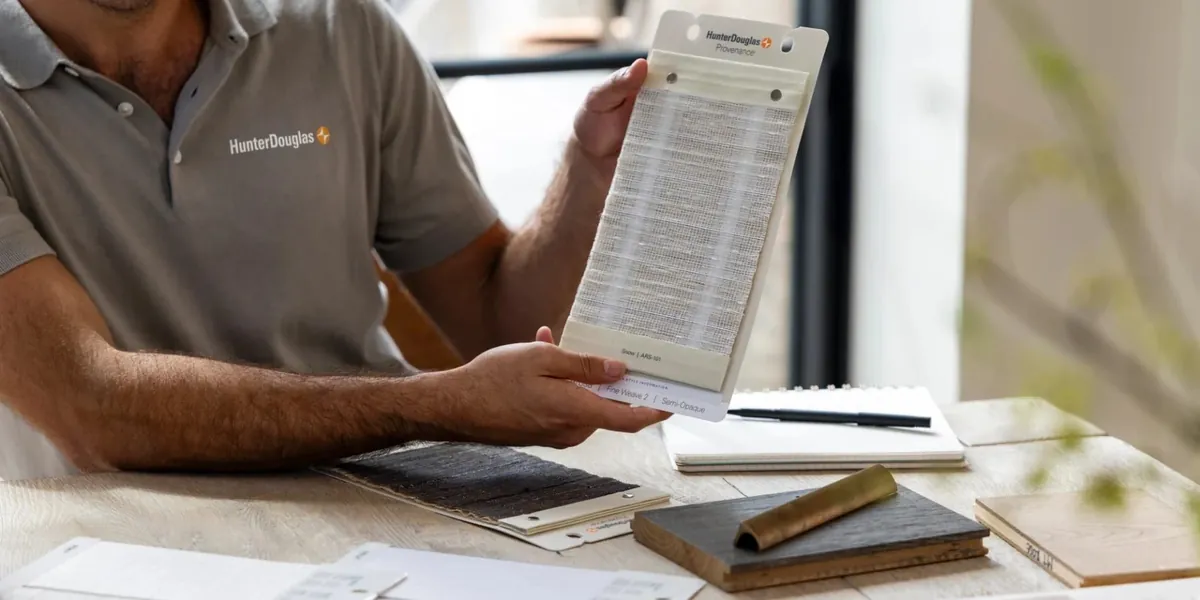
Gallery dealer is the title Hunter Douglas gives dealers who meet its standards, and Blinds & Designs is one. It means one place for the complete honeycomb range: every Duette and Applause fabric, the vertical shade for sliders and PowerView motorization.
Hunter Douglas certifies our installers, so every shade is fitted the way the maker intends. Later on, if a shade needs attention, we repair blinds and shades as well.
A colonial’s dining room may want shutters and a ranch’s den a roller shade, and the same dealer can supply both. Browse plantation shutters for Kingston houses, read about us as a Hunter Douglas dealer in Kingston, or start from the Kingston town page, which lists every service in town.
The Sagamore showroom is nearest
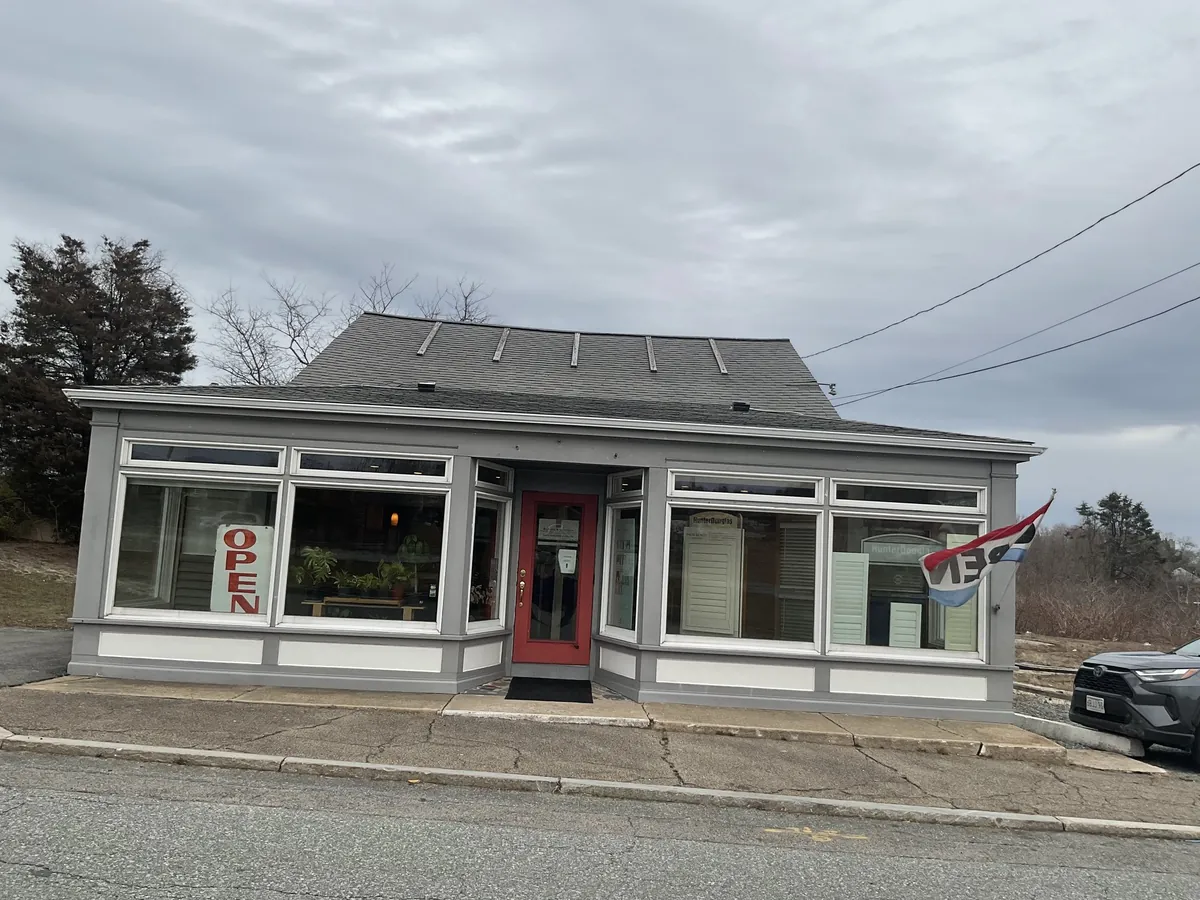
Of our showrooms, Sagamore is the one nearest Kingston, a straight drive down toward the canal. Call in if you would like to see shades before the visit.
Most Kingston customers still finish their choices at home, where the morning light off the bay can be judged at the window itself. We bring the samples, measure every opening and leave you with a free estimate.
Questions from Kingston
What helps with the morning glare in my bay-facing kitchen?
A light-filtering honeycomb fabric softens the beam and spreads the light evenly. A top-down, bottom-up shade lets you block just the top of the window while the sun is low over the water and keep the view below.
Will honeycomb shades fit the old sash in an antique colonial?
Yes, in most cases. Each shade is made to its opening. We check the depth at several points, because old sash hardware can leave too little room for an inside mount, and we suggest a mount on the casing where that is better.
My subdivision house has tilt-in windows. Will an inside mount get in the way?
We check the clearance at each window so the headrail sits above the tilt latches and the sash still tilts in for cleaning. Casement cranks are checked the same way.
Can my bedroom shades lower themselves before sunrise?
With PowerView motorization, yes. You set a schedule in the app and the shades lower and raise on their own.
Will I be charged for the estimate?
No. We measure the windows you are interested in and the estimate is free.
Book your Kingston visit
If the morning sun off the bay is the reason you are reading this, start with that room. Ask for a consultation and the van comes to Kingston loaded with honeycomb fabrics. Every window gets measured, and the estimate that follows is free. Questions before then? The call button reaches us, and the Sagamore showroom welcomes visitors.