
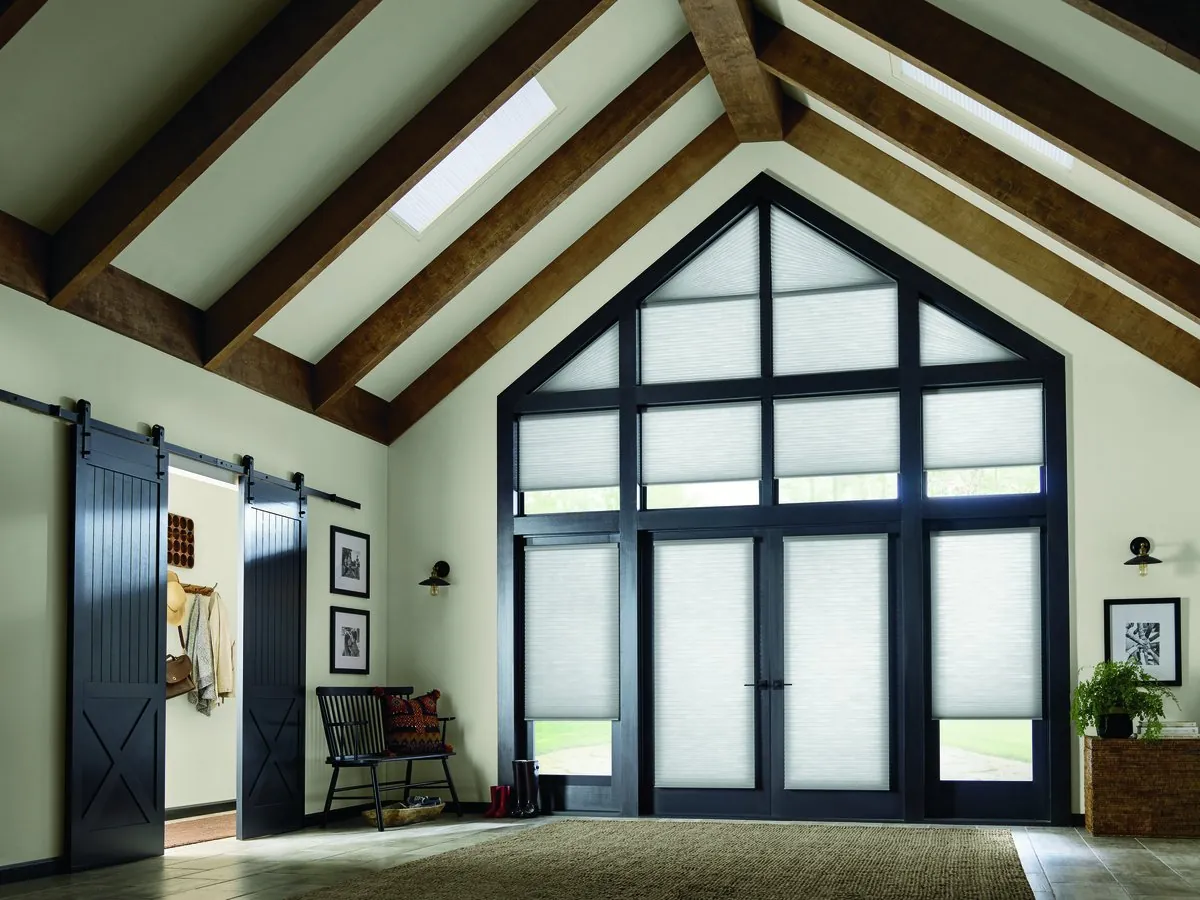
Rooms with windows on more than one wall
Norfolk is a town of colonials and capes set on big wooded lots, and much of the housing is newer construction with standard modern window openings. Houses are spread out and set well back from the road, so very few rooms are hemmed in by a neighbor. The result is a house where most rooms take light from two or even three directions. That shapes almost every decision about cellular shades in Norfolk, MA.
A room with windows on several walls is bright and pleasant, but it has more glass to lose heat through and more angles for the sun to come in at. The east window glares at breakfast, the west window bakes the sofa at four o’clock, and in January every one of those panes is cold.
A honeycomb shade deals with the cold by trapping still air inside each of its cells, between the glass and the room. It deals with the light through the fabric you choose and the way the shade opens. Plan both well and a corner room becomes comfortable at every hour.
The honeycomb choices behind most Norfolk orders
We carry the full Hunter Douglas honeycomb range and bring samples to your door. These three sit at the heart of most plans we put together in town.
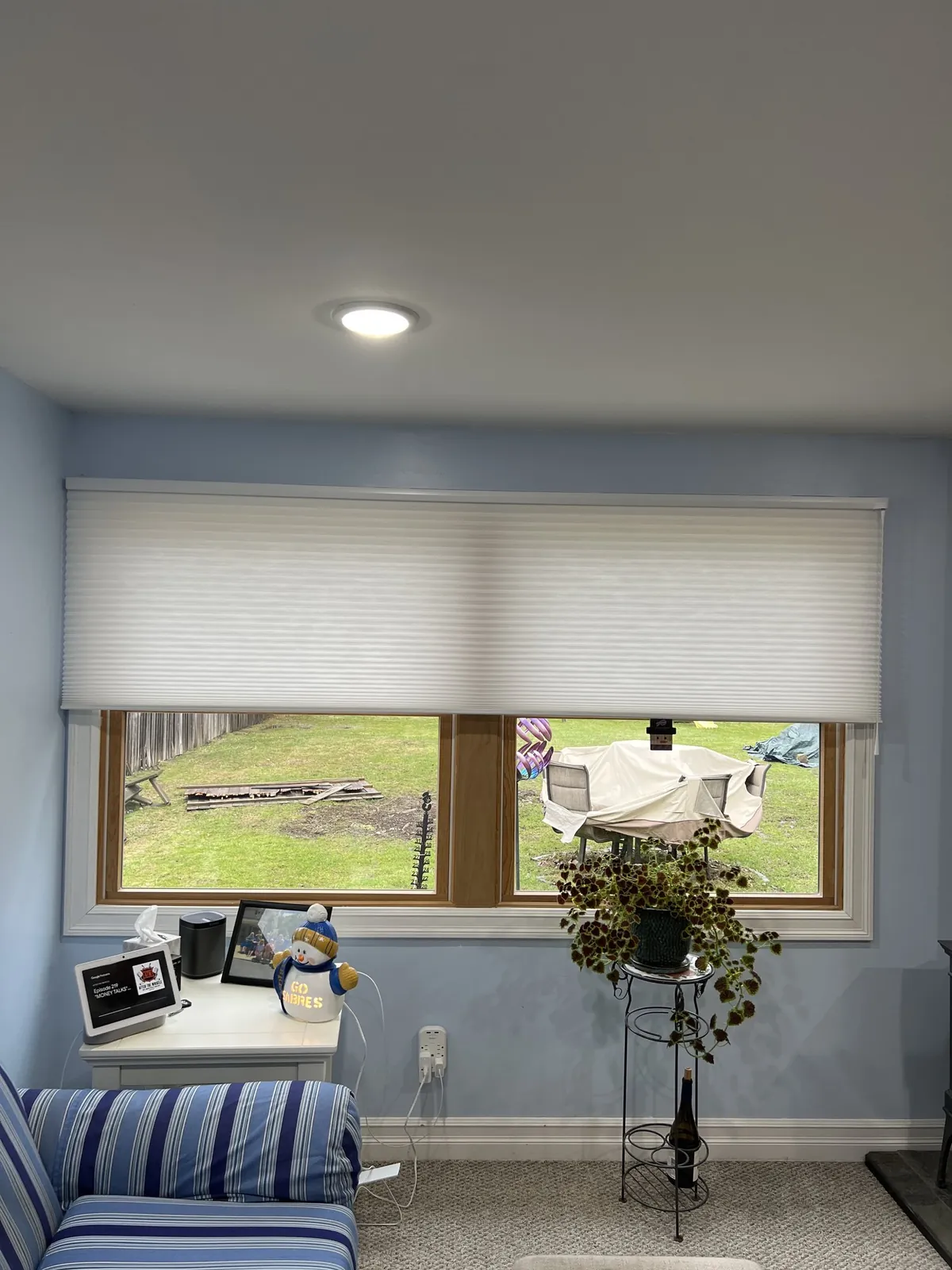
Duette honeycomb shades
The broadest range of fabrics, opacities and pleat sizes, plus the sideways shade for patio doors. Ideal when one room needs several different fabrics to suit each wall.
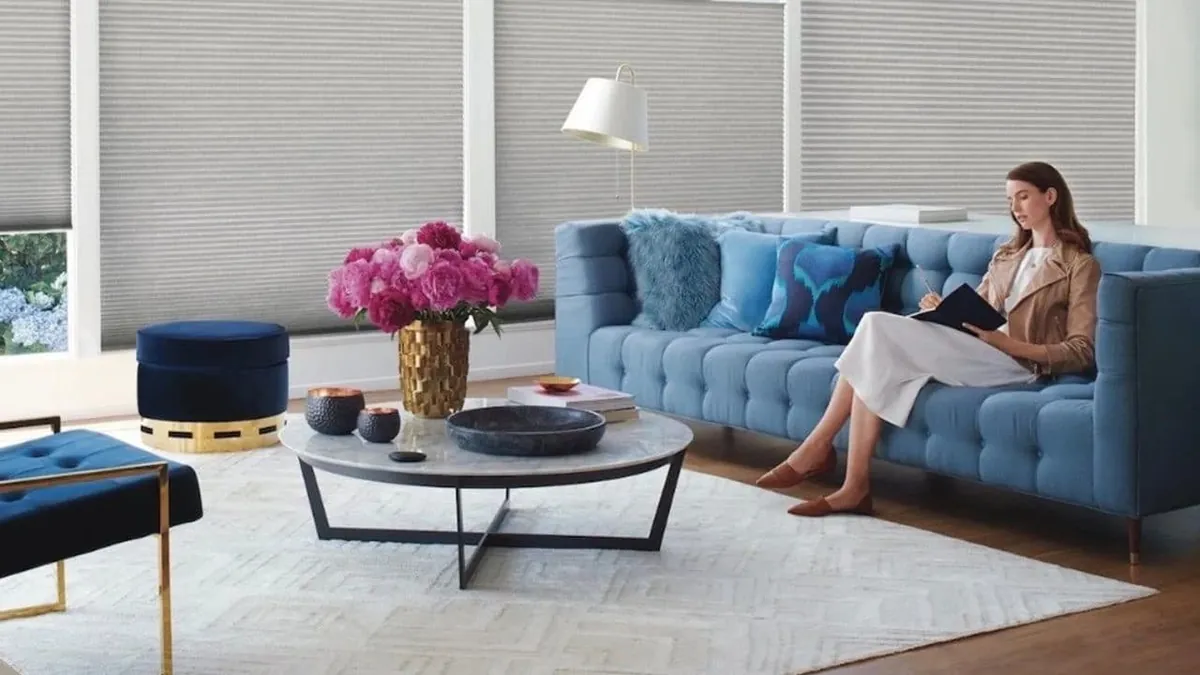
Applause honeycomb shades
A second Hunter Douglas honeycomb line with its own fabrics, well suited to bedrooms and the standard windows that fill most of a colonial.
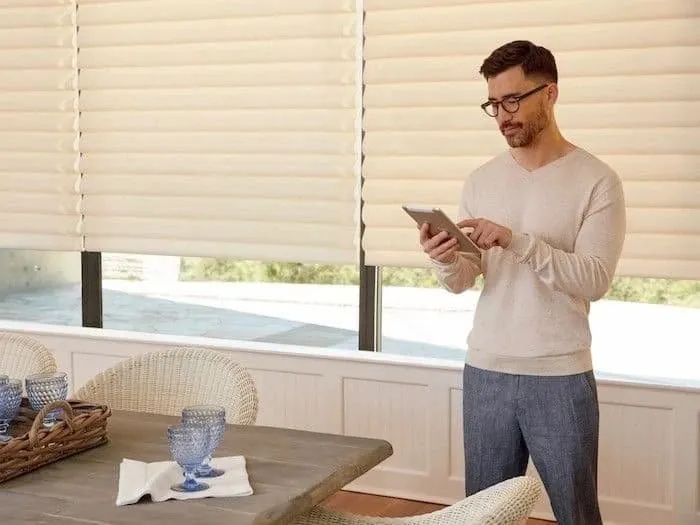
PowerView schedules
Shades that lower on the sunny side and rise on the shaded side as the day moves round, without anyone touching them.
Following the sun around the house
On a big lot with space on every side, the sun travels around the whole house in a day. That is a gift in winter and a nuisance in summer, and it means every side of the house needs something slightly different.
The east side gets the morning. Kitchens, breakfast nooks and bedrooms on that side wake up bright, sometimes too bright. A light-filtering honeycomb fabric in the kitchen softens the first sun without dimming the room, and a room-darkening fabric in an east bedroom keeps the room dark until you are ready.
The south side gets steady light most of the day, especially in winter when the sun is low. Many people want to keep that warmth coming in on a cold, clear day and close the shades only at dusk to hold it in. A sheer or light-filtering fabric that you can leave down for privacy while the light still comes through is often the right choice.
The west side gets the late afternoon, which is when rooms overheat in summer. A family room with a west wall of windows is the classic problem. Lowered through the hottest hours, a honeycomb shade slows the heat coming through the glass while letting enough light through to keep the room usable.
The north side gets even, soft light and very little sun. It also tends to be the coldest. North-facing rooms are where double-cell fabrics earn their keep.
Corner rooms and the problem of two exposures
When we plan cellular shades in Norfolk, MA, the trickiest rooms are the corners: a living room with a front window and a side window, a primary bedroom with windows on two walls, a family room at the back corner of the house. Each wall faces a different way, so each gets its sun at a different hour.
One answer is to use the same fabric on both walls so the room looks consistent, and lower one side or the other as the day moves round. Another is to choose slightly different opacities, a lighter fabric on the shaded wall and a denser one on the sunny wall, in the same color so the difference is hard to spot. A top-down, bottom-up lift on both walls gives the most control of all: you can drop the top of the sunny-side shade to block a low sun while the other side stays fully open.
We spend time in corner rooms during the consultation, because a choice that looks right at ten in the morning can feel wrong at four in the afternoon. Holding samples up on both walls is the quickest way to find the balance.
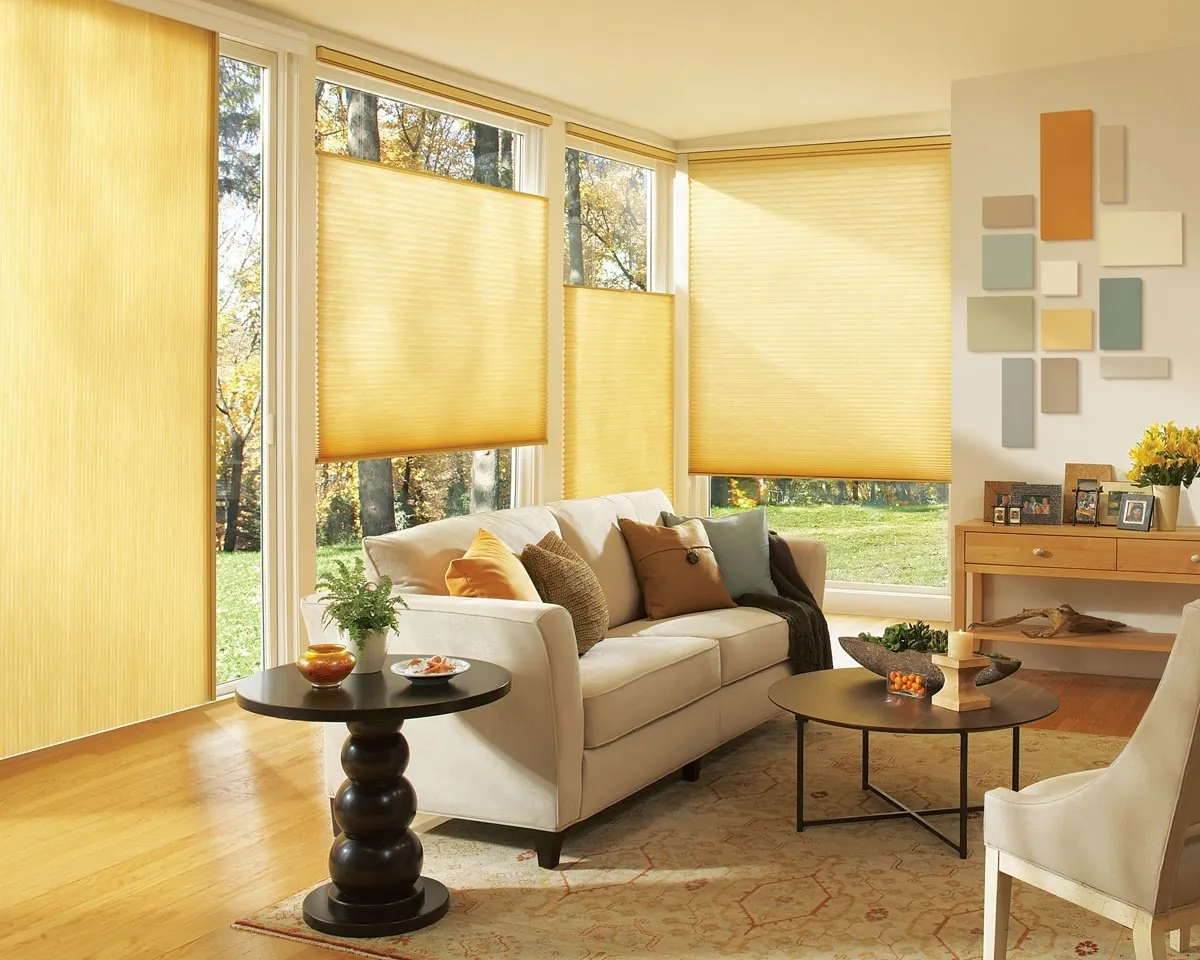
Colonials on wooded lots
A Norfolk colonial is usually a center-hall or side-hall design whose windows repeat: one size marching across the front façade, a matching size along the gable ends, and often a bigger unit or a slider at the back. Because the openings are standard and square, inside mounts are usually possible everywhere, and the shades line up neatly when raised.
That repetition is worth honouring. With one street-side color behind every front pane, and each shade stopping at one common line when raised, the house looks calm and finished from the road. Honeycomb shades make this easy because the side facing the glass is always a neutral color, so each room can choose its own color inside without changing how the house looks from outside.
The trees on a wooded lot change the light through the seasons. In summer, the canopy shades many rooms and you may want every bit of daylight. In winter, once the leaves fall, sun reaches deep into rooms that were dim all summer. A light-filtering fabric that you leave down for privacy works well in both seasons.
Capes and their upper floors
The capes in town follow the same pattern but with a twist upstairs. The second floor sits under the roof, with dormer windows that let light into rooms with sloped ceilings. Those rooms can feel warm in summer and cold in winter, because the roof above them takes the full weather.
Dormers and honeycomb shades get along. Because the dormer sash is a regular size, the shade can tuck inside its frame, and the little alcove in front of the glass usually swallows the headrail from view. Choose a room-darkening fabric and a child’s room stays dim through long June evenings, while the cells hold back some of the warmth that collects beneath the shingles. In winter, a double-cell fabric adds another layer against the cold.
Downstairs, capes often have a front living room with windows on two sides and a kitchen at the back with a window over the sink. The same thinking about exposures applies here, on a smaller scale.
How a honeycomb shade holds a room’s warmth
From the room, a honeycomb shade looks like a soft pleated fabric. From the end, it looks like a row of hollow tubes stacked one above another. Those tubes are the whole point. When the shade is lowered, each one holds air that barely moves, and still air is a poor carrier of heat.
On a winter night, that means the cold from the glass reaches the room more slowly and the warmth from your heating reaches the glass more slowly. On a summer afternoon, it works the other way, slowing the heat that comes through a sunny window. Certain Duette fabrics nest a smaller tube within each cell, and double-cell shades carry a second full row. Both simply add more pockets of still air.
Fit counts too. When the shade fills its opening almost edge to edge, far less air escapes around it, and the true, square frames found in most Norfolk houses make a close fit easy, which helps cellular shades in Norfolk do their best work.
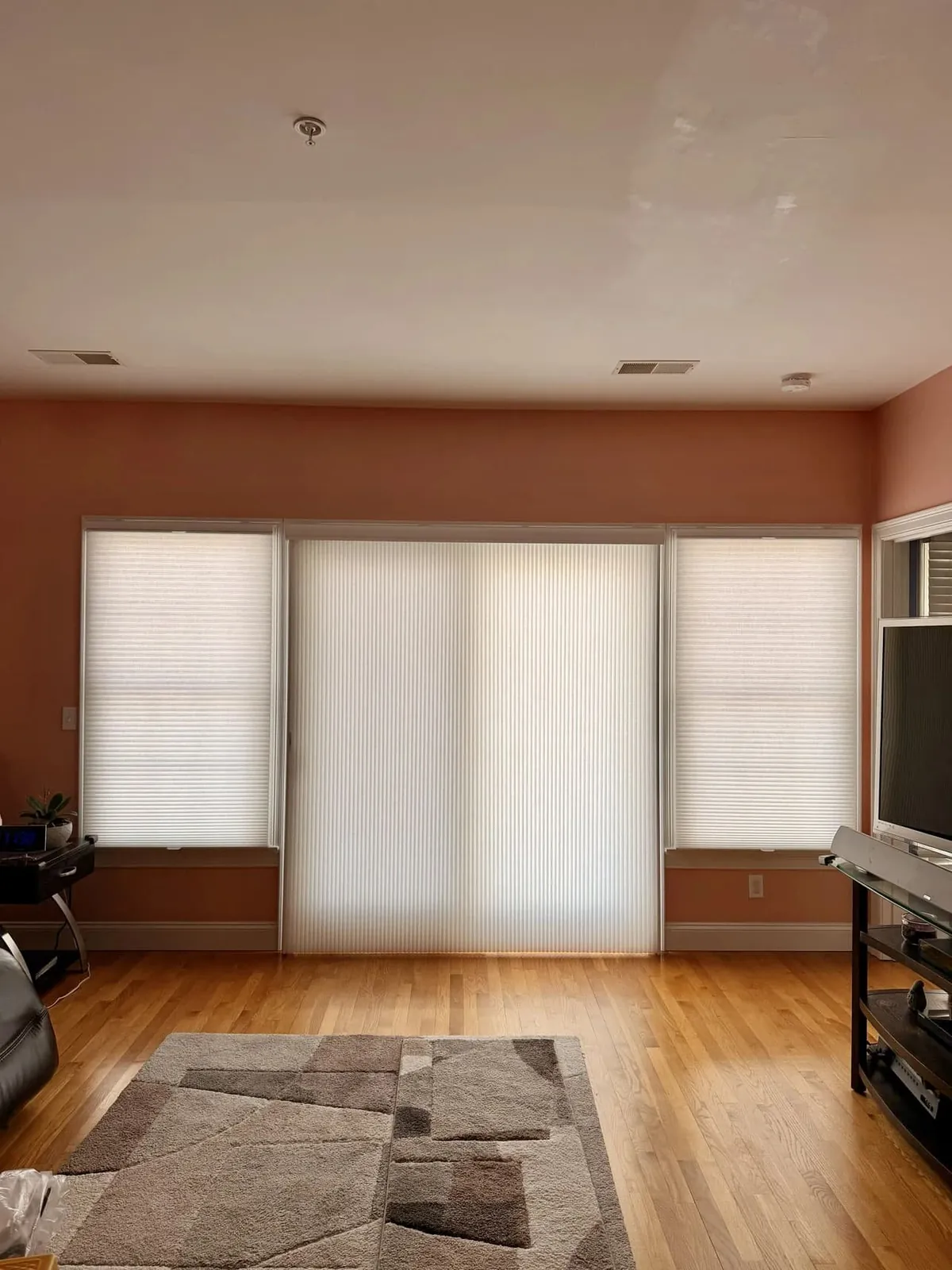
Sliders, patio doors and the back of the house
Most newer Norfolk houses step out to a deck or patio through a sliding door, and that door is usually the widest pane anywhere in the house. Stand near it on a February evening and you can feel the cold coming off it from across the room.
The answer is a honeycomb shade turned on its side. Its cells run top to bottom, it glides along a track like a curtain, and it folds into a slim bundle at the edge of the frame when you want the door clear. The deck stays one step away, and the door finally gets the same pocket of trapped air as the windows around it. Match the fabric to the neighboring windows and the back wall reads as one piece.
Where a back wall has a run of windows either side of the door, we plan the lot together: lifting shades on the windows, the sideways shade on the door, one color throughout.
Letting automation do the work
In a house where the sun moves around every side, motorized shades can take a lot of small decisions off your hands. PowerView lets you set a schedule for each room: the east bedroom shades open gently in the morning, the west family room shades lower through the hottest hours, and every shade in the house closes at dusk to hold in the warmth.
Day to day you can also tap the app, press a handheld remote or use a wall switch, with shades grouped by room or by side of the house. When you go away, the schedule carries on, so the house keeps its usual rhythm from the road. How each motor gets its power is something we work out with you during the visit.
How the visit at your house goes
Picking fabrics for a house that takes light on every side is hard to do anywhere but inside it. That is why we come to you, with the samples riding along in the van.
- Use Request a Consultation or the call button, and pick a time that suits the light you most want us to see.
- We unpack honeycomb fabrics across the color range, from sheer to room-darkening, and show you each lift and the PowerView controls.
- We go round the house in the order the sun does, east rooms first, and you tell us which ones bother you and at what hour.
- In the corner rooms, you hold one fabric to each wall so you can compare them in the same moment.
- Every window and door gets measured.
- You leave the visit with a free estimate covering the shades you have in mind, and no deadline to decide.
Our in-home consultations page explains more, and an interior design consultation can bring color and fabric for the whole house into the same conversation.
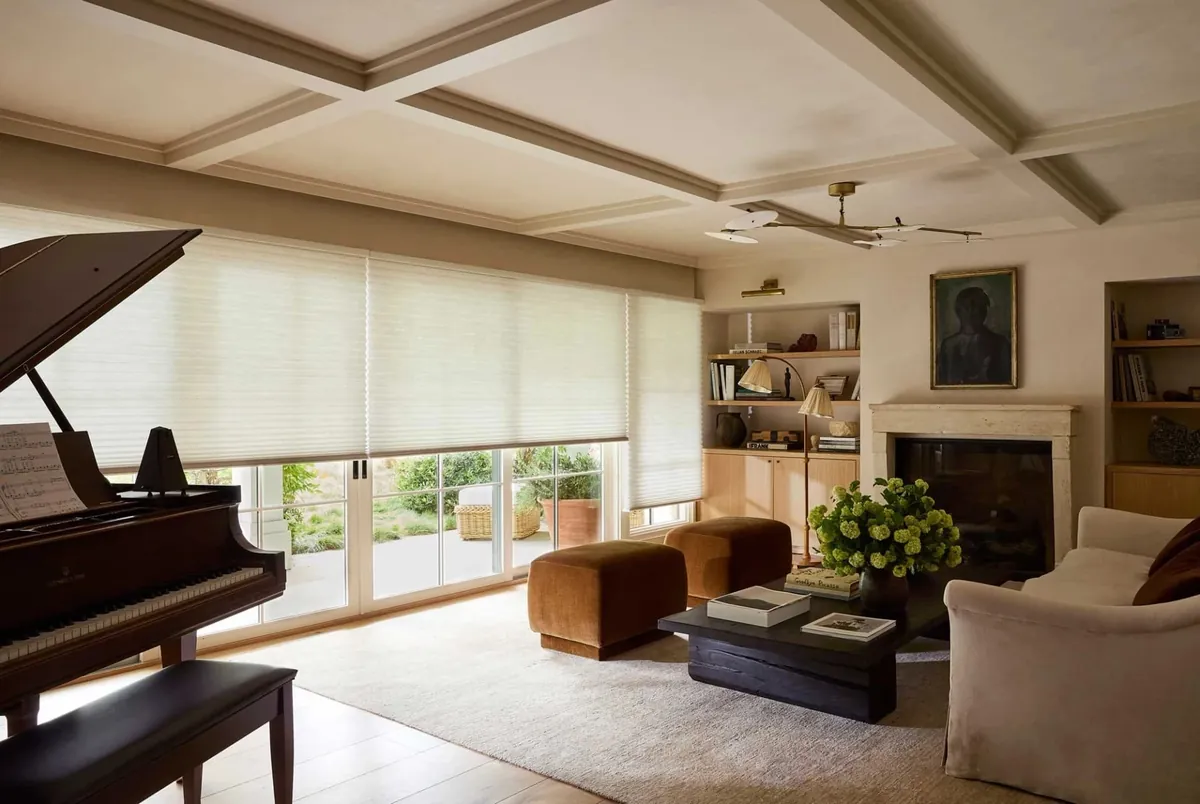
Planning opacity across a whole house
One of the most useful things we can do for cellular shades in Norfolk is help you plan the whole house at once, so every room gets the right amount of light and the outside still looks consistent.
A typical plan looks something like this:
- Living and family rooms: light-filtering fabric, top-down, bottom-up on any wall that takes strong sun.
- Kitchen: light-filtering over the sink and the breakfast table, cordless for easy reach.
- Bedrooms: room-darkening, double-cell on the north side.
- Home office: a light-filtering fabric dense enough to keep glare off a screen.
- Back doors and sliders: vertical honeycomb in the same fabric as the windows beside them.
Every house is different, and we adjust the plan to the way you use each room. The point is to make the choices together rather than one window at a time.
Duette or Applause, wall by wall
Both lines are Hunter Douglas honeycomb shades, and both hold air in their cells the same way. Duette has the deepest range, including many opacities in the same color, which is useful when you want a slightly denser fabric on a sunny wall without the room looking mismatched. It also offers the vertical shade for sliders. Applause has its own collection and suits the many standard windows in a colonial or cape.
Mixing the two is common: Duette in the main living spaces and on the back doors, Applause in the bedrooms. The main cellular shades page describes the whole range.
From tape measure to finished window
- Even a standard opening is taped in several places across and down, since a shade that hides inside the frame has almost no room to spare.
- The head of each frame is checked for enough flat depth to take the headrail.
- Fabric, opacity, lift and mount are agreed for each window, and written down, before anything is ordered.
- Once the shades come in, our certified Hunter Douglas installers hang them, level and test every one, and program any PowerView schedules alongside you.
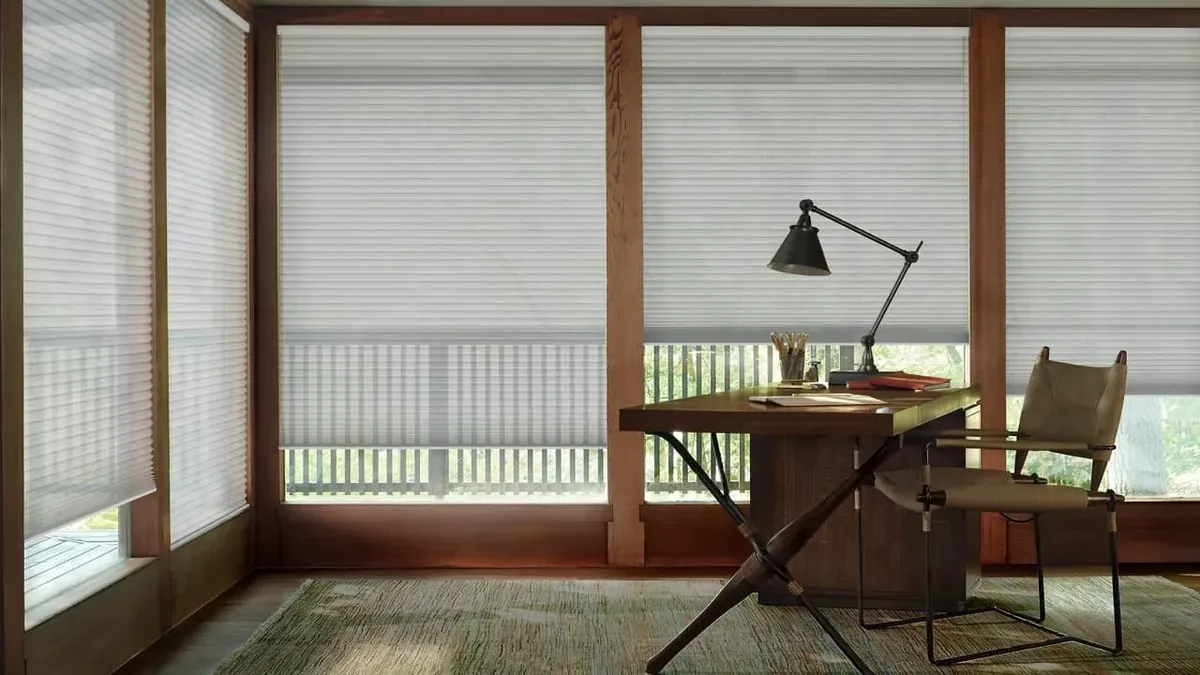

A consultation built around your rooms
Most Norfolk customers start at home, and with good reason. The light in a house set back among trees, with windows on every side, is different at every hour, and you can only see how a fabric handles it at your own windows.
The visit works as well for one problem room as for a whole house. We look at what each room needs, whether that is warmth, glare control, darkness for sleep or all three, and suggest the fabric and lift for each. If you prefer to look in person first, our nearest showroom is in Franklin.
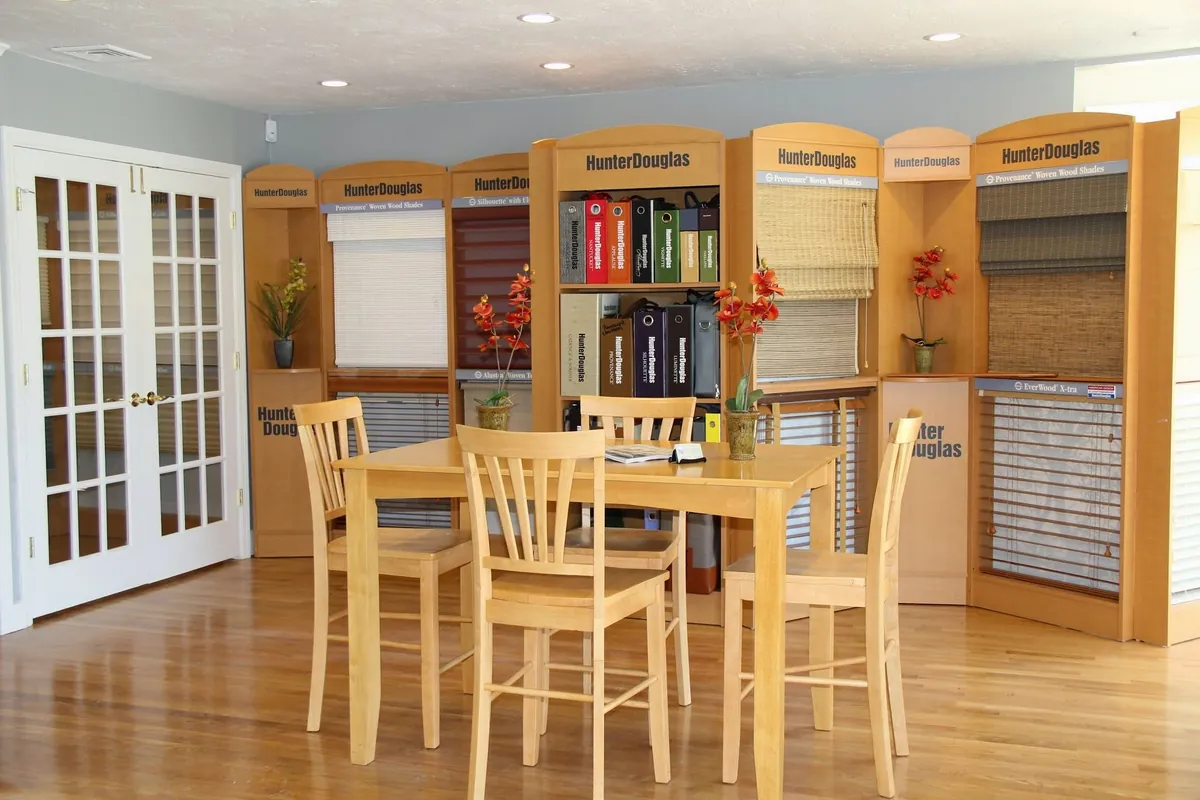
The Hunter Douglas Gallery difference
Blinds & Designs is a Hunter Douglas Gallery dealer. That gives you access to every Duette and Applause fabric and opacity, the lift systems, vertical shades for doors and PowerView motorization, all from one dealer.
Our installers are certified by Hunter Douglas, and the same company that sells your shades fits them. We also repair blinds and shades you already own.
For other rooms, see our plantation shutters in Norfolk, roller shades in Norfolk, or every service we offer in town on the Norfolk page.
Questions from Norfolk
My living room has windows on two walls. Should both get the same fabric?
Usually the same color, sometimes a different opacity. A slightly denser fabric on the sunny wall and a lighter one on the shaded wall, in the same color, keeps the room looking consistent while handling the sun on each side. We hold samples on both walls during the consultation so you can decide.
What helps a family room that overheats in the afternoon?
A honeycomb shade lowered through the hottest hours slows the heat coming through west-facing glass, and a light-filtering fabric keeps the room bright. With PowerView, the shades can lower and rise on a schedule by themselves.
Will shades make my tree-shaded rooms too dark in summer?
Choose the fabric for the room and they will not. Sheer and light-filtering honeycomb lets the daylight under the trees keep coming in, and a top-down, bottom-up lift gives you a choice of which part of the window stays open.
What goes on the slider to the deck?
The sideways honeycomb shade. It runs on a track across the glass, folds away at the edge of the frame, and can be made in the same fabric as the windows next to it.
How do I find out what my windows would come to?
Ask for a consultation. Once every window is measured, we put together a free estimate for the shades on your list.
Start with a visit
Cellular shades in Norfolk, MA, are best chosen on site, with the fabrics held up on each side of the house as the light moves. Ask for a consultation and we will arrive with the honeycomb range, take every measurement and leave a free estimate behind. If you would like to talk first, use the call button, or come by our Franklin showroom.