
From the front door to the back yard
Off Main Street and Village Street the houses are mostly capes and ranches on modest lots, with newer colonials mixed in, and around the center a handful of older houses that still have their original sash. The openings in most of them are standard and modern. That gives you a lot of freedom with window treatments in Millis, MA, because the frame rarely decides for you. The room does.
So rather than start with products, it helps to walk through a house the way you live in it: the front entry, the living room facing the street, the kitchen, the bedrooms, the bath and the door to the yard. Each has its own job for the windows to do, and that job is broadly the same whether the house is a cape, a ranch or a colonial, with a few twists for each.
The older sash near the center is the exception, and it gets its own section further down.
What we offer in Millis
These cards link to our Millis page for each service, where you can read about it in more depth. Together they cover the window treatments in Millis, MA, that we design, supply and install.
Custom blinds, Millis
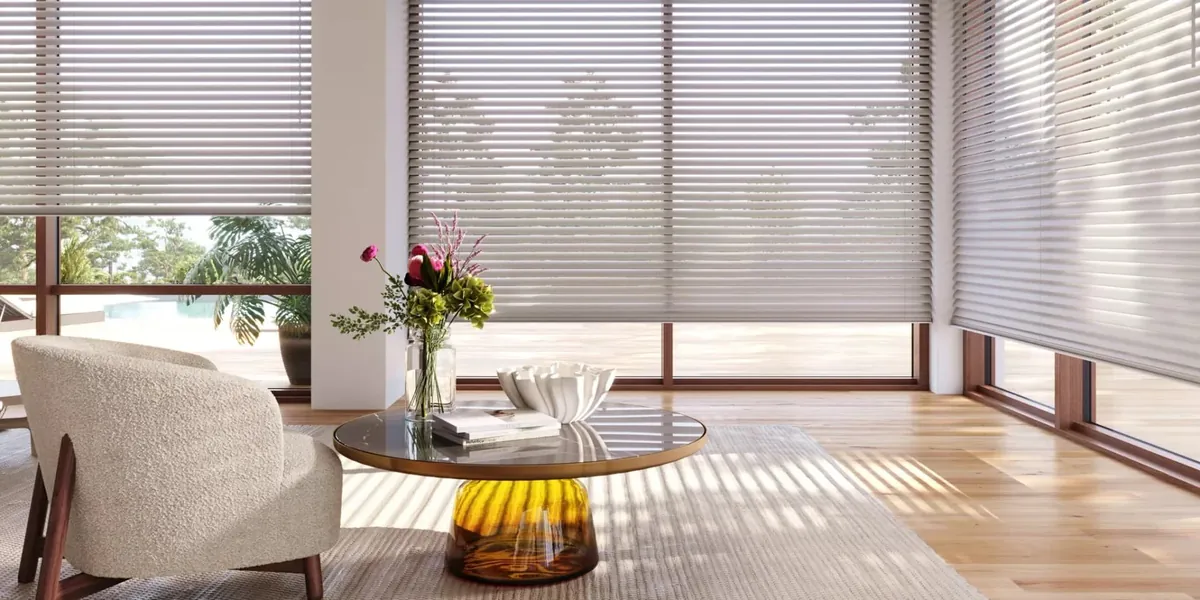
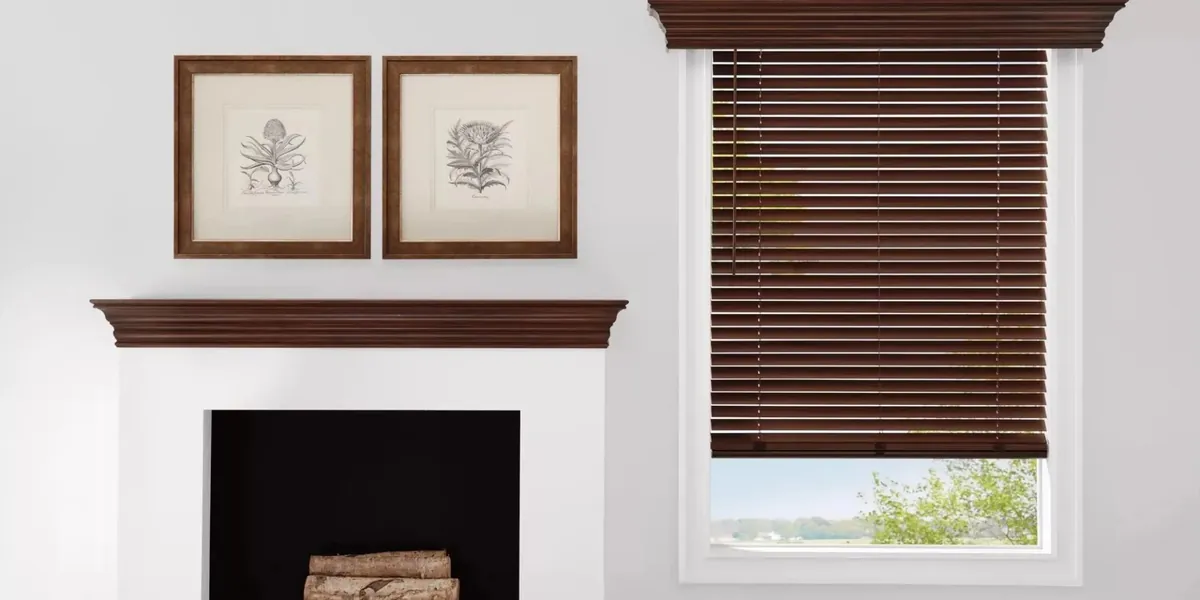
Wood, faux wood and metal slats, plus verticals for patio doors. Easy to angle for light without opening the room to view.
Cellular shades, Millis
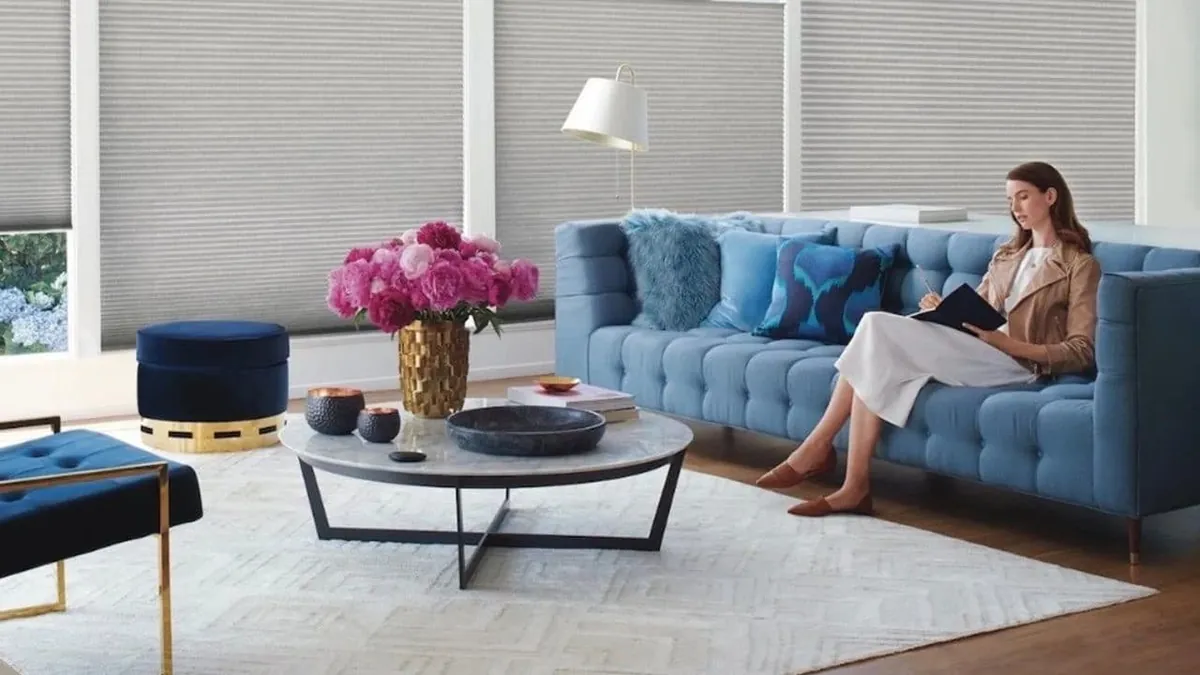
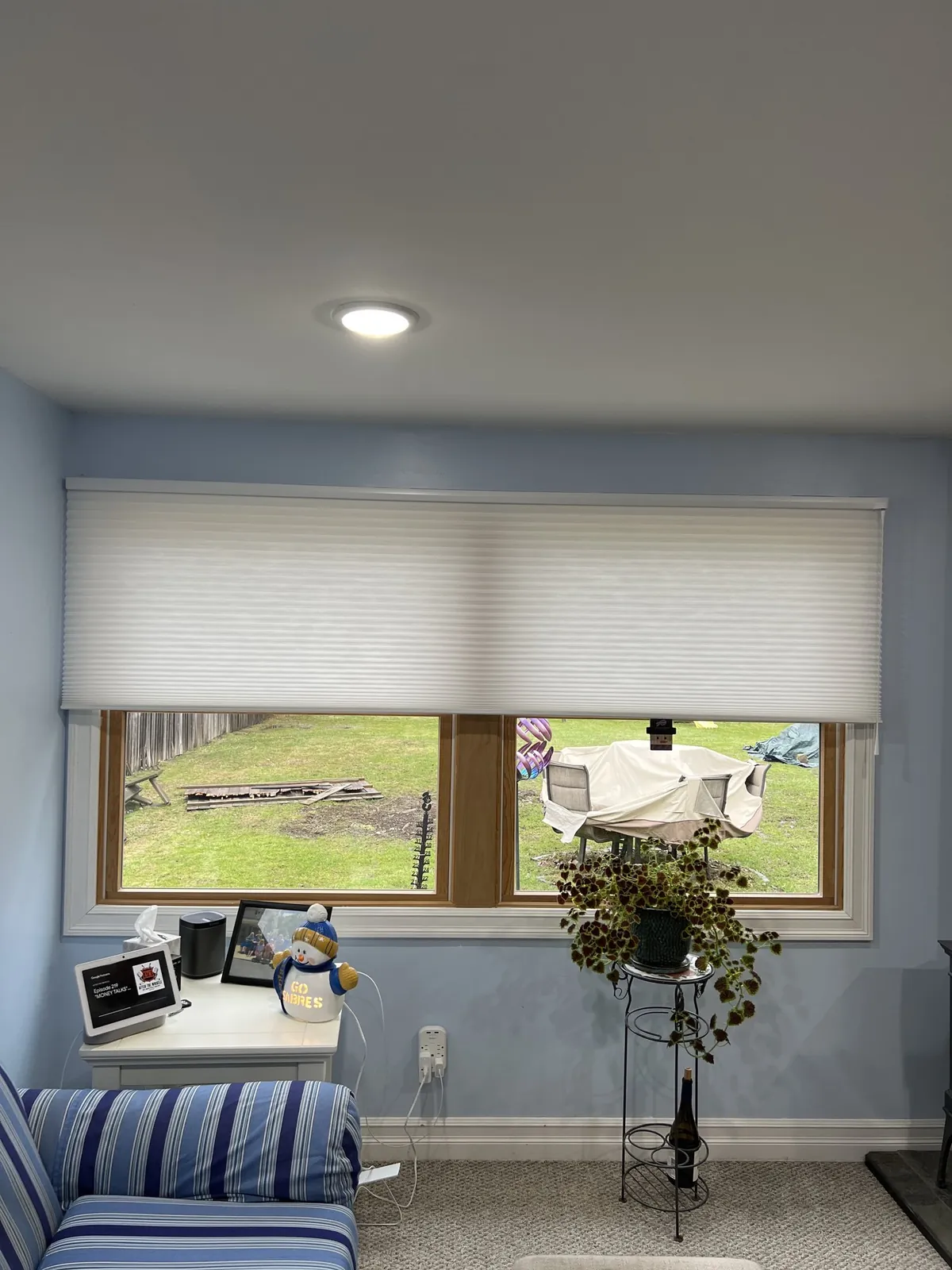
Honeycomb shades from Duette and Applause. Air caught in the cells is what keeps a room warmer on a winter night.
Roller shades, Millis
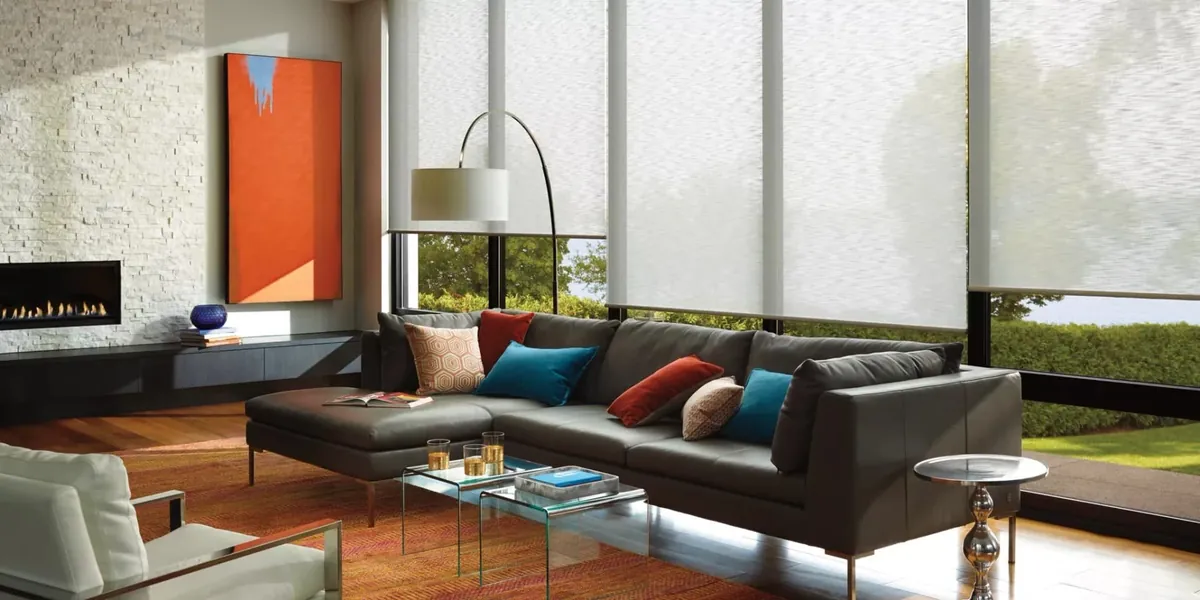
Rollers and screens from Designer and Alustra; screen openness is the balance of glare against view.
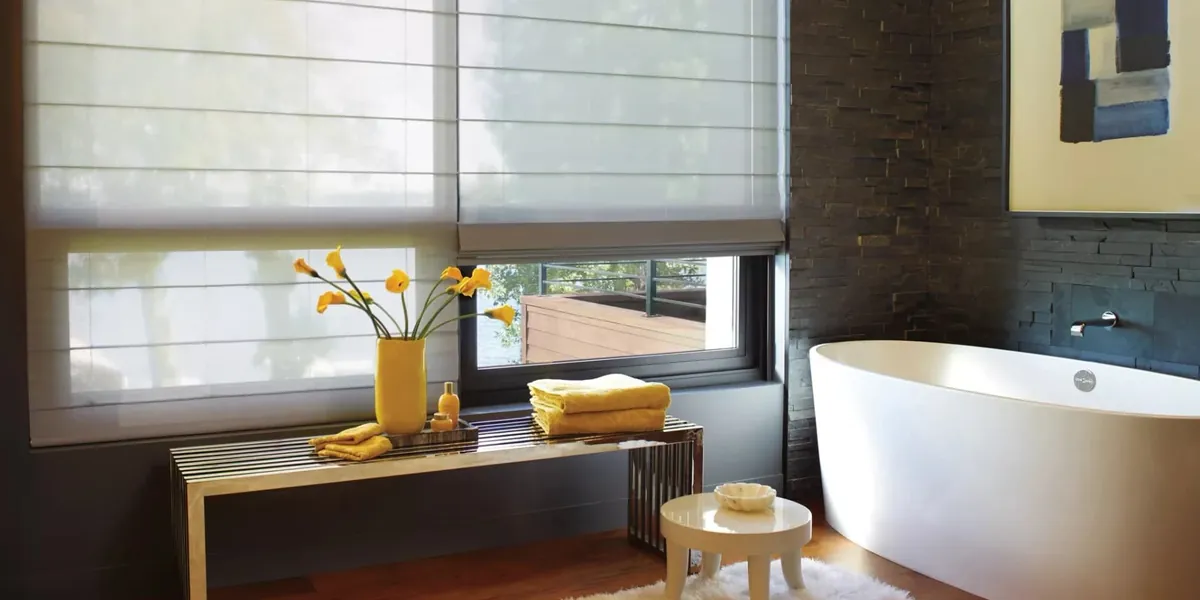
Roman shades, Millis
Soft romans, flat or folded, from Vignette and Carole Fabrics, for living and dining rooms.
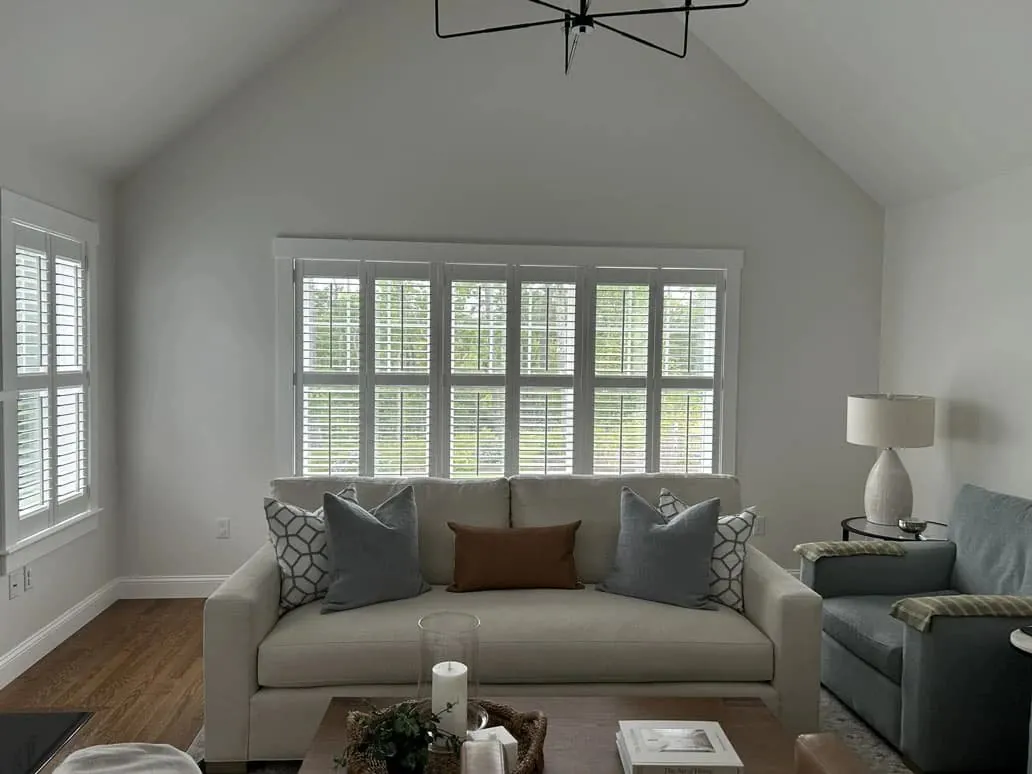
Plantation shutters, Millis
Palm Beach, NewStyle or Heritance, chosen by louver size and frame style for each window.
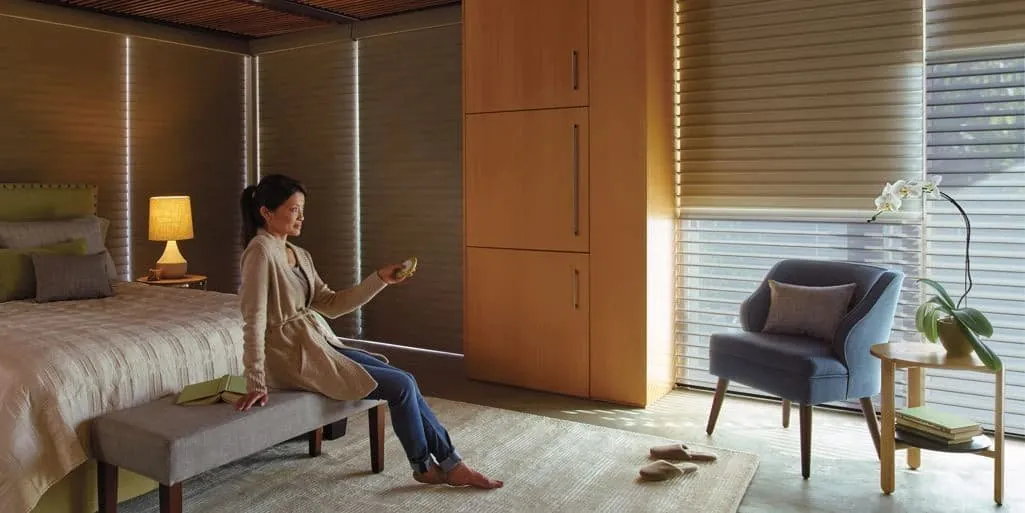
Motorized blinds and shades, Millis
PowerView remote, phone app and schedules, from one hard-to-reach window to every room.
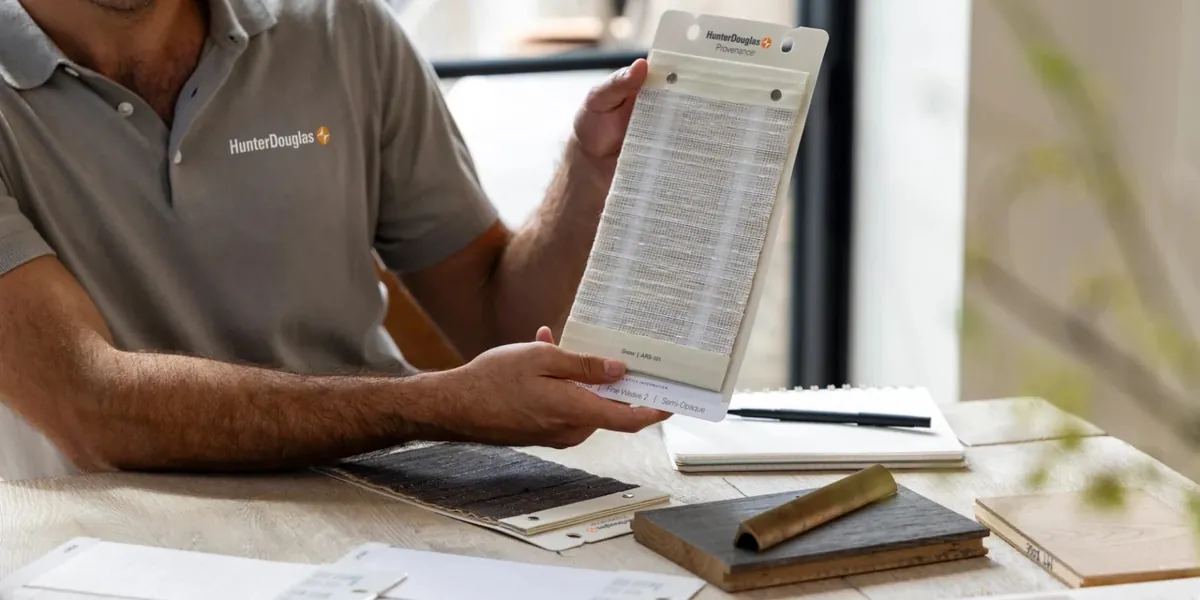
Hunter Douglas dealer, Millis
A Gallery dealer with access to the whole Hunter Douglas range and certified installation.
The front entry
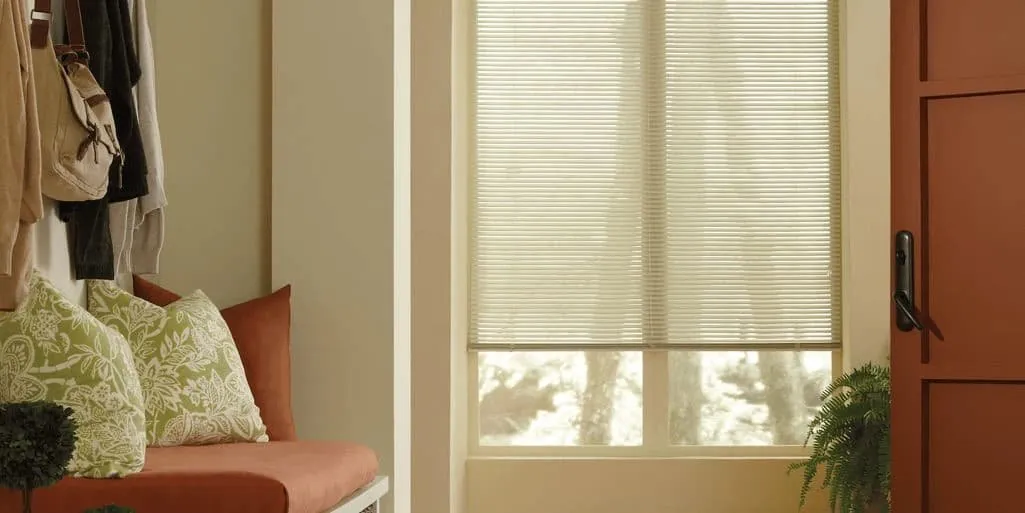
The entry is the first window most people overlook. In a cape it might be a pair of narrow sidelights beside the front door; in a colonial, a window on the stair landing or beside the door; in a ranch, a small window in the hall. These openings let light into a space that would otherwise be dark, so covering them completely is rarely the goal.
What usually works is something that keeps the light and blurs the view: a light-filtering fabric, a sheer, or a slim blind tilted so the slats send light up. A sidelight beside a door that faces the street often wants privacy more than anything else, because it sits at eye level for anyone on the step. We measure these carefully, since narrow openings leave little room for error.
In the older houses near the center, the entry may still have its original window beside or above the door, with old glass and a narrow, shallow frame. There we measure with particular care and lean toward the slimmest covering that fits, or leave the old glass bare if it is a feature in its own right. In the newer colonials off Village Street, the stair landing window is often the one to think about, since it is seen from the hall and from the street at once.
The living room facing the street
On a modest lot the living room window is close to the road and in full view, so it does two jobs at once: privacy for the room and a tidy face for the house. In a ranch it is often the widest window you own, sometimes a picture window flanked by two smaller ones. In a cape, the front windows usually come in matching pairs either side of the entry. In a colonial, the living room may have windows on two walls.
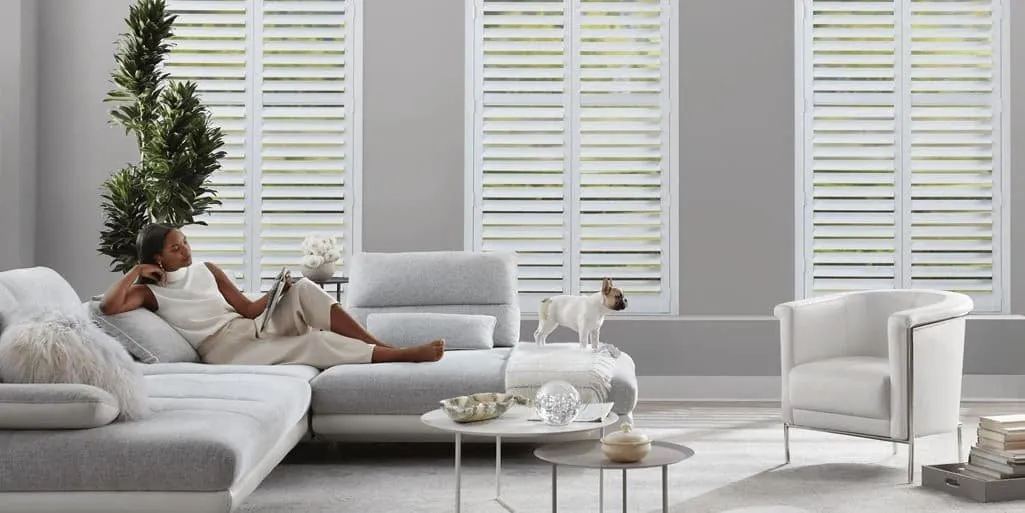
For wide glass, a roller or a honeycomb across the full width keeps things clean, and sheers such as Silhouette soften the daylight beautifully. For matching pairs, shutters give a cape a finished look from the road. Whatever goes in, keeping the color facing the street the same across every front window makes the house look considered.
Light is the other half. A living room facing west takes the afternoon sun straight onto the sofa and the screen; one facing east is bright in the morning and gentle later. A solar screen or a honeycomb on the sunny side calms the glare. Our guide to the best shades for sun and glare goes through the options.
Side windows on a modest lot
On the smaller lots off Main Street, the gap between one house and the next is often just a driveway. The side windows of a cape or ranch can look straight across at a neighbor’s kitchen or bedroom, sometimes at the same height. Those windows matter for daylight, especially in a ranch where the side rooms have no other source, so the aim is to keep the light and lose the sightline.
A filtering honeycomb gives an even glow with no clear view in. A sheer with tilting vanes lets you choose, room by room and hour by hour. A blind or shutter with its slats turned upward throws light onto the ceiling while blocking the line of sight from next door. After dark, when the room is the bright side, each of these needs to close fully, so we pick fabrics and products with evenings in mind as well as afternoons. Getting the side windows right is a big part of choosing window treatments in Millis, MA, for a house on a tighter lot.
The family room
In the newer colonials the family room is where the house is really lived in, usually open to the kitchen and often with a slider or a big window onto the yard. It tends to get the most sun and the most use, with a television that needs glare control and a view of the garden worth keeping.
A solar screen is a good fit for that mix, cutting glare on the screen while you still see the yard. If the room faces north and feels cool, a honeycomb is the better choice. With the kitchen in view, we keep the fabric and color consistent across both spaces.
The kitchen
Kitchens in capes and ranches tend to sit at the back, with a window over the sink and often a door to the yard nearby. The sink window is a reach across the counter, so a covering that is easy to operate matters more than usual. A faux wood blind tilts with a light touch and wipes clean; a roller goes up and down in one motion. If reaching is a real nuisance, PowerView puts it on a remote or a schedule.
In a newer colonial the kitchen often opens into a family room, so the kitchen windows and the family room windows are seen together. One fabric and color across the whole space keeps it calm, with a different product only where a window needs it, such as the patio door.
The bedrooms
Bedrooms have two needs: privacy and darkness. On a modest lot, a bedroom window may face a neighbor’s side yard, so privacy matters by day as well as at night. And in summer, an east-facing bedroom sees daylight very early.
A fabric that dims the room, set inside a square modern frame, handles both. Honeycombs are a favorite, because the same cells that help with darkness also help a room hold heat in winter, which suits the bedrooms tucked under a cape roof. In a ranch, the bedrooms along the hall are usually small with one or two windows each, so a simple honeycomb or a wood blind fits without crowding furniture.
Upstairs in a cape
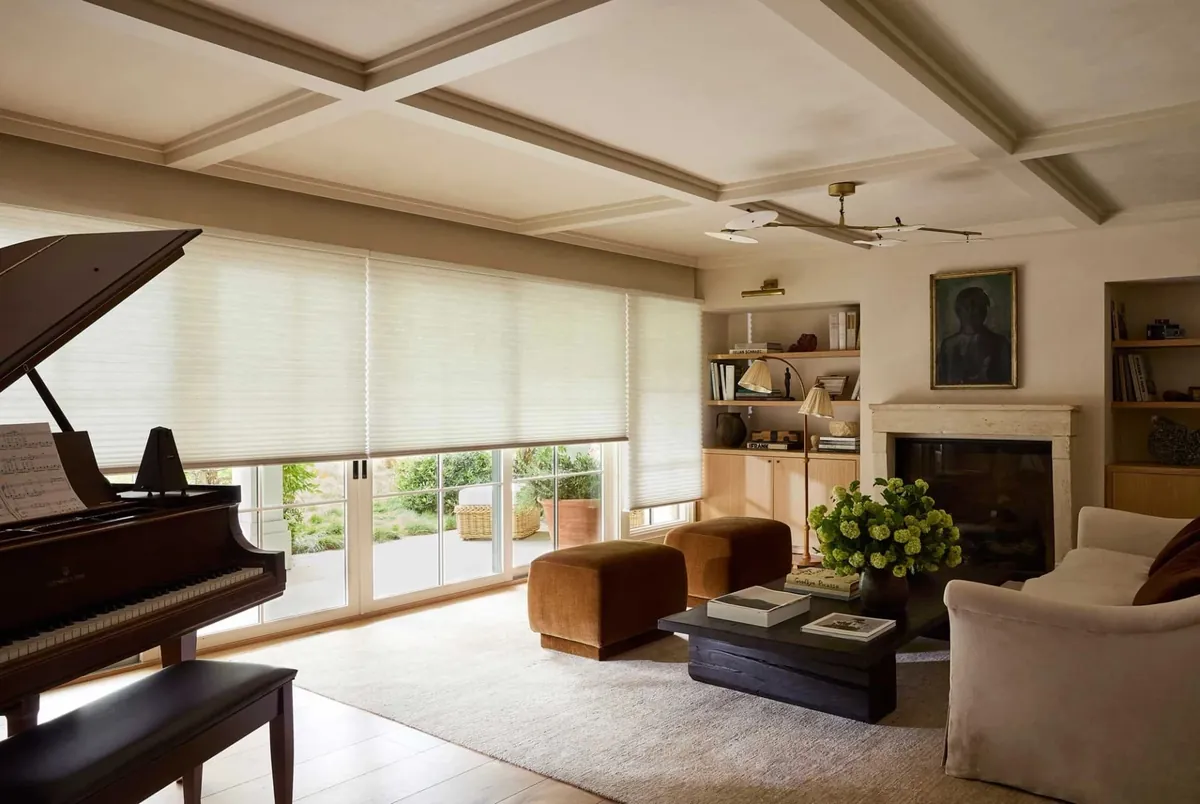
A cape’s upper floor deserves its own mention. The rooms sit under the slope of the roof and are lit by dormers, each set at the end of a short alcove. Those rooms get warm in summer and cool in winter because only the roof stands between them and the weather. A honeycomb mounted inside the dormer frame keeps the alcove clear and helps with both seasons. If a gable-end window sits high in the wall, a motorized shade saves climbing onto the bed to reach it.
The bathroom
Privacy comes first here, on any lot. Faux wood blinds and shutters are the usual picks: they close fully, tilt for daylight and suit a steamy room. In a small bath with one window, a cafe shutter across the lower half keeps the view out at eye level and leaves the top clear for light. Matching the bathroom window’s color to the rest of that side of the house keeps the outside consistent.
The door to the yard
Most houses have a slider or French doors to a deck or patio, usually off the kitchen or family room. A covering here has to get out of the way when you step through, and many of these doors face the back yard and the afternoon sun.
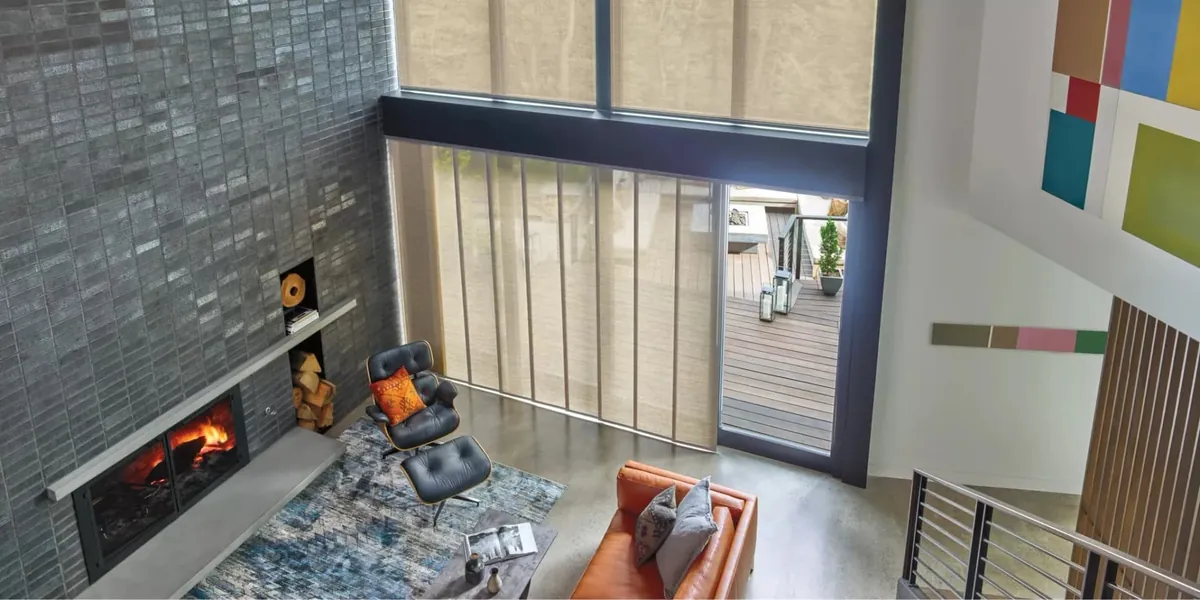
On a slider, vertical blinds, vertical honeycombs and gliding fabric panels all draw to one side. On French doors, a shade or shutter fixed to each door moves with it as it opens. Picking a fabric and color that match the kitchen windows ties the room together, and a vertical honeycomb on a big slider also helps keep the room warmer on a winter evening.
Older sash around the center
Near the center, some houses still have older sash windows. These are the ones that need extra care. Old frames shift over many winters, so an opening may be a fraction wider at the top than the bottom, or lean slightly to one side. Depth can be shallow, and the trim is often worth keeping on show.
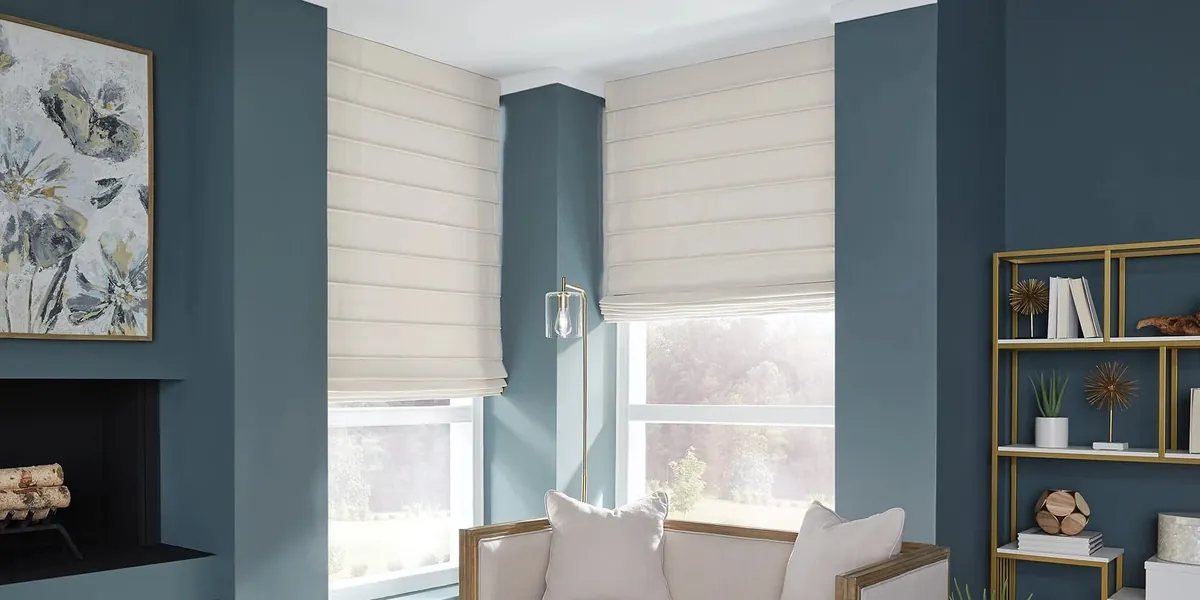
We measure each old opening at several points across and down, check the depth at the head to see whether a headrail fits inside, and note any latch or lock the shade must clear. Where there is room, a slim honeycomb, a roman or a shutter can sit within the frame and leave the casing visible. Where there is not, a neat outside mount on the casing is the tidy answer. Either way the covering is made to those measurements, not to a stock size. The window measuring terms guide and our page on shutters for older windows explain more.
Where an older house has newer windows in an addition, we usually keep the color constant across both parts and vary the product to suit each set of windows. Of all the window treatments in Millis, MA, that we plan, these mixed houses are the ones where a little forethought pays off most.
Newer colonials off Village Street
The newer colonials are larger than the capes and ranches around them, with more rooms and more windows, many of the same size. That repetition is a gift: decide once how the main rooms should look, and the rest follow quickly. Most people settle on one lead product and color, then make a few exceptions, perhaps shutters in a formal dining room, faux wood blinds in the baths and something darker in the main bedroom.
Colonials sometimes have a tall window over the stairs or in the foyer. That is the classic spot for PowerView: the shade runs from a remote or on a schedule, and no one needs a ladder. We plan how each motor is powered at the visit. See how motorized shades are controlled for the control options.
Why choose a Hunter Douglas Gallery dealer
Blinds & Designs holds Hunter Douglas Gallery dealer status, which opens the full catalog to you: wood and faux wood blinds, Duette and Applause honeycombs, Designer rollers, Vignette romans, sheers, shutters and PowerView automation.
What comes with it is just as useful. Certified Hunter Douglas installation on every order, home visits with vans that carry the samples, interior design consultations, free estimates, window covering automation, and repairs to coverings you already own.
Warmth, glare and the seasons
Across all three house types, two seasonal problems come up again and again. In winter, the glass is where a room loses warmth, and honeycombs help by holding still air against the window once lowered in the evening. Cellular shades and winter heat explains the idea. In summer, the west-facing rooms take the brunt of the afternoon sun, and a solar screen or honeycomb closed through the late afternoon keeps floors and furniture out of it. On PowerView, both can happen on a schedule.
Visit, estimate, installation
The quickest way to settle all of this is a visit. Our consultant arrives in a van full of samples, so we can bring the showroom to you and hold the actual fabrics up in your own windows. Each room is walked, each opening measured (the older sash with extra care) and each option talked through. A free estimate follows, with no pressure to decide. Read more on in-home consultations, or ask about interior design consultations if color across open rooms is the sticking point.
When your order arrives from Hunter Douglas, certified installers fit it, test it, pair any motors and walk you through it. What happens on installation day has the detail. And if an existing blind or shade is giving trouble, we are glad to repair coverings you already own, or to tell you plainly when replacing it is the better option. See blind and shade repair.

Our nearest showroom: Franklin
Franklin is the Blinds & Designs showroom closest to Millis. Stop in before a home visit if you would like to start the conversation with a photo of a room or a swatch of fabric.
The choice itself usually gets made at home, with samples in your own light. Do one or the other, or both.
Questions from Millis
My windows are standard. Where do I start?
With the rooms. Think about what each room needs, privacy, darkness, glare control or warmth, and the product choice follows. Standard frames take almost anything, so you are not limited by the window.
What should go on the narrow windows beside my front door?
Usually something that keeps the light and blurs the view, such as a filtering fabric, a sheer or a slim blind tilted upward. These sit at eye level for anyone on the step, so privacy often comes first.
Can you fit shades in older sash near the center?
Yes. We measure each old opening at several points and check the depth. If there is room, the shade sits inside the frame; if not, we mount it neatly on the casing.
Should every window in the house match?
Not exactly. Keep the color facing the street the same on every front window, and choose the product room by room.
Is the estimate free?
Yes, always. You can take as long as you like to decide.
When you are ready
For window treatments in Millis, MA, the first step is simple: request a consultation and we will come to you with the samples, measure every window and leave you with a free estimate. You can also use the call button to talk it through, or call in at the Franklin showroom.
Every product line we offer is gathered on our window treatments page.