
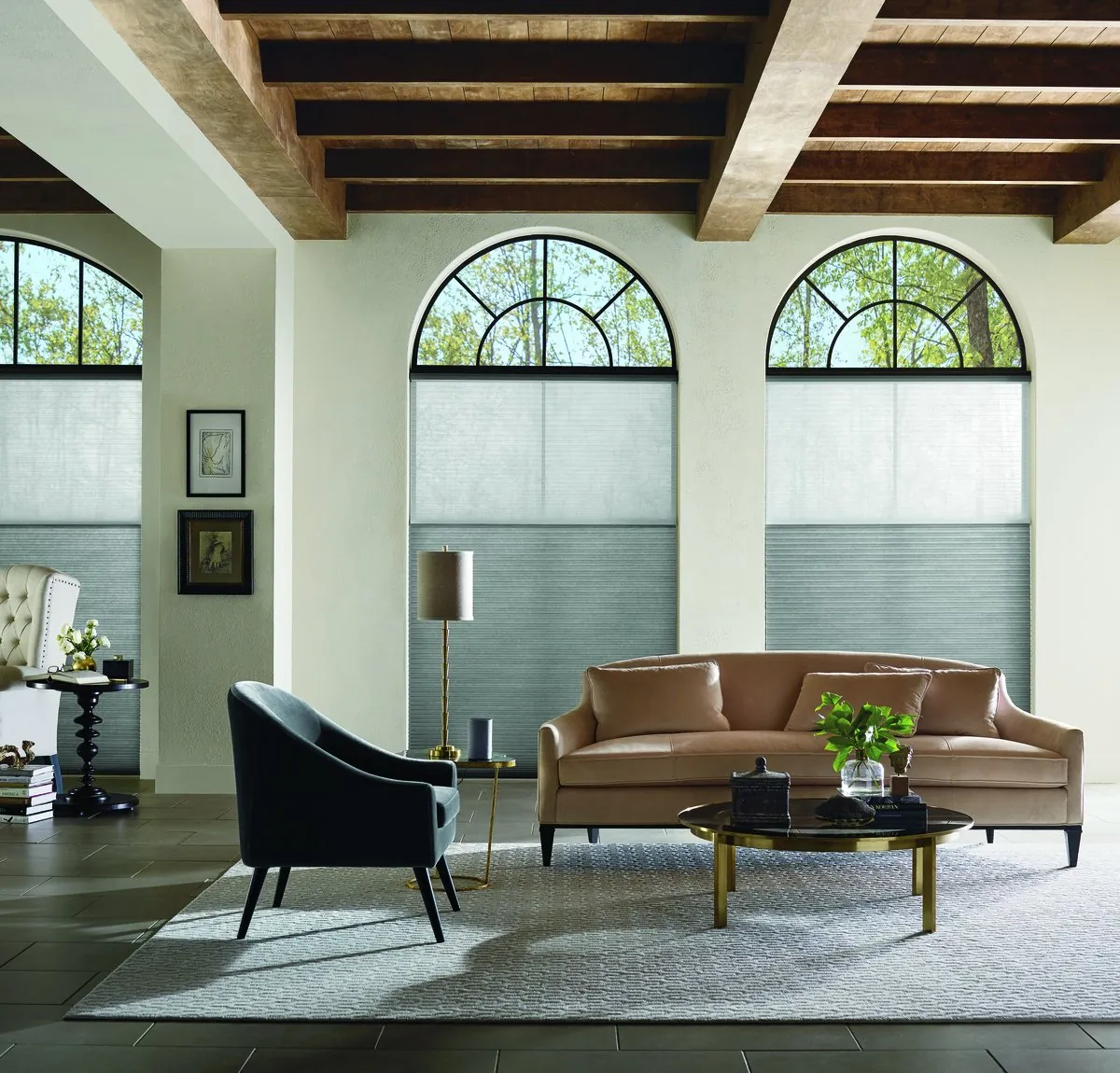
Wooded lots, lake light and old colonial glass
Wrentham’s houses sit on more land than most. The antique colonials around the common have their own generous yards, and the larger newer houses off Route 1A and around Lake Pearl sit well back from the road on wooded lots. That space changes what a window covering is for. With the nearest neighbor far off, privacy is often a lesser worry, and the real questions are about comfort and light: keeping the heat in, softening the glare, and making the most of a view. That is the ground cellular shades in Wrentham, MA, cover best.
The windows themselves are a mix of extremes. Around the common, the antique houses still have tiny original openings. Out on the newer lots, great rooms rise to two stories of modern glass. A honeycomb shade handles both, because it is made to measure and because the air held inside its cells works the same way on a small pane as on a large one.
Picture the shade from the side: a stack of hexagonal tubes, open at each end of the shade but closed along their length. When the shade is lowered, those tubes are full of air that stays put, and that still air is a poor path for heat. Cold from the glass reaches the room more slowly in winter, and the sun’s warmth reaches it more slowly in summer.
What we fit in Wrentham houses
These are the three options that come up again and again on Wrentham’s big lots and around the common.
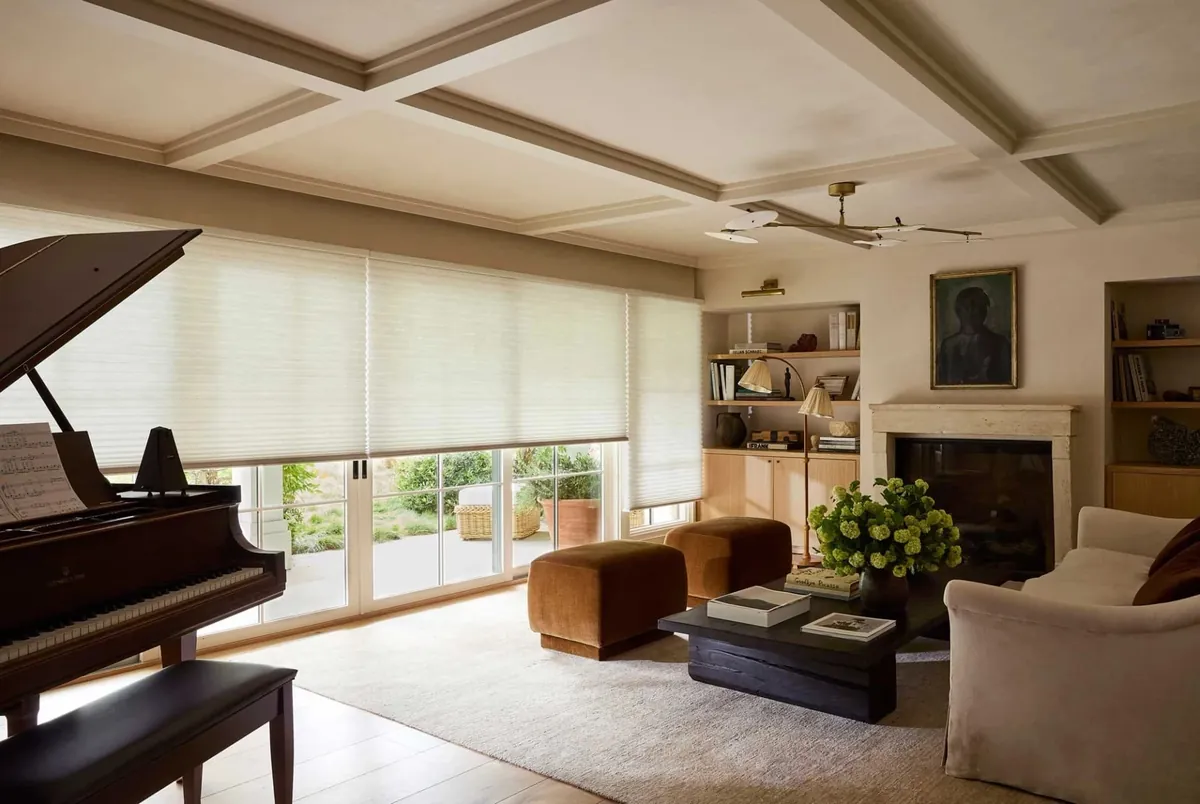
Light-filtering for shaded rooms
Pale fabrics that let the window glow, so a room under heavy trees keeps every bit of daylight it gets.
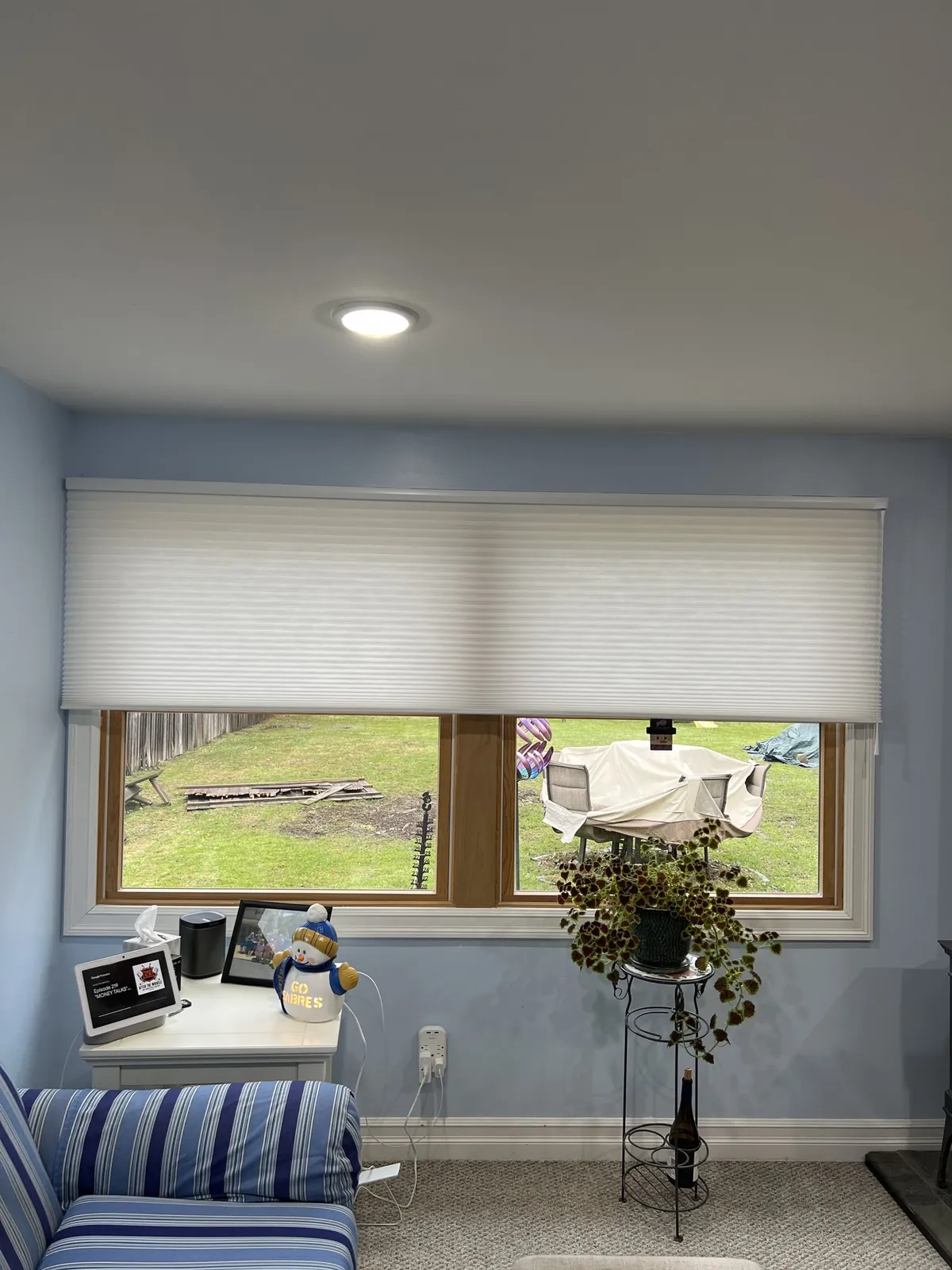
Top-down for the view
Lower the shade from the top and the treetops or the water stay in sight while the lower glass is softened.
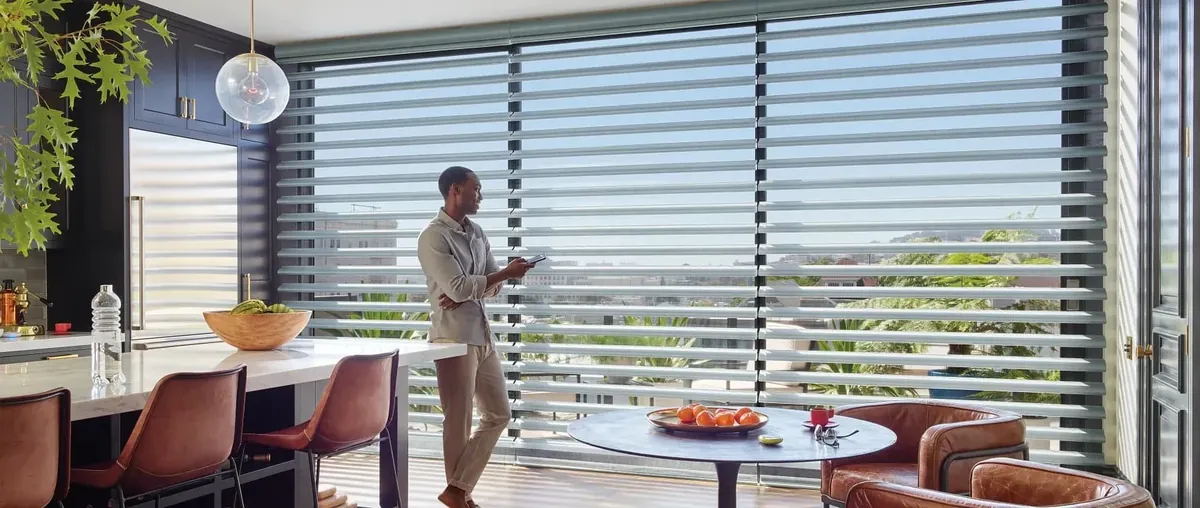
PowerView for tall glass
Motors move the upper shades in a two-story great room from your phone, a remote or a timetable.
Tiny original openings around the common
The colonials around Wrentham common were built with small windows, and many of those original openings survive. They are part of the character of the houses, and the aim with any shade is to leave them looking as they always have from the common while making the rooms behind them more comfortable.
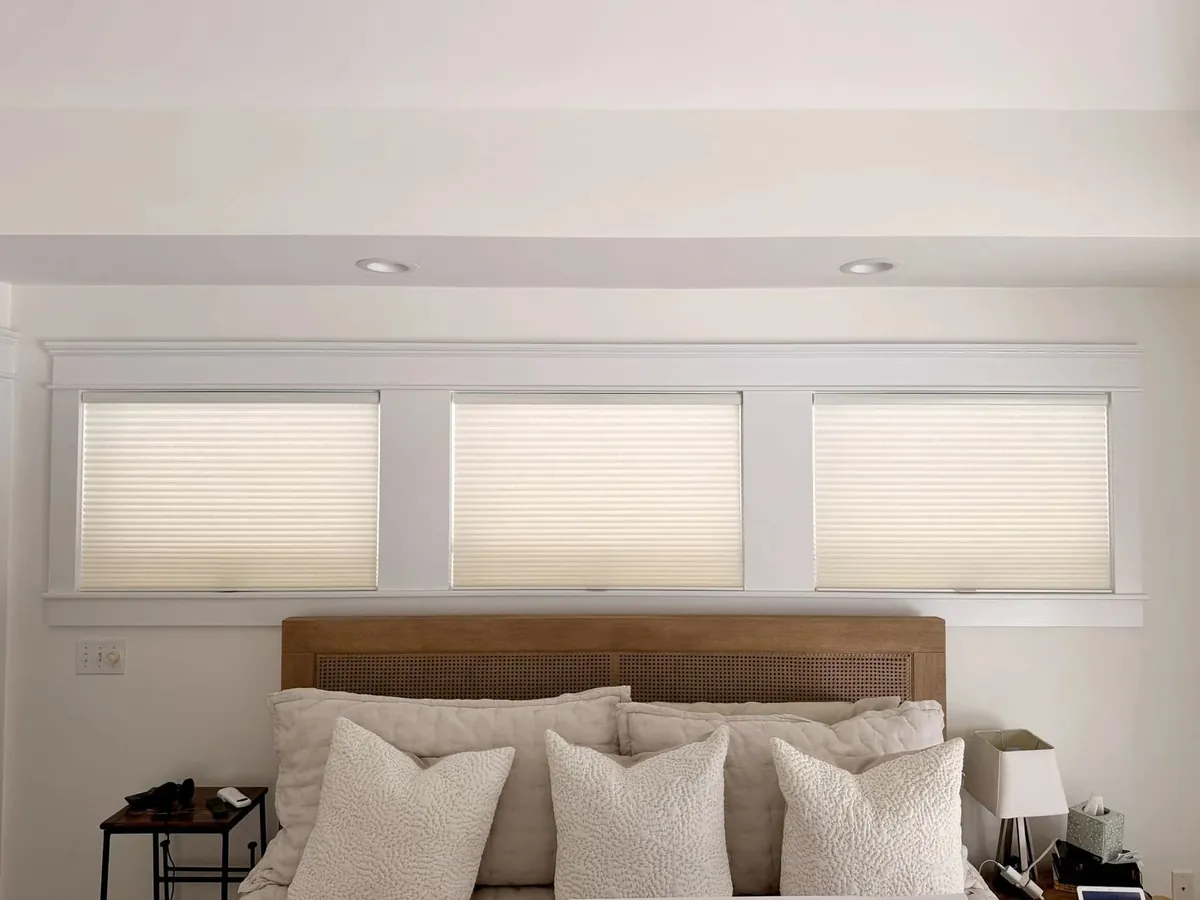
A small window has very little glass to spare. If a shade folds into a thick bundle at the top, it can cover a noticeable slice of the opening even when it is fully raised. That is why we usually suggest a single-cell honeycomb for these windows: it compresses into a very slim stack. On a window this size, the difference between a slim stack and a thick one is the difference between a room that feels bright and one that feels dim.
Mounting is the other question. Some of these frames have enough depth for an inside mount, which keeps the old casing fully visible. Others are shallow, or have been patched and painted so many times that the opening is no longer square. We measure the width at the top, in the middle and near the sill, and the height on both sides, before suggesting how each shade should hang. Where an inside mount will not sit right, a neat mount on the face of the casing is the honest answer.
Because the windows are small and the rooms often have only one or two of them, color also matters. A pale fabric keeps the light moving into the room. A deeper color can look handsome against old painted trim but will make a small room feel smaller once the shade is down.
Big houses on wooded lots off Route 1A
The newer houses off Route 1A tend to be large, with modern openings, deep setbacks and plenty of trees between the house and the road. That tree cover is part of their appeal, and it shapes how a room should be shaded.
Under a canopy of oak and pine, daylight arrives filtered and changeable. A room that faces the trees can be dim for much of the day and then catch a hard shaft of sun when the light finds a gap. A dark or heavy fabric in that room would leave it gloomy. A light-filtering honeycomb in a pale color does the opposite: it diffuses the occasional bright patch, keeps the room evenly lit, and adds very little shadow of its own.
The seasons change the picture again. When the leaves fall, the same rooms get far more light, and in a south-facing room that winter sun is welcome warmth. The shades can stay up through the bright hours to let the sun in and come down at dusk to hold the warmth overnight. In summer, with the trees in full leaf, many rooms barely need shading at all during the day, and the shades earn their keep at night and in the few rooms that face open sky.
With so many windows in a large house, it helps to plan cellular shades in Wrentham for the whole house at once, even if you start with a few rooms. One Hunter Douglas line and one lift style throughout keeps the house consistent, while each room gets the opacity it needs.
Around Lake Pearl
The houses around Lake Pearl add a different kind of light: sun reflected off the water. On a bright day, the rooms that face the lake get light from two directions, once from the sky and once bouncing up off the surface, and in the late afternoon that reflected glare can be hard to sit in.
The answer is rarely to close the window off completely, because the view is the reason for the window. Two features help. A top-down, bottom-up shade can be lowered just enough from the top to cut the sky glare while the lower glass, and the view across the water, stays clear. And a light-filtering fabric dropped the whole way softens the reflected light into a glow, so the room is comfortable and the outline of the shoreline still shows through.
Bedrooms on the lake side are a different matter, especially those facing east, where the sunrise comes across the water. A room-darkening honeycomb fabric keeps those rooms dim until you raise the shade, and the cells still help the room hold a steady temperature on a cold night. A lake house that is closed for part of the year benefits too: with the cellular shades in Wrentham lake houses lowered while you are away, the rooms are spared the full force of the sun on the furniture and floors.
Decks, sliders and the back of the house
On a generous lot, the back of the house is often where the living happens: a deck or patio, a slider from the kitchen or family room, and sometimes a screened porch or a sunroom added later. Those doors and rooms are some of the hardest to shade well, because a horizontal shade on a slider gets in the way every time someone steps outside.
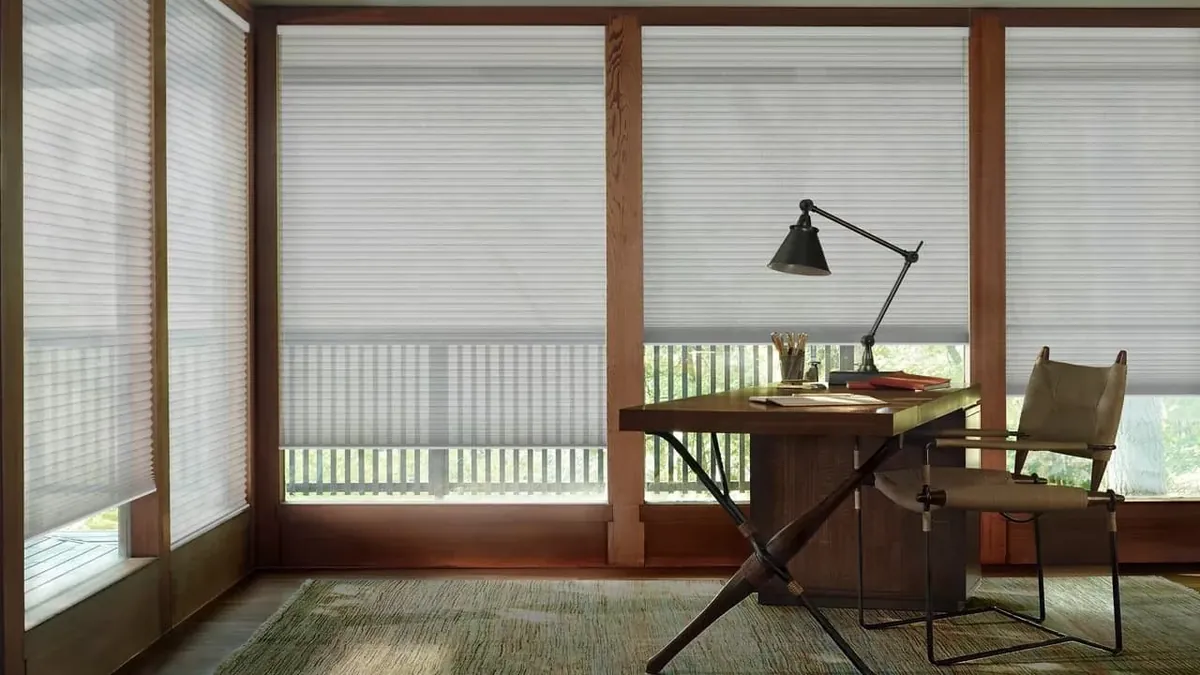
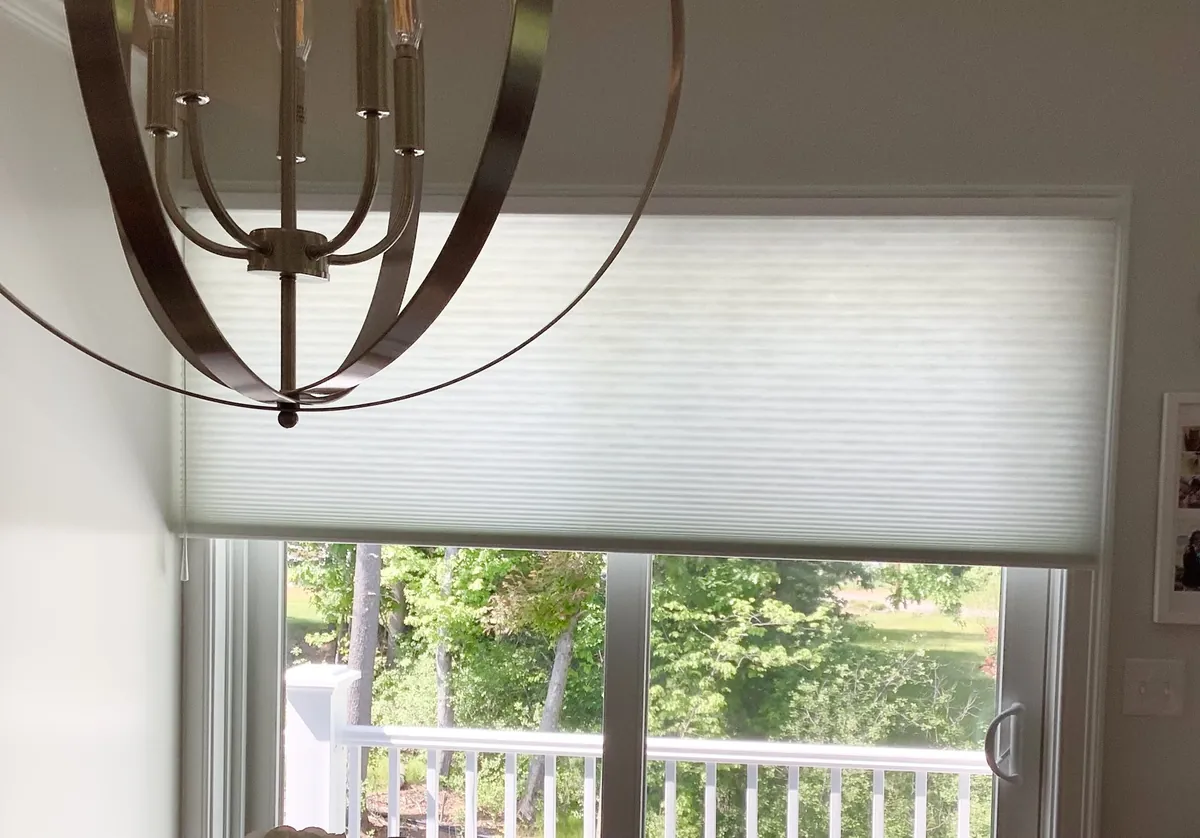
A vertical honeycomb shade solves that. It runs side to side on a track and folds back to one edge of the door, leaving the opening clear, and it gives the slider the same insulating cells and the same fabric as the windows beside it. When the deck faces the trees, a pale light-filtering fabric keeps the kitchen bright; when it faces the lake, a slightly heavier fabric handles the afternoon reflection.
A sunroom with glass on three sides is the most demanding room of all, hot on a July afternoon and cold on a January evening. Honeycomb on every window, often double-cell, is the most effective soft treatment we can suggest for it. Many of the requests we get for cellular shades in Wrentham, MA, start with exactly this room.
Two stories of modern glass
Many of the larger Wrentham houses have a great room or family room with a vaulted ceiling and a window wall that runs up two stories, often with a row of upper panes above a set of doors or picture windows. It is the room the house is built around, and it is also the room that gets hottest in the afternoon and coldest at night.
We treat a window wall like that as one design. Each pane gets its own honeycomb shade, measured individually, and the shades are built so their bottom rails and stacks line up across the wall. The upper panes are well out of reach, so they are usually motorized with PowerView. You can then move the upper shades on their own, the lower ones on their own, or the whole wall together, from the app or a remote, or let a schedule do it.
Because the room is so tall, the shades on the upper panes do a lot of the work in summer. Warm air collects at the top of a vaulted room, and sun pouring through the high glass adds to it. Lowering the upper shades through the brightest hours keeps that space more comfortable without darkening the room at eye level.
Duette or Applause on a Wrentham window
Both lines are Hunter Douglas honeycomb, and in both the comfort comes from the air inside the cells. Where they differ is breadth.
Duette is the deeper collection. It covers more fabrics and textures, the very large sizes that a great room window wall needs, specialty shapes for angled or arched glass, and a vertical honeycomb that travels across a slider. Applause is the more compact line, with its own palette, and it is a natural fit for the standard openings in bedrooms, kitchens and offices, and for the small panes around the common.
In practice a big Wrentham house often uses both: Duette in the great room and the lake-facing rooms, Applause through the bedrooms. The Duette honeycomb shades page and the Applause honeycomb shades page go into each line, and the cellular shades page shows the complete Hunter Douglas range.
Choosing fabric for tree light and lake light
Fabric choice is where Wrentham’s setting makes the biggest difference, and it is very hard to judge from a picture. A few things we suggest thinking about:
- In rooms under heavy tree cover, pale light-filtering fabrics keep the room bright. Deep colors read darker than you expect once the light is filtered twice, once by the trees and once by the shade.
- On the lake side, a heavier light-filtering fabric or a top-down, bottom-up shade handles reflected glare while keeping the view.
- For bedrooms, room-darkening fabric is the usual answer, with a mount that overlaps the frame if you want the edges darker still.
- For the antique rooms around the common, a pale neutral facing the street keeps the old houses looking as they should from the road, whatever color you pick inside.
That last point is worth seeing in person, which is why we bring samples to your windows. Our guide to the best shades for sun and glare also covers the bright rooms in more detail.
How a home visit runs
On a deep lot with trees and water, the light in each room is particular to that room, so most Wrentham customers choose at home. Our vans carry samples, so we can bring the showroom to you.
- Set up a visit through Request a Consultation or by the call button.
- We begin with the rooms that trouble you most, usually the great room, the lake side or the coldest antique room.
- You compare fabrics against each window at the time of day the room is used, to see how each handles tree light or reflected glare.
- We talk through mounts and lifts window by window, including motors for any high glass.
- Every opening is measured, with extra checks on the old frames around the common.
- You receive a free estimate for the shades you have chosen, with no pressure to commit.
For help with the room as a whole, ask about our interior design consultations. Our page on what happens at an in-home consultation explains the visit more fully.

Installation on a big house
- Before the order is placed, you confirm the fabric, mount and lift for every window.
- The shades are built to the measurements taken at your house.
- Our certified Hunter Douglas installers mount each shade, fixing the brackets into solid framing and leveling every headrail.
- On a window wall, the shades are lined up across the glass and any PowerView shades are paired and grouped the way you want them.
- Every shade is tested before we leave, and you are shown how each one works.

Visit our Franklin showroom
If you want to see Hunter Douglas honeycomb in person before we come to the house, our Franklin showroom is the closest to Wrentham.
A showroom visit is a good way to narrow the choices. A home visit is still the best way to settle them, because that is where the tree light and the lake light are. The estimate is free whichever you do first.

The Gallery dealer difference
Blinds & Designs is a Hunter Douglas Gallery dealer, a status Hunter Douglas grants dealers who meet its standards. On a large Wrentham house that matters, because you can choose from the whole honeycomb collection, including the big Duette sizes, the vertical shade for sliders and PowerView motorization for the high glass.
Our installers carry Hunter Douglas certification, and we look after blind and shade repair in Wrentham for coverings you already have. We also carry blinds, shutters, roller and roman shades and drapery. Our Wrentham page shows everything we do in town, and motorized blinds in Wrentham goes further into automating a large house.
Questions from Wrentham
My house is set well back from the road. Do I still need shades?
For privacy, perhaps not in every room. For comfort, yes. A honeycomb shade holds warmth in on winter nights and cuts heat and glare in summer, and those benefits matter whatever the distance to the road.
Our rooms are shaded by trees. Will cellular shades make them darker?
Not if you choose the right fabric. A pale light-filtering honeycomb diffuses the light rather than blocking it, so the room stays evenly lit. We bring samples so you can see the effect in your own rooms.
How do I cut the glare off Lake Pearl without losing the view?
A top-down, bottom-up shade lowered from the top cuts the sky glare while the lower glass stays clear. A light-filtering fabric lowered all the way also softens reflected light while the shoreline still shows through.
Can you shade the upper panes of a two-story great room?
Yes. Each pane gets its own shade, lined up with the others, and the upper ones are usually motorized with PowerView so you can move them from your phone, a remote or a schedule.
What happens after you measure?
You receive a free estimate for the shades you chose. Take whatever time you need, and when you are ready, the order is placed and our certified installers fit the shades.
Take the first step
The surest way to pick cellular shades for Wrentham homes is to see the fabric in your own light, under your own trees or beside the lake. Request a consultation and we will bring the honeycomb samples to you, measure every window and give you a free estimate. Prefer to see the shades in person first? The Franklin showroom is closest, and the call button will reach it.