
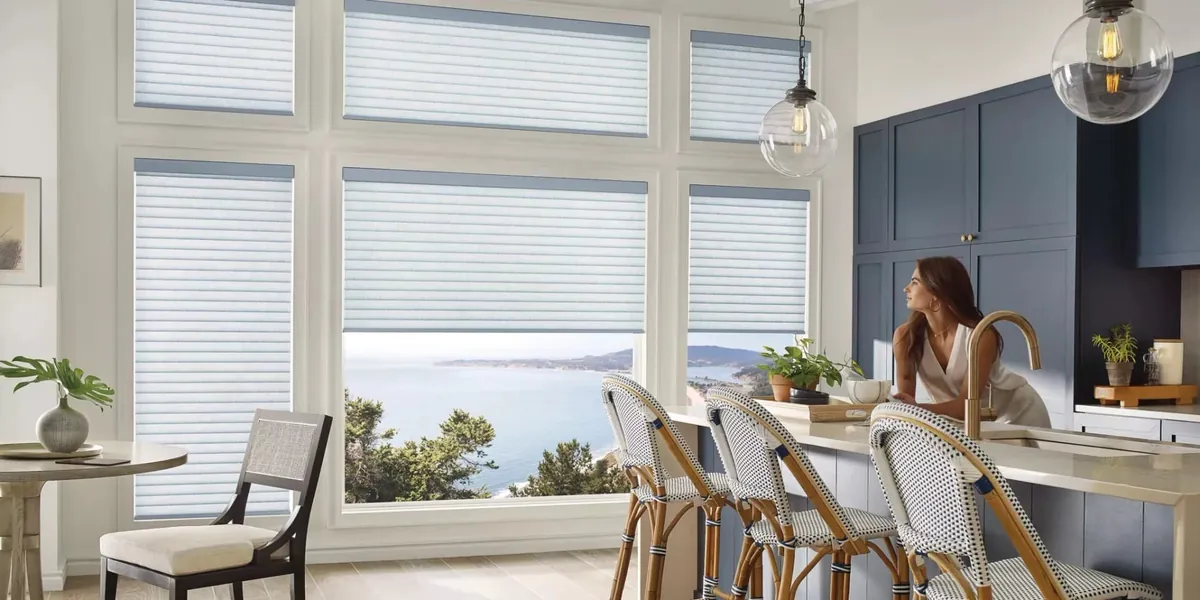
Harbor glass and a cottage built for summer
Many of the houses around Mattapoisett harbor started life as summer places. Shingled cottages on small lots near the water, a porch on the front, rooms laid out to catch the breeze. Over time a good number were winterised and turned into year-round homes, often with a band of new glass added on the side facing the water. As a Hunter Douglas dealer in Mattapoisett, MA, we spend a lot of our time in exactly those rooms.
Out along Ned’s Point the pattern repeats, with the glazing getting bolder the closer a house sits to the shore. Inland, the picture changes: larger, newer houses on bigger lots, with open plans, high ceilings and a different set of window questions.
Two things tie the town together. The water-facing rooms carry a lot of glass, and the salt air never really lets up. Both shape what we suggest for each window, from fabric and lift to how the brackets go in.
Six ways to dress a Mattapoisett window
The full Hunter Douglas catalog is open to a Gallery-level Hunter Douglas dealer in Mattapoisett, and that is what we are. Of everything in it, these six come up most around the harbor and inland, and every one links through to its own Mattapoisett page.
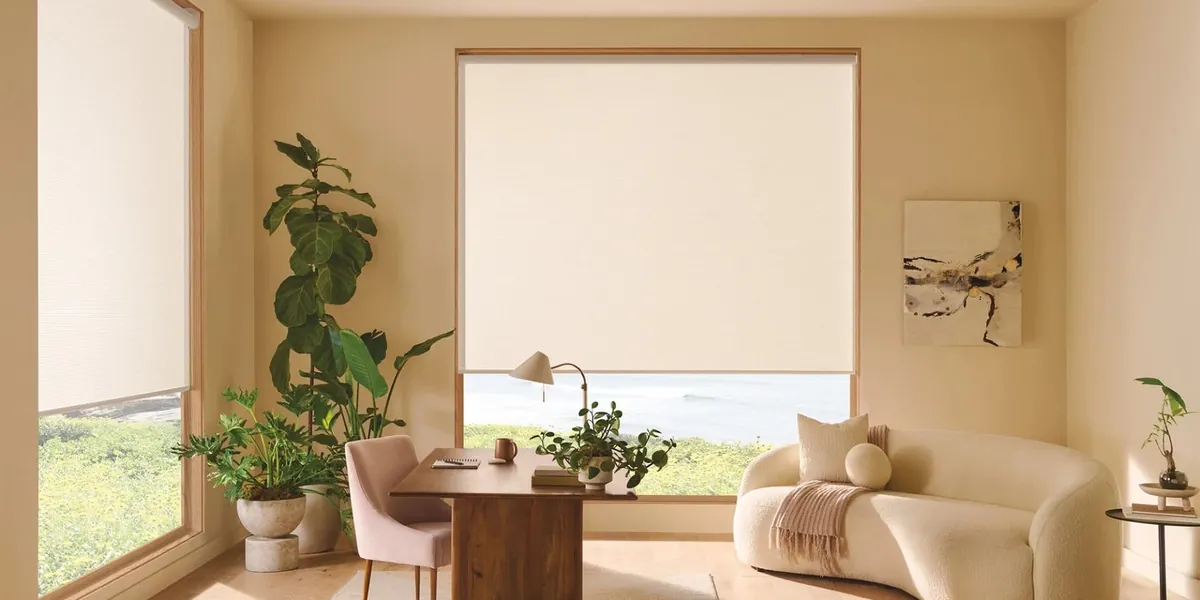
Roller and solar screen shades
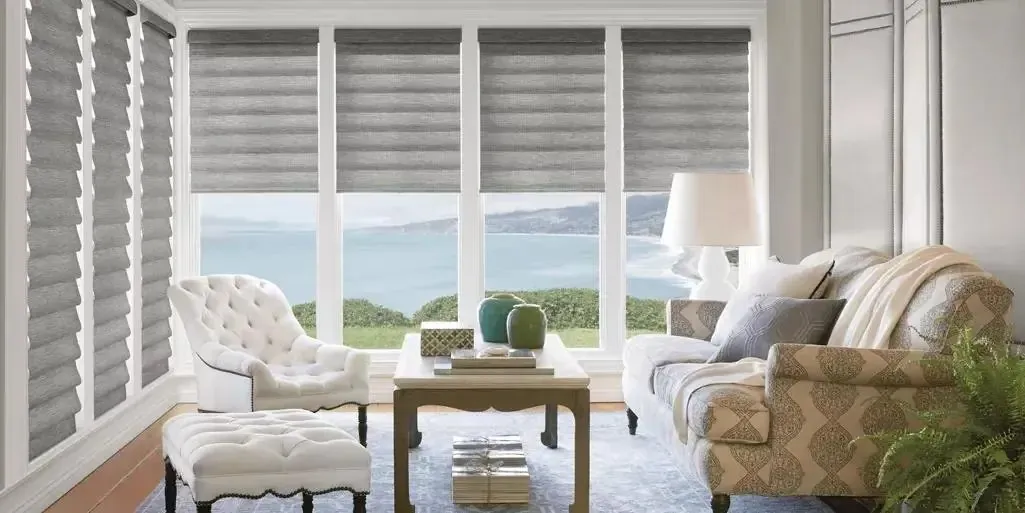
Designer roller and screen fabrics wind away to nothing when raised, and a screen weave tames reflected sun with the moorings still in sight.
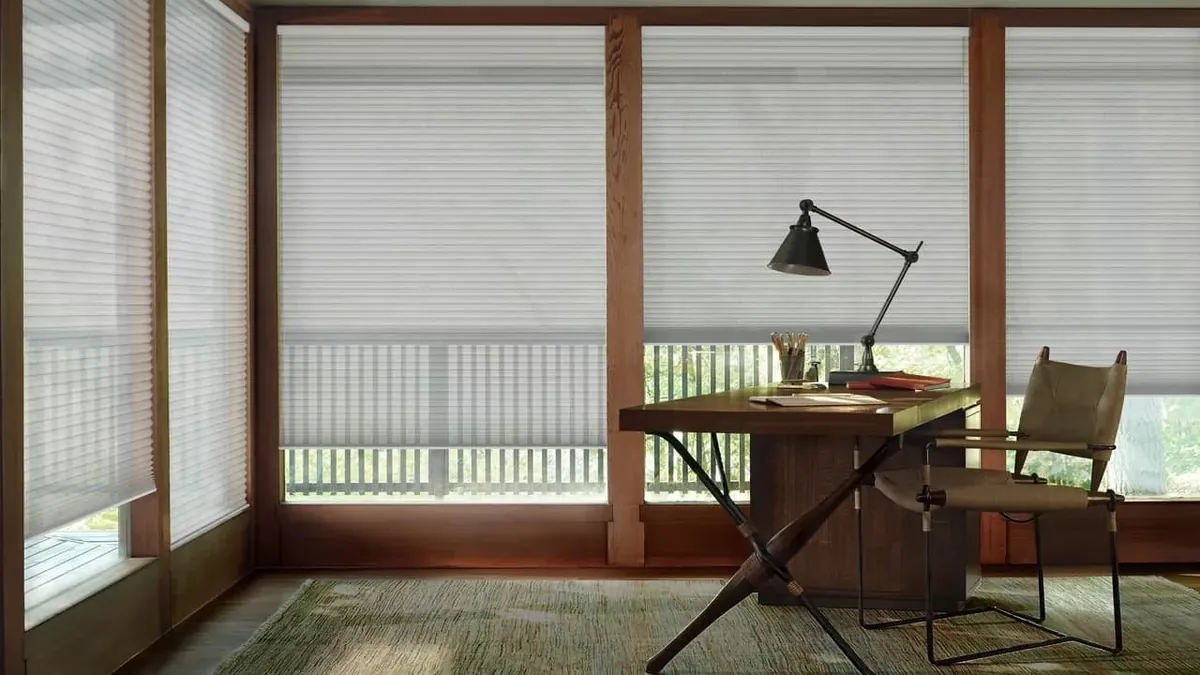
Cellular shades
Duette and Applause trap still air inside each pleat, a real comfort in a converted cottage whose walls were never meant for February.
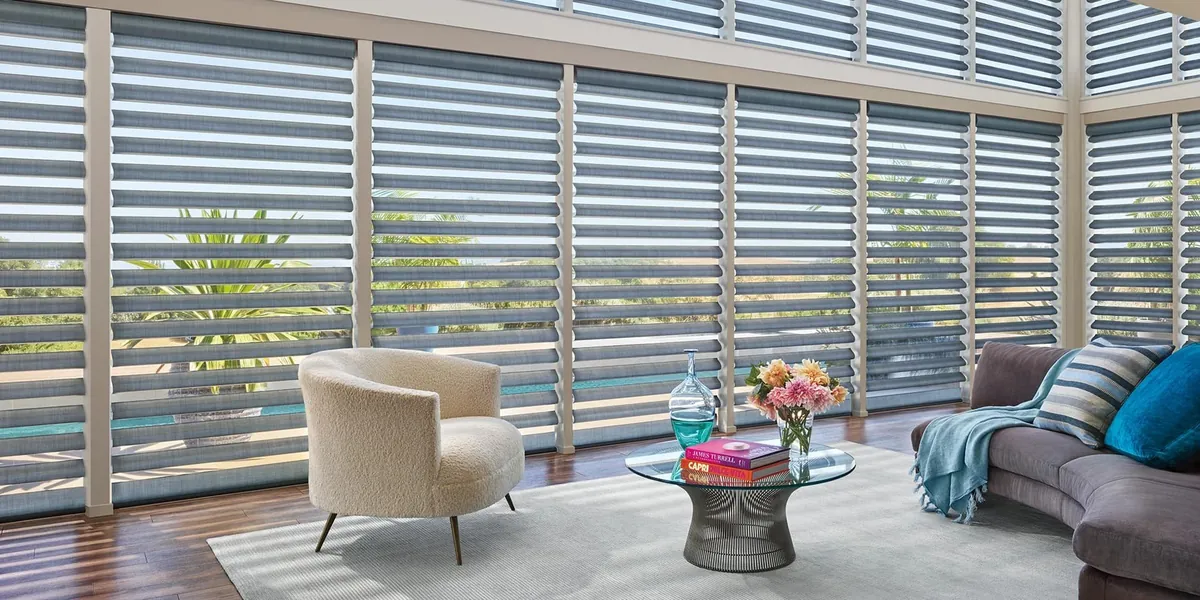
Sheers with tilting vanes
Silhouette, Pirouette and Luminette turn hard brightness into an even glow, then open flat so you can watch the boats come in.
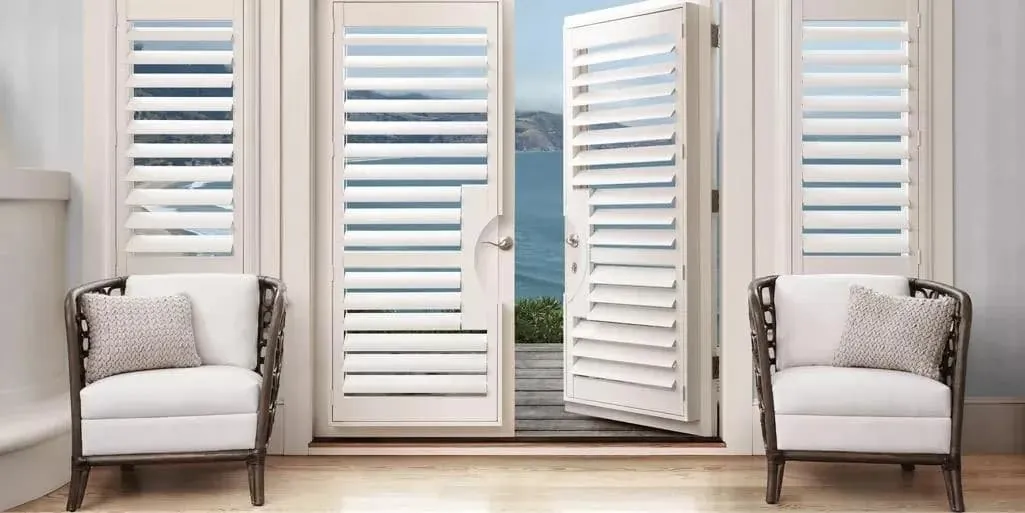
Shutters
Polysatin Palm Beach panels shrug off damp and strong light, and look as if they came with a shingled house.
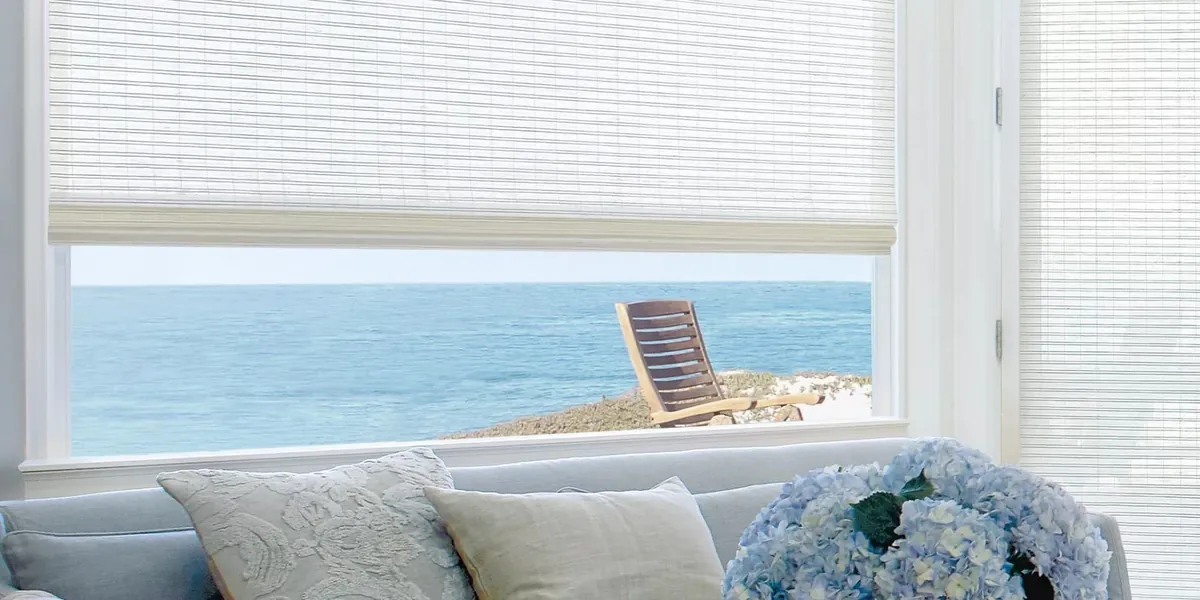
Woven texture and soft folds
Provenance woven wood or a Vignette Roman brings texture to a cottage sitting room without making it feel heavy.
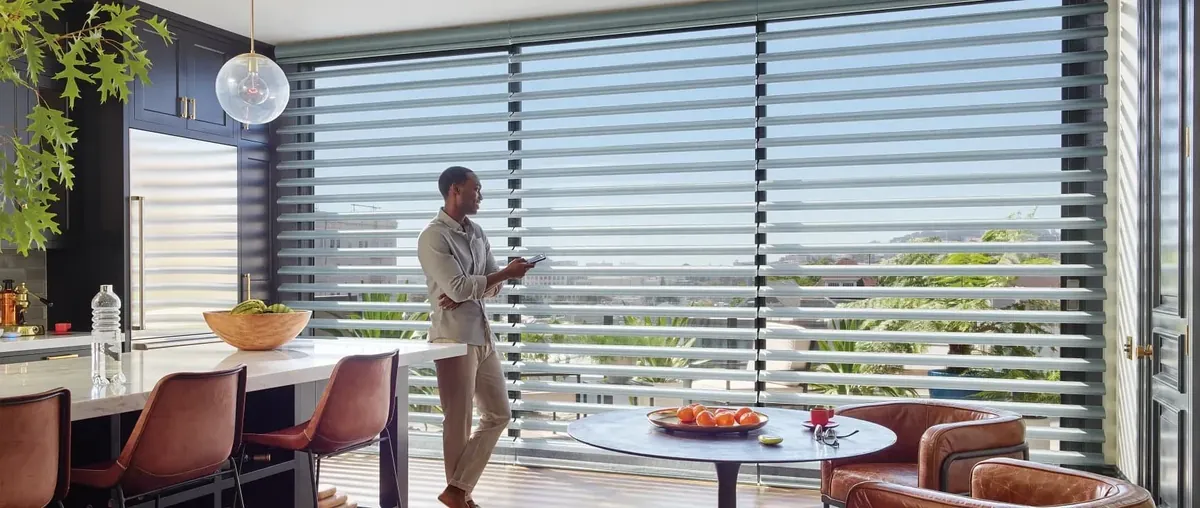
PowerView control
One tap moves every shade along the harbor side, or a schedule lowers them as the afternoon sun swings round.
Cottages that became year-round homes
A converted summer cottage is one of the more interesting houses to fit. The original part of the house usually has small, simple windows set in thin walls, with little trim. The newer part, added when the house was winterised, often has larger modern units, sliders and sometimes a sunroom. You can stand in one room and see two eras of window at once.
The challenge is making the two halves feel like one house. Matching the product family and the fabric across old and new windows does a lot of that work. A honeycomb shade in the same color on a small original window and on a big new slider ties the rooms together, even though the windows themselves look nothing alike.
Thin walls bring a practical point too. The original cottage frames rarely have much depth, so a headrail may not fit inside. Mounting on the face of the frame, or just above it, is often the cleaner answer, and on a cottage with plain trim it can actually make the window look larger.
The older part of the house was also built with summer in mind, so its rooms can run cold once the weather turns. Honeycomb shades in the bedrooms and a cellular roller shade such as Sonnette in the living room both help hold warmth after dark, without making the rooms feel shut in during the day.
Rooms built around the water
On the harbor side and out toward Ned’s Point, the water-facing rooms are glazed heavily on purpose. The view is the reason the house is there. So the first job of any window covering in those rooms is to vanish when it is not wanted.
Roller fabric wraps onto a slim tube that can tuck into a pocket above the frame. Honeycomb stacks very small when raised. Sheer shades can rest fully open with their vanes level, so you look straight through.
The second job is brightness. Sun reflecting off Buzzards Bay arrives low and strong, and it lights the ceiling as much as the floor. A solar screen dulls that brightness and leaves the shape of the harbor readable through the fabric. How open the weave is decides the trade: a looser weave keeps more outlook, a tighter one blocks more sun and gives more daytime privacy. It is easiest to judge standing at the window when the sun is worst.
The third job is heat. A run of south or west glass can make a room uncomfortable on a summer afternoon. Lowering a screen or light-filtering shade through the hottest hours makes a real difference, and PowerView can handle that on a timer even when nobody is home.
A coastline that is always in the air
Anyone with a house this near the shore knows the haze that collects on a car windscreen or a porch lantern. That same air drifts through every open sash from May to October, and over the years it can stiffen any mechanism left out in it and dull a bright metal finish.
That is why, here, we favour products whose moving parts stay enclosed. A roller tube or a honeycomb headrail keeps the working pieces covered. Going cordless takes away the little lock at the side that is usually first to seize. Shutters have almost nothing to wear beyond their hinges. A PowerView motor lives sealed inside its rail.
Wet rooms deserve their own choices. Think of the outdoor shower by the kitchen door, the bath everyone uses after the beach, the laundry full of damp towels. In those spaces polysatin shutters or EverWood faux wood blinds last far longer than real wood or a delicate fabric. Matching the material to the room is part of what a Hunter Douglas dealer in Mattapoisett should do for you.
Larger newer houses inland
Away from the harbor, the newer houses on bigger lots bring a different scale. Open-plan kitchens and family rooms, two-story entries, a great room with windows up into the gable, and a main bedroom whose back wall is mostly glass.
Height is the main issue. A window above a two-story entry or high in a gable cannot be reached by hand, so motorization moves from a luxury to a practical need. PowerView shades on those windows can be grouped with the ones below, so the whole room moves together.
Open plans also mean one long run of windows across several rooms. Choosing one family for that whole run, varying the fabric only where a room needs darkness or privacy, keeps the space looking calm. In a main bedroom, a dual shade pairing a sheer with a blackout fabric gives daylight and darkness from the same headrail.
Inland houses often have more privacy from neighbors than the harbor cottages do, and more trees around them. That can mean less brightness to fight and more interest in warmth, texture and the look of the room, which opens the door to Roman shades, woven wood and drapery.
Porches and three-season rooms
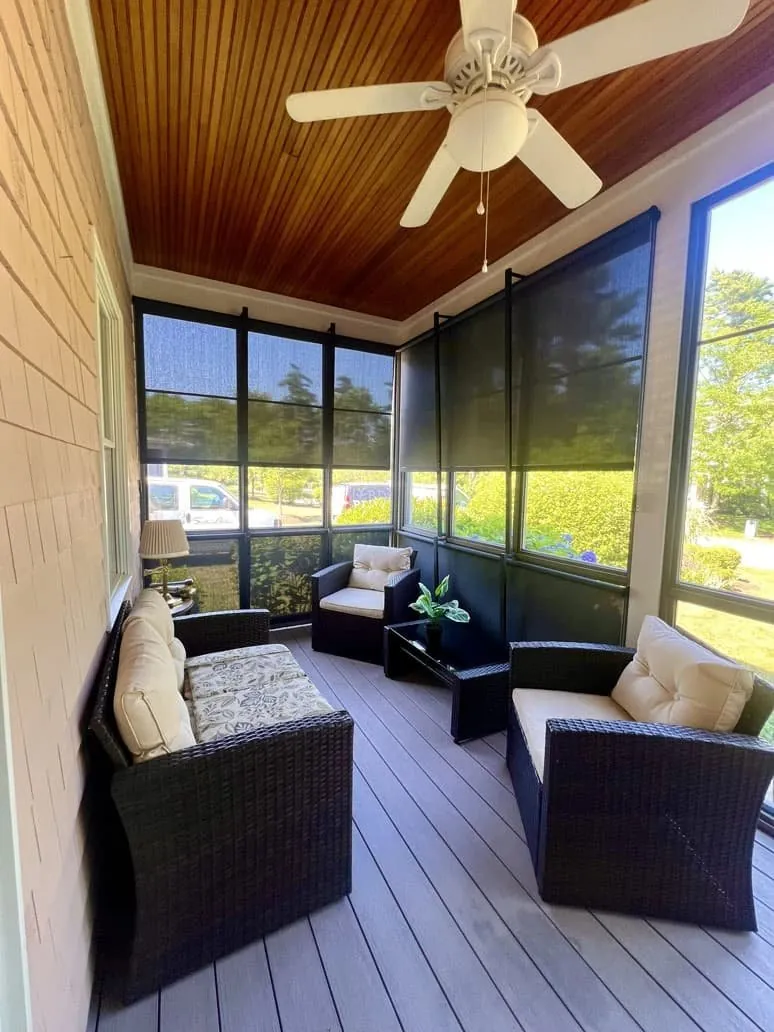
Plenty of cottages near the harbor kept their old screened porch, or glassed it in when the house went year-round. Those rooms take sun on three sides and damp straight through the screens. For an open porch, dark screen fabrics cut the brightness and give the neighbors less to look at while the breeze still comes through. Once the porch is glazed, a roller or honeycomb shade on each panel lets you shade one side at a time as the sun moves.
Order of work for a whole house
Most people who call a Hunter Douglas dealer in Mattapoisett are not doing one window. They are finishing a conversion, moving in, or redoing the harbor side of the house after new glass went in. In that case it pays to plan the whole house at one visit, even if the order is split into stages. Fabric colors stay consistent from room to room, headrails line up at the same height across a run of windows, and the motorized rooms can be planned together so one remote or one app scene covers them. We can put the whole house on one free estimate and show you which rooms make sense to do first, usually the water side and the bedrooms.
After sunset on the harbor side
By day, a harbor window shows you the water. Once evening comes and the lamps go on inside, the direction reverses: the lit room becomes the view for anyone out on a mooring or walking the shore road. Screen fabric that seemed private at lunchtime goes nearly transparent once the room is brighter than the night outside.
Three answers work well in these houses. A dual shade puts a screen and a blackout or light-filtering fabric on the same bracket, so you change over when the light goes. Full drapery panels on a ceiling track can be drawn the length of the room at night and pushed back to the corners in the morning. And a Silhouette or Pirouette with its vanes closed gives you both settings in one shade. Any of these can be set to lower themselves at dusk with PowerView.
The best fit depends on how near the house sits to the road and the water, which rooms you use after dark, and whether you like the look of fabric framing the glass.
Screen, sheer or honeycomb on the harbor side
For a room that faces the water, the choice usually narrows to three Hunter Douglas families, and they are worth understanding before we arrive.
A solar screen is the most transparent. You see the most of the harbor through it, and its job is to dull brightness and heat. It gives some daytime privacy and very little at night.
A sheer shade is softer. Its fabric vanes sit between two layers of sheer, so the light that comes through is diffused and warm, and the room feels gentler. Close the vanes and you have real privacy, day or night.
A honeycomb shade is the most insulating of the three. It blocks the view when lowered, so it suits bedrooms and the colder rooms of a converted cottage better than the main harbor room. Top-down, bottom-up honeycomb gets round that by leaving the top of the window clear.
Many harbor houses use all three: screen in the great room, sheers in the living room and honeycomb upstairs. We carry samples of each to the house so the decision is made in your own light.
How a home visit runs
The light in a harbor room changes through the day, and no sample book can show you that. So our vans bring the samples to your door, and we look at them where they will hang.
- Choose a time through Request a Consultation or the call button.
- We arrive with fabrics, louvers and slats from the families that make sense for a coastal house.
- The visit starts wherever the problem is worst, often the room on the water side.
- Samples go up against the real glass so you can see openness, color and how each one softens the sun.
- Every opening is measured, with depth noted for the mount and clearance checked around doors.
- A free estimate follows, and you decide when you are ready.
Help with color and fabric across a whole room is available through our interior design consultations at the same appointment. For more about the visit itself, see what happens at an in-home consultation.
Shutters for the cottage bathroom
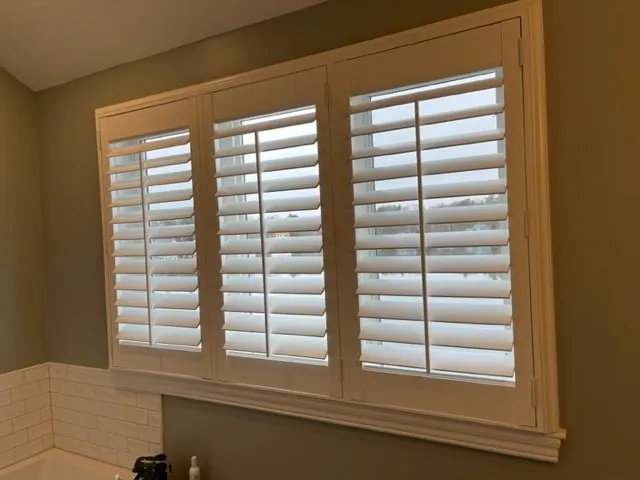
The bathroom in a shingled cottage is often a small room with a wide window and a lot of moisture. After a day on the water, the shower runs hot and the glass fogs. Fabric struggles there.
Polysatin shutters are made for that kind of room. Humidity does not bother them, a damp cloth cleans them, and the louvers tilt to let daylight in while screening the view from the lane. Panels can be split so the top opens for light while the lower half stays closed.
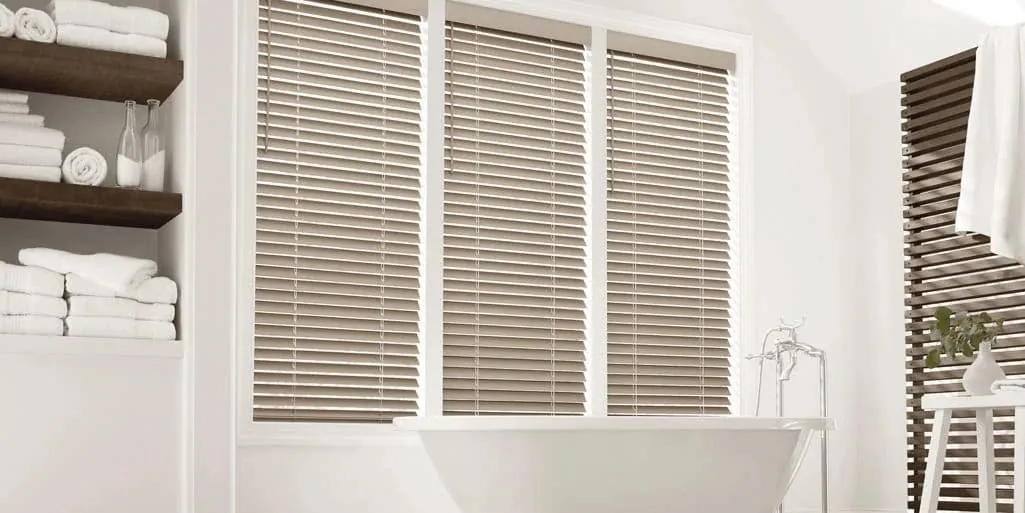
Faux wood blinds are the other good choice for a damp room, with a slimmer profile that sits well in a shallow cottage frame. We bring both to the visit.
Fitted to last near the shore
Every order is put up by our own installers, certified by Hunter Douglas. Near the water the care shows in small things. Each bracket is fixed into framing rather than trusting old plaster, because a window that is thrown open every summer day puts strain on whatever is mounted above it. PowerView motors are set up with your phone or remote and tried before we leave. Shutter frames are trimmed to suit cottage openings that have shifted with the house.
Our part does not finish once the last shade is up. If the sea air has stiffened something you already own, our blind and shade repair work covers it, and adding motorization to existing shades is a common next step.

One Gallery dealer for the harbor house and the inland one
Gallery is the title Hunter Douglas gives dealers who meet its standards, and Blinds & Designs holds it. In practice that means the complete range of shades, blinds, shutters and drapery under one roof, and honest guidance on which suits each opening.
A single house in town might call for screen fabric on the harbor wall, polysatin shutters in the bath, honeycomb upstairs and full drapery in the dining room. A single consultation plans all of that, and our own crew installs every piece.
You are welcome to browse the Hunter Douglas catalog on the maker’s own website before we visit, and our Hunter Douglas page sets out every family we carry. Everything else we do in town is gathered on our Mattapoisett page. Full-length panels have their own custom drapery in Mattapoisett page, and wood, faux wood and metal slats are on custom blinds in Mattapoisett.
Questions from Mattapoisett
What stops the glare off the bay without hiding it?
Solar screen fabric. Its weave dulls the brightness and heat while the harbor stays visible, and you pick how open the weave is. For a living room that wants a softer feel, a sheer shade with tilting vanes is the alternative.
Does sea air shorten the life of a shade?
It is the exposed hardware that suffers, and most Hunter Douglas shades keep theirs enclosed in the rail or tube. Going cordless or motorized removes the side lock, and polysatin or faux wood suits the damp rooms.
My cottage has old small windows and a new addition with big glass. Can they match?
Yes. Using the same product family and fabric color on both makes the rooms feel like one house, even though the windows are very different. We plan each mount separately so every window looks right.
Why can people see in at night through my screen shades?
Screen fabric turns see-through once the room is brighter than outside. A dual shade, drapery on a track or a sheer shade with closing vanes solves it, and PowerView can lower the private layer at sunset for you.
Is the estimate free?
Yes. Ask for a visit and we will bring samples, measure each window and prepare a free estimate.
Book a visit
Choosing with a Hunter Douglas dealer in Mattapoisett, MA is easiest when the samples are against your own windows. Request a consultation and we will come out, measure and give you a free estimate. You can also ring through on the call button, or drive over to the North Dartmouth showroom, the nearest one to the harbor.