
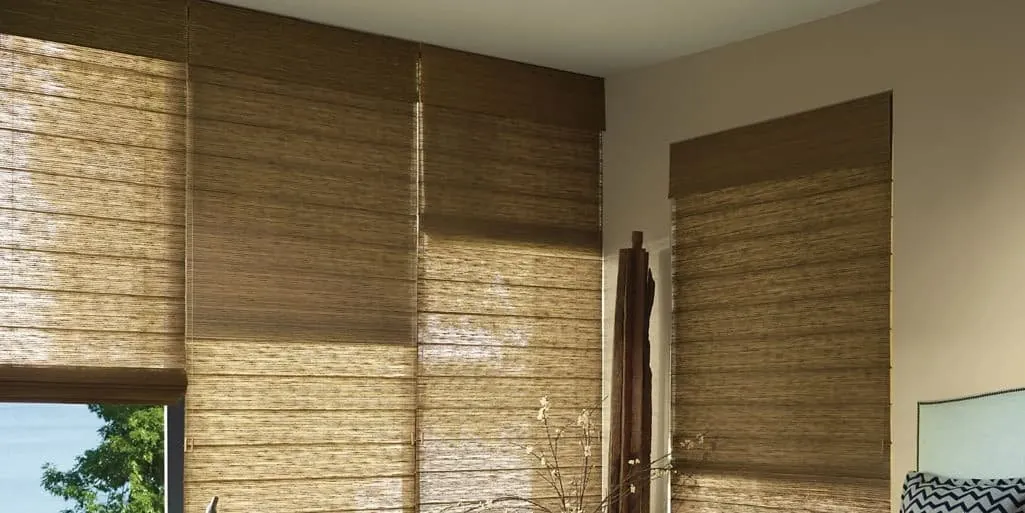
Wrentham windows, from the common to Lake Pearl
Wrentham’s houses sit on more land than most. Off Route 1A and around Lake Pearl, large newer houses stand well back from the road on wooded lots, with long driveways and plenty of room between neighbors. Around the common, the antique colonials are closer together and far older, with original openings that can be surprisingly small.
That spread shapes the kind of blind and shade repair in Wrentham, MA, that we are asked for. The newer houses have a great deal of glass, including modern two-story windows, and so a great many coverings: wide blinds, tall shades, matching sets across whole floors. The antique houses have fewer, smaller windows, and coverings that have to fit into tight, old frames.
Different houses, but the same handful of failures: a cord that frays, a wand that comes loose, a headrail that slips or jams, slats that stop turning together.
Repairs for the blinds and shades you already have
Whatever the house, blind and shade repair in Wrentham usually falls into one of these three groups.
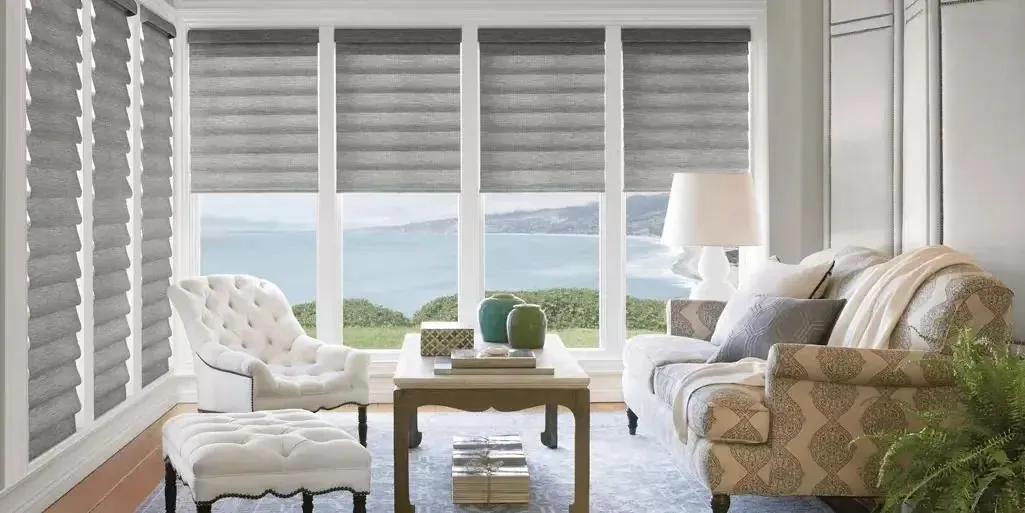
Lift cords and restringing
A shade that rises crooked, will not hold its height or has a snapped cord. New cord is threaded through its full length so it lifts level once more.
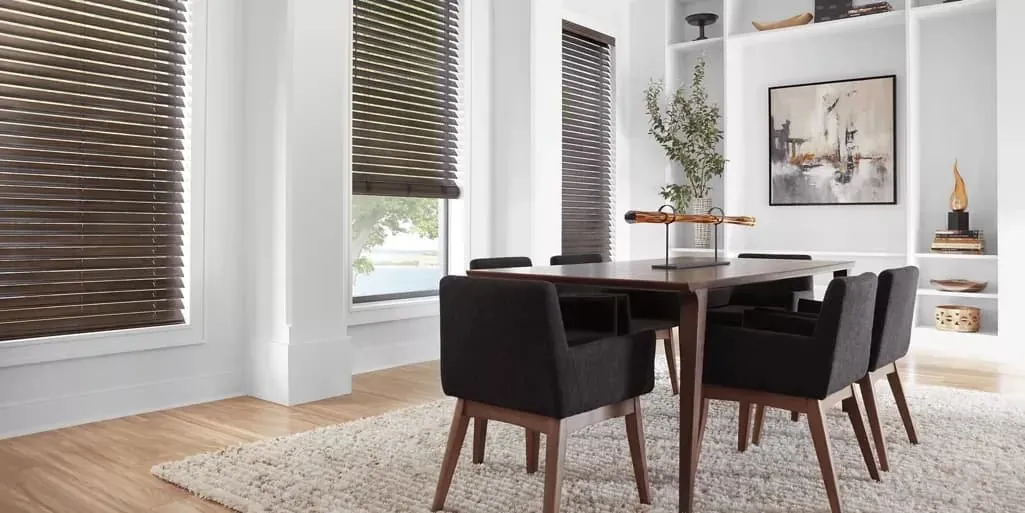
Wands and tilt mechanisms
Slats that will not open or close, or a wand that spins without doing anything. A worn tilt gear or a broken wand is usually the cause.
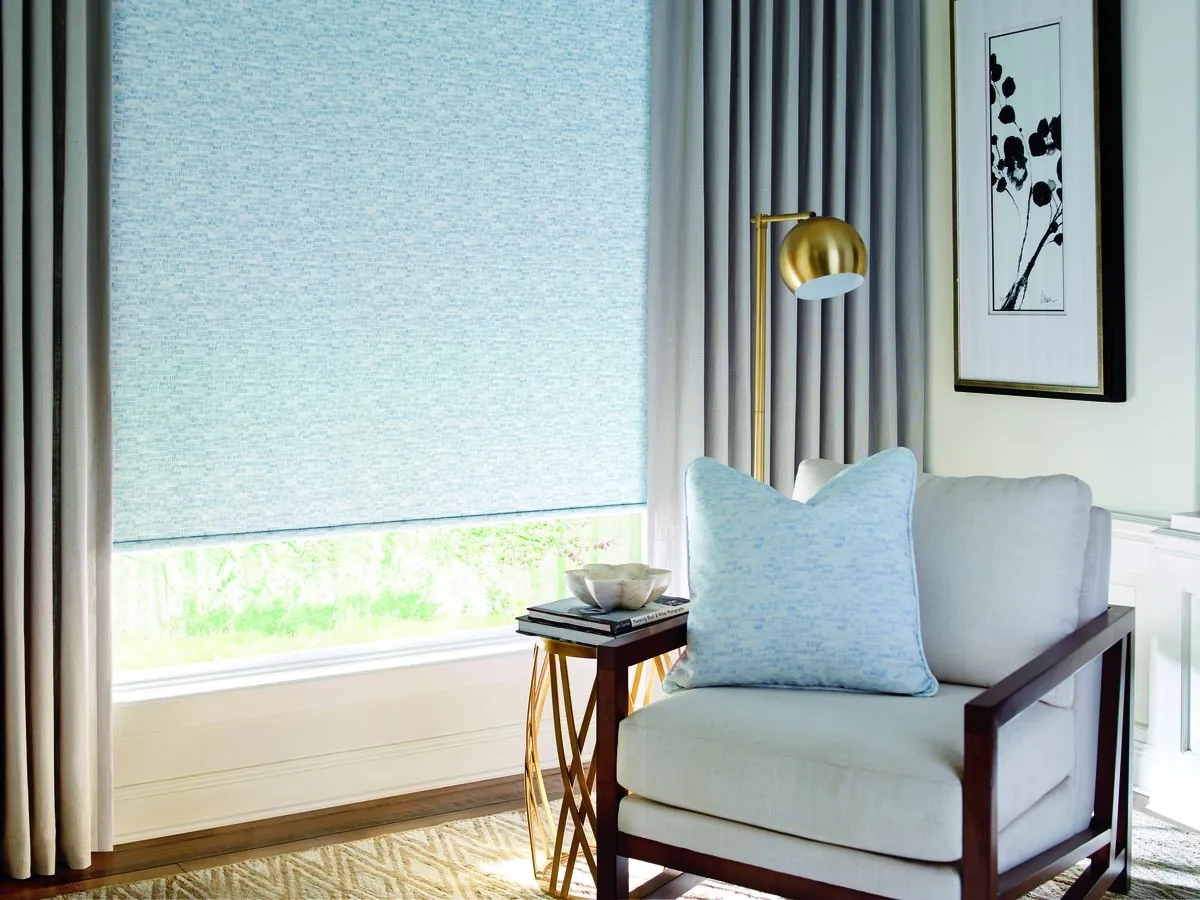
Headrails
A headrail that has dropped out of a bracket, bowed across a wide window or jammed inside so the shade sticks partway.
Rooms full of glass on wooded lots
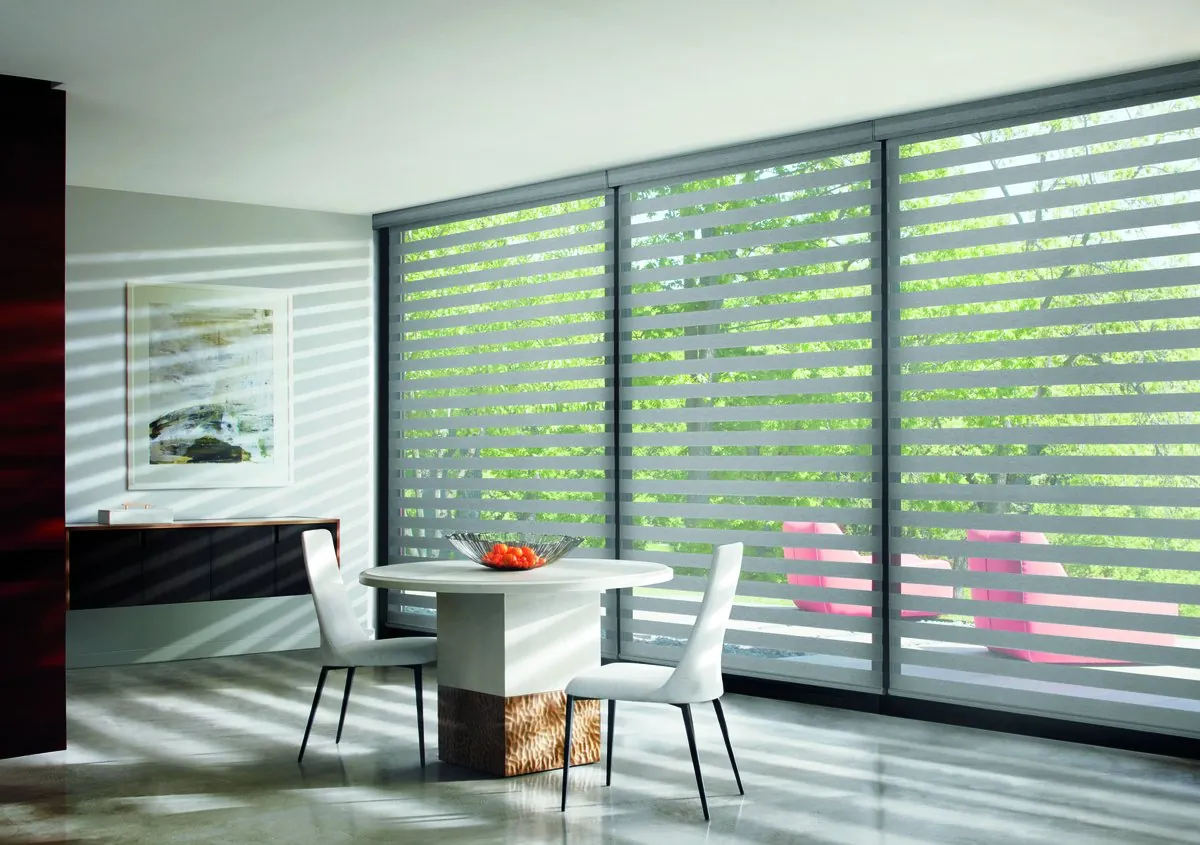
A newer house on a generous Wrentham lot is usually designed around its view of the trees. Family rooms open onto the back through wide runs of windows, kitchens have big glass over the sink and breakfast area, and the main stair often climbs beside a two-story window. Every one of those openings has a blind or shade, and many of them are wide.
Wide coverings put more load on their working parts. A blind across a broad family room window carries a long row of heavy slats on one headrail, and the tilt gear has to turn all of them at once. A shade across a wide kitchen window hangs a lot of fabric from two or three lift cords. Over the years those cords stretch, the gear wears and the headrail can start to bow in the middle.
None of that means the product is finished. In most cases the slats or fabric are still in good condition, and a worn cord or tilt gear is the only problem. That is precisely the kind of blind that is worth repairing.
Coverings that sit still for months
Deep setbacks change how a house uses its window coverings. A house well back from the road, with trees between it and the neighbors, does not need its shades drawn for privacy the way a house on a tight street does. So many Wrentham blinds and shades spend long stretches in one position: raised all day in the family room, half-open in a spare bedroom, untouched on the high stair window.
A covering that rarely moves wears differently from one that is used every day. Cords settle into one shape where they pass over pulleys. Tilt gears that have not turned in months can stiffen. And when someone finally pulls the cord or turns the wand, it is often that one hard tug, after a long rest, that snaps something.
If you have a shade you have been afraid to touch because it feels stiff, it is worth having it looked at before it breaks. Freeing a stiff lift or replacing a tired cord is a smaller job than dealing with a snapped one.
Two-story glass and the great room
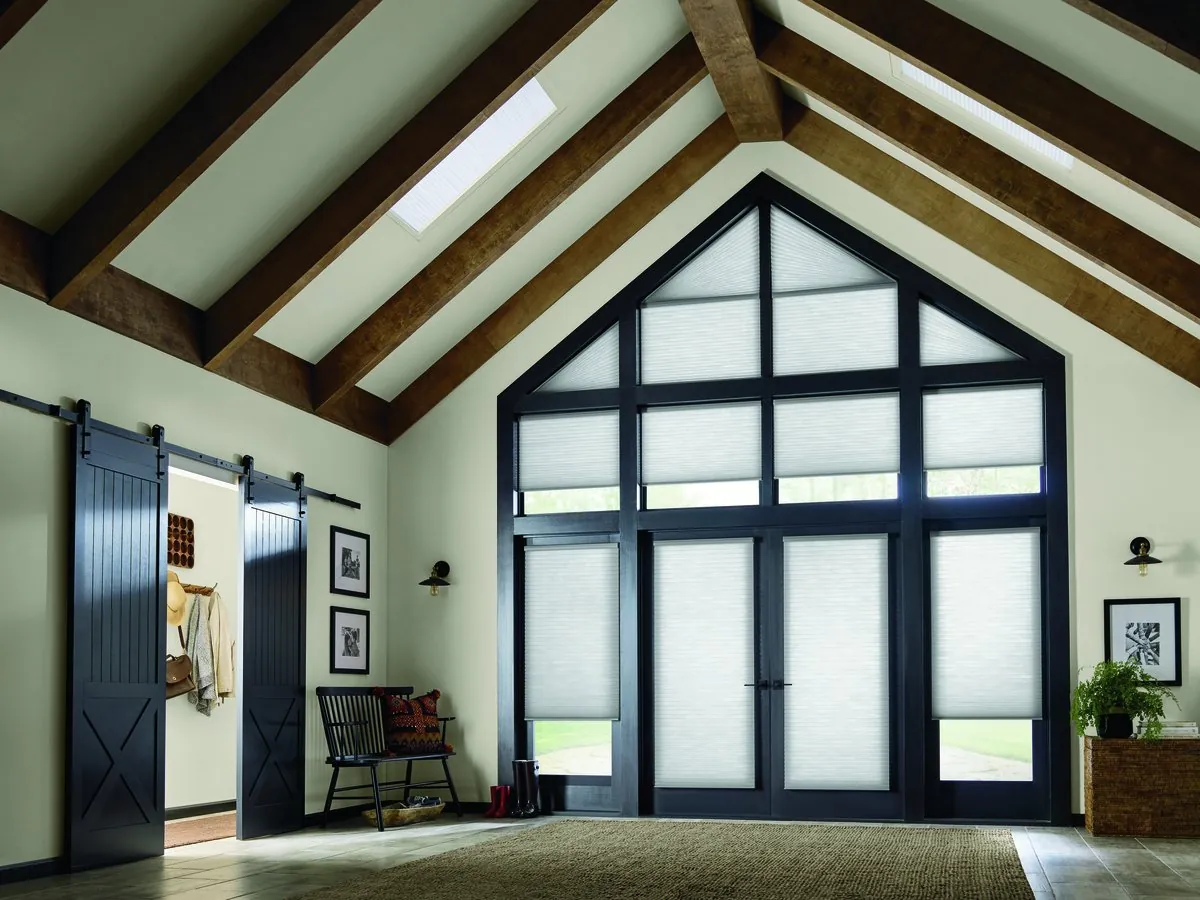
Many of the newer Wrentham houses have at least one room that rises two stories: a great room or family room with a wall of glass at the back, sometimes with a row of upper windows above the main ones. The coverings on those upper windows are the hardest in the house to reach, and the ones most likely to be left alone until they fail.
High shades usually fail in one of three ways. A lift cord wears through and the shade drops or hangs crooked out of reach. A headrail slips from a bracket and the whole shade tilts across the window. Or a shade that has been left down for a long time refuses to rise when someone finally tries. From the floor all three look alarming. Up close, each is usually a single worn part on a covering that is otherwise in good order.
Working at that height takes the right equipment and some care around furniture and floors. Tell us how high the window is when you get in touch and we will come prepared for it. If reaching those upper shades is a nuisance you would rather be rid of, PowerView motorization can lift them from a phone or remote; that is a different subject, covered on our motorized blinds in Wrentham page, and only worth raising if you want to.
Tiny openings around the common
The antique colonials near Wrentham common were built long before modern window sizes, and some still have their original small openings. A blind in one of those windows fits a frame that may be out of square after many years of settling, with a narrow sill and little room on either side.
Small openings bring their own repair needs. The headrail sits close to the jambs, so if the frame has shifted, it can bind as the blind lifts. The cord has only a short path, but it rubs against the frame if the blind is not hung straight. And the brackets are often screwed into wood that has dried out over a long life, so they work loose more easily than they would in a newer house.
When we repair a blind in one of these windows, resetting how it hangs matters as much as replacing the part that failed. A level headrail in sound wood, with the cord clear of the frame, keeps the same fault from returning.
Old trim adds one more thing to watch. Window casings near the common have often been painted many times, and each coat narrows an inside-mounted opening a little more. A blind that once slid up freely can start to catch on a build-up of paint along one jamb. Where that is the cause, a small change to the brackets or the headrail position usually lets the repaired blind run cleanly again.
A repair, one step at a time
You do not need to know what has failed. Tell us what you see and we take it from there.
- Get in touch with a short description and, ideally, a photo of the covering and any label on its headrail.
- We tell you whether it sounds worth repairing.
- If it does, we arrange a time to come and see it, with the ladder a two-story window needs.
- We show you what has worn or broken and explain the fix before any work begins.
- The repair is made and the blind or shade goes back up level.
- We run it up and down, and tilt it if it tilts, with you watching, so you know it works.
If at any stage a repair is not the sensible answer, we say so and stop there.
Restringing a long shade
Restringing is the commonest repair on the tall glass of the newer houses. On a long shade, the lift cords run from the cord lock in the headrail, across the top, down through the fabric or slats and into the bottom rail. Every lift pulls that full length of cord over the same pulleys. Eventually one side stretches more than the other, the bottom rail tilts and the shade starts to jam.
To restring it, the shade is taken down and laid out. The old cord comes out along its whole route, not just at the break, because cord that has worn in one spot is usually tired all the way along. New cord is threaded through the same path, fixed in the bottom rail and run back up through the lock. Then the two sides are evened up so the rail hangs level at every height.
On a two-story window this takes a bit longer than on a small bedroom shade, simply because of the length of cord involved and the care needed working at height.
Wands and tilt on tall blinds
A tall blind needs a long wand, and a long wand hangs where it gets bumped: beside the stairs, behind a door or next to a busy kitchen counter. The hook that connects it to the tilt gear can wear, the wand itself can crack and sometimes it simply goes missing. Replacing it is one of the simplest repairs there is.
The tilt gear inside the headrail is a little more involved. On a tall blind it turns a long rod and a long column of slats, so it works hard. When it strips, the slats stop turning or turn only partway. A blind that has been left in one position for a long time can also have a stiff tilt that gives way when it is finally forced. In both cases a replacement gear usually restores the blind completely.
Headrails across wide spans
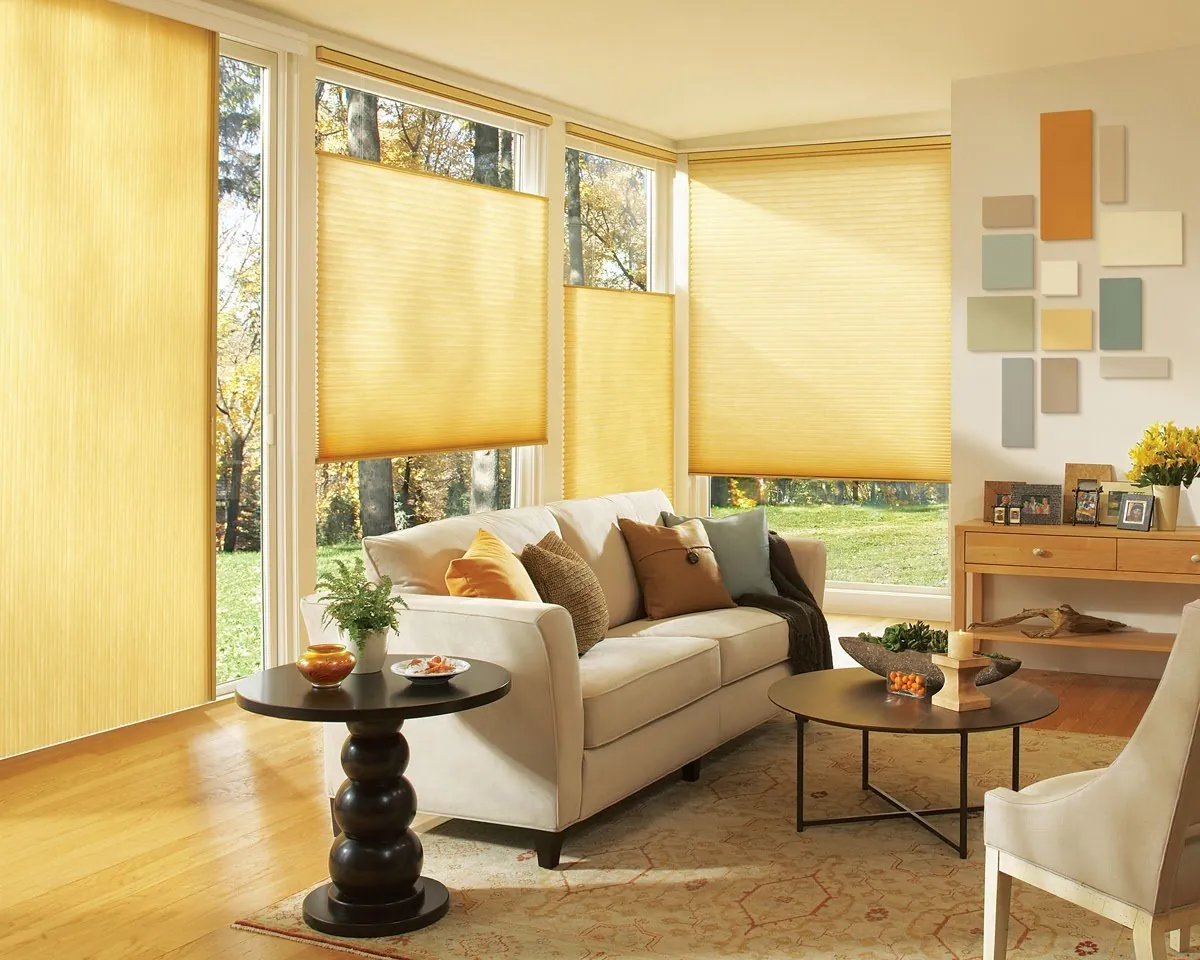
The wider the window, the more the headrail has to carry. On a broad family room or kitchen window, a headrail supports a heavy run of slats or fabric over a long distance, held up by brackets at each end and sometimes one in the middle. If a center bracket was never fitted, or has worked loose, the headrail can bow, and a bowed headrail makes everything below it work harder.
Other headrail faults are about the parts inside: a cord lock worn smooth so the shade drops when you let go, a cracked pulley that frays the cord, a component that jams so the shade sticks halfway. Each is a single-part repair in most cases. We open it up, find the part that has gone and replace it, then check that the headrail sits level in its brackets.
Different coverings, different weak points
A large house rarely has one kind of covering throughout. A Wrentham family room might have wood blinds, the bedrooms honeycomb shades, a study roman shades and the kitchen a roller. Each one wears in its own place.
On a honeycomb shade the lift cords run through small holes in the cells, and a stretched cord on one side tips the bottom rail. On a roman shade the cords climb the back of the fabric through rings, and when a ring parts company with the fabric, one fold sags below the others. A roller shade relies on the mechanism at the end of its tube; when that wears, the shade creeps down or will not roll back up. A wood blind usually fails at the tilt or the lift cord.
We look at whichever covering has the problem and work out which part has worn. Knowing how each type is put together is what lets us tell you whether a repair is realistic.
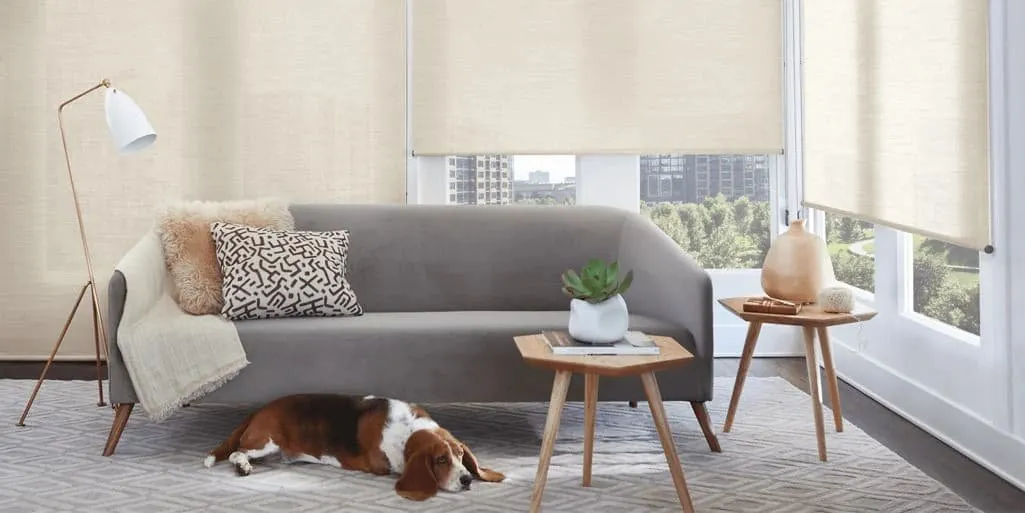
Many windows, one look
Houses with a lot of glass usually bought their window coverings in one go, room by room or floor by floor. Coverings bought together tend to wear together. When one blind in the family room gives out, the ones beside it may not be far behind.
It can make sense to have the whole set checked at the same visit. We can look at each one, tell you which need attention now, which are fine and which might want a new cord before long. There is no obligation to do more than the one you called about. It simply saves you calling again for the next window in a few months, and it is often the most practical way to handle blind and shade repair in Wrentham, MA, in a house with this much glass.
Looking after coverings in a big house
A house with dozens of windows has dozens of coverings to look after, and nobody wants to fuss over each one. A few habits go a long way.
Move the coverings you rarely use now and then, even if you put them straight back. Running a shade up and down keeps its cords supple and stops the lift stiffening in one position. Turn a blind’s wand only until the slats close, never past that point, because forcing it is the quickest way to strip a tilt gear. Pull lift cords straight down rather than to one side, which keeps both sides of the lift wearing evenly.
Dust settles on top of headrails and on upper slats, especially on high windows that are rarely cleaned. A soft brush or a vacuum on low keeps it from working into the lift. Our guide to caring for fabric shades has more on everyday care.
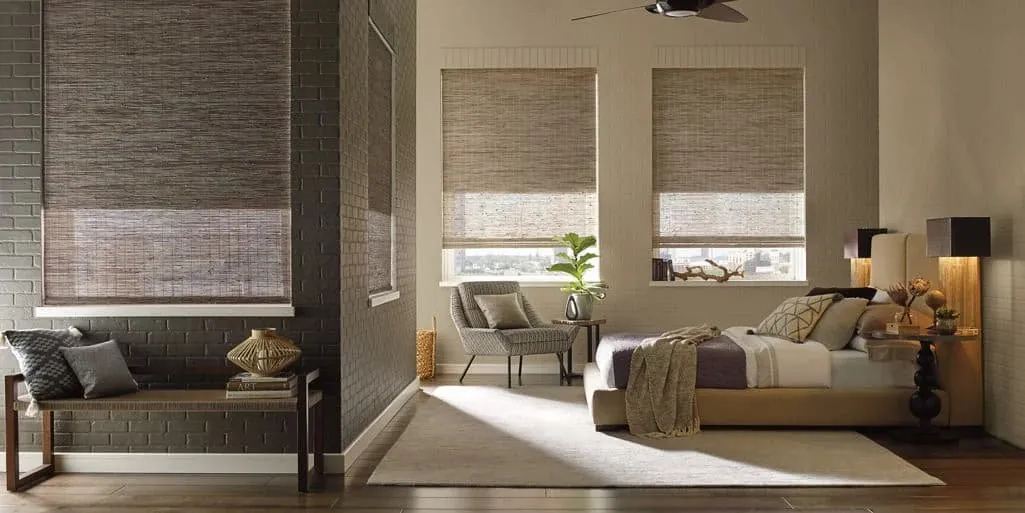
Repair, or start again
Repair makes sense when the covering is still sound: straight slats, clean fabric, a solid headrail and one clear fault. It makes less sense when the fabric has gone brittle, several parts are failing at once or the product never suited the window.
We will always give you an honest view. If a repair is the right answer, we make it. If it is not, and you want to see what else would work, our pages on cellular shades in Wrentham and custom blinds in Wrentham are a good place to look, and our Wrentham page lists every service we offer in town.
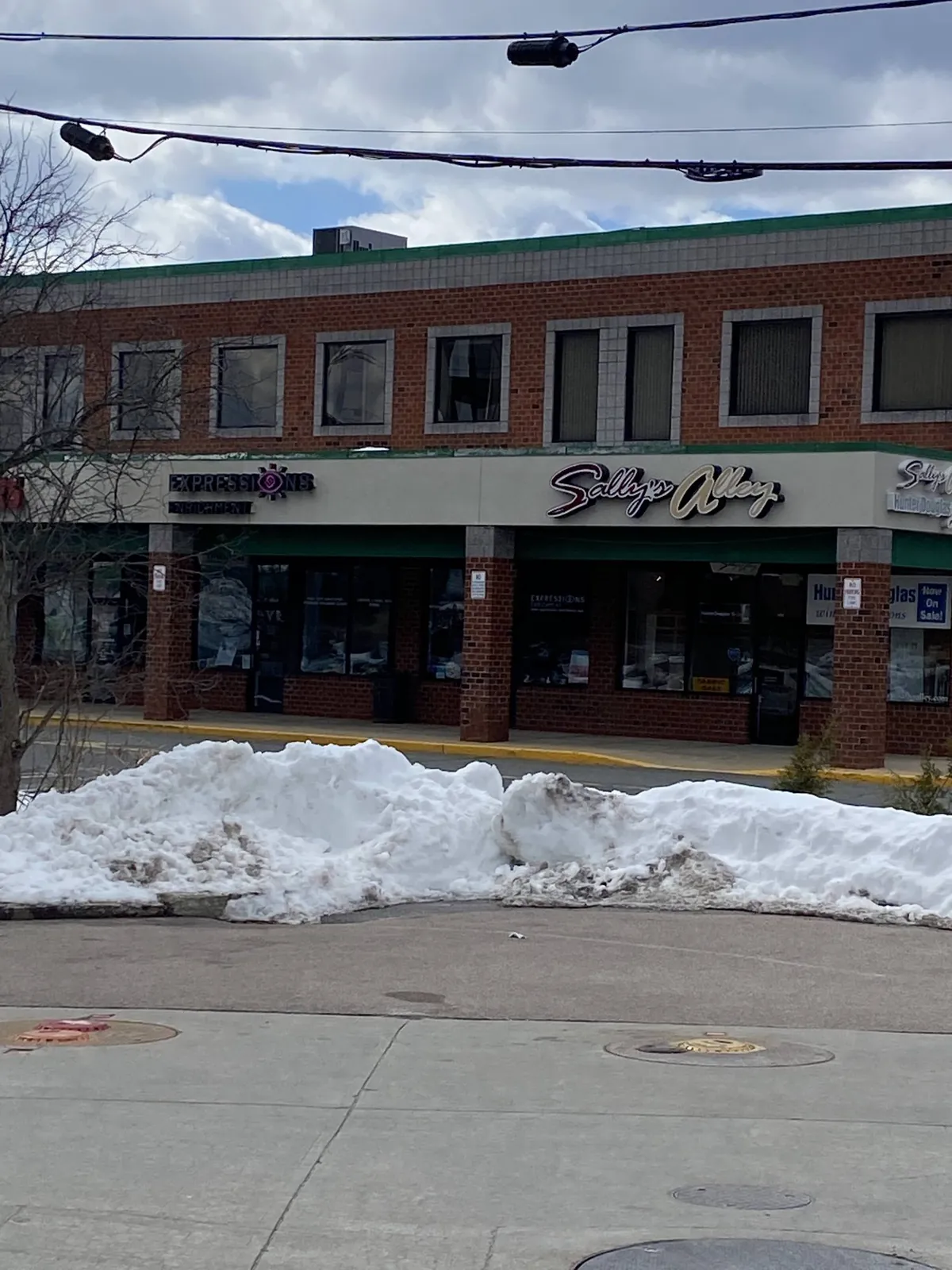
Close to the Franklin showroom
Our nearest showroom to Wrentham is in Franklin. If you would like to describe a problem in person, bring along a photo of the covering and of any label on its headrail.
It is not necessary to come in. A short description with your consultation request is usually enough to get blind and shade repair in Wrentham, MA, under way.

The knowledge behind a good repair
Blinds & Designs is a Hunter Douglas Gallery dealer, and our installers are certified by Hunter Douglas. We know how these blinds and shades are built and how they should hang, which is what turns a quick fix into a repair that lasts.
The same knowledge runs through everything else we do: in-home consultations with sample vans, interior design consultations and window covering automation. For more on how repairs work across all the areas we cover, see the main blind and shade repair page.
Wrentham repair questions
My stair window shade has not moved in months and feels stiff. Should I force it?
Better not to. A covering that has sat in one position can stiffen, and a hard pull after a long rest is when cords snap and tilt gears strip. Ask us to look at it first.
The blind across my family room window sags in the middle. Can that be fixed?
Often, yes. A sagging headrail on a wide window usually means a missing or loose center bracket, or a worn part inside. If the headrail itself has bent, we will tell you.
Can a blind in a small old window by the common be repaired?
Yes, if the blind is sound. We also check that it hangs level in the frame and that the brackets are in good wood, so the fault does not come straight back.
Several of my blinds were bought at the same time. Should they all be checked?
It can be worth it, since they tend to wear at a similar rate. We will look at as many as you like and tell you which need attention.
Is there any pressure to buy new window coverings?
None. A repair is a repair. If you ever want something new, our in-home consultations bring samples to your house, with a free estimate.
Start with a short note
Tell us which covering it is and what it is doing. Request a consultation with a photo if you can, use the call button to reach the Franklin showroom, or take your photo in to the showroom. Blind and shade repair in Wrentham, MA, begins with that.