
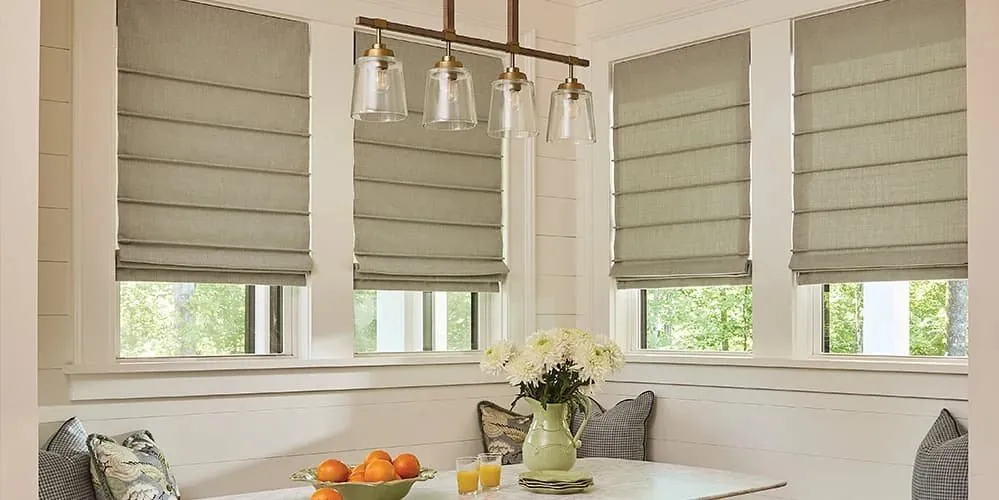
Short sightlines and small original sash
Whitman’s housing is compact. Two-families and post-war capes sit close together on small lots, and in the older stock near the center, Victorians keep the small original openings they were built with. Two things follow from that. The view from one window often lands on a neighbor’s wall or window only a short way off, and the windows themselves are modest in size, so every inch of glass counts. Choosing roman shades in Whitman, MA, means balancing those two facts: privacy across a short gap and as much daylight as a small window can give.
A fabric shade suits both. It can drop to any height, so a side window can be screened at night and opened again in the morning. When raised, it folds up compactly, and with the right fabric and fold the stack takes only a small strip at the top of the frame. On a small window that matters more than it does on a large one.
We bring Vignette and Carole Fabrics roman shades, in flat and folded styles, to your door and try them against the windows you actually have.
Roman shade styles that suit Whitman houses
Most homes in town settle on one of these three. You can see each at your own windows during the consultation.
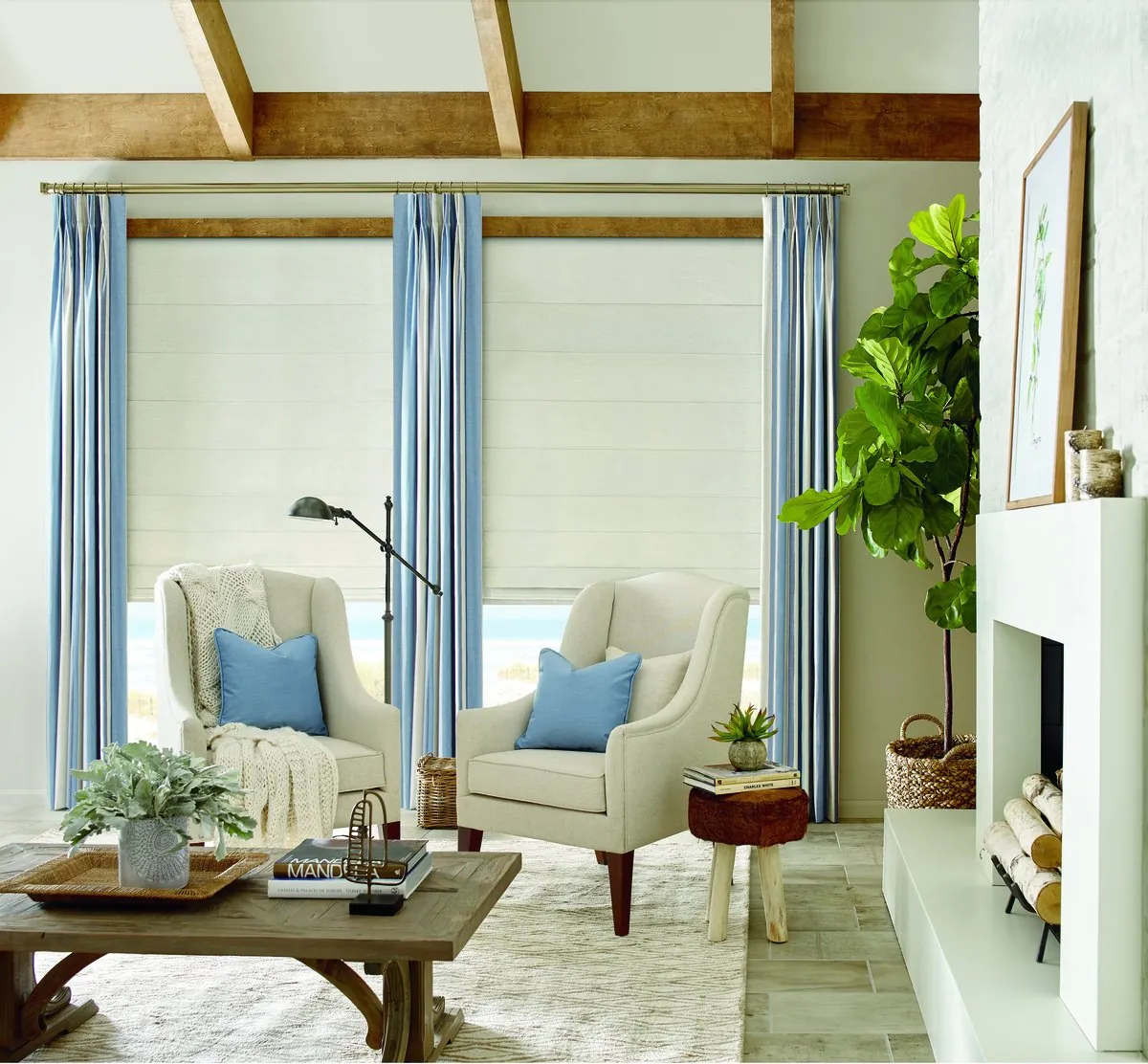
Vignette, flat and tidy
A crisp Hunter Douglas roman shade that suits the plain trim of a cape and stays neat on a small opening.
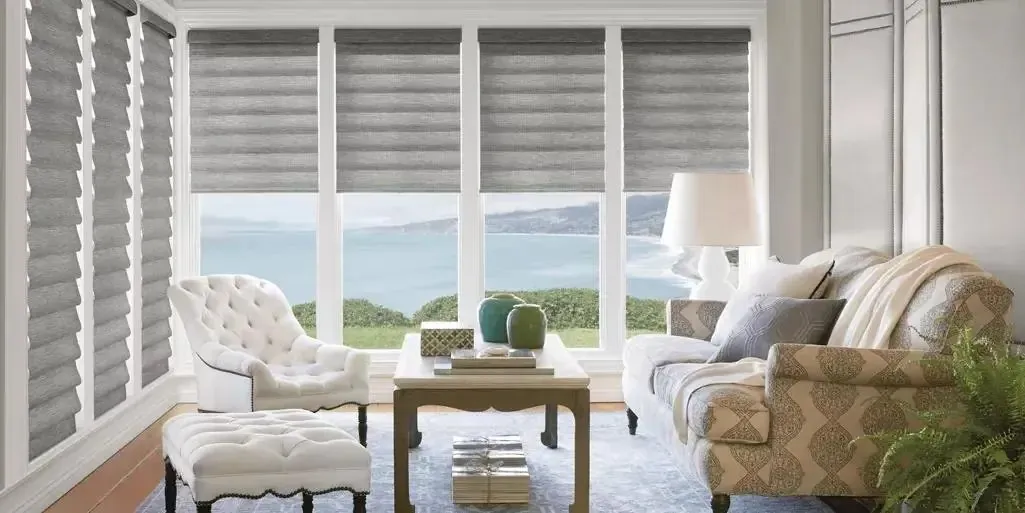
Carole Fabrics with soft folds
A wide range of cloths, made up as soft rounded folds or a flat panel, for a living room where the fabric should stand out.
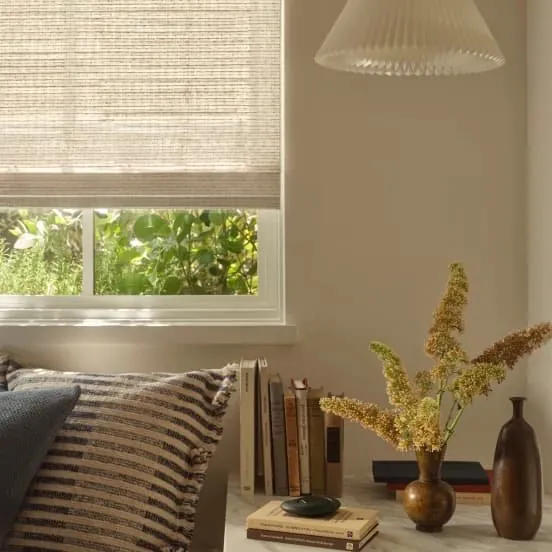
A pale weave for side windows
Where a window faces the house next door, a translucent cloth blurs the view and still lets daylight through.
When the house next door is close
On many Whitman streets, a side window looks across a narrow driveway or a strip of yard straight at the neighboring house. In daylight, the brightness outside keeps the room fairly private. Once the lamps come on, the room can be seen clearly from next door. That short sightline shapes almost every fabric decision on the side of the house.
The simplest pattern is to use a fabric with enough body to give full privacy when it is down, and to leave it raised during the day. For a bathroom or a bedroom where the shade stays down more often, a translucent fabric is a better fit: it keeps the outline of the neighbor’s house out of view while still letting light in. We bring both kinds and hang them at the window so you can see the difference from inside the room.
Short sightlines cut both ways. The neighbor’s wall also blocks direct sun, so side rooms often get softer, reflected light. That makes a heavy, dark fabric a poor choice there, because it takes away light the room cannot spare.
Small original openings
The older houses near the center of Whitman have smaller windows than a modern house, often with their original sash and trim. On a small window, the raised shade is the thing to watch. A roman shade gathers into a stack at the top of the frame when it goes up, and on a short window a deep stack can take a noticeable share of the glass.
Three choices help. A flat fold stacks slimmer than a looped one. A lighter cloth folds more compactly than a heavy one. And mounting the headrail on the wall above the trim, rather than inside the frame, lets the raised shade sit partly above the glass so more of the window stays clear. We show you how each option looks on your window before you decide. When we plan roman shades in Whitman, MA, for an older house, the size of the raised stack is often the deciding factor.
Original frames also vary. Paint layers, old hardware and a century of settling mean two windows that look alike can measure differently. Each one is measured on its own.

Upstairs and downstairs in a two-family
Whitman’s two-families usually stack one household above the other. Each unit has its own rooms and often its own taste, and each floor has its own view of the street. Downstairs, people on the pavement pass at eye level and the next porch is a few strides away, which puts screening at the top of the list. Upstairs looks out over the road into the treetops and usually gets more sun.
So the two levels rarely want the same cloth. A denser weave tends to go on the ground floor and a lighter, glare-taming one above. When both households are shopping together, what matters from the road is that the windows look orderly. A common neutral tone on every street-facing shade does that, and each family is still free to pick the cloth it likes for its own rooms.
Landlords fitting out a single unit usually keep it simple: one plain Vignette or Carole flat style in every room, quick to pick and easy to repeat later.
Post-war capes on small lots
The capes in Whitman are modest houses with a familiar plan: a pair of windows each side of the front door, a kitchen and living room downstairs, and bedrooms tucked under the roof upstairs. On small lots, the sides of a cape tend to be close to the next house, so the same short sightlines apply.
Downstairs, the front windows are usually standard sizes and easy to treat as a matching set. Upstairs, the bedrooms often have dormer windows, smaller than those below and set into a recess. A flat fold in a lighter fabric works well there, because it stays compact. The upstairs rooms also catch the morning first, so a bedroom under the roof may want a fabric with a bit more weight than the rooms downstairs.
The Victorians near the center
The Victorians around the center of town bring a little more character to the job. Their windows are often taller than a cape’s, though still modest compared with grander houses, and the trim tends to be deeper and more detailed. A fabric shade fitted neatly inside the frame keeps that woodwork on show.
In these houses, the front rooms often face the street at close range, so evening privacy matters, and the rooms behind face the next house along. A Carole fabric with soft folds can suit the period feel of a front parlor, while the back rooms and kitchen often look better in a simple flat style. Mixing styles from room to room is perfectly normal.
Bathrooms with a neighbor in view
On a small lot, the bathroom window is often on the side of the house, looking across at the neighbor’s siding or, worse, their own window. Older houses near the center tend to have a small original sash here, and many post-war capes have a modest window above the tub. Either way, the shade in a bathroom spends a lot of its life lowered.
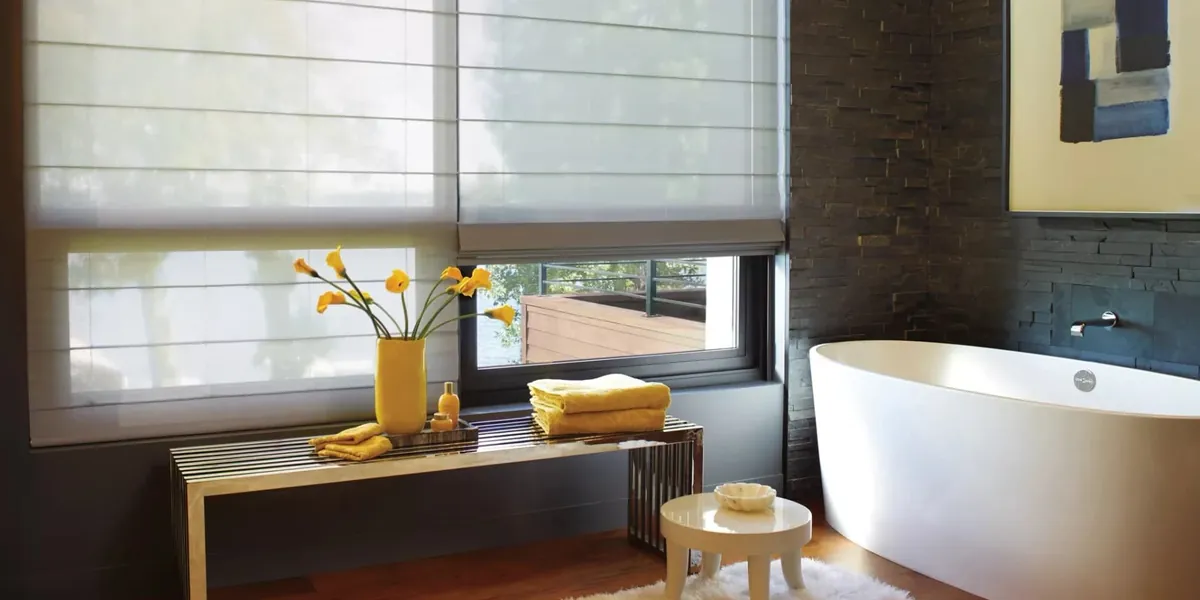
That makes fabric choice simple in principle. A translucent cloth that hides shapes but passes daylight lets the shade stay down all day without turning the room dim. A sheer weave can be too open for a window this close to the next house, so we usually bring something with a little more density to compare. The consultant holds both up with the bathroom light on, which is the moment that matters, and you can see which one keeps the room private.
Setting the shade at the right height
One of the quiet advantages of a fabric shade is that it does not have to be all the way up or all the way down. In a Whitman house, the right height often changes with the time of day. In the morning, a side window might be raised fully to catch the light reflected off the house next door. By late afternoon, with a neighbor home and lamps coming on, it drops halfway. At night it comes all the way down.
On a short original window, a few inches makes a real difference, so it helps to think about where you want the bottom of the shade to rest when it is partly lowered. Many owners find that a shade covering the lower half of a side window, where the neighbor’s sightline falls, is enough for most of the day. That habit, more than any one fabric, is what makes roman shades in Whitman, MA, comfortable to live with on a close-set street.
Kitchens at the back of the house
In a cape or a two-family, the kitchen usually sits at the back, often looking into a small yard with the next lot close behind. The window above the sink is used all day, so the shade has to be easy to reach and quick to raise. A light flat-fold fabric suits it, folding up neatly and keeping the room bright when it is lowered. A color or a small print can also add some life to a plain kitchen without any other changes. Where the back of the house faces the neighbor’s yard across a short fence line, a translucent cloth lowered partway screens the view while you wash up, and it can stay that way most of the day without making the kitchen feel closed in.
A consultation at your own table
Whitman is covered by our shop-at-home service, which runs out of Canton. Instead of visiting a store, you book a time and the samples come to the house. The Canton shop-at-home page has the background.
- Send a request through Request a Consultation, or use the call button to talk it over.
- Say which rooms you are thinking about, whether that is a couple of side windows or a whole two-family unit.
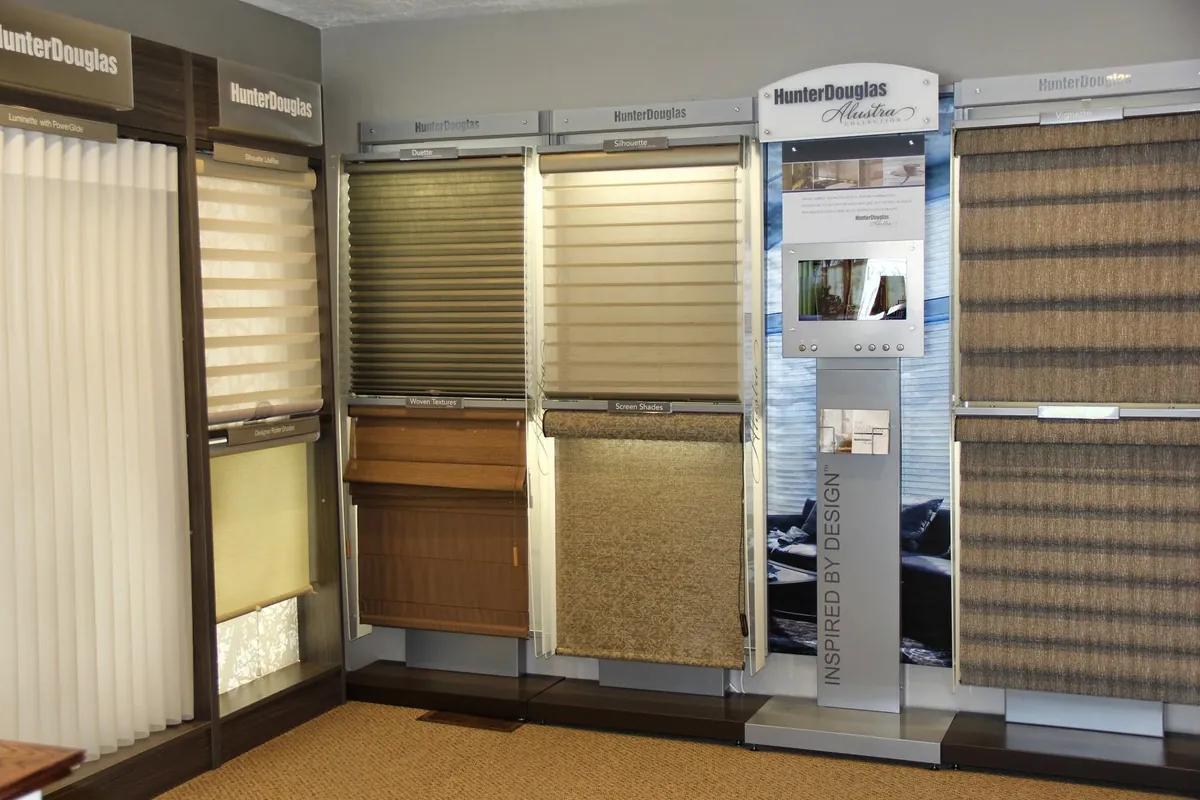
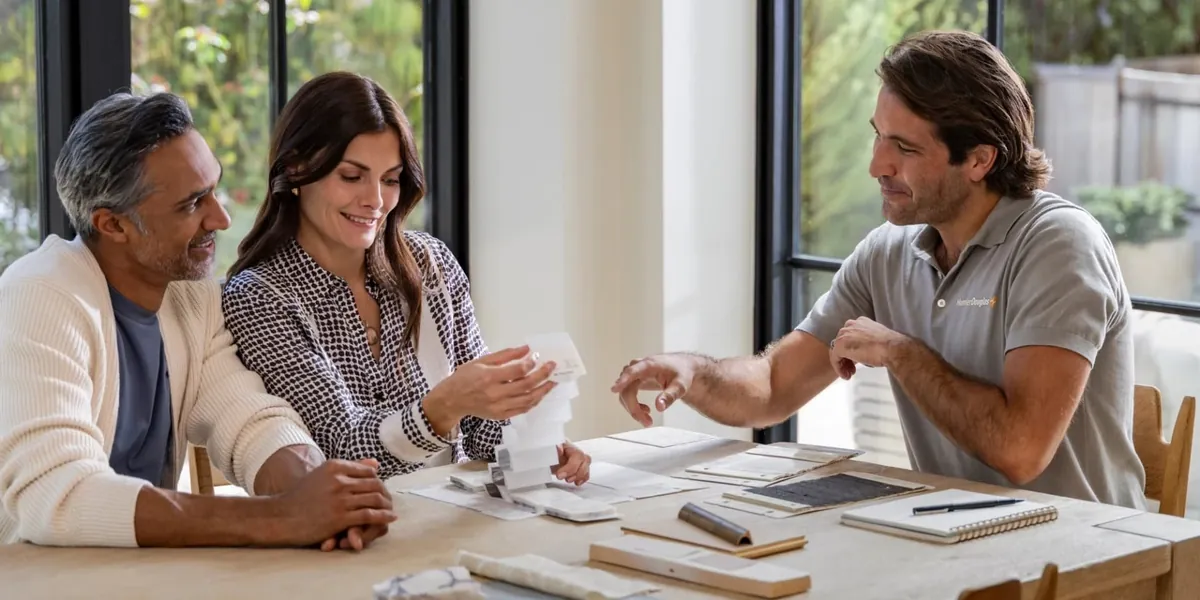
- The consultant carries the Vignette and Carole Fabrics swatches in from the van.
- Fabrics are tried at a side window that faces the neighbors and at a front window, so you can see how each behaves.
- Every window is measured individually, including any small original sash.
- You are left with a free estimate set out by room.
The guide what happens at an in-home consultation answers the common questions.
Fabric for rooms that get little direct sun
Because the houses sit close together, many Whitman rooms get only indirect light on one or two sides. A front room may take the sun for part of the day, while a side bedroom sees mostly sky reflected off the house next door. Choosing a fabric for a dim room is different from choosing for a bright one.
In the darker rooms, a pale, translucent fabric keeps what light there is and still screens the view. A heavy fabric belongs where you want a dim room, such as a bedroom that faces east, or where privacy after dark is the priority. Picking roman shades in Whitman, MA, by the light each room actually gets, rather than one fabric throughout, is what keeps the side rooms bright. If you have a room that does get strong sun, our guide to best shades for sun and glare is worth reading first.
Color and print on small windows
A small window gives a pattern less room to repeat, so scale matters. A fine stripe, a small geometric or a textured plain reads well on a modest opening, while a large floral can look as if it has been cut off at the edges. A vertical stripe can make a short window look a little taller.
Color works with the size of the room. Light colors make a small room feel more open and bounce light back from the window. A deeper color can look rich in a living room or dining room, especially in the evening with the lamps on. If you would like help choosing colors across a whole room, our interior design consultations cover fabric, paint and furniture together.
Motorized shades with PowerView
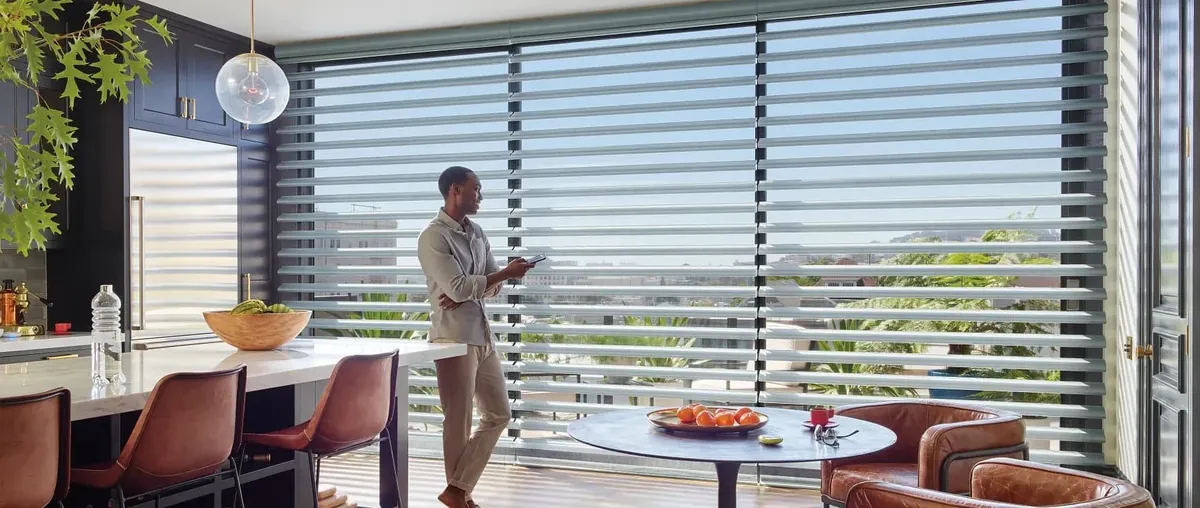
Motorization is not only for large houses. In a two-family or a cape, the windows that are awkward to reach are often over a kitchen sink, behind a bed or up a staircase. With PowerView, a fabric shade can be raised or lowered by remote, by an app on your phone or by a schedule. Side windows that face the neighbors can be scheduled to close at a set time each evening, which is handy when nobody is home in the evening. Powering each motor is something the consultant works out with you on the day. To see what else in the house can run this way, read motorized blinds in Whitman, and for the control choices, how motorized shades are controlled.
Fitting day
Every shade goes up by certified Hunter Douglas installation. With a small original sash, the installer watches the trim and the frame depth closely, setting the headrail square even where the opening has shifted with age. Across a row of standard cape windows, the headrails end up at one even height. Each shade is run through its full travel to check it before anyone leaves. For the details, see what happens on installation day.
A Gallery dealer with a showroom in Franklin
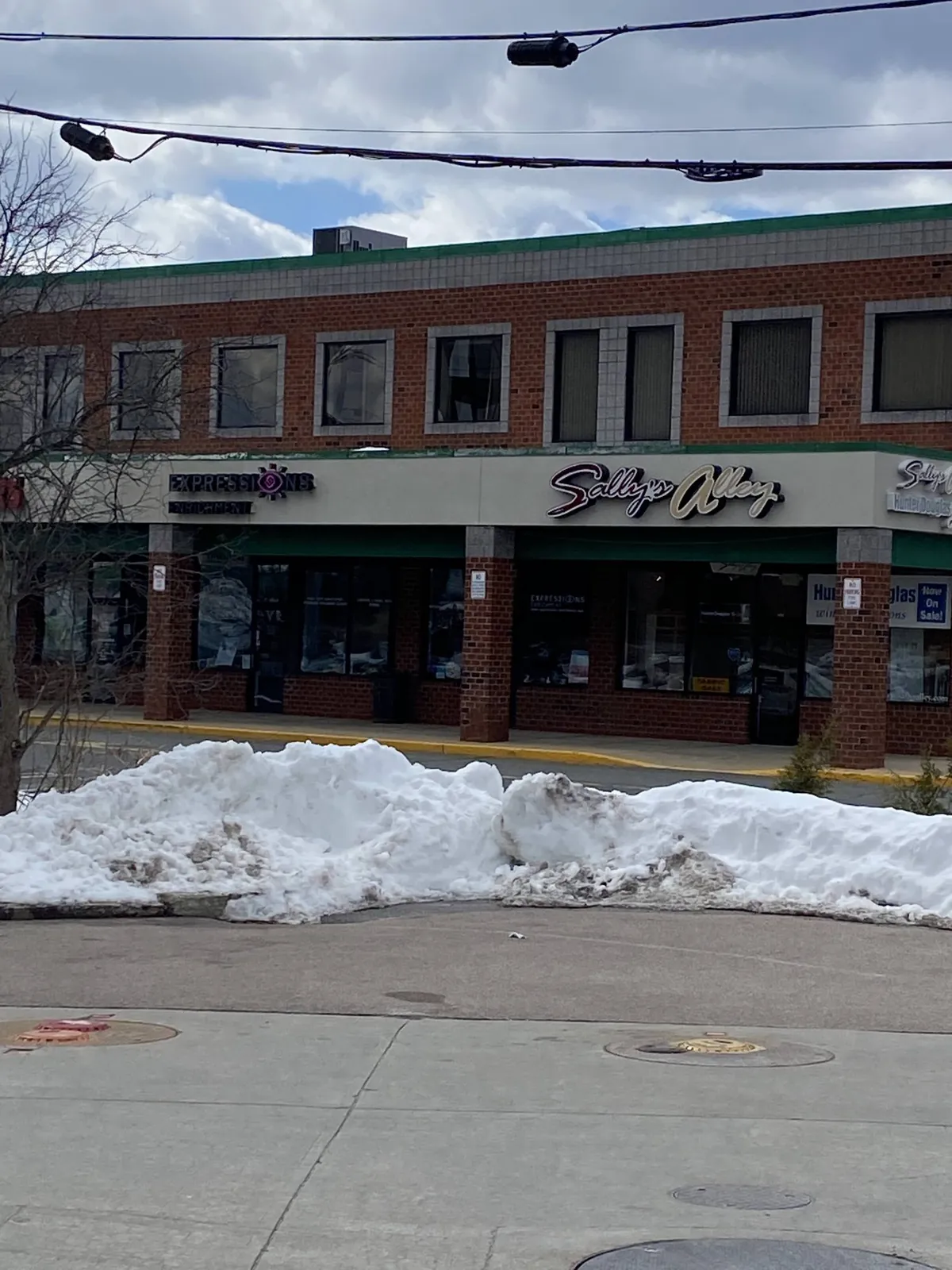
Hunter Douglas lists Blinds & Designs as a Gallery dealer. In a Whitman two-family or cape, you get to weigh both fabric collections in full against your own small windows, and when a room calls for a different Hunter Douglas product, those swatches are already in the van. Fitting is by certified Hunter Douglas installation.
There is no charge for an estimate. We offer interior design consultations, and we will take a look at a blind or shade that needs fixing. Upstairs bedrooms here are a common home for cellular shades in Whitman, and the Whitman page gathers every service in town. The roman shades page explains Vignette and Carole Fabrics at more length.
Usually it all begins with the home visit. Should you want to walk into a showroom, Franklin is the closest.
Questions from Whitman
My side windows face the house next door. What fabric do you suggest?
A translucent fabric is often the best fit: it hides the view of the neighboring house and still lets daylight in. For full privacy at night, a fabric with more body can be lowered after dark.
My windows are small. Will a roman shade take up too much glass?
It does not have to. A flat fold in a lighter fabric, or a headrail mounted above the trim, keeps more of the window clear when the shade is raised.
Can the two floors of my two-family have different shades?
Yes. A shared neutral tone facing the road keeps the house looking tidy, and each unit chooses freely inside.
Do you measure every window, even if they look the same?
Yes. Older frames often vary, so each window is measured individually.
Is the estimate free?
It is. The consultant writes it up by room and hands it over at the end of the appointment.
Your next step
Small windows and close neighbors are easier to plan with the fabric in your hand. Book through Request a Consultation and the swatch books come to you, along with a tape measure and a free estimate before the consultant goes. A side bedroom, a two-family unit or a whole cape: roman shades in Whitman, MA, start with that one visit. For a quick question first, use the call button.