
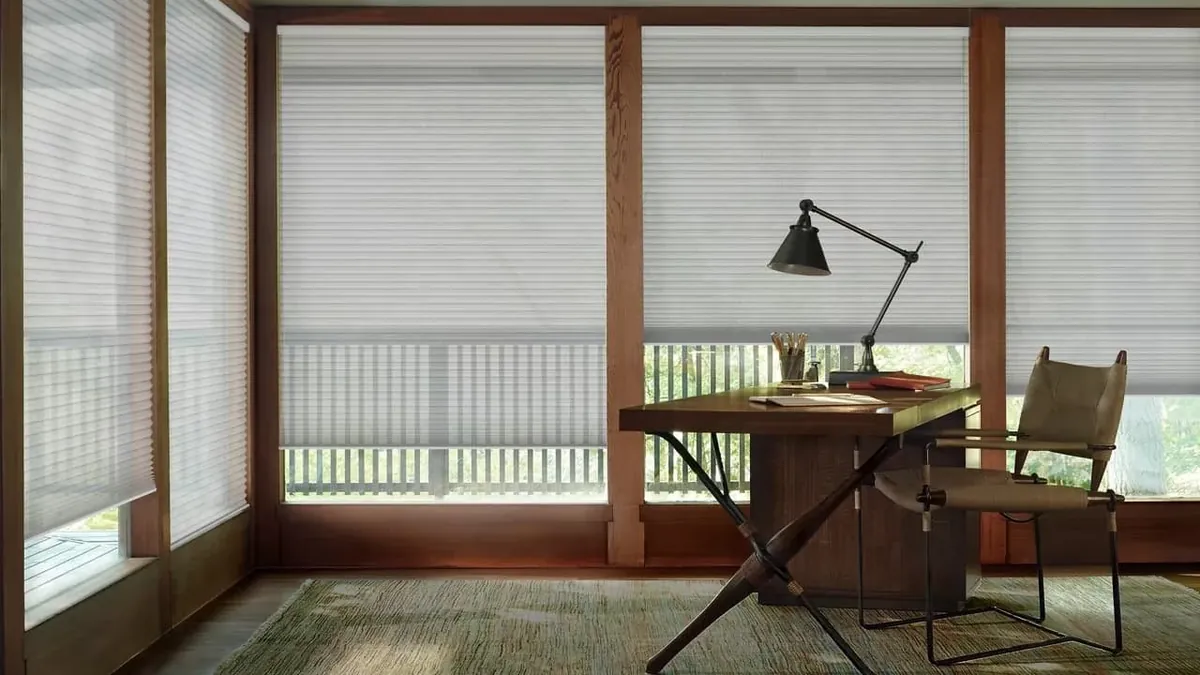
Small sash, old glass and a cold village winter
The oldest houses in Sandwich cluster around the historic village near the Grist Mill: antique capes low to the ground and Federal houses standing a little taller along the village lanes. Their windows are the originals or close copies of them, and in the earliest houses the sash is very small, with small panes, thin glass and frames that have moved with every winter they have stood through. Further out, along Route 6A and toward Forestdale, the houses change to post-war ranches and newer colonials with bigger, more regular windows. Choosing cellular shades in Sandwich, MA, means handling both ends of that range well.
In the village, the challenge is fitting something to a tiny, uneven opening without spoiling a house that is part of a historic streetscape. Honeycomb shades are among the least visible treatments you can choose. Mounted inside the frame, they leave the casing and sill clear. Raised, they fold into a narrow band at the head of the window. From the street, every shade shows the same quiet neutral backing.
The other challenge is cold. Thin old glass loses heat fast. The cells of a honeycomb shade hold a layer of still air against the pane, so a parlor with original windows stays warmer through a winter evening without changing a thing about the windows themselves.
Honeycomb shades for an antique house and a newer one
Our cellular shades in Sandwich, MA, come from the two Hunter Douglas honeycomb collections, Duette and Applause. Three features do the most work across a house here, old or new.
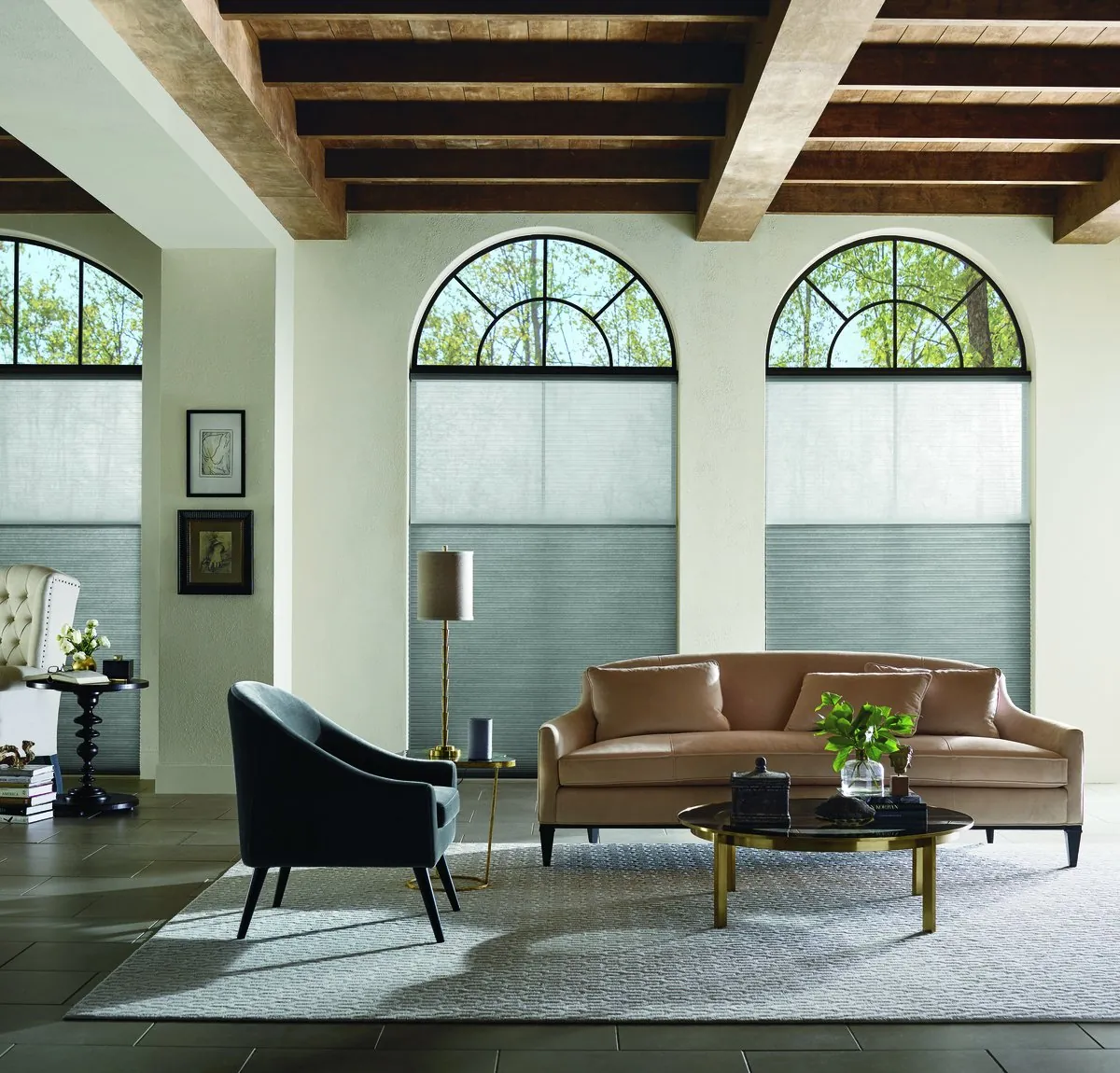
Made for any opening
Honeycomb shades can be built very small for antique sash, or shaped for an arched or angled window in a newer house.
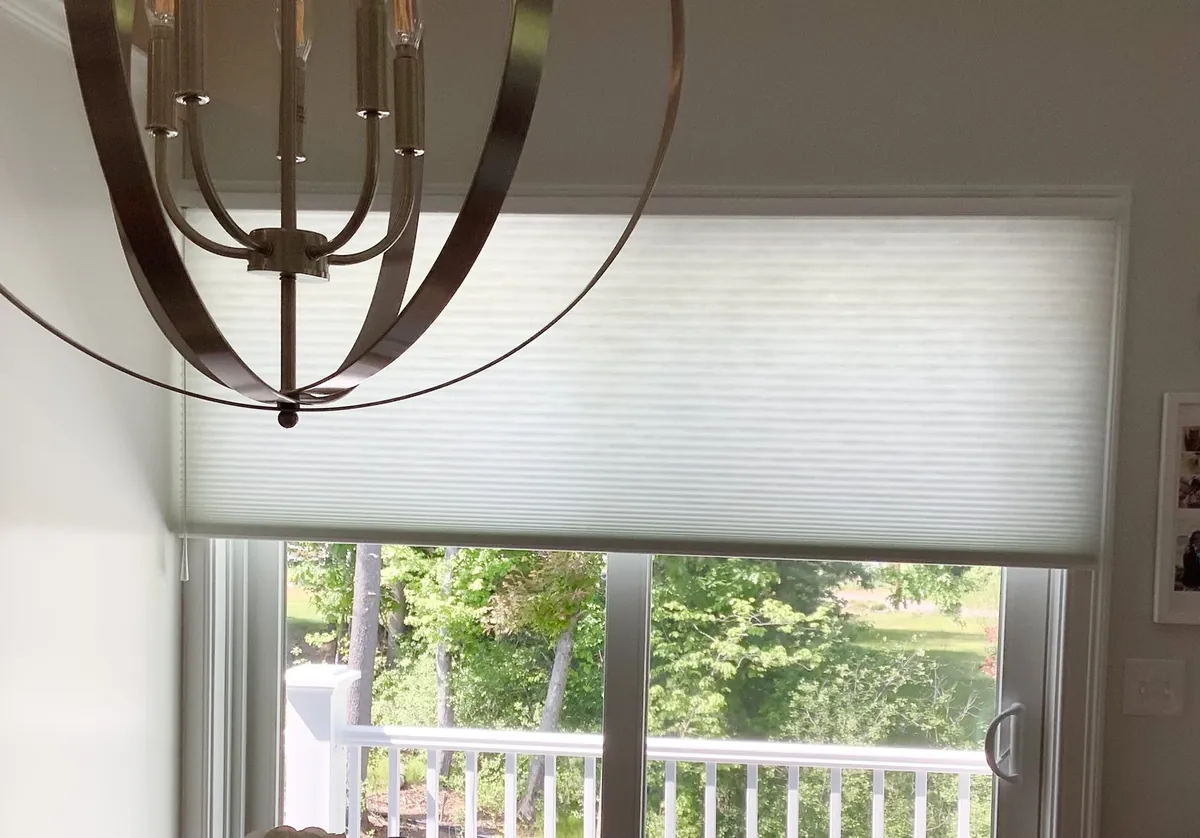
Vertical shades for sliders
A honeycomb that travels side to side across a ranch or colonial slider and stacks neatly out of the way.
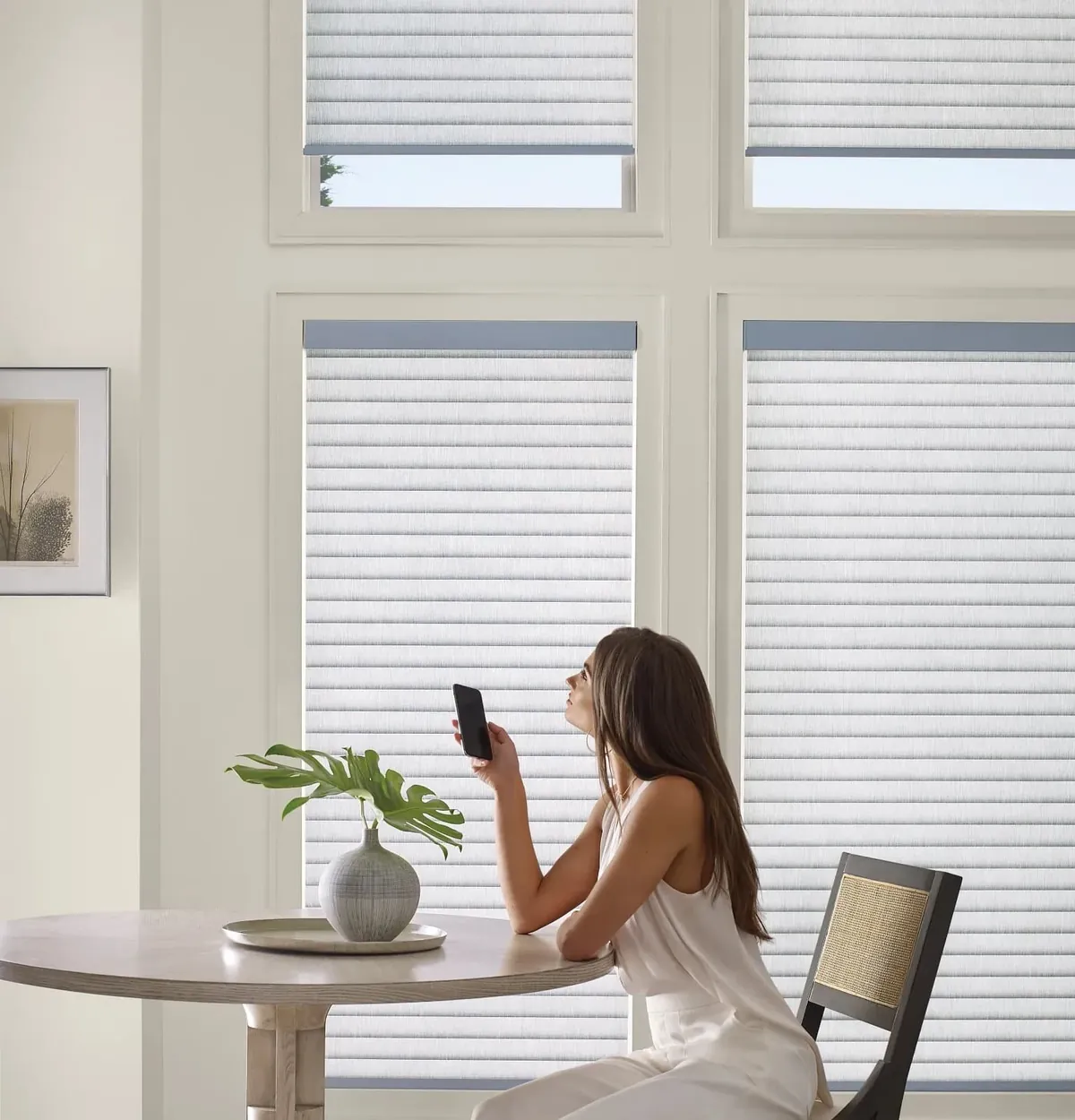
PowerView control
Run every shade from an app or a remote, or set them on a schedule. Useful for a high foyer window or a window behind furniture.
Antique capes in the historic village
A true antique cape is low and broad, with a central chimney, a steep roof and small windows set close under the eaves. The rooms are modest and the ceilings low, and the windows are often the only source of light in a room. Covering them badly makes the whole house feel dark.
This is where cellular shades in Sandwich capes really pay off, thanks to their compact stack. Raised, it takes up only a slim strip at the top of the opening, so a small window keeps nearly all of its glass and light. Lowered in a light-filtering fabric, it lets soft light through while giving privacy from the lane outside. The pleats are fine and even, and on a small window they look neat rather than bulky.
Upstairs, under the roof, the bedrooms of an old cape swing between hot in summer and cold in winter, and the knee-wall windows are tiny. A room-darkening honeycomb, made to fit inside the frame, keeps those rooms dim for sleep and adds a layer of trapped air against the glass. A double-cell or Duette Architella fabric, with a second cell inside each cell, gives the most warmth for the coldest rooms. Our guide to cellular shades and winter heat explains the idea.
Federal houses near the Grist Mill
The Federal houses in the village are taller and more formal than the capes, with symmetrical fronts, larger multi-pane sash, and sometimes a fanlight or side lights at the door. Inside, the rooms have higher ceilings and carefully made trim around each window.
Honeycomb shades suit these rooms because they do not compete with the woodwork. Mounted inside the opening, the shade sits within the frame and the casing stays entirely visible. A top-down, bottom-up design lets you cover the lower panes for privacy from the street while keeping the upper sash open, which preserves the proportions of a tall window. Fanlights and side lights can take shaped or very narrow shades in the same fabric, so the entrance hall looks consistent.
Because the windows are larger here than in the capes, there is more room to choose. Duette offers the widest selection of fabrics and the Duolite design, which pairs a sheer and a darkening layer on one headrail, a good fit for a formal front room that needs daylight in the afternoon and privacy at night.
Fitting the very smallest sash
Some of the oldest windows in Sandwich are smaller than most people expect a shade can be made for. Narrow openings beside a chimney, tiny windows in a stair or a cellar door, short sash under a deep eave: all of them can take a made-to-measure honeycomb shade.
What makes them tricky is depth and shape. An antique frame is often shallow, and over a very long life it has settled, so the opening may be wider at one end than the other or a little out of square. We measure each window separately, at three points across and three down, and check the depth at each corner. Where an inside mount is possible, we order the shade to the narrowest width so it never binds. Where the depth is too shallow or the frame too uneven, we explain the alternatives and suggest whichever will look straightest.
Many antique windows have sash locks, pulls or old hardware that sits in the way of a headrail. We note every one, so the shade we order clears them.
Keeping the historic look from the street
The historic village is seen as a whole, and what shows through the windows is part of how a house presents itself to the lane. Window treatments are inside the house, but a shade is visible through the glass, so choosing one that reads quietly from outside makes sense in a historic district.
Honeycomb shades are a natural fit. Whichever color you choose for the room, the side facing the street is a consistent white or neutral, so a house with a deep green study and a pale yellow parlor still looks uniform from outside. Inside mounts keep the shade within the opening, leaving the sash and muntins clear. When the shades are raised, very little shows at all.
If you are not sure what is expected for your street or your house, mention it when you request a consultation. We plan the treatment to sit inside the window rather than over it, and keep the outside appearance simple.
Post-war ranches along Route 6A
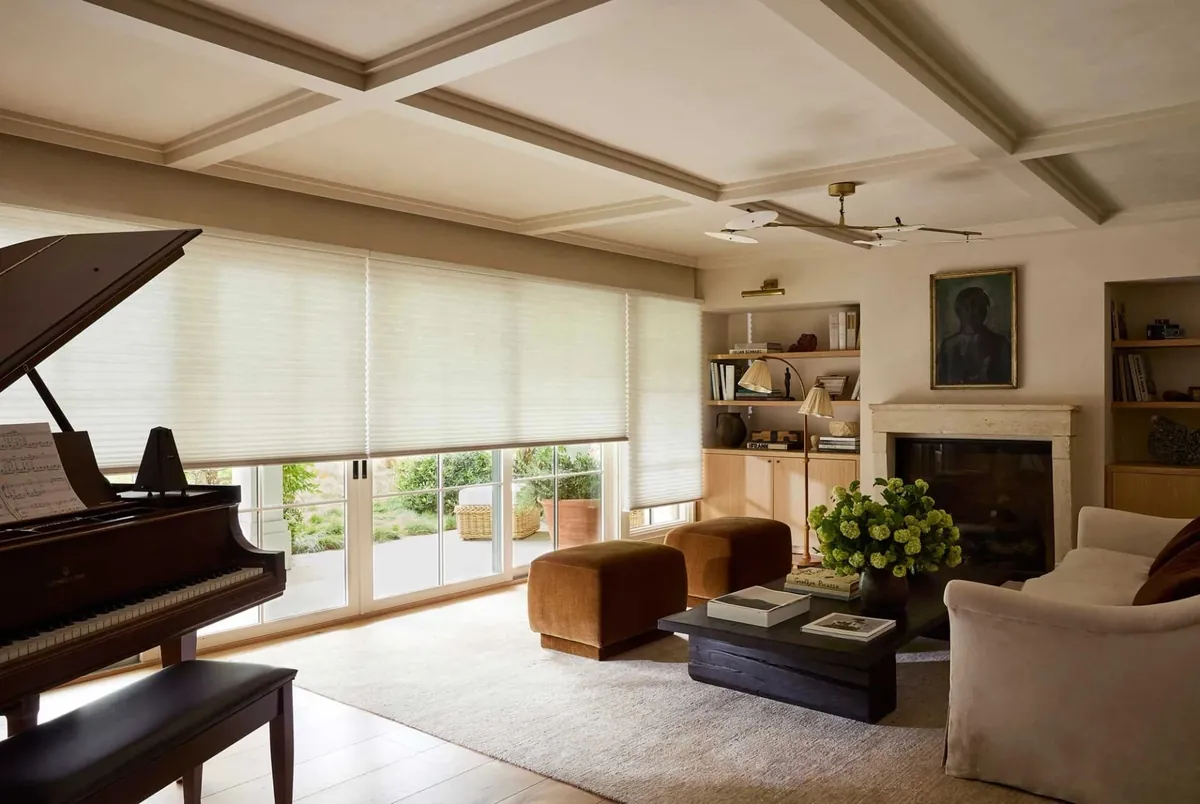
Away from the village, the stretch along Route 6A has plenty of post-war ranches. Their windows are larger and simpler than the antique sash: a broad living room window, wide bedroom windows set high on the wall, and often a slider to a back deck or patio. Many have been updated with replacement windows.
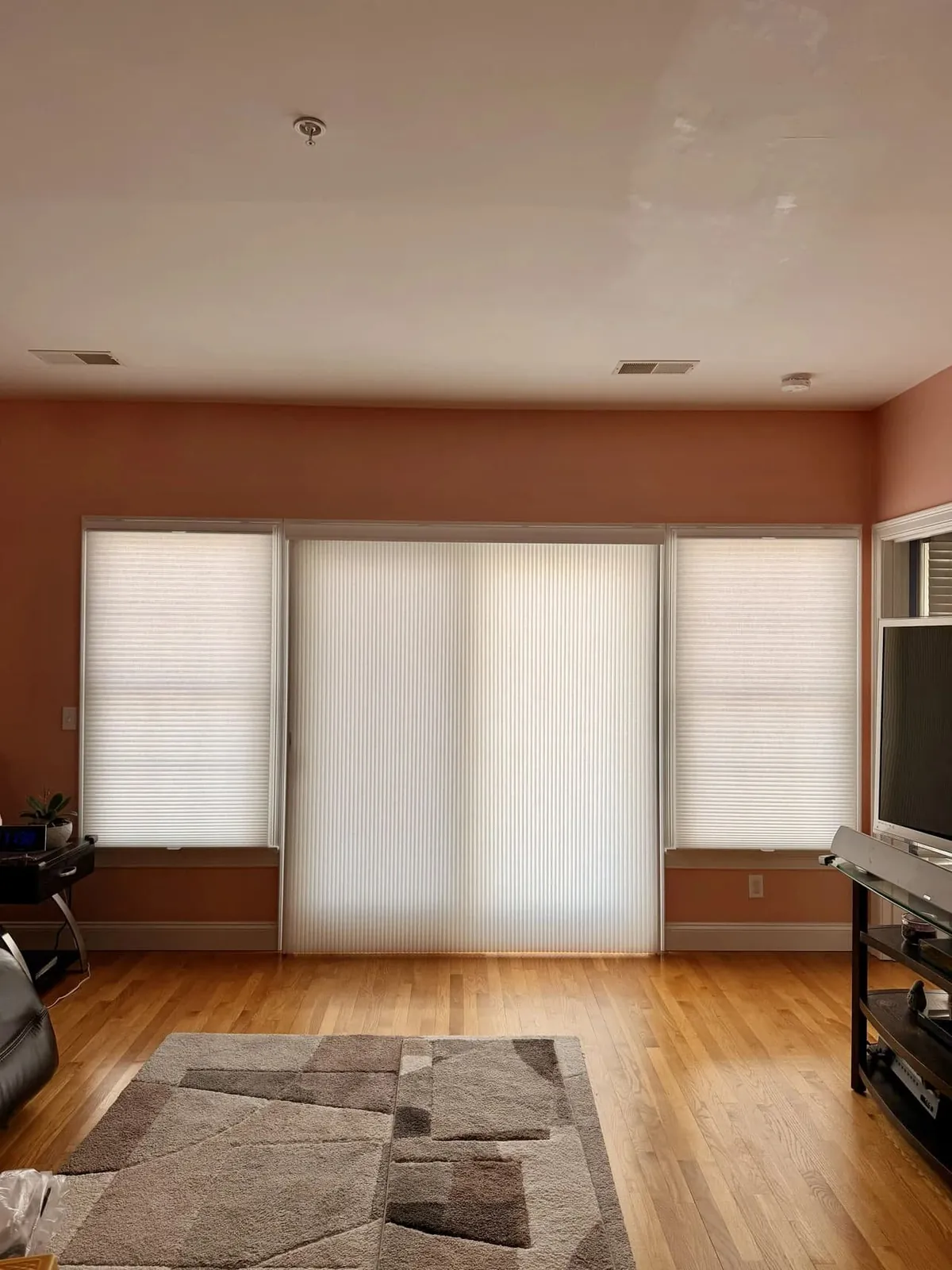
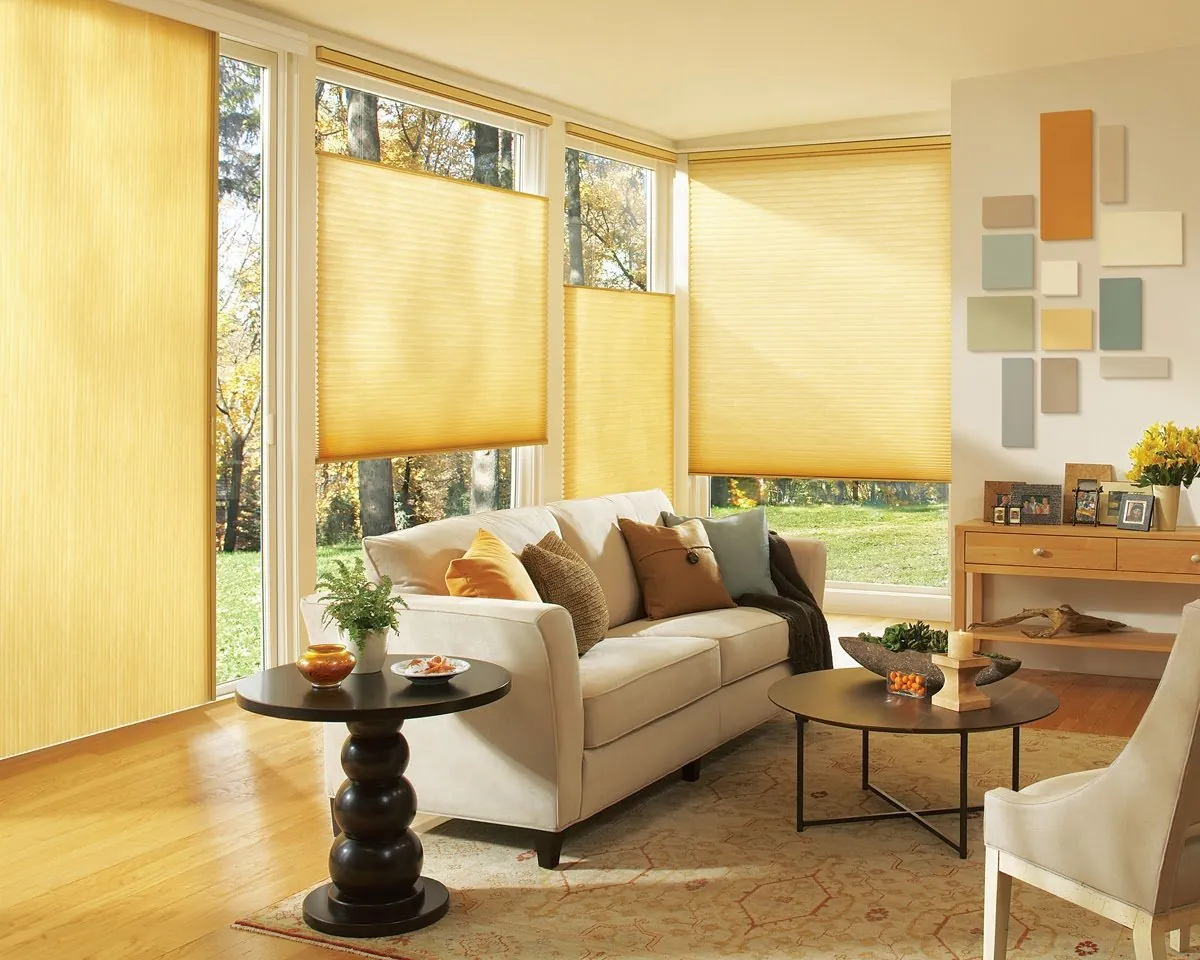
For these houses, honeycomb shades are mostly about warmth and light control. A big living room window loses a lot of heat on a winter night, and a honeycomb shade lowered at dusk slows that loss. On a sunny afternoon, a light-filtering fabric keeps the room bright without the glare. The slider takes a vertical honeycomb shade that glides across and stacks to the side.
Replacement windows often have shallower frames than the originals. If there is not enough depth for an inside mount, we suggest an outside mount fitted just above the window, which also covers the edges and blocks more light.
Newer colonials toward Forestdale
Toward Forestdale the houses are newer colonials on wooded lots, with two-story foyers, family rooms with tall windows, and French doors or sliders opening onto decks. Here the shades have bigger openings to cover and more design freedom.
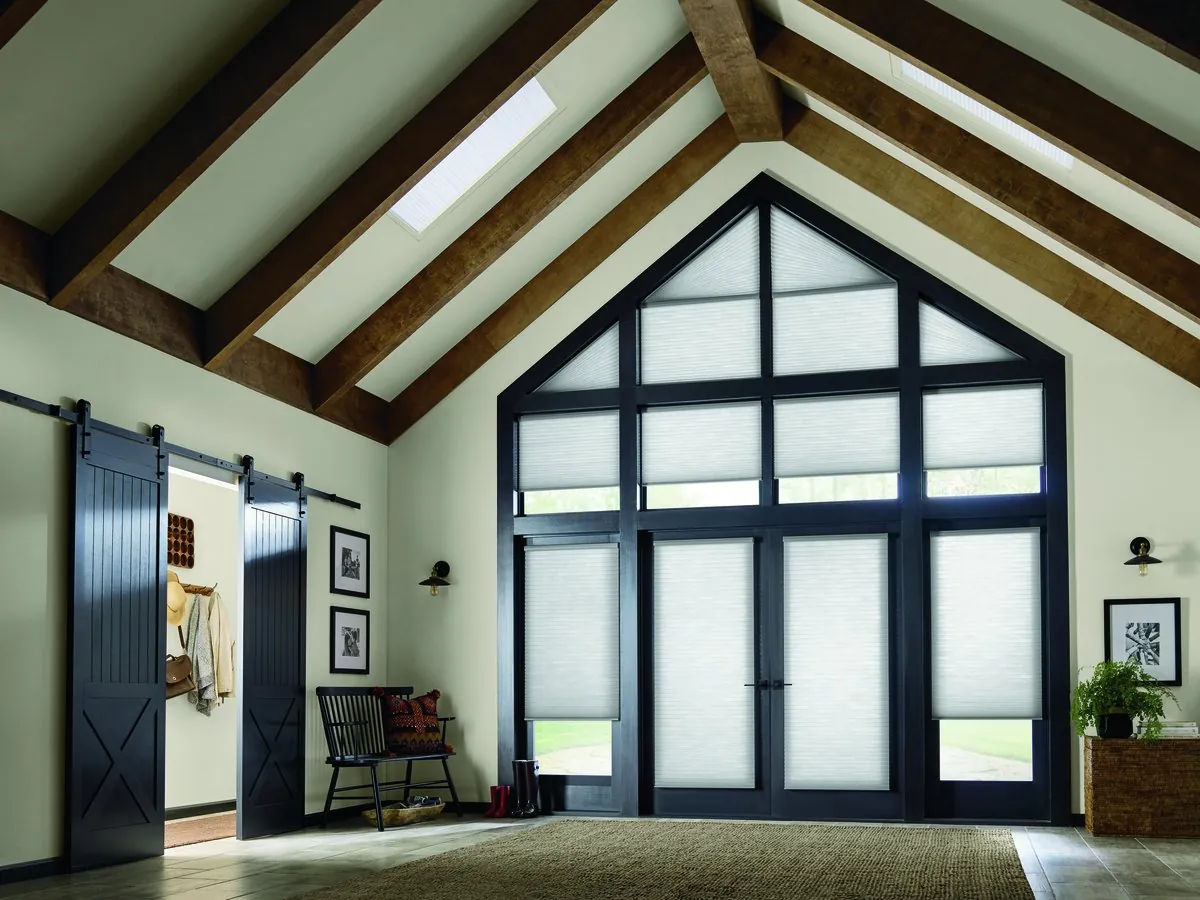
Tall foyer windows and high family room glass are good candidates for PowerView motorization, since the shades are out of reach. You can control them from an app or a remote and set them to follow the sun through the day. French doors take a shade fixed to each door. Arched windows above a door can take a shaped honeycomb shade. With every window in the same fabric family, the house looks finished from inside and out. Our page on motorized blinds and shades has more on how the controls work.
Fabric for a low-ceilinged room
Picking fabric for an antique cape is different from picking it for a colonial with a two-story foyer. In the capes, rooms are small, ceilings are low and every bit of daylight counts, so the fabric needs to let light through generously while still screening the lane. A light-filtering honeycomb in a warm white or soft cream is the usual answer: it blends into painted trim, glows gently when lowered and does not make a small room feel boxed in.
Bedrooms tucked under the eaves are the exception. There, a room-darkening fabric earns its keep, because those little gable and knee-wall windows catch the first sun of the morning. In the ranches and colonials further out, the windows are big enough to carry color and texture, and a sheer or semi-sheer honeycomb can keep a wooded view in sight from a family room.
Samples matter more on old glass than anywhere. Antique panes have a slight wave and tint that changes how a fabric looks from inside, so we hold each option against your actual window before you choose.
Cordless, cord or motor, window by window
On the small sash of a village house, cordless lift is almost always right. With no cord at the side, a tiny window stays uncluttered, and nothing hangs within reach of a toddler or a cat on the sill. You push the bottom rail up, pull it down, and it stays put.
A Federal front room with tall sash is another matter. Raise a cordless shade all the way there and the bottom rail can end up above your reach, so a retractable cord, which winds itself back into the headrail as the shade goes up, is often the better fit.
For the high glass of a Forestdale colonial, or a window you cannot get to past a dresser, PowerView takes the reaching out of it entirely. Many houses here end up with a mix of all three, chosen one window at a time rather than once for the whole house.
Duette and Applause in an old house
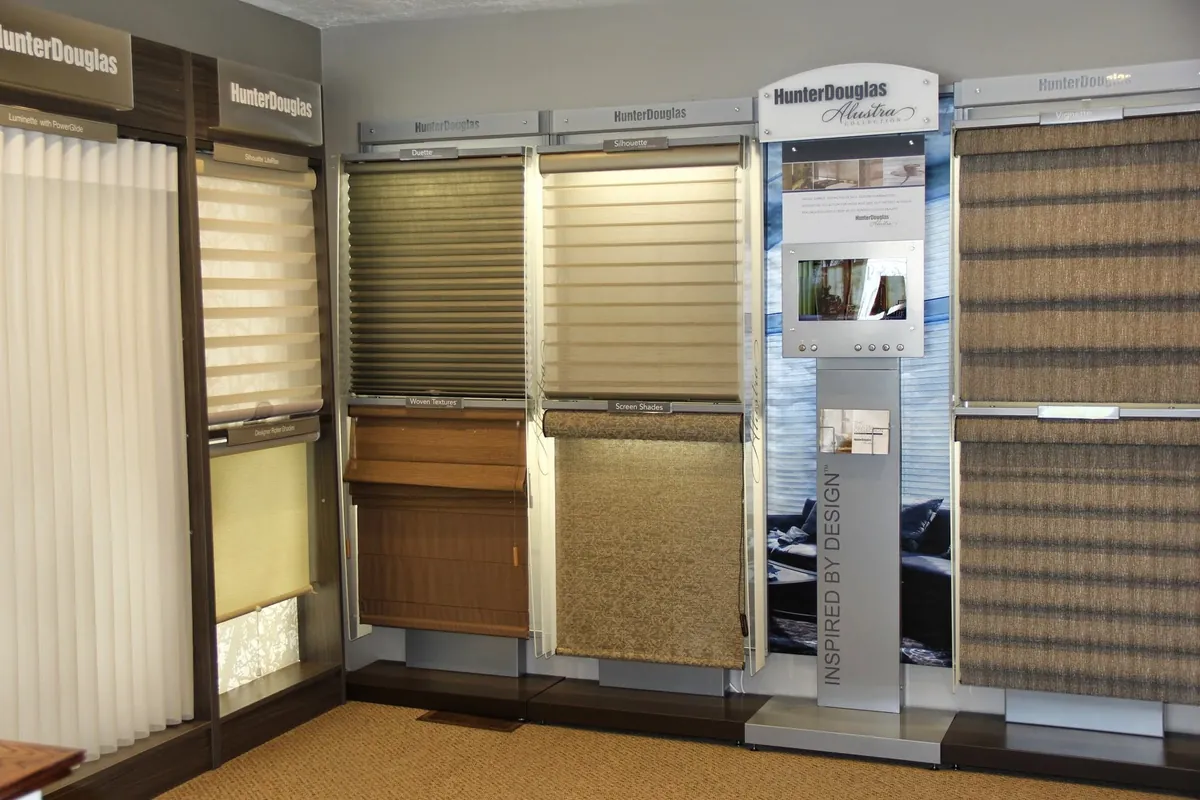
Hunter Douglas makes two honeycomb lines, and both hold air in their cells in the same way. Duette is the broader of the two. It carries the shaped shades for fanlights and arched transoms, Architella fabrics with a cell inside the cell, Duolite with its sheer and dark layers, and Vertiglide for sliders. Applause is a tighter collection with a palette of its own, and it is a sound choice for the plain rectangular sash that makes up most of an antique house.
So a typical village project might put Duette on the formal front room and the entrance, where the shapes are unusual, and Applause through the bedrooms and kitchen in a matching tone. You can read more on the Duette honeycomb shades and Applause honeycomb shades pages, or start from the main cellular shades page.
Measuring an antique house, room by room
Cellular shades in Sandwich village houses are only as good as the measuring behind them, so this is the part of the visit we take slowest. Old houses have rooms where no two windows match, even when they were built side by side.
- We look first at the frame: its depth, its sash locks and pulls, and any trim that projects into the opening.
- We take three widths and three heights on every window and note which corner is the tight one.
- We check that the shade will clear the sash when the window is opened, so it never rubs.
- We label each window by room and wall, so every shade returns to the opening it was built for.
- Before ordering, we go through each window with you and agree its mount, fabric and lift.
When the shades arrive, our certified Hunter Douglas installers set each bracket into sound wood, level the headrail, run the shade up and down a few times and leave you with shades that sit square in openings that are not.
Seeing the samples at home
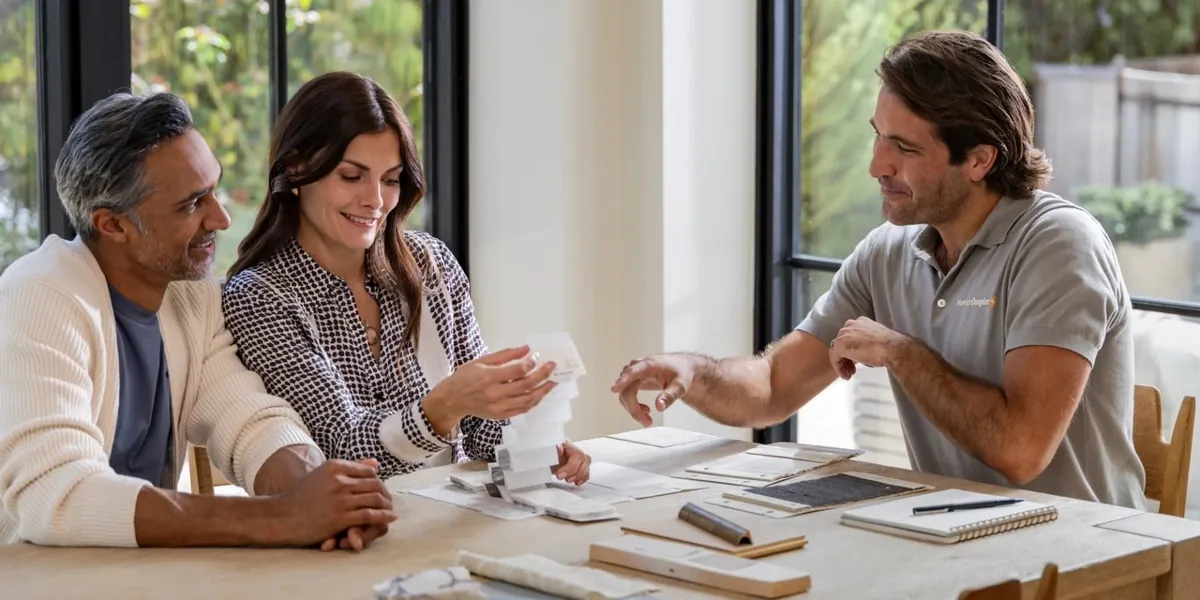
Most Sandwich consultations happen in the house, and with good reason: a fabric that looks warm on a shop counter can look gray against wavy antique glass on a north wall. Our vans carry the honeycomb collection, so we can bring the showroom to you and let you decide in your own light.
- Book a time through Request a Consultation or the call button.
- Tell us which rooms matter most, whether it is the cold parlor, the bright ranch living room or the bedrooms under the roof.
- Try sheer, light-filtering and darkening samples at the glass and compare them side by side.
- Let us measure and talk through the mount and lift for each window.
- Take your free estimate away and decide in your own time.
If you want a wider view of the room, including color and other treatments, an interior design consultation can happen at the same visit. There is more on the process in what happens at an in-home consultation.
Sagamore, just over the town line
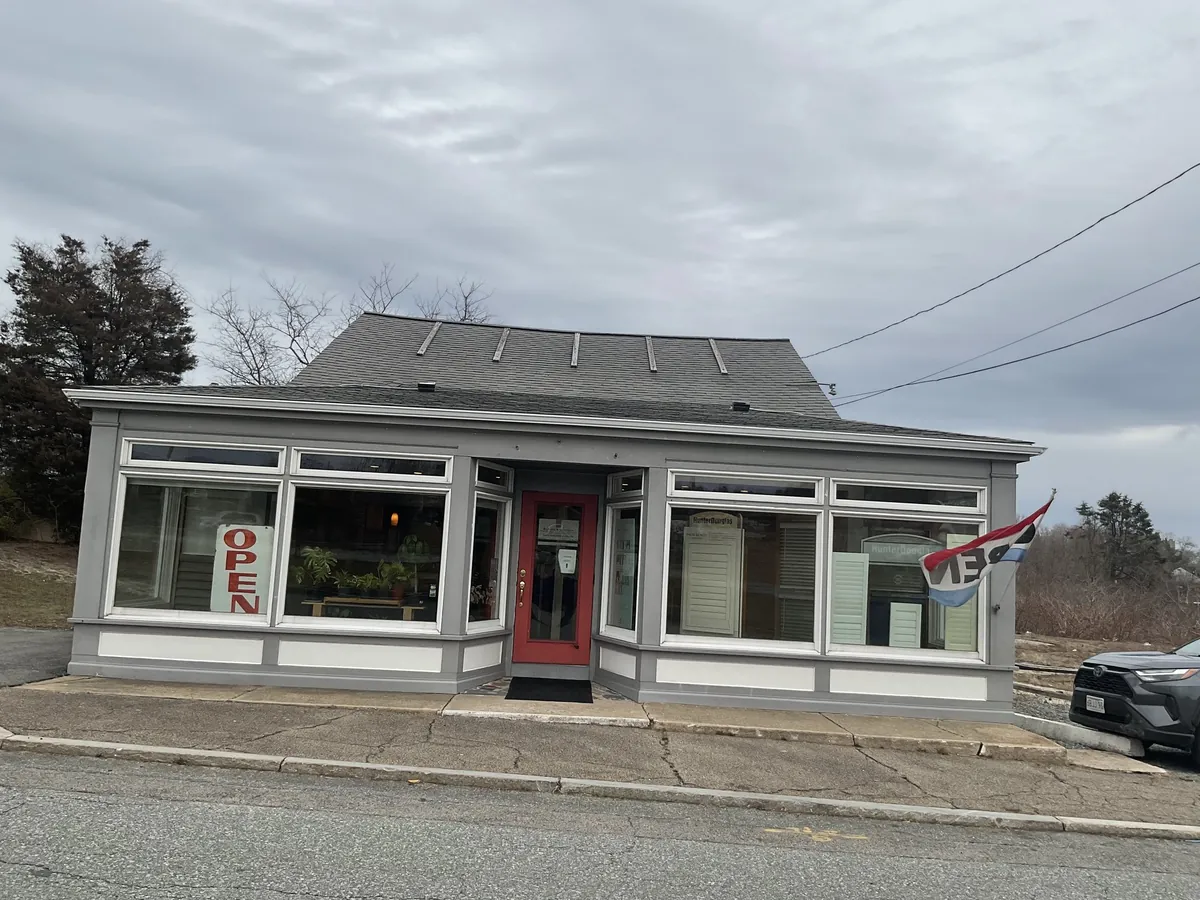
The closest of our showrooms to Sandwich is in Sagamore, on Cranberry Highway, only a short drive from the village. If you would rather handle the Duette and Applause fabrics yourself before anyone visits, drop by the Sagamore showroom.
It helps to come with a phone photo of the windows you have in mind, particularly the very small or oddly shaped ones. From there we can set up a time to measure at the house.
What a Gallery dealer brings to an old house
Hunter Douglas names dealers who meet its standards Gallery dealers, and Blinds & Designs is one. In practice that means nothing in the honeycomb collection is out of reach for your house, from the tiniest sash shade to a shaped fanlight.
Installation is done by our own Hunter Douglas certified installers, which counts for a lot on frames that have settled out of square. Estimates are free, design help is available if you want it, and if an older shade in the house has stopped working, we take on repairs of window coverings you already have.
Thinking about other rooms as well? Look at plantation shutters in Sandwich, or the full list of what we offer in town on the Sandwich page.
Questions from Sandwich
Can a honeycomb shade fit a really tiny window?
Often, yes. Each shade is built to its own measurements, and honeycomb shades can be made remarkably narrow and short. We check the depth of the frame too, because a tiny antique window is often shallow as well.
Will the shades suit a house in the historic village?
They are among the most discreet treatments for an old house. Inside the frame they leave the trim on show, and the street side of every shade is a plain neutral, whatever color faces the room.
Do they make a difference with original glass?
Yes, to how warm the room feels. The cells keep a band of still air between thin old glass and the room. For the coldest rooms, a double-cell or Architella fabric adds more of it.
My colonial has a tall foyer window. How do I reach the shade?
PowerView motorization lets you run it from a remote, an app or a wall control. A retractable cord is the other option if you prefer to operate it by hand.
Do you charge for the estimate?
No, estimates are free. Once we have measured your windows we put one together for the shades you chose to look at.
Start at your own windows
The surest test of cellular shades in Sandwich, MA, is to hold the fabric up to your own sash. Book a consultation and we will come with the samples, measure the house and leave you with a free estimate. If you would like to talk first, the call button reaches us, and the Sagamore showroom is close by.