
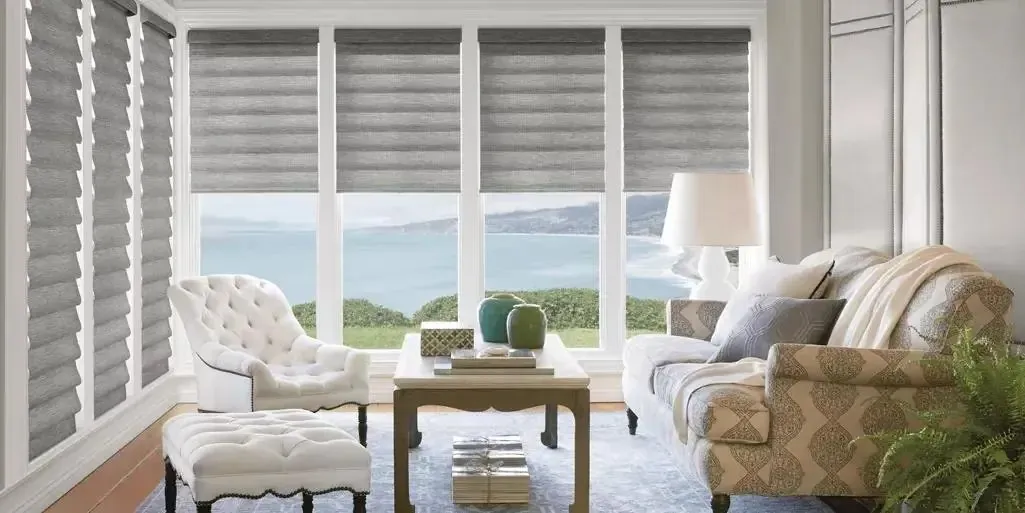
Harbor glass and village formality
Around Sippican Harbor and through the village, the shingled captains’ houses were built close to the water, with formal front rooms that have always been dressed properly: a shade at the glass, drapery to the floor. Further out toward Converse Point the newer houses turn their backs to the road and face the water with whole walls of windows. Salt air reaches all of them. When we plan roman shades in Marion, MA, those three things set the brief.
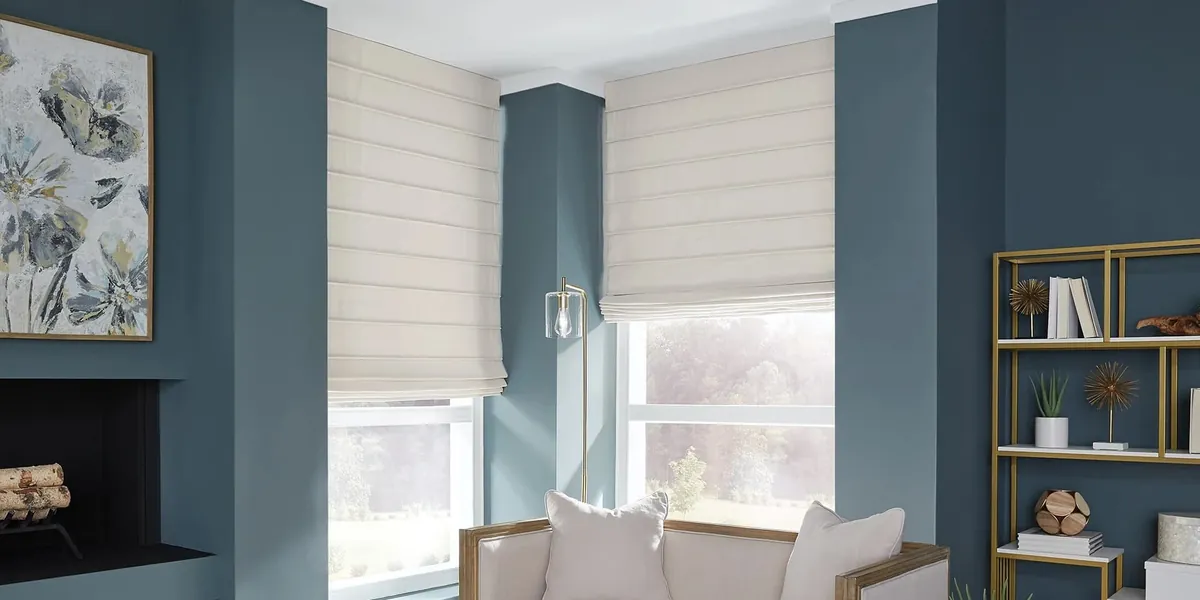
A roman shade fits each case better than most window coverings. In a village parlor it sits neatly inside the window, under drapery, and adds a soft, tailored layer that is easy to raise and lower every day. In a water-facing room it controls the glare without turning the view into a set of slats. And because its moving parts sit in the headrail, there is very little exposed to the damp, salty air off the harbor.
The work is in the details: which fabric holds its color in strong sun, how the shade layers with drapery, and how a run of tall glass gets controlled when you cannot reach the top of it.
Fabric shades for harbor houses
Hunter Douglas makes two roman lines and a woven roman, and each finds a place in Marion. We bring samples of all of them to the house.
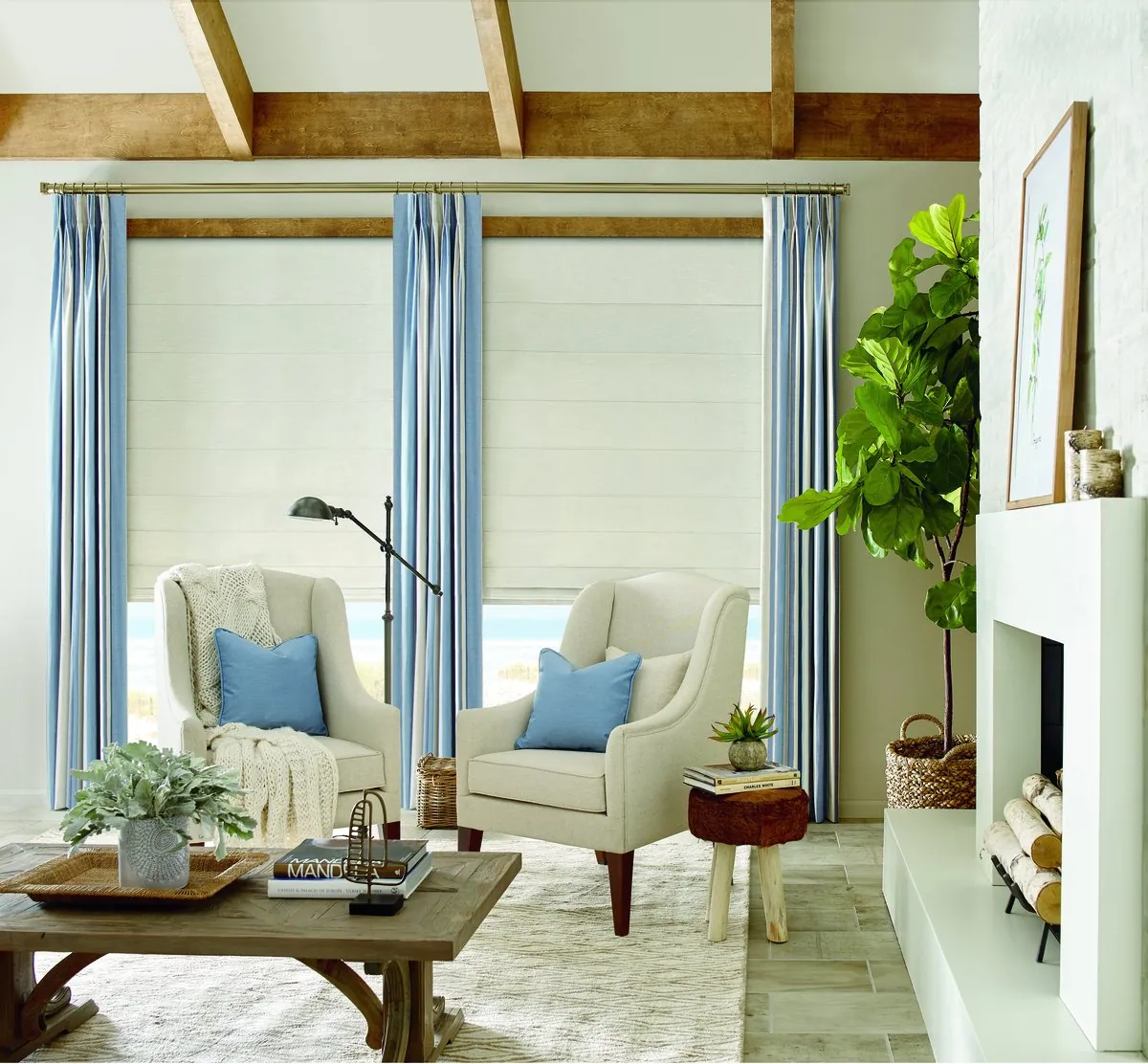
Carole Fabrics Roman Shades
Sewn to order from a deep library of decorator fabrics, flat or folded. The shade that layers most naturally under drapery in a formal village room.
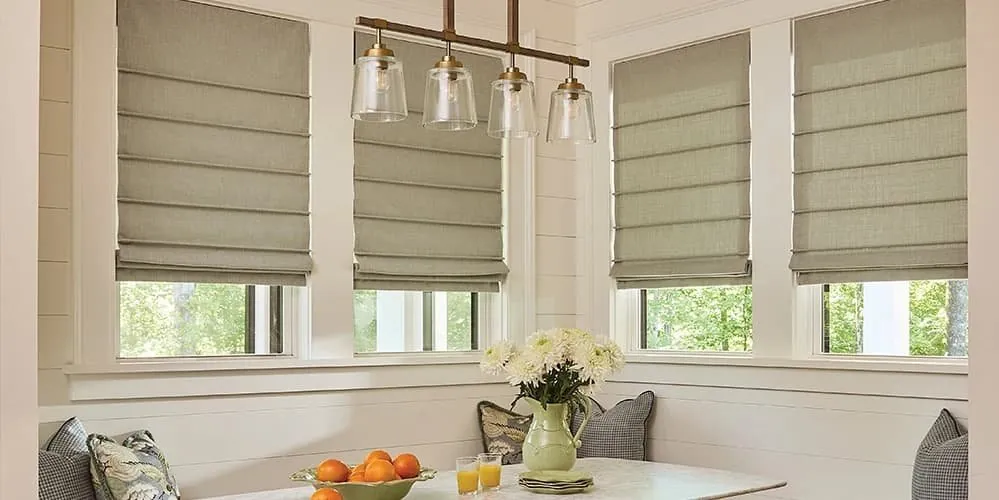
Vignette Modern Roman Shades
Even folds that roll up into the headrail, leaving almost all the glass open when raised. Clean enough for the newer houses out on the point.
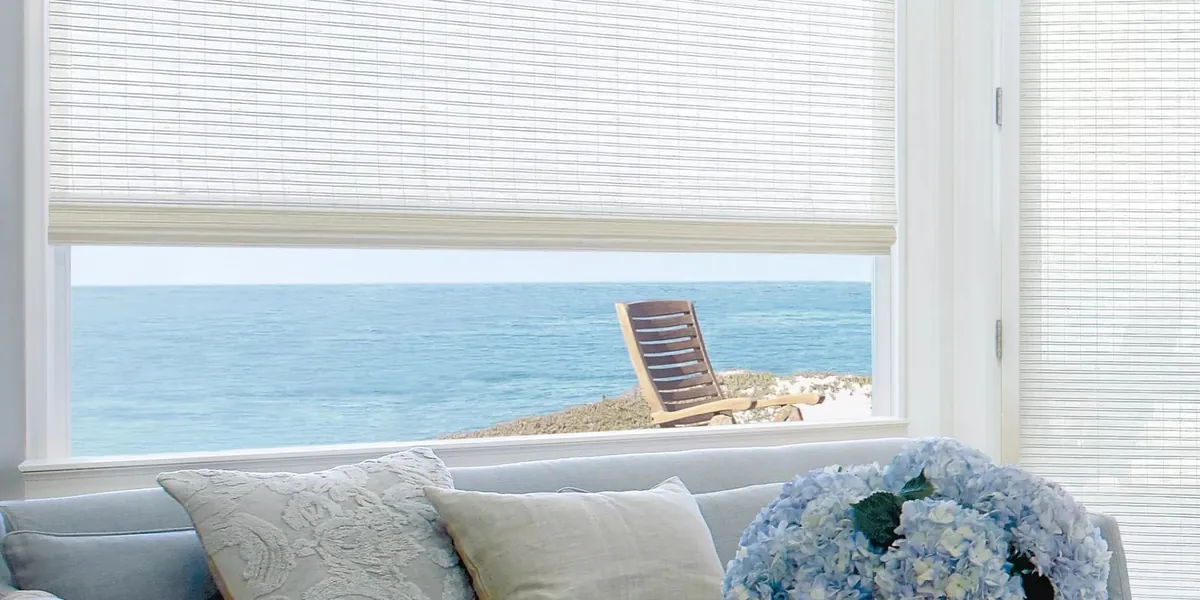
Alustra Woven Textures Roman
A natural, textured weave in a roman fold, well suited to a relaxed room that looks out over the water.
Captains’ houses where drapery is expected
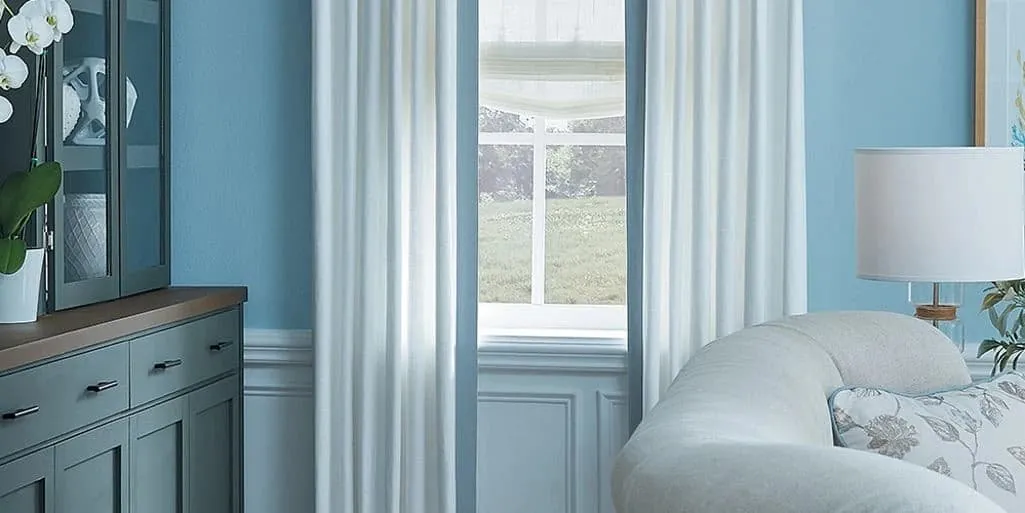
The older village houses near the harbor have formal rooms with tall double-hung windows and deep trim. In a house like that, bare glass looks unfinished, and a single treatment can look thin. The traditional answer is layers: a working shade close to the glass for light and privacy, and drapery panels at the sides for softness, color and proportion.
A Carole roman shade is the natural working layer. It sits inside the window frame, so it does not fight the drapery for space on the casing, and it can be raised and lowered every day while the drapery stays put. A flat fold suits a parlor or dining room, where its smooth face echoes the straight fall of the panels. A folded style, with its soft loops, suits a bedroom or a library, where a gentler look is welcome.
Getting the layers to work together is mostly about color and weight. A shade in a plain, light fabric lets patterned drapery take the lead. A shade in a fine stripe or a small print can pick up one color from the drapery and pull the room together. We bring shade and drapery samples to the same visit so you can see them side by side at the window, and if you want help with the whole scheme, an interior design consultation can happen at the same time.
Flat, folded or rolled: the three looks
It helps to know the three basic shapes before the samples come out, because each one changes the feel of a room.
A Carole flat fold hangs as one smooth panel when it is down and lifts into crisp, stacked pleats. It is the most tailored of the three and it shows a pattern or a stripe cleanly, which is why it is so often chosen for a formal village room.
A Carole folded style keeps soft, rounded loops down the face of the shade even when lowered. It reads as relaxed and a little traditional, and it is lovely in a bedroom or a reading room in a captain’s house. It suits solid fabrics and textured weaves better than busy prints.
Vignette has evenly spaced folds from top to bottom and rolls its fabric into the headrail as it rises. It is the most contemporary look and it leaves the most glass clear when raised, which is why it so often ends up in the water-facing rooms of the newer houses. Plenty of roman shades in Marion houses mix all three, room by room.
Rooms that face the water
The rooms in Marion that people love most are often the hardest to dress: sunrooms, living rooms and bedrooms with windows on two or three sides, all facing the harbor or the bay. The light in them is wonderful, and at certain times of day it is too much. Sun on water bounces up into the room, so the glare comes from below as well as above, and it lands on screens, faces and furniture.
A light-filtering roman shade takes the edge off that glare and spreads the light evenly across the room, while the view stays visible as a soft outline. Lowered only part way, the shade cuts the brightest band of sky and reflected light and leaves the lower part of the window clear. In the evening, when the sun is behind the house, it can be raised completely and the room opens back up.
On a long run of windows we plan each shade to match its neighbors, with bottom rails that stop at the same height. If you want to keep a clearer view through the fabric, Hunter Douglas sheer shades are also worth seeing on those walls, and we can bring them along.
Newer houses toward Converse Point
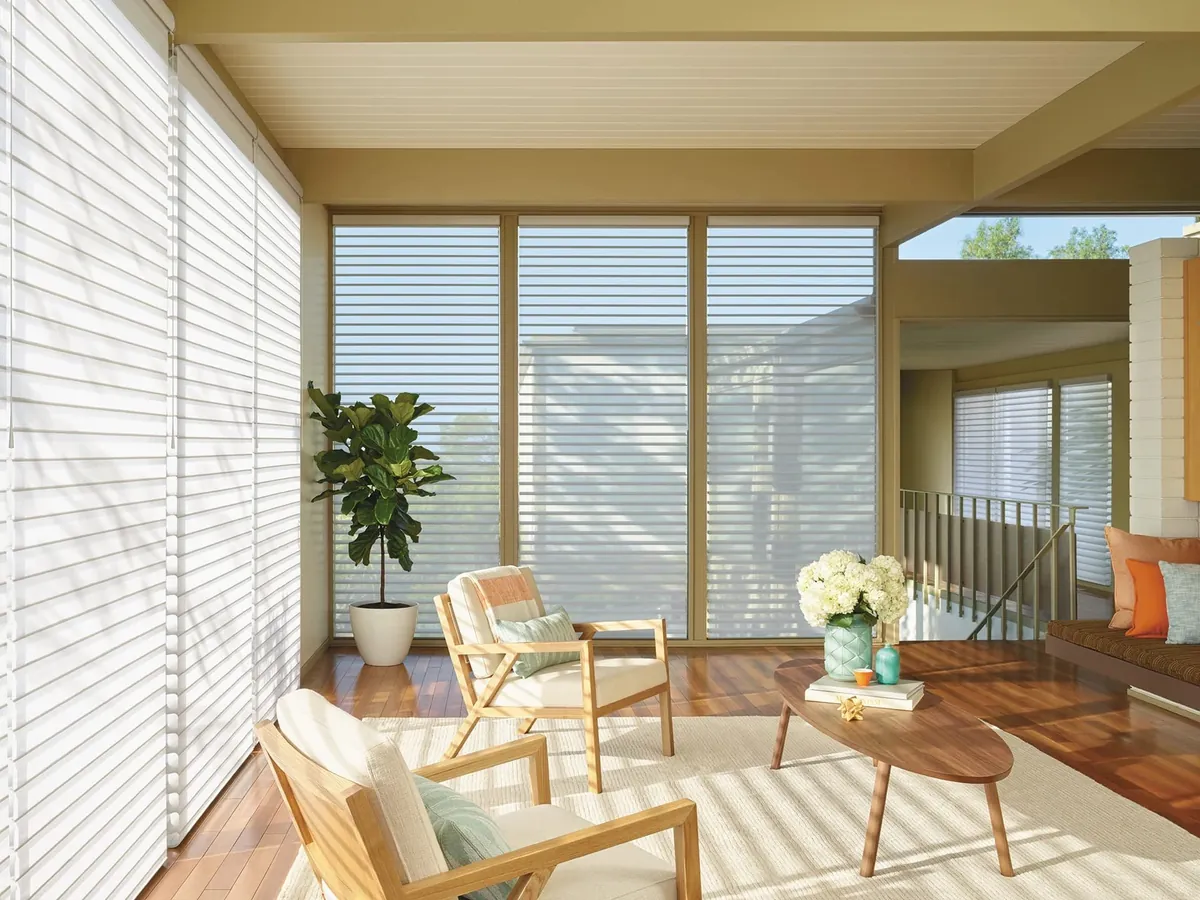
The newer houses out toward Converse Point are built for the water. Great rooms with tall windows, glass doors to a deck, and upper windows that run toward the roofline are common. Those windows are the reason the house exists, so any covering has to give the view back the moment you want it.
Roman shades work here in a cleaner, more modern way. Vignette suits the large openings: its folds are even, its back is neat from outside, and when it is raised the fabric rolls away into the headrail. On tall or high windows, PowerView motorization does the lifting, so you can lower a whole wall of shades from a remote or the app, or set them on a schedule that drops them in the hottest part of the afternoon and opens them again at sunset. We plan how each motor is powered at the visit.
Bedrooms in these houses often face east across the water and catch the first light. A room-darkening lining keeps them dim until you choose to raise the shade, and a motorized shade can open gently at a set time instead of all at once.
Salt air and the parts that move
Every house in Marion lives with salt in the air. Windows are opened all summer, and the damp, salty breeze settles on anything near them. That is hard on exposed metal and on cords left hanging at the side of a window.
Roman shades hold up well because their working parts sit inside the headrail rather than out in the room. A cordless lift goes further: there is no cord or cord lock at all, just a bottom rail you raise and lower by hand. For shades on high windows, PowerView removes the need to reach them at all.
Fabric choice matters near the water too. Some fabrics handle humidity and strong sun better than others, and lined shades protect the face fabric from the light. We point out the fabrics that suit a damp, bright, water-facing room when you are choosing, and our page on caring for fabric shades explains how to keep them fresh through the season.
When we install, our certified Hunter Douglas installers mount every bracket into solid wood so the shades stay level on windows that are opened and closed constantly in summer.
Choosing fabric for strong harbor sun
Water-facing windows take more sun than almost any others, and over time strong light softens color. That does not mean every shade has to be beige, but it is worth choosing with the light in mind.
- Lighter, neutral colors hold up best on a window that takes direct sun for hours.
- Linings protect the face fabric and let you choose a stronger color with more confidence.
- Texture gives a plain fabric interest without relying on a strong dye.
- Pattern is best kept for the formal village rooms, which usually face the street rather than the bay.
On the formal side of the house, by contrast, there is more freedom. A village parlor facing the road can carry a rich color or a bolder print, especially if it layers with drapery. Our guide to choosing fabric for a sunny room goes into more detail.
Lifts and reach
Every window gets the lift that suits it. A cordless lift, with nothing hanging at the side, is our usual starting point for bedrooms and any window a child or pet can reach. A continuous cord loop, held taut against the frame by a tensioner, makes a wide, lined shade in a formal room easier to raise. PowerView motorization handles the high windows and long runs of glass, and it is also the simplest way to keep roman shades in Marion, MA, moving smoothly on windows that are awkward to reach behind furniture. Our guide on how motorized shades are controlled explains the remote, the app and schedules.
Your home visit, step by step
You cannot see harbor glare in a sample book, so we come to you. Our vans carry samples, which means we can bring the showroom to your door.
- Request a consultation online, or use the call button, and choose a time that suits you.
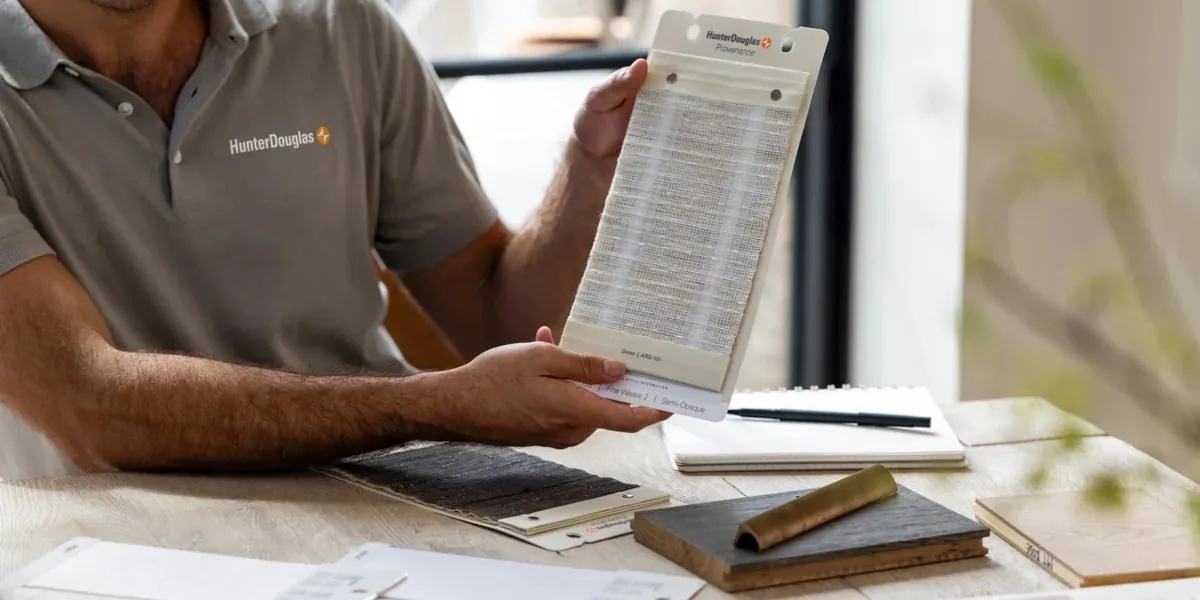
- We arrive with Vignette, Carole Fabrics and woven roman samples, plus linings and lift options.
- We look at the rooms facing the water first, at the time of day the glare matters most if we can.
- In the formal rooms, we look at how a shade will sit with any drapery you have or want.
- We measure each window and check the frame depth for an inside mount.
- You get a free estimate, and you can take your time over the decision.
There is more about the visit in what happens at an in-home consultation.
Measuring an old shingled house
A captain’s house near the harbor has stood up to a long life of wind and weather, and its window frames have moved with it. Openings that look identical from the street can differ in width from top to bottom, lean slightly out of square or vary in depth from one side to the other.
We measure every window on its own, at the top, middle and bottom, and check the depth where the headrail will sit. Old sash hardware, interior shutters or a window lock can get in the way of an inside mount, and we note each one. Where an inside mount will not hang cleanly, an outside mount on the casing is the right answer, and in a formal room it often looks deliberate anyway because it lines up with the drapery hardware above.
The newer houses are easier to measure but have their own care points: tall glass where upper and lower shades must line up, and wide spans that need to be split into matching shades. Our page on what happens on installation day describes the fitting itself.
Kitchens and bathrooms
The working rooms need a different kind of shade from the parlor. A kitchen window over a sink or a counter is hard to reach and gets splashed, steamed and opened often in summer, so it wants a compact shade with a cordless lift and a fabric that is easy to keep fresh. Vignette, with its fold that tucks into the headrail, is a frequent choice there.
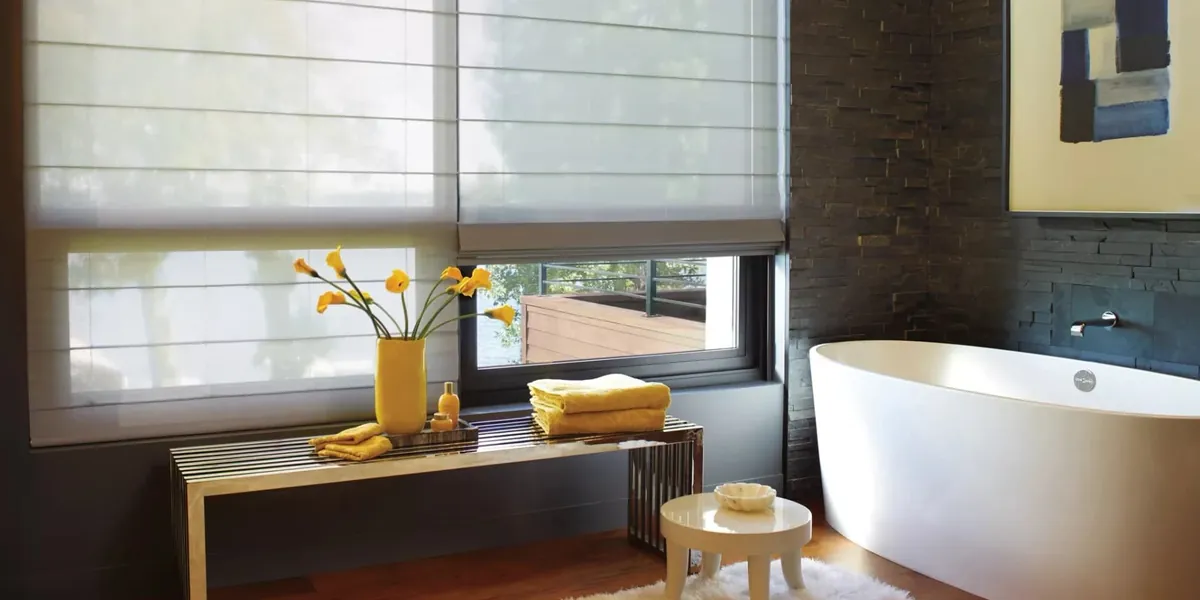
Bathrooms want daylight and privacy at the same time. A sheer or light-filtering fabric lets the light in while blurring the view from outside, and an inside mount keeps the shade close to the glass. On a bathroom that faces the water, the same fabric also softens the bright reflected light in the morning.
Planning the whole house
Most orders for roman shades in Marion cover more than one kind of room. A village house might take Carole shades under drapery in the parlor and dining room, a softer folded style in the bedrooms and Vignette in a kitchen added at the back. A house on the point might use Vignette across the great room, room-darkening shades in the bedrooms and woven romans in a sunroom. We plan it all at one visit and give you one free estimate, and you can decide which rooms to do first. If some rooms need extra warmth in winter, see our cellular shades in Marion as well.
Why a Hunter Douglas Gallery dealer
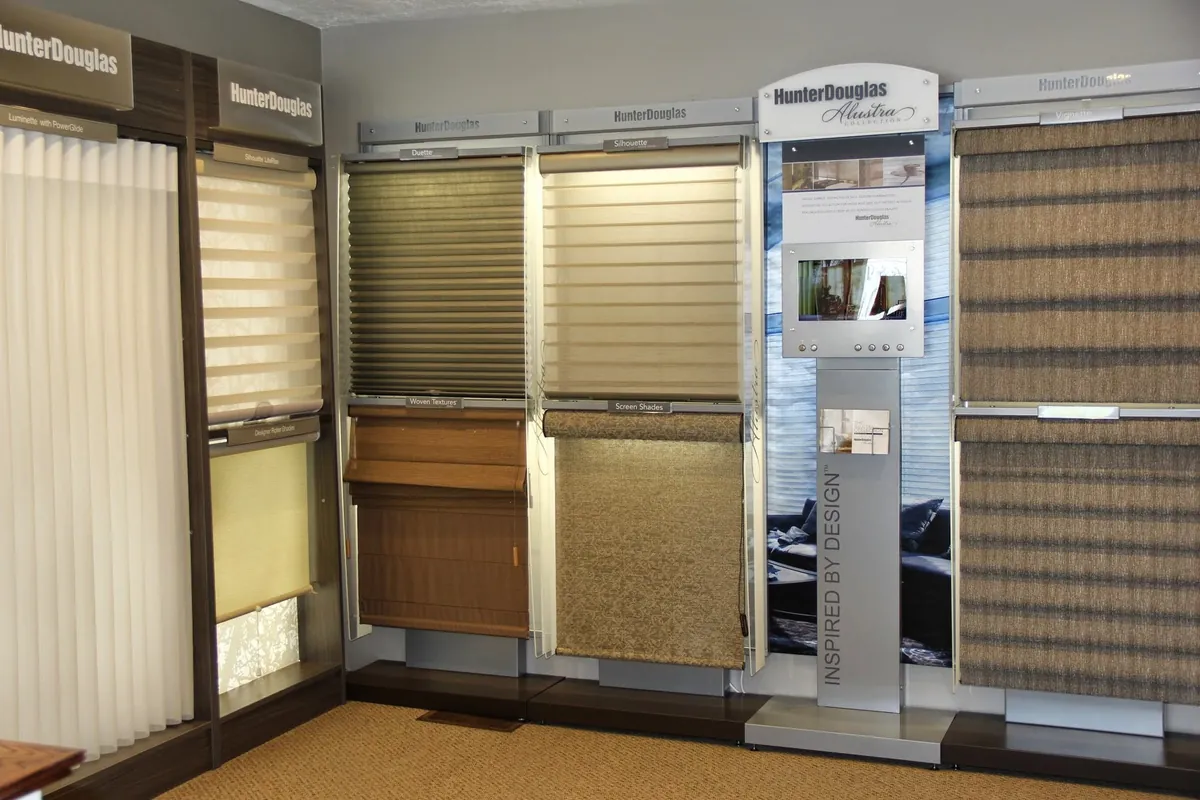
Blinds & Designs is a Hunter Douglas Gallery dealer, the designation Hunter Douglas gives dealers who meet its standards. That means the full range in one place: Vignette, Carole Fabrics and Alustra Woven Textures romans, plus Hunter Douglas sheers, honeycomb shades, shutters and drapery for every other window in the house.
Our installers are certified by Hunter Douglas, and we handle blind and shade repairs too, which matters on a coastal house where shades work hard every summer. For everything we offer locally, see our Marion page, or the main roman shades page for the whole family.
Our Sagamore showroom
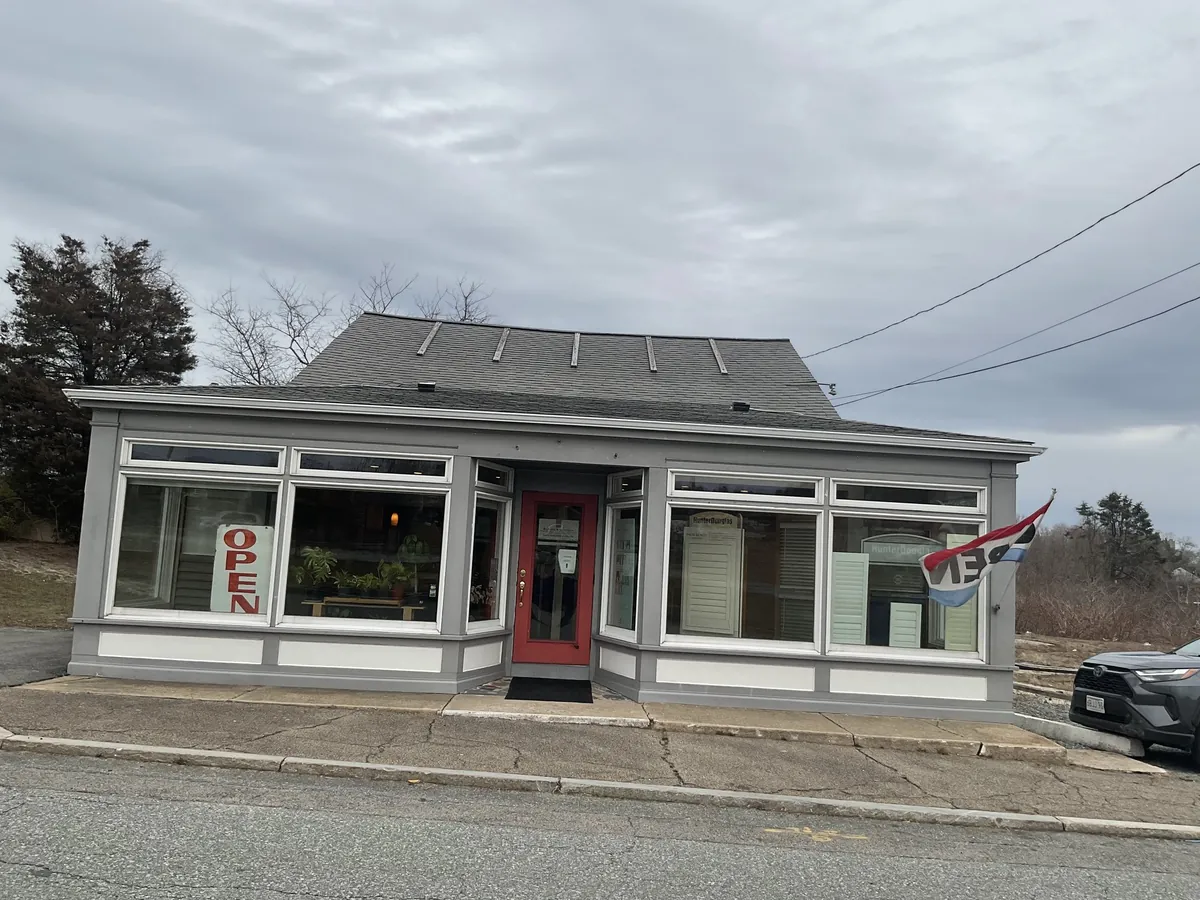
Sagamore is our nearest showroom to Marion. You are welcome to stop in and talk through your plans before we come out.
For a house on the harbor, though, the decisions are best made at the windows themselves, with the water in view.
Questions from Marion
Can a roman shade go under the drapery in our village house?
Yes, and it is a very common pairing. The roman shade mounts inside the window frame as the working layer, and the drapery hangs at the sides. We bring samples of both so you can see them together.
How do roman shades cope with salt air?
Well. Their working parts sit inside the headrail, and a cordless lift removes the cord altogether. We also suggest fabrics that handle humidity and strong sun near the water.
Will I lose the view from our water-facing rooms?
Not when the shade is raised, and Vignette rolls its fold away to leave most of the glass clear. Lowered part way, a light-filtering shade cuts the glare and keeps the view as a soft outline.
Can the tall windows in our great room be motorized?
Yes. PowerView lets you raise and lower them from a remote or the app, or on a schedule. We plan how each motor is powered at the consultation.
Do you charge for an estimate?
No. After we measure, you get a free estimate for the shades you are considering.
Take the next step
The surest way to choose roman shades in Marion, MA, is to see the fabrics against your own windows, with the harbor light coming through them. Request a consultation and we will bring the samples, measure every window and give you a free estimate. To talk first, use the call button, or visit our Sagamore showroom.