
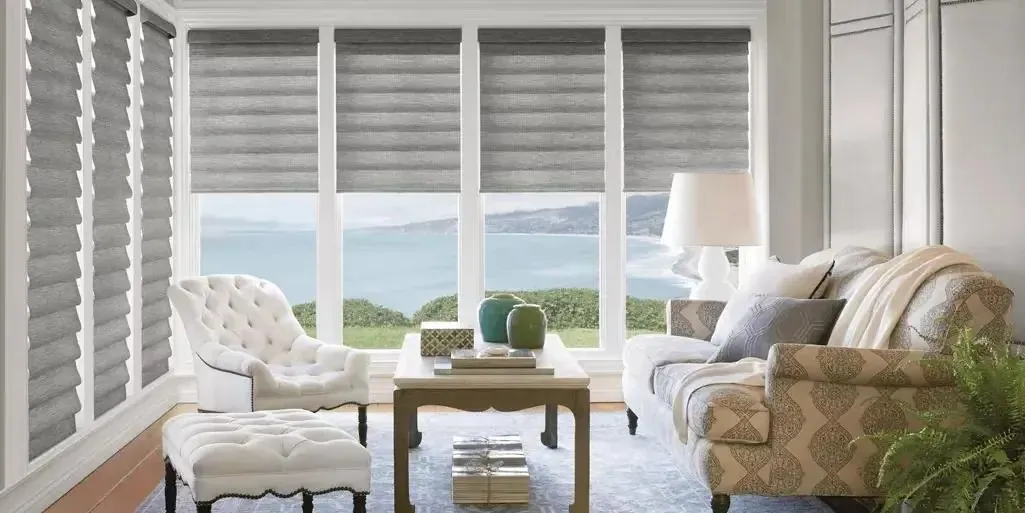
Morning glare on the bay side, newer windows inland
Kingston faces east across its bay, and the antique colonials near the village and the water feel it first thing every day. The sun comes up over the bay, low and bright, and pours straight into kitchens, breakfast rooms and bedrooms on that side of the house. Choosing roman shades in Kingston, MA, for those rooms is mainly about the first few hours of the day.
Inland, off the Pilgrim Highway, the houses are younger. Post-war ranches and newer subdivisions have windows that are standard in size and modern in their hardware: tilt-in sash, crank handles, vinyl frames, locks and latches that sit where a shade has to hang. Those details decide where a folded shade can be mounted, and they are easy to miss without a careful measure.
So there are really two Kingstons to plan for: old houses taking hard morning light, and newer ones where the window hardware calls the tune.
Roman shades in Kingston, room by room
Every folded shade we fit is a Hunter Douglas Carole Fabrics or Vignette shade, in flat or folded styles. Here is how they usually land in the rooms of a Kingston house.
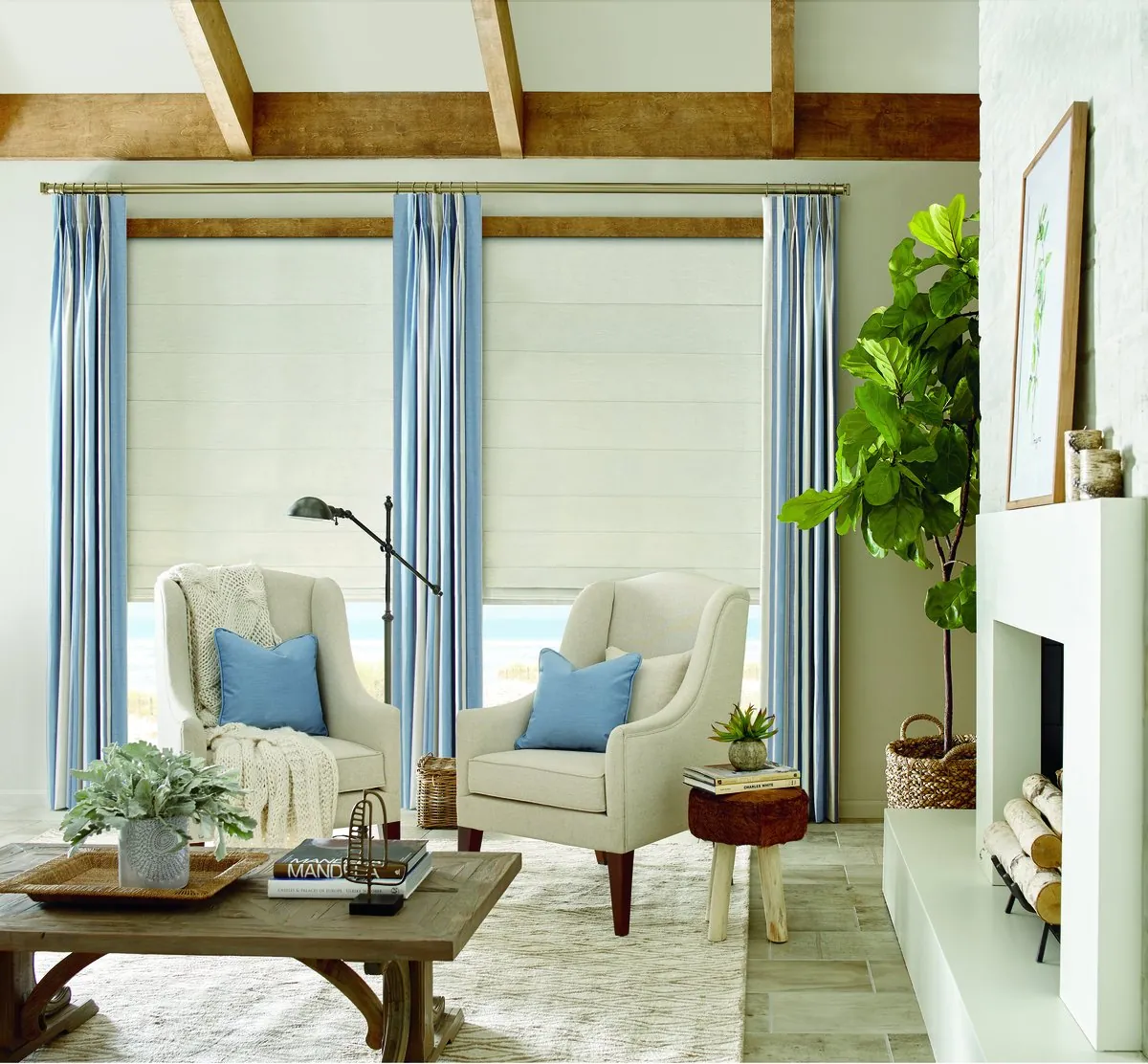
Colonial front rooms
Tall sash and fine trim. A tailored flat fold inside the casing, with drapery at the sides if the room wants it.
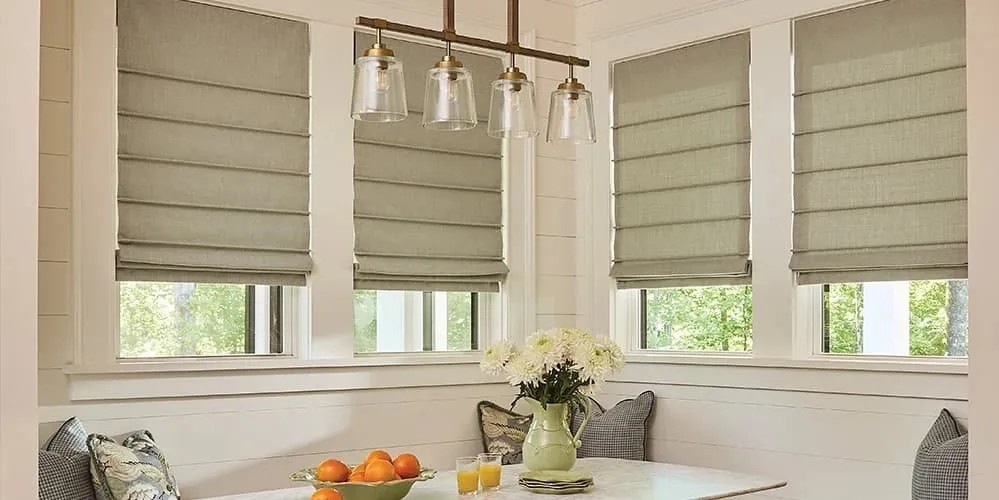
East-facing kitchens
A light-filtering, easy-care cloth that takes the edge off the sunrise over the bay and stays clear of the sink.
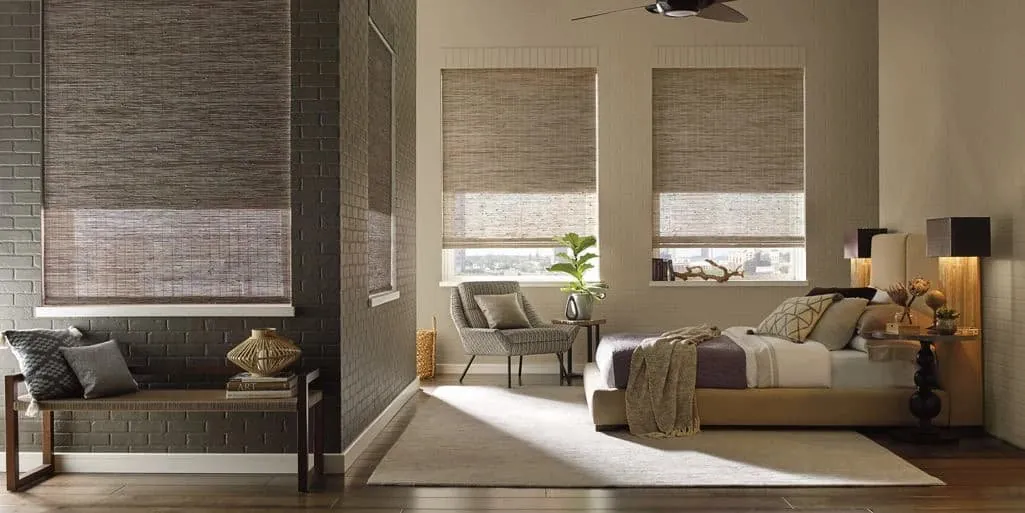
Bedrooms facing the bay
A room-darkening lining, so the sun coming up over the water does not decide when you wake.
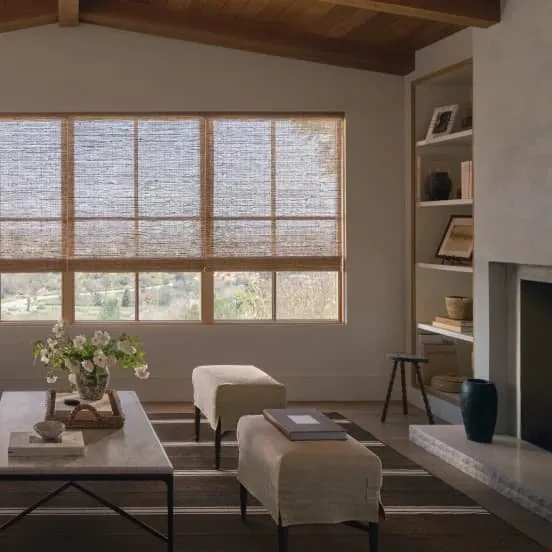
Ranch living rooms
A wide picture window split into shades that share a rail, so the bright pane can drop on its own.
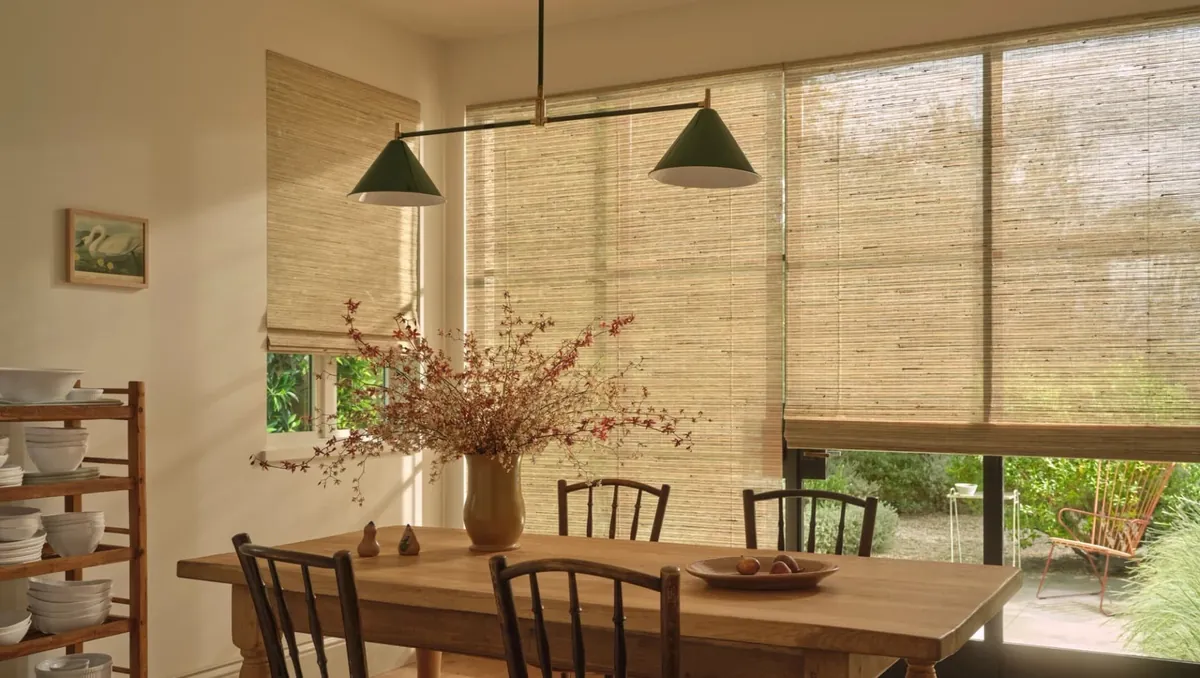
Subdivision family rooms
Matching modern windows, often with cranks or tilt latches. An outside mount clears the hardware cleanly.
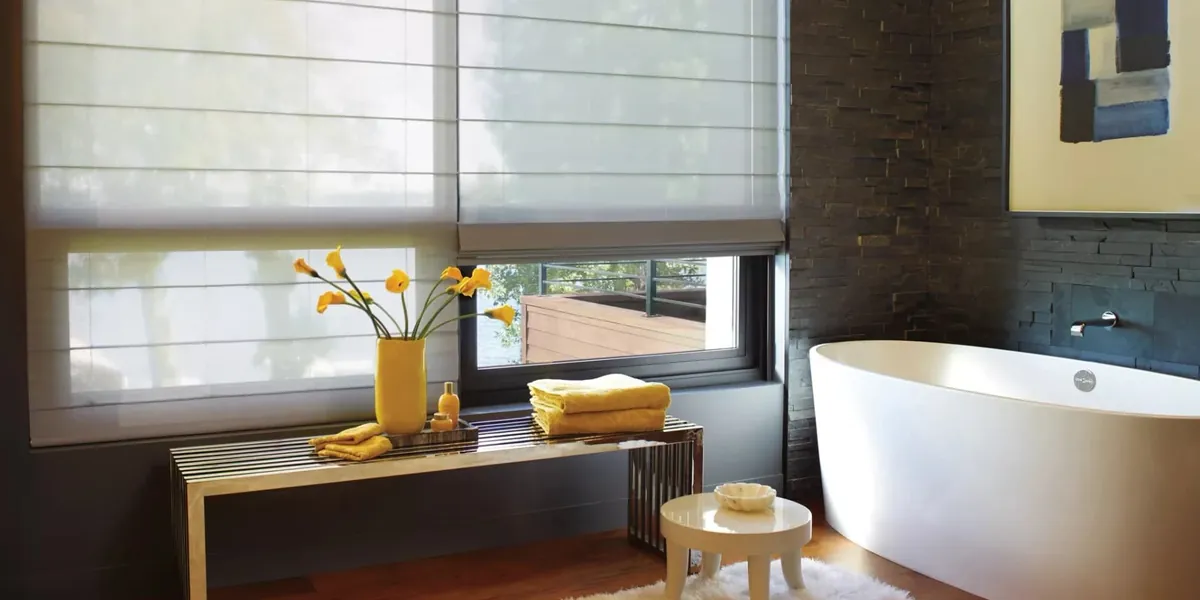
Bathrooms
Houses sit near each other on a subdivision lot. A sheer cloth hides the room and keeps the daylight.
Antique colonials near the village and the bay
The oldest houses in town stand near the village and along the roads toward the water. They are colonials in the true sense: tall, square, symmetrical, with evenly spaced double-hung windows and plenty of interior trim. The front rooms often have panelled walls or deep window casings, and the windows themselves are taller and narrower than anything built inland.
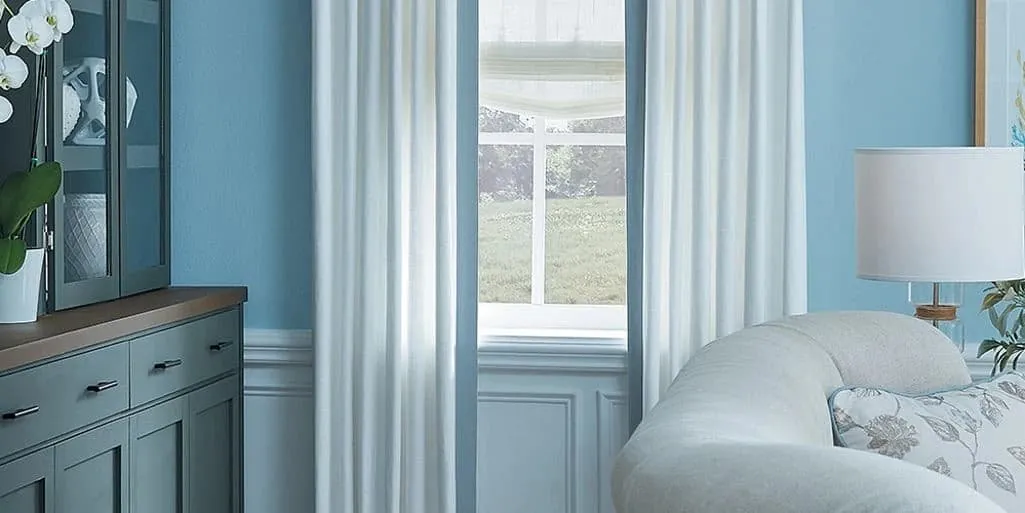
A folded fabric shade is a natural partner for a house like that. A Carole Fabrics flat fold, set inside the opening, hangs as a single quiet panel when lowered and gathers into orderly pleats when raised. It leaves the woodwork whole and adds softness without the bulk of heavy curtains. On a tall window the stack takes up only a small share of the glass, so the view and the light are hardly affected.
Antique frames are seldom square, though. Over a long life a house settles, and an opening can be noticeably narrower at the top than at the bottom, or slightly out of level across the head. The sash pulleys and stops also take some of the depth a headrail needs. We measure every window at several points and only recommend an inside mount where the shade will move freely and hang straight. If it will not, a slim mount on the face of the casing is the better answer.
The street side counts in the village. From outside, people see the back of each shade, so we usually suggest one pale lining across every front window. That keeps the face of an old colonial even and calm, while the cloth facing each room can be whatever suits it.
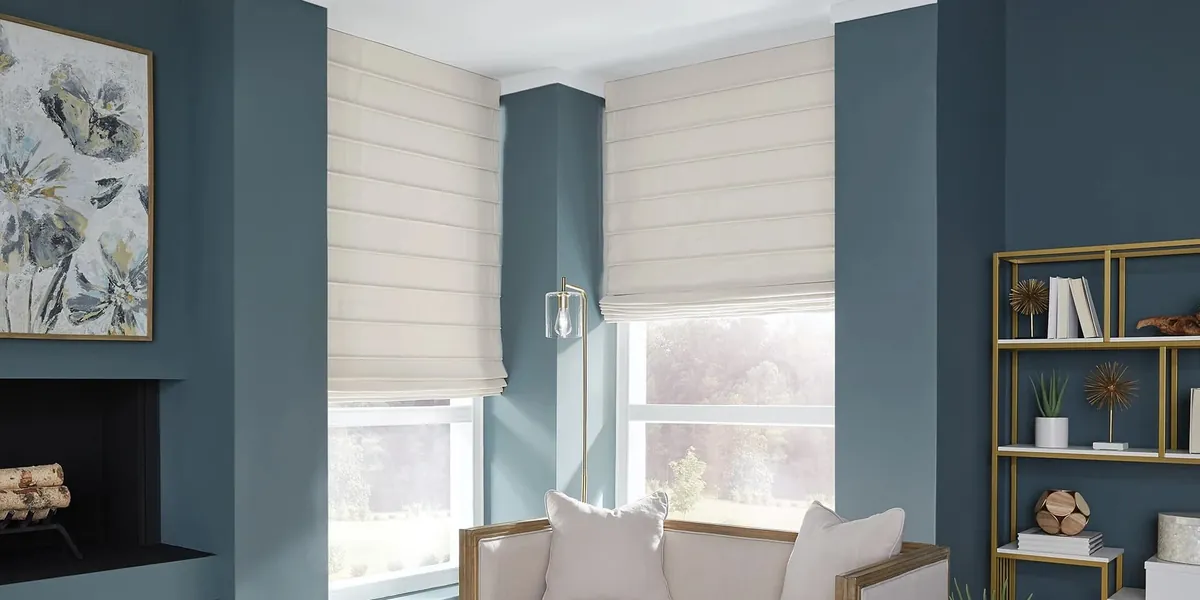
What to do about morning glare off the bay
Sunrise over water is beautiful and, for an hour or two, very hard on the eyes. The sun is low, so it comes in nearly level and reaches right across the room. The water reflects it, adding a second dose from below. On the bay side of a Kingston house, that hits the kitchen table, the breakfast nook and the pillow at about the same time every morning.
How we handle it depends on the room.
Kitchens and breakfast rooms. You want light here, just not glare. A light-filtering cloth, lowered part of the way, softens the sunrise and spreads it evenly so the room stays bright. Raise it fully once the sun has climbed.
Bedrooms. Here the aim is darkness until you choose otherwise. A room-darkening lining behind your chosen cloth does it. Fixing the shade on the wall so it laps past the frame also stops the fine bright line that would otherwise creep in at each side.
Living rooms. Often used later in the day, so the morning sun matters less, but a light-filtering shade lowered on weekend mornings keeps the light off upholstery and floors.
PowerView can take this further. Set the bay-side shades to lower before sunrise and lift mid-morning, and the house deals with the glare whether you are up or not. Powering each motor is worked out window by window when we come to measure.
Roman shades for Kingston ranches inland
The post-war ranches inland are long, single-story houses with a living room picture window, horizontal bedroom windows and a kitchen window over the sink. The windows are a regular size, and many have been replaced over the years with newer units.
The picture window is the one that needs thought. It is wide, and it is often the brightest glass in the house. Three shades sharing one headrail, one for the center pane and one for each side, line up neatly when lowered and can be raised separately. A single wide shade looks cleaner but carries a lot of cloth, so a continuous cord loop or PowerView is the comfortable way to lift it.
Bedroom windows in a ranch are often set high, which suits an inside mount, and they take a room-darkening lining well. The kitchen window over the sink wants a flat fold in an easy-care fabric that stays clear of the faucet.
Newer subdivisions and their window hardware
Off the Pilgrim Highway, the newer subdivisions have regular, well-made houses with standard windows. That should make them easy, and mostly it does. But newer windows have newer hardware, and that hardware is the thing most likely to get in the way of a folded shade.
Here is what we look for:
- Tilt-in sash latches at the top of the lower sash, which can stick into the opening and catch a shade hanging close to the glass.
- Crank handles on casement windows, which sit on the sill and need room to turn.
- Locks and latches in the middle of a double-hung window.
- Shallow vinyl frames, which can leave too little flat depth at the head for an inside mount.
Where any of these get in the way, the usual answer is an outside mount: the shade fixed on the wall or casing above the window, wide enough to overlap the frame. It hangs clear of every latch and crank, it lets a raised shade lift right off the glass, and in a bedroom it blocks more light at the edges. Where the frame has the depth and the hardware sits flat, an inside mount looks very neat.
We check all of this at the measuring visit so there are no surprises when the shades go up.
A visit to your house
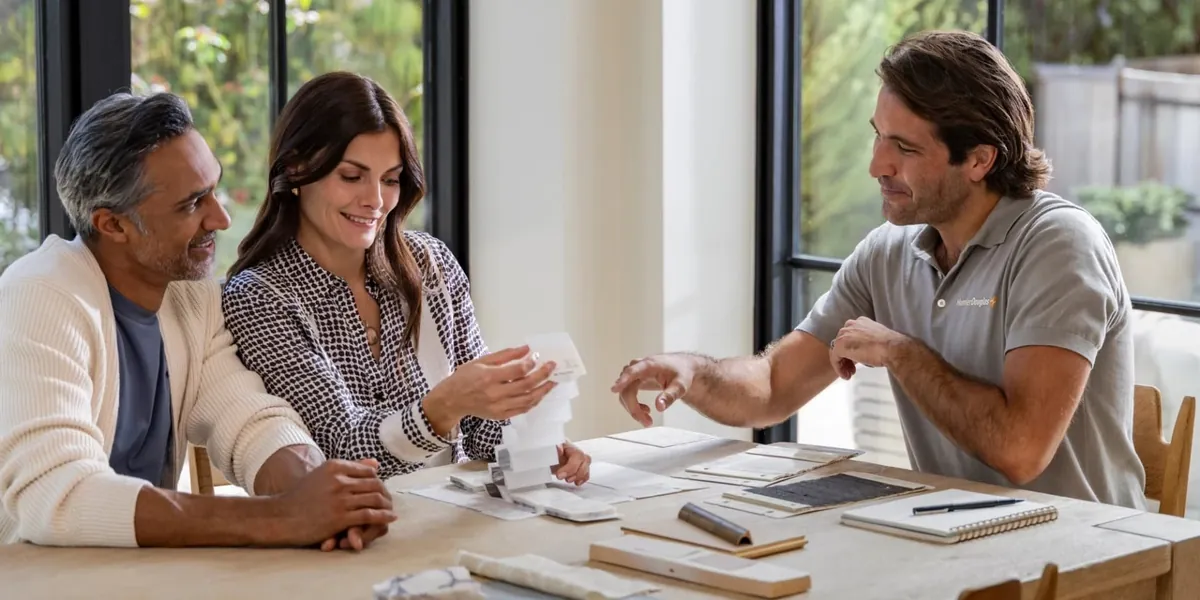
A fabric swatch looks one way in a shop and another in your own east-facing kitchen at seven in the morning. That is why we come to you. Our vans carry the Carole Fabrics and Vignette ranges, so the showroom comes to your door.
- Request a consultation online or with the call button, and choose a time.
- We begin with whichever rooms bother you most, often the bay-side bedroom or the kitchen that is blinding at breakfast.
- You try cloths and linings at the glass, comparing flat folds, softer looped folds and Vignette.
- Every opening is measured, and we note the frame depth, any tilt latches or cranks, and the wall space above.
- You receive a free estimate, window by window, with no pressure to decide that day.
- When the shades are ready, installers certified by Hunter Douglas fit them, check each one hangs true and lifts smoothly, and show you how to use them.
Our interior design consultations can widen the visit to color, cloth and the room as a whole. To know what to expect, read what happens at an in-home consultation.
Flat folds, soft folds and Vignette
Carole Fabrics shades are cut and sewn for each window from a huge range of decorator cloth. Choose a flat fold, which hangs smooth and pleats neatly, or one of the softer folded styles, which keep loops of fabric even when lowered. When the shade has to match a sofa, cushions or drapery, Carole Fabrics is where to start. Raised, the cloth gathers in a stack at the top.
Vignette keeps every fold the same depth and tucks the whole fabric away inside its rail when raised. It leaves the top of the window clear and looks crisp in a newer house. On a ranch picture window or a subdivision family room, its clean lines suit the architecture well.
A typical Kingston order might use Carole Fabrics flat folds in an antique colonial’s front rooms and Vignette in the kitchen and family room. Each line has its own page, Vignette and the Carole Fabrics collection, and our roman shades page gathers them all.
Linings, fading and the east side of the house
The bay side of an old colonial takes the sun every morning of the year. Over time that light fades any fabric it falls on, starting with the folds that face the glass. A lining is the best protection: it sits between the window and the face cloth and takes the sun so the cloth keeps its color. Softer colors, in creams, grays, sands and pale blues, also hold up better on an east window than deep, saturated ones.
Inland, where many windows face the street or a back yard and the light is gentler, there is more freedom to pick a bold color or a strong pattern. A pattern reads best on a flat fold, where it hangs flat when the shade is down.
Stair halls, landings and the center of an old house
Antique colonials are built around a central hall and stair, and the windows there are some of the most striking in the house: a tall window on the landing, a fanlight or side lights by the front door, a small window tucked under the eaves at the top of the stairs. They are also the hardest to reach and the hardest to dress.
The landing window is usually tall enough for a folded shade to look right, with the stack sitting comfortably at the top. It is often out of easy reach from the stair, which is where PowerView or a long wand earns its place. Side lights by the front door are narrow, and many people leave them bare or choose a sheer cloth that keeps the hall bright while blurring the view in from the step.
Fitting roman shades in a Kingston colonial’s hall means keeping the shade quiet. The hall is where the woodwork is most on show, so a pale cloth that lets the trim lead usually looks best, and we keep the lining consistent with the front rooms so the street side stays even.
Open plans in the newer houses
Many of the newer houses inland are built with the kitchen, dining area and family room flowing into one another. That means several different windows in one sightline: a slider to the deck, a bank of double-hung windows over the table, a small window above the sink and perhaps a transom or two. Treat each one differently and the room looks busy.
The fix is to choose one cloth for the whole open space and let the shade sizes follow the windows. Vignette suits these rooms well, with its tidy, even folds and a top that disappears when raised. Where the slider needs something that moves sideways, we will suggest a covering for it that sits comfortably beside the folded shades.
Children, pets and cordless lifts
Newer subdivisions are full of young families, and a window covering with a long cord hanging beside it is the last thing anyone wants in a child’s room. Cordless lifting solves it: you raise or lower the shade by its bottom rail, and there is nothing at the side of the window at all. PowerView is the other cord-free option, and it is especially handy for windows that are high or behind furniture.
PowerView for high and awkward windows
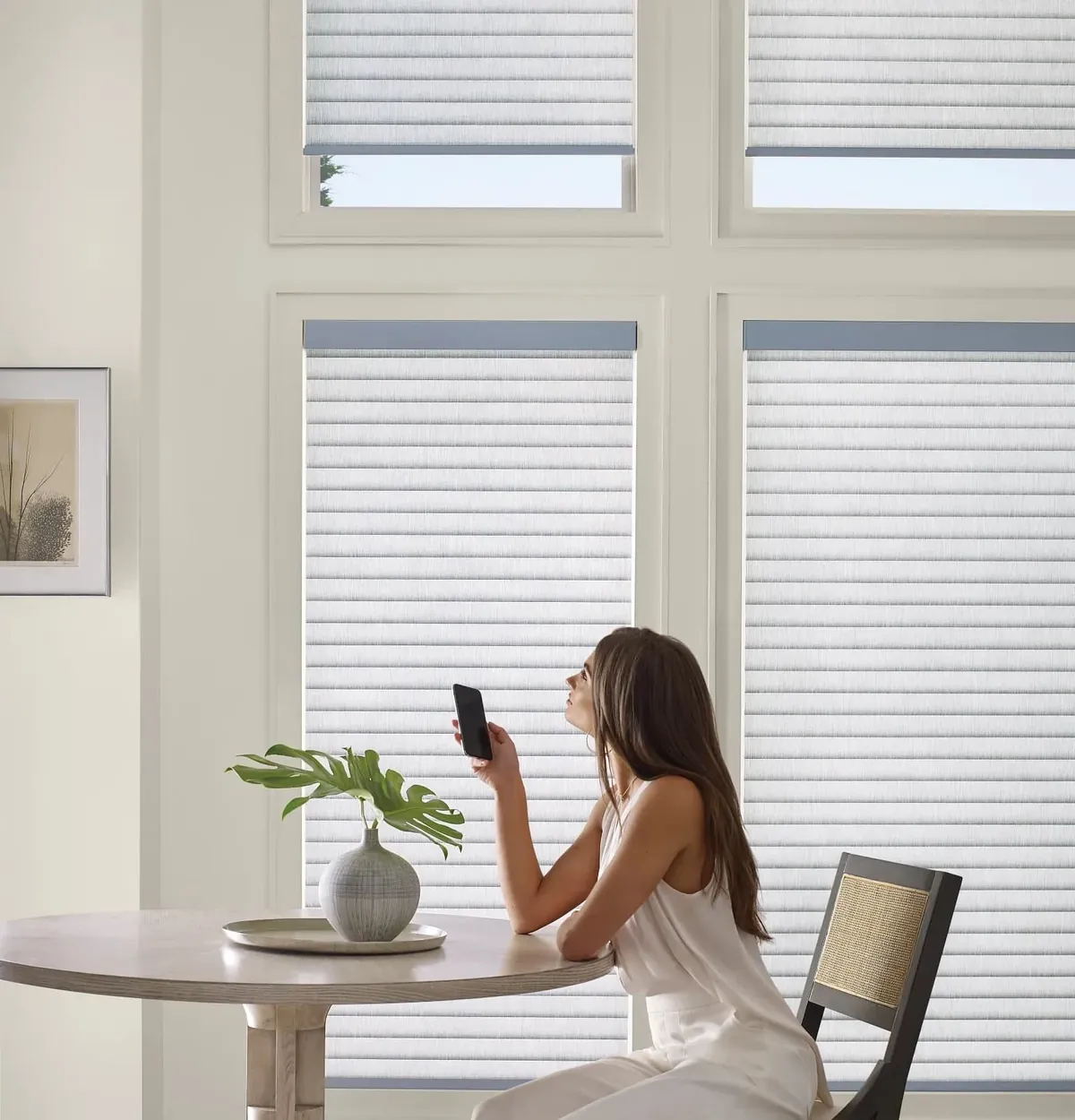
Antique colonials have stair landings with tall windows; ranches sometimes have a vaulted living room; newer houses often have a window high over the front door. PowerView lets you raise and lower those shades from a phone, a tablet or a remote, and schedule them around the morning sun. See motorized blinds and shades in Kingston or our window covering automation page.
If some of your windows suit a different covering, look at cellular shades in Kingston for a cold room or plantation shutters in Kingston for a bathroom. Everything we do in town is on our Kingston page.
Down the highway to Sagamore
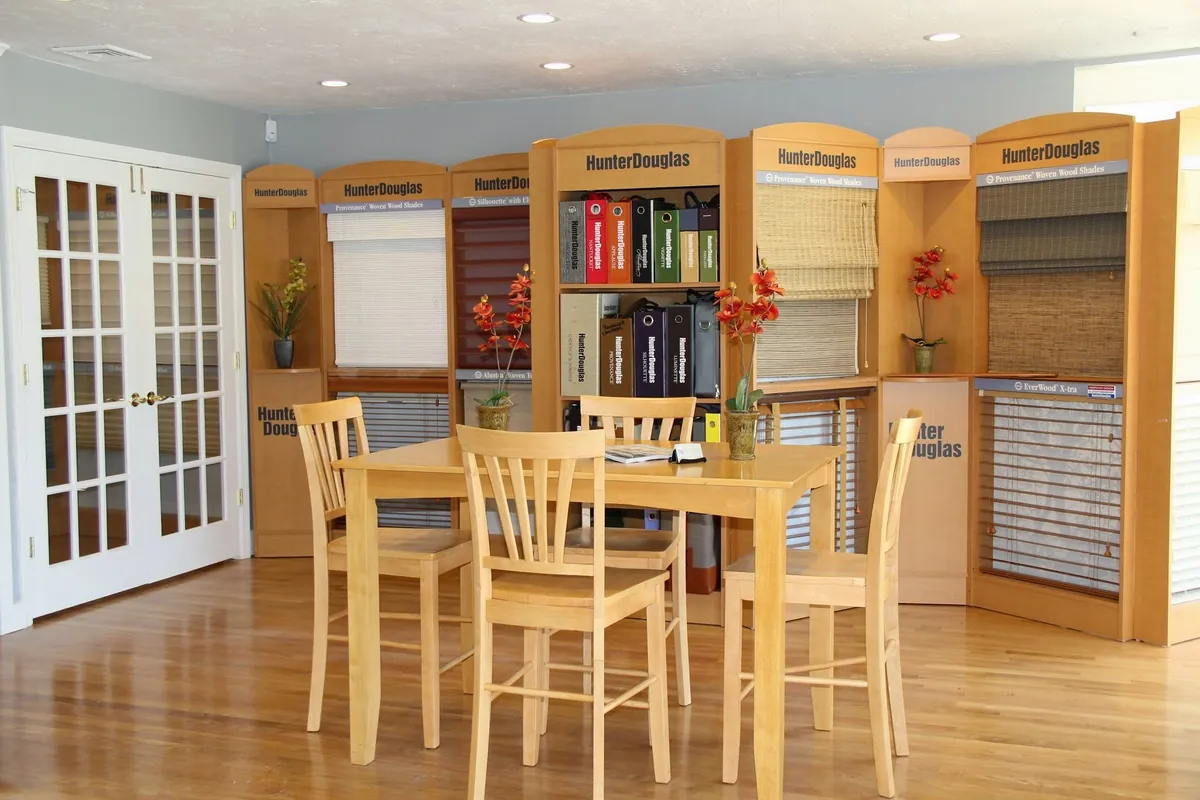
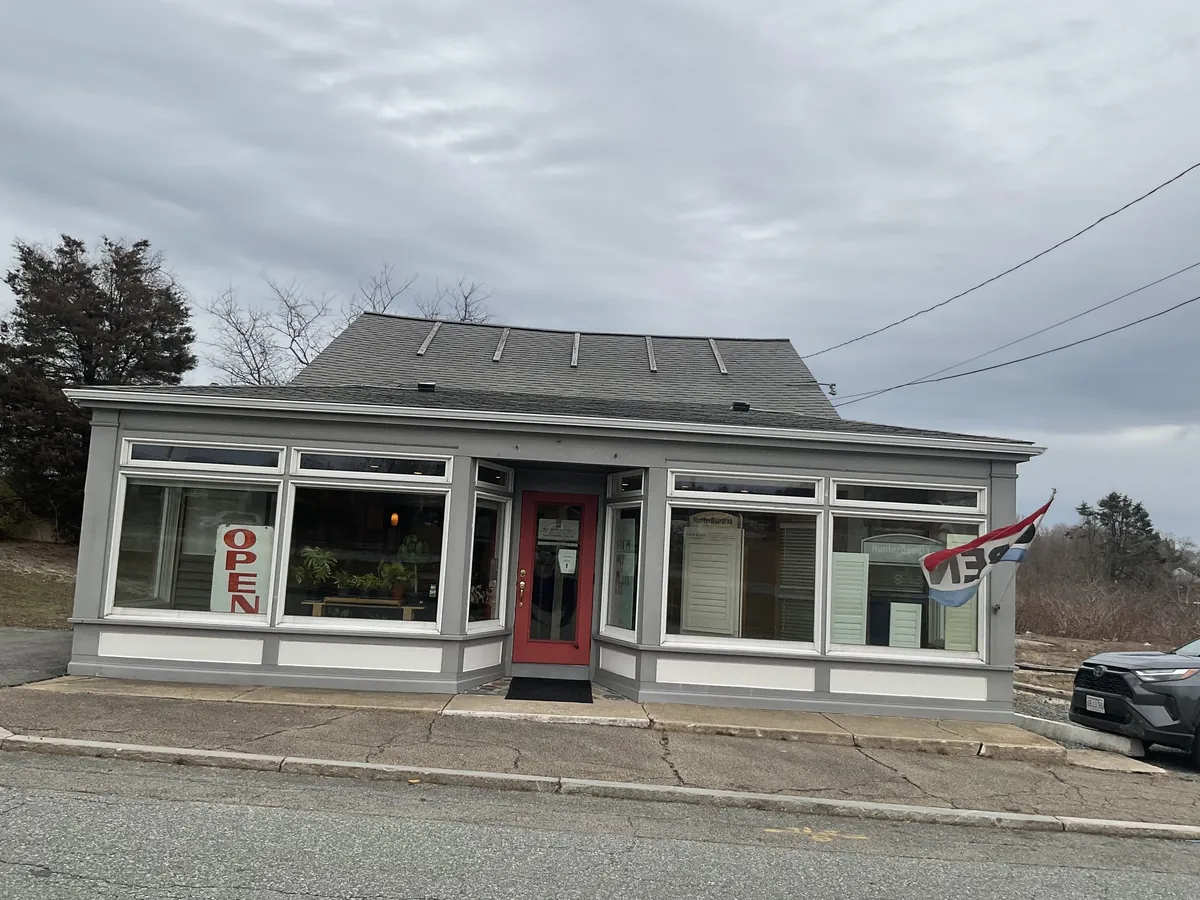
Head south down the Pilgrim Highway and our Sagamore showroom is the closest of our locations to Kingston. Come and work the shades with your own hands, or have the swatches brought to your kitchen table instead.
Gallery is the name Hunter Douglas gives to the dealers it ranks highest, and Blinds & Designs carries it. That is why a Kingston order can draw on the entire folded line: any cloth in the Carole Fabrics library, any Vignette fabric, cordless or looped lifts, and PowerView.
The people who hang your shades hold Hunter Douglas certification. Older window coverings in the house can come to us for repair, and design advice is on hand when a room needs it.
Questions from Kingston
How do I stop the sunrise over the bay waking me up?
A room-darkening lining behind your chosen fabric blocks most of the light. Mounting the shade outside the frame, so it overlaps the edges, blocks the thin strips of light at the sides as well.
My newer windows have cranks and tilt latches. Can I still have roman shades?
Yes. We check the hardware when we measure. Where it would catch an inside-mounted shade, we mount it on the wall above instead, which clears every crank and latch.
Will a folded shade suit my antique colonial?
Very well. A Carole Fabrics flat fold inside the casing keeps the trim on show and suits the proportions of a tall colonial window.
Can my kitchen stay bright but not glaring in the morning?
Yes. A light-filtering cloth lowered part of the way softens the sun off the bay and keeps the room light.
Is there a fee for the estimate?
There is not. Measuring is part of the visit, and the written estimate that follows is free.
Your next step
Roman shades in Kingston, MA, are best chosen in the room that bothers you most, at the hour it bothers you. Book a consultation and the cloths come to your house, every opening is measured, and a free estimate is yours to keep. The Sagamore showroom is there if you would like to look first, and the call button is there if a question comes first.