
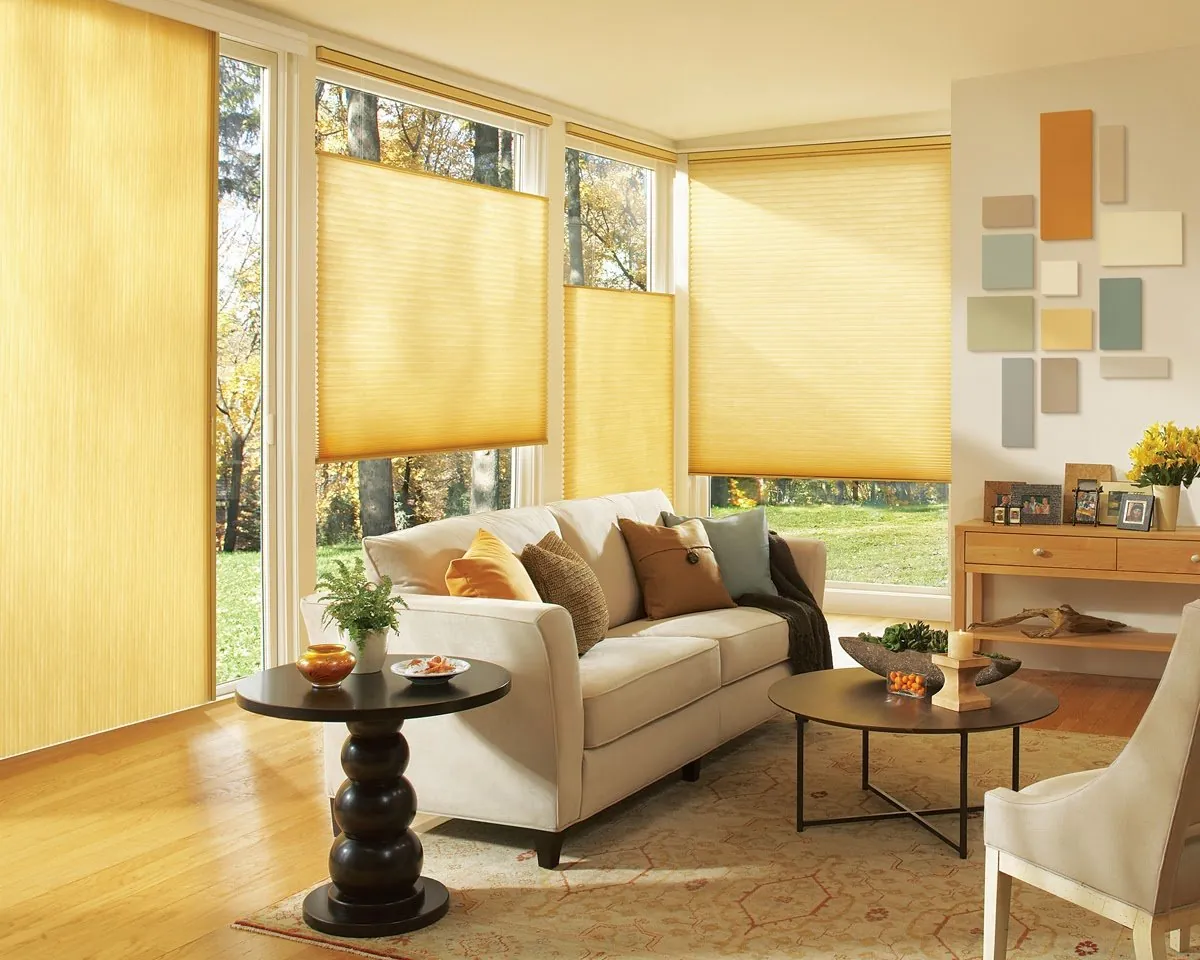
Shingle, salt and open water
Cohasset packs a lot of different houses into a small stretch of coast. Weathered shingle houses crowd the lanes around the village and the harbor. Formal village houses sit near the common with tall front rooms. Out along Jerusalem Road, the larger properties face the open Atlantic with nothing between their glass and the weather. Each one asks something different of a window, and that is the starting point whenever we plan cellular shades in Cohasset, MA.
The honeycomb shade earns its place in a house like these because of how it is built. Every pleat folds into a closed pocket, and each pocket holds a band of air. With the shade lowered, that trapped air sits between the cold glass and the room. That is why a room fitted with honeycomb holds its heat, and why Hunter Douglas honeycomb is the warmest choice we offer for a cold room.
On this part of the coast the ocean does more than set the view. Wind off the water presses on the glass all winter, and salt air finds every bit of hardware near a window. We bring both into the conversation at the consultation, before any shade is chosen.
Honeycomb shades for shingle, village and oceanfront houses
For cellular shades in Cohasset, MA, we carry both Hunter Douglas honeycomb lines and bring samples of each to the house. These are the directions most rooms in town take.
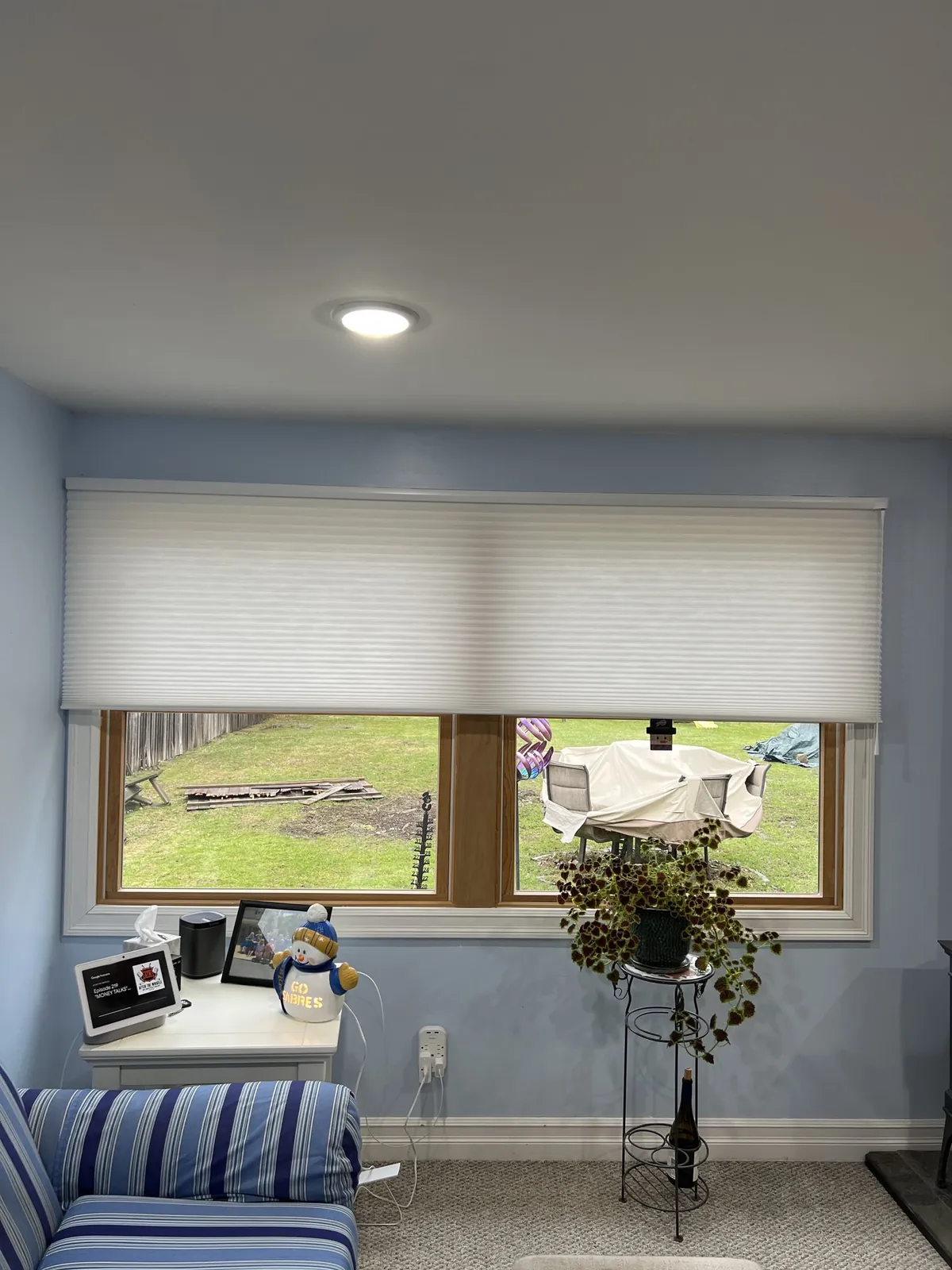
Duette honeycomb shades
The original Hunter Douglas honeycomb and the line with the deepest choice of fabrics and pleat sizes. A natural fit for the formal front rooms where the window is on show.
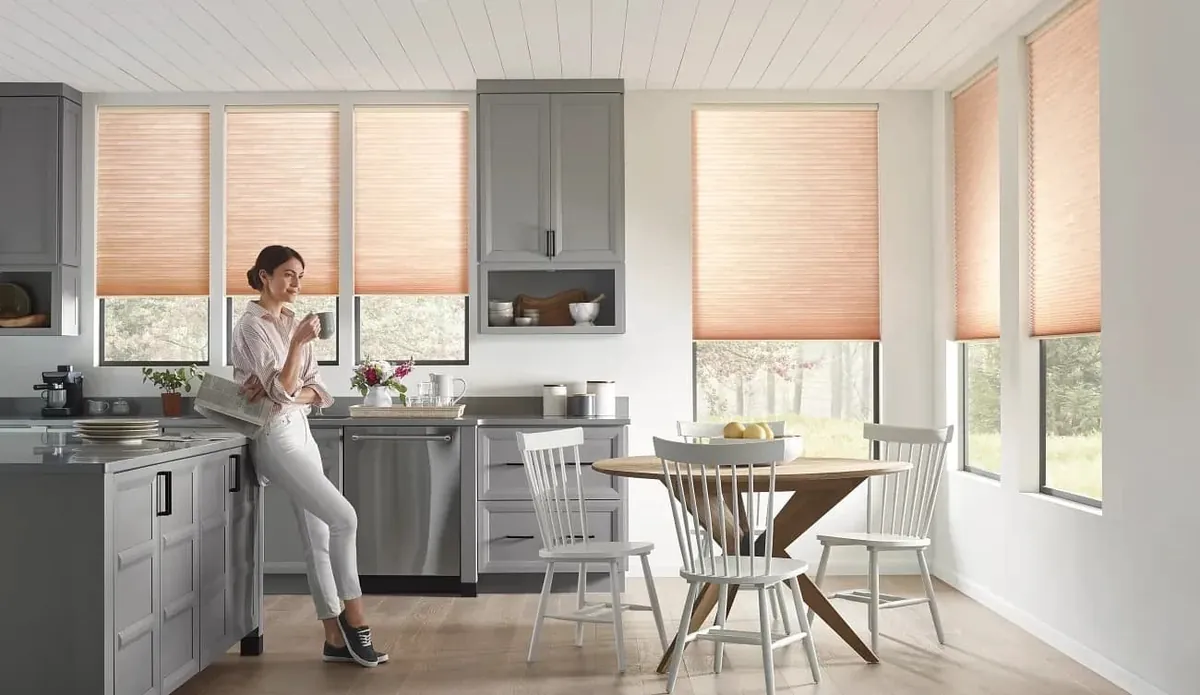
Applause honeycomb shades
Hunter Douglas’s second honeycomb line, with a palette of its own. Often the choice for kitchens, back hallways and the upstairs rooms of a shingled house.
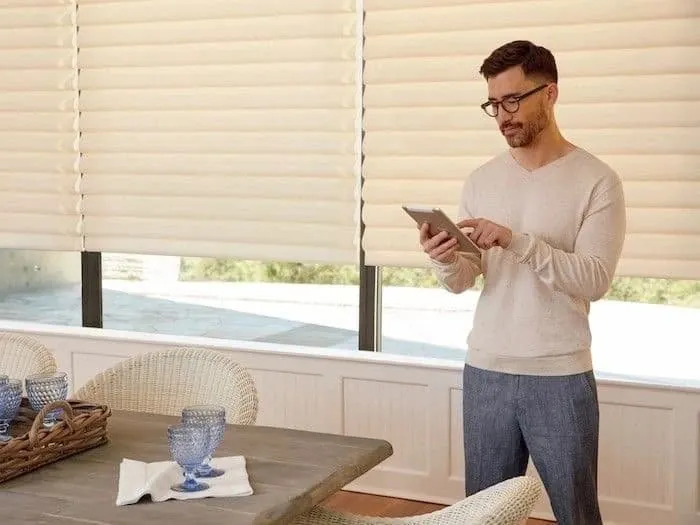
Motorized honeycomb
PowerView lets you raise and lower shades from an app or a remote, or set them on a schedule. Useful for tall ocean-side glass that is hard to reach.
Where the ocean meets the window glass
A house along Jerusalem Road takes the full force of the weather. On a January night the wind comes straight off the water and leans on every pane facing the sea. The rooms on that side are usually the ones with the most glass, because the glass is the reason the house was built where it was. Those are also the rooms that feel coldest once the sun goes down.
That is the room where a honeycomb shade makes the clearest difference. Lowered in the evening, it puts its row of air pockets across the whole window, so the chill from the glass meets a layer of still air before it meets you. In the morning you raise it and the view is back, with the shade stacked neatly at the top of the frame.
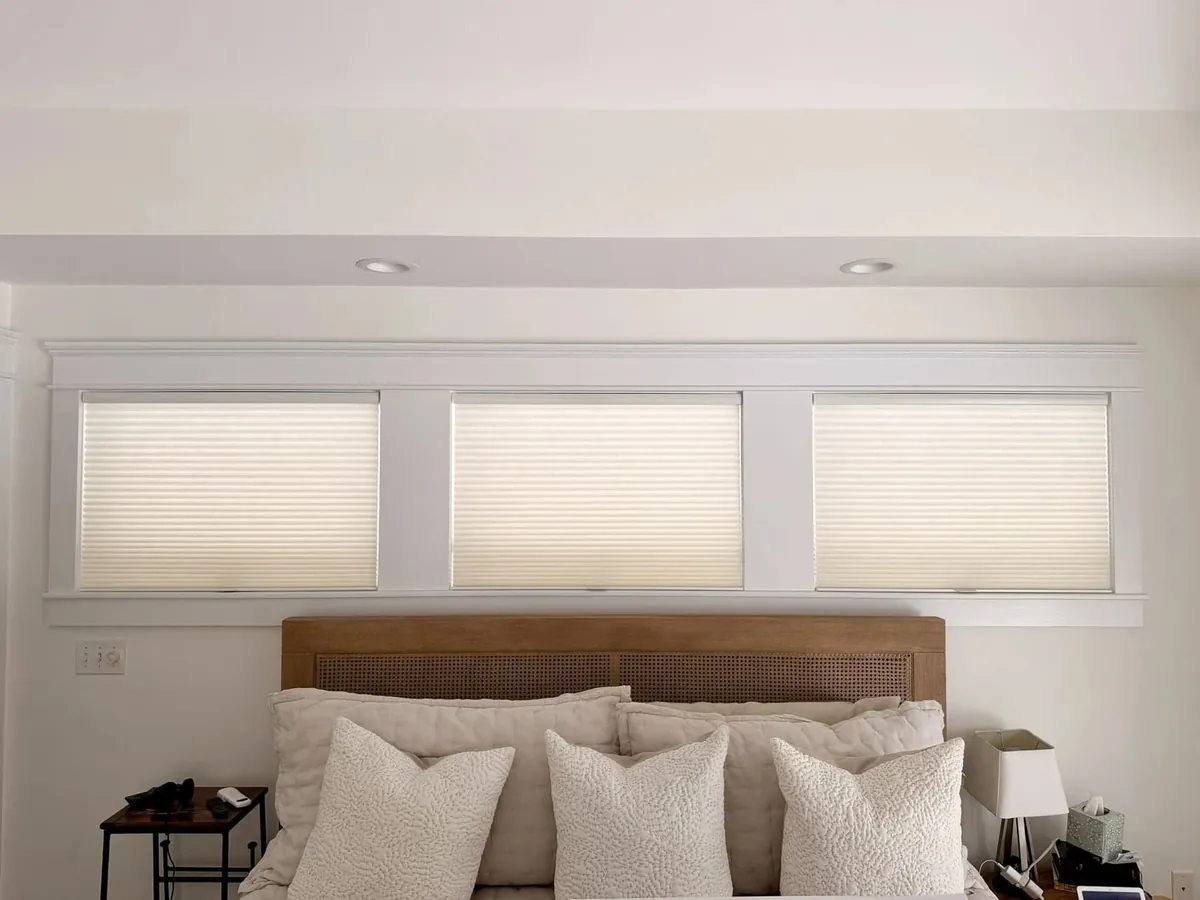
Big oceanfront rooms often have runs of windows side by side, or a wall of glass broken into panels. Each opening can take its own shade, and shades that sit next to each other can be made so the pleats line up across the run. We look at how the windows are grouped before suggesting how many shades a wall should have, because a long run of glass reads best when the shades behave as a set.
Shingled houses around the village and harbor
The older shingle houses near the harbor are a different shape altogether. Rooms are smaller, ceilings lower, and windows often sit on two or three walls of the same room, so a cold pane is never far from a chair. Many keep painted wood casings and old sash that the family has looked after for a long time.
A honeycomb shade sits well in that kind of room because it is soft and quiet in the frame. Raised, it folds into a slim stack. Lowered, it reads as a simple panel of fabric, not as hardware. Fitted inside the window opening, it leaves the trim in full view, which matters when the trim is one of the best things about the house. Where an old opening does not have the depth for that, we show you how the shade would look mounted on the casing instead, and you decide with both in front of you.
Upstairs, the bedrooms under a shingled roof often have short windows tucked into dormers or set low under the eaves. Honeycomb shades can be made for small and oddly placed openings like these, so the whole house can be done in one consistent look rather than leaving the awkward windows bare.
Formal village houses and the drapery question
In the formal houses near the common, a front room is often expected to carry drapery. Long panels frame the tall windows and give the room its finish. Drapery and honeycomb are not rivals here. A honeycomb shade set inside the window frame sits behind the panels and does the daily work: it holds the warmth in on a cold evening and gives you privacy when the lamps are on. The drapery stays where it is, open or drawn, as the room’s dressing.
Choosing them together is what keeps the room looking calm. A shade fabric close to the color of the wall or the trim tends to disappear behind the drapery, while a fabric that picks up a tone from the panels can tie the window together. We bring honeycomb samples to hold up against your existing panels, so you see the pairing in your own light rather than guessing from a small chip.
If you would like a second opinion on the room as a whole, our interior design consultations look at fabric, color and the window treatments together. That can be part of the same visit.

Salt air and the working parts
Salt air is a fact of life in a harbor town, and it settles on anything near a window that stays open through the summer. With a honeycomb shade the moving parts live inside the headrail, out of sight, rather than hanging at the side of the frame. That is one of the reasons the shade suits a coastal house: there is less on show to begin with.
We talk about the salt at the visit, window by window. A shade on a sea-facing window that stands open all summer may call for a different plan from one in a back hall that rarely opens. Where motorization makes sense, we plan how each motor is powered at the visit, so nothing is left to work out after the shades arrive.
Tall glass on the larger properties
The bigger houses out toward the open water often have windows that a person simply cannot reach: a stair hall lit by a tall window over the landing, transoms above a run of sea-facing doors, or a great room with glass climbing toward the ceiling. A shade on a window like that only helps if it actually gets lowered on a cold night, and that is where motorization earns its keep.
With PowerView, honeycomb shades rise and fall from an app on your phone or from a remote, and they can follow a schedule you set. A whole wall of shades can move together, or each one on its own. On the ocean side of a large house, that means the shades that matter most against the winter wind are the easiest ones to use, not the ones left up all season because they are out of reach.
Motorized shades still use the same Duette and Applause fabrics, so a motorized stair window can match the hand-operated shades in the rooms beside it. We plan the motorized windows during the same walk-through, so cellular shades in Cohasset can be part manual and part motorized under one plan.
Which honeycomb for which room
Both Duette and Applause are true honeycomb shades, and both hold air in their cells the same way. What separates them is the range: the fabrics and textures, the pleat sizes and the details each line offers. Duette is the broader of the two. Applause has its own palette and suits a great many standard openings.
In a house with a formal front and a working back, the two often split the work. The front rooms, where the window faces the street and the fabric is part of the look, may take Duette. The kitchen, mudroom and back bedrooms may take Applause. When we plan cellular shades in Cohasset we lay the samples from both lines side by side, room by room, so the choice is made with your own windows behind it. The main cellular shades page covers the whole honeycomb range if you want to read more before we visit.
Light from the water
Ocean light is bright, and on the open coast it comes in low across the water in the morning and again late in the day. A sitting room facing the sea can glare at certain hours even in winter. A honeycomb shade softens that light rather than shutting it out. The fabric glows and spreads the light evenly across the room, so you keep the brightness without the hard patch of sun on the floor or the screen.
The fabric choice decides how much comes through. A sheerer fabric keeps a sea-facing room bright and open. A more opaque fabric suits a bedroom that faces the morning sun. Many oceanfront houses use both: lighter shades in the living rooms where the view matters most, and darker ones upstairs. We bring both kinds so you can hold each to the glass at the hour the room is used.
Strong daily sun off the water is also something to weigh when choosing color. We point out at the visit which fabrics we would put on the brightest windows and which we would keep for the shadier side of the house.
Privacy close to the lane
Around the village the houses stand close to the street, and the front windows are only a few steps from the sidewalk. A honeycomb shade gives daytime privacy without darkening the room, because the light-filtering fabric glows from outside rather than showing what is in the room. After dark, with the lamps on, a more opaque fabric keeps the room private.
That makes the honeycomb a good match for a shingled house where the front room doubles as the family room. You can leave the shades down through the day, keep the room light, and still not feel watched from the lane.

Planning the shades for a whole house
Few houses on this coast are done one window at a time. More often a household wants the oceanfront rooms warmer, the bedrooms darker and the front rooms more private, all at once. Here is how a consultation for a whole house usually runs.
- You request a consultation online or with the call button, and we agree a time.
- We arrive with Duette and Applause samples in a spread of fabrics and colors.
- We walk the house with you, starting with the rooms that face the water or feel the cold first.
- You hold samples at your own windows, in the light each room actually gets.
- We measure every opening and note where a shade would sit inside the frame or on the casing.
- You receive a free estimate for the shades you are weighing, with no need to decide on the day.
You can read more on our what happens at an in-home consultation page before we come.
Installation that suits an older frame
The last step is the fitting, and in a coastal town with old houses it matters as much as the fabric. Our installers are certified by Hunter Douglas, so the shades go up the way the maker intends, on a shingled cottage or a large house facing the sea.
An old frame is rarely square, and a shingled house that has stood up to a great many coastal winters may have openings that look alike from the lane but differ from one another inside. Made to the measurements taken at the visit, each shade fills its own opening edge to edge, which is also what lets the honeycomb do its job against the glass.
If a shade ever needs attention later, we handle blind and shade repair as well, on window coverings you already own.
A Hunter Douglas Gallery dealer on the South Shore
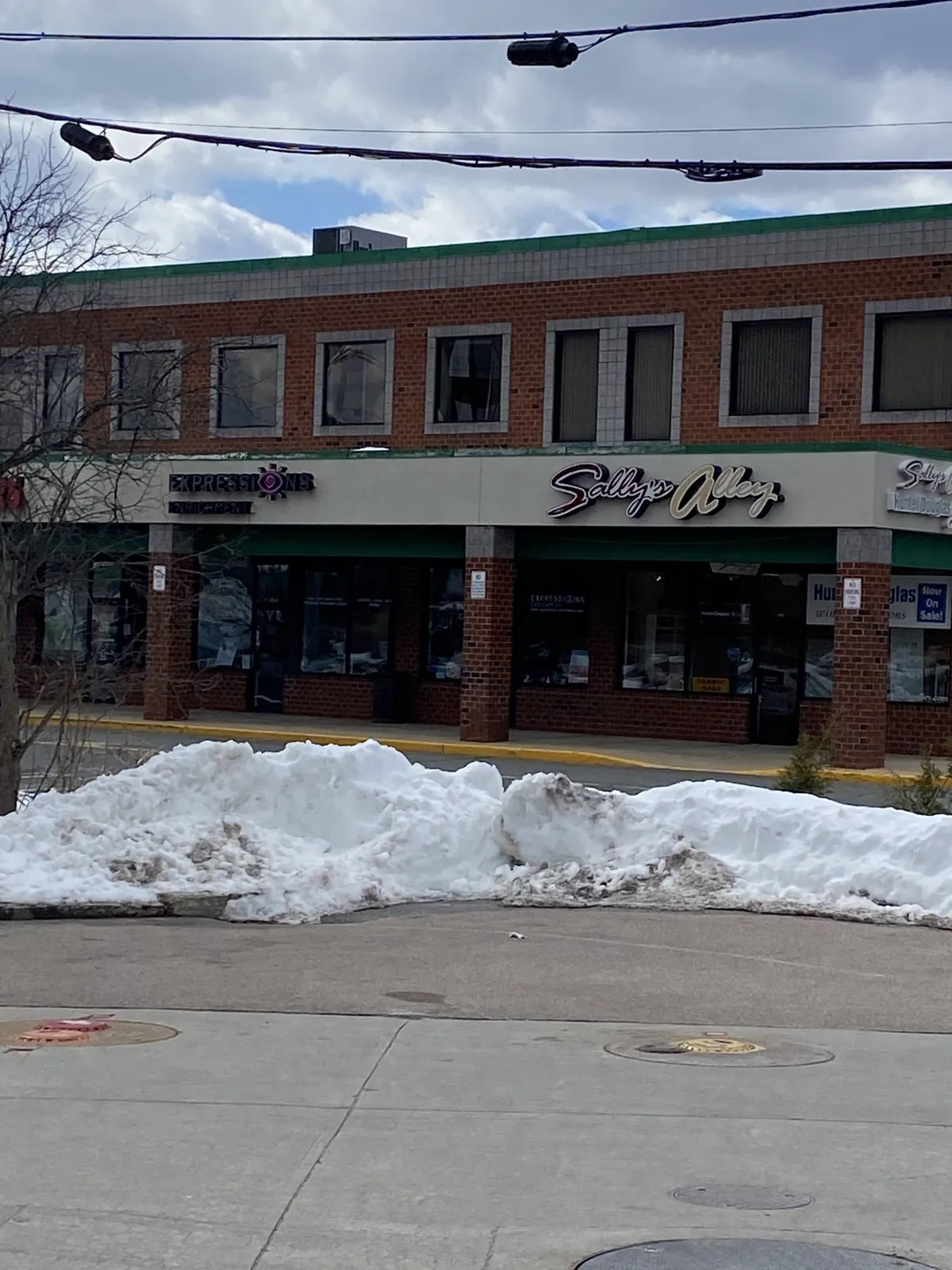
Blinds & Designs is a Hunter Douglas Gallery dealer. For a Cohasset house that means the full honeycomb range in one place, every Duette and Applause fabric, along with PowerView motorization and the rest of the Hunter Douglas line.
For homes on this part of the South Shore, the choosing happens in your own rooms. Our shop-at-home service sends a van with samples to the door, so you see each fabric against your own trim and in your own light. The Canton shop-at-home page explains how it works. If you would like to see shades in person first, the nearest showroom is in Franklin; the Franklin showroom page has the address and hours.
Honeycomb is only one part of what we do in town. We also handle roman shades in Cohasset, plantation shutters in Cohasset, roller shades and custom blinds, and our Hunter Douglas dealer page for Cohasset covers the whole range. Everything we offer here is on the Cohasset page.
Questions from Cohasset
Our house faces the open ocean. Will honeycomb shades help the cold rooms on that side?
Yes. Each cell of a honeycomb shade holds a pocket of air, and that layer sits between the cold glass and the room when the shade is down. It is the warmest option we offer for a room that loses its heat through the glass. In the morning you raise the shades and the view is back.
Can a honeycomb shade sit behind the drapery in a formal front room?
It can, and in the village houses it often does. The shade is fitted inside the window frame and does the daily work, while the drapery stays as the room’s finish. We bring samples to hold against your panels so the two suit each other.
What about the salt air near the harbor?
The working parts of a honeycomb shade sit inside the headrail rather than hanging at the side of the window, so less is exposed to begin with. We look at each window at the visit, and especially the ones that stay open through the summer, before suggesting a plan.
Do you come to the house, or do I need to visit a showroom?
We come to you. Cohasset is looked after by our shop-at-home service, so the van brings the samples to your windows. If you also want to see shades in a showroom, Franklin is the nearest.
Is the estimate free?
Yes. Once we have measured the windows you are thinking about, you get a free estimate, with no pressure to decide that day.
Start with one cold room
You do not need a plan for the whole house to get started. Pick the room on the ocean side that feels coldest on a winter evening, or the front room closest to the lane, and we will begin there. Request a consultation and we will bring Duette and Applause samples to your windows, measure, and give you a free estimate for cellular shades in Cohasset, MA. If you would rather talk it over first, use the call button.