
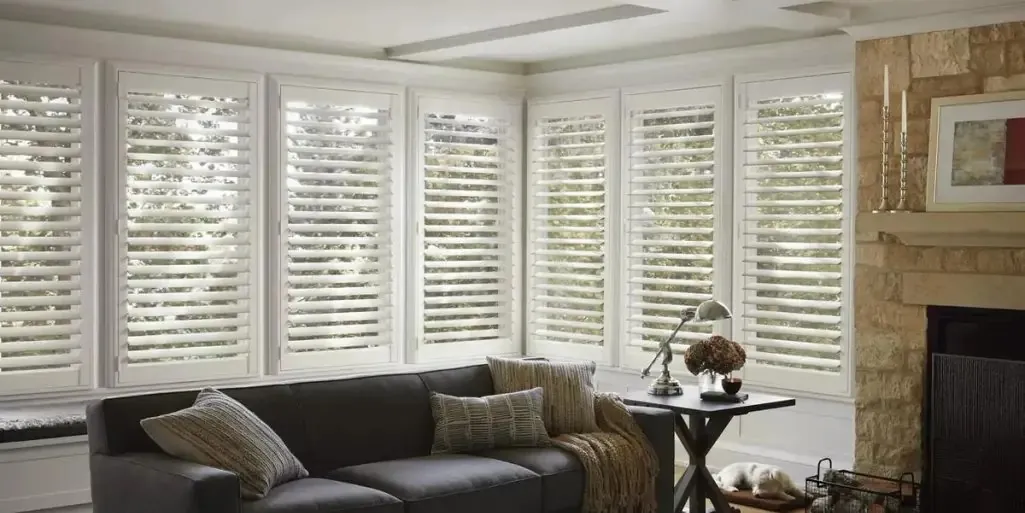
Canal weather and bright water: why Bourne windows need a sturdy answer
Bourne is a town split by the canal, and the houses on either side of it live with the water in one way or another. Summer cottages at Monument Beach and Pocasset sit low and close to the shore, many of them winterised over the years with a patchwork of window sizes. Inland, newer colonials off the main roads have tidy rows of double-hung windows and a big family room at the back. When we fit plantation shutters in Bourne, MA, the first thing we ask is which way the room faces and how close it sits to open water.
That question matters because of two things the canal and the bay bring with them. Wind pushes weather sideways across the water, so rooms facing it take rattling glass and draughts through older sash. And on a clear day the light that comes off the water is hard and reflected, bouncing up off the surface into a room at angles a curtain never quite blocks.
A shutter handles both better than a soft treatment. It is a rigid panel set into a frame, so it does not billow when a window is cracked open on a breezy afternoon. Its louvers tilt to send reflected glare up to the ceiling instead of across the sofa, and when they close fully the room goes quiet and dim.
Shutter choices for cottages, colonials and canal-side rooms
Hunter Douglas makes three shutter collections, and the choice between them comes down to the room. Here is how plantation shutters in Bourne, MA, usually divide up across a house, from a damp beach bathroom to a formal dining room.
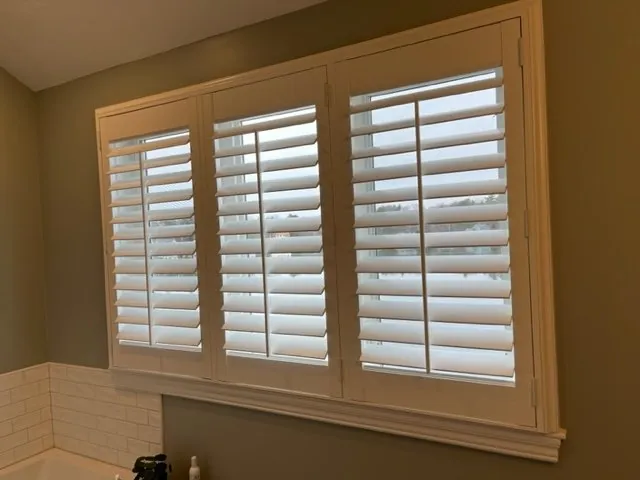
Palm Beach for the wet rooms
Made of polysatin with no wood in it at all, so steam, sea damp and a window left open in August do not bother it. Our pick for bathrooms, kitchens and the rooms closest to the shore.
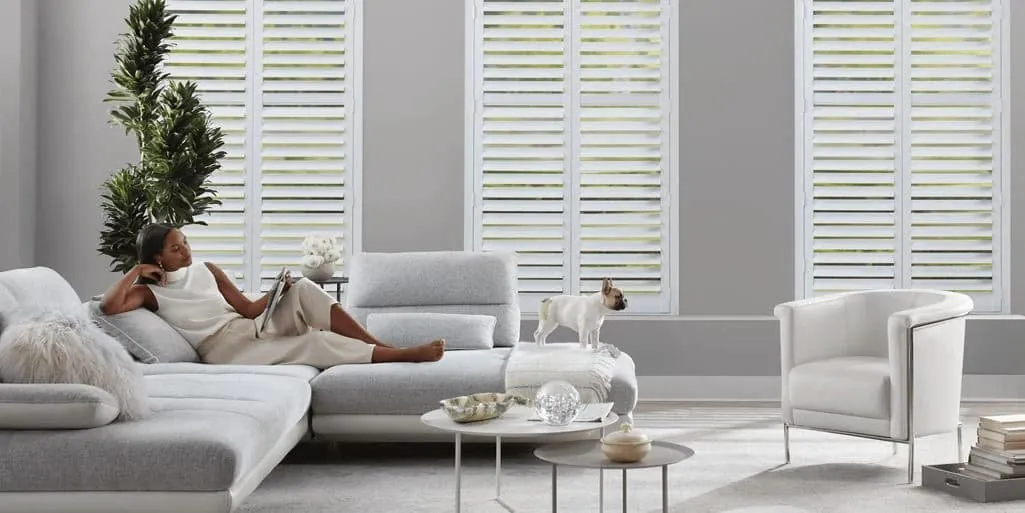
NewStyle across the whole house
A composite with the look of a painted wood shutter. A practical way to give every bedroom and living space in an inland colonial the same clean finish.
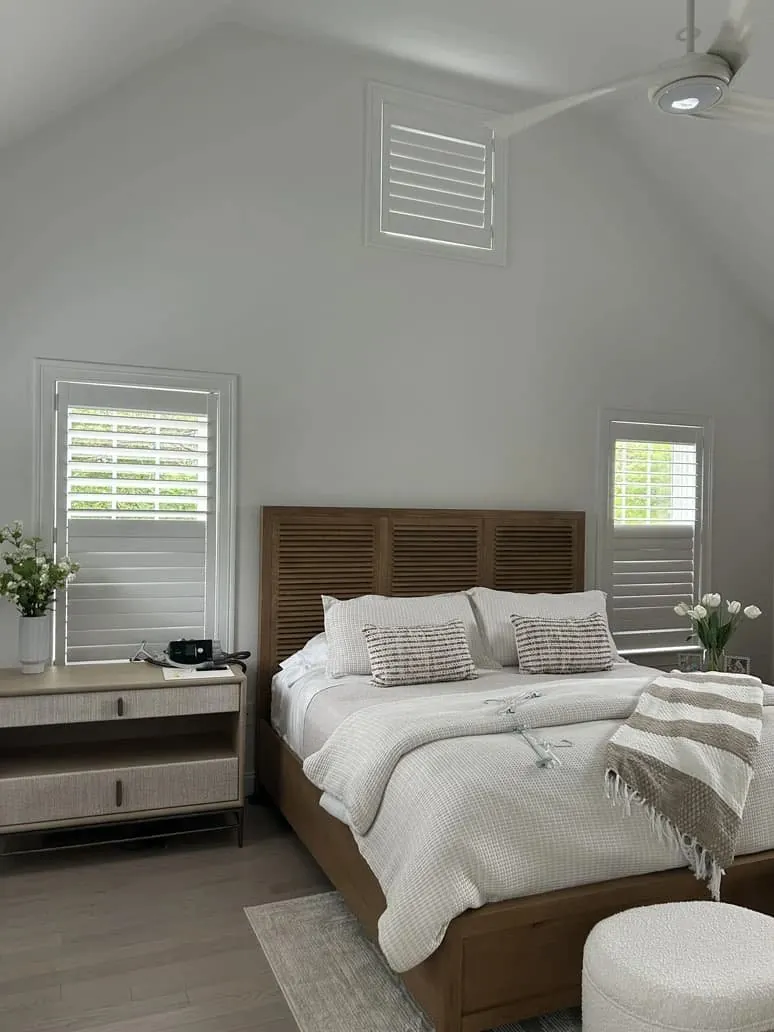
Heritance for real wood
Genuine hardwood, painted or stained. The one to choose where a room has good wood trim or an older cottage has kept its original casings.
Monument Beach and Pocasset cottages
Many of the cottages near the shore started life as summer places. They were built for warm months, with windows wherever a view or a breeze could be caught, and then insulated, extended and heated by later owners. The result is a house where a single room might have a wide picture window, a pair of narrow casements and a small high window over a built-in bench, none of them the same size.
That variety is where a made-to-measure shutter earns its keep. Each opening gets its own frame and panels, sized to that window and nothing else. A narrow casement takes a single panel that swings clear of the crank. A wide window takes two or four panels hinged to fold back in pairs. Because the louver size can be the same across all of them, the room still looks as though it was planned that way from the start.
Cottage rooms also tend to be small and bright. A stained shutter can feel heavy in a low-ceilinged room, so most cottage owners choose a white or soft painted finish that reflects light back in. For plantation shutters in Bourne, MA, in a beach bathroom or a kitchen with a sink under the window, Palm Beach is the material we suggest, because it shrugs off damp that would eventually trouble wood.
Reflected light off the canal and the bay
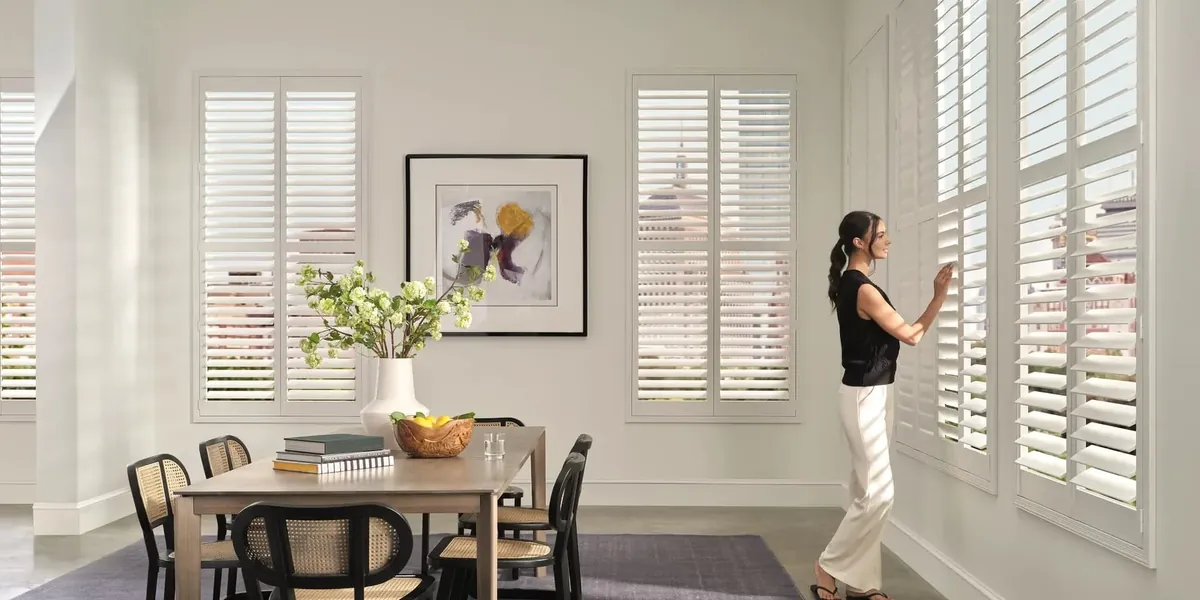
Anyone who has sat in a canal-side living room on a sunny afternoon knows the glare we mean. The sun is not just shining in from above; it is bouncing off the water and coming in low, sometimes from below the line of the window head. A roller shade pulled halfway down still lets the bounce in underneath.
Shutters deal with it by angle. Tilt the louvers upward and the light that hits them from low on the water is thrown up toward the ceiling, where it brightens the room without landing in anyone’s eyes. Tilt them slightly down and you keep a view of the water while the sky above is screened. Close them flat and the room goes dark enough for an afternoon nap or a film.
A divider rail helps here too. It splits a tall panel into an upper and lower section that tilt on their own, so you can close the bottom louvers against the bounce off the water and open the top ones to the sky. On a big picture window facing the bay, that one detail changes how usable the room is through the middle of the day.
Wind-driven weather on the exposed side
Houses that face the canal or the open bay take the weather side on. A northeaster drives rain against the glass for hours, and in winter a steady wind finds every gap in an older sash. A shutter is not a storm window, but it does help. A closed panel set snugly in its frame forms a barrier between the cold glass and the room, and with the louvers shut the draught that slips past the sash meets a solid face rather than an open room.
This is one reason we take care over the frame on an exposed window. A frame that meets the opening closely all the way round leaves fewer gaps at the edges, and the panels close against light stops rather than leaving a line of daylight. On a stormy evening, closing the shutters on the windward side makes a front room feel noticeably calmer.
The same wind brings salt. Polysatin and painted finishes wipe clean with a damp cloth, which is about all the care a shutter near the water needs. Choosing plantation shutters in Bourne, MA, for a canal-side house is partly a choice about upkeep: there is no fabric to fade or stain, and nothing to take down and wash.
Village houses near the bridges
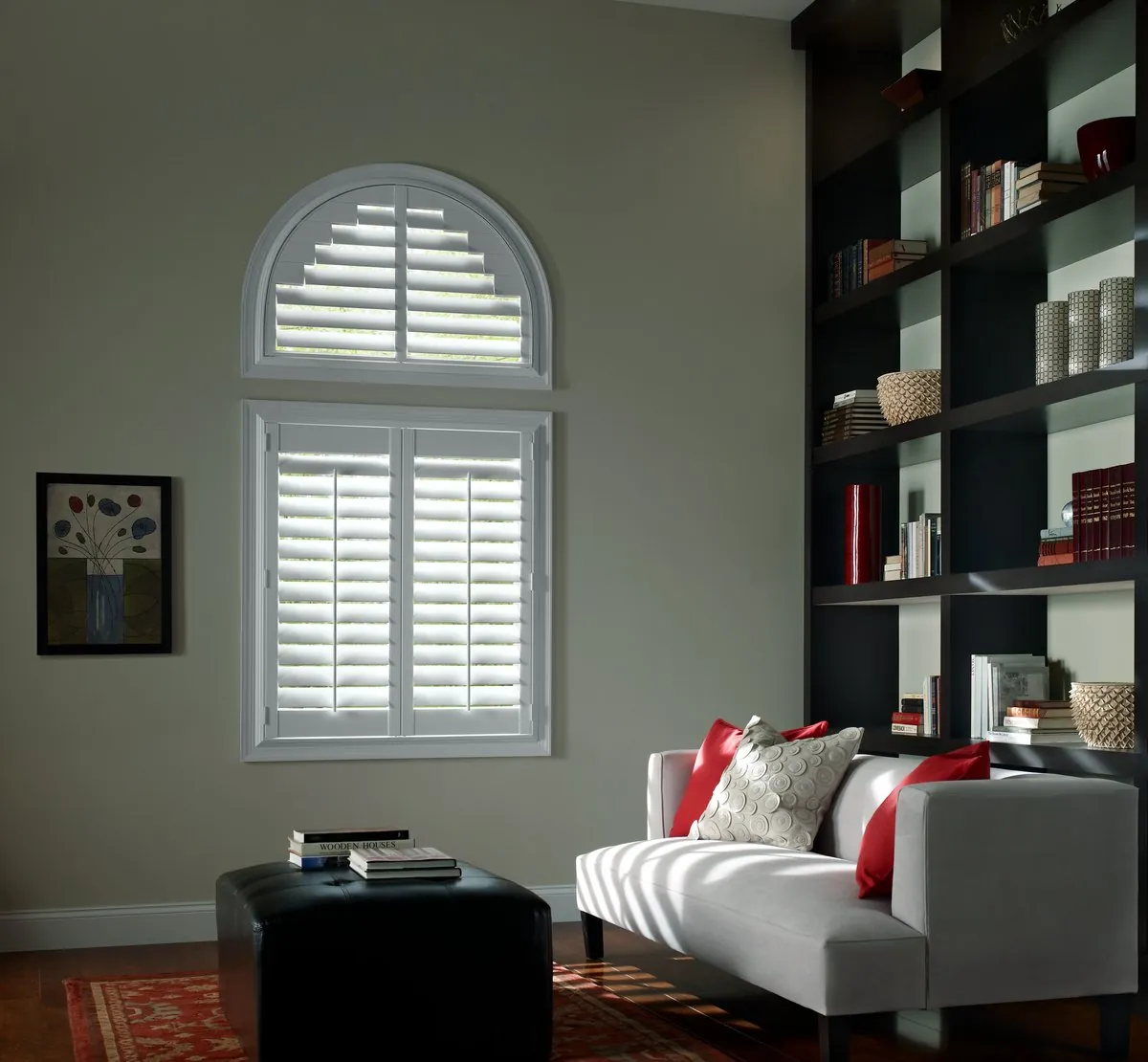
Between the shore and the newer subdivisions sit older village houses, closer together and nearer the road, with modest windows facing a neighbor across a narrow yard. Here privacy is the main job. Cafe-style shutters cover the lower half of the window, so passers-by and the house next door see a neat white panel while the top half stays open to the sky. Full-height shutters with a divider rail do the same thing with more flexibility, since the upper louvers can be opened for light while the lower ones stay closed.
Choosing the louver size
Louver size is one of the two decisions that shape how a shutter looks on your wall, and it is worth taking a moment over. Wider louvers mean fewer slats across the glass. When they are open, more of the view comes through, and the shutter reads as clean and modern. They suit the bigger windows in an inland colonial and any room built around a water view.
Narrower louvers suit smaller windows. On the short casements and little high windows in a cottage, a wide louver can look oversized, and a narrower one keeps the proportions right. Narrow louvers also feel more traditional, which fits an older house with small panes.
Most houses use one louver size throughout so that the outside of the house looks consistent from the street. We bring sample panels in more than one size so you can hold them up at your own windows, open and closed, and see the difference before you decide.
Frames and mounting on houses near the water
The frame is the part that holds the panels and finishes the window opening. Getting it right is what makes a shutter swing freely and close evenly for years.
An inside mount sets the frame within the window opening, so the casing around it stays on show. It is the tidiest look, and on a colonial with a deep, square opening it is usually the first choice. An outside mount fixes the frame to the wall around the window. It is the better answer when the opening is shallow, when a crank handle or a lock sticks out, or when a cottage window has settled out of square over the years and needs a frame to square it up visually.
Then come the smaller choices. A visible tilt rod on the face of each panel is the classic look and easy to reach. A hidden tilt mechanism on the side of the panel gives a cleaner face with nothing crossing the louvers. On windows where weather drives hard against the glass, we also look at how the panels latch, so they sit snugly closed when the wind picks up.
Inland colonials and newer houses
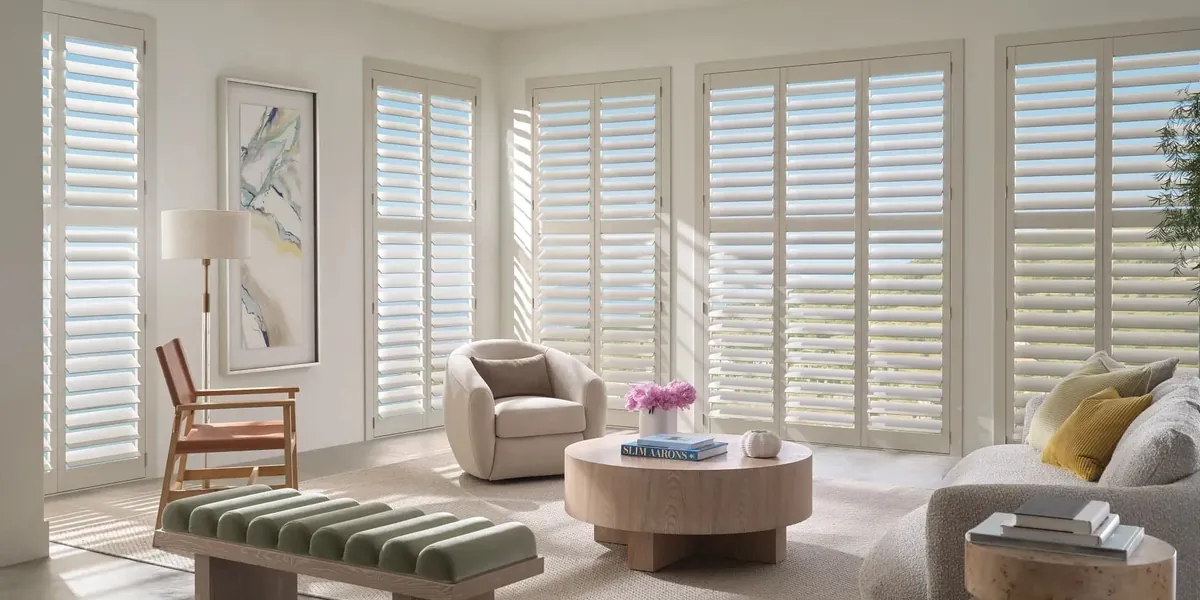
Away from the shore, the houses in Bourne look different. The newer colonials have regular windows, often the same size throughout the upstairs, plus a large family room or kitchen addition at the back with a run of windows or a slider. These houses are where a whole-house shutter order makes the most sense.
With identical windows, shutters can be made in matching sets, and the result from the street is crisp and uniform. NewStyle is the usual choice for this kind of house, with Palm Beach in the bathrooms and the kitchen. If the front rooms have stained trim or a fireplace surround in natural wood, Heritance in a matching stain can tie the shutters to the woodwork.
The back of the house often needs more thought. A run of windows over a kitchen sink may want cafe-style shutters that cover only the lower half, keeping the yard view and the light while screening the neighbors. A wide opening to a deck may suit shutter panels on a track that slide aside. We talk through those options when we stand in the room together.
Bedrooms in these houses are often where shutters are appreciated most. Closed louvers darken a room far better than a light shade, which helps on long summer evenings when the sun sets late over the bay side of town. And because the panels swing open completely, you can clear the whole window on a mild morning to let the air and light in, then close them again at night. For a nursery or a child’s room, a cordless panel with nothing hanging down is a simple, tidy choice.
Your in-home consultation, step by step
Shutters are a fitted product, so the visit matters more than it does with most window coverings. Our vans carry sample panels in each collection, finish and louver size, which means you choose in your own rooms rather than from a picture.
- You request a consultation online or with the call button, and we settle on a time.
- We walk the house with you, starting with the rooms that face the water or the canal.
- You hold Palm Beach, NewStyle and Heritance samples at your windows and compare finishes beside your trim.
- We talk through louver size, divider rails and tilt options for each room.
- We measure every opening carefully, checking depth and squareness, and note anything that affects the mount.
- You receive a free estimate for the shutters you are considering, with time to think it over.
When the shutters arrive, certified Hunter Douglas installers fit each frame, hang the panels, check that every louver tilts and every panel closes evenly, and show you how to care for them. More detail is on our page about what happens at an in-home consultation.

Hunter Douglas shutters from a Gallery dealer
Blinds & Designs is a Hunter Douglas Gallery dealer, which gives you all three shutter collections and their full range of finishes in one consultation. We do not have to steer you toward one line because it is the only one on the van.
Every shutter we sell is fitted by a certified Hunter Douglas installer. A shutter is less forgiving than a shade: if the frame is not set square, the panels will not meet and the louvers will not close evenly. Careful installation is what makes the product work as it should.
Shutters are only part of what we do. We also carry Hunter Douglas blinds, shades and drapery, offer interior design consultations, handle repairs on window coverings you already own and set up window covering automation for shades. For other rooms, look at cellular shades in Bourne or roman shades in Bourne, or see everything we offer on our Bourne page. The full shutter range is on our plantation shutters page.
The Sagamore showroom, right here in town
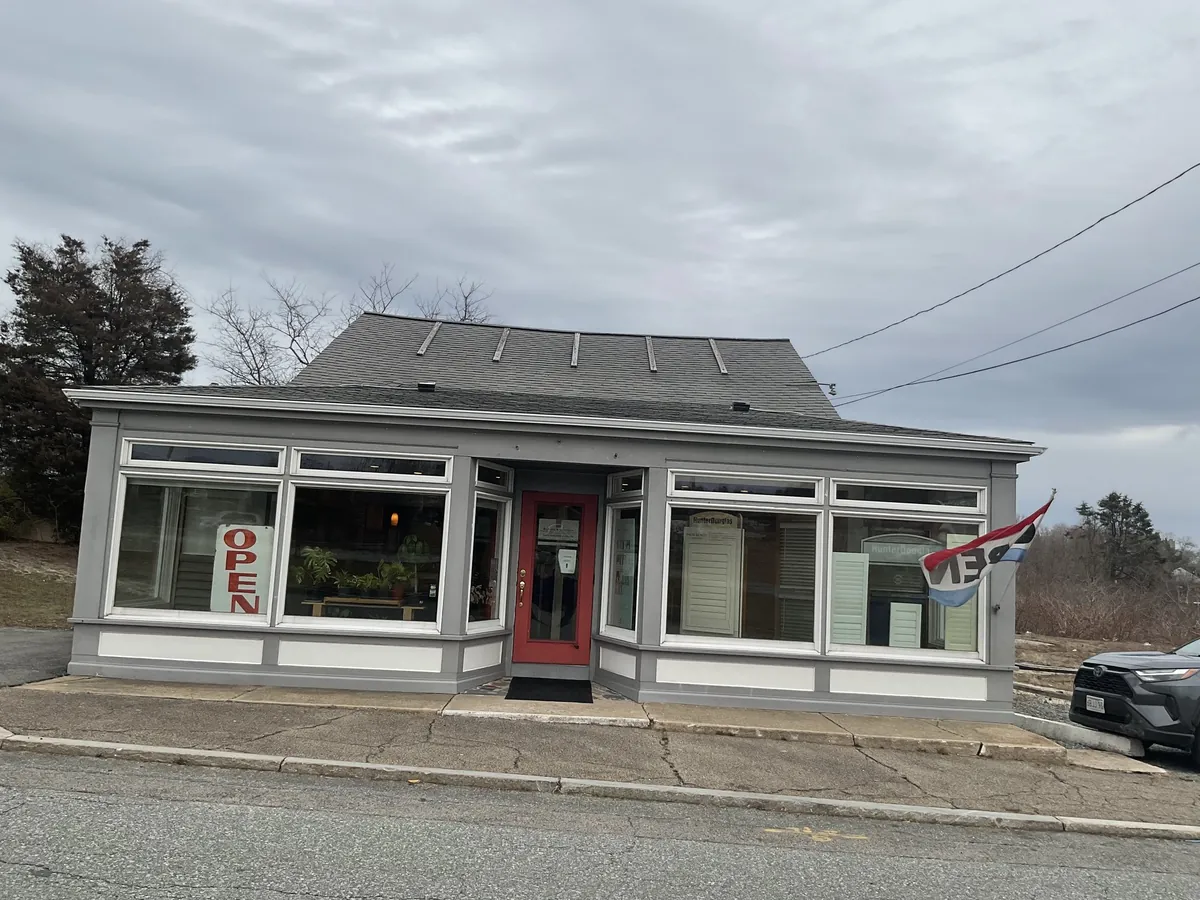
Our Sagamore showroom is in Bourne itself, so for most homes in town it is close by. If you like to see and touch a product before anyone measures, it is a good place to start: open and close a shutter panel, compare finishes and talk through your rooms.
Plenty of people do both. They look at shutters in the showroom first, then book an in-home visit so we can see the windows, measure them and hold samples up in their own light. Either way, the free estimate comes after we have measured.
Questions from Bourne
Which shutter suits a beach cottage?
Palm Beach. It is made of polysatin with no wood, so damp air, steam and a window left open on a humid day do not cause it to swell or warp. Many cottage owners use it throughout the house, not just in the bathroom.
Can shutters stop the glare coming off the canal?
Yes, and better than most shades. Tilting the louvers upward throws the reflected light toward the ceiling, and a divider rail lets you close the lower louvers while leaving the upper ones open to the sky.
My cottage windows are all different sizes. Is that a problem?
Not at all. Every shutter is made for its own opening, so a narrow casement, a wide picture window and a small high window can all be fitted in the same room. Keeping one louver size makes them look like a set.
Should I choose inside or outside mount?
An inside mount keeps the window casing on show and is usually the first choice where the opening is deep and square. If the frame is shallow, a crank handle is in the way or the window has settled out of square, an outside mount on the wall is the better fit. We measure and recommend window by window.
Is the estimate free?
Yes. After we measure your windows, you get a free estimate. Request a consultation and we will arrange a time to bring samples to your home.
Ready when you are
Seeing a shutter at your own window, in the light off the water, is the quickest way to know which collection and louver size suit the house. Request a consultation and we will come with samples, measure each opening and prepare a free estimate for plantation shutters in Bourne, MA. If you would rather look first, stop in at the Sagamore showroom or use the call button to talk it through.