
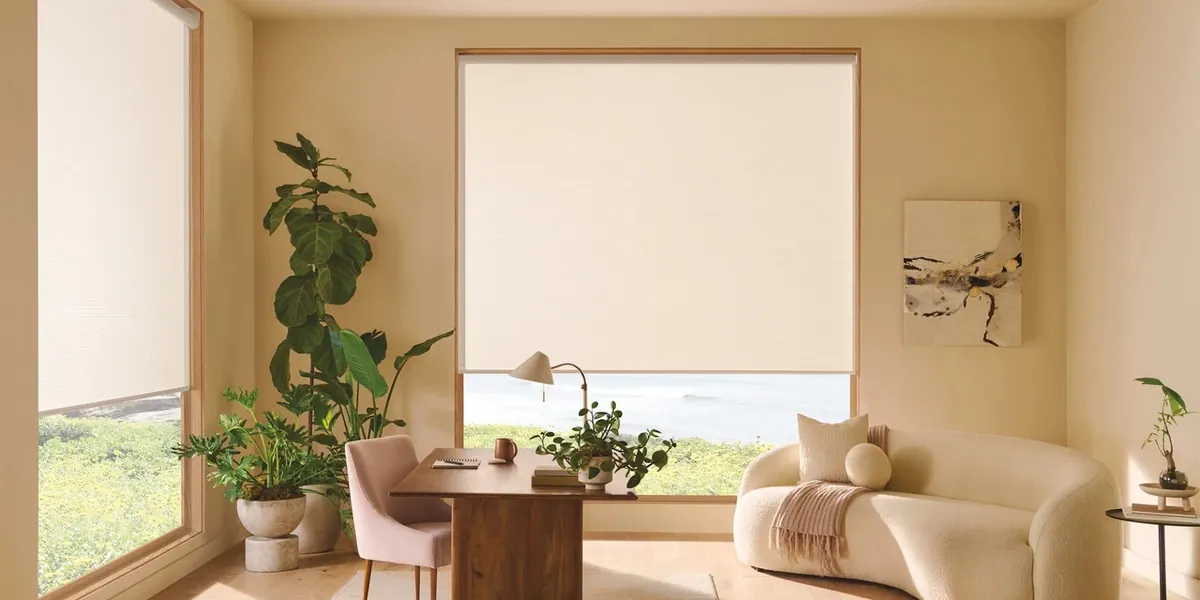
The view comes first
Along the harbor and out toward Minot and Peggotty Beach, Scituate’s shingled houses are arranged around what lies beyond the glass. Living rooms, kitchens and upstairs bedrooms face the water, and the windows on that side are often the largest in the house. It is one of the most exposed stretches of the South Shore, so those same windows take hard sun, salt wind and glare off the sea. Inland, the newer colonials have a quieter setting and standard openings, with more ordinary needs. Any plan for roller shades in Scituate, MA, starts with a simple question: how much of the view do you want to keep?
On the water side, the answer is usually almost all of it. That points to solar screen fabric, which is woven open enough to see through while it takes the sting out of the light. Getting the screen right, its openness and its color, is the single most important choice on a harbor house.
Inland, and in the rooms of a shore house that do not face the water, the questions change to privacy, darkness for sleeping and simple, easy lifts.
What we fit in Scituate houses
Every shade here is Hunter Douglas, and our vans carry samples of each.
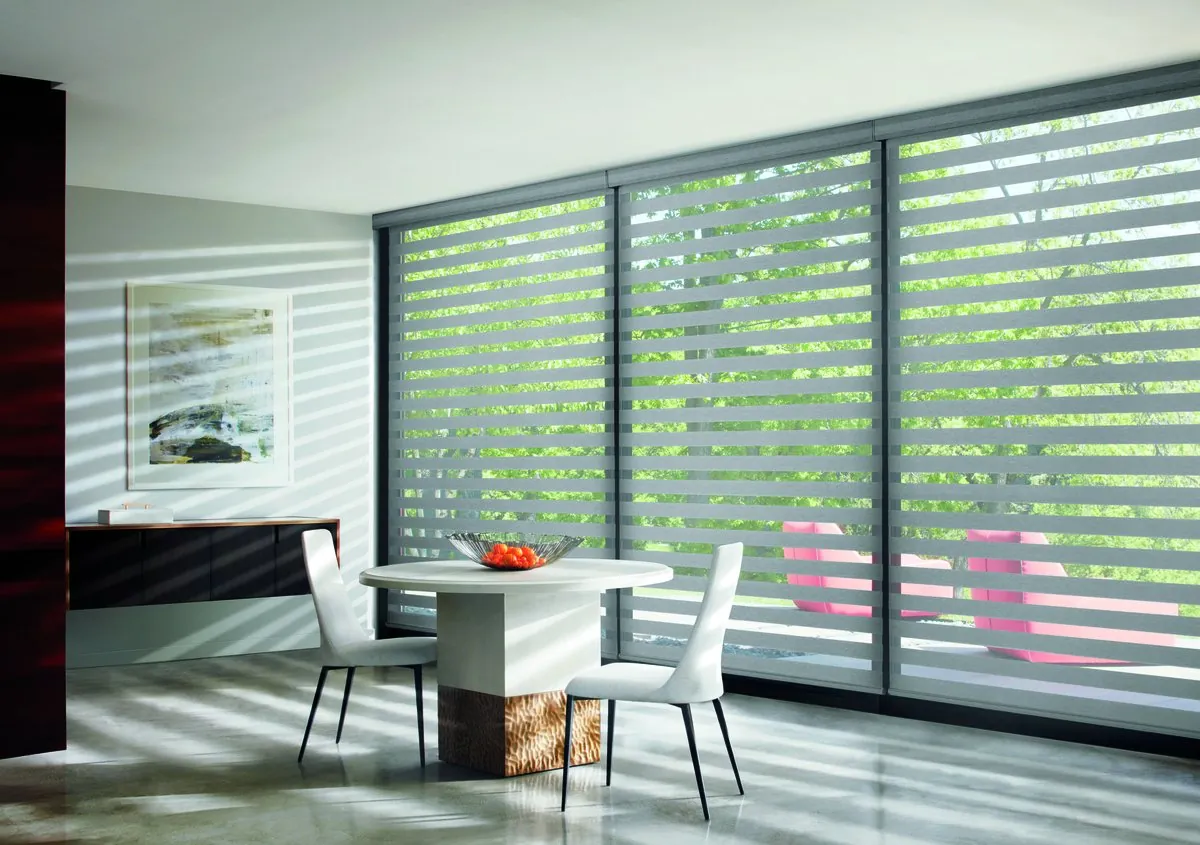
Banded shades for the harbor room
Slide the sheer stripes into line to look out over the water; slide the solid stripes to close the room.
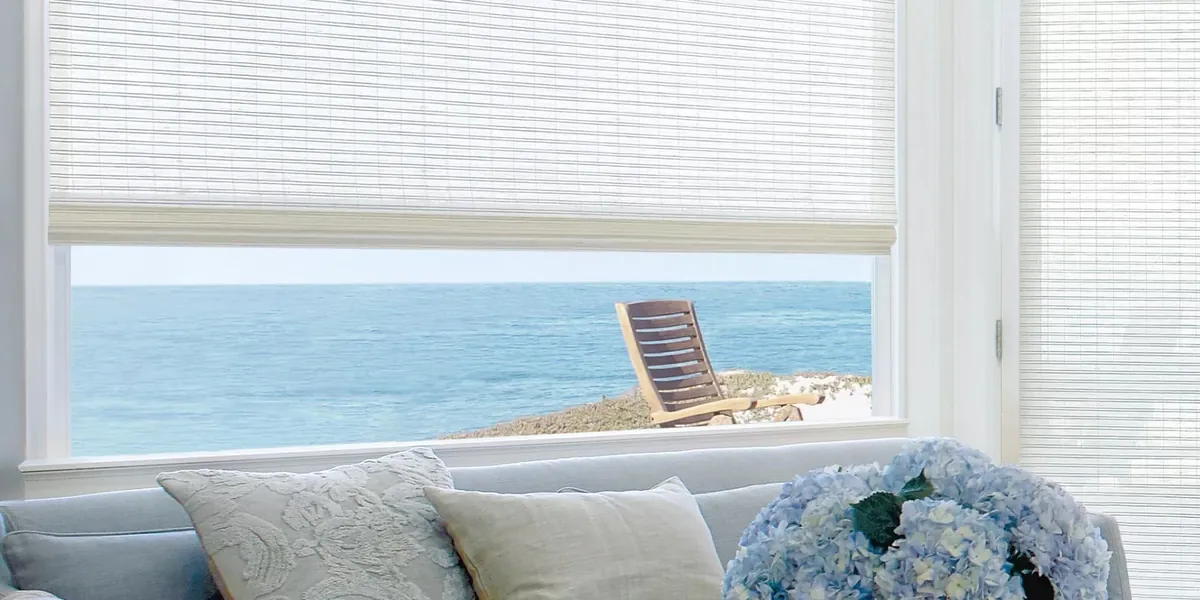
Woven looks
The Alustra Woven Textures roller brings a natural woven feel to a shingled house without a bulky folded stack.
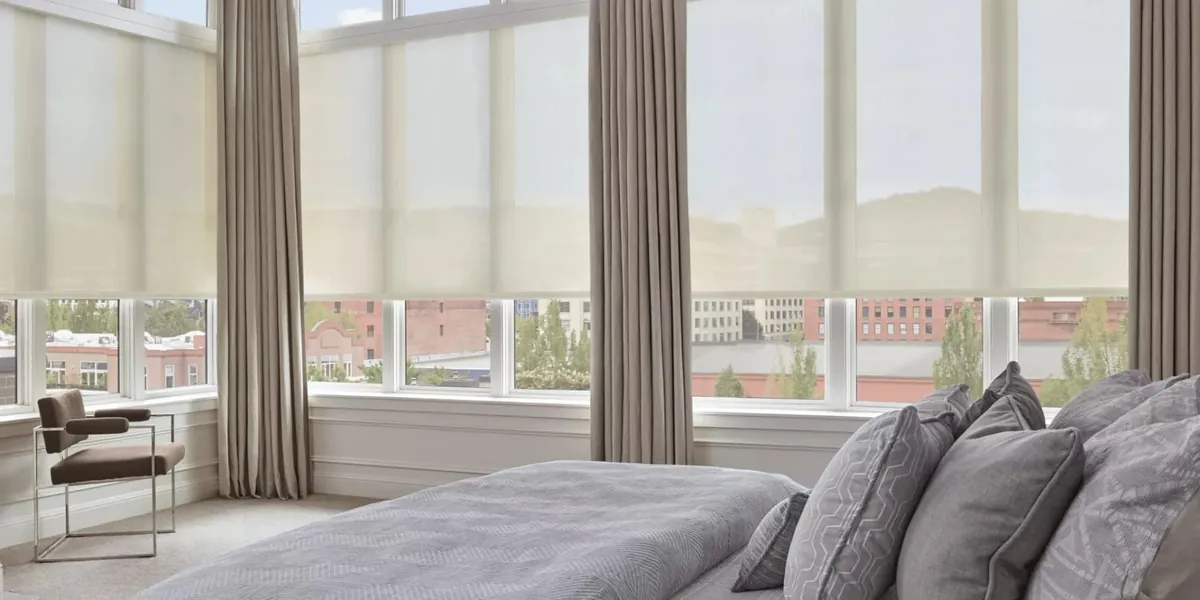
Screens with a soft finish
A pale screen keeps a bedroom or sitting room airy and still lets the view through. Pairs well with drapery.
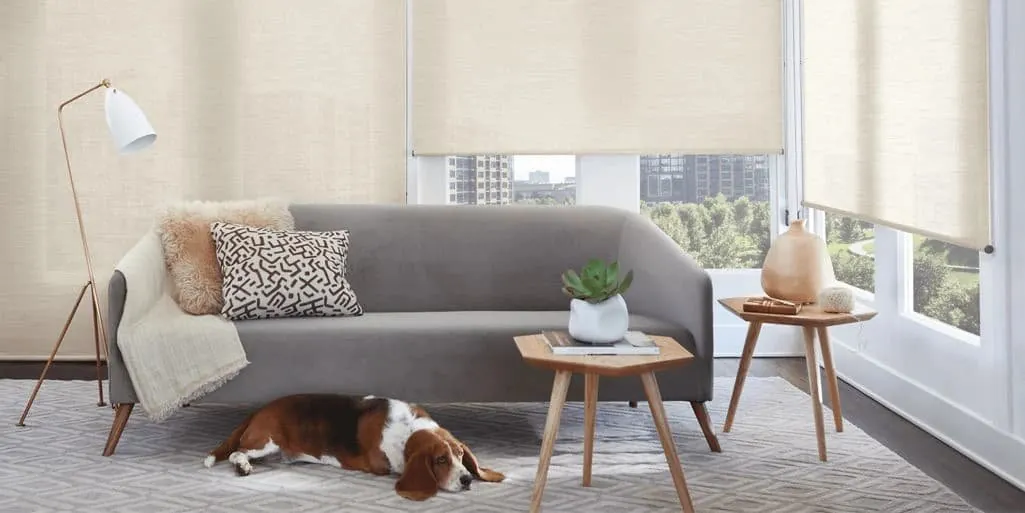
Texture for living rooms
A light filtering weave with some texture, for inland living rooms and the street side of a shore house.
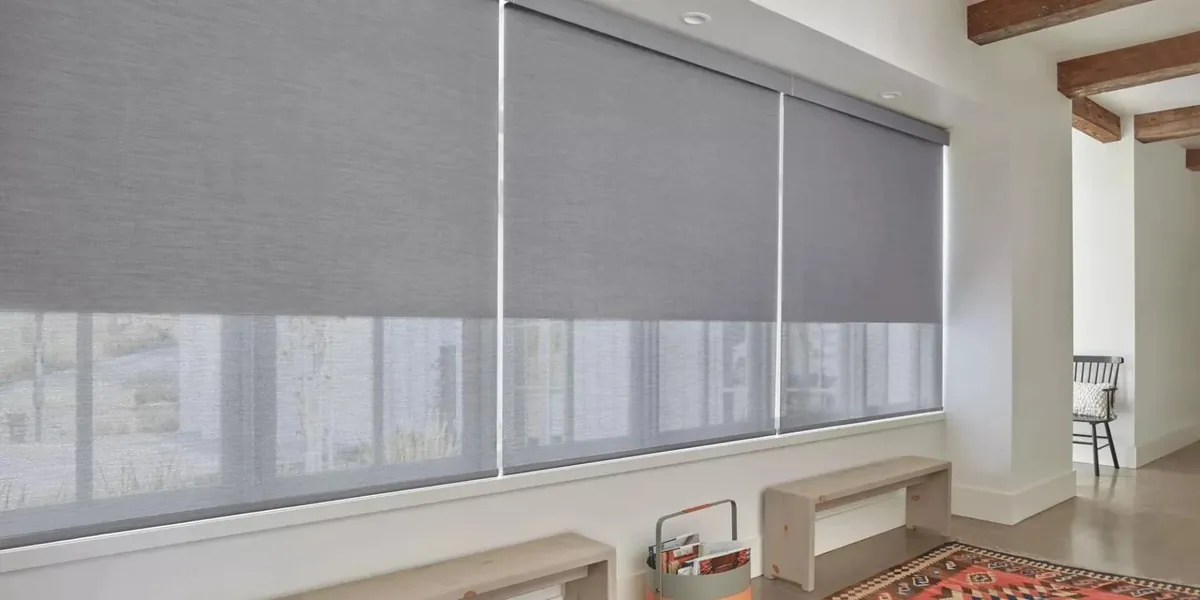
Blackout upstairs
For bedrooms facing east over the water, where the sun comes up early and bright.
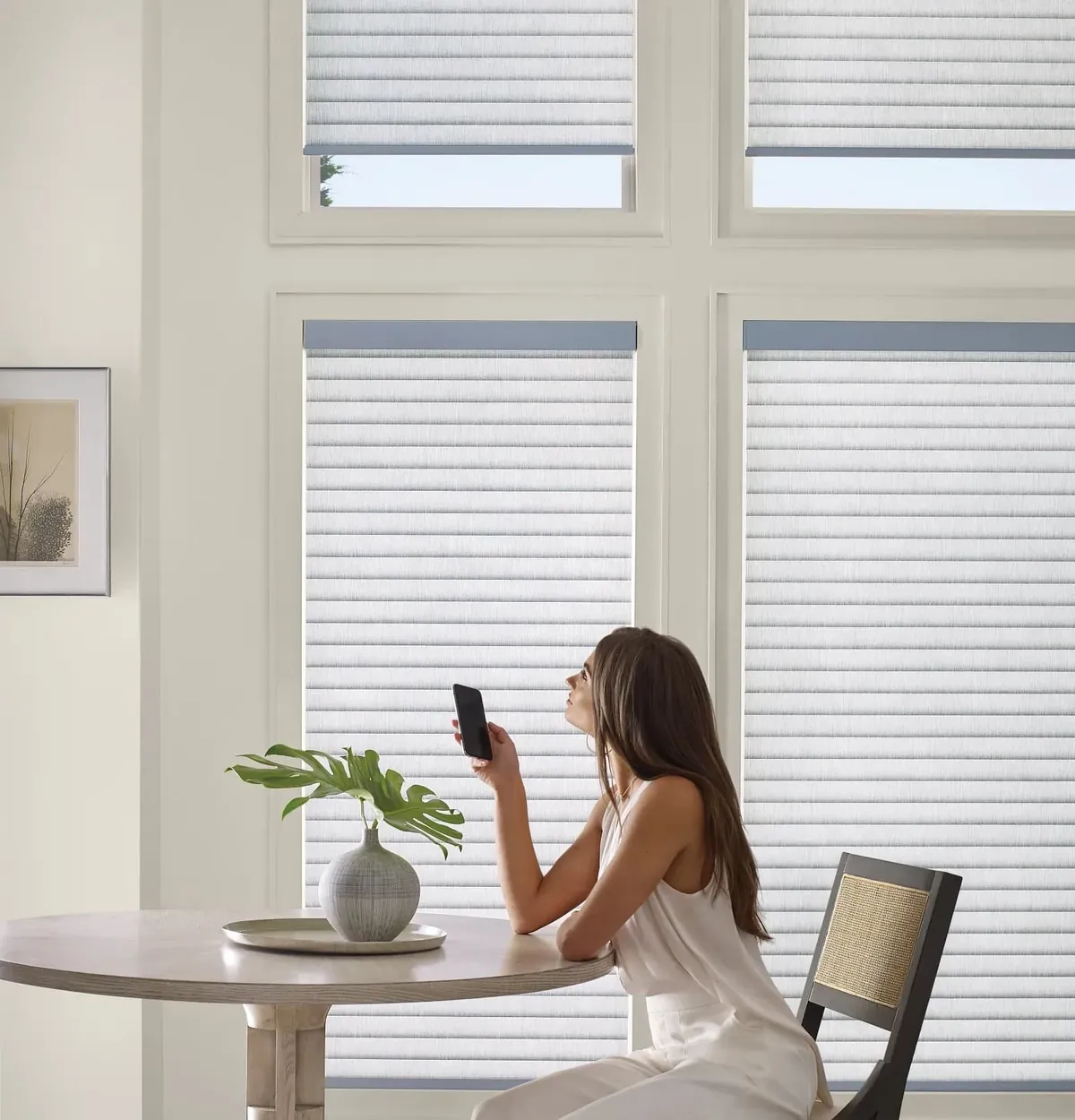
PowerView schedules
Set the harbor screens to drop as the glare builds and lift again in the evening.
Choosing a screen for a harbor window
A solar screen is a fabric woven with tiny gaps. How much of it is gap, the openness factor, decides what the shade does for you. It is a trade between seeing out and cutting glare, and on a water view both matter a great deal.
A tighter weave, with less open space, blocks more glare and gives you more privacy in daylight. The sea and the boats look softer through it, a little like looking through a light haze. A more open weave lets more of the view through, crisp enough to pick out the far shore, while still taking the harshness out of the light. The right choice depends on the room. A kitchen where you want to watch the harbor while you cook may be happiest with an open weave. A family room where the afternoon sun lands on the television may need a tighter one.
Color changes the result as much as openness does. Dark screen fabrics, charcoal, bronze or black, are generally the easiest to see through, because the eye looks past dark threads. They also cut glare well. Light screen fabrics, white, ivory or pale gray, read brighter from inside and reflect more of the sun, but the view through them is a little less clear. Many harbor rooms use a dark screen for the clearest view and accept a slightly darker room in return.
The only reliable way to decide is to stand at your own window, at the hour the glare is worst, and look through samples of each. That is what we do at the visit.
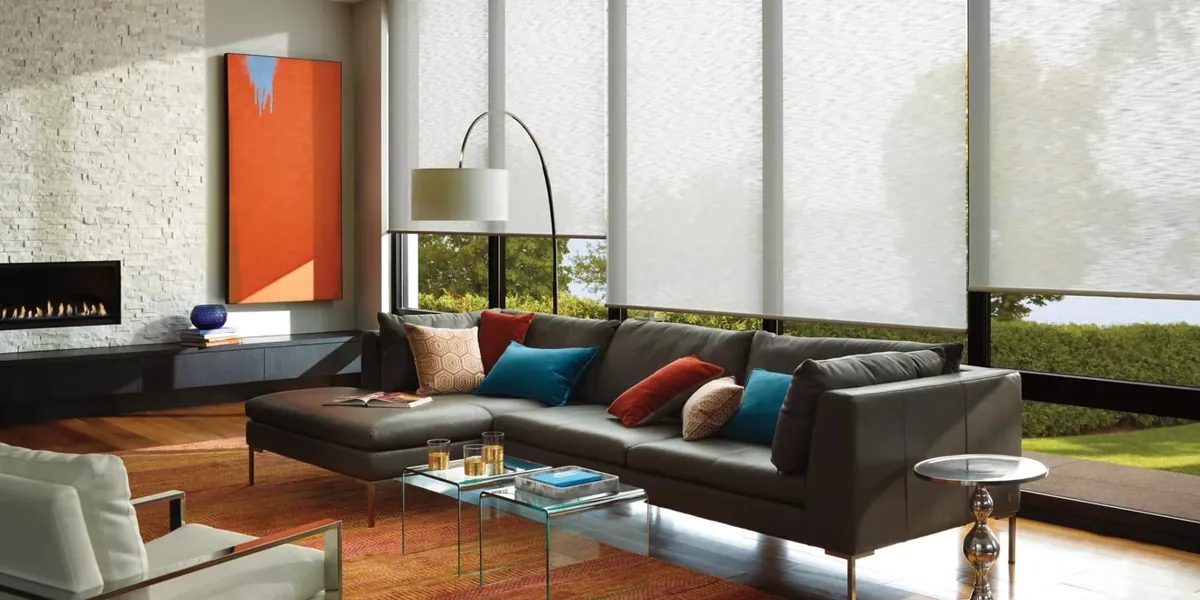
What screens do not do
A screen is a daytime fabric, and it is worth being clear about its limits before you choose one for every window.
At night, once the lamps are on inside, the balance flips: the room is brighter than the outside, and anyone outside can see in through the weave. On a harbor street where houses face each other across the water or the road, that matters. A screen also softens light rather than blocking it, so it will not darken a bedroom.
There are good ways around both. A second, opaque roller on its own bracket behind the screen gives you a dark, private room at night and a clear view by day. A banded shade does both jobs in one: open it to see through the sheer stripes, close it for privacy. In bedrooms, a blackout fabric is the better choice, perhaps with a screen on a second bracket for the daytime.
Shingled houses along the harbor
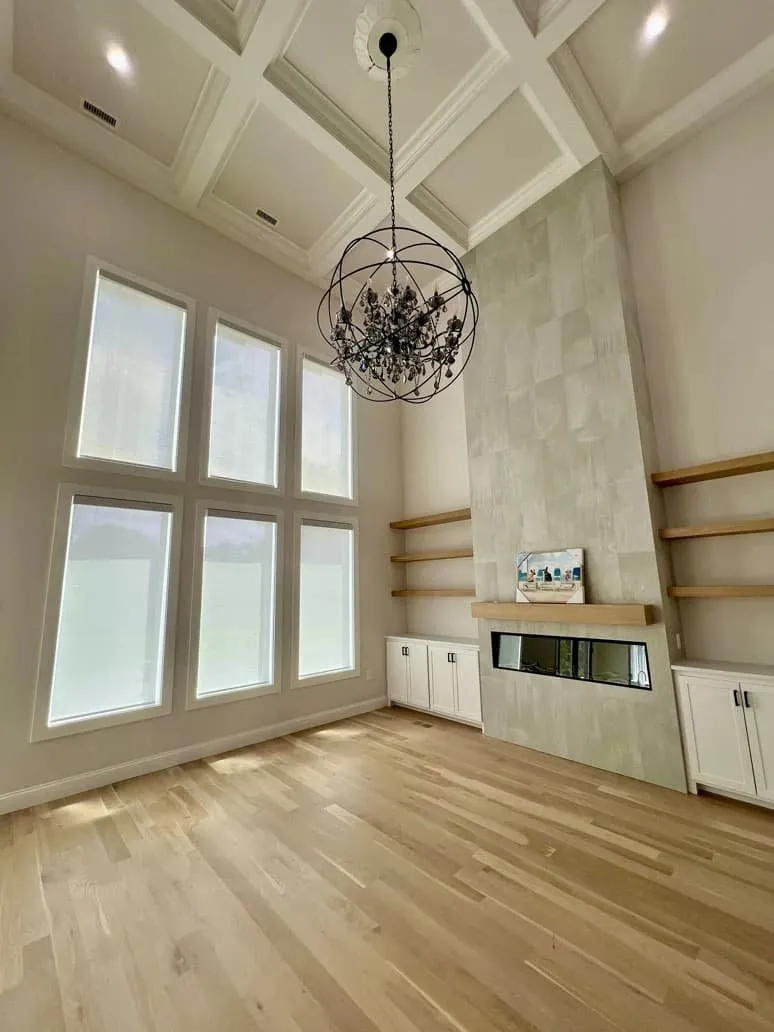
The shingled houses near the harbor and out along the beaches come in many shapes, but they tend to share a few window types: wide groups of windows on the water side, bays that push out toward the view, dormers in the roof and smaller windows on the side walls facing the neighbors.
The wide groups on the water side are the most important. We usually treat each window in the group as its own shade on a shared line, so every headrail sits at one height and every hem can stop at the same point. With PowerView, the whole group can move together.
Bays are handled the same way, one shade per window, made to sit tight against its neighbor in the angle. Dormers take small rollers, often blackout for upstairs bedrooms. Side windows facing the house next door suit a light filtering fabric that you can leave down all day for privacy without losing the light.
The upstairs room with the best view
In many shingled houses the best view in the house is from a bedroom. Upstairs, above the dunes, the hedges and the road, the window looks clear across the water. That creates a real conflict. In the morning you want to wake up to the view; at night you want the room dark and private; and on a summer dawn the sun may rise straight over the sea into the room.
A single fabric cannot do all of that, so a pair of rollers often can. The front shade is a screen, lowered on bright afternoons to cut the glare while the water stays in sight. Behind it, on its own bracket, sits a blackout roller that closes the room completely at night and holds back the early sun. Each rolls away independently, so on a gray morning both can be up and the whole window is yours. With PowerView, the blackout can lift on a schedule at whatever hour you choose to see the harbor.
Kitchens that open onto the water
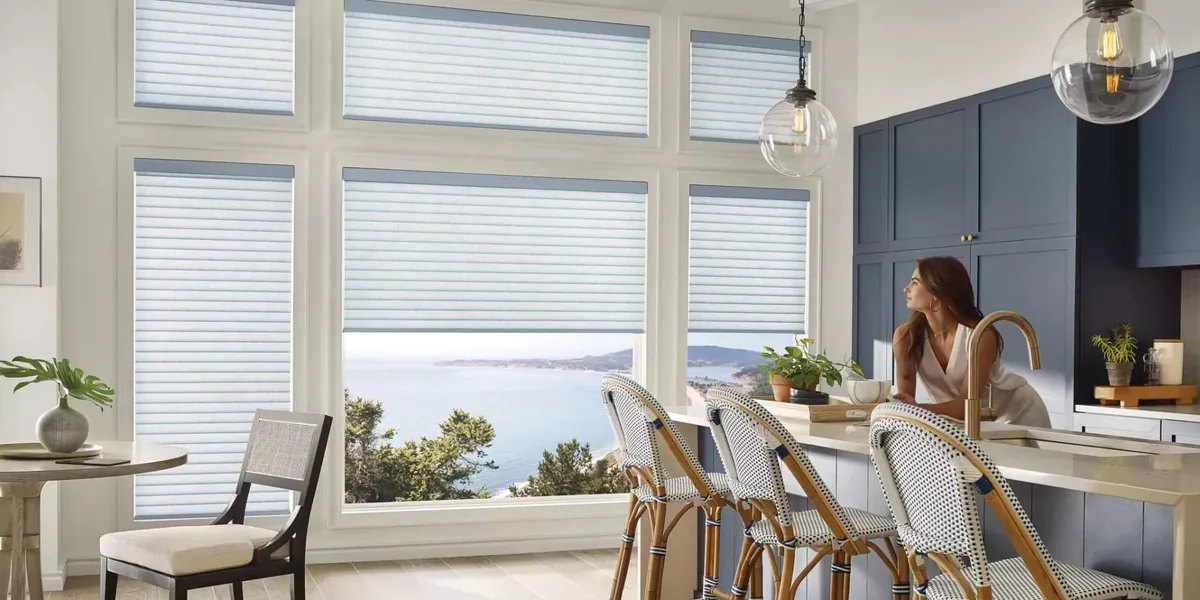
The kitchen in a harbor house is often a long room with a wall of glass or a slider out to a deck, and it gets used from breakfast through supper. It needs light most of all, plus some protection from the glare that comes off the water late in the day. An open screen in a pale or mid-tone color usually fits: the room stays bright, the counters stop flaring in the low sun and the deck and the water stay in view. Over the sink, where reaching is awkward, a motor or a cordless lift helps. Of all the rooms where we fit roller shades in Scituate, MA, shore houses, the kitchen is the one where the shade should be least noticeable, doing its work quietly while you look past it, and a well-chosen screen comes close to that.
Living with the exposure
Houses on the exposed stretches of coast feel the weather more than most, and a window treatment there needs to suit the conditions.
Salt in the air settles on anything left out in the open. A roller shade keeps its working parts inside the headrail and the tube, with very little exposed, and a cordless lift does away with the cord and its lock. On a windy day with the windows open, a lowered shade will move in the breeze, so the simple habit is to raise it while the window is open. Where a shade needs to stay down over an open window, hold-down brackets at the hem keep it in place.
Strong, daily sun off the water also wears on fabric color over time. For windows that face the sea and take sun all day, we point out the fabrics that suit that kind of exposure when you are choosing.
Newer colonials inland
Away from the water, the newer colonials have standard modern windows and a more sheltered setting, so the planning is simpler. Typical needs: privacy on the street side, brightness in the open kitchen and family room at the back and darkness in the bedrooms upstairs.
A light filtering roller suits the front rooms and the kitchen. If the family room faces west or south, a screen of the same color can take over on those windows. Bedrooms take room darkening or blackout, often with an outside mount to close the light gaps at the sides. Children’s rooms take cordless rollers, with nothing hanging at the side of the window.
Many of these houses have a two-story foyer or high gable windows, which are best left to PowerView motors.
Our visit, step by step
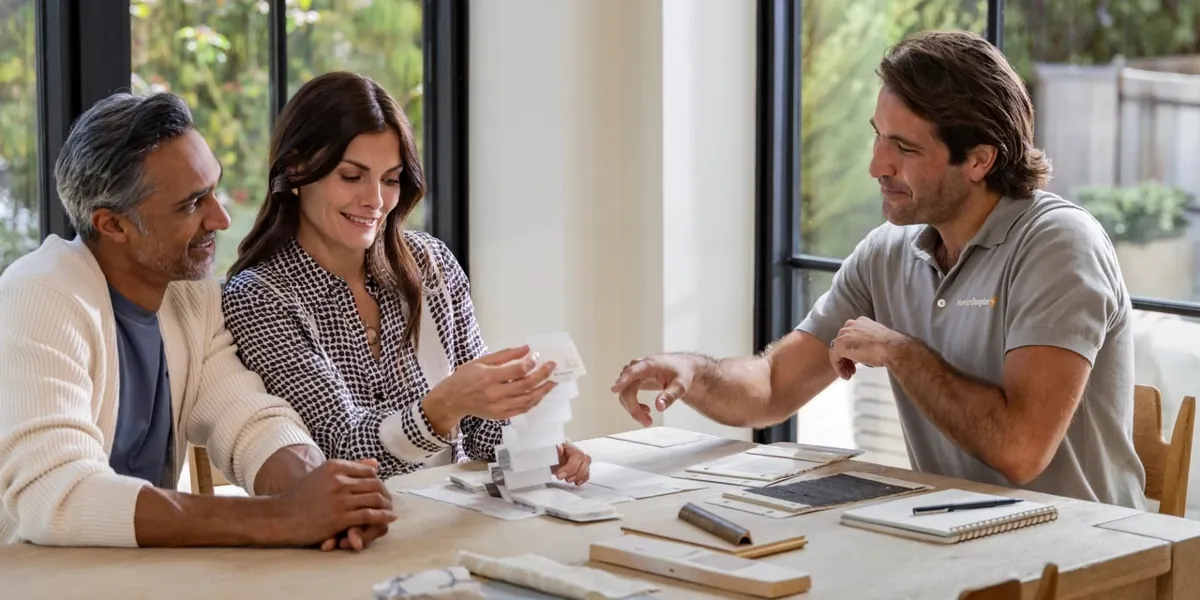
On a harbor house, a fabric sample looks completely different against the real view and the real glare. So we come to you, and our vans carry the samples to bring the showroom to your door.
- You book with Request a Consultation or the call button. If the glare is worst in the afternoon, an afternoon visit is ideal.
- We walk the house and talk about each room: the view you want to keep, the privacy you need and when the sun is a problem.
- You look through dark and light screens of different openness at your harbor windows, and try light filtering and blackout samples elsewhere.
- We look at groups, bays and dormers and talk through mounts, lifts and motors.
- We measure every opening.
- You receive a free estimate for the shades you are considering, and there is no pressure to decide on the spot.
Our page on what happens at an in-home consultation explains more. If you want help with color and fabric across a whole room, ask about our interior design consultations.
Motorization on the water side
PowerView puts a motor inside the roller tube and gives you control from a handheld remote, the app on your phone or schedules. On a harbor house, schedules are the real benefit. The screens on the water side can lower on their own as the afternoon glare builds, then rise in the evening so you get the view at sunset. Bedroom shades on the east side can stay down until you are ready for the morning.
Groups let one tap move a whole wall of shades, so a wide group of harbor windows always moves as one. For high gable glass in an inland colonial, a motor is simply the practical way to reach it.
We plan how each motor is powered at the visit and help you choose which windows are worth it. For more about the controls, see motorized blinds in Scituate.
Hunter Douglas collections
The roller shades in Scituate we supply come from several Hunter Douglas lines. Designer Screen is the solar screen family, the first stop for a harbor room. Designer Roller covers plain and textured fabrics from sheer to blackout. Designer Banded is the double-layer stripe shade. Sonnette is the cellular roller with a curved face. Alustra is the premium collection, with fine weaves and prints and the Alustra Woven Textures roller, which suits the natural feel of a shingled house well.
A typical shore house might use Designer Screen across the water side, Designer Roller in light filtering on the side windows and blackout upstairs. See the Designer Screen page for the screens, the Alustra Woven Textures roller for a woven look, or the whole roller shades range.
Measuring and fitting
- We measure each opening for width, height and frame depth, and on bays we measure each window in the angle separately.
- You confirm fabric, openness, mount, lift and any hold-down brackets for each window before ordering.
- Our certified Hunter Douglas installers fix every bracket into solid framing, which matters on a wall exposed to coastal wind.
- Headrails across a group of windows are set on one line and levelled.
- Every shade is run through its full travel, and we set up any PowerView groups and schedules with you.
Careful fitting is what lets roller shades in Scituate, MA, harbor houses look as if they were part of the windows from the start.

Why a Gallery dealer matters on the shore
Blinds & Designs is a Hunter Douglas Gallery dealer, the status Hunter Douglas reserves for dealers who meet its standards. On a harbor house that means every screen openness and color, every roller line and PowerView, all from one dealer, together with Hunter Douglas blinds, shutters, cellular and roman shades and drapery.
Our installers hold Hunter Douglas certification. If a shade ever needs attention after years of salt and sun, we repair blinds and shades too. For other rooms, see plantation shutters in Scituate or roman shades in Scituate, and every service on our Scituate page.
Working shades at the visit
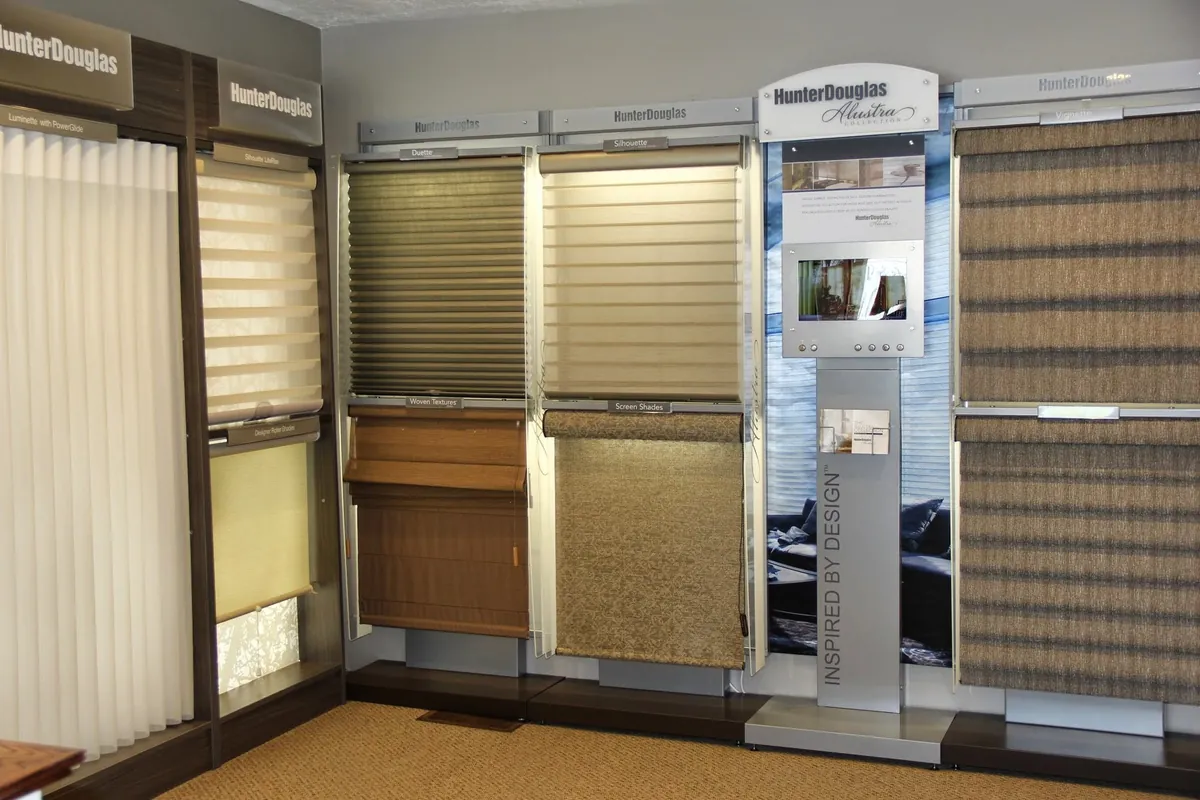
A flat swatch cannot show how a screen looks when it is lowered against a bright sky, or how a banded shade shifts from open to closed. That is why we bring working samples as well as fabric books, so you can see the shade move at your own window.
On a harbor window especially, watching a dark screen come down against the glare tells you more in a minute than any number of swatches laid on a table.
Questions from Scituate
What screen openness is best for a harbor view?
It depends on whether glare or view matters more in that room. A more open weave keeps the water clearer; a tighter one cuts more glare and gives more daytime privacy. Dark colors are usually easiest to see through. We compare several at your window.
Will people see in at night through a solar screen?
Yes, once the lights are on inside. For night privacy, add an opaque roller behind the screen on its own bracket, or choose a banded shade that closes fully.
How do roller shades cope with salt and wind on an exposed street?
The working parts sit inside the headrail and tube, and a cordless lift removes the cord altogether. On windy days, raise the shade over an open window, or use hold-down brackets where it must stay down.
Can a group of harbor windows move together?
Yes. With PowerView, the shades can be grouped so one tap moves them all, and schedules can lower them as the afternoon glare builds.
Is there a charge for the estimate?
No. After we measure your windows, you receive a free estimate for the shades you are considering.
See it at your own window
The surest way to choose roller shades in Scituate, MA, is to look through the samples at your own view, in your own light. Request a consultation and we will bring the screens and fabrics, measure every window and give you a free estimate. Or use the call button, or visit our Sagamore showroom.