
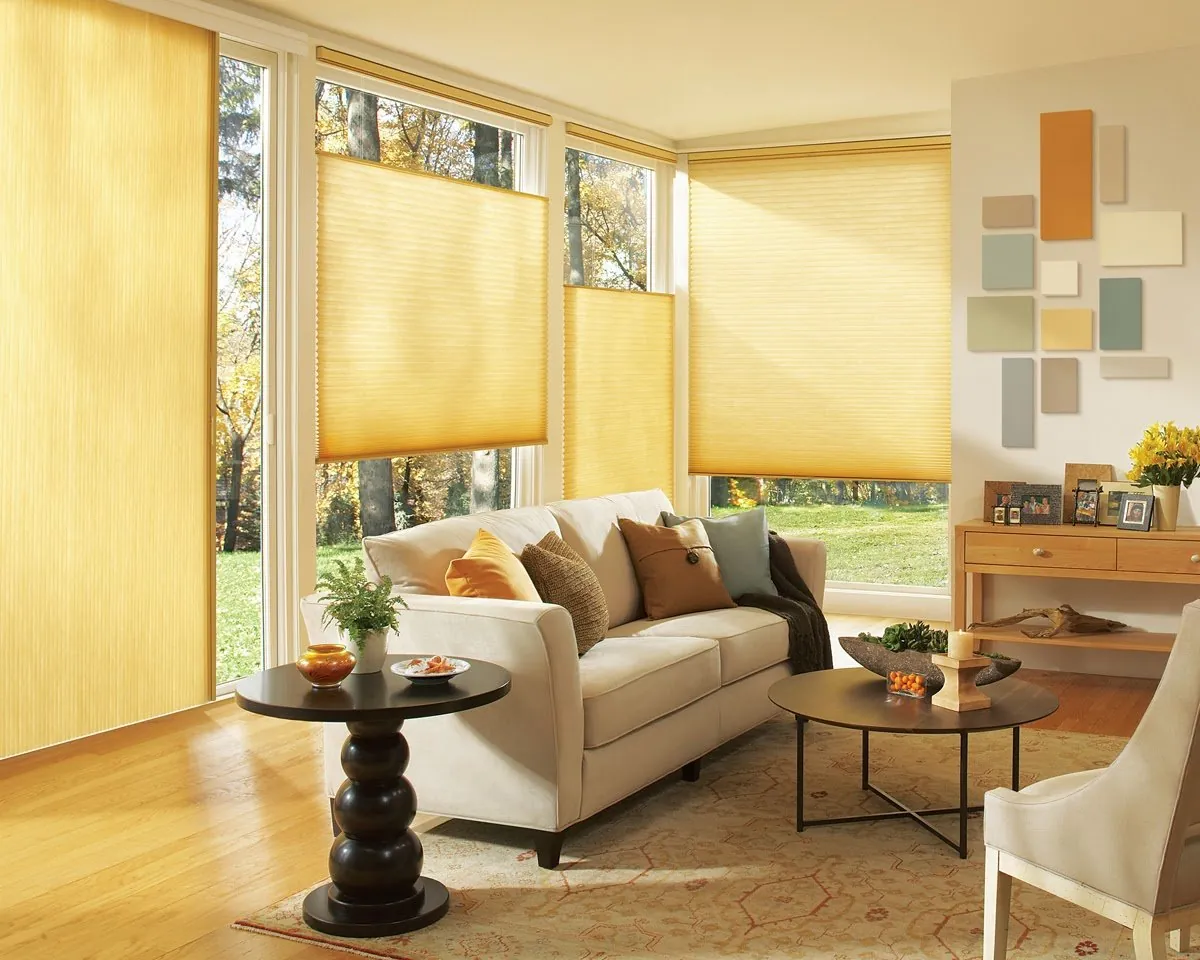
Open land, long views, light from every side
Carver houses sit out in the open. Capes and ranches stand on big lots among the cranberry bogs, with fields, flat water and long sightlines around them, and the newer colonials off Tremont Street have lawns rather than close neighbors. That openness is a pleasure to look at and a puzzle for window coverings, because many rooms take light from two or three sides with no trees or houses to screen it. Choosing cellular shades in Carver starts with working out where the sun comes from, at what hour, in each room.
The same open ground lets the wind run straight at the house in winter, with nothing to break it before it reaches the glass. A room with windows on three sides feels that more than most.
A honeycomb shade answers both. Its fabric controls the light without darkening the room, and the air held in each cell stands between the cold pane and the people sitting near it.
What we bring to a Carver house
Each choice below travels with us as a sample. These are the options we put forward most often when people ask about cellular shades in Carver for rooms with light on several sides.
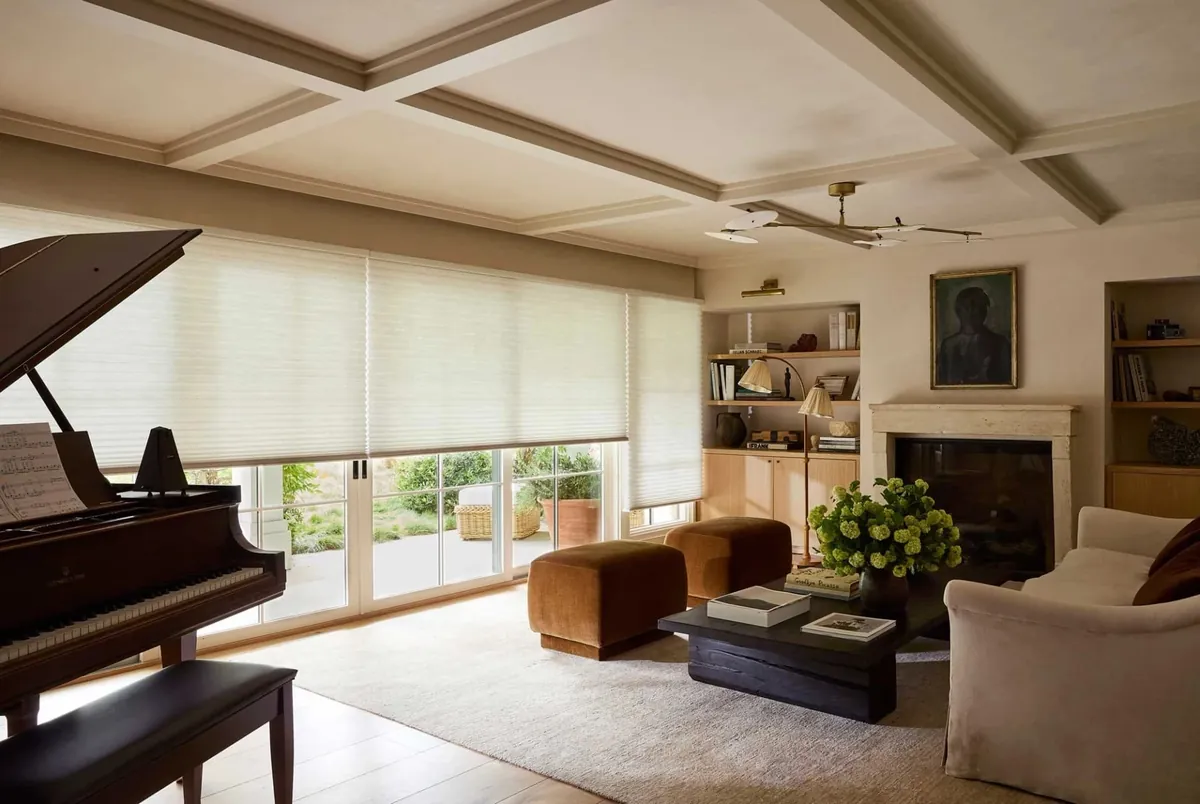
Duette for the living room
The widest Hunter Douglas honeycomb range, for a ranch’s long picture window or a colonial’s main room.
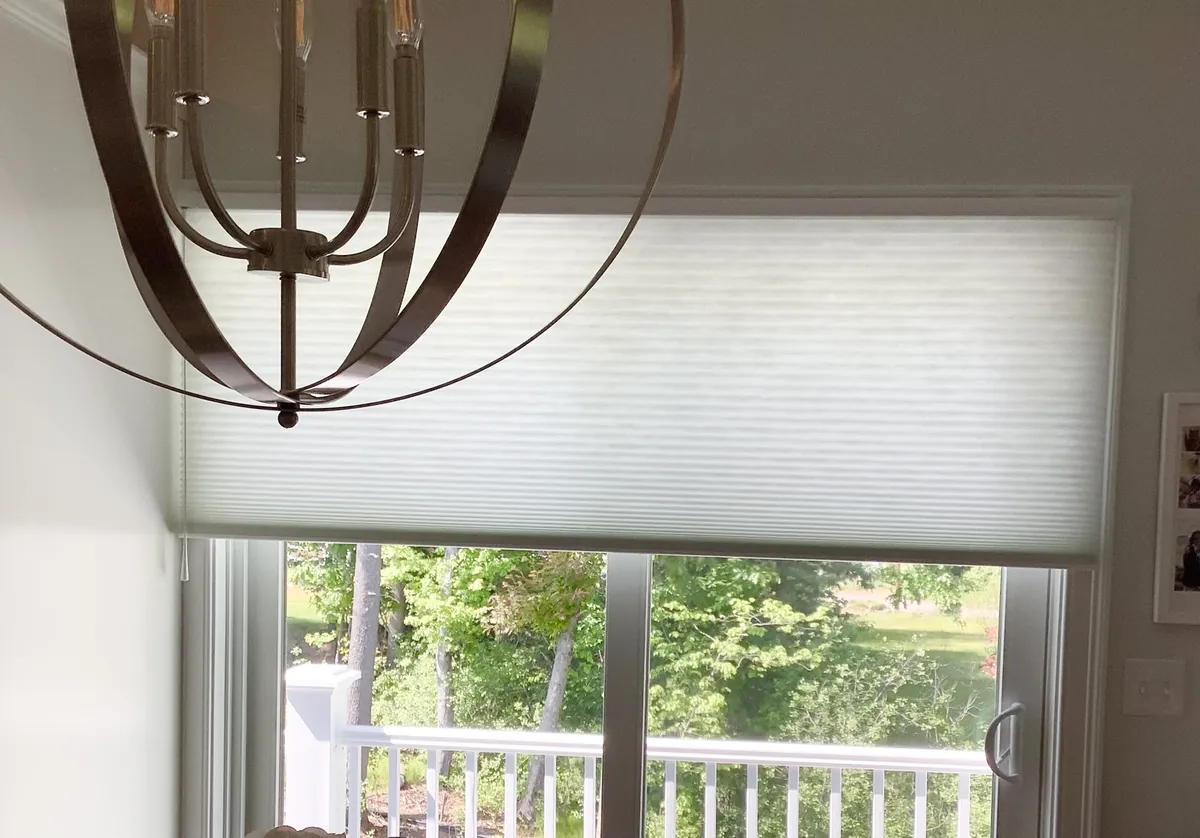
A shade for the slider
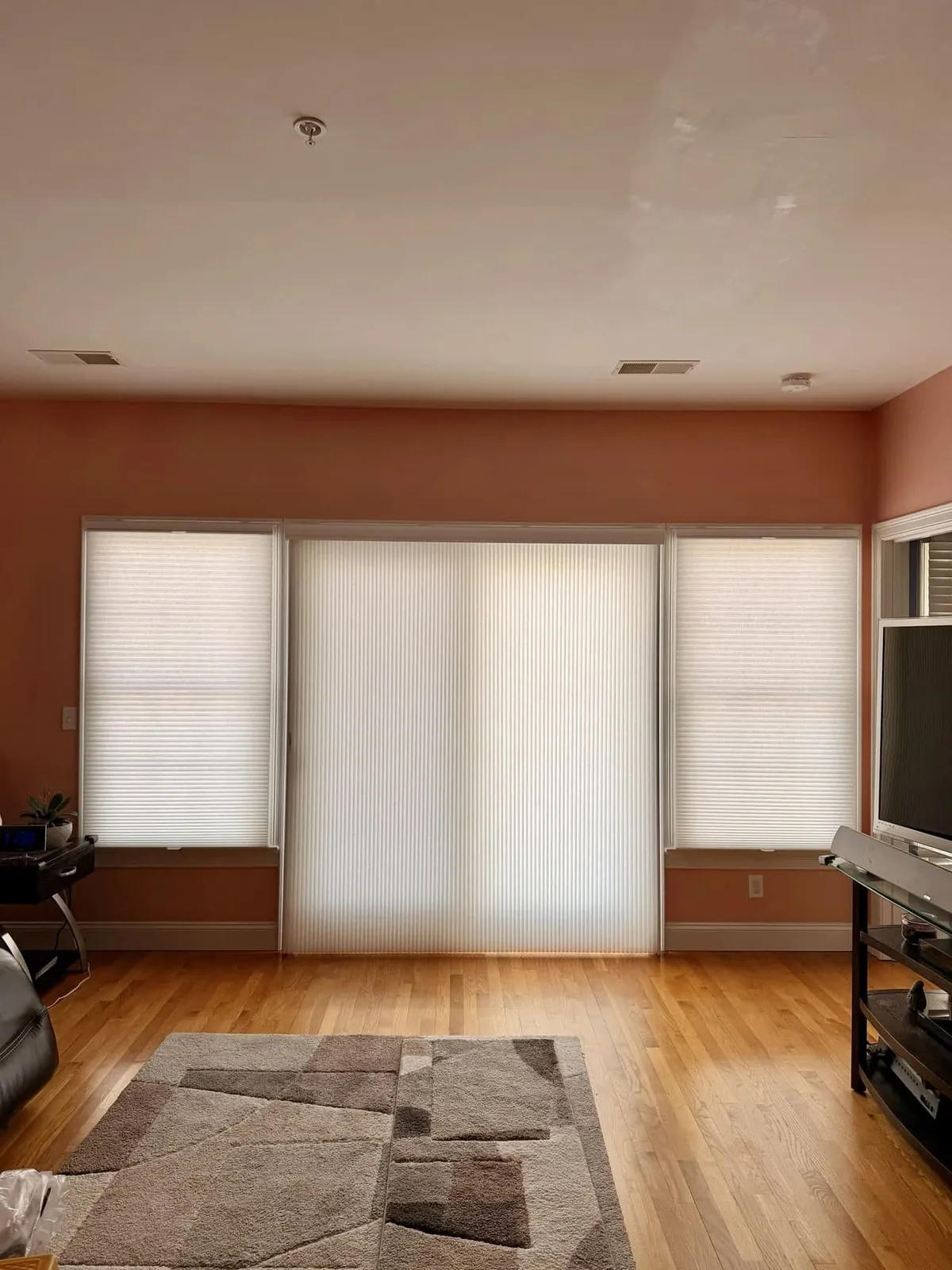
A honeycomb shade on the slider to the back deck, so the door matches the windows and keeps out the low sun.
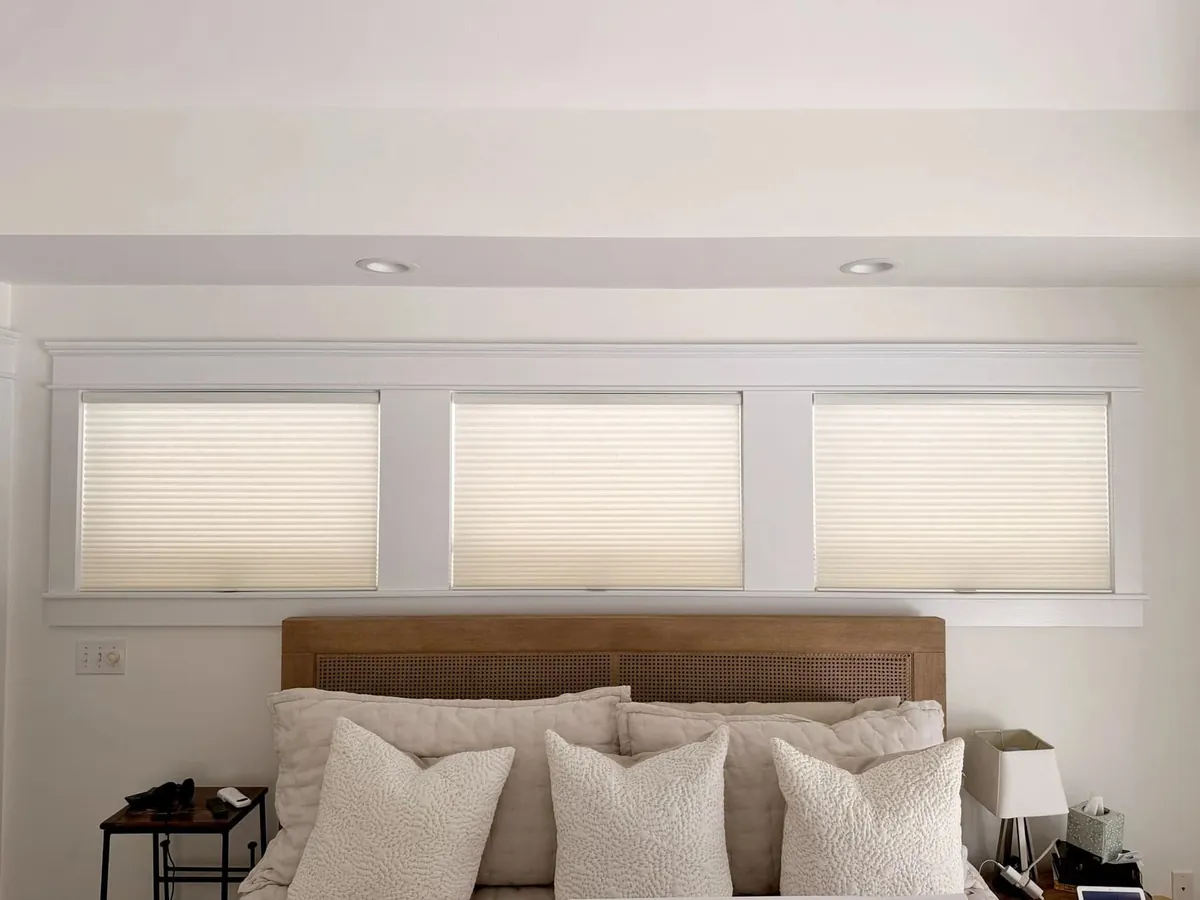
Room-darkening bedrooms
With no trees to shade a bedroom, early light arrives in full. A room-darkening fabric keeps it out.
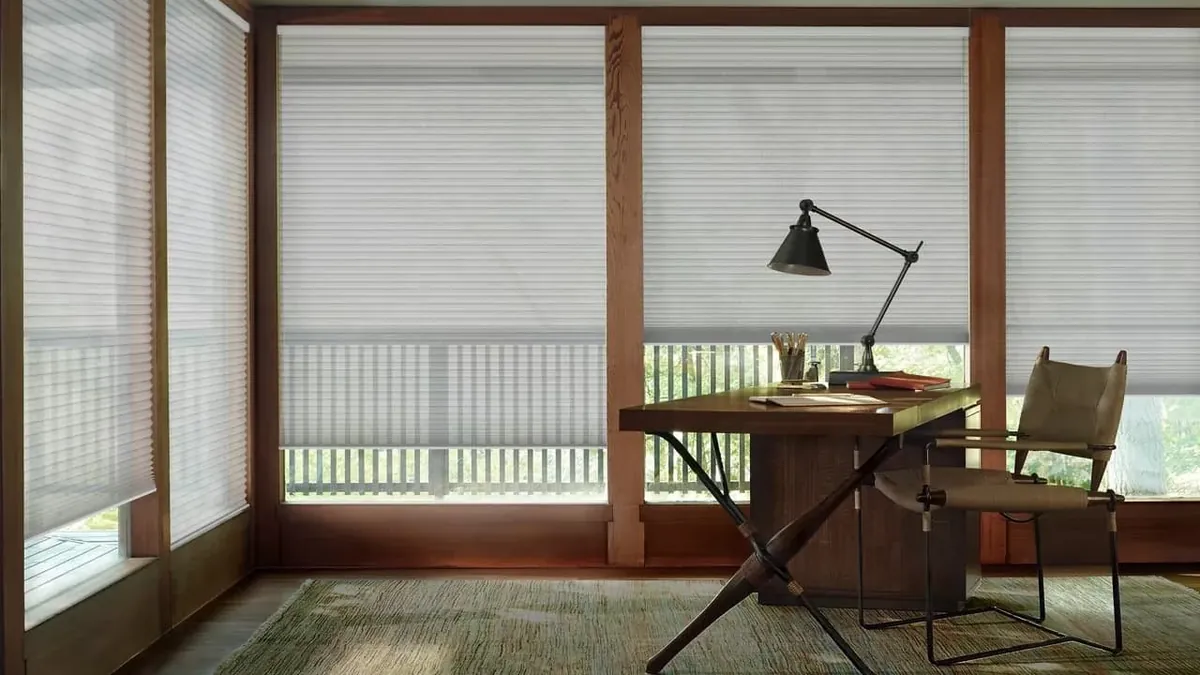
Applause for the rest
Hunter Douglas’s other honeycomb line, often chosen for offices, kitchens and spare rooms in a whole-house order.
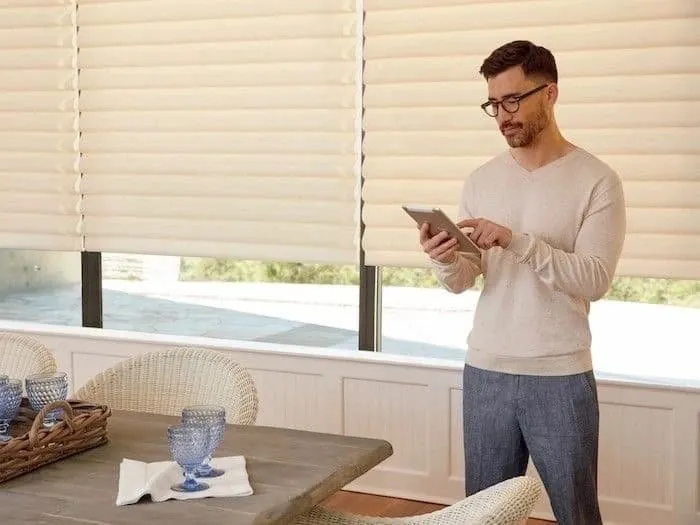
Scheduled PowerView
Motorized shades that lower on the sunny side and rise again later, on a timetable you set from a tablet or phone.

Fabric at your table
Fabric books and lift samples brought to your home, with an interior design consultation available at the same visit.
Rooms with nothing to screen them
In a town with houses close together, the neighbors and the trees do half the work of a window covering. In Carver, a living room may look out over a bog on one side and a field on the other, with the sun free to reach it from sunrise to sunset. Glare is the first thing people mention: bright light across the floor in the morning, a hard patch on the table at lunch, and a low sun straight in the eyes in the evening.
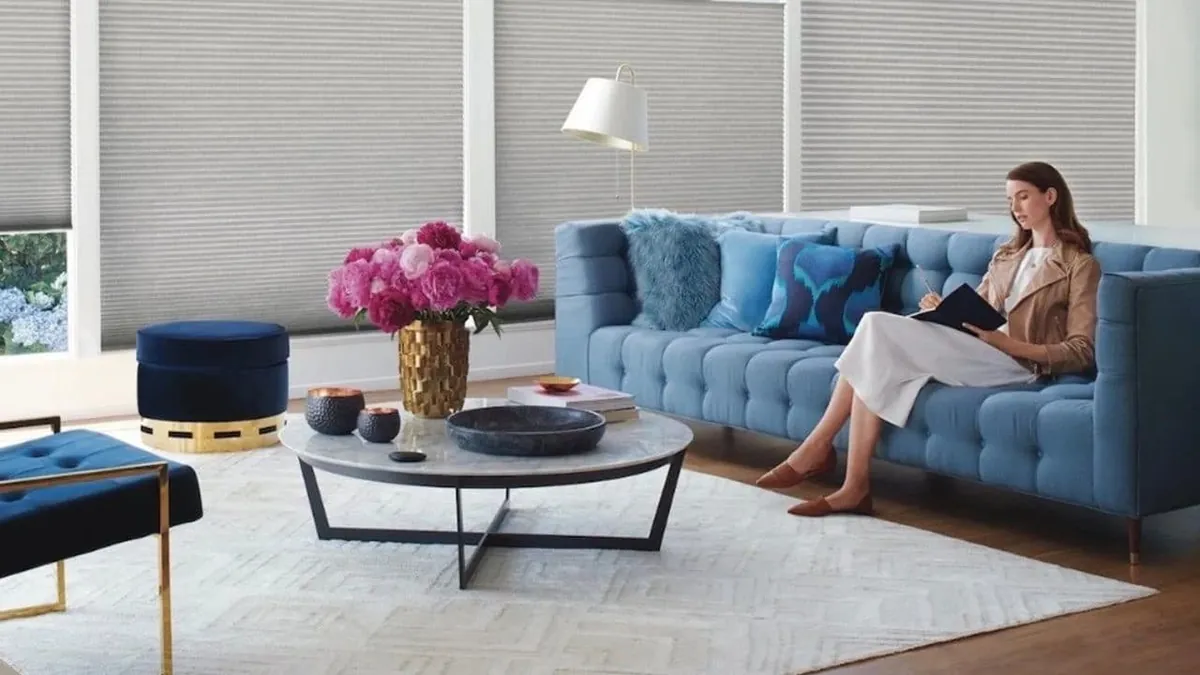
A light-filtering honeycomb fabric is the usual answer for these rooms. It softens the light and spreads it evenly, so the room stays bright without the harsh patches. On the sides of the house where privacy is not a concern, many owners choose a fabric that lets plenty of light through. On the side facing the road, a slightly heavier fabric keeps the room private in the evening when the lamps are on.
Because sightlines are long and nobody is close by, the bottom of the window often matters less for privacy than in a village. A top-down, bottom-up shade can then be used the other way round: lowered from the top to cut the high sun, with the lower glass left open to the view across the bogs.
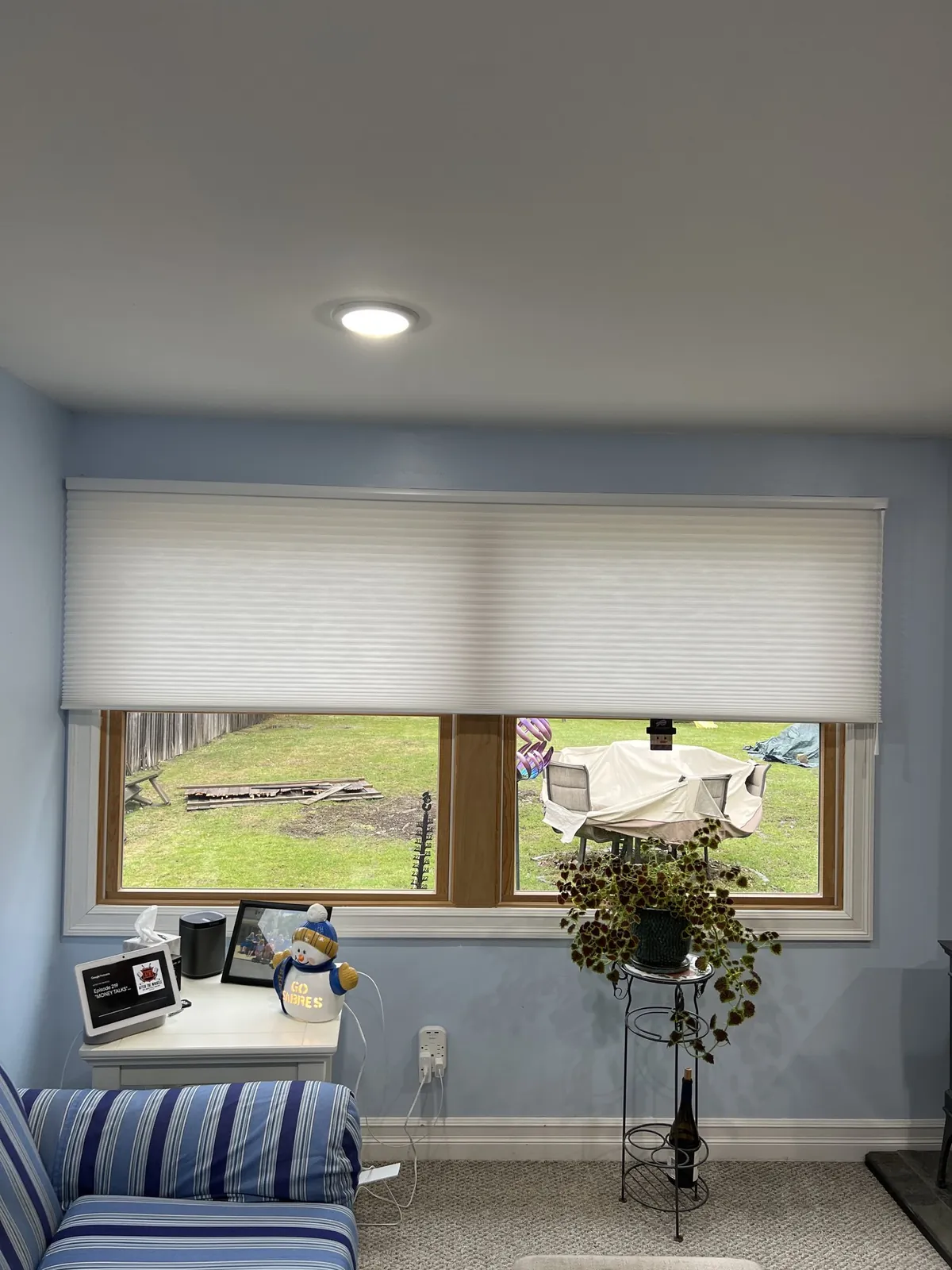
Wind across open ground in winter
With bogs and fields around the house, the winter wind has a long run before it reaches the walls. A room on the windward side, especially a corner room with glass on two walls, can feel cold however high the heat is turned up.
A honeycomb shade puts a layer of still air between that glass and the room. Each cell is a closed pocket, and the air inside barely moves, so it slows the cold coming off the pane and the warmth leaving the room. Lowered at dusk on a windy night, the shades make the seating near the windows comfortable again. A double-cell fabric adds a second row of pockets for the most exposed rooms.
Shades made to the exact size of the opening matter here, because a close fit leaves less of a gap at the sides for cold air to slip around. Our guide to cellular shades and winter heat explains the cells in more depth.
Capes on large lots
Carver’s capes tend to sit well back on wide lots, with a center or end chimney, small rooms downstairs and bedrooms tucked under the roof. The windows are modest in size, and many have been replaced over the years with double-hung units of standard dimensions.
These are easy windows to fit. An inside mount usually works, with the headrail sitting within the frame so the trim stays visible. Replacement windows sometimes have tilt latches at the top of the lower sash, so we check that the headrail clears them and the windows can still tilt in for cleaning.
Upstairs, the dormer windows in a cape take sun from whichever way the roof faces and have little shade above them. A room-darkening fabric in a dormer bedroom makes a real difference on a summer morning, and the cells help the room keep its warmth on a winter night.
Ranches and the long front window
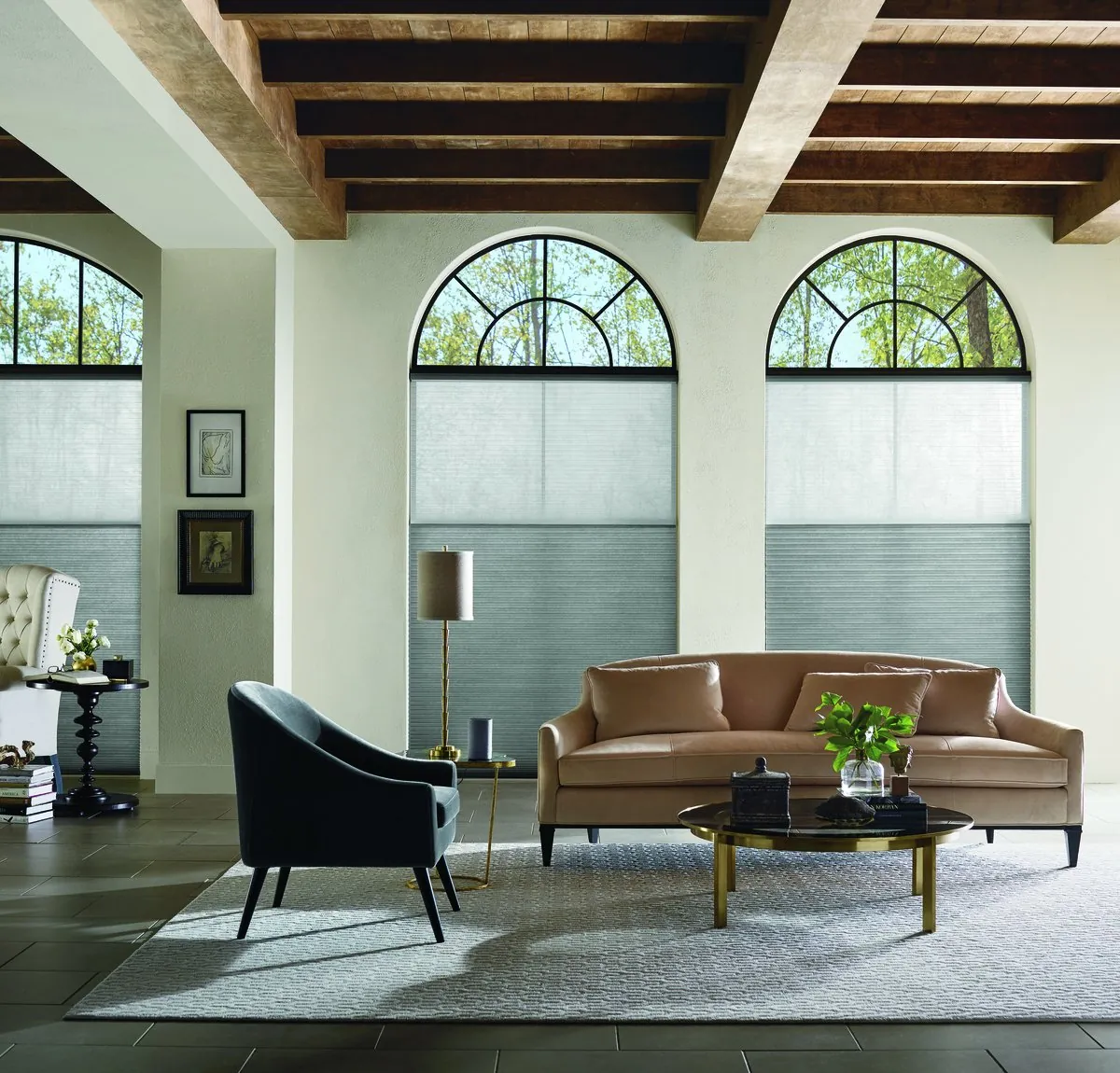
The single-story ranches among the bogs usually have a long picture window in the living room, a run of bedroom windows down one side, and a slider to the back. With no neighbors close by, the picture window often looks out over open land and catches sun for most of the day.
For a picture window wider than a single shade, we split it into two or three shades on one headrail. They can move together, or separately if you want light at one end and shade at the other. A light-filtering fabric keeps the living room bright, and a top-down option lets you trim the sun without losing the outlook.
The bedrooms along the side usually take room-darkening fabric. The slider gets a honeycomb shade sized to the door. When the whole house is done in one visit, many owners pick one fabric family for the front, so the house looks consistent from the road. Ordering cellular shades in Carver for a ranch is often a single visit and a single decision, because so many of the windows are the same.
Summer heat in a house without shade trees
Many lots among the bogs were cleared long ago, and the houses on them have few big trees close by. In summer that means the roof and the windows take the sun all day, and the rooms facing south and west can be several degrees warmer than the rest of the house by late afternoon.
A honeycomb shade helps with that as much as it helps in winter. Lowered during the hottest hours, the air held in its cells slows the heat coming in through the glass, and a light-filtering fabric keeps the room usable without switching on lamps in the middle of the day. Some owners keep the shades down on the sunny side through the afternoon and raise them in the evening when the light softens over the fields.
PowerView makes this easy to keep up. A schedule lowers the west-facing shades at the same time every afternoon and raises them again later, whether or not anyone is home, and you can change the timing from your phone as the seasons turn. For cellular shades in Carver houses with little shade around them, that schedule is often the feature people end up using most.
Newer colonials off Tremont Street
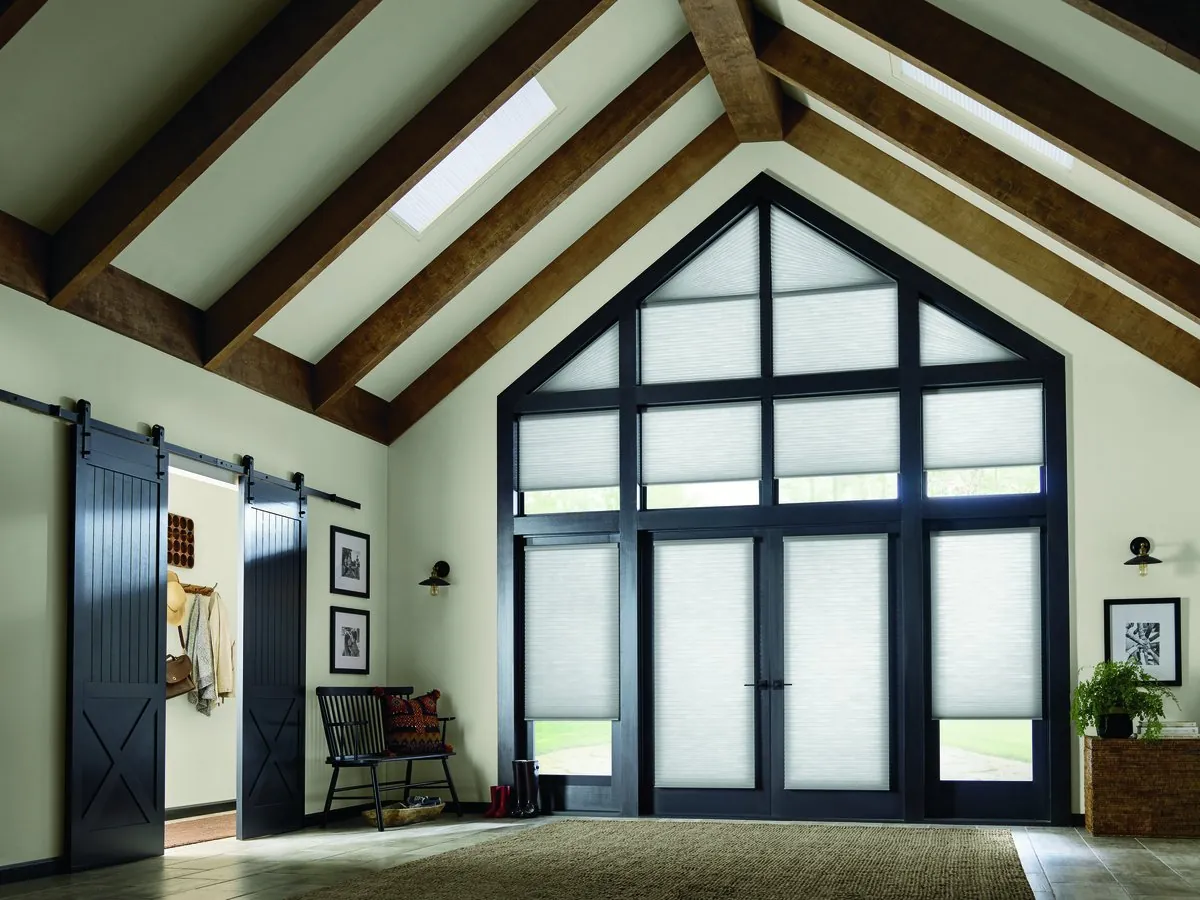
The colonials built off Tremont Street in recent years are larger, with two full stories, an open kitchen and family room, and often a two-story entry with a tall window over the door. The windows are standard sizes with newer hardware, which makes them simple to measure and fit.
What makes these houses different is the amount of glass facing open ground. A family room may have a wall of windows facing the back lawn and fields beyond, plus a slider to the deck. The afternoon sun can build heat in that room quickly in summer. Honeycomb shades lowered on that side slow the heat coming through the glass, and PowerView can lower them on a schedule before the room gets warm.
The tall entry window and any windows above the stairs are best motorized, so nobody has to reach them. Upstairs, bedrooms take room-darkening fabric and a home office might take a light-filtering one to cut the glare on a screen.
Glare off the bogs in autumn and winter
When the bogs are flooded, or iced over in a cold snap, the flat surface around the house reflects light straight up and into the rooms that face it. That reflected light comes in low and bright, under the line where a roof overhang would normally shade a window, and it can be harsher than direct sun.
A light-filtering honeycomb fabric softens that reflected glare well. Lowered partway, or lowered from the top with a top-down, bottom-up shade, it takes the edge off without shutting the room off from the view. In a room you sit in to read or work, that can make the difference between enjoying the outlook and turning your chair away from it.
Fabric color matters on these windows too. Lighter, neutral fabrics hold their color better in strong daily light, and we will point out which ones suit a bright, open-facing window as you choose.
Following the sun around the house
With light reaching most rooms at some point in the day, it helps to think about a Carver house side by side.
- East. Bedrooms and kitchens take the morning sun. Room-darkening fabric in bedrooms; light-filtering in the kitchen.
- South. Living rooms take the midday light. Light-filtering fabric keeps them bright without the glare.
- West. The evening sun comes in low and long. Top-down, bottom-up shades cut it without losing the view.
- North. The softest light, and often the coldest glass in winter. A double-cell fabric is worth a look.
PowerView can follow this pattern for you. Shades on each side lower as the sun reaches them and rise again when it moves on, all on a schedule you set and change in the app.
Choosing how the shades lift
The lift you choose depends on the window and the room.
- Cordless. The simplest choice for most windows. Push the bottom rail up or pull it down, with no cord at the side.
- Top-down, bottom-up. Open from the top for light and privacy, or from the bottom for the full view.
- PowerView motorization. For tall entry windows, stair windows and rooms where you want the shades to follow a schedule. We plan how each motor is powered at the visit.
We walk the house with you and suggest a lift for each window.
The visit, step by step
Most Carver customers choose at home, because light on several sides of a room is hard to picture any other way. Our vans carry the samples, so the showroom comes to your door.
- Arrange the visit through Request a Consultation, or use the call button.
- We bring honeycomb fabrics, colors, opacities and lifts.
- We start with the rooms where the light is most difficult and work through the rest.
- You hold the fabrics up to your own windows at different sides of the house.
- We measure each opening and check the depth and hardware.
- You receive a free estimate for the shades you are considering.
There is more on the visit in what happens at an in-home consultation.
Duette or Applause in a Carver order
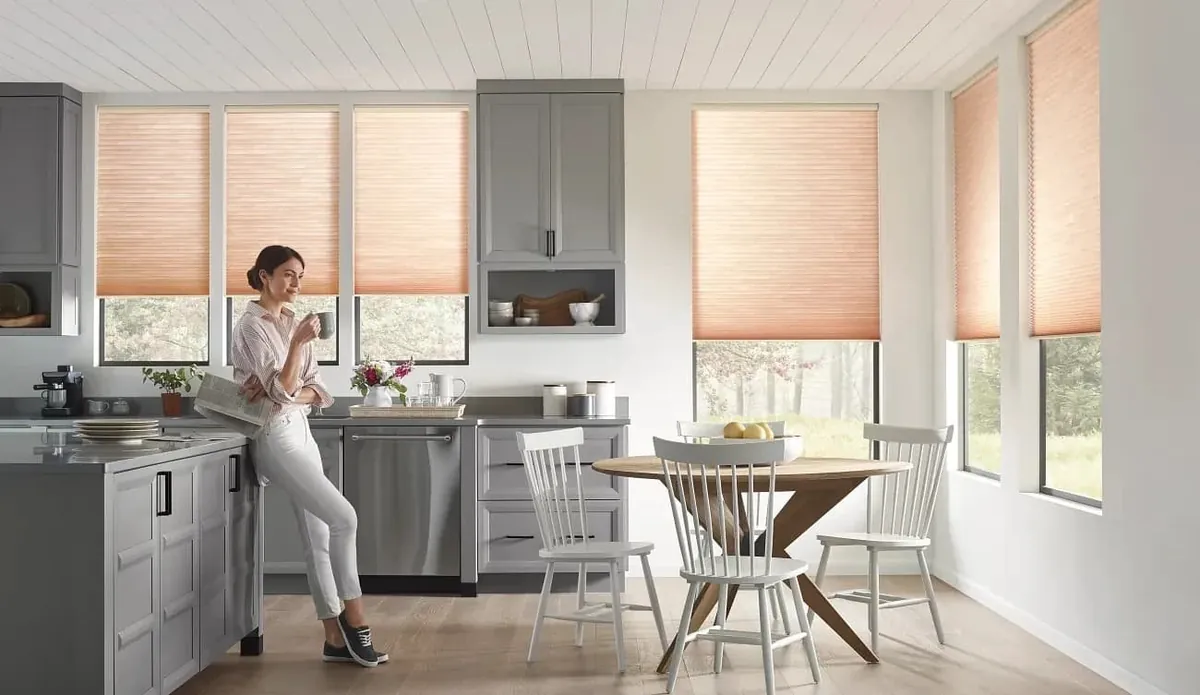
Underneath, Duette and Applause are built the same way: a honeycomb cell that holds air against the glass. The difference is how much you can choose from. Duette has the longest list of fabrics, textures, sizes and shapes, along with the vertical shade for sliders and wide glass doors. Applause comes with a separate palette and suits the standard windows in most capes and ranches.
A colonial off Tremont Street might take Duette for the family room glass and Applause upstairs. A ranch might be Applause through the bedrooms with Duette on the picture window. A good many orders for cellular shades in Carver mix the two, room by room. See the Duette and Applause pages for each line, or the full cellular shades range.
Installed by certified Hunter Douglas installers
Once the shades arrive, our certified installers fit each one, fixing brackets into solid framing, levelling the headrails so a row of windows lines up, testing every lift and pairing any PowerView shades to your phone or remote. Before they go, they show you how each shade works.

One dealer, the full Hunter Douglas range
Blinds & Designs holds Hunter Douglas Gallery dealer status, the brand’s recognition for dealers who meet its standards. For a Carver house it means the full honeycomb range through one dealer: every fabric, every lift and PowerView.
The installers who fit your shades are certified by Hunter Douglas. If a shade ever needs attention, we also repair blinds and shades.
Some rooms may suit a different product, and our range includes Hunter Douglas shutters, blinds, roller and roman shades. See our roller shades in Carver, motorized blinds in Carver, or everything we offer on our Carver page.
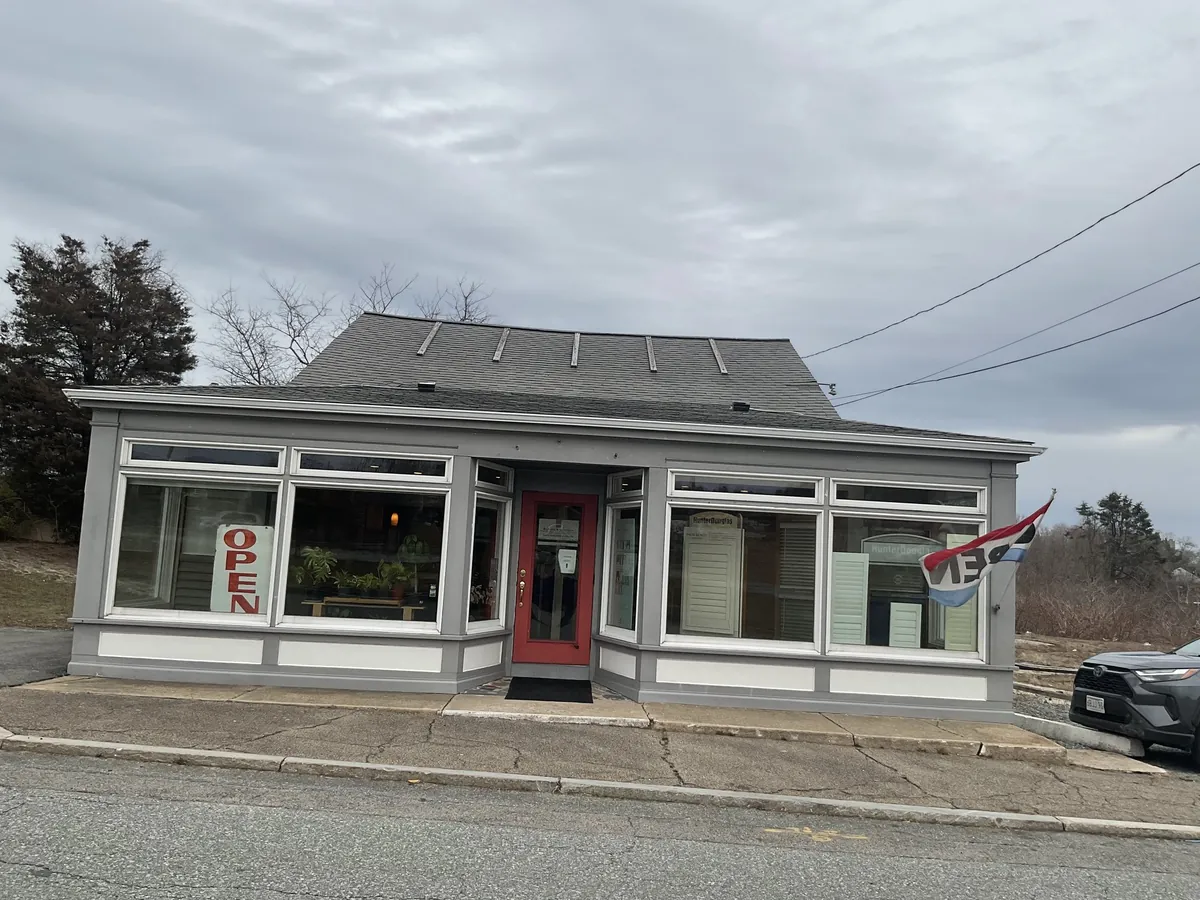
Sagamore or your own living room
Our closest showroom to Carver is in Sagamore, by the canal. Stop in if you want to see honeycomb shades before the visit.
Most Carver customers, though, find it easier to choose in their own rooms, where the light from the bogs and fields can be judged properly. We bring the samples, measure every window and leave you with a free estimate.
Questions from Carver
My living room gets sun from three sides. What do you suggest?
A light-filtering honeycomb fabric on most of the windows, so the room stays bright without glare, and top-down, bottom-up shades on the west side, where the evening sun comes in low. PowerView can lower each side as the sun reaches it.
Will honeycomb shades help with the winter wind across the bogs?
They help at the glass. The air held in each cell slows the cold coming off the window, and a close-fitting, made-to-measure shade leaves less room for cold air around the edges. Double-cell fabrics add more.
Are the replacement windows in my cape suitable for an inside mount?
Usually. We check the depth and any tilt latches at each window so the headrail clears the hardware and the windows still tilt in for cleaning.
Can you motorize the tall window over my front door?
Yes. PowerView motorization raises and lowers it from a remote, the app or a schedule, so nobody needs a ladder.
Is there any charge for the estimate?
No. The estimate is free once we have measured the windows you are considering.
Pick the room with the hardest light
The best place to start is the room where the light gives you the most trouble. Request a consultation and we will bring the honeycomb range to your Carver house, measure the windows and leave a free estimate behind. To ask a question first, use the call button, or come by the Sagamore showroom.