
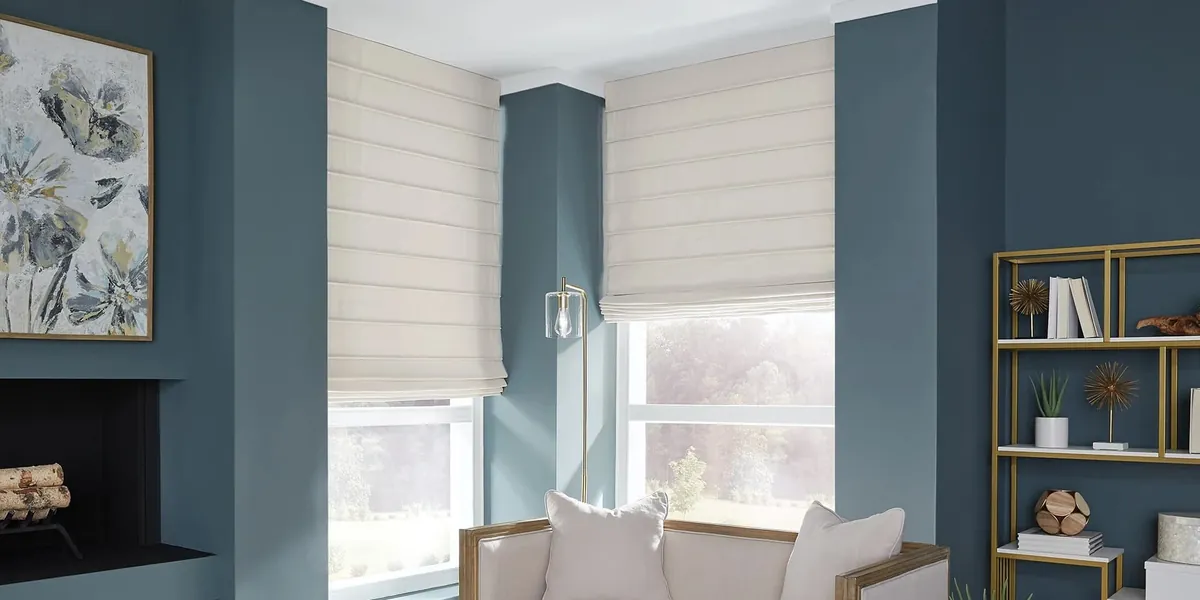
Tiny cottage windows next to modern additions
Centerville is a patchwork. Along Main Street stand older village houses with their original trim and sash. Down at Craigville, beach cottages sit shoulder to shoulder a short walk from the sand. Inland, post-war ranches fill the lots between the main roads. And almost everywhere, somebody has added on: a family room at the back, a bedroom over the garage, a kitchen opened up to the yard. Walk through one house and you may pass a window no bigger than a cupboard door, then step into a room with a wall of modern glass.
That mix is the real challenge for roman shades in Centerville, MA. A shade that looks right on a small original opening can look lost on a big new window, and the reverse. The goal is a set of shades that fits every opening, old or new, and still looks like it belongs to one house.
A folded fabric shade is well suited to the job, because each one is made to measure and the same fabric can be cut to suit a tiny cottage sash or a wide picture window. Everything we hang here comes from Hunter Douglas: Vignette, and Carole Fabrics in both its flat and its folded looks.
Three ways we dress Centerville windows
Most orders here come down to three choices. We bring samples of each to your home so you can see them at your own windows.
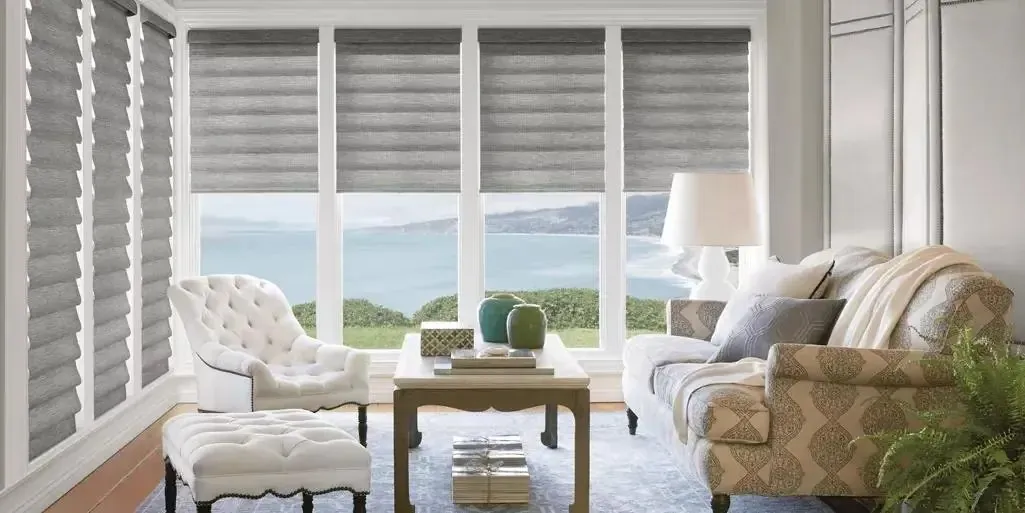
Vignette for the smallest openings
Its fabric winds into the headrail when raised, so a little original window keeps nearly all of its glass in daylight.
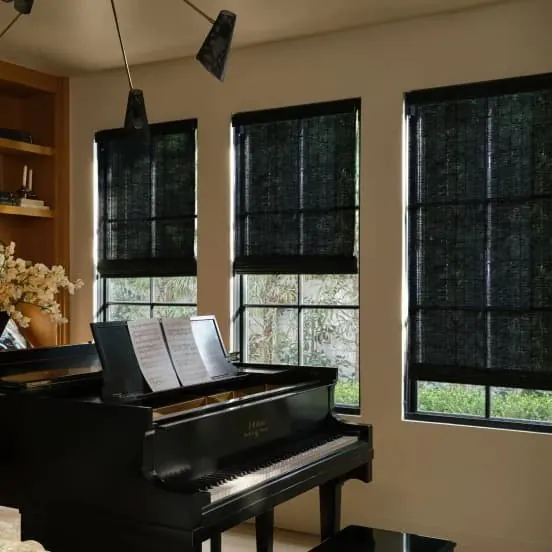
Carole Fabrics for the new rooms
Sewn to order, flat or folded, in a broad decorator range. On the larger windows of an addition, the fabric gets room to show.
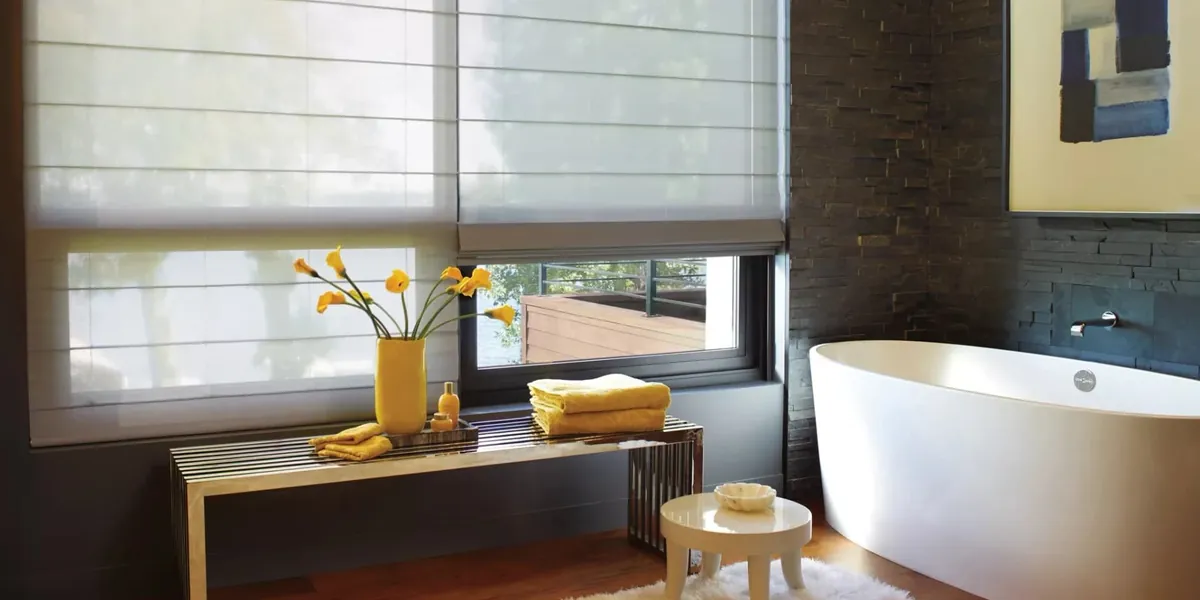
Sheer and light-filtering for close quarters
For cottages and village houses near their neighbors, a fabric that keeps the room bright but hides it from outside.
Village houses along Main Street
The older houses lining Main Street have the kind of windows that were built to last: double-hung sash, painted casings and, in many, a modest width that suits a narrow room. Some still have their old glass. Most have been looked after for a long time, and nobody wants a window covering that hides that care.
An inside mount is usually the right start. With the headrail set inside the opening, the casing stays fully on show and the shade sits flat against the sash. We measure each window at several heights, because old frames move over time and an opening that looks square is often a little narrower somewhere in the middle. We also look at the sash locks, lift handles and stops, which can sit exactly where a headrail wants to go.
For the front rooms of a village house, a flat fold in a plain or softly patterned fabric is a classic choice. It is tidy when lowered, it folds into neat pleats when raised, and it keeps the look restrained from the street. If a front parlor wants a little more warmth, a folded style with soft loops across the face adds depth without fuss.
Because these houses face the road, the backs of the shades are what the street sees. One pale lining color across the front windows keeps the house looking even from outside, whatever fabric faces into each room.
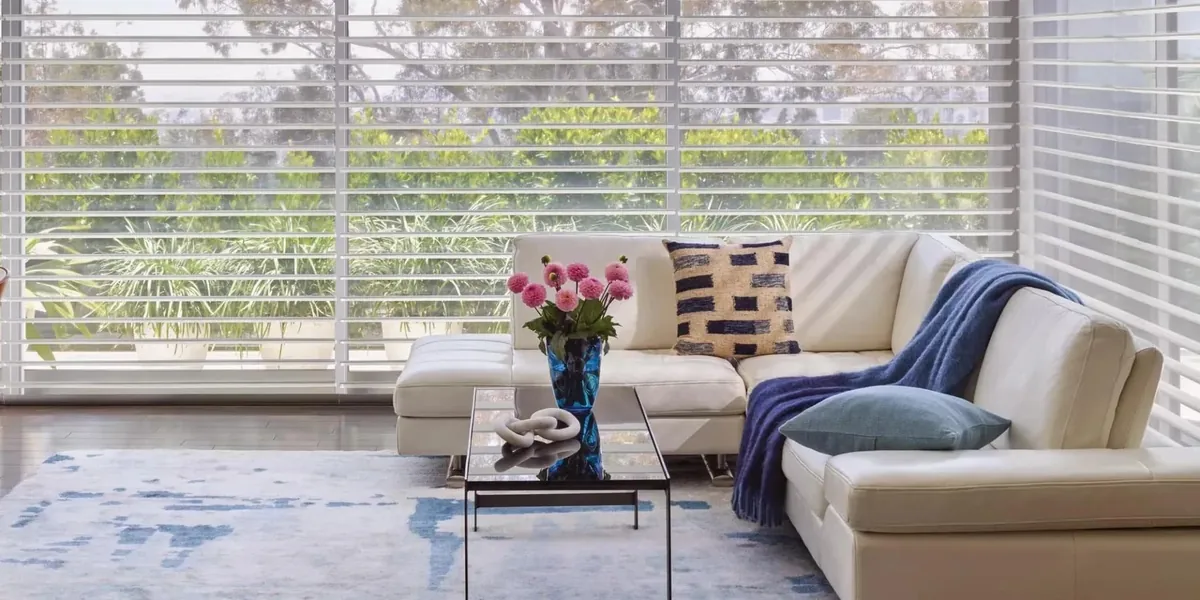
Craigville’s close-set beach cottages
The cottages at Craigville were mostly built for summer, close together and close to the beach. Many have been winterised and enlarged since, but they keep the character that makes them appealing: small rooms, low ceilings and little windows, often set in thin walls with not much depth to the frame.
On a window that small, the stack matters. When a sewn roman shade is raised, the fabric gathers into folds at the top, and on a short opening that can cover a real share of the glass. In a cottage where light is precious, Vignette is often the better pick, since its fabric rolls away. If you love a particular Carole fabric, mounting it just above the frame can keep the folds off the glass, as long as the ceiling leaves space.
Shallow frames are the other issue. A headrail needs a minimum depth to sit inside the opening, and old cottage frames, especially those with storm windows, often fall short. In that case a neat outside mount on the casing is the practical answer, and it can make a small window look a little larger.
With the next cottage only a few steps away, privacy comes up in almost every room. A light-filtering fabric lets daylight in while blurring the view from outside, and a lined shade keeps a lit room private at night. Beach houses also see sand, salt and damp air, so cordless lifts, which keep cords and cord locks off the side of the window, are a sensible choice here.
Post-war ranches inland
Away from the water, the post-war ranches have a different set of windows altogether. Ceilings are lower, the rooms are laid out on one level, and the windows run wide rather than tall: a big picture window in the living room, long horizontal windows in the bedrooms, and often a slider or a set of French doors to the back yard.
Wide, short windows suit a roman shade well, but they need planning. A single shade can only be so wide before it becomes heavy and the folds start to droop, so a broad picture window usually becomes a pair or trio of shades on one line, their folds lined up. On a short window, mounting the shade on the wall above the frame lets the raised folds sit clear of the glass and makes a low room feel a little taller.
Ranch bedrooms often face the morning sun. A room-darkening lining keeps them dim until you raise the shade, and a cordless lift makes it simple to raise and lower without cords near a bed.
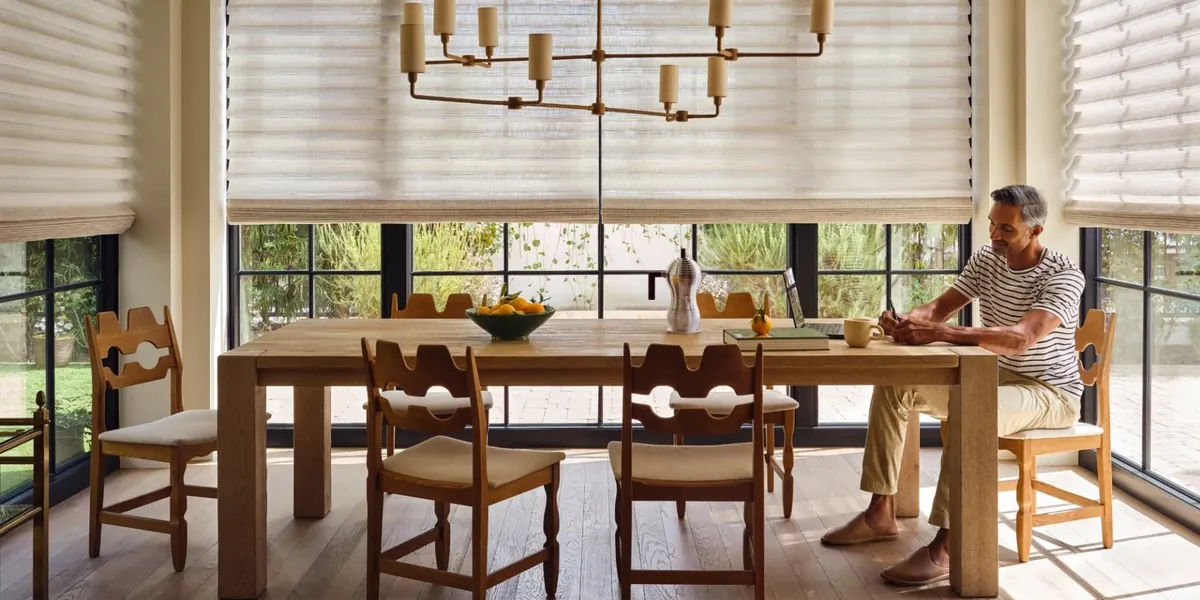
Garages turned bedrooms and other conversions
Alongside the additions, plenty of Centerville houses have converted space: a garage turned into a family room, a breezeway closed in, a porch made into an office. These rooms often end up with whatever windows were easiest at the time, so a converted garage might have one wide window where the door was and two small ones on the side wall.
Made-to-measure roman shades in Centerville, MA, smooth over that mismatch. The same fabric, cut to each opening, makes three different windows look like a deliberate set. Where the old garage door opening is now a wide window, we split it into matched shades. Where a breezeway has a run of narrow windows, each gets its own shade with the folds set to one height, so the row reads as a single band of fabric.
Converted rooms are also often colder or brighter than the rest of the house, depending on which way they face. A lined shade helps with both, keeping a sunny converted porch comfortable in the afternoon and a north-facing garage room a little cosier in the evening. Choosing roman shades in Centerville for these rooms at the same visit as the rest of the house keeps the whole set consistent.
When the old house meets the addition
This is the situation we see more than any other in Centerville. The original part of the house has small windows, older frames and modest rooms. The addition, built much later, has bigger glass, slim modern frames and higher ceilings. Put the same shade on both and one part of the house always looks wrong.
Our approach is to tie the two together through fabric and proportion rather than forcing an identical product everywhere. A typical plan might use Vignette in the original rooms, because it keeps the small sash clear, and a Carole flat fold in the addition, where a larger window can show off a fabric. Choose fabrics from the same color family, keep the fold spacing similar and use one lining color on the street side, and the house reads as a single home.
Mounting choices help as well. Small original windows usually take an inside mount to keep the old casing visible. In the addition, where the frames are slimmer and the ceilings higher, an outside mount above the window can give the shade presence and keep the stack off the glass.
When we plan roman shades in Centerville for a house like this, we walk the old part and the new part together, so you can see the samples in both kinds of light before choosing.
Light, privacy and the time of day
Every room in a house has its own pattern of light, and it changes with the season. These are the questions we work through with you.
- Who can see in? Rooms near the road or a neighbor usually want light-filtering fabric by day and a lined shade for evening.
- When is the sun strongest? West-facing rooms take hard afternoon light; a lining protects the room and the fabric.
- When do you sleep? Bedrooms facing east want a room-darkening lining for summer mornings.
- How much light can you spare? A dim cottage room may only want a sheer fabric, so it keeps every bit of daylight.
Answering those room by room is how we arrive at a set of shades that suits the whole house rather than one that suits only the brightest room.
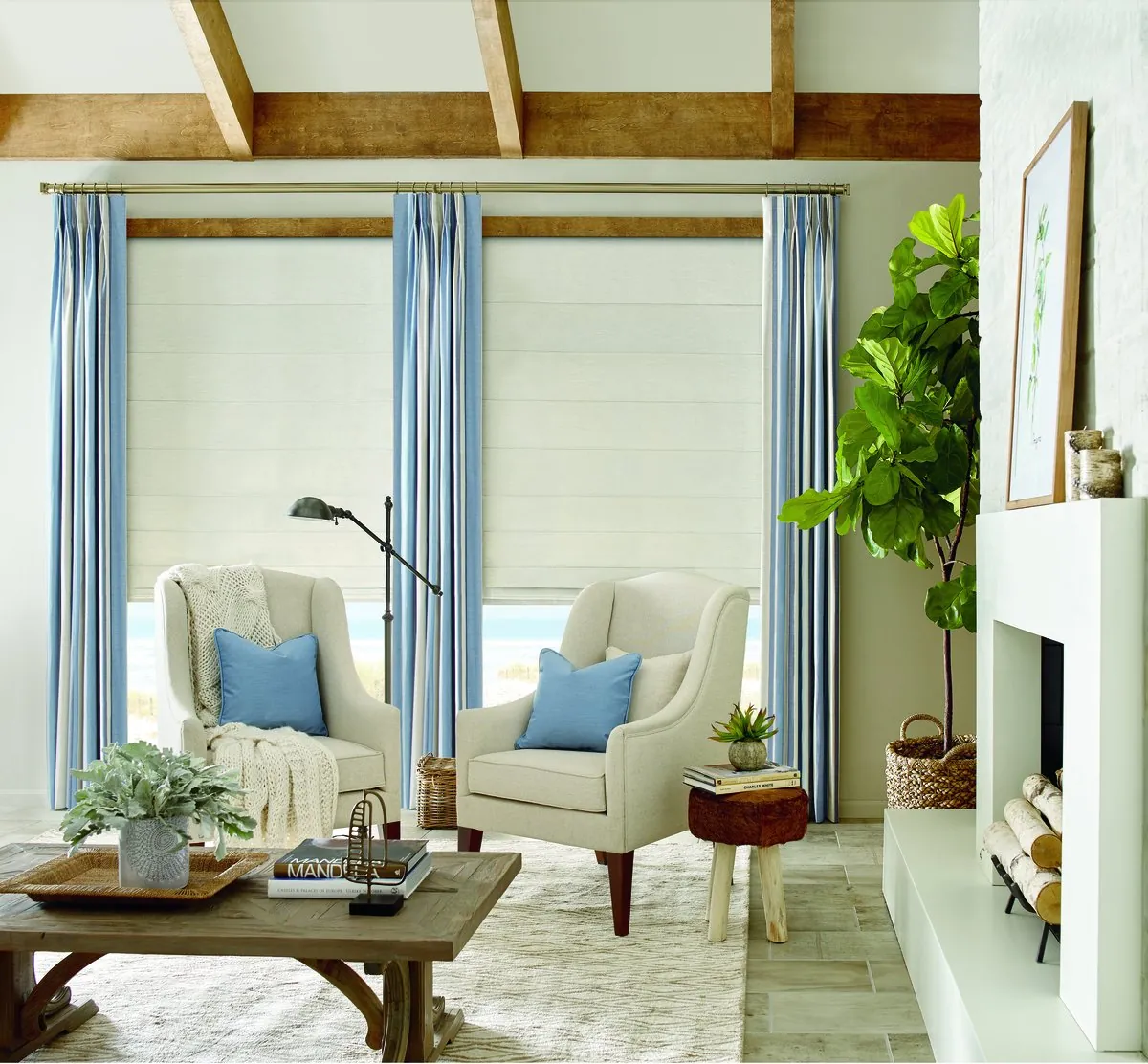
Flat fold, folded style, Vignette or Carole
These four words cover almost every decision about the shade itself.
A flat fold is a single smooth panel when lowered, with crisp horizontal pleats when raised. It suits a tailored room and shows a printed fabric well. A folded style keeps soft loops across the face even when lowered, for a fuller, more relaxed look that suits a cottage or a bedroom.
Vignette forms its folds on the front of the shade and rolls the fabric into a slim headrail when raised. It is the practical choice for small windows and the one to choose for PowerView motorization. Carole Fabrics stitches every shade to order from a deep library of decorator cloth, in either look, and wins whenever the fabric itself comes first.
For a closer look at each line, there is a page on Vignette modern roman shades, another on Carole roman shades, and the complete family sits under roman shades.
Motorized shades for awkward windows
Not every window is easy to reach. A window above a kitchen sink, a high window in a vaulted addition, or a run of shades across the back of a ranch can all be a nuisance to raise by hand every day. Vignette on PowerView lets you raise and lower shades from your phone, a remote or a wall control, group several together and set schedules. You might have the bedroom shades lift at a set time in the morning, or the west-facing family room shades lower as the afternoon sun arrives. We plan how each motor is powered at the visit. See our motorized blinds in Centerville page for more on how it works.
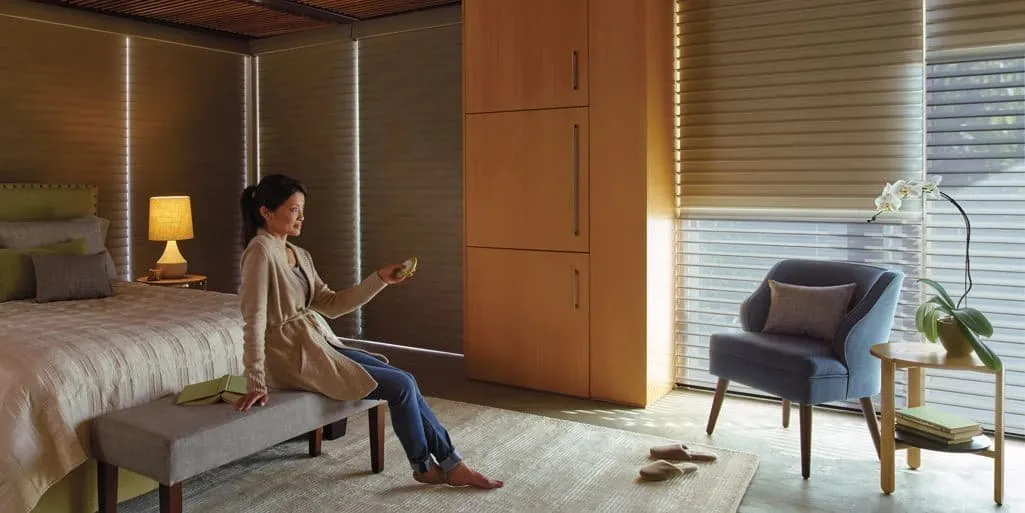
Your visit, in six steps
A house with a cupboard-sized sash at one end and a glass wall at the other is hard to plan from a brochure. That is why the visit happens at your place, with a van full of samples parked outside.
- Choose a time on the Request a Consultation page, or tap the call button.
- We tour the house with you, original rooms and additions alike, and note how each room faces.
- Swatches of both lines go up at the glass, so you can judge fabric and lining by the real daylight in each room.
- We discuss mounting, lifts, fold styles and any windows that would suit PowerView.
- We measure every opening, from the smallest cottage sash to the widest picture window, including frame depth.
- A free estimate follows, and there is no hurry to say yes.
Color and fabric decisions across a whole house are what our interior design consultations are for. Curious about the visit itself? The page on what happens at an in-home consultation walks through it.
Installation by certified installers
When the order is ready, installers certified by Hunter Douglas return to hang it. Brackets go into solid wood, each headrail is levelled, the folds are dressed so they fall evenly, and you get a quick lesson on every lift. Old painted trim on a village house is treated gently. Down the line, if anything sticks or frays, blind and shade repair is part of what we do.
Why buy from a Gallery dealer
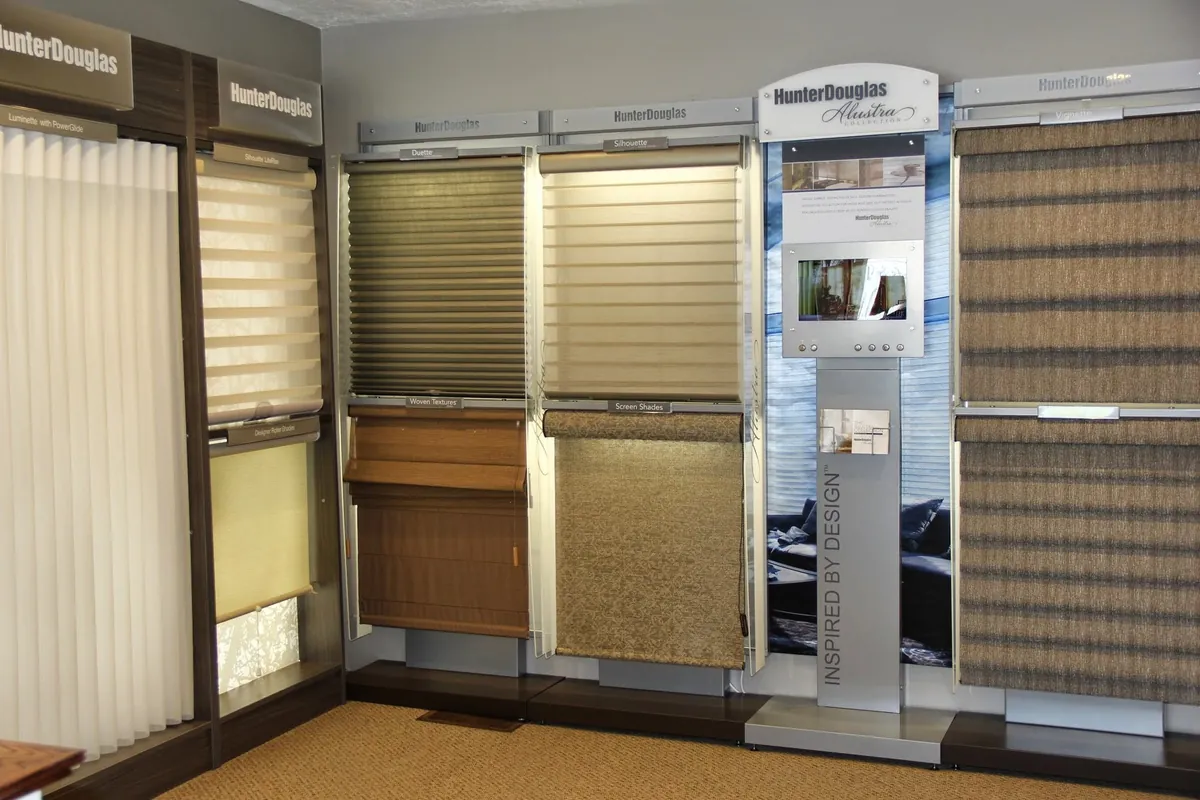
Gallery is the status Hunter Douglas grants dealers who meet its standards, and Blinds & Designs carries it. The practical upshot for a Centerville house: every Vignette fabric, the whole Carole Fabrics book and all the linings, lifts and PowerView controls are on the table.
The same company measures, orders and hangs your shades, using installers with Hunter Douglas certification, so you deal with one set of people throughout.
Planning other rooms as well? See cellular shades in Centerville, plantation shutters in Centerville or custom blinds in Centerville, or everything we offer on our Centerville page.
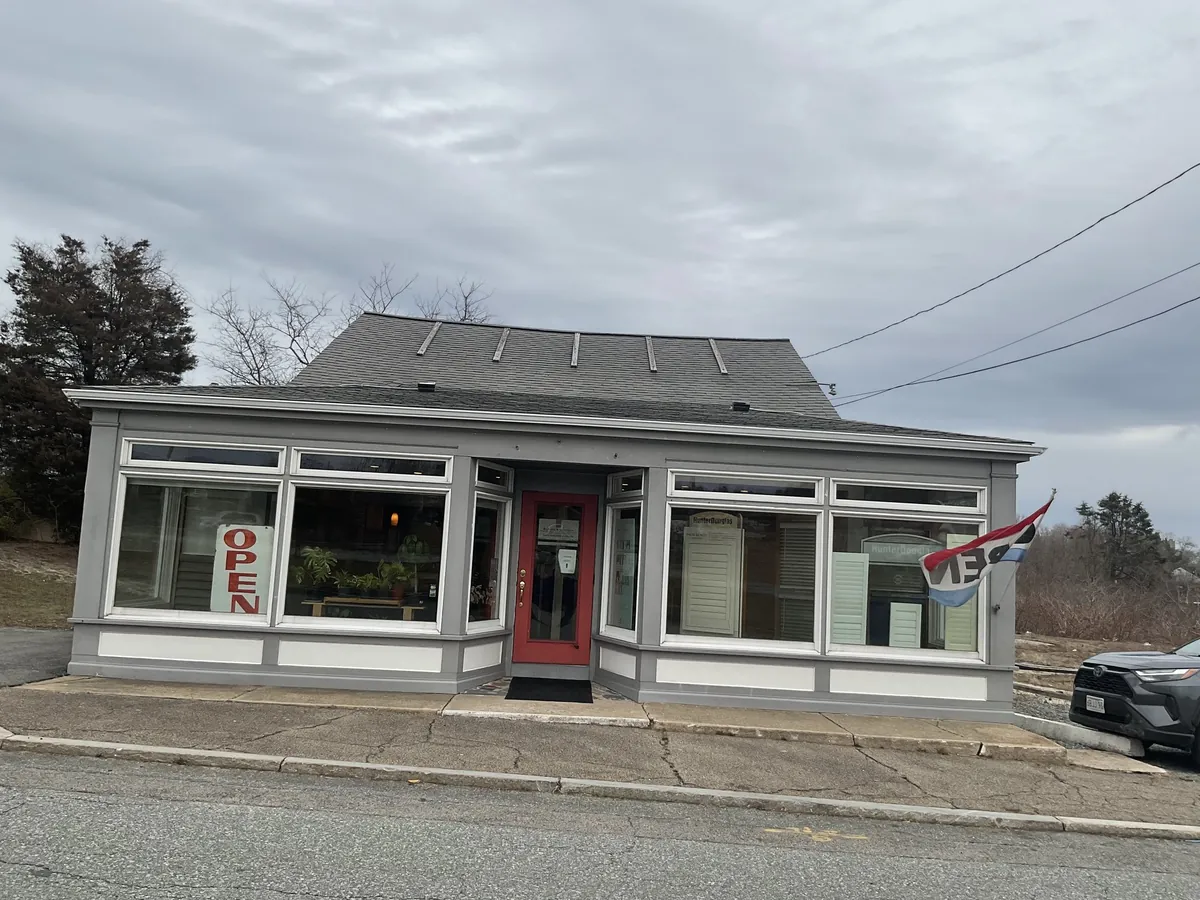
Our nearest showroom: Sagamore
Of our showrooms, Sagamore sits nearest to Centerville. Come by in opening hours to touch the fabrics before a home visit, or phone through the call button beforehand.
Even so, most Centerville projects are decided at home, where you can hold the samples up to a tiny cottage window and a new addition in the same afternoon.
Centerville roman shade questions
What works on the very small windows in a Craigville cottage?
Vignette, in most cases. Its fabric rolls into the headrail, so a small window keeps its light when the shade is up. Where the frame is too shallow for an inside mount, an outside mount on the casing works well and can make the window look larger.
How do I make shades in my original rooms and my addition look like a set?
Use fabrics from the same color family, keep the fold spacing similar and use one lining color on the street side. The product can differ, for example Vignette on small original sash and a Carole flat fold in the addition, and the house still reads as one.
Will roman shades work on a wide ranch picture window?
Yes. Usually we break a broad picture window into a pair or a trio of matched shades. Mounting above the frame keeps the raised folds off the glass and makes a low room feel taller.
Are roman shades a good idea in a beach cottage?
They are, with sensible choices. A cordless lift keeps cords off the side of the window, a light-filtering fabric gives privacy from close neighbors, and we suggest fabrics that suit sun and salt air.
Will the estimate cost me anything?
No. Measuring leads straight to a free estimate. Use the Request a Consultation page to set up a visit.
Book your visit
Roman shades in Centerville, MA, come together fastest at home, swatch in hand, moving from the littlest window to the biggest. Ask for a consultation and the samples travel to you, every opening gets measured and a free estimate is left on the table. The call button and the Sagamore showroom are always options too.