
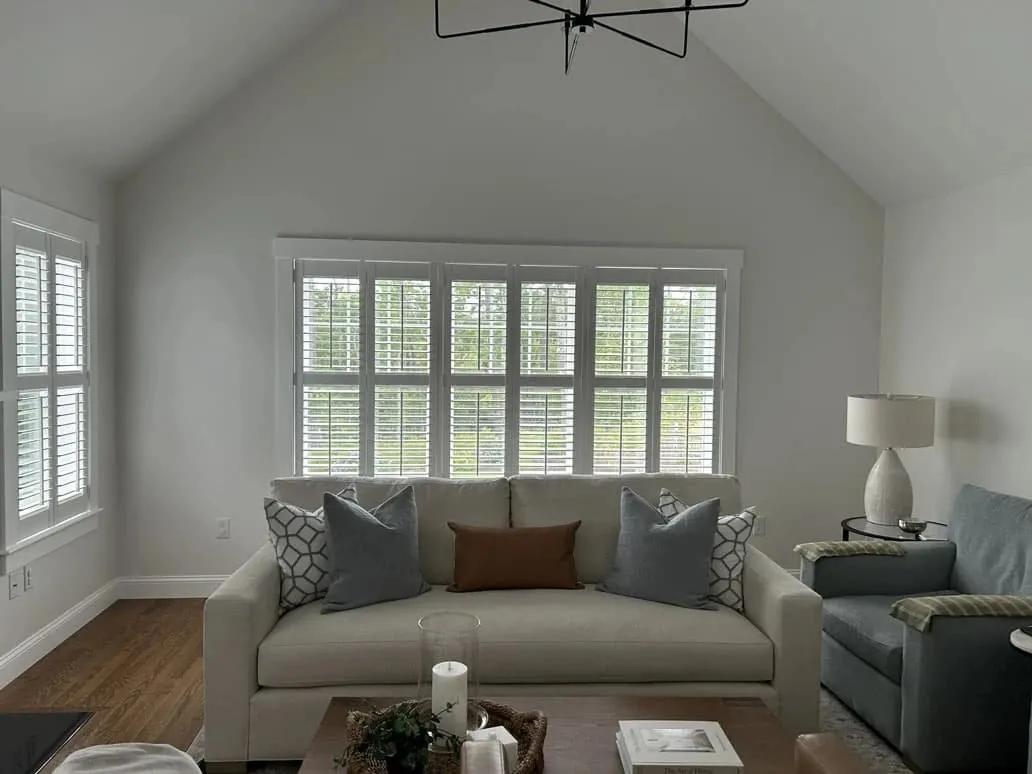
Deep reveals in the old center, standard sizes beyond
Holliston’s housing splits neatly in two. Around the center stand antique colonials and Victorians, historic stock with tall, narrow sash set into deep reveals. Off Washington Street, newer colonials sit on wooded lots in modern subdivisions where the windows come in standard sizes. Plantation shutters in Holliston, MA, have a natural home in both, but for different reasons.
In the older houses it is the depth that helps. A deep reveal, the band of wall between the face of the house and the glass, gives a shutter frame a pocket to sit in, so the panel can live inside the window rather than on top of it. The casings stay fully on show. The tricky part is that historic openings are seldom square, and a tall narrow one shows every bit of lean.
In the subdivisions the openings are regular and true, and the work is about consistency: choosing a louver width and frame that suit a large house with many windows.
Plantation shutters in Holliston, MA, by kind of window
Most of what we fit in town falls into one of three window types, and each starts the conversation in a different place.
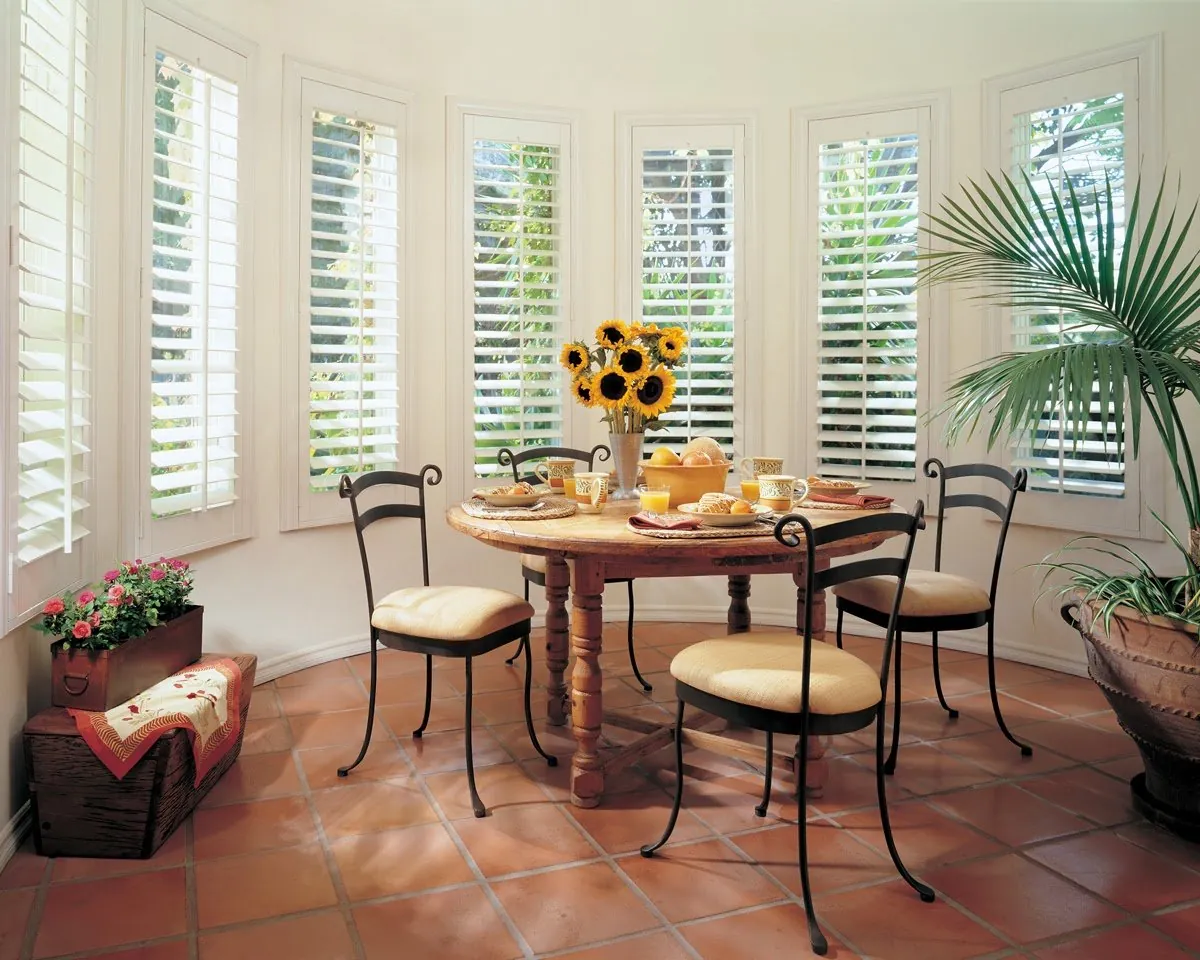
Inside a deep reveal
The historic houses around the center leave room for a frame to tuck in completely. The shutter becomes part of the window and the woodwork stays visible.
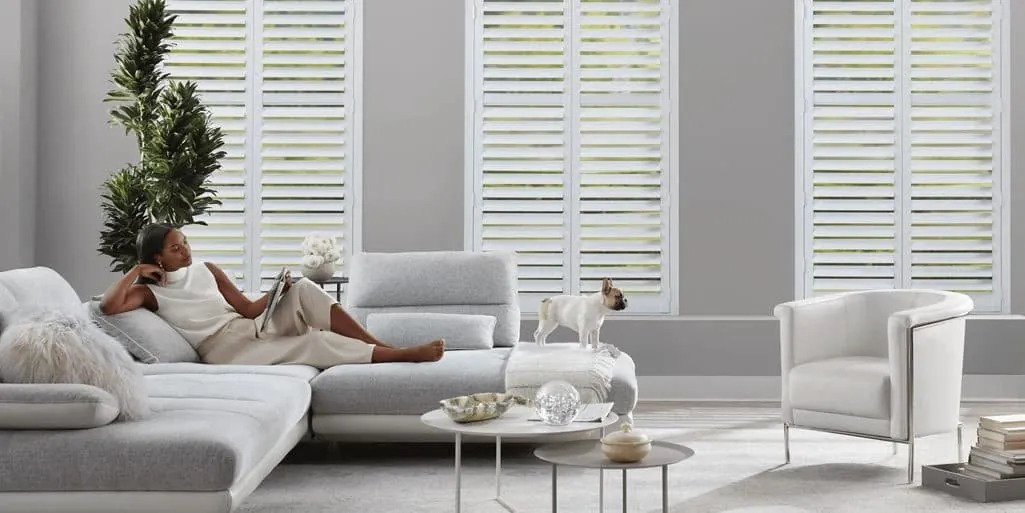
Tall, narrow antique sash
Slim openings want slim louvers and a divider rail, so the blades stay in scale and the top can open while the bottom stays closed.
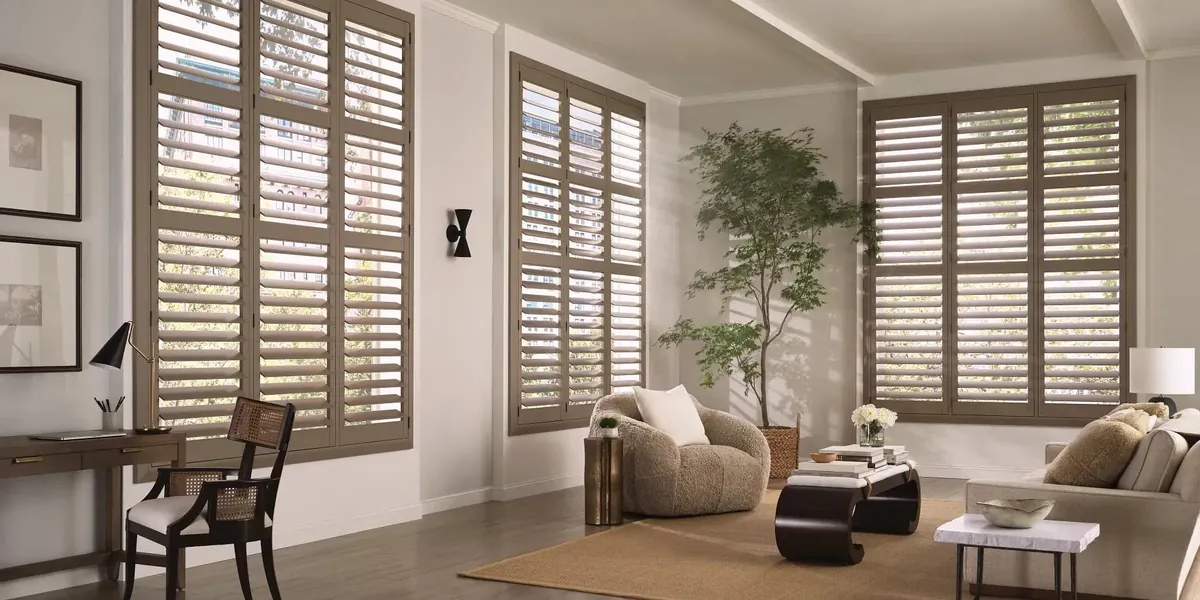
Standard subdivision windows
Regular openings in the newer colonials off Washington Street, where one louver width and frame style can run through the house.
What a deep reveal does for a shutter
Shutters are at their best when they sit within the opening. An inside mount places the frame against the jambs, inside the casing, so from across the room you see the trim, then the shutter, then the glass, each in its own plane. The window looks finished without looking covered.
Holliston’s historic houses are generous here. Their walls are thick and the reveals deep, so there is usually ample room for the louvers to rotate fully without striking the sash, the locks or the stops. That makes an inside mount the default for most windows around the center, and it means the panels can close flush within the reveal rather than projecting into the room.
Depth also helps with how the panels fold. On a deep reveal, a hinged panel can swing back and rest within the depth of the window, or against the jamb, so it sits out of the way when the window is open. On a shallow modern opening, the same panel would fold out into the room.
Measuring a historic opening
Depth is only half the story. The other half is squareness, and that takes care. Here is how we measure an antique window before anything is ordered.
- The width at the top, the middle and the bottom of the opening.
- The height on the left, on the right and down the center.
- Both diagonals, which tell us whether the opening has racked.
- The reveal depth at several points, and anything that stands proud of the glass.
- The best place for a divider rail, so it lines up with the meeting rail of the sash.
The frame is then made to take up any difference in the opening, so the panels hang true and meet evenly even if the window has leaned. Where an opening is too far out to fit inside cleanly, we will say so at the visit and suggest mounting on the casing. Our guide to shutters for older windows goes into more detail.
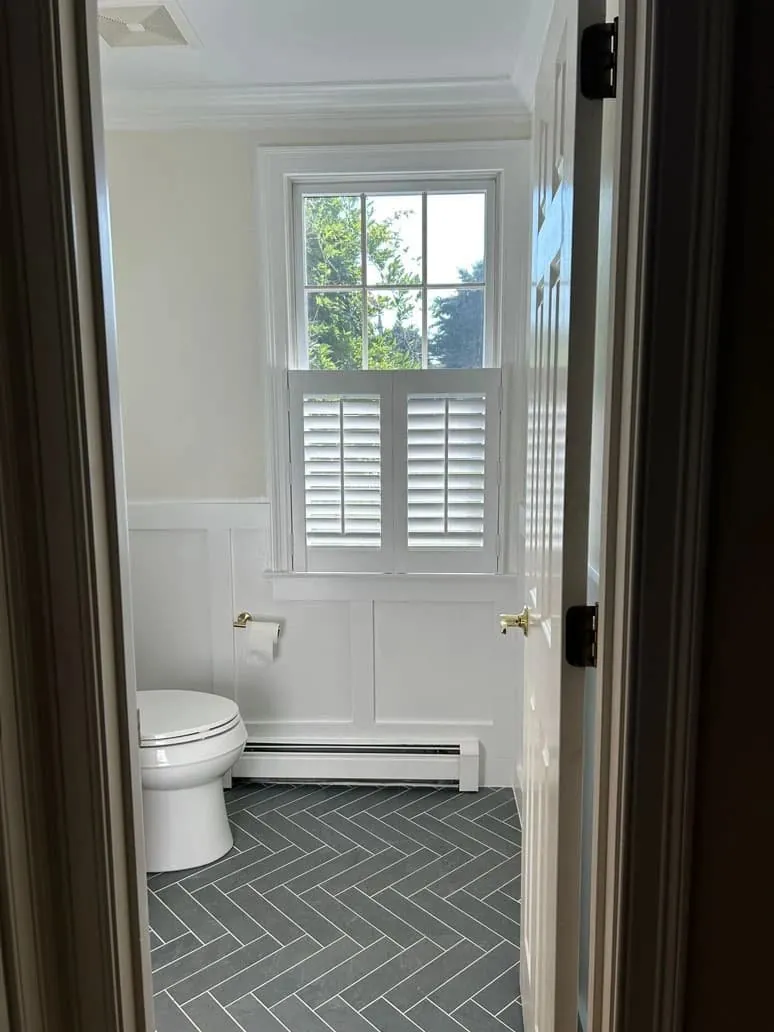
Tall, narrow sash: rails and tiers
The Victorians and colonials around the center often have sash that is tall in proportion to its width, the kind of window that makes a front room feel lofty. A shutter on a window like that has to manage the height so it does not become one long column of louvers.
A divider rail is the usual answer. Set at the height of the sash’s meeting rail, it splits the panel into an upper and a lower section, each tilting on its own. Close the bottom for privacy and open the top for daylight, and the room gets the best of both. On the tallest windows, we may suggest two tiers of panels, so the lower pair can fold away on its own while the upper pair stays put.
Louver width matters too. A narrow blade keeps a slim window in proportion and gives the panel a fine, delicate look. A broad blade on the same window would leave only a handful of slats and look out of scale. In practice, most antique sash in town suits the narrower end of the range.
Newer colonials off Washington Street
Out on the wooded lots off Washington Street, the newer colonials are large and their windows are standard modern sizes. These are straightforward openings: square, a sensible depth and similar from room to room.
The planning here is about the whole house. On the windows facing the road we pick a single blade size and use it upstairs and down, which gives the façade a settled look. Toward the back, a family room with plenty of glass looking into the trees can use a broader blade, since it is seen mainly from inside and the view matters more there. Wide windows are divided into panels that fold back in pairs, so you can open the center and keep the ends closed.
Flat builder casings are common in these colonials. A decorative frame, which wraps the opening with a shaped moulding, gives the shutter more presence and helps it read as fitted joinery. Where there is enough depth, an inside mount still works well on these windows too.

Bedrooms and the morning light
Upstairs in an antique colonial, bedrooms often sit under the eaves with one or two of those tall narrow windows apiece. In a newer colonial off Washington Street, the bedrooms are larger and more regular, usually with a pair of standard windows each. Either way, the bedroom is where the question of morning light comes up most.
Closed tight, a shutter keeps out most of the early sun and the whole of the view in. With a divider rail, you can open just the top section for fresh daylight while the lower louvers stay shut. Some people like to leave the blades slightly open overnight so the room brightens gradually at dawn; others close them flat. If a room needs near-total darkness, we may suggest something else alongside or instead, and we will show you the difference.
For bedrooms on the street side, matching the louver width and color to the rooms below keeps the front of the house consistent. That is how most plans for plantation shutters in Holliston, MA, handle the upstairs: one look for the front, with a little freedom at the back.
Older houses with a modern wing
Some of the historic houses around the center have newer additions behind them, so one house holds both deep antique reveals and shallower modern openings. We plan those as two zones that still belong together: narrow louvers and inside mounts in the old rooms, perhaps a wider louver and a decorative frame in the addition, with one color family tying them up. Walking from the original front rooms into the newer kitchen or family room, the shutters change subtly with the house rather than jarring.
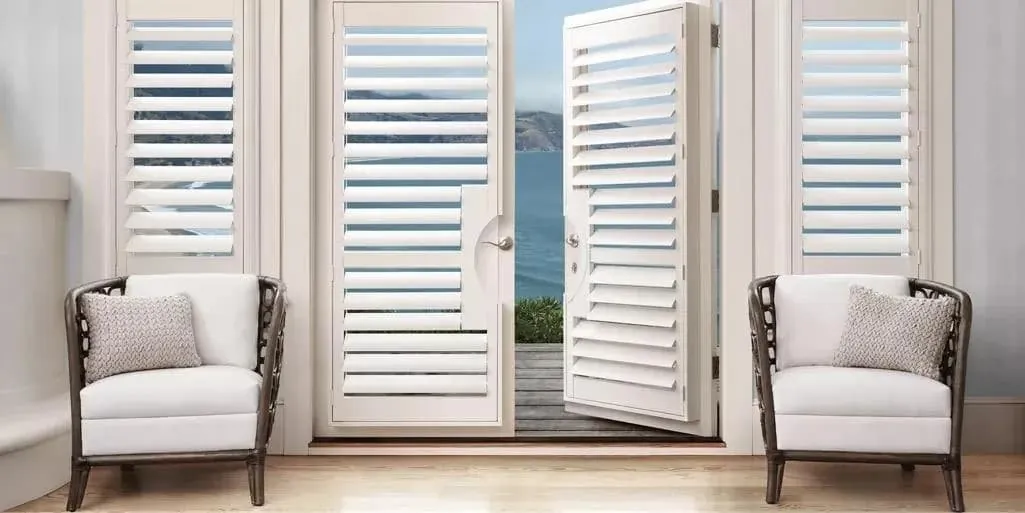
Daylight on the wooded lots
The trees that make the newer neighborhoods so pleasant also filter a lot of light. Rooms on the shaded side of a house can feel dim even with large windows, and a heavy covering makes that worse.
Shutters work in your favour here. Fold the panels back against the wall and the glass is completely clear, with nothing hanging across it. Tilt the louvers up and the light that does come in bounces off the ceiling and spreads through the room. Close them in the evening and the room is private. White and soft white finishes help further, reflecting daylight back into a shaded room rather than absorbing it.
On the sunnier side of the house, the same louvers cut glare from a low afternoon sun without darkening the room completely. That ability to brighten one room and calm another is a big reason people choose plantation shutters in Holliston, MA, for houses under the trees.
Choosing a louver width
In Holliston the choice often follows the age of the house. The tall narrow sash around the center usually suits a narrow louver, which keeps the blades in proportion and gives the panel a refined look. Ordinary bedroom and kitchen openings in the subdivisions sit well with a mid-size blade, a balanced choice for light, view and privacy. The long windows of a family room facing the woods suit a wide louver, which gives the clearest view through when the blades are tilted flat.
A house does not have to use one width everywhere, as long as each room is consistent. Holding the samples up at the window is the quickest way to decide. A narrow blade that looks dainty in your hand can look exactly right on a slim antique sash, while the same blade on a wide family room window can look fussy. We bring a range of widths so you can see each one against your own glass, with the blades open, half closed and shut, before you commit. Then decide how the blades are worked. A visible rod running down the middle of each panel has a classic look and is simple to nudge. A concealed mechanism along the side keeps the face of the panel uninterrupted.
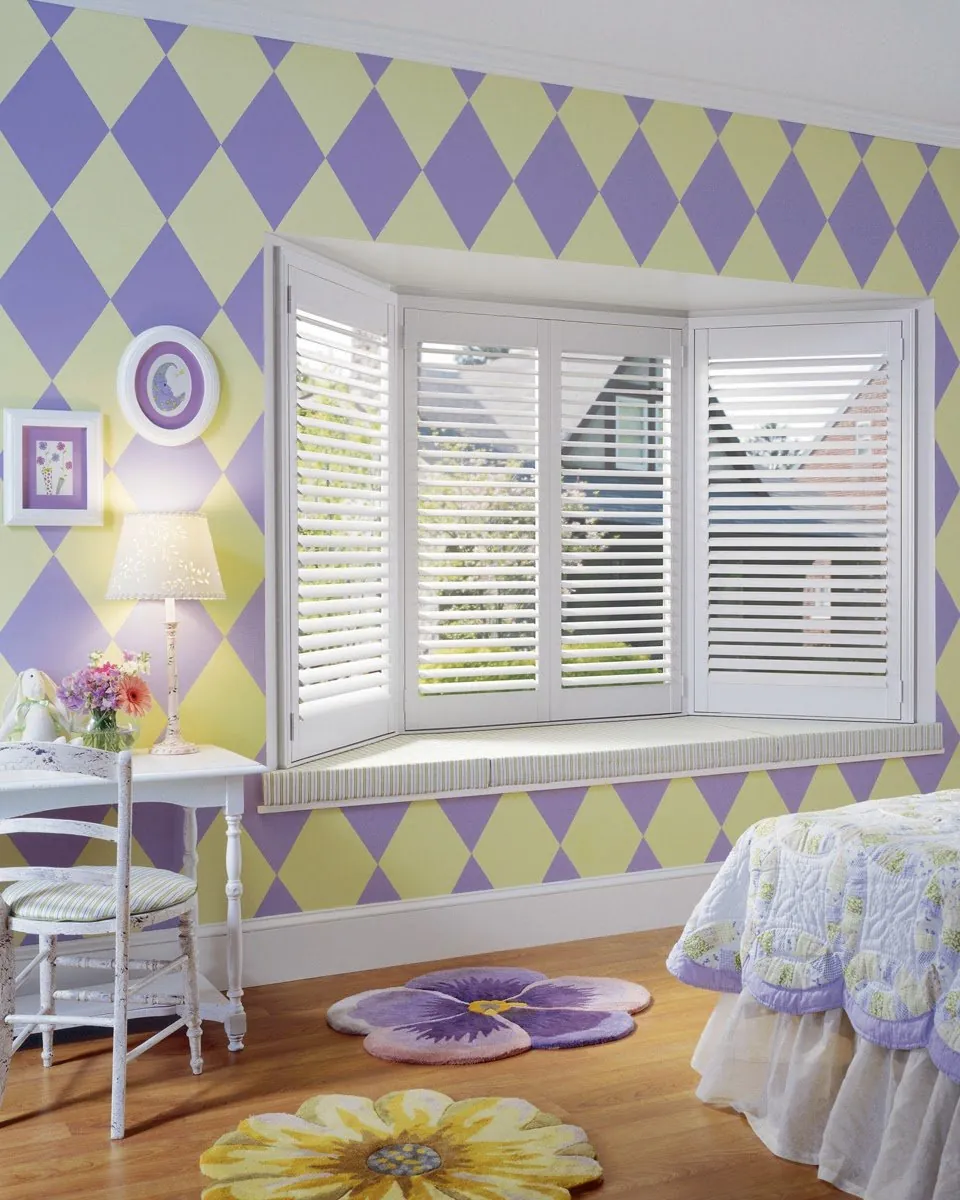
Palm Beach, NewStyle and Heritance in a Holliston house
The three Hunter Douglas collections share their blade sizes and frame profiles, so one house can use all of them and nobody walking through would notice the change.
Palm Beach goes where splashes and humidity are routine: a bathroom, the window over the sink, a laundry. An antique house often has one small bath with a deep window, and a newer colonial a larger primary bath; Palm Beach suits both.
NewStyle carries the bulk of a typical order: bedrooms, family rooms and most of the windows in a newer colonial.
Heritance is hardwood, painted or stained. In the historic houses around the center, where trim and floors may be natural wood, Heritance in a matching stain can echo their tone and look as though it came with the house.
More on each: Palm Beach, NewStyle and Heritance, and a side-by-side on the main plantation shutters page.
Finishes for historic woodwork
Color is where an antique house rewards patience. Woodwork repainted again and again ends up a mellow ivory, and a stark white panel sitting in the reveal next to it makes that old paint look tired. A warmer white usually blends better. If the woodwork is natural, Heritance can be stained to pick up its color.
In the newer colonials, crisp builder white trim pairs well with a clean white shutter, and soft grays or taupes can suit a room with deeper walls. Finish samples come with us, and we judge them twice, once in natural light and once with the room lit for the evening, since the two can disagree.
When an order covers a whole house, we suggest settling the color in the room you see most, often the front hall or living room, and carrying it through from there. That keeps plantation shutters in Holliston, MA, consistent from room to room.
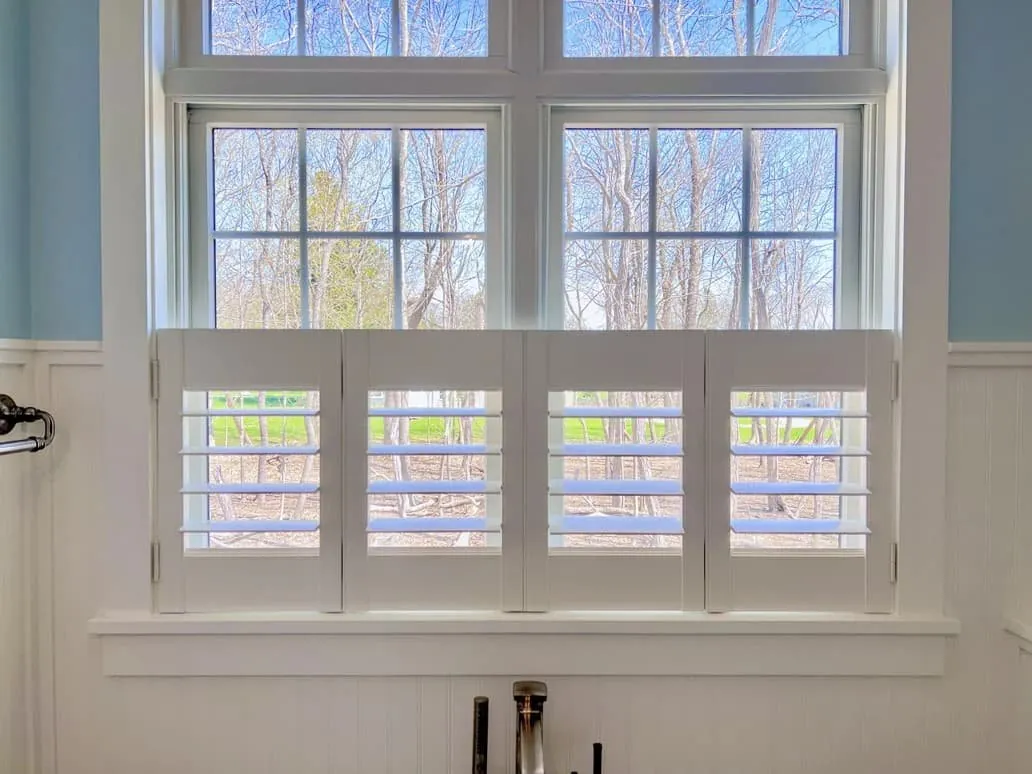
What the consultation looks like
We can bring the showroom to you: the van arrives loaded with Palm Beach, NewStyle and Heritance samples in each blade size and frame profile. You book a time through Request a Consultation or the call button, and we start in whichever room matters most to you, whether that is an antique front parlor or a family room facing the woods.
You hold samples against your own trim, compare louver widths at your own sash and look at finishes in your own light. We go through each window for depth, squareness and anything in the way, and agree a mount and layout. Then we measure every window on your list, and you receive a free estimate to think over at your own pace. For help with color or fabric elsewhere in the room, our interior design consultations can run alongside. Our page on what happens at an in-home consultation explains the visit in full.
The nearest showroom is Franklin
The Franklin showroom is the closest of ours to Holliston. Some households like to look there before booking a home visit.
Shutter decisions, though, depend on your house: how deep the reveal is, how a finish sits beside old trim, how a louver width looks on a narrow sash. Those are best judged at home.
However you start, the windows are measured at your house before anything is ordered.
Certified installation and a Gallery dealer
Gallery dealer status, which Blinds & Designs holds with Hunter Douglas, means the complete shutter line is open to you without hunting around. Fitting is done by installers with Hunter Douglas certification. Inside a deep reveal in one of the center’s historic houses, they true the frame against an opening that may have shifted, hang each pair so the center line is straight, and test every blade before leaving. Blinds, shades and shutters that need fixing later are part of our repair work too.
Not every window needs a shutter. Look at roller shades in Holliston, roman shades in Holliston or motorized blinds and shades, or see all our services in town on the Holliston page.
Questions from Holliston
My old windows have deep reveals. Does that help?
It does. A deep reveal gives an inside mount room for the louvers to turn fully, so the shutter sits within the window and the casing stays on show. We still measure carefully for squareness.
How do you keep a tall narrow window from looking cluttered?
With a narrow louver and a divider rail set at the sash’s meeting rail. On the tallest windows, two tiers of panels let the lower pair fold away on its own.
Can the newer and older parts of town use the same shutters?
The same collections, yes. The louver width and frame usually differ: narrower and inside-mounted in the historic houses, often wider with a decorative frame in the newer colonials.
Will shutters dim a room that is already shaded by trees?
Open, they hardly affect it, since the panels swing clear of the glass. Partly closed with the blades angled up, they push daylight onto the ceiling, and a pale finish helps bounce it around.
Is there a charge for measuring?
No. We measure every window you want covered and give you a free estimate, with no obligation to go ahead.
Take the next step
A consultation is the simplest way forward: samples arrive at your door, every window is measured by us, and the estimate costs nothing. The call button reaches us as well, and the Franklin showroom is the nearest place to look around.