
Three kinds of Canton house, three reasons for a motor
Canton’s housing falls into three broad groups, and each has its own case for motorized shades. Near Canton Center, Victorians and older colonials have tall sash windows, often a long way from floor to head jamb, with the top of the shade well above easy reach. Through the middle of town, post-war capes and ranches have tighter rooms where furniture tends to end up in front of the windows. And on the Blue Hills side, the larger newer houses sit on lots that climb steeply from the road, with big windows set high to catch the view and the light.
Tall, blocked or high: those are exactly the windows that get left in one position for months because adjusting them is a chore. Motorized blinds in Canton, MA, change that. A PowerView motor in the headrail moves the shade from a remote, an app or a timetable, so every window gets used the way it was meant to be.
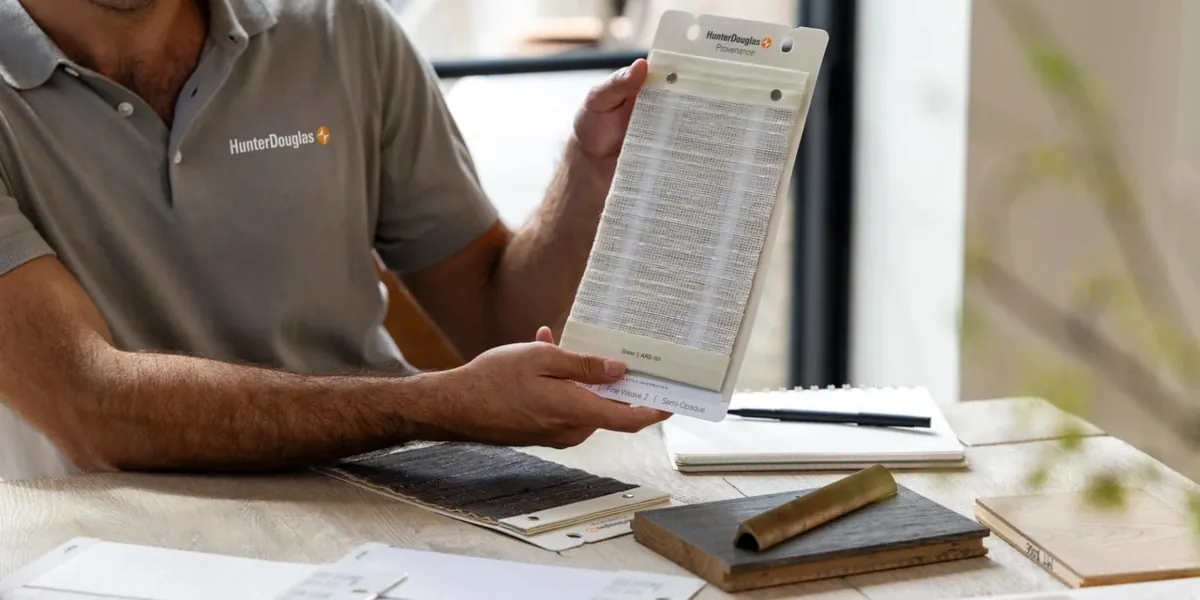
Canton is our shop-at-home territory, which suits motorized shades well. You choose them at the windows they will hang in, with samples we bring to your door.
Shades that take a PowerView motor
Motorization is an option across much of the Hunter Douglas range rather than a product of its own. Choose the shade for the room first; the motor comes with it. These suit Canton’s houses particularly well.
Honeycomb for an office or study
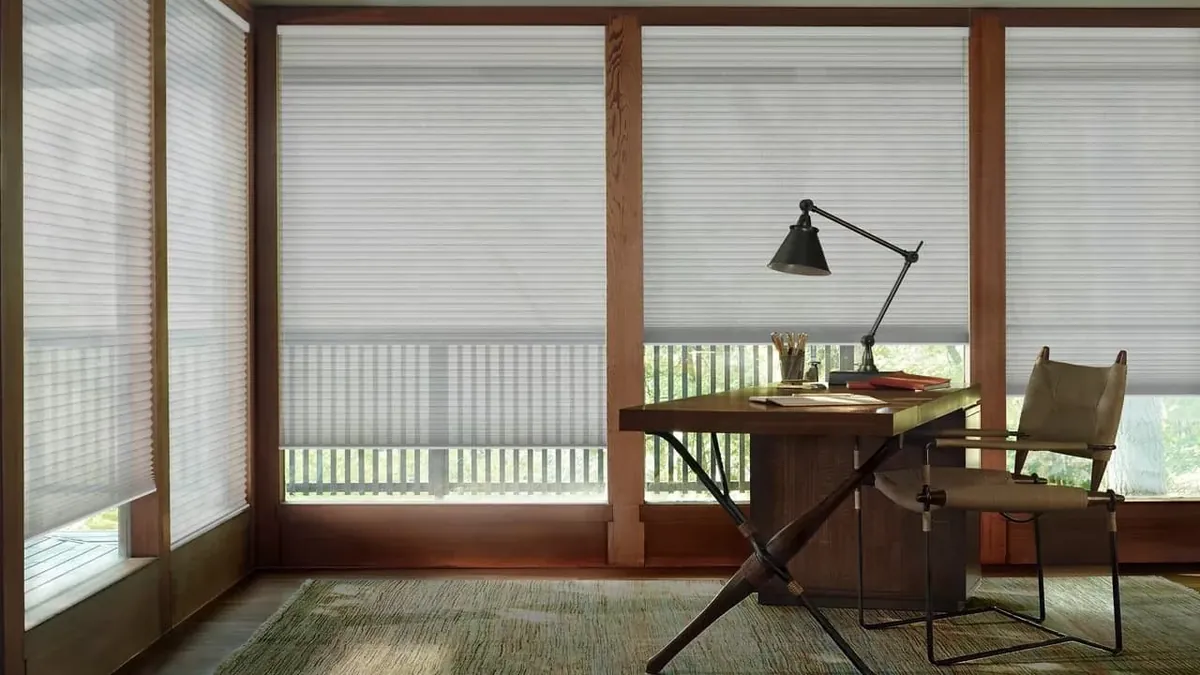
Duette and Applause trap still air in every cell, a help on the tall, thinly glazed sash of an older house.
Sheer roman shades for a bath
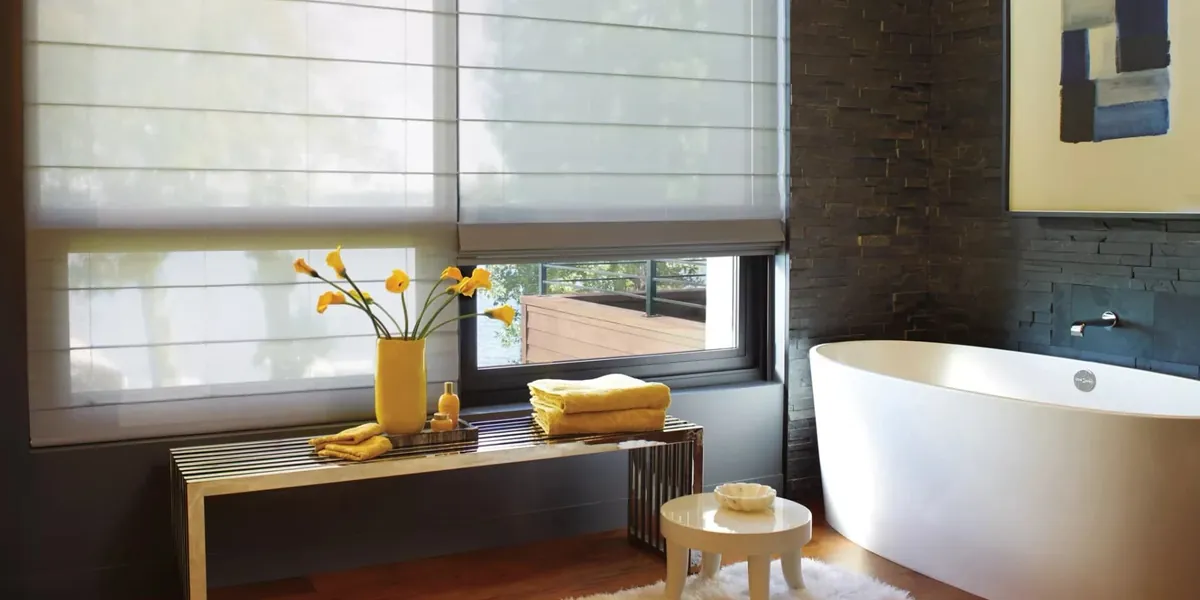
Soft folds over a window beside the tub, raised and lowered without stepping into the bath to reach it.
Solar screens for a view
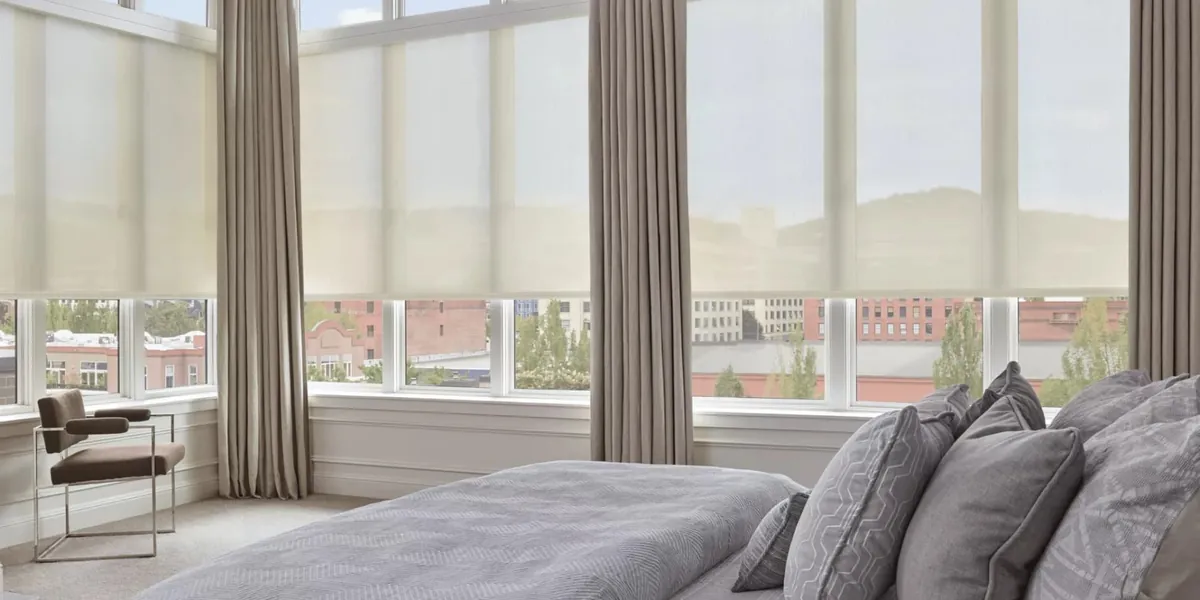
Screen fabrics turn down brightness and glare while you still see out, useful on the high windows of a hillside house.
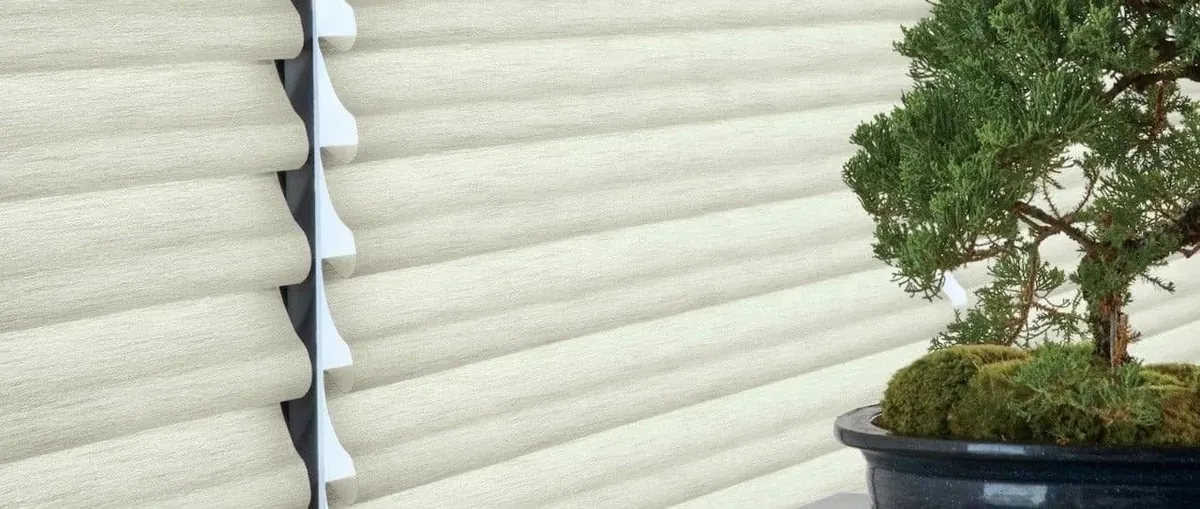
Sheer shades with soft vanes
Silhouette’s vanes tilt open and closed like a blind, filtering light gently across a living room.
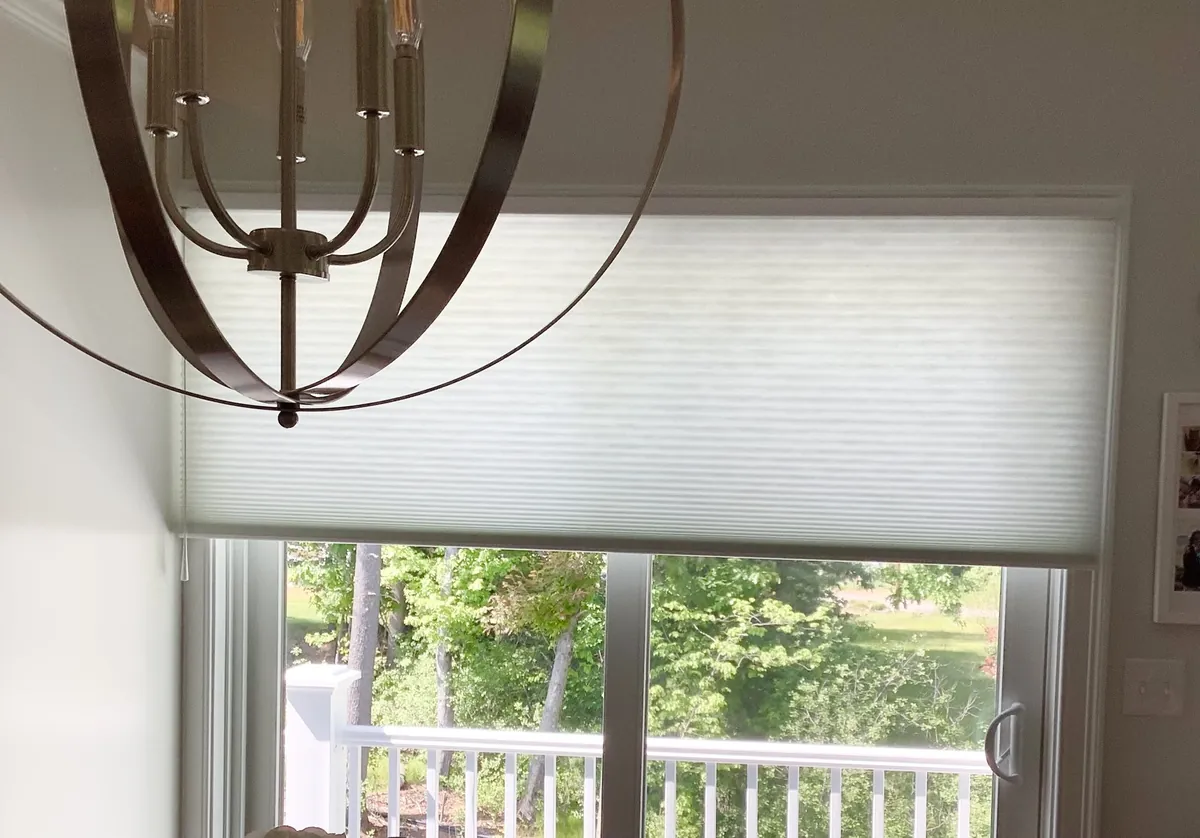
Honeycomb on a slider
For decks and patios off the back of the house, with the windows beside it on a motor.
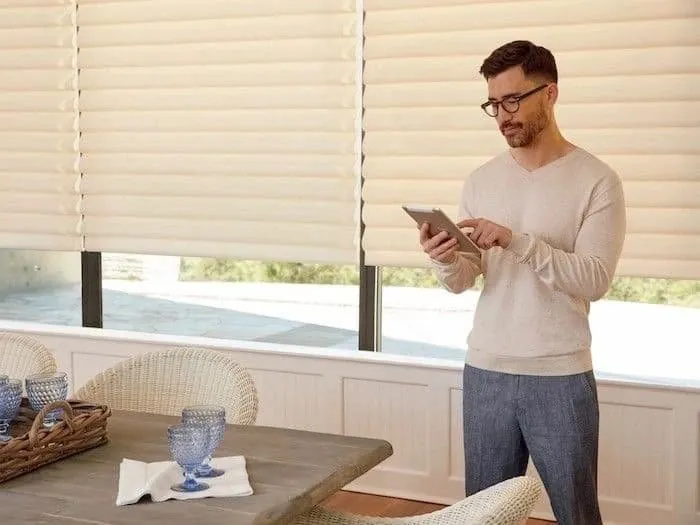
Control from a tablet
Rooms, groups and timetables, all laid out in PowerView on whatever screen is nearest.
The showroom comes up your driveway
Canton is served as a shop-at-home territory, so the starting point is always your house rather than a storefront. That is no hardship for motorized shades. How a fabric looks against your walls, how much glare a screen cuts on your own window, which shades ought to move together: those things can only really be judged on site. Our vans carry the samples, and we bring the showroom to you.
Here is how a shop-at-home visit runs:
- You request a consultation online, or use the call button, and we arrange a time that suits you.
- A consultant parks the sample van at the top of your drive and tours the rooms with you, beginning wherever the reach is worst.
- You hold fabrics up to your own glass, in the light each room actually gets, and compare opacities side by side.
- Together we sort the windows into groups that ought to travel as one, and think about who in the house will run them and how.
- Every opening is measured, with the frame depth checked for the headrail.
- A free estimate follows for the shades and fitting on your list, and there is no deadline for deciding.
- Hunter Douglas builds the order, and our Hunter Douglas certified installer hangs each shade, teaches it where to stop, links it to the remote and the app, and programs a first timetable with you.
There is more about the visit on our in-home consultations page and our shop-at-home page for Canton.
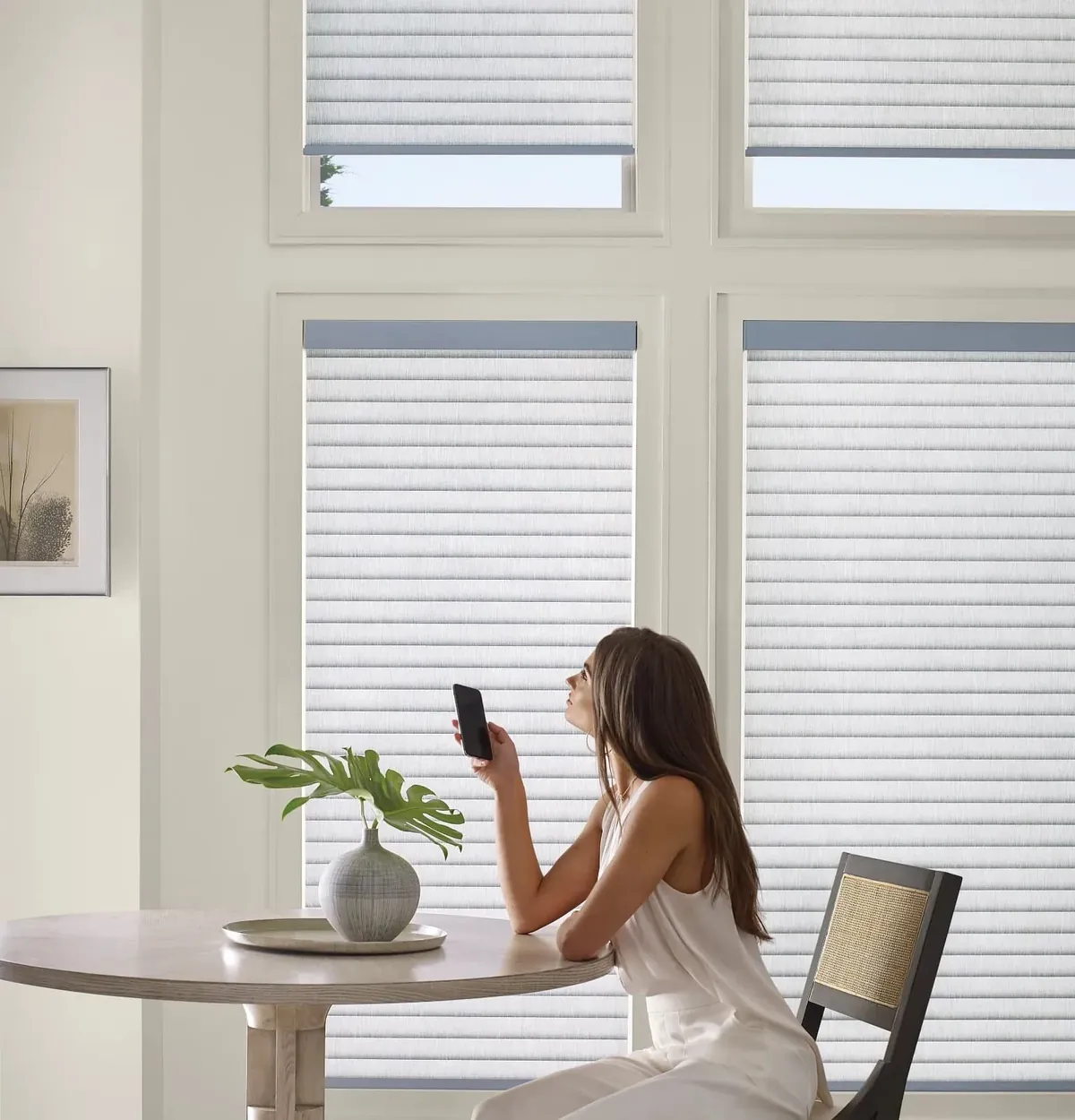
Hillside houses on the Blue Hills side
The newer houses toward the Blue Hills sit well up from the road, with driveways that climb to reach them. Builders on those lots tend to make the most of the elevation, with tall windows, transoms above the main glass and sometimes a two-story family room aimed at the trees and the hills beyond.
High windows like that are the classic case for a motor. Nobody can reach a transom or the upper row of a two-story wall, and a pole-operated shade at that height is clumsy at best. With PowerView, our installers fit the shade from proper staging once, set exactly where it should stop, and from then on it moves with everything else in the house.
Elevation also brings sun. A house that stands above its neighbors and the tree line gets light earlier and later than one in a hollow, and the west-facing rooms can be very bright toward the end of the day. Screen fabrics suit those windows, cutting the glare and heat while keeping the view of the hills. On a timetable, they lower as the sun comes round and rise again for the evening light.
Steep lots often mean a walkout lower level, too: a family room or office half underground at the front and fully open at the back, with a slider or a run of windows facing the yard. Those rooms can join the same system, so one press closes the whole back of the house.
Tall sash around Canton Center
The Victorians and older colonials near Canton Center were built with tall windows to pull daylight deep into high-ceilinged rooms. They are beautiful, and they are a stretch. On one of these windows the headrail usually sits beyond arm’s length, and a formal room with four or five of them multiplies the stretching.
Motorized shades suit them well. With nothing hanging at the side, the window trim stays clear, which matters on a house where the casings and mouldings have been carefully kept. Link a parlor’s worth of tall shades into one group and they lift in unison and halt level, so the facade reads evenly from the sidewalk.
Older windows bring the usual questions. Frames may have settled out of square, sash hardware can intrude into the opening, and layers of paint change the depth available. Each opening gets measured in several places, depth included, before anyone suggests tucking the headrail inside the frame. If the depth falls short, mounting on the face of the casing is the honest recommendation, and that is what you will hear from us.
Honeycomb shades are a strong choice on this kind of window, because the tall glass is often original and thin, and the cells place a layer of still air between it and the room. Roman shades suit the formal rooms, with folds that sit well against period trim.
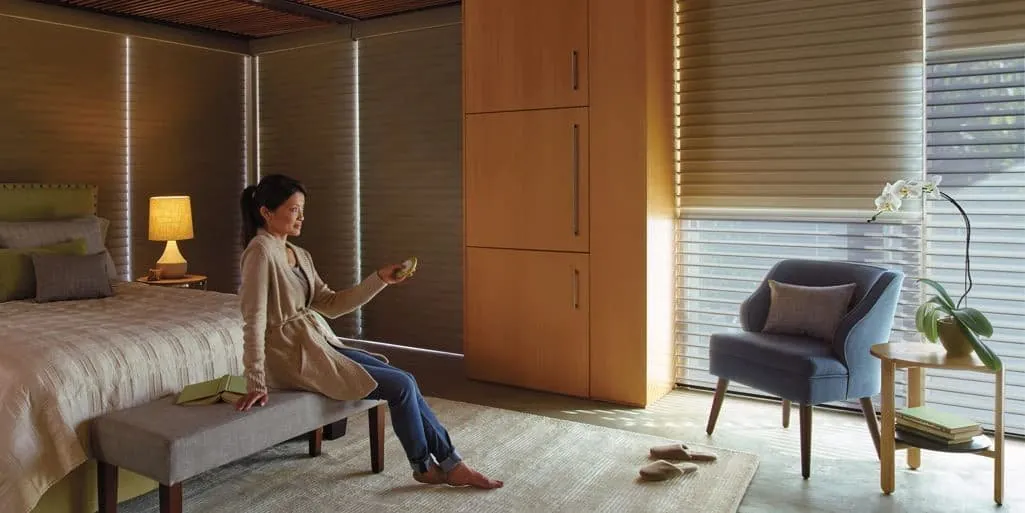
Capes and ranches through the middle of town
The post-war capes and ranches across the middle of Canton have smaller rooms and more ordinary window sizes, so reach is less about height and more about what is in the way. A sofa under the living room window, a bed under a dormer, a dresser in front of a bedroom window, a kitchen sink under the back window: every one of those means leaning over furniture or a counter to work a shade.
That is enough reason on its own for many households. A motorized shade over the sink or behind the bed takes a daily nuisance away. And because cape and ranch windows are standard sizes with square frames, they are straightforward to fit, with an inside mount nearly always possible.
The upstairs of a cape deserves a mention of its own. Bedrooms under the roof heat up in summer and cool down fast in winter, and their dormer windows are set into small alcoves that are awkward to reach. Honeycomb shades on a motor help with both: the cells moderate the temperature, and the motor means you never kneel on a bed to reach a cord again.
Many of these houses have been added to over the years, with a family room off the back, a sunroom or a finished space over a garage. The new rooms usually have bigger, more modern windows than the original house. All of them can share one remote and one app with the older rooms, so a cape with windows from several different eras still runs as a single, simple system.
Motorized blinds in Canton, MA: remote, app and timetable
There are three routes to moving a PowerView shade, and none of them rules out the others.
The remote
A small handheld remote, set up for one room, a group or the whole house. It needs no phone, no password and no instructions, which makes it the favorite for guests, grandparents and children. It can sit in a wall bracket so it is always where you expect it.
The app
Install PowerView on a phone or tablet and each room’s shades are listed together. From there you can send a single shade or a group to any height, then build the scenes and timetables that let the system run without you. Distance is no obstacle: it works from the next room or the next town.
Timetables
A timetable moves shades at the times you set: open the kitchen in the morning, lower the west side in the afternoon, close the street side at dusk. They carry on in an empty house just as in a full one, and if today needs to be different, the remote takes over for now while tomorrow’s routine stays as it was.
For the details, read how motorized shades are controlled; for deeper reading on timetables and scenes, there is window covering automation.
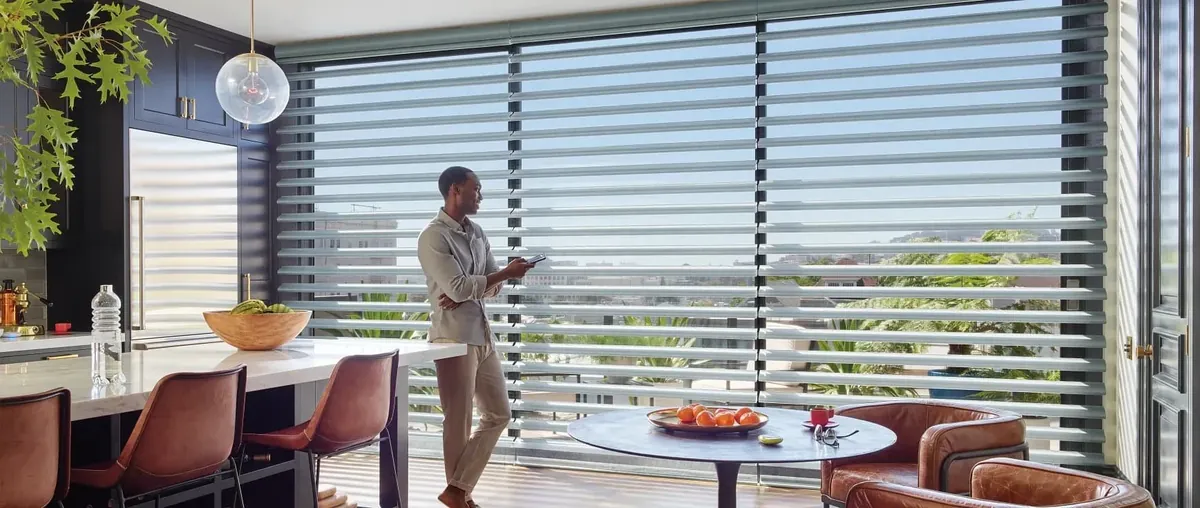
Scenes worth saving
Think of a scene as a saved arrangement: you name it once and bring it back whenever you like. Some that Canton households find useful:
- Morning. Kitchen and family room open, bedrooms left down.
- Glare. West-facing screens lowered halfway, everything else unchanged, for the late afternoon on a hillside house.
- Privacy. Every shade facing the road lowered, the back of the house left open to the yard.
- Movie. The family room fully closed, the rest of the house as it was.
- Goodnight. Every shade in the house lowered at once.
You can build these yourself in the app or have the installer set them up on the day. Either way, they are easy to change as your routine changes.
Choosing fabrics for each kind of room
A motor does not change the basic choice of fabric, but it does change how often a shade gets adjusted, and that makes some fabrics more useful than they would be on a manual shade.
Light-filtering fabrics suit living rooms and kitchens, where you want daylight with some softening and privacy. Because a motorized shade is easy to move, many households lower these part way through the day rather than leaving them fully up or fully down.
Room-darkening fabrics belong in bedrooms and any room used for screens. On a timetable they stay closed until the hour you choose, then rise gently.
Screen fabrics, which come in different degrees of openness in their weave, are the choice for a view you want to keep while the glare is cut. They make the most sense on the high, sunny windows of the hillside houses.
Sheers with vanes that tilt sit between all three, filtering light like a sheer curtain while giving privacy when the vanes close. During the consultation we put these side by side at your windows. See also our cellular shades in Canton and roller shades in Canton pages.
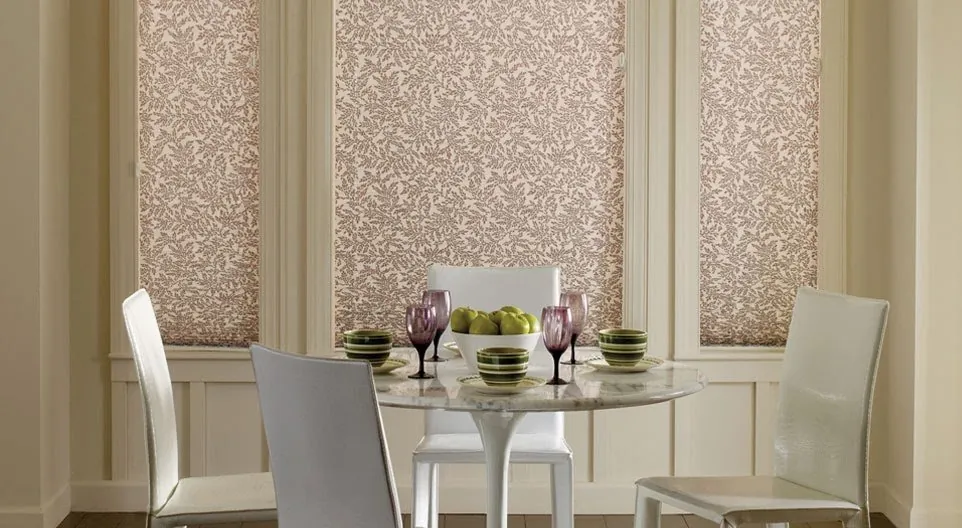
Kitchens, dining rooms and the working day
The rooms used most in a day are usually the ones with the most windows to manage. In the newer houses on the Blue Hills side, the kitchen, breakfast area and family room often share one long wall of glass that faces the back of the lot. In a Canton Center Victorian, the dining room may have three tall windows in a row, and in a mid-century ranch the kitchen window looks over the sink to the yard.
Each of those benefits from shades that move together. A breakfast-room timetable can open the shades as the household wakes, then angle or lower them when the sun moves onto the table. In a formal dining room, a row of tall shades lowered part way at dinner time gives the room a softer light without closing it off. Over the sink, a shade that rises with one press means no more leaning over the faucet.
Home offices are another reason many people look at motorized blinds in Canton. The desk usually faces or sits beside a window, and for part of every day the sun lands on the screen. Blinds on a motor let you tilt the slats from the chair to cut that glare while keeping a view, and a saved scene closes the window behind you before a video call so the camera is not looking into bright light. In an older house, where an office might be a small room with one tall window, a single shade on a motor does the same job.
When you plan these rooms, think about which windows ought to move as a set and which you might want to move on their own. We will sketch out sensible groups with you during the consultation, so the remote and the app make sense from the first day.
No cords at the window
Motorized shades have no cords hanging at the side. In a house with small children or pets that is a real safety improvement, and in an older house it keeps the trim clean and uncluttered. A motor also lifts the shade straight and evenly every time, so the fabric wears more evenly than one tugged at an angle.
If you have a shade already that has stopped working properly, motorized or not, ask about blind and shade repair in Canton.
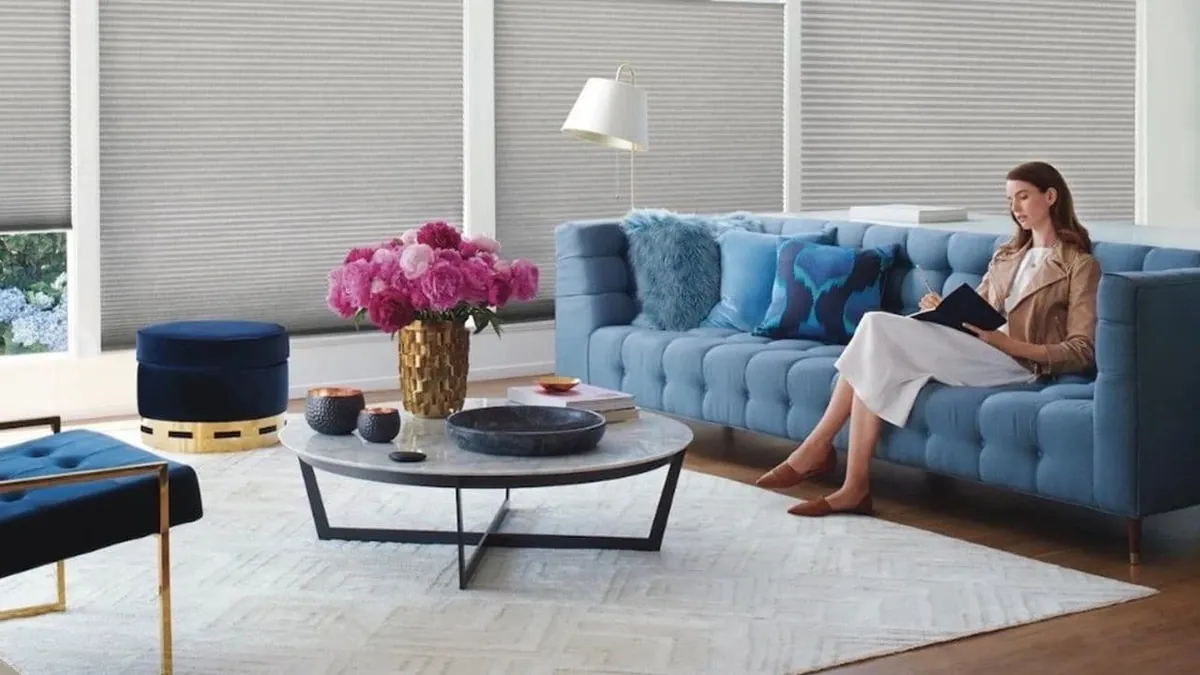
A Hunter Douglas Gallery dealer at your door
Hunter Douglas gives the Gallery dealer designation to dealers who meet its standards, and Blinds & Designs is one of them. For motorized blinds in Canton, that means the full range is available: PowerView on honeycomb, sheer, roller, screen, roman and blind styles, so the hillside family room and the Victorian parlor can each have the shade that suits it, all on one system.
Hunter Douglas certifies the installers who hang our shades, and nobody leaves until each motor has been programmed and tried. Interior design consultations are available too, and estimates cost nothing. Browse the wider collection on the motorized blinds and shades page, or see all our Canton services on the Canton page.
Questions from Canton
Is there a store in Canton I can visit?
Canton is a shop-at-home territory, so we come to you. Our vans carry the samples, and the consultation happens at your own windows, which is the best place to choose motorized shades anyway. If you would rather see a showroom, our nearest is in Franklin.
Can you fit shades on the high windows of a hillside house?
Yes. Our certified installers work from safe staging on transoms and two-story glass, set each shade’s limits and pair it with your remote and app. After that, you never need to reach it again.
Will a motorized shade fit my Victorian’s old window frames?
Often, yes. Because the motor lives in the headrail, everything turns on how deep the frame is. We measure every window and recommend an inside mount where there is room, or a slim mount on the casing where there is not.
Can I control the shades when I am not at home?
Yes. The PowerView app moves shades from wherever you are, and timetables keep running on their own while the house is empty.
How much does the estimate cost?
There is no charge. Once your windows are measured, the estimate for motorized blinds in Canton comes free of cost.
Book a visit at your own windows
The quickest way to see what a motor can do in your house is to request a consultation. We will bring the samples up your driveway, look at the windows you find hardest to manage, measure and give you a free estimate. Prefer to talk first? The call button reaches us directly. And if you would like to see a showroom before we visit, the Franklin showroom is our nearest.