
Set back under the trees
Most of Westwood’s houses sit well back from the road on wooded lots: post-war colonials with symmetrical fronts and center halls, and larger newer houses with great rooms, home offices and wide runs of glass at the back. Almost all of them have standard modern openings, square and of a sensible depth, which makes them some of the easiest windows to fit.
What sets the town apart is the canopy. Heavy tree cover across most of Westwood means many rooms get filtered, shifting light rather than direct sun, and the amount of it changes completely between July and January. Choosing roller shades in Westwood, MA, starts with that light: how much there is, when it arrives, and how the leaves change it.
Generous setbacks also mean the windows are a long way from the street. Privacy from passers-by rarely drives the choice here. Daylight, glare on a screen, darkness for sleep and the look of the house from the end of the drive matter more.
Beyond the plain roller
Every visit includes the standard Designer fabrics, from light filtering to blackout, plus solar screens and banded shades. These three options are worth asking about in a Westwood house.
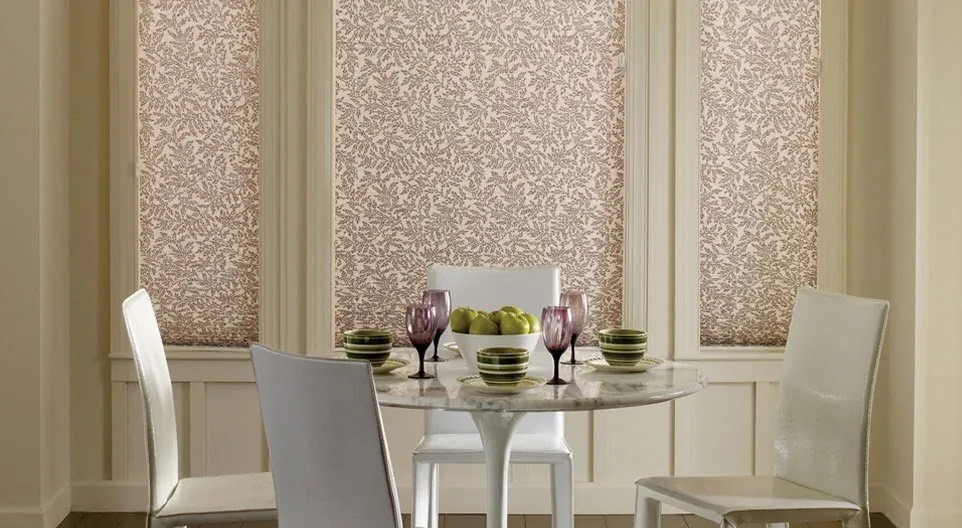
Sonnette cellular roller
A roller formed from a curved cell of fabric, with a softer, fuller look than a flat panel. Handsome in a colonial living room.
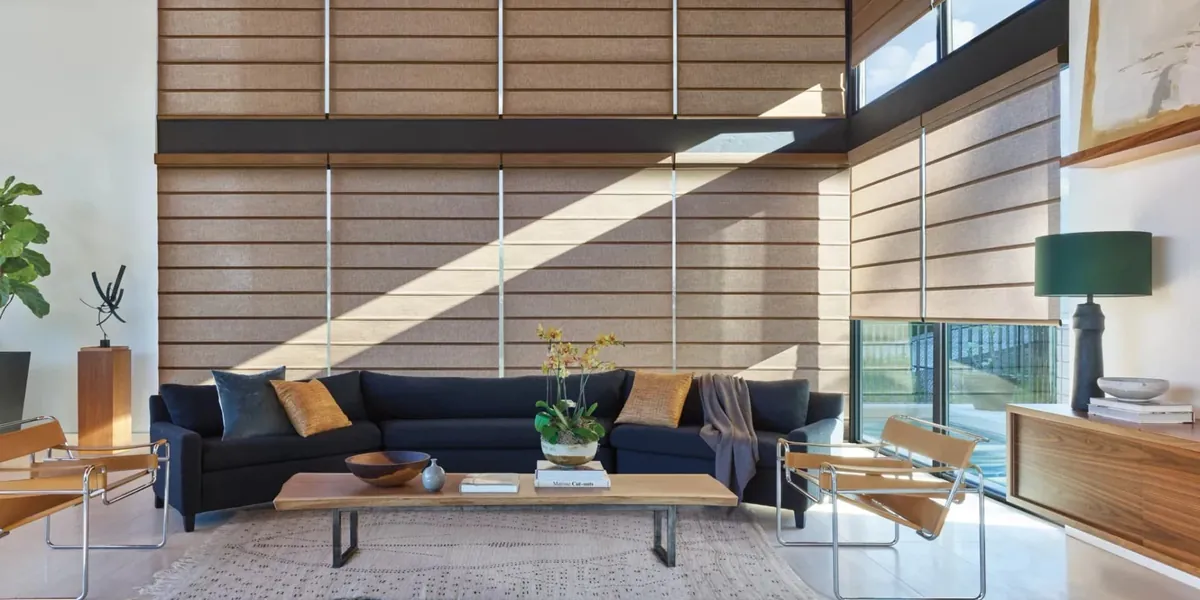
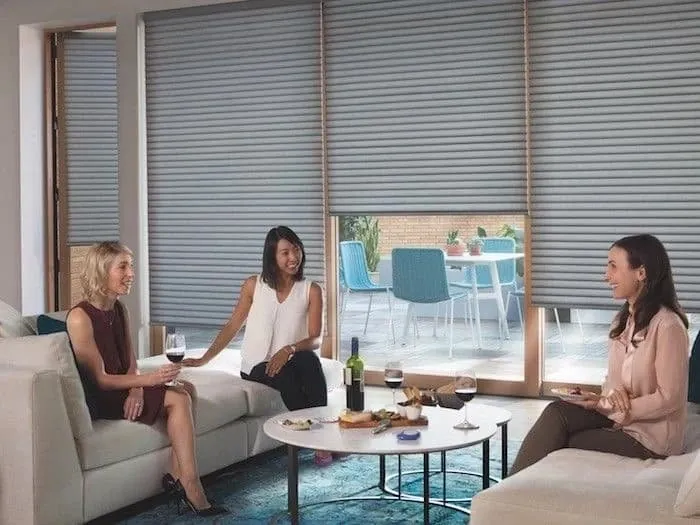
Alustra Architectural
Premium designer fabrics for the big glass in a newer great room.
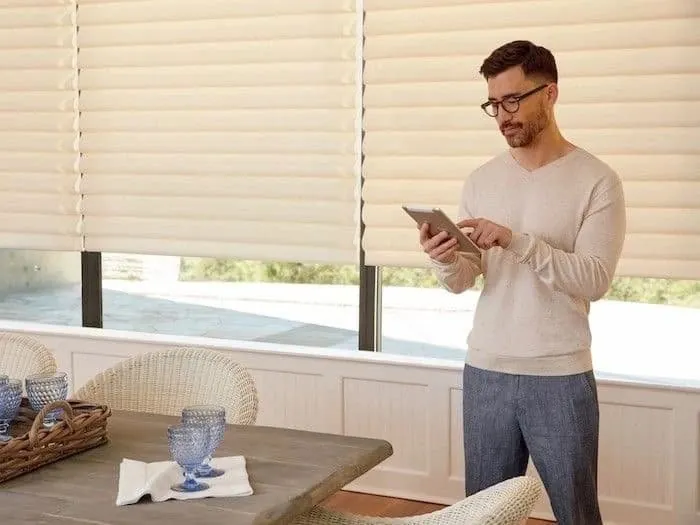
PowerView motorization
Shades run from an app, a remote or a schedule, room by room or across the whole house.
Samples at your windows
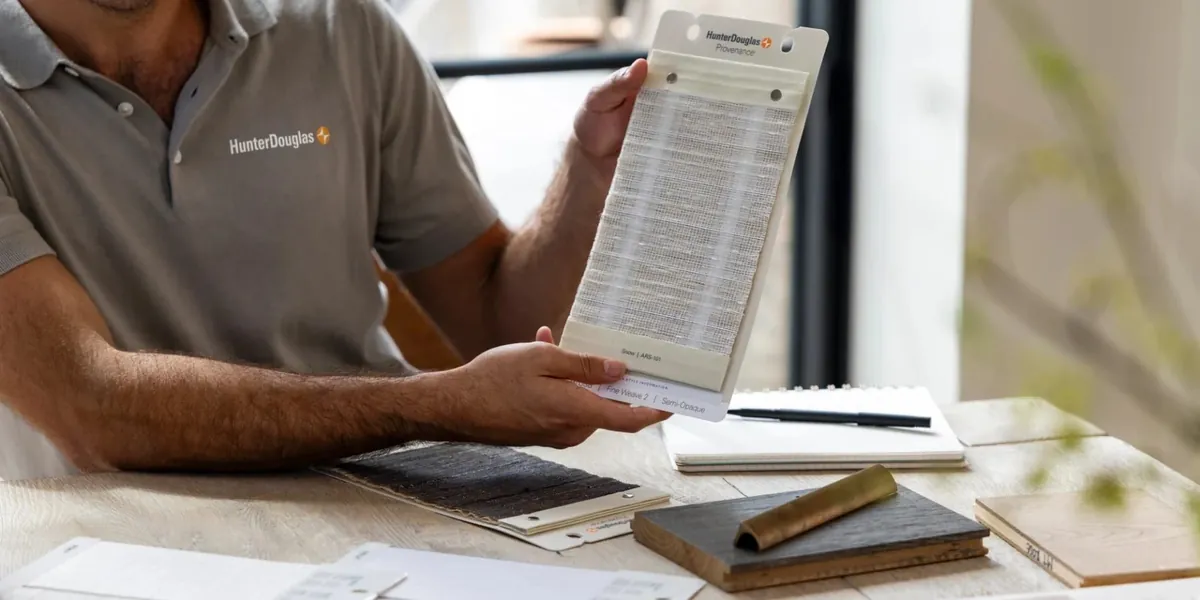
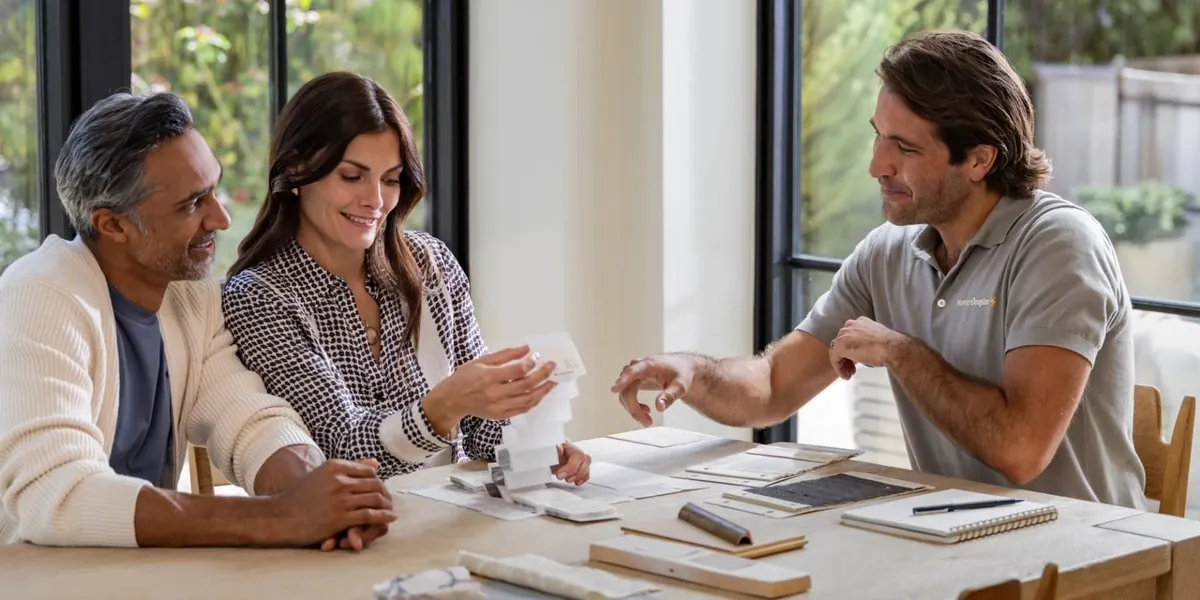
In Westwood we lead with an in-home consultation. Fabric under trees looks nothing like fabric under shop lighting, and the only fair test is your own room at your own time of day. Our vans carry the full roller range, so the samples travel to you.
- Ask for a visit with Request a Consultation, or use the call button.
- A consultant arrives with roller, screen, banded, Sonnette and Alustra samples.
- You talk through each room: how bright it gets, when, and what you use it for.
- Swatches go up at the windows so you see how each one handles your light.
- Each opening is measured and its depth recorded.
- A free estimate follows, and the decision is yours to make in your own time.
Read more about in-home consultations. If you want to see shades in person first, Franklin is our nearest showroom.
Living with heavy tree cover
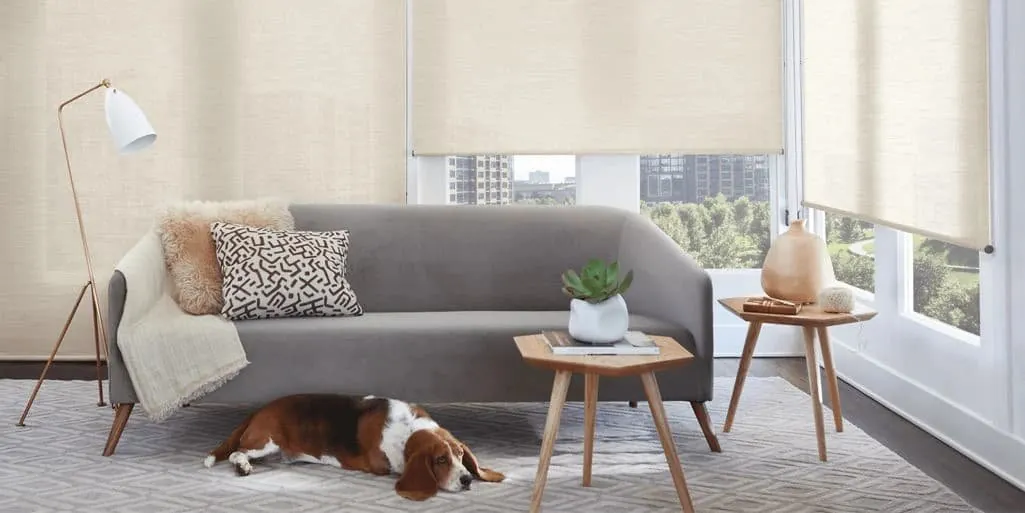
Under a full summer canopy, a lot of rooms in Westwood get less direct sun than you might expect. Light comes through the leaves in patches, green-tinged and moving with the wind. That has a few consequences for a roller.
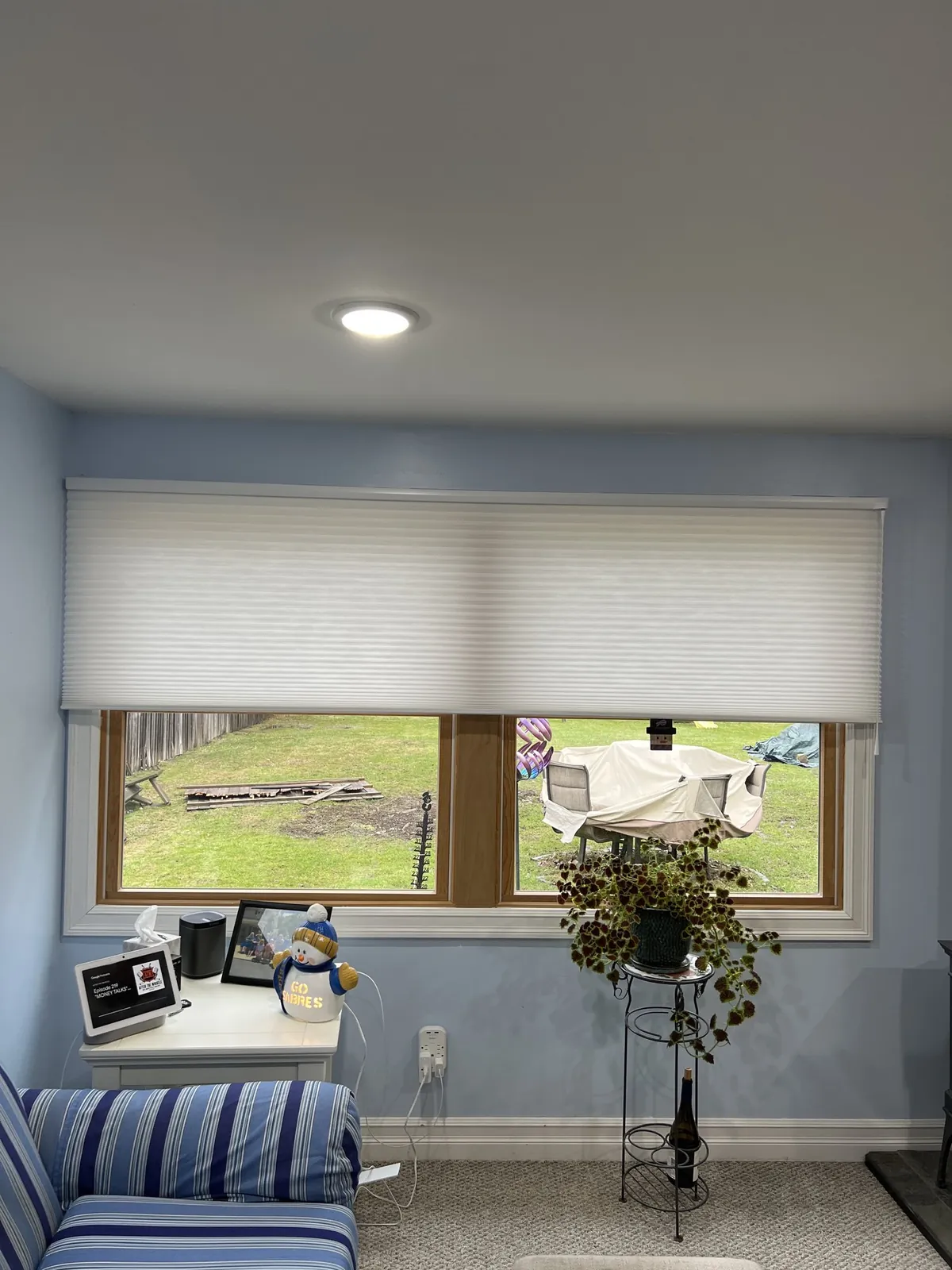
First, dark fabrics are rarely needed in living spaces. A room that is already shaded by trees loses brightness quickly under a dense cloth, so pale light filtering rollers are the common choice for living rooms, kitchens and dining rooms. They give daytime privacy and keep every bit of the light.
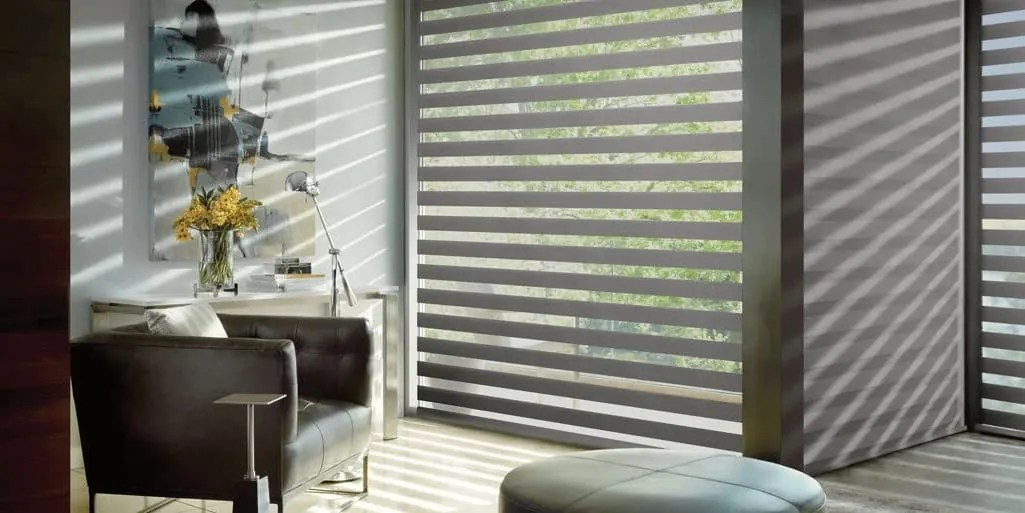
Second, glare comes in flickers rather than a steady blaze. A gap in the canopy can throw a moving patch of sun across a television or a desk for half an hour each afternoon. A tight-weave solar screen is good at calming that without dimming the whole room.
Third, the picture flips in winter. With the leaves down, the same windows let in low, direct sun through bare branches, sometimes deep into the room. A fabric that seemed unnecessary in August may be welcome in December. We talk about which trees around your house are deciduous and which are evergreen, because pines and hemlocks keep shading the glass all year.
Post-war colonials
The post-war colonials that fill much of Westwood follow a familiar plan: a center hall with a living room on one side and a dining room on the other, a kitchen at the back, bedrooms upstairs. The front windows are usually symmetrical, two pairs downstairs and a row upstairs, all the same size.
That symmetry is a gift for a roller order. Shades made to matching sizes, in the same fabric and set to one height, make the front of the house look calm and deliberate. Inside mounts suit the standard frames, tucking the headrail up behind the casing so only the fabric shows.
Many of these colonials have had a sunroom or screened porch added on one side. A sunroom with glass on three sides takes more light than any other room in the house, even under trees, and a solar screen there keeps the view of the garden while cutting the glare. A screened porch suits a darker screen fabric, lowered on the side where the afternoon sun reaches.
Bedrooms upstairs in a colonial are usually simple: a pair of windows, sometimes a third on a side wall. A room darkening roller covers most needs. Blackout is the choice for a nursery or for anyone who sleeps late.
The larger newer houses
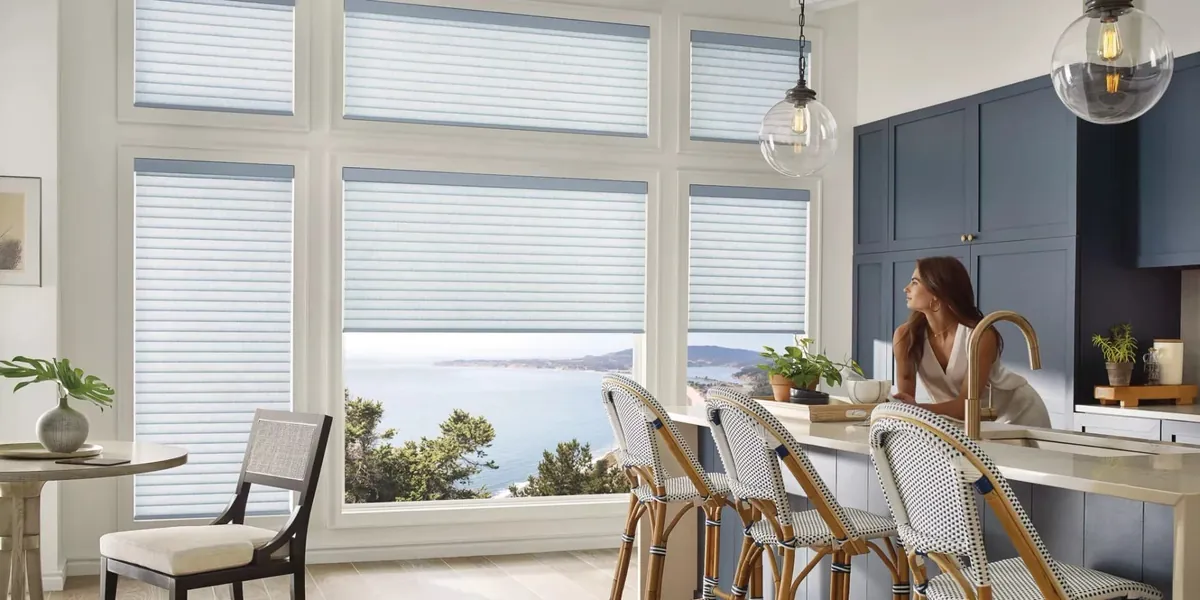
The newer houses on bigger wooded lots tend to open up at the back. A great room with a wall of windows, sometimes running up two stories, faces the woods. A kitchen with an island looks the same way. There is often a home office at the front, a mudroom by the garage and a primary suite with its own sitting area.
The great room is where most of the thinking goes. Tall glass facing the trees can be dim in summer and bright in winter. A light filtering roller or a screen in a lighter color keeps the room bright year round and cuts the winter glare. If the upper windows are out of reach, PowerView makes them practical, and grouping the shades lets the whole wall move at once. Alustra fabrics suit glass of that scale.
Home offices need glare control on a monitor more than anything. A tight screen handles it, keeping enough light to work by. For video calls, a light filtering roller on the window behind your desk keeps you from becoming a silhouette.
For roller shades in Westwood, MA, in a newer house, we often plan by orientation as well as by room, since the back of the house may face open woods while the front sits under the biggest trees.
Decks, sliders and the mudroom door
Wooded lots usually mean a deck or patio at the back, reached through a slider from the kitchen or the family room. Under trees, that slider is often the brightest opening in the room, because it is the largest. A roller across it needs to clear the handle and leave the door free to run; many customers choose two rollers, one over the fixed panel and one over the sliding side, so they can step outside without raising the lot.
French doors to a patio can each carry a slim roller fixed to the door itself, so the shade travels with the door as it swings. The same goes for a mudroom or side door with a glass panel: a small roller on the door gives privacy at night and keeps the door’s glass from becoming a dark mirror after sunset.
Sliders and doors facing the woods often look onto nothing but trees, so a screen fabric that keeps that view while trimming the glare of a low winter sun is a popular pick. Choosing roller shades in Westwood, MA, for the back of the house tends to be about framing the woods rather than hiding from anyone.
Bedrooms and early light
The bedrooms in both the colonials and the newer houses usually sit upstairs, with windows that look into the tree canopy. In summer, the leaves shade them well, and many bedrooms stay dim into mid-morning without any shade at all. Then the leaves fall, and an east-facing bedroom can be lit up at dawn through bare branches.
A room darkening roller covers that for most people, keeping the room comfortably dim while letting a little light round the edges. For a nursery, or anyone who works nights, blackout cloth is the honest recommendation, and an outside mount that overlaps the casing reduces the light at the sides.
Bedrooms in the primary suite often have a sitting area with its own window or a pair of windows. A light filtering roller there, separate from the darker shades by the bed, lets the sitting area stay bright while the rest of the room is dark.
What the house shows the road
Generous setbacks mean a Westwood house is usually seen whole, from the end of a long driveway. At that distance, nobody can see into the rooms, but everyone can see whether the shades are even.
Matching fabrics on the front windows, or fabrics with a neutral backing, keep the facade quiet. Shades set to the same height finish the look. On a colonial with a symmetrical front, that matters even more, because one shade at a different height breaks the pattern.
PowerView schedules make it easy: every front shade can lower to the same point at dusk and rise again in the morning. At the back, facing the woods, nobody sees the house at all, so you can choose more freely: a bold color in a playroom, blackout in a guest room, a screen across the great room.
Opacity under the trees
Here is how the roller fabrics usually fall in a Westwood house.
- Light filtering, in pale colors: living rooms, dining rooms, kitchens and most rooms under heavy shade.
- Solar screen: sunrooms, offices and any room where moving glare reaches a screen.
- Room darkening: most bedrooms, and media rooms that are used in the evening.
- Blackout: nurseries, and bedrooms for late sleepers or night-shift workers.
Because the tree cover keeps most rooms soft, Westwood orders often lean more toward light filtering than a sunnier town would. We bring a full range anyway, because one window with a gap in the canopy can need something quite different from the window beside it.
Screens once the leaves are down
Solar screens are woven with small openings, and the openness of the weave decides the balance between view and glare. In a wooded town, it is worth choosing that balance for the bare months as well as the leafy ones.
A more open weave keeps the woods in clear view, which many people value most in winter when the trees are bare and the view opens up. A tighter weave controls the low winter sun better. Darker colors are easier to look through; lighter colors brighten the room but look hazier.
Many Westwood customers settle on a medium weave in a darker color for the great room or sunroom, so the view stays crisp in every season and the winter sun is softened. We bring several to compare, and if the visit is in summer, we talk through how each will behave once the leaves have fallen.
Measuring standard openings
Standard openings make fitting simple, but we still measure every window. Two frames that look alike can differ slightly, and a roller made a fraction too wide will rub.
- Width is taken at three heights, and an inside-mounted shade is made to the narrowest reading.
- Height is taken at both sides and the middle.
- Depth is checked where the headrail sits, noting any crank handles or locks.
- Mount, roll direction and controls are agreed with you before ordering.
- Hunter Douglas certified installers fit the shades, level them and test each one.
Once the shades are in, the installer shows you how they work and sets up any PowerView remotes or schedules. You can read about what happens on installation day before we come.
Pollen, dust and easy care
A house surrounded by trees gets its share of pollen in spring and leaf dust in autumn, and windows left open on a mild day let some of it settle on whatever hangs in front of them. A roller is one of the easiest shades to keep clean in that setting: the fabric is flat, there are no slats or pleats to collect dust, and it rolls away out of the air when it is up.
A soft brush, or a vacuum on a low setting with a brush head, takes care of most of it. Some fabrics can be spot cleaned, and we point those out when you are choosing, especially for a kitchen or a mudroom door. Our guide to caring for fabric shades has more on looking after them.
Rollers alongside other shades
A roller does not have to cover every window. Many Westwood houses combine them with other Hunter Douglas shades: rollers in the great room, kitchen and office, and honeycomb shades in bedrooms on the cold north side, where the extra warmth is welcome in a house under deep shade. Our page on cellular shades in Westwood covers those.
In a formal living or dining room, a roller behind drapery or a roman shade can give the softer look the room wants, with the roller handling light. See roman shades in Westwood, and every service in town on our Westwood page.
Why a Hunter Douglas Gallery dealer
Blinds & Designs is a Hunter Douglas Gallery dealer, Hunter Douglas’s own title for dealers who meet its standards. For roller shades in Westwood, MA, it means one visit covers the whole range: Designer Roller, Designer Screen, Designer Banded, Sonnette and both Alustra collections, with PowerView.
Every shade is fitted by our certified Hunter Douglas installers. If one needs attention years from now, see blind and shade repair in Westwood. Our main roller shades page describes each line, and we also offer interior design consultations for help with the whole room.
Questions from Westwood
My house is heavily shaded by trees. Which roller fabric suits it?
Usually a pale light filtering cloth in living spaces, so the rooms keep their light. Bedrooms still take room darkening or blackout, and rooms where gaps in the canopy throw glare onto a screen suit a tight solar screen.
Will the shades need to change when the leaves fall?
Not the shades, but the choice should allow for it. Winter sun through bare branches is low and direct, so we pick fabrics that handle both seasons.
Do standard windows still need a measuring visit?
Yes. Similar frames can differ slightly, and each roller is made to its opening. Measuring also lets us check depth for an inside mount.
Is there a showroom in Westwood?
No. We bring the samples to your house. Franklin is the nearest showroom if you would like to see shades before the visit.
Is the estimate free?
Yes. After measuring, we give you a free estimate with no obligation.
Your next step
Trying roller shades in Westwood, MA, against your own windows is the best way to choose. Request a consultation and a consultant will bring the roller range to your house, measure each window and leave you a free estimate. You can also reach us through the call button, or see shades first at the Franklin showroom.