
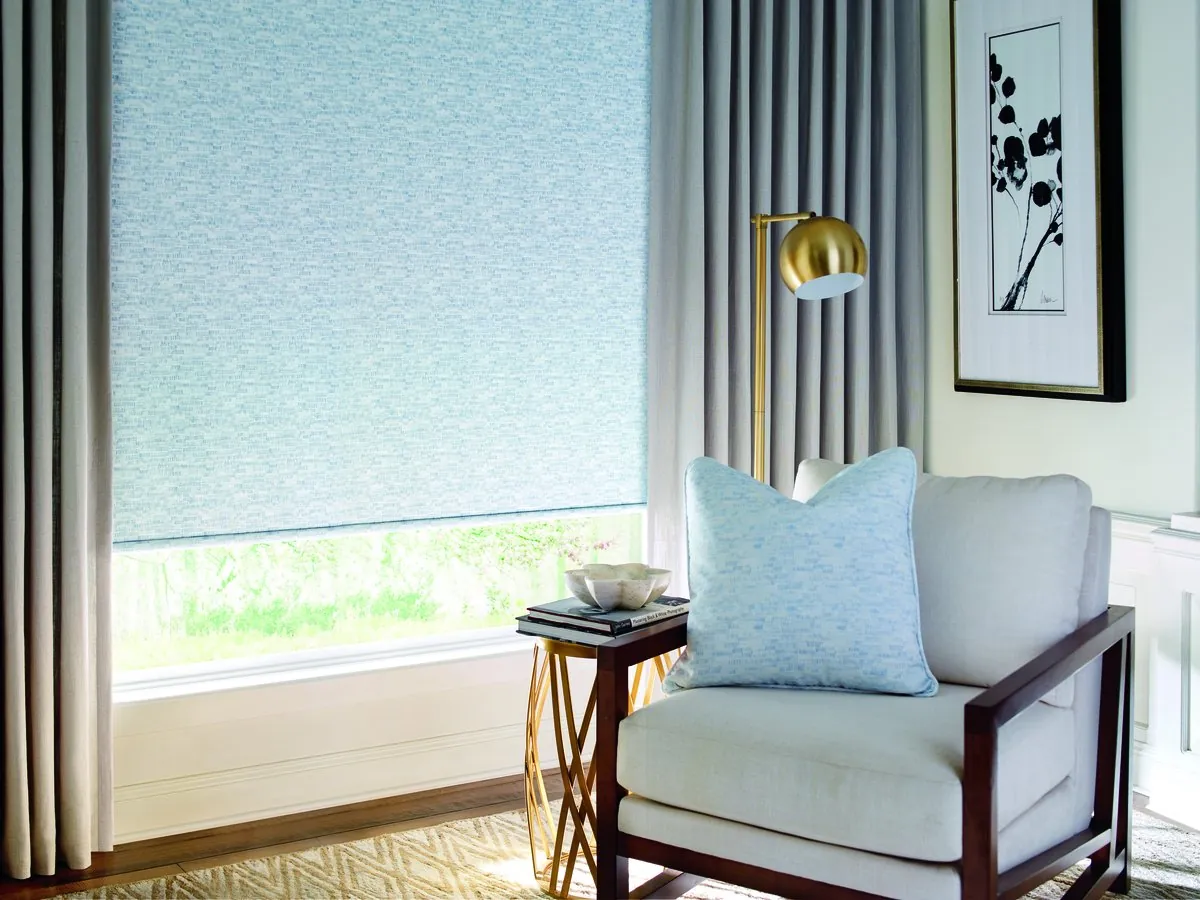
Deep reveals and tall, narrow sash around the center
The antique colonials and Victorians around Holliston’s center have windows set deep into their walls. Look at one from inside and the sash sits well back from the room, with a broad reveal of plaster or wood on every side. Add the tall, narrow proportions of the sash itself and you have openings that look handsome and behave awkwardly. They are the windows that shape most of our thinking about motorized blinds in Holliston, MA, for a house in the historic center.
A deep reveal has two sides to it. It gives a shade a generous place to sit, so the headrail can tuck right up inside the opening and the fabric can disappear into the frame when it is raised. But it also pushes the shade back from the room, so working it by hand means leaning across a wide sill, often over a radiator or a plant or two. On a tall, narrow window the reach is upward as well as forward.
A PowerView motor takes the reach away. The shade moves from a handset or the app, travels the full height of the sash and stops wherever you like. Narrow windows that come in pairs or rows can be grouped, so they rise together and line up neatly within their reveals.
Motorized blinds for Holliston windows: three good matches
Every one of these can carry PowerView, so you choose the look that suits the room and add the motor to it. These are the three we find ourselves recommending most in the center and out along Washington Street.
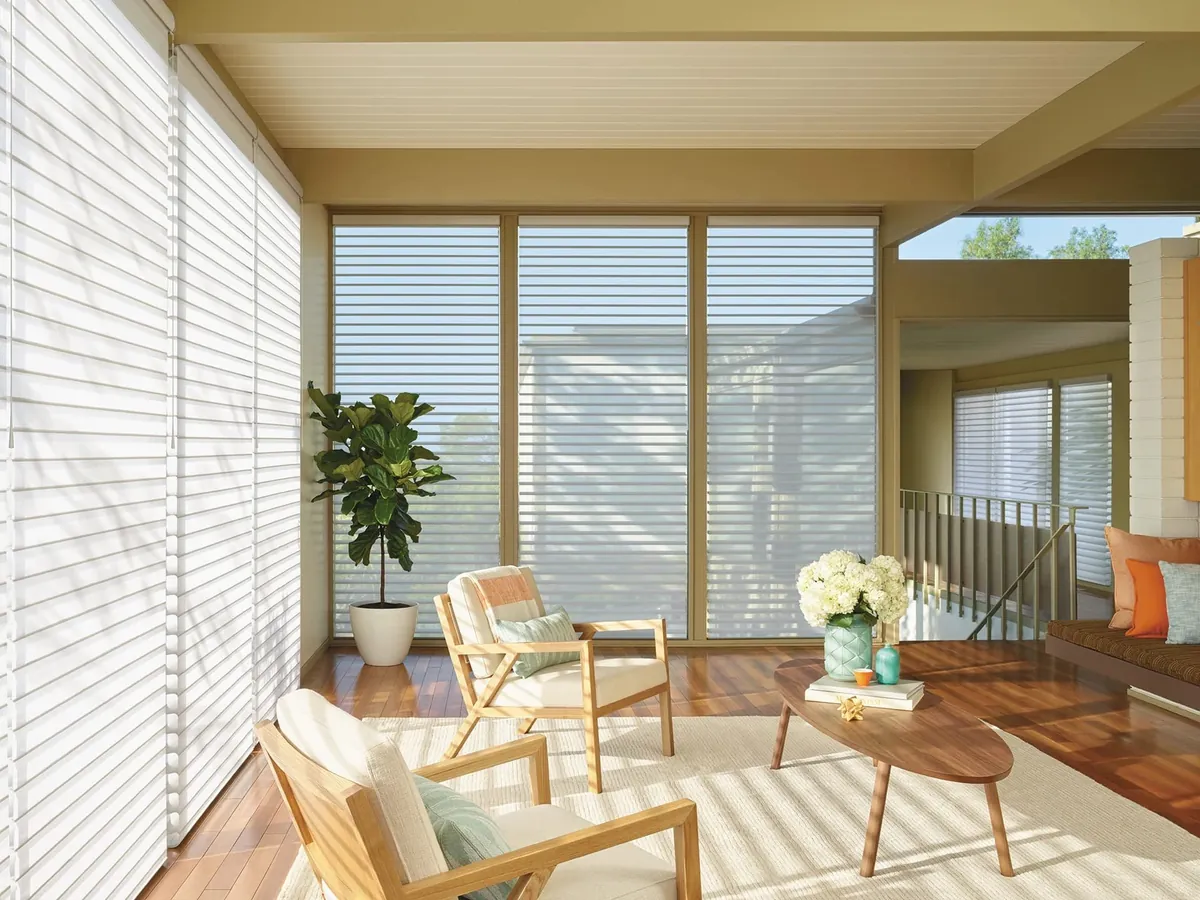
Sheer shades
Vanes that tilt to soften the light, a graceful fit for tall sash and the bigger glass in a newer colonial.
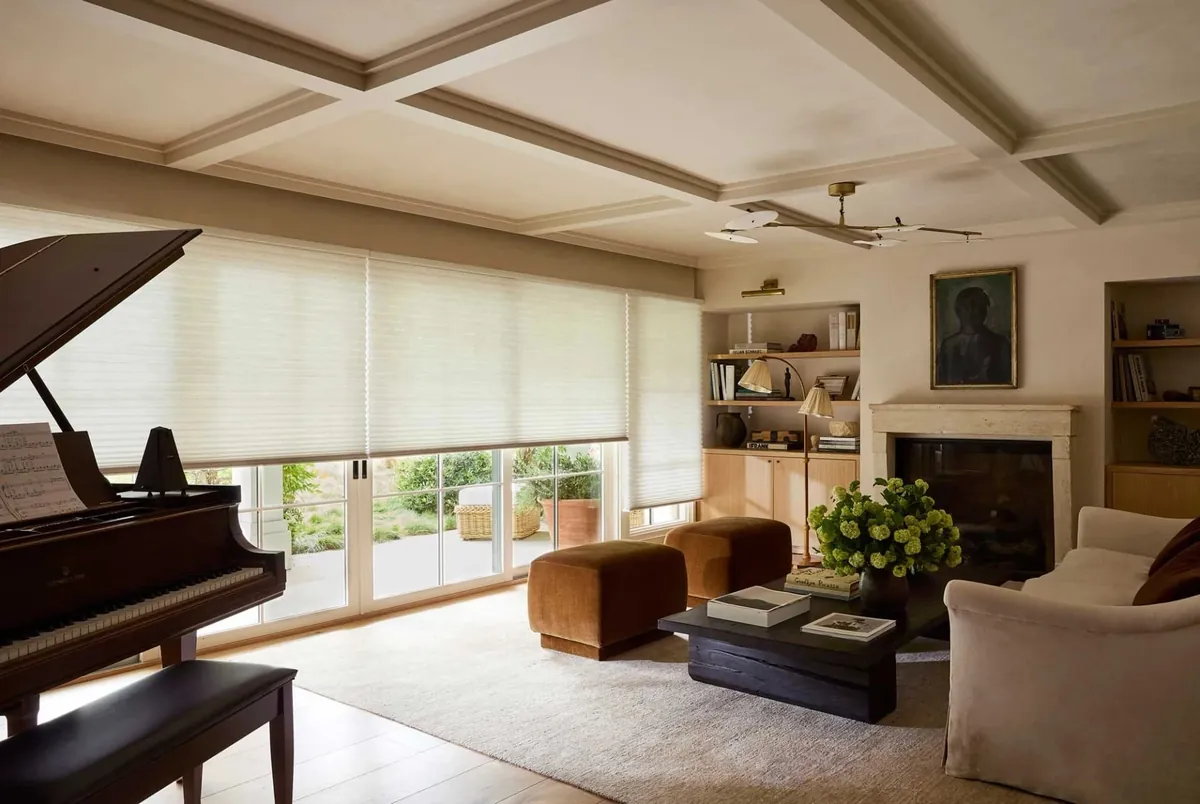
Cellular shades
Honeycomb fabric that can be made narrow and stacks slim, so it hides away inside a deep reveal.
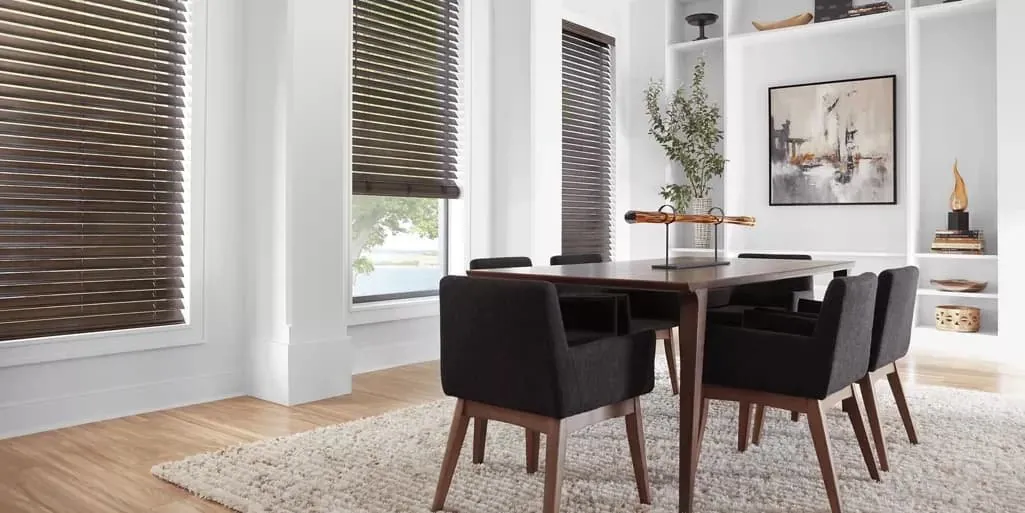
Wood blinds
Period slats for an antique dining room, tilted and lifted by the motor with no cords to tangle.
Making the most of a deep reveal
A deep reveal is about as good a home for a shade as a window can offer, provided the reveal is true. In the historic houses around the center, it often is not. Walls settle, frames shift, and a reveal that measures one depth at the top can be shallower at one side where a sash stop or a pulley housing juts out. A motorized headrail needs a solid, level seat, because it will be raising and lowering the shade every day without a hand to guide it.
So we measure each reveal at several points across the head, as well as the width at the top, middle and bottom and the height on both sides. We look for anything that would brush the fabric as it travels: sash locks, old hardware, interior storm panels, layers of paint on the stops. When the reveal is clear and square enough, the shade goes inside, and the old casing stays fully on view. When it is not, a mount on the casing can be the neater solution, and we show you what that would look like before you decide.
One pleasant result of an inside mount in a deep reveal is that the raised shade almost vanishes. The stack sits up in the shadow of the head, the sash and its glass are left clear, and the window looks much as it did before anything was fitted.
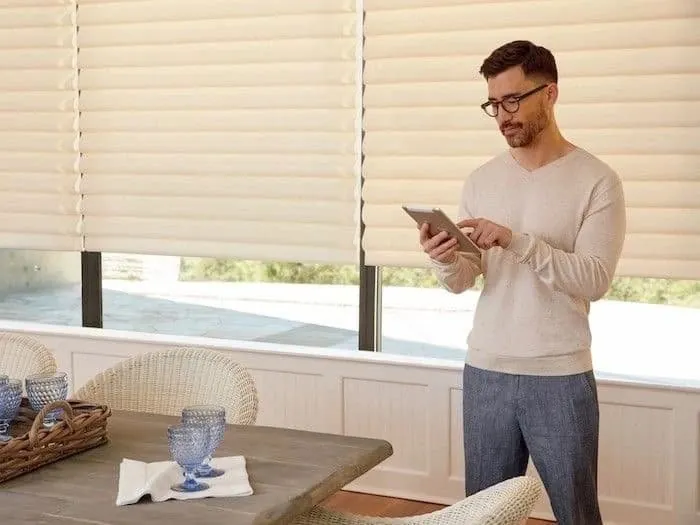
Keeping every bit of daylight
Deep walls and narrow sash already limit how much light reaches the middle of an antique room. The last thing a window like that needs is a shade that hangs down over the top of the glass when it is supposedly open. That is why the stack matters so much on these houses, and why the motor helps more than you might expect.
With a manual shade on a tall sash, people often stop raising it all the way, because the cord is long and the top is out of reach. Over time the shade lives a third of the way down, and the room is darker than it needs to be. A motorized shade goes all the way up every time you ask, and a morning timetable can send it there before you come downstairs. For motorized blinds in Holliston’s older houses, that small habit makes a real difference to how bright the rooms feel through the day.
When you do want the light softened rather than blocked, sheer shades let you tilt the vanes while the shade stays down, and light-filtering honeycomb fabric keeps a room bright with the glare taken off.
The reach across a wide sill
The other side of a deep reveal is the sill in front of it. In the antique houses, sills are often wide enough to hold a row of plants, a lamp or a collection of old bottles. Behind them, at the back of the reveal, sits the shade. Every time it needs moving, someone leans over the sill, around whatever is on it, and up toward the top of a tall sash.
That is the everyday case for a motor in Holliston’s older houses. Once the shade answers to a handset or the app, the sill can hold whatever you like, and nobody has to reach across it again. A timetable can raise the shades in the morning and lower them in the evening, so the routine takes care of itself.
Where windows share a wall, which is common in a front parlor or a dining room, grouping keeps them together. Two or three tall, narrow windows rise at the same pace and stop at the same height, each within its own reveal.
Narrow sash, often in pairs
Tall, narrow sash were designed to bring light deep into a room while keeping the wall strong between them. In Holliston’s Victorians and antique colonials they often come in pairs flanking a fireplace or in rows across the front of the house.
Narrow windows put a premium on how the shade stacks. A bulky stack takes a large bite out of a slim opening, so we favor shades that fold or roll compactly. Honeycomb shades, roller shades and sheer shades all do well here; roman shades suit a parlor if you want soft folds; wood blinds have the right period feel for a dining room. On a motor, every one of them loses the cords that used to hang the length of the window.
We size each narrow window separately. Two that look identical from across the room can differ enough that one shared size would leave a gap or bind in the frame.
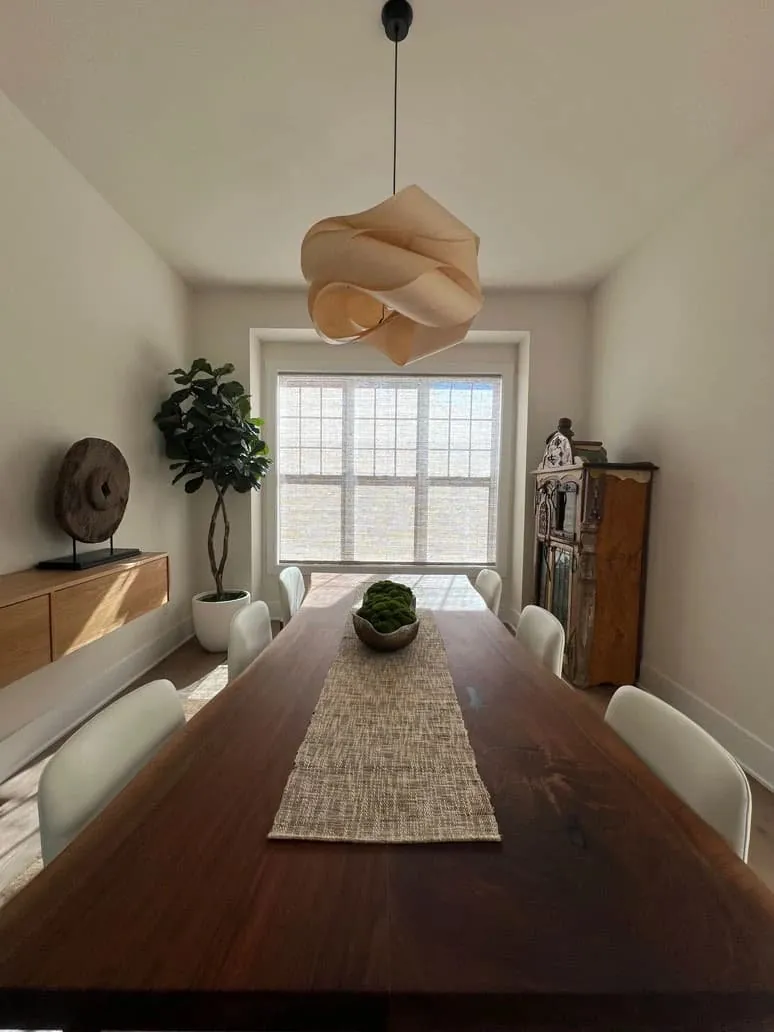
Newer colonials off Washington Street
Out along Washington Street, Holliston’s newer colonials sit on wooded lots in modern subdivisions. The windows here are standard sizes, the frames square, the depths consistent. Fitting is straightforward, and the conversation about motorized blinds in Holliston’s newer houses turns quickly to how the rooms are used.
A typical newer colonial has a tall entry with high glass, a stair with a landing window, a family room open to the kitchen with a wide run of windows toward the trees, and bedrooms upstairs with large windows. The high glass at the entry and the landing are usually first on the list, because they cannot be reached from the floor. The family room follows, since it takes the afternoon light just when it is most used.
The wooded lots add a seasonal twist. In summer the trees shade the house; once the leaves fall, low winter sun comes straight through. Timetables in the app can be shifted in a moment, so the family room group drops part way earlier in winter and later in summer.
Two kinds of house, one way of working
It is common in Holliston to plan an antique house near the center one month and a new colonial off Washington Street the next. The fitting could hardly be more different. One is all deep reveals, careful measuring and decisions about inside and outside mounts. The other is square frames and stock sizes.
The control side, though, is the same. PowerView treats every shade alike, whatever the window around it. An antique parlor’s grouped sheers and a new family room’s rollers both answer to handsets, the app and timetables, and both can be added to over time. That is part of what makes motorized blinds in Holliston practical for either kind of house.
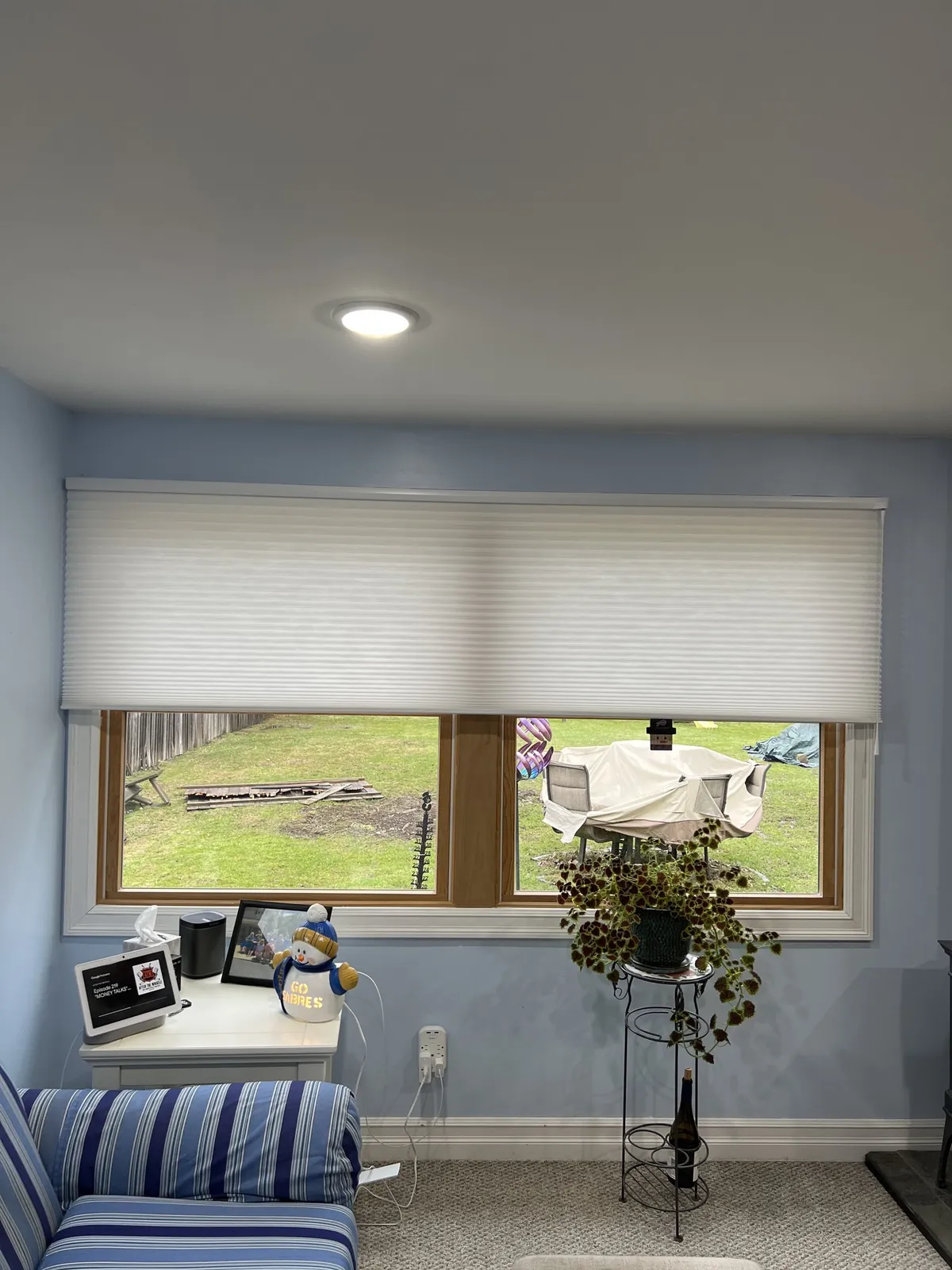
Handset, app or timetable
- Handsets suit rooms where you want a single button: a parlor with a pair of tall windows, a bedroom, a guest room.
- The app is where you set exact heights, group shades and save scenes, such as one that opens the downstairs reveals to the same height each morning.
- Timetables run the routine: entry glass up at breakfast, front rooms closed in the evening, bedrooms opening later at the weekend.
Most houses use a little of each. If you want to read up before the visit, how motorized shades are controlled explains the three in plain terms, and window covering automation goes into scenes and timetables. We decide how each motor is powered with you at the visit, window by window.
What to expect when we visit
Deep reveals cannot be judged from a photo, and nor can the way afternoon light falls through the trees onto a family room floor. That is why every Holliston consultation is at the house. Our vans carry samples, so the fabrics are chosen in the rooms where they will hang.
- Ask for a visit through Request a Consultation, or reach the Franklin showroom from the call button.
- We start at the window that gives you the most trouble, perhaps a tall sash behind a crowded sill or the high entry glass.
- Fabric samples are held inside the reveal so you can see how each one sits and filters the light.
- We plan groups and timetables with you, room by room.
- Each reveal is measured at several points, and any hardware or storm panels are recorded.
- A free estimate sets out the shades and the fitting.
- Hunter Douglas builds the shades to those measurements.
- Our certified Hunter Douglas installers fit them, pair them to their handsets and the app and program the first timetables with you.
To see what the day itself involves, read what happens on installation day.
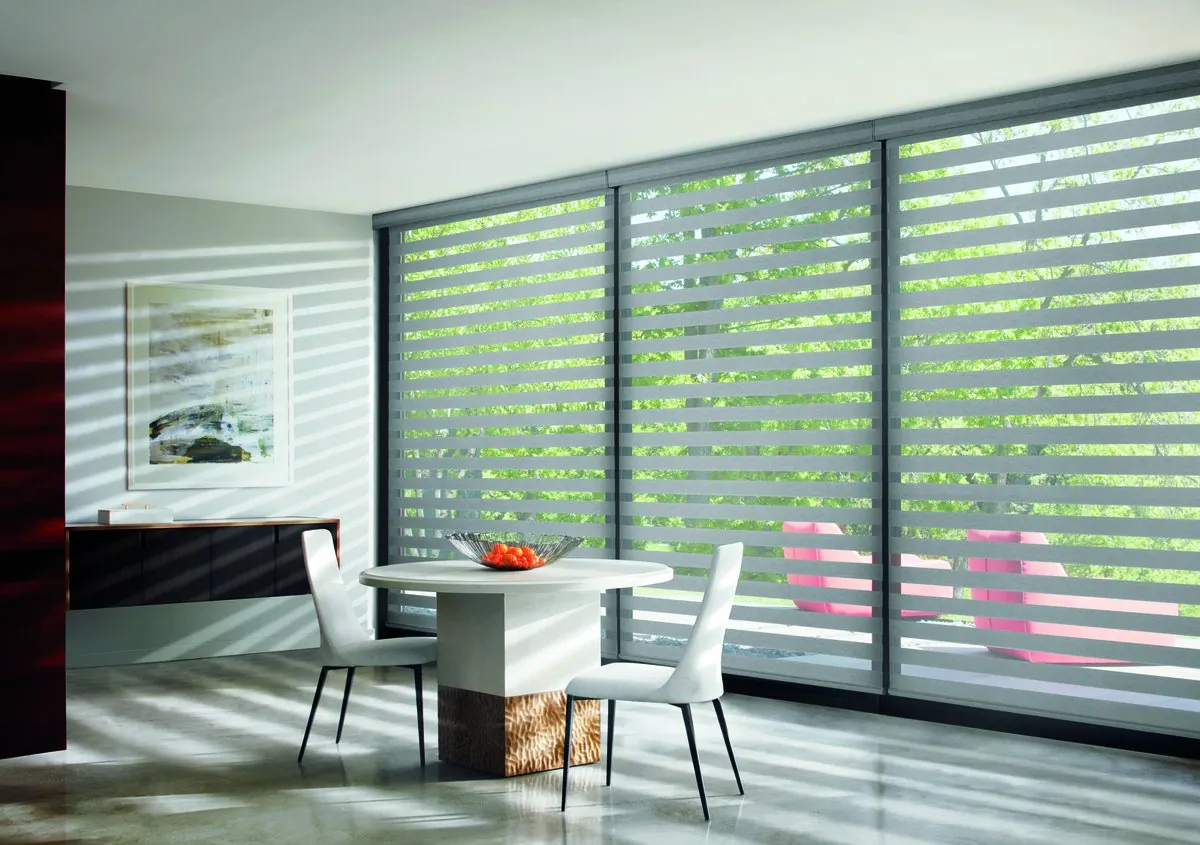
Stair halls in the older houses
Victorian and antique stair halls in the center often have a tall window at the turn of the stair, set deep in the wall like the rest. It lights the hall beautifully and is almost impossible to reach, hanging over the steps with a deep sill in front.
A motorized shade there joins whichever group makes sense. Many people link it with the front rooms so the whole front of the house opens and closes together. We measure stair windows with particular care, because the reveal and the trim around them are often the most irregular in the house.
Bedrooms, old and new
Upstairs in an antique colonial, bedrooms often have the same deep reveals and narrow sash as the rooms below, sometimes set lower in the wall under the eaves. In a newer colonial, bedroom windows are larger and more regular.
In both, room-darkening fabric made to fit the opening keeps out early summer light, and a morning timetable lifts the shades when you want the day to start. In a deep reveal, the shade sits snugly inside the frame, which helps it fill the opening neatly. A handset on the nightstand covers the mornings when you want to sleep in.
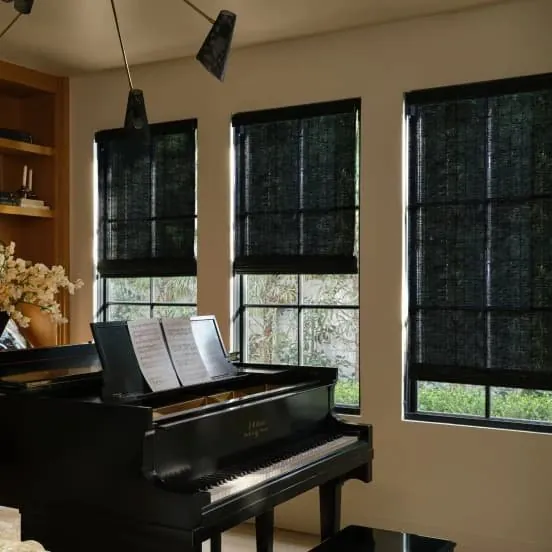
Kitchens and family rooms
In the older houses, kitchens often sit at the back with windows over a counter or sink, set into the same deep walls. A motorized roller or honeycomb shade there saves a daily stretch across the counter and the sill together.
In the newer colonials, the kitchen opens into the family room, usually with a slider to the yard. A vertical shade or vertical honeycomb shade suits the slider, and on a motor it can join the family room group so the whole back wall opens and closes as one.
Adding rooms as you go
Plenty of Holliston projects start with a few windows: the pair beside the parlor fireplace, the stair window, the entry glass. More rooms can follow whenever you are ready, whether that is the bedrooms upstairs or the family room in a newer colonial. New PowerView shades join the existing setup, using the same app and handsets, so nothing from the first round needs replacing.
The broader range lives on our motorized blinds and shades page, and all of our local services are on the Holliston page. For the older rooms, many homeowners also look at roman shades in Holliston and custom blinds in Holliston.
Working with a Hunter Douglas Gallery dealer
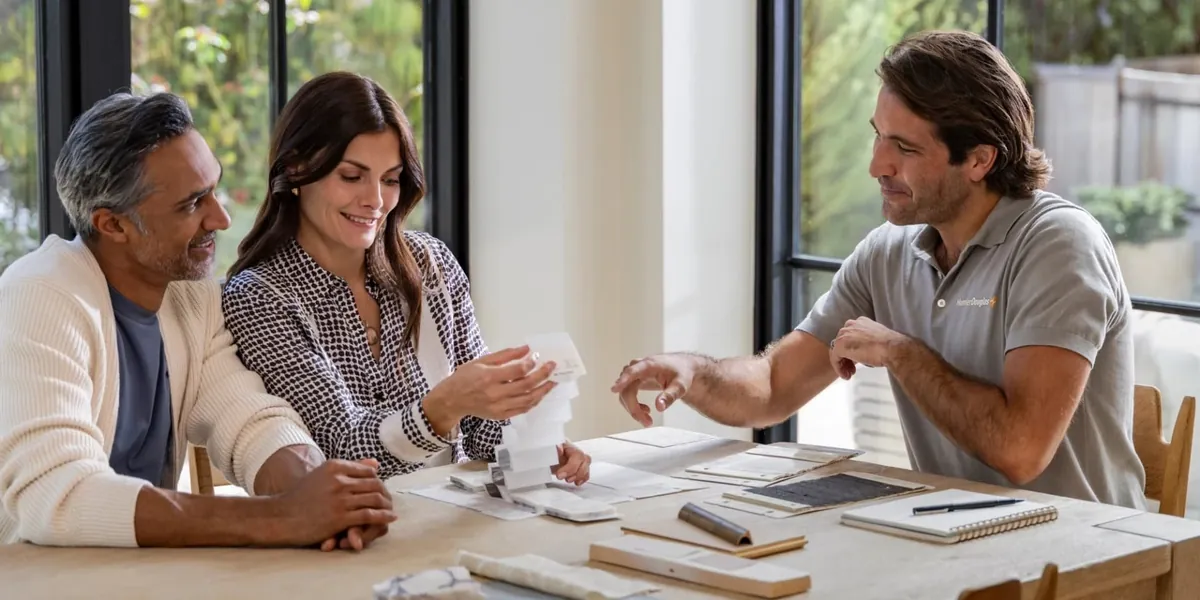
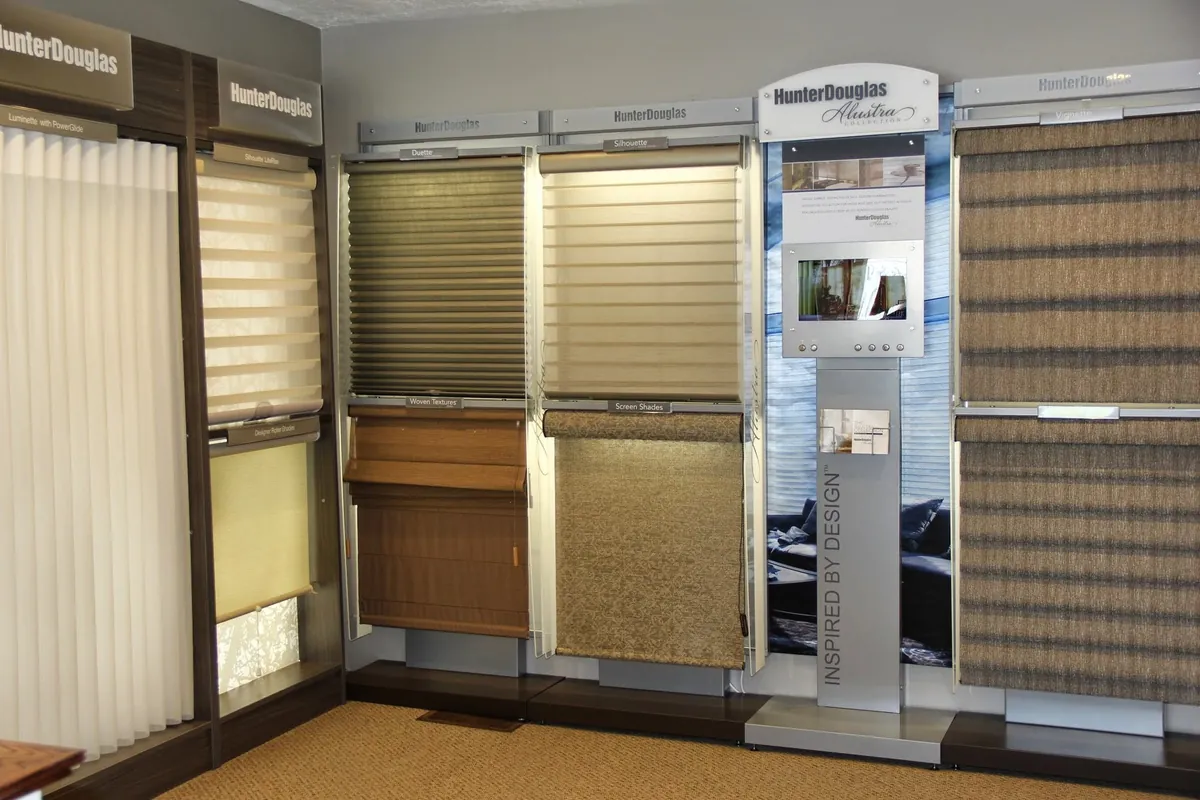
Blinds & Designs is a Hunter Douglas Gallery dealer. For a town with deep-walled antique houses on one side and new subdivisions on the other, that means a full spread of styles to choose from: sheers for tall sash, honeycomb for narrow openings, wood blinds for a period dining room, rollers for a family room, all ready for PowerView.
Every shade we sell is fitted by Hunter Douglas certified installers. The estimate costs nothing. Interior design consultations are available if you would like help with a whole room, and we also repair blinds and shades you already have.
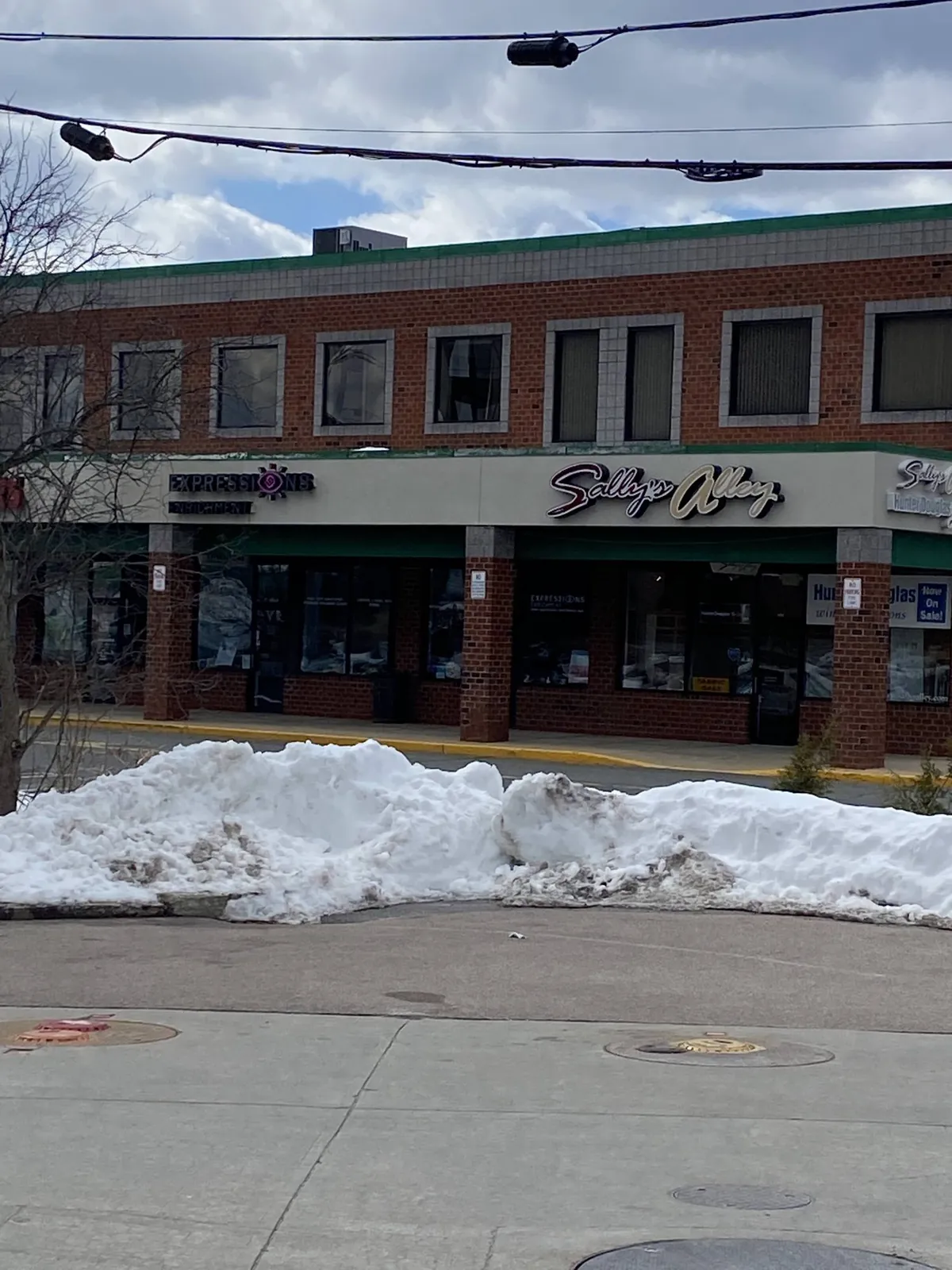
Franklin is the closest showroom
From Holliston, Franklin is our nearest showroom, and you can look around there before the visit if you like. The deep reveals and tall sash still get measured at your house.
Questions from Holliston
Our windows sit in very deep reveals. Is that good or bad for a motorized shade?
Usually good. A deep reveal gives the headrail plenty of room, and the raised shade can tuck almost out of sight. We check the reveal at several points to make sure it is square and clear enough.
Can we keep plants on our wide sills?
Yes. With the shade on a handset, the app or a timetable, nobody needs to reach across the sill, so it can hold whatever you like.
Will shades look bulky on our narrow sash?
Not if the style is chosen with care. Honeycomb, roller and sheer shades stack compactly, which keeps a slim window looking slim.
Are the newer colonials off Washington Street any different?
They are simpler to fit, with standard sizes and square frames. The planning there is more about high entry glass, the family room and timetables that follow the light through the trees.
What will an estimate cost us?
Nothing. It is free, and it is based on the measurements we take at your windows, reveal by reveal, during the consultation.
Start with the sill you lean across
Most Holliston houses have one window that everyone reaches across with a sigh: a tall sash at the back of a deep reveal, behind a sill full of plants. Point it out when you request a consultation for motorized blinds in Holliston, and we will bring samples that suit deep, narrow openings, measure it properly and show you what a motor would change. If you would like to talk first, the call button puts you through to Franklin.