
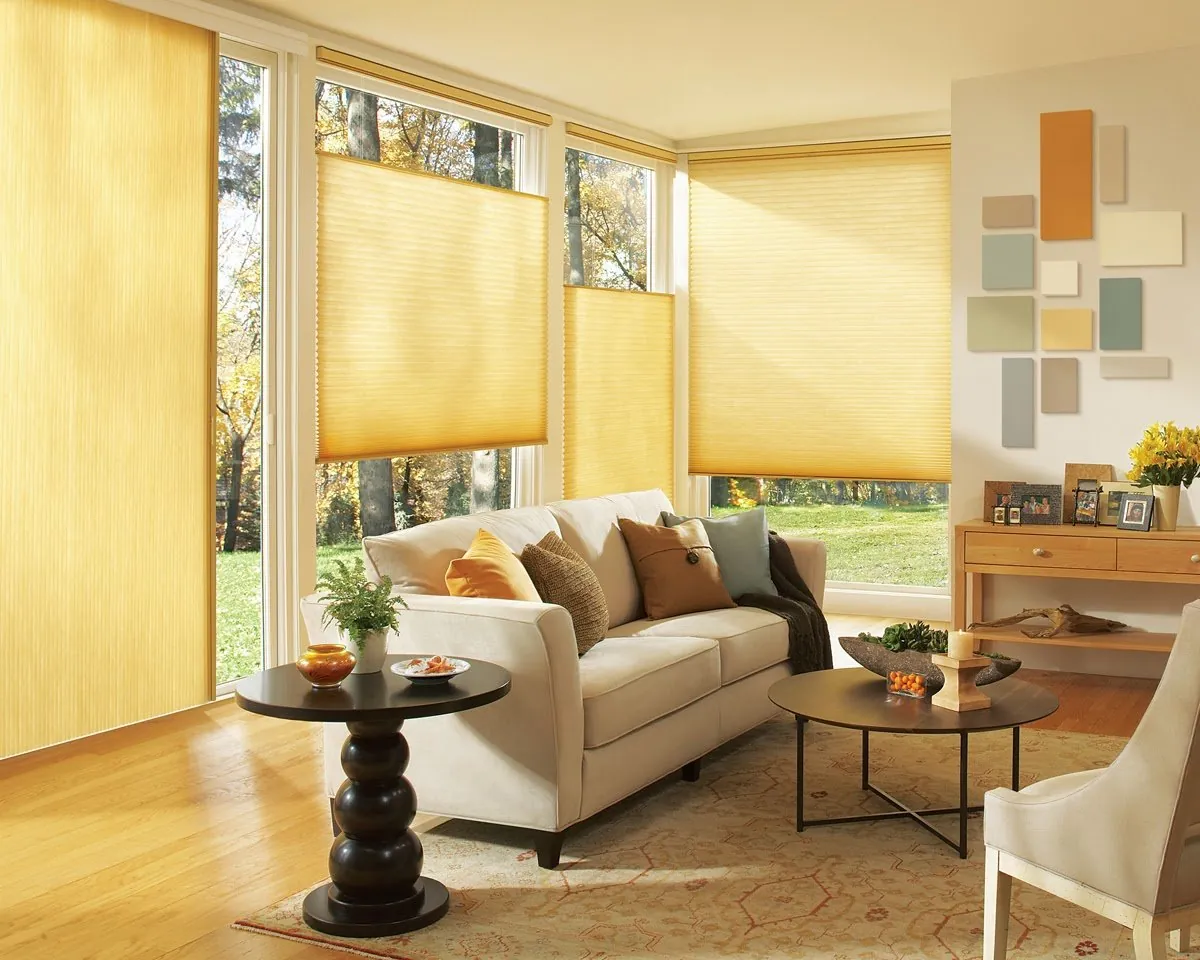
Sun, salt and a lot of glass
Tiverton has two kinds of house, and they ask different things of a window. Around Four Corners, the farmhouses and shingled capes sit on open land with older windows and plain wood trim. Down on Nanaquaket and along the Sakonnet River, waterfront houses face the water with wide, heavily glazed rooms that take the weather full on. In those rooms, the fabric has to stand up to strong sun and salt air as well as keep the room warm, and that is where most of our thinking goes when we plan cellular shades in Tiverton, RI.
The river side of town looks west across the Sakonnet, so the water-facing rooms take the long afternoon and evening sun, reflected off the river and straight into the room. It is beautiful to watch and hard on fabric, furniture and anyone trying to read a screen.
Winter brings the opposite problem. All that glass loses heat as soon as the sun goes down. A honeycomb shade deals with both: its fabric is folded into rows of cells that hold a layer of air against the window, slowing the summer heat coming in and the winter warmth going out.
Honeycomb shades for Tiverton’s water and farm houses
These six cover most of what we fit in Tiverton, from a river-facing great room to a cape’s back bedroom. Our vans carry samples of all of them.
Duette on the river side
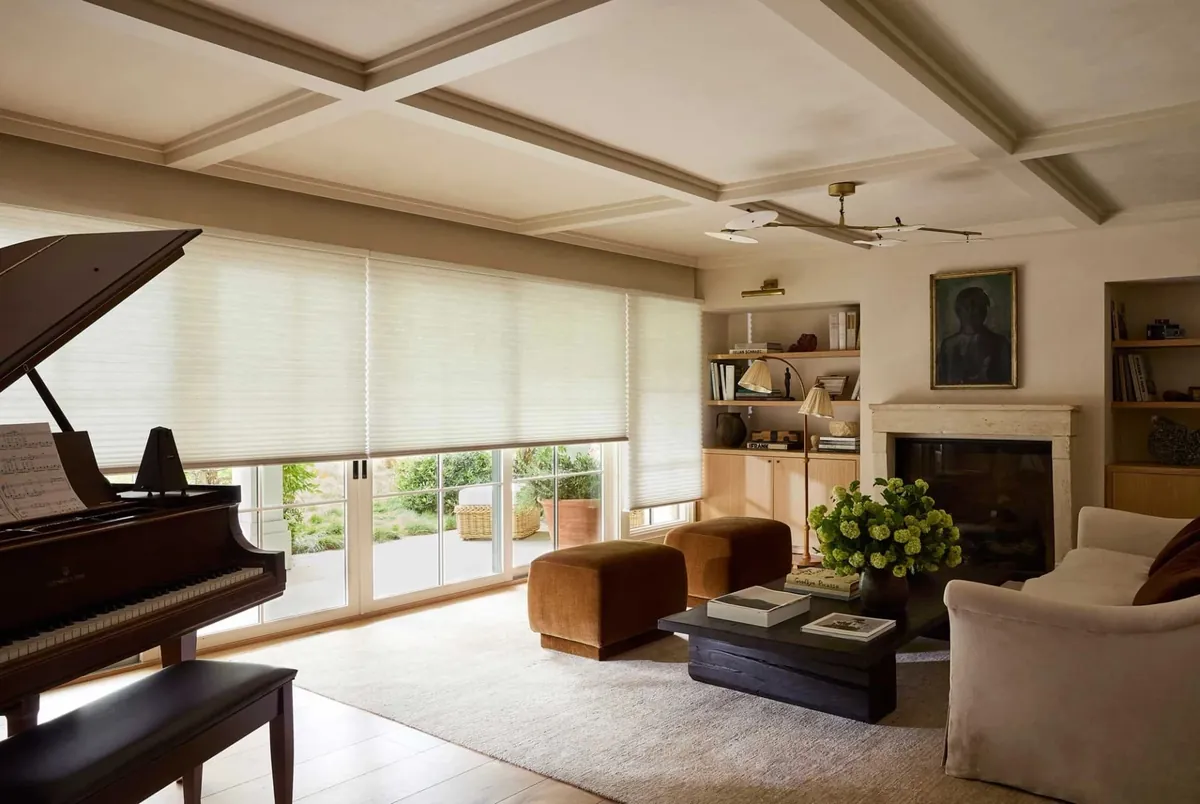
Duette stretches across a long wall of river glass in a single width where many shades would need two, and its fabric list is the deepest Hunter Douglas offers.
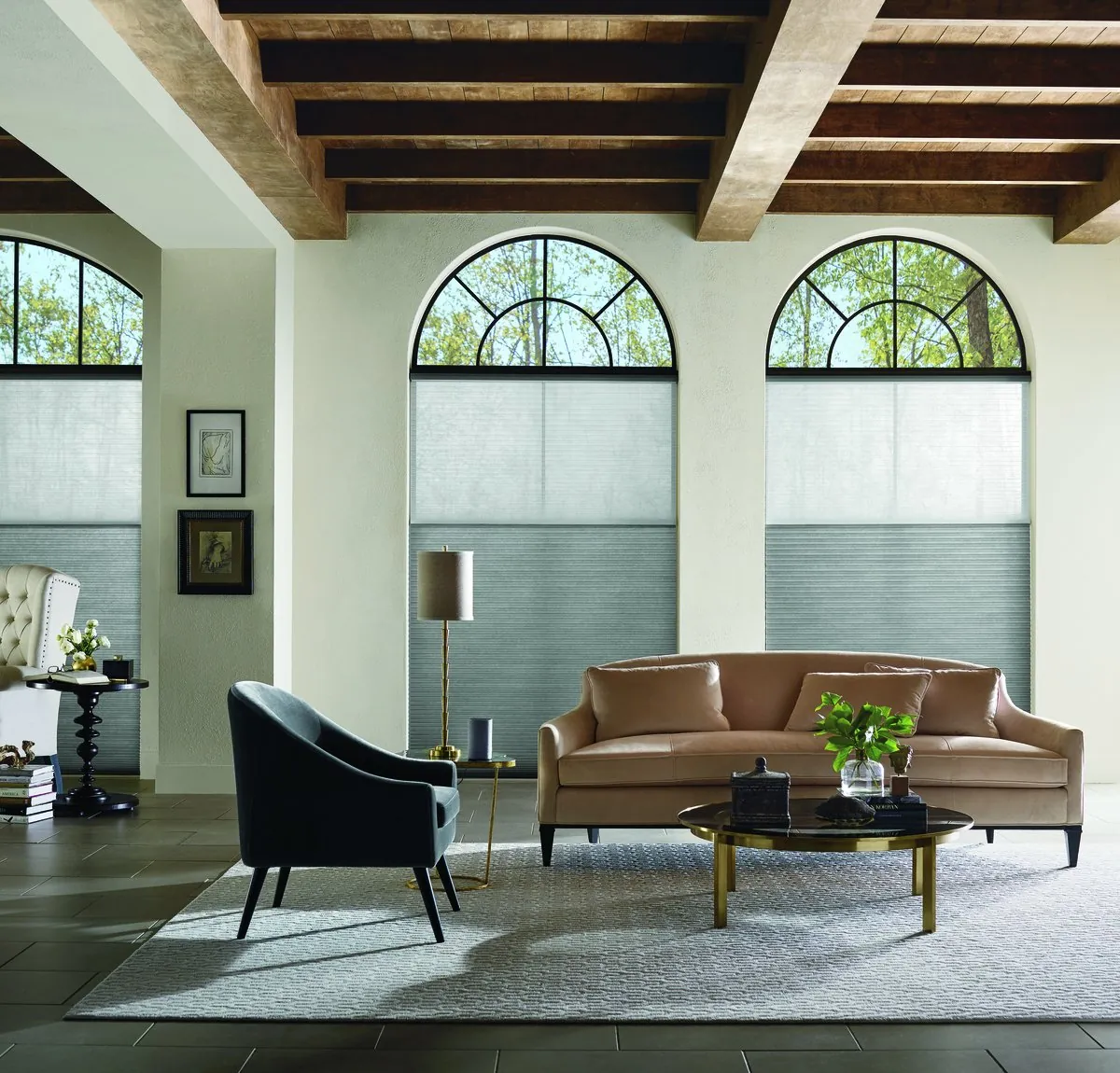
Shaped glass in a great room
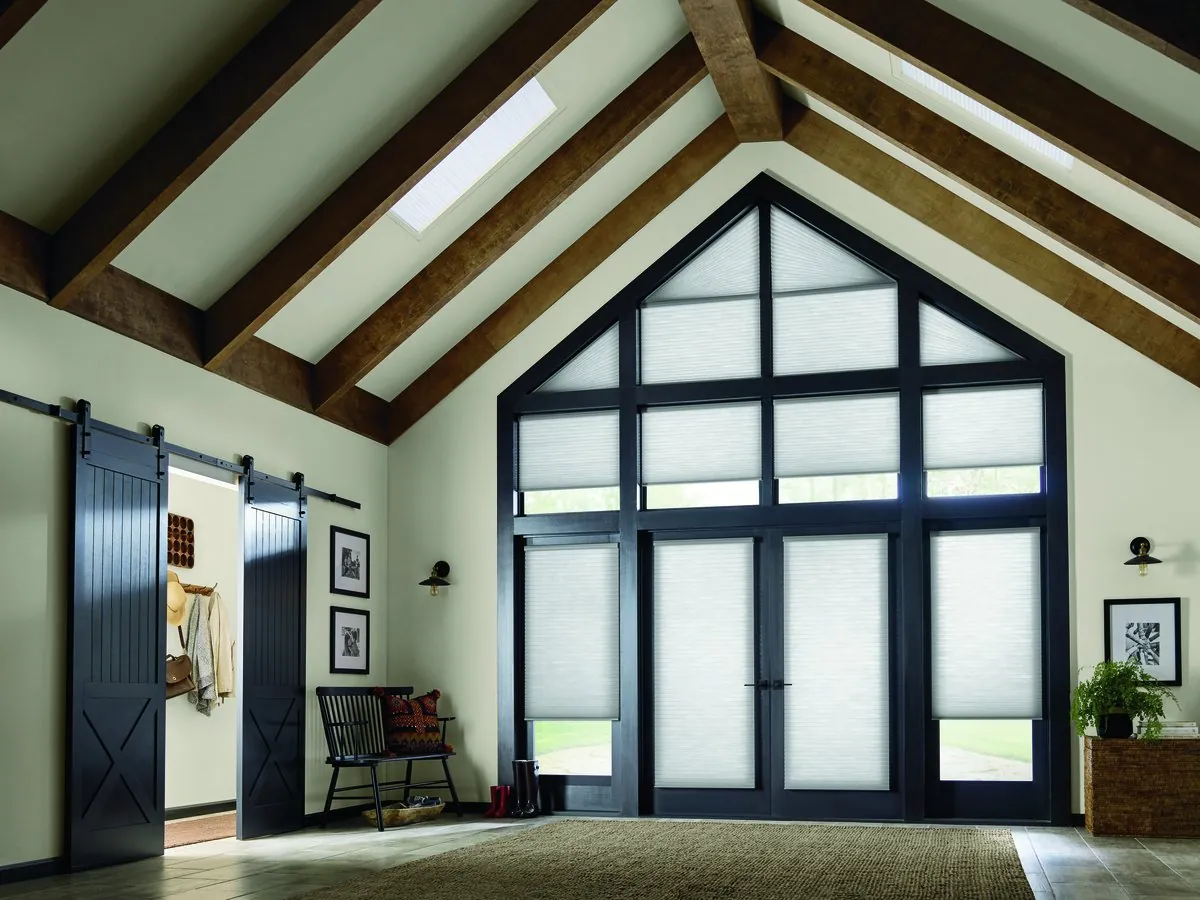
Duette is also made for angled and arched windows, so a gable wall of glass facing the water can be covered to the peak.
Vertical cells for the deck door
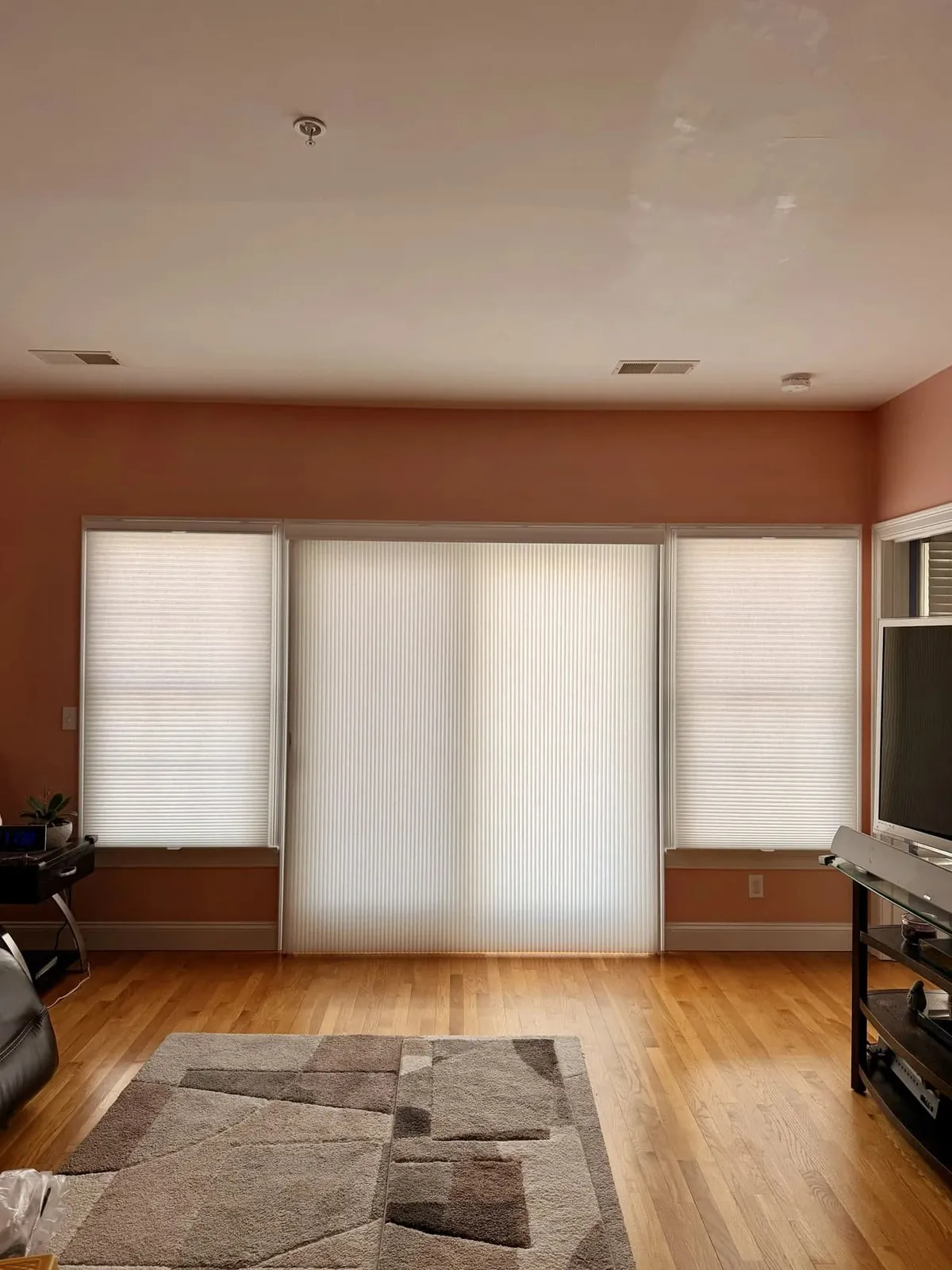
A sideways-moving honeycomb shade for a slider out to the deck or the dock path, folding neatly at one side.
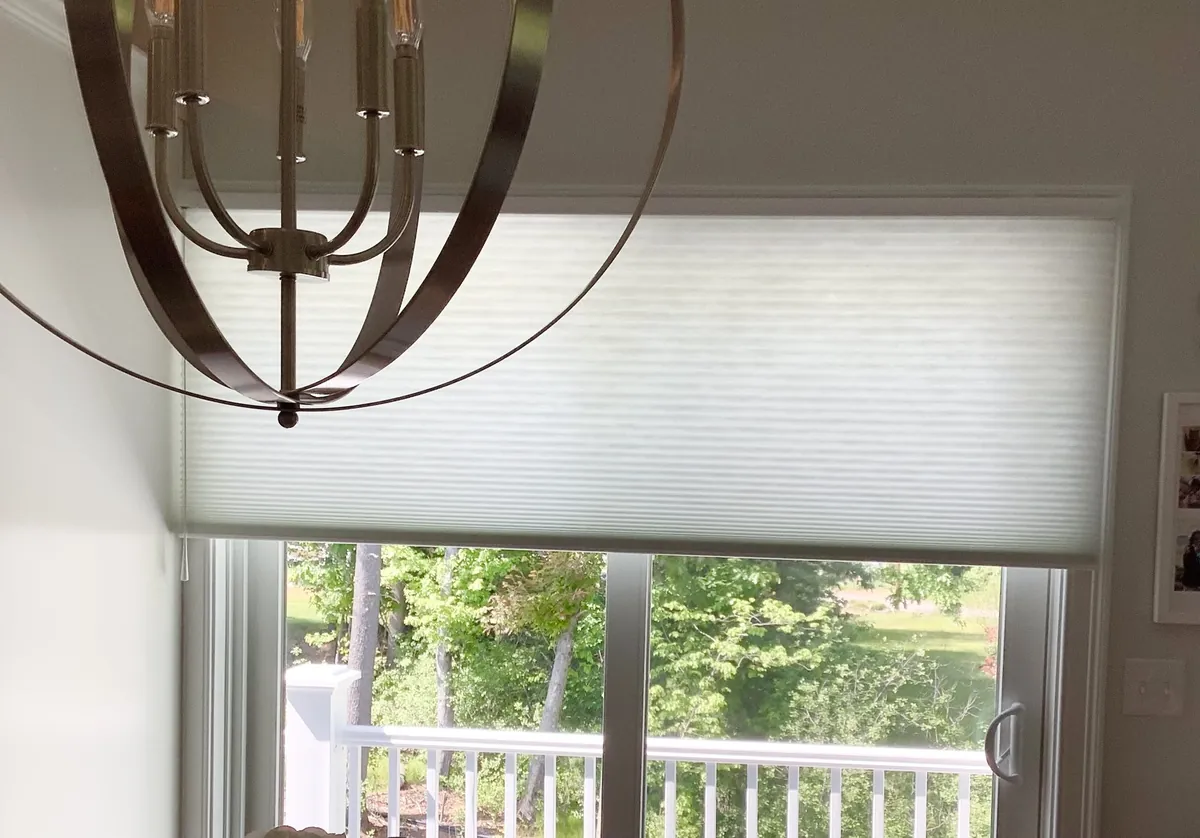
Cordless near the water
Lift and lower by the bottom rail alone. Without a cord or a cord lock, the salt breeze has nothing to rust and nothing to tangle.
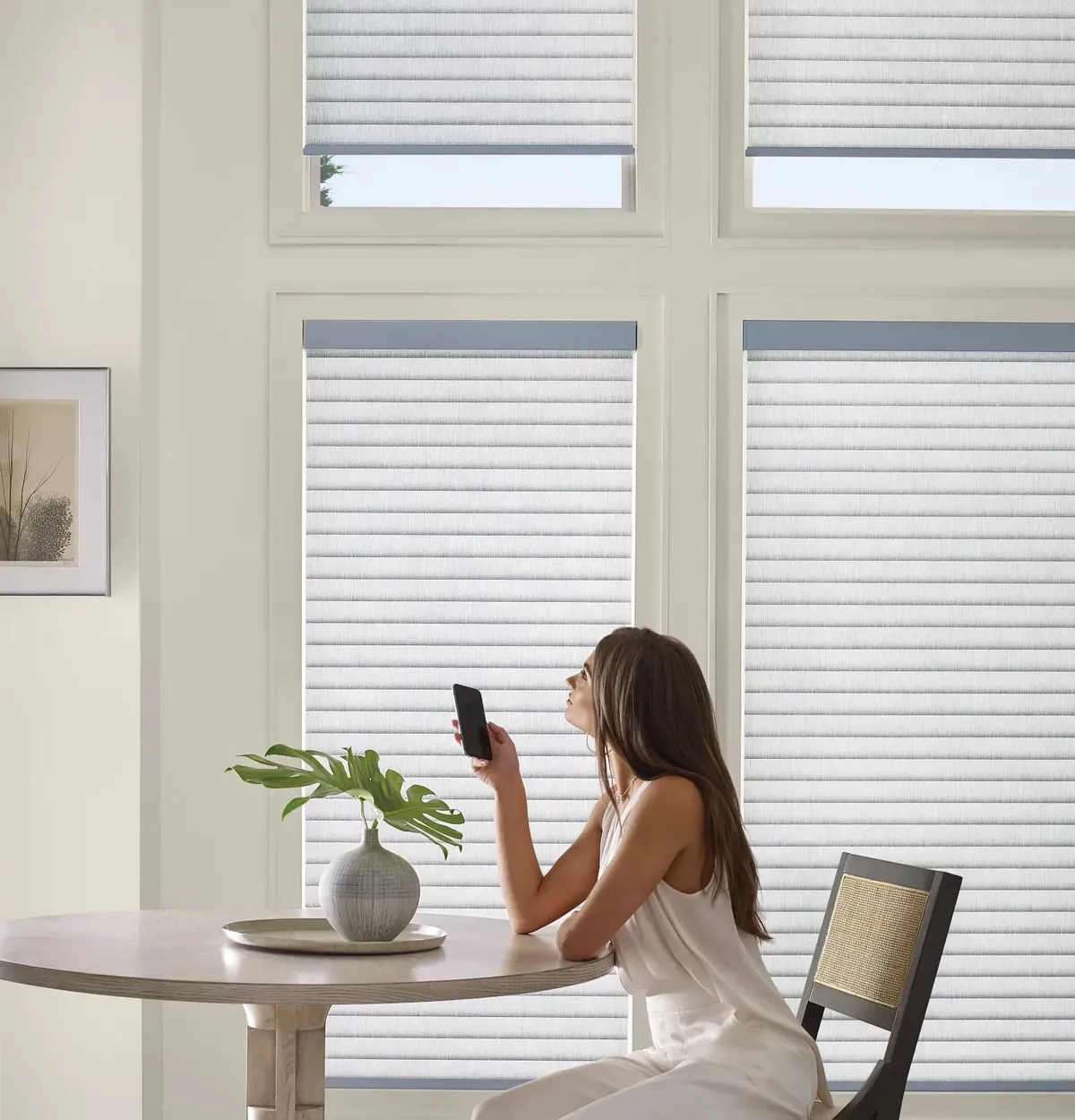
PowerView for sunset glare
Motorized shades can lower on a schedule as the late sun comes off the river, then rise again once it has set.
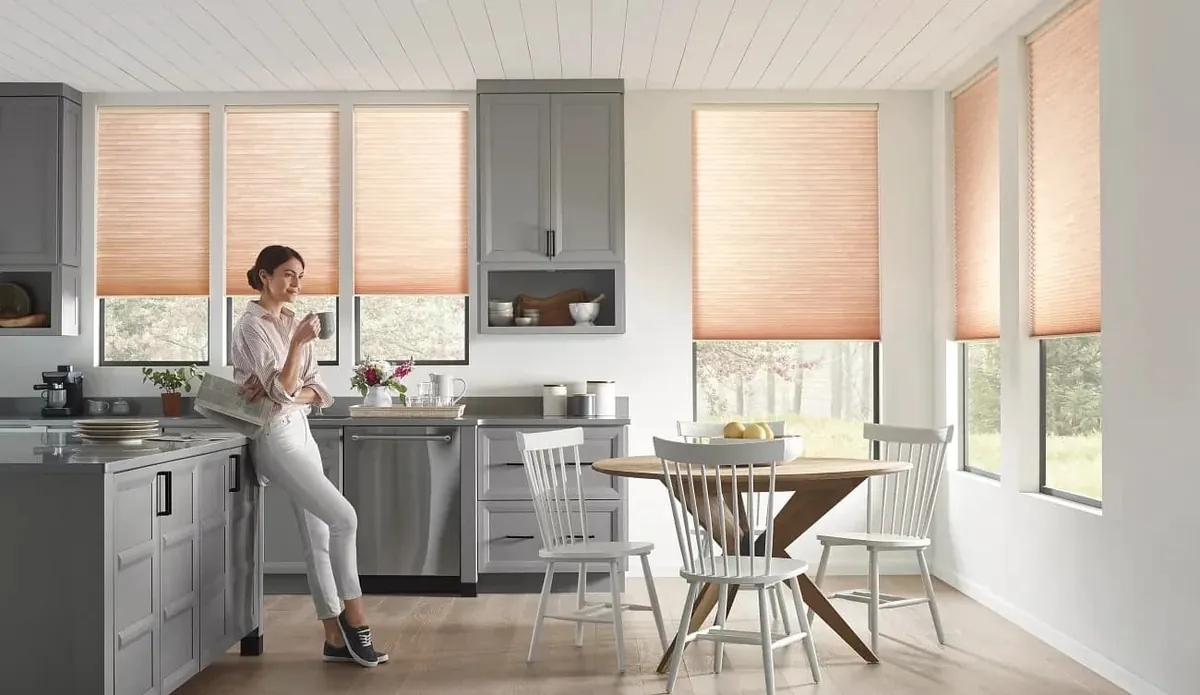
Applause in the farmhouse
Applause is the other honeycomb family, with a palette all its own. It sits comfortably in the farmhouse kitchens and cape bedrooms around Four Corners.
Picking fabric for sun and salt
On a heavily glazed room facing the water, the fabric is the most important decision. It has to take years of strong, reflected sun, live with salt air every time the windows are open, and still look right in the room.
Color comes first. Pale, neutral fabrics hold their color far better on a window that faces the water all afternoon. Whites, creams, soft grays and sand tones also suit the light in a waterfront room, which can turn deep colors flat or harsh. If you want a stronger color, it often works better on the shaded side of the house, away from the river.
Opacity comes next. A light-filtering honeycomb fabric is the usual choice on the river side. It cuts the glare without plunging the room into shade, spreads the sunlight evenly so it does not burn a hard patch onto the floor, and still lets you see shapes and movement on the water. Sheer fabrics keep more of the view; room-darkening fabrics suit bedrooms that face the sunset or the sunrise.
Then there is the backing. From the water, a row of windows with a uniform white or neutral backing looks calm and deliberate. We can set every shade on the waterfront side to show the same face outside, whatever color faces into each room. Getting these three choices right is what makes cellular shades in Tiverton last on a river-facing window.
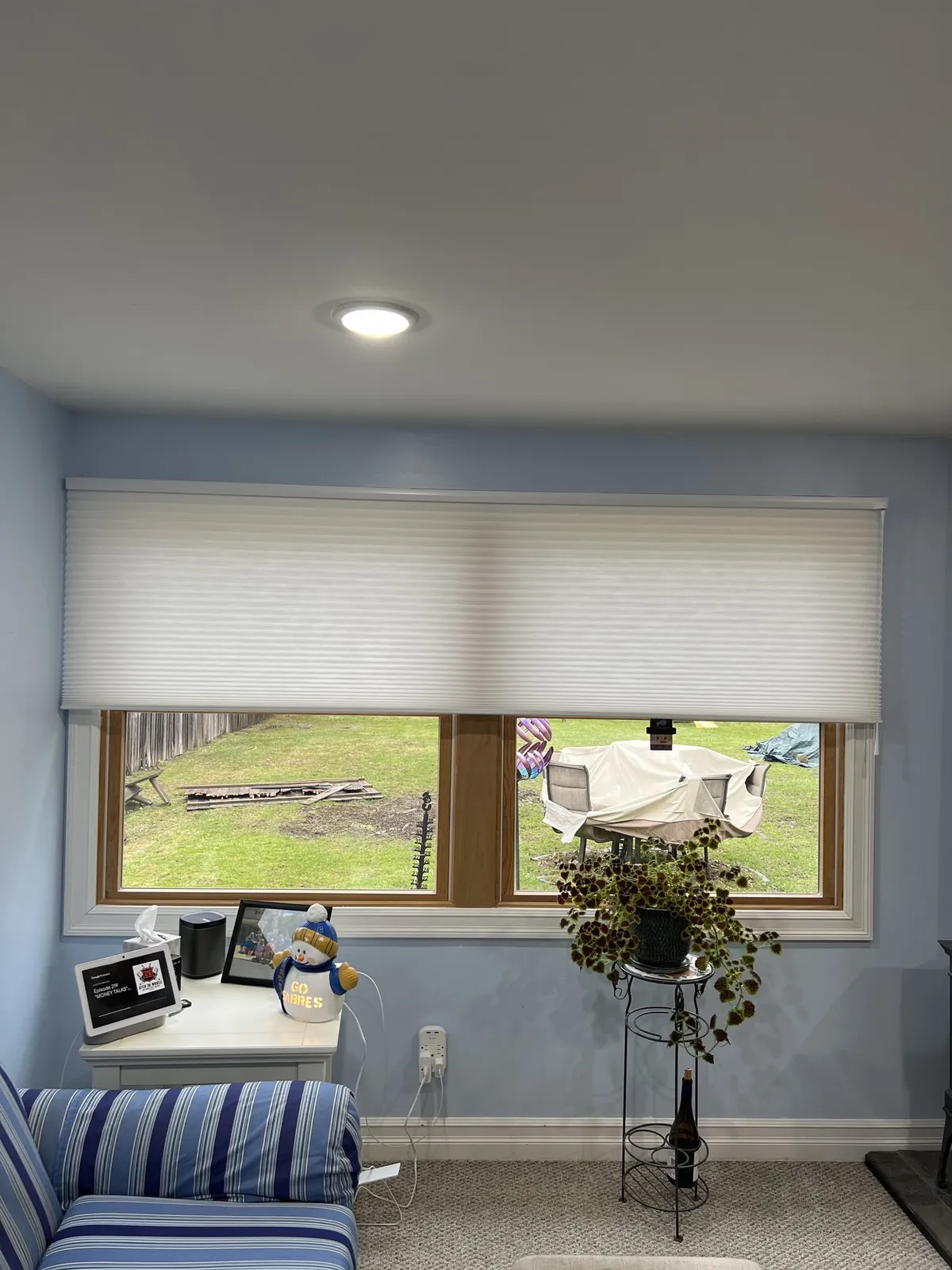
Waterfront houses on Nanaquaket
Houses around Nanaquaket Pond are built to look at the water. Living rooms, kitchens and main bedrooms all face it, often with sliders to a deck and picture windows with smaller windows either side. The pond is sheltered compared with the river, but the light off it is still bright on a clear day, and the rooms facing it are glazed from wall to wall.
On a wall like that, matching every shade matters. Honeycomb shades can share the same fabric, color and pleat size across windows of different sizes, so the whole wall reads as one surface when they are lowered. A wide picture window can be split into two or three shades on one headrail. The slider gets a vertical honeycomb shade that parks at one side. Raised, everything disappears into the head of the frames and the pond is back in full view.
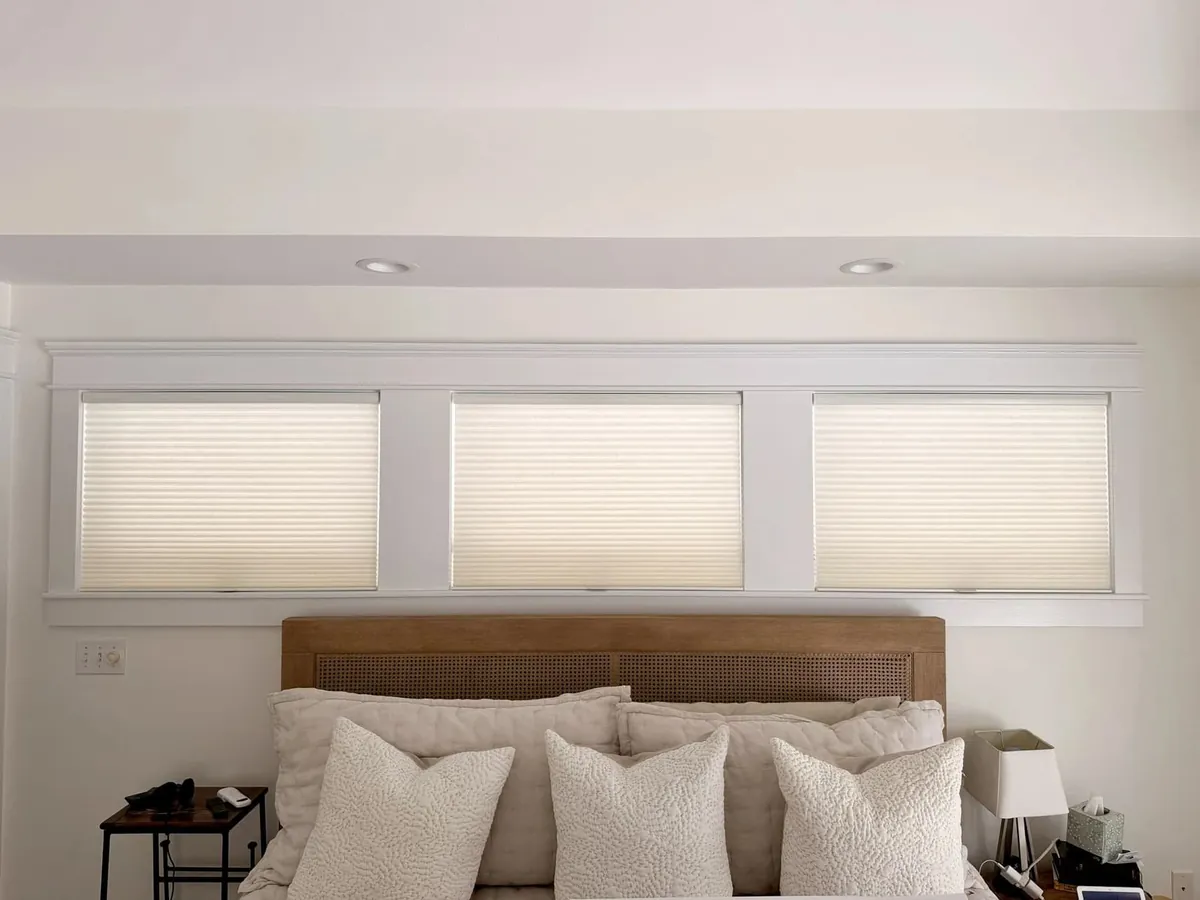
Top-down, bottom-up shades are useful in rooms that face neighbors across the pond. Lower the top for light and sky, keep the bottom closed for privacy, and the room never feels shut in.
Along the Sakonnet River
The houses along the river take more exposure than those on the pond. Wind comes up the Sakonnet in winter, the afternoon sun comes across it in summer, and salt hangs in the air most of the year. Many of these houses have large modern windows, sometimes two stories of glass in a great room, to make the most of the view.
Cellular shades suit big modern glass. Duette can be made wide and tall, and in shapes for angled and arched windows, so even a gable wall can be covered to the top. For windows out of reach, PowerView motorization raises and lowers the shades from a remote, the app or a schedule. Our page on motorized blinds in Tiverton explains the options.
A schedule is especially useful on the river side. The shades can lower automatically as the late sun reaches the windows and rise again once it has set, so the room never overheats and you still get the evening view. In winter, a schedule can close every shade at dusk to hold the day’s warmth.
What salt air does to window coverings
Anyone who lives near salt water knows what it does to metal. Hinges stiffen, screws rust and anything with exposed moving parts slowly suffers. Older window coverings with open ladders, tilt rods and cord locks show it first.
Honeycomb shades keep almost all of their working parts inside the headrail, sealed away from the air. With a cordless lift there is no cord lock at all and no cord to fray. The bottom rail is the only part you touch. That makes them one of the most practical coverings for a house on the river, where windows stay open through the summer and the breeze carries salt in with it.
At installation, our certified Hunter Douglas installers fix the brackets into solid wood around each opening and check every shade rises and falls smoothly before they leave.
Farmhouses and capes around Four Corners
Away from the water, the houses around Four Corners are older and quieter: farmhouses with additions built over time, and shingled capes with small windows and plain trim. The concern here is less about glare and salt and more about warmth, because older windows let a lot of cold into a room.
Honeycomb shades work well in these houses. Each one is made to its own opening, which matters when the windows in an older farmhouse vary from room to room and from the original house to the newer ell. In a cape, the shade stacks small when raised, so the short windows upstairs keep nearly all their daylight. When lowered, the cells hold air against the old glass and the room stays warmer into the evening.
Mounts need care in old frames. We measure each window in several places, check how much depth the frame offers and look for sash locks or hardware in the way. Where an inside mount will not sit straight, we suggest an outside mount that sits neatly on the casing. Planning cellular shades in Tiverton farmhouses is mostly about fitting those old openings properly.
Why the cells keep the cold out
Turn a honeycomb shade on its side and you see the reason it works: a row of cells shaped like the inside of a beehive, each one a closed tube across the window. Lower the shade, and every tube holds a pocket of air. Because that air is not moving, it is a poor carrier of heat, so the cold off the window takes longer to reach the room and the room’s warmth takes longer to reach the glass.
For the most exposed rooms on the river, Duette offers fabrics with a second cell inside each cell and shades with two rows of cells. Both trap more air. We bring single and double cell samples so you can compare them at the window.
A visit to your house, start to finish
The light on the Sakonnet in the late afternoon looks nothing like the light in a store, so we prefer to choose with you at home. Our vans carry samples, so the showroom comes to your windows.
- Book with Request a Consultation or the call button.
- We begin on the water side, looking at the glass, the direction it faces and how the room is used through the day.
- You compare fabrics against the real light coming off the river or the pond, from sheer to room-darkening.
- Every window and door is measured, including shaped glass and sliders.
- We talk through cordless lifts, top-down rails and motorization.
- A free estimate follows for the shades you would like, and the decision is yours to make in your own time.
For help with color and fabric across a whole room, our interior design consultations are available. There is more about what happens at an in-home consultation on its own page.
Duette or Applause
The two names share one idea, a fabric folded into air-holding cells, and differ in reach. Duette goes further: more fabrics and textures, bigger sizes, angled and arched shapes, and the sideways shade for sliders. Applause keeps to standard windows with a color range of its own.
On the water, Duette usually takes the big river or pond glass while Applause goes in the bedrooms and back rooms. In a Four Corners farmhouse with ordinary sash throughout, Applause on its own may be all you need. There is more on our Duette honeycomb shades and Applause honeycomb shades pages, or see the full range on our cellular shades page.
The bright rooms that are not on the water
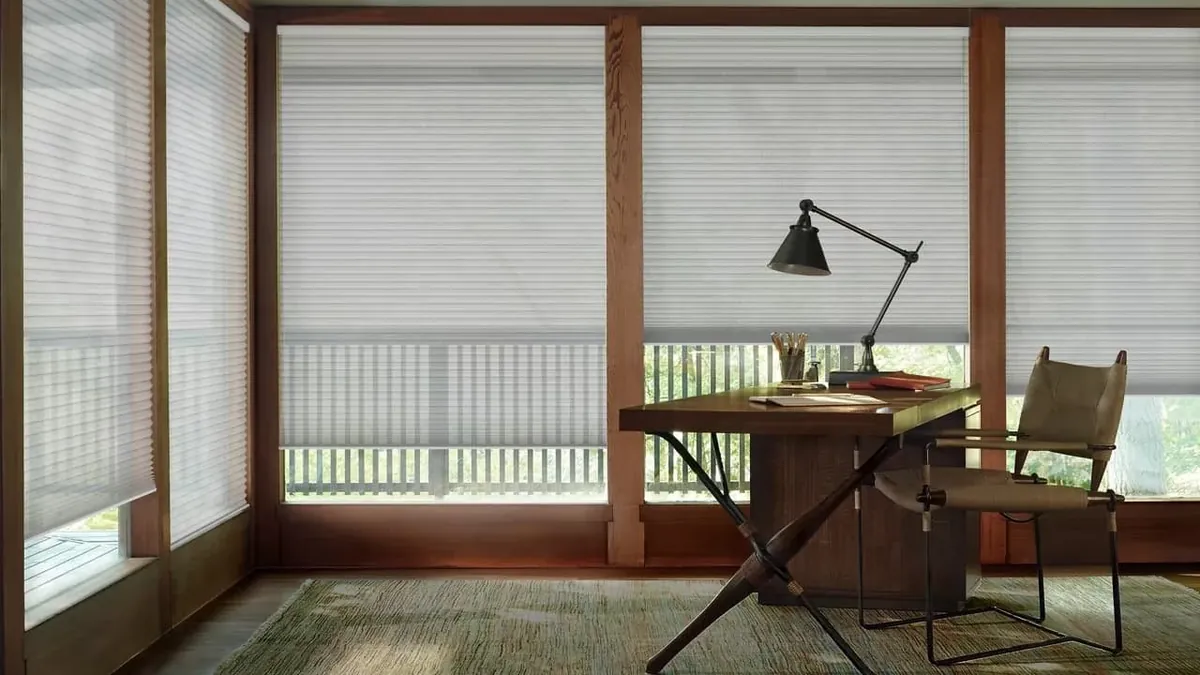
Waterfront houses also have a street side, and those rooms get forgotten when all the attention goes to the view. A front hall, a home office or a kitchen facing the road can take strong morning sun from the east, and they need privacy from passing cars in a way the river rooms do not.
A light-filtering honeycomb fabric suits them well. It keeps the room bright and private through the day, and the cells hold their layer of air at night like any other honeycomb shade. A top-down rail on a street-facing window lets in light from above while the lower glass stays covered. Because the outward-facing color can match the river side, the house looks consistent from the road and from the water. Including these rooms in the plan means cellular shades in Tiverton work for the whole house, not just the rooms with the view.
Bedrooms facing the river
A main bedroom facing the Sakonnet catches the last light of the day, and in summer that means a warm, bright room just as you want it to cool down. A room-darkening honeycomb fabric keeps the late sun and the heat out, then holds the warmth in through a winter night. On a top-down rail, you can leave the top open to the evening sky while the lower part stays closed.
For a guest room or a bedroom on the farm side of the house, a light-filtering fabric is often enough, keeping the room private and bright in the morning without fully darkening it. Children’s rooms are a case of their own: a room-darkening fabric on a cordless lift helps with summer bedtimes while it is still light over the water, and there is no cord within reach of a small hand. Upstairs rooms in a cape, under a sloping roof, benefit most from the extra warmth of a double-cell fabric.
Buying from a Hunter Douglas Gallery dealer
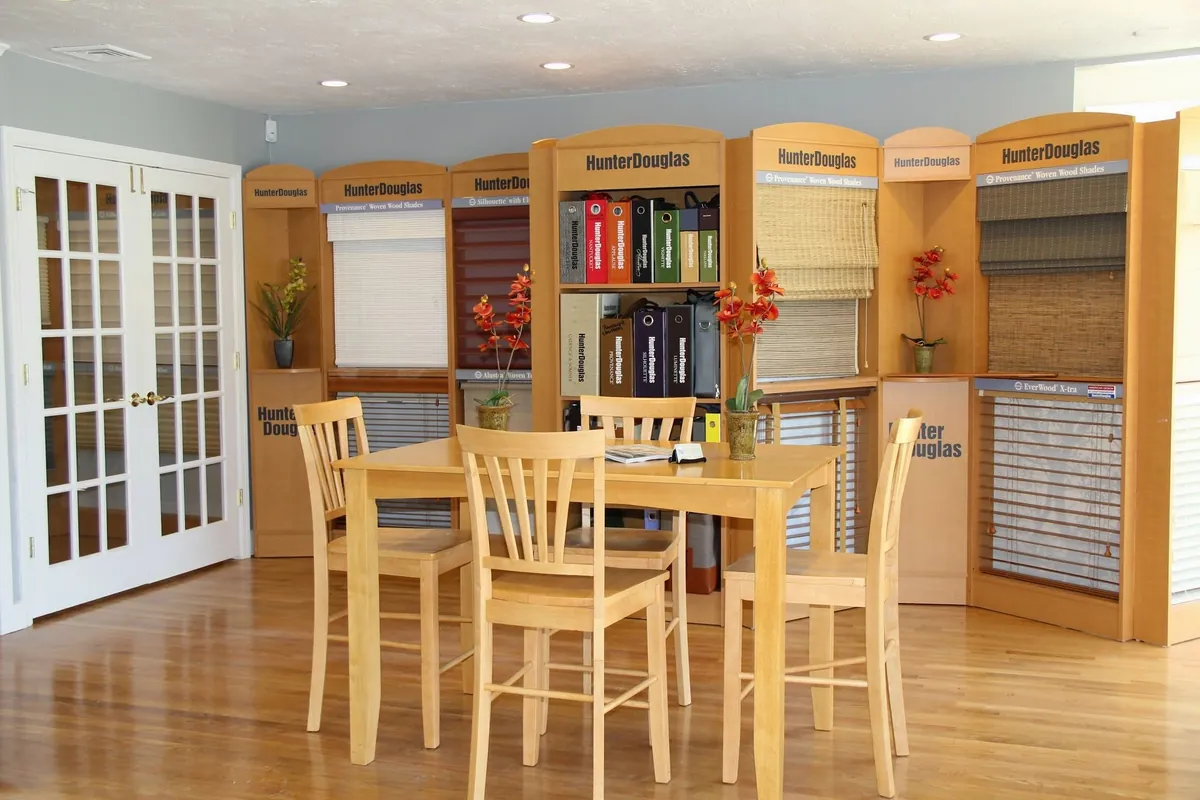
Being a Hunter Douglas Gallery dealer puts the maker’s complete honeycomb line on the table for a Tiverton order: every fabric, shaped and oversized shades, the sideways version for doors, each lift system and PowerView.
The crews who hang your shades are certified by Hunter Douglas. Should one of them, or an older shade you inherited with the house, ever start to stick or sag, we repair blinds and shades too.
Few river houses stop at one product. The porch off the deck may want a solar screen, and the farmhouse dining room may want shutters. Browse our roller shades in Tiverton and plantation shutters in Tiverton, or everything we offer in town on the Tiverton page.
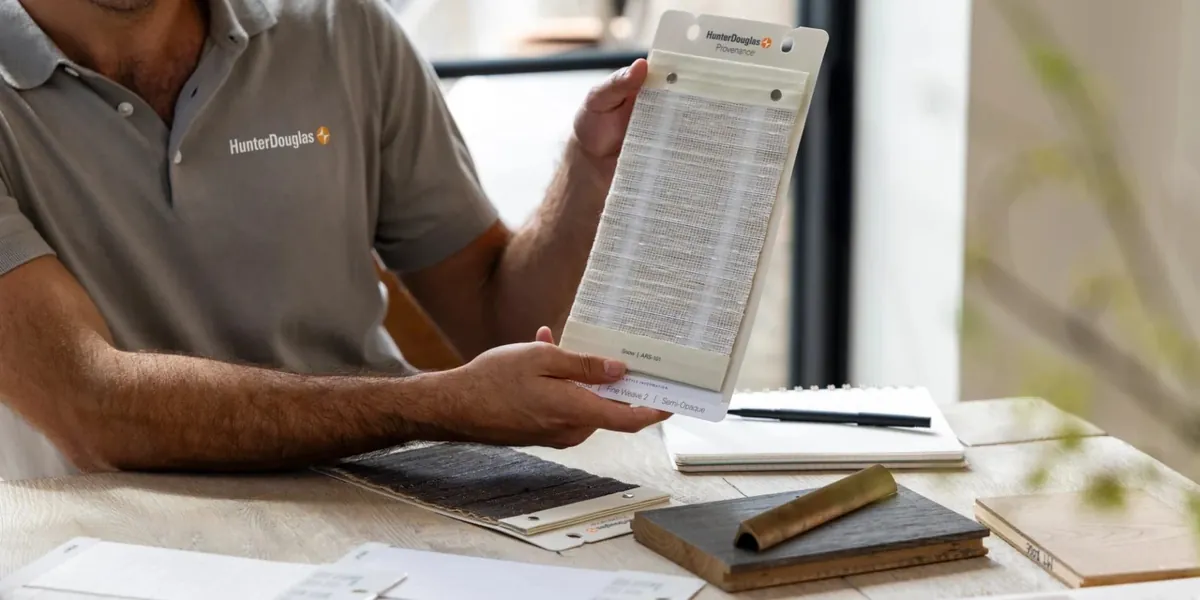
Seeing the fabrics before you decide
Hold a swatch against river glass in the late afternoon and again at noon, and it can look like two different fabrics. That is why the final choice is best made at home, with the Sakonnet or the pond behind the sample.
Some people like to see the product first, and the North Dartmouth showroom is the closest of our locations to Tiverton. Whichever way you start, come with your questions about sun, salt and the view, because those decide the right shade for a waterfront room.
Questions from Tiverton
Which fabric holds up best on a window facing the river?
In strong reflected sun, pale neutral fabrics keep their color longest. A light-filtering opacity cuts the glare while keeping the room bright and some of the view visible.
Will salt air damage honeycomb shades?
Very little. The mechanism lives inside the headrail, and with a cordless lift the only part you handle is the bottom rail, so the salt breeze finds almost nothing exposed.
Can the shades lower themselves when the afternoon sun hits?
Yes, with PowerView motorization. A schedule can lower the river-facing shades in the late afternoon and raise them after sunset, and you can change it from the app.
My farmhouse windows are all slightly different. Can they still match?
Yes. Each shade is made to its own opening, while the fabric and color are the same throughout, so mismatched windows still look like a set.
What does the estimate cost?
Nothing. You receive a free estimate once we have measured your windows at the consultation.
Book a late-afternoon visit
If your best room faces the Sakonnet, ask us to come when the sun is low over the river. That is when cellular shades in Tiverton have the most to prove, and when the right fabric is easiest to spot. Request a consultation to set it up: we bring the honeycomb samples, measure each window and door, and leave a free estimate. The call button and the North Dartmouth showroom are there too if you would like to talk first.