
Two towns’ worth of houses in one
Drive from one end of Yarmouth to the other and you pass through two different eras of building. On the bay side, along Route 6A, the antique capes stand on the old road with their small sash and center chimneys, built long before anyone thought about picture windows. Cross the middle of the Cape to South Yarmouth, on the sound side, and the streets fill with post-war ranches and cottages packed closely together, with bigger, plainer windows and a very different way of living.
The light is just as split. The bay side faces north, so its rooms get cool, steady daylight and the brunt of winter wind off the water. The sound side faces south, and its rooms take strong sun most of the day, with glare and heat through the summer. A window covering that suits one half of town is often wrong for the other.
That is the reason we never bring one answer to Yarmouth. As a Hunter Douglas dealer in Yarmouth, MA, we have the full Gallery range to draw on, and we choose by the age of the house and the way each window faces. Our installers are certified by Hunter Douglas, so whatever we choose goes up properly, in an antique frame or a ranch opening.
The Hunter Douglas range, north side and south side
Six families cover most of what Yarmouth houses need, from a cape parlor on 6A to a South Yarmouth ranch kitchen. Each card links to our page for that product in town.
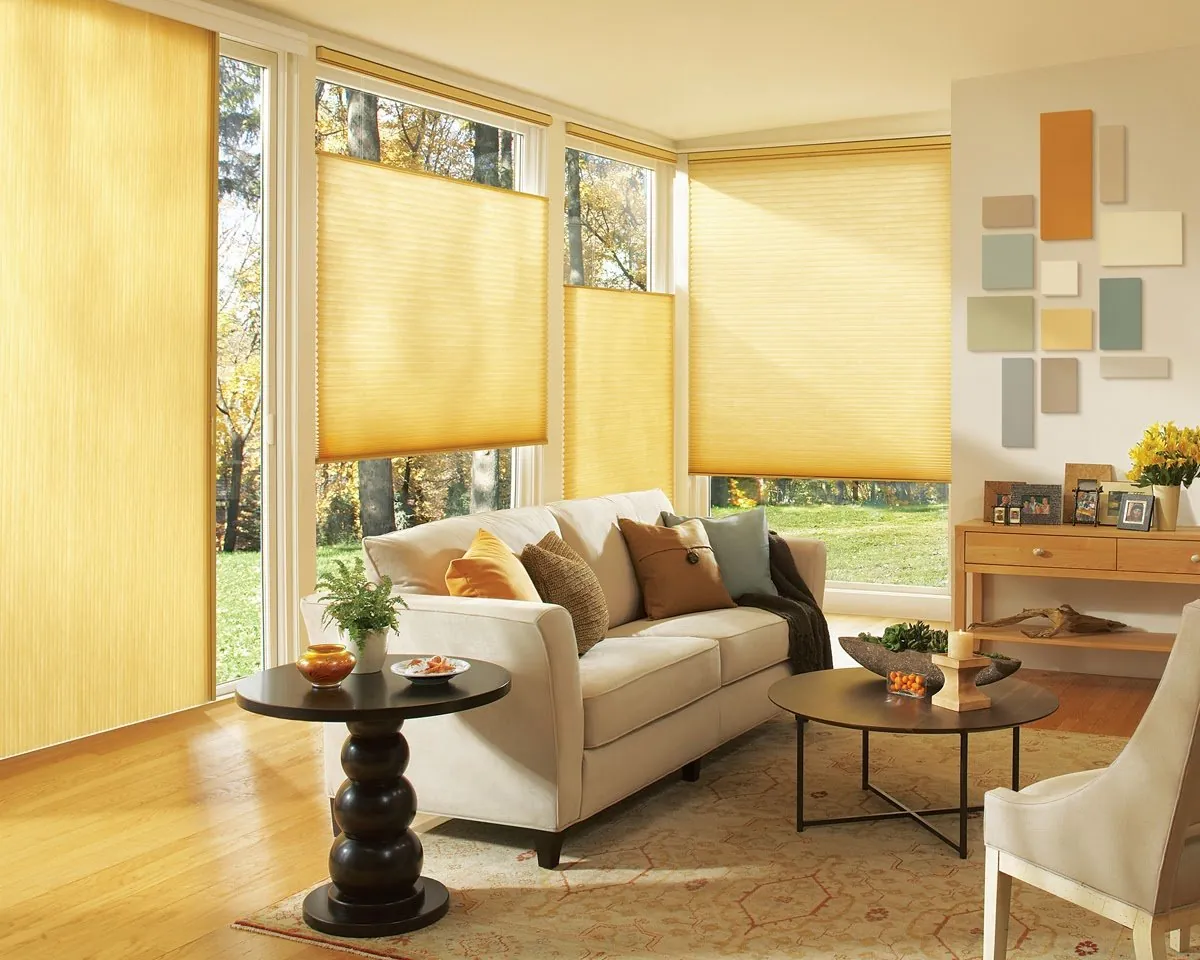
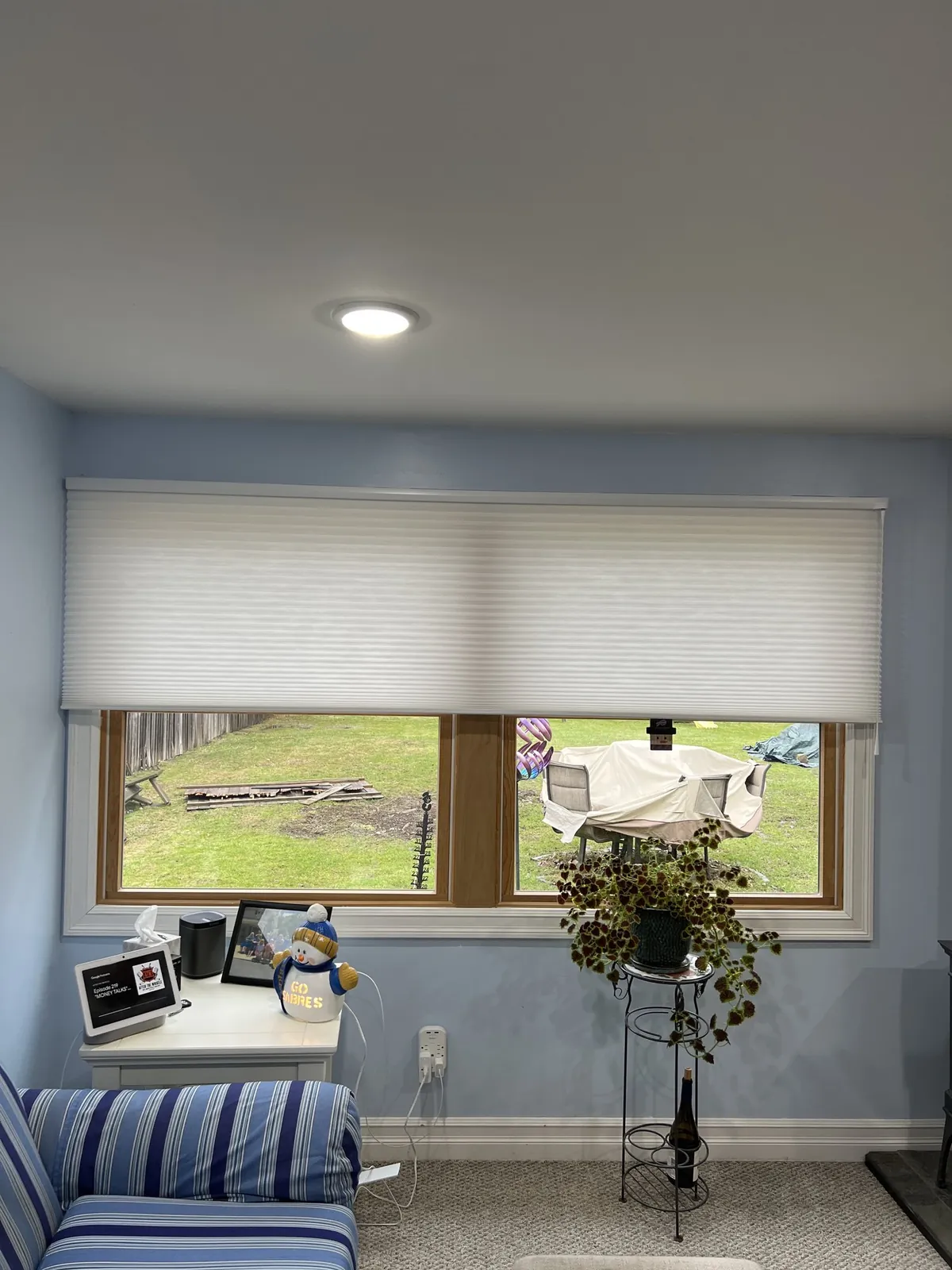
Honeycomb shades
On the bay side, Duette and Applause hold warmth against old glass. On the sound side, lowered at midday, they slow the heat coming in.
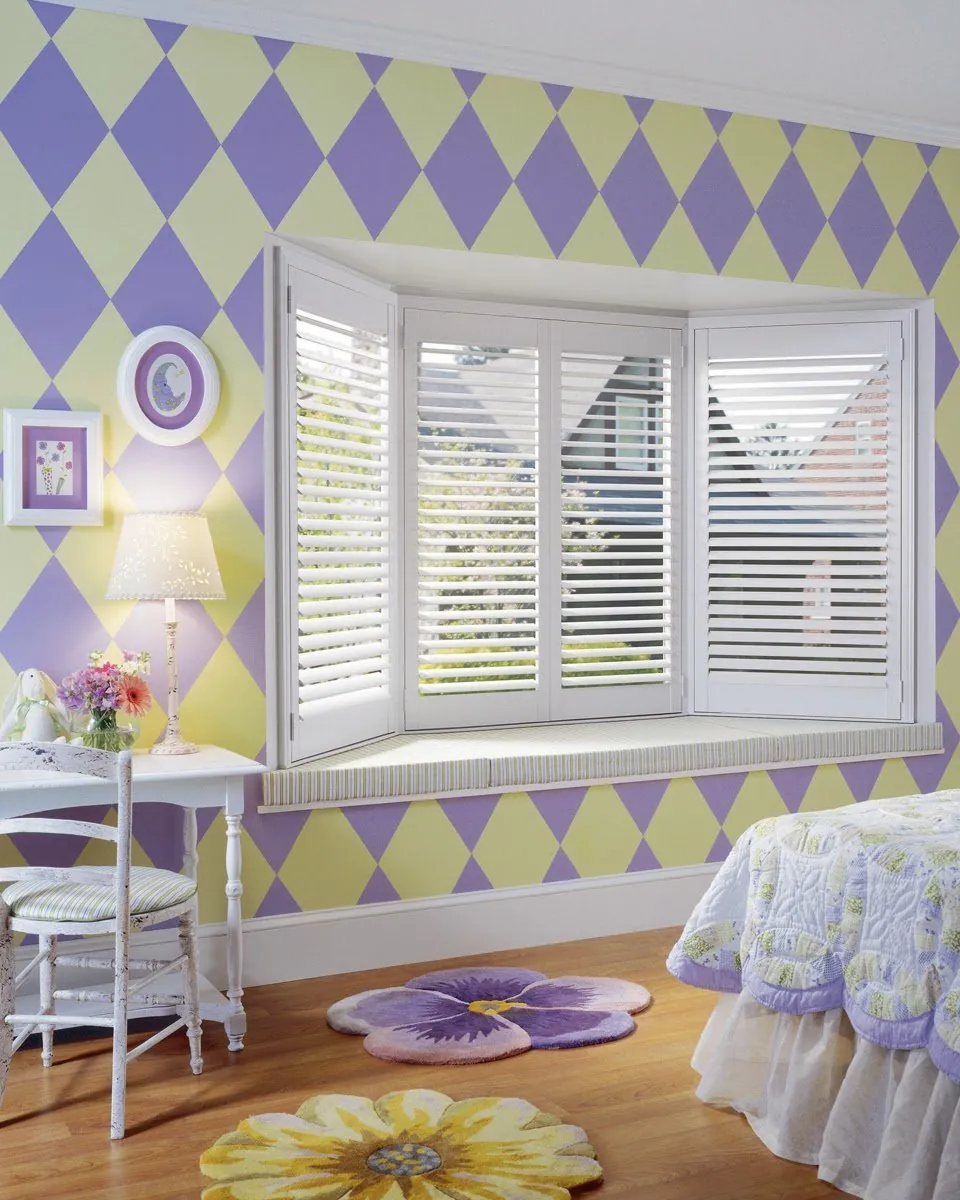
Plantation shutters
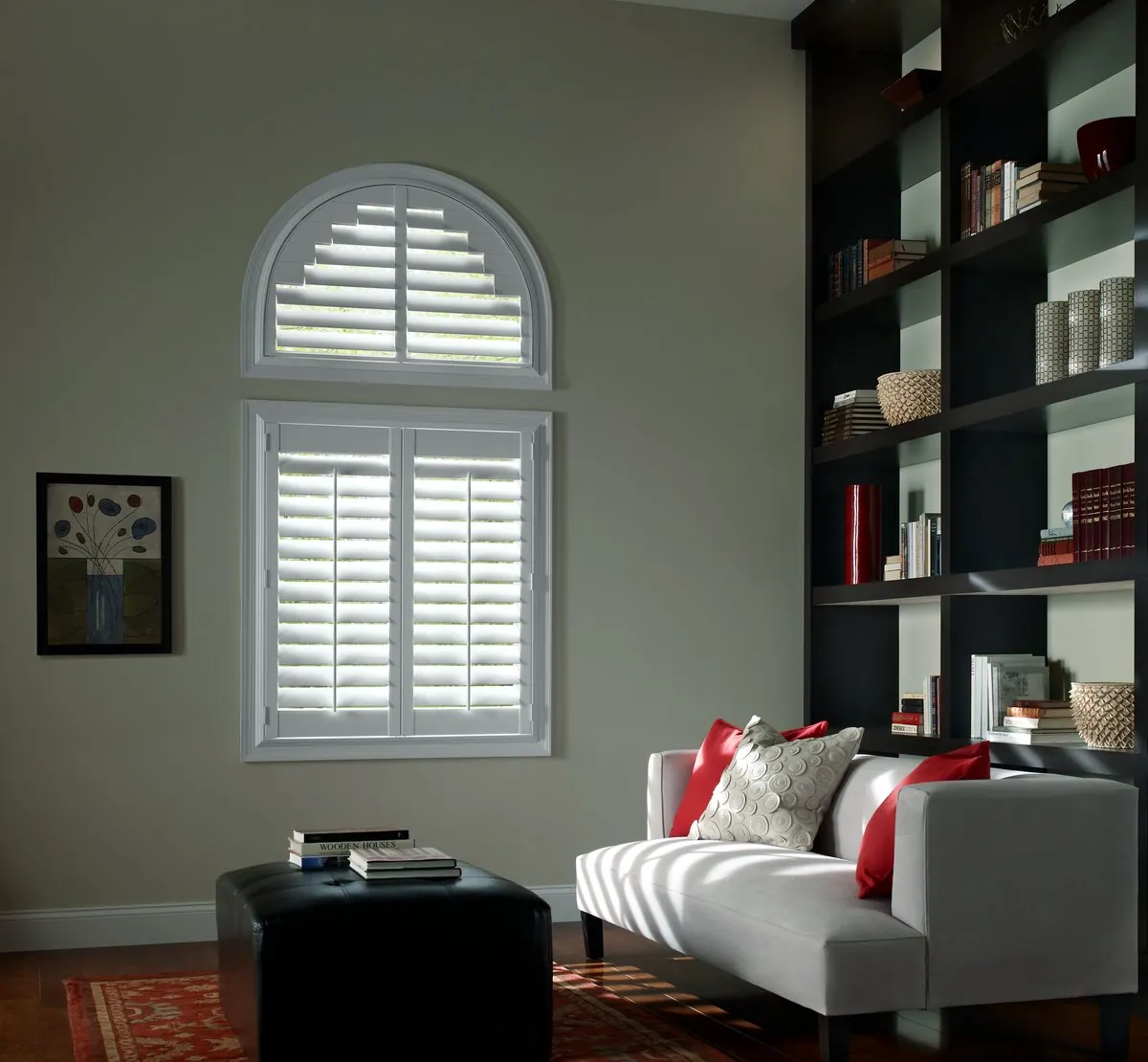
Palm Beach, NewStyle and Heritance, built to each opening. Tilt the louvers to let in light and keep a close neighbor’s view out.
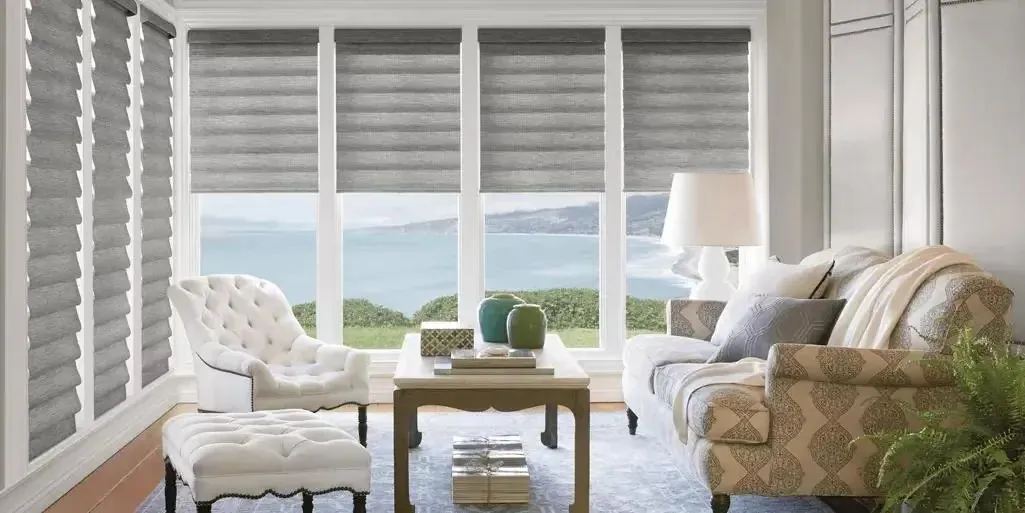
Roman shades
Vignette and Carole Roman shades bring softness to a cape front room or a ranch living room, with flat and folded styles.
Wood, faux wood and metal blinds
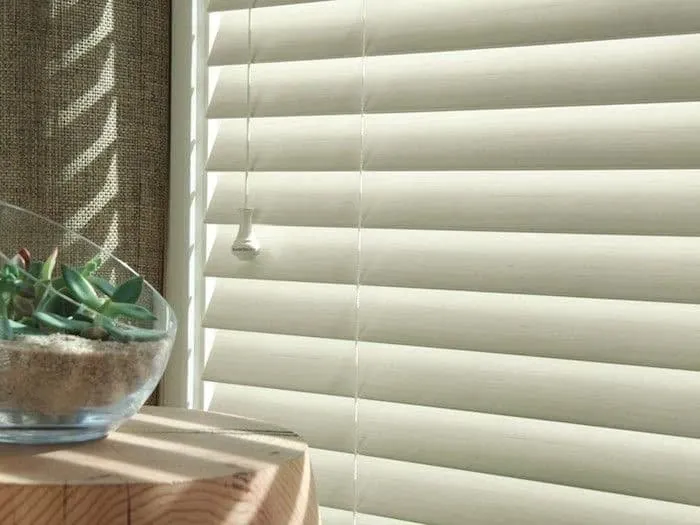
Parkland wood to suit old pine floors, EverWood faux wood for damp kitchens and baths, and slim metal blinds for small cottage windows.
Roller and screen shades
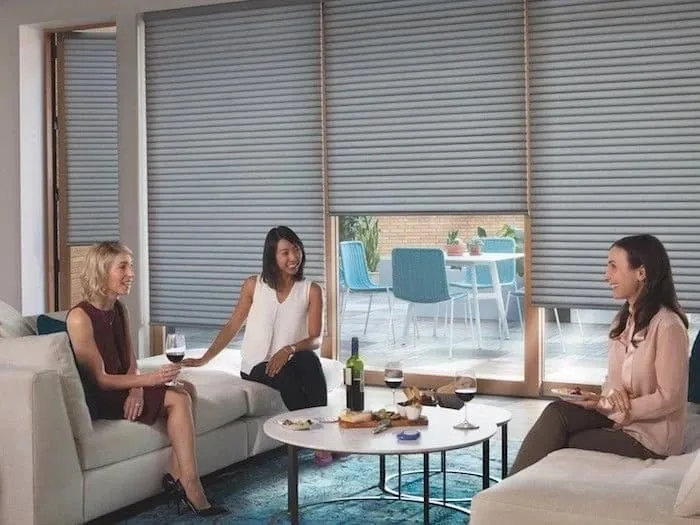
Designer roller, screen and Sonnette shades for sunny sound-side rooms, where the weave decides how much glare is cut and how much view stays.
PowerView motorization
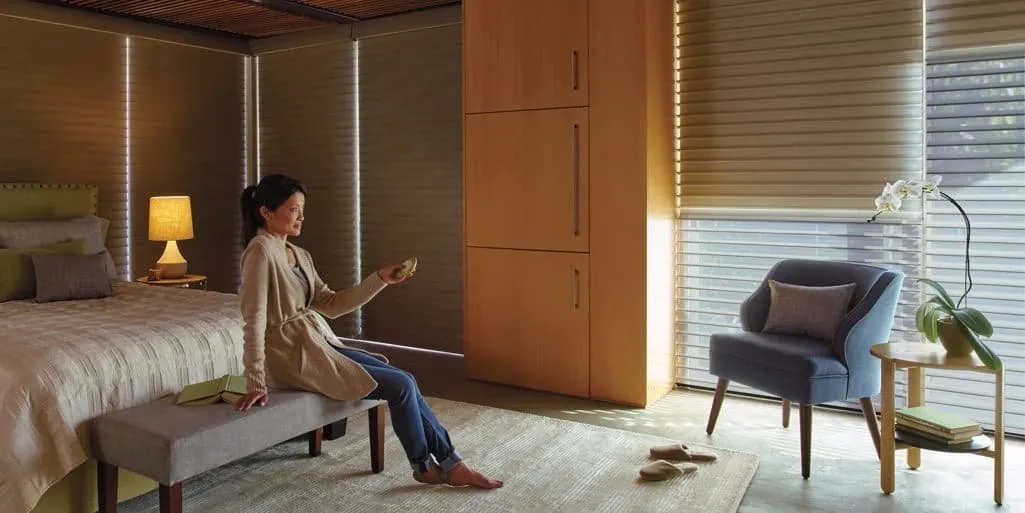
Lower the sunny side on a schedule, or raise every shade in the house from a remote or your phone.
How the two halves compare
It helps to see the differences side by side, because they drive almost every choice we make.
- Age of house. Bay side: antique capes, built by hand, with settled frames. Sound side: post-war ranches and cottages, built quickly and simply, with square, regular openings.
- Window size. Bay side: small sash, often divided into little panes. Sound side: larger single panes, picture windows and sliders.
- Light. Bay side: north-facing rooms with cool, even light. Sound side: south-facing rooms with strong sun and summer glare.
- Neighbors. Bay side: houses set along the old road with some space around them. Sound side: dense streets where the next house may be a few steps away.
- What matters most. Bay side: warmth, period character and fitting old frames. Sound side: heat and glare control, privacy and durability.
None of that is absolute. There are newer houses on the bay side and older ones in South Yarmouth, and plenty of houses in between. But it is a useful starting point for a conversation at your windows.
Antique capes along Route 6A
The bay-side village is lined with antique capes: low, broad houses with a central chimney, a front door in the middle and a pair of windows either side. Inside, the rooms are modest, the ceilings are low and the windows are small, often with many little panes held in narrow wooden muntins. Over the years the frames have settled, so each window is a little different from its neighbor.
These houses ask for products that are light and in proportion. A slim honeycomb or Roman shade mounted inside the frame leaves the trim and the old glass in view and almost vanishes when raised. Shutters in a soft painted finish suit the period look, and the louvers can be tilted to let light in while keeping the room private from the road. Drapery panels in a cape’s front room add warmth on winter nights and soften plaster walls.
Before recommending a mount, we measure every window at several points. Old frames that look square rarely are, and an inside mount only looks built in when it matches the real opening. Where a frame is too shallow or too irregular, a slim outside mount on the casing is the honest choice.
Cold northern light on the bay side
North-facing rooms on the bay side never get much direct sun, and in winter the wind comes straight off the water. Old sash, even with storm windows, lets the cold in, and a front room that is lovely in June can be chilly through the colder months.
Warmth is usually the first concern here. Honeycomb shades are the natural choice, because each cell holds still air between the glass and the room. A double-cell fabric adds more. Color helps too: a warm cream or soft gold fabric makes a north room feel brighter than a cool gray. For the coldest rooms, a lined drapery panel over the shade adds a second layer at night, and our page on custom drapery in Yarmouth covers linings.
South Yarmouth’s ranches and cottages
On the sound side, the streets of South Yarmouth were filled quickly with post-war ranches and small cottages on compact lots. Many are close together, some started as summer places and have since been lived in all year, and many have been updated room by room. Their windows are bigger and plainer than on 6A: a living room picture window, a run of bedroom windows along one wall, a slider out to a patio or deck.
These openings are regular and square, so almost every Hunter Douglas product mounts inside cleanly. The challenges are light and privacy. A picture window facing south takes strong sun all afternoon. A bedroom window may face a neighbor’s across a narrow side yard. A slider gets used constantly in summer and needs something that clears the door completely.
For the picture window, a screen shade keeps the view and cuts glare, or a set of honeycomb shades on one headrail rises together and holds heat in winter. For the bedroom facing a neighbor, a top-down, bottom-up shade keeps the lower sash covered. For the slider, a vertical honeycomb shade or a vertical blind stacks neatly to one side. Any Hunter Douglas dealer in Yarmouth, MA, will meet these three windows in nearly every sound-side house.
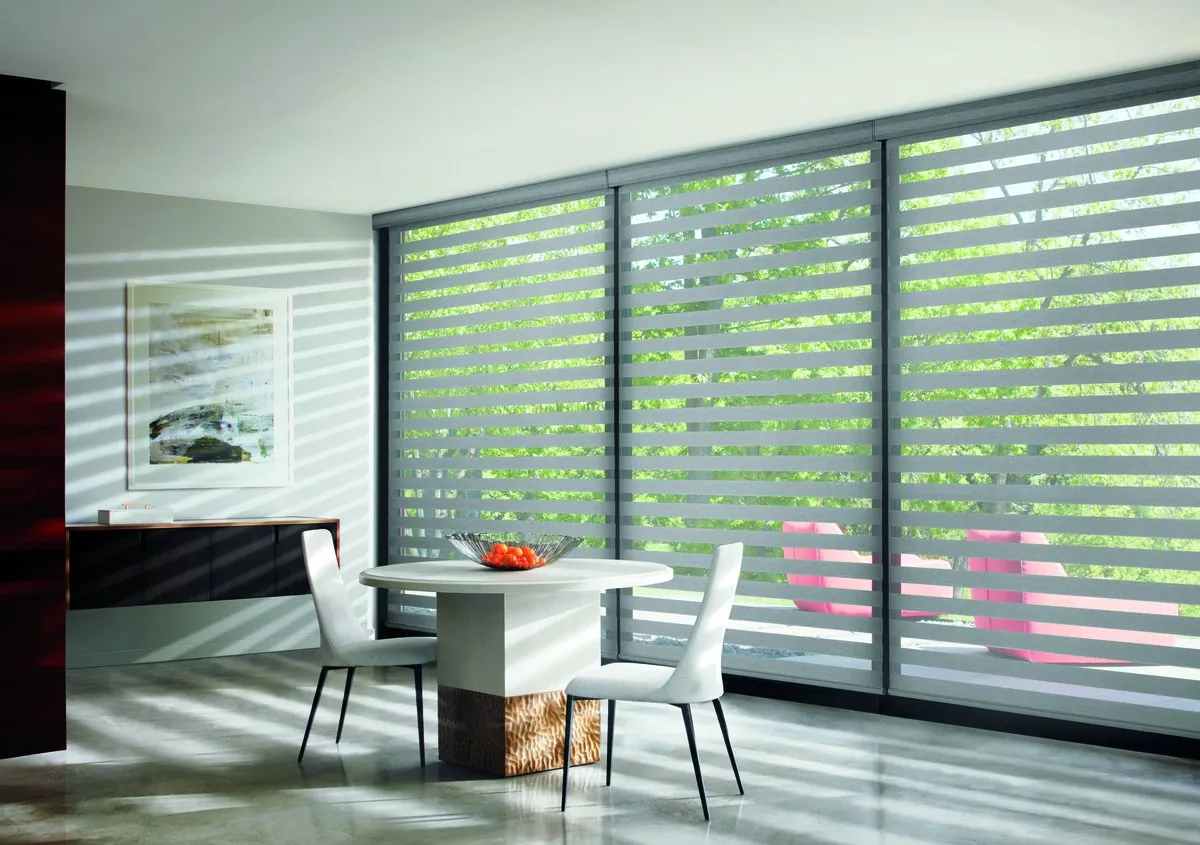
Strong southern sun on the sound side
South-facing rooms near the water get the sun most of the day, and in summer it comes with heat and glare off the Sound. Floors, furniture and fabrics fade where the sun sits on them for hours, and a television on the wrong wall becomes hard to watch in the afternoon.
Screen shades are our first suggestion for these rooms. Their openness factor, simply how open the weave is, sets the balance between view and glare. A more open weave shows more of the outdoors, a tighter one blocks more of the sun. Designer Banded shades give a different kind of control, sliding sheer and solid stripes past each other. Sonnette cellular roller shades combine a roller’s clean look with a cell that holds some air. And PowerView can lower the south side automatically on hot afternoons.
Lighter, neutral fabrics hold their color longer in direct sun, and we point those out when you are choosing for a south window.
Summer cottages now lived in all year
A good share of the small houses in South Yarmouth began as summer cottages and are now year-round homes. They were never built for January. Walls may have been insulated since, and windows replaced in some rooms, but the house still feels the cold at the glass, especially in the bedrooms tucked at the back.
Honeycomb shades make a noticeable difference in these rooms. A double-cell fabric, mounted inside with the narrowest gap at the sides, holds a band of still air against the window and takes the chill off a small bedroom. In the living room, where the picture window faces south, the same shades can be raised on a sunny winter day to let the low sun warm the floor and lowered at dusk to keep that warmth in. As a Hunter Douglas dealer in Yarmouth, MA, we see this pattern constantly: the cottage that was built for August now needs to work in February too.
Salt, sand and a hard-working house
Houses near the Sound in South Yarmouth get salt in the air and sand on every surface through the summer. Exposed metal and cords suffer first. Cordless lifts take away the cord and cord lock altogether, and products whose workings are inside the headrail have less to corrode.
Kitchens and baths in these houses work hard. Palm Beach shutters stand up to damp and steam without warping, and EverWood faux wood blinds wipe clean after a sandy day. In a cottage bathroom close to the neighbors, cafe-style shutters on the lower half keep the room private while the top lets in light.
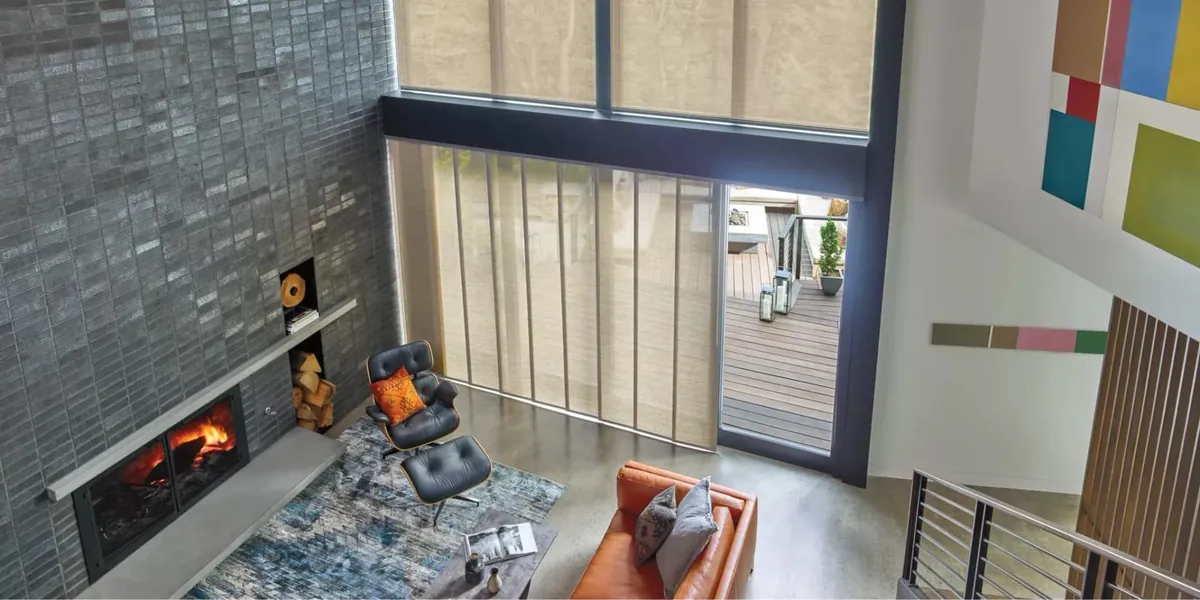
Updating a ranch one room at a time
Many South Yarmouth ranches have been improved gradually, a kitchen one year, a bathroom the next. Window coverings can follow the same pattern. We can plan the whole house at one visit, choose a color and backing that will look consistent from the street, and then treat the rooms you want first. Later orders stay consistent with the first, so the house never ends up with a patchwork of styles.
The rooms people usually start with are the ones that bother them most: the living room picture window that overheats, the bedroom that gets the morning sun, the slider that has never had a decent covering. Starting there makes the biggest difference soonest, and the rest can follow when it suits you.
Which product for which Yarmouth room
A Gallery dealer’s value is in knowing which of several similar products fits a particular room. These are the pairings we suggest most often across town.
- Cape parlor on 6A, north-facing. A double-cell Duette mounted inside, with lined drapery panels for the coldest nights.
- Cape bedroom with small-paned sash. A room-darkening honeycomb in a slim headrail, so the little window stays clear when raised.
- South Yarmouth living room with a picture window. Designer screen shades, or a set of honeycomb shades on one headrail.
- Ranch bedroom facing the next house. A top-down, bottom-up shade, or shutters with the louvers tilted up.
- Cottage kitchen and bath. Palm Beach cafe shutters or EverWood faux wood blinds.
- Slider to the patio. A vertical honeycomb shade, a Luminette sheer or vertical blinds.
You can read about each family on our Hunter Douglas shades, blinds and shutters pages. When you book, tell us which rooms are on your list, and a Hunter Douglas dealer in Yarmouth, MA will bring samples for each of them.
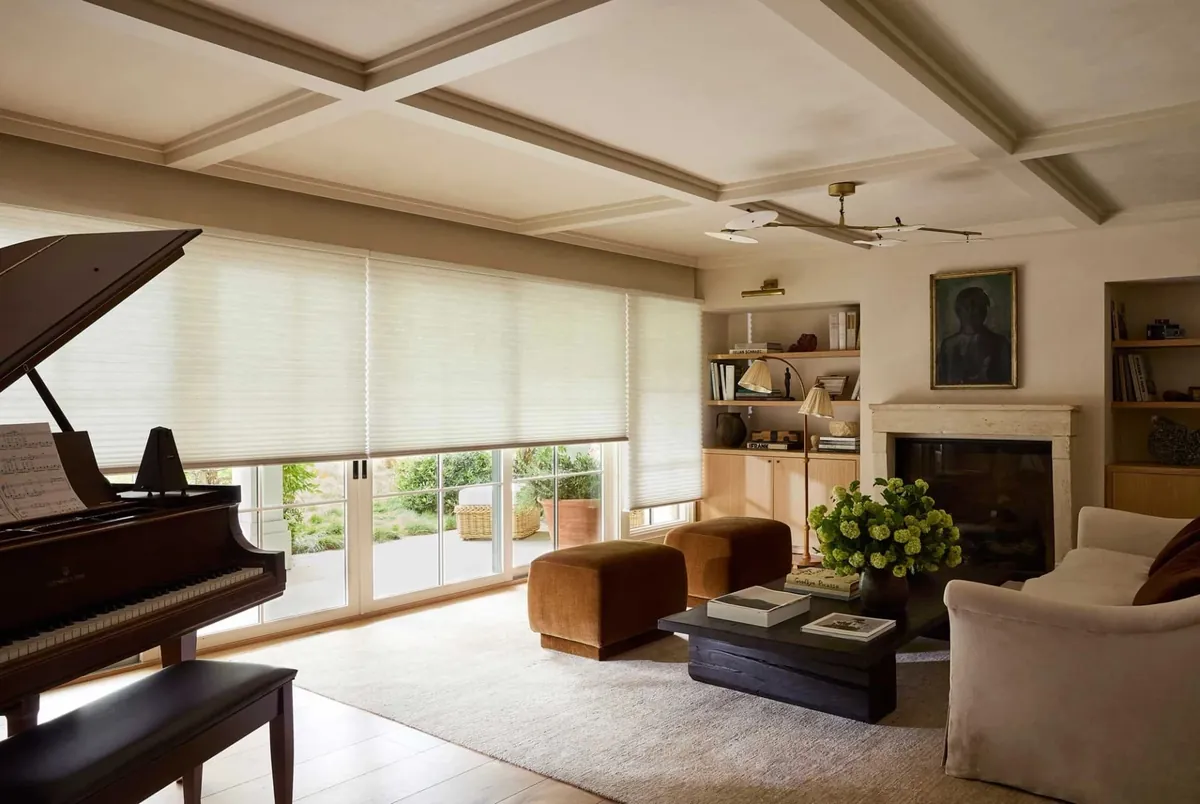
A visit to your house
Most Yarmouth projects start at home, because a cape parlor on 6A and a sunny ranch living room look nothing alike in a store. Our vans carry samples, so the showroom comes to your door.
- Choose a time through Request a Consultation, or press the call button.
- A consultant arrives with samples chosen for your side of town and the age of your house.
- You go through each room together and talk about warmth, sun, privacy and how you use the space.
- You hold samples against your own windows and see them in your own light.
- Each window is measured for width, height and frame depth.
- You receive a free estimate and take as long as you need to decide.
Interior design help is available too, through our interior design consultations. Before the visit, you might like to read what happens at an in-home consultation.
When the order arrives
Fitting is done by our own installers, certified by Hunter Douglas, and it gets the same care as the measuring. In a cape on 6A that means finding solid wood behind old plaster for every bracket and setting each headrail level even where the sill has dropped over the years. In a South Yarmouth ranch it usually means long headrails across picture windows that have to sit perfectly straight, and vertical products on sliders that must glide without catching. Before we leave, every shade, blind and shutter is run through its full travel, any PowerView shades are paired with your remote or app, and you are shown how each one works.
Look through the catalog first
Hunter Douglas keeps its full catalog online. You can look through the Hunter Douglas catalog to see every line side by side, and let us know what you like when you book. Our Hunter Douglas page describes each family in everyday terms.

Gallery dealer, certified installers
The Gallery title is Hunter Douglas’s own mark for dealers who meet its standards, and Blinds & Designs holds it. In Yarmouth that means one company can offer the right product for an antique cape on 6A and for a South Yarmouth ranch, from the whole range of shades, blinds, shutters and drapery.
Hunter Douglas certifies our installers, and the people who measure are responsible for the fit. Blind and shade repair is available for coverings you already own, and PowerView can be added to suitable shades later. Everything we offer in town is on our Yarmouth page.
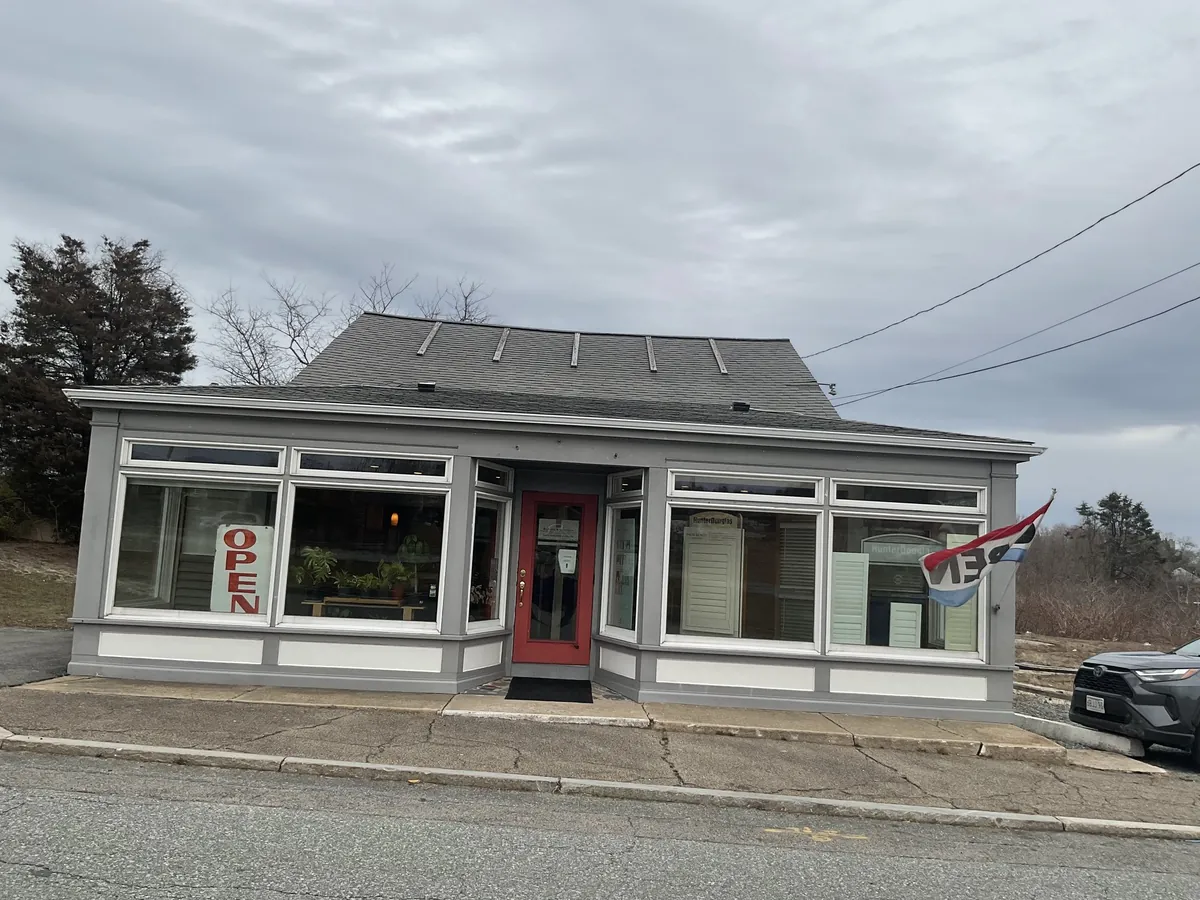
Our Sagamore showroom
Sagamore, by the canal, is our closest showroom to Yarmouth. If you like to see a product before anyone visits, it is a straightforward drive along Route 6.
Many customers begin with samples at home and visit afterwards for another look. Either way, one Hunter Douglas dealer in Yarmouth, MA takes the job from measuring to installation.
Questions from Yarmouth
Do houses on 6A and in South Yarmouth need different products?
Often. Bay-side capes usually need warmth and products that fit small, old frames. Sound-side ranches and cottages need heat and glare control and privacy from close neighbors. We plan by the house’s age and the way each room faces.
What suits the small-paned windows in an antique cape?
Slim honeycomb or Roman shades mounted inside the frame, or shutters in a soft painted finish. We measure every window carefully first, because old frames are rarely square.
How do I cut the afternoon sun in a south-facing ranch?
A screen shade with the right openness keeps the view and blocks glare. Banded shades or Sonnette cellular roller shades are alternatives, and PowerView can lower them on a schedule.
Can I do a few rooms now and the rest later?
Yes. We plan the whole house at one visit so everything matches from the street, then you start with the rooms that matter most.
Will I be charged for the estimate?
No. After we measure, you receive a free estimate for the products and installation you are considering.
Start with a consultation
Whichever side of town you live on, the clearest answer comes from samples at your own windows. Request a consultation and we will arrive with the Hunter Douglas families that suit your house, measure every opening and leave a free estimate. To talk first, use the call button, or stop at the Sagamore showroom on your way along Route 6.