
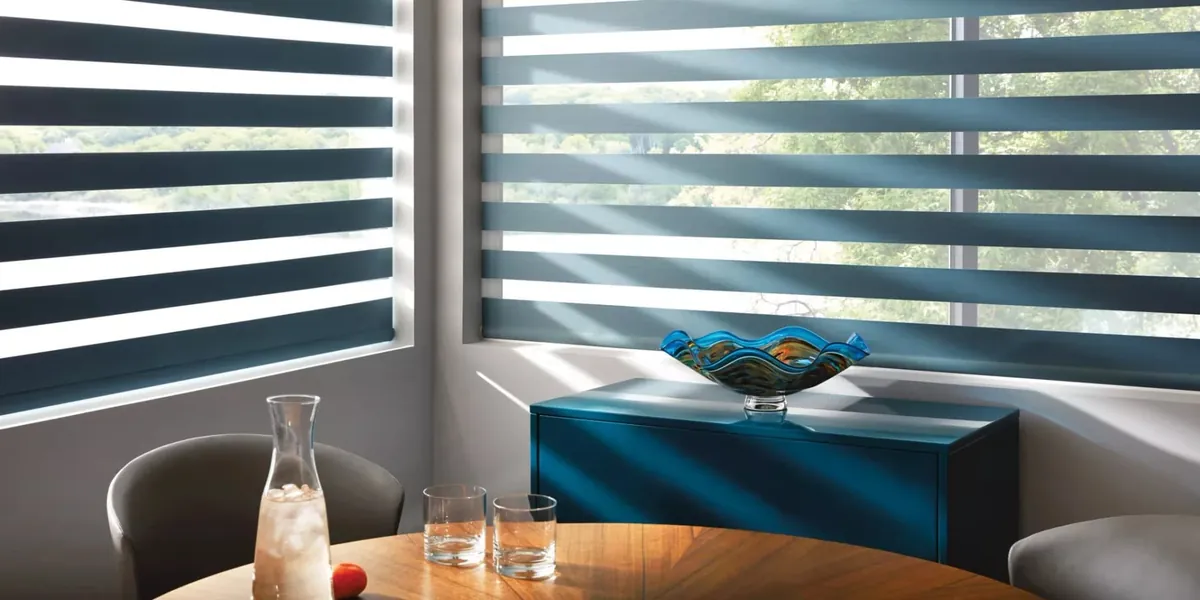
Light from every side
On a crowded street, a room gets its light from one direction, the front or the back. Halifax is not built that way. Capes and ranches sit on larger lots around Monponsett Pond, newer colonials stand back from Plymouth Street with space on all sides, and with so few neighbors close by, builders were free to put windows wherever the view or the sun suggested. The result is a lot of rooms lit from two or three sides at once. That single fact shapes almost every recommendation we make for roller shades in Halifax, MA.
A room with windows on one wall has one problem to solve. A corner room has two, and they change through the day. The east windows are bright at breakfast, the south ones through midday and the west ones in the late afternoon, sometimes with the pond adding its own reflected glare. Treating every window in the room the same way rarely works.
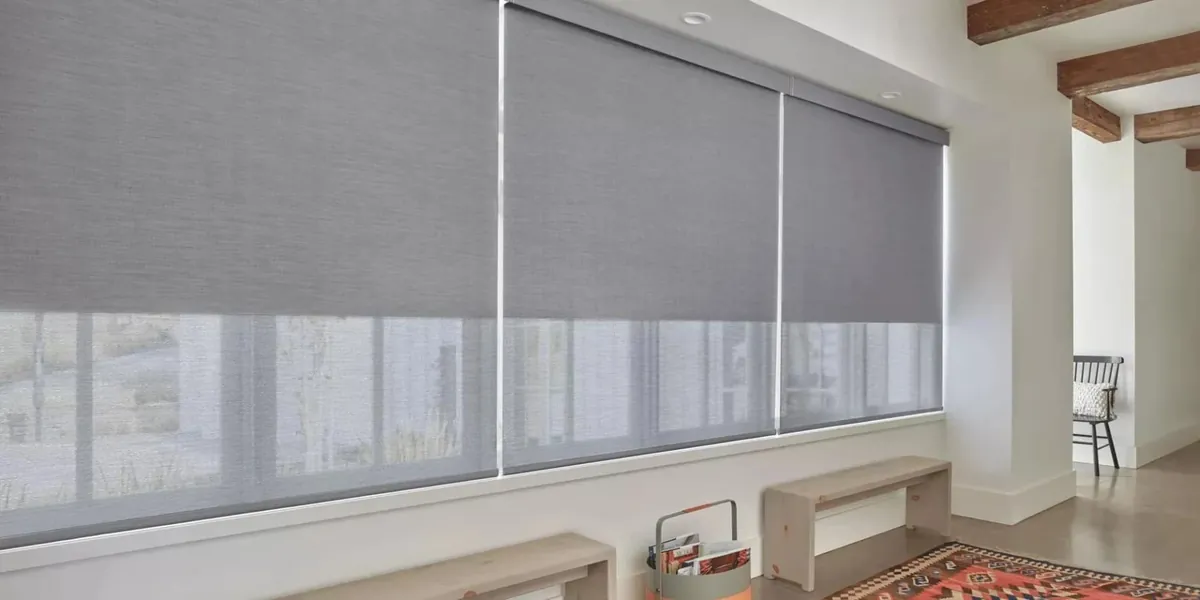
Roller shades handle this well because each window can have its own fabric and still look like part of a set. The headrails line up, the colors match, and the openness or opacity changes to suit the direction each window faces.
What we bring to a Halifax house
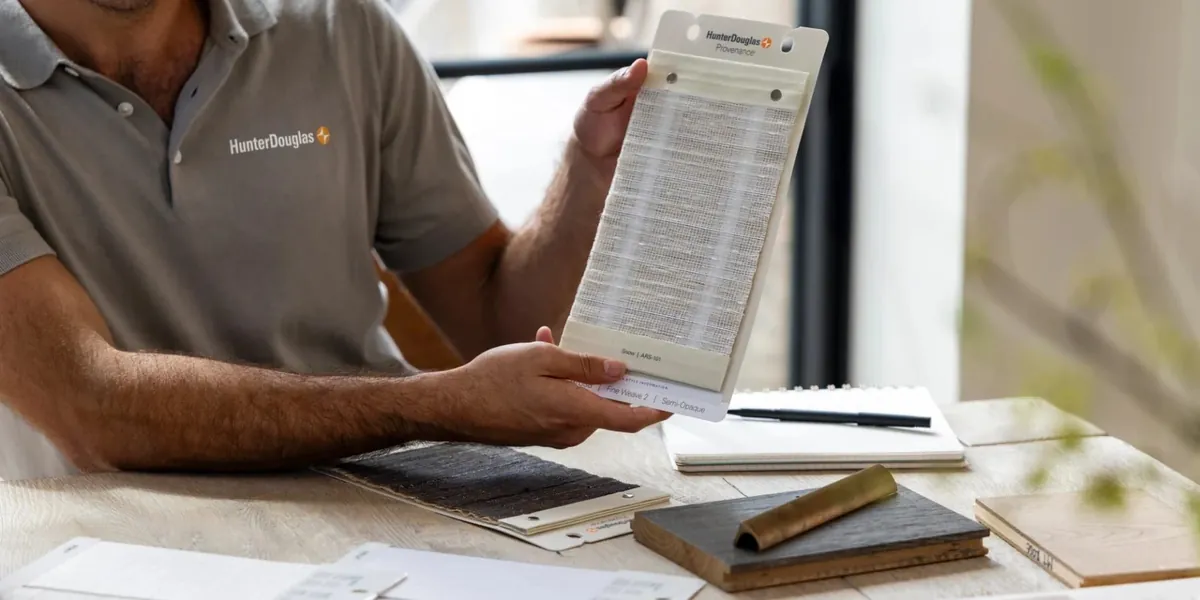
All Hunter Douglas, and all carried in our vans as working samples.
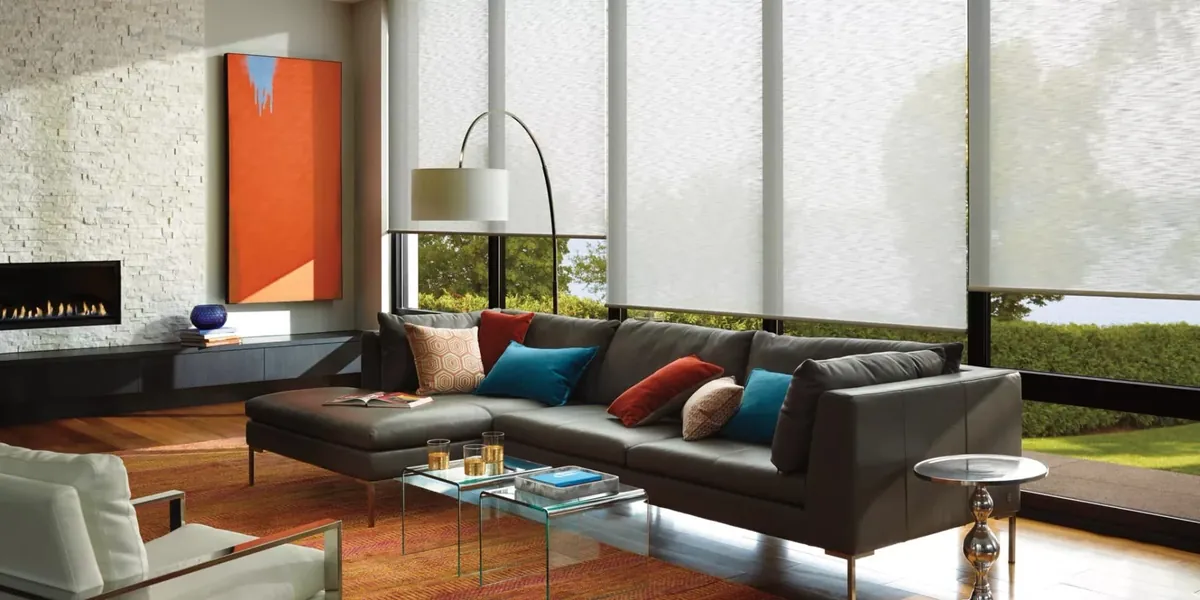
Sheer screens for the pond side
Designer Screen fabric softens the light bouncing off the water while the shoreline stays in view.
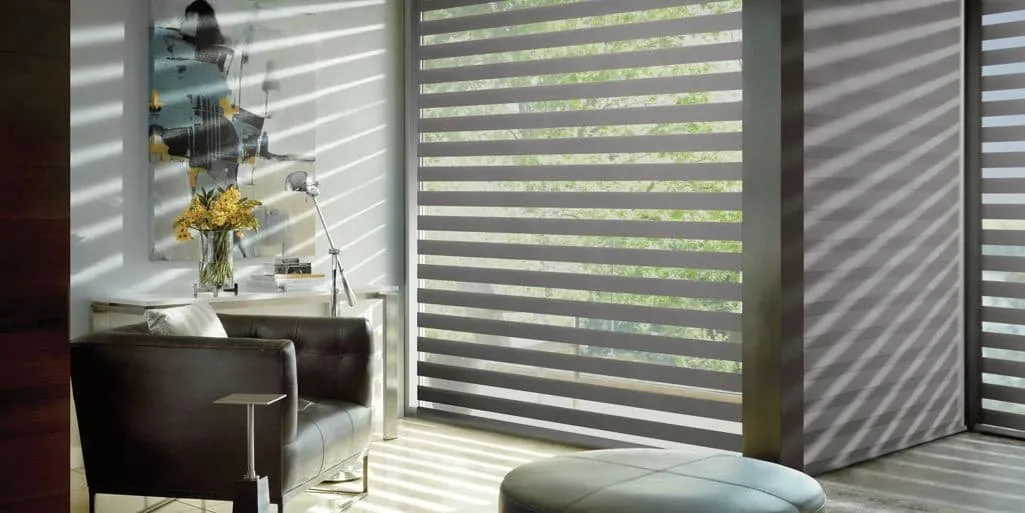
Banded stripes
Designer Banded shifts between open and closed without raising the shade. Handy in a corner reading spot.
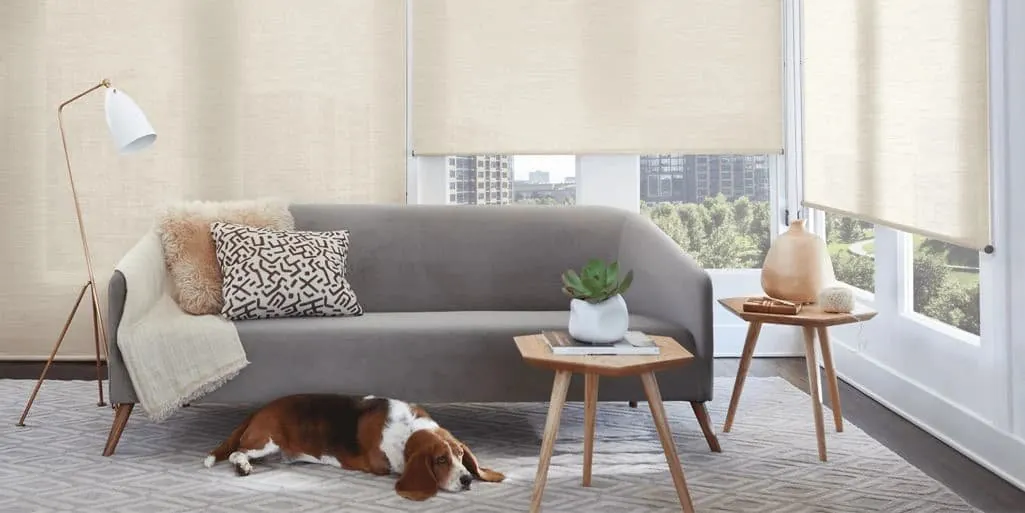
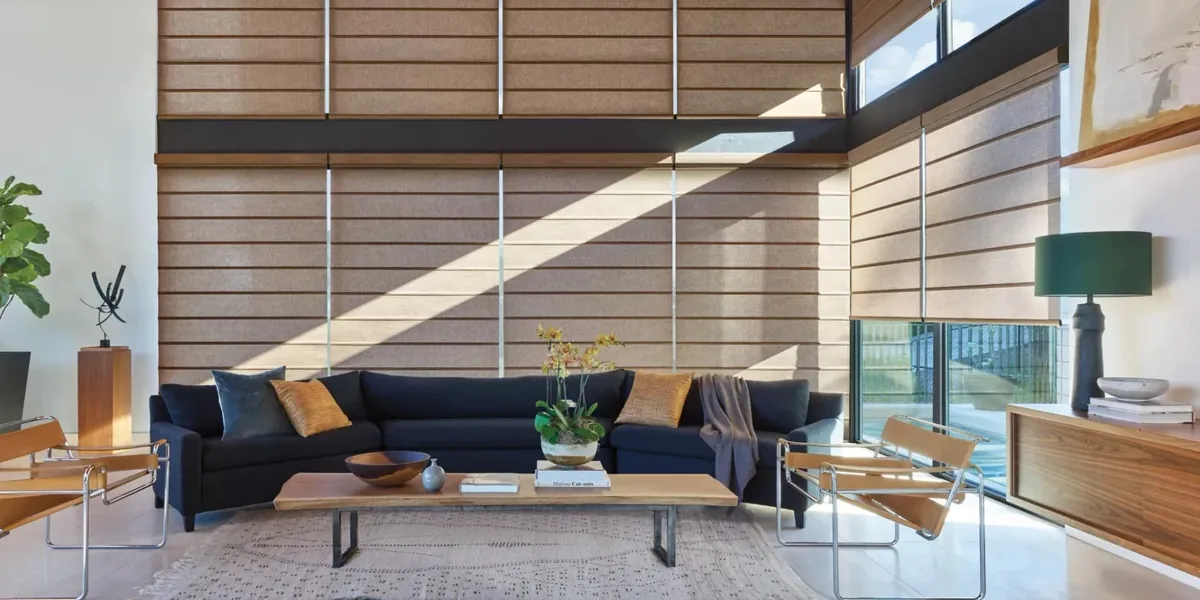
Textured light filtering
A woven texture gives a plain roller some depth, and the fabric keeps the room bright and private.
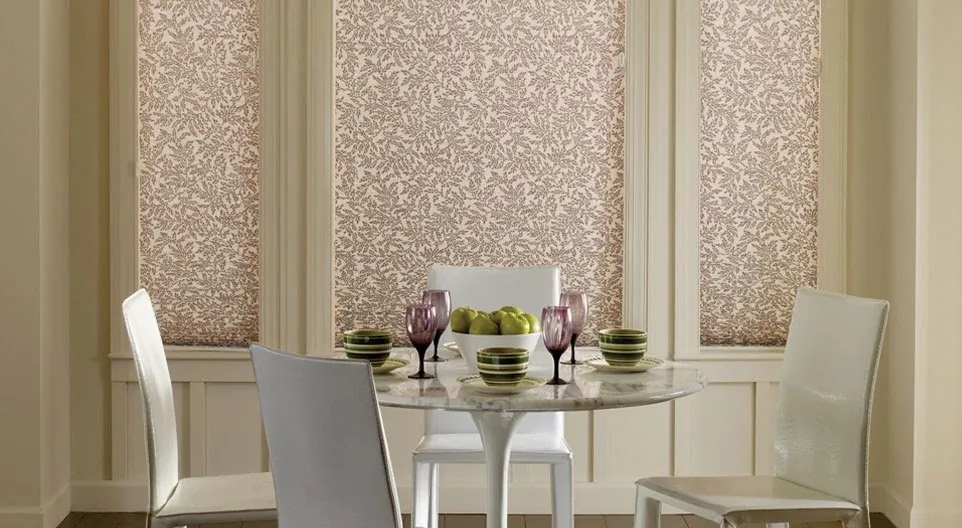
Printed fabrics
A pattern on a dining room or a cape’s front room, where the window is meant to be noticed.
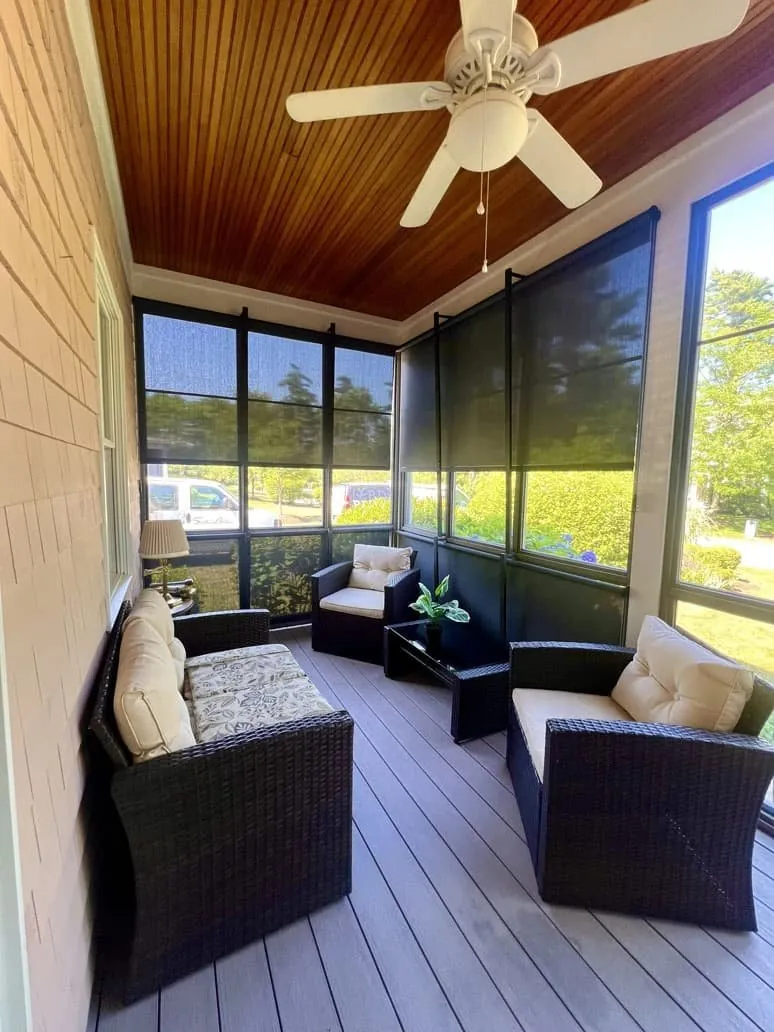
Screens for porches
Dark screen rollers on every side of a porch or sunroom, so the room stays usable through a summer afternoon.
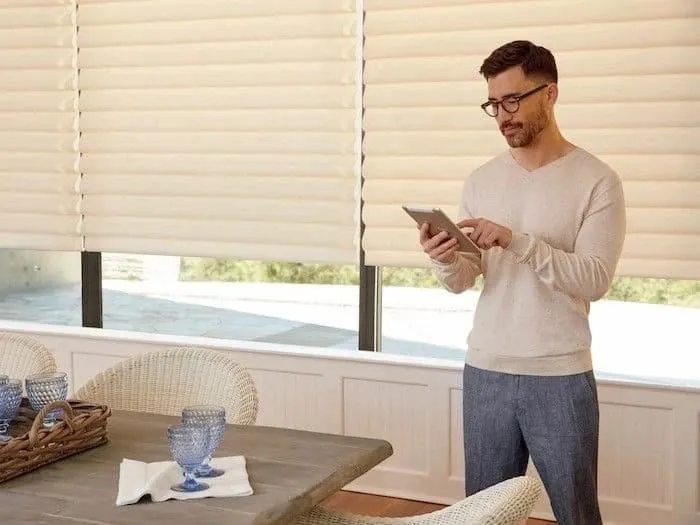
Tablet and app control
PowerView moves each side of the room on its own schedule as the sun comes round.
Planning a room with two or three window walls
The trick in a multi-sided room is to think about each wall separately and then make sure the finished room still reads as one.
Start with direction. An east wall takes low, strong sun first thing, so a bedroom with an east window wants blackout and a breakfast room wants a light filtering fabric that softens the glare. A south wall takes higher sun for most of the day, which a screen handles well without darkening the room. A west wall is the one that causes most of the trouble: low sun late in the day, heat building up and glare straight into your eyes. West windows often get the tightest screen or a light filtering fabric that can come down fully.
Then think about the view. If a window looks toward the pond or across a field you love, you want to see through the shade, so a screen makes sense even if the light is strong. If it looks at a driveway or a garage, a light filtering fabric that you never need to raise may be the simpler choice.
Last, tie the room together. We keep the fabric color consistent across all the walls, even where the openness changes, and we set the headrails at one height so the room has a single line around it. When the shades are half-lowered, they can stop at the same height on every wall.
Monponsett Pond frontage
The houses that face Monponsett Pond have the most demanding windows in town. The rooms on the water side are often arranged around the view, and the pond itself becomes a second light source. On a sunny afternoon it throws light up into the house from below, so it arrives under the brim of any porch roof and lands on ceilings, screens and faces.
Solar screen fabric was made for exactly this. A screen is woven with small open spaces, and the openness factor tells you how much of the fabric is open. It is about view and glare, nothing else. A low openness blocks more of that reflected glare and gives more daytime privacy, though the pond looks softer through it. A higher openness keeps the water and the far shore crisp while still taking the harshness out of the light.
Color is the other half of the choice. Darker screens are usually easier to see through, so many pond-side rooms end up with a charcoal or bronze screen that seems to vanish when you look out. Lighter screens look brighter inside and reflect more of the sun. We hang samples of both against your pond window at the time of day the glare is worst, so you can judge for yourself.
Remember that screens are a daytime fabric. With the lights on after dark, a lit room facing the water can be seen from the pond. For rooms used in the evening, a second, opaque roller behind the screen, or a banded shade that closes fully, solves that.
Capes on larger lots
A cape around the pond or along the quieter roads usually has a symmetrical front with a window either side of the door, dormers above and a kitchen and family room across the back. The dormer windows are small and set into sloping ceilings, and the upstairs rooms beneath them can get warm in summer and bright early in the morning.
Roller shades suit dormers well. They are slim, they fit small openings, and they leave nearly the whole window clear when raised. In a dormer bedroom, a blackout fabric keeps the room dark, and an outside mount over the trim closes the light gaps where an inside mount would leak at the edges. Where the dormer reveal is deep enough, an inside mount keeps the window neat.
Downstairs, the back rooms of a cape often have windows on two walls, the back and one side. That is where the multi-sided planning above comes in.
Ranches spread across the lot
A ranch on a generous lot is usually long and low, with rooms strung along one level and windows on both long sides. The living room often has a picture window to the front and a slider to the back, so it takes light from both directions.
We handle the picture window first. It is often too wide for a single shade, so we split it into two or three rollers on a shared bracket that can move together or separately. A light filtering fabric gives privacy from the road and keeps the room bright. The back slider can take a roller if there is room above the frame and the handle sits clear of the fabric, often in a screen to handle afternoon sun off the yard.
Because a ranch is all on one floor, you see from room to room down the hall. One color family across the whole house keeps it calm, even where the bedrooms take blackout and the living room takes a screen.
Newer colonials off Plymouth Street
The colonials built more recently off Plymouth Street tend to have larger windows and more of them, plus a two-story foyer or a family room with high glass. Their openings are standard sizes, which makes measuring straightforward, and the house sits with open space around it, so most rooms still get light from more than one side.
For the open kitchen and family room at the back, we often use one fabric along the whole run of windows so the space feels like a single room, with a screen on any wall that faces west. Upstairs, bedrooms usually take room darkening or blackout fabric, and children’s rooms take cordless rollers with nothing hanging at the side. The high foyer glass is a job for a motor.
The bonus room over the garage
Many of the newer colonials have a bonus room built over the garage, and it is often the hardest room in the house to keep comfortable. It sits under the roof, it usually has windows at both gable ends and sometimes a dormer on the side, and on a summer afternoon it can heat up quickly. Because the house stands on an open lot, nothing shades those gable windows.
For a room like this, we tend to suggest a screen on the gable that takes the afternoon sun and a light filtering or room darkening fabric on the other windows, depending on whether the room is a playroom, an office or a place for watching films. If a gable window sits high up under the peak, a motor saves climbing on a chair. Choosing roller shades for a Halifax, MA, bonus room is mostly about that one hot gable, and once it is handled the rest of the room usually falls into place.
How the seasons change an open lot
With few trees close to the house, the sun reaches Halifax windows all year, but it does very different things in each season. In summer it rides high, so south windows see less direct sun than you might expect while east and west windows take the brunt in the morning and evening. In winter the sun stays low all day and reaches deep into south-facing rooms, landing on floors and furniture far from the glass.
That is worth thinking about before you choose. A screen that feels just right on a west window in July may still let strong low sun across the room in January, and a light filtering fabric on a south window gives welcome winter warmth while still softening the glare. We talk through how each room feels across the year, not only on the day we visit, so the roller shades in Halifax houses we plan suit every season.
How the home visit goes
Halifax houses are spread out, and the light in a multi-sided room is something you have to see in person. So we come to you. Our vans carry samples, and we can bring the showroom to your door.
- You request a consultation online or with the call button, and we fix a time, ideally when the sun is doing what bothers you.
- We walk through the house and note which way each wall faces and what you see from each window.
- You hold screen, light filtering and blackout samples up on each side of the room and compare them.
- We discuss mounts, lifts and any windows worth motorizing.
- We measure every opening carefully.
- You receive a free estimate and take whatever time you need to decide.
To prepare, you can read what happens at an in-home consultation. If you would like help pulling a whole room together, we also offer interior design consultations.
PowerView and the moving sun
In a room with windows on three sides, the sun is always arriving somewhere new. PowerView motorization makes that easy to live with. A quiet motor inside each roller tube lets you move the shade from a remote or the PowerView app, and schedules can move each wall on its own timetable.
A typical setup for a corner family room: the east shades rise at sunrise, the south screens lower around midday, the west screens drop in the late afternoon and everything closes at dusk. You set it once and the room looks after itself. Groups let one tap move a single wall or the whole room.
We plan how each motor is powered at the visit and help you choose which windows benefit. Many Halifax houses use motors on the multi-sided rooms and the high glass, and cordless lifts elsewhere. Our page on motorized blinds in Halifax explains the controls in more depth.
Opacity at a glance
- Screen: keeps the view, cuts glare, gives daytime privacy.
- Light filtering: soft, even light with privacy from outside.
- Room darkening: a dim, restful room.
- Blackout: no light through the fabric.
Mount matters for darkness. An inside mount leaves slim gaps at the sides. An outside mount overlapping the trim closes most of them, which is why bedrooms often take the outside mount.

The Hunter Douglas lines
The roller shades in Halifax we supply come from several Hunter Douglas lines. Designer Roller is the core collection, with plain and textured fabrics in every opacity. Designer Screen is the solar screen family. Designer Banded has its two sliding striped layers. Sonnette is the cellular roller, with a softly curved profile. Alustra is the premium tier with finer weaves and prints, including the Alustra Woven Textures roller.
In a multi-sided room, mixing lines is common: Designer Screen on the pond wall, Designer Roller in light filtering on the driveway side, all in one color. The roller shades page covers every line, and Designer Screen goes deeper into the screens.
Measuring and fitting
- We measure width and height at several points on each opening, plus the depth of the reveal.
- We agree mount, fabric, lift and roll direction for each window with you.
- On arrival, our certified Hunter Douglas installers fix every bracket into solid framing.
- In a multi-sided room, we set every headrail on one line around the room.
- Each shade is run through its full travel, and we set up any PowerView schedules with you.
Gallery dealer, certified installation
Blinds & Designs is a Hunter Douglas Gallery dealer, a designation Hunter Douglas gives dealers who meet its standards. You get the whole roller range from one place, along with Hunter Douglas blinds, shutters, cellular and roman shades and drapery.
Our installers are certified by Hunter Douglas, and we repair blinds and shades if anything needs attention later on. For other rooms, see cellular shades in Halifax and roman shades in Halifax, or every service we offer in town on our Halifax page.
Our Sagamore showroom
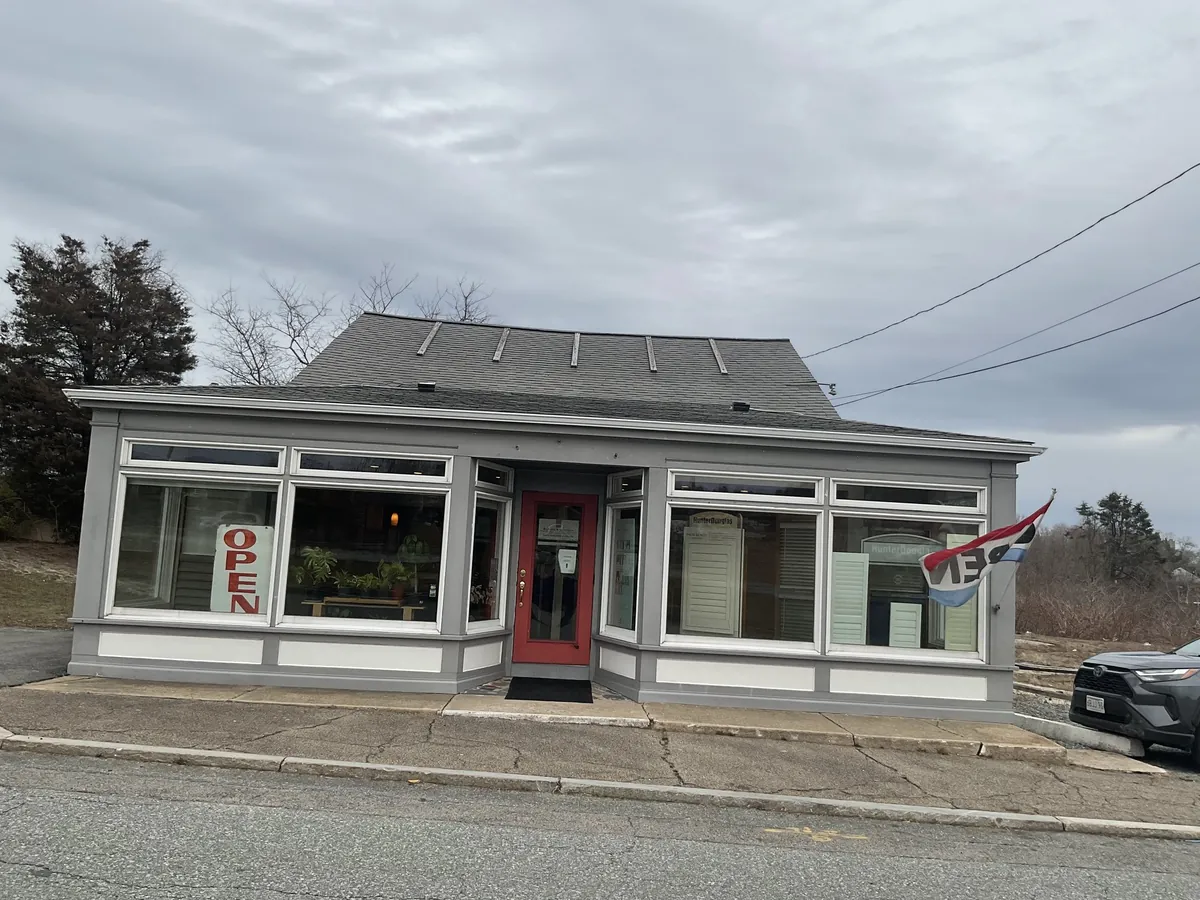
Sagamore is the closest Blinds & Designs showroom to Halifax. The Sagamore showroom page lists the address and opening hours.
For a house with light on every side, the home visit is still the best place to decide, because the pond, the yard and the sun’s path are all at your house.
Questions from Halifax
My living room has windows on three walls. Should every shade be the same?
Not necessarily. Each wall faces a different direction and may want a different fabric, a tighter screen on the west, a lighter one on the east. We keep the color and headrail height consistent so the room still looks like a set.
What screen works best facing the pond?
That depends on how much glare you get and how clearly you want to see the water. A darker screen with a moderate openness is a common choice, but we bring several so you can compare at your own window.
Will rollers fit the dormer windows in my cape?
Yes. Rollers suit small openings and leave nearly the whole window clear when raised. For a dormer bedroom, an outside mount with blackout fabric keeps the room darkest.
Can the shades move on their own as the sun comes round?
Yes, with PowerView. Each wall can follow its own schedule, so shades lower and rise as the sun reaches each side of the room.
How much is the estimate?
The estimate is free. After we measure, you receive a free estimate for the shades you are considering.
Your next step
Roller shades in Halifax, MA, work best when each window is chosen for the light it actually gets. Request a consultation and we will bring the samples to every side of your rooms, measure each window and give you a free estimate. You can also use the call button or visit our Sagamore showroom.