
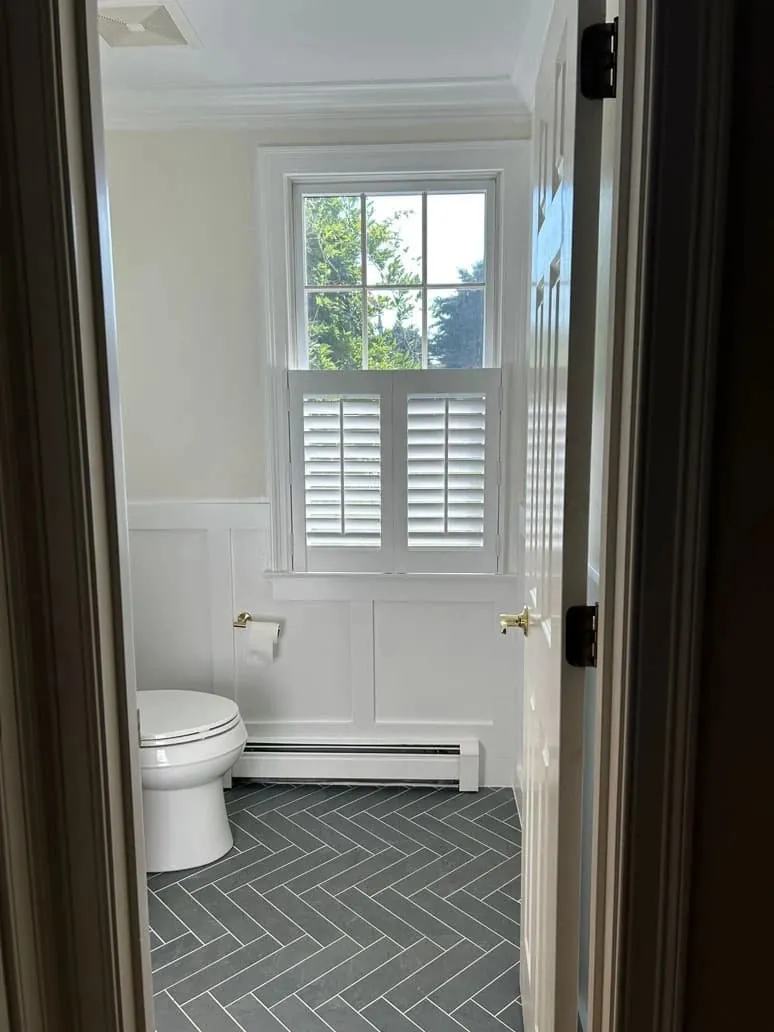
The smallest and the tallest windows in one town
Medway’s housing runs to two extremes, and the windows follow. Near the village, antique colonials keep sash that is small, deep-set and often surprisingly thick in the wall, with panes that let in less light than the room deserves. Across the subdivisions off Holliston Street, large newer colonials open with a two-story foyer and a window over the front door that is taller than most rooms.
Those two windows ask opposite things of a covering. The old one needs something slim that respects the trim and keeps every bit of daylight. The new one needs something that can handle height, heat and glare, and that you can operate without a ladder. Working as a Hunter Douglas dealer in Medway, MA, we are regularly asked to solve both in the same week.
Between them sit the ordinary rooms, bedrooms, kitchens, family rooms, with modern openings that suit almost anything in the range. That is where a Gallery dealer’s full catalog earns its keep, because the choice is about how you want each room to feel.
Six Medway window problems and the Hunter Douglas answer
We picked these because they come up in Medway houses again and again. Every one of them comes with samples to your door.
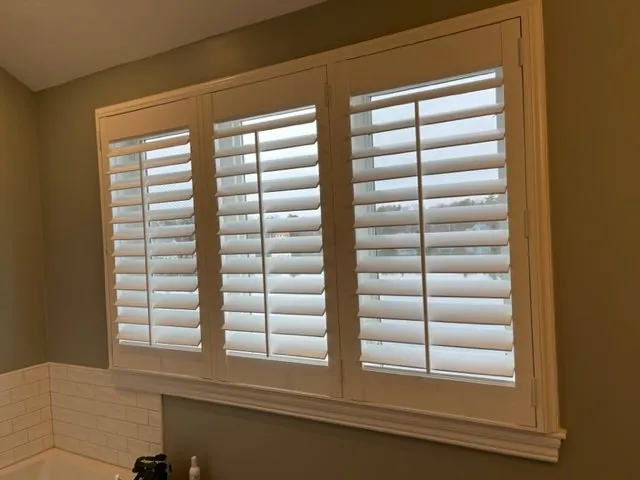
Deep sash, little light
Shutters built into a deep old reveal look original to the house, and the louvers tilt to let in what daylight there is.
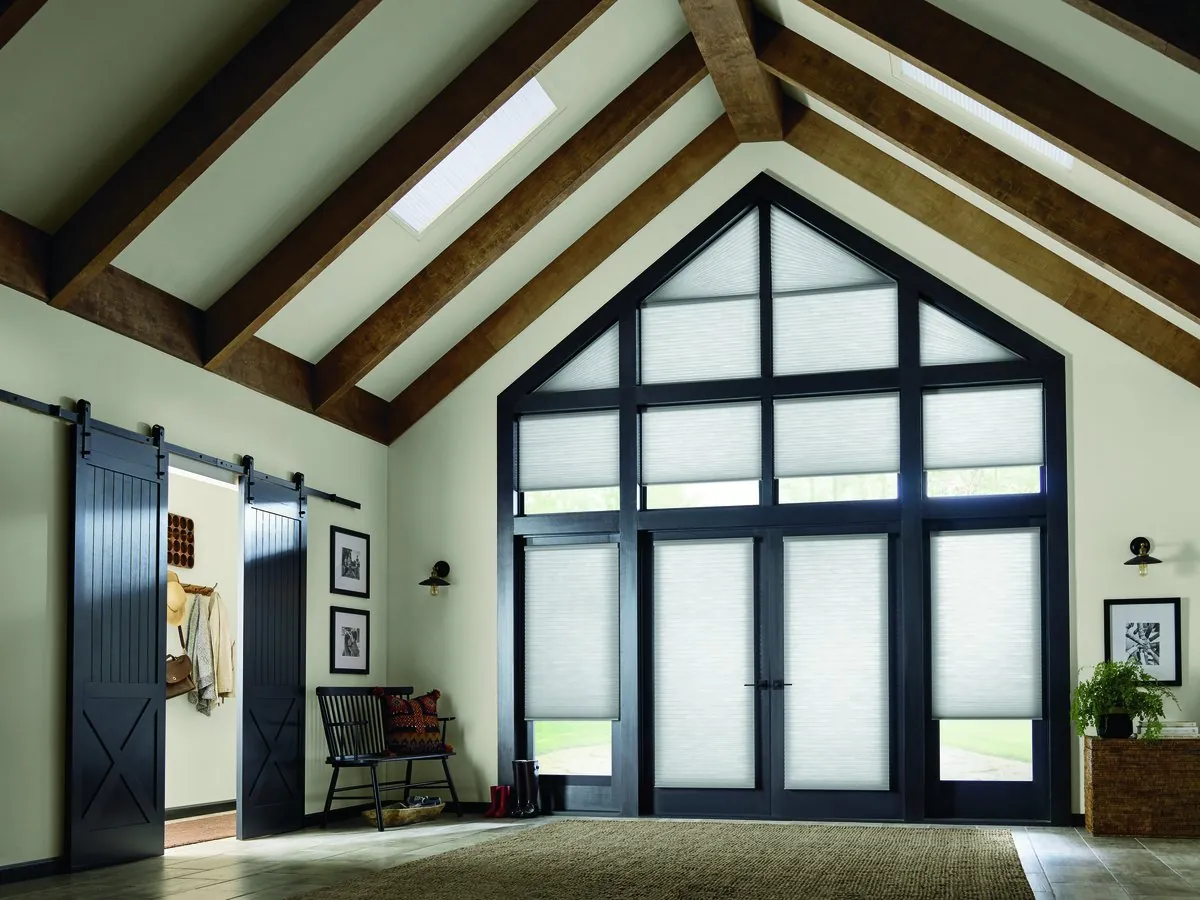
The foyer window
Honeycomb shades, sized pane by pane, line up across tall entry glass and can be made for unusual shapes.
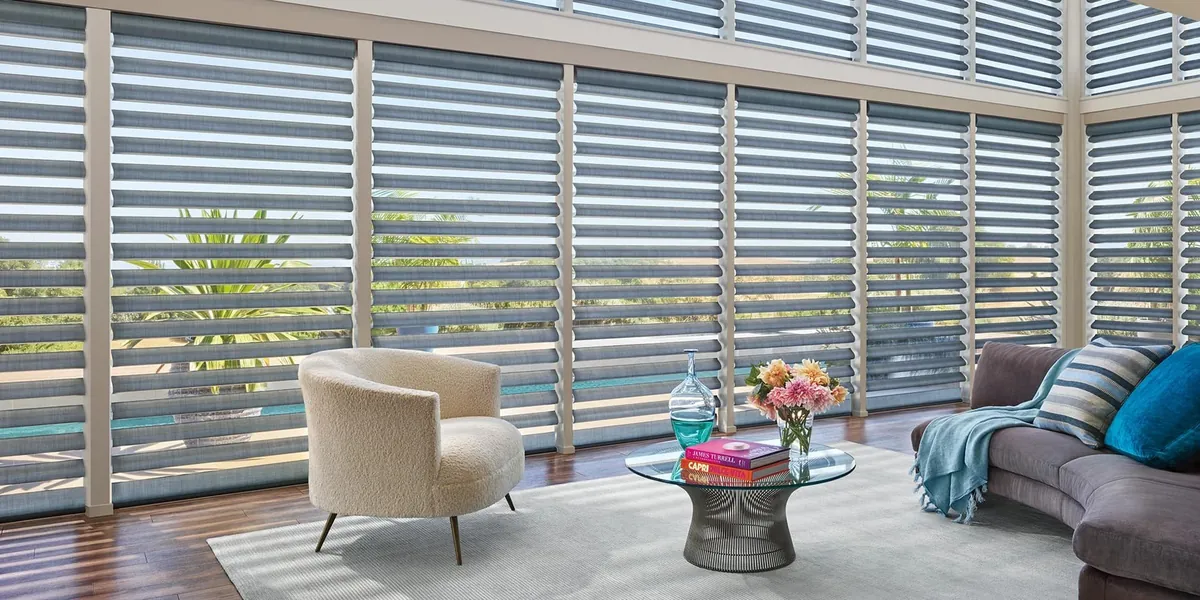
A soft view out
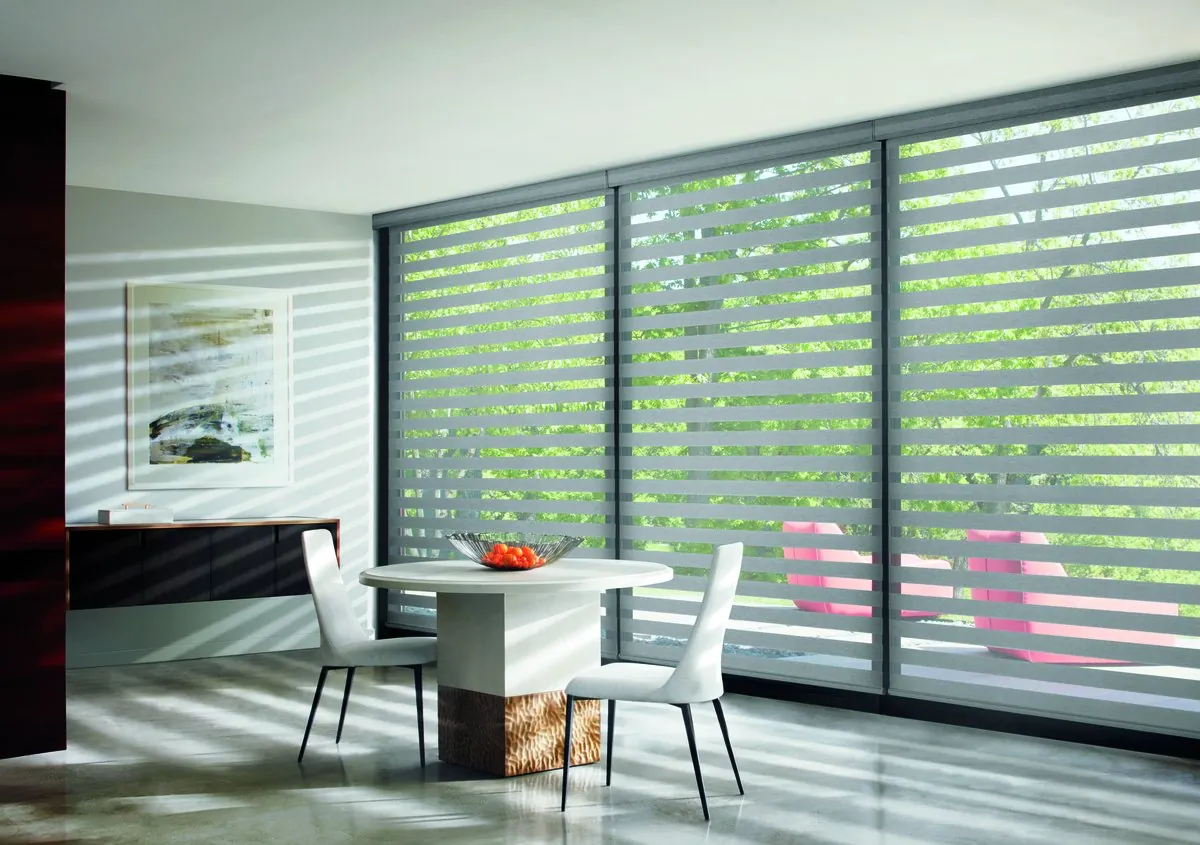
Pirouette and Silhouette diffuse bright light in a family room while you can still see the yard.
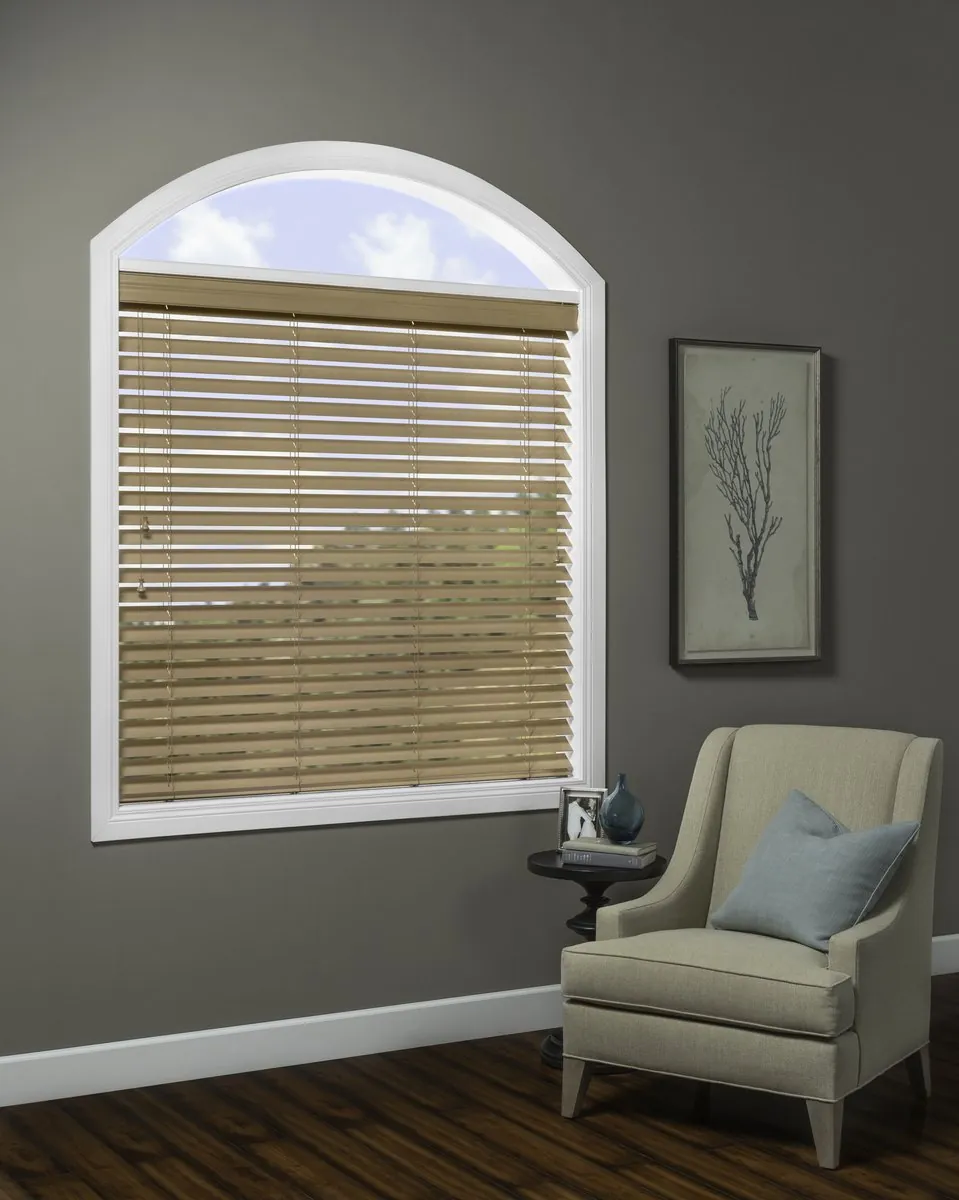
Arched tops
Leave the arch open to the sky and cover the rectangle beneath with a wood blind or honeycomb shade.
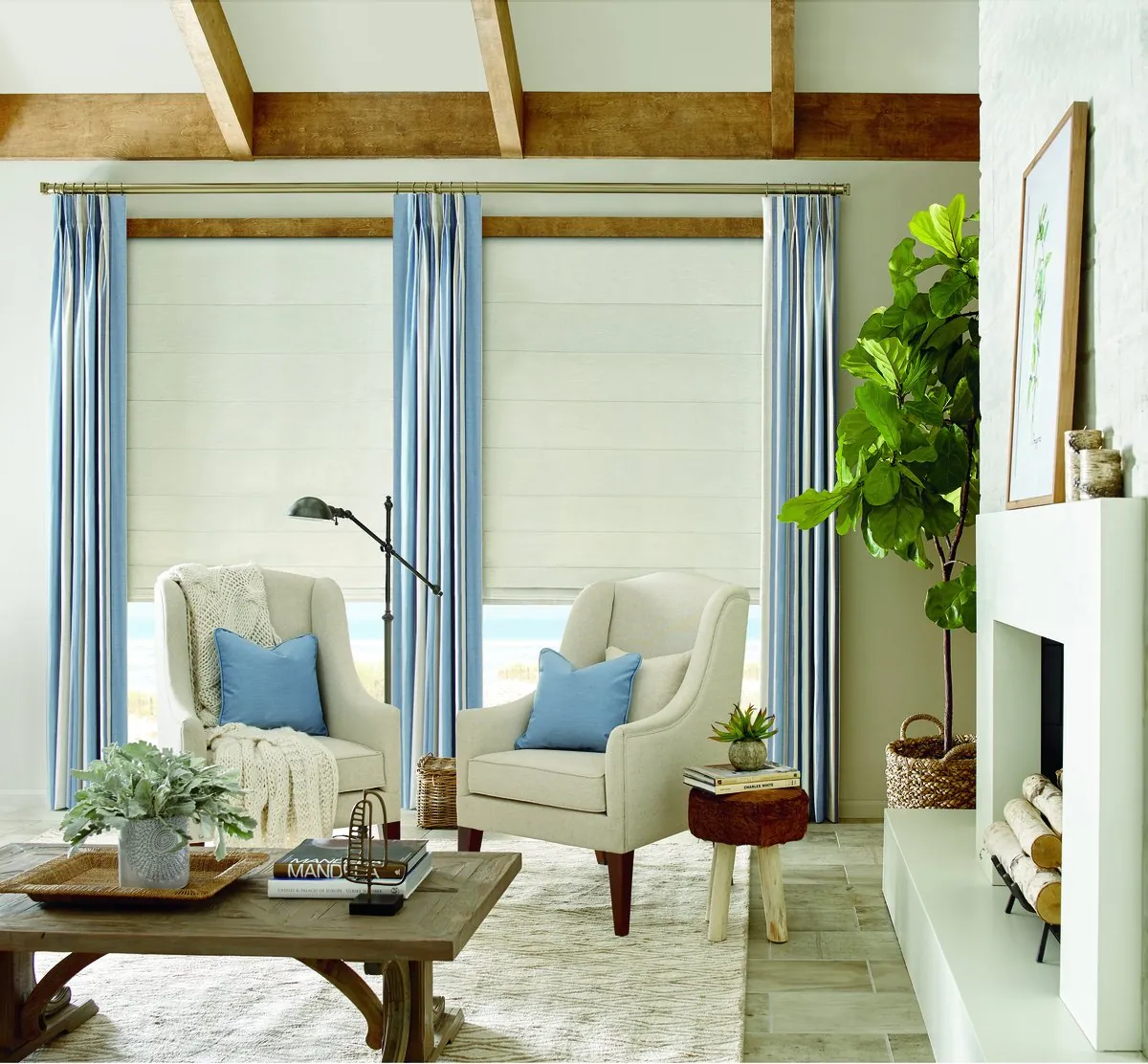
Formal front rooms
Vignette Roman shades under drapery panels finish a living room in the newer colonials.
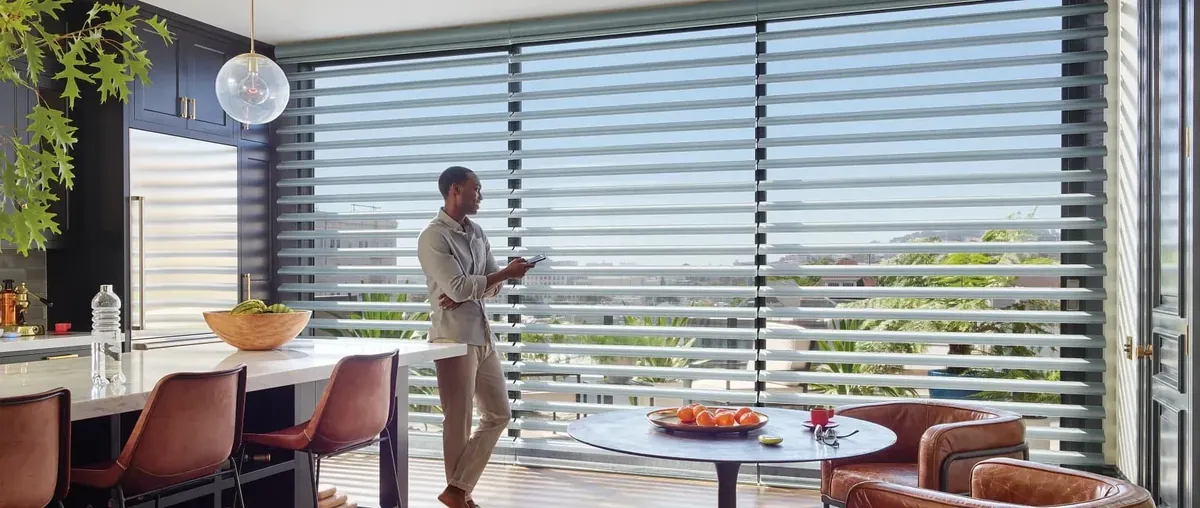
Hard-to-reach glass
PowerView moves the high shades from a phone, a remote or a timer you set once.
Very small, deep-set sash near the village
The oldest houses near the village have windows that make a modern installer slow down. The openings are small, the walls are thick, and the sash sits well back from the face of the room. Some frames are no longer square after a long life. Nobody wants a heavy treatment that swallows a window like that, and nobody wants to lose any of the light it gives.
Depth is the friend here. A deep reveal means a headrail can sit fully inside the opening, which keeps the trim clear. When we measure these windows we take each dimension at several points and use the tightest one, because an inside-mounted product has to clear the narrowest spot.
- We measure the width at the top, the middle and the sill.
- We measure the height at the left, the center and the right.
- We check the reveal depth where the headrail or shutter frame would sit.
- We note any sash lock, pulley or stop that a product would need to clear.
- We confirm the mount with you before anything is ordered.
From there, a few products stand out. Heritance hardwood shutters with a frame built to the reveal look as if they arrived with the house, and the louvers can be sized to the small panes. A Duette honeycomb with a slim headrail tucks inside and pulls up into a narrow stack, leaving nearly all the glass clear. A Vignette Roman shade in a light-filtering fabric adds softness without bulk.
Two-story foyer windows off Holliston Street
The newer colonials across the subdivisions are built around their entry. Walk in and the foyer rises two floors, with a large window above the door and sometimes side lights or a transom. It is a lovely feature, until the sun hits it. Then it can heat the hall, glare down the stairs and fade the floor.
The first decision is what the window should do. If you want the light kept but softened, a sheer is the natural choice, turning direct sun into a gentle glow. If heat is the main complaint, a honeycomb shade does more, holding air in its cells between the glass and the hall. Where the window has an arch or an angled top, honeycomb can be made to match the shape, or the shaped part can be left open and the rectangle below covered.
The second decision is how you will reach it. PowerView motorization is the usual answer, with the shade on a schedule so it lowers when the sun comes round and rises again later. Installing at that height needs the right equipment and careful work, which is why certified Hunter Douglas installation matters as much as the product itself.
The rooms in between
Most of the house is neither antique nor two stories tall. Bedrooms, kitchens, dens and family rooms in both old and new Medway houses usually have standard openings, and almost any Hunter Douglas family will fit them. Here the question becomes what each room needs.
Bedrooms usually want darkness and comfort, so room-darkening honeycomb or a blackout Designer roller does the job. Kitchens want easy cleaning and nothing near the sink, so faux wood blinds or a cordless shade make sense. Family rooms often want glare control for a screen, which points toward a screen fabric or a banded shade. Home offices want daylight without reflections on the monitor.
A Hunter Douglas dealer in Medway with the full range can meet each of those needs with a different product while keeping the house looking consistent: matching headrail colors, similar fabric tones and the same lift system throughout.
Heat, light and the seasons
Medway houses go through the full New England year, and windows feel every bit of it. In winter, the small old sash and the tall new glass both lose warmth, and a room can feel cold near the window even with the heat on. In summer, the same glass lets in strong sun, and the family room off the back of a colonial can be uncomfortable by late afternoon.
Honeycomb shades help on both counts, which is why they are so common in Medway bedrooms and family rooms. Lowered on a winter evening, the cells keep the chill at the glass. Lowered on a summer afternoon, they slow the heat coming in. Double-cell versions add a second layer of air for the coldest rooms.
Shutters, Roman shades and drapery help as well, simply by adding a layer between room and glass. Sheers and screens are more about light than temperature, and they are the right call when the problem is glare rather than comfort.
What the first visit looks like
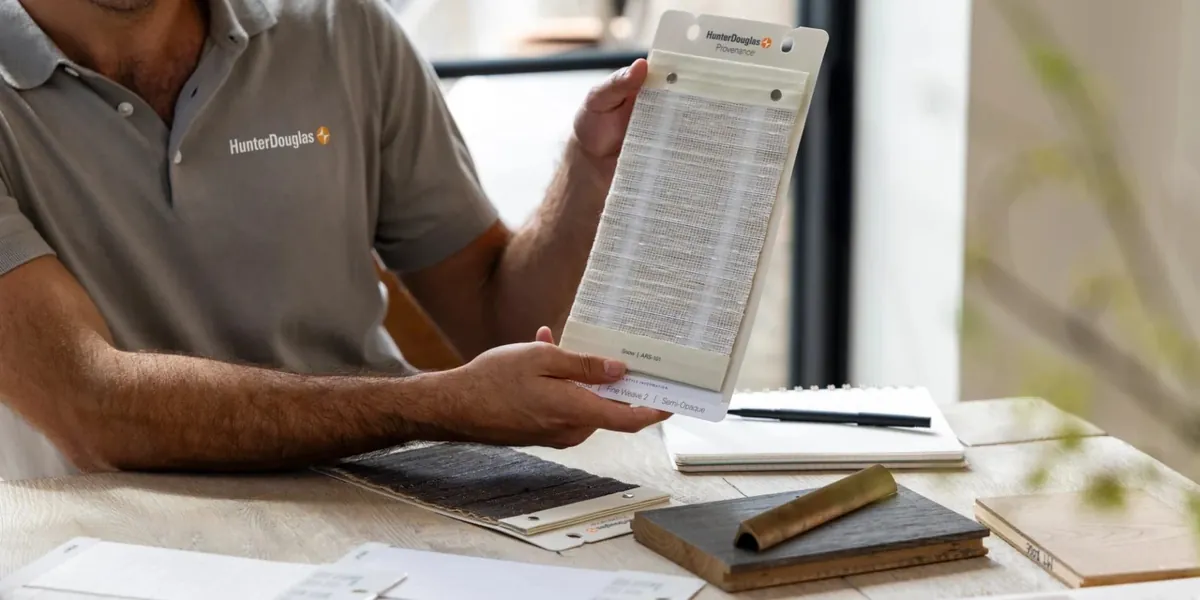
Most Medway projects begin with a visit to your house. You request a consultation or use the call button, and we agree a time. The van comes loaded with samples, because we can bring the showroom to you. We walk through the rooms with you and ask how each one is used, which windows annoy you, and what you like about the rooms as they are.
Then you get to handle the products. You hold a honeycomb fabric against the foyer glass, try a shutter louver in the deep old reveal, and compare a sheer and a screen in the family room. Seeing them in your own light makes the choice much easier than looking at a catalog page. We measure as we go, and before we leave you have a free estimate for the products and installation, with no pressure to decide that day.
If you want help beyond the windows, our interior design consultations cover color, fabric and layering for a room. Read what happens at an in-home consultation for more on the first visit.
Layering a shade with drapery
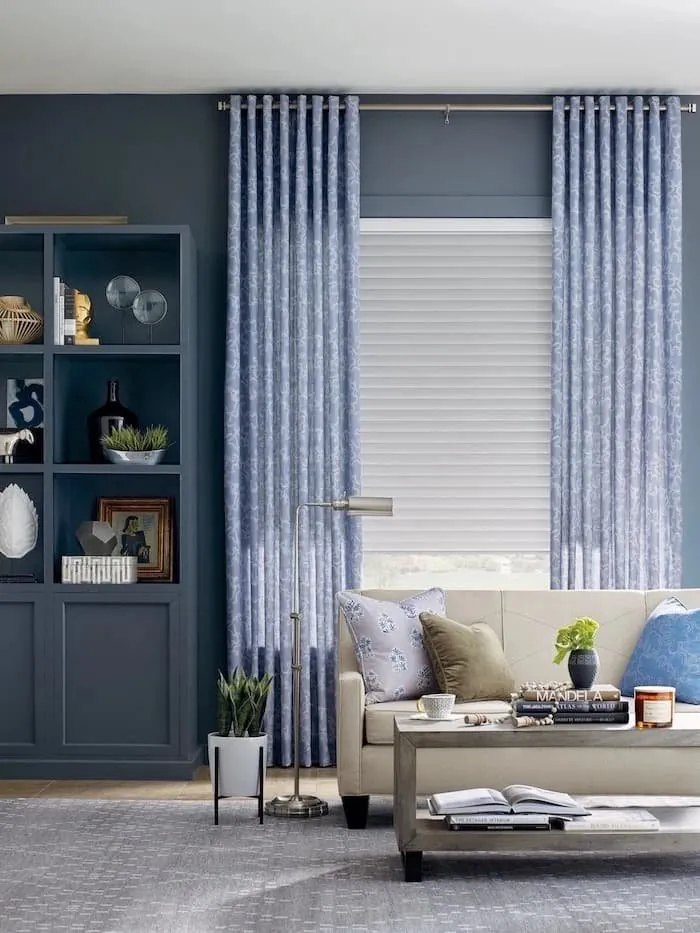
Some rooms look their best with two layers. A working shade sits close to the glass and does the daily job of light and privacy, while drapery panels frame the window and add color, pattern and softness. In Medway the pairing suits two very different rooms.
In an antique front parlor, drapery can soften a small deep window without covering the trim, hung from a slim rod set wide enough that the panels stack beside the casing rather than over the glass. A Roman or honeycomb shade inside the reveal does the practical work behind it.
In a newer colonial’s living room, with taller windows and a higher ceiling, floor-length panels hung close to the ceiling make the room feel even taller, and a sheer or screen shade behind them controls the afternoon light. When the drapery is mostly decorative, the shade can be motorized and set on a schedule, and the panels simply stay where you put them.
A Hunter Douglas dealer in Medway who carries drapery alongside shades can choose both together, so fabrics, colors and stack sizes work as one design rather than two separate purchases. Our custom drapery page has more.
Neighbors across the cul-de-sac
The subdivisions off Holliston Street put houses closer together than the older village lots, and many face each other across a curving street or a cul-de-sac. Front rooms and side windows can look straight into a neighbor’s. That changes what you want from a covering.
For side windows that face the house next door, a top-down, bottom-up shade lets light in from above while the lower glass stays covered. Light-filtering honeycomb or Roman fabrics give daytime privacy without darkening the room. Shutters with their louvers tilted upward block the view in while letting light bounce off the ceiling.
At night, when the lights are on inside, a light-filtering fabric can show silhouettes, so bedrooms and bathrooms facing a neighbor usually get a room-darkening or blackout option. We point out which fabrics do what as you look at samples, so the privacy level is right for each window.
Shutters in Medway houses
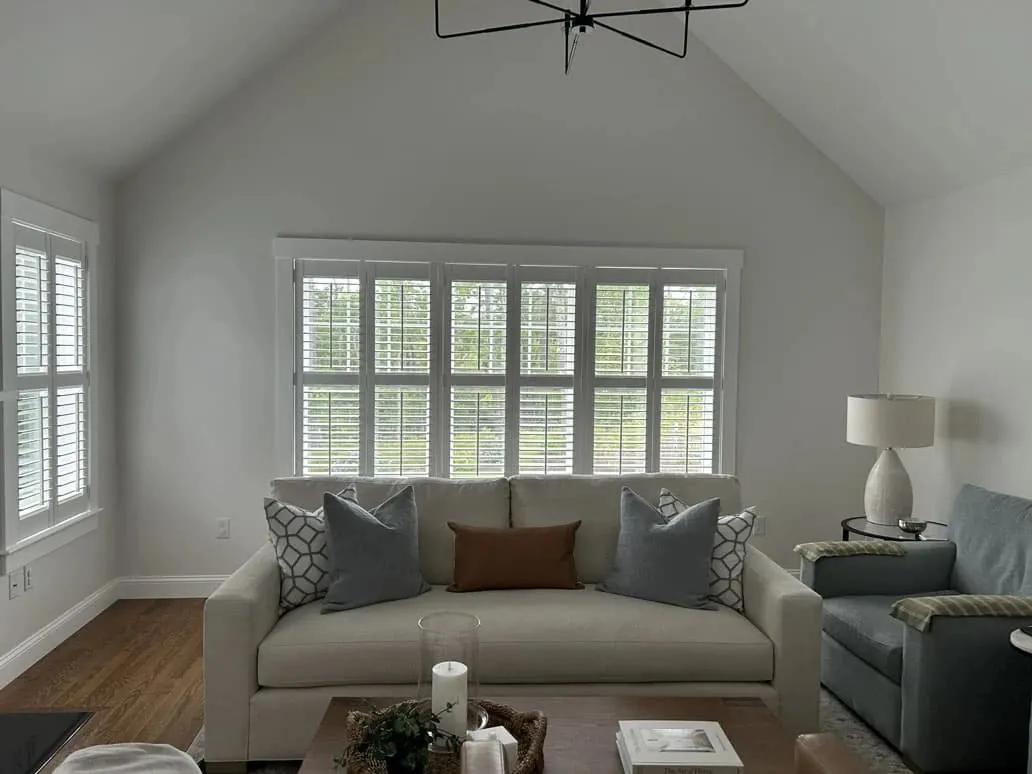
Shutters suit Medway’s older houses especially well, and they work in the newer ones too. Hunter Douglas makes three lines, each with its own strengths.
- Heritance is real hardwood, paintable or stainable, and the natural pick for an antique colonial with fine trim.
- NewStyle is a hybrid that looks like painted wood and holds its shape well in rooms that see changes in temperature.
- Palm Beach is a solid polysatin made for moisture and sun, so it suits bathrooms, kitchens and sunny back rooms.
Louver size changes the look. Smaller louvers suit small panes and a period room; larger ones open up more view in a modern family room. Frames can sit inside a deep reveal or on the face of the casing. Our plantation shutters in Medway page goes into the details.
Motorization without the clutter
PowerView is not only for tall foyers. In a busy house it simply makes windows easier. Bedroom shades can stay down until a set time, family room shades can close against the afternoon sun automatically, and a single tap can move every shade on a floor.
The controls stay tidy, and we explain how each motor is powered and where any controls go. For older houses, where nobody wants to open walls, we plan the simplest way to power each motor. Our motorized blinds in Medway page covers the options.
Cordless lift is the other half of the story. Most Hunter Douglas families are available without a cord, which keeps windows cleaner and removes any hazard for children and pets.
Kitchens, mudrooms and the working rooms
The back of a Medway house works hard. Kitchens, mudrooms, laundry rooms and the half bath by the back door all have windows that get splashed, steamed and bumped. A covering there has to be practical before it is pretty.
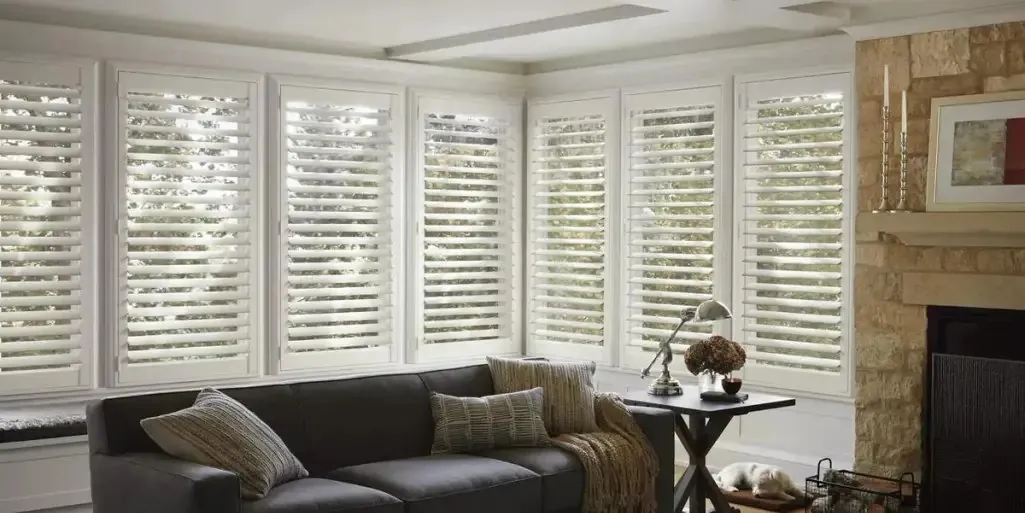
Faux wood blinds from the EverWood line are a favorite for exactly that reason. They wipe clean, they cope with humidity, and the slats tilt to let light in while blocking the view. Palm Beach shutters do the same job with a more built-in look, and they suit a mudroom where the window sits beside coats and boots. A Designer roller shade in a wipeable fabric is the slimmest choice for a small window over a washer or a sink.
In an older house, the kitchen may be the one room that was modernised, with newer windows set into old walls. Those openings are usually standard, so the full range is open, and a Hunter Douglas dealer in Medway can match the kitchen to the rest of the house even where the windows are a different age.
Cordless lift matters most in these rooms. A window over a sink or behind a counter is awkward to reach, and a cord near a stove or a dog bed is the last thing anyone wants.
Fabric, color and the old trim
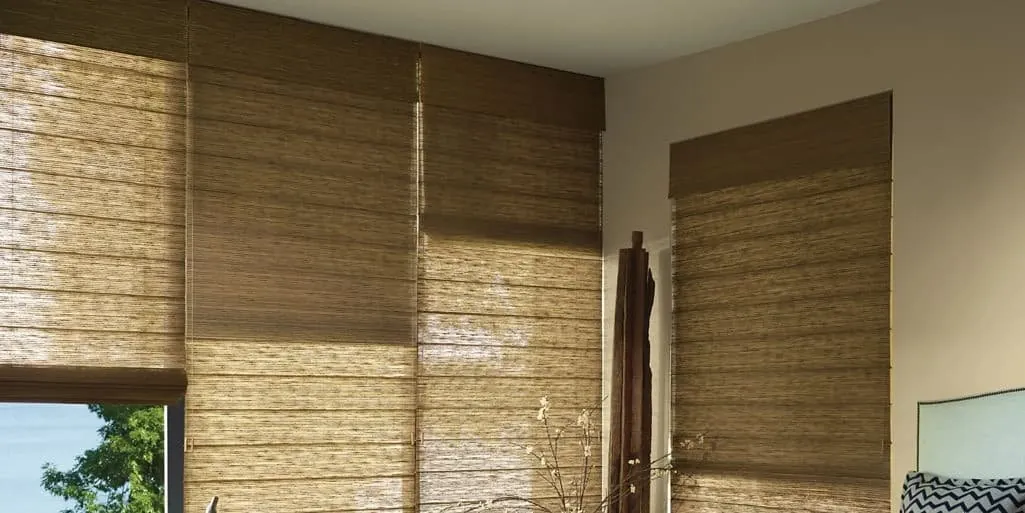
In an antique house the trim is often the star of the room, and a window covering should support it. Light, neutral fabrics let painted woodwork stand out. Natural textures such as woven wood suit a room with exposed beams or wide floorboards. A stained wood blind or Heritance shutter can match original wood where the trim was never painted.
In a newer colonial the canvas is cleaner, and the choice is about mood: crisp white shutters, warm woven shades, soft sheers or a patterned roller in a child’s room. Both kinds of house look best when the street side reads as one, so we often suggest a consistent backing color on the front windows.
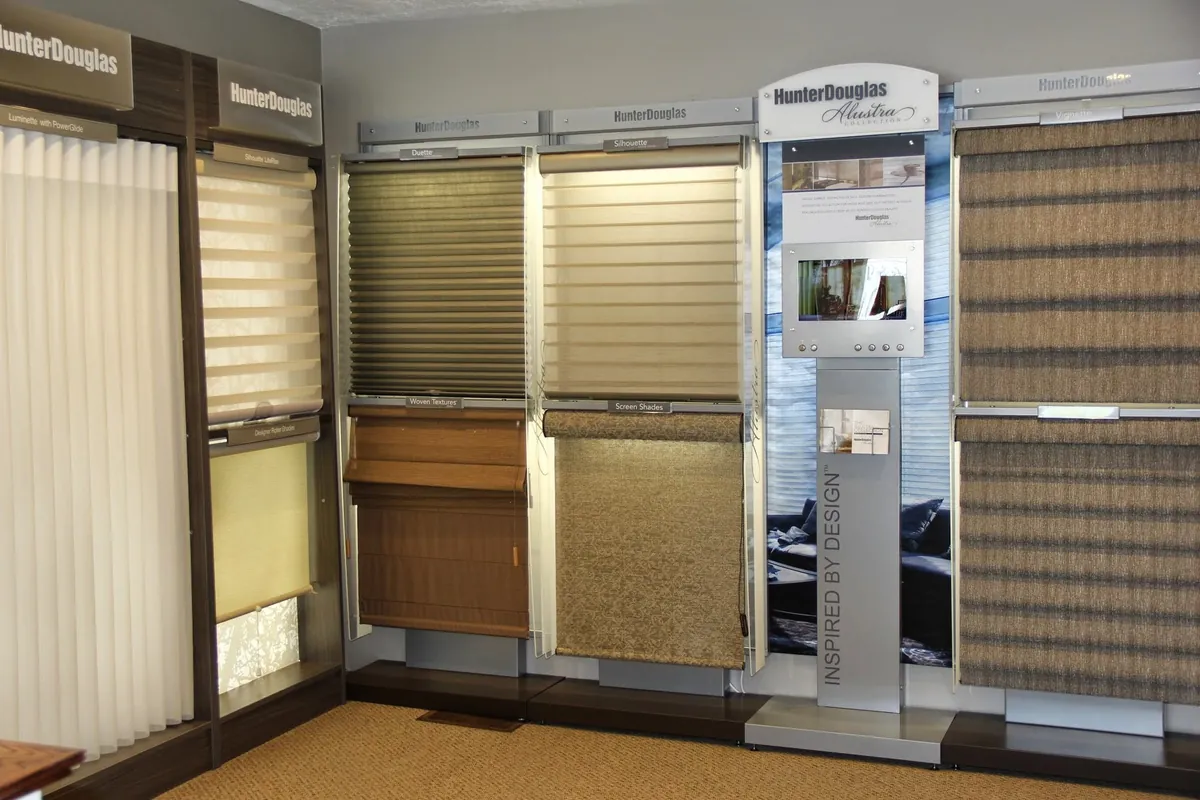
What a Gallery dealer means for Medway
Blinds & Designs is a Hunter Douglas Gallery dealer, so the whole range is open to you, from honeycomb and sheer shades to wood blinds, shutters, drapery and PowerView motorization.
Our installers are certified by Hunter Douglas. On a deep old reveal or a two-story foyer that shows in the details: level brackets on frames that are not, clean inside mounts and every motor paired and tested.
When something you already own needs attention, our blind and shade repair in Medway is there to help. See the wider story on our main Hunter Douglas page, and look through every line on the Hunter Douglas website.
The Franklin showroom, a short drive south
Our nearest showroom to Medway is in Franklin, just over the town line. You are welcome to stop by and talk about a project before we measure anything.
Even so, the decision is usually made at home, where you can see how each fabric behaves in your foyer, your bedrooms and your old front rooms. We bring the samples, measure and leave a free estimate.
The address and hours are on the Franklin showroom page. Everything else we offer in town is on our Medway page, including cellular shades, custom blinds, roller shades, roman shades and custom drapery.
Questions from Medway
My antique colonial has tiny deep windows. Is there anything that will not hide the trim?
Yes. A deep reveal usually means a product can sit fully inside the opening. Heritance shutters with a frame built to the reveal, or a slim honeycomb or Roman shade, all leave the trim in full view.
What can I do about the heat from my foyer window?
A honeycomb shade does most for heat, because its cells hold air between the glass and the hall. A sheer softens the light instead. Either can be motorized so it lowers on a schedule when the sun reaches the window.
Can you fit an arched or angled window?
Often, yes. Honeycomb shades can be made for some shapes, or the shaped section can be left open while the rectangle beneath is covered. We look at each window before suggesting an approach.
Does everything need to be the same product?
No. Most Medway houses end up with a mix chosen room by room, while the street side is kept consistent.
Do you charge for the estimate?
The estimate is free. We come with samples, measure every window and give you an estimate for the products and installation.
Your Medway project, one step at a time
Picking a Hunter Douglas dealer in Medway starts with seeing the products at your own windows. Request a consultation and we will come with samples, measure and leave you a free estimate. To talk first, press the call button for the Franklin showroom.