
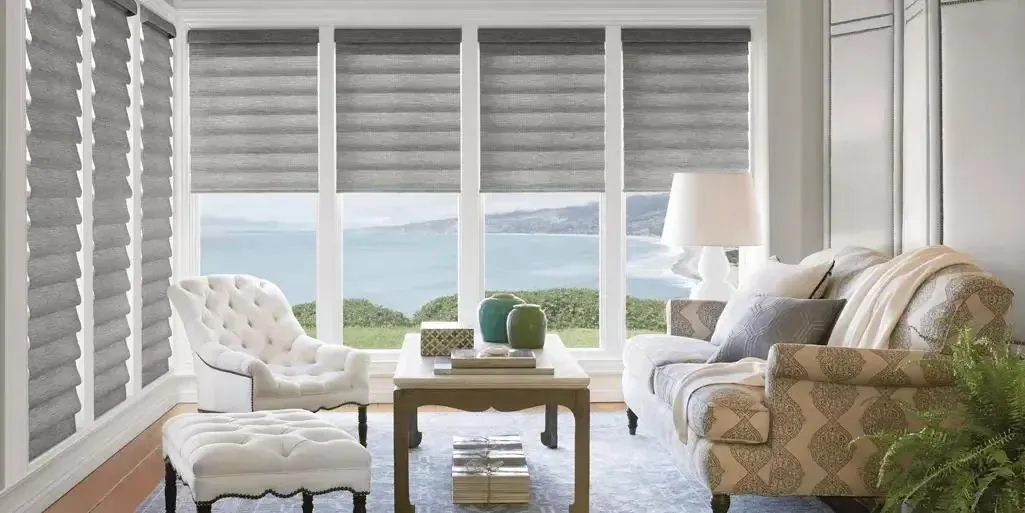
One town, several building eras
Few towns mix their housing as thoroughly as Walpole. Near the center, Victorians and colonials keep their tall older sash. Through East Walpole, streets of post-war capes have smaller, simpler windows. And on the wooded lots further out, larger newer houses have standard modern openings in generous rooms. Drive across town and the age of the houses changes every few streets.
For roman shades in Walpole, MA, that variety is the whole story. A shade that looks exactly right on a tall Victorian sash may look fussy on a cape’s kitchen window, and the plain style that suits a modern great room may look thin in a period parlor. The fabric, the style and the way each shade is mounted all depend on which kind of house it is going into.
The good news is that one product family covers all of it. Made-to-order roman shades can be sized to any of these windows and styled to suit any of these rooms, and one visit can plan a whole house, whatever its age.
Choosing for each kind of Walpole house
Everything here is made to order for your windows, and our vans carry samples of each.
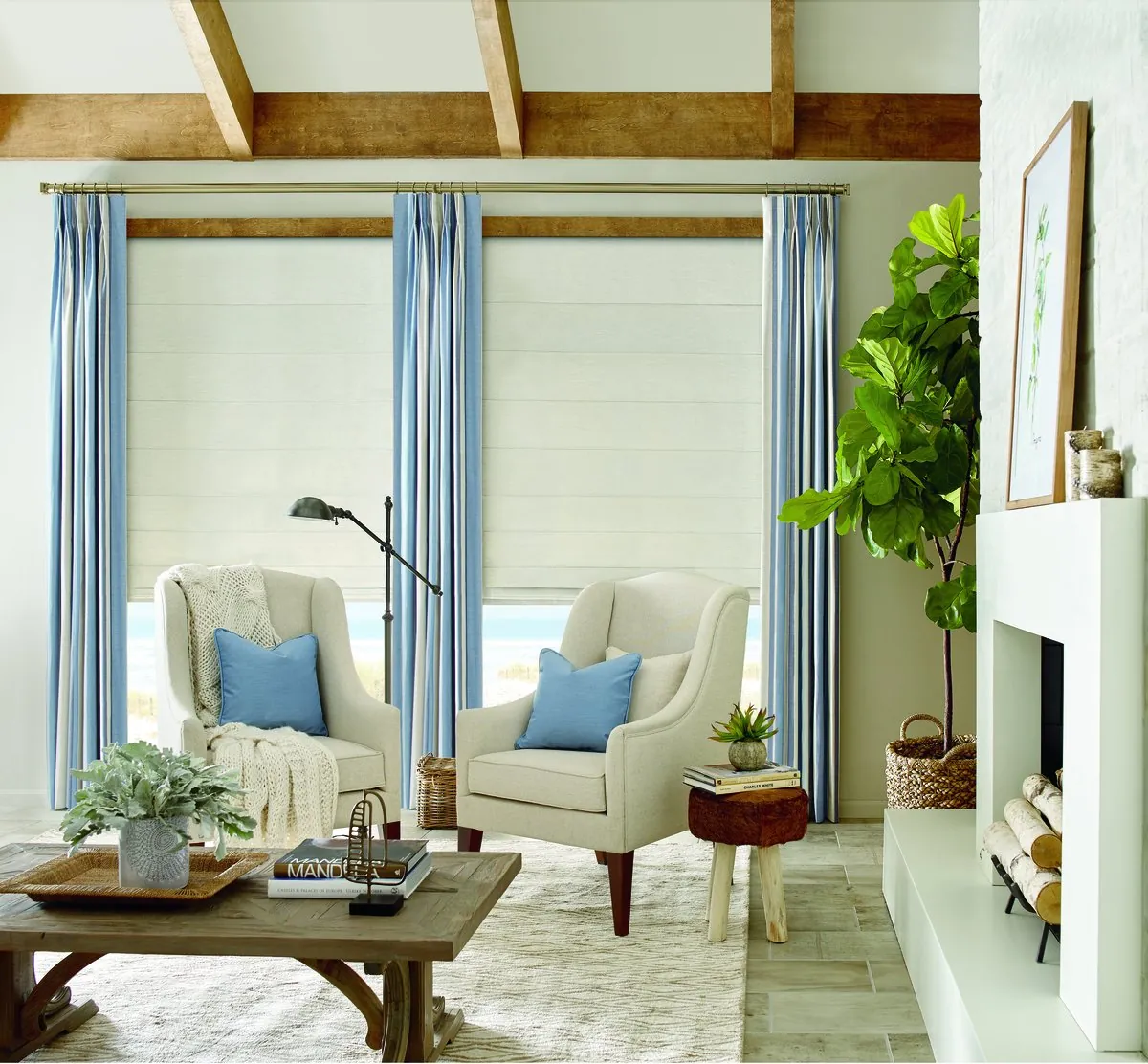
Carole Fabrics Roman Shades
Decorator fabrics, sewn to size in a flat or folded style. The traditional choice for the tall sash near the center.
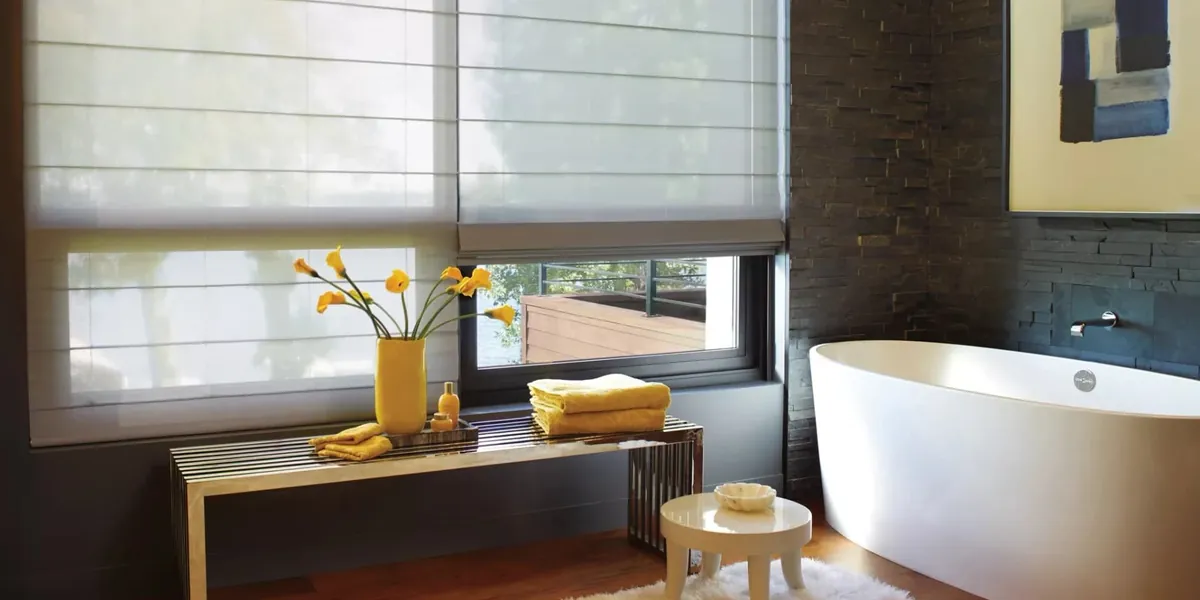
Vignette Modern Roman Shades
A modern, uncluttered roman shade, a good match for a renovated cape kitchen or a newer house’s family room.
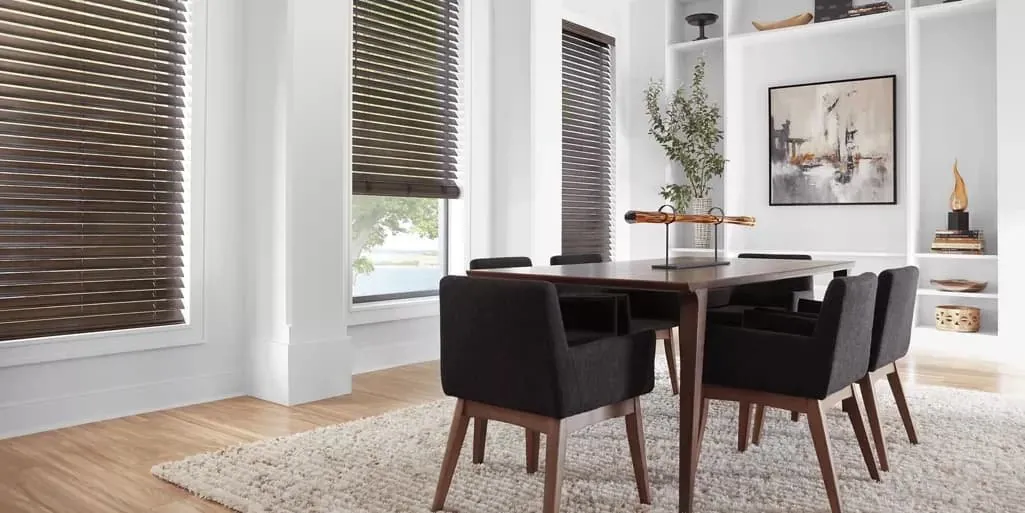
Custom Blinds in Walpole
Some rooms suit blinds better than fabric. Many Walpole houses pair roman shades in living spaces with blinds elsewhere.
The center: tall older sash
The Victorians and colonials near the center have the tallest windows in town. Their sash often runs from just above the floor to just below a high ceiling, and in the main rooms there may be two or three on each wall. These windows give the rooms their light and their sense of height, and the trim around them is often original.
A roman shade suits a tall sash because it follows the window’s shape. Lowered, it is one long panel of fabric the width of the glass. Raised, it gathers at the head of the window. On a very tall window that gathered fabric is deeper than on a short one, and if you want the glass completely clear when the shade is up, we can set the headrail a little above the frame so the fabric stacks against the wall. That small change also makes a tall window look taller still.
Older frames rarely measure the same from top to bottom. We take each window’s width at three heights and its depth at more than one point, and order every shade to its own figures. Where a frame cannot take a shade inside it cleanly, the shade fixes to the face of the casing instead and covers the trim edge evenly. In a period room either choice can look deliberate, and we will tell you which suits each window.
Bedrooms upstairs in these older houses often have the same tall sash as the rooms below, sometimes with a shorter window tucked under the eaves at the side. When we plan roman shades in Walpole, MA, for a center Victorian, we usually carry one fabric family from the parlor up to the bedrooms, changing only the style and the color so each floor has its own feel while the house still reads as one from outside.
A Victorian parlor and a colonial front
Victorians and colonials sit side by side near the center, but they ask for slightly different treatment.
A Victorian parlor is often the most decorated room in the house, with richer colors and more detailed woodwork. It can carry a patterned fabric in a flat style beautifully, and the pattern reads clearly on a tall panel. Where the room has a pair of windows flanking a fireplace, matching shades on both keep the wall balanced.
A colonial’s strength is its symmetry. The windows are evenly spaced across the front, upstairs and down, and the house looks best from the street when every shade on the front matches in height and in the color of its back face. Inside, the rooms can each have their own fabric; it is the outward face that needs to agree. A colonial dining room often suits a quiet stripe or a small print in a flat style, while the living room across the hall may prefer a plain fabric in a softer folded style.
East Walpole capes
Through East Walpole, the post-war capes are a different kind of house. They are compact and practical, with a living room and kitchen downstairs, bedrooms under the roof, and windows that are smaller and simpler than those in the center. Upstairs, the bedrooms take their light from dormers set into the roof slope.
Cape windows are generally standard sizes, which makes them easy to fit, but their small scale needs a light touch. A big, heavy treatment can swamp a modest cape room. A roman shade mounted inside the frame keeps things tidy: it softens the window, leaves the simple trim on view, and does not reach out into the room.
The dormers upstairs often sit in a little recess between sloping ceilings, and that recess is ideal for an inside mount. The shade sits within the opening and the sloped plaster around it stays clear. With only a window or two lighting a dormer bedroom, whatever fabric goes on them sets the mood of the whole room. Light colors keep a small bedroom bright by day; a fabric with more body helps it stay dark in the early morning.
Roman shades in Walpole capes often end up being the main treatment through the whole house, simply because the style suits the scale of the rooms so well.
Cape living rooms deserve a word of their own. Most have a pair of front windows either side of the door and one or two on the side wall, with a fireplace or a built-in on the end. The windows are close enough together that their shades are seen as a group, so matching them in fabric and height matters more than in a bigger room. A flat style in a small, cheerful print is a popular choice, or a plain fabric if the room already has a busy rug or upholstery.
Kitchens and bathrooms in a post-war cape
Many East Walpole capes have had their kitchens and bathrooms updated over the years, and those rooms have their own needs.
In most of these capes the kitchen window looks over the back yard from above the sink, so it is seen and used all day long. A short roman shade in a simple fabric works well there, and if leaning across the sink to reach it is awkward, a motorized shade can be raised and lowered from a small remote or the app. A renovated kitchen with modern cabinets often suits the clean look of Vignette.
A cape bathroom is often small, with a single window that needs cover for privacy but still has to let in daylight. The answer there is mostly about fabric: some let a soft glow through when lowered while still hiding the room, others block more. Hold a few at the bathroom glass during the visit and the choice usually becomes obvious.
Larger newer houses on wooded lots
On the wooded lots further from the center, the newer houses are much larger, with standard modern openings in rooms that are big and open. Most follow a familiar plan: a formal living and dining room at the front, a big kitchen and family room at the back, a mudroom by the garage and four or more bedrooms upstairs.
In a house like that the order is often a whole-house plan, and consistency matters. Keeping every shade on a floor at the same height, with the same color showing outward, stops a big house front looking patchy. Inside, the style can change room by room: Vignette in the family room and kitchen, a Carole Fabrics flat style in the dining room, and a folded style in the bedrooms. The windows are regular, so inside mounts are straightforward throughout.
The trees around these lots soften the light for much of the year, so many rooms can stay open most of the day. Mudrooms and back halls are easy to forget, but their windows face the drive and the garage and are passed constantly; a simple shade there finishes the house. Many people order roman shades for Walpole houses of this size in stages, starting with the family room and bedrooms and coming back for the rest. The shades earn their keep in the evenings and in the bedrooms. A window over the stairs or in a two-story family room may be out of reach, and that is where PowerView motorization comes in, raising and lowering shades from a remote, the app or a schedule. Groups of shades can be set to move together, so a whole family room closes at the touch of a button. We plan how each motor is powered during our visit. For more, see how motorized shades are controlled.

One fabric family, many window sizes
Walpole houses have often grown over time. A Victorian may have a modern kitchen extension at the back. A cape may have gained a family room or a second-story addition. A newer house may have a sunroom with more glass than any other room. The result is a single house with windows from different eras, in different sizes.
Roman shades help hold a house like that together. By choosing one fabric family, related colors and one consistent back face, the old rooms and the new ones feel like part of the same home, even when one has tall sash and the next has a modern picture window. The style can still change to suit each room: a flat style on the tall period windows, a folded style in a newer bedroom.
We plan these houses room by room on the same visit, so the choices fit together rather than being made one room at a time. Our guide to window measuring terms explains the mounting choices we talk through as we go.
Flat folds and soft folds
Both Hunter Douglas lines we bring offer two looks. The flat style hangs smooth when lowered and draws up in neat, even pleats. It shows a pattern from edge to edge and has a tailored, orderly feel, which suits a formal room or a tall window. With the folded style, gentle curves of fabric stay visible right down to the sill, giving an easy-going look and lending even a plain linen some depth.
In the center’s period houses, the flat style tends to suit the front rooms and the folded style the bedrooms upstairs. In a cape, the flat style keeps small windows crisp. In a newer house, the folded style can soften a big, plain room. Nothing here is a rule, and both looks come with us so the decision gets made at the window.
A few things to weigh as you choose fabric:
- Trim: stained woodwork in a Victorian suits warmer fabrics; white trim in a cape or newer house suits almost anything.
- Sun: south- and west-facing rooms are hard on strong colors, so we hold samples to the glass.
- Scale: a small cape window suits a small pattern; a tall sash can carry a bolder one.
Our guide to choosing fabric for a sunny room has more detail. For broader help with color, an interior design consultation can be part of the same visit.

How the visit works
Walpole’s mix of houses is exactly why we prefer to plan at home. Sample books ride along in every van, and that is how we bring the showroom to you.
- Use the Request a Consultation form or the call button to fix a day.
- We talk about the house first: its age, any additions, and the rooms you want to start with.
- You see Vignette and Carole Fabrics swatches beside your own walls and trim.
- We measure every window, taking extra care with tall older sash and out-of-square frames.
- Out-of-reach windows get a PowerView plan.
- You get a free estimate to look over at your own pace.
For a fuller picture, read what happens at an in-home consultation.
A Gallery dealer for every era of house
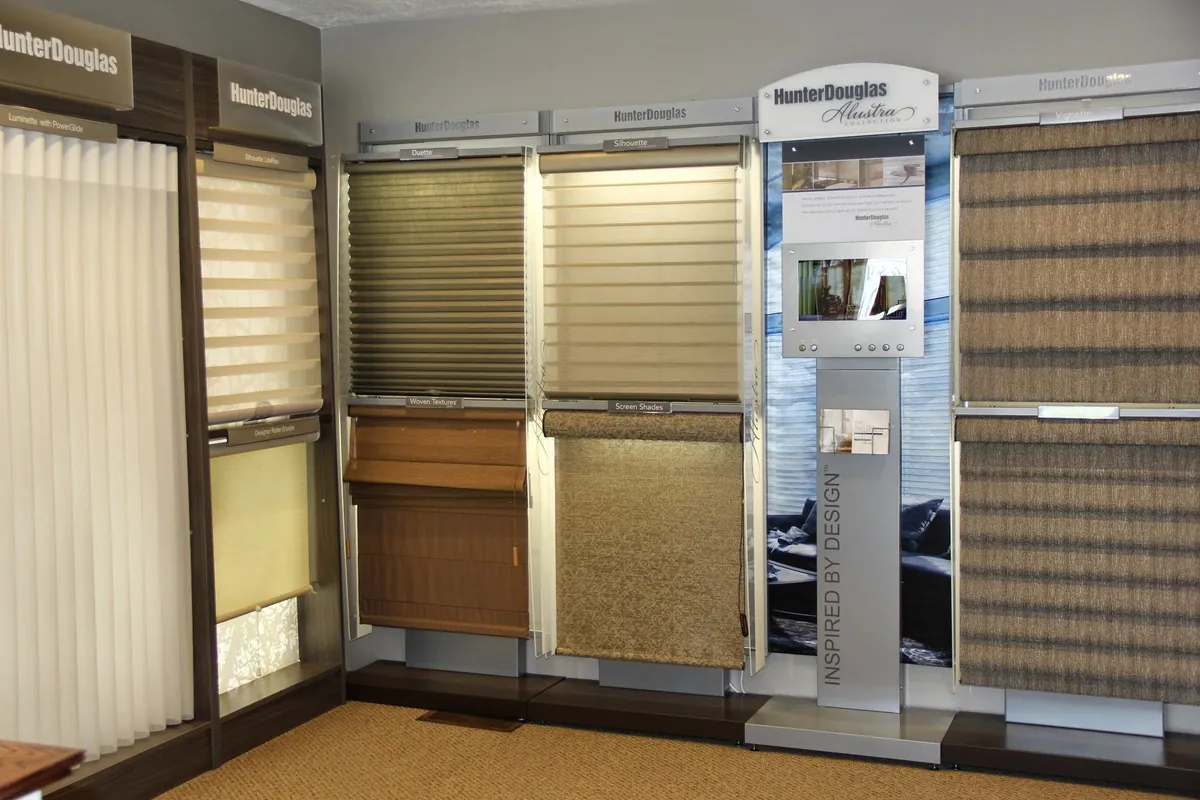
Blinds & Designs is a Hunter Douglas Gallery dealer. For a town with houses as varied as Walpole’s, it matters: the whole Hunter Douglas range is available through us, so a period parlor, a cape kitchen and a modern family room can all be planned on one visit.
Installation is done by installers with Hunter Douglas certification, whether the job is a tall sash with fragile old trim or a row of shades in a new great room.
See everything we offer locally on our Walpole page, and the whole roman shades collection.
The showroom nearest Walpole

Franklin is our closest showroom to Walpole. Call in during its opening hours if a conversation first would help. Tape measures only come out at your house, though, since that is where the windows are.
Installation day
Fitting is handled by one of our Hunter Douglas certified installers. In the center’s older houses, that means careful work around original trim and making sure each tall shade hangs straight. In a cape, it means neat fitting within small frames and dormer recesses. In a newer house, it means lining up rows of shades and setting up any motorized groups. Each shade is tested with you before the installer leaves. The page on installation day runs through the visit. If any shade needs attention later, we also offer blind and shade repair.
Walpole questions
Our Victorian near the center has very tall windows. Will roman shades work?
Yes. Each shade is made to the width of its window and hangs as one long panel. Setting the headrail just above the frame keeps the glass clear when the shade is raised.
What suits the small windows in an East Walpole cape?
A roman shade mounted inside the frame keeps a small window tidy and leaves the trim on view. The dormers upstairs usually suit an inside mount especially well.
Our house has an addition with bigger windows. Will everything match?
We choose one fabric family and a consistent back face, so the old and new rooms belong together even when the window sizes differ.
Can a whole room of shades move at once?
Yes, with PowerView. Shades can be grouped so they raise and lower together from a remote, the app or a schedule. That suits a big family room on a wooded lot, where several windows face the same way.
Is there a fee for the estimate?
None at all. The windows get measured while we are with you, and the estimate is free.
Your next step
Whatever the age of your house, the surest way to choose roman shades in Walpole, MA, is with the samples in the room. Fill in Request a Consultation and a van will come to you; every window is measured and a free estimate follows. Anything to ask beforehand? The call button is there, and so is the Franklin showroom.