
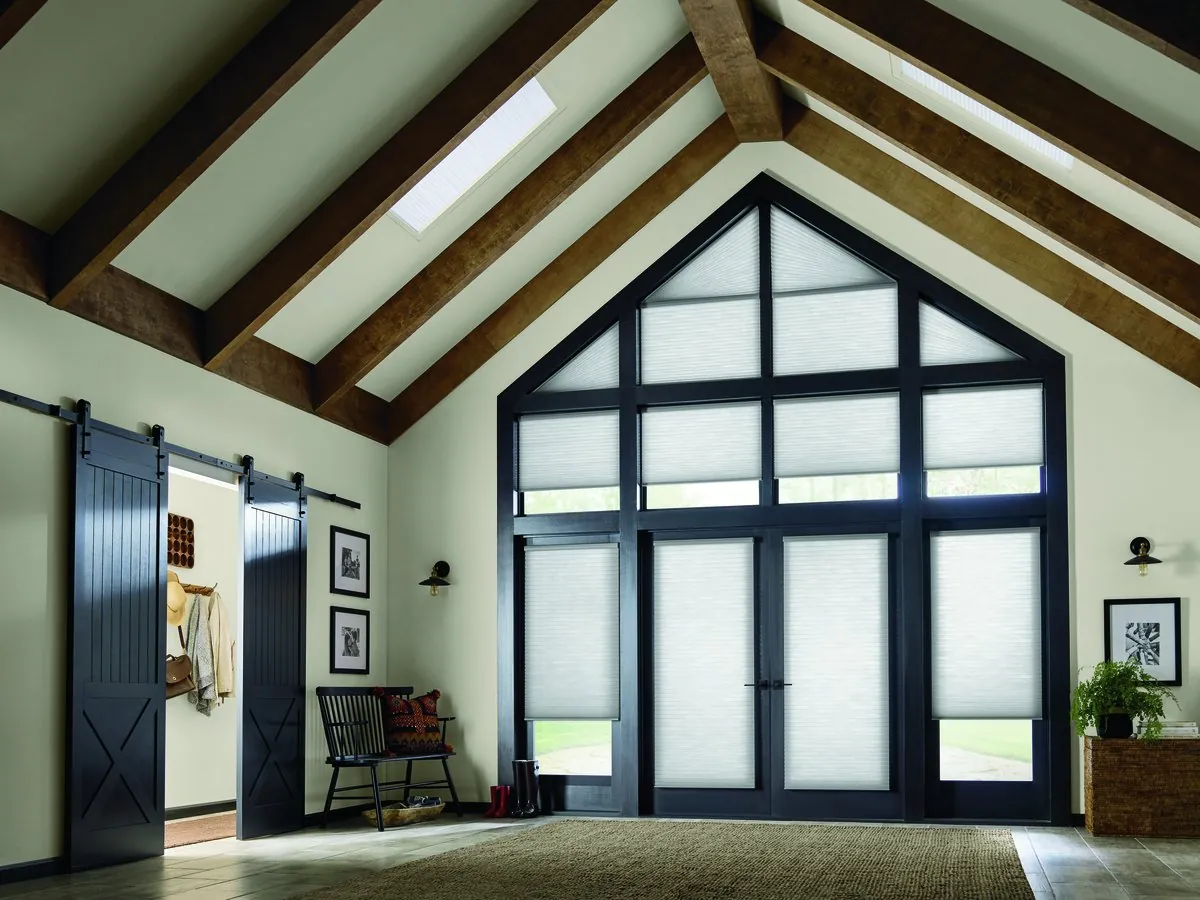
Standard windows, so the choices are elsewhere
Most of Hanson’s houses were built in the second half of the last century or later: post-war capes and ranches on generous lots, and newer colonials off Main Street and around Maquan Pond. Their windows come in standard modern sizes, square and regular, with frames that usually leave room for an inside mount. So fitting a shade is rarely the difficult part. What deserves the time is the material each shade is made from and the way it is operated, and that is where motorized blinds in Hanson, MA, come into the conversation.
Operation sounds like a small detail until you live with it. A shade that is awkward to raise stays down all day. One on a tangle of cords gets left at a slant. One on a high window never moves at all. Getting the operation right for each window is what makes a set of shades feel easy rather than a chore.
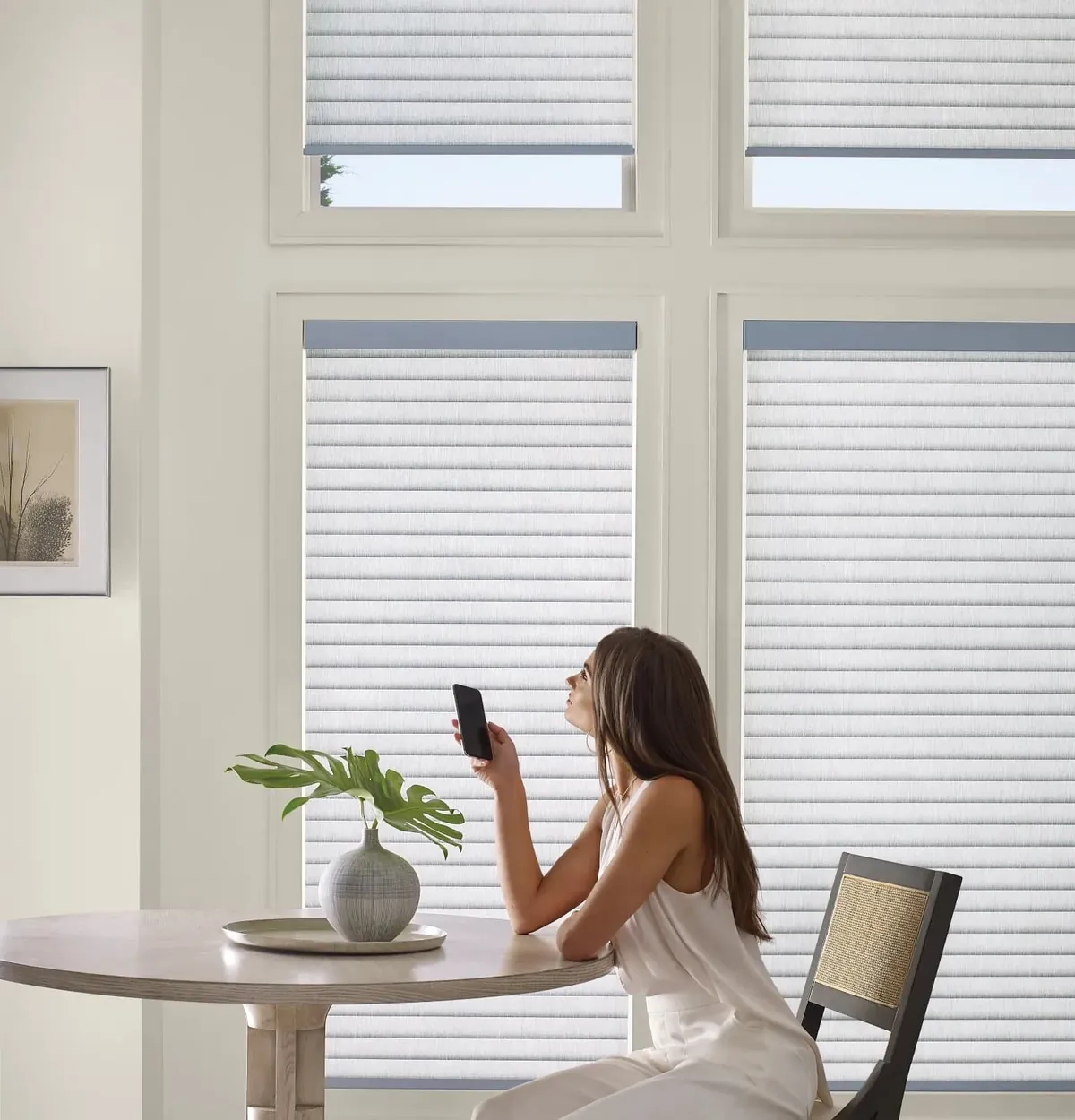
Hunter Douglas PowerView is the motorized option. Shades answer to a remote, to the app on a phone or tablet, and to schedules you set once.
Three ways to raise a shade
Every window in a Hanson house ends up with one of these three. Sorting out which goes where is a large part of our visit, and each card links on to a related page for the town.
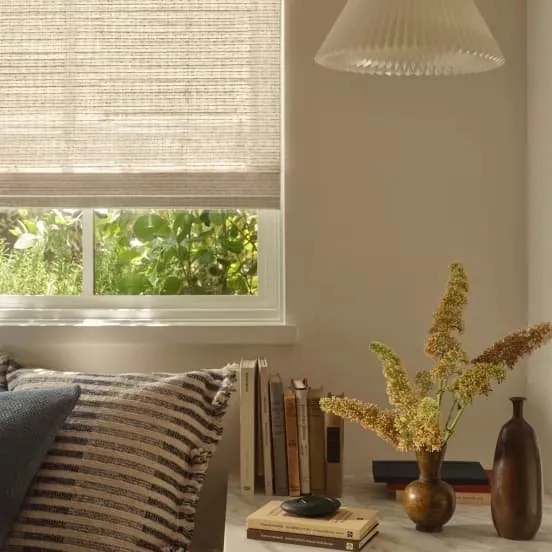
Lifted by hand, no cords
A cordless lift: push the bottom rail up or pull it down. Simple and tidy for a window you can reach and rarely move.
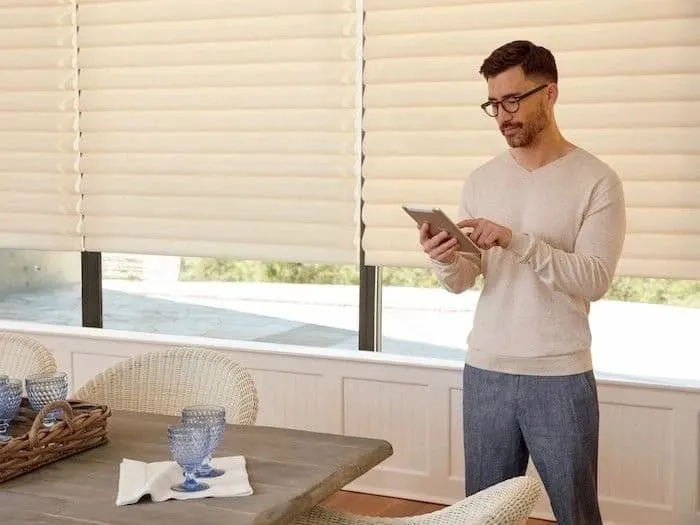
A motor on a remote
Press a button and the shade moves, alone or with the others in the room. Ideal for wide windows and anything hard to reach.
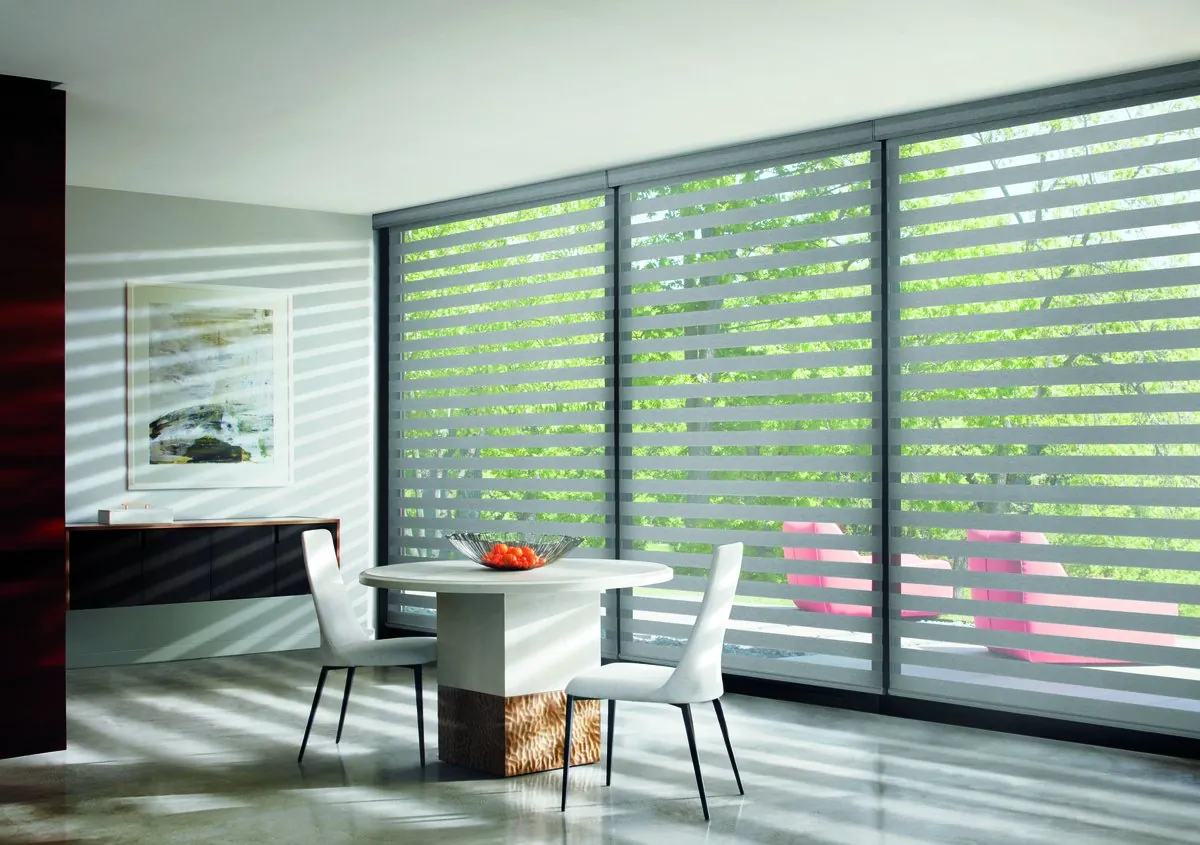
A motor on a schedule
The same motor, set to open and close at the times you choose, so the window looks after itself every day.
Why operation matters more than fit here
In an older house, the first question about any window is whether a shade will fit it at all. Old frames are out of square, shallow or crowded with sash hardware. In a Hanson cape, ranch or newer colonial that question is usually settled in a minute with a tape measure. The openings are regular, the depths are generous and sizes repeat from room to room.
That frees the decision to be about how you want to live with the window. Some windows are opened once in the morning and closed once at night. Some move several times a day as the sun comes round. Some sit above a counter, behind a sofa or high on a wall where they are hard to reach. And some are part of a row that should always line up.
Motorized blinds in Hanson make the most sense on the windows that move often, the windows that are hard to reach, and the ones that need to work together. The rest can be cordless and lifted by hand, in matching fabric, so the house still looks consistent.
Choosing the material for each room
With fit taken care of, the fabric or slat does most of the work. Here is how the main PowerView options line up for the rooms in a typical Hanson house.
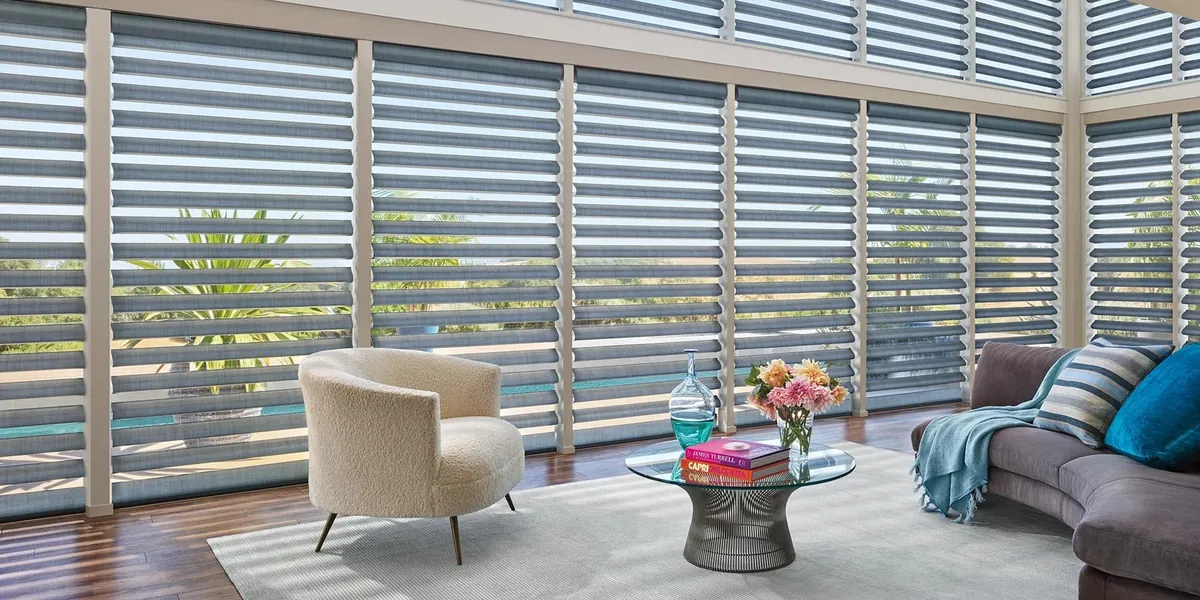
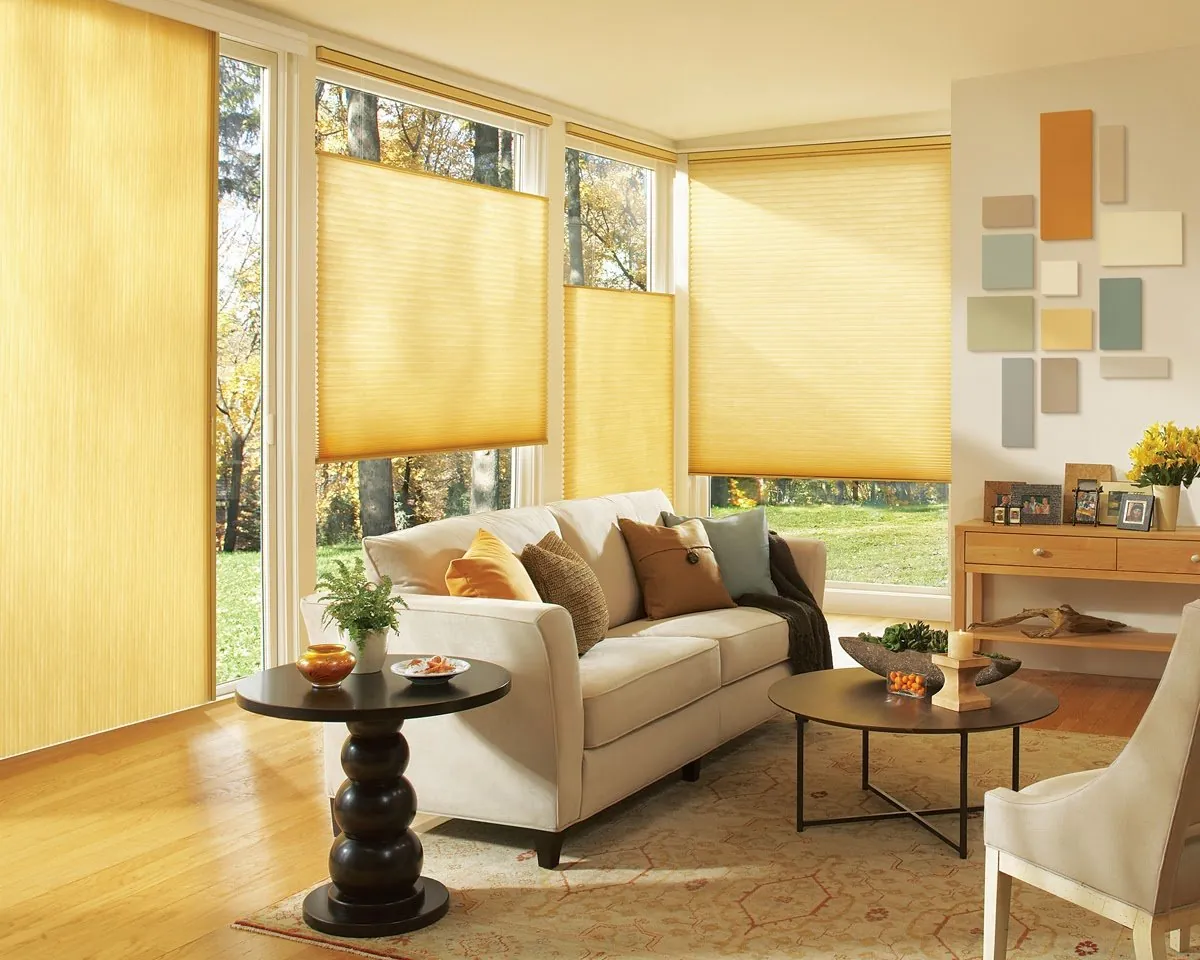
- Living room: a sheer shade with soft vanes, such as Silhouette, or a light-filtering honeycomb. Daytime privacy with the room still bright.
- Kitchen: a roller shade or a honeycomb shade in a fabric that is easy to keep clean, often on the window over the sink.
- Bedrooms: a room-darkening honeycomb or roller fabric, so the room stays dim until you want light.
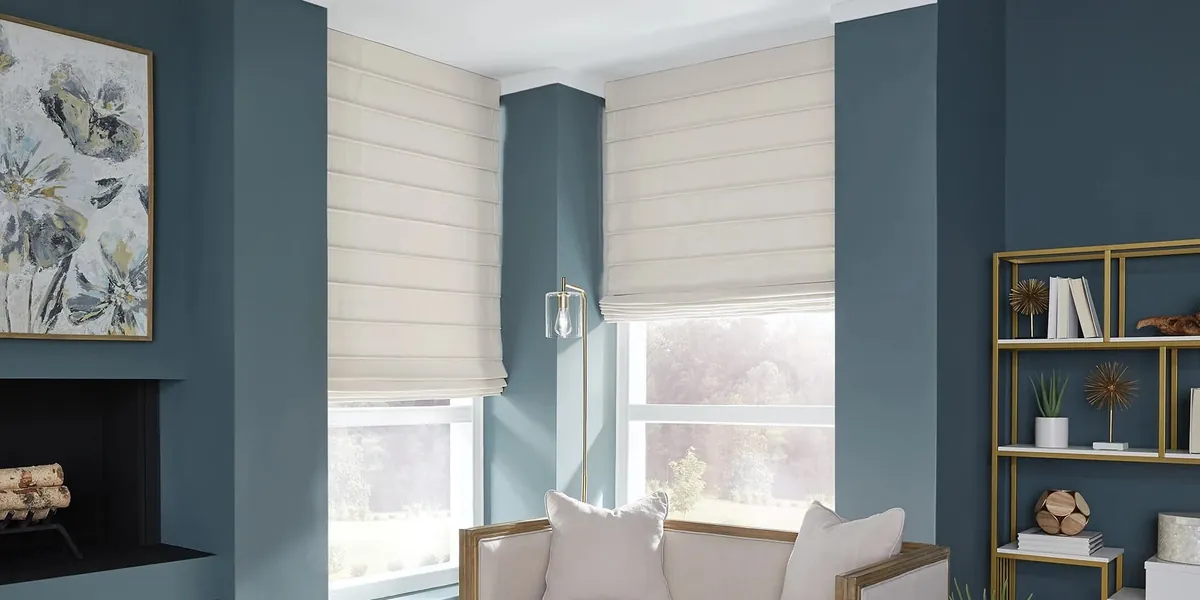
- Dining room: a Vignette Roman shade for a softer, more tailored look on the front of the house.
- Den or family room: a screen shade to cut glare on the television, or banded shades that shift between light and privacy.
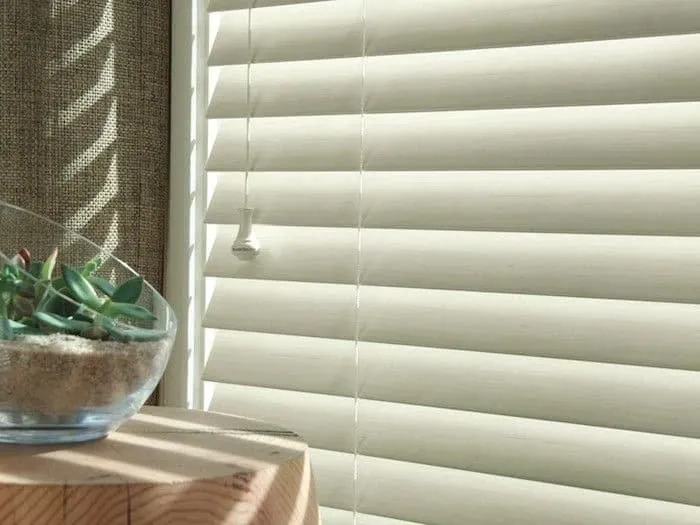
Wood and faux wood blinds suit many of these rooms too, especially a den or a kitchen. Not every blind range or size takes a motor, so tell us at the start if you want a blind on a particular window and we will check it during the visit. Our guide to shades or blinds and how to choose helps if you are undecided.
Post-war capes on generous lots
A Hanson cape is compact downstairs and tucked under the roof upstairs. On the ground floor, the living room and dining room usually face the street, with the kitchen at the back. Upstairs, the bedrooms have sloping ceilings and dormer windows, often set at the end of a short recess.
Those dormers are where a cape benefits most from a motor. A shade hidden at the end of a dormer alcove is a stretch for anyone, so in practice it stays wherever it was last left. Put a motor in it and the honeycomb fabric follows a simple routine of its own, closed overnight and open in the daytime.
Downstairs, the front windows can be grouped so they move together and line up, which keeps the house looking tidy from the road. The generous lot means many capes have a view of open yard or trees at the back, where a sheer or light-filtering fabric keeps the outlook.
Ranches and their long fronts
A ranch spreads everything along one floor. The front usually has a large living room window, with the bedrooms in a row down one side and the kitchen and a slider at the back. The windows are standard sizes and easy to reach, so the case for a motor in a ranch is about width and routine rather than height.
The broad front window is the natural first motor. Made as a pair or trio of shades sharing one motor group, it moves as a single piece and never ends up stepped. Next come the bedrooms along the hall, which can share one morning scene and one evening scene between them.
Newer colonials off Main Street
The colonials off Main Street bring a second story and some taller rooms. A typical layout has a foyer at the front, sometimes rising two stories with a window above the door, a family room at the back opening to the kitchen, and a primary bedroom upstairs with windows on two walls.
The window above the door is where many colonial owners start with motorized blinds in Hanson, MA. Without a ladder nobody can touch it, so it is usually bare, and on a summer afternoon it throws a hot patch of sun down the stairs. With a motor it simply becomes one more window on the foyer’s remote.
The family room’s tall windows are the next candidate, often given matching sheers so the back of the house reads as one piece of fabric. In the primary bedroom upstairs, a darkening fabric opens to the weekday alarm and waits for a button on Saturdays.
Around Maquan Pond
The newer houses near Maquan Pond have rooms that face the water, and those windows deserve special care. A pond view is something to keep, so the shade should either disappear fully into its headrail or let the view through when it is down.
A screen shade lets you see out through the weave while it cuts the glare off the water, and the openness of the fabric decides the balance between view and shade. On a motor it can lower only during the hour or two when the sun is on the pond, then lift so the view returns. In the evening, a sunset scene closes the pond-facing windows for privacy once the lamps are lit.
Which windows earn a motor first
If you are motorizing in stages, here is the order most Hanson households follow.
- Windows that are hard to reach: above a door, over a counter, at the back of a dormer.
- Wide windows split into several shades that should move together.
- Bedrooms that need to be dark in the morning and open at a set time.
- Rooms that take strong sun at one time of day and need shading only then.
- Everything else, added later when you are ready.
Because the window sizes repeat so much in this town, adding shades later is simple. New ones match the existing fabric and join the same app, groups and scenes.
Replacing old corded blinds
Many houses here still have the blinds that came with the house or went up many years ago, with lift cords, tilt wands and cord locks that no longer hold. Replacing them is often the moment people think about motors for the first time.
Moving from cords to motors changes how the window looks as well as how it works. With nothing hanging at the side, the window is cleaner, and there is no cord for a child or pet to reach. The shade stops exactly where you set it and stays level every time. If some of your existing Hunter Douglas window coverings are still in good order, we also repair blinds and shades, so you can update the rooms that need it and keep the ones that do not.
Kitchens and the window over the sink
In almost every Hanson house, old or new, there is a kitchen window over the sink or behind a counter, and it is the one most likely to be left in the wrong position. Reaching it means leaning across a basin of dishes or a row of appliances, and nobody does that more often than they have to.
It is also a window that moves more than most. In the morning you want the light. At midday the sun may be on it. In the evening, with the lights on, it looks straight out into the dark and back at you. A motor on a wall control by the kitchen door makes all of that a single press, and a schedule can lower it at dusk without anyone thinking about it. For the fabric, a roller or honeycomb shade that wipes clean is usually the practical choice beside a sink. It is a small window, but on a list of motorized blinds in Hanson, MA, it is often the one that makes the biggest everyday difference.
Material for the motorized shade itself
Not every material behaves the same on a motor, and that is worth knowing before you choose. Honeycomb and roller shades stack small at the top and move smoothly, so they suit almost any window. Sheer shades with vanes move between open, tilted and closed, and a motor saves each position so you can return to it exactly. Roman shades fold as they rise, and the motor raises them evenly so the folds stay neat. Blinds tilt as well as lift, and only some ranges and sizes can be motorized, which we check window by window.
Several requests for motorized blinds in Hanson, MA, start with a material the household already likes, wood slats or a particular fabric, and work out from there. We bring examples of each so you can see how they move as well as how they look.## Children, pets and cord-free windows
A motorized shade has no lift cord at all. In a family house that is reason enough for many people to choose one in a nursery, a child’s bedroom or a playroom. Pets benefit too: a cat cannot catch a cord that is not there, and a dog cannot tangle in it. A cordless manual shade gives the same safety on windows that do not need a motor, so a family house can be cord-free from front to back.
How the controls work
Operation is the theme of this page, so it is worth being clear about the controls. The handheld remote, or a small control fixed to the wall by the door, is the everyday tool, and it can be set to move one window or a whole room. The app on your phone or tablet is the planning tool, where windows are named, sorted into rooms and saved into scenes. Timed scenes are the hands-off tool, playing at a clock time or at sunrise or sunset. For a plain explanation of each, see how motorized shades are controlled; for timing and scenes in depth, our window covering automation page.
Powering each motor
Power for the motors is settled at the visit too. Window by window, we work out how each motor will be powered and talk you through the plan, and nothing goes on order until you are happy with it.

Material and operation, chosen at home
Since the vans travel with samples, the showroom effectively comes to your kitchen table. That is the right setting for decisions about fabric and lift, because a material looks different in every house and a lift mechanism is best tried with your own hands.
- Pick a time through Request a Consultation, or ask for one with the call button.
- Room by room, we talk about how often each window moves and who moves it.
- For every window you settle on a material and a lift: motor, schedule or cordless by hand.
- Each opening is measured.
- A free estimate follows for you to look over when it suits you.
- On installation day, certified Hunter Douglas installers hang the shades, set each motor’s limits and load your scenes.
There is more in what happens at an in-home consultation.
A Hunter Douglas Gallery dealer
Blinds & Designs is a Hunter Douglas Gallery dealer, which means the whole PowerView range is open to us: honeycomb, sheer, Roman, roller, screen and banded shades and a number of blinds, so each room in a Hanson house can have the material that suits it.
Hunter Douglas certifies the installers who fit our shades, and programming the motors is part of their visit, not an extra trip. Interior design consultations are on offer when a room needs a fuller rethink, and older window coverings can be repaired rather than replaced.
More in town: cellular shades in Hanson, plantation shutters in Hanson, Hunter Douglas in Hanson and our Hanson page. See the whole range on the motorized blinds and shades page, or visit our nearest location, the Sagamore showroom.
Questions from Hanson
My windows are all standard sizes. What should I spend my time deciding?
The material and the operation. Fit is usually simple in a Hanson house, so the choices that matter are which fabric suits each room and which windows get a motor, a schedule or a cordless lift.
Do I have to motorize every window?
No. Most houses motorize the hard-to-reach, wide and busy windows and use cordless shades in matching fabric elsewhere. More can be motorized later.
Is it worth putting a motor on an upstairs dormer?
Often it is the most useful motor in a cape. The window sits at the back of an alcove where hands do not reach comfortably, and once motorized it opens and closes on its timetable.
Can I keep the view of Maquan Pond?
Yes. A screen shade lets you see through the weave while cutting glare, and on a schedule it lowers only while the sun is on the water.
What does the estimate cost?
Nothing. We measure at your house and give you a free estimate.
The next step
Fabric and lift are easiest to choose at home, so that is where we start. Ask for a consultation and we will arrive with samples, go through the house window by window, measure each opening and leave a free estimate. For a quick question, the call button reaches us, and Sagamore is the nearest of our showrooms.