
A big town with no single answer
Plymouth is the largest town in the state by area, and its houses cover just as much ground. In the historic center, antique colonials have small, deep-set sash in thick walls. In the Pinehills, large newer houses are built around modern glass, often two stories of it. And in between, across a great deal of the town, are post-war ranches with practical, mid-sized windows. There is no one answer to window treatments in Plymouth, MA, because the question changes completely from one house to the next.
That is why we start every Plymouth project at the house rather than with a product. The window tells us most of what we need to know: how deep the frame is, how high the glass goes, which way it faces, and what the room is used for.
We bring the showroom to you, with samples of every Hunter Douglas product in the van, so the choice is made at your windows.
Window treatments in Plymouth, MA: each service in town
Every service below has a Plymouth page of its own. Read up on one, or have us plan the whole house in a single visit.
Custom blinds, Plymouth
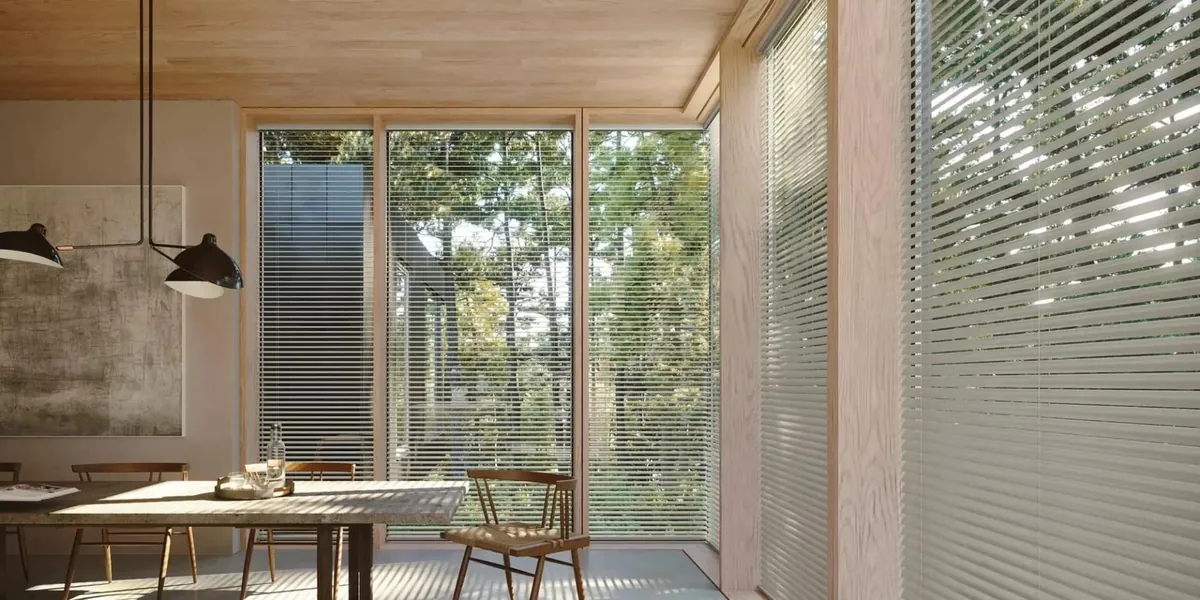
Wood, faux wood, metal and vertical blinds, from wood slats for a colonial study to metal for a modern Pinehills room.
Cellular shades, Plymouth
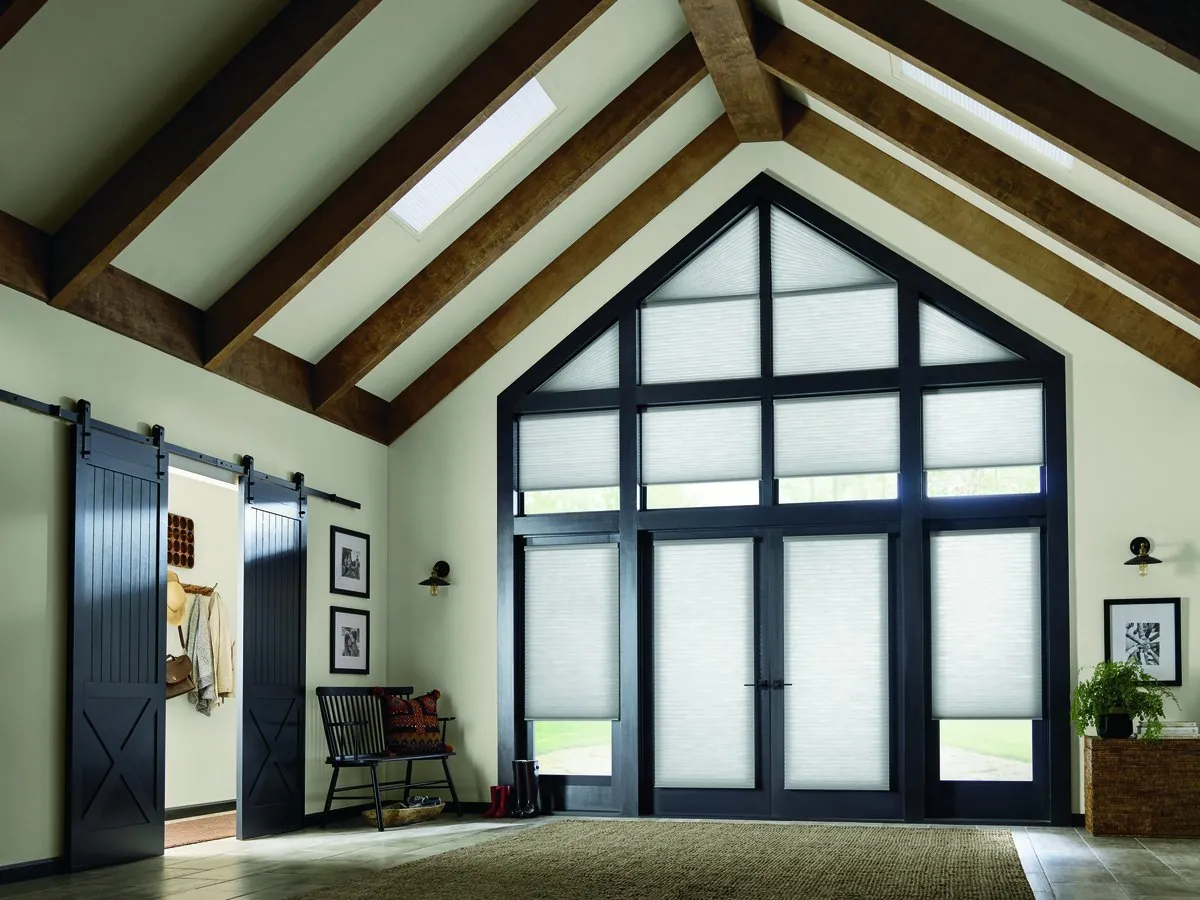
Duette and Applause honeycomb shades, made for anything from a small deep-set sash to a tall gable wall.
Roller shades, Plymouth
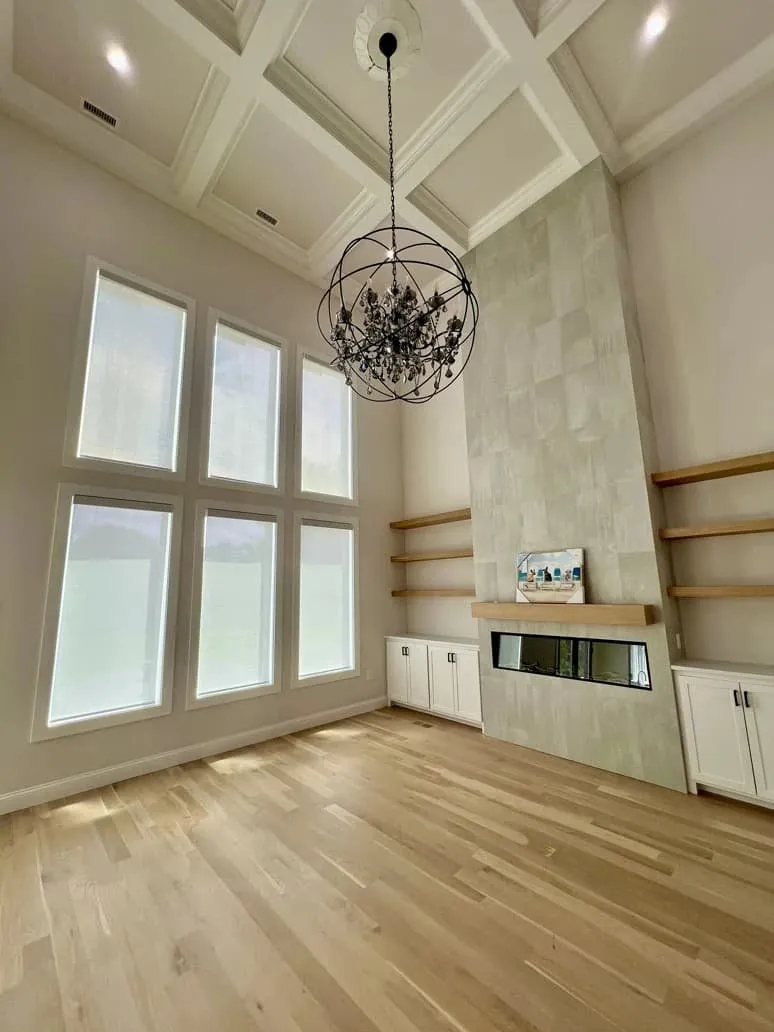
Designer and Alustra rollers and screens, with fabrics chosen for view and glare on big modern glass.
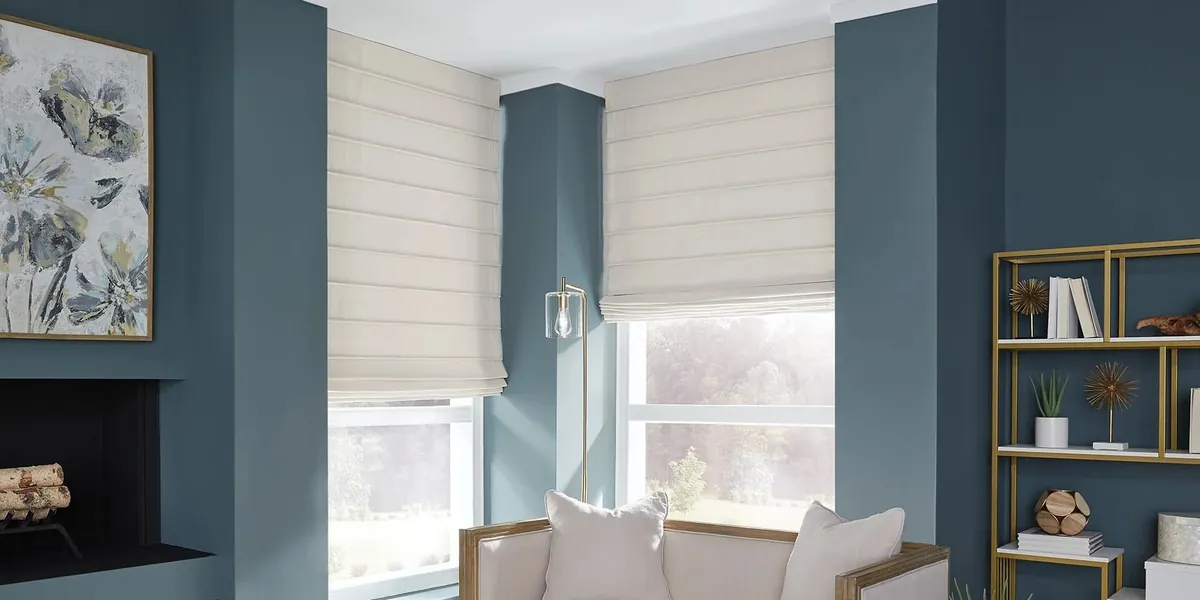
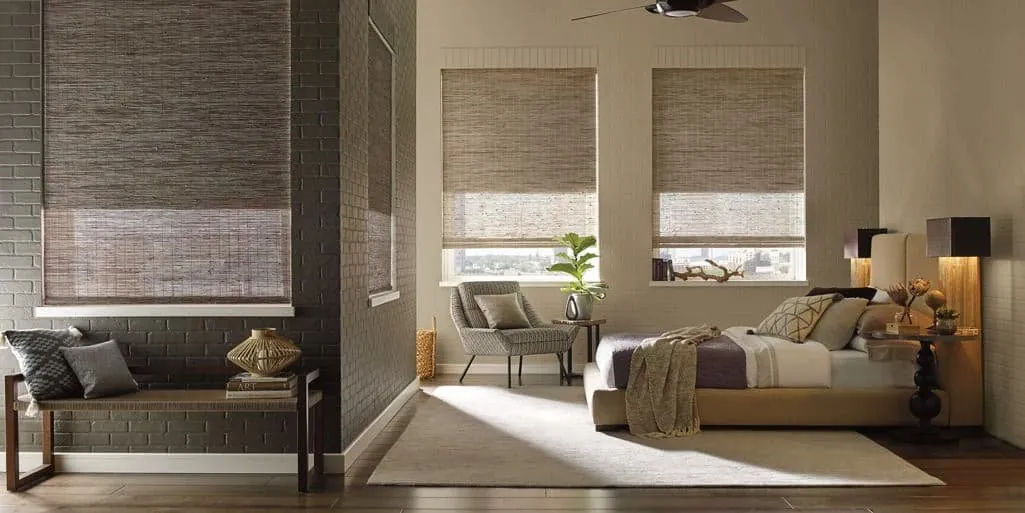
Roman shades, Plymouth
Vignette and Carole Fabrics romans, flat or folded, for a dining room, a bedroom or a colonial parlor.
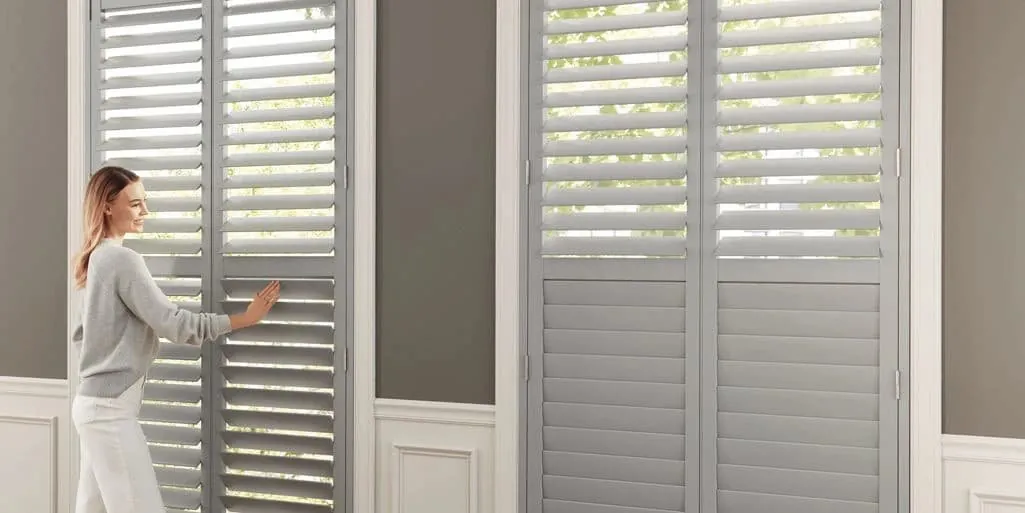
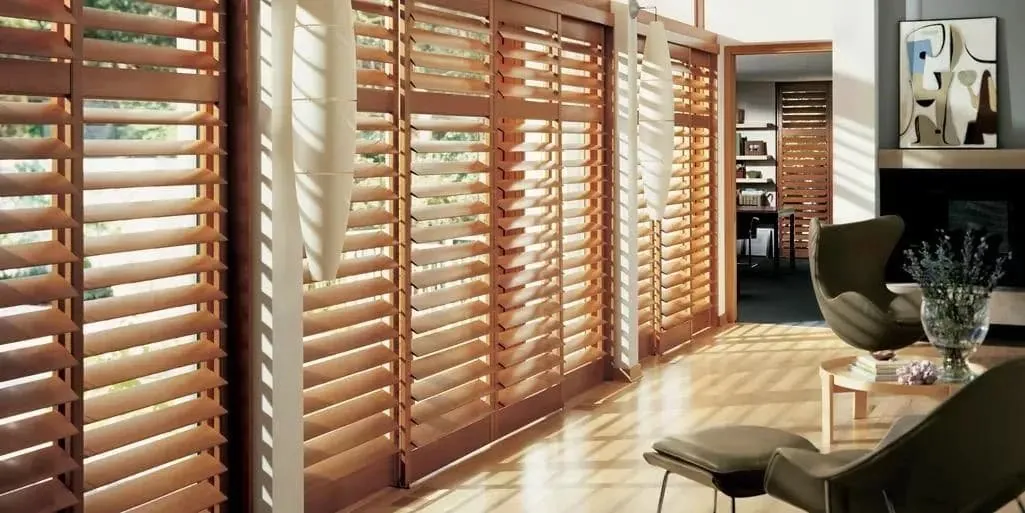
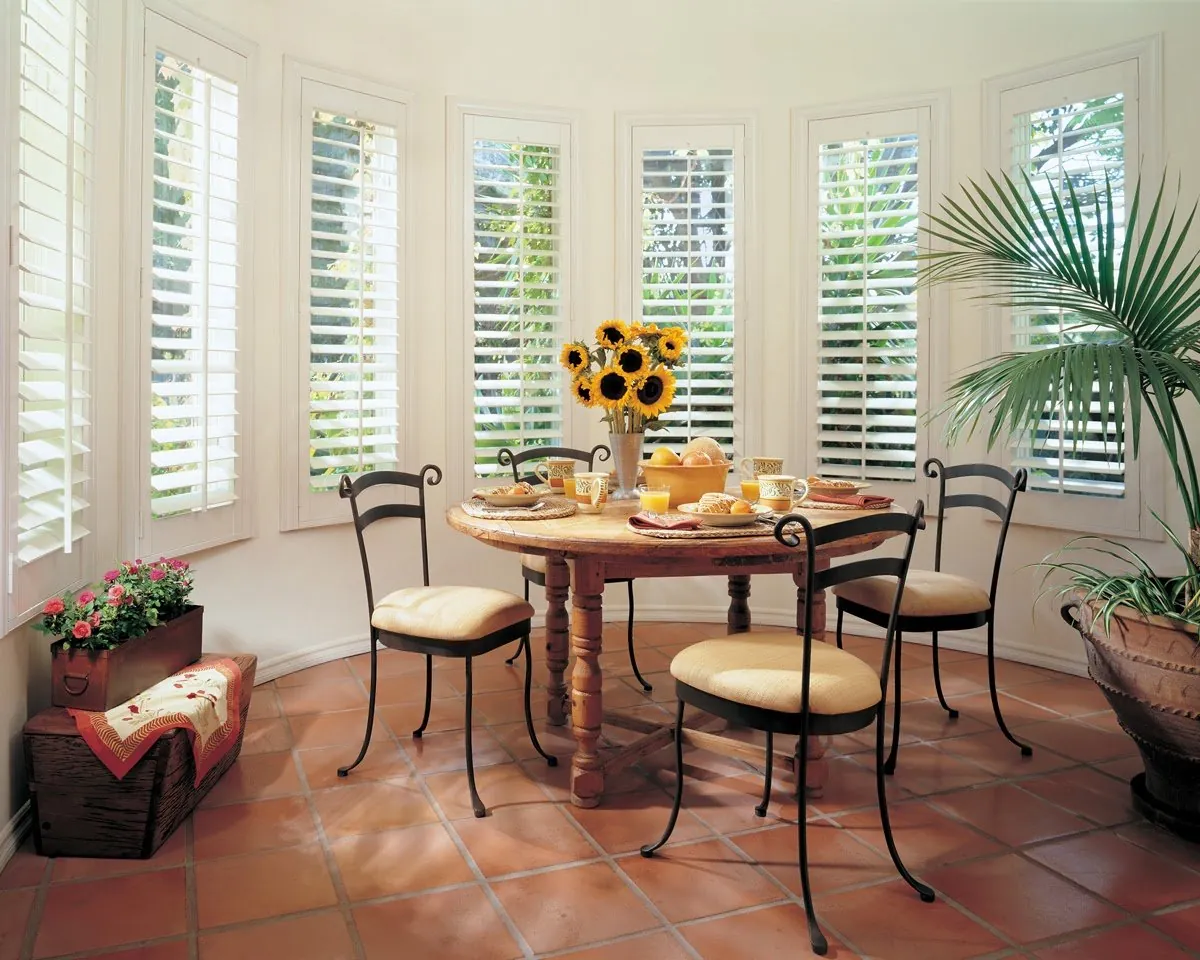
Plantation shutters, Plymouth
Palm Beach, NewStyle and Heritance shutters, sized to the louver and frame each house calls for.
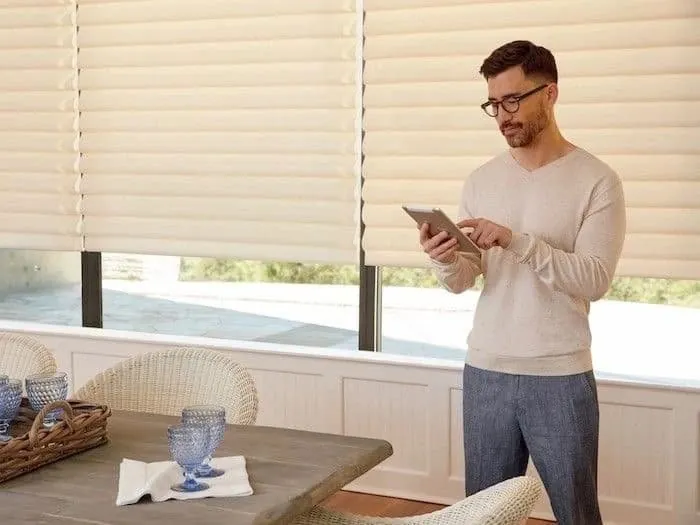
Motorized, Plymouth
PowerView control by app, remote or schedule. For two-story glass it is the practical choice, not a luxury.
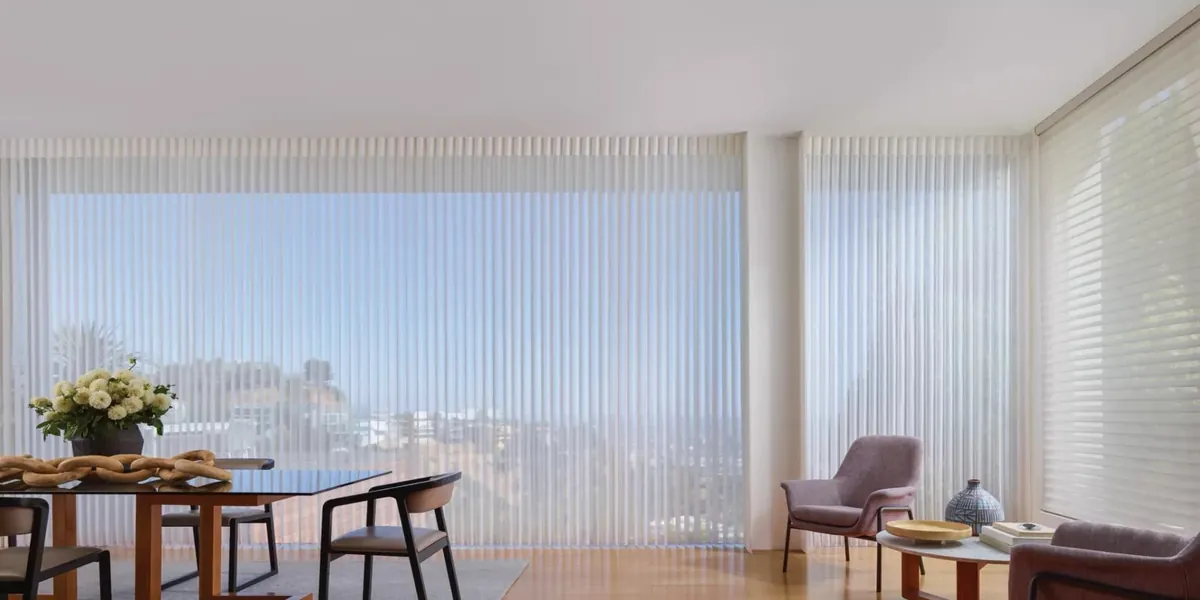
Hunter Douglas, Plymouth
A Hunter Douglas Gallery dealer with certified Hunter Douglas installation, covering the whole catalog.
Drapery, Plymouth
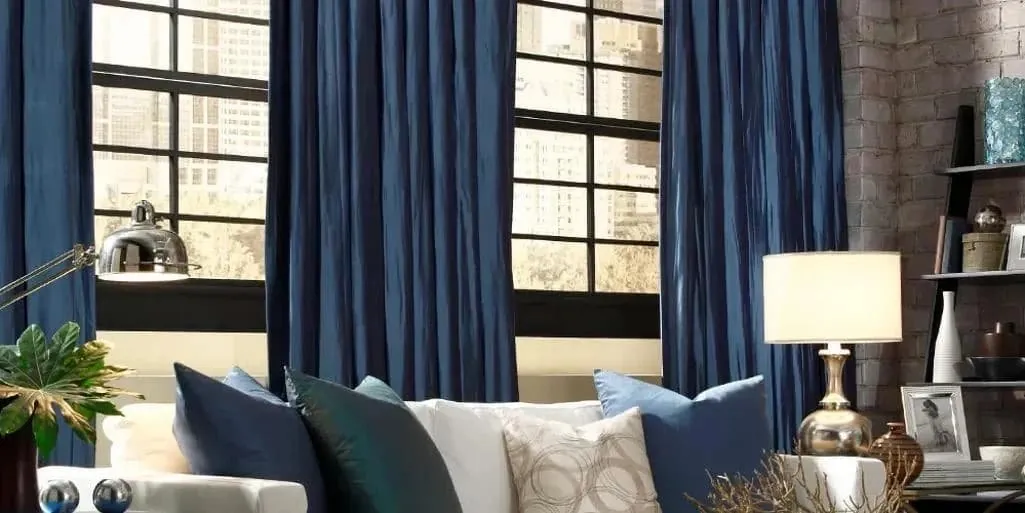
Hunter Douglas drapery for a tall great room or a formal colonial dining room.
Repair, Plymouth
If a blind or shade you own has a broken lift, cord or tilt, ask us about mending it.
Antique colonials in the historic center
The oldest houses near the waterfront and the town center are colonials with small sash set deep into thick walls. Step up to one of these windows and you notice the reveal straight away: a broad sill and deep sides between the face of the wall and the glass. It is one of the pleasures of an old house, and it changes what is possible.
A deep reveal is ideal for an inside mount. A shutter can sit right inside the opening, flush with the wall, so it reads as part of the house rather than something added. Honeycomb and roman shades can mount at the head of the opening with room to spare, and raised, they vanish into the reveal. Wood blinds, too, sit comfortably within the depth and suit the plain, sturdy character of colonial trim.
What these windows lack is size. Small sash means every bit of glass matters, so the treatment should take up as little of it as possible when open. A honeycomb shade stacks very slimly, a roller nearly disappears, and a shutter opens clear of the glass. Romans have a deeper stack, so on a small window we often mount them high in the reveal, above the glass, so the folds do not block the top panes.
Old frames are seldom square, even in a deep reveal. We measure at several points across and down, check the diagonals, and size each piece to fit the opening as it really is.
Thick walls and small glass keep these houses cosy, but the sash itself is often original and thin. A honeycomb shade lowered at dusk adds a still layer of air against the glass, and in a formal front room, lined drapery hung outside the reveal can be drawn across on the coldest nights. Pulled back by day, the panels frame the deep opening and leave every pane clear. That combination, a working shade inside and drapery outside, suits a colonial parlor or dining room especially well.
Two-story glass in the Pinehills
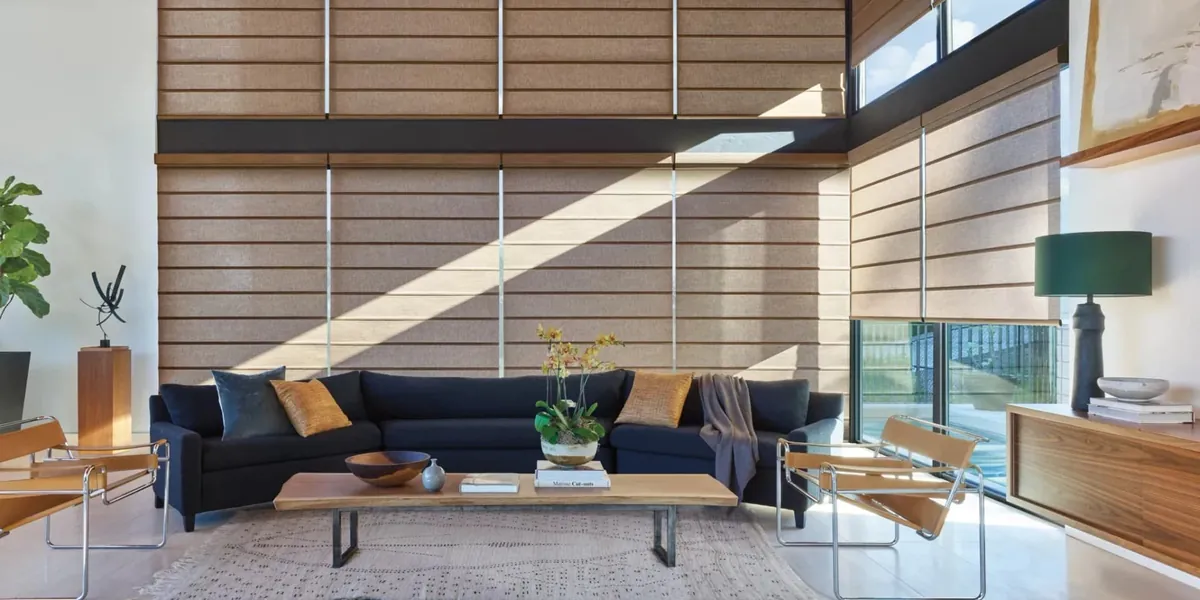
The newer houses in the Pinehills are a different proposition. Many have great rooms with glass that runs up two full stories, transoms over tall windows, corner windows and walls of sliders onto a terrace. The light is wonderful. It is also a lot of sun, a lot of heat and, at the top, a lot of glass nobody can reach.
This is where PowerView motorization stops being a nice extra. A shade near the top of a two-story wall has to be moved by something other than a hand. Motorized shades raise and lower by remote, by app or by schedule, and they can be grouped so that every shade in the great room moves together. Scenes let you set a morning position, an afternoon position for the sun and a night position for privacy, each with one touch.
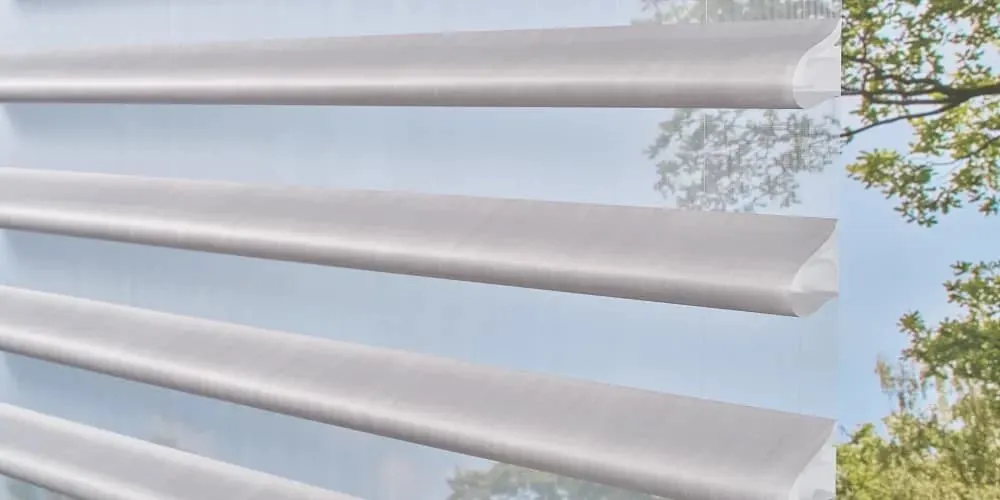
Fabric choice matters as much as control. Solar screen rollers cut glare and heat while keeping the view of the trees and the land beyond. Honeycomb shades help a big room hold its heat in winter, and on the tallest windows a top-down, bottom-up honeycomb shade can leave the upper glass open to the sky. Sheer shades such as Silhouette soften the light beautifully across a tall wall. For the clean lines these houses favour, rollers in a slim cassette or banded shades are popular.
Shaped windows, such as arches, trapezoids and angled transoms, are common in this kind of house. Some can take a specialty shade made to the shape; others are best left uncovered while the rectangular glass below does the work. We will tell you which is which.
Big glass also means big views into the house after dark. When the lights go on in a great room, a wall of glass becomes a lit stage from the terrace and the street. A scene that lowers every shade at sunset, or a light-filtering layer that closes automatically, keeps the room private without anyone walking round the house at dusk.
The post-war ranches in between
Across much of Plymouth, between the old center and the new developments, are post-war ranches and capes on generous lots. They are straightforward houses with straightforward windows: a picture window in the living room, double-hungs in the bedrooms, a slider or patio door at the back.
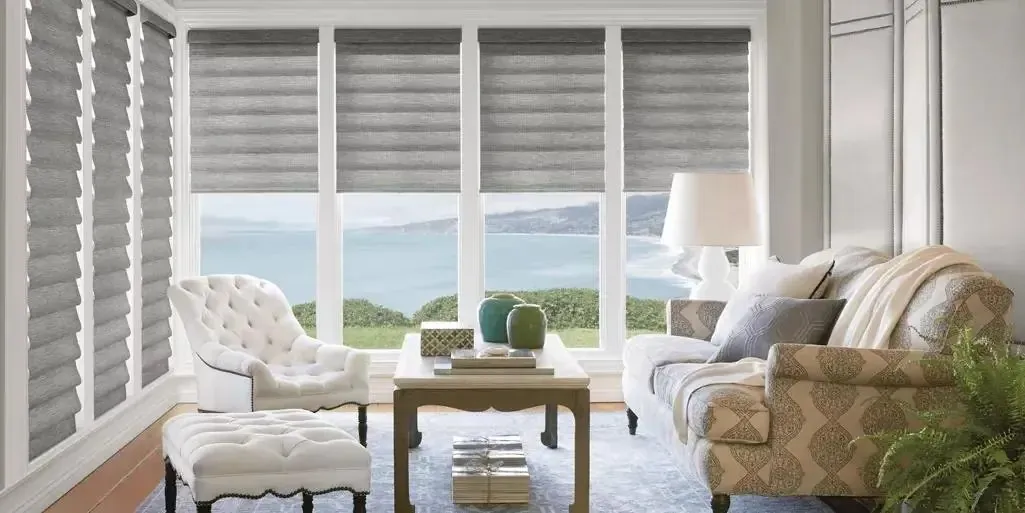
For these houses the choices are mostly about comfort and ease. Honeycomb shades warm the picture window in winter and keep it cooler in summer. Faux wood blinds suit kitchens and bathrooms. Shutters add a finished, more permanent look to the front rooms. Rollers give a clean line in a family room. The slider can take a vertical honeycomb shade, gliding panels or vertical blinds, all stacking neatly to one side.
A single-story house is also a simple place to try motorization. Start with a few PowerView shades in the living room on a morning-and-evening timetable, and add bedrooms or the kitchen to the same system whenever you like.
Many of these houses have been updated over the years, with a finished basement, a family room off the kitchen or a sunroom at the back. Basement windows are small and set high in the wall, often at ground level outside, and a compact honeycomb or roller shade made to the opening gives privacy from the yard without losing what light they bring. A sunroom with glass on three sides wants a pair of products: a screen shade for summer glare and a honeycomb shade for warmth in the cooler months.
How a Plymouth visit runs
With so much variety in the town, there is no substitute for seeing the samples in your own house. A typical visit goes like this.
- Send the Request a Consultation form or use the call button, and pick a day and time.
- A consultant arrives in a van loaded with samples: shade fabrics, screen openness levels, blind slats, shutter louvers and drapery.
- We tour the house with you, from the rooms that bother you most to the ones you simply want to finish.
- You see samples at the actual windows, in the light each room gets at that time of day.
- Every window is measured, with notes on depth, height and anything in the way, and for tall glass, on power and reach for motorized shades.
- A free estimate follows, and you can take whatever time you need.
- When the order arrives, our certified Hunter Douglas installers mount everything, level it, set up any motorized shades and show you how it all works.
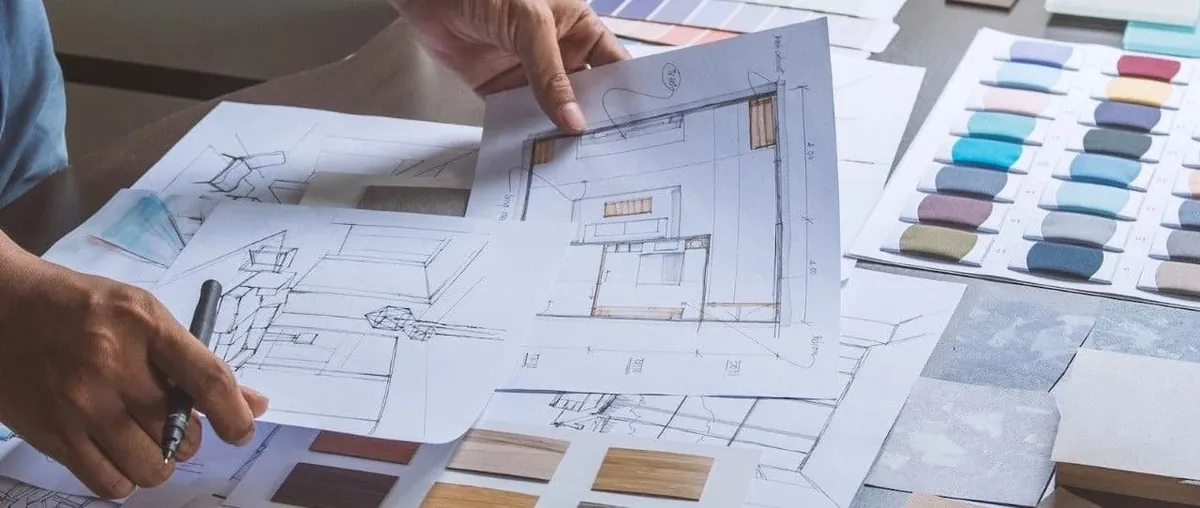
If you want help with color and fabric across a big house, our interior design consultations can be part of the same visit. The in-home consultations page covers more.

Planning a big house without losing the thread
A large Plymouth house can have dozens of windows, and they rarely all need the same thing. The risk with so many windows is a collection of different products that never quite feels like one house.
We usually set a few constants first. One color facing the glass across the whole house keeps the outside consistent. A matching headrail or cassette finish within each floor keeps the inside calm. Then each room gets what suits it: shutters in the study, romans in the dining room, honeycomb shades in the bedrooms, rollers in the great room, faux wood blinds in the bathrooms.
If you want to motorize, it helps to decide early. PowerView shades in different rooms can share one system, so the great room, the bedrooms and the kitchen can follow their own schedules from one app. Even if you motorize only the tall windows at first, planning the system as a whole makes it easy to add more later.
You do not have to do everything at once. Many people start with the rooms that matter most, such as the great room or the bedrooms, and add the rest later. A plan for window treatments in Plymouth houses like these, set out at the first visit, means the later rooms will match the first.
Sun, view and the direction a room faces
In a town this large, houses face every direction, and that changes what a window needs more than its age does. A west-facing great room takes hard afternoon sun; an east-facing bedroom gets the dawn; a north room stays cool and even all day.
West and south glass usually calls for a screen shade or a sheer that cuts glare and heat during the brightest hours, sometimes with a darkening layer for evenings. East bedrooms suit room-darkening honeycomb shades or blackout rollers, and motorized shades can open them gently at the time you want to wake. North rooms can take lighter, more open fabrics, since glare is rarely an issue there.
Strong sun also fades fabrics and furniture over time. Lighter, neutral fabrics hold their color best on a sunny window, and a screen shade lowered during the brightest part of the day protects the room behind it. Our guides on shades for sun and glare and how motorized shades are controlled explain more.
Coastal houses and the waterfront
Plymouth has a long shoreline, and the houses along it, from older cottages near the beaches to newer houses on the bluffs, face the water and the weather that comes with it. Salt air, wind and strong reflected light all play a part in choosing window treatments in Plymouth, MA, for a house on the coast.
Salt in the air marks exposed metal over time, so shades with their workings inside a closed headrail, cordless lifts and shutters, with very little hardware, are sensible choices for windows that are open all summer. Polysatin and composite shutter panels cope well with damp air. Reflected light off the water is flat and bright, and solar screen shades take the edge off it while leaving the view. Blinds, tilted up, throw it at the ceiling instead of across the room.
Bedrooms facing the water often need two layers: a screen or light-filtering shade for the day, and a room-darkening shade behind it for the night, both on one double bracket.
Kitchens, baths and busy rooms
Whatever the age of the house, some rooms work harder than others. Kitchens see steam and splashes; bathrooms see humidity every day; mudrooms and laundry rooms see a bit of everything.
Faux wood blinds and Palm Beach polysatin shutters cope well with moisture and wipe clean. Roller shades in a washable fabric suit a kitchen with a modern look. For a window over a tub or a sink, a cafe shutter or a top-down, bottom-up shade gives privacy at the bottom and light at the top. Cordless lifts keep things tidy in rooms where a cord would be in the way.
In a colonial kitchen with deep-set windows, an inside-mounted shutter or wood blind looks especially at home. In a Pinehills kitchen with a long run of windows over the counter, a set of matching rollers on one headrail gives a clean, continuous line.
Why work with a Hunter Douglas Gallery dealer
A town as varied as Plymouth needs a dealer who can offer everything. Blinds & Designs is a Hunter Douglas Gallery dealer, so one consultation can cover deep-set colonial sash, two-story Pinehills glass and a ranch slider with the right Hunter Douglas product for each.
Our installers hold Hunter Douglas certification, which counts on tall glass where motorized shades have to be set up and levelled high off the floor. Interior design consultations, and repairs on blinds and shades you already own, are part of the service too.
Read more on our Hunter Douglas page or see the full window treatments range.
Our nearest showroom
For Plymouth, the closest of our showrooms is Sagamore, by the canal. You are welcome to look around there first, though most Plymouth projects are settled at the house, where the windows are.
Questions from Plymouth
What suits the deep-set sash in an antique colonial?
Deep reveals suit an inside mount. Shutters sit flush inside the opening, honeycomb and roman shades tuck into the head of the window, and wood blinds fit comfortably within the depth. We measure each opening at several points because old frames are rarely square.
How do you cover two-story windows in a Pinehills great room?
With PowerView motorized shades, raised and lowered by remote, app or schedule. Screen rollers, honeycomb shades and sheer shades all come motorized, and shaped windows can sometimes take a specialty shade.
What suits a post-war ranch?
Honeycomb shades on the picture window, faux wood blinds in the kitchen and bathrooms, shutters or rollers in the living areas, and a vertical honeycomb shade, gliding panels or vertical blinds on the slider.
Can I do the house in stages?
Yes. We can plan the whole house at the first visit so later rooms match, then start with the rooms that matter most. Motorized shades added later can join the same system.
Is the estimate free?
It is. After we measure, you get a free estimate covering everything you are considering.
Your next step
Every house in town is different, so the surest way to choose window treatments in Plymouth, MA, is a visit. Request a consultation and we will bring the samples, measure every window and leave a free estimate. You can also use the call button, or visit the Sagamore showroom.