
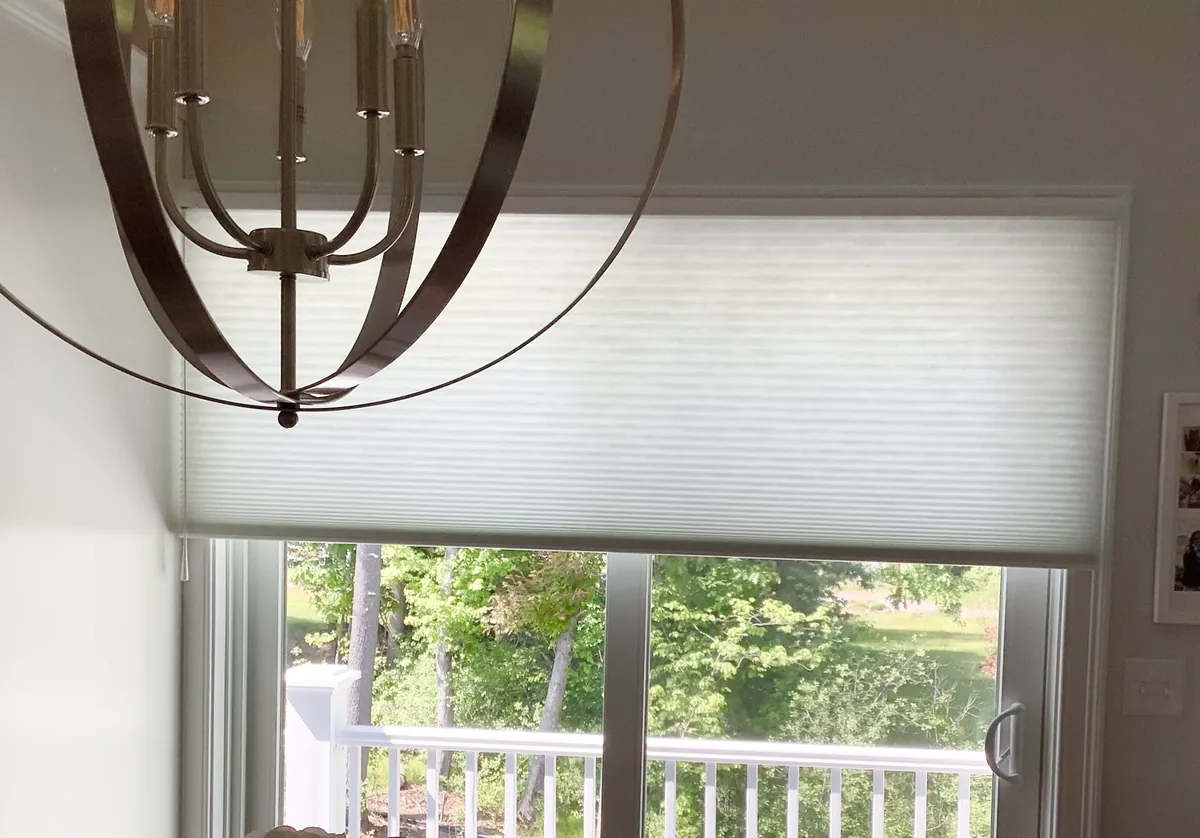
Two kinds of window in one town
Abington’s houses split fairly neatly in two. Around the town center stand Victorians with tall, older sash, the kind of window that reaches well above your head and still has its original proportions. Spread outward from there are the post-war capes and ranches on modest lots, where the openings are standard modern sizes and many of the windows have been replaced over the years. Our work on cellular shades in Abington, MA, starts by working out which of the two your house belongs to, because each asks for something different.
The tall sash near the center is all about fit and looks: the shade has to suit a window that was made by hand, often out of square, framed by trim that deserves to stay visible. The capes and ranches are more about comfort and consistency: rooms that run cold in a north corner, bedrooms tucked under a roof, and rows of matching windows that should look tidy from the street.
What they share is the need for a warmer room. A honeycomb shade holds air in its pockets, and that layer of still air between glass and room is why Duette and Applause are the shades we turn to when a room feels cold.
Honeycomb choices for Abington capes, ranches and Victorians
Each house type tends to lead to its own first choice. These three cover most of what we plan in town.
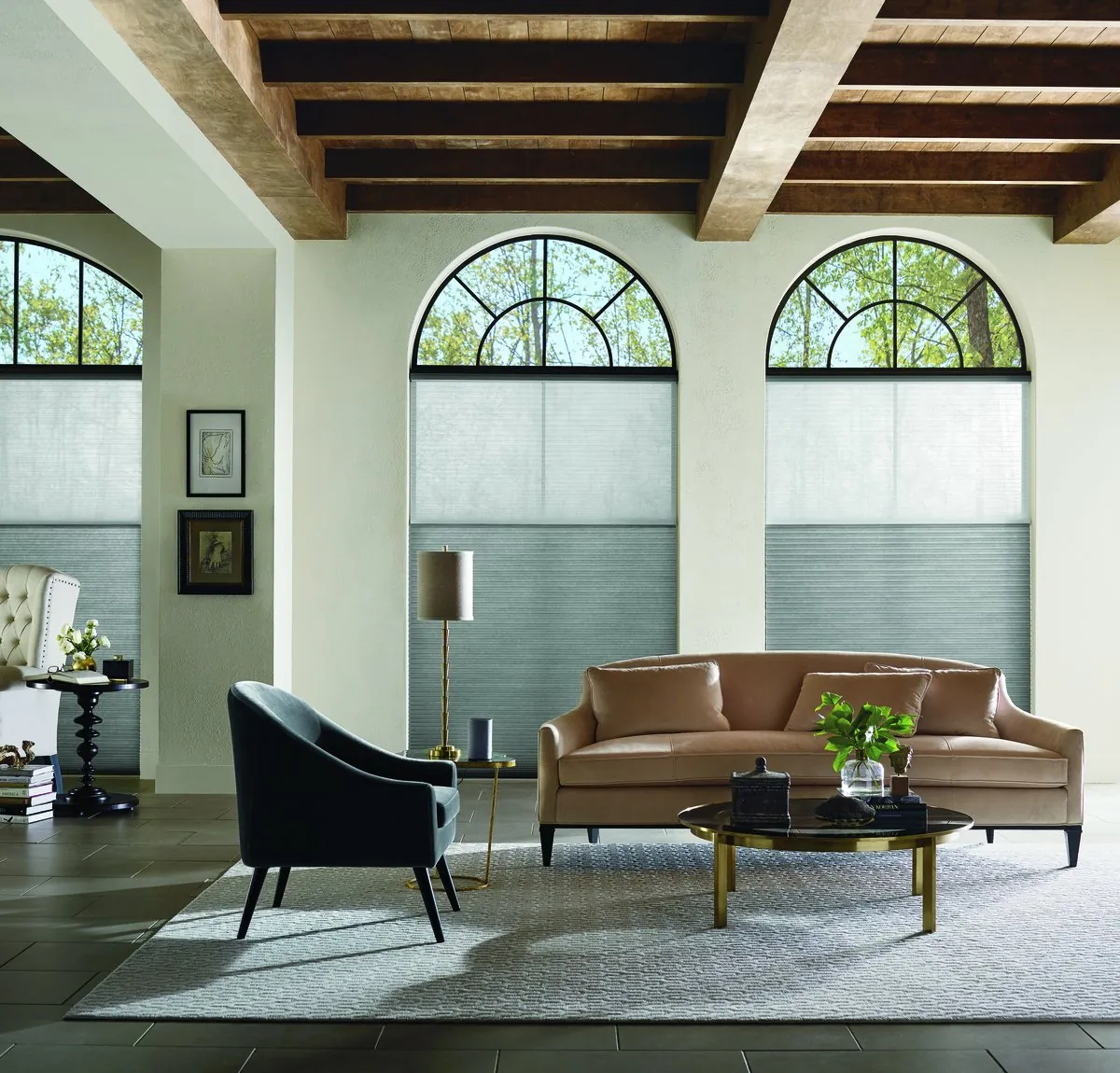
Duette for tall sash near the center
Long, narrow shades sized to older windows, mounted to leave the casing on show. Duette’s wide range makes it the usual pick here.
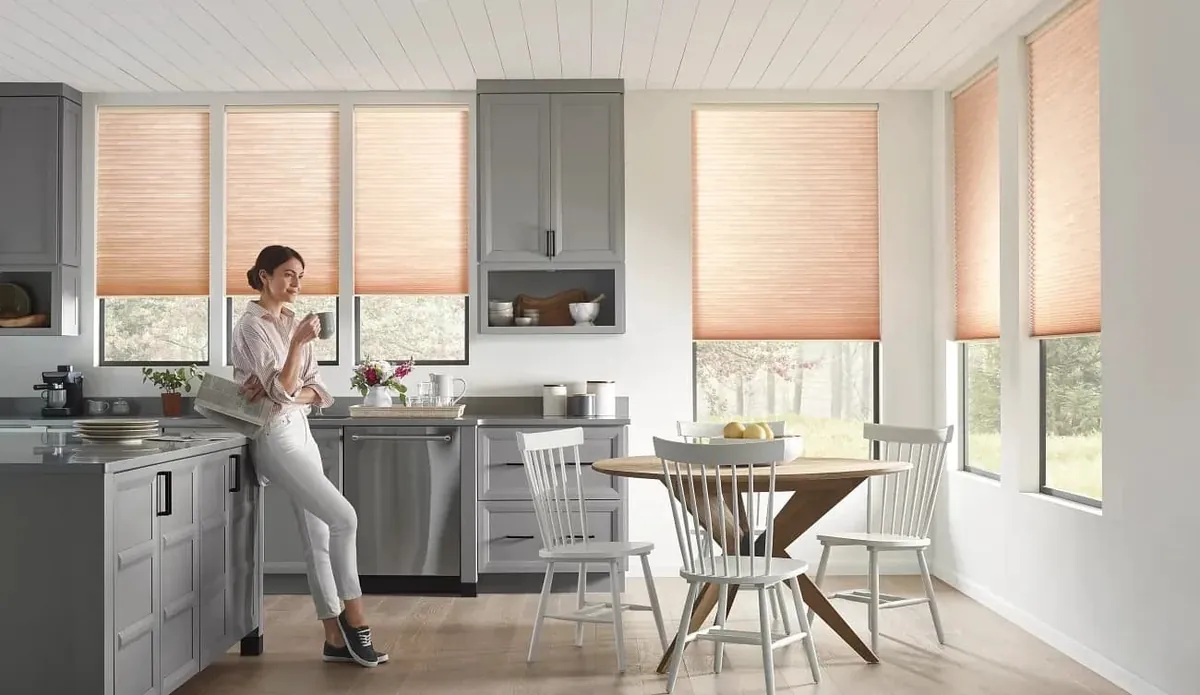
Applause for cape and ranch rooms
Standard openings repeated across the house suit a single line in a single color, often Applause, ordered room by room or all at once.
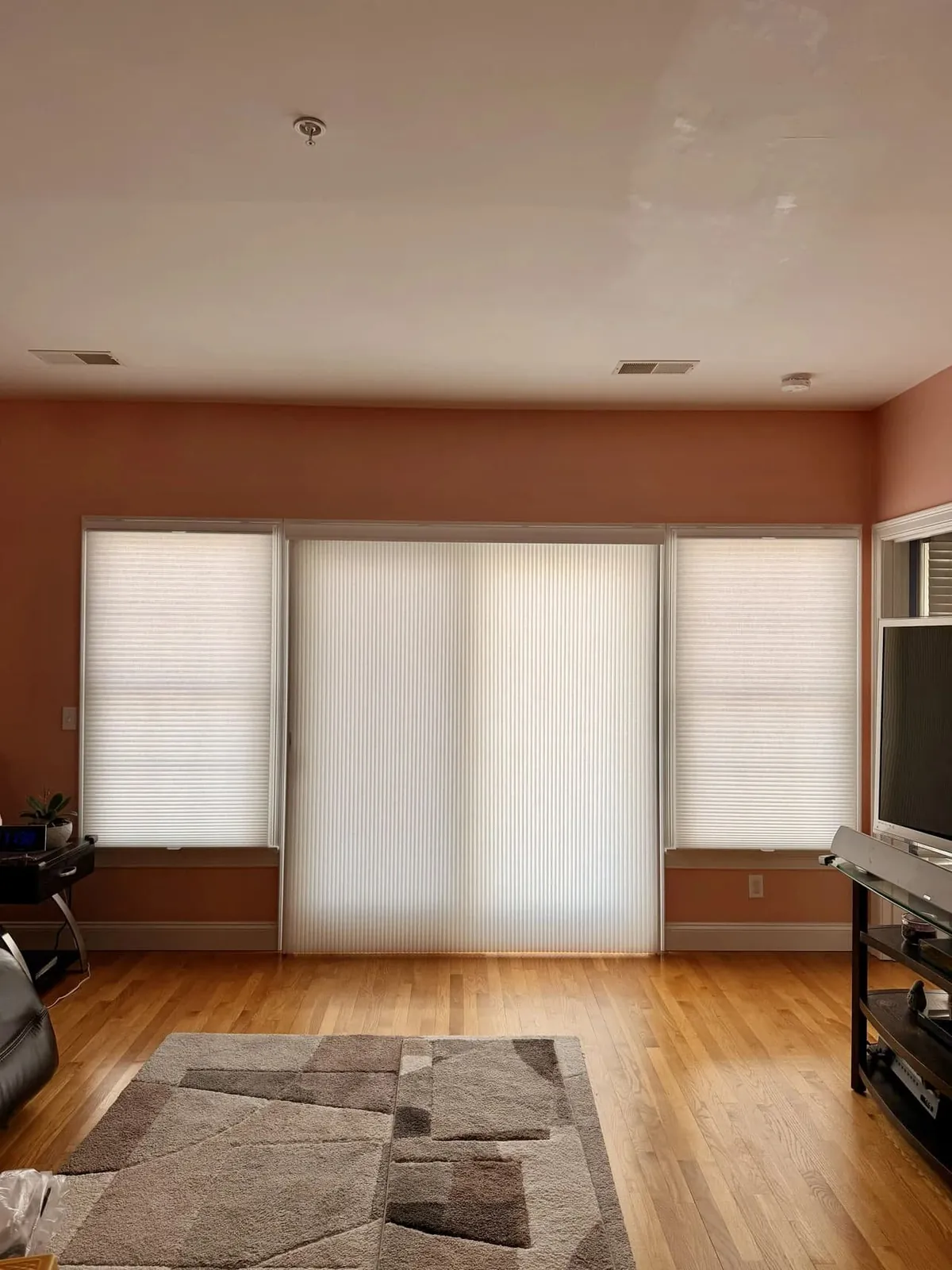
Sliders and side windows
Back doors to a deck and the windows beside them, planned together so the wall reads as one.
The Victorians around the town center
Near the center, Abington’s older houses have tall double-hung sash with deep sills and trim that has been painted many times over. These are handsome windows, and the last thing anyone wants is a window covering that hides them. A honeycomb shade mounted inside the opening tucks up neatly into the top of the frame when raised and disappears from view, leaving the casing as the thing you notice.
The catch with old windows is that they are rarely the size they look. A frame that has settled through many New England winters can be wider at the top than at the bottom, and the old sash hardware can eat into the depth a headrail needs. That is why we measure each opening at several points and look at the depth before suggesting where the shade should sit. If an inside mount would leave the shade cramped or crooked, we suggest fixing it to the face of the casing instead, and we say so plainly.
Tall windows bring a lot of glass into a room, and older glass is thin. In a front parlor with two or three of these windows, the difference a honeycomb shade makes on a cold evening is easy to notice from the sofa.
Capes: dormers, kneewalls and the bedroom under the roof
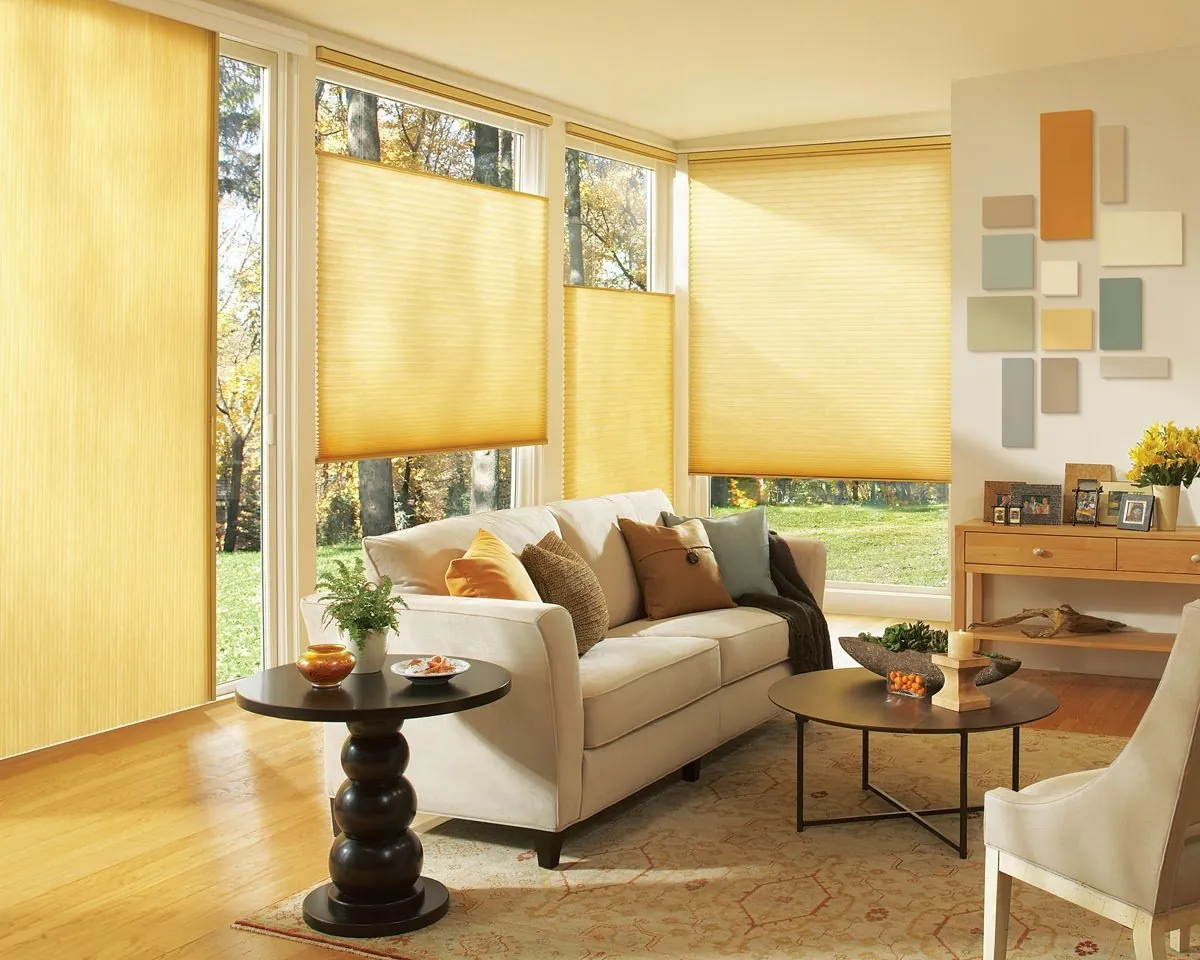
The post-war capes that fill much of Abington have a familiar layout. Living room, kitchen and often a bedroom on the first floor; two more bedrooms upstairs under the slope of the roof, lit by dormer windows. Those upstairs rooms are where comfort tends to go wrong. Heat rises into them in summer, and in winter the dormer, sitting in a small recess with roof on three sides, can feel like the coldest spot in the house.
A honeycomb shade suits a dormer well. It is light, it stacks compactly when raised, and it covers a small window completely when lowered. Where the recess is deep enough, the shade sits inside the window frame and does not crowd the room. In a bedroom, a darker fabric adds the extra benefit of keeping out early light, which in an upstairs room facing east can arrive well before you want it.
Downstairs, a cape’s windows are usually standard sizes and fairly evenly spaced. That makes it simple to treat every room in one consistent way, which matters on a modest lot where the sides of the house are as visible to the neighbors as the front is to the street.
Ranches: wide glass and a long front wall
Abington’s ranches put most of their windows along one long front and one long back. The living room usually has the biggest single window in the house, sometimes a picture window flanked by two smaller ones. Bedrooms line up along a hallway with matching windows. At the back, a slider or a pair of French doors leads out to the yard or a deck.
Wide glass loses heat fast on a winter night and lets a lot of sun in on a summer afternoon. Honeycomb shades help with both, and the way we plan them matters. A wide living room window can take two or three shades sharing one headrail, so they rise together or separately as you prefer. The two windows on either side of a picture window can match it exactly, so the whole wall looks like one piece.
At the back door, we look at how often you use it and which way it opens before suggesting a covering, so the shade never gets in the way of letting the dog out.
The small windows that get forgotten
When people list the rooms they want done, the same few windows tend to get left off: the half-bath off the kitchen, the small window on the stair landing of a cape, the back entry where coats and boots pile up. They are small, and they seem unimportant until a January morning when the landing is the coldest spot in the house.
Those little openings are worth adding to the list of cellular shades in Abington, MA, that we measure on the day. A honeycomb shade on a bathroom window gives privacy without blocking the light. On a stair landing it takes the edge off the draft that drops down the stairs on a cold night. In a back entry it keeps the low winter sun off the floor and the cold off the door. Because each one is made to its own opening, a tiny window gets the same tidy fit as the big living room glass.
Standard openings still get measured one by one
Away from the center, most Abington windows are what the building trade calls standard modern openings. They are square, they are true, and many of them are replacement units. That makes them an easy fit for honeycomb shades, but it does not mean we skip the tape measure.
Replacement windows can be shallow, and the locks and tilt latches on the sash often sit close to the front of the frame. A headrail mounted inside has to clear all of that. So at the visit we check the depth on every window, not just one per room. Where an inside mount will not clear the hardware, the shade goes just above the opening, a little wider than the frame, which also cuts the sliver of light that can creep in at the edges.
Matching windows in a cape or ranch should look matched when the shades are down. Getting each one measured on its own is how a row of bedroom windows ends up with every shade sitting at the same height.
One look for the whole house
On a modest lot, your house is seen from several sides. Neighbors look at its sides, the street looks at its front, and the back faces other back yards. Many people choosing cellular shades in Abington, MA, decide early on to keep the outward-facing color the same throughout, usually a white or soft neutral, so the house looks orderly from every angle.
Inside, every room can still be its own. The living room might take a lighter fabric that keeps the room bright, the bedrooms a heavier one for sleep, the kitchen something that hides the clutter on the sill without blocking the morning sun. Choosing the same pale shade of fabric in every room, but a different weight for each, is a simple way to keep the outside even while the inside suits how each room is used.
Sun, seasons and the way a cape faces
Because so many capes and ranches in Abington were built on similar plans, the sun tends to be the thing that sets one house apart from the next. A ranch with its long front facing south takes strong light across the living room most of the day. Turn the same house to face north and the front rooms stay dim and cool while the back bedrooms and kitchen get the warmth.
That changes what we suggest room by room. A south-facing living room usually wants a fabric that softens the sun without darkening the room, lowered in the afternoon to slow the heat. A north-facing room rarely needs glare control at all; there the job is holding warmth on a winter night, and a honeycomb shade lowered at dusk does that quietly. East bedrooms catch the sunrise and do well with a heavier fabric. West rooms, especially kitchens, get the low evening sun straight in the eyes and benefit from something in between.
We look at the compass as well as the window. Part of planning cellular shades in Abington, MA, is noting which way each room faces, so the fabric you choose fits the light it will actually get.
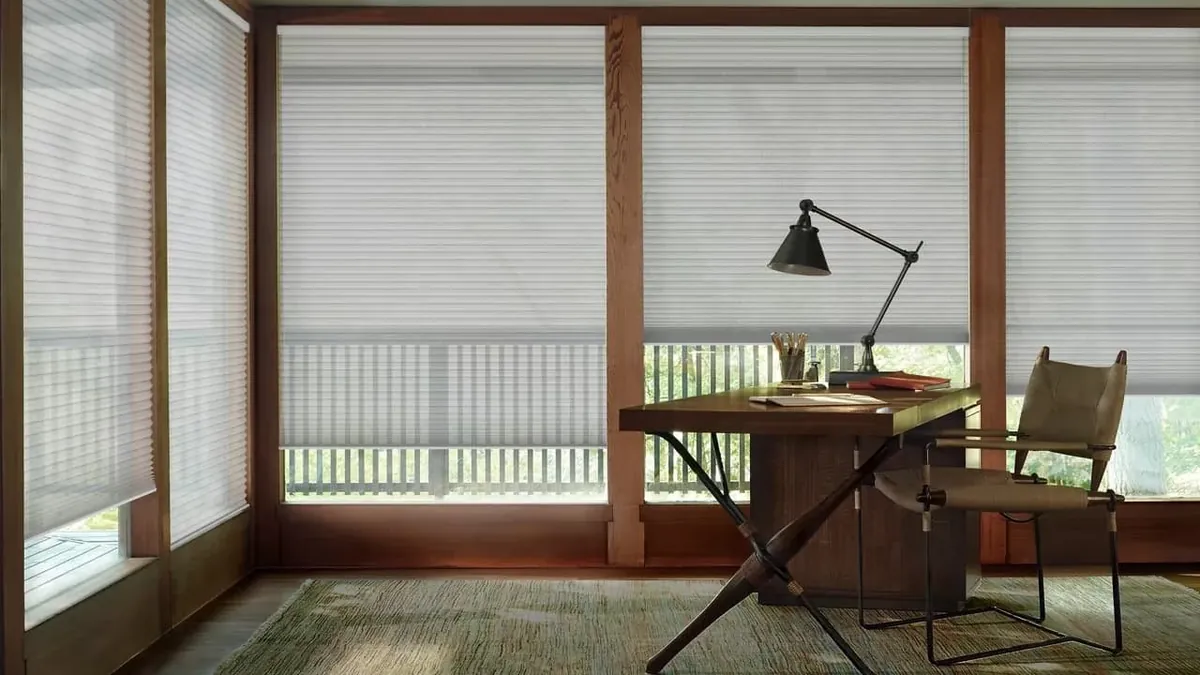
This is also where Duette and Applause can work together. A Victorian near the center might have Duette in the front rooms, where the shades are part of the look of tall windows, and Applause in the bedrooms and kitchen. A cape or ranch might use one line throughout for simplicity. We lay the swatches out together at your window so you can compare them in your own light. Our main cellular shades page covers both lines.
Motorized honeycomb for the hard-to-reach window
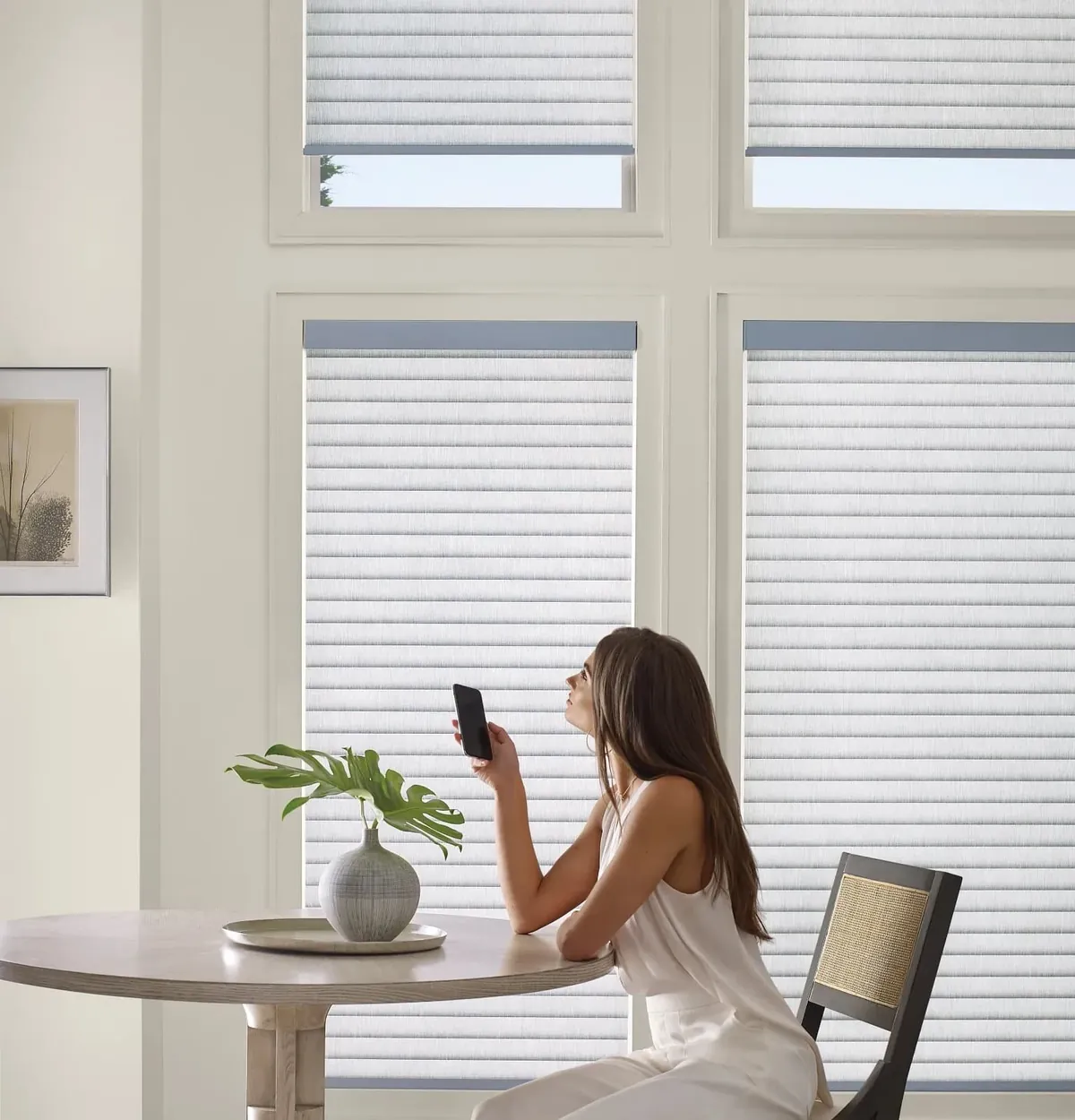
Some windows are a stretch: the top sash of a tall Victorian window, a dormer behind a bed, a window over a deep kitchen counter. PowerView motorization lets you raise and lower a honeycomb shade from a remote, an app on your phone, or a schedule that opens the shades at breakfast and closes them at dusk. We plan how each motor is powered at the visit, window by window.
For a house with many windows, schedules are where it earns its keep. Lower the shades on the sunny side through the afternoon in summer, close every shade in the house as it gets dark in winter, all without walking from room to room. In a ranch, where the bedrooms run down one long hallway, a single scene can close them all at once at bedtime. In a cape, it saves climbing the stairs to lower the dormer shades on a hot afternoon. If that interests you, our page on motorized blinds and shades in Abington goes further.
A Hunter Douglas Gallery dealer for Abington
Blinds & Designs is a Hunter Douglas Gallery dealer. For an Abington house, that means every Duette and Applause fabric is available to you, along with motorized PowerView shades and the rest of the Hunter Douglas range.
Our installers are certified by Hunter Douglas. They fit each shade, level each headrail, test the shade and show you how it works before they leave. If something needs attention later, we handle blind and shade repairs too.
When the rest of the house needs something other than honeycomb, we can help there as well: custom blinds in Abington for a kitchen or bathroom, roller shades in Abington for a sunroom, or plantation shutters in Abington for the tall front windows near the center. Everything we offer in town is on our Abington page.
What to expect when we come to your house
Abington is covered by our shop-at-home service out of Canton, which means the consultation takes place in your living room, not in a store. You can read how that works on our shop-at-home from Canton page. In short:
- Choose a time through Request a Consultation, or use the call button.
- We arrive with a van stocked with honeycomb samples, so we can bring the showroom to you.
- We start with the rooms that bother you most: the cold dormer, the bright living room, the bedroom that never gets dark.
- You compare fabrics against your own windows in your own light, which is the only way to judge them properly.
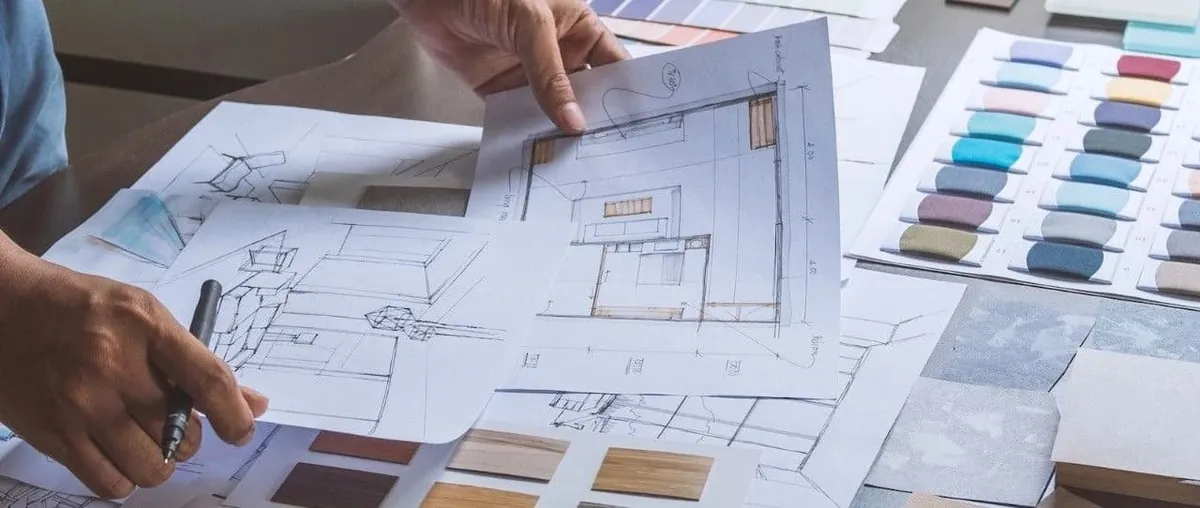
- We measure each window, check the frame depth and talk through inside or outside mounting.
- You receive a free estimate for the shades you have in mind, and you take your time deciding.
If you would like help with color and fabric for the room as a whole, ask about our interior design consultations, which can be part of the same visit.
A few things make the visit go further. Have a rough list of the rooms you are thinking about, even if it changes once we start. Leave the shades or blinds you have now in place, because seeing what bothers you about them helps. And if two of you share the house, try to be there together; one person’s ideal bedroom fabric is often too dark for the other, and it is easier to settle with the samples in hand. If the house is a cape, think about whether you want the upstairs done now or later, since we can measure everything at once and you can order in stages.
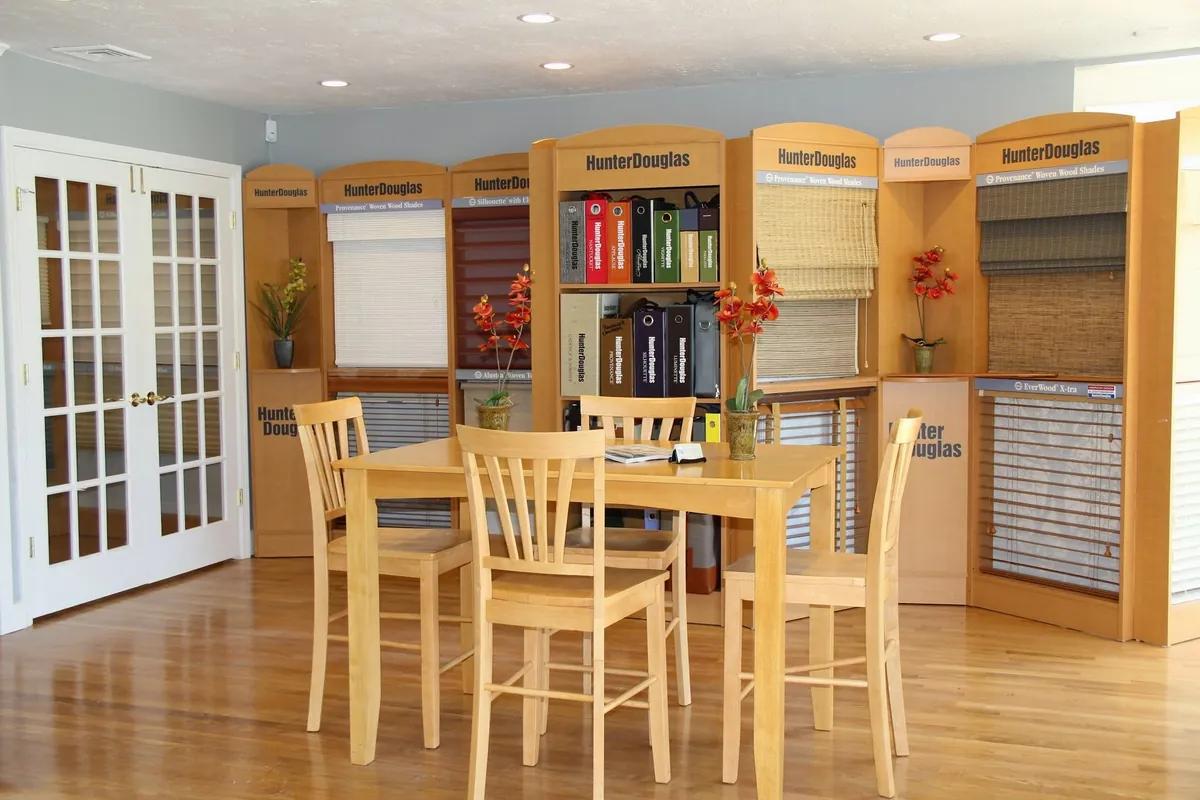
If you prefer to see the shades in person before we come out, the Franklin showroom is our nearest to Abington.
Questions from Abington
My Victorian’s windows are out of square. Can a honeycomb shade still fit?
Usually, yes. We measure each opening at several points and check the depth. Where an inside mount would sit crooked or too tight, we fix the shade to the face of the casing instead, sized to cover the edges.
What works in an upstairs dormer?
A honeycomb shade is a good match for a dormer. It covers a small window completely, stacks neatly when raised, and helps with both the summer heat and the winter chill that upstairs cape bedrooms tend to get.
Can my house look consistent from the street if each room needs something different?
Yes. Keep the same pale fabric color throughout and vary the weight from room to room: lighter where you want daylight, heavier in bedrooms. From outside the windows read as a set, and inside each room gets the light it needs.
Do my replacement windows have enough depth for an inside mount?
Often, but not always. Locks and tilt latches can get in the way. We check every window at the visit, and where an inside mount will not clear, the shade goes just above the opening.
Is the estimate free?
Yes. After we measure, you receive a free estimate for the shades you are considering.
Your next step in Abington
A consultation at home is the simplest way to settle the question of cellular shades in Abington, MA: you see the fabrics on your own glass, we measure every window, and you get a free estimate to think over. Request a consultation to pick a time. The call button is there if you want to ask something first.