
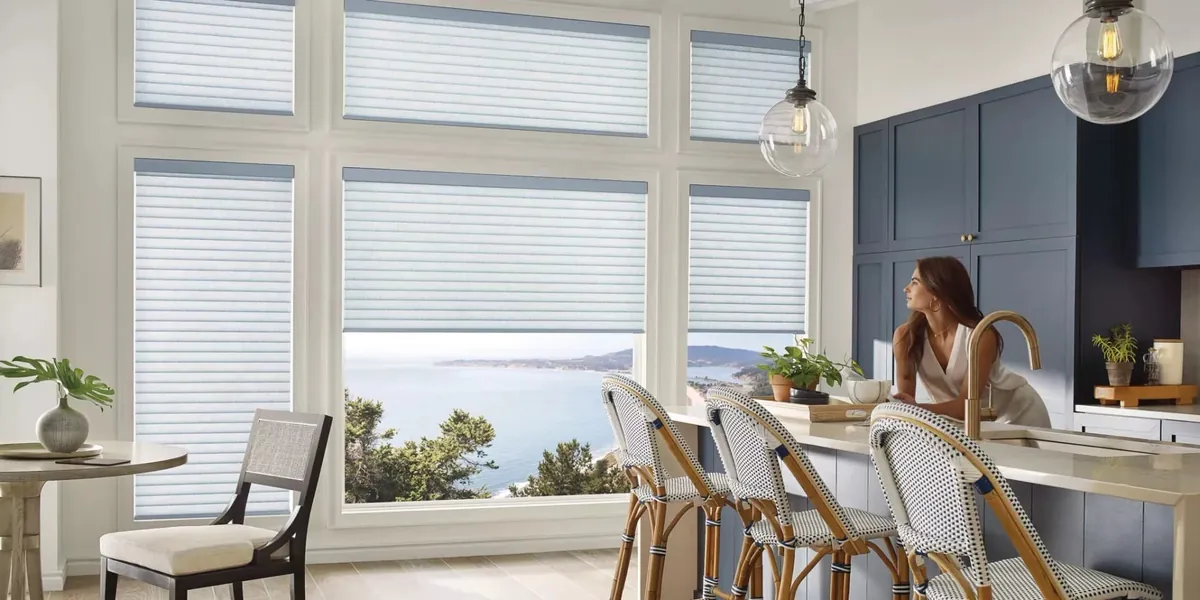
Harbor glass that needs a hand all day
Marion’s best rooms look at the water. The shingled captains’ houses around Sippican Harbor were placed to watch the moorings, and the newer houses out toward Converse Point take that idea further, with whole walls of glass turned toward the bay. Those heavily glazed rooms are glorious at breakfast and blinding by mid-afternoon, when sun comes off the harbor at a low angle and under every overhang. That is the reason most people ask us about motorized blinds in Marion, MA.
The right position for a water-facing shade changes several times a day. Up for the morning view, part way down as the glare builds, closed for an hour when the sun sits straight across the water, open again for the evening light. Nobody manages that by hand for long. A PowerView motor does it on a timetable, or at a press of a handset.
Add the formal village houses, where drapery is part of how a room is expected to look, and the salt air that reaches every open window in summer, and you have a town where the planning matters as much as the product.
What we put on a motor in Marion
PowerView is offered on a wide share of the Hunter Douglas range, so the motor goes on whichever shade the room calls for. When we plan motorized blinds in Marion, for the water-facing rooms and the village houses alike, these three come up first.
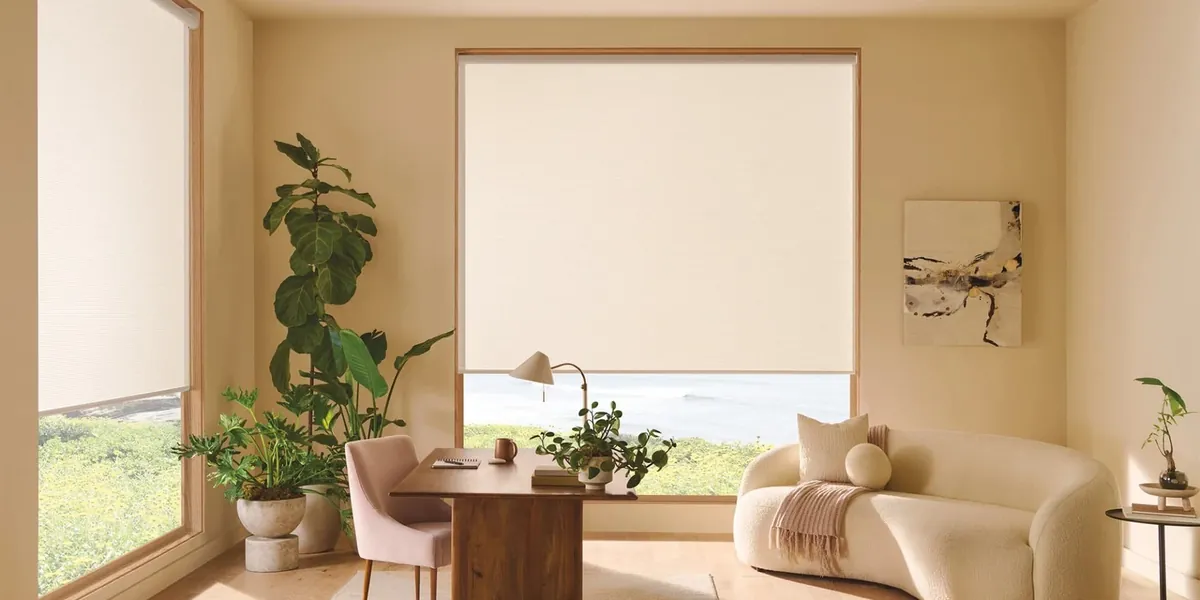
Roller shades
Screen and roller fabrics that turn down harbor glare while the moorings stay visible through the weave.
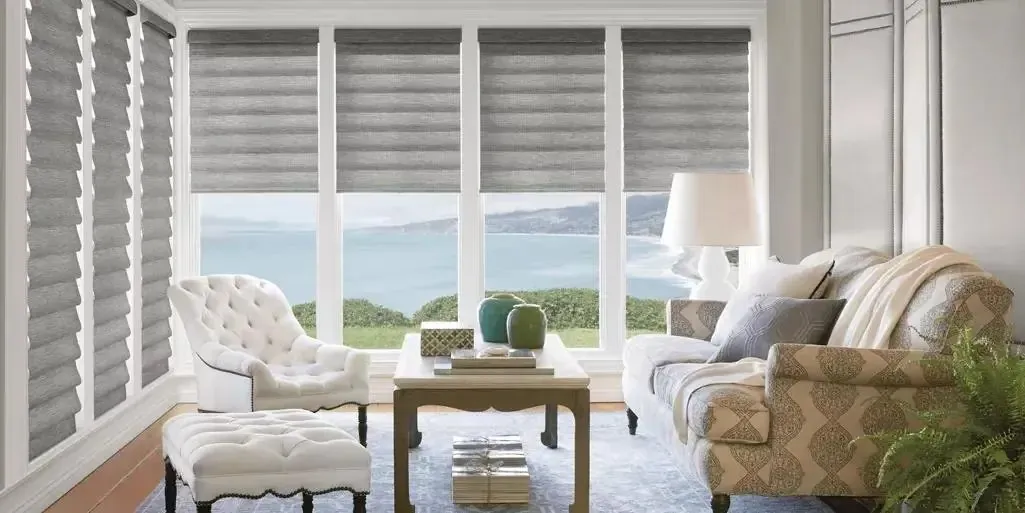
Roman shades
Soft folds across a run of sunroom glass, raised as a group so the whole bay of windows lifts together.
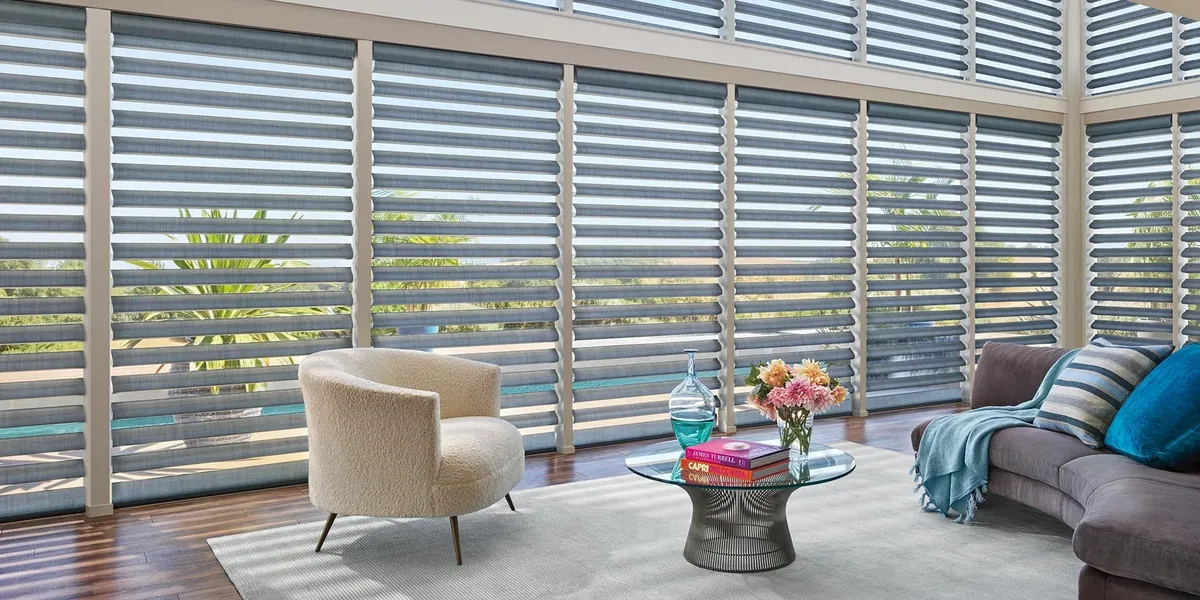
Sheer shades
Vanes that tilt to soften a bright water view, then close fully for privacy after dark.
A harbor-facing room, hour by hour
Water changes the light more than any other setting, and a room facing Sippican Harbor goes through several moods between waking and bedtime. Following one through a clear summer day shows where a motor earns its place.
- First light. On an east-facing room the sun comes up over the water and straight in. Bedrooms want to stay dark; a timetable keeps room-darkening shades closed until the hour you choose and then lifts them slowly.
- Mid-morning. The view is the point. Shades open fully, and in a captains’ house with small-paned sash that means a lot of shades rising together.
- Early afternoon. Glare off the water builds. A screen or light-filtering fabric lowered part way cuts the brightness while the boats stay in sight.
- Late afternoon. On west-facing glass toward Converse Point, the sun sits low across the bay and floods the room. This is the hour to close down further, or fully, for a while.
- Evening. The sun drops, the shades lift for the last of the light, and at dusk they close again as lamps come on.
That is five or six moves in a day on every water-facing window. On a timetable, the house makes them for you, and a handset or the app overrides any of them when you want something different.
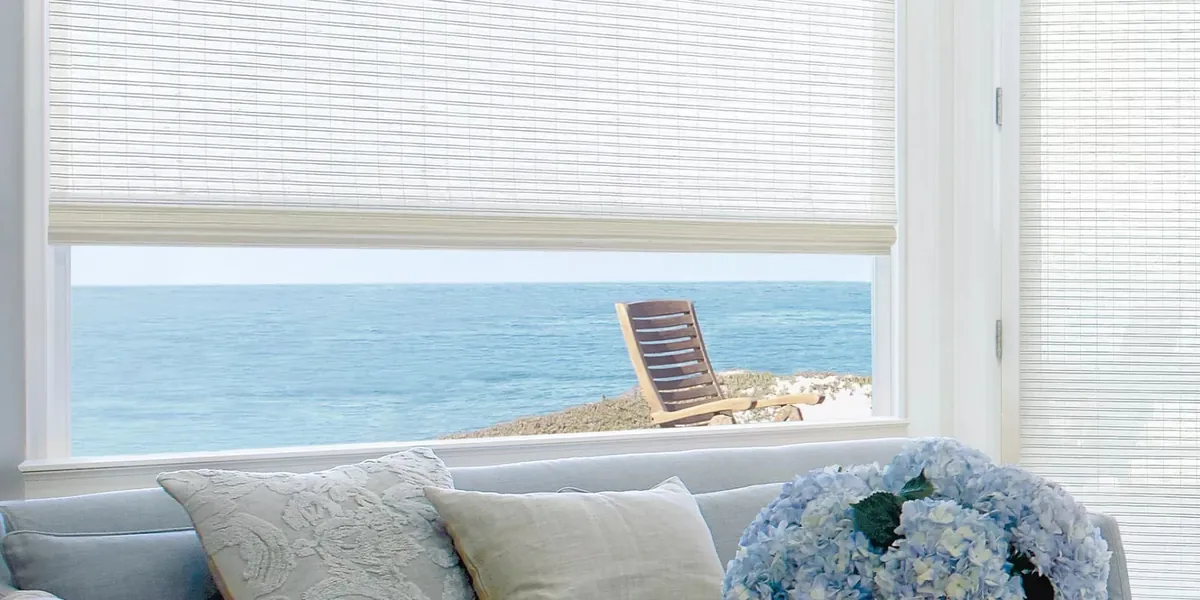
Captains’ houses around Sippican Harbor
The shingled houses near the harbor and through the village have their own character: steep roofs, small-paned windows, deep sills, and rooms laid out to catch the water from more than one side. Their windows are usually many and modest, and each one has its own measurements after a long life of salt winters.
We measure each opening separately and check the depth of the frame before suggesting a mount. An inside mount keeps the trim visible and lets the shade disappear when raised, which matters on a house where the woodwork has been looked after. Where the frame is too shallow, we will suggest a slimmer style or a mount on the casing.
Grouping is the gift motorized blinds for Marion captains’ houses bring. A parlor with five small windows facing the harbor can raise all five at once, to the same height, and lower them together when the glare comes. Seen from the water or the lane, a shingled facade with its shades level looks right.
Formal village houses and drapery
Some of Marion’s village houses are formal inside, with rooms where drapery is simply expected: tall panels at the windows of a front parlor or dining room, framing the glass. Drapery in those rooms is mostly about how the room looks. The light control usually comes from a shade set behind it.
That pairing works well with a motor. The drapery panels stay where they are as the dressing for the window, and a motorized shade inside the frame does the daily work of lifting, lowering and softening the light, on a timetable or by handset. You keep the formal look the room was built for, and nobody has to reach behind heavy fabric to raise a shade.
Sheer shades and flat roman shades are both common choices behind drapery. We look at the depth between the glass and the drapery hardware at the visit, so the shade has room to move freely.
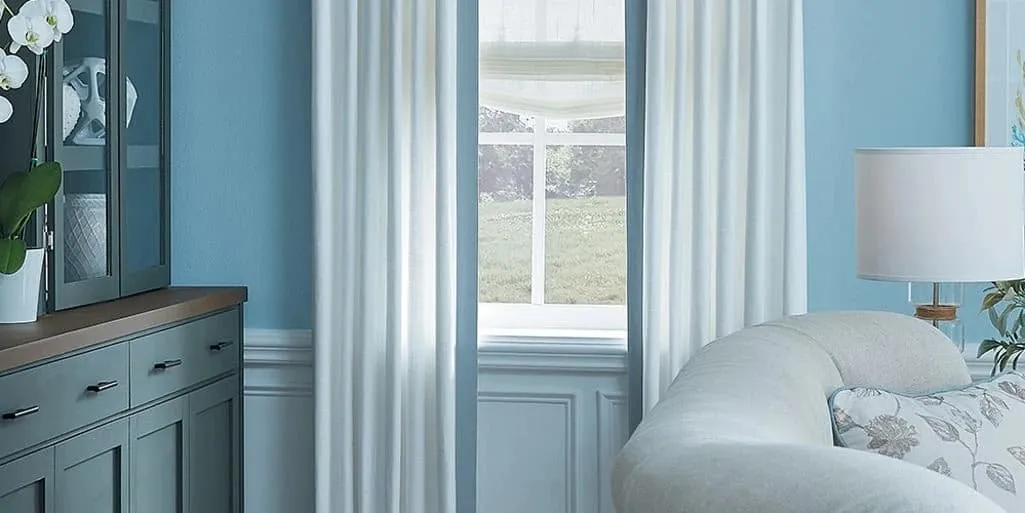
Walls of glass toward Converse Point
The newer houses out toward Converse Point are often built around a great room with a wall of glass facing the bay, sometimes two stories high, sometimes wrapping a corner. They take the full force of the afternoon sun off the water, and the upper glass is out of reach.
Motorized shades are almost a necessity there. A tall run of glass can be split into several shades that move as one group, so the wall closes evenly and finishes at one height. The upper shades are hung from proper staging and their limits set with care, so the top and bottom rows line up.
For a wall like that, the choice of fabric matters as much as the motor. Screen fabrics with some openness keep the bay in view while taking the brightness down. Sheer shades soften the light and turn private at night. Room-darkening fabric belongs in the bedrooms. We bring samples of each and hold them up in the actual light, ideally at the time of day the glare is worst.
Salt air and windows left open
Summer in Marion means windows open to the sea breeze, and with it salt in the air that settles on whatever is near the glass. It is one reason we look closely at how each window is used when we plan a motorized shade: which ones stay open all season, which face the prevailing wind, which take spray in a storm.
A motorized shade has no lift cord or cord lock at the side of the window, and its motor sits inside the headrail. We talk through which styles and fabrics suit each exposed window at the consultation, so the choice fits the house and the way it is used.
How each motor is powered is part of the same conversation. We plan it window by window once we have seen the frames and the walls.
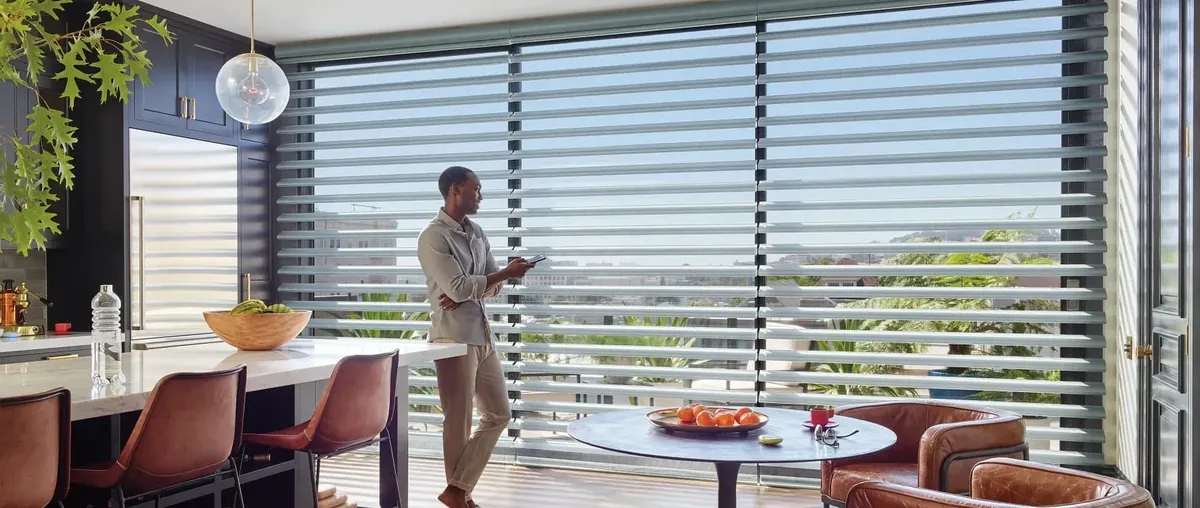
Running the house from a handset or the app
PowerView offers more than one way in, and most Marion households end up mixing them.
A handset kept in each main room gives plain up, down and stop. Guests and family can use it with no instructions. The PowerView app on a phone or tablet moves a single shade or a whole group, stops them at any height, and holds the timetables and scenes. A “harbor” scene might open every water-facing shade; “afternoon glare” might lower the screen shades to half; “goodnight” might close the whole house.
A seasonal house adds one more use. While you are away for the winter, the shades can keep a daily pattern on their own, and the app lets you check or change them from wherever you are.
Our plain-language guide on how motorized shades are controlled explains each option, and window covering automation goes further into timetables.
From first call to first timetable
A Marion project almost always begins at the house, because the only fair test of a fabric on a water-facing window is the water-facing window itself. Our vans carry samples, so we can bring the showroom to you.
- Use Request a Consultation or the call button, and we agree a day, ideally one when we can see the room in its brightest hours.
- We walk the house with you, starting with the windows facing the harbor or the bay.
- You hold screen, sheer and room-darkening samples up to the glass and see each one against the water.
- We talk through which shades should move together, which sit behind drapery, and how you would like to run them.
- Every opening is measured, with notes on frame depth, drapery hardware and any upper glass.
- You receive a free estimate for the shades and installation you are considering.
- Hunter Douglas makes each shade to our measurements.
- A certified Hunter Douglas installer fits them, sets their limits, pairs each one with its handset and the app, and builds the first timetables with you.
Read more about what happens at an in-home consultation before we come.
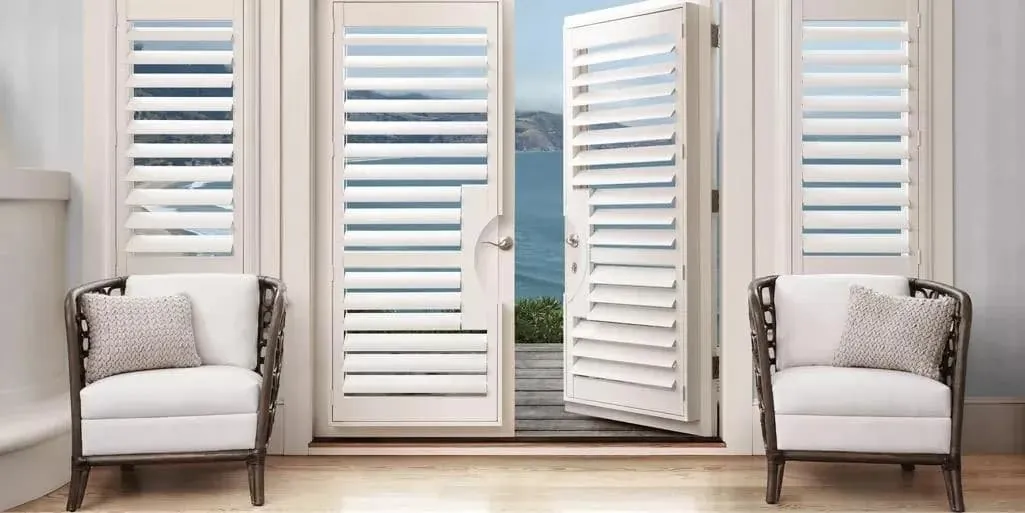
Keeping color in the rooms by the water
Strong sun reflected off water is hard on everything near a window. Upholstery, rugs, wood floors and artwork in a harbor-facing room all take a heavy daily dose of light, and the effects show over a few summers: a faded sofa arm, a lighter strip of floor, a print that has lost its blues.
The simplest protection is a shade that comes down during the hours the sun is on that glass. The difficulty, again, is being there to lower it. A timetable does it whether the room is in use or not, and on days you are out on the water yourself, the house keeps its routine. Screen fabrics let a good deal of daylight and view through while cutting the glare; heavier fabrics block more in a room that is used mainly in the evening.
Bedrooms that face the sunrise
Bedrooms on the harbor side of a Marion house get the sun before anyone is ready for it. On a June morning, light off the water reaches the room early and finds its way around any shade that does not fit closely.
Room-darkening fabrics, made to the exact size of each opening, keep those rooms dim. On a motor, a timetable raises them at the hour you choose, later on weekends, and a bedtime scene closes every bedroom together. In a captains’ house, where an upstairs bedroom may have small windows under the eaves, reaching them over a bed or a chest is no longer an issue. Families with young children also like that a motorized shade has no cord hanging beside a crib.
The kitchen window over the counter
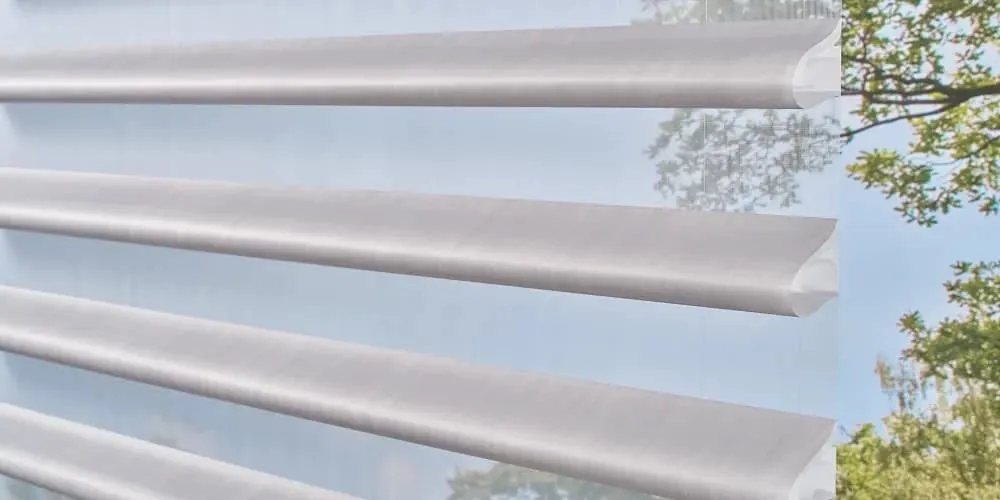
In a lot of Marion houses the kitchen claims a share of the view, with a long run of glass above the counter and the sink. Leaning across a counter to work a shade is a stretch at the best of times, and with a harbor-facing kitchen the shade needs moving more often than most, because breakfast and the late-afternoon glare both arrive through that glass.
A motorized roller or screen shade over the counter, grouped with any windows beside it, takes care of it with one press, or on a timetable that lowers the shade as the sun reaches the water and lifts it once the glare has passed. The counter and the sill stay clear, and the view is there whenever you look up from the stove.
Sunrooms and porches
Many Marion houses have a sunroom, an enclosed porch or a glazed room added to catch the harbor view. These rooms are glass on three sides, and they swing from chilly in the morning to very warm by afternoon.
A sunroom is a good place for a motorized group. Every shade around the room can rise and fall together, or one side can close while the other stays open, following the sun around. Roman shades with soft folds suit the relaxed feel of these rooms; screen fabrics suit a room where the view comes first. Either way, a single press closes the room when the afternoon sun arrives, and another opens it for the evening.
Seasonal houses and long absences
Some Marion houses are lived in most fully in summer and quieter the rest of the year. An empty house with every shade down looks closed; one with every shade up exposes the rooms to sun for months.
On a timetable, the shades keep a normal daily pattern through the off season, opening in the morning, partly lowering through the brightest hours, closing at night. From the app, you can see where they are and change them from wherever you happen to be. If a storm is forecast and you want the water side closed, it is a few taps away.
A Gallery dealer for a harbor house
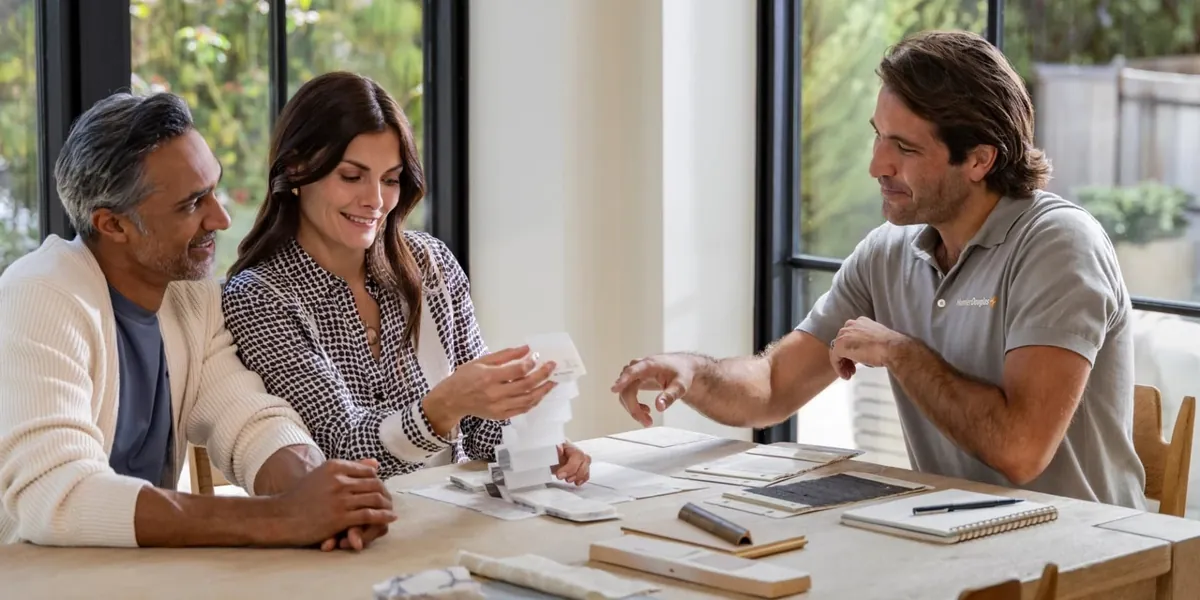
Blinds & Designs is a Hunter Douglas Gallery dealer, the designation Hunter Douglas gives dealers who meet its standards. For a water-facing house that matters, because the full range is open: screen, roller, sheer, roman, honeycomb and woven styles, each available with PowerView. A captains’ house parlor, a formal dining room behind drapery and a glass great room toward Converse Point can each take the right shade on one system.
Our installers are certified by Hunter Douglas. Estimates are free, interior design consultations are offered for a room you want to rethink, and if a shade ever needs attention we handle blind and shade repairs as well.
For other styles in town, see roller shades in Marion and roman shades in Marion, or everything we do here on our Marion page. The full motorized range is on our motorized blinds and shades page.
Our nearest showroom is in Sagamore
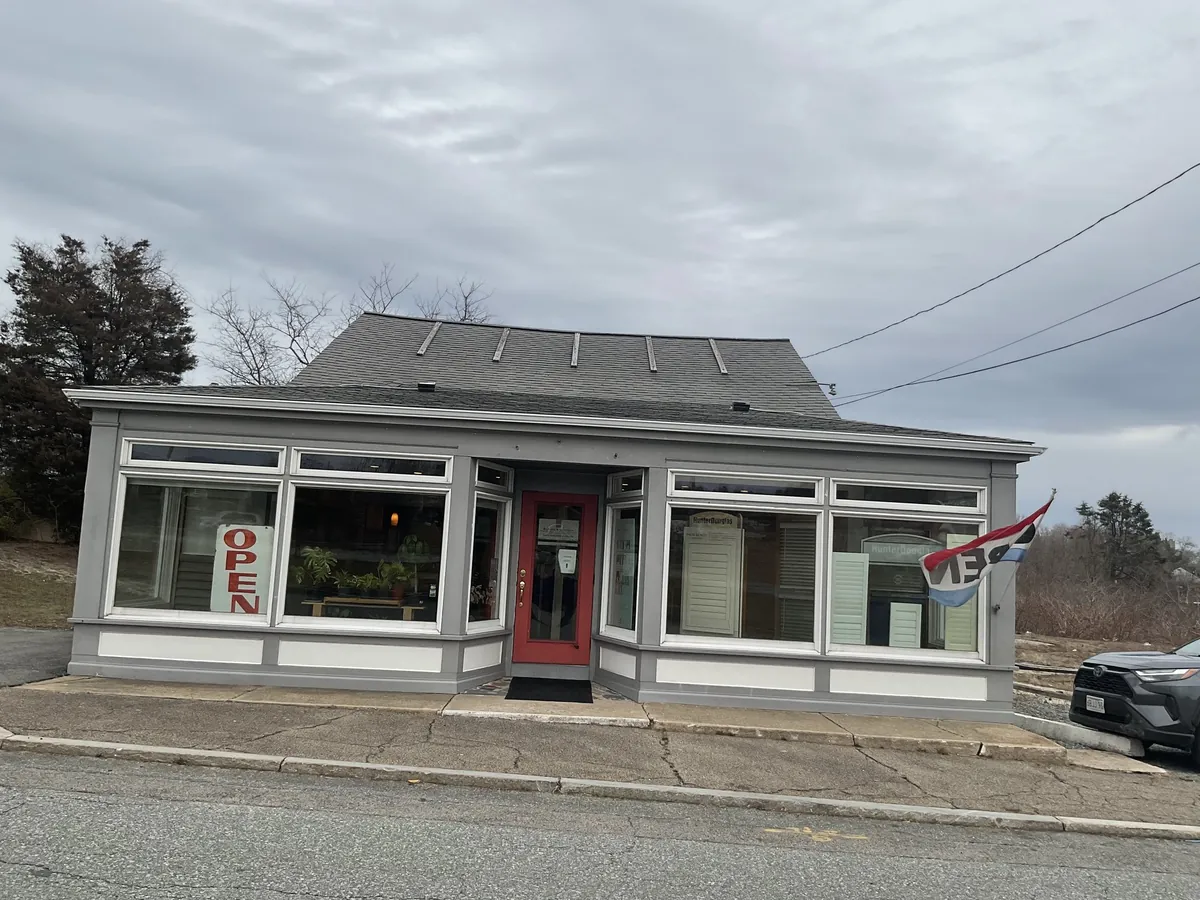
Sagamore is the nearest showroom to Marion. Many harbor projects start at home instead, because a fabric has to be seen against the water to be judged fairly.
Either way, we measure at your house.
Questions from Marion
What cuts glare off the harbor without hiding the boats?
A screen or roller fabric with some openness. It turns the brightness down while you still see out clearly, and on a motor it can lower on its own as the sun comes round to the water.
Can a shade behind our drapery be motorized?
Yes. The drapery stays as the dressing for the window, and a motorized shade inside the frame does the daily work. We check the space between the glass and the drapery hardware at the visit.
How do you deal with a two-story wall of glass?
We split it into shades that move as one group and hang the upper ones from proper staging, setting their limits so the rows line up. After that the whole wall runs from a handset, the app or a timetable.
Does salt air change what you suggest?
It is part of the conversation. We look at which windows stay open all summer and which face the wind, and suggest styles and fabrics to suit each one.
Is there a charge for the estimate?
No. Estimates are free. After measuring, we give you a free estimate for the shades and installation you are considering.
Start with the water side
The windows facing the harbor or the bay are usually the place to begin with motorized blinds in Marion. When you request a consultation, tell us which room takes the worst of the afternoon glare, and we will bring samples to suit it, measure, and show you how motorized blinds for Marion homes would handle that light. If you would like to talk it through first, the call button is the quickest way to reach us.