
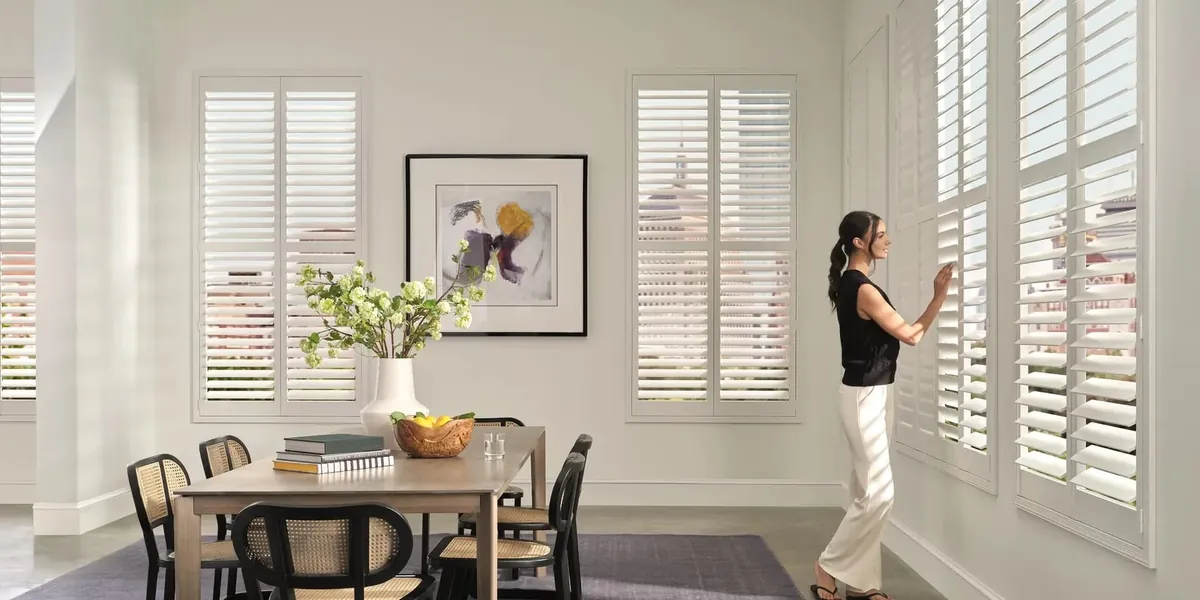
Close neighbors, tall windows
The streets around the center of Milford were built tight. Victorians and two-family houses from the granite era stand close to the sidewalk and close to each other, often with a driveway’s width between one house and the next. Their windows are tall and narrow double-hung sash, the kind that lets in plenty of light and also lets the neighbors see straight across. That is where most conversations about plantation shutters in Milford, MA, begin: how to keep the daylight and lose the view in.
Shutters suit that problem better than most coverings. A blind or shade has to be lowered to give privacy, and lowering it takes the light with it. With louvers you can close the lower part of a window to the sidewalk and the house next door while the upper part stays open to the sky.
Further from the center the picture changes. Post-war ranches and newer colonials sit on bigger lots with a little more space around them, and the windows are standard modern sizes. The privacy question gets softer there, and light control and looks come to the front.
Ways to get privacy and keep the light
These are the shutter layouts we use most often on the close-set houses in the center and the newer ones further out.
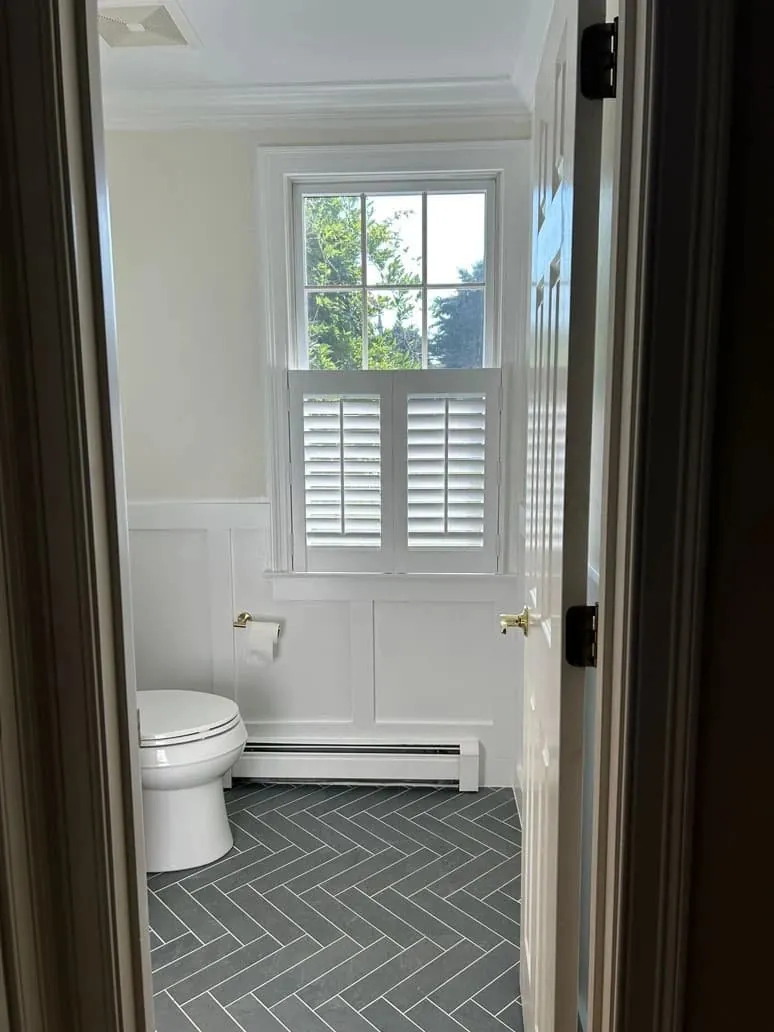
Cafe panels on the lower sash
Shutters on the bottom half only. The street is screened at eye level and the top of the window stays bare for light.
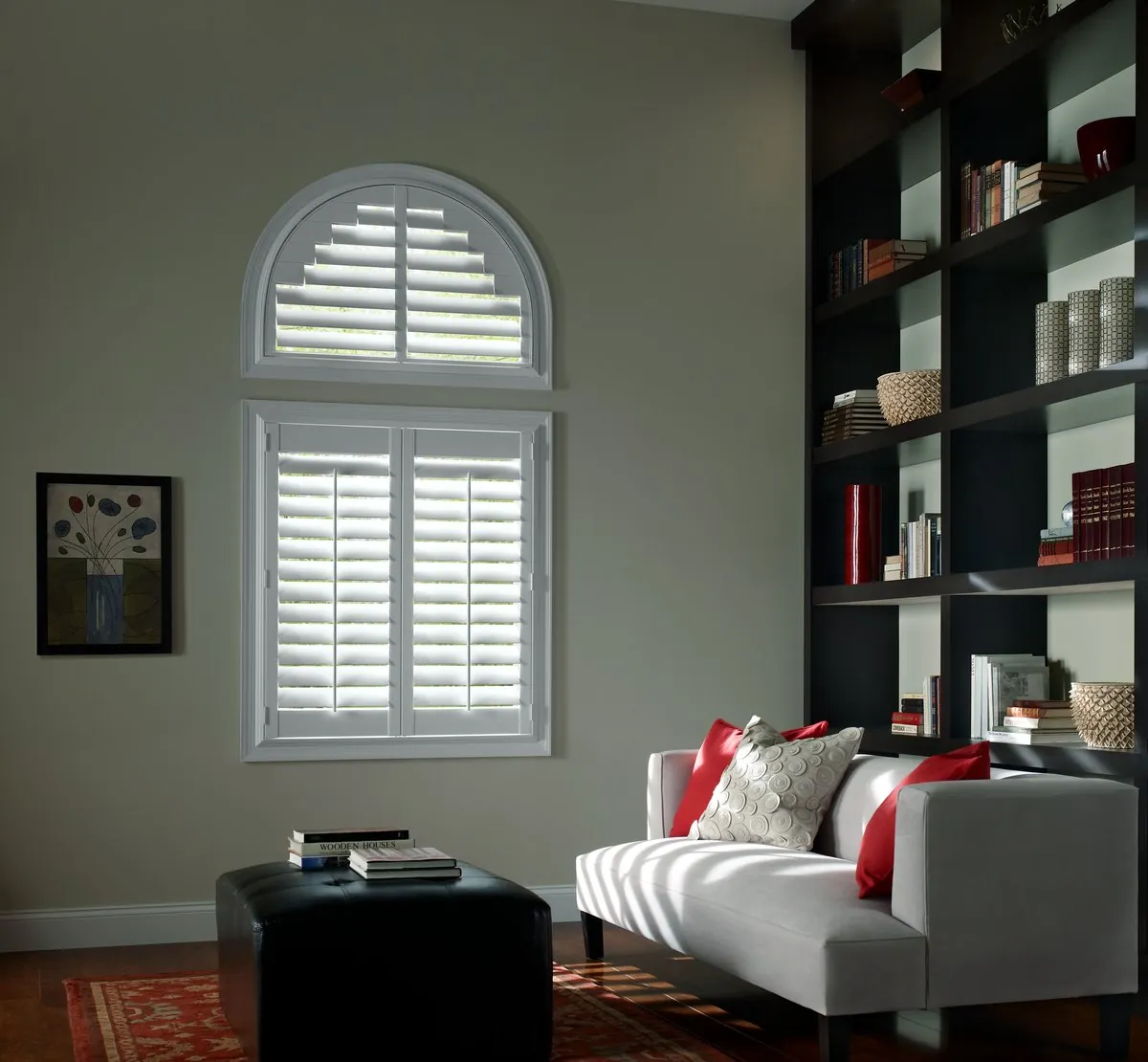
A divider rail on full panels
A rail across a tall panel lets the lower louvers close while the upper ones stay open. The most useful single feature on a narrow Victorian sash.
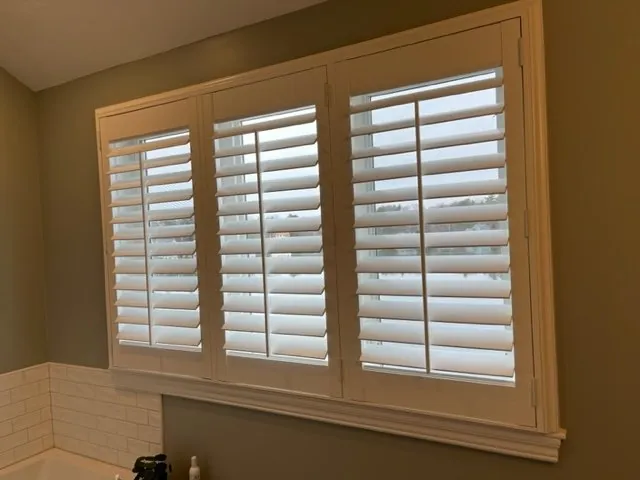
Polysatin for the bath
A bath window that faces the house next door needs privacy every day. Palm Beach takes the steam without complaint.
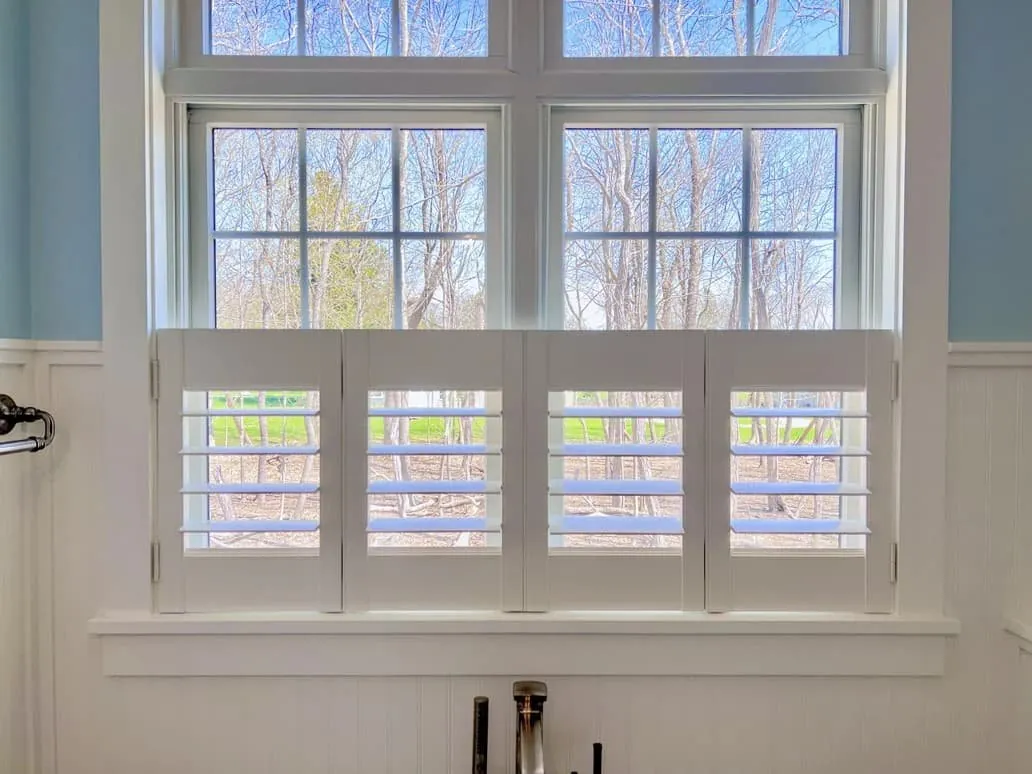
Kitchen sink windows
A low panel over the sink blocks the view from the side yard and keeps the upper glass clear.
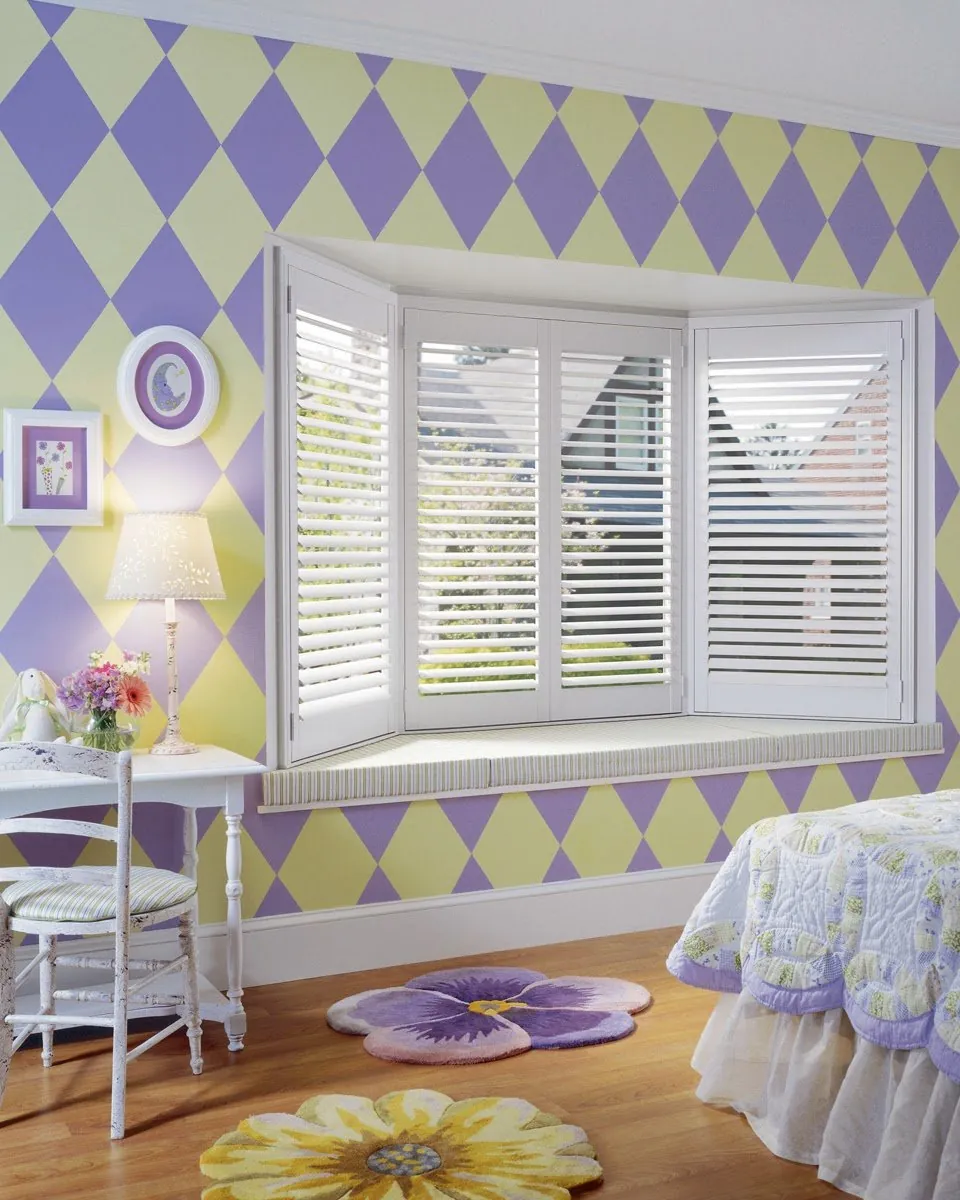
Bays on a Victorian front
Each face of the bay gets its own shutter, with frames meeting at the angles. NewStyle keeps tall panels straight.
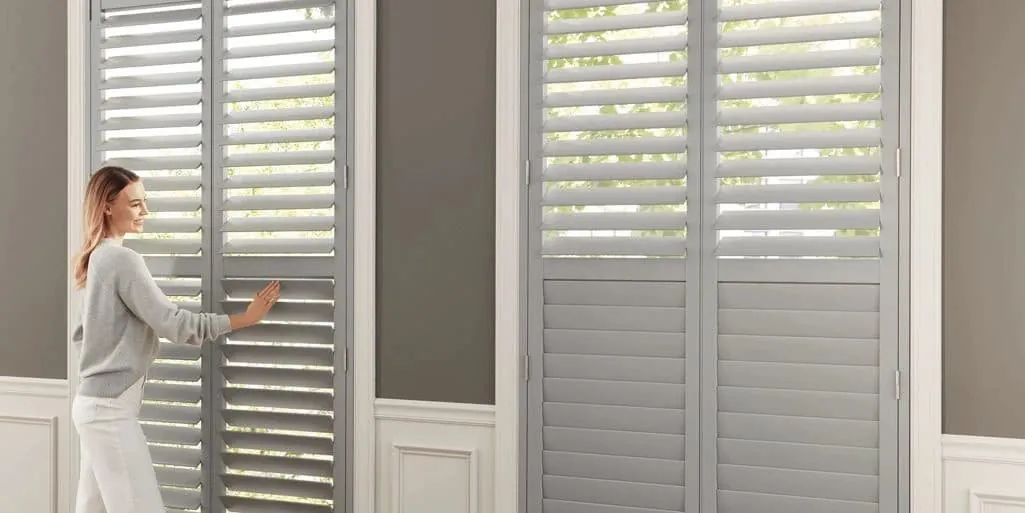
Hardwood for the parlor
A front parlor with original woodwork is where real hardwood looks most at home, painted or stained.
Privacy on a close-set street
On many center streets the house next door is near enough that you can see into its kitchen from yours. The windows on the side elevations face each other almost directly, and the front windows look onto a sidewalk with steady foot traffic. A covering that works on a house with a long front lawn does not work here.
The shutter answer is to divide the window. With a divider rail set at about the height of the meeting rail on the sash, the lower louvers can stay closed all day while the upper louvers open to let light reach the back of the room. From the sidewalk or the window next door, the line of sight is blocked; from inside, the room still feels bright. At night, with the lamps on, you close the upper louvers too.
Louver angle helps as well. Tilted with the blades sloping downward toward the room, the louvers let light in but block the view from someone standing at street level, because their line of sight runs into the face of the blade. Tilted the other way, they reflect light up and keep the view from a neighbor’s upstairs window out instead. Being able to choose between the two is a large part of why shutters work so well on houses this close together.
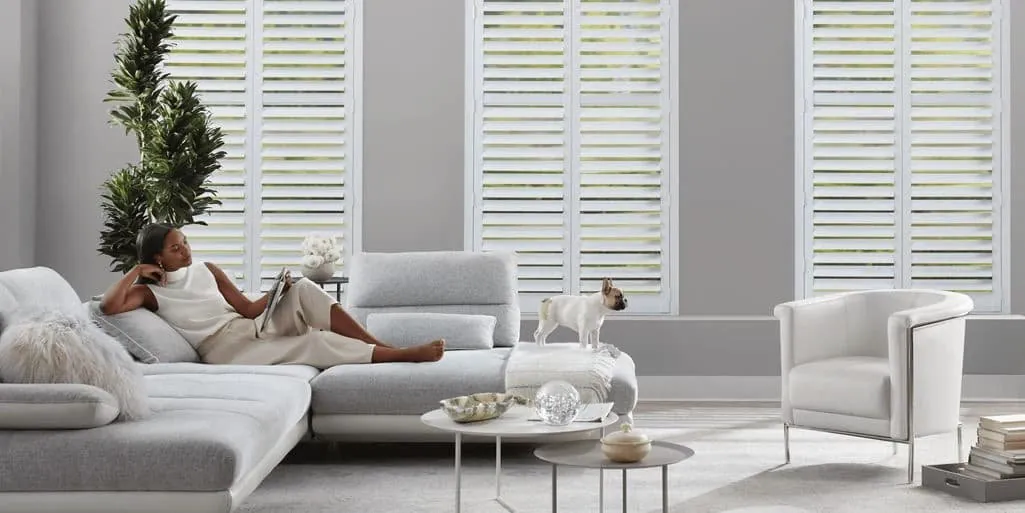
Tall, narrow double-hung sash
The Victorians and two-families in the center have windows that are much taller than they are wide. A shutter has to respect that shape. On a very narrow window, a pair of panels can leave so little width per panel that the louvers look short and stubby, so a single panel hinged to one side often looks better and gives a clearer view when open.
Height brings its own issue. A single tall panel without a divider rail has long louver runs that all tilt together, which is not much use when you want privacy below and light above. That is why nearly every tall Victorian window we fit gets a divider rail, placed to line up with the meeting rail of the sash behind it so the shutter follows the window’s own lines.
Older sash also tends to be out of square. Old frames shift as a house settles, and a window that looks true from across the room may be noticeably wider at the top than the bottom. We measure every opening at several points and check the diagonals. The frame is built to take up the difference, so the panel closes evenly even when the opening does not. For more on fitting older openings, see our guide to shutters for older windows.
Two-family houses and their front porches
Two-family houses are a big part of the center’s housing, and many have porches on both floors at the front, one for each unit. Those porches change how the front windows behave. A covered porch shades the windows behind it, so the rooms are a little dimmer than they would be otherwise, and the porch itself puts a sitting area right outside the glass.
On those windows, a lighter louver color and wider blades make the most of the reduced daylight while the louvers still close for privacy when someone is sitting just outside. If the windows open onto the porch through a door, shutters mounted on the door itself swing open with it.
Each floor of a two-family can be treated on its own. The windows of one unit do not need to match the other, though from the street a single color across both floors looks tidier. If you own both units and want to treat them together, plantation shutters in Milford for the whole house can be planned in one visit, floor by floor.
Stair windows and side elevations
Close-set houses put a lot of glass on their side walls: a window on the stair landing, a narrow window in the upstairs hall, a bedroom window that looks straight at the neighbor’s siding a few steps away. These windows rarely get much direct sun, but they need privacy at all hours, and they are often the awkward ones to reach.
A landing window suits a pair of panels with a divider rail, lower louvers closed and upper louvers open, so the stairs stay lit without being on show. A high hall window can take a single panel with louvers set at one angle, so it lets in daylight and never needs touching. A side bedroom window facing the house next door is where closed louvers earn their keep at night. Because these windows are often the same size up and down the side of the house, ordering plantation shutters in Milford for the whole side elevation at once keeps them matched.
Bays and front rooms on the Victorians
A bay window is common on the center’s Victorians, usually on the front parlor or dining room, and it is one of the windows people are most proud of. Shutters suit a bay well because each face can have its own shutter, with frames meeting cleanly at the angles and panels that open independently.
The trick on a bay is consistency. The louver width, the divider rail height and the color should match across every face, so the bay reads as one unit from inside and outside. If the bay has a window seat, the frame is set so the seat stays usable and the panels clear any cushions.
Victorian front rooms often keep their original woodwork, sometimes painted, sometimes stained. A stained Heritance shutter chosen against the trim can look as though it came with the house. A painted one in a warm white suits trim that has been painted many times.
Ranches and colonials further out
Away from the center, the post-war ranches and newer colonials give a shutter an easier job. The openings are standard sizes, usually square, and the jambs are deep enough for an inside mount with room for the louvers to tilt. The houses are farther apart, so privacy matters mainly in bedrooms, baths and any room that faces the street.
On a ranch, the living room picture window is usually the first one owners ask about. It is wide, so it gets divided into several panels on one frame, with the panel breaks lining up with the window’s own divisions. Wide louvers suit it, because the view to the front yard stays clearer when they are open.
On a newer colonial, the front windows set the look from the street. Matching louver width, frame and color across the front makes the elevation calm and orderly. The back rooms, facing the yard, can take wider louvers or a hidden tilt if you prefer a cleaner face.
How a visit to your house works
Shutter choices are easiest to make at your own windows, so most Milford projects start at home. Our vans carry shutter samples in every collection, louver width and finish, so we can bring the showroom to you.
- Request a consultation online or with the call button, and we will arrange a time.
- We walk the house with you and start with the rooms where privacy matters most.
- You hold sample panels at your windows and try the divider rail and louver angles.
- We measure every opening, check whether it is square and note the depth for the mount.
- We go through collection choices room by room.
- You receive a free estimate, with no pressure to decide that day.
Our in-home consultations page has more on what to expect.

Choosing a louver size
Louver width affects how much you see through the shutter and how it suits the window.
- Narrow windows in the center usually look best with slim or medium louvers, so there are enough blades to look balanced on a tall, thin opening.
- Standard bedroom windows in a ranch or colonial suit medium louvers, the safe middle ground.
- Picture windows and family rooms take wide louvers, which leave more open space when tilted flat and keep the outlook clear.
If you mix widths across a house, keep the color the same and the change will hardly be noticed.
Color on a close-set street
On a street where the houses stand shoulder to shoulder, the outside face of your shutters is on view to everyone who walks by. A crisp white reads cleanly from the sidewalk and suits most trim. On a Victorian with a painted exterior in deeper colors, a softer white or an off-white can sit more comfortably behind old glass.
Inside, the choice depends on the room. A front parlor with stained woodwork may suit a Heritance stain; a bright kitchen usually suits white. Matching colors across the front of the house matters most, because those are the windows seen from outside. The rooms at the back can be more personal. We bring finish samples so you can compare them on your own windows in daylight, which is the only reliable test. When owners plan plantation shutters in Milford, MA, for the front first, this is usually the decision that takes longest, and it is worth the time.
Front rod or hidden tilt
A front tilt rod is the classic shutter look, a slim bar down the face of the panel that moves all the louvers in a section at once. It suits a Victorian parlor, where a traditional shutter is expected. Hidden tilt moves the louvers from the edge of the panel and leaves the face clean, which suits a newer colonial’s family room or a ranch where the view matters.
Both work with a divider rail, so the privacy layout described above is available either way.
Looking after your shutters
Shutters need very little care. A soft duster along the louvers every so often keeps them clean, and a damp cloth deals with anything sticky. Palm Beach takes a wetter wipe than wood, so kitchens and baths are no trouble. With hinged panels, you can also swing them fully open to clean the glass or let in the most light on a dull day.
If any window covering in your house needs fixing, we repair the window coverings you already own, not only the ones we fit.

What our Gallery status means for you
Blinds & Designs is a Hunter Douglas Gallery dealer, the designation Hunter Douglas gives dealers who meet its standards. You can choose from all three shutter collections in every louver width and finish, with help from people who plan and fit them all the time.
Our installers are certified by Hunter Douglas, and they fit the frame to the opening you have, square or not. We also offer interior design consultations for rooms that need more than a window covering, and we carry shades, blinds and drapery for the rest of the house.
You can see everything we do in town on our Milford page, or compare shutters with custom blinds in Milford for rooms where a slat is enough.

The Franklin showroom is nearby
The Franklin showroom is our nearest location to Milford, if you would like to see shutters before we come out. Most customers still make the final choice at home, where the samples can be held against their own trim in their own light.
Either way, the measuring and the fitting are done at your house by our own installers.
Questions from Milford
How do I get privacy from the house next door without losing light?
Add a divider rail to each panel. Close the lower louvers and the view from next door or the sidewalk is blocked, while the upper louvers stay open for daylight. Angling the louvers downward toward the room also blocks the line of sight from street level.
Will shutters fit the tall, narrow windows in an older Victorian?
Yes. On a very narrow window a single hinged panel often looks better than a pair. We measure each opening at several points, because older sash is often out of square, and build the frame to take up any difference.
Can each unit of a two-family have different shutters?
Yes. Each floor can be planned on its own, though one color across both floors looks tidier from the street. If you own the whole house, we can plan every window in one visit.
Which shutter goes in a bathroom that faces the neighbors?
Palm Beach, which is polysatin with no wood inside, so steam does not affect it. Cafe panels on the lower sash or a divider rail give daily privacy while letting light in above.
Is the estimate free?
Yes. After measuring, we give you a free estimate for the shutters you are considering. Request a consultation to arrange a visit with samples.
When you are ready
The easiest way to settle on plantation shutters in Milford, MA, is to try real panels at your own windows. Request a consultation and we will bring all three collections, measure every opening and give you a free estimate. If you have a question first, use the call button, or call in at the Franklin showroom. Read more about each collection on our main plantation shutters page, or see Palm Beach, NewStyle and Heritance on their own.