
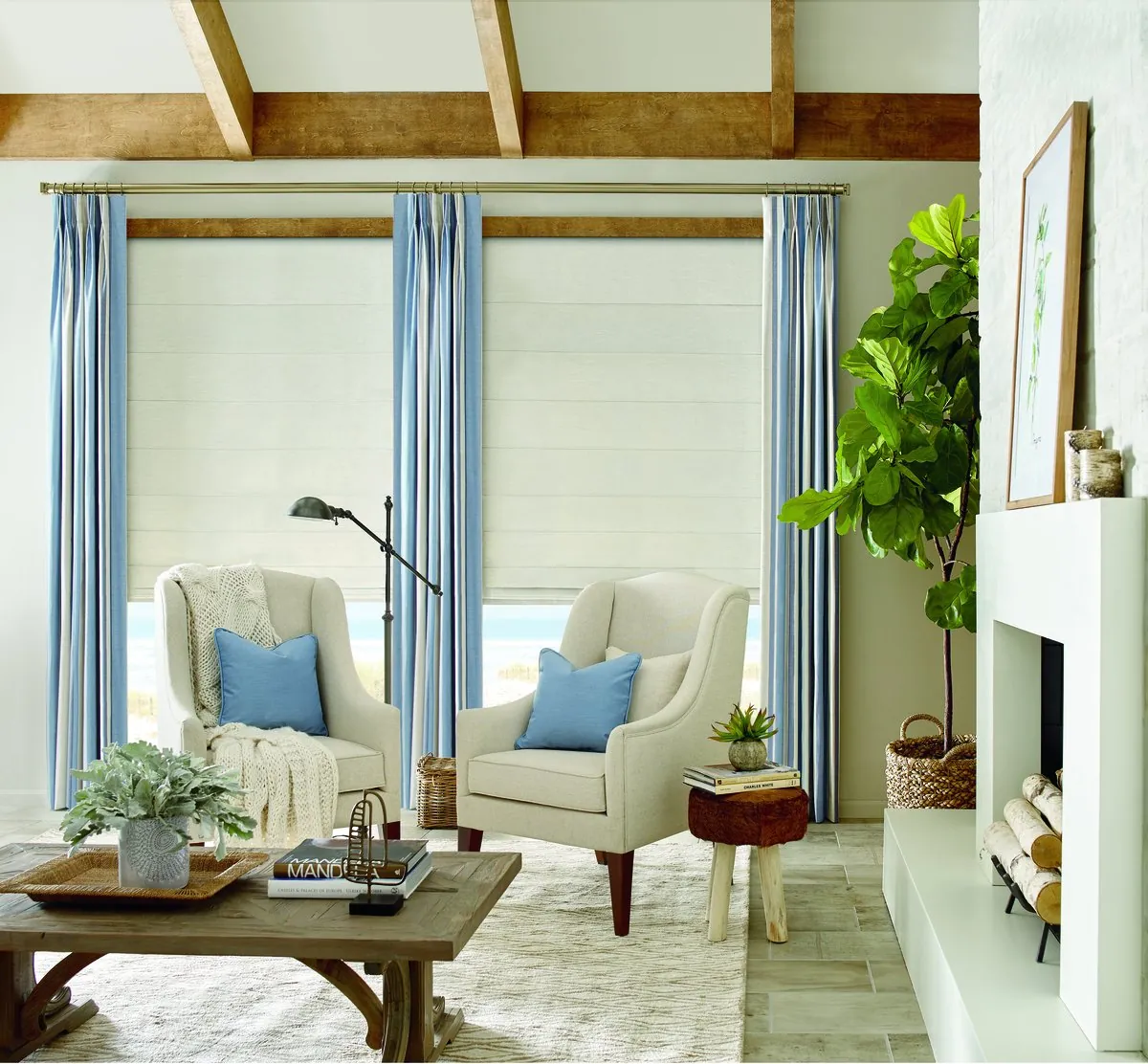
Older sash in the center, modern frames beyond
Millis has two kinds of window, and most streets have a bit of both. Around the center, some houses still carry their older sash: wood frames, painted many times over, sometimes a little out of true. Off Main Street and Village Street, the capes, ranches and newer colonials on modest lots have standard modern openings, square and regular. We fit roman shades in Millis, MA, in both, and the approach changes with the frame.
Older sash asks for patient measuring and a careful choice of mount. Modern frames make fitting simple and leave the time for choosing fabrics and lifts. Either way, a roman shade suits the houses well: tailored without being formal, soft without being fussy, and neat when raised.
Because the lots are modest, the house next door is often in view from a side window, so privacy gets attention alongside light and style. And because most of the houses are practical family homes, we plan each room for how it is actually used, from a bright kitchen to a bedroom that needs to stay dark.
Roman shade lines for Millis houses
Three Hunter Douglas families cover nearly every Millis window, and all three travel to your door as samples.
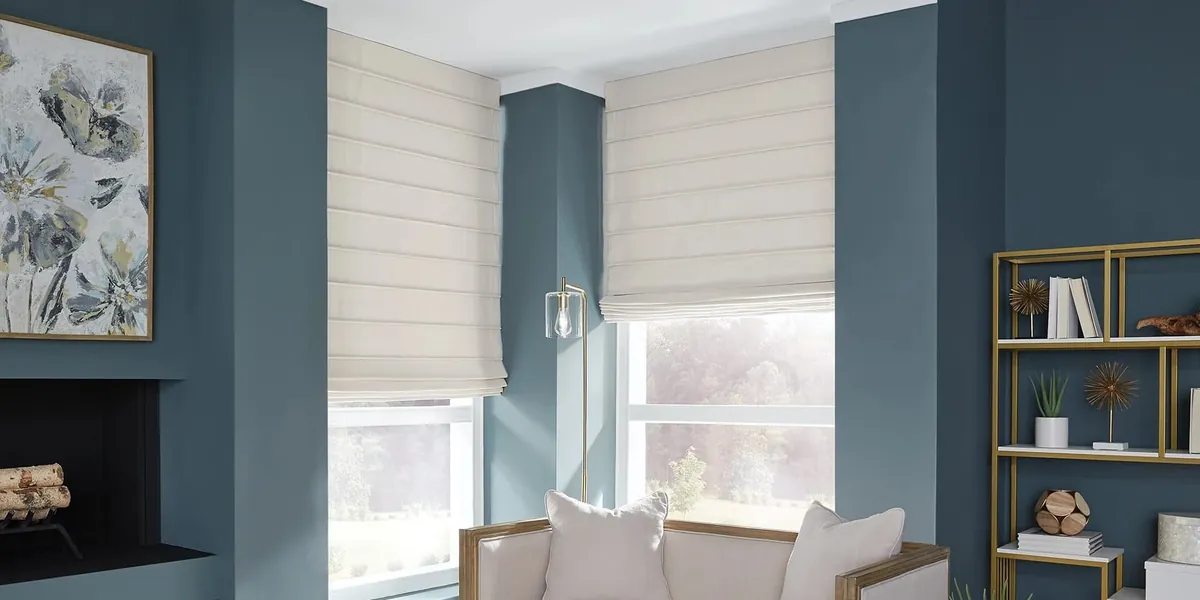
Carole Fabrics Roman Shades
Each shade is sewn to its own window from a wide range of decorator fabrics, with a smooth flat face or gentle loops. A good fit for older sash.
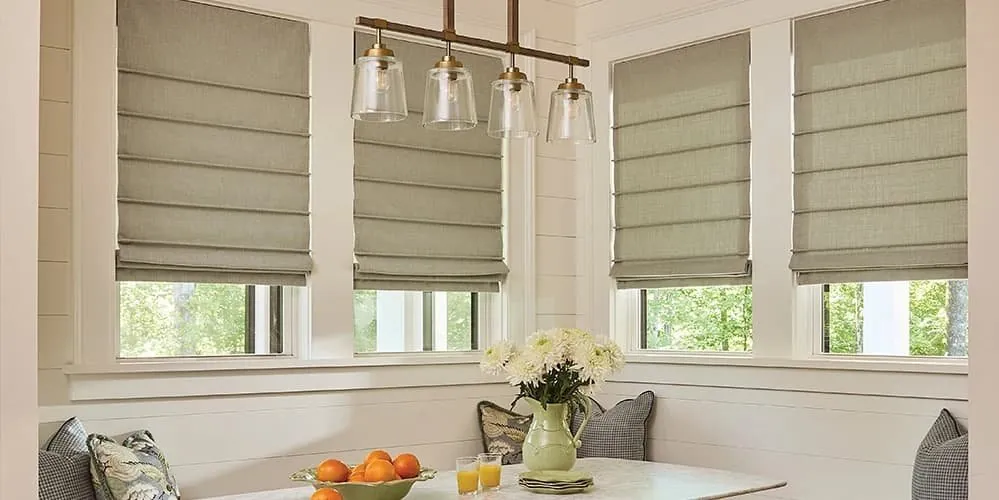
Vignette Modern Roman Shades
Neat, regular folds that gather out of sight into the headrail when lifted. Popular for the kitchens and family rooms of the newer colonials.
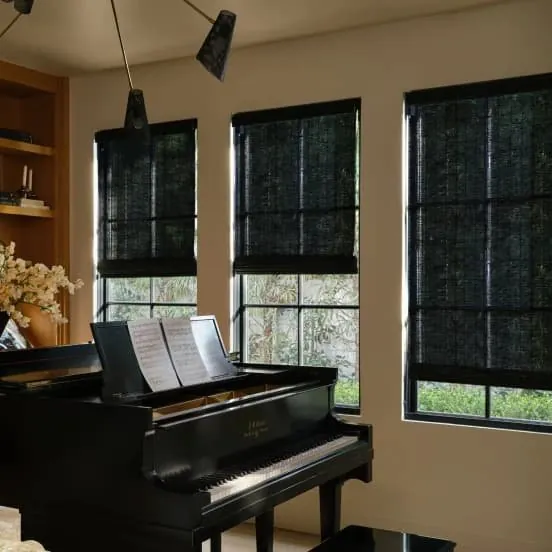
Alustra Woven Textures Roman
Woven natural or colored materials shaped into a roman fold, for a study, den or sitting room that suits texture.
Older sash around the center
The older houses near the middle of Millis have wood sash that has been painted, repaired and lived with for a long time. Those windows have character, and they also have quirks. Paint builds up on the stops, frames settle, and a window that looks square from across the room can be wider at the top than at the bottom, or deeper on one side than the other.
For a roman shade that matters, because a shade mounted inside the frame needs a straight, even opening to hang and move freely. We measure each older window across the top, middle and bottom, take the height on both sides and in the center, and check the depth wherever the headrail will sit. We note sash locks, pulleys and anything else that sticks out into the opening.
Where the frame is sound and deep enough, an inside mount keeps the old trim fully on show, which is usually what people want in an older house. Where it is too shallow or too uneven, we mount the shade on the face of the casing instead, set just above the trim. That covers the frame, hides any gaps at the edges and still looks deliberate.
Fabric choice can help too. On older sash a Carole shade in a soft, natural-looking fabric, a linen or a cotton, suits the age of the window. A flat fold looks neat and traditional; a folded style feels relaxed and cottage-like.
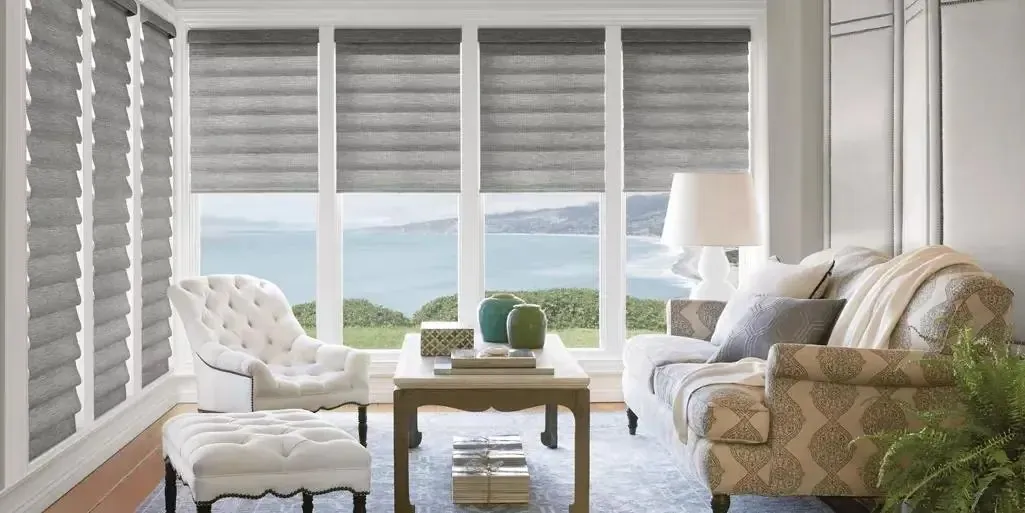
Old and new windows in one house
Plenty of houses around the center of Millis have been updated over the years, and it is common to find original sash in the front rooms and replacement windows at the back or in an addition. That mix is easy to handle once you know it is there, but it changes how the shades are planned.
Replacement frames are usually shallower and more regular than the old wood sash beside them. An inside mount that fits one window comfortably may be too tight in the next, even in the same room. Rather than mix inside and outside mounts on one wall, which can look untidy, we look at the room as a whole and choose the mount that works on every window in it. Sometimes that means outside mounts throughout a front room with older sash, so the shades line up across both old and new frames.
The fabric can bridge the difference too. A Carole flat fold in a natural linen looks at home on an old window and still looks right on a new one, so a house can use one fabric throughout and feel consistent, room after room. When we plan roman shades in Millis houses with a mix of frames, we note each window’s type on the measuring sheet so nothing is assumed.

Capes, ranches and newer colonials
Away from the center, most of the houses off Main Street and Village Street have standard modern openings. Many have replacement windows with vinyl or clad frames, regular sizes and enough depth for an inside mount. That keeps fitting simple, and every front window can be given the same rail height and the same half-raised line, which makes the street side look orderly.
In a cape, the downstairs front rooms tend to have twin windows flanking the entry, and the upstairs bedrooms have shorter dormer windows under the roof. Short dormers make the gathered fabric at the top more noticeable, so a Vignette, or a Carole shade in a light cloth, is the usual answer there.
Ranches put the big glass at the front: one broad window in the living room, frequently too wide for a single shade to lift comfortably. Splitting it into a pair or trio of matching shades keeps the pleats straight and the weight manageable. Down the bedroom wing, the openings are smaller and sit up near the ceiling line, which makes a cordless shade easy to reach.
In a newer colonial, the rooms are bigger and more open, and roman shades often sit alongside other products. Honeycomb shades suit cold bedrooms well, and our cellular shades in Millis page explains them.
Room by room
Rather than choosing one shade for the whole house, we find it works better to plan each room for what it is used for. Here is how roman shades in Millis houses usually come together.
Living room
The living room wants light by day and privacy by night. A light, lined fabric keeps the room bright while a privacy lining stops it showing to the street once the lamps are on. A flat fold in a pattern or a stripe can make the window a feature.
Kitchen
The kitchen window, often over the sink, is hard to reach and used constantly. A cordless Vignette shade stays compact when raised and is easy to work by the bottom rail, even over a counter. A light fabric keeps the room bright and is easy to look after.
Bedrooms
Bedrooms need darkness in the morning. A room-darkening lining keeps the room dim when the sun comes up, and a folded style in a soft fabric makes the room feel calm. On a side window facing the next house, the same lining gives full privacy.
Bathroom
Bathrooms are the one room where you want the light and not the view. A thin, translucent cloth turns the window into a soft glow, and hung within the frame it sits right against the pane, leaving no gap for anyone to see past.
Home office or den
An office needs glare control on a screen without losing the light. A light-filtering lining, lowered part way, cuts the glare while leaving the top of the window bright. A woven roman adds texture in a den or a study.
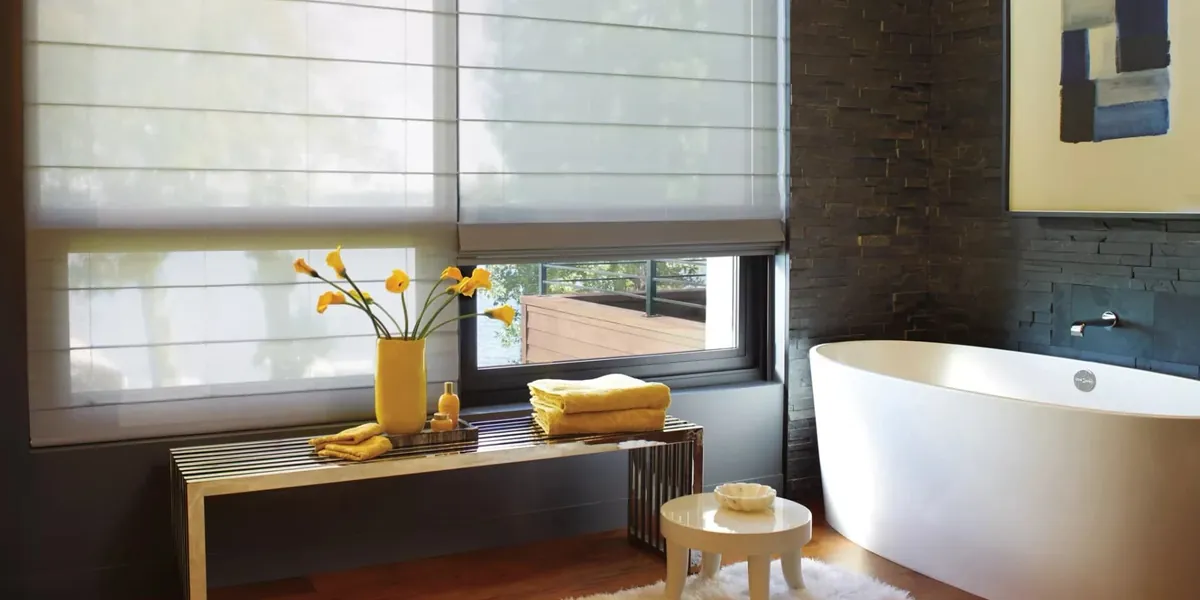
Color and pattern for modest rooms
Many rooms in a cape or a ranch are a comfortable, modest size, and that shapes how a fabric reads on the window. A big, bold print can overwhelm a small bedroom, while a fine stripe, a small repeat or a textured plain gives interest without dominating. In a larger living room or a newer colonial’s family room, a bigger pattern has room to breathe.
Color works the same way. A pale, warm fabric makes a small room feel lighter and larger, especially on a north-facing window that gets soft light all day. A deeper color can make a den or a study feel snug, and it pairs well with a lining that keeps the color from fading. Because the lining is what the street sees, you can choose freely inside while the outside of the house stays calm.
At the visit we drape full-size samples at the window, which is the only fair way to judge a pattern’s scale. A swatch in your hand looks very different from a shade across a whole window. That full-size view is the step that most often changes minds when choosing roman shades in Millis, MA, so we never skip it.
Getting the lining right
The lining is the part of a roman shade you rarely see, and it does most of the work.
- No lining lets the fabric glow and keeps a room as bright as possible. Lovely in a kitchen or a sunny sitting room, but after dark a lit room can show through.
- A privacy lining keeps the shade soft from inside and opaque from outside at night. The usual choice on a modest lot, for any room that faces the road or the house next door.
- A room-darkening lining keeps a bedroom dim, and protects the face fabric on a window that takes hours of sun.
A lining also gives a shade more body, so its folds hang more crisply. On a small older window, a lighter lining keeps the stack smaller. On the front windows of the house, using the same lining color throughout keeps the outside looking even, however different the fabrics are inside.
If a room faces south or west, the guide to choosing fabric for a sunny room is useful reading, and our guide on caring for fabric shades explains how to keep them looking fresh.
What the consultation involves
Fabric looks different in every room, so the most reliable place to choose it is your own house. The vans carry the full sample range; in other words, the showroom travels to you.
- Request a consultation online, or use the call button, and agree a time.
- A consultant unpacks Vignette, Carole Fabrics and woven roman swatches, with linings and lift mechanisms to try.
- Together you walk the rooms, discussing sun, neighbors and what happens in each space.
- Swatches go up at the glass so you can judge them beside your own paint and upholstery.
- We measure every window, taking extra care with older sash, and confirm the mount for each.
- You get a free estimate and can decide in your own time.
Color and pattern advice is available too, as an interior design consultation booked into the same visit. Our guide to what happens at an in-home consultation goes into more detail.
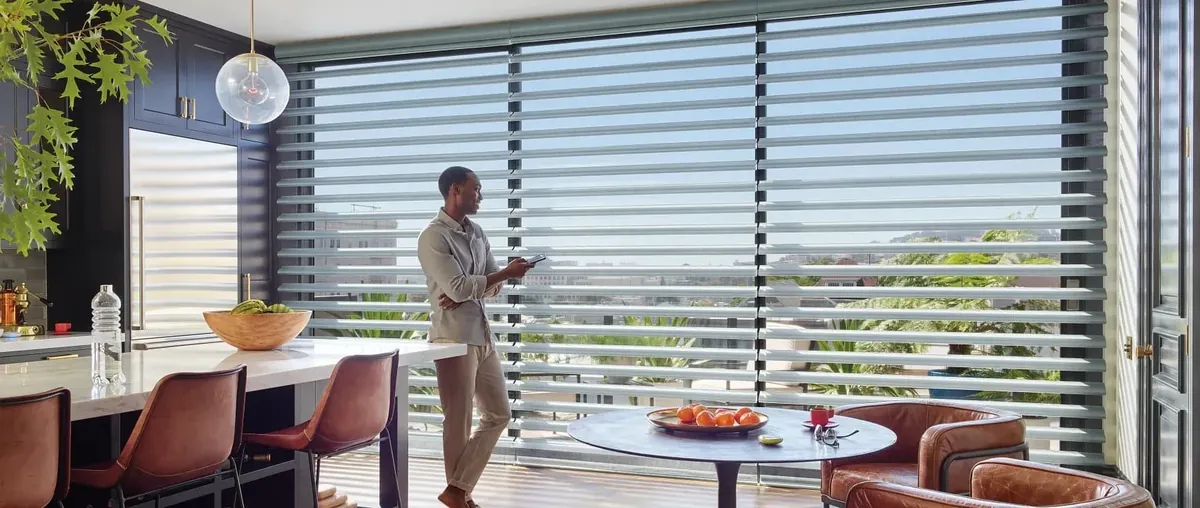
Motorizing a few windows
Not every window needs a motor, but a few usually benefit. A window over the stairs or high in a two-story entry in a newer colonial is hard to reach by hand. A wide picture window with heavy, lined shades is easier to control with a button. And bedroom shades on a schedule can open gently in the morning without anyone touching them.
PowerView motorization handles all of that from a remote, the app on your phone or a schedule, and shades can be grouped so one button moves several at once. Plenty of houses mix cordless shades in most rooms with motorized shades on just two or three windows. How each motor will be powered is settled with you at the visit. Remotes, the app and timers are all covered in how motorized shades are controlled.
Lifts for everyday use
For most rooms a cordless lift is the simplest choice: no cord, no loop, just a bottom rail you raise or lower by hand. It is what we suggest for bedrooms and any window a child or a pet can reach. On a wide or heavy shade a continuous cord loop, anchored by a tensioner, makes lifting easier. Each window can have the lift that suits it, so one house often uses all three.
Fitting your shades
Once your order is ready, the shades are hung by certified Hunter Douglas installers, in roughly this order.
- Each shade is matched to its window before unpacking.
- Brackets go into solid wood, inside the frame or on the casing.
- Headrails are levelled carefully, even on older sash that has settled.
- Every shade is run up and down until the folds settle.
- Motorized shades are paired and their schedules set.
- You get a quick tour of how each shade works.
The fitting is described step by step in our installation-day guide, what happens on installation day. And if a shade ever needs attention later, we handle blind and shade repairs as well.
The Gallery dealer difference
Gallery status is something Hunter Douglas grants to a limited circle of dealers, and Blinds & Designs is part of it. So every roman option, Vignette, Carole Fabrics and Alustra Woven Textures, comes through one door, and so does every other Hunter Douglas product a room might suit better: honeycomb for a draughty bedroom, sheers for a sunny family room, shutters or blinds elsewhere.
Installation is carried out by our own Hunter Douglas certified installers. For every service we offer locally, see our Millis page, or explore the whole roman shades collection.

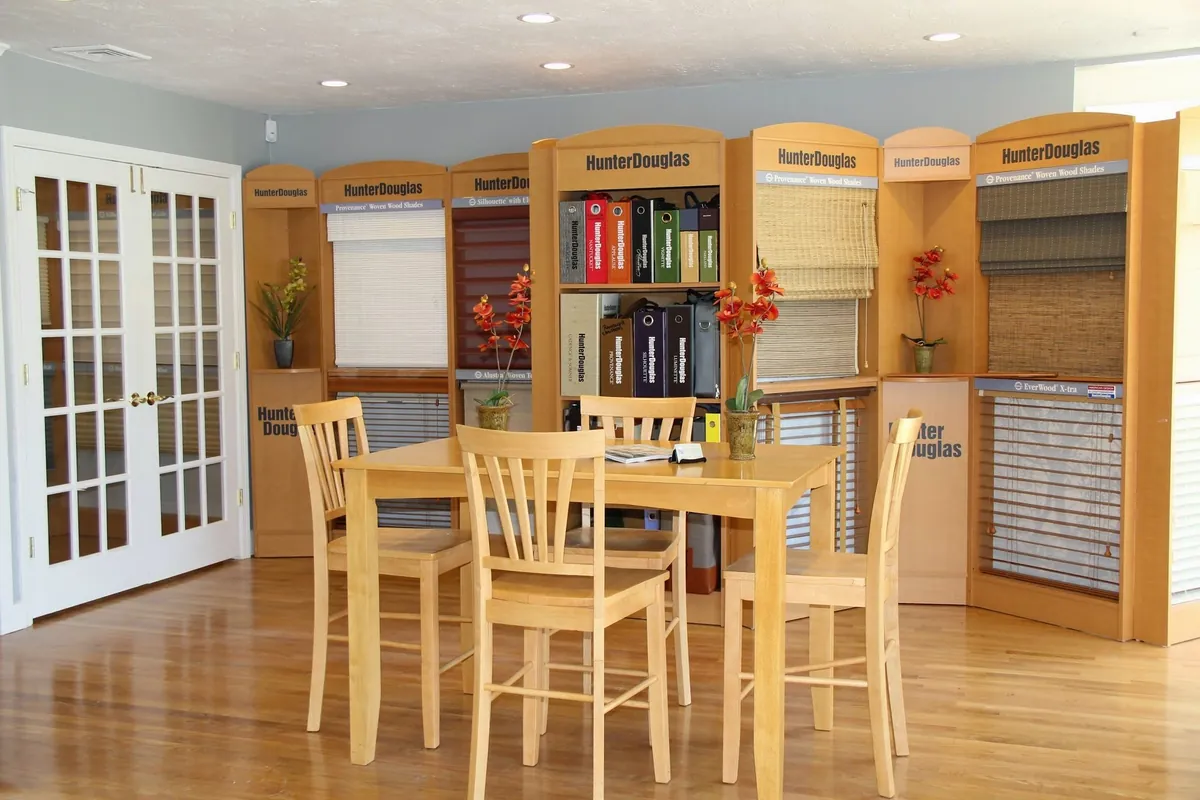
The Franklin showroom
The Franklin showroom is the nearest of our showrooms to Millis. If you would like to talk ideas through before a home visit, you are welcome to come in while it is open.
Older sash in particular is best judged at the window itself, so we will still want to measure at your house before anything is ordered.
Questions from Millis
Will a roman shade fit the older sash in our house near the center?
Usually, yes. We measure each window at several points and check the depth. Where an inside mount would not hang cleanly, we mount the shade on the casing instead, which also hides gaps at the edges.
Which roman shade is best for a kitchen window over the sink?
A cordless Vignette shade is a popular choice. It stays compact when raised, and you only need to reach the bottom rail to move it.
Do I need a privacy lining?
On a modest lot, it is worth considering for any room that faces the road or the house next door and is used after dark. It keeps the shade soft from inside while blocking the view from outside.
Can just one or two shades be motorized?
Yes. Many houses motorize only the hard-to-reach windows, such as one over the stairs, and keep cordless shades everywhere else.
What does the estimate cost?
Nothing at all. The measuring happens during the consultation, and the estimate that follows is free.
When you are ready
Fabric chosen in your own rooms is fabric you will go on liking for many winters, which is why we plan roman shades in Millis, MA, at the house. Book through Request a Consultation: a consultant arrives with the sample books, takes every measurement and leaves a free estimate behind. Questions first? The call button reaches us, and the Franklin showroom is open to drop in.