
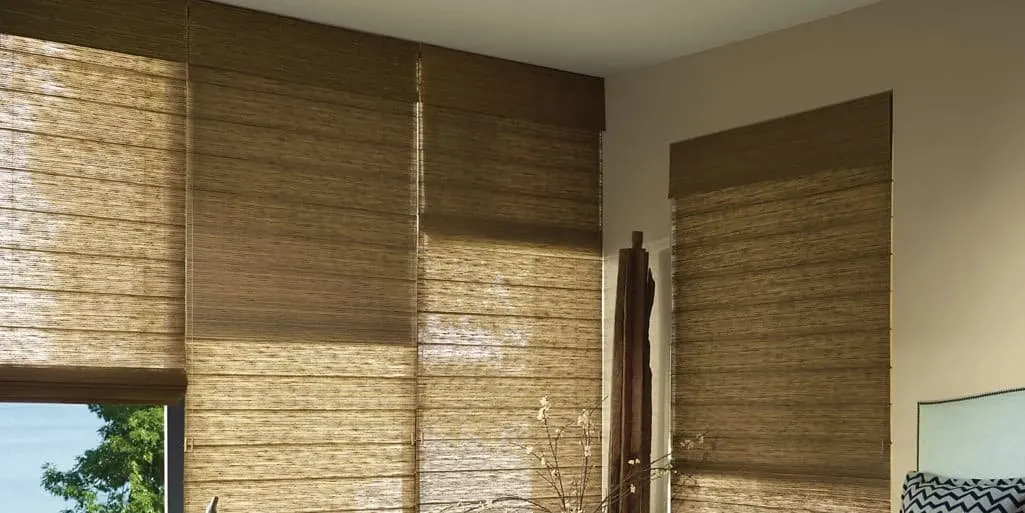
Tiny old windows, deep setbacks
Upton’s oldest houses, the antique colonials and farmhouses spread across large lots, were built with very small window openings. In those rooms the glass is precious: there is not much of it, and every inch brings in daylight the room badly needs. The houses also stand well back from the road, with long setbacks and few neighbors in sight, so cover from passers-by is rarely the main worry.
That turns the usual thinking around. With roman shades in Upton, MA, the question in an antique house is often how to dress a window without taking away its light, rather than how to hide a room. The shade must look right against old trim, rise clear of the glass when it is up, and come down only when you want it to.
The newer colonials off Route 140 bring a different set of windows: larger, regular and more numerous. Between the two, a roman shade gives you one family of looks that suits both the oldest house in town and the newest.
What we fit in Upton
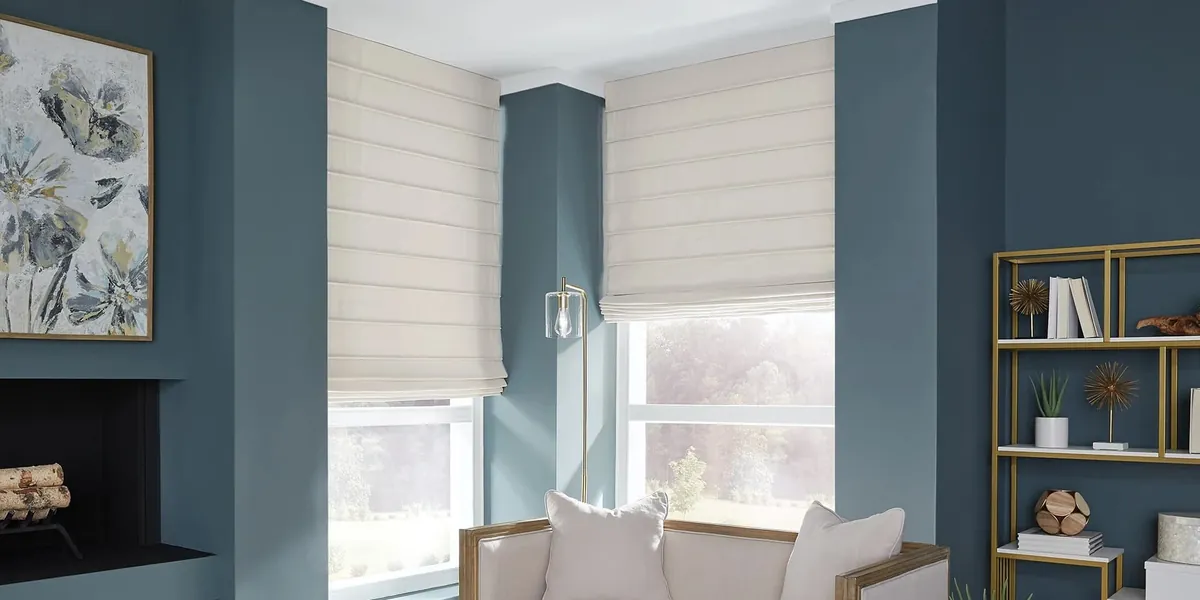
Vignette roman shades
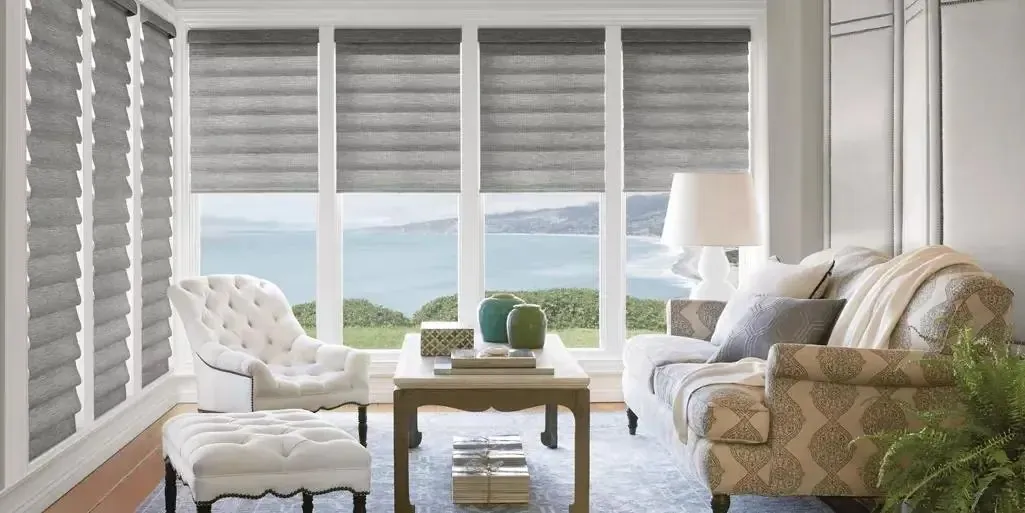
Hunter Douglas Vignette, made in a flat style or a folded style. Clean and orderly across the bigger windows of a Route 140 colonial.
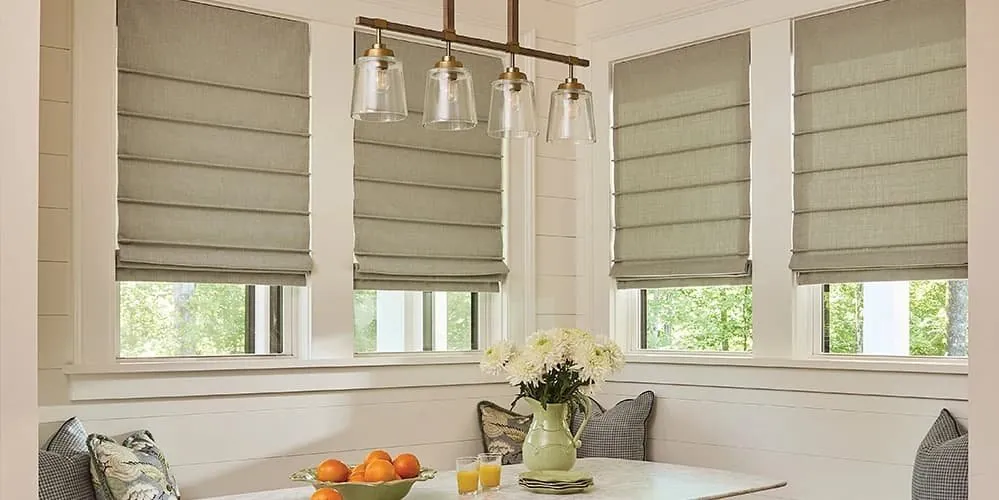
Carole Fabrics roman shades
Carole Fabrics roman shades, again in flat and folded styles, with fabric choices that sit well against the plaster and wide trim of an antique room.
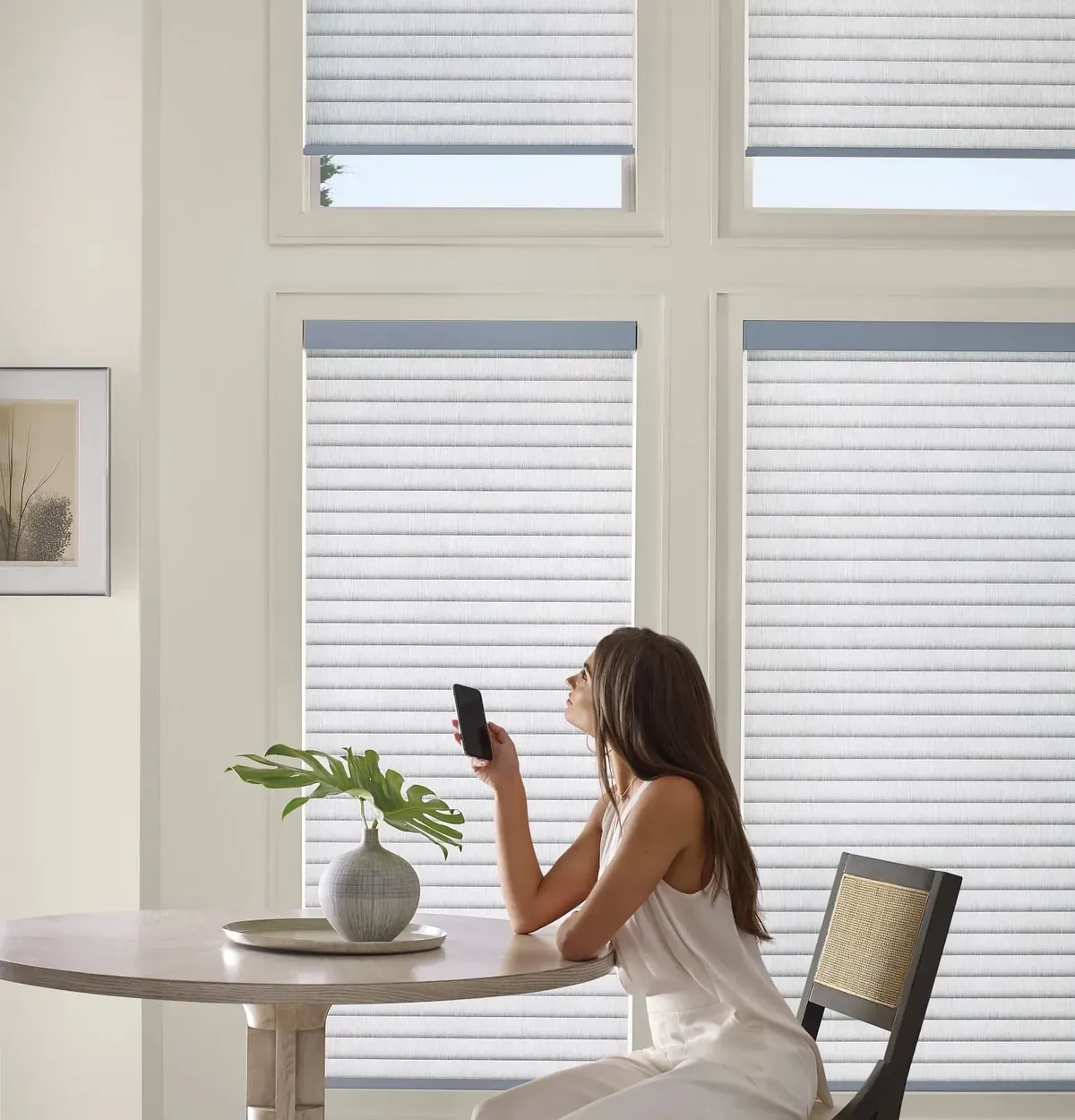
PowerView for the newer houses
Control from a phone, a remote or a timetable, handy when a newer colonial has many windows to open and close each day.
Keeping the glass clear on a very small opening
When a window is small, the space a raised shade takes up becomes the most important thing about it. Every roman shade gathers its fabric at the top as it rises. On a large window, that band is barely noticed. On a tiny antique opening, the same band can cover a good part of the glass and leave the room darker even with the shade fully up.
There are two ways around this, and we often use both. The first is the flat style, which folds into tight, even pleats and makes the smallest stack. The second is to fix the headrail on the wall above the window instead of inside the frame. Then, when the shade is raised, its fabric rests over the wall and the whole pane is clear. As a bonus, the window looks a little taller and the room a little more open.
Mounting above the frame does cover part of the trim at the top, so in a room where the old casing is a real feature, we may suggest an inside mount instead and accept a slightly deeper stack. We talk you through that trade at each window, because it depends on how much the trim matters to you and how much light the room can spare.
Dark rooms that need every bit of daylight
Small openings mean small amounts of daylight, and many rooms in Upton’s antique houses already feel dim on a gray day. Covering those windows heavily would make the problem worse.
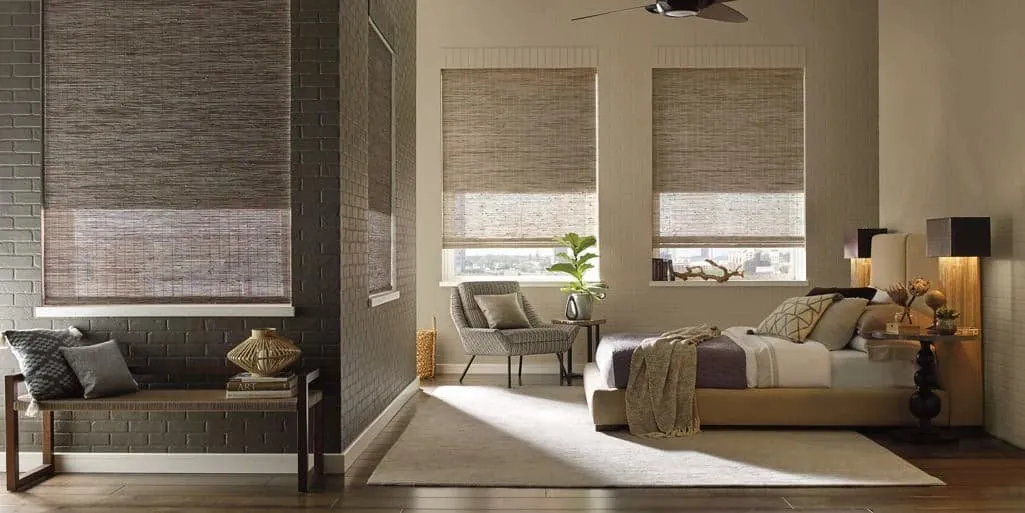
For these rooms we usually suggest lighter fabrics that filter light rather than block it. Lowered, they soften the brightness on a sunny afternoon and still let the room glow. Raised, they disappear into a slim band so the window gives everything it has. Pale colors help too: a cream or soft natural shade reflects light back into the room, where a dark fabric would absorb it.
Bedrooms are the exception. Even in an antique house, an east-facing bedroom can be lit by the sunrise much earlier than you would like. There, a fuller fabric makes sense, and on a small window it can close the room off very effectively.
North-facing rooms in the old houses deserve a word of their own. They never get direct sun, so their small windows give a cool, even light all day, and many owners find they hardly lower those shades until evening. In rooms like that, the shade is mostly about how the window looks: a flat fold in a soft color that suits the trim, kept raised and tidy at the head of the sash. Choosing a lighter cloth there costs nothing in comfort and keeps the room from feeling heavier than it needs to.
Privacy on a large, quiet lot
With deep setbacks and low density, most Upton homes are well away from the road and from each other. In daylight, privacy is seldom a concern. At night, a lit window can still be visible from a long way off, especially across an open lawn or a field, so some owners like a fuller fabric on the rooms that face the road.
The nice thing about a large lot is that you can choose freely, room by room. A front parlor facing the road might take a fuller fabric for evenings. A back kitchen facing a garden or a wood line may need nothing more than a light fabric to take the edge off the sun. Side rooms often fall somewhere in between.
Because the reasons are different on each side of the house, we usually walk round the outside briefly at the consultation, to see which windows are actually visible from the road and which face only trees.
The newer colonials off Route 140
The newer houses off Route 140 are built on a different pattern. Their windows are larger and come in regular sizes, often in matching pairs or rows. Rooms are bigger and more open, with family rooms, kitchens with eating areas and primary bedrooms that have several windows.
Here the shades can follow a clear plan across the house. A common choice is the same Vignette flat style on every window, with a lighter fabric downstairs and a fuller fabric in the bedrooms. Another is a folded style on one or two feature rooms, such as a dining room or a primary bedroom, and the flat style elsewhere. From outside, keeping the color consistent on every street-facing window helps the front of the house look calm.
A wide window or a set of windows in a row is usually better with separate shades that line up than with one very large shade. Each one is easier to raise, the folds stay even, and you can lower just the sunny side. For roman shades in Upton’s newer houses, this is often where PowerView comes in, since a big colonial has a lot of windows to move each day.
Which style for which Upton house
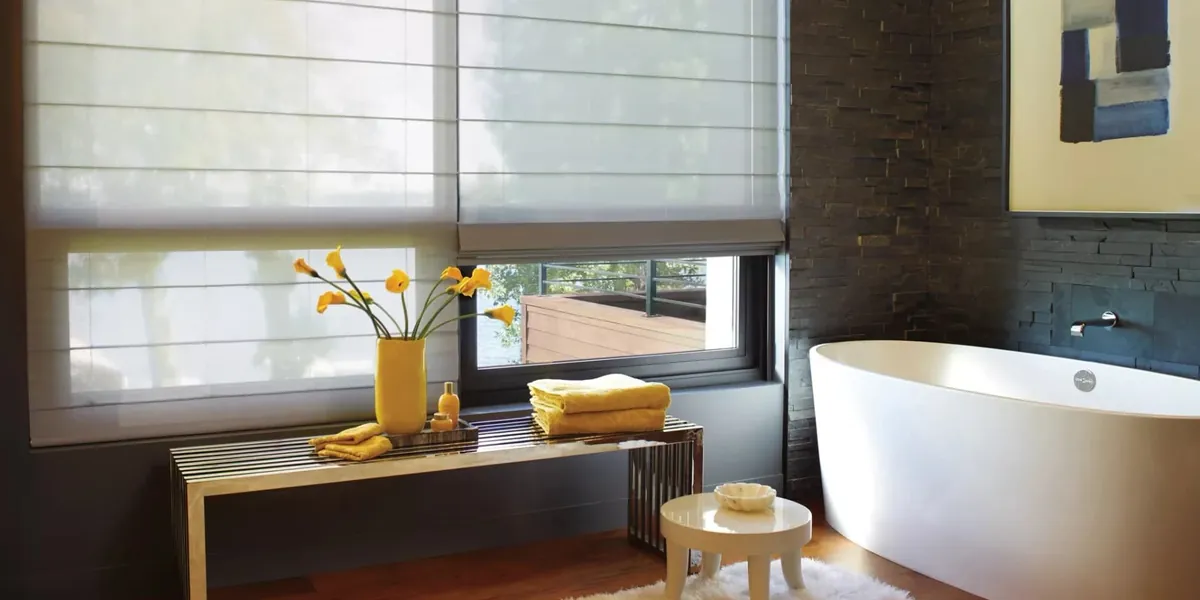
Vignette and Carole Fabrics each offer a flat and a folded version, and around Upton the age of the house tends to make the call.
Flat shades drop as a single, unbroken sheet and fold into tight, level pleats on the way up. Their fold is the slimmest, so they are what we reach for first on the tiny openings of the oldest colonials and farmhouses. A print reads crisply on them too, so one flat shade in a pattern can be a quiet highlight in an old parlor.
Folded shades carry soft, rounded swags down their face even at full drop. They need a touch more room at the head, so they look their best on bigger glass. In a Route 140 house, a folded shade in the main bedroom or a formal dining room brings warmth and softness.
Plenty of Upton homes use both, flat on the little old sash and folded on one or two larger windows. When it is a close call, our consultant hangs both versions on one window so you can compare them in place.
Low ceilings and tiny windows upstairs
In an antique colonial the upper rooms are often snug, with low ceilings, sloping walls in places and the smallest windows in the house. Light is scarce, and there is little wall above each window for a rail.
Here the choice between mounting inside the opening and on the wall above depends on a few inches. Where there is room above the trim, a wall mount keeps the glass completely clear. Where the ceiling comes down close to the head of the window, an inside mount is usually the only tidy answer, and a flat style keeps its fold as slim as possible. A pale cloth in these rooms stops them feeling closed in, while a bedroom facing east may still want a denser cloth for early mornings. A guest room used only now and then can take whatever cloth matches the rest of the floor, since nobody has to sleep through its sunrise every day.
Farmhouse kitchens and back rooms
The back of an old farmhouse often holds the kitchen and a run of small working rooms, each with a modest sash looking out to a yard, a barn or a wood line. With no neighbors in sight, these windows rarely need cover for privacy. What they need is a way to cut the glare of a low sun across a counter or a table without darkening the room.
For roman shades in Upton farmhouse kitchens, an airy, light cloth lowered partway does that job well, and a flat fold keeps a small sash clear above the sink when it is up. Our consultant checks how far you reach across the counter before suggesting the mount, so the shade stays easy to use every day.
Color for old walls and new
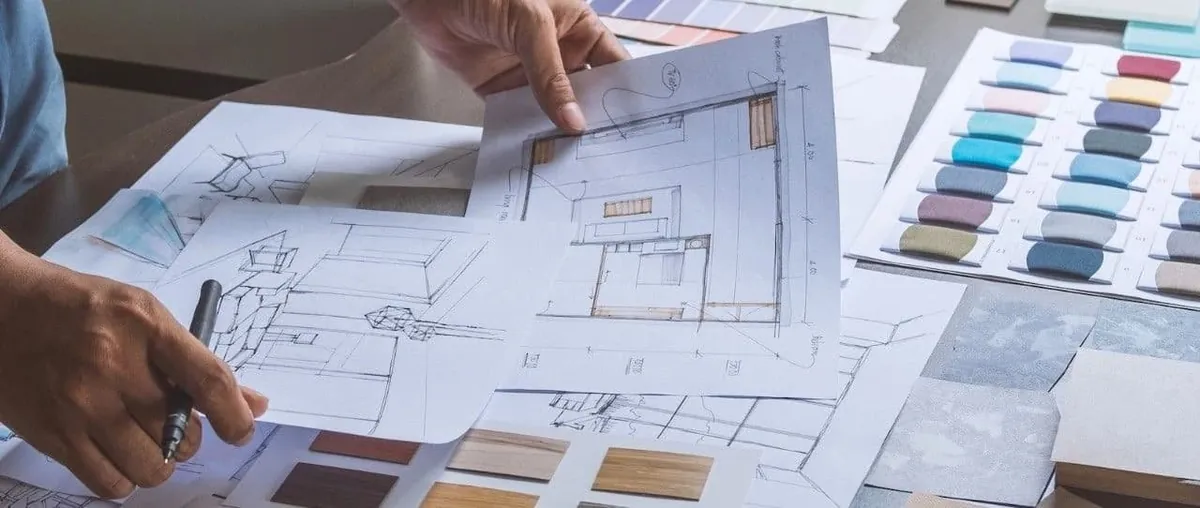
An old Upton room has its own palette: plaster that is never quite white, broad painted casings, wide boards worn soft. Swatches that look fresh in a sample book can feel stark against those surfaces.
Creams, warm whites and earthy naturals generally sit comfortably in an antique colonial, and a bolder color can work on a single window if the rest of the room is calm. The Route 140 colonials, with crisper paint and larger glass, often suit cooler grays and bright whites.
Pick color where the shade will live, at the hour you use the room most. Nothing else shows how a cloth really behaves in your light.
Big family rooms off Route 140
The family room in a newer Upton colonial is often the brightest room in the house, with a wide window or a slider to the back yard and windows on a second wall. On a large lot with few trees close by, the afternoon sun can pour straight in.
Here roman shades in Upton earn their place by giving control window by window. Lower the shades on the sunny wall while the others stay up, or lower them all partway to take the glare off a screen. A medium cloth suits a room like this, and if it opens to the kitchen, carrying the same fabric across both keeps the open plan looking like one space.
The appointment at your house
Our vans carry the swatches, so the choosing happens where the windows are.
- Book a date through Request a Consultation, or tap the call button.
- Your consultant comes with both roman lines, both styles and cloth from airy to dense.
- You walk the rooms together, talking through the light each one gets and how you use it.
- On the tiniest sash, you compare a rail inside the opening with one on the wall above.
- Every window is measured, with the frame depth and the trim recorded.
- A written estimate is left with you at no charge, and you take your time deciding.
Color help for a room or the whole house can be folded into the same call as an interior design consultation. The visit is described on what happens at an in-home consultation.
Measuring the oldest houses
Frames in an antique house are seldom true, and on a tiny opening a small lean is easy to see. Our consultant reads the width at three heights and the drop at three points, checks depth wherever a rail could sit, and writes down any latch or old hardware in the way.
Where a wall mount is planned, the space above the trim and the state of the plaster are checked as well. If a frame has drifted too far for an inside fit, a casing mount is the dependable choice, and you see where it will go before anything is ordered.
Hunter Douglas certified installers hang the shades, set every rail level and run each one through its full travel before showing you how it works. Read what happens on installation day for the sequence.
Buying through a Gallery dealer
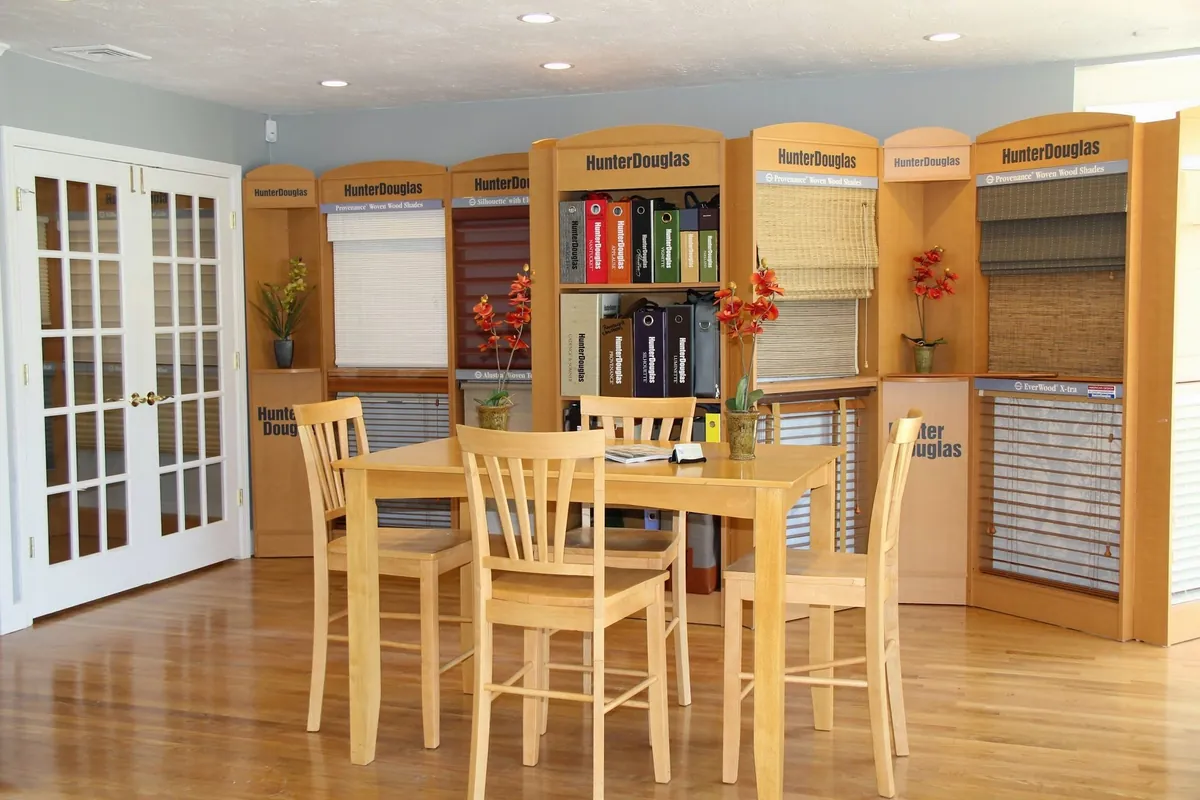
Blinds & Designs is a Hunter Douglas Gallery dealer. Our installers carry Hunter Douglas certification. For an Upton house, that puts the full Vignette and Carole Fabrics range in reach, with measuring and fitting by one firm.
If a room would do better with honeycomb shades, blinds or shutters, the broader Hunter Douglas family can be planned at the same appointment. Older shades and blinds that have stopped working are welcome for repair.
Franklin is our closest showroom to Upton, open to visitors during its hours. The Upton page lists every service we offer in town, and the full roman shades range has its own page.
PowerView in a big colonial
A newer colonial off Route 140 can have a great many windows, and walking the house to move every shade twice a day adds up. PowerView puts the shades on a remote or a phone, with timetables that open them in the morning and close them at dusk.
Shades can be ganged by room or by the side of the house that faces the sun. In an antique house, motorization helps on a window over a stair or above a built-in. How each motor gets its power is planned at the appointment. For roman shades in Upton, MA, it is one more way to keep every window doing what you want.
Questions from Upton
Our antique windows are very small. Will a shade make the room darker?
It need not. A flat fold is slim, and a rail fixed on the wall above lets the lifted cloth rest over plaster so the whole pane is clear. A pale, airy cloth keeps the room bright even when lowered.
Should we cover up the old trim?
Your choice. A rail inside the opening leaves the casing fully visible, while a wall mount hides a little of the head trim but frees more glass. We show you both at the window.
Our house is far from the road. Do we need privacy fabrics?
By day, rarely. After dark a lit room shows from a long way off, so many owners pick a denser cloth for road-facing rooms and lighter ones elsewhere.
Can all the shades in our newer colonial match?
Yes. One style and one outward color across the house, with the cloth weight changing between living rooms and bedrooms, is a common plan.
Do you charge to measure and write the estimate?
No. Both are free.
The next step
The right roman shade for an Upton window is easiest to find standing at it. Ask for a home visit through Request a Consultation: both roman lines come to you, each opening is measured and a free estimate is left behind. Want a word first? Tap the call button, or drop in at our Franklin showroom.