
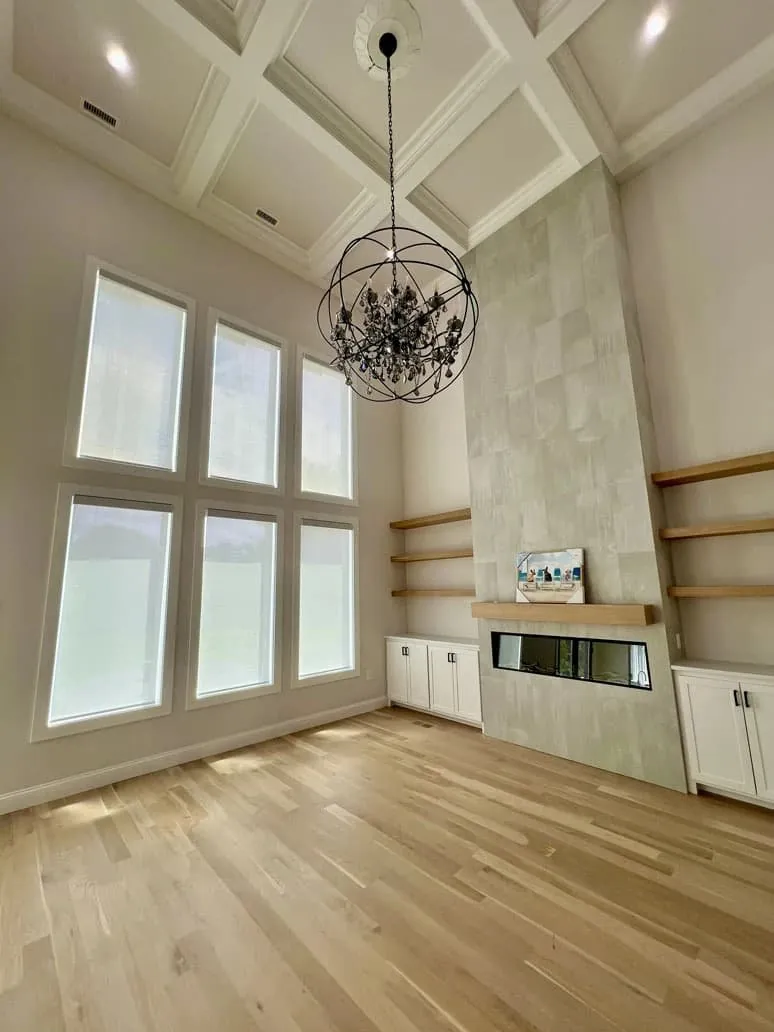
Open land, low sun and no one next door
Out along New Bedford Road and around Snipatuit Pond, a house can sit on a lot so large that the nearest neighbor is out of sight. Many front onto fields or cranberry bog, flat and open, with nothing between the windows and the horizon. That changes what a window covering is for. In a crowded neighborhood a shade is mostly about privacy. Here it is mostly about the sun.
With no trees or houses to break it, low morning and evening light crosses the open ground and reaches deep into a room. It glares on a screen, warms a kitchen in late afternoon and wakes a bedroom early. Roller shades in Rochester, MA, are a good fit for that problem, because the right fabric controls the light while leaving the long view across the land intact.
The houses themselves vary widely. Antique colonials and farmhouses have small, deep-set sash, while the newer builds on larger lots have modern glass in generous sizes. We plan each one on its own terms.
Roller shades in Rochester, MA, for old sash and new glass
All of these are Hunter Douglas Designer and Alustra shades. We bring samples of each so you can see them against your own windows and your own view.
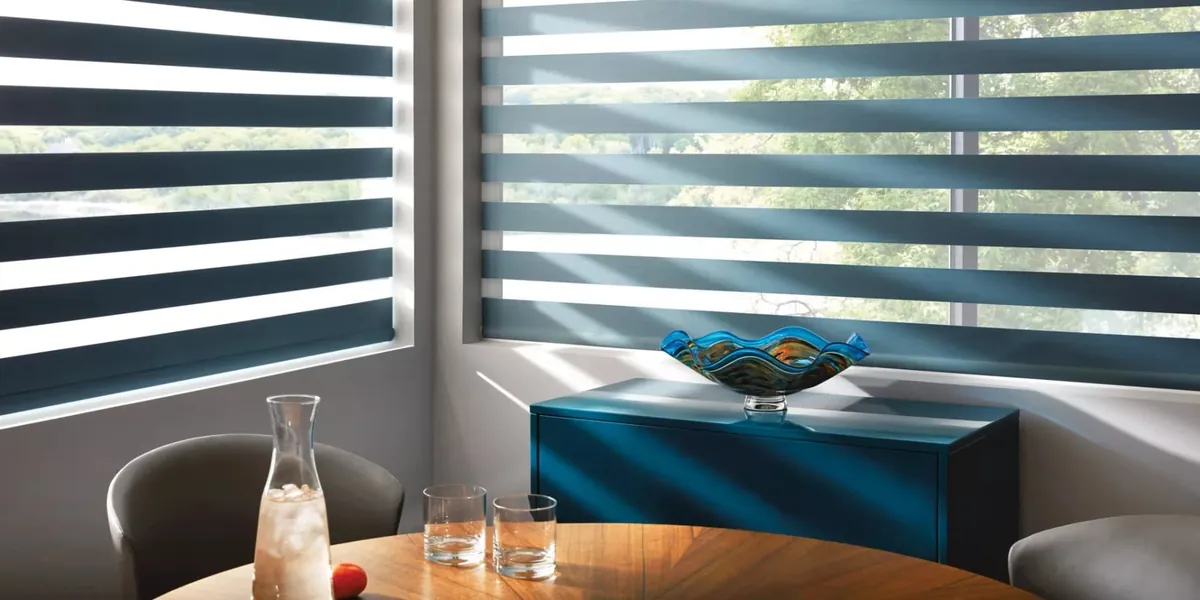
Banded shades
Sheer and solid stripes that slide past each other, for a corner breakfast room where you want light most of the day and shade for an hour or two.
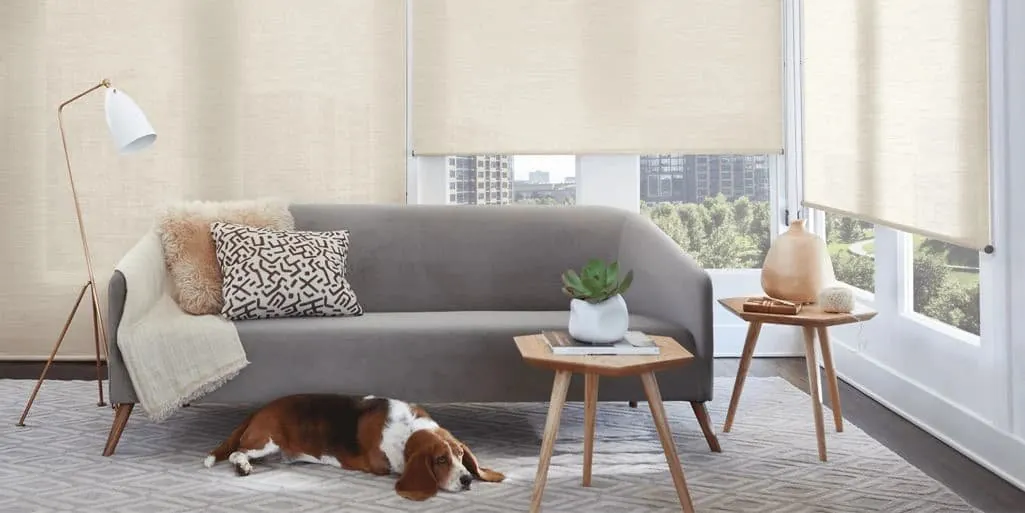
Textured light filtering rollers
Designer Roller fabrics with a woven look, in colors that sit easily beside wide pine boards and painted farmhouse trim.
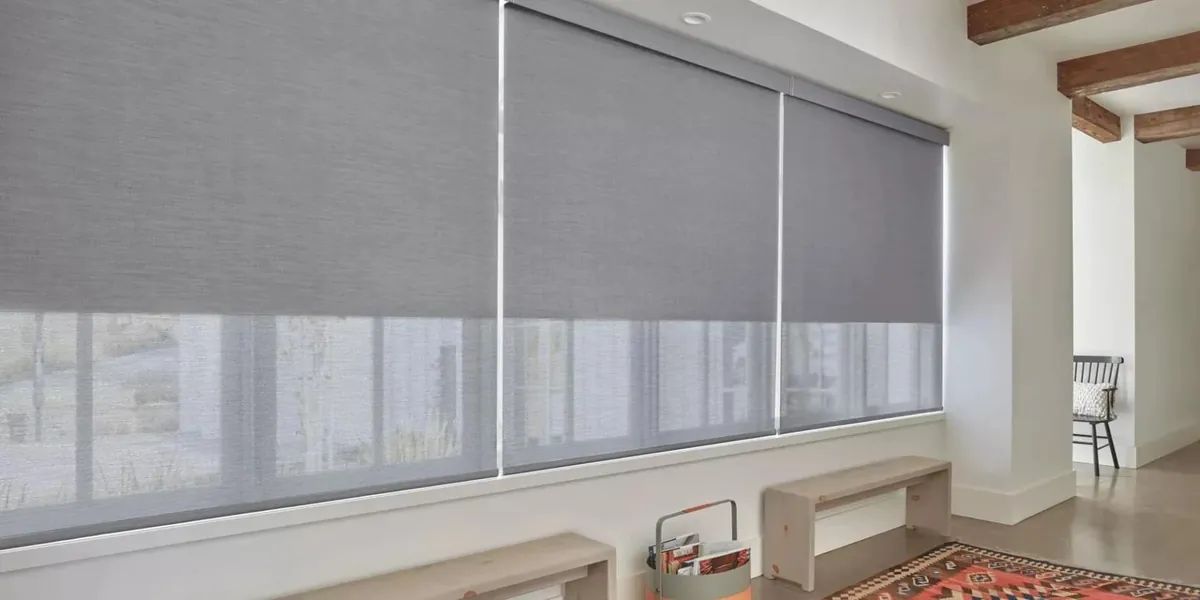
Blackout for country nights and early mornings
Opaque fabric for bedrooms that face the open fields and take the first sun of the day.
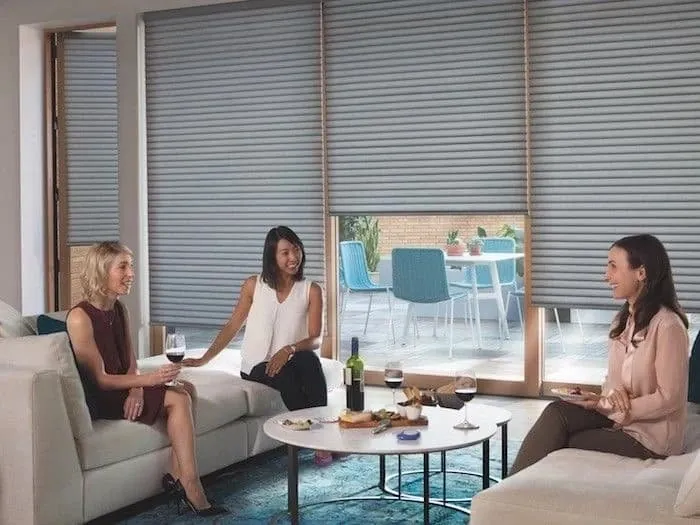
Sonnette cellular rollers
A curved cellular fabric on a roller, which helps an old colonial with drafty sash feel a little warmer by the window.
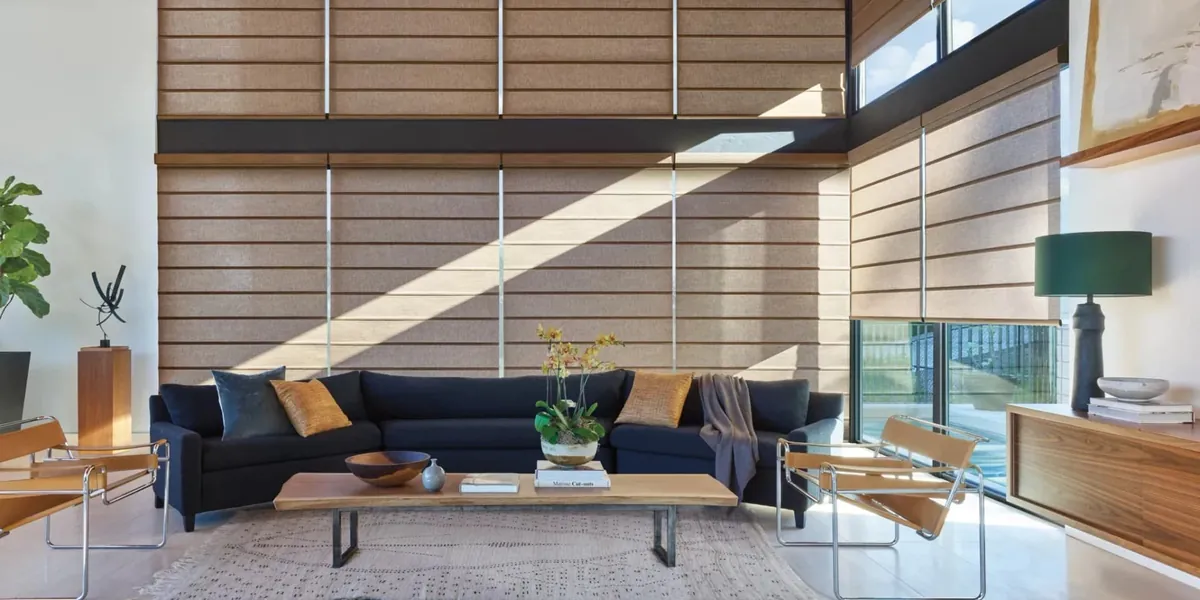
Alustra for big modern glass
Tailored fabrics and hardware for the tall windows and great rooms in newer houses, with a clean, finished look.
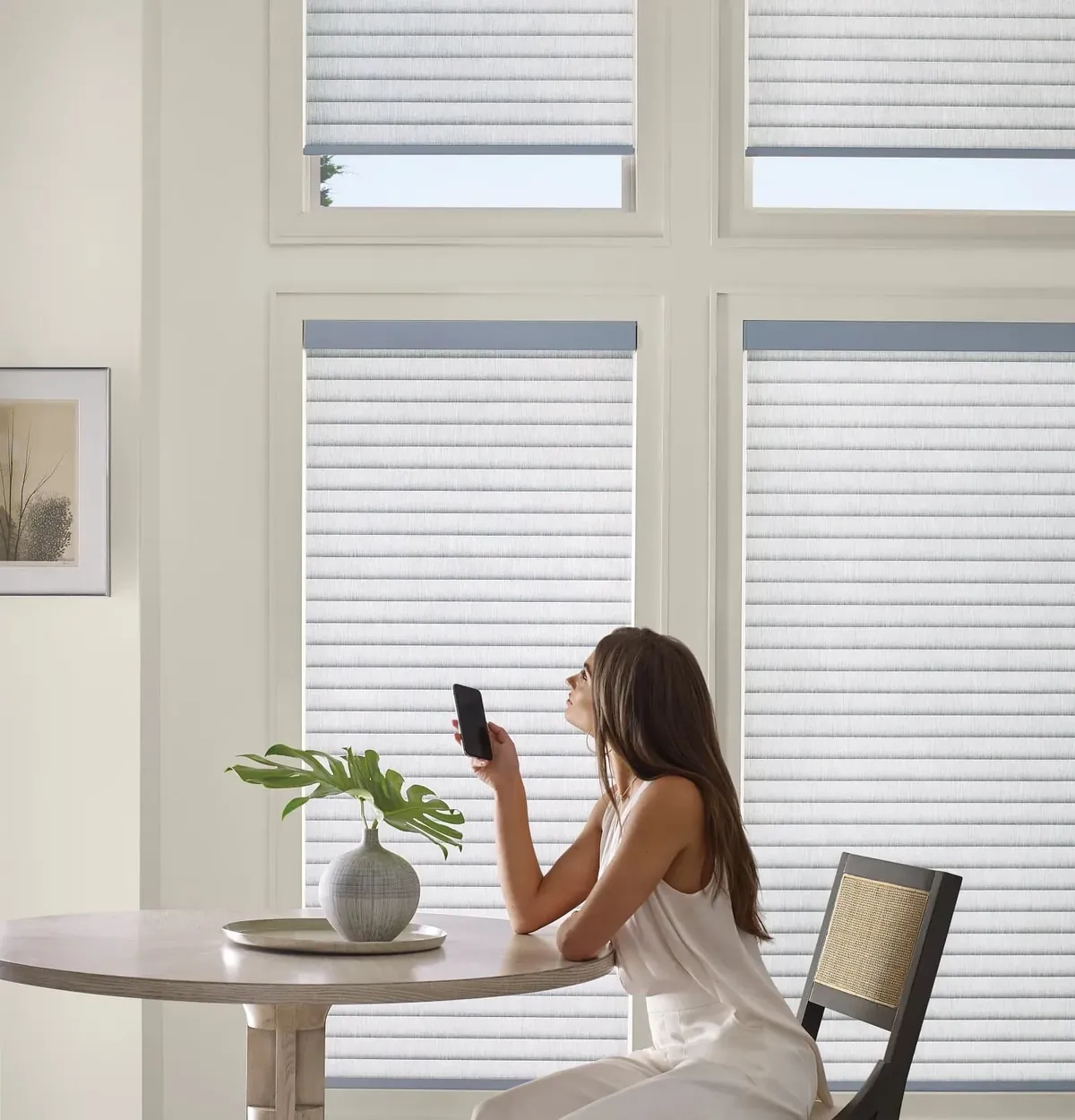
PowerView schedules
Let the west-facing shades lower themselves in the afternoon and lift again at dusk, run from the app or a small remote.
When privacy is not the main concern
Most window covering advice assumes you need to block the view in from a street or a neighbor’s yard. On a Rochester lot that backs onto a bog or a wood line, there often is no one to block. That frees you to choose shades for light and comfort first.
During the day, a solar screen or a light filtering roller can stay down for hours without making a room feel closed in, because there is no one to hide from. You get the glare control and the cooler room without giving up the outlook. In the evening the picture changes a little. With lamps on, a lit room becomes visible from outside through a screen or a light fabric, and on a dark country road that window glows. If you are comfortable with that, a single screen may be all a room needs. If not, a dual roller carries a second, opaque shade behind the screen for night.
The one place privacy does come up is along the road. Older farmhouses were often built close to the road frontage, so the front rooms may face passing traffic even when the back of the house faces nothing but field. Those rooms usually get a light filtering or banded shade, while the back rooms get a screen.
Deep-set sash in antique colonials and farmhouses
The older houses here were built with thick walls and heavy timber frames, and their windows sit well back in the wall. The sash are small, often with many panes, and the reveal around them can be deep enough to hold a row of pots on the sill. That depth is good news for a roller.
An inside mount needs only a little depth for its bracket, and these frames usually have plenty. The shade sits back in the opening, the trim stays fully visible, and when the roller is raised it tucks up so neatly that the window looks untouched. On very old frames the challenge is squareness rather than depth. Openings that have settled over many years can be wider at the top than at the bottom, so we measure at the top, middle and bottom and cut the shade to the narrowest point.
Because these windows are small, light gaps at the sides matter more. A blackout roller in an antique bedroom works best when it fills the opening as closely as the frame allows. Where a gap would bother you, an outside mount with a small overlap onto the trim is an option, though most people prefer to keep the old casings in view.
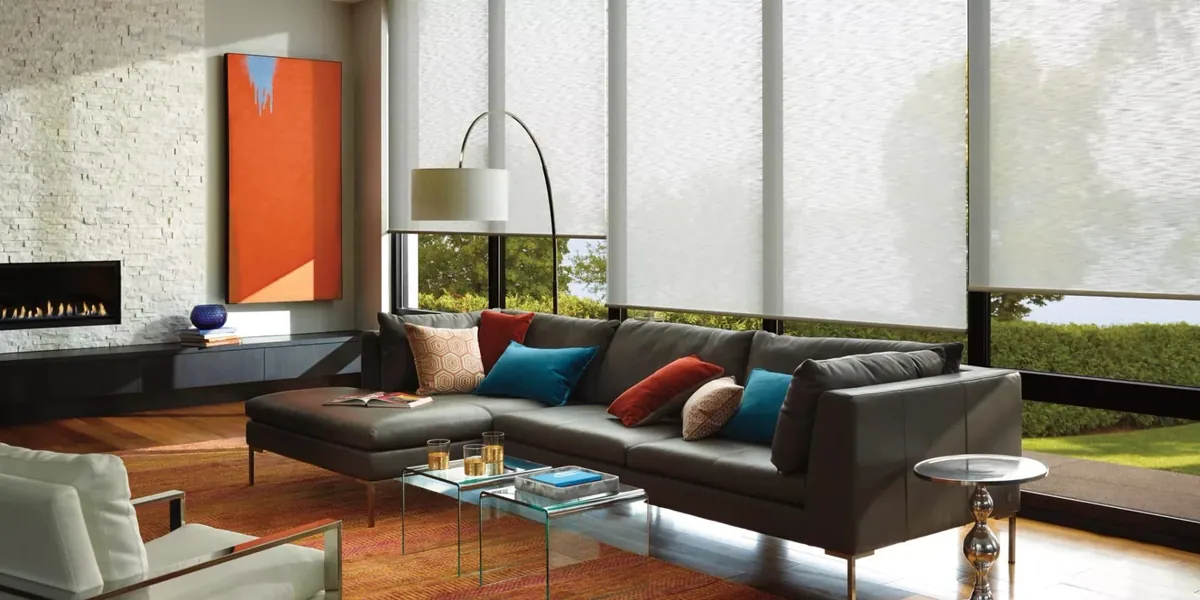
Modern glass in the newer builds
The newer houses on Rochester’s larger lots are built to take advantage of the land. Living rooms open onto decks through wide sliders, kitchens have long runs of windows facing the yard, and many have a great room with a window wall that rises well above the doors. All that glass brings the view inside, and it brings the sun in too.
A roller handles a big opening with very little fuss. The fabric spans the width without slats to tilt or folds to stack, and when a window is wider than a single shade looks best, two or three rollers can share a bracket and move as one. On a window wall, the upper shades can be motorized and the lower ones left manual, or every shade can run on the same schedule.
Many of these houses use casement windows with crank handles at the sill. A standard roll can catch on them. We often specify a reverse roll, where the fabric comes off the front of the tube, so it hangs a little further from the glass and clears the handles. It is a small detail that saves a lot of frustration.
Glare off the pond and the bogs
Houses facing Snipatuit Pond, or looking over cranberry bog when it is flooded, deal with reflected light as well as direct sun. Water bounces light upward and into the room at a low angle, so the glare can arrive even when the sun is behind the house. It washes out televisions and laptops and makes a west room hard to sit in on a summer evening.
A solar screen is the usual answer. The fabric is woven with small, even openings, and the openness factor describes how much of it is open space. A more open weave keeps more of the pond in view but lets more glare through. A tighter weave calms the room further, and the view behind it softens. Darker colors are easier to see through and better at cutting glare; lighter ones reflect more heat but glow when the sun hits them.
For a pond-facing room we usually start with a darker screen in a middle openness and test it at the window during your visit, preferably when the light is strongest. There is more on this in our guide to the best shades for sun and glare.
Winter light across snow-covered fields
The sun on open land does not stop being a problem when summer ends. In winter it sits low in the sky all day, and a field covered in snow throws its light straight back at the house. A kitchen or living room facing that way can be as bright in January as it is in July, just with colder air outside.
This is where a lighter touch helps. In winter most people want the warmth of the sun in the room, just not the glare in their eyes. A light filtering roller lowered partway cuts the bright band at eye level while the low sun still reaches the floor. A screen does the same with more of the view kept. For an older room where the sash leaks cold air, a Sonnette cellular roller adds a layer at the glass for the long evenings.
We often find that the best roller shades in Rochester are chosen with both seasons in mind: a fabric that handles summer heat off the bog and winter glare off the snow, on the same window.
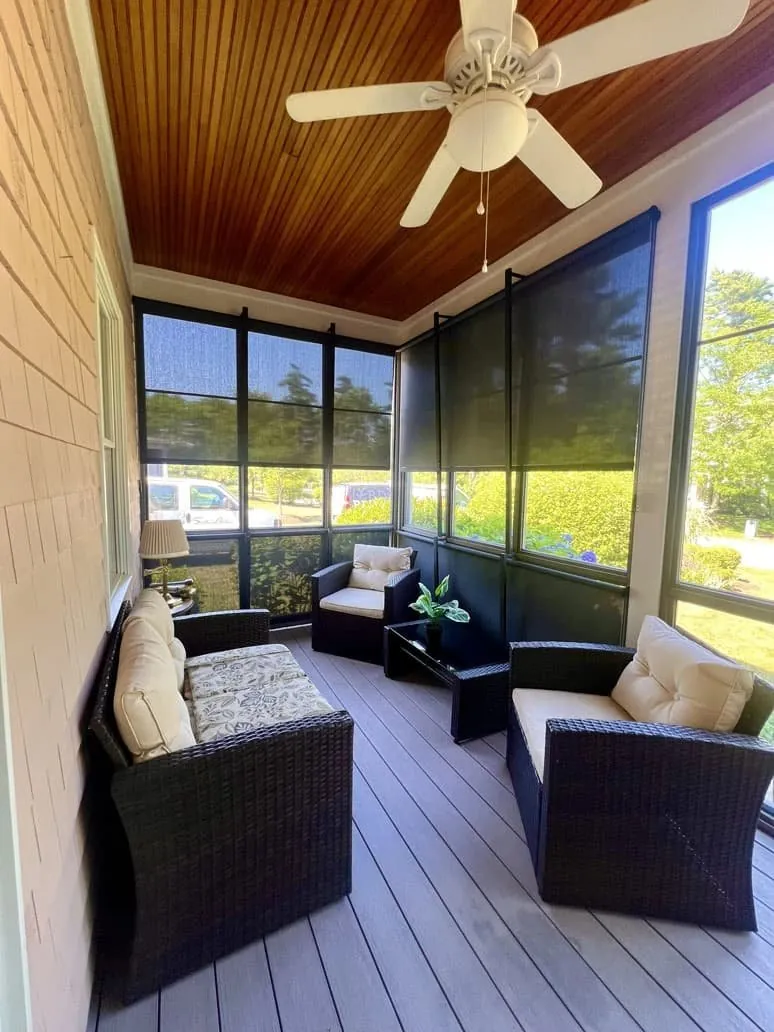
Sunrooms, porches and the room off the kitchen
Many houses on larger lots have a sunroom or an enclosed porch added at the back, usually facing the yard or the land beyond. These rooms are glass on three sides, which makes them the brightest and the warmest part of the house in summer and the coolest in winter.
Rollers suit them well because they take up so little space. Each window gets its own shade, mounted inside the frame where the depth allows, and they can be grouped so a whole wall lowers at once. A dark screen keeps the outlook while taking the edge off the heat. If the room doubles as a guest room, a dual roller with a blackout behind the screen gives it a second use. Where the room has a slider to the deck, a roller mounted above the frame clears the handle and rolls fully out of the way.
A visit to your house, step by step
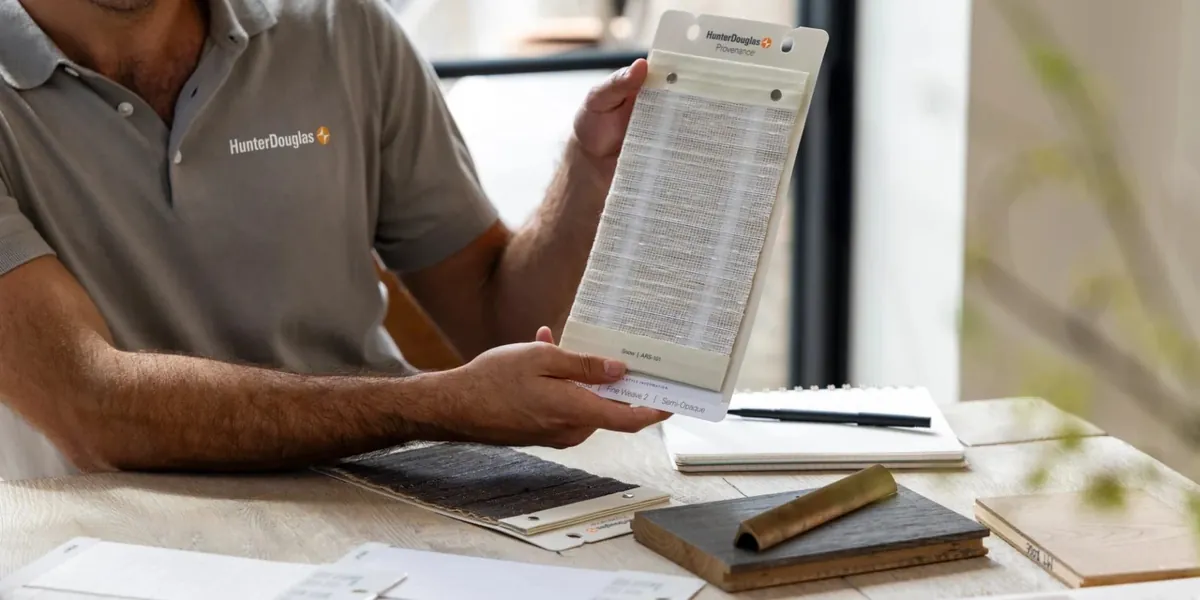
On a property this size, an in-home consultation is the sensible way to choose. You see every fabric in your own light, and we see every window, from the small sash in the oldest room to the tallest glass in the newest. Our vans carry samples, so we bring the showroom to you.
- Request a consultation online or with the call button, and we will arrange a time.
- We walk the house together and talk about how each room is used and when the sun reaches it.
- You hold screen, light filtering, banded and blackout samples to your own glass and compare them.
- We measure every opening, including the depth of each frame and any crank handles or hardware in the way.
- We give you a free estimate for the shades you are considering. Take your time deciding.
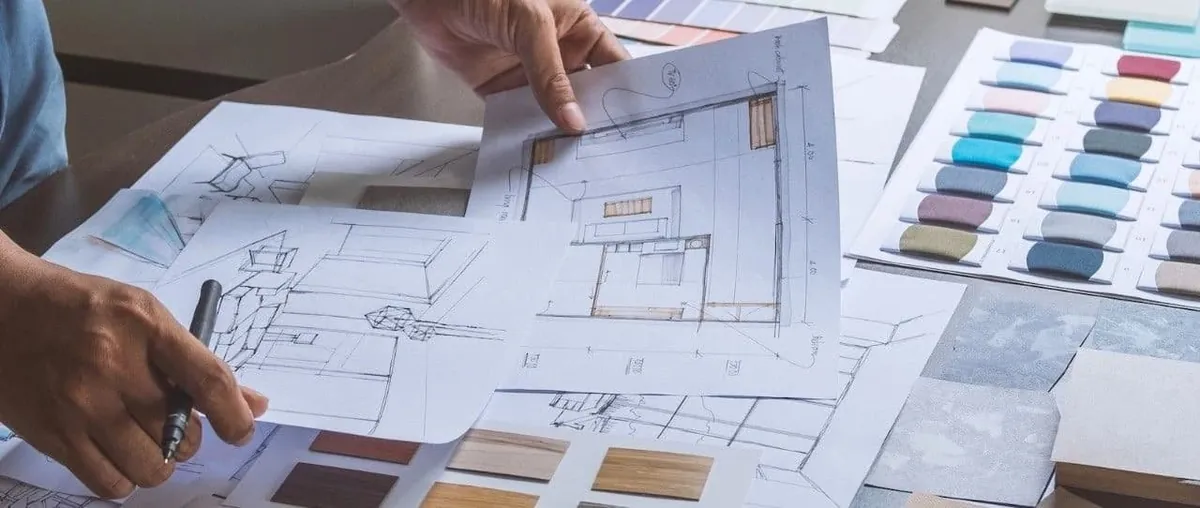
Interior design consultations are available as well, if you want help with color and fabric across several rooms. Our guide to what happens at an in-home consultation explains the visit in more detail.
Matching a shade to each room
A Rochester house often needs three or four different fabrics, and that is fine as long as they belong together.
- Kitchen and family room: a light filtering roller or a screen, so daylight stays in and the glare stays out.
- Front rooms near the road: a light filtering or banded shade, for daytime privacy without losing the light.
- Bedrooms facing east over open ground: blackout, mounted to fill the opening as closely as possible.
- Great room or window wall: a screen in the upper shades, motorized, with matching fabric below.
- Older rooms with drafty sash: Sonnette, for a little more warmth at the glass.
We keep the colors related so the house reads as one even when the fabrics differ. When people ask where to begin with roller shades in Rochester, we suggest starting with the room that gets the worst sun and working outward from there.
Designer and Alustra side by side
Hunter Douglas makes several roller families, and we carry all of them. Designer Roller covers the broadest range of colors, textures and opacities, from sheer light filtering through full blackout. Designer Screen is the solar screen line, with a choice of weaves and colors. Designer Banded is the striped shade. Alustra is the more architectural collection, with fabrics and hardware aimed at a tailored look, and it includes Alustra Architectural and Alustra Woven Textures. Sonnette adds a cellular fabric to the roller format.
In practice a farmhouse might take Designer Roller in a textured weave for its older rooms and Alustra on the big glass in a newer addition. You can read about each on our pages for Designer Roller shades, Alustra Architectural and Sonnette cellular rollers, or go to the main roller shades page.
Motors for tall windows and long distances
On a large house, the shades can be a long walk apart. A great room window wall, a stair landing window and a row of bedroom shades on the far side of the house all need lowering at different times. PowerView motorization lets you control every one from a phone or a remote, group them by room, and put them on schedules that follow the sun.
A typical plan lowers the west-facing screens before the late afternoon sun arrives, raises them again at sunset, and opens the bedroom blackouts gently in the morning. It works the same whether you are home or not, which helps protect floors and furniture from fading on long summer days. Our page on motorized blinds in Rochester covers the options in more depth, and so does our guide to how motorized shades are controlled.
Gallery dealer service from consultation to fitting
Blinds & Designs is a Hunter Douglas Gallery dealer, the title Hunter Douglas gives to dealers who meet its standards. That means the full roller range and PowerView under one roof, and installers certified by Hunter Douglas to fit them.
On installation day our installers find solid wood for every bracket, which matters in an antique frame that has moved over the years. They level each shade, run it through its full travel, and show you how the lifts and any motors work. Later on, if something needs attention, we also repair blinds and shades.
Rollers are only part of what we do. An old colonial may want plantation shutters in Rochester in its front parlor, or custom blinds in Rochester in a study. Our Rochester page brings every service in town together.
Questions from Rochester
Do I need privacy shades if no one can see in?
Often not during the day. On an open lot a screen or light filtering roller is enough, and it keeps the view. At night a lit room shows through those fabrics, so add a blackout or a second shade if that matters to you.
Will a roller fit my deep old window frames?
Very well, usually. Deep reveals give plenty of room for an inside mount, so the shade sits back and the trim stays visible. We measure each frame at several points because older openings are often out of square.
What helps with glare off the pond?
A solar screen roller, ideally in a darker color, which cuts glare and keeps the water in view. We test a few openness levels at your window so you can see the difference.
My newer house has crank-out windows. Will rollers catch?
A reverse roll hangs the fabric further from the glass so it clears the handles. We check every casement window when we measure.
Is the estimate free?
Yes. After we measure, you receive a free estimate for the shades you are considering.
Take the next step
You will know which roller shades in Rochester suit your house the moment you see the fabrics against your own windows and your own long view. Request a consultation and we will bring the Designer and Alustra range to you, measure every opening and give you a free estimate. If you would rather look first, our nearest showroom is in North Dartmouth, or use the call button to ask a question.