
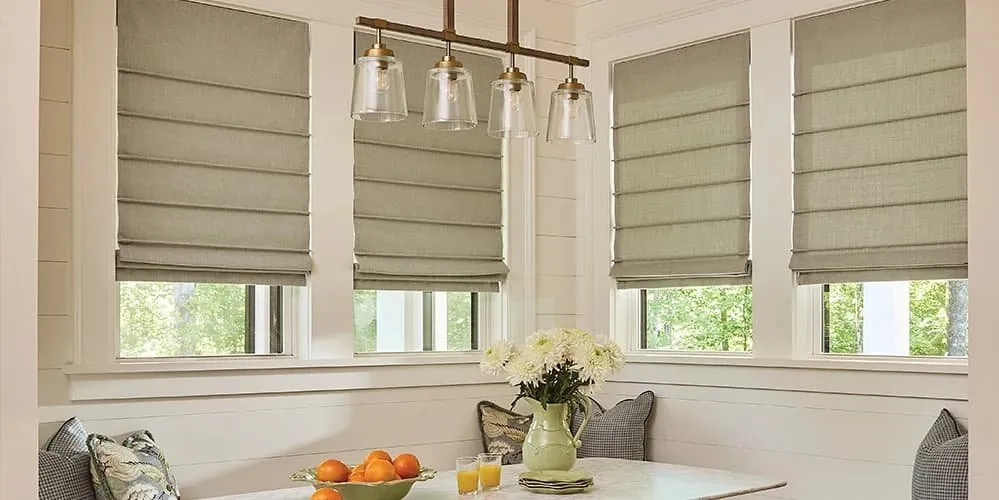
Colonials, Victorians and houses among the trees
Needham’s housing falls into three clear groups, and each one shapes the window differently. Post-war colonials line many of its streets, with standard double-hung windows in sensible sizes. Large newer houses sit back on wooded lots, often with a two-story foyer and a tall run of glass over the front door. And near Needham Center there are older Victorians, with taller sash, more ornate trim and rooms that were built for a formal life. Choosing roman shades in Needham, MA, starts with knowing which of these you live in.
The newer stock is mostly straightforward. Standard modern openings mean shades fit neatly, repeat easily from room to room, and give a consistent look across the whole house. The largest houses add a challenge at the foyer, where glass climbs well above reach. The Victorians bring their own questions, about trim worth keeping in view and windows that are rarely quite the same twice.
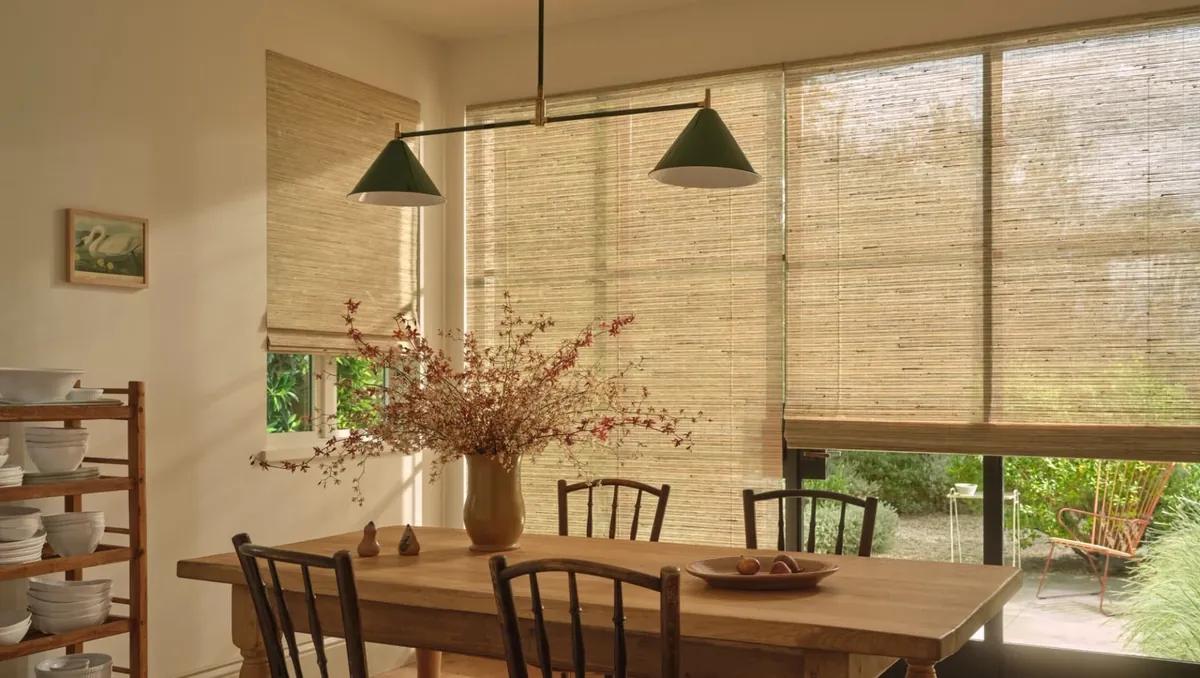
Fabric shades suit all three because they look finished on their own, sit comfortably beside drapery, and fold away cleanly when you want the light. Across all three, our work here centers on two Hunter Douglas fabric lines, Vignette and Carole Fabrics, each made up as a flat or a folded shade, and every swatch arrives at the house in a consultant’s van.
Roman shades in Needham, MA, for every kind of house
From a colonial kitchen to a Victorian dining room, these are the roman shades in Needham, MA, that we show most often. Each one comes to your house on the van.
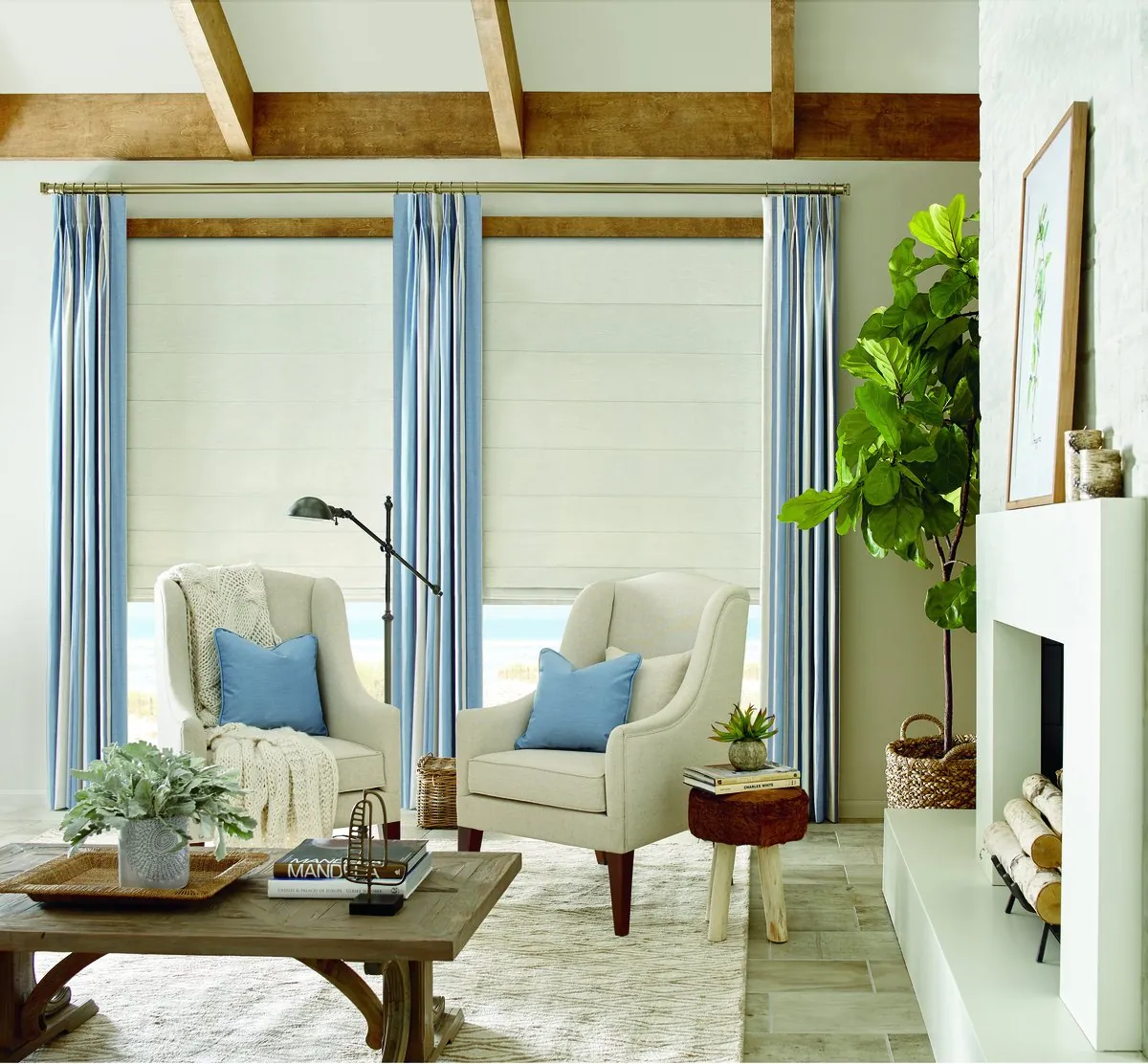
Carole Fabrics for a formal Victorian room
A tailored panel of fabric inside tall sash, with room for drapery outside the frame where a formal room calls for it.
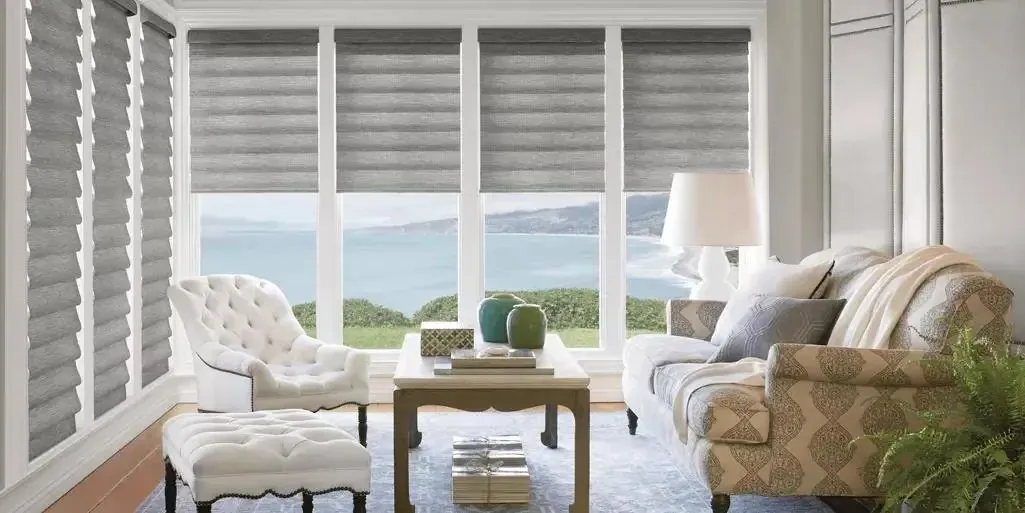
Vignette in a soft, relaxed fold
Gentle, rounded folds for a family room, a sunroom or a bedroom in a newer house, where a relaxed look suits the way the room is used.
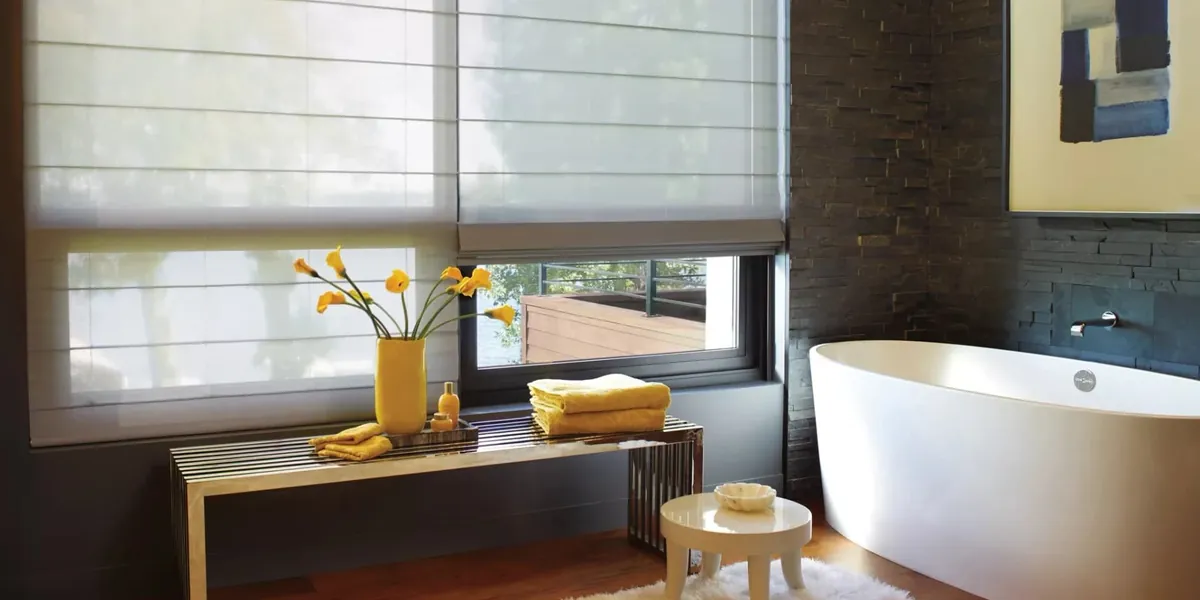
Flat and folded styles, room by room
Bathrooms, kitchens and bedrooms each have their own needs. See the full range of Hunter Douglas roman shades and how the two styles compare.
Post-war colonials and their standard windows
The post-war colonials that make up much of Needham were built with practical, regular windows: double-hung sash in a handful of sizes, repeated across the front of the house and through the bedrooms upstairs. That regularity is an advantage. A fabric shade chosen for one window will usually suit its neighbors, and a single fabric can run through a whole floor without any awkward exceptions.
These houses often face the street squarely, with a living room on one side of the front door and a dining room on the other. Matching shades across those front windows gives the house a tidy face from the sidewalk, while the rooms at the back, the kitchen and the family room, can take a different fabric or style that suits how they are used. Vignette in a flat style is a natural fit for a colonial kitchen, where a neat, even look sits well beside cabinets and counters.
Colonials of this era also tend to have modest window trim, so the question of inside or outside mounting is usually a simple one. Where a window is shallow, mounting the shade just above the frame lets the raised fabric clear the glass and makes the window look a little taller.
Large newer houses on wooded lots
Needham’s larger newer houses tend to sit on wooded lots, set back from the road with trees around them. That setting changes the light. Rooms can be dappled and soft for much of the day, with sun breaking through the branches at certain hours and the outlook from many windows being mostly green. Privacy from the road may be less of a concern than it would be on a busier street, and the view of the trees becomes part of the room.
Fabric shades suit a house like this because they can sit partway down without closing the room off. Drop one partway and the low afternoon sun is cut while the trunks and the undergrowth stay in view below. On windows facing the trees, a lighter fabric often works well, letting the room stay bright when the shades are down and saving denser fabrics for the bedrooms.
These houses usually have generous rooms and wider openings than a post-war colonial, and some have windows grouped in pairs or threes across a family room wall. We talk through whether a wide opening should take one shade or several, which turns on how a single fabric panel would look across that span and how heavy it would be to raise.
The two-story foyer
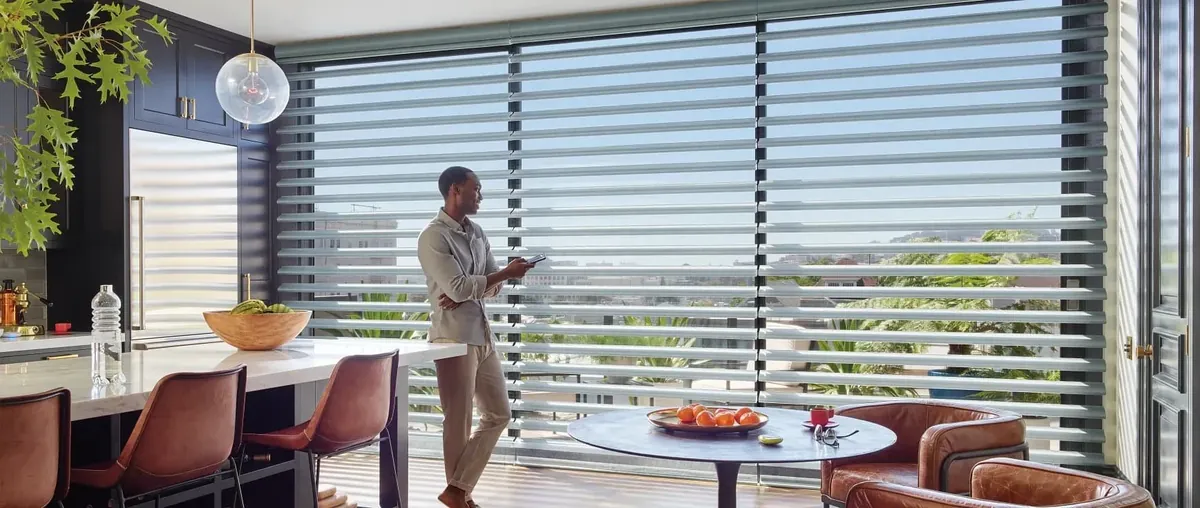
In the largest houses, the foyer rises two stories, with tall glass above the front door or a run of windows climbing the stair wall. These windows bring wonderful light into the center of the house, but they can also let in strong sun at certain times of day, and their height puts them well beyond reach.
A roman shade can work on foyer glass, with a few things to plan. The shade must be sized to the opening so the folds are evenly spaced over a long drop, and the raised stack should sit high enough to leave the glass clear when the shade is up. Fabric matters, because a tall shade shows its fabric from the front hall and from the landing above.
Then there is the question of reaching it. On glass this high, PowerView motorization is often the practical answer. The shade can be lowered and raised from a handheld remote or the PowerView app on your phone, or put on a timetable that drops it when the sun swings round to the front door. We plan how each motor is powered at the visit. The motorized blinds in Needham page covers automating other rooms, while how motorized shades are controlled walks through remotes, phones and timetables.
Older Victorians near Needham Center
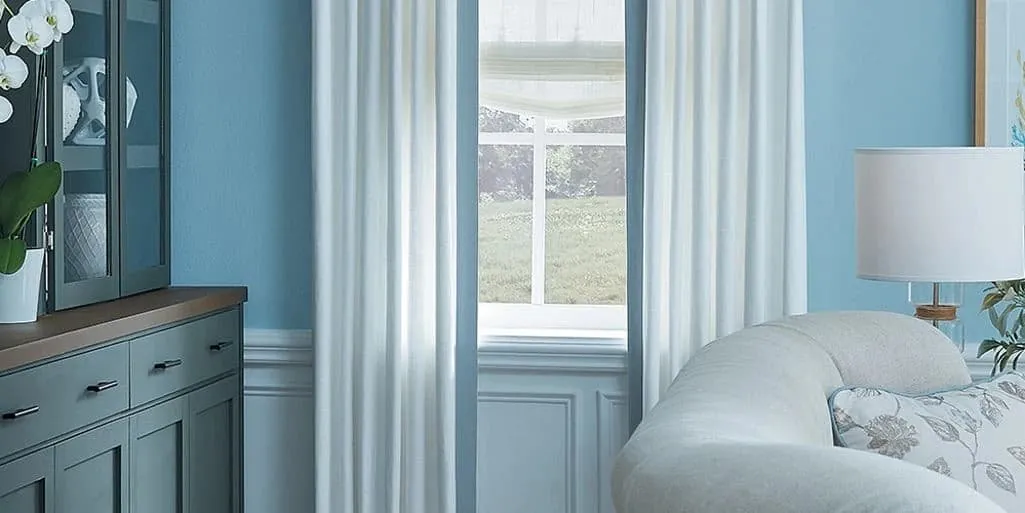
Close to Needham Center, the older Victorians have a different character altogether. Windows are taller and slimmer, ceilings are higher, and the trim around the openings is often deep and detailed. Front parlors and dining rooms were built for a formal life, and in rooms like these a fabric shade feels at home in a way a plain blind often does not.
A deep casing lets the headrail tuck in behind the trim, and the carved or molded woodwork stays on show. A shallow casing, or one with old sash locks and pulleys in the way, sends the shade up onto the face of the trim, set high so the folded stack sits above the top pane. Victorian windows that look alike are often slightly different in size, so each one is measured on its own.
The formal rooms of a Victorian also suit drapery, and a roman shade pairs naturally with it. The shade inside the frame handles light and privacy day to day; the panels outside it frame the tall window and add height to the room. Hunter Douglas drapery comes on the same visit, so the two fabrics can be chosen together.
Samples brought to your door
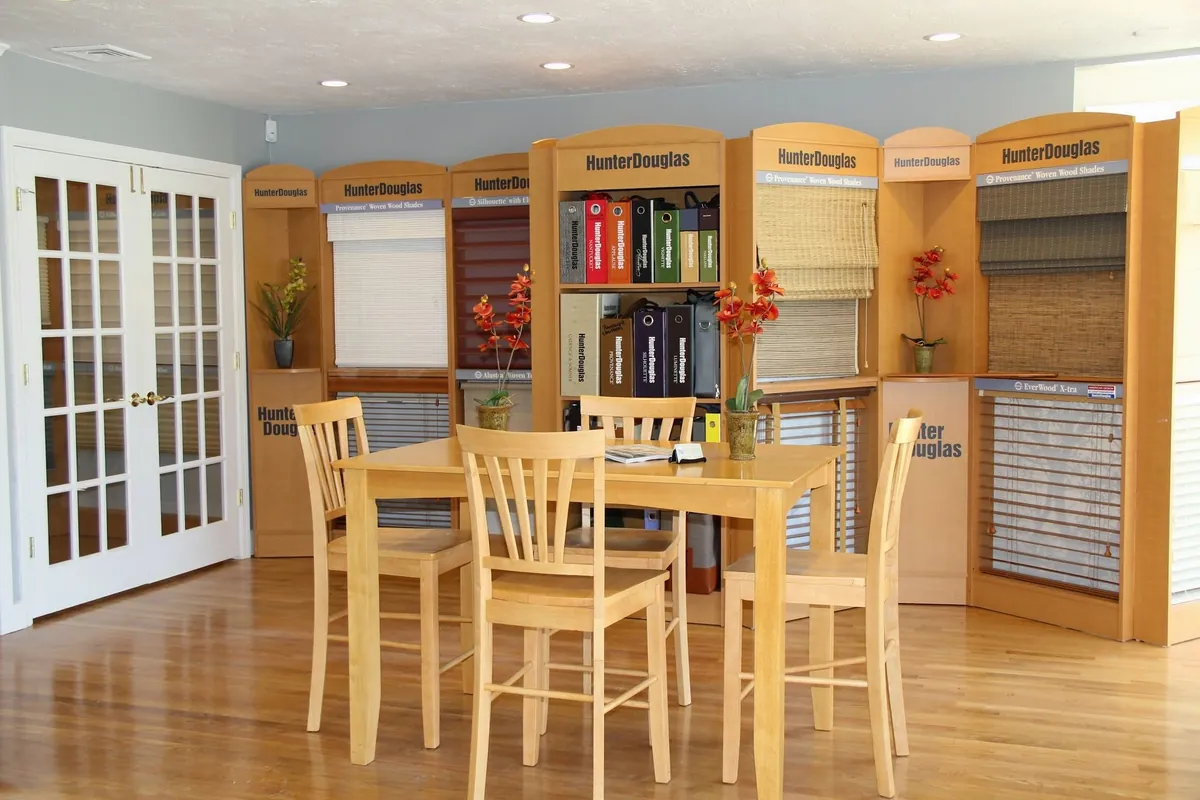
Needham falls within the area covered by our Canton shop-at-home service. That means the consultation happens in your own rooms, where a fabric can be held against the window and judged in the light it will actually live with, whether that is a bright colonial kitchen or a shaded room among the trees.
- Ask for a visit through Request a Consultation, or use the call button.
- We agree a time and talk about which rooms you have in mind, from a single kitchen window to the whole house and the foyer.
- Your consultant unpacks the Vignette and Carole Fabrics swatch books, plus Hunter Douglas drapery for any formal rooms.
- You try fabrics and styles at each window, and we talk through any tall or wide openings.
- The windows are measured, including the height of the foyer glass where it applies.
- A free estimate lists each window we looked at.
Read what happens at an in-home consultation for a fuller picture of the visit, or see how our free estimates work.

Choosing between flat and folded
Each of the two lines can be made up two ways. Flat means one unbroken face of fabric when the shade is down, gathering into neat horizontal pleats as it rises: a clean, tailored look that suits a Victorian parlor, a home office or a strong printed fabric. Folded means the fabric keeps gentle, overlapping curves even at full drop, giving a relaxed, comfortable feel that suits a family room, a bedroom or a sunroom in a newer house.
Plenty of houses in town end up with both, and roman shades in Needham, MA, rarely follow one rule from the attic to the kitchen. A colonial might take flat shades in the formal front rooms and folded ones in the family room at the back, all in one fabric family so the house still feels connected. Seeing a flat sample and a folded sample side by side against a colonial sash settles the question faster than any brochure.
Fabric for shaded rooms and sunny ones
A house among the trees and a house on an open street get very different light, and fabric choice should follow. In rooms shaded by woods, a pale, light fabric keeps the room bright and lets a soft glow through when the shades are lowered. On a south or west-facing room with no tree cover, a denser fabric gives more control over the afternoon sun.
Color and pattern also shift with the room. A small print suits the standard windows of a colonial bedroom, while a larger pattern reads better on the taller windows of a Victorian or across a wide family room opening. Two short reads help here: choosing fabric for a sunny room and the best shades for sun and glare.
Bedrooms upstairs
The bedrooms of a post-war colonial usually have the same standard windows as the floor below, which makes them easy to fit and easy to match. In a larger newer house, a primary bedroom may have a wider group of windows or a window facing the woods at the back. In a Victorian, bedrooms often have tall windows and slanted ceilings near the eaves.
A bedroom is where darkness and privacy matter most, so a denser fabric in a folded style is a common choice for the primary bedroom, with Vignette for children’s rooms and guest rooms. Roman shades in Needham, MA, can share one fabric family from the front rooms downstairs to the bedrooms above, so the whole house feels considered.
Kitchens, family rooms and the back of the house
In both colonials and newer houses, the kitchen and family room are where the house is lived in. Windows here face the back garden or the woods, and a breakfast nook may have a group of windows on two sides. A Vignette flat style suits a kitchen well, staying neat beside cabinets and keeping the look calm in a busy room. A family room facing the trees might take a lighter folded style that softens the room without dimming it.
These rooms often have a sliding door to a deck or patio as well, which a roman shade does not suit. That is where another product comes in, chosen so it sits comfortably beside the fabric shades on the neighboring windows. On the windows either side of that door, a fabric shade still works well, and choosing the two together keeps the wall looking like one plan rather than a patchwork. The same thinking applies to a mudroom or a laundry room off the kitchen, where a simple Vignette in a plain fabric looks tidy in a hard-working room. In a larger newer house with a separate breakfast room, the windows often sit low and wide over a built-in bench, and a shade there is chosen so its folded stack does not crowd the top of the view out to the trees.
Certified installation, old house or new
A newer house with standard openings and a Victorian with settled frames ask different things of an installer, and the foyer glass in the largest houses asks something else again. Every one of those jobs is handled through certified Hunter Douglas installation. For a picture of the day itself, read what happens on installation day.
Not every room wants fabric. Shutters often win in a bath, so look at plantation shutters in Needham for that, and a bedroom where you want another type of shade may suit cellular shades in Needham. The Needham page brings together everything we do in town.
A Gallery dealer for the whole house, and a showroom in Franklin
As a Hunter Douglas Gallery dealer, Blinds & Designs can serve a house that mixes standard colonial windows, a tall foyer and perhaps a formal Victorian parlor, with the whole Hunter Douglas range to draw on: Vignette and Carole Fabrics roman shades, Hunter Douglas drapery, and the blinds, shutters and other shades that suit the rooms where fabric shades do not.
Alongside that come in-home consultations, free estimates, interior design consultations for rooms that need a fuller plan, and certified Hunter Douglas installation. An existing shade that has stopped working properly is a job for our blind and shade repair service.
Needham projects usually start with a visit to the house. Franklin is the closest of our showrooms for anyone who wants to call in.
Questions from Needham
Can a roman shade go on a two-story foyer window?
Yes. The shade is sized to the tall opening so the folds sit evenly, and PowerView motorization lets you raise and lower it from a remote, the app or a schedule, since the glass is out of reach.
Do the standard windows in a post-war colonial make shades simpler?
Usually. Regular, repeated window sizes make it easy to match shades across a floor, and modest trim keeps the mounting choice simple. A whole upstairs of bedrooms can often share one fabric and one style, which keeps the decisions few and the look consistent from the street.
Will a shade cover the trim on an older Victorian window?
Not if the casing is deep enough. Mounting inside the frame keeps the woodwork in view. Where the frame is shallow, the shade sits on the trim, high enough to clear the glass.
Where do I see the fabrics?
In your own rooms. The town sits inside the area we serve from Canton on a shop-at-home basis, which means the swatch books travel to you and get held up at your windows. For a showroom visit on top of that, head to Franklin.
Do I pay for the estimate?
No. Every estimate is free, covering each room we looked at.
Begin with the window that bothers you most
In a Needham house, that might be the tall foyer glass that floods the hall with afternoon sun, the formal Victorian parlor that still has no window covering, or a colonial bedroom that is too bright at dawn. Wherever it is, start there. Book through Request a Consultation and we will drive Vignette, Carole Fabrics and drapery samples out to the house, try them at that window and any others you want covered, take the measurements and write up a free estimate. If you have a question before booking, the call button is the quickest way to reach us.