
Salt air and the afternoon sun off the sound
Falmouth wraps around the south-west corner of the Cape, and a good share of its houses look out over Vineyard Sound or Buzzards Bay. Rooms on that side live with two things every day: salt in the air, and a long run of afternoon and evening sun coming in low across the water. Both are hard on a window covering that is raised and lowered by hand, and both are why so many enquiries for motorized blinds in Falmouth, MA come from the water side of a house.
The town’s housing is just as varied as its shoreline. Shingled captains’ houses face Main Street and the village green, with tall sash and deep trim. The cottages of Falmouth Heights and Woods Hole sit close together on small lots, many of them on slopes. Out toward Sippewissett and the newer roads inland, houses are larger and more modern, with big openings and high windows.
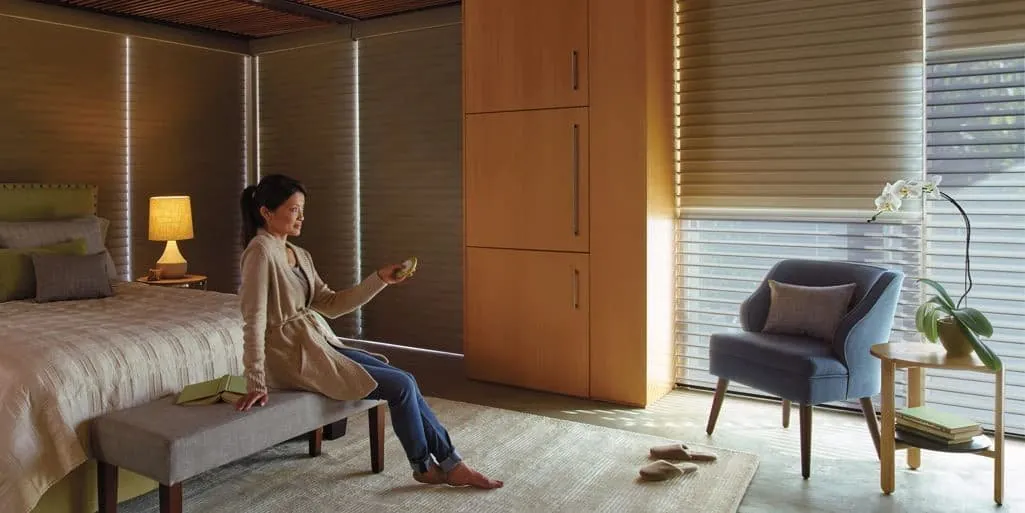
Hunter Douglas PowerView gives every one of those houses the same kind of control. With the motor tucked away and no cord at the glass, you move the shades with a handheld remote, through the PowerView app, or by letting a daily timetable do it for you.
Shades that suit Falmouth’s houses
PowerView runs across most of the Hunter Douglas range. These three come up again and again in town, and we bring samples of each to your door.
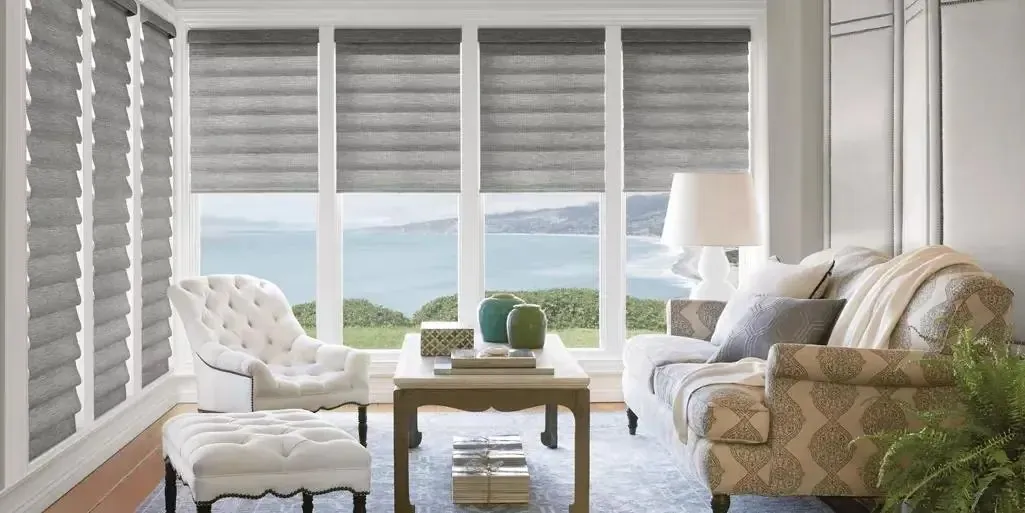
Roman shades for the village houses
Soft fabric folds that sit well in a period room. The motor keeps every fold even, so a row of tall sash looks tidy at any height.
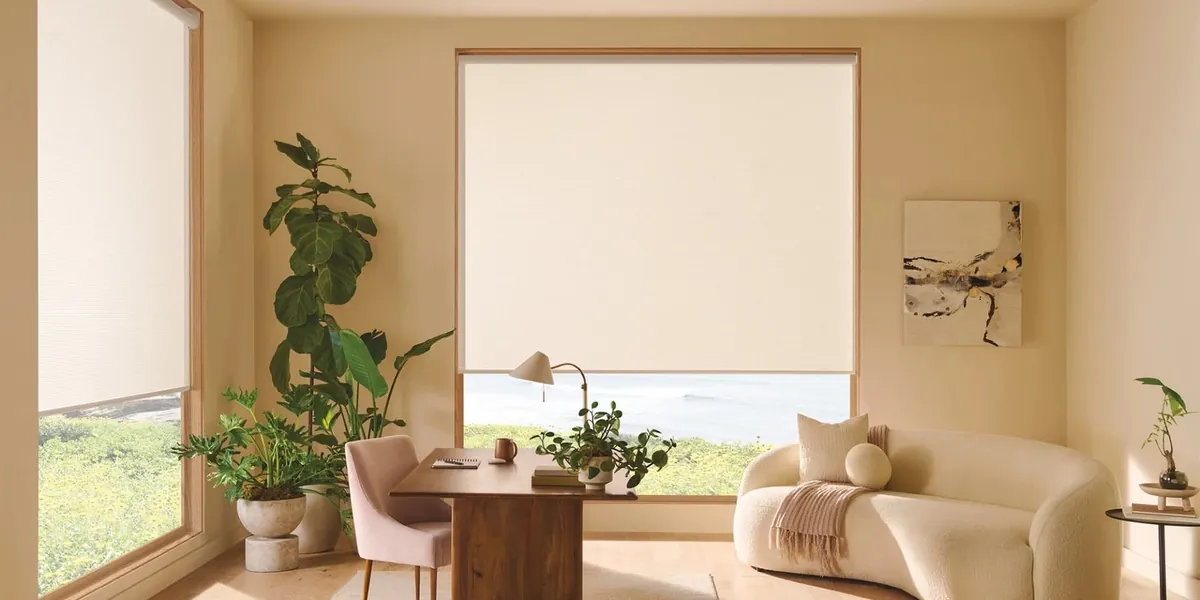
Roller shades for the water rooms
A slim, clean shade for big glass facing the sound. Choose an open screen weave and the glare drops while the water stays in sight.
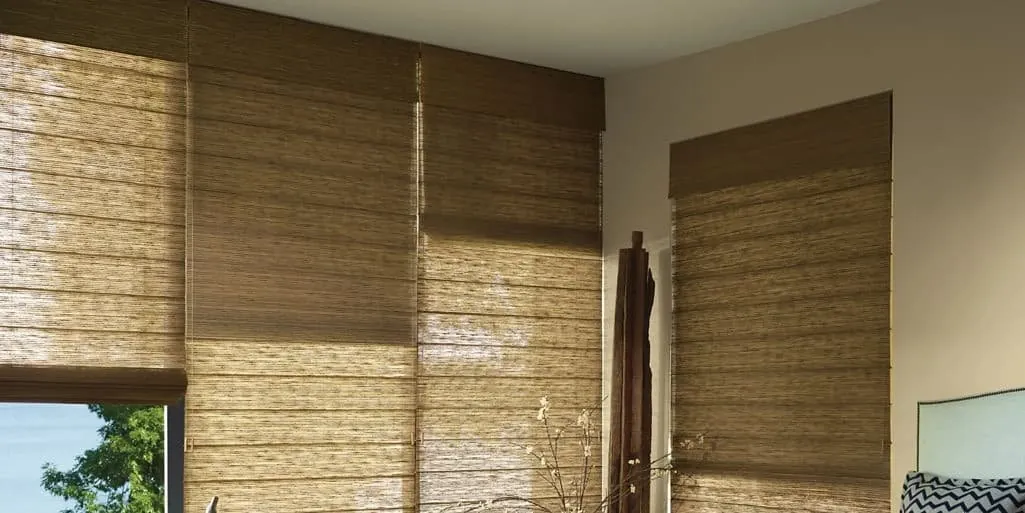
Woven shades for the cottages
Natural texture that suits a shingled cottage. Light passes through the weave, so a small room stays bright with the shade down.
Captains’ houses on Main Street and the green
The older houses along Main Street and around the village green were built to impress: two full stories, a balanced front, tall double-hung windows and generous interior trim. Their rooms are well proportioned, but the windows are tall and often close to the ceiling, and lifting a full set of shades by hand in a front parlor means a lot of reaching.
A motor takes all of that away. Every shade in the room can rise and fall together and stop at exactly the same height, which matters on a house whose front is meant to look balanced from the street. Fitted inside the frame, each shade leaves the casing and its trim in full view, and its headrail tucks up out of sight when the shade is raised.
Older frames are rarely perfectly square, and tall sash can vary from one opening to the next even in the same room. We measure each window at several points and check the depth of the frame, so the headrail fits cleanly. Where an inside fit would be too tight, a slim mount on the face of the casing is the honest choice, and we will say so.
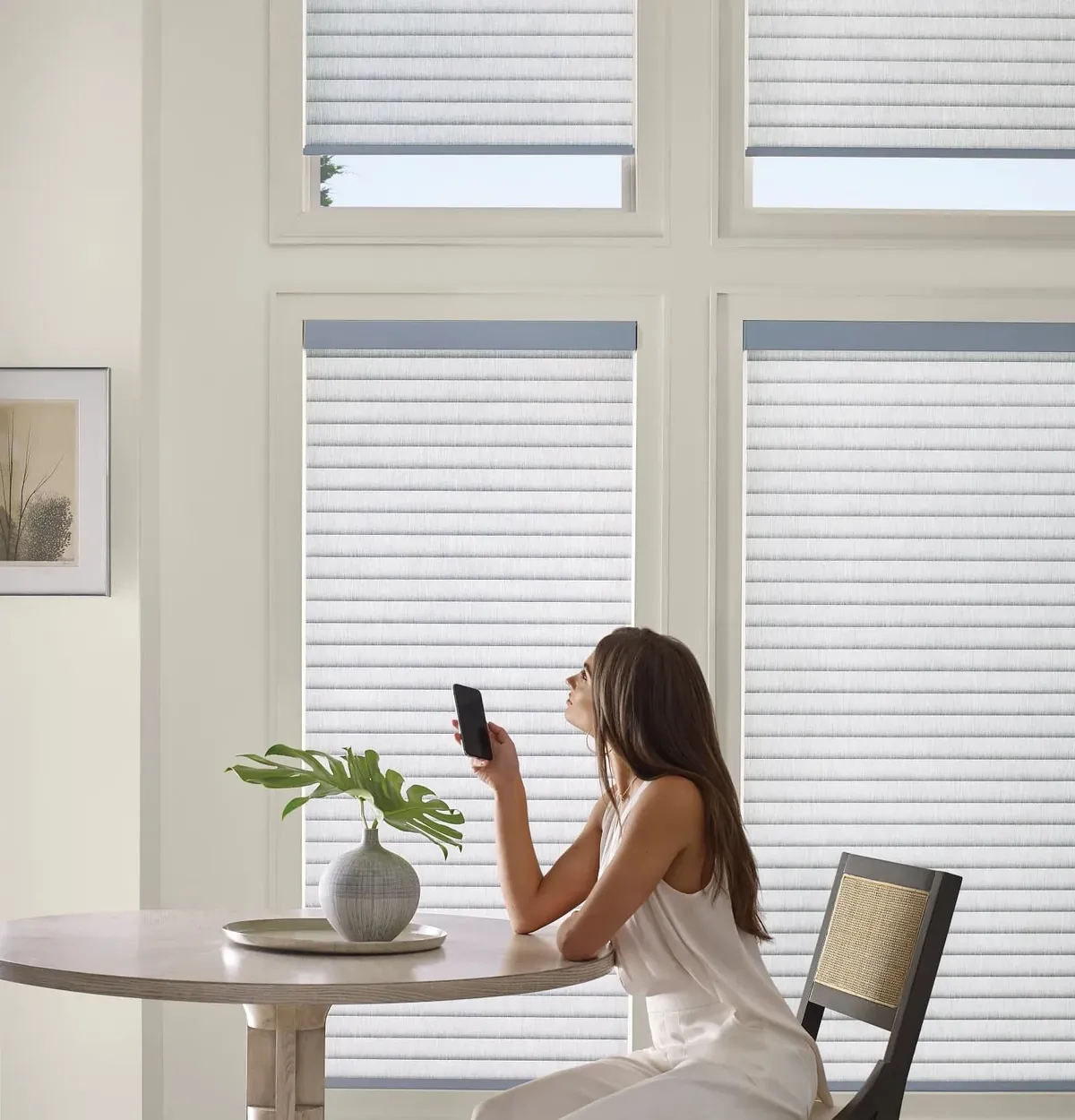
Long afternoons across the sound
On the south and west sides of town, the sun comes round in the afternoon and keeps coming, low and bright, until it sets over the water. Living rooms, decks and bedrooms facing that way can be glorious at golden hour and hard to sit in for the two or three hours before it. The glare off the water adds to the direct light.
Motorized shades handle this with timing. A schedule can lower the water-side shades at a set time each afternoon and lift them again once the sun has dropped, so the room is comfortable through the worst of it and open again for the sunset. Because the schedule runs every day, the shades protect the floors and furniture whether or not anyone is home.
Fabric choice does the rest. A screen roller keeps the view while cutting glare. A sheer shade softens the light and tilts its vanes for privacy. A light-filtering honeycomb shade blocks more heat while keeping the room bright. We hold samples up to your water-side windows in the afternoon light whenever we can, because that is the hour that decides it.
Cottages in Falmouth Heights
The streets climbing up from the beach in Falmouth Heights are lined with cottages, many of them shingled, many of them close to their neighbors. Rooms are small and windows are plentiful, so a front room might have glass on three sides. Plenty of these cottages started as summer places and are now used much more of the year.
In a small room with lots of glass, the shades are handled constantly. Motorizing them means one press brings the whole room up in the morning and down at dusk, and the bedrooms can close before sunrise on a schedule. On a lane where the next cottage is close enough to wave to, an evening timer closes the street-side shades as the light fades, so nobody has to think about it.
Woven shades and light-filtering fabrics suit these cottages well. They let daylight in while keeping the inside of the room out of view, and their texture fits a shingled house.
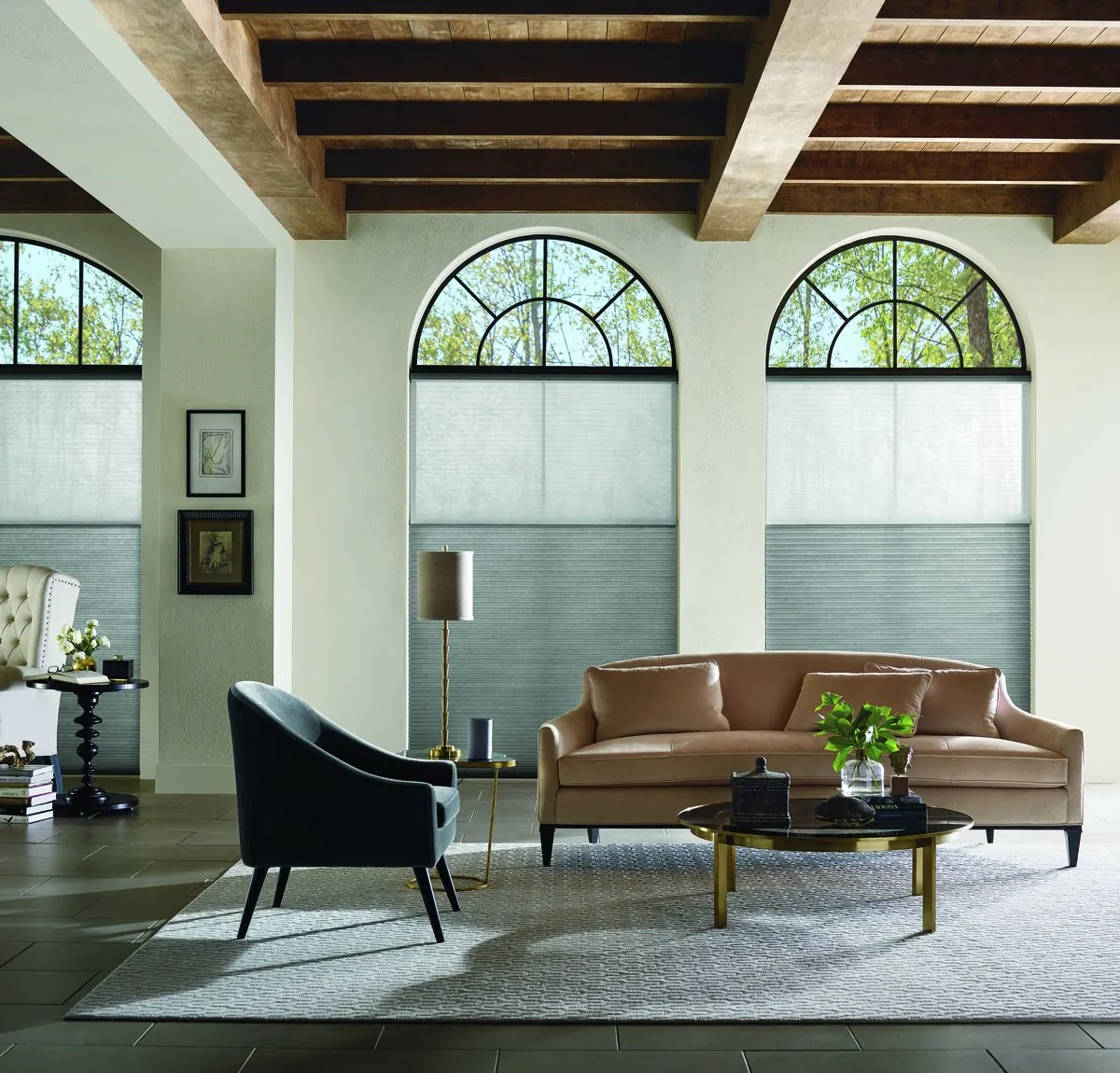
Woods Hole: steep lots and tight rooms
Woods Hole packs a lot of houses onto hilly ground around the harbor. Many sit on steep lots, with windows at odd heights where the house steps down the slope, and some have rooms where one wall is mostly glass toward the water. Stairwells and landings with windows high above the treads are common.
These are the windows that motorized shades help most. Nobody wants to lean out over a stairwell to tug a cord, so a hand-worked shade in that spot usually never moves. Put a PowerView motor on it and it answers the same button as the rest of the room, closing against the afternoon sun with everything else.
On a house that steps down a hill, rooms on different levels often face the water at different angles and get the sun at different times. Grouping the shades by level, or by the direction each room faces, lets each part of the house close when its own sun arrives.
Salt air and the parts that move
Sound-facing rooms in Falmouth breathe salt all summer, and it collects on any hardware near an open sash. A traditional corded shade leaves its cords, its cord lock and its pulleys out at the edge of the window where that salt lands. On a PowerView shade, the working parts are enclosed up in the headrail, and there is nothing dangling at the side to stiffen or fray.
Sea breezes matter too. Through an open window, a breeze can set a loose pull cord tapping against the trim all afternoon. Without that cord there is nothing to tap, and a sunroom set to lift its shades in the morning keeps the fabric clear of the moving air.
We also work out the power side of things during the visit. Every motor needs a plan, and that plan depends on the room, the window and how hard it is to get at, so we settle it for each shade once we are standing in front of it.
Newer houses toward Sippewissett
Out toward Sippewissett and along the newer roads inland, houses are bigger and more modern. Great rooms with tall windows, two-story entries, wide sliders and large bedroom windows are the norm, and some of these houses have walls of glass toward the marsh or the bay.
This is where motorized blinds in Falmouth, MA are most often planned for the whole house from the start. A tall shade is a real weight to haul up by a cord, and working along a great room of them, one by one, gets old quickly. On PowerView the entire wall travels as a unit. Schedules then manage the sun on each side of the house, and scenes bring the whole place to a set arrangement at the touch of a button.
Rollers and sheers look at home in the modern openings, while honeycomb shades with a room-darkening fabric keep bedrooms calm on summer mornings. Everything runs from the same app.
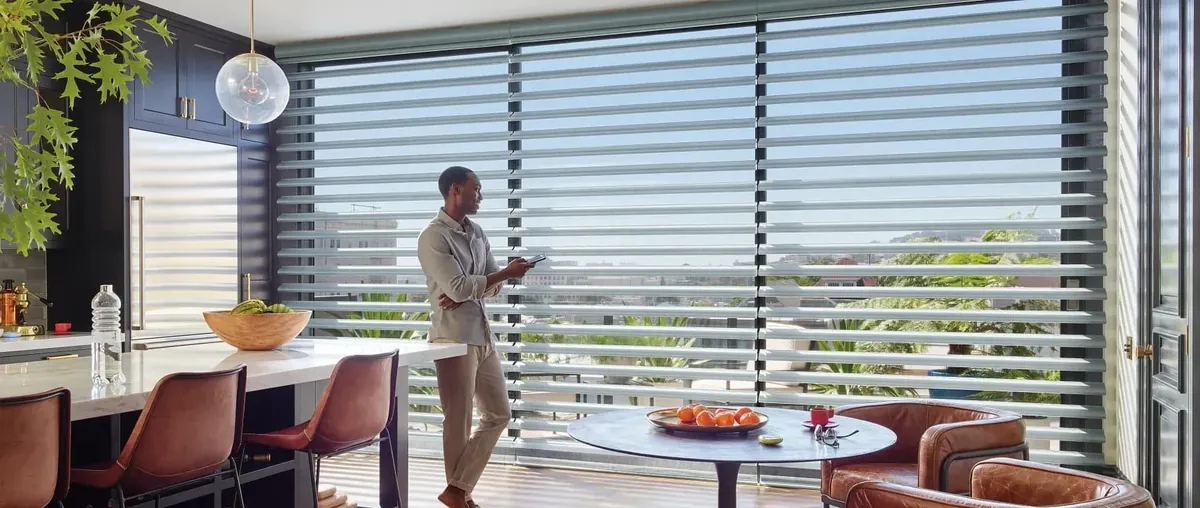
Remote, app or schedule: which you will use
In practice, most households end up using all three for different moments. The handheld remote is the everyday tool, parked on a hall table or tucked by the sofa, good for moving one shade or a whole group in a second. Plenty of cottage customers never reach for anything more.
Open the PowerView app and the house appears on your phone or tablet, room by room. That is where groups and scenes are built, where one stubborn shade can be inched up, and where a whole floor can be closed from the kitchen. In a captain’s house with windows on two or three floors, it saves a lot of stairs.
Schedules are the part you stop noticing. Pick a time and a position, say sound-side shades down at three and up again at seven, and from then on the house keeps that routine without you. For more on each method, read how motorized shades are controlled; scenes and timers get their own page under window covering automation.
Fabric that holds up to strong sun
A south or west window above the sound takes a great deal of light over a summer, and fabric on that side has to cope with it. Pale neutrals and screen weaves hold their color best on a window that faces the water every afternoon. Deeper colors can still work, but they suit the inland rooms where the sun is gentler, or a lined Roman shade where the lining takes the brunt of it.
That is one more reason we like to plan motorized blinds in Falmouth, MA in person. The same sample can look soft in a north room and almost white against the sound at four o’clock. We hold the choices up in both places so you see the difference before you decide, and we point out which fabrics are best suited to a bright waterfront window.
A schedule helps the fabric as well as the room. Lowered only for the hours the sun is on the glass and raised for the rest of the day, a shade spends less time in direct light, and the room behind it keeps its view through the mornings. Once the first water-side room is set up, motorized blinds in Falmouth, MA for the rest of the house often follow naturally.
Porches and sunrooms
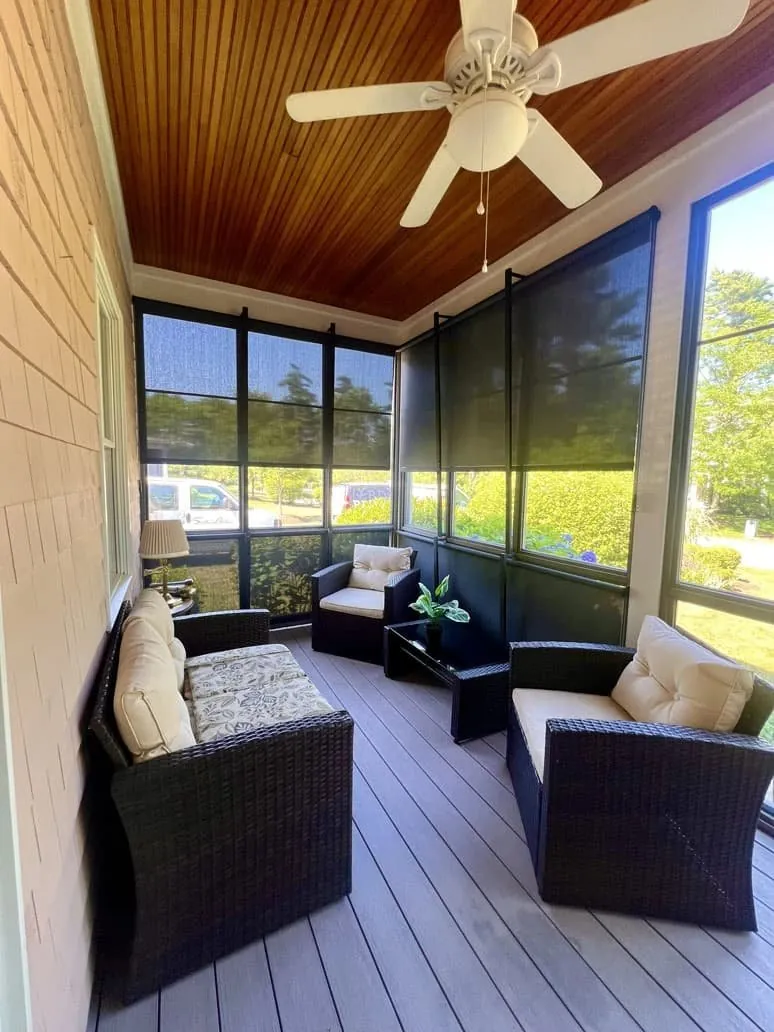
Many Falmouth houses have a glassed-in porch or sunroom facing the water, the room everyone heads for in the evening. It also takes more sun than any other room, and its glass usually runs most of the way round.
A sunroom with that much glass is a natural place for motorized shades. One group covers the whole room, lowering through the hottest part of the afternoon and lifting for the evening. Solar screen fabrics are popular here because they cut the heat and the glare while keeping the outlook, and darker screen colors often give the clearest view out.
Roman shade or roller for a period room
In the older village houses, the question we hear most is which shade will look right. A Roman shade brings soft, folded fabric that suits traditional rooms, and with a motor its folds stay even across a row of tall sash. A roller is simpler and slimmer, and in a period room it often works best as a quiet layer behind drapery.
Blinds are possible too. Wood blinds have a warmth that suits a captain’s house, and their slats tilt to direct light. Not every blind accepts a motor at every width, so we confirm it with the tape measure in hand before anything is promised. For many customers, motorized blinds in Falmouth, MA end up meaning a mix: Roman shades in the front rooms, rollers on the water side, honeycomb shades upstairs, all on the same system.
From the first visit to the last setting
- Choose Request a Consultation, or tap the call button, and pick a day for us to come.
- We bring samples in our vans, so you see every fabric in your own light.
- We walk the house with you, starting with the rooms facing the water.
- We measure each window and check frame depth on the older sash.
- We plan which shades group together and what the schedules should do.
- A free estimate follows, written up for you to weigh at your own pace.
- Our certified installers fit the shades and program every remote, group and schedule.
For more on that first step, see what happens at an in-home consultation.
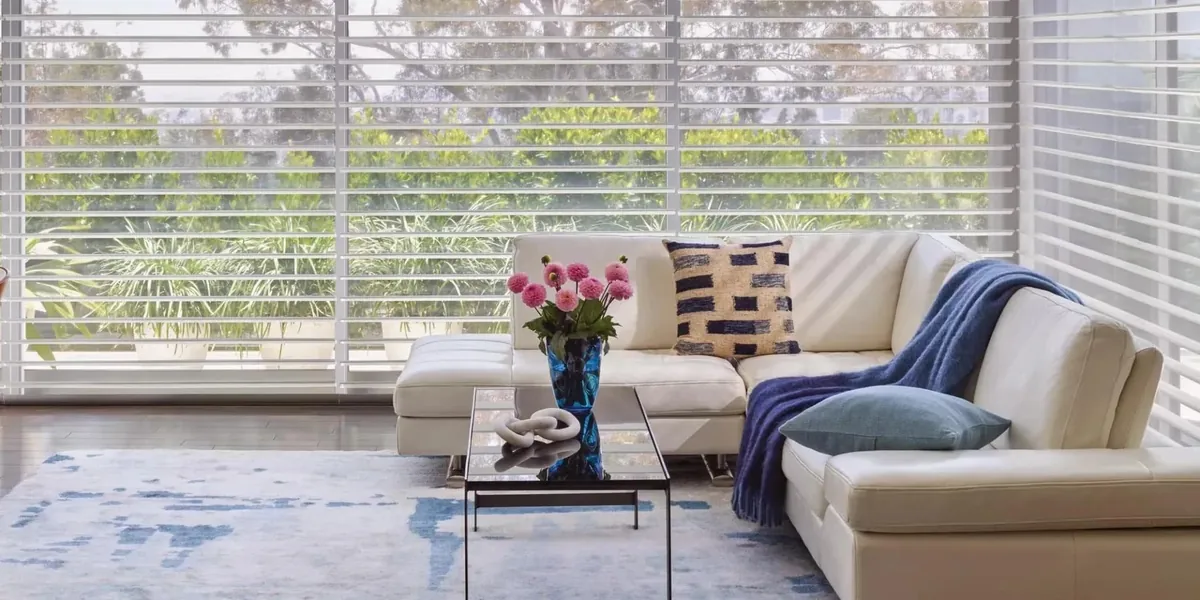
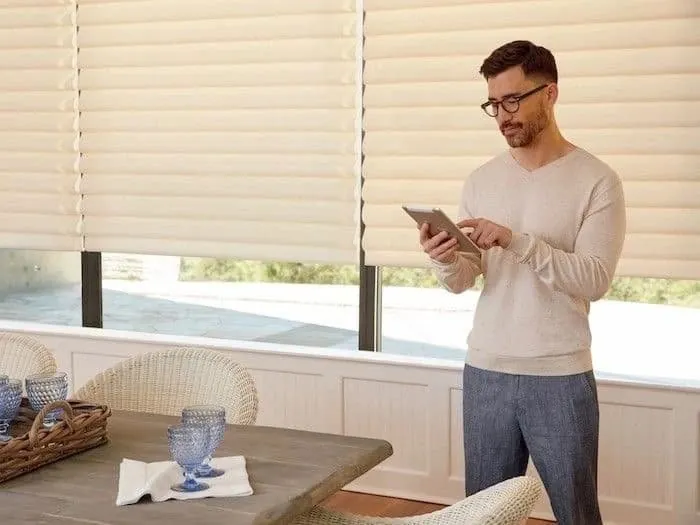
Certified installers, set up properly
As a Hunter Douglas Gallery dealer, Blinds & Designs can show you the whole Hunter Douglas range at one sitting: Roman, roller, honeycomb, sheer and woven shades, blinds and more, all of which can run on PowerView.
Hunter Douglas certifies the installers who come to your house. Beyond hanging each shade, they set its top and bottom limits, link it to the remote and the app, and leave the groups and timers running. We also offer interior design consultations and repairs on blinds and shades you already own.
See everything we offer in town on our Falmouth page, or look at roman shades in Falmouth and plantation shutters in Falmouth. Every product PowerView can drive is gathered under motorized blinds and shades.
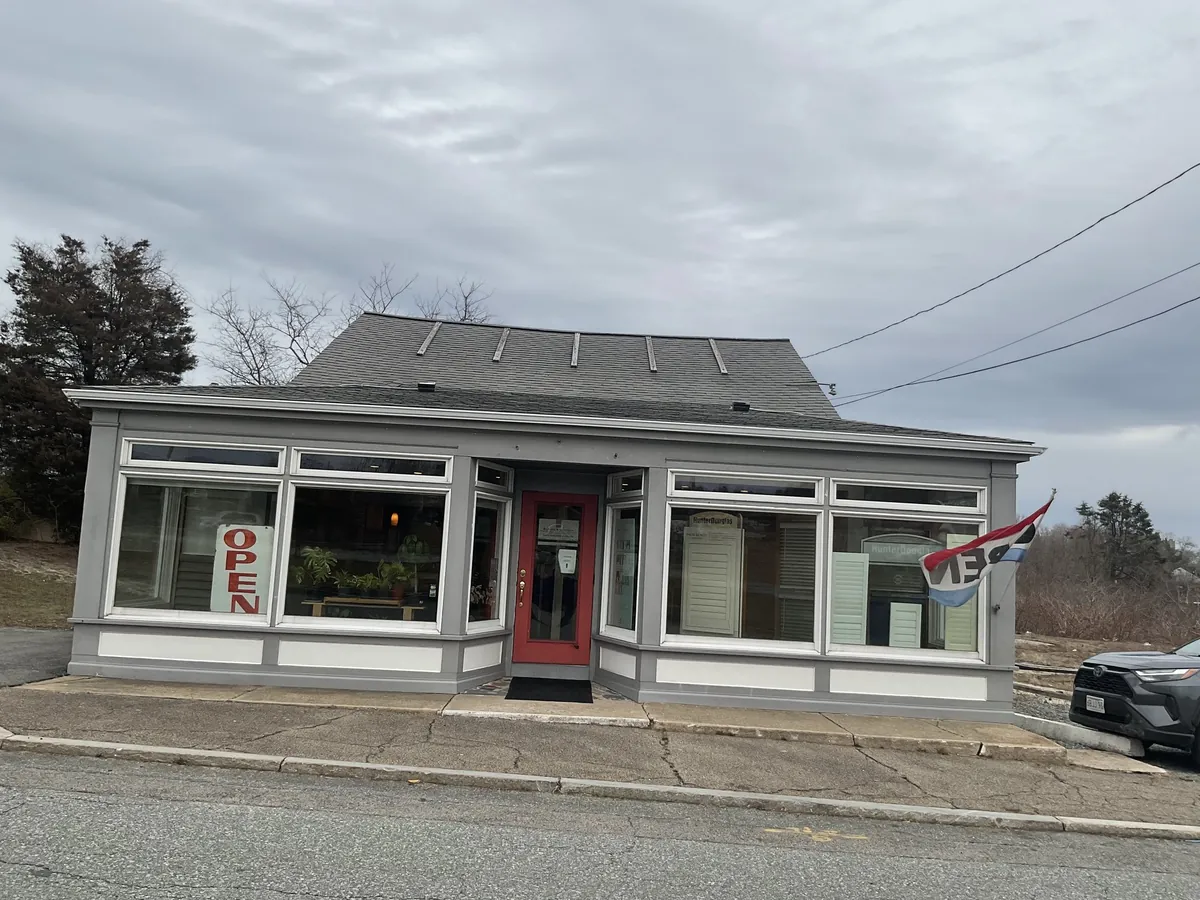
The Sagamore showroom is nearest
Of our locations, the Sagamore showroom is the one nearest Falmouth, right by the Sagamore Bridge. Drop by any time it is open.
For a house on the sound, though, a visit at home tells us much more. We can see where the afternoon sun lands, how the salt air reaches each window and how the rooms step down the lot, and plan from there.
Questions from Falmouth
Will motorized shades suit the tall sash in my captain’s house?
Yes. Each shade is made to its window’s measurements, and the motor keeps a row of tall shades perfectly level. We check frame depth first, and where an inside fit would be tight we suggest a slim mount on the casing.
How do I deal with the afternoon glare off the sound?
A schedule lowers the water-side shades for the brightest hours and raises them for the sunset. A screen roller or sheer fabric keeps your view while it cuts the glare.
Do motorized shades hold up in salt air?
The mechanism is enclosed up in the headrail rather than hanging at the side, and there is no cord lock to seize. We also suggest fabrics that suit a window taking strong sun every day.
Can you reach the window over my stairs?
Yes, and stair windows are one of the top reasons Falmouth customers motorize. Once it has a motor, the shade answers the same remote and timers as the rest of the house.
What does the estimate cost?
Nothing at all. Once the measuring is done, you get a free written estimate covering each shade and motor on the list.
Book a visit
The easiest way to plan motorized shades for a Falmouth house is at the windows themselves. Request a consultation and our van comes to you with samples, the tape measure and time to talk it through, and you are left with a free estimate. Prefer to start by phone? The call button works, and the Sagamore showroom is on your way onto the Cape.