
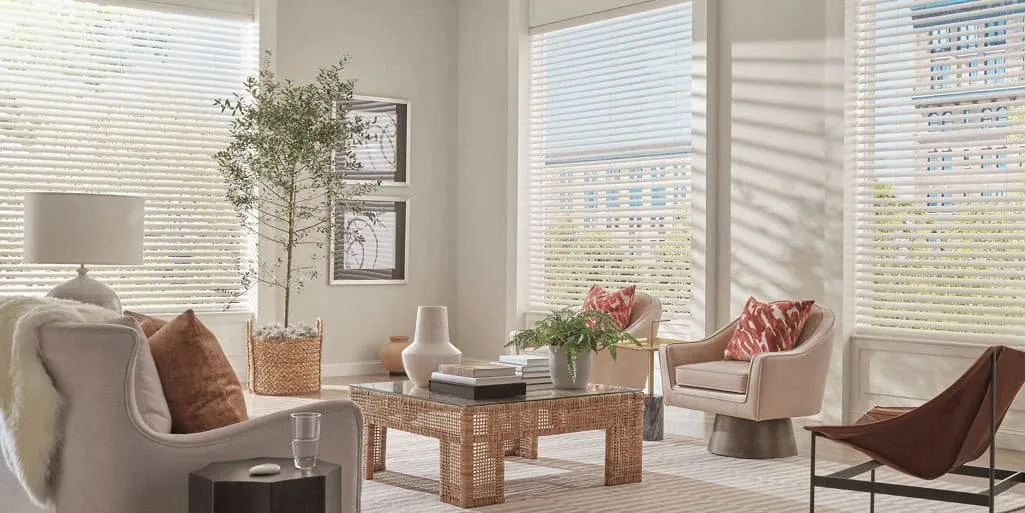
Why Franklin windows are worth fitting properly
Franklin has two very different kinds of house, and they ask different things of a blind. Around the common and along Main Street you find antique colonials and Victorians with tall, narrow sash, the kind of window where an off-the-shelf blind either hangs short or leaves a gap down each side. Out in the subdivisions off Route 140 the colonials are larger and newer, with a two-story run of glass over the front door and a stairwell window that no ladder in the garage quite reaches. Both are good reasons to order custom blinds in Franklin, MA, rather than buy a standard size and hope.
A made-to-measure blind is cut to the exact opening, so the slats run edge to edge on a slim Victorian window and sit level on a wide one. You choose the material for the room, the slat width for the window, and the way it lifts and tilts for the person who will use it every morning.
Franklin is also where one of our showrooms is, so you can see the blinds in person before anyone comes to measure, or start with a visit at home and skip the trip altogether.
What custom blinds in Franklin can be made from
Every blind we sell comes from the Hunter Douglas range. These are the four families of blind, plus the two ways to work them, that we talk through most often in Franklin houses.
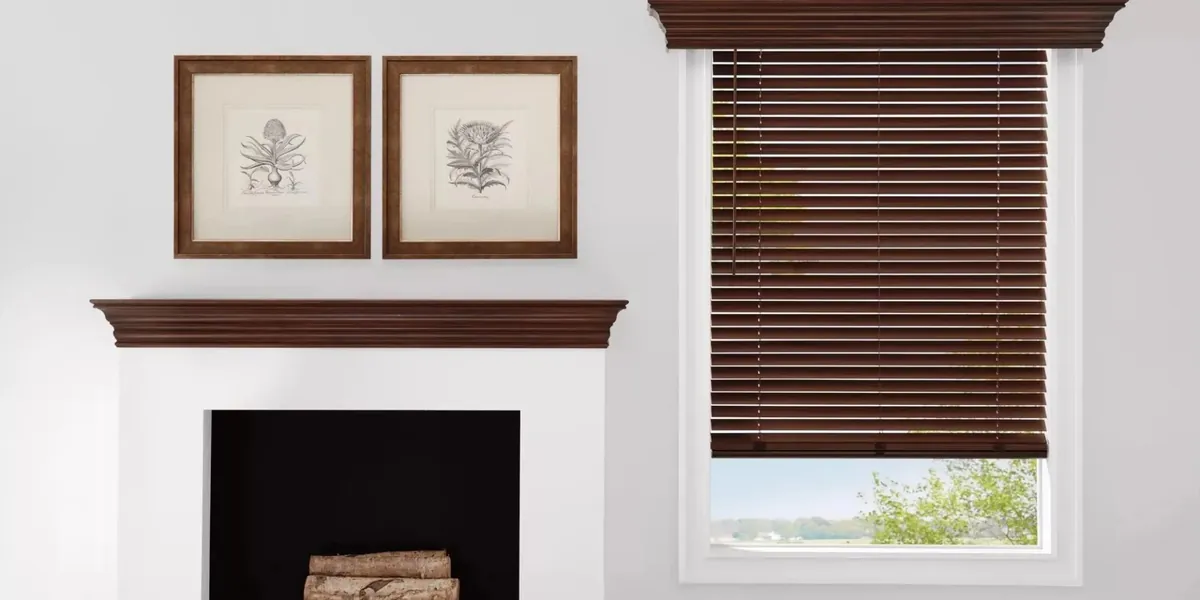
Parkland wood blinds
Real hardwood slats, stained or painted. They suit the parlor and dining room of an older colonial, where the woodwork around the window is part of the room.
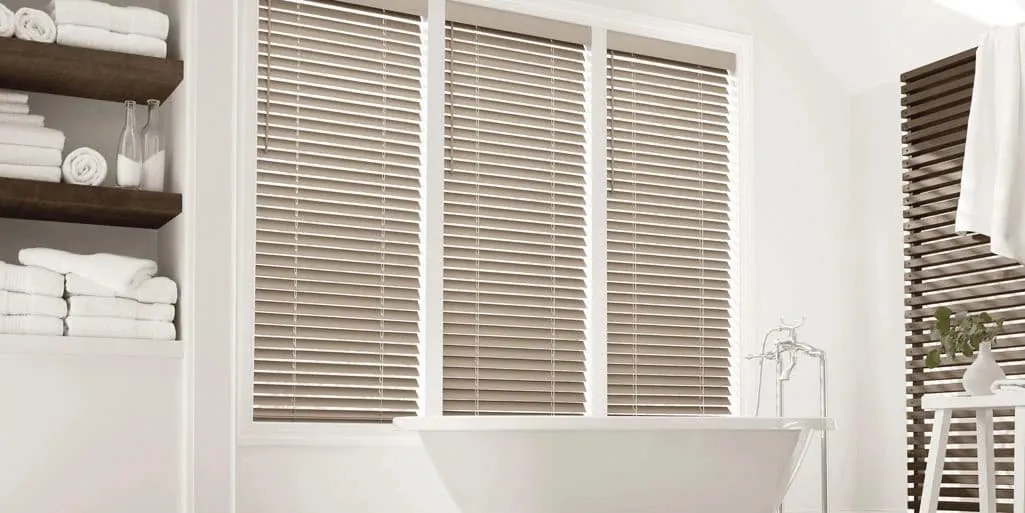
EverWood faux wood blinds
The look of painted wood in a material that shrugs off steam and splashes. The usual pick for kitchens, baths and a mudroom off the garage.
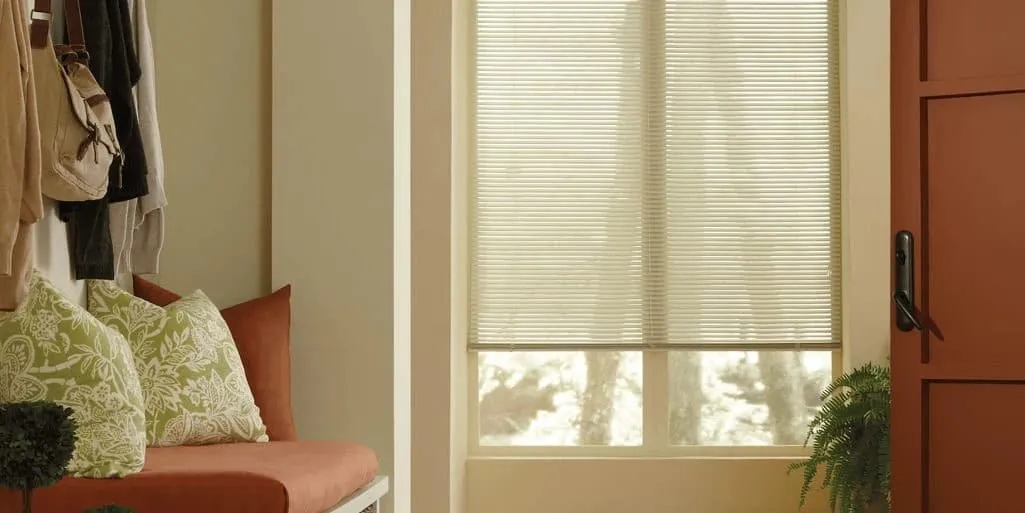
Metal blinds
Slim aluminum slats with a very shallow headrail, so they fit shallow window frames and the narrow lights beside a front door.
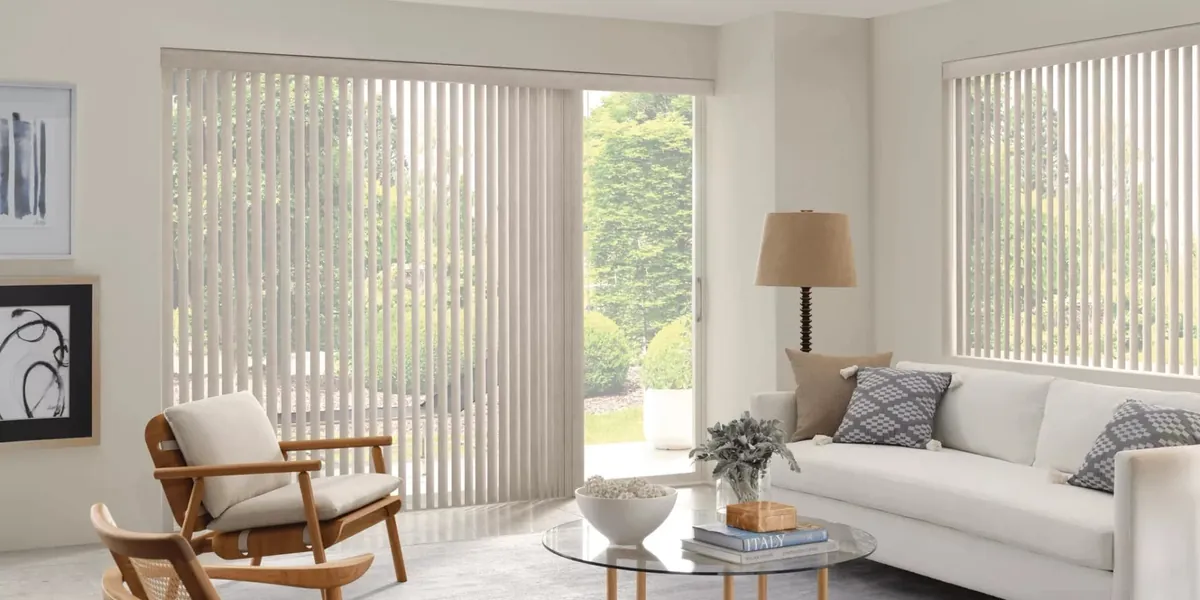
Vertical blinds
Vanes that hang from the top and draw to one side. Made for the slider out to the deck that most of the newer colonials have.
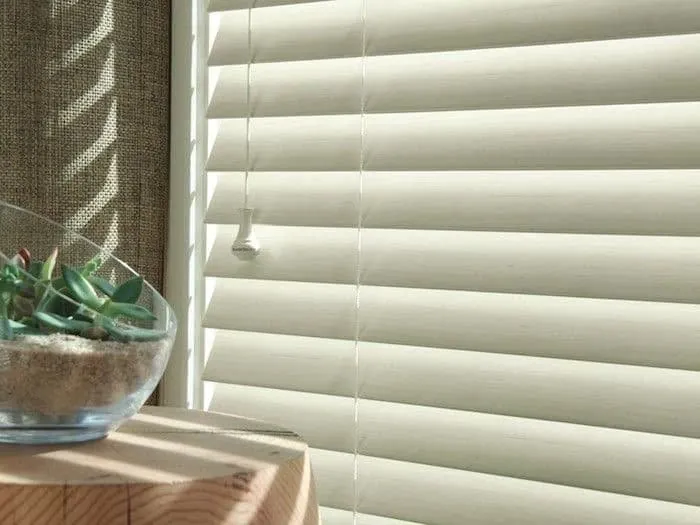
Cordless and wand control
Lift the bottom rail by hand and tilt with a wand, or keep a classic cord where you prefer it. We show you each at the window.
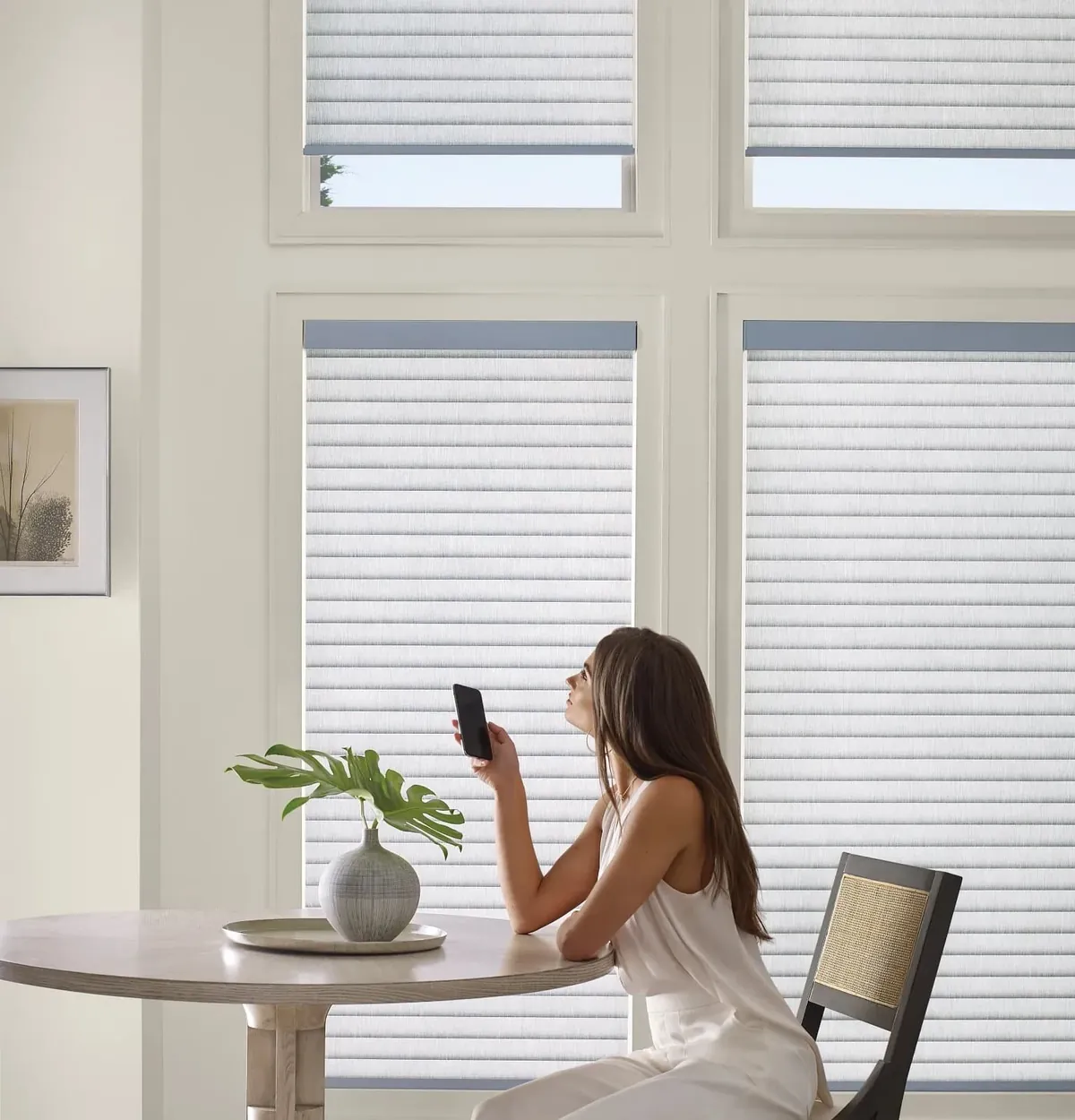
PowerView motorization
Tilt and raise a blind from your phone, a remote or a schedule. The practical answer for entry glass and stairwell windows.
Tall, narrow sash near the common
The older houses around the town common were built with windows that are much taller than they are wide. In a Victorian parlor two or three of them may stand side by side, each with its own deep casing and often a little settling in the frame. A blind for that window has to be narrow, long and dead straight, and it has to clear the sash lock and the lift handles.
That is where a custom order pays off. We measure the width of the opening at the top, the middle and the bottom, because a window that has moved over the years is rarely the same at all three. The blind is then made to the tightest of those figures for an inside mount, so it slides into the frame without rubbing. If the frame is too shallow to hold the headrail, or the casing is too handsome to cover, we will say so and suggest the mount that suits it.
Slat width matters more on a tall, slim window than on a wide one. A wider slat gives a cleaner view out when the blind is open, with fewer lines across the glass, but on a very narrow window it can look heavy. A smaller slat suits the proportions of an antique sash and stacks into a shorter bundle at the top when raised. We bring both so you can see them against your own trim.
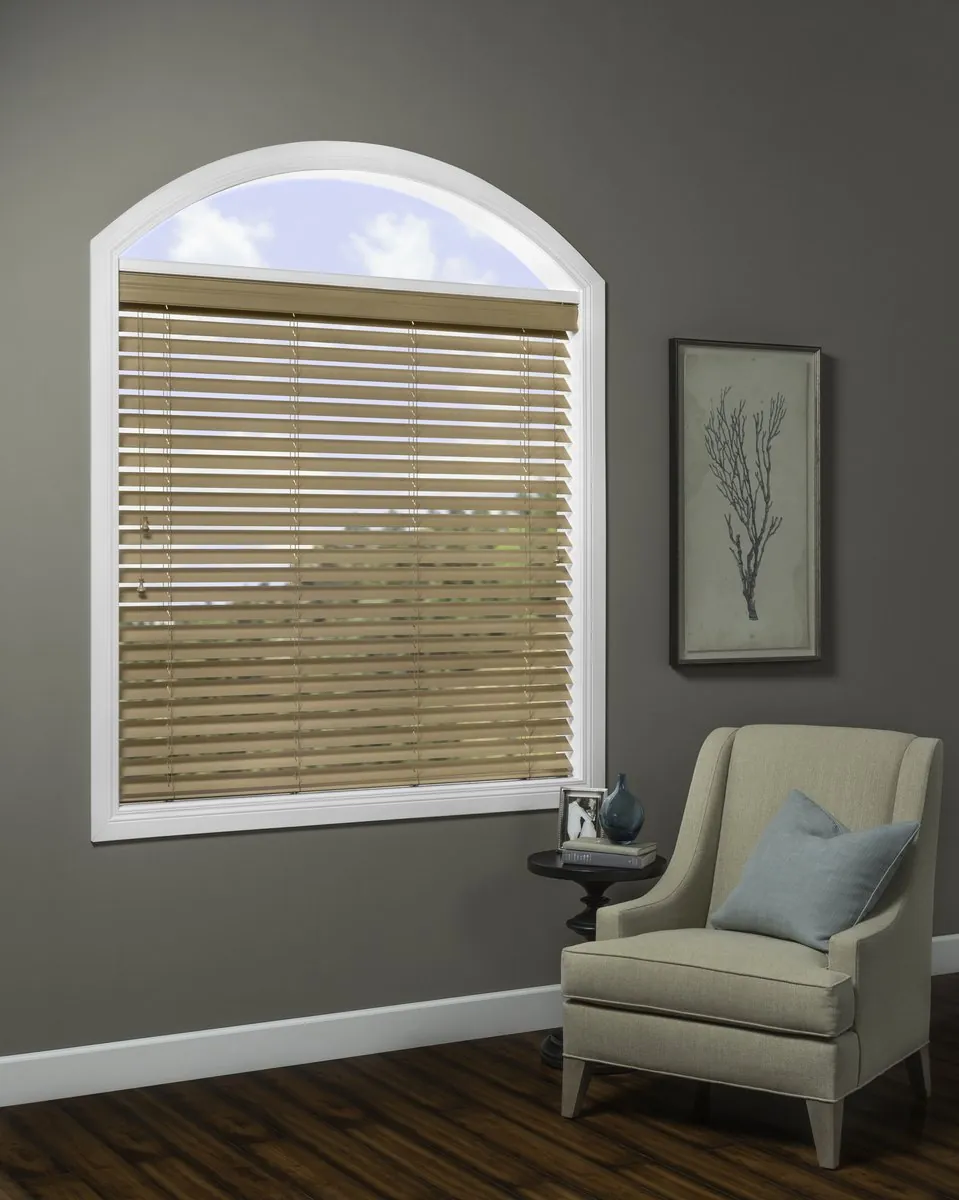
Two-story entry glass off Route 140
The newer colonials across the subdivisions off Route 140 tend to greet you with a tall wall of glass over the front door: a pair of upper windows, a half-round on top, sometimes a row of transoms. It lights the foyer beautifully, and on a sunny afternoon it can also turn the landing into the warmest spot in the house and put glare straight down the stairs.
Horizontal blinds work well on the rectangular panes in that wall, because you can tilt the slats to send the light up toward the ceiling instead of into your eyes. For a curved top we often leave the arch open and blind only the rectangles below it, so the shape of the window still reads from the street and from the foyer.
The real question with entry glass is reach. Nobody wants to stand on a ladder at the top of the stairs to tilt a blind twice a day. That is why so many of these windows end up with PowerView motorization or, at the least, a long tilt wand fitted so it can be worked from the landing.
The sidelights beside the front door are a separate puzzle. They are often only a hand’s width or two across, with a door frame on one side and the wall on the other. Metal blinds, with their shallow headrail and fine slats, are made for spaces like that, and they can be fitted top and bottom so the blind stays put when the door swings shut. Color-matched to the blinds upstairs, the whole entrance looks planned rather than pieced together.
Also worth thinking about is how the entry looks at night. With lights on in the foyer, bare upper glass shows the inside of the house to the whole street. Closing the slats in the evening, by hand from the landing or on a PowerView schedule, keeps the light in and the view out.
The stairwell window nobody can reach
If there is one window in the newer Franklin colonials that we hear about more than any other, it is the stairwell. It sits halfway up a two-story wall, over the turn of the stairs, with nothing to stand on below it. Some owners have simply left it bare for years.
A motorized blind solves it cleanly. The motor sits inside the headrail, and you tilt or raise the blind from your phone, a small remote on the wall, or a schedule that closes it at the hottest part of the day. Our certified Hunter Douglas installers bring the access equipment to mount it safely, and you never have to climb up there again. If you would rather keep it manual, a fixed tilt-only blind with a long wand can work, and we will look at the sightline from the stairs with you to see whether that is practical.
Wood or faux wood, room by room
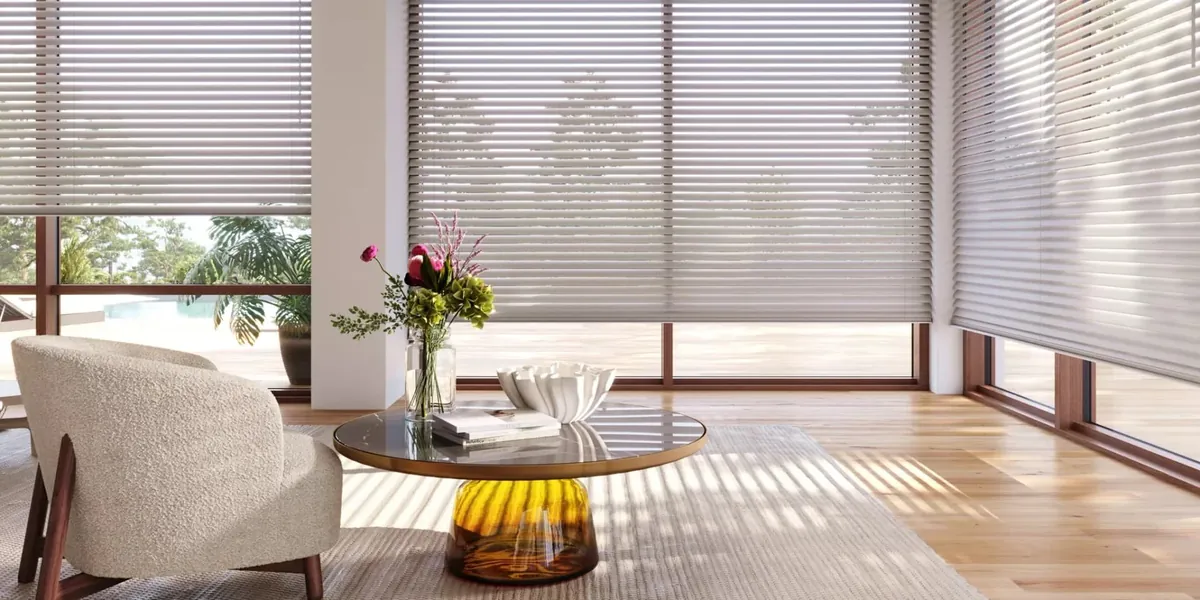
Most whole-house orders for custom blinds in Franklin end up with a mix of the two, and the reason is simple: water. Real wood is warm, light and beautiful, and it is the right choice for the living room, the dining room and a study where the trim is stained to match. In a room with steam, splashes or wet boots, though, wood can warp over time.
EverWood faux wood blinds are made for those rooms. From across the kitchen they read as painted wood, but the slats hold their shape over a sink, in a full bath or in the mudroom between the garage and the kitchen that so many of the newer houses have. Because the two lines can be matched in color, the blinds look consistent from the street even when the material changes from room to room.
Metal blinds round out the choice. They are the slimmest option, which helps on older windows with very little depth, and they come in a wide range of colors if you want something other than white.
How we measure and fit
Every blind is built to the measurements we take in your home, so the visit matters. Here is how it runs.
- You book through Request a Consultation or the call button, and we agree a time.
- We arrive with slat samples in wood, faux wood and metal, the vertical vanes, and the lift and tilt options.
- We walk each room with you and talk about light, privacy and who will be working the blinds.
- You hold samples up at your own windows and see how each color and slat width looks against your trim.
- We measure every opening at several points and check the depth for an inside mount.
- You receive a free estimate, with time to think it over.
- When the blinds arrive, our certified Hunter Douglas installers fit them, level every headrail and show you how each one works.
You can read more about what happens at an in-home consultation and what happens on installation day before we come.
See the blinds at our Franklin showroom
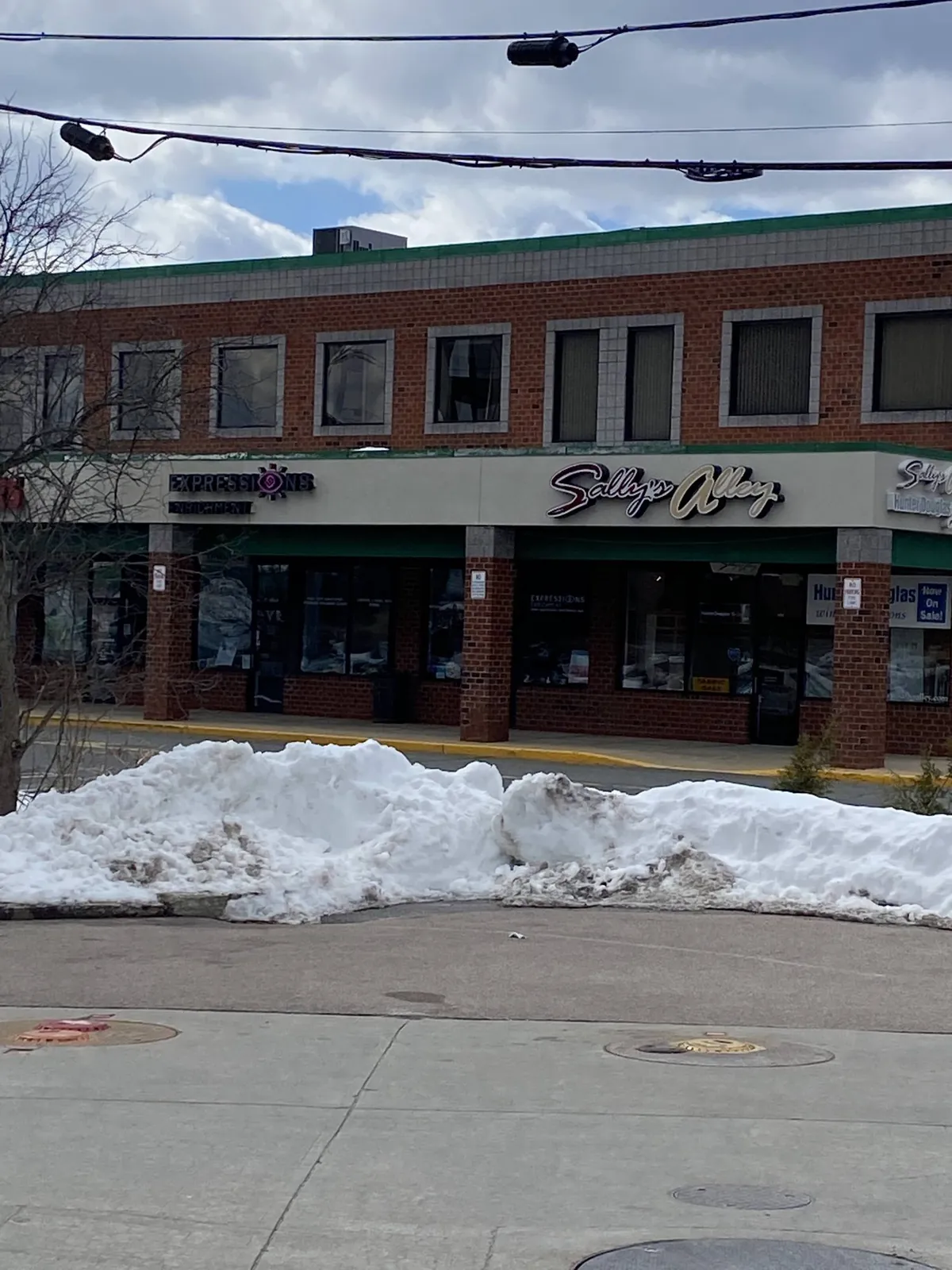
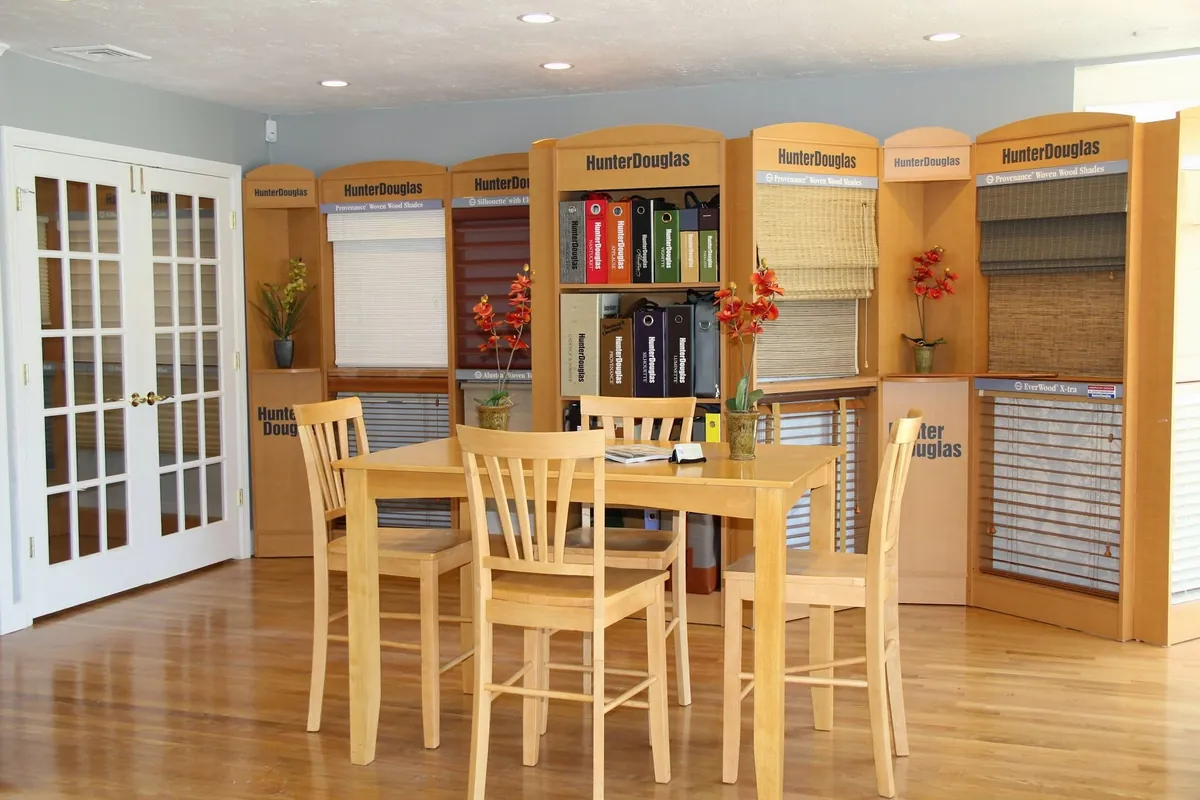
Because the Franklin showroom is right here in town, plenty of Franklin customers like to start by stopping in. You can handle the slats, compare stained wood with painted faux wood side by side, and try the cordless lift and the tilt wand before you commit to anything.
Others would rather we come to them first, so the samples sit against their own windows and walls. Either way works, and many people do both: a look in the showroom, then a visit at home to measure and settle the details.
The showroom’s address and opening hours are on the Franklin showroom page.
Light control that suits a colonial
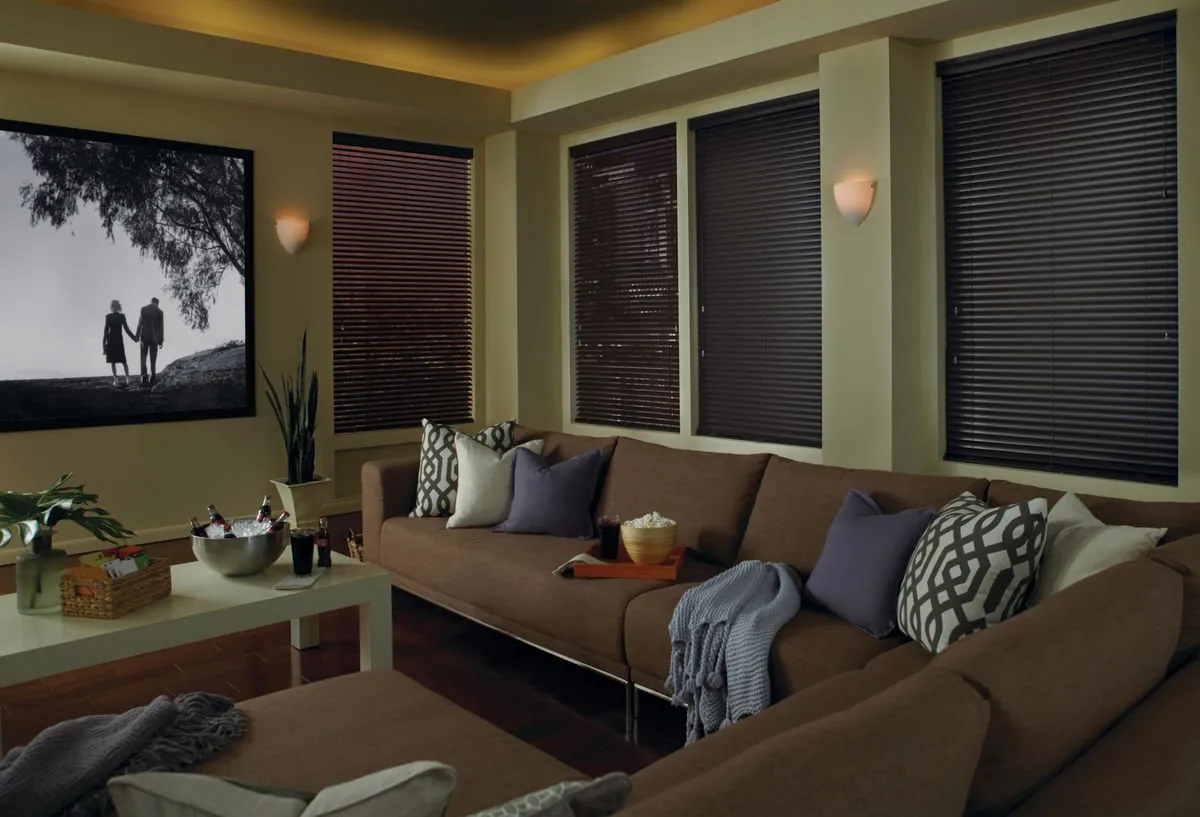
A horizontal blind does something no shade can: it lets you aim the light. Tilt the slats up and daylight bounces off the ceiling, filling a room without glare on a screen or a table. Tilt them down and you see out while the neighbors see very little in. Close them fully and the room goes dim.
That flexibility suits the big, square rooms of a Franklin colonial, where a family room might need bright, even light at breakfast and a darker room for a film in the evening. On the narrow sash of an older house it lets you keep the window feeling open without giving up privacy on a street close to the sidewalk.
For a bedroom that needs to be darker still, ask about routeless slats, which have no holes for the lift cords to show pinpricks of light, and about adding a cornice or valance across the top to close the gap above the headrail.
Verticals for the slider to the deck
Most of the newer colonials have a slider from the kitchen or family room out to a deck or patio, and a horizontal blind is the wrong tool for that door. You would have to raise the whole thing every time you stepped outside. A vertical blind draws to one side instead, so the door opens freely, and the vanes rotate to let light in or block it.
We can make the vanes in fabric or in a rigid material, stack them to the left, the right or split from the center, and match the color to the horizontal blinds on the windows either side, so the wall looks finished as a whole.
One look across a big colonial
A large colonial off Route 140 can easily have a couple of dozen windows, and from the street they all show at once. One of the quiet advantages of ordering custom blinds in Franklin, MA, as a single project is that the front of the house reads as one piece: the same white, the same slat width, the same headrail height from the dining room to the upstairs bedrooms.
Inside, you are free to vary it. The front rooms might take painted Parkland wood, the kitchen and baths matching EverWood, the slider a vertical blind in the same tone, and the stairwell the motorized version. We plan the order room by room during the visit so nothing looks out of step, and we note which windows face the street so their color stays consistent even where the material changes.
The same thinking works on an antique house near the common, where you may want stained wood in the front parlor to sit with the old woodwork and something lighter in the newer kitchen wing at the back.
Cords, pets and little hands
Loose lift cords are the part of an old blind most people are glad to see go. With a cordless lift, there is no cord at all: you push the bottom rail up or pull it down and it stays where you leave it. Tilt is handled by a wand rather than a second cord. In a playroom, a child’s bedroom or a room where the dog sleeps under the window, that is the version we suggest first.
Where a window is too high or too wide to lift comfortably by hand, motorization takes the cord away too, and adds the convenience of a schedule.
Why a Hunter Douglas Gallery dealer
Blinds & Designs is a Hunter Douglas Gallery dealer, the designation Hunter Douglas gives dealers who meet its standards. That means the full blind range is open to you: Parkland wood, EverWood faux wood, metal and vertical blinds, with every color, slat size and control option the line offers.
Our installers are certified by Hunter Douglas, so each blind is mounted the way the maker designed it to be. If a blind needs attention later, we handle blind and shade repairs as well.
Blinds are only one part of what we do. If other rooms need something softer or warmer, see our cellular shades in Franklin, plantation shutters in Franklin or motorized blinds in Franklin, or everything we offer in town on our Franklin page. For the whole blind range, see our custom blinds page, including wood blinds and vertical blinds.
Questions from Franklin
Will a custom blind fit the tall, narrow sash in my older house?
In almost every case, yes. Each blind is made to the measurements we take, so it can be very narrow and very long. The thing we check is depth: old frames and sash hardware sometimes leave too little room for an inside mount, and then a slim outside mount on the casing is the better choice.
What can I do about the stairwell window I cannot reach?
A PowerView motorized blind lets you tilt or raise it from your phone, a remote or a schedule, and our installers bring what they need to mount it safely. A long tilt wand is the manual alternative where the sightline allows.
Should I choose wood or faux wood for my kitchen?
Faux wood. EverWood holds its shape around steam and splashes, and it can be matched in color to real wood blinds in the rooms next door so the house looks consistent.
Can I see the blinds before someone comes to measure?
Yes. Our Franklin showroom is in town, so you can compare the materials in person, or we can bring the samples to your house instead.
Is the estimate free?
Yes. After we measure, you get a free estimate for the blinds you are considering, with no pressure to decide that day.
Ready when you are
The quickest way to see what custom blinds in Franklin, MA, will look like in your rooms is to put the samples against your own windows. Request a consultation and we will bring the full Hunter Douglas blind range to your house, measure every opening and give you a free estimate. You can also call using the call button, or stop in at the Franklin showroom.