
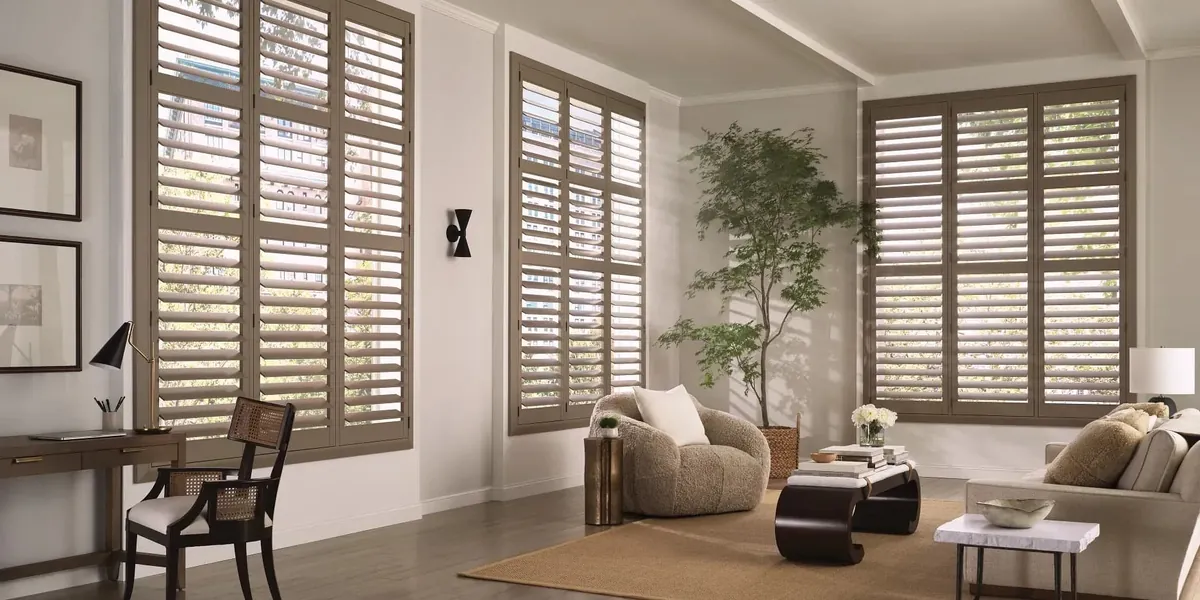
Formal rooms, tall sash and wide openings
Around Milton Village and up against the Blue Hills, the houses are big and the rooms are formal: large colonials and Victorians with tall sash, generous ceilings and living and dining rooms meant for company. Double-width openings are common, with two windows set side by side under one casing, and many rooms are on a scale where drapery is part of the picture. Down in the lower village, post-war houses bring smaller rooms and simpler windows.
A Hunter Douglas dealer in Milton, MA has to be comfortable at both ends of that range. A paired window in a formal living room needs a covering that treats the pair as one composition, often layered with drapery. A tall sash in a Victorian stair hall needs something slim that can be reached or motorized. A post-war bedroom needs comfort, darkness and an easy fit.
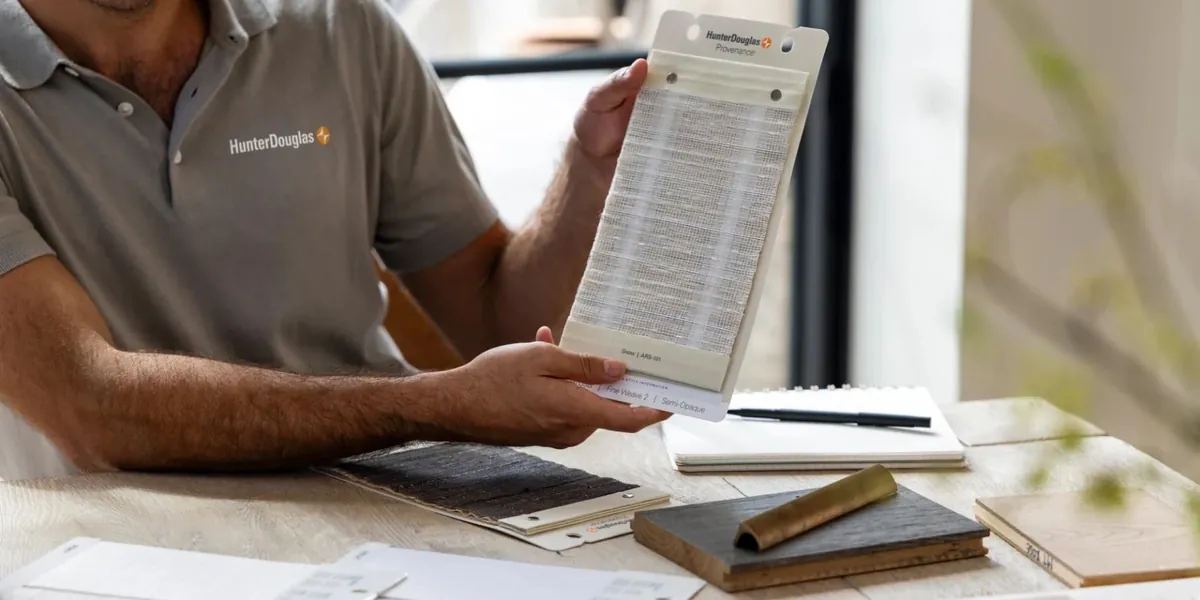
We plan all of it in the house. Our consultations come to you with a van of samples, so each choice is made against the window it is for.
Six ways to dress a Milton house
These are the services we talk about most in Milton, each with its own page. Pick the one that fits the room on your mind.
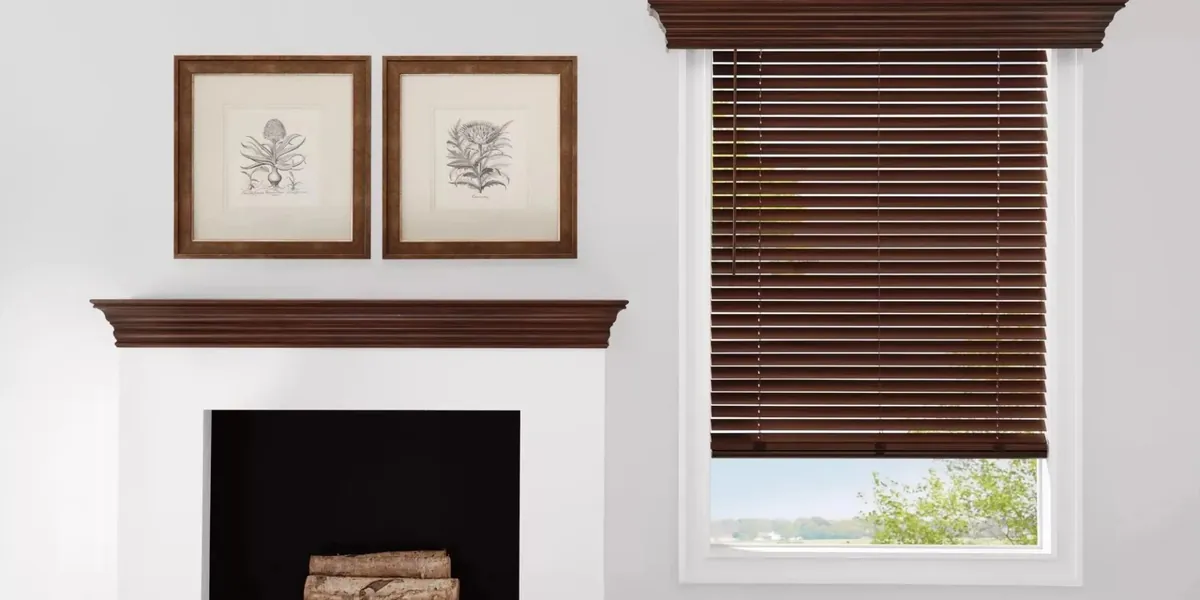
Custom blinds
Wood, faux wood, metal and vertical blinds, chosen for material and how you want to work them.
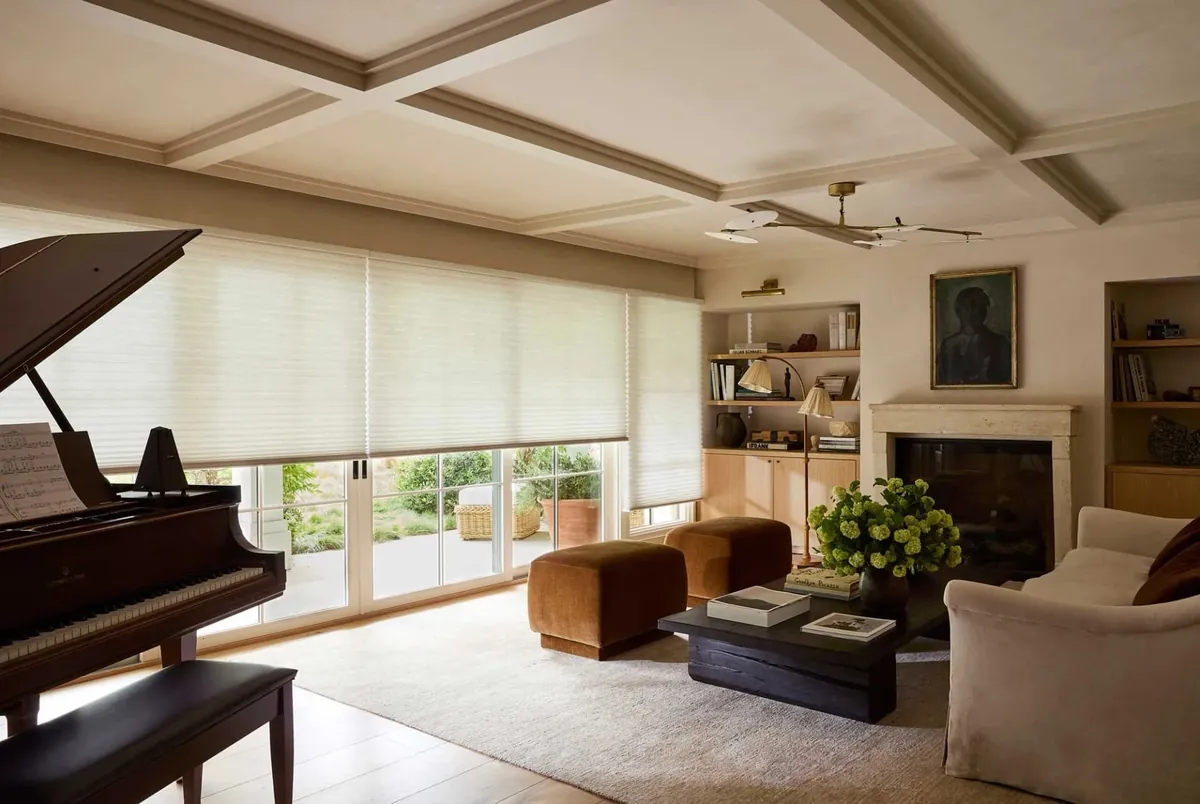
Cellular shades
Duette and Applause honeycomb, holding a layer of air between the glass and the room.
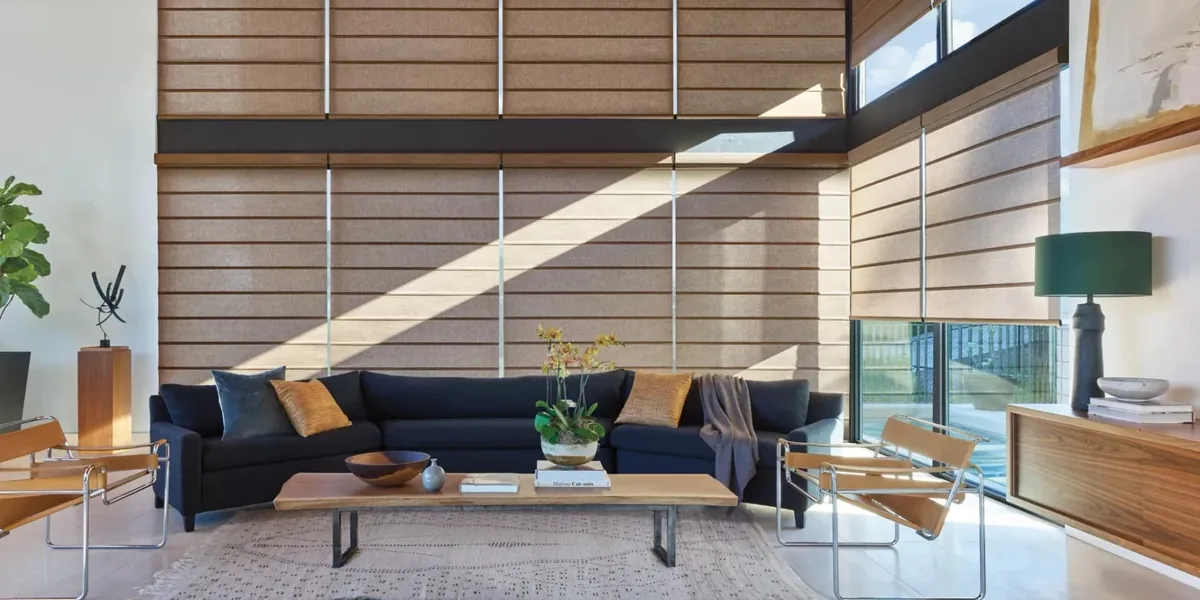
Roller shades
Designer and Alustra roller and screen fabrics, picked for view and glare.
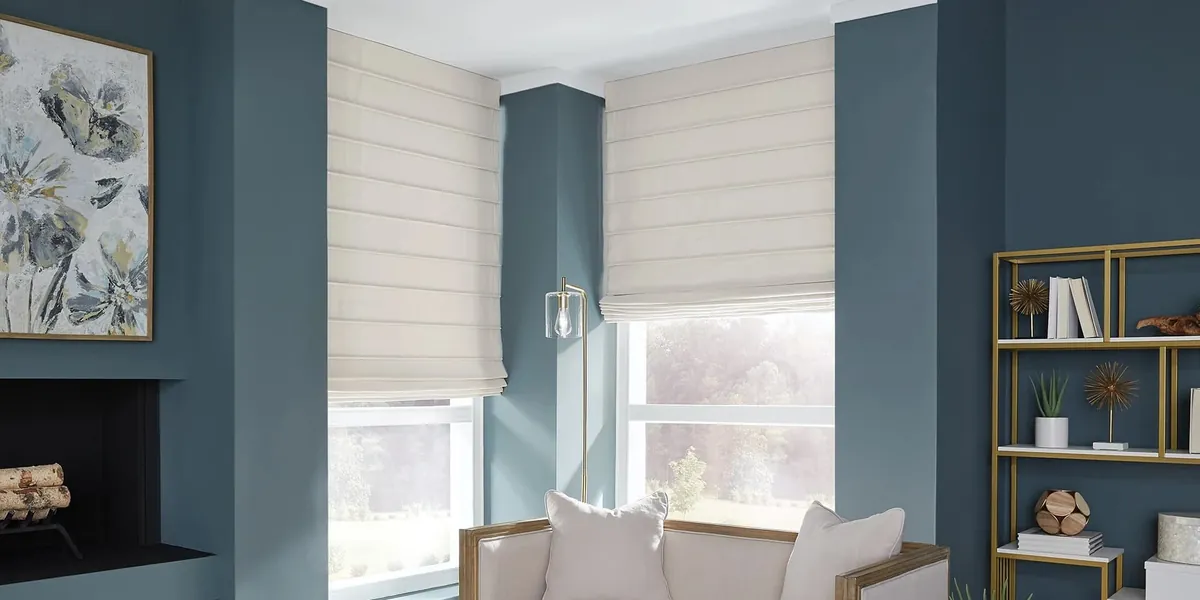
Roman shades
Vignette and Carole Fabrics, flat or folded, at home in a formal room.
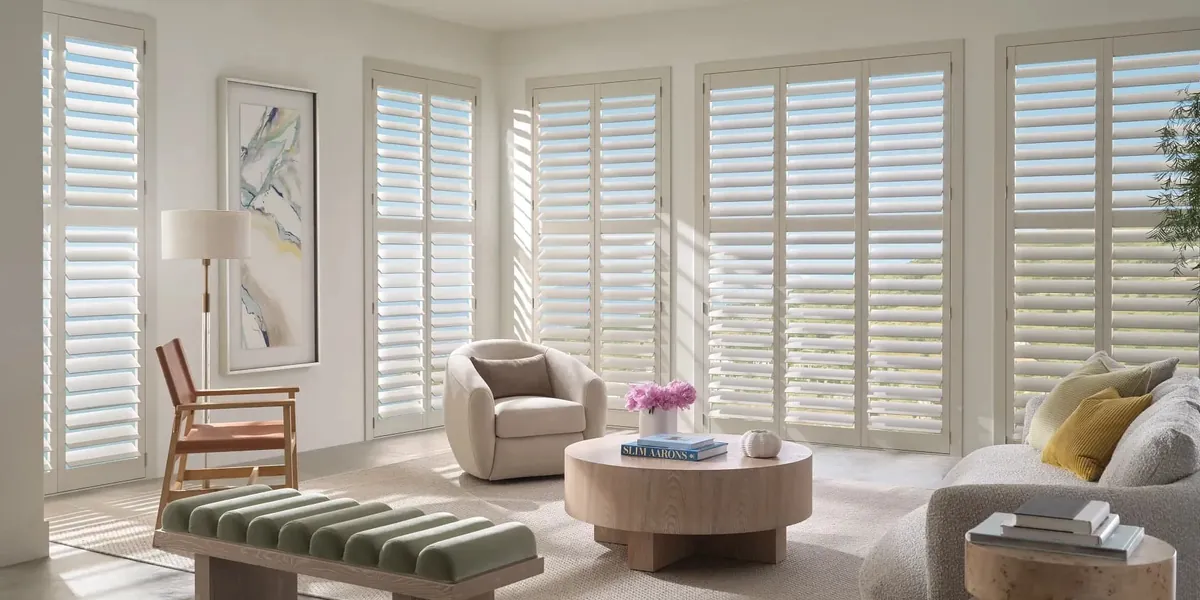
Plantation shutters
Palm Beach, NewStyle and Heritance, with louver size and frame style set by the window.
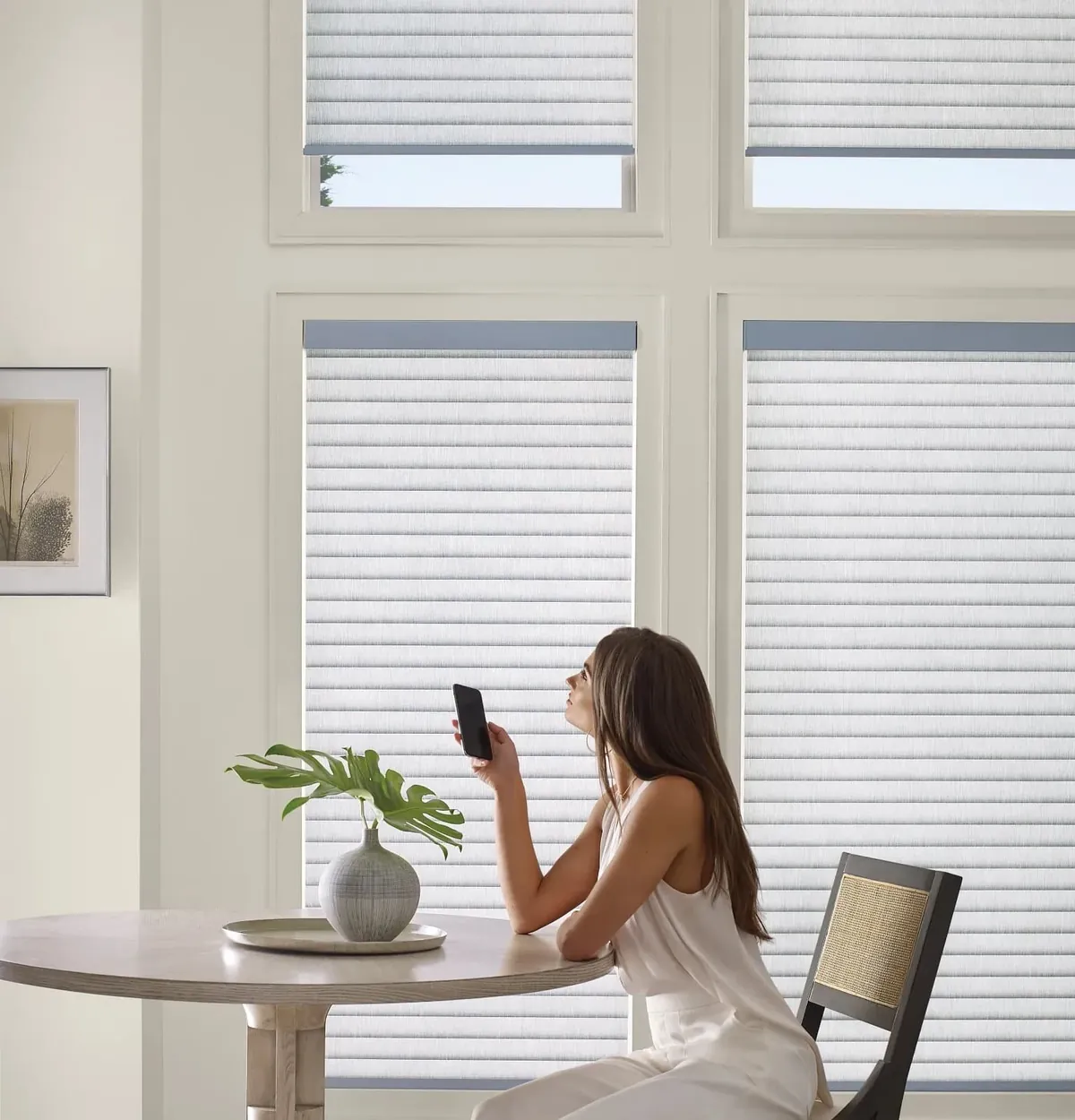
Motorized blinds and shades
PowerView control by remote, app or schedule, ideal for tall windows.
Double-width openings, treated as one
Many of Milton’s colonials and Victorians pair their windows: two sash side by side, sharing a casing or separated by a narrow mullion. From across the room the pair reads as a single wide opening, and the covering should read that way too.
There are a few ways to handle it. Two shades mounted side by side, one in each sash, keep each half working on its own, so you can raise one for light and keep the other down for privacy. A single wide shade across the whole opening gives an unbroken look when lowered. Shutters can follow the pair with a frame that spans both, the louvers lining up across the middle. Which approach suits your room depends on the mullion, the depth of the casing and how you use the window, and those are things we look at together on the day.
A Hunter Douglas dealer in Milton also has to think about how a pair stacks. When two shades sit side by side and rise to the same height, the room looks calm. When one is up and one is down, it can look busy. Matching headrails and fabrics, and settling on where the shades usually rest, keeps a formal room composed.
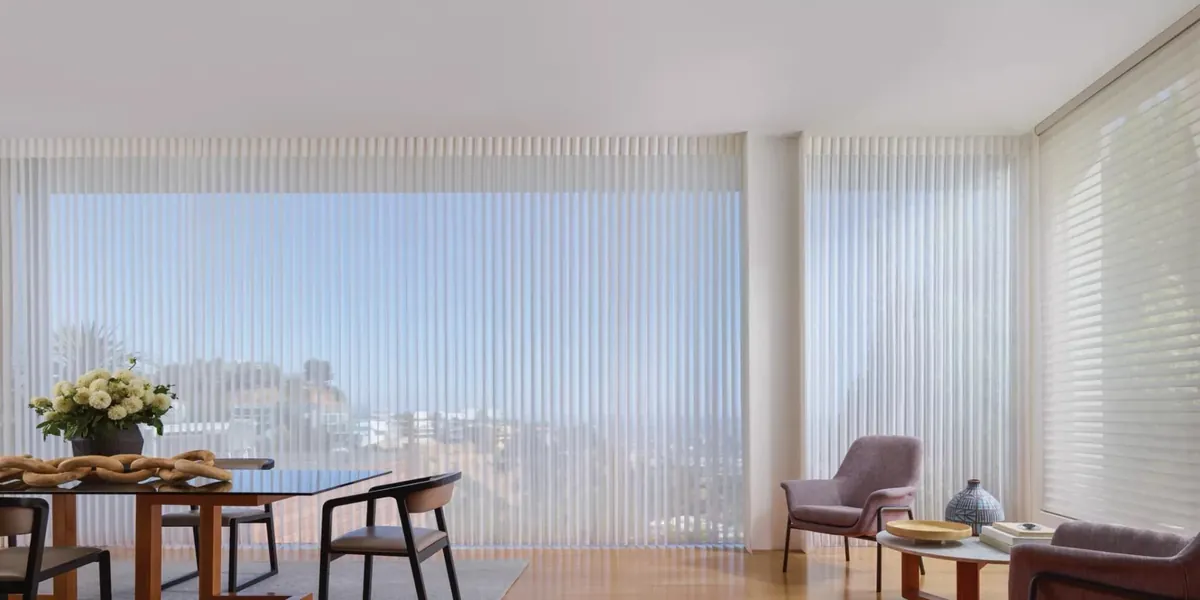
Drapery-scale rooms and layering
Some Milton rooms are simply big. High ceilings, long walls and tall paired windows mean that a shade on its own can look a little small. That is where layering comes in: a shade or shutter inside the frame doing the daily work of light and privacy, with drapery framing the window and giving the room its finish.
As a Gallery dealer we offer Hunter Douglas drapery as well as shades, blinds and shutters, so the layers can be planned together. The shade inside the frame might be a honeycomb for comfort beside the glass, a sheer for soft daylight or a Roman shade for a tailored look. The drapery panels then sit on either side, chosen for color and fall, so the window looks complete whether the shade is up or down.
Planning both layers at once avoids the common trouble of a shade and a curtain that fight each other, in color, in projection from the wall or in how they stack. We look at the ceiling height, the trim and the space to each side of the window, and suggest proportions that suit the room.
Wide openings bring one more question: where the drapery goes when it is open. On a double-width window with wall space on both sides, panels can stand clear of the glass so none of the light is lost. Where a paired window sits close to a corner or a fireplace, there may only be room on one side, and the plan changes to suit. These are the details that make a large Milton room look settled, and they are far easier to judge standing in front of the window than from a drawing.
Tall sash near Milton Village
The Victorians and older colonials closer to the village have the tall sash that gives these houses their grace. Those windows bring a lot of light into a room, and they set a few practical questions.
The first is reach. On the tallest sash, the top of a shade can be well above head height. PowerView solves that: shades rise and fall from a remote or the app, and a whole room can move together. In a stair hall or a two-story foyer, motorization is often the only sensible way to work a high window.
The second is proportion. A tall window looks best under something that reads as slim, such as fine slats, narrow louvers or a fabric that hangs straight and stacks neatly. Heavy, wide elements can make the window look shorter than it is.
The third is the frame itself. Old casings are seldom perfectly square, and their depth varies. We check each one on its own, so every covering is measured for the opening it will live in.
Dining rooms made for company
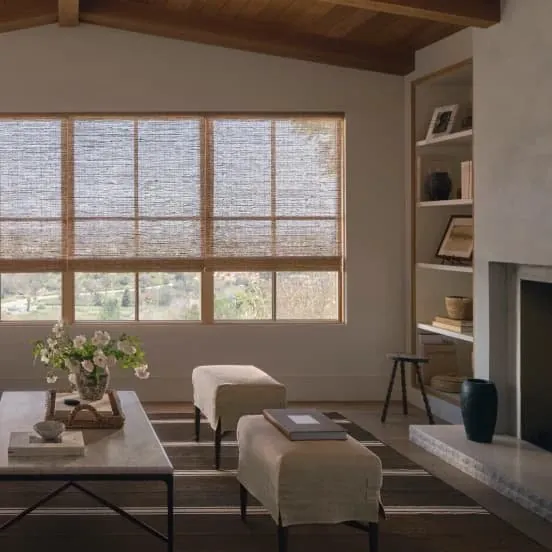
The formal dining room is one of the rooms that sets Milton’s older houses apart. It is used most in the evening, often with guests, and the windows are part of what makes the room feel finished. Privacy matters after dark, when the lamps are on and the room is visible from outside. By day, the same windows may be the room’s best source of light.
A layered window suits that double life well. A sheer or light fabric shade inside the frame gives soft daylight at lunch and privacy at dinner, and drapery panels on either side give the room its sense of occasion. Wood blinds are another strong choice in a dining room with dark wood furniture or paneling, where a rich slat ties the windows to the rest of the room. Where a dining room has a bay, each window can take its own shade, set so they all rest at the same height.
Stair halls, landings and high windows
The big colonials and Victorians often have a generous stair with a window on the landing, sometimes two stories up from the front hall. It lights the stair beautifully, and it is very hard to reach. A Hunter Douglas dealer in Milton gets asked about these windows more than almost any other.
PowerView is the usual answer: the shade rises and lowers from a remote or the app, so nobody leans over a railing to adjust it. A schedule can close it at dusk along with the front rooms. If motorization is not wanted on that window, a fixed covering chosen mainly for light and look, such as a sheer that stays down, can work as well.
Up against the Blue Hills
Houses on the edge of the Blue Hills often have trees close by and long views through them. That shapes the light. Rooms facing the woods may be green and dim for much of the summer and much brighter once the leaves fall. Windows that look out over open land can take strong, low sun in the colder months.
In these rooms the view is usually something you want to keep. Solar screen fabrics cut glare while leaving the outlook open, and the openness can be tighter or looser depending on how bright the window gets. Sheer shades soften the light without hiding the trees. Where a room faces the hills and gets cold in winter, a honeycomb shade lowered in the evening helps it hold heat. Our guide to the best shades for sun and glare explains the options in more depth.
Privacy is less of a concern on the larger lots up here, so the conversation turns to light, comfort and how each room is used through the day.
The post-war houses of the lower village
Down in the lower village, the houses change. Post-war capes, colonials and ranches bring smaller rooms, standard openings and a more practical set of needs. Almost every Hunter Douglas product fits these windows without fuss, so the choice comes down to the room.
Bedrooms usually want darkness and comfort, and honeycomb shades handle both. A family room with a back slider needs a covering that travels sideways, such as Luminette, a vertical honeycomb or vertical blinds. A kitchen window over the sink may want a shutter or a faux wood blind. A home office wants glare under control on a screen, where a light roller or screen shade does the job neatly.
The houses in the lower village sit closer together than those up toward the hills, so side windows sometimes face a neighbor. Pale fabrics and sheers keep daylight in those rooms while blurring the view across the gap.
Bedrooms in the larger houses
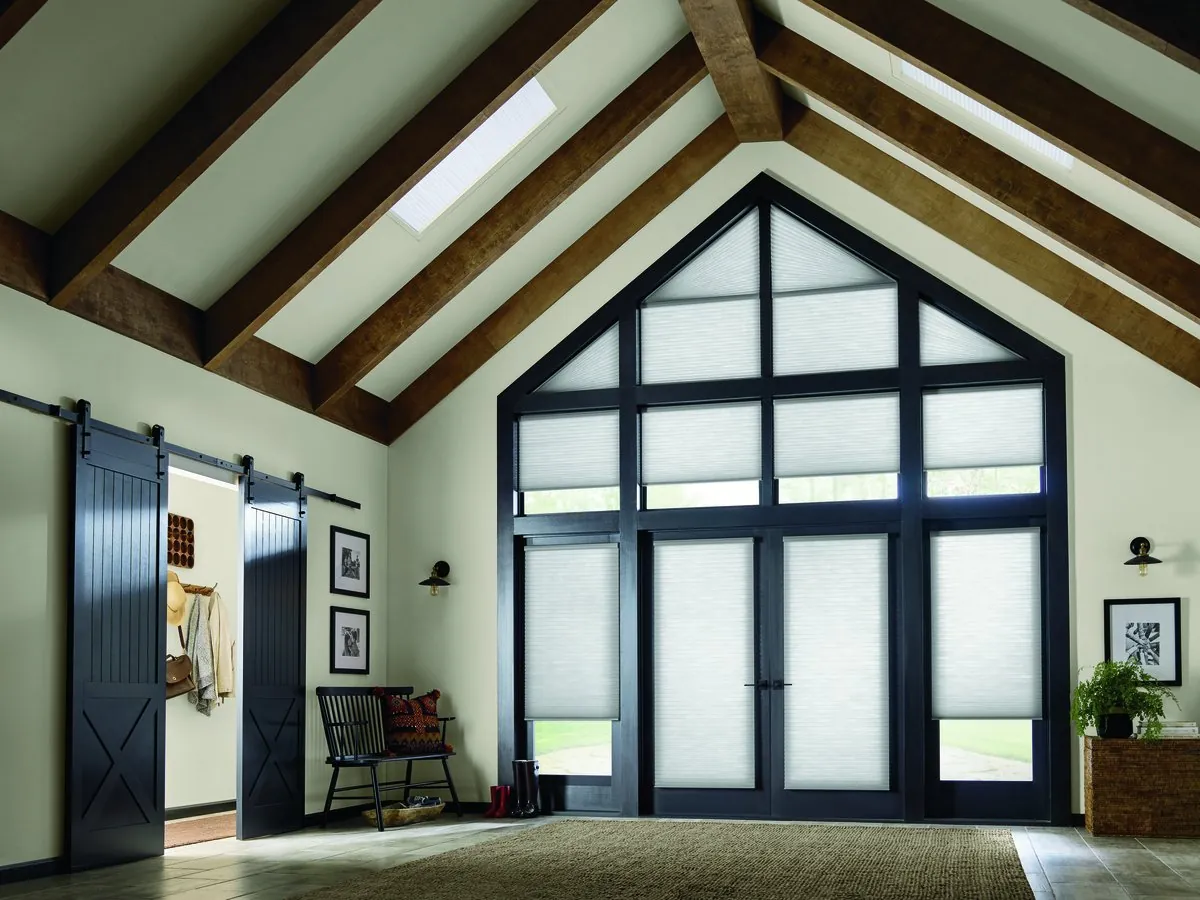
Upstairs in a big Milton colonial or Victorian, the bedrooms often have the same tall sash as the rooms below, sometimes with a paired window facing the street and a single one on the side. A main bedroom may face east and catch the first light. Guest rooms are used only now and then and want something simple that looks good when the door is open.
Darkness and comfort are the main concerns. Honeycomb shades handle both, sitting slim inside the frame when raised and holding air beside the glass when lowered. Where a bedroom is on a scale that calls for drapery, a honeycomb shade inside the frame and panels around it give the best of both. In children’s rooms, PowerView takes the reaching out of the routine.
Planning a whole formal house
In a large colonial or Victorian, the windows often run into the dozens, across formal rooms, bedrooms, a stair hall and a kitchen added at some later date. It is easy to dress each room on its own and end up with a house that looks pieced together, inside and from the street.
A better approach is to plan the house as a whole, then let each room have what it needs within that plan. The front windows might share one outward color so the house looks calm from the road. The formal rooms might share a product family, with layering where the scale calls for it. The bedrooms can then go their own way. A Hunter Douglas dealer in Milton who looks at the whole house can keep all those choices consistent, and fitting can be phased room by room if you prefer.
If you are also rethinking paint, furniture or fabric in those rooms, our interior design consultations can join the visit, so the windows are planned alongside everything else.
What the consultation looks like
Milton is served from our Canton territory, and that means the consultation happens at your house. A typical visit goes like this.
- A van of samples arrives at your door, since we can bring the showroom to you.
- We sit down together and talk about the rooms you want to start with, and what is not right about them today.
- Room by room, we hold fabrics, louvers and slats up to your windows, including the paired openings and the tallest sash.
- Where drapery is part of the plan, we look at both layers together.
- We measure each window that will be in the estimate.
- You keep a free estimate for products and certified installation, with time to think it over.
For a fuller description, read what happens at an in-home consultation, or visit our in-home consultations page.
Fitting old and newer houses
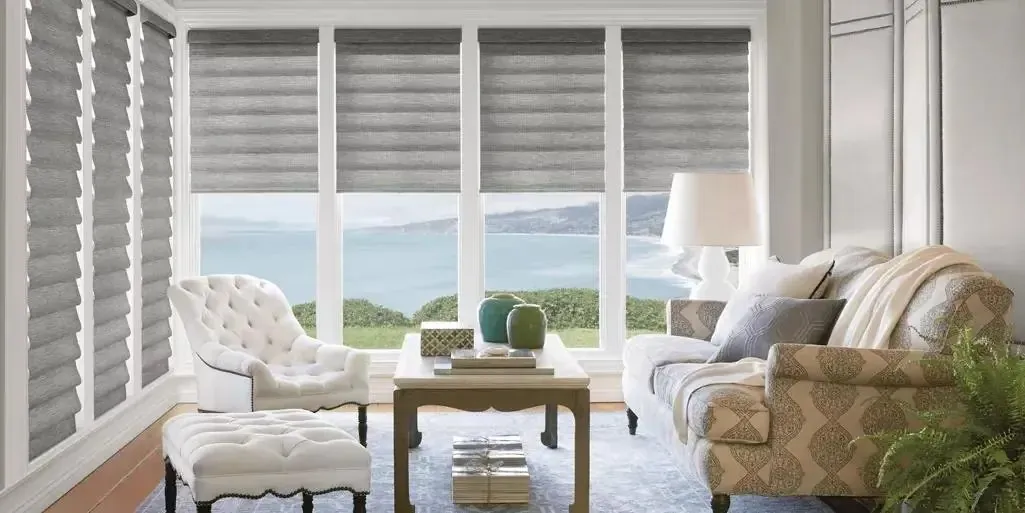
When Hunter Douglas has made your order, our certified installers come back to fit it. In a Milton Victorian or colonial that means extra attention to the frames: casings that have settled, trim that should not be marked, and plaster walls where bracket positions need thought. Before anything is drilled, we confirm positions with you, especially on the paired windows where both halves need to line up.
Once each covering is up, it is adjusted to hang evenly, every lift, tilt and louver is tested, and any PowerView motors are paired with your remote or app. We finish by showing you how each one works and leaving the rooms as we found them. In the lower village, post-war frames are usually square and simpler to fit, but every window is still checked on its own. You can read more on our installation day guide.
A Gallery dealer for Milton
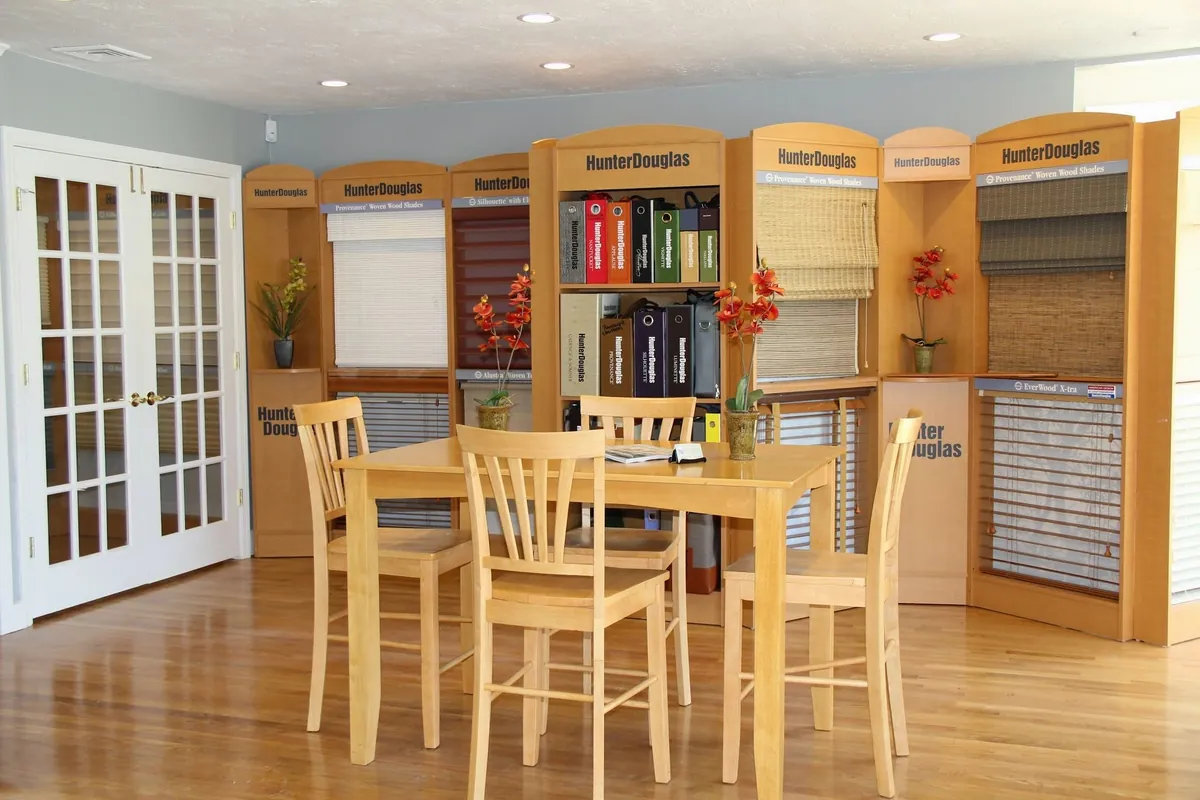
Blinds & Designs is a Hunter Douglas Gallery dealer. Honeycomb, roller, Roman, sheer, woven and vertical shades, wood, faux wood, metal and fabric blinds, three shutter lines, drapery and PowerView automation are all available through one consultation.
Our installers are certified by Hunter Douglas, and we also offer interior design consultations and repairs on coverings you already own.
See the main Hunter Douglas page for more about our dealer work, and browse lines and colors in the Hunter Douglas catalog before we visit.
Consultations at home, a showroom in Franklin
Milton is part of our Canton shop-at-home territory. We come to you with the samples, so every decision is made in your own rooms. Our Canton shop-at-home page explains how it works.
If you would like to see products in person as well, the nearest showroom is in Franklin; the Franklin showroom page has the details.
Everything we offer around town is collected on our Milton page.
Questions from Milton
How do you handle two windows side by side under one casing?
You can have one shade per sash, so each half works on its own, or one wide covering across the pair. Shutters can span both with louvers lining up across the middle. We look at the mullion and the casing depth before suggesting one.
Can shades and drapery be planned together?
Yes. We offer Hunter Douglas drapery as well as shades, so the shade inside the frame and the panels around it are chosen to suit each other.
What about windows too high to reach?
PowerView lets you raise and lower shades on tall sash from a remote or the app, and a schedule can move them for you.
Do you work on the smaller houses in the lower village too?
Yes. Standard openings take almost everything in the Hunter Douglas range, and we plan them the same careful way.
Is the estimate free?
Yes. Your estimate for products and certified installation is free.
Your next step in Milton
From a formal living room with paired windows to a lower-village bedroom, choosing a Hunter Douglas dealer in Milton starts with a request for a consultation. We bring the samples, measure the windows and leave you a free estimate. Want to ask something first? Use the call button at the top of the page to reach our Canton team.